Weatherglass Novella Prize 2026
Following up on the shortlist news I shared in November: Ali Smith has chosen two winners for the second annual Weatherglass Novella Prize. Both of these have changed title since they were submitted as manuscripts (From the Smallest Things to The Hyena’s Daughter; Shougani to Pink Soap). I’m particularly interested in Jones’s novel about Mary Shelley and her sister and stepsister. And the Gaston has a brilliant cover!
Here’s what Ali Smith had to say about the winning books, courtesy of the Weatherglass Substack:
The Hyena’s Daughter by Jupiter Jones
(to be published in April 2026)
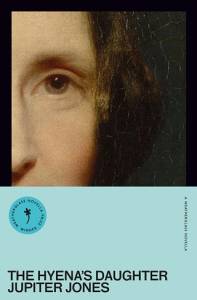 “This novella tells the far-too-untold story of a c19th sisterhood, that of the daughters of Mary Wollstonecraft: Fanny Imlay and Mary Shelley, the famed writer of Frankenstein, plus their step[-]sister Claire Clairmont. Are they the three graces? The fates? They’re women, as alive and breathing and rebellious and analytical as you and me, and well aware and critical of the hemmed-in nature they’re expected to accept as women of their time, a time of ‘a new way of thinking, a new-world independence, a revolutionary world.’
“It features their connection to Percy Bysshe Shelley – ‘how could we not love him, with his lofty ethics and words that flew like birds?’ – and many of the other contemporary poets and thinkers of the time. Pacy and assured, it turns its history to life from fragment to sensuous fragment. If the dead brought to life is to be Mary Shelley’s theme, this novella asks what the real source of life spirit is, the vital spark. This novella, full of detail and richesse, is a piece of vitality in itself.”
Pink Soap by Anju Gaston
(to be published in June 2026)
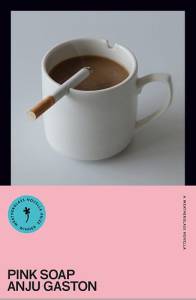 “‘I ask the internet the difference between something being too close to the bone and something being too close to home.’ This funny and terrifying book is a study of what and how things mean, and don’t, in our latest machine age. In it something unforgivable has happened. The main character in this novella, seemingly numbed but bristling with blade-sharp understanding, is only just holding things together and trying to work out how to heal. So she travels to Japan in a search for the other half of a fragmented family. Or is it the world itself that has fragmented?
“Pink Soap examines the massive everyday pressures we’re all under with real wit and style. It is pristine, brilliant, smart beyond belief. I sense it becoming as much a classic for now as Plath’s The Bell Jar has been for the decades behind us.”
Submissions have already opened for the 2027 Prize. More information is here.
Love Your Library, November 2025
Thanks, as always, to Eleanor and Skai for posting about their recent library reading. And thanks to Margaret for joining in for the first time!
Last month I was lamenting my disengagement from the Booker Prize shortlist. Luckily, I loved the eventual winner, Flesh by David Szalay, which I finished reading about an hour and a half before the prize announcement! In other news, I’m judging the McKitterick Prize again this year. When, mid-month, it hit me that my first shipment of submissions was going to be arriving soon, I had to clear the decks by returning some library books I knew I wasn’t going to get to any time soon. This included a few 2025 releases that I’d hoped to prioritise but that didn’t, at least within the first few pages, leap out at me as must-reads.
The new categorisation system at my library doesn’t seem to be as disruptive as predicted, though it does look untidy having two different types of stickers in any one section. The self-service reservations have been moved from one wall to the opposite one, as if just to confuse patrons. (None of these changes are ever run by the staff and volunteers who will actually live with them day to day.)
I’m there for the books, but there’s an amazing range of other services that people access. One young woman comes for one-on-one English tutoring and picks up free period products. A man with aphasia after a stroke has literacy training. Older people book IT sessions. The NHS runs a free clinic for health checks. Our £1 coffee machine is very popular. There are also recycling points for bras and batteries. Truly a community hub.
My library use over the last month:
(links are to books not already reviewed on the blog; some reviews are still to come)
READ
- Emil and the Detectives by Erich Kästner

- Heart the Lover by Lily King
- Misery by Stephen King

- Sister Outsider: Essays and Speeches by Audre Lorde
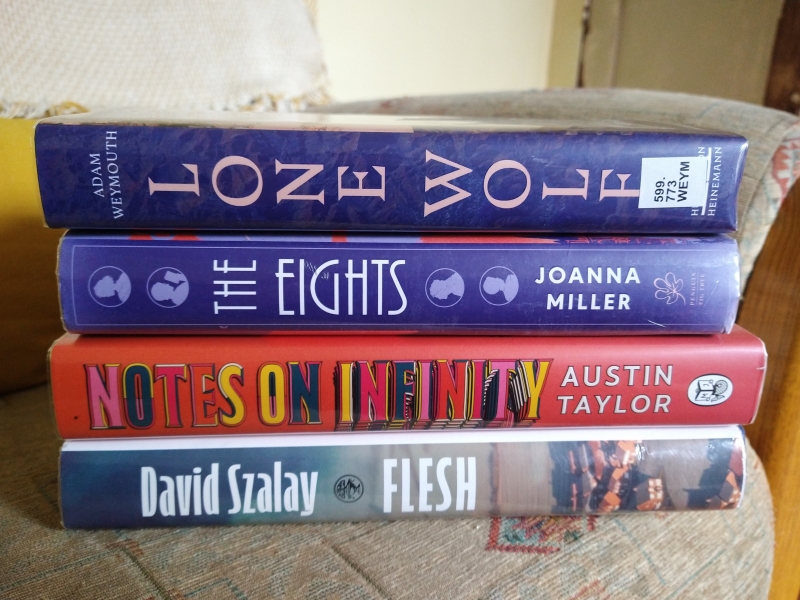
- The Eights by Joanna Miller

- Super-Frog Saves Tokyo by Haruki Murakami

- Rainforest by Michelle Paver
- Death of an Ordinary Man by Sarah Perry

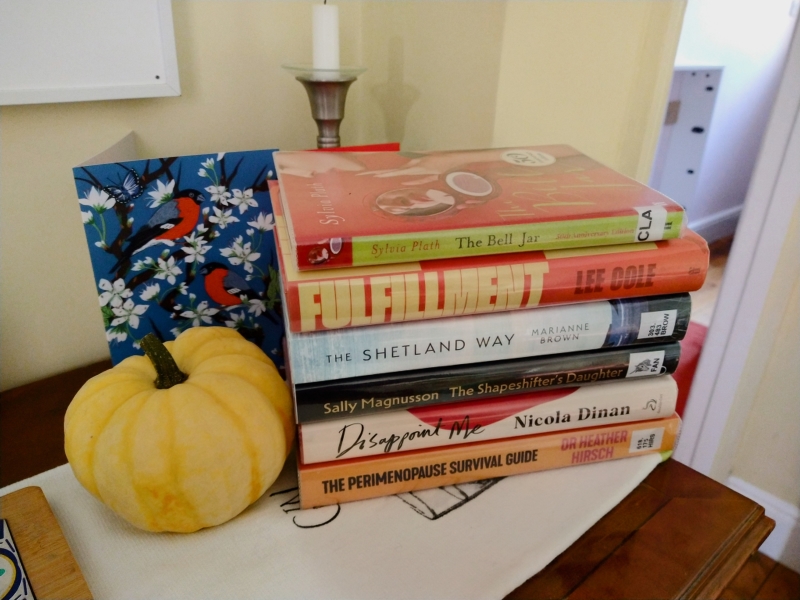
- The Bell Jar by Sylvia Plath
- Flesh by David Szalay
- Slags by Emma Jane Unsworth

CURRENTLY READING
- The Honesty Box by Lucy Brazier
- Of Thorn & Briar: A Year with the West Country Hedgelayer by Paul Lamb
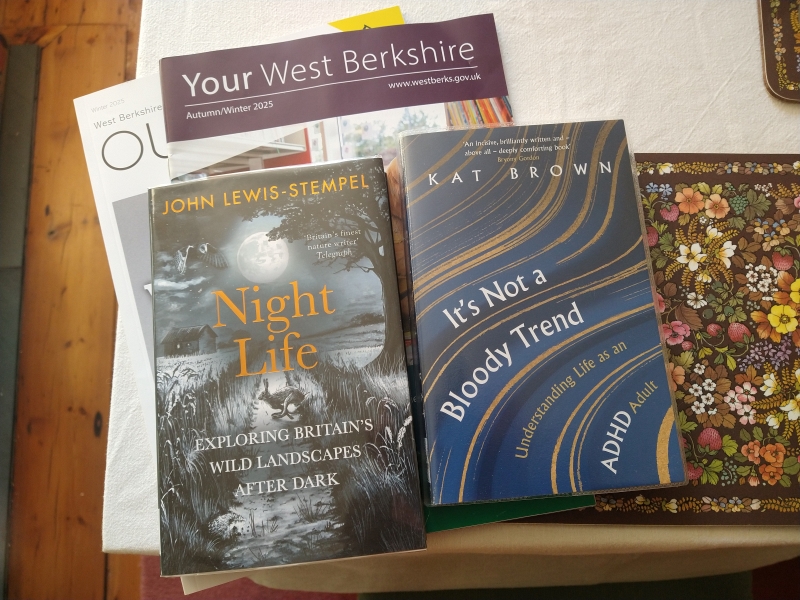
- Night Life: Walking Britain’s Wild Landscapes after Dark by John Lewis-Stempel
SKIMMED
- The Perimenopause Survival Guide: A Feel-Like-Yourself-Again Roadmap for Every Woman over 35 by Heather Hirsch
CHECKED OUT, TO BE READ
- It’s Not a Bloody Trend: Understanding Life as an ADHD Adult by Kat Brown
- A Certain Smile by Françoise Sagan
- The Death of Ivan Ilyich by Leo Tolstoy
ON HOLD, TO BE COLLECTED
- The Parallel Path: Love, Grit and Walking the North by Jenn Ashworth
- Book of Lives: A Memoir of Sorts by Margaret Atwood
- Look Closer: How to Get More out of Reading by Robert Douglas-Fairhurst
- Winter by Val McDermid
- We Live Here Now by C.D. Rose
IN THE RESERVATION QUEUE
- Honour & Other People’s Children by Helen Garner
- Snegurochka by Judith Heneghan
- Do Admit: The Mitford Sisters and Me by Mimi Pond
- Weirdo Goes Wild by Zadie Smith and Nick Laird
- Murder Most Unladylike by Robin Stevens
RETURNED UNREAD
- The Shetland Way: Community and Climate Crisis on My Father’s Islands by Marianne Brown
- Fulfillment by Lee Cole
- Disappoint Me by Nicola Dinan
- The Shapeshifter’s Daughter by Sally Magnusson
- Notes on Infinity by Austin Taylor
- Lone Wolf: Walking the Faultlines of Europe by Adam Weymouth
RETURNED UNFINISHED
- A Single Man by Christopher Isherwood
- Kairos by Jenny Erpenbeck
- Red Pockets: An Offering by Alice Mah
- Death in Venice and Other Stories by Thomas Mann
What have you been reading or reviewing from the library recently?
Share a link to your own post in the comments. Feel free to use the above image. The hashtag is #LoveYourLibrary.

Weatherglass Books’ Second Annual Novella Prize Shortlist (#NovNov25)
Last year I attended an event at Foyles in London introducing the two joint winners of the inaugural Weatherglass Novella Prize, as chosen by Ali Smith. I later reviewed both Astraea by Kate Kruimink and Aerth by Deborah Tomkins, and interviewed Weatherglass Books co-founder and novelist Neil Griffiths. With his permission, I’m reproducing below the partial text of the Substack post in which he announced the shortlist for this second year of the award. Out of 170+ submissions, he and co-publisher Damian Lanigan chose a shortlist of four novellas, which have again been sent to Ali Smith for her to choose a winner in the new year. The winner will be published by Weatherglass Books. It’s clear that all four are publishable, though!
The shortlist is … in no particular order:
A BRIEF HISTORY OF WAR by Selma Carvalho is a piece of sensuous magnetic power and aliveness. It deals with questions of class, ethnicity and nationalism so close to the contemporary that this book almost shakes in your hands.
Two people sit by chance near each other on a bus in a world where the rise of political divisions is physical, palpable. They’re unalike in every way. Their attraction fizzes like a lit fuse. “What does it mean to be foreign, to think of another human being as foreign? Foreign from what?” It examines the closeness and distance between people, families, tribes, and the hair-trigger, hair-on-the-back-of-the-neck negotiations between people’s bodies.
Wise and contemporary, uncompromising and true, its edginess, and the fallout from desires, personal and social, is brilliantly conjured and conveyed.
FROM THE SMALLEST THINGS by Jupiter Jones tells the far-too-untold story of a c19th sisterhood, that of the daughters of Mary Wollstonecraft: Fanny Imlay and Mary Shelley, the famed writer of Frankenstein, plus their step-sister Claire Clairmont. Are they the three graces? The fates? They’re women, as alive and breathing and rebellious and analytical as you and me, and well aware and critical of the hemmed-in nature they’re expected to accept as women of their time, a time of “a new way of thinking, a new-world independence, a revolutionary world.”
It features their connection to Percy Bysshe Shelley – “how could we not love him, with his lofty ethics and words that flew like birds?” – and many of the other contemporary poets and thinkers of the time. Pacy and assured, it turns its history to life from fragment to sensuous fragment. If the dead brought to life is to be Mary Shelley’s theme, this novella asks what the real source of life spirit is, the vital spark. This book, full of detail and richesse, is a piece of vitality in itself.
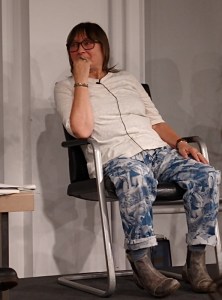
Ali Smith at the Weatherglass event in September 2024.
SHOUGANI by Anju Gaston – what does it mean? “I ask the internet the difference between something being too close to the bone and something being too close to home.” This funny and terrifying book is a study of what and how things mean, and don’t, in our latest machine age. In it something unforgiveable has happened. The main character in this novella, seemingly numbed but bristling with blade-sharp understanding, is only just holding things together and trying to work out how to heal. So she travels to Japan in a search for the other half of a fragmented family. Or is it the world itself that has fragmented?
Shougani examines the massive everyday pressures we’re all under with real wit and style. It is pristine, brilliant, smart beyond belief. I sense it becoming as much a classic for now as Plath’s The Bell Jar has been for the decades behind us.
THE MARVELLOUS DINNER by Polly Tuckett
“A massacre of things just to produce a single dish”: this novella charts the terrible coming-apart of a marriage. A wife prepares a dinner for her husband on an important anniversary, a meal so laboured and elaborate that something’s wrong, something’s definitely up – more, something’s got to give.
This novella is a story of the fictions we call true in our lives, even though we know they’re hollow ceremonials. There’s a Mike Leigh touch to this unsettling book. Every mouthful is dangerous, precarious. It anatomises fuss and ceremony, examines the ritual and the real bullying in a relationship. It deals with madness and the mundane truth of fantasy. Is it love itself that’s a delusion in this tale of the ties that bind?
“So there we have it. Our four shortlisted titles,” Neil writes. “They are all extraordinary, all deserve to win, to be well published. It’s now down to Ali. Thank you to everyone who submitted. We’ve enjoyed reading all the entries. But especial thanks to Ali Smith for agreeing to be our judge in year one and now on-goingly; it’s a real privilege to have one the world’s most original writers helping us select what we commission.”
Which of the synopses entice you? I especially like the sound of From the Smallest Things and The Marvellous Dinner.
The BBC National Short Story Award 2025 Anthology
Another quick contribution to #ShortStorySeptember. I was delighted when Comma Press sent me a surprise copy of The BBC National Short Story Award 2025, which prints the five stories shortlisted for this year’s prize.
Now in its 20th year, the award has recognised established authors and newcomers alike – the roster of winners includes Lucy Caldwell, Sarah Hall (twice), Cynan Jones, James Lasdun, KJ Orr, Ingrid Persaud, Ross Raisin, Lionel Shriver and Naomi Wood – and the £15,000 prize money is very generous indeed for a single story.
This very evening, the winner will be announced live on the BBC Radio 4 Front Row programme (it starts at 7:15 p.m. if you’re in the UK). I’ll update my post later with news of the winner. For now, here are my brief thoughts on the five stories and which I hope will win.
“You Cannot Thread a Moving Needle” is an excerpt from Colwill Brown’s linked short story collection, We Pretty Pieces of Flesh. It’s in broad Doncaster dialect and written in the second person, thus putting the reader into the position of a young woman who is often pressured – by men and by the prevailing standards of beauty – into uncomfortable situations. It’s all drinking and sex and feeling in competition with other girls. ‘You’ grow up limited and bitter and wondering if revenge is possible. This was admirable for its gritty realism but not pleasant per se, and convinced me I don’t want to read the whole book.
“Little Green Man” by Edward Hogan begins with a classic scenario of two very different people being thrown together. Carrie stands out not just for being nearly six feet tall but also for being the only woman working for Parks and Gardens in Derby. One morning she’s assigned a temporary apprentice, Ryan, who is half her age and might be dismissed with one look as being no good (“lines shaved into his eyebrows … dyed blond hair” and a baby at home). But their interactions go beyond stereotypes as we learn of Ryan’s ambitions and his disapproving dad; and of Carrie’s ex, Bridget, who wanted more spontaneity. It’s a solid, feel-good story about not making your mind up about people, in the vein of Groundskeeping.

“Yair” by Emily Abdeni-Holman is another two-character drama, with the title figure an Israeli estate agent who takes the female narrator looking for an apartment in Jerusalem in 2018. Sexual tension and conflicting preconceived notions are crackling between them. A simple story with an autofiction feel, it reminded me of writing by Sigrid Nunez and Elizabeth Strout and exposes the falsity of facile us-and-them distinctions.
“Two Hands” by Caoilinn Hughes is a three-player comedy starring a married couple and their driving instructor. After a motorway crash in the beloved Fiat Panda they brought with them from Italy when they moved back to Ireland, Desmond and Gemma are in need of some renewed confidence behind the wheel. They talk about work – Des’s ancient archaeology research, Gemma’s translations – but not about the accident, which clearly is still affecting them both. Meanwhile, their late-seventies instructor is a War and Peace-reading calm presence whose compassion stretches only so far. I found this sharp, witty and original, just like Hughes’s Orchid & the Wasp.
Last but not least, “Rain: a history” by Andrew Miller is set in a sodden near-future English village. The protagonist has been having heart trouble and failing to connect with his traumatized teenage son. Nothing in his house or on his person ever feels dry. Their surroundings are menacing and desolate, yet still somehow beautiful. A letter came through the door last week, inviting everyone to meet in the parish church this evening. What can be done? Perhaps solidarity is as much as they, and we, can hope for. This was spare and haunting, and so much better than The Land in Winter.
I thoroughly enjoyed reading these entries and wouldn’t mind four out of the five winning. My sense of the spirit of the award is that it should go to a stand-alone story by an up-and-coming author. It’s hard to say what judges William Boyd, Lucy Caldwell, Ross Raisin, Kamila Shamsie and Di Speirs will go for: realism, novelty, subtlety, humour or prophecy? My personal favourite was “Yair,” but I have an inkling the award might go to Caoilinn Hughes and I would be very happy with that result as well.
With thanks to Comma Press for the free copy for review.
UPDATE: The winner was … the story I enjoyed the least, “You Cannot Thread a Moving Needle.” Nonetheless, I acknowledge that Colwill Brown has a distinctive voice.
The 2025 McKitterick Prize Winner & SoA Awards Ceremony
Yesterday the Society of Authors’ awards were announced and the prizes handed out at a ceremony in London. As a McKitterick Prize judge, I was asked last month to give a 50-word blurb on the shortlist as a whole—
Each of these six novels has a fully realized style. So confident and inviting are they that it’s hard to believe they are debuts. With nuanced characters and authentic settings and dilemmas, they engage the mind and delight the emotions. I will be following these authors’ careers with keen interest.
—and on each individual shortlisted title:
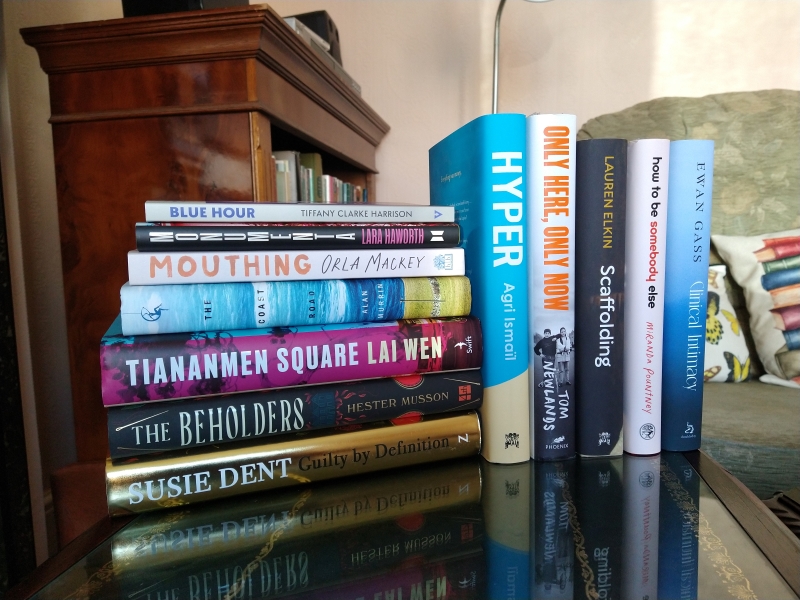
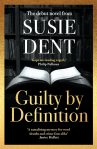 Etymology and Shakespeare studies are the keys to solving a cold case in Susie Dent’s clever, engrossing mystery, Guilty by Definition.
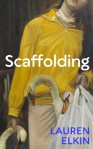 Psychoanalysis, motherhood, and violence against women are resounding themes in Lauren Elkin’s Scaffolding. As history repeats itself one sweltering Paris summer, the personal and political structures undergirding the protagonists’ parallel lives come into question. This fearless, sophisticated work ponders what to salvage from the past—and what to tear down.
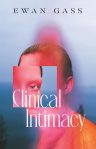 Clinical Intimacy’s mysterious antihero comes to life through interviews with his family, friends and clients. The brilliant oral history format builds a picture of isolation among vulnerable populations, only alleviated by care and touch—especially during Covid-19. Ewan Gass’s intricate story reminds us of the ultimate unknowability of other people.
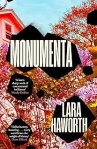
In Monumenta, Lara Haworth braids satire, magic realism, and metafiction into a compact and surprising meditation on how we seek to memorialise the tragedies of history.
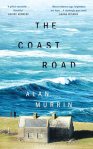
Set in small-town Ireland, The Coast Road is a subtle, compassionate novel in which the characters learn to write their own stories rather than bow to convention and fate. Alan Murrin is a must-read author for fans of Claire Keegan, Louise Kennedy, and Colm Tóibín.
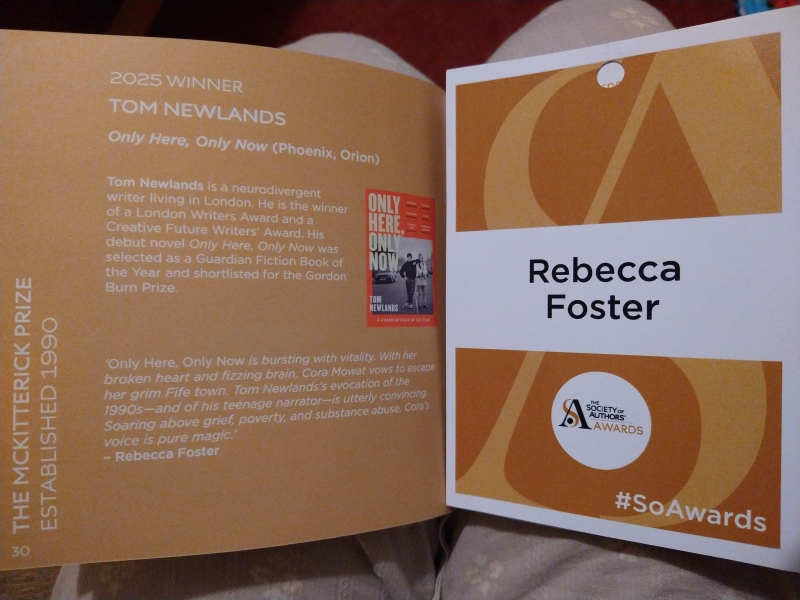
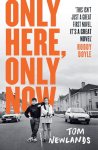 Only Here, Only Now is bursting with vitality. With her broken heart and fizzing brain, Cora Mowat vows to escape her grim Fife town. Tom Newlands’s evocation of the 1990s—and of his teenage narrator—is utterly convincing. Soaring above grief, poverty, and substance abuse, Cora’s voice is pure magic.
Our winner was Tom Newlands for Only Here, Only Now and our runner-up was Lauren Elkin for Scaffolding. (What an honour to have my blurb for the former used in the winners press release, the ceremony programme, and social media publicity.)


Newlands was also a runner-up for the ADCI Literary Prize “for a disabled or chronically ill writer, for an outstanding novel containing a disabled or chronically ill character or characters.” Here’s an excerpt from his statement for the press release:
To have my debut novel recognised in these two categories is particularly meaningful for me because they are linked by my experience. I didn’t start writing until the age of 40, in large part because growing up neurodivergent I didn’t feel my thought processes or methods of working were compatible with the production of a novel. There were no role models out there publishing stories like mine, and in the end, I wrote Only Here, Only Now because I couldn’t find the novel I wanted to read – a warm, vivid and funny story that examined poverty, disability and belonging, and that featured characters rarely found in British fiction.
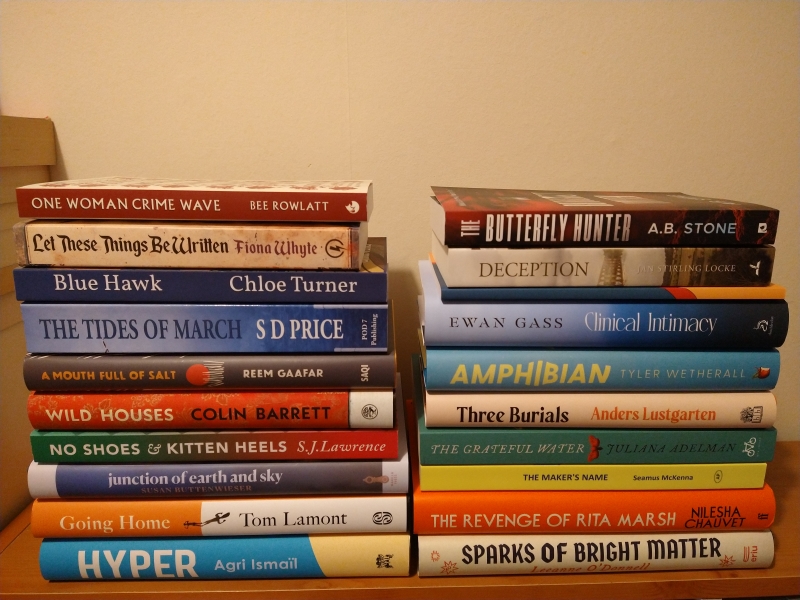
Looking back to early on in this prize journey (which started back in November) … here was some of my early reading:
And our longlist:
A couple of my favourite books from my reading that didn’t make the shortlist were:
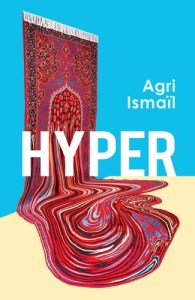 Hyper by Agri Ismaïl [I longlisted it – and then shortlisted it – but was outvoted]
Following a Kurdish family across several decades, this is a zeitgeist-y story that examines questions of national and personal autonomy. With its Dubai, Baghdad, London, and New York settings, it sets the second generation’s luxury, high finance, and fully online worlds against their parents’ bitter experience of exile after a failed independence movement. With its themes of dysfunction and failures and the long view of how we got here from there, it reminded me of Jonathan Franzen’s body of work.
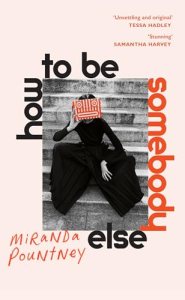 How to Be Somebody Else by Miranda Pountney [It had two votes to make the shortlist, but because it was so similar to Scaffolding in its basics (a thirtysomething woman in a big city, the question of motherhood, and pregnancy loss) we decided to cut it.]
This is the addictively readable story of Dylan, a late-thirties English woman who gives up her New York City advertising job and ponders authorship and motherhood while house-sitting an acquaintance’s apartment—and carrying on an affair with the married downstairs neighbour. As we see her interact with family and friends, we come to appreciate her not as some stereotypical ‘sad girl’ or ‘disaster woman’, but as an Everywoman seeking the time and space to become herself. It’s a sharp and witty novel for fans of Sally Rooney.
For the first time, I got to attend the SoA Awards ceremony in person yesterday. It was a hot day to be travelling in London, and after the oven of the Bakerloo line I was grateful to escape into the cool of Southwark Cathedral and its grounds. It was such a juxtaposition between the sleek City architecture and the ancient refuge of a church.
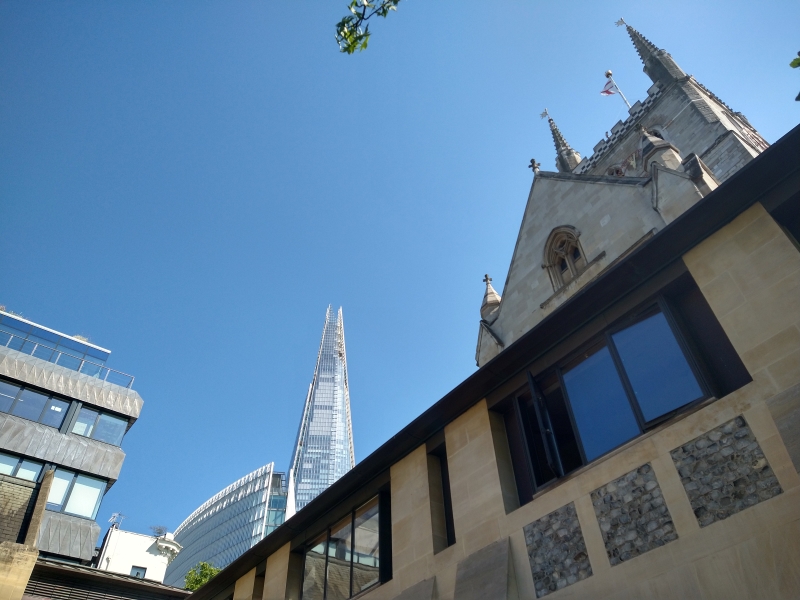
I worried that on such a warm and then busy day Hodge the cathedral cat wouldn’t show himself, but as I picked up my name badge he was asking to be let inside from the courtyard. He didn’t seem interested in strokes so I followed him at a respectful distance and let him settle in for a watchful rest.


Nominated authors and judges were treated to an exceptional afternoon tea, followed by the ceremony and drinks reception. It was lovely to meet my fellow judges Anietie Isong and Kathy O’Shaughnessy (author of the fantastic In Love with George Eliot, which won the SoA’s Paul Torday Memorial Prize) in the flesh as I’d only met them on Zoom before. We chatted a good bit with Lara Haworth, one of our shortlistees, and with Anne Booth, one of the Queen’s Knickers Award (children’s books) nominees, and also got to briefly meet Tom Newlands when he arrived for the ceremony. I always look out for literary ‘celebrities’ at such events and yesterday spotted Naomi Alderman, Caroline Bird, Joanne Harris and Alice Jolly.
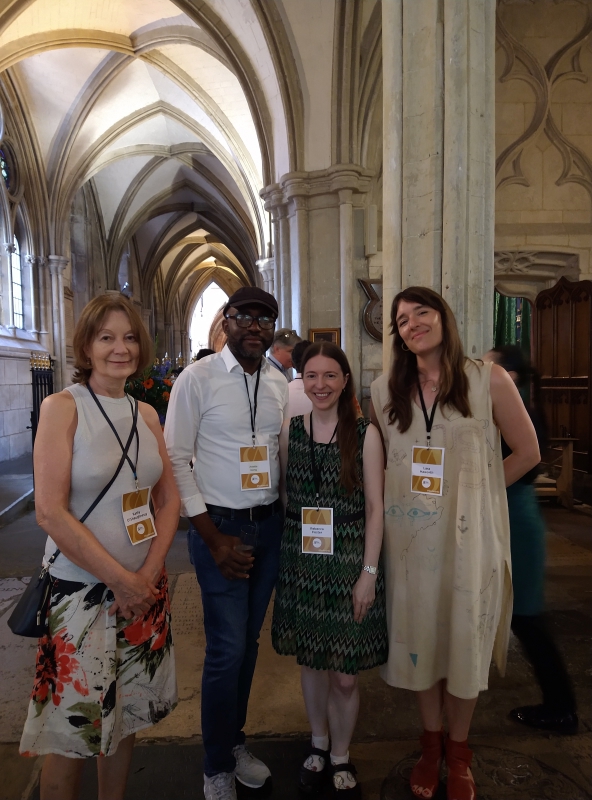


Dean Rev. Mark Oakley gave a welcome address via video, praising authors for bringing “resonance” rather than just “relevance.” He exhorted us, in the words of David Copperfield, to “read as if for life.” Joseph Coelho then gave a terrific keynote speech celebrating words written by humans (as opposed to an inaccurate AI-written bio of himself that he once encountered) and encouraging shortlistees, especially, to take time to bask in their achievement. Rejection is an ongoing, annual thing for him even at this stage of his career – he still remembers the £50 poetry gigs, changing in library toilets and school staff rooms; and the 12 years he spent trying to get published – even after he became the youngest-ever children’s laureate in 2022. “Wait for no one,” he challenged us: no one is going to give you permission or come save you, so go out there and do what you’re meant to do.
What an all-round fantastic experience this was! I’m so grateful to the Society of Authors for the opportunity.
Other notable winners announced yesterday included:
- Ashani Lewis (the only double winner): the Betty Trask Prize and Somerset Maugham award for Winter Animals
- Hisham Matar & Elif Shafak: the Gordon Bowker Volcano Prize (for a novel focusing on the experience of travel away from home), joint winners for My Friends and There Are Rivers in the Sky
The 2025 McKitterick Prize Shortlist
For the fourth year in a row, I’ve been involved in judging the McKitterick Prize (for a first novel, published or unpublished, by a writer over 40). However, after three years of helping to assess the unpublished manuscripts, this was my first time as a judge for the published submissions. It has been a great experience! Today the shortlists for all of the 2025 Society of Authors Awards have been announced, so I can share our finalists below.
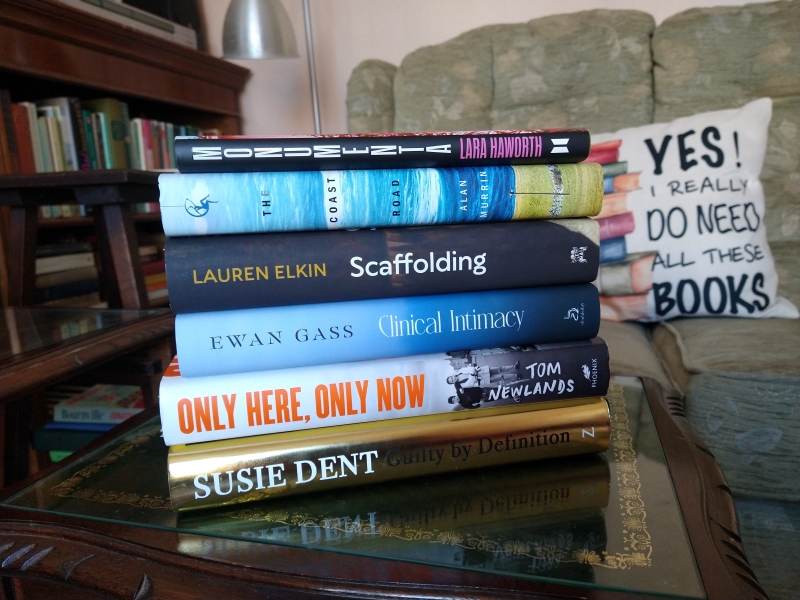
My three fellow judges and I were all asked for 50-word blurbs about each book and about the shortlist as a whole. I’m honoured that my overall blurb was chosen to accompany the McKitterick rundown in the press release:
Each of these six novels has a fully realized style. So confident and inviting are they that it’s hard to believe they are debuts. With nuanced characters and authentic settings and dilemmas, they engage the mind and delight the emotions. I will be following these authors’ careers with keen interest.
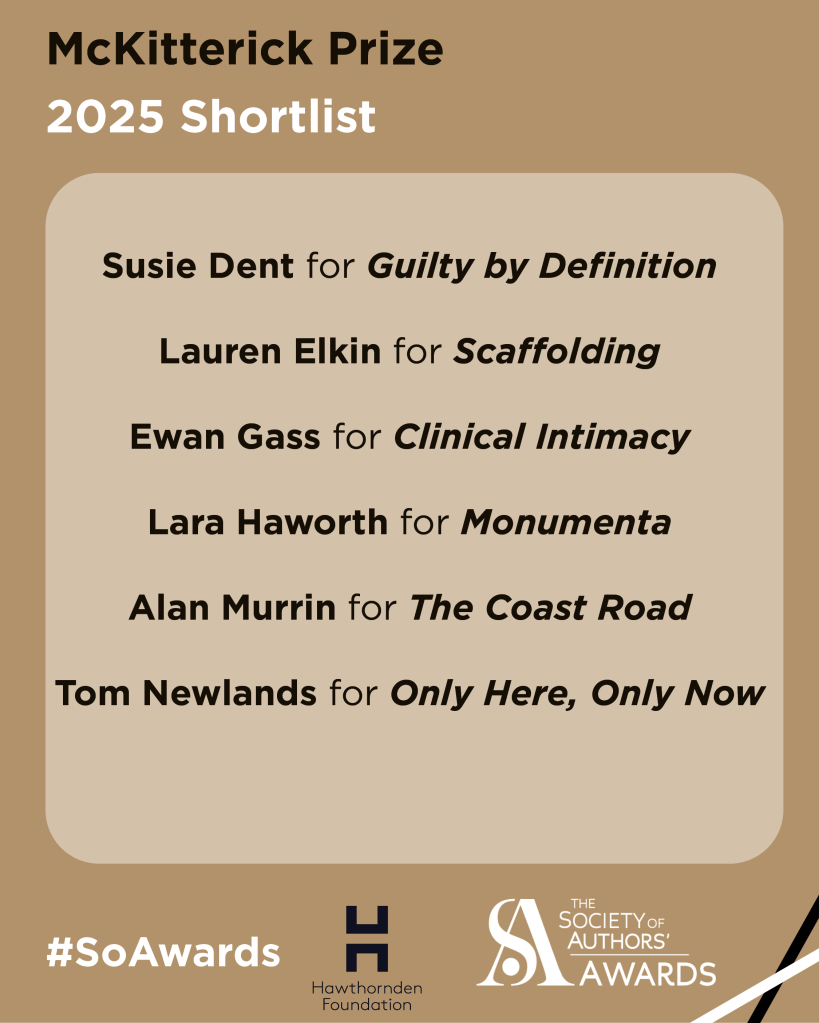
Notably, Tom Newlands’s Only Here, Only Now is a finalist for two of the prizes this year, the other being the ACDI Literary Prize, which is awarded to “a disabled or chronically ill writer, for an outstanding novel containing a disabled or chronically ill character or characters.” (A worthy successor to the Barbellion Prize, which, unfortunately, only ran for three years, 2020–22.) His teenage protagonist grows up in working-class Scotland in the 1990s with undiagnosed ADHD.
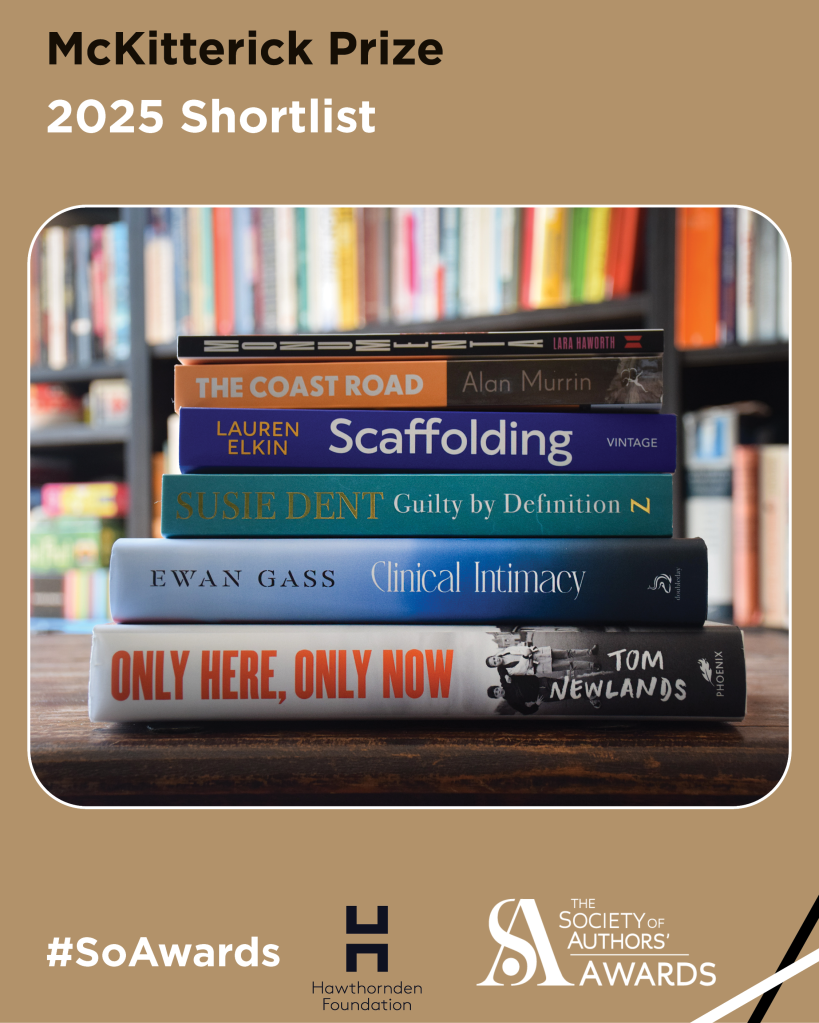
The winner and runner-up will be announced in advance of the SoA Awards ceremony in London on 18 June. In previous years, I have stayed home and watched the livestream, but this year I’ll attend in person and hope to meet Southwark Cathedral’s resident cat, Hodge!
Have you read anything from the McKitterick shortlist, or one of the other prize lists?
Carol Shields Prize Reads: Pale Shadows & All Fours
Later this evening, the Carol Shields Prize will be announced at a ceremony in Chicago. I’ve managed to read two more books from the shortlist: a sweet, delicate story about the women who guarded Emily Dickinson’s poems until their posthumous publication; and a sui generis work of autofiction that has become so much a part of popular culture that it hardly needs an introduction. Different as they are, they have themes of women’s achievements, creativity and desire in common – and so I would be happy to see either as the winner (more so than Liars, the other one I’ve read, even though that addresses similar issues). Both:
Pale Shadows by Dominique Fortier (2022; 2024)
[Translated from French by Rhonda Mullins]
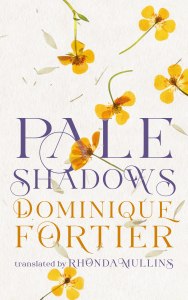 This is technically a sequel to Paper Houses, which is about Emily Dickinson, but I had no trouble reading this before its predecessor. In an Author’s Note at the end, Fortier explains how, during the first Covid summer, she was stalled on multiple fiction projects and realized that all she wanted was to return to Amherst, Massachusetts – even though her subject was now dead. The poet’s presence and language haunt the novel as the characters (which include the author) wrestle over her words. The central quartet comprises Lavinia, Emily’s sister; Susan, their brother Austin’s wife; Mabel, Austin’s mistress; and Millicent, Mabel’s young daughter. Mabel is to assist with editing the higgledy-piggledy folder of handwritten poems into a volume fit for publication. Thomas Higginson’s clear aim is to tame the poetry through standardized punctuation, assigned titles, and thematic groupings. But the women are determined to let Emily’s unruly genius shine through.
The short novel rotates through perspectives as the four collide and retreat. Susan and Millicent connect over books. Mabel considers this project her own chance at immortality. At age 54, Lavinia discovers that she’s no longer content with baking pies and embarks on a surprising love affair. And Millicent perceives and channels Emily’s ghost. The writing is gorgeous, full of snow metaphors and the sorts of images that turn up in Dickinson’s poetry. It’s a lovely tribute that mingles past and present in a subtle meditation on love and legacy.
Some favourite lines:
“Emily never writes about any one thing or from any one place; she writes from alongside love, from behind death, from inside the bird.”
“Maybe this is how you live a hundred lives without shattering everything; maybe it is by living in a hundred different texts. One life per poem.”
“What Mabel senses and Higginson still refuses to see is that Emily only ever wrote half a poem; the other half belongs to the reader, it is the voice that rises up in each person as a response. And it takes these two voices, the living and the dead, to make the poem whole.”
With thanks to The Carol Shields Prize Foundation for the free e-copy for review.
All Fours by Miranda July (2024)
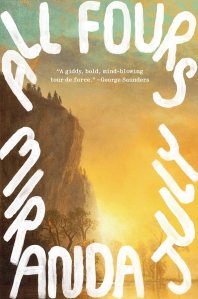 Miranda July’s The First Bad Man is one of the first books I ever reviewed on this blog back in 2015, after an unsolicited review copy came my way. It was so bizarre that I didn’t plan to ever read anything else by her, but I was drawn in by the hype machine and started this on my Kindle in September, later switching to a library copy when I got stuck at 65%. The narrator sets off on a road trip from Los Angeles to New York to prove to her husband, Harris, that she’s a Driver, not a Parker. But after 20 minutes she pulls off the highway and ends up at a roadside motel. She blows $20,000 on having her motel room decorated in the utmost luxury and falls for Davey, a younger man who works for a local car rental chain – and happens to be married to the decorator. In his free time, he’s a break dancer, so the narrator decides to choreograph a stunning dance to prove her love and capture his attention.
I got bogged down in the ridiculous details of the first two-thirds, as well as in the kinky stuff that goes on (with Davey, because neither of them is willing to technically cheat on a spouse; then with the women partners the narrator has after she and Harris decide on an open marriage). However, all throughout I had been highlighting profound lines; the novel is full to bursting with them (“maybe the road split between: a life spent longing vs. a life that was continually surprising”). I started to appreciate the story more when I thought of it as archetypal processing of women’s life experiences, including birth trauma, motherhood and perimenopause, and as an allegory for attaining an openness of outlook. What looks like an ending (of career, marriage, sexuality, etc.) doesn’t have to be.
Whereas July’s debut felt quirky for the sake of it, showing off with its deadpan raunchiness, I feel that here she is utterly in earnest. And, weird as the book may be, it works. It’s struck a chord with legions, especially middle-aged women. I remember seeing a Guardian headline about women who ditched their lives after reading All Fours. I don’t think I’ll follow suit, but I will recommend you read it and rethink what you want from life. It’s also on this year’s Women’s Prize shortlist. I suspect it’s too divisive to win either, but it certainly would be an edgy choice. (NetGalley/Public library)
(My full thoughts on both longlists are here.) The other two books on the Carol Shields Prize shortlist are River East, River West by Aube Rey Lescure and Code Noir by Canisia Lubrin, about which I know very little. In its first two years, the Prize was awarded to women of South Asian extraction. Somehow, I can’t see the jury choosing one of three white women when it could be a Black woman (Lubrin) instead. However, Liars and All Fours feel particularly zeitgeist-y. I would be disappointed if the former won because of its bitter tone, though Manguso is an undeniable talent. Pale Shadows? Pure literary loveliness, if evanescent. But honouring a translation would make a statement, too. I’ll find out in the morning!
10th Blogging Anniversary! & Thoughts on the Women’s Prize and Carol Shields Prize Longlists
I can hardly believe I’ve been blogging for a decade. It seems like no time ago that I started this site on a whim early in my freelance career, soon after my main online publication folded and my brother-in-law died. This is now my 1,486th blog post (so close to that 1,500 milestone!), which means I average 12 posts a month. Between reviews, challenges, memes, book lists, and prize reactions, I maintain a very active blog. I’ve long since stopped caring about numbers of views and likes; I’ll never be a top influencer but I offer quality, thoughtful content for those who are similarly serious about books. The blog has also become a place where I can write about personal things in response to losses and other life changes.

I’m pleased that my blog anniversary happens to coincide with International Women’s Day, around when the Women’s Prize and Carol Shields Prize longlists are announced. I don’t plan to shadow either prize in a concerted way, partly because I’m too busy with reading debut novels in my role as a McKitterick Prize judge, but there are some books that appeal.
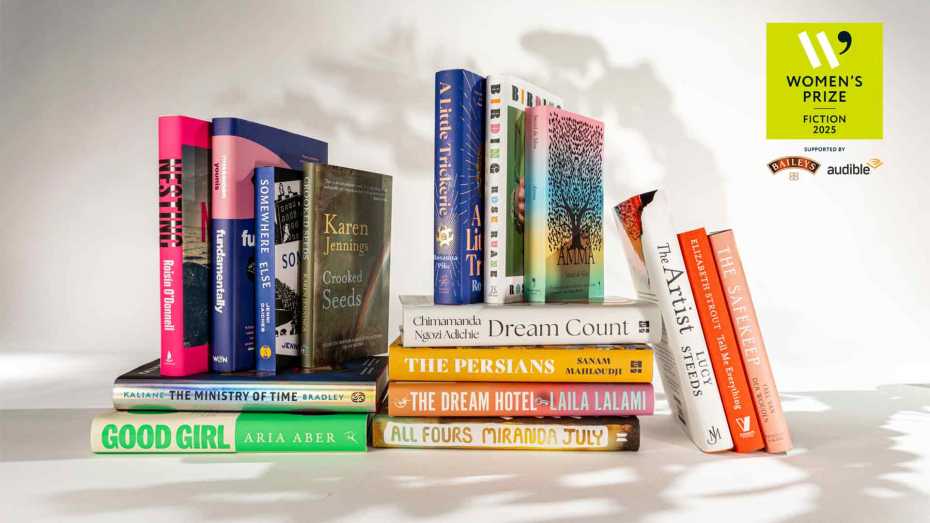
Women’s Prize Longlist
Read
- The Ministry of Time by Kaliane Bradley
- Tell Me Everything by Elizabeth Strout

- The Safekeep by Yael van der Wouden

Reading
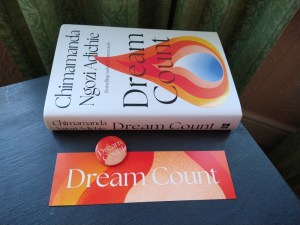 Dream Count by Chimamanda Ngozi Adichie
- All Fours by Miranda July
Already Wanted to Read
- Birding by Rose Ruane – For the cover if nothing else (it made my Cover Love post last year)
- The Artist by Lucy Steeds – Susan of A life in books rates it highly: see her review.
Unsure
- A Little Trickerie by Rosanna Pike – The premise is reasonably appealing (an orphan who pretends to be an angel) but I am very much not keen on medieval settings. I’ll wait and see if it’s shortlisted.
Decided Against
- Crooked Seeds by Karen Jennings – I read the Booker-longlisted An Island and it was fine but I don’t need to try anything else by her.
- Nesting by Roisín O’Donnell – 400 pages on an Irish domestic violence situation sounds like A Lot. Reviews have been very favourable, saying it’s as pacey as a thriller. Again, I’ll wait to see if it’s shortlisted.
Not Interested (for now)
- Good Girl by Aria Aber
- Somewhere Else by Jenni Daiches
- Amma by Saraid de Silva (but well done to Weatherglass Books!)
- The Dream Hotel by Laila Lalami
- The Persians by Sanam Mahloudji
- Fundamentally by Nussaibah Younis
The blurbs for these don’t attract me, but I’d be willing to change my mind if I see an enthusiastic review or two.
[Shortlist: 2 April; winner: 12 June]
Stab-in-the-dark shortlist predictions: Good Girl, Dream Count, The Dream Hotel, Nesting, The Artist, Tell Me Everything
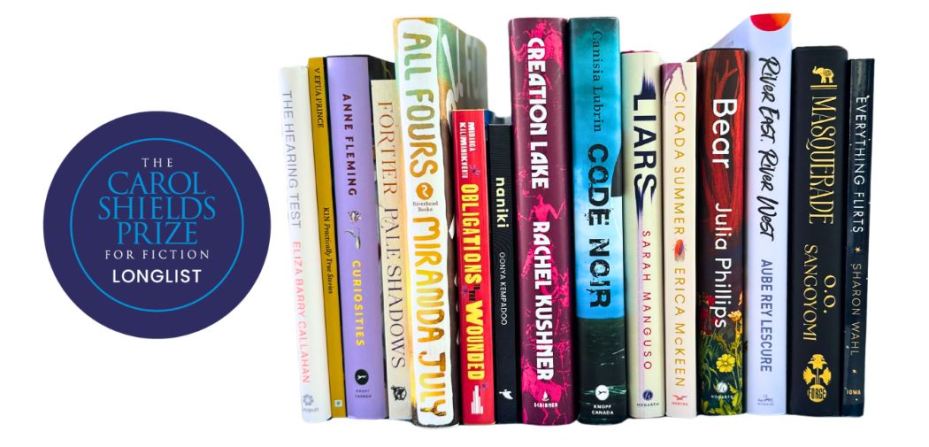
Carol Shields Prize Longlist
Read
- Liars by Sarah Manguso
DNF
- Cicada Summer by Erica McKeen – I read the first 15% last summer. In 2020, Husha has recently lost her mother and is locked down with her grandfather at his Ontario lake house. I recall that the prose was vague and somewhat obnoxiously poetic.
Reading
- All Fours by Miranda July – The only overlap with the WP. I don’t think that, as happened last year, the repeated title will be the winner. It’s too offbeat and divisive.
Want to Read
- The Hearing Test by Eliza Barry Callahan – Novella-length autofiction about adapting to disability.
- Curiosities by Anne Fleming – A historian becomes obsessed with the story told by five 17th-century manuscripts. Sounds like a queer Possession with a dash of North Woods.
- Pale Shadows by Dominique Fortier, translated by Rhonda Mullins – A Québécois author takes on the legacy of Emily Dickinson via the three women who first brought her poetry into print.
- Obligations to the Wounded by Mubanga Kalimamukwento – Linked short stories about Zambians and Zambian émigrés.
Unsure
- Bear by Julia Phillips – After reading Bear by Marian Engel, I don’t think I need any more bear legend-inspired romances in my life. (I already discounted Eowyn Ivey’s latest.)
- Kin: Practically True Stories by V Efua Prince – I’ve had good luck with other books from Wayne State University Press’ Made in Michigan series but can’t quite work out what this would be like.
- Everything Flirts: Philosophical Romances by Sharon Wahl – Could be intriguing; could be pretentious. At least it’s only novella length. All I can do is try an excerpt.
Not Interested (for now)
- Naniki by Oonya Kempadoo – Someone on Goodreads described this as being like spoken word at a sci-fi convention.
- Creation Lake by Rachel Kushner – I wasn’t keen when it was shortlisted for the Booker, and I haven’t changed my mind.
- River East, River West by Aube Rey Lescure – Ditto but from last year’s WP list.
- Code Noir by Canisia Lubrin – Normally I like linked short stories but a 400+ page count and the heavy subject matter of slavery regulations sound overwhelming.
- Masquerade by O.O. Sangoyomi – I struggle with fantasy at the best of times.
[Shortlist: 3 April; winner: 1 May]
Last year Laura T. and I covered most of the longlist between us and really enjoyed the project. (Marcie of Buried in Print also reviewed a lot of the longlist later in the year.) This year we’ll reassess at the shortlist stage and maybe request a few review copies from the publicist. See Laura’s prize longlist reactions here.
Stab-in-the-dark shortlist predictions: Curiosities, Obligations to the Wounded, Creation Lake, Code Noir, Masquerade
What have you read, or might you read, from these longlists?
A New Chapter in My McKitterick Prize Judging
 For the past four years, I have been a judge for the McKitterick Prize, one of various awards administered by the Society of Authors (the UK trade union for writers). Since 1990, this Prize has been given to a debut novelist aged 40+. It’s unique in that it considers unpublished manuscripts as well as published novels – Tom McKitterick, who endowed the prize, was a former Political Quarterly editor and left an unpublished novel at his death. The overlapping Paul Torday Memorial Prize (for debut authors of 60+) closed last year, so this is one of just two prizes I know of for authors OVER a certain age, the other being the RSL Christopher Bland Prize, which is for fiction or nonfiction.
In 2021–24, my role was helping to whittle down the unpublished manuscripts, which then joined the traditionally published novels for judging. For 2025, I’m delighted to announce that I’m one of the judges assessing the published material (this includes self-published books). The opportunity came about by happenstance, really. I realized that I hadn’t heard from the SoA lately and assumed they didn’t need me this year, but e-mailed in case and learned that a judge had just had to bow out, leaving a space for me. It feels like a big step up as judging ‘proper books’ – by which I mean published, and in print format – for a literary prize is a longstanding ambition of mine.


My first shipment arrived on Thursday and I’ve already gotten stuck into my first two reads. I didn’t take a look at the list before the parcel was delivered so I could have the fun of unboxing surprises. Four of the submissions are ones I (secretly) predicted, and I recognized another six titles. The rest are new to me. I likely won’t be able to share more about the process or any of my reading until after the shortlist in May and/or the winner announcement in June at the annual SoA Awards ceremony. My hope is that I will find lots of gems so the task never turns tedious. Longlist choices are due in March, so I’m going to be busy over the next few months! I pulled out a notebook I won in a giveaway on Cathy’s blog to act as a repository for my notes and thoughts. I’m excited to see what themes emerge and encounter some debut novelists the world needs to hear about.


Get Ready for Novellas in November!
Novellas: “all killer, no filler,” as Joe Hill said. Hard to believe, but it’s now the FIFTH year that Cathy of 746 Books and I have been co-hosting Novellas in November as a month-long blogger/social media challenge celebrating the art of the short book. A novella is a book of 20,000 to 40,000 words, but because that’s hard for a reader to gauge, we tend to say anything under 200 pages (even nonfiction). I’m going to make it a personal challenge to limit myself to books of ~150 pages or less.

We’re keeping it simple this year with just the one buddy read, Orbital by Samantha Harvey. (Though we chose it weeks ago, its shortlisting for the Booker Prize is all the more reason to read it!) The UK hardback has 144 pages. Here’s part of the blurb to entice you:
“Six astronauts rotate in their spacecraft above the earth. … Together they watch their silent blue planet, circling it sixteen times, spinning past continents and cycling through seasons, taking in glaciers and deserts, the peaks of mountains and the swells of oceans. Endless shows of spectacular beauty witnessed in a single day. Yet although separated from the world they cannot escape its constant pull. News reaches them of the death of a mother, and with it comes thoughts of returning home. … They begin to ask, what is life without earth? What is earth without humanity?”

Please join us in reading it at any time between now and the end of November!
We won’t have any official themes or prompts, but you might want to start off the month with a My Year in Novellas retrospective looking at any novellas you have read since last NovNov, and finish it with a New to My TBR list based on what novellas others have tempted you to try in the future.
It’s always a busy month in the blogging world, what with Nonfiction November, German Literature Month, Margaret Atwood Reading Month and SciFi Month. Why not search your shelves and/or local library for novellas that could count towards multiple challenges?
From 1 November there will be a pinned post on my site from which you can join the link-up. Keep in touch via Twitter (@bookishbeck / @cathy746books) and Instagram (@bookishbeck / @cathy_746books), and feel free to use the terrific feature images Cathy has made plus our new hashtag, #NovNov24.
“The Future of the Novella”
On the 11th, at Foyles in London, I attended a perfect event to get me geared up for Novellas in November. Indie publisher Weatherglass Books and judge Ali Smith introduced us to the two winners she chose for the inaugural Weatherglass Novella Prize: Kate Kruimink’s Astraea (set on a 19th-century Australian convict ship), out now, and Deborah Tomkins’ Aerth (a sci-fi novella in flash set on alternative earths), coming out in January.

Ali Smith
We heard readings from both novellas, and Neil Griffiths and Damian Lanigan of Weatherglass told us some more about what they publish and the process of reading the prize submissions (blind!). Lanigan called the novella “a form for our times” and put this down not just to modern attention spans but to focus – the glimpse of something essential. He and Smith mentioned F. Scott Fitzgerald, Claire Keegan, Françoise Sagan and Muriel Spark as some of the masters of the novella form.
The effortlessly cool Smith spoke about the delight of spending weekend mornings – she writes during the week but gives herself the weekends off to read – in bed with a pot of coffee and a Weatherglass novella. She particularly enjoyed going into each book from the shortlist without any context and lamented that blurbs mean the story has to be, to some extent, given away to the reader. She said the ending of a novella has to land “like a cat, on its feet” (Griffiths then appended that it must also be ambiguous).
Kate Kruimink
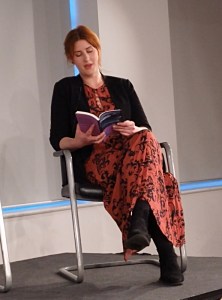
Kruimink, who edits short stories for a magazine, explained that she thinks of Astraea as a long short story. She wrote it especially for this prize, within two months and for Ali Smith, as it were (she mentioned how formative How to Be Both was for her as a writer). Due to time and word limit constraints, she deliberately crafted a small character arc and didn’t do loads of research, though she had been looking into ships’ surgeons’ journals at the time. She has Irish convict ancestry but noted that this is not uncommon in Tasmania. Astraea is a “sneaky prequel” to her first novel, which has been published in Australia.
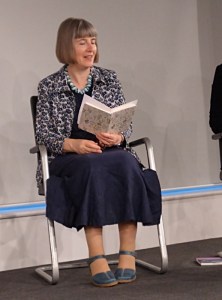
Deborah Tomkins
Aerth was originally titled First, Do No Harm, which had the potential to confuse those looking for a medical read. Aerth and Urth are different planets with parallels to our own. The novella tells the story of Magnus, an Everyman on a deeply forested planet heading into an Ice Age. Tomkins first wrote it for the Bath Prize in 2018 and was longlisted, then added to it. She initially sent the book to sci-fi publishers but was told it was not ‘sci-fi enough’.
Griffiths remarked that the shortlist was all-female and that the two winners show how a novella can do many different things: Astraea is at the low end of the word count at 22,000 words and takes place over just 36 hours; Aerth is towards the upper limit at 36,000 words and spans about 40 years.
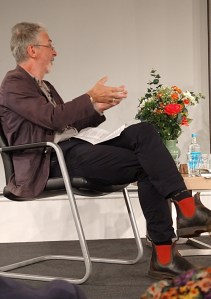
Neil Griffiths
All the panellists dismissed the idea of a hierarchy with the full-length novel at the top. Griffiths said that the constraints of the novella, to need to discard and discard, make it stand out.
A further title from the 2024 shortlist, We Hexed the Moon by Mollyhall Seeley, will also be published by Weatherglass next year, and submissions are now open for the Weatherglass Novella Prize 2025.
Many thanks for my free ticket to a great event. Weatherglass has also kindly offered to send Cathy and me copies of the two novellas to review over the course of #NovNov. I’m looking forward to reading both winners!
 Bookish Beck = Rebecca Foster. American transplant to England. Freelance proofreader and book reviewer.
 Bookish Beck