Books of Summer, 3–4: Anthony Bourdain and Meron Hadero
Back to the foodie lit. A chef’s memoir of adventurous travel and eating, and a short story collection about Ethiopian American immigrants – for some of whom learning how to cook traditional American food is a sign of integration.
A Cook’s Tour: In Search of the Perfect Meal by Anthony Bourdain (2001)
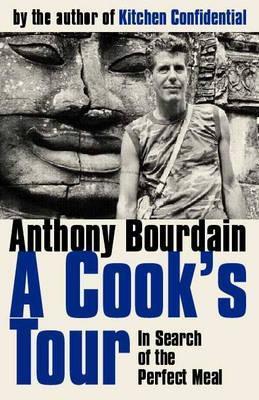 Anthony Bourdain also appeared on my summer reading list when I reviewed Kitchen Confidential in 2020; I have both books in an omnibus edition. The chef acknowledges there’s no such thing as a perfect dining experience as there are many subjective factors apart from the food, but a few of his meals here are pretty close to ideal. Others are horrific. But everywhere he goes, from England to Cambodia, he gives a fair try. Four interspersed chapters are set in Vietnam, a country he falls in love with, but the rest are like individual essays with a different destination each time: Spain, Russia, Morocco, Japan, Scotland…
Some places are chosen due to personal significance or professional connections. He goes back to where he spent childhood summers in France, but it doesn’t live up to expectations: “I’d thought everything would be instant magic. That the food would taste better because of all the memories. … But you can never be ten years old again.” His boss arranges a pig roast for him in Portugal; he travels to the state in Mexico where most of his kitchen staff come from. With several other chefs, he journeys to Thomas Keller’s The French Laundry in California for a 20-course tasting menu – the rundown of the dishes takes him several pages. The key ingredients of this and the other near-perfect meals seem to be excellent quality of food, innovative flavors, a variety of dishes, and a languid pace with the alcohol flowing.
Bourdain sheepishly confesses that his travels were documented for television; the Food Network made him agree to some filming opportunities he would otherwise have avoided. Vegetarians be warned: some of these involve slaughter, and/or eating exotic animals. Aside from the pig, there’s a whole lamb cooked over a fire in the desert in Morocco, a turkey he beheads, and rabbits he shoots. And while you might think he’d eat anything with pleasure, there are in fact a few meals that leave him feeling ill: iguana tamales, bird’s nest soup, and dishes that use up all parts of a cobra. A notorious vegetarian hater, he even agrees to attend a vegan potluck in Berkeley, but reports that “not one of them could cook a f***ing vegetable.”
This was fast-moving, brash and funny; just as good as Kitchen Confidential and something I’d recommend to anyone who enjoys cooking shows or stunt travel. (Free – swap shop) 
A Down Home Meal for These Difficult Times by Meron Hadero (2022)
Debut author Hadero won the Restless Books Prize for New Immigrant Writing for this work in progress, many of whose stories had been published in periodicals in 2015–20. The 15 stories are roughly half in the first person and half in the third person, and apart from a couple whose place or character origins aren’t specified, I think all are about Ethiopians or Ethiopian Americans. Often, the protagonist is a recent immigrant. Yohannes, in “Medallion,” is recruited by his taxi driver almost immediately upon his arrival in Los Angeles, but finds that his American dream never comes through. In “The Thief’s Tale,” an old Ethiopian man who speaks no English is lost in Prospect Park. When the man who holds him up at knifepoint realizes there is no watch or wallet to take, he lets him call his daughter from a payphone and, as they wait, the two strangers share their stories of failure and regret.
Sometimes Ethiopia is the setting instead. “The Suitcase” has Saba getting ready to return to the USA after a one-month visit to Addis Ababa, her bag 10 kilograms too heavy because of everything people are sending back with her. In “The Street Sweep,” Getu hopes to impress a departing NGO worker enough at his leaving party at the Addis Sheraton that he’ll get a life-changing job offer. This one was a standout, though distressing for how it rests on misunderstanding.
 My favorites seem like they could be autobiographical for the author. “The Wall” is narrated by a man who immigrated to Iowa via Berlin at age 10 in the mid-1980s. At a potluck dinner, he met Professor Johannes Weill, who gave him free English lessons. Six years later, he heard of the Berlin Wall coming down and, though he’d lost touch with the professor, made a point of sending a note. The connection across age, race and country is touching. “Sinkholes” is a short, piercing one about the single Black student in a class refusing to be the one to write the N-word on the board during a lesson on Invisible Man. The teacher is trying to make a point about not giving a word power, but it’s clear that it does have significance whether uttered or not. “Swearing In, January 20, 2009” is a poignant flash story about an immigrant’s patriotic delight in Barack Obama’s inauguration, despite prejudice encountered.
The title story is the only foodie link, but it’s a sweet one. Two women who attend church Amharic classes in New York City admit that they can’t cook, but want to impress at the PTA bake sale, so go in search of a quintessential American cookbook, and in the years to come prepare dishes from The Good Housekeeping Illustrated Cookbook every time there is a crisis. “When Yeshi’s husband left her for a blonde waitress, they made Broiled Hamburg Steak, just the once. … When Jazarah’s credit cards were stolen and maxed out, they made trays of Corn Fritters.” Eventually, they start to make a living from their own food truck.
There were no bad stories here per se, but several too many, and not enough variety. I also didn’t warm to the couple of political satires involving manuscripts. “The Case of the Missing _______,” set in 2036 and counting backwards from Day 100, is a document full of erasure, produced by the Minnesota newspaper The Exile Gazeta and concerning an absent authoritarian leader. It made me think of Ella Minnow Pea, or perhaps novels by Jonathan Safran Foer and Hernan Diaz, and felt different to the rest, but not in a good way. It would be interesting to try a novel by Hadero someday. See also Liz’s review. (Other challenges this met: review catch-up, set-aside) 
With thanks to Canongate for the proof copy for review.
Reading the Meow: Cat Books by Nadia Mikail, Derek Tangye and Doreen Tovey
Reviews of books about cats have been a standard element on my blog over the years, though not for quite a while now. The new Reading the Meow challenge, hosted by Mallika of Literary Potpourri, was a good excuse to revive the feature. I read all of these from the library. #ReadingtheMeow2023 #LoveYourLibrary

Alfie, who turned 15 last month, accompanies me in all things, including reading. I made him a medallion for his birthday that reads “World’s Best Cat” on one side and “World’s Most Annoying Cat” on the other.


The Cats We Meet Along the Way by Nadia Mikail (2022)
 Just the one cat, actually. (Ripoff!) But Fleabag, a one-eared stray ‘the colour of gone-off curry’ who just won’t leave, is a fine companion on this end-of-the-world Malaysian road trip. Mikail’s debut teen novel, which won the Waterstones Children’s Book Prize 2023, imagines that news has come of an asteroid that will make direct contact with Earth in one year. The clock is ticking; just nine months remain. Teenage Aisha and her boyfriend Walter have come to terms with the fact that they’ll never get to do all the things they want to, from attending university to marrying and having children.
Aisha’s father died of cancer when she was young, and her older sister June disappeared two years ago. Aisha decides that what is most important now is finding June and trying to heal their estrangement, so she and Walter set out in a campervan with his parents and her mother (and Fleabag, of course). Mikail sensitively portrays the tangle of anger, grief and fear these characters feel, and it’s interesting to encounter the food and flora of a country that will be unfamiliar to many. Even though everything feels doomed, there are hopeful tasks Aisha and her family can be part of. Teens will no doubt be smart enough to realise that we face a similar calamity in the form of climate breakdown; it’s just that the timescale is a little different. 
A Cat in the Window by Derek Tangye (1962)
 My second from Tangye. I’ve read from The Minack Chronicles out of order because I happened to find a free copy of Lama a few years ago and read it for Novellas in November. Tangye wasn’t a cat fan to start with, but Monty won him over. They met in the Savoy hotel when Tangye and Jeannie were newlyweds of three months, and Monty was six weeks old. He lived with them first in the London suburb of Mortlake, then on their flower farm in Cornwall. During the London years they kept long hours and often returned from gatherings at 2 a.m., to be met with Monty in the front window giving a lordly and annoyed glare.
When they moved to Minack there was a sense of giving Monty his freedom and taking joy in watching him live his best life. In between, they were evacuated to St Albans and briefly lived with Jeannie’s parents and Scottie dog, who became Monty’s nemesis. Ever after, he would attack dogs he saw on the canal path. In Cornwall, the threats to a free-roaming cat included foxes and rabbit traps, but Monty survived into his 16th year, happily tolerating a few resident birds: Hubert the gull, Charlie the chaffinch and Tim the robin.
Tangye writes warmly and humorously about Monty’s ways and his own development into a man who is at a cat’s mercy.
I had observed … that cat owners … were apt to fall into two types. Either they ignored the cat, put it out a night whatever the weather, left it to fend for itself when they went away on holidays, and treated it, in fact, as a kind of better class vermin; or else they worshipped the animal like a god. The first category appeared callous, the second devoid of sense.
He portrays life as a series of manageable incidents. This was really the perfect chronicle of life with a cat, from adoption through farewell. It’s the kind of thing I might like to write about Alfie, if only for my husband’s and my benefit, after he shuffles off this kitty coil.
Cats in Concord by Doreen Tovey (2001)
 My seventh from Tovey. I can hardly believe that, having started her writing career in the 1950s, she was still publishing into the new millennium! (She lived 1918–2008.) Tovey was addicted to Siamese cats. As this volume opens, she’s so forlorn after the death of Saphra, her fourth male, that she instantly sets about finding a replacement. Although she sets strict criteria she doesn’t think can be met, Rama fits the bill and joins her and Tani, her nine-year-old female. They spar at first, but quickly settle into life together. As always, there are various mishaps involving mischievous cats and eccentric locals (I have a really low tolerance for accounts of folksy neighbours’ doings). The most persistent problem is Rama’s new habit of spraying.
Towards the end, Tani succumbs to a virus while Rama recovers … and guess what, Tovey immediately gets a replacement. In fact, the last lines of the book are “If anyone reading this book has lost a beloved cat and is grieving, I would urge them to get another. I am sure they were put into this world for our admiration—and I think that they think that way too.” I’m probably done with Tovey; Cats in the Belfry and Cats in May were terrific, but it’s been diminishing returns ever since and I’ve ended up skimming most of the last few I tried. 
I also recently enjoyed these two picture books, one about a cat’s mercurial day-and-night moods and the other about an indoor cat who doesn’t realize how good he has it. (Also pictured in the left-hand photograph above.)


Three on a Theme: “Rainbow” Books for Pride Month
Two of these are short story collections (and one almost is); two are specifically queer in outlook; all attracted me for their colorful covers, and all were borrowed from the library. #LoveYourLibrary

Rainbow Rainbow: Stories by Lydia Conklin (2022)
The 10 stories in this confident debut collection are unabashedly queer, and half involve the trans experience, whether ideation or reality. Conklin is nonbinary, so it’s tempting to read several stories as autobiographical: female characters long to get top surgery and transition to male or nonbinary, but worry it will change how they are perceived or desired. “Pink Knives” and “Boy Jump,” especially, have the flavor of autofiction, with protagonists traveling in Poland and feeling attraction to people of various genders. (The former has a pandemic setting, which I’ve noticed has at this point started to feel dated.) My overall favorite was “Sunny Talks,” in which middle-aged Lillia accompanies her trans teenage nephew to a conference for celebrity YouTubers but can’t bring herself to announce her own intended transition. Though life hasn’t been easy for Sunny, he has support she lacked growing up.
 Asher and Ivan, two characters of nebulous sexuality and future gender, are the core of “Cheerful Until Next Time” (check out the acronym), which has the fantastic opening line “The queer feminist book club came to an end.” “Laramie Time” stars a lesbian couple debating whether to have a baby (in the comic Leigh draws, a turtle wishes “reproduction was automatic or mandatory, so no decision was necessary”). “A Fearless Moral Inventory” features a pansexual who is a recovering sex addict. Adolescent girls are the focus in “The Black Winter of New England” and “Ooh, the Suburbs,” where they experiment with making lesbian leanings public and seeking older role models. “Pioneer,” probably my second favorite, has Coco pushing against gender constraints at a school Oregon Trail reenactment. Refusing to be a matriarch and not allowed to play a boy, she rebels by dressing up as an ox instead. The tone is often bleak or yearning, so “Counselor of My Heart” stands out as comic even though it opens with the death of a dog; Molly’s haplessness somehow feels excusable.
Six of the stories are in the third person and four in first person. I’d be interested to try Conklin’s longer-form work, and think first-person narration would particularly suit her. I didn’t really sense that this was a book meant for me, but that’s okay; a lot of readers will feel seen and represented. Pair this with, or have it on hand as a follow-up to, work by Allison Blevins, Melissa Febos and, most of all, Eley Williams. 
Under the Rainbow by Celia Laskey (2020)
In Laskey’s debut, which has been marketed as a novel but reads more like linked short stories, a favorite format of mine, researchers have identified Big Burr, Kansas as the most homophobic town in America. A task force from Acceptance Across America descends on the rural backwater for a targeted two-year program promoting education and friendship. Each chapter is a first-person, present-tense confession from a local or a queer visitor, whose stories interlock and push the chronology forward. For every positive step – a gender-neutral bathroom in the high school, a closeted individual who summons up the courage to come out – there is a regressive one, such as a AAA billboard being set on fire or a house being egged.
 Laskey inhabits all 11 personae with equal skill and compassion. Avery, the task force leader’s daughter, resents having to leave L.A. and plots an escape with her new friend Zach, a persecuted gay teen. Christine, a Christian homemaker, is outraged about the liberal agenda, whereas her bereaved neighbor, Linda, finds purpose and understanding in volunteering at the AAA office. Food hygiene inspector Henry is thrown when his wife leaves him for a woman, and meat-packing maven Lizzie agonizes over the question of motherhood. Task force members David, Tegan and Harley all have their reasons for agreeing to the project, but some characters have to sacrifice more than others.
Little references in later chapters catch you up on what’s happened with the others. I only questioned the need for Elsie as a POV character, and the exclusion of Jamal (presumably Laskey thought it unwise to write from the perspective of a Black man, but he’s a glaring omission). A final chapter, returning to one of the protagonists and set 10 years later, presents a town that’s changed enough to host its first gay wedding and first LGBTQ-owned business.
The novel is realistically sad, but not overly so, and was compellingly readable and heartwarming in a way that reminded me of how I felt about Shotgun Lovesongs. You might not want to live there, but I guarantee you’ll develop a certain fondness for Big Burr. 
Scattered Showers: Stories by Rainbow Rowell; illus. Jim Tierney (2022)
I spotted this collection while shelving in the YA section of the library one day and admired the sky blue naked hardback for its red sprayed edges, chunky rainbow endpapers, distinctive font, and teal and magenta interior color scheme. I’d read one Rowell book before, the graphic novel Pumpkinheads. This is probably a better match for her dedicated fans in that three of the stories are spin-offs from her fiction and a few of the rest are one-offs (Amazon Original Stories, a World Book Day publication, a contribution to an anthology), such that I felt a little like I was reading leftovers. A B-sides volume, if you will.
 Four of the nine are holiday-themed, so this could make a good Twixtmas read if you like seasonality; eight are in the third person and just one has alternating first person narrators. All are what could be broadly dubbed romances, with most involving meet-cutes or moments when long-time friends realize their feelings go deeper (“Midnights” and “The Snow Ball”). Only one of the pairings is queer, however: Baz and Simon (who are a vampire and … a dragon-man, I think? and the subjects of a trilogy) in the Harry Potter-meets Twilight-meets Heartstopper “Snow for Christmas.” The rest are pretty straightforward boy-girl stories.
I liked “Kindred Spirits,” in which Elena joins a small group (“three cold nerds”) of hardcore Star Wars fans waiting in line for the first sequel and notices Gabe, a classmate, as if for the first time; “Winter Songs for Summer,” in which a sensitive jock proves he knows his upstairs dorm mate better than anyone through the breakup-recovery tracks he puts on a mix CD for her; and “If the Fates Allow,” about Nebraska neighbors who bond over Jell-O salad during a couple of pandemic Christmases.
I wasn’t as enamored by the couple of fantasy stories, “The Prince and the Troll,” a fairy tale twisted into a vague environmental dystopian parable (“This isn’t easy. This is just another kind of hard. That’s all that’s left now, for any of us”), and “In Waiting,” about the evolving characters incubating in a writer’s head. “Mixed Messages” was refreshing for having middle-aged characters, two friends texting back and forth to try to work out whether the one missed a period because she’s pregnant or in perimenopause, but I doubt I’d be tempted to seek out the book these characters originated in (Attachments), or any of Rowell’s others.
There was a clear winner here: Under the Rainbow!
Extra goodies:
Celebrate Pride Month! The Bookshop.org team has curated this list of books by LGBTQIA+ authors for you to enjoy. Please enjoy 20% OFF all titles. [affiliate link]
A song Sufjan Stevens wrote for Pride Month 2019.
Recent Writing for BookBrowse, Foreword, Shelf Awareness, Shiny New Books, and the TLS
I’ve compiled excerpts from some reviews I’ve contributed to other websites and publications this year. I link to the full text where available. (When writing a paid review, I seek to be balanced but positive. Ratings reflect my personal response.)
BookBrowse
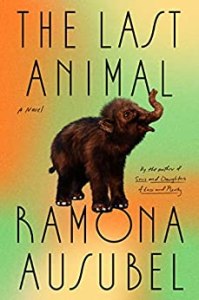 The Last Animal by Ramona Ausubel: In Ausubel’s offbeat third novel, a widowed scientist and her two daughters embark on a rogue plan to make history by resurrecting the woolly mammoth. There is a quirky combination of cosmic and domestic concerns here. A winsome sister duo is at the heart of the unusual and timely story, with priority given to the points of view of teenagers Eve and Vera, whose banter is a highlight. Ausubel has wisely chosen not to dwell on the scientific details of de-extinction, yet that means that this becomes more like speculative fiction or a fairy tale. Ironically, the fabulist-leaning novel is best when most realist, documenting struggles with bereavement, sexism and parenting teens.
 The Lost Wife by Susanna Moore: Moore’s hard-hitting novella is based in part on the memoir Six Weeks in the Sioux Tepees: A Narrative of Indian Captivity. In Moore’s version, Sarah, 25, leaves her baby behind when she flees an abusive husband, and once in Minnesota Territory marries John Brinton, who becomes a doctor on a Sioux reservation. By 1862, Sarah is friendly with the Native women. Although the Civil War is unfolding, the greater threat here is of revolt by the starving Indigenous residents. There is much of anthropological and historical interest, but Sarah’s flat storytelling, which may represent a pastiche of period style, means threatening or climactic scenes lose some of their potential gravity.
Foreword
 My Mother Says by Stine Pilgaard (trans. from the Danish by Hunter Simpson): After breaking up with her zookeeper girlfriend over their age gap and their conflicting takes on motherhood, the heroine moves back in with her father, a pastor who’s obsessed with Pink Floyd, and her stepmother. Her mother visits often, nagging her to finish her thesis. The line between her conversations and internal thoughts is thin. From her mansplaining doctor, she learns that the brain’s hippocampus is named for its seahorse shape. This inspires “Monologues of a Seahorse,” interludes of stream-of-consciousness association. Experimental and whimsical, this delivers deadpan narration of everyday woes.
 In Vitro: On Longing and Transformation by Isabel Zapata (trans. from the Spanish by Robin Myers): A Mexican poet probes the enduring mysteries of pregnancy and birth in a memoir in fragments that travels from fertility treatment through to the early weeks of pandemic-time motherhood. The clinical language of a gynecological history—late menstruation, polycystic ovary syndrome, eighteen years on the pill, and infertility—and the embryo transfer process contrasts with Zapata’s mystical thinking. The microessays integrate family stories, history, and artistic explorations. This resolute account of a personal metamorphosis alchemizes tender experiences into enchanting vignettes.
Shelf Awareness
Fiction
 Daughters of Nantucket by Julie Gerstenblatt: This engrossing debut novel explores the options for women in the mid-19th century while bringing a historical tragedy to life. Metaphorical conflagrations blaze in the background in the days leading up to the great Nantucket fire of 1846: each of three female protagonists (a whaling captain’s wife, a museum curator, and a pregnant Black entrepreneur) holds a burning secret and longs for a more expansive, authentic life. The action spans two tense weeks, one week before the fire through eight days after. The women’s lives collide in two climactic scenes. Gerstenblatt’s eye for detail results in sultry historical fiction for Sue Monk Kidd’s readers.
 Camp Zero by Michelle Min Sterling: Sterling’s brilliantly unsettling debut novel is set in mid-21st-century, post-oil North America. Prioritizing perspectives from two all-female communities, it contrasts the heights of opulence and technology with the basic instinct for survival. How the strands connect is a mystery sustained through much of the book. Characters go by multiple names and harbor ulterior motives; scenes echo each other as disparate subplots meet in unexpected ways. The background is all too plausible. Sterling also takes to its logical extreme the state of being constantly online. Compelling dystopian cli-fi with three-dimensional characters—perfect for fans of Station Eleven and To Paradise.
 Dear Chrysanthemums by Fiona Sze-Lorrain: In this elegant collection of 11 linked short stories by a poet and translator, China’s mid-20th-century political upheaval casts a long shadow. Music and food, not to mention love, bring meaning to those displaced in the aftermath of dissent. The stories—set in China, Singapore, Paris, and New York—span seven decades but always take place in a year ending in a six, a sacred number in Chinese divination. A highlight is “News from Saigon,” in which a prostitute meets Marguerite Duras in a Paris café. The connections are subtle, with the final story pulling together many strands. Ideal for readers of Madeleine Thien’s Do Not Say We Have Nothing.
Nonfiction
 Stranded by Maddalena Bearzi: Bearzi developed a deep love for marine fauna during childhood summers in Sardinia and cofounded the Ocean Conservation Society in the 1990s. Temporarily confined to land by Covid-19 lockdowns, she adopts a different tactic for exploring animal behavior: “an urban safari in my backyard and neighborhood.” These nature essays exemplify evenhandedness, curiosity, and close observation. From wasps to night-blooming flowers, her interest is wide-ranging. Gardening is a relaxing pastime and a connection to her mother while they are separated. As a behavioral ecologist, she views even her dog as a subject of study. A passionate primer to appreciating everyday nature.
Poetry
 Lo by Melissa Crowe: This incandescent autobiographical collection travels from girlhood to marriage and motherhood in post-pandemic USA. Crowe delves into sexual abuse and growing up in rural poverty. Yet the collection is so carefully balanced in tone that it never feels bleak. The emotional range is enhanced by alliteration and botanical imagery.
 Dislocations by Karen Enns: The fourth collection by Canadian poet Enns skillfully evokes a rural upbringing and revels in the beauty of nature and music. One of its aphorisms could encapsulate the entire collection: “The ratio of love to grief / we understood as music.” Updating the pastoral tradition, the bittersweet verse also takes solace in the past.
Shiny New Books
A Fortunate Woman by Polly Morland & A Fortunate Man by John Berger: The similarities go much further than the title and subject matter: these two biographical works, both illustrated with black-and-white photographs, are set in the same English valley and the female subject of Morland’s is the next-but-one successor of the doctor who stars in Berger’s.
 Berger (1926–2017), an art critic and Booker Prize-winning novelist, spent six weeks shadowing the doctor, to whom he gives the pseudonym John Sassall, with Swiss documentary photographer Jean Mohr, his frequent collaborator. Sassall’s dedication was legendary: he attended every birth in this community, and nearly every death. Sassall’s middle-class origins set him apart from his patients. There’s something condescending about how Berger depicts the locals as simple peasants. Mohr’s photos include soft-focus close-ups on faces exhibiting a sequence of emotions, a technique that feels outdated in the age of video. Along with recording the day-to-day details of medical complaints and interventions, Berger waxes philosophical on topics such as infirmity and vocation. A Fortunate Man is a curious book, part intellectual enquiry and part hagiography.
 With its layers of local history and its braided biographical strands, A Fortunate Woman takes up many of the same heavy questions but feels more subtle and timely. It also soon delivers a jolting surprise: the doctor Berger called John Sassall was likely bipolar and, soon after the death of his beloved wife Betty, committed suicide in 1982. His story still haunts this community, where many of the older patients remember going to him for treatment. Like Berger, Morland keenly follows a range of cases. As the book progresses, we see this beautiful valley cycle through the seasons, with certain of Richard Baker’s landscape shots deliberately recreating Mohr’s scene setting. The timing of Morland’s book means that it morphs from a portrait of the quotidian for a doctor and a community to, two-thirds through, an incidental record of the challenges of medical practice during COVID-19.
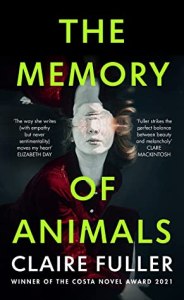 The Memory of Animals by Claire Fuller: Neffy has nothing to lose when she enrolls in a controversial vaccine trial in a familiar mid-pandemic landscape. The novel is presented as her journal. The bulk takes place in two weeks she spends on a locked unit with four fellow test subjects. In the meantime, she is introduced to an experimental technology for reliving memories. The characterisation of the four other cast members is somewhat thin, and the elements feel randomly assembled. The world-building and tech are unlikely to stand up to science fiction fans’ scrutiny, but this has just the right dose of the speculative for literary fiction readers. It also happens to fit into a recent vogue for octopus novels.
Times Literary Supplement
A late-twenties journalist sets out to survey the situation on the ground for ten British species being squeezed out by anthropogenic climate change: The mission is very similar, and both authors embody passionate dedication to conservation, but the difference in tone of these travel narratives makes them likely to appeal to separate audiences…
In Search of One Last Song by Patrick Galbraith & Forget Me Not by Sophie Pavelle:
 Galbraith’s is an elegiac tour through imperilled countryside and urban edgelands. Each chapter resembles an in-depth magazine article: a carefully crafted profile of a beloved bird species, with a focus on the specific threats it faces. Galbraith recognises the nuances of land use. However, shooting plays an outsized role. (Curious for his bio not to disclose that he is editor of the Shooting Times.) The title’s reference is to literal birdsong, but the book also celebrates birds’ cultural importance through their place in Britain’s folk music and poetry. He is clearly enamoured of countryside ways, but too often slips into laddishness, with no opportunity missed to mention him or another man having a “piss” outside. Readers could also be forgiven for concluding that “Ilka” (no surname, affiliation or job title), who briefs him on her research into kittiwake populations in Orkney, is the only female working in nature conservation in the entire country; with few exceptions, women only have bit parts: the farm wife making the tea, the receptionist on the phone line, and so on.
 Pavelle’s book is a tonic in more ways than one. Employed by Beaver Trust, she is enthusiastic and self-deprecating. Her nature quest has a broader scope, including insects like the marsh fritillary and marine species such as seagrass and the Atlantic salmon. Travelling between lockdowns in 2020–1, Pavelle took low-carbon transport wherever possible and bolsters her trip accounts with context, much of it gleaned from Zoom calls and e-mail correspondence with experts from museums and universities. Refreshingly, around half of these interviewees are women, and the animal subjects are never the obvious choices. Instead, she seeks out “underdog” species. The explanations are at a suitable level for laymen, true to her job as a science communicator. The snappy, casual prose (“the future of the bilberry bumblebee and its Aperol arse can be bright, but only if we get off our own”) could even endear her to teenage readers. As image goes, Pavelle’s cheerful naïveté holds more charm than Galbraith’s hardboiled masculinity.
 Taking Flight by Lev Parikian: Parikian’s accessible account of the animal kingdom’s development of flight exhibits a layman’s enthusiasm for an everyday wonder. He explicates the range of flying strategies and the structural adaptations that made them possible. The archaeopteryx section, chronicling the transition between dinosaurs and birds, is a highlight. Though the most science-heavy of the author’s six works, this, perhaps ironically, has fewer footnotes. His usual wit is on display: he describes the feral pigeon as “the Volkswagen Golf of birds” and penguins as “piebald blubber tubes”. This makes it a pleasure to tag along on a journey through evolutionary time, one sure to engage even history- and science-phobes.
Do any of these catch your eye?
Literary Wives Club: The Harpy by Megan Hunter
(My fifth read with the Literary Wives online book club; see also Kay’s and Naomi’s reviews.)
Megan Hunter’s second novella, The Harpy (2020), treads familiar ground – a wife discovers evidence of her husband’s affair and questions everything about their life together – but somehow manages to feel fresh because of the mythological allusions and the hint of how female rage might reverse familial patterns of abuse.
Lucy Stevenson is a mother of two whose husband Jake works at a university. One day she opens a voicemail message on her phone from a David Holmes, saying that he thinks Jake is having an affair with his wife, Vanessa. Lucy vaguely remembers meeting the fiftysomething couple, colleagues of Jake’s, at the Christmas party she hosted the year before.
As further confirmation arrives and Lucy tries to carry on with everyday life (another Christmas party, a pirate-themed birthday party for their younger son), she feels herself transforming into a wrathful, ravenous creature – much like the harpies she was obsessed with as a child and as a Classics student before she gave up on her PhD.

Like the mythical harpy, Lucy administers punishment. At first, it’s something of a joke between her and Jake: he offers that she can ritually harm him three times. Twice it takes physical form; once it’s more about reputational damage. The third time, it goes farther than either of them expected. It’s clever how Hunter presents this formalized violence as an inversion of the domestic abuse of which Lucy’s mother was a victim.
Lucy also expresses anger at how women are objectified, and compares three female generations of her family in terms of how housewifely duties were embraced or rejected. She likens the grief she feels over her crumbling marriage to contractions or menstrual cramps. It’s overall a very female text, in the vein of A Ghost in the Throat. You feel that there’s a solidarity across time and space of wronged women getting their own back. I enjoyed this so much more than Hunter’s debut, The End We Start From. (Birthday gift from my wish list)
The main question we ask about the books we read for Literary Wives is:
What does this book say about wives or about the experience of being a wife?
“Marriage and motherhood are like death … no one comes back unchanged.”
So much in life can remain unspoken, even in a relationship as intimate as a marriage. What becomes routine can cover over any number of secrets; hurts can be harboured until they fuel revenge. Lucy has lost her separate identity outside of her family relationships and needs to claw back a sense of self.
I don’t know that this book said much that is original about infidelity, but I sympathized with Lucy’s predicament. The literary and magical touches obscure the facts of the ending, so it’s unclear whether she’ll stay with Jake or not. Because we’re mired in her perspective, it’s hard to see Jake or Vanessa clearly. Our only choice is to side with Lucy.
Next book: Sea Wife by Amity Gaige in September
Sidle Creek by Jolene McIlwain (Blog Tour)
I’m a sucker for “dirty realism,” a term coined in the 1980s to encompass gritty stories of blue-collar Americana: Ron Rash, David Vann, Daniel Woodrell et al. (I wrote a whole article about it in 2013). It’s less common, certainly, to find women writing in this subgenre, and that feminine touch is part of what makes Sidle Creek unique. In this debut collection of 22 short stories, loosely linked by their location in the Appalachian hills in western Pennsylvania and a couple of recurring minor characters, Jolene McIlwain softens the harsh realities of addiction, poverty and violence with the tender bruises of infertility and lost love.
The title story, which opens the book, has a shifting first-person point-of-view, first telling us about and then putting us into the mind of Esme Andersen, who’s 20 in 1975. Various diagnoses have plagued her family, medical words that repeat as chants: hemorrhage, endometriosis. Superstitions around the creek cast it alternately as a potential site of harm or healing as her single father tries to help her deal with her severe periods. The cover image comes from “Shell,” in which Tiller Shanty reads signs in the markings on red-winged blackbird eggs. He learned his skill of divination from his Vietnamese wife, but conceals from her a portent about her future. It turns out there’s more than one way to lose a beloved.
Grief is a resonant theme in so many of the stories. “The Fractal Geometry of Grief” is a shining example. Hubert Ashe, a widowed mathematician, becomes obsessed with a doe and sets up trail cams and a feeding station to watch her. It’s not clear whether he believes the animal is a reincarnation of his wife or not, but it’s unwise to get so attached in a hunting area. In “Seeds,” a man finds a photograph of his dying wife as a girl and revisits the sadness of her life. “Steer,” one of the most affecting stories, has a middle-aged man hit by anxiety, unable to forget the death of one of their cattle back when he was 16. As horrific as the experience was, it made him receptive to both beauty and pain.
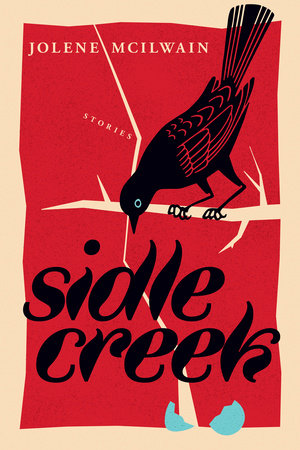
Animal suffering is indeed frequent – something that seems important to mention, as I know a lot of readers who avoid scenes of it whenever possible. In “Eminent Domain,” the electricity shed where teenagers used to go drinking is found to be full of slaughtered cats. It’s the prompt the protagonist needs to escape this dead-end town. “Loosed” is a masterpiece in the vein of Demon Copperhead (though much more violent) about a man who makes money on increasingly cruel sport: cock fighting, then dog fighting, then dirty fights between his own four sons. The flash forward that ends this one is devastating. I, too, am sensitive to reading about animal deaths, but the animal suffering only matches the human here. The nastiness of “The Less Said” makes that plain.
Pregnancy or infant loss is a recurring element. In just three pages, “Seed to Full” expresses a world of sorrow as a woodworker crafts a coffin for his infant son. Even where it is not a central subject, infertility is mentioned in a number of stories. In “You Four Are the One,” four adolescent neighbor girls help Cinta Johns out around the house, hoping with her that this fifth pregnancy will be the one that lasts. “The Steep Side,” a memorable closer that shifts between past and future, has a teen coming across a crashed van, a heavily pregnant woman, and an older woman claiming to be a nurse. What he sees haunts him into adulthood.
There’s an air of mystery to that one, and particularly in “Those Red Boots,” about the disappearance of a waitress who worked at a Hooters-style joint where all the comely staff wear the same uniforms and perform titillating dances. My preference was for longer stories like this where you get greater depth of characterization and more scenes and dialogue. I might have considered cutting a handful of the flash-length stories. However, even in these micro-fictions, there are still interesting setups. My favorite among them was “The Fourth,” in which Independence Day fireworks are triggering for shell-shocked Uncle Ron.
At times harrowing, always clear-eyed, these stories are true to life and compassionate about human foibles and animal pain. I would highly recommend them to readers of Kent Haruf and Jayne Anne Phillips. McIlwain has such an established voice that this hardly seems like a first book. I can’t wait to read whatever she writes next.
With thanks to Melville House for the proof copy for review.
Buy Sidle Creek from Bookshop.org [affiliate link]
I was delighted to be invited to participate in the blog tour for Sidle Creek. See below for details of where other reviews have appeared or will be appearing soon.
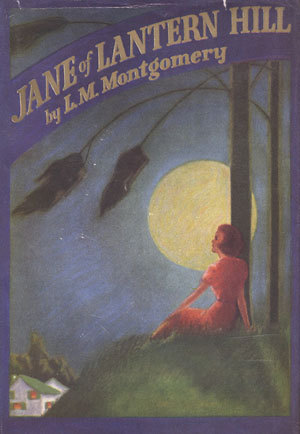
Jane of Lantern Hill by L.M. Montgomery (1937) #ReadingLanternHill
I’m grateful to Canadian bloggers Naomi (Consumed by Ink) and Sarah for hosting the readalong: It’s been a pure pleasure to discover this lesser-known work by Lucy Maud Montgomery.
{SOME SPOILERS IN THE FOLLOWING}
Like Anne of Green Gables, this is a cosy novel about finding a home and a family. Fairytale-like in its ultimate optimism, it nevertheless does not avoid negative feelings. It also seemed to me ahead of its time in how it depicts parental separation.
Jane Victoria Stuart lives with her beautiful, flibbertigibbet mother and strict grandmother in a “shabby genteel” mansion on the ironically named Gay Street in Toronto. Grandmother calls her Victoria and makes her read the Bible to the family every night, a ritual Jane hates. Jane is an indifferent student, though she loves writing, and her best friend is Jody, an orphan who is in service next door. Her mother is a socialite breezing out each evening, but she doesn’t seem jolly despite all the parties. Jane has always assumed her father is dead, so it is a shock when a girl at school shares the rumour that her father is alive and living on Prince Edward Island. Apparently, divorce was difficult in Canada at that time and would have required a trip to the USA, so for nearly a decade the couple have been estranged.
It’s not just Jane who feels imprisoned on Gay Street: her mother and Jody are both suffering in their own ways, and long to live unencumbered by others’ strictures. For Jane, freedom comes when her father requests custody of her for the summer. Grandmother is of a mind to ignore the summons, but the wider family advise her to heed it. Initially apprehensive, Jane falls in love with PEI and feels like she’s known her father, a jocular writer, all the time. They’re both romantics and go hunting for a house that will feel like theirs right away. Lantern Hill fits the bill, and Jane delights in playing the housekeeper and teaching herself to cook and garden. Returning to Toronto in the autumn is a wrench, but she knows she’ll be back every summer. It’s an idyll precisely because it’s only part time; it’s a retreat.
Jane is an appealing heroine with her can-do attitude. Her everyday adventures are sweet – sheltering in a barn when the car breaks down, getting a reward and her photo in the paper for containing an escaped circus lion – but I was less enamoured with the depiction of the quirky locals. The names alone point to country bumpkin stereotypes: Shingle Snowbeam, Ding-dong, the Jimmy Johns. I did love Little Aunt Em, however, with her “I smack my lips over life” outlook. Meddlesome Aunt Irene could have been less one-dimensional; Jody’s adoption by the Titus sisters is contrived (and closest in plot to Anne); and Jane’s late illness felt unnecessary. While frequent ellipses threatened to drive me mad, Montgomery has sprightly turns of phrase: “A dog of her acquaintance stopped to speak to her, but Jane ignored him.”
Could this have been one of the earliest stories of a child who shuttles back and forth between separated or divorced parents? I wondered if it was considered edgy subject matter for Montgomery. There is, however, an indulging of the stereotypical broken-home-child fantasy of the parents still being in love and reuniting. If this is a fairytale setup, Grandmother is the evil ogre who keeps the princess(es) locked up in a gloomy castle until the noble prince’s rescue. I’m sure both Toronto and PEI are lovely in their own way – alas, I’ve never been to Canada – and by the end Montgomery offers Jane a bright future in both.
Small qualms aside, I loved reading Jane of Lantern Hill and would recommend it to anyone who enjoyed the Anne books. It’s full of the magic of childhood. What struck me most, and will stick with me, is the exploration of how the feeling of being at home (not just having a house to live in) is essential to happiness. (University library)
#ReadingLanternHill
Buy Jane of Lantern Hill from Bookshop.org [affiliate link]
In Memoriam by Alice Winn: Review & Author Event
I read In Memoriam by Alice Winn last month, then had the chance to see the author in conversation at Hungerford Town Hall, an event hosted by Hungerford Bookshop, on Friday evening. Here’s what I thought of the novel, which is on my Best of 2023 list.
Review
Heartstopper on the Western Front; swoon! It’s literary fiction set in the trenches of WWI, yes, but also a will-they-won’t they romance that opens at an English boarding school. Oh they will (have sex, that is), before the one-third point, but the lingering questions are: will Sidney Ellwood and Henry Gaunt both acknowledge this is love and not just sex, as it is for many teenage boys at their school (either consensually, as buddies; or forced by bullies); and will one or both survive the war? “It was ridiculous, incongruous for Ellwood to be bandying about words like ‘love’ when they were preparing to venture out into No Man’s Land.”
Winn is barely past 30 (and looks like a Victorian waif in her daguerreotype-like author photo), yet keeps a tight control of her tone and plot in this debut novel. She depicts the full horror of war, with detailed accounts of battles at Loos, Ypres and the Somme, and the mental health effects on soldiers, but in between there is light-heartedness: banter, friendship, poetry. Some moments are downright jolly. I couldn’t help but laugh at the fact that Adam Bede is the only novel available and most of them have read it four times. Gaunt is always the more pessimistic of the two, while Ellwood’s initially flippant sunniness darkens through what he sees and suffers.

I only learned from the Acknowledgements and Historical Note that Preshute is based on Marlborough College, a posh school local to me that Winn attended, and that certain particulars are drawn from Siegfried Sassoon, as well as other war literature. It’s clear the book has been thoroughly, even obsessively, researched. But Winn has a light touch with it, and characters who bring social issues into the narrative aren’t just 2D representatives of them but well rounded and essential: Gaunt (xenophobia), Ellwood (antisemitism), Hayes (classism), Devi (racism); not to mention disability and mental health for several.
I also loved how Ellwood is devoted to Tennyson and often quotes from his work, including the book-length elegy In Memoriam itself. This plus the “In Memoriam” columns of the school newspaper give the title extra resonance. I thought I was done with war fiction, but really what I was done with was worthy, redundant Faulks-ian war fiction. This was engaging, thrilling (a prison escape!), and, yes, romantic. (Public library) 
Readalike: The New Life by Tom Crewe, another of my early favourites of 2023, is set in a similar time period and also considers homosexual relationships. It, too, has epistolary elements and feels completely true to the historical record.
Some favourite lines:
“If Ellwood were a girl, he might have held his hand, kissed his temple. He might have bought a ring and tied their lives together. But Ellwood was Ellwood, and Gaunt had to be satisfied with the weight of his head on his shoulder.”
“Gaunt wished the War had been what Ellwood wanted it to be. He wished they could have ridden across a battlefield on horseback, brandishing a sword alongside their gallant king. He put on his gas mask. His men followed.”
Buy In Memoriam from Bookshop.org [affiliate link]
Event
Winn is in the UK on a short book tour; although she is English, she now lives in Brooklyn and recently had a baby. She was in conversation with AJ West, the author of The Spirit Engineer, also set on the cusp of WWI. Unrecognizable from her author photo – now blonde with glasses – she is petite rather than willowy. As I was leaving, two ladies remarked to each other how articulate she was. Indeed, she was well spoken and witty and, I expect, has always been precocious and a high achiever. I think she’s 32. Before this she wrote three novels that remain unpublished. She amazed us all by admitting she wrote the bulk of In Memoriam in just two weeks, pausing only to research trench warfare, then edited it for a year and a half.
West asked her about the genesis of the novel and she explained her obsession with the wartime newspapers of Sassoon’s school and then the letters sent home by soldiers, tracking the shift in tenor from early starry-eyed gallantry to feeling surrounded by death. She noted that it was a struggle for her to find a balance between the horrors of the Front and the fact that these young men come across in their written traces as so funny. She got that balance just right.
Was she being consciously anti-zeitgeist in focusing on privileged white men rather than writing women and minorities back into the narrative, as is so popular with publishers today, West asked? She demurred, but added that she wanted to achieve something midway between being of that time and a 2023 point-of-view in terms of the sexuality. Reading between the lines and from secondary sources, she posited that it was perhaps easier to get away with homosexuality than one might think, in that it wasn’t expected and so long as it was secret, temporary (before marrying a woman), or an experiment, it was tolerated. However, she took poetic licence in giving Gaunt and Ellwood supportive friends.

Speaking of … West (a gay man) jokingly asked Winn if she is actually a gay man, because she got their experiences and feelings spot on. She said that she has some generous friends who helped her with the authenticity of the sex scenes. In the novel she has Ellwood interpret Tennyson’s In Memoriam as crypto-homosexual, but scholars do not believe that it is; Gaunt’s twin sister Maud also, unconsciously in that case, has a Tennysonian name. This was in response to an audience question; this plus another one asking if Winn had read The New Life reassured me that my reaction was well founded! (Yes, she has, and will in fact be in conversation with Crewe in London on the 23rd. She’s also appearing at Hay Festival.)
If you’ve read the book and/or are curious, Winn revealed the inspirations for her three main characters, the real people who are “in their DNA,” as she put it: Gaunt = Robert Graves (half-German, interest in the Greek classics); Ellwood = Sassoon; Maud = Vera Brittain. She read a 5-minute passage incorporating a school scene between Gaunt and Sandys and a letter from the Front. She spoke a little too quickly and softly, such that I was glad I was within the first few rows. However, I’m sure this is a new-author thing and, should you be so lucky as to see her speak in future, you will be as impressed as I was.
Spring Reads, Part II: Swifts, a Cuckoo, and a British Road Trip
Despite ongoing worries about biodiversity loss after last year’s drought, I had the most idyllic late spring evening yesterday. On the way home from an evening with Alice Winn hosted by Hungerford Bookshop (more on which anon), I sat at the station awaiting my train. It was 8:30 p.m. and still fully light, warm enough to be comfortable in a jacket, and a cuckoo serenaded me as I watched swifts wheeling by overhead.
For my second instalment of spring-themed reading (see Part I here), I have books about those very birds, one a nonfiction study of a species that is a welcome sign of late spring and summer in Europe, and a novel that takes up the metaphors associated with another notable species; plus a narrative of a circuitous route driven through a British spring.
Swifts and Us by Sarah Gibson (2020)
We first noticed the swifts had returned to Newbury on 29 April. Best of all, we think ‘our’ birds that nested in the space between the roof and rear gutter last year (see footage here) are back. We’ve also installed one swift and two house martin boxes along the wall from the corner, just in case. Swifts are truly amazing for the distances they travel and the almost fully aerial life they lead. They only touch down to breed and otherwise do everything else – eat, sleep, mate – on the wing. I skimmed this book over the course of two springs and learned that the screaming parties you may, if you are lucky, see tearing down your street are likely to be made up of one- or two-year-old birds. Those tending to nestlings will be quieter. (They’ll be ruthless about displacing house sparrows who try to steal their space, so we hope the questing sparrows we saw at the gutter a few weeks before didn’t get as far as nest-building.)
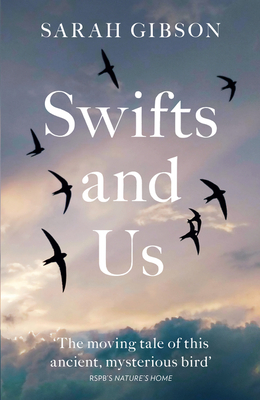 Beaks agape, swifts catch thousands of insects a day and keep them in a bolus in their throat to regurgitate for chicks. The sharp decline in insect numbers is a major concern, as well as the intensification of agriculture, climate change, and new houses or renovations that block up holes birds traditionally nest in. There are multiple species of swift – in southern Spain one can see five types – and in general they are considered to be of least conservation concern, but these matters are all relative in these days of climate crisis. Evolved to nest in cliffs and trees, they now live alongside humans except in rare places like Abernethy Forest near Inverness in Scotland, where they still nest in trees, in holes abandoned by woodpeckers.
Gibson surveys swifts’ distribution and evolution, key figures in how we came to understand them (Gilbert White et al.), and early landmark studies (e.g. David Lack’s in Oxford). She also takes us through a typical summer swift schedule, and interviews some people who rehabilitate and advocate for swifts. Other chapters see her travelling to Italy, Switzerland and Ireland, the furthest west that swifts breed. If you find a grounded swift, she learns from bitter experience, keep it in a box with air holes and give it water on a cotton bud, but don’t feed or throw it up in the air. To release, take it to an open space and hold it on your hand above your head. If it’s ready to fly, it will. The current push to help swifts is requiring that nest blocks or boxes be incorporated in every new home design. (I signed this petition.)
This is a great source of basic information, though some of the background may be more detailed than the average reader needs. If you’re only going to read one book about swifts, I would be more likely to recommend Charles Foster’s The Screaming Sky, a literary monograph, but do follow up with this one. And soon we’ll also have Mark Cocker’s book about swifts, One Midsummer’s Day, which I hope to get hold of. (Public library)
Favourite lines:
“It is their otherness that makes them so fascinating. They touch our lives briefly and then vanish; this is part of their magic.”
“The brevity of their summer stays enhances their hold on our hearts. The season is short, their bold, wild chases over the roofs and high-pitched screams a fleeting experience: they are a metaphor for life itself. We need to act now to ensure these birds will scythe across our skies forever; to keep them in our streets, to keep them in abundance and common. All of us can do something within the compass of our lives to help tilt the balance back in their favour. If the will to do it is there, it can be done.”
Cuckoo by Wendy Perriam (1991)
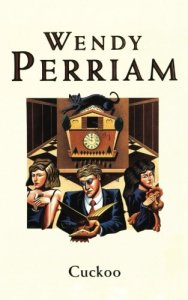 (We started hearing cuckoos locally last week!) My second by Perriam, after The Stillness The Dancing, and I’ve amassed quite a pile for afterwards. Frances Parry Jones, in her early thirties, is desperate for a baby but her husband, Charles, doesn’t seem fussed. He goes along with fertility treatment but remains aloof like the posh snob Perriam depicts him to be – the opening line is “Typical of Charles to decant his sperm sample into a Fortnum and Mason’s jar.” Their comfortable home in Richmond is cut off from the messy reality of life, as represented by Frances’s friend Viv and her brood.
Frances soon learns why Charles is unenthusiastic about having children: he already has one, a sullen teenager named Magda who lived with her mother in Hungary but has just arrived in London, “a greedy little cuckoo, commandeering the nest.” Though tempted to accept Magda as a replacement child, Frances just can’t manage it. However, they do find common ground through their japes with Ned, a free spirit Frances meets during her brief time as a taxi driver, and Frances starts to imagine how her life could be different. The portraits and sex scenes alike were a little grotesque here. I had to skim a lot to get through it. Here’s hoping for a better experience with the next one. (Secondhand copy passed on by Liz – thank you!)
Springtime in Britain by Edwin Way Teale (1970)
 I discovered Teale a few years ago through the exceptional Autumn Across America, the first volume of a quartet illuminating the nature of the four seasons in the USA; he won a Pulitzer for the final book. Here he applied the same pattern across the pond, taking an 11,000-mile road trip around Britain with his wife Nellie. It’s a delight to see the country through his eyes, particularly places I know well (Devon, the New Forest, Wiltshire/Berkshire) or have visited recently (Northumberland). They find the early spring alarmingly cold and wet, but before long are rewarded with swathes of daffodils and bluebells. Several stake-outs finally result in hearing a nightingale. For the most part, the bird life is completely new to them, but he remarks on what North American species the European birds remind him of. “We felt we would travel to Britain just to hear the song thrush and the blackbird,” he maintains.
Nellie develops pneumonia and has to convalesce in Kent, but otherwise personal matters hardly come into the narrative. Teale is well versed in English nature writing and often references classics by the likes of John Clare and Gilbert White that inspired destinations. (They spend an excessive number of days on their pilgrimage to White’s Selborne.) He also reports on perceived threats of the time, such as small animals getting stuck in littered milk bottles. While it was, inevitably, a little distressing to think of the abundance and diversity he was still experiencing in the late 1960s that has since been lost to development, I mostly found this a pleasant meander. Some things never change: the magic of prehistoric sites; the grossness of some cities (“we forgot the misadventure of Slough”). (Secondhand)
What signs of late spring are you seeing?
Daphne du Maurier Reading Week: Rebecca Reread & Forster Biography
It’s been a couple of years since I took part in HeavenAli’s annual Daphne du Maurier Reading Week (the last time was with a review of My Cousin Rachel; this year, links are being hosted by Liz here).
My last-minute and meagre contribution comprises an attempted reread (which ended up being a skim) of Rebecca for book club last month, and a partial, ongoing read of Margaret Forster’s cracking biography of DDM.
Rebecca (1938)
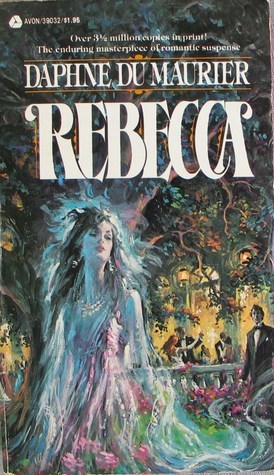 I must have first read this in my early twenties, and remembered it as spooky and atmospheric. I had completely forgotten that the action opens not at Manderley (despite the exceptionally famous first line, which forms part of a prologue-like first chapter depicting the place empty without its master and mistress to tend to it) but in Monte Carlo, where the unnamed narrator meets Maxim de Winter while she’s a lady’s companion to bossy Mrs. Van Hopper. This section functions to introduce Max and his tragic history via hearsay, but I found the first 60 pages so slow that I had trouble maintaining momentum thereafter, especially through the low-action and slightly repetitive scenes as the diffident second Mrs de Winter explores the house and tries to avoid Mrs Danvers, so I ended up skimming most of it.
However, it was satisfying to rediscover the Jane Eyre parallels and there are deliciously chilling scenes, like with Mrs Danvers at the window and the way she then sabotages her young mistress at the costume ball. This was one of four rereads for book club already this year, which has the benefit of reducing pressure and sometimes increasing the comfort-read factor. We have two Rebeccas in my book club, so it seemed an appropriate choice. Others found the book as gripping as ever, with one member reading it in a day thanks to long hospital waits. Would you believe, I hadn’t at all remembered the truth of what happened to Rebecca! So there was that surprise awaiting me. In our discussion we remarked that though this has the trappings of a romance novel or mystery (e.g. see my dreadful paperback cover above!), it also has enduring literary weight – it won the National Book Award, for instance.
Daphne du Maurier by Margaret Forster (1993)
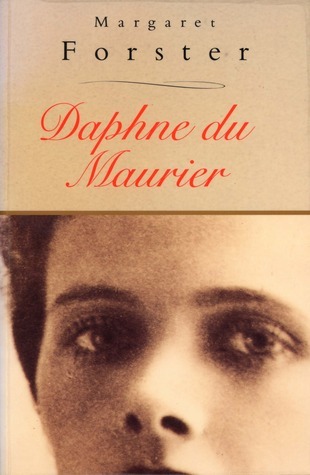 I read my first work by Forster, My Life in Houses, last year, and adored it, so the fact that she was the author was all the more reason to read this when I found a copy in a library secondhand book sale. I started it immediately after our meeting about Rebecca, but I find biographies so dense and daunting that I’m still only a third of the way into it even though I’ve been liberally skimming.
So far I have noted: du Maurier’s artistic pedigree, including her grandfather’s authorship of Trilby and her parents meeting through stage acting; her frank engagement in sexual activity, and presumed bisexuality (so far only evident through a requited crush on a teacher at her French finishing school, though perhaps there will be more to come); her first publications of short stories (“inspired by her three favourite short story writers, Maugham, Mansfield and Maupassant”) and the early novels, including one from a male point of view; her close relationship with her father and the crushing blow of his death; her determination to escape London for Cornwall; and her marriage to a soldier and ambivalent motherhood.
The last chapter I got to was all about the success of Rebecca. Though the critical reaction was generally favourable, reviewers also deemed it melodramatic … fair?
#DDMReadingWeek
 Bookish Beck = Rebecca Foster. American transplant to England. Freelance proofreader and book reviewer.
 Bookish Beck