March’s Doorstopper: Cutting for Stone by Abraham Verghese (2009)
I’m squeaking in here on the 31st with the doorstopper I’ve been reading all month. I started Cutting for Stone in an odd situation on the 1st: We’d attempted to go to France that morning but were foiled by a fatal engine failure en route to the ferry terminal, so were riding in the cab of a recovery vehicle that was taking us and our car home. My poor husband sat beside the driver, trying to make laddish small talk about cars, while I wedged myself by the window and got lost in the early pages of Indian-American doctor Abraham Verghese’s saga of twins Marion and Shiva, born of an unlikely union between an Indian nun, Sister Mary Joseph Praise, and an English surgeon, Thomas Stone, at Missing Hospital in Addis Ababa in 1954.
 What with the flashbacks and the traumatic labor, it takes narrator Marion over 100 pages to get born. That might seem like a Tristram Shandy degree of circumlocution, but there was nary a moment when my interest flagged during this book’s 50-year journey with a medical family starting in a country I knew nothing about. I was reminded of Midnight’s Children, in that the twin brothers are born loosely conjoined at the head and ever after have a somewhat mystical connection, understanding each other’s thoughts even when they’re continents apart.
When Sister Mary Joseph Praise dies in childbirth and Stone absconds, the twins are raised by the hospital’s blunt obstetrician, Hema, and her husband, a surgeon named Ghosh. Both brothers follow their adoptive parents into medicine and gain knowledge of genitourinary matters. We observe a vasectomy, a breech birth, a C-section, and the aftermath of female genital mutilation. While Marion relocates to an inner-city New York hospital, Shiva stays in Ethiopia and becomes a world expert on vaginal fistulas. The novel I kept thinking about was The Cider House Rules, which is primarily about orphans and obstetrics, and I was smugly confirmed by finding Verghese’s thanks to his friend John Irving in the acknowledgments.
Ethiopia’s postcolonial history is a colorful background, with Verghese giving a bystander’s view of the military coup against the Emperor and the rise of the Eritrean liberation movement. Like Marion, the author is an Indian doctor who came of age in Ethiopia, a country he describes as a “juxtaposition of culture and brutality, this molding of the new out of the crucible of primeval mud.” Marion’s experiences in New York City and Boston then add on the immigrant’s perspective on life in the West in the 1980s onwards.
Naomi of Consumed by Ink predicted long ago that I’d love this, and she was right. Of course I thrilled to the accounts of medical procedures, such as an early live-donor liver transplant (this was shortlisted for the Wellcome Book Prize in 2009), but that wasn’t all that made Cutting for Stone such a winner for me. I can’t get enough of sprawling Dickensian stories in which coincidences abound (“The world turns on our every action, and our every omission, whether we know it or not”), minor characters have heroic roles to play, and humor and tragedy balance each other out, if ever so narrowly. (Besides Irving, think of books like The Heart’s Invisible Furies by John Boyne.) What I’m saying, as I strive to finish this inadequate review in the last hour of the last day of the month, is that this was just my sort of thing, and I hope I’ve convinced you that it might be yours, too.
Favorite lines:
Hema: “The Hippocratic oath is if you are sitting in London and drinking tea. No such oaths here in the jungle. I know my obligations.”
“Doubt is a first cousin to faith”
“A childhood at Missing imparted lessons about resilience, about fortitude, and about the fragility of life. I knew better than most children how little separate the world of health from that of disease, living flesh from the icy touch of the dead, the solid ground from treacherous bog.”
Page count: 667
My rating: 
Next month: Since Easter falls in April and I’ve been wanting to read it for ages anyway, I’ve picked out The Resurrection of Joan Ashby by Cherise Wolas to start tomorrow.
Classics of the Month: Colette and Hemingway
I had the hardest time settling to a classic this month. I tried Elizabeth Bowen’s The Heat of the Day for Reading Ireland Month, but couldn’t get past page 35; I barely made it to the second page of (in quick succession) Backwater by Dorothy Richardson, The Years and The Waves by Virginia Woolf. Meanwhile, I started Full Tilt by Dervla Murphy and Woolf’s The Voyage Out, and have been enjoying both, but they may well take me a few months to read.
In the end I read two short classics about obsessive love, both set in the France of the 1920s.
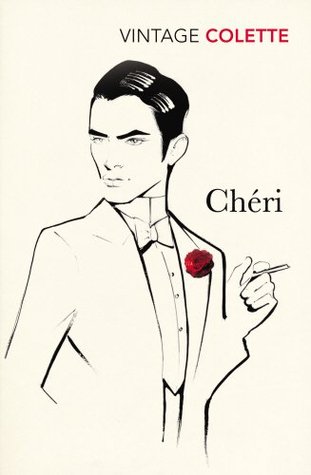
Chéri by Colette (1920)
 [Translated from the French by Roger Senhouse]
My first time trying Colette. The novella, set in the Paris suburbs, circles the relationship of Léa de Lonval, an ageing courtesan, and Frédérick Peloux, her handsome, supercilious lover boy (“the set of his head! quite a statue! But what a little beast he is! When he laughs, you’d swear it’s a greyhound snarling!”). Although they’ve been together for six years, the young man, whom she simply calls Chéri (“dear one”) is just 25 – about half her age. When Chéri’s mother arranges a financially beneficial marriage for him, he and Léa convince themselves it means nothing, but later question whether they’ve lost their chance at true love.
These are both aloof characters who sometimes have trouble accessing their emotions (“My temperature’s normal, so it’s nothing physical. I see. I’m just unhappy,” Léa realizes; “Well, why shouldn’t I have a heart like everybody else?” Chéri asks). To what extent is Léa a replacement mother figure for Chéri? Does love always entail possession and a loss of freedom? These psychological questions and the complex characters held my interest, though in the end the story is fairly thin. I’d read more by Colette: her memoirs come recommended, for instance.
My rating: 
The Garden of Eden by Ernest Hemingway (1986)
I find Hemingway offputtingly macho at the best of times, so was surprised to learn he’s the favorite author of a go-getting feminist type from my neighborhood book club. When she put this forward as our April selection I hadn’t even heard of it. It was Hemingway’s second posthumous publication. My main problems are that: 1) it reads like an early draft of an early novel – unpolished and with no proper ending, and 2) it reads like a male having-it-all fantasy, in which two women simultaneously lavish him with sexual attention and switching from one to the other presents no serious consequences.
It’s thought that Hemingway began writing the book in 1946, but was casting his mind back to the late 1920s, when he was preparing to leave his first wife, Hadley Richardson, for his second, Pauline Pfeiffer. In 1927 he and Pauline honeymooned in France’s Le Grau-du-Roi, which is where The Garden of Eden opens. Hemingway’s stand-in is writer David Bourne, who’s had success with a novel about flying in the war and is now dividing his time between Africa-set short stories that reflect on his childhood and his relationship with his father, and an autobiographical narrative drawing on his life with his new wife, Catherine.
 They’re on an extended honeymoon in France and Spain, and the title invites you to think of this as an idyllic time-outside-of-time spent swimming, feasting, taking long drives and making love. Catherine doesn’t want to do what others expect. She loves feeling that she and David have created a whole world unto themselves; they’re free to go anywhere and do anything. Obsessed with equality, she gets a close-cut gamine haircut that matches David’s exactly. But before long their heads are turned by a young woman they meet in a café, and this Marita becomes the third in an increasingly uncomfortable ménage à trois.
To the extent that this is a dramatization of the Genesis story and its accompanying Jewish myths, it is a reasonably successful plot. David calls Catherine “Devil,” but really she’s the Lilith figure, with David (Adam) later moving on to Marita (Eve). Alternatively, Marita could be thought of as the snake, a temptress destroying the couple’s perfect union. Catherine is much the most interesting character, mercurial and driven by odd compulsions: to sleep with a woman, to burn David’s stories and clippings. It was edgy for Hemingway to be thinking about gender fluidity and bisexuality, but the way these two women slavishly attend to David’s needs so that he can go on with his heroic writing work didn’t sit well with me.
What I most enjoyed about the novel were the descriptions of food and drink and the scenes in which David is sitting down to work (“You’d better write another story. Write the hardest one there is to write that you know.”) and reliving the elephant hunt. As usual, though, there’s the annoyances of the Hemingway style: underpunctuated; too many adjectives (sometimes as many as four in a row); simplistic language, including about good and evil; flat and unrealistic dialogue. Apparently Hemingway worked on the manuscript off and on for 15 years until it ballooned to 800 pages, yet he never finished it. Editors cut it down to a manageable size, but the ending? It’s as if nothing ever happened. Utterly frustrating.
Some favorite lines:
David: “Everyone’s full of charm. Charm and sturgeon eggs.”
David to Catherine: “Why can’t you want something that makes sense?” / Catherine: “I do. But I want us to be the same and you almost are and it wouldn’t be any trouble to do it.”
Catherine, towards the end: “I wish it hadn’t ended in complete disillusion too”
My rating: 
Next month’s plan: To tie in with our travels (we’re having another go at our attempted French getaway next weekend): A Breath of French Air by H.E. Bates and Thérèse Raquin by Emile Zola; Cider with Rosie by Laurie Lee to read in Stroud the final Sunday of the month.
Reading Ireland Month 2019: Jess Kidd and Jane Urquhart
Last month I picked out this exchange from East of Eden by John Steinbeck:
“But the Irish are said to be a happy people, full of jokes.”
“They’re not. They’re a dark people with a gift for suffering way past their deserving. It’s said that without whisky to soak and soften the world, they’d kill themselves. But they tell jokes because it’s expected of them.”
There’s something about that mixture of darkness and humor, isn’t there? I also find that Irish art (music as well as literature) has a lot of heart. I only read two Ireland-related historical novels this month, but they both have that soulful blend of light and somber. Both: 
Things in Jars by Jess Kidd (2019)
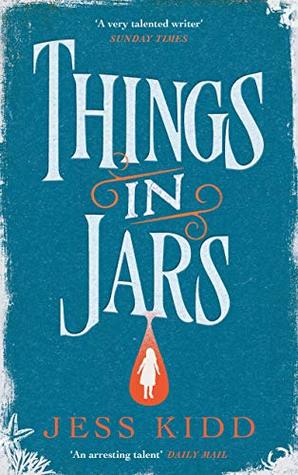
In the autumn of 1863 Bridie Devine, female detective extraordinaire, is tasked with finding the six-year-old daughter of a baronet. Problem is, this missing girl is no ordinary child, and collectors of medical curiosities and circus masters alike are interested in acquiring her.
In its early chapters this delightful Victorian pastiche reminded me of a cross between Sarah Waters’s Fingersmith and Neil Gaiman’s The Graveyard Book, and that comparison played out pretty well in the remainder. Kidd paints a convincingly gritty picture of Dickensian London, focusing on an underworld of criminals and circus freaks: when Bridie first arrived in London from Dublin, she worked as an assistant to a resurrectionist; her maid is a 7-foot-tall bearded lady; and her would-be love interest, if only death didn’t separate them, is the ghost of a heavily tattooed boxer.
Medicine (surgery – before and after anesthesia) and mythology (mermaids and selkies) are intriguing subplots woven through, such that this is likely to appeal to fans of The Way of All Flesh and The Mermaid and Mrs Hancock. Kidd’s prose is spry and amusing, particularly in her compact descriptions of people (but also in her more expansive musings on the dirty, bustling city): “a joyless string of a woman, thin and pristine with a halibut pout,” “In Dr Prudhoe’s countenance, refinement meets rogue,” and “People are no more than punctuation from above.”
I’ll definitely go back and read Kidd’s two previous novels, Himself and The Hoarder. I didn’t even realize she was Irish, so I’m grateful to Cathy for making me aware of that in her preview of upcoming Irish fiction. [Trigger warnings: violence against women and animals.] (Out from Canongate on April 4th.)
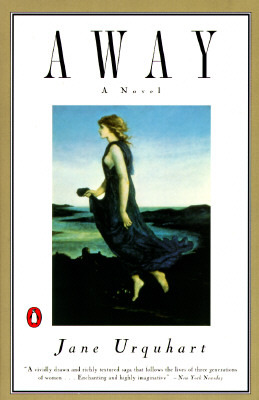
Away by Jane Urquhart (1993)
I was enraptured from the first line: “The women of this family leaned towards extremes” – starting with Mary, who falls in love with a sailor who washes up on the Irish coast in the 1840s amid the cabbages, silver teapots and whiskey barrels of a shipwreck and dies in her arms. Due to her continued communion with the dead man, people speak of her being “away with the fairies,” even after she marries the local schoolteacher, Brian O’Malley.
 With their young son, Liam, they join the first wave of emigration to Canada during the Potato Famine, funded by their landlords, the Sedgewick brothers of Puffin Court (amateur naturalist Osbert and poet Granville). No sooner have the O’Malleys settled and had their second child, Eileen, than Mary disappears. As she grows, Eileen takes after her mother, mystically attuned to portents and prone to flightiness, while Liam is a happily rooted Great Lakes farmer. Like Mary, Eileen has her own forbidden romance, with a political revolutionary who dances like a dream.
I’ve been underwhelmed by other Urquhart novels, Sanctuary Line and The Whirlpool, but here she gets it just right, wrapping her unfailingly gorgeous language around an absorbing plot – which is what I felt was lacking in the others. The Ireland and Canada settings are equally strong, and the spirit of Ireland – the people, the stories, the folk music – is kept alive abroad. I recommend this to readers of historical fiction by Margaret Atwood, A.S. Byatt and Hannah Kent.
Some favorite lines:
Osbert says of Mary: “There’s this light in her, you see, and it must not be put out.”
“When summer was finished the family was visited by a series of overstated seasons. In September, they awakened after night frosts to a woods awash with floating gold leaves and a sky frantic with migrating birds – sometimes so great in number that they covered completely with their shadows the acre of light and air that Brian had managed to create.”
“There are five hundred and forty different kinds of weather out there, and I respect every one of them. White squalls, green fogs, black ice, and the dreaded yellow cyclone, just to mention a few.”
It’s my second time participating in Reading Ireland Month, run each March by Cathy of 746 Books and Niall of Raging Fluff.
Did you manage to read any Irish literature this month?
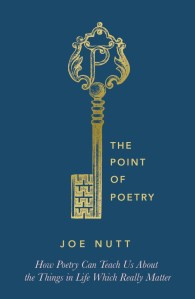
Blog Tour Review: The Point of Poetry by Joe Nutt
Lots of adults are afraid of poetry, Joe Nutt believes. As a Midlands lad he loved going to the public library and had a magical first encounter with poetry at secondary school – the last time many people will ever read it. A former English teacher and Times Educational Supplement columnist who has written books about Shakespeare, Donne and Milton, he also spent many years in the business world, where he sensed apprehension and even hostility towards poetry. This book is meant as a gentle introduction, or reintroduction, to the joys of reading a poem for yourself.
The 22 chapters each focus on a particular poem, ranging in period and style from the stately metaphysical verse of Andrew Marvell to the rapid-fire performance rhythms of Hollie McNish. The pattern in these essays is to provide background on the poet and his or her milieu or style before moving into more explicit interpretation of the poem’s themes and techniques; the poem is then generally printed at the end of the chapter.*

I most appreciated the essays on poems I already knew and loved but gained extra insight into (“Blackberry-Picking” by Seamus Heaney and “The Darkling Thrush” by Thomas Hardy) or had never read before, even if I knew other things by the same poets (“The Bistro Styx” by Rita Dove and “The Sea and the Skylark” by Gerard Manley Hopkins). The Dove poem echoes the Demeter and Persephone myth as it describes a meeting between a mother and daughter in a Paris café. The mother worries she’s lost her daughter to Paris – and, what’s worse, to a kitschy gift shop and an artist for whom she works as a model. Meanwhile, Heaney, Hardy and Hopkins all reflect – in their various, subtle ways – on environmental and societal collapse and ask what hope we might find in the midst of despair.

Joe Nutt
Other themes that come through in the chosen poems include Englishness and countryside knowledge (E. Nesbit and Edward Thomas), love, war and death. Nutt points out the things to look out for, such as doubling of words or sounds, punctuation, and line length. His commentary is especially useful in the chapters on Donne, Wordsworth and Hopkins. In other chapters, though, he can get sidetracked by personal anecdotes or hang-ups like people not knowing the difference between rifles and shotguns (his main reason for objecting to Vicki Feaver’s “The Gun,” to which he devotes a whole chapter) or Bob Dylan winning the Nobel Prize. These felt like unnecessary asides and detracted from the central goal of celebrating poetry. One can praise the good without denigrating what one thinks bad, yes?
 *Except for a few confusing cases where it’s not. Where’s Ted Hughes’s “Tractor”? If reproduction rights couldn’t be obtained, a different poem should have been chosen. Why does a chapter on Keats’s “The Eve of St. Agnes” quote just a few fragments from it in the text but then end with a passage from Shakespeare’s Venus and Adonis (ditto with the excerpt from Donne that ends the chapter on Milton)? The particular Carol Ann Duffy and Robert Browning poems Nutt has chosen are TL; DR, while he errs to the other extreme by not quoting enough from The Rime of the Ancient Mariner and Paradise Lost, perhaps assuming too much audience familiarity. (I’ve never read either!)
So, overall, a bit of a mixed bag: probably better suited to those less familiar with poetry; and, oddly, often more successful for me in its generalizations than in its particulars:
if you once perceive that poetry operates on the edges of man’s knowledge and experience, that it represents in art a profoundly sincere attempt by individuals to grapple with the inexorable conditions of human life, then you are well on the way to becoming not just a reader of it but a fan.
The poet’s skill is in making us look at the world anew, through different, less tainted lenses.
A poem, however unique and strange, however pure and white the page it sits on, doesn’t enter your life unaccompanied. It comes surrounded by literary echoes and memories, loaded with the past. That’s why you get better at understanding [poems], why you enjoy them more, the more you read.
Poetry is so often parsimonious. It makes us work for our supper.
Rossetti deliberately avoids certainty throughout. I enjoy that in any poem. It makes you think.
There is really only one response to great poetry: an unqualified, appreciative ‘yes’.
Related reading:
- The Hatred of Poetry by Ben Lerner
- 52 Ways of Looking at a Poem by Ruth Padel
- The Poem and the Journey and 60 Poems to Read Along the Way by Ruth Padel
- The Poetry Pharmacy by William Sieghart
- Why Poetry by Matthew Zapruder
(I have read and can recommend all of these. Padel’s explication of poetry is top-notch.)
The Point of Poetry was published by Unbound on March 21st (World Poetry Day). My thanks to the publisher for a free copy for review.
Library Checkout: March 2019
A rare second post in a day from me since I was also committed to a blog tour. What have you been reading from your local library? I don’t have an official link-up system, so please just pop a link to your blog in the comments if you’ve taken part in Library Checkout this month. Feel free to use this image in your post.

LIBRARY BOOKS READ
- Boy Erased: A Memoir of Identity, Faith, and Family by Garrard Conley

- Old Possum’s Book of Practical Cats by T.S. Eliot [poetry]
- Dream Sequence by Adam Foulds

- “My Purple Scented Novel” by Ian McEwan
- East of Eden by John Steinbeck
- Absent in the Spring by “Mary Westmacott” (aka Agatha Christie)
SKIMMED
- Yesterday Morning by Diana Athill – I had read this back in 2012, but looked over it again for an article I was writing on Athill.
- Have You Eaten Grandma? by Gyles Brandreth
- Let’s Talk about Death (over Dinner): An Invitation and Guide to Life’s Most Important Conversation by Michael Hebb
- The Roasting Tin by Rukmini Iyer
- The Secret Lives of Colour by Kassia St. Clair
CURRENTLY READING
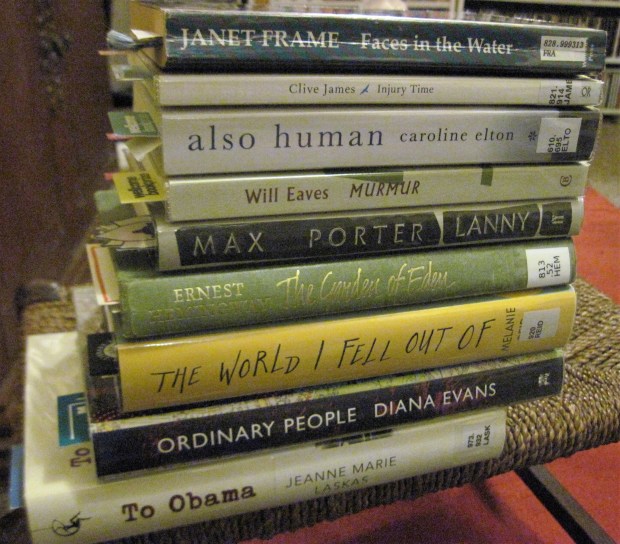
- Murmur by Will Eaves
- Also Human: The Inner Lives of Doctors by Caroline Elton
- Ordinary People by Diana Evans
- Faces in the Water by Janet Frame
- The Garden of Eden by Ernest Hemingway
- Injury Time by Clive James [poetry]
- Lanny by Max Porter
- The World I Fell Out Of by Melanie Reid
CURRENTLY SKIMMING
- To Obama: With love, joy, hate and despair by Jeanne Marie Laskas
CHECKED OUT, TO BE READ (or skimmed)
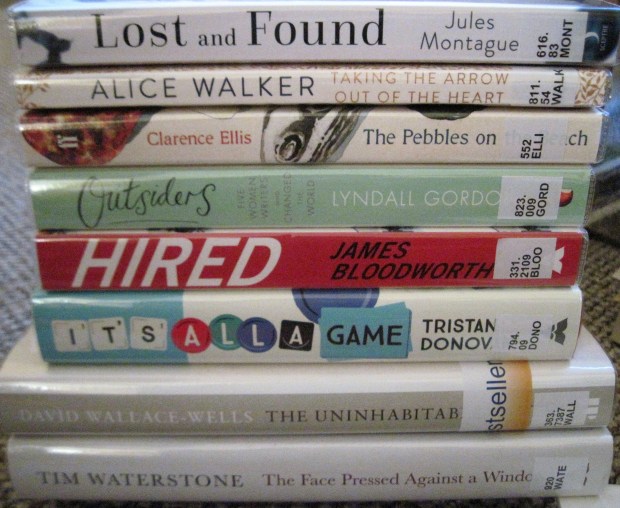
- Hired: Six Months Undercover in Low-wage Britain by James Bloodworth
- It’s All a Game: A Short History of Board Games by Tristan Donovan
- The Pebbles on the Beach: A Spotter’s Guide by Clarence Ellis
- Outsiders: Five Women Writers Who Changed the World by Lyndall Gordon
- Lost and Found: Memory, Identity, and Who We Become when We’re No Longer Ourselves by Jules Montague
- Taking the Arrow out of the Heart by Alice Walker [poetry]
- The Uninhabitable World: A Story of the Future by David Wallace-Wells
- The Face Pressed against a Window: A Memoir by Tim Waterstone
ON HOLD, TO BE PICKED UP
- A Breath of French Air, H.E. Bates
- Still Water: The Deep Life of the Pond by John Lewis-Stempel
- The Dreamers, Karen Thompson Walker
IN THE RESERVATION QUEUE
- Seven Signs of Life: Stories from an Intensive Care Doctor by Aoife Abbey
- How to Treat People: A Nurse’s Notes by Molly Case
- Our Place: Can We Save Britain’s Wildlife before It Is Too Late? by Mark Cocker
- 21st-Century Yokel by Tom Cox
- How to Catch a Mole and Find Yourself in Nature by Marc Hamer
- The Recovering: Intoxication and Its Aftermath by Leslie Jamison
- Horizon by Barry Lopez
- I’ll Be Gone in the Dark: One Woman’s Obsessive Search for the Golden State Killer by Michelle McNamara
- Daisy Jones & the Six, Taylor Jenkins Reid
- Unnatural Causes by Richard Shepherd
- Feel Free: Essays by Zadie Smith
- A Farmer’s Diary: A Year at High House Farm by Sally Urwin
RETURNED UNFINISHED
- Hyperbole and a Half by Allie Brosh – I’d heard so much about this graphic novel, but I found the drawing style childish and didn’t get more than 10 pages in.
- Everybody Died, So I Got a Dog by Emily Dean – I couldn’t resist that title for a bereavement memoir, but within a couple pages I knew the author’s voice wasn’t for me.
RETURNED UNREAD
- Everything, Everything by Nicola Yoon – I needed space on my card to borrow my reservations. I’ll get this back out another time, perhaps even for book club as some other members have expressed interest.
Does anything appeal from my stacks?
Dylan Thomas Prize Blog Tour: Eye Level by Jenny Xie
The Swansea University International Dylan Thomas Prize recognizes the best published work in the English language written by an author aged 39 or under. All literary genres are eligible, so short stories and poetry sit alongside novels on this year’s longlist of 12 titles:
- Nana Kwame Adjei-Brenyah, Friday Black
- Michael Donkor, Hold
- Clare Fisher, How the Light Gets In
- Zoe Gilbert, Folk
- Emma Glass, Peach
- Guy Gunaratne, In Our Mad and Furious City
- Louisa Hall, Trinity
- Sarah Perry, Melmoth
- Sally Rooney, Normal People
- Richard Scott, Soho
- Novuyo Rosa Tshuma, House of Stone
- Jenny Xie, Eye Level
For this stop on the official blog tour, I’m featuring the debut poetry collection Eye Level by Jenny Xie (winner of the Walt Whitman Award of the Academy of American Poets), which was published by Graywolf Press in 2018 and was a National Book Award finalist in the USA last year. Xie, who was born in Hefei, China and grew up in New Jersey, now teaches at New York University. Her poems focus on the sense of displacement that goes hand in hand with immigration or just everyday travel, and on familial and evolutionary inheritance.
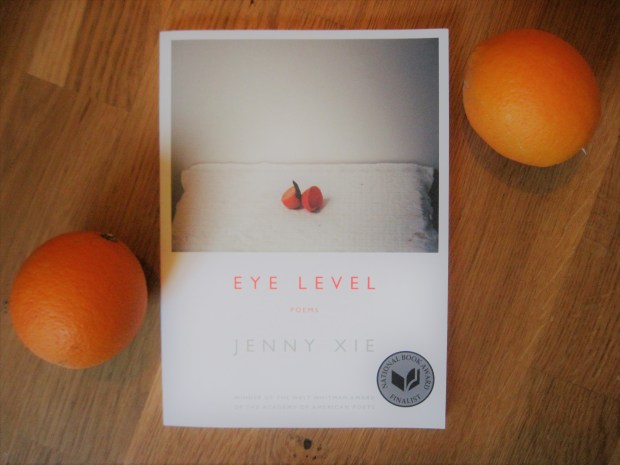
The opening sequence of poems is set in Vietnam, Cambodia and Corfu, with heat and rain as common experiences that also enter into the imagery: “See, counting’s hard in half-sleep, and the rain pulls a sheet // over the sugar palms and their untroubled leaves” and “The riled heat reaches the river shoal before it reaches the dark.” The tragic and the trivial get mixed up in ordinary sightseeing:
The tourists curate vacation stories,
days summed up in a few lines.
Killing fields tour, Sambo the elephant
in clotted street traffic,
dusky-complexioned children hesitant in their approach.
Seeing and being seen are a primary concern, with the “eye” of the title deliberately echoing the “I” that narrates most of the poems. I actually wondered if there was a bit too much first person in the book, which always complicates the question of whether the narrator equals the poet. One tends to assume that the story of a father going to study in the USA and the wife following, giving up her work as a doctor for a dining hall job, is autobiographical. The same goes for the experiences in “Naturalization” and “Exile.”
The metaphors Xie uses for places are particularly striking, often likening a city/country to a garment or a person’s appearance: “Seeing the collars of this city open / I wish for higher meaning and its histrionics to cease,” “The new country is ill fitting, lined / with cheap polyester, soiled at the sleeves,” and “Here’s to this new country: / bald and without center.”
The poet contemplates what she has absorbed from her family line and upbringing, and remembers the sting of feeling left behind when a romance ends:
I thought I owned my worries, but here I was only pulled along by the needle
of genetics, by my mother’s tendency to pry at openings in her life.
Love’s laws are simple. The leaving take the lead.
The left-for takes a knife to the knots of narrative.
Those last two lines are a good example of the collection’s reliance on alliteration, which, along with repetition, is used much more often than end rhymes and internal or slant rhymes. Speaking of which, this was my favorite pair of lines:
Slant rhyme of current thinking
and past thinking.
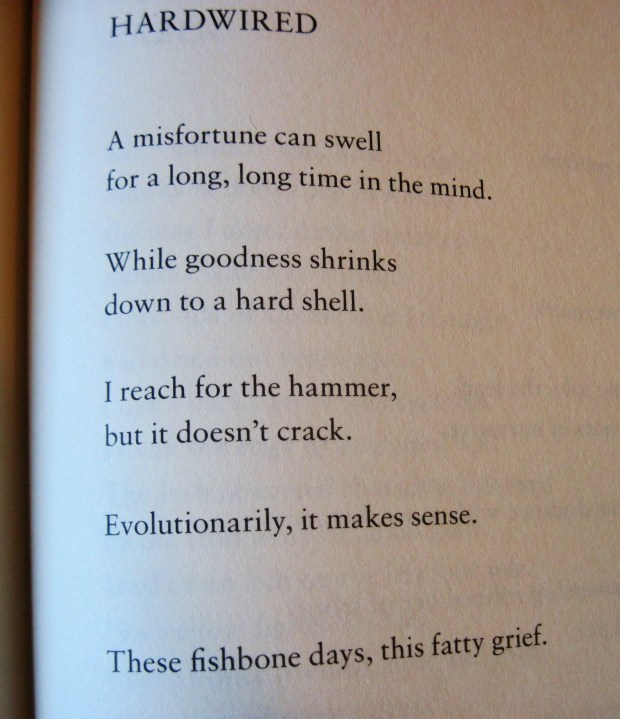
Meanwhile, my single favorite poem was “Hardwired,” about the tendency to dwell on the negative:
Though I didn’t always connect with Xie’s style – it can be slightly detached and formal in a way that is almost at odds with the fairly personal subject matter, and there were some pronouncements that seemed to me not as profound as they intended to be (it may well be that her work would be best read aloud) – there were occasional lines and images that pulled me up short and made me think, Yes, she gets it. What it’s like to be from one place but live in another; what it’s like to be fond but also fearful of the ways in which you resemble your parents. I expect this to be a strong contender for the Dylan Thomas Prize shortlist, which will be announced on April 2nd. The winner is then announced on May 16th.
My thanks to Midas PR for the free copy for review.
Four Recent Review Books: Ernaux, Nunez, Rubin & Scharer
Two nonfiction books: a frank account of an abortion; clutter-busting techniques.
Two novels: amusing intellectual fare featuring a big dog or the Parisian Surrealists.
Happening by Annie Ernaux (2000; English translation, 2019)
[Translated from the French by Tanya Leslie]
 “I believe that any experience, whatever its nature, has the inalienable right to be chronicled,” Ernaux writes. In 1963, when she was 23 and living in a student residence in Rouen, she realized she was pregnant. An appointment with a gynecologist set out the facts starkly: “Pregnancy certificate of: Mademoiselle Annie Duchesne. Date of delivery: 8 July, 1964. I saw summer, sunshine. I tore up the certificate.” Abortion was illegal in France at that time. Ernaux tried to take things into her own hands – “plunging a knitting needle into a womb weighed little next to ruining one’s career” – but couldn’t go through with it. Instead she went to the home of a middle-aged nurse she’d heard about…
This very short book (just 60-some pages) is told in a matter-of-fact style – apart from the climactic moment when her pregnancy ends: “It burst forth like a grenade, in a spray of water that splashed the door. I saw a baby doll dangling from my loins at the end of a reddish cord.” It’s such a garish image, almost cartoonish, that I didn’t know whether to laugh or be horrified. Mostly, Ernaux reflects on memory and the reconstruction of events. I haven’t read many nonfiction accounts of abortion/miscarriage and for that reason found this interesting, but it was perhaps too brief and detached for me to be fully engaged.
My rating:
With thanks to Fitzcarraldo Editions for the free copy for review.
The Friend by Sigrid Nunez (2018)
 “Does something bad happen to the dog?” We animal lovers are wary when approaching a book about a pet. Nunez playfully anticipates that question as she has her unnamed female narrator reflect on her duty of care to her dead friend’s dog. The narrator is a writer and academic – like her late friend, a Bellovian womanizer who recently committed suicide, leaving behind two ex-wives, a widow, and Apollo the aging Great Dane. She addresses the friend directly as “you” for almost the whole book, which unfolds – in a similar style to Jenny Offill’s Department of Speculation – via quotations, aphorisms, and stories from literary history as well as mini-incidents from a life.
This won the 2018 National Book Award in the USA and is an unashamedly high-brow work whose intertextuality comes through in direct allusions to many classic works of autofiction (Coetzee, Knausgaard and Lessing) and/or doggy lit (Ackerley; Coetzee again – Disgrace). As Apollo starts to take up more physical, mental and emotional space in the narrator’s life, she waits for a miracle that will allow her to keep him despite an eviction notice and muses on lots of questions: Is all writing autobiographical? Why does animal suffering pain us so much (especially compared to human suffering)? I was impressed: it feels like Nunez has encapsulated everything she’s ever known or thought about, all in just over 200 pages, and alongside a heart-warming little plot. (Animal lovers need not fear.)
My rating:
With thanks to Virago for the free copy for review.
Outer Order, Inner Calm: Declutter and Organize to Make More Room for Happiness by Gretchen Rubin (2019)
 What with all the debate over Marie Kondo’s clutter-reducing tactics, the timing is perfect for this practical guide to culling and organizing all the stuff that piles up around us at home and at work. Unlike the rest of Rubin’s self-help books, this is not a narrative but a set of tips – 150 of them! It’s not so much a book to read straight through as one to keep at your bedside and read a few pages to summon up motivation for the next tidying challenge.
 Famously, Kondo advises one to ask whether an item sparks joy. Rubin’s central questions are more down-to-earth: Do I need it? Do I love it? Do I use it? With no index, the book is a bit difficult to navigate; you just have to flip through until you find what you want. The advice seems in something of a random order and can be slightly repetitive. But since this is really meant as a book of inspiration, I think it will be a useful jumping-off point for anyone trying to get on top of clutter. I plan to work through the closet checklist before I pass the book to my sister – who’s dealing with a basement full of stuff after she and her second husband merged their households. If I could add one page, it would be a flowchart of what to do with unwanted stuff that corresponds to the latest green recommendations.
My rating:
With thanks to Two Roads for the free copy for review.
The Age of Light by Whitney Scharer (2019)
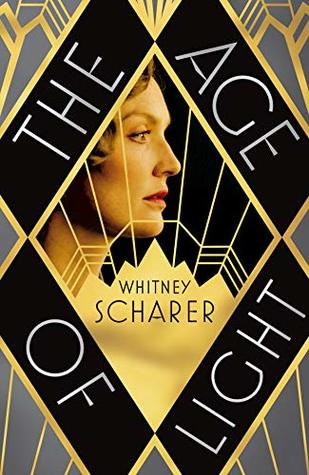 This novel about Lee Miller’s relationship with Man Ray is in the same vein as The Paris Wife, Z, Loving Frank and Frieda: all of these have sought to rescue a historical woman from the shadow of a celebrated, charismatic male and tell her own fascinating life story. Scharer captures the bohemian atmosphere of 1929–30 Paris in elegant but accessible prose. Along with the central pair we meet others from the Dada group plus Jean Cocteau, and get a glimpse of Josephine Baker. The novel is nearly 100 pages too long, I think, such that my interest in the politics of the central relationship – Man becomes too possessive and Lee starts to act out, longing for freedom again – started to wane.
Miller was a photographer as well as a model and journalist, and this is an appropriately visual novel that’s interested in appearances, lighting and what gets preserved for posterity. It’s also fairly sexually explicit for literary fiction, sometimes unnecessarily so, so keep that in mind if it’s likely to bother you. I especially enjoyed the brief flashes of Lee at other points in her life: in London during the Blitz, photographing the aftermath of the war in Germany (there’s a famous image of her in Hitler’s bathtub), and hoping she’s more than just a washed-up alcoholic in the 1960s. It would be a boon to have a prior interest in or some knowledge of the Surrealists.
My rating:
With thanks to Picador for the free copy for review.
Would you be interested in reading one or more of these?
Reading Ireland Month 2019: Nonfiction – Lynn Enright and Emilie Pine
It’s my second time participating in Reading Ireland Month, run each March by Cathy of 746 Books and Niall of Raging Fluff. For this week’s nonfiction theme, I’ve put together reviews of two hard-hitting feminist books I happen to have read recently.

Vagina: A Re-education by Lynn Enright (2019)
 Sex education is poor and lacking in many parts of the world, Enright argues, including the Ireland she grew up in in the 1980s. We need better knowledge about gender, anatomy (including the range of what’s ‘normal’) and issues of consent, she insists. To that end, she sets out to bust myths about the hymen, clitoris, female orgasm, menstruation, gynecological problems, infertility, pregnancy and menopause. Her just-the-facts approach is especially helpful in her rundown of the female anatomy. She also encourages women not to take no for an answer from doctors who try to deny or minimize their pain.
This is a confident book sometimes marred by TMI (all in the name of openness and honesty, but still…) and repetitive writing. For me, there was too much overlap with other books I’ve read over the last five years or so: Vagina: A New Biography by Naomi Wolf, The Wonder Down Under: A user’s guide to the vagina by two female Norwegian medical students, Gross Anatomy by Mara Altman (waxing), Notes to Self by Emilie Pine (see below! rape, menstruation and infertility) and the upcoming Constellations by Sinéad Gleeson (women’s pain). Thus, after about page 50 I just skimmed this one. If you haven’t read anything like Vagina before, though, it would serve as a wonderfully comprehensive introduction.
Some favorite lines:
“With vaginas, it seems, we doubt what we know. With vaginas, we listen to the lies, more than we listen to the truth. … We perpetuate the unsureness with our silences – and with our acceptance of lies.”
“Pregnancy, abortion, miscarriage and birth are common but extraordinary – each story is unique. Women benefit when those stories are told – and listened to.”
My rating:
With thanks to Allen & Unwin for the free copy for review.
Notes to Self: Essays by Emilie Pine (2018)
 Originally released by Ireland’s Tramp Press, this won the An Post Irish Book Award and has now been re-released by Penguin and other major publishers. You expect the average essay collection to contain 10 or 12 pieces, so the fact that there are only six here accounts for why they drag at a certain point. While I think most could be made snappier, they remain bold, accessible feminist takes on the body and expectations for women’s lives.
I especially liked “Notes on Intemperance,” the first essay, about her alcoholic father’s health crisis and the poor chances of him getting adequate treatment on Corfu, where he lived. She had to beg his nurses to wear gloves. When she learned that staff had to buy such disposables out of their own salaries, she understood – but was still appalled. Just being there was a miracle given there was no love lost between father and daughter.
Other essays are about infertility, the early breakdown of their parents’ marriage, menstruation and body hair, her wild teenage years and being raped, and the working woman’s constant struggle to be ambitious yet vulnerable without coming across as bitchy or oversensitive. The writing style is not flashy, but it doesn’t need to be. This is relatable straight talk, like you might get if you were to sit down with girlfriends of various backgrounds and experiences and actually discuss things that matter.
A favorite passage:
“It is hard to love an addict. Not only practically difficult, in the picking up after them and the handling of those aspects of life they’re not able [to] for themselves, but metaphysically hard. It feels like bashing yourself against a wall, not just your head, but your whole self. It makes your heart hard. … It took years of refusing him empathy before I realised that the only person I was hurting was myself.”
My rating:
I read an e-copy via NetGalley.
 I’ve also started a travel classic by Dervla Murphy, Full Tilt: Ireland to India with a Bicycle (1965), but travel books are such slow reads for me that I’ll likely be working on this one for months. Where I’ve got to now, she’s between Tehran and Afghanistan and nursing a bad sunburn. Already she’s eternally grateful that she brought a gun with her: she’s used it once to fend off wolves, once to deter a would-be rapist, and once to prevent bike thieves. Exciting stuff!
The Wellcome Book Prize 2019 Shortlist: Reactions, Strategy, Predictions
The Wellcome Book Prize longlist was announced at midnight yesterday morning. From the prize’s website, you can click on any of the six books’ covers, titles or authors for more information. See also Laura’s reactions post.
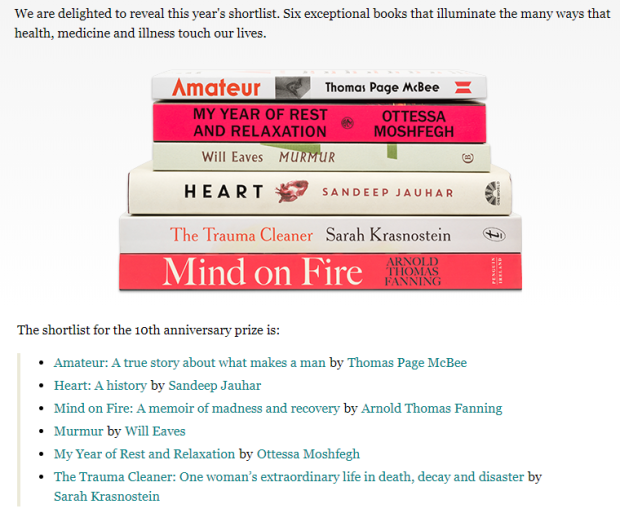
Our shadow panel successfully predicted four of these six, with the remaining two (Fanning and Moshfegh) coming as something of a surprise. It’s a shame This Really Isn’t About You didn’t make it through, as it was a collective favorite of the panel’s, but I’m relieved I now don’t have to read Astroturf and Polio. I’m hoping that the rest of the shadow panel will enjoy Mind on Fire more than I did, and will be willing to give My Year of Rest and Relaxation a go even though it’s one of those Marmite books.
 There are four nonfiction books and two novels on the shortlist. Given that novelist Elif Shafak is the chair of judges in this 10th anniversary year, it could make sense for there to be a fiction winner this year; this would also cement an alternating pattern of fiction / nonfiction / fiction, following on from Mend the Living and To Be a Machine. If that’s the case, since Moshfegh’s novel, though a hugely enjoyable satire on modern disconnection and emotional numbness, doesn’t have the strongest health theme, perhaps we will indeed see Murmur take the prize, as Annabel predicted in her review. Alternatively, Amateur feels like a timely take on gender configurations, so maybe, as Laura guesses, it will win. I don’t think I could see the other four winning. (Then again, my panel’s predictions were wildly off base in 2017!)
In a press release Shafak commented on behalf of the judging panel: “The judging panel is very excited and proud to present this astonishing collection of titles, ranging from the darkly comic to the searingly honest. While the books selected are strikingly unique in their subject matter and style, the rich variety of writing also shares much in common: each is raw and brave and inspirational, deepening our understanding of what it truly means to be human through the transformative power of storytelling.”
Murmur is the only one of the six that I haven’t already read; I only read Part I and gave the rest a quick skim. So I resumed it yesterday at Part II. I might not get a chance to revisit the other shortlisted books, but I will be eager to see what the rest of the shadow panel make of the books they haven’t read yet. We will all be taking part in an official Wellcome Book Prize blog tour put on by Midas PR. I’ll also look into whether we can arrange Q&As with the shortlisted authors to run on our blogs in the coming weeks.
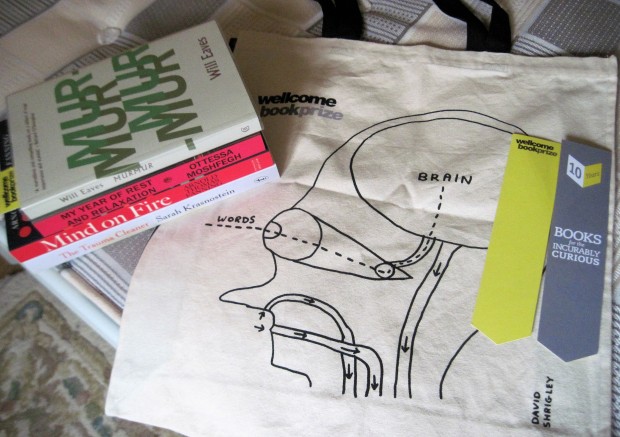
I won a limited edition David Shrigley Books Are My Bag tote bag in a Wellcome Collection competition on Twitter. Fittingly, it arrived on the shortlist announcement day!
The Wellcome Book Prize winner will be revealed at an evening ceremony at the Wellcome Collection on Wednesday, May 1st.
Follow along here and on Halfman, Halfbook, Annabookbel, A Little Blog of Books, and Dr. Laura Tisdall for more reviews and predictions.
Which book from the shortlist would you most like to read?
Knausgaard for the Sally Rooney Generation: Stubborn Archivist by Yara Rodrigues Fowler
I would have loved to see this debut novel on the Women’s Prize longlist the other week. It’s such a hip, fresh approach to fiction – the last book to have struck me as truly ‘novel’ in the same way was Lincoln in the Bardo.
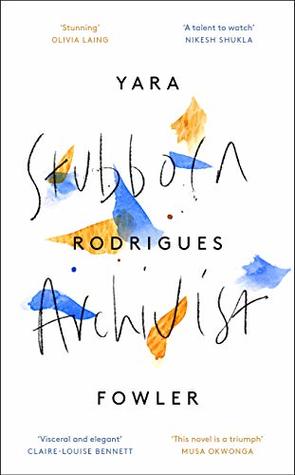 Broadly speaking, this is autofiction: like the author, the protagonist was born in London to a Brazilian mother and an English father. In the tradition of Karl Ove Knausgaard, Yara Rodrigues Fowler audaciously includes the mundane details of everyday life – things like a friend coming for Sunday roast, struggling with IBS, packing for a trip to Brazil, and trying to be grateful for having half-decent work and a place to live with her parents in Tooting. She also recounts lots of conversations, some momentous – as when she confronts an ex about a non-consensual sexual encounter – but most pretty inane; all conveyed with no speech marks.
The book opens with fragmentary, titled pieces that look almost like poems in stanzas. That experimentation with how the words are set out on the page continues throughout the book. Some pages contain just a few lines, or a single short paragraph that reads like a prose poem. Even where there are more conventional sections of a few pages, Fowler deliberately eschews commas and hyphens to create a sort of breathless, run-on pace. This makes the text feel artless, like a pure stream of memory and experience has been channeled directly onto the page, and yet you can be sure that a lot of hard work was involved.
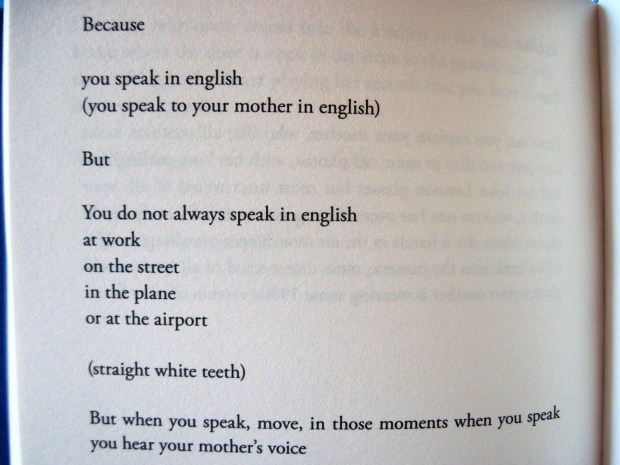
The perspective moves smoothly between the third and the second person, referring to the protagonist by turns as “she” and “you.” Sometimes she’s “the baby,” going grocery shopping with Vovó (Grandmother) Cecília in Brazil and asking for bedtime stories, or observing Aunt Ana Paula’s relationship with a classmate when she comes to live with them in London for a time. This stubborn archivist is equally convinced of the value of her family history and of her twentysomething life of relationships, parties, and a good-enough job.
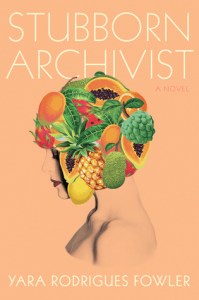
I love the U.S. cover!
Navigating two cultures (and languages), being young and adrift, and sometimes seeing her mother in herself: there’s a lot to sympathize with in the main character. If you’re a fan of Sally Rooney’s work (especially Conversations with Friends), you’ll want to pick this up as soon as you can, even if you don’t expect to relate to someone of Fowler’s generation. Stubborn Archivist impressed me enough to earn the first entry on my “Best of 2019” shelf.
My rating:
Stubborn Archivist was published in the UK by Fleet on February 21st. My thanks to the publisher for the free copy for review. It will be published in the USA by Mariner Books on July 16th.
 Bookish Beck = Rebecca Foster. American transplant to England. Freelance proofreader and book reviewer.
 Bookish Beck