Wellcome Book Prize 2019: Announcing Our Shadow Panel Shortlist
Here’s a recap of what’s on the Wellcome Book Prize longlist, with links to all the reviews that have gone up on our blogs so far:

Amateur: A true story about what makes a man by Thomas Page McBee
Astroturf by Matthew Sperling
Educated by Tara Westover
Freshwater by Akwaeke Emezi
Heart: A history by Sandeep Jauhar
Mind on Fire: A memoir of madness and recovery by Arnold Thomas Fanning
Murmur by Will Eaves
My Year of Rest and Relaxation by Ottessa Moshfegh
Polio: The odyssey of eradication by Thomas Abraham
Sight by Jessie Greengrass
The Trauma Cleaner: One woman’s extraordinary life in death, decay and disaster by Sarah Krasnostein
This Really Isn’t About You by Jean Hannah Edelstein
Together we have chosen the six* books we would like to see advance to the shortlist. This is based on our own reading and interest, but also on what we think best fits the prize’s aim, as stated on the website:
To be eligible for entry, a book should have a central theme that engages with some aspect of medicine, health or illness. At some point, medicine touches all our lives. Books that find stories in those brushes with medicine are ones that add new meaning to what it means to be human. The subjects these books grapple with might include birth and beginnings, illness and loss, pain, memory, and identity. In keeping with its vision and goals, the Wellcome Book Prize aims to excite public interest and encourage debate around these topics.
Here are the books (*seven of them, actually) that we’ll be rooting for – we had a tie on a couple:

Amateur: A true story about what makes a man by Thomas Page McBee
Educated by Tara Westover
Heart: A history by Sandeep Jauhar
Murmur by Will Eaves
Sight by Jessie Greengrass
The Trauma Cleaner by Sarah Krasnostein
This Really Isn’t About You by Jean Hannah Edelstein
The official Wellcome Book Prize shortlist will be announced on Tuesday the 19th. I’ll check back in on Wednesday with our reactions to the shortlist and the plan for covering the rest of the books we haven’t already read.
Two Final Wellcome Book Prize Longlist Reviews: Krasnostein & Moshfegh
I’ve now read eight of the 12 titles longlisted for the Wellcome Book Prize 2019 and skimmed another two, leaving just two unexplored.
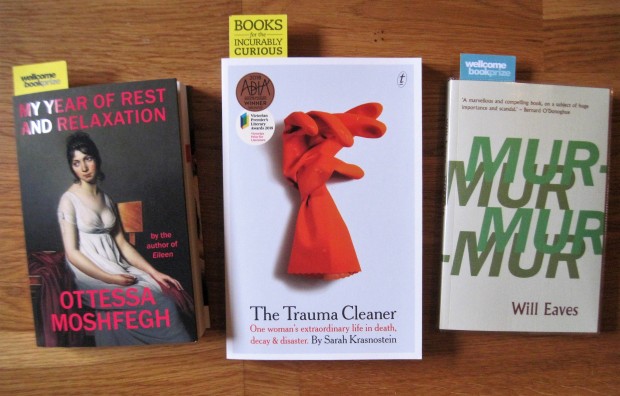
My latest two reads are books that I hugely enjoyed yet would be surprised to see make the shortlist (both  ):
):
The Trauma Cleaner: One Woman’s Extraordinary Life in Death, Decay and Disaster by Sarah Krasnostein (2017)
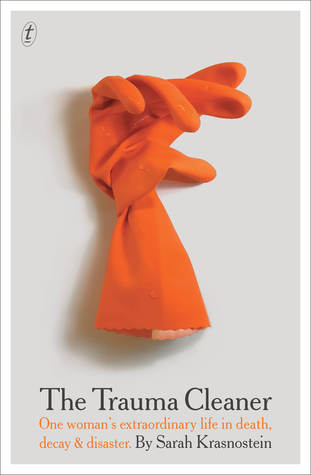 I guarantee you’ve never read a biography quite like this one. For one thing, its subject is still alive and has never been much of a public figure, at least not outside Victoria, Australia. For another, your average biography is robustly supported by archival evidence; to the contrary, this is a largely oral history conveyed by an unreliable narrator. And lastly, whether a biography is critical or adulatory overall, the author usually at least feigns objectivity. Sarah Krasnostein doesn’t bother with that. Sandra Pankhurst’s life is an incredible blend of ordinary and bizarre circumstances and experiences, and it’s clear Krasnostein is smitten with her. “I fall in love … anew each time I listen to her speak,” she gushes towards the book’s end. At first I was irked by all the fawning adjectives she uses for Sandra, but eventually I stopped noticing them and allowed myself to sink into this astonishing story.
Sandra was born male and adopted by a couple whose child had died. When they later conceived again, they basically disowned ‘Peter’, moving him to an outdoor shed and making him scrounge for food. His adoptive father was an abusive alcoholic and kicked him out permanently when he was 17. Peter married ‘Linda’ at age 19 and they had two sons in quick succession, but he was already going to gay bars and wearing makeup; when he heard about the possibility of a sex change, he started taking hormones right away. Even before surgery completed the gender reassignment, Sandra got involved in sex work, and was a prostitute for years until a brutal rape at the Dream Palace brothel drove her to seek other employment. Cleaning and funeral home jobs nicely predicted the specialty business she would start after the hardware store she ran with her late husband George went under: trauma cleaning.
 Krasnostein parcels this chronology into tantalizing pieces, interspersed with chapters in which she accompanies Sandra and her team on assignments. They fumigate and clean up bodily fluids after suicides and overdoses, but also deal with clients who have lost control of their possessions – and, to some extent, their lives. They’re hoarders, cancer patients and ex-convicts; their homes are overtaken by stuff and often saturated with mold or feces. Sandra sympathizes with the mental health struggles that lead people into such extreme situations. Her line of work takes “Great compassion, great dignity and a good sense of humour,” she tells Krasnostein; even better if you can “not … take the smell in, ’cause they stink.”
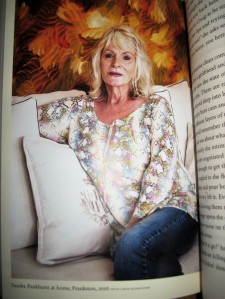 The author does a nice job of staying out of the narrative: though she’s an observer and questioner, there’s only the occasional paragraph in which she mentions her own life. Her mother left when she was young, which helps to explain why she is so compassionate towards the addicts and hoarders she meets with Sandra. Some of the loveliest passages have her pondering how things got so bad for these people and affirming that their lives still have value. As for Sandra herself – now in her sixties and increasingly ill with lung disease and cirrhosis – Krasnostein believes she’s never been unconditionally loved and so has never formed true human connections.
This book does many different things in its 250 pages. It’s part journalistic exposé and part “love letter”; it’s part true crime and part ordinary life story. It considers gender, mental health, addiction, trauma and death. It’s also simply a terrific read that should draw in lots of people who wouldn’t normally pick up nonfiction. I don’t expect it to advance to the shortlist, but if it does I’ll be not-so-secretly delighted.
A favorite passage:
Sometimes, listening to Sandra try to remember the events of her life is like watching someone reel in rubbish on a fishing line: a weird mix of surprise, perplexity and unexpected recognition. No matter how many times we go over the first three decades of her life, the timeline of places and dates is never clear. Many of her memories have a quality beyond being merely faded; they are so rusted that they have crumbled back into the soil of her origins. Others have been fossilised, frozen in time, and don’t have a personal pull until they defrost slightly in the sunlit air between us as we speak. And when that happens there is a tremor in her voice as she integrates them back into herself, not seamlessly but fully.
See also:
My Year of Rest and Relaxation by Ottessa Moshfegh (2018)
If you’ve read her Booker-shortlisted debut, Eileen, you’ll be unsurprised to hear that Moshfegh has written another love-it-or-hate-it book with a narrator whose odd behavior is hard to stomach. This worked better for me than Eileen, I think because I approached it as a deadpan black comedy in the same vein as Elif Batuman’s The Idiot. Its inclusion on the Wellcome longlist is somewhat tenuous: in 2000 the unnamed narrator, in her mid-twenties, gets a negligent psychiatrist to prescribe her drugs for insomnia and depression and stockpiles them so she can take pill cocktails to knock herself out for days at a time. In a sense this is a way of extending the numbness that started with her parents’ deaths – her father from cancer and her mother by suicide. But there’s also a more fantastical scheme in her mind: “when I’d slept enough, I’d be okay, I’d be renewed, reborn. I would be a whole new person.”
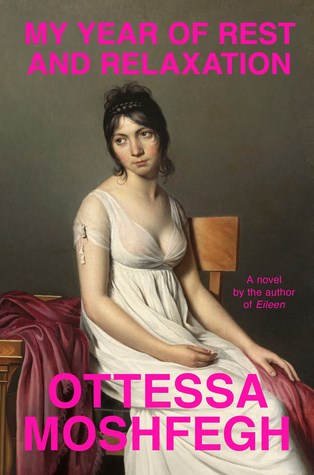 Ever since she was let go from her job at a gallery that showcases ridiculous modern art, the only people in this character’s life are an on-again, off-again boyfriend, Trevor, and her best (only) friend from college, longsuffering Reva, who keeps checking up on her in her New York City apartment even though she consistently treats Reva with indifference or disdain. Soon her life is a bleary cycle of sleepwalking and sleep-shopping, interspersed with brief periods of wakefulness, during which she watches a nostalgia-inducing stream of late-1990s movies on video (the kind of stuff I watched at sleepovers with my best friend during high school) – she has a weird obsession with Whoopi Goldberg.
It’s a wonder the plot doesn’t become more repetitive. I like reading about routines, so I was fascinated to see how the narrator methodically takes her project to extremes. Amazingly, towards the middle of the novel she gets herself from a blackout situation to Reva’s mother’s funeral – about the only time we see somewhere that isn’t her apartment, the corner shop, the pharmacy or Dr. Tuttle’s office – and this interlude is just enough to break things up. There are lots of outrageous lines and preposterous decisions that made me laugh. Consumerism and self-medication to deaden painful emotions are the targets of this biting satire. As 9/11 approaches, you wonder what it will take to wake this character up to her life. I’ve often wished I could hibernate through British winters, but I wouldn’t do what Moshfegh’s antiheroine does. Call this a timely cautionary tale about privilege and disengagement.
Favorite lines:
“Initially, I just wanted some downers to drown out my thoughts and judgments, since the constant barrage made it hard not to hate everyone and everything. I thought life would be more tolerable if my brain were slower to condemn the world around me.”
“Oh, sleep, nothing else could ever bring me such pleasure, such freedom, the power to feel and move and think and imagine, safe from the miseries of my waking consciousness.”
Reva: “you’re not changing anything in your sleep. You’re just avoiding your problems. … Your problem is that you’re passive. You wait around for things to change, and they never will. That must be a painful way to live. Very disempowering.”
See also:
And one more that I got out from the library and skimmed:
Murmur by Will Eaves (2018)
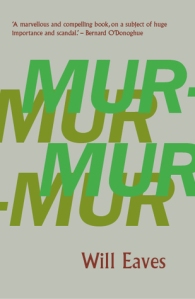 The subject is Alec Pryor, or “the scientist.” It’s clear that he is a stand-in for Alan Turing, quotes from whom appear as epigraphs at the head of most chapters. Turing was arrested for homosexuality and subjected to chemical castration. I happily read the first-person “Part One: Journal,” which was originally a stand-alone story (shortlisted for the BBC National Short Story Award 2017), but “Part Two: Letters and Dreams” was a lot harder to get into, so I ended up just giving the rest of the book a quick skim. If this is shortlisted, I promise to return to it and give it fair consideration.
See also:
We will announce our shadow panel shortlist on Friday. Follow along here and on Halfman, Halfbook, Annabookbel, A Little Blog of Books, and Dr. Laura Tisdall for reviews, predictions and reactions.
Childless Voices by Lorna Gibb
People end up not having children for any number of reasons: medical issues, bereavement, a lack of finances, not having a partner at the right time, or the simple decision not to become a parent. The subtitle of Lorna Gibb’s Childless Voices acknowledges these various routes: “Stories of Longing, Loss, Resistance and Choice.”
 For Gibb, a university lecturer, biographer and novelist, the childless state was involuntary, a result of severe endometriosis that led to infertility and early menopause. Although this has been a source of sadness for her and her husband, she knows that she has it easy compared to women in other parts of the world. Through her research and Skype interviews, she hears horrific stories about infertile women who meet with domestic violence and social ostracism and are sometimes driven to suicide. In Ghana childless women can be branded as witches and exiled. Meanwhile, some are never given the chance to have the children they might long for: Gibb cites China’s one-child policy, female genital mutilation, and enforced sterilization programs like those of the Roma in Yugoslavia and the Quechua in Peru.
Gibb is admirably comprehensive here, considering every possible aspect of childlessness. Particularly interesting are the different cultural adaptations childless women make. Certain countries allow polygamy, giving a second wife a chance to bear children on behalf of an infertile one; Kenya and other parts of sub-Saharan Africa recognize ‘marriages’ between childless women so they can create a family and support system. In Albania being a “sworn virgin” is an old and venerable custom. And, of course, there are any number of support groups and online communities. The situation of those who were once parents but are no longer is especially wrenching. Stillbirth only started to be talked about in the 1980s, Gibb notes, but even today is seen as a lesser loss than that of a child who dies later in life.
The author believes there is societal injustice in terms of who has access to fertility treatment and how the state deals with childless people. In the UK, she characterizes IVF as a “postcode lottery”: where you live often determines how many free cycles you’re entitled to on the NHS. In the USA, meanwhile, fertility treatment is so expensive that only those with a certain level of wealth can consider it. The childless may also feel ‘punished’ by tax breaks that favor parents and workplaces that expect non-parents to work unsociable hours. In a sense, then, the childless contribute more but benefit less.
Chosen childlessness is perhaps given short shrift at just 32 pages out of 239. However, it’s still a very thorough treatment of the reasons why couples decide not to become parents, including cultural norms, career goals, self-knowledge and environmental concerns. No surprise that this was the chapter that resonated with me the most. I also especially enjoyed the personal interludes (all titled “A Short Note on…”) in which Gibb celebrates her feminist, childless heroes like Frida Kahlo and Anaïs Nin and writes about how much becoming a godmother meant to her but also of the sadness of seeing a good friend’s teenage son die of a brain tumor.
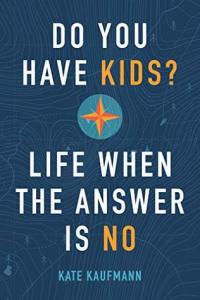 By coincidence, I’ve recently read another book on the same topic: Do You Have Kids? Life when the Answer Is No, by Kate Kaufmann (coming out in America next month). Gibb primarily traces the many different reasons for childlessness; Kaufmann mostly addresses the question of “now what?” – how women without children approach careers, wider family life, housing options, spirituality and the notion of leaving a legacy. Gibb’s approach is international and comparative, while Kaufmann’s is largely specific to the USA. Though the two authors are childless due to endometriosis and infertility, they feel sisterhood with women who never became mothers for whatever reason. I’d say these two books are complementary rather than rivals, and reveal valuable perspectives that can sometimes be overlooked.
My rating:
Childless Voices was published by Granta on February 7th. My thanks to the publisher for the free copy for review.
Fourth Blog Anniversary
I launched my blog four years ago today. Is that ages, or no time at all? Like I said last year, it feels like something I’ve been doing forever, and yet there are bloggers out there who are coming up on a decade or more of online writing about books.

By Incabell [CC BY-SA 4.0 (https://creativecommons.org/licenses/by-sa/4.0)%5D.
This is my 542nd post, so the statistics tell me that I’ve been keeping up an average of just over 2.5 posts a week. Although I sometimes worry about overwhelming readers with ‘too many’ posts, I keep in mind that a) no one is obliged to read everything I post, b) a frequently updated blog is a thriving blog, and c) it only matters that it’s a manageable pace for me.
In the last year or so, I’ve gotten more involved in buddy reads and monthly challenges (things like Reading Ireland Month, 20 Books of Summer, R.I.P., Margaret Atwood Reading Month, and Novellas and Nonfiction in November); I’ve continued to take part in literary prize shadow panels and attend literary events when I can. I’ve hosted the Library Checkout for nearly a year and a half now and there are a few bloggers who join in occasionally (more are always welcome!). The posts I most enjoy putting together are write-ups of my travels, and seasonal and thematic roundups, which are generally good excuses to read backlist books from my own shelves instead of getting my head turned by new releases.
Some statistics from the past year:
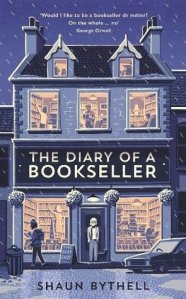 My four most viewed posts were:
The Diary of a Bookseller by Shaun Bythell
Clock Dance by Anne Tyler: Well…
Mixed Feelings about Elena Ferrante
I got the most likes in December 2018, and the most unique visitors and comments in August.
 My four favorite posts I wrote in the past year were:
A Trip to Wigtown, Scotland’s Book Town
Painful but Necessary: Culling Books, Etc.
Why We Sleep … And Why Can’t I Wake Up?
A President’s Day Reading Special (No Trump in Sight)
Thanks to everyone who has supported me this past year, and/or all four years, by visiting the site, commenting, re-tweeting, and so on. You’re the best!
Wellcome Book Prize Longlist: Mind on Fire by Arnold Thomas Fanning
“all these ideas are swirling around inside your head at once, hurling through your mind, it is on fire, so when you speak it all comes out muddled and confused and no one can understand you.”
Like the other Wellcome-longlisted title I’ve highlighted so far, Freshwater by Akwaeke Emezi, Mind on Fire explores mental health. Its subtitle is “A Memoir of Madness and Recovery,” and Irish playwright Fanning focuses on the ten years or so in his twenties and thirties when he struggled to get on top of his bipolar disorder and was in and out of mental hospitals – and even homeless on the streets of London for a short time.
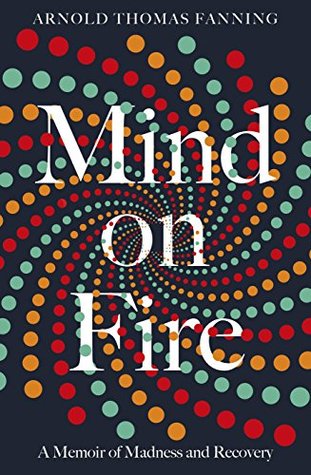 Fanning had suffered from periods of depression ever since his mother’s death from cancer when he was 20, but things got much worse when he was 28 and living in Dublin. It was the summer of 1997 and he’d quit a full-time job to write stories and film scripts. What with the wild swings in his moods and energy levels, though, he found it increasingly difficult to get along with his father, with whom he was living. He also got kicked out of an artists’ residency, and on the way home his car ran out of petrol – such that when he called the police for help, it was for a breakdown in more than one sense. This was the first time he was taken to a psychiatric unit, at the Tyrone and Fermanagh Hospital, where he stayed for 10 days.
In the years to come there would be many more hospital stays, delusions, medication regimes and odd behavior. There would also be time spent in America – an artists’ residency in Virginia, where he met Jennifer, and a fairly long-term relationship with her in New York City – and ups and downs in his writing career. For instance, he remembers that after reading Ulysses he was so despairingly convinced that he would never be a “real writer” like James Joyce that he burned hundreds of pages of work-in-progress.
This was a very hard book for me to rate. The prologue is a brilliant 6.5-page run-on sentence in the second person and present tense (I’ve quoted a fragment above) that puts you right into the author’s experience. It is a superb piece of writing. But nothing that comes after (a more standard first-person narrative, though still in the present tense for most of it) is nearly as good. As I’ve found in some other mental health memoirs, the cycle of hospitalizations and medications gets repetitive. It’s a whole lot of telling: this happened, then that happened. That’s also true of the flashbacks to his childhood and university years.
Due to his unreliable memory of his years lost to bipolar, Fanning has had to recreate his experiences from medical records, interviews with people who knew him, and so on. This insistence on documentary realism distances the reader from what should be intimate, terrifying events. I almost wondered if this would have worked better as a novel, allowing the author to invent more and thus better capture what it actually felt like to flirt with madness. There’s no denying the extremity of this period of his life, but I found myself unable to fully engage with the retelling. (Also, this is doomed to be mistaken for the superior Brain on Fire.)
My rating:
A favorite passage:
St John of God’s carries associations for me. I attended primary school not far from here, and used to see denizens of the hospital on their day outings, conspicuous in the way they walked: hunched over, balled up, constricted, eyes down to the ground, visibly disturbed. We cruelly referred to these people as ‘mentallers’, though never to their faces or within earshot, as we were frightened of them.
Now I, too, am a mentaller.
My gut feeling: There are several stronger memoirs on the longlist, so I don’t see this one making it through.
Longlist strategy:
- I’m about halfway through both The Trauma Cleaner by Sarah Krasnostein and My Year of Rest and Relaxation by Ottessa Moshfegh.
- I finally got hold of a library copy of Murmur by Will Eaves.
- The only two books I haven’t read and don’t have access to are Astroturf and Polio. I’ll only read these if they are on the shortlist. (Fingers crossed Astroturf doesn’t make it: it sounds awful!)
The Wellcome Book Prize shortlist will be announced on Tuesday, March 19th, and the winner will be revealed on Wednesday, May 1st.
We plan to choose our own shortlist to announce on Friday, March 15th. Follow along here and on Halfman, Halfbook, Annabookbel, A Little Blog of Books, and Dr. Laura Tisdall for reviews and predictions.
March Reading Plans and Books to Look out For
My apologies if you’ve already heard this story on social media: I was supposed to be in France this past weekend, but for the fourth time in a row we’ve been plagued by transport problems on a holiday: a flat tire in Wigtown, a cancelled train to Edinburgh, a cancelled flight to the States, and now car trouble so severe we couldn’t get on the ferry to Normandy. Though we made it all the way to the ferry port in Poole, our car was by then making such hideous engine noises that it would have been imprudent to drive it any further. We got a tow back to the auto shop where our car is usually serviced and currently await its prognosis. If it can be fixed, we may be able to reschedule our trip for this coming weekend.
The good news about our strange (non-)travel day: I got a jump on my Doorstopper of the Month, Cutting for Stone by Abraham Verghese, a terrific read that reminds me of a cross between Midnight’s Children and The Cider House Rules, and also started Priestdaddy by Patricia Lockwood – though my husband made me stop reading it because I couldn’t stop sniggering while he was trying to make important phone calls about the car. We ended up having a nice weekend at home anyway: going out for Nepalese food, gelato and a screening of The Favorite; doing some gardening and getting bits of work and writing done; and (of course) doing plenty of reading. Waking up with a purring cat on my legs and tucking into a stack of pancakes with maple syrup, I thought to myself, being home is pretty great, too.
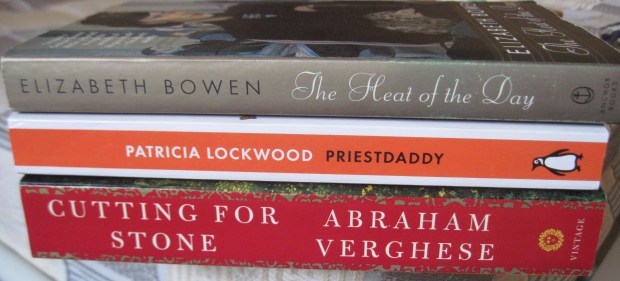
What I packed to read in France.
Reading Ireland Month 2019
This will be my second time participating in the annual challenge hosted by Cathy of 746 Books. I recently started The Heat of the Day by Elizabeth Bowen and I’m also currently reading two nonfiction books by Irish women: a review copy of Vagina: A Re-Education by Lynn Enright (which releases on March 7th) and the essay collection Notes to Self by Emilie Pine, on my Kindle. I have several other novels to choose from – two of which are set in Ireland rather than by Irish authors – plus a classic travel book by Dervla Murphy.
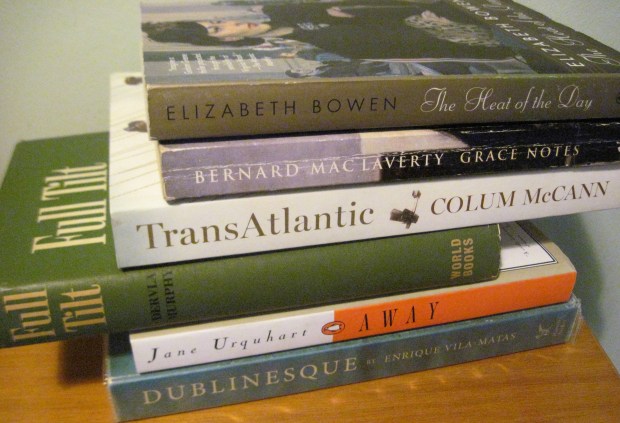
Irish selections.
Wellcome Book Prize
The second of my ‘assigned’ longlist reviews will be going up on Wednesday. I’m currently reading another three books from the longlist and will post some brief thoughts on them if I manage to finish them before the shortlist announcement on the 19th. At that point I will have read 10 out of the 12 books on the longlist, so should feel pretty confident about making predictions (or at least stating wishes) for what will go through to the next round.
Blog Tours
I have two blog tours coming up later in the month, including the official one that’s being run for the Dylan Thomas Prize longlist.
Review Books
I’ve got a pile-up of review copies that came out in February or are releasing early this month – 9, I think? Some I’ve already read and some are still in progress. So I will be doing my best to group these sensibly and write short reviews, but you may well notice a lot of posts from me.
Blog Anniversary
This Friday marks four years that I’ve been blogging about books!
Here are a few March releases I’ve read that you may want to look out for:
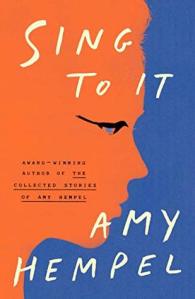 Sing to It: New Stories by Amy Hempel [releases on the 26th]: “When danger approaches, sing to it.” That Arabian proverb provides the title for Amy Hempel’s fifth collection of short fiction, and it’s no bad summary of the purpose of the arts in our time: creativity is for defusing or at least defying the innumerable threats to personal expression. Only roughly half of the flash fiction achieves a successful triumvirate of character, incident and meaning. The author’s passion for working with dogs inspired the best story, “A Full-Service Shelter,” set in Spanish Harlem. A novella, Cloudland, takes up the last three-fifths of the book and is based on the case of the “Butterbox Babies.” (Reviewed for the Pittsburgh Post-Gazette.)
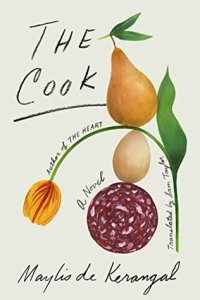 The Cook by Maylis de Kerangal (translated from the French by Sam Taylor) [releases on the 26th]: This is a pleasant enough little book, composed of scenes in the life of a fictional chef named Mauro. Each chapter picks up with the young man at a different point as he travels through Europe, studying and working in various restaurants. If you’ve read The Heart / Mend the Living, you’ll know de Kerangal writes exquisite prose. Here the descriptions of meals are mouthwatering, and the kitchen’s often tense relationships come through powerfully. Overall, though, I didn’t know what all these scenes are meant to add up to. Kitchens of the Great Midwest does a better job of capturing a chef and her milieu.
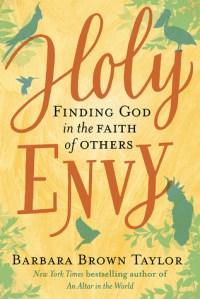 Holy Envy: Finding God in the Faith of Others by Barbara Brown Taylor [releases on the 12th]: After she left the pastorate, Taylor taught Religion 101 at Piedmont College, a small Georgia institution, for 20 years. This book arose from what she learned about other religions – and about Christianity – by engaging with faith in an academic setting and taking her students on field trips to mosques, temples, and so on. She emphasizes that appreciating other religions is not about flattening their uniqueness or looking for some lowest common denominator. Neither is it about picking out what affirms your own tradition and ignoring the rest. It’s about being comfortable with not being right, or even knowing who is right.
What’s on your reading docket for March?
Iris Murdoch Readalong: The Sacred and Profane Love Machine (1974)
A later Murdoch – her sixteenth novel – and not one I knew anything about beforehand. In terms of atmosphere, characters and themes, it struck me as a cross between A Severed Head and The Nice and the Good. Like the former, it feels like a play with a few recurring sets: Hood House, where the Gavenders (Blaise, Harriet and David) live; their next-door neighbor Montague Small’s house; and the apartment where Blaise keeps his mistress, Emily McHugh, and their eight-year-old son Luca. A sizeable dramatis personae radiates out from the central love triangle: lodgers, neighbors, other family members, mutual friends and quite a few dogs.

Blaise is a psychoanalyst but considers himself a charlatan because he has no medical degree; he’s considering returning to his studies to rectify that. Harriet reminded me of Kate from The Nice and the Good: a cheerful, only mildly unfulfilled matriarch who is determined to choreograph much of what happens around her. (“She wanted simply to feel the controls firmly in her hands. She wanted to be the recognizer, the authorizer, the welcomer-in, the one who made things respectable and made them real by her cognizance of them.”) Their son David, 16, looks like a Pre-Raphaelite god and is often disgusted by fleshly reality. Montague writes successful but formulaic detective novels and is mourning his wife’s recent death.
I loved how on first introduction to most characters we hear about the dreams from which they’ve just awoken, involving mermaids, cats, dogs and a monster with a severed head. “Dreams are rather marvellous, aren’t they,” David remarks to Monty. “They can be beautiful in a special way like nothing else. Even awful things in dreams have style.” Scenes often open with dreams that feel so real to the characters that they could fool readers into belief.
Blaise knows he can’t sustain his double life, especially after Luca stows away in his car on a couple of occasions to see Hood House. When he confesses to Harriet via a letter, she seems to handle things very well. In fact, she almost glows with self-righteous pride over how reasonably she’s been responding. But both she and Emily end up resentful. Why should Blaise ‘win’ by keeping his wife and his mistress? “You must feel like the Sultan of Turkey,” Emily taunts him. “You’ve got us both. You’ve got away with it.” Here starts a lot of back-and-forth, will-they-won’t-they that gets somewhat tedious. Throughout I noticed overlong sections of internal monologue and narrator commentary on relationships.
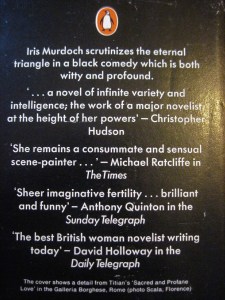 There’s a misperception, I think, that Murdoch wrote books in which not much happens, simply because her canvas can be small and domestically oriented. However, this is undoubtedly an eventful novel, including a Shocking Incident that Liz warned about. Foreshadowing had alerted me that someone was going to die, but it wasn’t who or how I thought. When it comes to it, Murdoch is utterly matter-of-fact: “[X] had perished”.
One of the pleasures of reading a Murdoch novel is seeing how she reworks the same sorts of situations and subjects. (Liz has written a terrific review set in the context of Murdoch’s whole body of work.) Here I enjoyed tracing the mother–son relationships – at least three of them, two of which are quite similar: smothering and almost erotic. Harriet later tries to subsume Luca into the family, too. I also looked out for the recurring Murdochian enchanter figure: first Blaise, for whom psychiatry is all about power, and then Harriet.
I hugely enjoyed the first 100 pages or more of the book, but engaged with it less and less as it went on. Ultimately, it falls somewhere in the middle for me among the Murdochs I’ve read. Here’s my ranking of the nine novels I’ve read so far, with links to my reviews:
Favorite: The Bell
The Sea, The Sea
The Sacred and Profane Love Machine
The Black Prince
Least favorite: An Accidental Rose
My rating:
A favorite passage (this is Monty on the perils of working from home!): “If I had an ordinary job to do I’d have to get on with it. Being self-employed I can brood all day. It’s undignified and bad.”
This is the last of the Murdoch paperbacks I bought as a bargain bundle from Oxfam Books some years ago. I’ll leave it a while – perhaps a year – and then try some earlier Murdochs I’ve been tempted by during Liz’s Iris Murdoch readalong project, such as The Unicorn.
Classic and Doorstopper of the Month: East of Eden by John Steinbeck (1952)
Look no further for the Great American Novel. Spanning from the Civil War to World War I and crossing the country from New England to California, East of Eden is just as wide-ranging in its subject matter, with an overarching theme of good and evil as it plays out in families and in individual souls. This weighty material – openly addressed in theological and philosophical terms in the course of the novel – is couched in something of a family saga that follows several generations of the Trasks and the Hamiltons. (Some spoilers follow.)

Cyrus Trask, Civil War amputee and fraudulent hero, has two sons. He sends his beloved boy, Adam, into the army during the Indian Wars. Adam’s half-brother Charles stays home to tend the family’s Connecticut farm. There’s a bitter sibling rivalry between them; more than once it looks like Charles might beat Adam to death. When Cyrus, now high up in military administration in Washington, dies and leaves his sons $100,000, Charles is suspicious. He’s sure their father stole the money, but Adam won’t accept that. Adam takes his inheritance and buys a ranch outside Salinas, California, taking with him his new wife Cathy, who turned up battered on the brothers’ doorstep and won’t reveal anything about her shadowy background.
Cathy is that rare thing: a female villain, and one with virtually no redeeming features. No sooner has she given birth to Adam’s twin sons than she runs off, shooting him in the shoulder to get away. Unbeknownst to Adam, who still idealizes a wife he knows nothing about, she gets work in a Salinas brothel and before long takes over as the madam. As her sons Aron and Cal grow up, they hear rumors that make them doubt their mother is buried back East, as their father claims. Aron is drawn to the Church and falls for a girl named Abra, whom he puts on a pedestal just as he does his ‘dead’ mother. Cal, a wanderer and schemer, is determined not to follow his mother into vice even though that seems like his fate.

The John Steinbeck House (his childhood home) in Salinas, CA. By Ken Lund [CC BY-SA 2.0] via Wikimedia Commons.
This was a buddy read with my mother. We were surprised by how much philosophy and theology Steinbeck includes. The parallels with the Cain and Abel story (brought to mind by both sets of C & A Trask brothers) are not buried in the text for an observant reader to find, but discussed explicitly. My favorite character and the novel’s most straightforward hero is Lee, Adam’s loyal Chinese cook, who practically raises Cal and Aron. When we first meet him he’s speaking pidgin, as is expected of him, but around friends he drops the act and can be his nurturing and deeply intellectual self. With some fellow Chinese scholars he’s picked apart Genesis 4 and zeroed in on one Hebrew word, timshel or “thou mayest.” To Lee this speaks of choice and possibility; life is not all pre-ordained. For the two central families it is a message of hope: one does not have to replicate family mistakes.

Steinbeck with his third wife, Elaine Scott, in 1950. The character of Cathy may be based on his second wife, Gwyn Conger, who cheated on him on multiple occasions and asked for a divorce. [Public domain] via Wikimedia Commons.
At 600 small-type pages, this is a big book with many minor threads and secondary characters I haven’t even touched on. Steinbeck grapples with primal stories about human nature and examines how we try to earn love and break free from others’ expectations. His depiction of America’s contradictions still feels true, and he writes simply stunning sentences. “It is one of the best books I’ve ever read,” my mother told me. It’s a classic you really shouldn’t pass up.
Page count: 602
My rating: 
A few favorite passages:
“It is the dull eventless times that have no duration whatever. A time splashed with interest, wounded with tragedy, crevassed with joy—that’s the time that seems long in the memory.”
“Adam Trask grew up in grayness, and the curtains of his life were like dusty cobwebs, and his days a slow file of half-sorrows and sick dissatisfactions, and then, through Cathy, the glory came to him.”
“We have only one story. All novels, all poetry, are built on the never-ending contest in ourselves of good and evil. And it occurs to me that evil must constantly respawn, while good, while virtue, is immortal. Vice has always a new fresh young face, while virtue is venerable as nothing else in the world is.”
During the month I spent reading this I could hardly get these two songs out of my head. Both seem to be at least loosely inspired by East of Eden. I’ve pulled out some key lines and linked to audio or video footage.
When the clouds roll in, we start playing for our sins
With a gun in my hand and my son at my shoulder
Believe I will run before that boy gets older […]
Ask the angels, “Am I heaven-bound?”
“By the Skin of My Teeth” by Duke Special
My luck ran out just east of Eden
Oh, I proved you right
I’m a danger […]
I’m tired, don’t let me be a failure
Library Checkout: February 2019

A somewhat lighter month, but with lots of skimming of books on topics that interest me: happiness, nature, mental health and self-help. The set of books that I’m currently reading is absolutely fantastic. (As usual, I’ve added in star ratings and links to Goodreads reviews where I haven’t already featured the books on the blog in some way.)
LIBRARY BOOKS READ
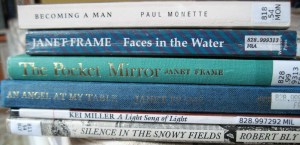
- Silence in the Snowy Fields by Robert Bly [poetry]

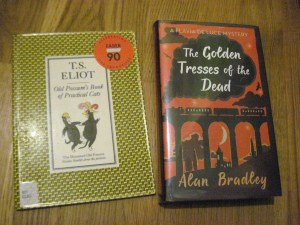
- The Golden Tresses of the Dead by Alan Bradley
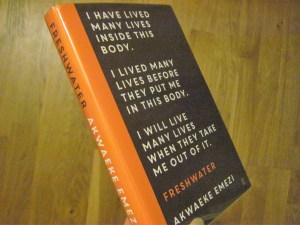
- Freshwater by Akwaeke Emezi
- A Light Song of Light by Kei Miller [poetry]
SKIMMED
- The Happy Brain: The Science of Where Happiness Comes From, and Why by Dean Burnett
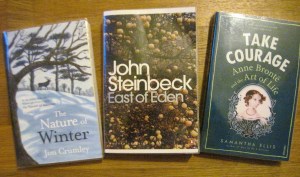
- The Nature of Winter by Jim Crumley
- The Name of the Rose by Umberto Eco
- Take Courage: Anne Brontë and the Art of Life by Samantha Ellis
- Lost Connections: Uncovering the Real Causes of Depression – and the Unexpected Solutions, Johann Hari
- The Four Tendencies: The Indispensable Personality Profiles that Reveal how to Make Your Life Better (And Other People’s Lives Better, Too) by Gretchen Rubin
CURRENTLY READING
- Boy Erased: A Memoir of Identity, Faith, and Family by Garrard Conley
- Faces in the Water by Janet Frame
- East of Eden by John Steinbeck
- Absent in the Spring by “Mary Westmacott” (aka Agatha Christie)
CURRENTLY SKIMMING
- To Obama: With love, joy, hate and despair by Jeanne Marie Laskas
CHECKED OUT, TO BE READ
- Old Possum’s Book of Practical Cats by T.S. Eliot [poetry]
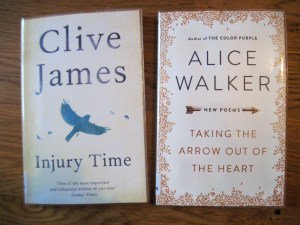
- Injury Time by Clive James [poetry]
- Taking the Arrow out of the Heart by Alice Walker [poetry]
- Everything, Everything by Nicola Yoon
Along with the rest of a new batch of university library books:
- An Angel at My Table by Janet Frame
- A Pocket Mirror by Janet Frame
- Becoming a Man by Paul Monette
IN THE RESERVATION QUEUE
- Seven Signs of Life: Stories from an Intensive Care Doctor by Aoife Abbey
- Hired: Six Months Undercover in Low-wage Britain by James Bloodworth
- 21st-Century Yokel by Tom Cox
- Everybody Died, So I Got a Dog by Emily Dean
- Murmur by Will Eaves
- Also Human: The Inner Lives of Doctors by Caroline Elton
- Dream Sequence by Adam Foulds
- Outsiders: Five Women Writers Who Changed the World by Lyndall Gordon
- The Recovering: Intoxication and Its Aftermath by Leslie Jamison
- Lost and Found: Memory, Identity, and Who We Become when We’re No Longer Ourselves by Jules Montague
- Lanny by Max Porter
- The World I Fell Out Of by Melanie Reid
- The Secret Barrister: Stories of the Law and How It’s Broken
- Feel Free: Essays by Zadie Smith
- The Face Pressed against a Window: A Memoir by Tim Waterstone
RETURNED UNFINISHED
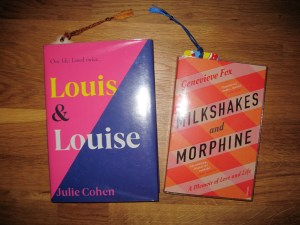
- Louis & Louise by Julie Cohen – The prose is fine – easy to read, but nothing special. Though Cohen says she was inspired by Alderman’s The Power and Woolf’s Orlando, I don’t have faith that significant points will be made about gender identity.
- The Binding by Bridget Collins – I didn’t even make it through the first chapter. I was getting Diane Setterfield-lite vibes, but couldn’t imagine reading 400 pages of this.
- Orchid Summer: In Search of the Wildest Flowers of the British Isles by John Dunn –The writing is great; no question about that. But the book is so dense: so many words on a page, in such small type. Unless you’re a botany nut, I wouldn’t recommend it.
- Milkshakes and Morphine: A Memoir of Love and Loss by Genevieve Fox – Fox has some amusing turns of phrase when talking about her throat cancer and treatment, but this is way too long at over 370 pages of small print.
RETURNED UNREAD
- Daphne by Will Boast – I liked the voice in the first couple of pages and will definitely get this back out at another time.
- The Way of the Hare by Marianne Taylor – This felt more detailed and technical than I was looking for in a species overview.
What have you been reading from your local libraries? Does anything appeal from my stacks?
I don’t have an official link-up system, so please just pop a link to your blog in the comments if you’ve taken part in Library Checkout this month. (Feel free to use the image in your post.)
The Three Best Books I’ve Read So Far This Year
I’m very stingy with my 5-star ratings, so when I give one out you can be assured that a book is truly special. These three are all backlist reads – look out for my Classic of the Month post next week for a fourth that merits 5 stars – that are well worth seeking out. Out of the 50 books I’ve read so far this year, these are far and away the best.
This Sunrise of Wonder: Letters for the Journey by Michael Mayne (1995)

The cover image is Mark Rothko’s Orange, Red, Yellow (1956).
I plucked this Wigtown purchase at random from my shelves and it ended up being just what I needed to lift me out of January’s funk. Mayne’s thesis is that experiencing wonder, “rare, life-changing moments of seeing or hearing things with heightened perception,” is what makes us human. Call it an epiphany (as Joyce did), call it a moment of vision (as Woolf did), call it a feeling of communion with the universe; whatever you call it, you know what he is talking about. It’s that fleeting sense that you are right where you should be, that you have tapped into some universal secret of how to be in the world.
Mayne believes poets, musicians and painters, in particular, reawaken us to wonder by encouraging us to pay close attention. His frame of reference is wide, with lots of quotations and poetry extracts; he has a special love for Turner, Monet and Van Gogh and for Rilke, Blake and Hopkins. Mayne was an Anglican priest and Dean of Westminster, so he comes at things from a Christian perspective, but most of his advice is generically spiritual and not limited to a particular religion. There are about 50 pages towards the end that are specifically about Jesus; one could skip those if desired.
The book is a series of letters written to his grandchildren from a chalet in the Swiss Alps one May to June. Especially with the frequent quotations and epigraphs, the effect is of a rich compendium of wisdom from the ages. I don’t often feel awake to life’s wonder – I get lost in its tedium and unfairness instead – but this book gave me something to aspire to.
A few of the many wonderful quotes:
“The mystery is that the created world exists. It is: I am. The mystery is life itself, together with the fact that however much we seek to explore and to penetrate them, the impenetrable shadows remain.”
“Once wonder goes; once mystery is dismissed; once the holy and the numinous count for nothing; then human life becomes cheap and it is possible with a single bullet to shatter that most miraculous thing, a human skull, with scarcely a second thought. Wonder and compassion go hand-in-hand.”
“this recognition of my true worth is something entirely different from selfishness, that turned-in-upon-myselfness of the egocentric. … It is a kind of blasphemy to view ourselves with so little compassion when God views us with so much.”
Body of Work: Meditations on Mortality from the Human Anatomy Lab by Christine Montross (2007)
 When she was training to become a doctor in Rhode Island, Montross and her anatomy lab classmates were assigned an older female cadaver they named Eve. Eve taught her everything she knows about the human body. Montross is also a published poet, as evident in her lyrical exploration of the attraction and strangeness of working with the remnants of someone who was once alive. She sees the contrasts, the danger, the theatre, the wonder of it all:
“Stacked beside me on my sage green couch: this spinal column that wraps into a coil without muscle to hold it upright, hands and feet tied together with floss, this skull hinged and empty. A man’s teeth.”
“When I look at the tissues and organs responsible for keeping me alive, I am not reassured. The wall of the atrium is the thickness of an old T-shirt, and yet a tear in it means instant death. The aorta is something I have never thought about before, but if mine were punctured, I would exsanguinate, a deceptively beautiful word”
All through her training, Montross has to remind herself to preserve her empathy despite a junior doctor’s fatigue and the brutality of the work (“The force necessary in the dissections feels barbarous”), especially as the personal intrudes on her career through her grandparents’ decline and her plans to start a family with her wife – which I gather is more of a theme in her next book, Falling into the Fire, about her work as a psychiatrist. I get through a whole lot of medical reads, as any of my regular readers will know, but this one is an absolute stand-out for its lyrical language, clarity of vision, honesty and compassion.
There There by Tommy Orange (2018)
Had I finished this late last year instead of in the second week of January, it would have been vying with Lauren Groff’s Florida for the #1 spot on my Best Fiction of 2018 list.
 The title – presumably inspired by both Gertrude Stein’s remark about Oakland, California (“There is no there there”) and the Radiohead song – is no soft pat of reassurance. It’s falsely lulling; if anything, it’s a warning that there is no consolation to be found here. Orange’s dozen main characters are urban Native Americans converging on the annual Oakland Powwow. Their lives have been difficult, to say the least, with alcoholism, teen pregnancy, and gang violence as recurring sources of trauma. They have ongoing struggles with grief, mental illness and the far-reaching effects of fetal alcohol syndrome.
The novel cycles through most of the characters multiple times, alternating between the first and third person (plus one second person chapter). As we see them preparing for the powwow, whether to dance and drum, meet estranged relatives, or get up to no good, we start to work out the links between everyone. I especially liked how Orange unobtrusively weaves in examples of modern technology like 3D printing and drones.
The writing in the action sequences is noticeably weaker, and I wasn’t fully convinced by the sentimentality-within-tragedy of the ending, but I was awfully impressed with this novel overall. I’d recommend it to readers of David Chariandy’s Brother and especially Sunil Yapa’s Your Heart Is a Muscle the Size of a Fist. It was my vote for the National Book Critics Circle’s John Leonard Prize (for the best first book, of any genre, published in 2018), and I was pleased that it went on to win.
 Bookish Beck = Rebecca Foster. American transplant to England. Freelance proofreader and book reviewer.
 Bookish Beck