Three Recommended July Releases: Starling Days, Hungry, Supper Club
While very different, these three books tie together nicely with their themes of the hunger for food, adventure and/or love.
Starling Days by Rowan Hisayo Buchanan
(Coming on July 11th from Sceptre [UK])
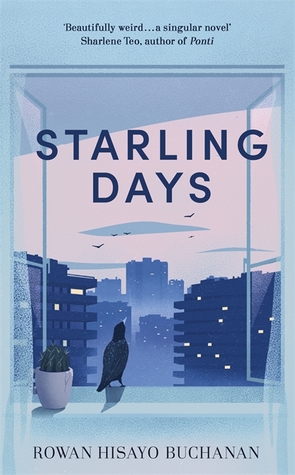 Buchanan’s second novel reprises many of the themes from her first, Harmless Like You, including art, mental illness, and having one’s loyalties split across countries and cultures. Oscar and Mina have been together for over a decade, but their marriage got off to a bad start six months ago: on their wedding night Mina took an overdose, and Oscar was lucky to find her in time. The novel begins and ends with her contemplating suicide again; in between, Oscar takes her from New York City to England, where he grew up, for a change of scenery and to work on getting his father’s London flats ready to sell. For Mina, an adjunct professor and Classics tutor, it will be labeled a period of research on her monograph about the rare women who survive in Greek and Roman myth. But when work for his father’s Japanese import company takes Oscar back to New York, Mina is free to pursue her fascination with Phoebe, the sister of Oscar’s childhood friend.
Both Oscar and Mina have Asian ancestry and complicated, dysfunctional family histories. For Oscar, his father’s health scare is a wake-up call, reminding him that everything he has taken for granted is fleeting, and Mina’s uncertain mental and reproductive health force him to face the fact that they might never have children. Although I found this less original and compelling than Buchanan’s debut, I felt true sympathy for the central couple. It’s a realistic picture of marriage: you have to keep readjusting your expectations for a relationship the longer you’re together, and your family situation is inevitably going to have an impact on how you envision your future. I also admired the metaphors and the use of color.
The title is, I think, meant to refer to a sort of time outside of time when wishes can come true; in Mina’s case that’s these few months in London. Bisexuality is something you don’t encounter too often in fiction, so I guess that’s reason enough for it to be included here as a part of Mina’s story, though I wouldn’t say it adds much to the narrative. If it had been up to me, instead of birds I would have picked up on the repeated peony images (Mina has them tattooed up her arms, for instance) for the title and cover. 
Hungry: Eating, Road-Tripping, and Risking It All with the Greatest Chef in the World by Jeff Gordinier
(Coming on July 9th from Tim Duggan Books [USA] and on October 3rd from Icon Books [UK])
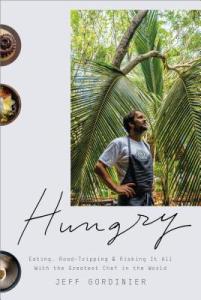 Noma, René Redzepi’s restaurant in Copenhagen, Denmark, has widely been considered the best in the world. In 2013, though, it suffered a fall from grace when some bad mussels led to a norovirus outbreak that affected dozens of customers. Redzepi wanted to shake things up and rebuild Noma’s reputation for culinary innovation, so in the four years that followed he also opened pop-up restaurants in Tulum, Mexico and Sydney, Australia. Journalist Jeff Gordinier, food and drinks editor at Esquire magazine, went along for the ride and reports on the Noma team’s adventures, painting a portrait of a charismatic, driven chef. For foodies and newbies alike, it’s a brisk, delightful tour through world cuisine as well as a shrewd character study. (Full review coming soon to BookBrowse.)
Supper Club by Lara Williams
(Coming on July 9th from G.P. Putnam’s Sons [USA] and July 4th from Hamish Hamilton [UK])
“What could violate social convention more than women coming together to indulge their hunger and take up space?” Roberta and Stevie become instant besties when Stevie is hired as an intern at the fashion website where Roberta has been a writer for four years. Stevie is a would-be artist and Roberta loves to cook; they decide to combine their talents and host Supper Clubs that allow emotionally damaged women to indulge their appetites. The pop-ups take place at down-at-heel or not-strictly-legal locations, the food is foraged from dumpsters, and there are sometimes elaborate themes and costumes. These bacchanalian events tend to devolve into drunkenness, drug-taking, partial nudity and food fights.
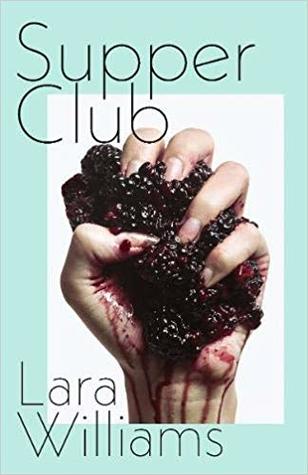 The central two-thirds of the book alternates chapters between the present day, when Roberta is 28–30, and her uni days. I don’t think it can be coincidental that Roberta and Stevie are both feminized male names; rather, we are meant to ask to what extent all the characters have defined themselves in terms of the men in their lives. For Roberta, this includes the father who left when she was seven and now thinks he can send her chatty e-mails whenever he wants; the fellow student who raped her at uni; and the philosophy professor she dated for ages even though he treated her like an inconvenient child. Supper Club is performance art, but it’s also about creating personal meaning when family and romance have failed you.
I was slightly disappointed that Supper Club itself becomes less important as time goes on, and that we never get closure about Roberta’s father. I also found it difficult to keep the secondary characters’ backstories straight. But overall this is a great debut novel with strong themes of female friendship and food. Roberta opens most chapters with cooking lore and tips, and there are some terrific scenes set in cafés. I suspect this will mean a lot to a lot of young women. Particularly if you’ve liked Sweetbitter (Stephanie Danler) and Friendship (Emily Gould), give it a taste.
With thanks to Sapphire Rees of Penguin for the proof copy for review.
Have you read any other July releases you would recommend?
20 Books of Summer, #1–4: Alexis, Haupt, Rutt, Tovey
I was slow to launch into my 20 Books of Summer reading, but have now finally managed to get through my first four books. These include two substitutes: a review copy I hadn’t realized fit in perfectly with my all-animals challenge, and a book I’d started earlier in the year but set aside and wanted to get back into. Three of the four were extremely rewarding; the last was somewhat insubstantial, though I always enjoy reading about cat antics. All have been illuminating about animal intelligence and behavior, and useful for thinking about our place in and duty towards the more-than-human world. Not all of my 20 Books of Summer will have such an explicit focus on nature – some just happen to have an animal in the title or pictured on the cover – but this first batch had a strong linking theme so was a great start.
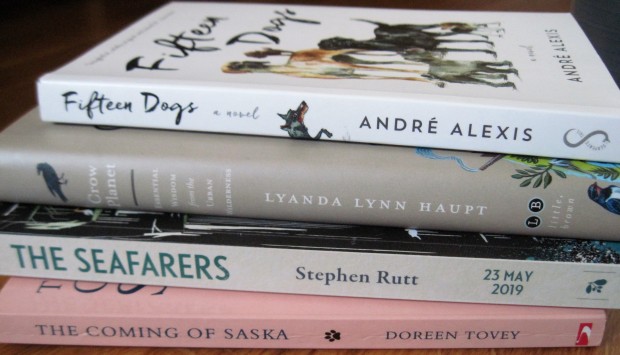
Fifteen Dogs by André Alexis (2015)
In this modern folk tale with elements of the Book of Job, the gods Apollo and Hermes, drinking in a Toronto tavern, discuss the nature of human intelligence and ponder whether it’s inevitably bound up with suffering. They decide to try an experiment, and make a wager on it. They’ll bestow human intelligence on a set of animals and find out whether the creatures die unhappy. Apollo is willing to bet two years’ personal servitude that they will be even unhappier than humans. Their experimental subjects are the 15 dogs being boarded overnight at a nearby veterinary clinic.
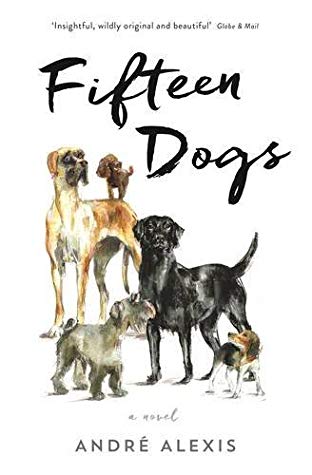 The setup means we’re in for an And Then There Were None type of picking-off of the 15, and some of the deaths are distressing. But strangely – and this is what the gods couldn’t foresee – knowledge of their approaching mortality gives the dogs added dignity. It gives their lives and deaths the weight of Shakespearean tragedy. Although they still do doggy things like establishing dominance structures and eating poop, they also know the joys of language and love. A mutt called Prince composes poetry and jokes. Benjy the beagle learns English well enough to recite the first paragraph of Vanity Fair. A poodle named Majnoun forms a connection with his owner that lasts beyond the grave. The dogs work out who they can trust; they form and dissolve bonds; they have memories and a hope that lives on.
It’s a fascinating and inventive novella, and a fond treatment of the relationship between dogs and humans. When I read in the Author’s Note that the poems all included dogs’ names, I went right back to the beginning to scout them out. I’m intrigued by the fact that this Giller Prize winner is a middle book in a series, and keen to explore the rest of the Trinidanian-Canadian author’s oeuvre.
These next two have a lot in common. For both authors, paying close attention to the natural world – birds, in particular – is a way of coping with environmental and mental health crises.
Crow Planet: Essential Wisdom from the Urban Wilderness by Lyanda Lynn Haupt (2009)
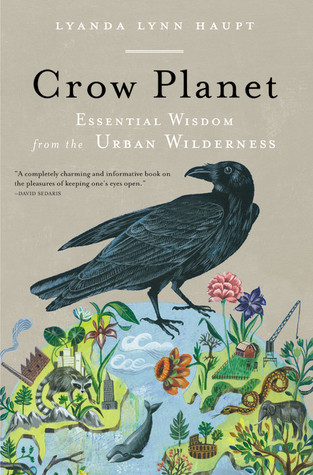 Lyanda Lynn Haupt has worked in bird research and rehabilitation for the Audubon Society and other nature organizations. (I read her first book, Rare Encounters with Ordinary Birds, quite a few years ago.) During a bout of depression, she decided to start paying more attention to the natural world right outside her suburban Seattle window. Crows were a natural place to start. From then on she took binoculars everywhere she went, even on walks to Target. She spent time watching crows’ behavior from a distance or examining them up close – devoting hours to studying a prepared crow skin. She even temporarily took in a broken-legged fledgling she named Charlotte and kept a close eye on the injured bird’s progress in the months after she released it.
Were this simply a charming and keenly observed record of bird behavior and one woman’s gradual reawakening to the joys of nature, I would still have loved it. Haupt is a forthright and gently witty writer. But what takes it well beyond your average nature memoir is the bold statement of human responsibility to the environment. I’ve sat through whole conference sessions that try to define what nature is, what the purpose of nature writing is, and so on. Haupt can do it in just a sentence, concisely and effortlessly explaining how to be a naturalist in a time of loss and how to hope even when in possession of all the facts. 
A few favorite passages:
“an intimate awareness of the continuity between our lives and the rest of life is the only thing that will truly conserve the earth … When we allow ourselves to think of nature as something out there, we become prey to complacency. If nature is somewhere else, then what we do here doesn’t really matter.”
“I believe strongly that the modern naturalist’s calling includes an element of activism. Naturalists are witnesses to the wild, and necessary bridges between ecological and political ways of knowing. … We join the ‘cloud of witnesses’ who refuse to let the more-than-human world pass unnoticed.”
“here we are, intricate human animals capable of feeling despair over the state of the earth and, simultaneously, joy in its unfolding wildness, no matter how hampered. What are we to do with such a confounding vision? The choices appear to be few. We can deny it, ignore it, go insane with its weight, structure it into a stony ethos with which we beat our friends and ourselves to death—or we can live well in its light.”
The Seafarers: A Journey among Birds by Stephen Rutt (2019)
 In 2016 Rutt left his anxiety-inducing life in London in a search for space and silence. He found plenty of both on the Orkney Islands, where he volunteered at the North Ronaldsay bird observatory for seven months. In the few years that followed, the young naturalist travelled the length and breadth of the British Isles – from Skomer to Shetland – courting encounters with seabirds. He’s surrounded by storm petrels one magical night at Mousa Broch; he runs from menacing skuas; he watches eider and terns and kittiwakes along the northeast coast; he returns to Orkney to marvel at gannets and fulmars. Whether it’s their beauty, majesty, resilience, or associations with freedom, such species are for him a particularly life-enhancing segment of nature to spend time around.
Discussion of the environmental threats that hit seabirds hardest, such as plastic pollution, makes for a timely tie-in to wider conservation issues. Rutt also sees himself as part of a long line of bird-loving travellers, including James Fisher and especially R.M. Lockley, whose stories he weaves in. This is one of the best nature/travel books I’ve read in a long time, especially enjoyable because I’ve been to a lot of the island locations and the elegantly evocative writing, making particularly effective use of varied sentence lengths, brought back to me just what it’s like to be in the far north of Scotland in the midst of an endless summer twilight, a humbled observer as a whole whirlwind of bird life carries on above you. 
A favorite passage:
“Gannets nest on the honeycombs of the cliff, in their thousands. They sit in pairs, pointing to the sky, swaying heads. They stir. The scent of the boat’s herring fills the air. They take off, tessellating in a sky that is suddenly as much bird as light. The great skuas lurk.”
My husband also reviewed this, from a birder’s perspective.
With thanks to Elliott & Thompson for the proof copy for review.
The Coming of Saska by Doreen Tovey (1977)
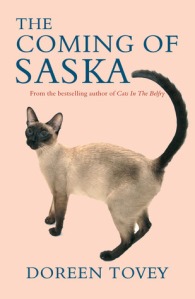 I’ve read four of Tovey’s quaint Siamese cat books now; this was the least worthwhile. It’s partially a matter of false advertising: Saska only turns up for the last 15 pages, as a replacement of sorts for Seeley, who disappeared one morning a year earlier and was never seen again. Over half of the book, in fact, is about a trip Tovey and her husband Charles took to Edmonton, Canada. The Canadian government sponsored them to come over for the Klondike Days festivities, and they also rented a camper and went looking for bears and moose. Mildly amusing mishaps, close shaves, etc. ensue. They then come back and settle into everyday life with their pair of Siamese half-siblings; Saska had the same father as Shebalu. Entertaining enough, but slight, and with far too many ellipses.
Upcoming Reading Plans: Milan Trip and Summer Books
“Centre of fashion, business and finance,” “muggy and mosquito-ridden in summer” – from the guidebook descriptions it could hardly sound less like our kind of place, and yet Milan is where we’re off to tomorrow. While it wouldn’t be our first-choice destination, my husband is attending a landscape ecology conference there and presenting a paper; I’m going along for the week to have a holiday. It’s Italy. Why not?! I doubt the northern plain will be as much to our taste as Tuscany, which we explored on a wonderfully memorable trip in April 2014 (on which I first drank coffee), but there will still be history and culture around every corner, and we plan on eating very well and getting out of the city to see some of the Lakes region, too.
We’re traveling the slow way: a train to London; the Eurostar to Paris, where we’ll stay for one night; and a seven-hour train ride to Milan the following day. If the weather remains as hot as it has been in Continental Europe (e.g. 40°C / 105°F in Paris this week – ugh!), I’m not sure I’ll be up for a lot of solo sightseeing. I’ll put in a much-reduced work load for the week, but for much of the rest of the time when my husband is at the conference I may just lounge around our Airbnb, with a stack of print books, in front of the USB-powered fan I’ve ordered.
So of course I’ve been having great fun thinking about what reading material I might pack. I’ve assembled a main stack, and a subsidiary stack, of books that seem appropriate for one or more reasons.
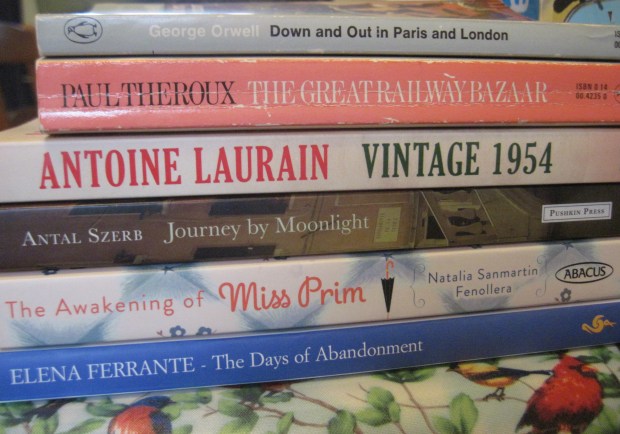
Down and Out in Paris and London, George Orwell – To read on the Eurostar between London and Paris. Orwell’s first book and my first try with his nonfiction: an account of the living conditions of the poor in two world cities.
Bonus goal it fulfills: Classic of the month
Vintage 1954, Antoine Laurain – For a Nudge review; to read en route to and in Paris. Drinking a 1954 Beaujolais transports a Parisian and his neighbors – including an Airbnb guest – back to the 1950s. Sounds like good fun.
Bonus goal it fulfills: Lit in translation
The Great Railway Bazaar, Paul Theroux – To read on the long train ride to Milan. Theroux travels from London to Tokyo on trains, then returns via the Trans-Siberian Express. I’ve always meant to try his work.
Bonus goal it fulfills: Travel classics
Journey by Moonlight, Antal Szerb – A Hungarian novel set on an Italian honeymoon. Try to resist these first lines: “On the train everything seemed fine. The trouble began in Venice, with the back-alleys.”
Bonus goals it fulfills: Lit in translation; 20 Books of Summer substitute (horse on the cover)
The Awakening of Miss Prim, Natalia Sanmarin Fenollera – Promises to be a cozy, fluffy novel about what happens when librarian Prudencia Prim arrives in a small village. I had the feeling it was set in Italy, but maybe it’s actually Spain? I’ll find out.
Bonus goal it fulfills: Lit in translation
The Days of Abandonment, Elena Ferrante – I’ve tried two Ferrante novels and not been too impressed, yet still I keep trying. This one’s set during a heat wave. Maybe I’ll get on with it better than I did with My Brilliant Friend or The Lost Daughter?
Bonus goal it fulfills: Lit in translation
The extra stack:
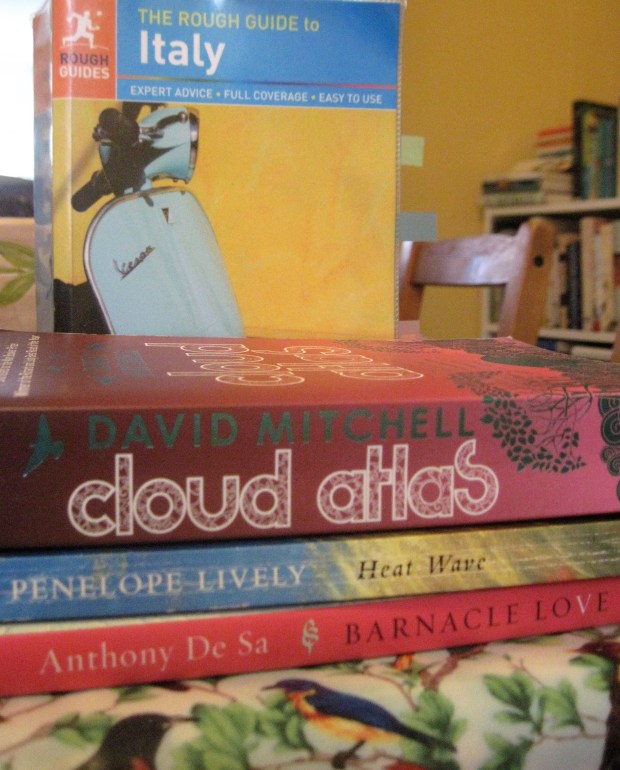
Heat Wave, Penelope Lively – The title says it all.
Bonus goal it fulfills: Reading with the seasons
Barnacle Love, Anthony De Sa – An extra animal book for 20 Books of Summer.
Cloud Atlas, David Mitchell – A novel I’ve meant to read for years. I’ve earmarked it for our super-long day of travel back to the UK.
Bonus goal it fulfills: Doorstopper of the Month
Considering getting from the library:
The Last Supper, Rachel Cusk – I’ve only made it through one of the three Cusk books I’ve attempted, but perhaps a travel memoir is a more surefire selection?
On my Kindle:
 The Fourth Shore, Virginia Baily – There’s an Italian flavor to this WWII novel, as there was to Baily’s previous one, Early One Morning. However, I’ve heard that this is mostly set in Tripoli, so I won’t make it a priority.
From Scratch, Tembi Locke – An actress’s memoir of falling in love with an Italian chef and her trips to his family home in Sicily with their adopted daughter. (Foodie and bereavement themes!)
I’ll read the first few pages of lots of these to make sure they ‘take’ and will try to pack a sensible number. (Which probably means all but one or two!) We’ll be packing light in general, since there’s only so many clothes one can wear in such heat, so I don’t mind carrying a backpack full of books – I’m used to it from weekly treks to the library and flights to America, and I know that I don’t find reading on Kindle as satisfying, though it certainly is convenient for when you’re on the go.
If you’d like to put in a good word for any of the above options, or want to dissuade me from a book I might not find worthwhile, let me know.
Meanwhile, I’ve been slow out of the gate with my 20 Books of Summer, but I finally have a first set of mini-reviews coming up tomorrow.
Other summer-themed books that I have on hand or will get from the library soon include One Summer: America, 1927 by Bill Bryson, The Go-Between by L.P. Hartley, The Sun Does Shine by Anthony Ray Hinton, The Summer Book by Tove Jansson, and Sunburn by Laura Lippman.
How’s your summer reading going?
Will you do any reading ‘on location’ this year?
The Best Books from the First Half of 2019
My top 10 releases of 2019 thus far, in no particular order, are:

Not pictured: one more book read from the library; the Kindle represents two NetGalley reads.
General / Historical Fiction
 Stubborn Archivist by Yara Rodrigues Fowler: What a hip, fresh approach to fiction. Broadly speaking, this is autofiction: like the author, the protagonist was born in London to a Brazilian mother and an English father. The book opens with fragmentary, titled pieces that look almost like poems in stanzas. The text feel artless, like a pure stream of memory and experience. Navigating two cultures (and languages), being young and adrift, and sometimes seeing her mother in herself: there’s a lot to sympathize with in the main character.
 The Flight Portfolio by Julie Orringer: Every day the Emergency Rescue Committee in Marseille interviews 60 refugees and chooses 10 to recommend to the command center in New York City. Varian and his staff arrange bribes, fake passports, and exit visas to get celebrated Jewish artists and writers out of the country via the Pyrenees or various sea routes. The story of an accidental hero torn between impossible choices is utterly compelling. This is richly detailed historical fiction at its best. My top book of 2019 so far.
 Daisy Jones and The Six by Taylor Jenkins Reid: This story of the rise and fall of a Fleetwood Mac-esque band is full of verve and heart, and it’s so clever how Reid delivers it all as an oral history of pieced-together interview fragments, creating authentic voices and requiring almost no footnotes or authorial interventions. It’s pure California sex, drugs, and rock ’n roll, but there’s nothing clichéd about it. Instead, you get timeless rivalry, resentment, and unrequited or forbidden love; the clash of personalities and the fleeting nature of fame.
Victorian Pastiche
 Things in Jars by Jess Kidd: In the autumn of 1863 Bridie Devine, female detective extraordinaire, is tasked with finding the six-year-old daughter of a baronet. Kidd paints a convincingly stark picture of Dickensian London, focusing on an underworld of criminals and circus freaks. Surgery before and after anesthesia and mythology (mermaids and selkies) are intriguing subplots woven through. Kidd’s prose is spry and amusing, particularly in her compact descriptions of people but also in more expansive musings on the dirty, bustling city.
 The Doll Factory by Elizabeth Macneal: Iris Whittle dreams of escaping Mrs Salter’s Doll Emporium and becoming a real painter. Set in the early 1850s and focusing on the Great Exhibition and Pre-Raphaelite Brotherhood, this also reveals the everyday world of poor Londoners. It’s a sumptuous and believable fictional world, with touches of gritty realism. If some characters seem to fit neatly into stereotypes (fallen woman, rake, etc.), be assured that Macneal is interested in nuances. A terrific debut full of panache and promise.
Graphic Novel
 The Lady Doctor by Ian Williams: Dr. Lois Pritchard works at a medical practice in small-town Wales and puts in two days a week treating embarrassing ailments at the local hospital’s genitourinary medicine clinic. The tone is wonderfully balanced: there are plenty of hilarious, somewhat raunchy scenes, but also a lot of heartfelt moments as Lois learns that a doctor is never completely off duty and you have no idea what medical or personal challenge will crop up next. The drawing style reminds me of Alison Bechdel’s.
Medical Nonfiction
 Constellations by Sinéad Gleeson: Perfect for fans of I Am, I Am, I Am by Maggie O’Farrell, this is a set of trenchant autobiographical essays about being in a female body, especially one wracked by pain. Gleeson ranges from the seemingly trivial to life-and-death matters as she writes about hairstyles, blood types, pregnancy, the abortion debate in Ireland and having a rare type of leukemia. The book feels timely and is inventive in how it brings together disparate topics to explore the possibilities and limitations of women’s bodies.
 Hard Pushed: A Midwife’s Story by Leah Hazard: An empathetic picture of patients’ plights and medical professionals’ burnout. Visceral details of sights, smells and feelings put you right there in the delivery room. Excerpts from a midwife’s official notes – in italics and full of shorthand and jargon – are a neat window into the science and reality of the work. This is a heartfelt read as well as a vivid and pacey one, and it’s alternately funny and sobering. If you like books that follow doctors and nurses down hospital hallways, you’ll love it.
 Mother Ship by Francesca Segal: A visceral diary of the first eight weeks in the lives of her daughters, who were born by Caesarean section at 29 weeks in October 2015 and spent the next two months in the NICU. As well as portraying her own state of mind, Segal crafts twinkly pen portraits of the others she encountered in the NICU, including the staff but especially her fellow preemie mums. Female friendship is thus a subsidiary theme in this exploration of desperate love and helplessness.
Poetry
 Thousandfold by Nina Bogin: This is a lovely collection whose poems devote equal time to interactions with nature and encounters with friends and family. Birds – along with their eggs and feathers – are a frequent presence. Often a particular object will serve as a totem as the poet remembers the most important people in her life. Elsewhere Bogin greets a new granddaughter and gives thanks for the comforting presence of her cat. Gentle rhymes and half-rhymes lend a playful or incantatory nature. I recommend it to fans of Linda Pastan.
The three 4.5- or 5-star books that I read this year (and haven’t yet written about on here) that were not published in 2019 are:
 Girls Are Coming Out of the Woods by Tishani Doshi [poetry]
Faces in the Water by Janet Frame
Priestdaddy: A Memoir by Patricia Lockwood
What are some of the best books you’ve read so far this year?
What 2019 releases do I need to catch up on right away?
Doorstopper of the Month: The Flight Portfolio by Julie Orringer
Julie Orringer’s The Invisible Bridge was the highlight of my 20 Books of Summer last year. I was thus delighted to hear that her second novel, The Flight Portfolio, nearly a decade in the making, was coming out this year, and even more thrilled to receive the review copy I requested while staying at my mother’s in America.
 The Invisible Bridge was the saga of a Hungarian Jewish family’s experiences in the Second World War; while The Flight Portfolio again charts the rise of Nazism and a growing awareness of Jewish extermination, it’s a very different though equally affecting narrative. Its protagonist is a historical figure, Varian Fry, a Harvard-educated journalist who founded the Emergency Rescue Committee to help at-risk artists and writers escape to the United States from France, and many of the supporting characters are also drawn from real life.
In 1940, when Varian is 32, he travels to Marseille to coordinate the ERC’s operations on the ground. Every day his office interviews 60 refugees and chooses 10 to recommend to the command center in New York City. Varian and his staff arrange bribes, fake passports, and exit visas to get Jewish artists out of the country via the Pyrenees or various sea routes. Their famous clients include Hannah Arendt, André Breton, Marc Chagall, André Gide and members of Thomas Mann’s family, all of whom make cameo appearances.

Varian Fry [Public domain]
Like The Invisible Bridge, The Flight Portfolio is a love story, if not in the way you might expect. Soon after he arrives in Marseille, Varian is contacted by a Harvard friend – and ex-lover – he hasn’t heard from in 12 years, Elliott Grant. Grant begs Varian to help him find his Columbia University teaching colleague’s son and get him out of Europe. Even though Varian doesn’t understand why Grant is so invested in Tobias Katznelson, he absorbs the sense of urgency. As Varian and Grant renew their clandestine affair, Tobias’s case becomes a kind of microcosm of the ERC’s work. Amid layers of deception, it stands as a symbol of the value of one human life. Varian gradually comes to accept that he can’t save everyone, but maybe if he can save Tobias he’ll win Grant back.
Nearly eighty years on, this plot strand still feels perfectly timely. Varian is married to Eileen and has been passing for straight, yet he doesn’t fit the stereotype of a homosexual hiding behind marriage to a woman. In fact, the novel makes it plain that Varian was bisexual; he truly loved Eileen, but Grant was the love of his life. Can he face the truth and find courage to live as he truly is? The same goes for Grant, who has an additional secret. Orringer’s Author’s Note, at the end of the book, explains how much of this is historical and how much is made up, and what happened next for Varian. I’ll let you discover it for yourself.

Varian Fry street in Berlin. Alhimik [CC0]
On the whole, though, this is historical fiction at its best. It conveys how places smell and sound with such rich detail. The sorts of descriptive passages one skims over in other books are so gorgeous and evocative here that they warrant reading two or even three times. The story of an accidental hero torn between impossible choices is utterly compelling. I’m convinced, if I wasn’t already, that Julie Orringer is among our finest living writers, and this is my top novel of 2019 so far.
Two favorite passages:
“If we could pin down the moments when our lives bifurcate into before and after—if we could pause the progression of millisecond, catch ourselves at the point before we slip over the precipice—if we could choose to remain suspended in time-amber, our lives intact, our hearts unbroken, our foreheads unlined, our nights full of undisturbed sleep—would we slip, or would we choose the amber?”
“Evening was falling, descending along the Val d’Huveaune like a shadow cloak, like a tissue-thin eyelid hazed with veins. Varian stood at the open window, dressing for dinner; Grant, at the harpsichord downstairs, conjured a Handel suite for the arriving guests. … From outside came the scent of sage and wet earth; a rainstorm had tamped down the afternoon’s dust, and the mistral blew across the valley. A nightingale lit in the medlar tree beneath the window and launched into variegated song. It occurred to Varian that the combination of voices below … made a music soon to be lost forever.”
Page count: 562
My rating: 
With thanks to Knopf for the free copy for review.
Next month: Cloud Atlas by David Mitchell
Classic of the Month: Thérèse Raquin by Émile Zola
I didn’t even make it past the first page of Giuseppe di Lampedusa’s The Leopard, which I’d planned for June, so in the middle of the month I had to rifle through my shelves for a short and accessible classic and found just that in Thérèse Raquin (1868) by Émile Zola. I’d only read one Zola novel previously, Germinal (1885), about seven years ago. I remember finding Germinal, an exposé of the working conditions of miners, heavy-handed, and while the same could be said of Thérèse Raquin, the latter is so deliciously Gothic that I could forgive the hammering on extreme emotions and points of morality that takes up the second half.
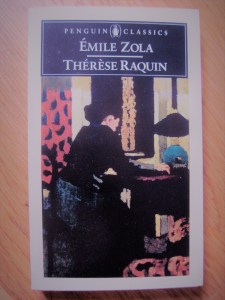 “The Passage du Pont-Neuf is no place to go for a nice stroll. You use it as a short cut and time-saver.” Yet this is the Paris street on which Madame Raquin runs her haberdashery shop, having moved here from a Normandy town when her son Camille insisted on getting a job with the Orléans railway. He has recently married his first cousin, Thérèse, whom Mme Raquin raised as her own daughter and always intended for Camille. Mme Raquin’s brother, a naval captain, had dropped off this product of his short-lived relationship with “a native woman of great beauty” from Algeria. Thérèse used to bear sisterly feelings for the sickly Camille, but finds him repulsive as a bedfellow, and their new Paris lodgings feel like a “newly-dug grave” – she can “see her whole life stretching before her totally void.”
It’s no particular surprise, then, when Thérèse is drawn to Laurent, a colleague and old school-friend of Camille’s who joins in their regular Thursday night soirées. Laurent and Thérèse start an affair right under the noses of Camille and Mme Raquin, with Thérèse throwing “herself into adultery with a kind of furious honesty, flouting danger, and as it were, taking pride in doing so.” There are details here that make today’s reader cringe: Thérèse’s “African blood” is cited as the reason for her reckless passion, and her first encounter with Laurent doesn’t sound fully consensual (“The act was silent and brutal”). But you also have to cheer for Thérèse, at least a little, because she’s finally chosen something for herself instead of just going along with what everyone else wants for her.
Before long Laurent and Thérèse are dreaming of how much better their lives would be if only Camille were out of the way and they could be together forever. They start plotting. This is a definite case of “be careful what you wish for.” I’ll say no more for fear of spoilers, except that the rest of this brief, claustrophobic book is a consideration of the ramifications of their decision, and it’s a gloriously lurid vision of what guilt can drive people to. From the “delicious terrors and agonizing thrills of adultery,” the couple is thrown deeper into a “sink of filth.” While you might predict the book’s general outcome, its exact ending surprised me.

Zola in 1870. [Public domain]
My rating:
I read a Penguin Classics edition of Leonard Tancock’s 1962 translation.
Next month’s plan: I have George Orwell’s Down and Out in Paris and London on my stack to read soon. After Sophie Ratcliffe’s The Lost Properties of Love, I might be inspired to read the first in Anthony Trollope’s Chronicles of Barsetshire series, The Warden. Or maybe after a week spent in Italy I’ll be led to pick up D.H. Lawrence’s Sea and Sardinia. L.P. Hartley’s The Go-Between would also seem like an appropriate classic to pick up in the summer months.
Library Checkout: June 2019

(A rare second post in a day from me, but Library Checkout runs on the last Monday of the month, no matter what!)
I’ve been slowly chipping away at several nonfiction library books (memoir, nature, travel) – with the exception of bestsellers that are requested after me; these I always have to read within two or three weeks.
On Friday I picked up Elizabeth Gilbert’s City of Girls from the library, expecting that there would be huge demand for it, but at the moment it hasn’t got any holds after me. I doubt I’ll want to take such a large hardback on the train to Milan next week, though, so I’ll hope to get straight into it on our return.
I give links to reviews of any books that I haven’t already featured on the blog in some way, and ratings for all. What have you been reading from your local library? I don’t have an official link-up system, so please just pop a link to your blog in the comments if you’ve taken part in Library Checkout this month. Feel free to use the above image in your post.
READ
- Lowborn: Growing Up, Getting Away and Returning to Britain’s Poorest Towns by Kerry Hudson
- The Music Shop by Rachel Joyce

- The Doll Factory by Elizabeth Macneal
SKIMMED
- The Amazing Adventures of Kavalier and Clay by Michael Chabon

- The Wild Remedy: How Nature Mends Us: A Diary by Emma Mitchell
- The Seasons, a Faber & Faber / BBC Radio 4 poetry anthology
CURRENTLY READING
- Stroke: A 5% Chance of Survival by Ricky Monahan Brown
- An Angel at My Table by Janet Frame
- How to Catch a Mole and Find Yourself in Nature by Marc Hamer
- The Crossway by Guy Stagg
CHECKED OUT, TO BE READ
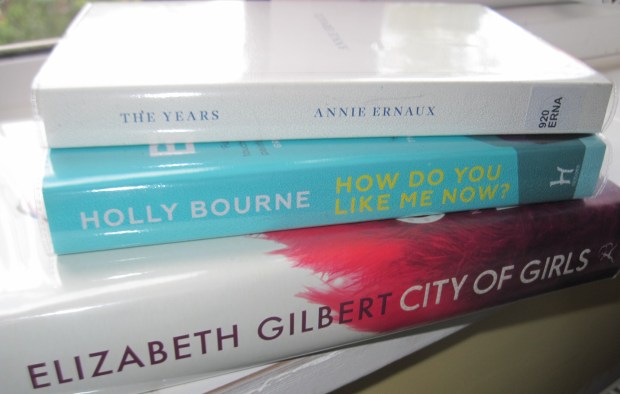
- How Do You Like Me Now? by Holly Bourne
- How to Treat People: A Nurse’s Notes by Molly Case
- Our Place: Can We Save Britain’s Wildlife before It Is Too Late? by Mark Cocker
- The Years by Annie Ernaux
- City of Girls by Elizabeth Gilbert
- Once More We Saw Stars by Jayson Greene
- The Electricity of Every Living Thing: One Woman’s Walk with Asperger’s by Katherine May
- Because: A Lyric Memoir by Joshua Mensch
- Under the Camelthorn Tree: Raising a Family among Lions by Kate Nicholls
- The Pine Islands by Marion Poschmann
ON HOLD, TO BE CHECKED OUT
- Queenie by Candice Carty-Williams
- Frankisstein: A Love Story by Jeanette Winterson
IN THE RESERVATION QUEUE
- On the Marsh: A Year Surrounded by Wildness and Wet by Simon Barnes
- On Chapel Sands: My Mother and Other Missing Persons by Laura Cumming
- How to Fail: Everything I’ve Ever Learned from Things Going Wrong by Elizabeth Day
- The School of Life by Alain de Botton
- The Garden Jungle: Or Gardening to Save the Planet by Dave Goulson
- Flight Risk: The Highs and Lows of Life as a Doctor at Heathrow Airport by Dr. Stephanie Green
- The Porpoise by Mark Haddon
- Expectation by Anna Hope
- The Summer Book by Tove Jansson
- Sweet Sorrow by David Nicholls
- Feel Free: Essays by Zadie Smith
- Three Women by Lisa Taddeo
- The Hiding Game by Naomi Wood
RETURNED UNFINISHED
- A Pocket Mirror by Janet Frame
- Convenience Store Woman by Sayaka Murata
Does anything appeal from my stacks?
The Lost Properties of Love by Sophie Ratcliffe
Everything was in its place.
Particulars moved
along designated rails.
Even the arranged meeting
occurred. […]
In paradise lost
of probability.
From “Railway station” by Wisława Szymborska
The art of losing isn’t hard to master;
so many things seem filled with the intent
to be lost that their loss is no disaster.
From “One Art” by Elizabeth Bishop
 This is not your average memoir. For one thing, it ends with 34 pages of notes and bibliography. Sophie Ratcliffe is an associate professor of English at the University of Oxford, and it’s clear that her life and the narrative have been indelibly shaped by literature. In this work of creative nonfiction she is particularly interested in the lives and works of Leo Tolstoy and Anthony Trollope and the women they loved. For another, the book is based around train journeys – real and fictional, remembered and imagined. Trains are appropriate symbols for many of the book’s dichotomies: scheduling versus unpredictability, having or lacking a direction in life, monotony versus momentous events, and fleeting versus lasting connections.
Each chapter, marked with a location and a year, functions as a mini-essay; as the nonchronological pieces accrete you develop a sense of what have been the most important elements of Ratcliffe’s life. One was her father’s death from cancer when she was 13, an early loss that inevitably affected the years that followed. Another was a love affair with a married photographer 30 years her senior. A number of chapters are addressed directly to this ex-lover in the second person. Although they’ve had no contact since she got married, she still thinks about him – and wonders if she’ll have a right to mourn him when he dies.
Could she have been his muse, as Kate Field was for Trollope? Field appeared in fictional guises in much of his work and thereby inspired Anna Karenina, for Tolstoy was a devoted reader of Trollope and gave his heroine a penchant for reading English novels, too. Ratcliffe seems to see herself in Anna, a wife and mother who longs for a life of her own: she writes of her love for her two children but also of the boredom that comes with motherhood’s minutiae.

Sophie Ratcliffe
Much of life’s daily tedium is bound up in physical objects, like the random objects that litter the cover. “I am a lover of small things – and of clutter,” Ratcliffe confesses. She notes that generations of literary critics have asked what was in the red handbag Anna Karenina left behind, too. What does such lost property say about its owner? What can be saved from a life in which loss is so prevalent? These are questions the book explores through its metaphors, stories and memories. It ends with the hope that writing things down gives them meaning.
If you enjoy nonstandard memoirs (like Jean Hannah Edelstein’s This Really Isn’t About You) and books about how what we read makes us who we are (such as Samantha Ellis’s How to Be a Heroine and Lucy Mangan’s Bookworm), you have a real treat in store here.
Some favorite lines:
“Life is in the between-ness, the space in the margins – not in the headlines.”
“Books, like trains, are another way of tricking time, of moving to a different beat, a different space.”
“Has my reading been a way of keeping me company – of helping me through the worlds of nearlys and barelys and the feelings of missing, and the hopeless messiness?”
“Writing is better than nothing. Better than thin air.”
My rating:
With thanks to William Collins for the free copy for review.
I first heard of the author when she was a Wellcome Book Prize judge in 2018. I was delighted to be invited to take part in the blog tour for The Lost Properties of Love.
Reading Statistics for the First Half of 2019, Including Where My Books Came From
Almost halfway through the year: how am I doing on the reading goals I set for myself? So-so. I’m mostly managing one doorstopper and one classic per month, though sometimes I’ve had to fudge it a little with modern classics or a skim read. I’ve read precisely 0 travel classics, biographies, or re-reads, so those aims are a fail thus far. As to literature in translation, I’m doing better: it’s made up 8.1% of my reading, nearly double my 2018 percentage. And it looks like I’m on track to meet or exceed my Goodreads target.

The breakdown:
Fiction: 42.3%
Nonfiction: 42.3%
Poetry: 15.4%
(Exactly equal numbers of fiction and nonfiction books! What are the odds?!)
Male author: 41.3%
Female author: 56.7%
Non-binary author: 2%
(This is the first year when I’ve consciously read work by non-binary authors – three of them.)
E-books: 9.3%
Print books: 90.7%
(I seem to be moving further and further away from e-books now that they no longer make up the bulk of my paid reviewing.)
I always find it interesting to look back at where my books come from. Here are the statistics for the year so far, in both real numbers and percentages (not including books I’m currently reading, DNFs or books I only skimmed):
- Free print or e-copy from the publisher or author: 65 (43%)
- Public library: 31 (21%)
- Secondhand purchase: 21 (14%)
- Downloaded from NetGalley or Edelweiss: 12 (8%)
- Gifts: 9 (6%)
- Free, e.g. from Book Thing of Baltimore, local swap shop or free mall bookshop: 5 (3.5%)
- University library: 4 (2.5%)
- New book purchase: 2 (1.5%)
- Borrowed: 1 (0.5%)
How are you doing on any reading goals you set for yourself?
Where do you get most of your books from?
All the Books I’ve Abandoned So Far This Year
Hard to believe, but it’s time to start on the mid-year roundups already. I’ll be doing a few posts with statistics on my reading from the first half of 2019: where my books came from, how I fared with my most anticipated reads and how I’m doing towards any projects, the best 2019 releases so far, etc. But first, let’s get this out of the way:
I’ve DNFed 37 books so far this year, equating to roughly 20% of what I started. Although that’s higher than my usual 15% average, suggesting that I’m particularly lacking in stick-to-itiveness lately, I don’t think it’s unreasonable that a fifth of the books I pick up don’t work for me for whatever reason (e.g. tone, voice, writing style, subject matter or similarity to other things I’ve read).
My biannual posts on abandoned books are always perversely popular. If you’re reading this post to feel better about the books you’ve abandoned recently: 1) Welcome! 2) I absolve you of any perceived guilt! 3) I encourage readers to give up on books they are not enjoying – at any time, but as early on as possible. You owe it to yourself to devote your limited, precious time to the books you’ll love and find worthwhile. I apologize in advance for not getting on with a book that you loved.
I won’t mention books I’ve already written about, perhaps in one of my monthly Library Checkout posts. No cover images, tags, links or full reviews here – though I might write that little bit more if I got the book from the publisher. So this is just a text dump, I’m afraid. The titles are mostly in chronological order (with some grouped together); the number of pages I read is generally given in brackets at the end.
The Gunners by Rebecca Kauffman: A group of six kids grew up playing together in the abandoned Gunner house in Lackawanna, New York. They’re now all around 30 and have dispersed to their different lives, but, reeling from the suicide of one of their own, they’ll be brought back together for a funeral. Too much time is spent with Mikey early on, and the sentences don’t flow all that well – the language is a bit simplistic and repetitive. Other reviews have suggested this is a nice read but not all that special. I’ll watch The Big Chill sometime instead. (23 pp.)
Wonder Valley by Ivy Pochoda: There’s a striking opening, as a naked runner bypasses a morning traffic jam in 2010 Los Angeles. We meet a couple of the other main characters, including Ren, who’s come west via a Greyhound bus after eight years in juvenile detention, while they’re stuck in traffic, then cut to Britt, who in 2006 got attracted to a hippie commune near Joshua Tree. The writing is fine, but I didn’t feel invested in any of the characters. (34 pp.)
The Last Samurai by Helen De Witt: Alas, once I got past the prologue I found this impenetrable. It was one of my bibliotherapy prescriptions for uncertainty about whether to have children. I liked the opening legend about an atheist father being talked into attending seminary. The language is repetitive but I thought I could forgive it because it was narrated by an eleven-year-old. But once the book proper starts we’re in Oxford in the 1980s, splitting hairs over translations. I skimmed to page 90 and was ultimately none the wiser about who’s narrating and what’s going on. (20 pp.)
Mr Wrong by Elizabeth Jane Howard: I read the two shortest stories, “Summer Picnic” and “The Proposition.” The former was pleasantly like Elizabeth Taylor or Tessa Hadley lite; I got zero out of the latter. I tried to settle into the opening, title story, but couldn’t.
Underbug: An Obsessive Tale of Termites and Technology by Lisa Margonelli: On the one hand, Margonelli writes enjoyable science for laymen, in a style that reminds me of Ed Yong’s. Termite research has surprising relevance in various fields, such as biofuel production, architecture, and swarm intelligence. On the other hand, I’m simply not interested enough in this set of species. I can imagine having better luck with a book that considered a different group of insects per chapter. My favorite bit was Chapter 13 because it was autobiographical – she tells the ironic story of how termites ate through the wall of her place, and remembers her back-to-nature existence in Maine with a father who trapped and skinned muskrats. I’ll seek out her previous book on petroleum. (131 pp.)
The Hope Fault by Tracy Farr: The style is reminiscent of Virginia Woolf’s, or Tessa Hadley’s, especially as in The Past. The whole family has returned to the ancestral home, which has just been sold and needs to be cleared, in the midst of a deluge. We meet Iris, her grown son Kurt, her niece Lulu, and her ex-husband Paul – with his new wife Kristin and their still-unnamed one-month-old daughter. The shifting POV mostly sticks with Iris. Chapter titles are nicely random phrases plucked from that chapter. The short sections, some of them pure dialogue, are so short you don’t feel you get anywhere or have anything to latch onto. I loved Farr’s previous novel, The Life and Loves of Lena Gaunt, and hoped to love this one too, but the narrative drive just wasn’t there. (44 pp.)
The Heat of the Day by Elizabeth Bowen: I read about the first 35 pages, and in that time hadn’t warmed to any characters or gotten any sense of what this would be about. However, I can see what contemporary authors like A.J. Pearce and Sarah Waters were aiming for. Odd phrasing, too: “By casting about—but then hitherto this had always been done calmly—he had never yet not come on a policy which both satisfied him and in the end worked. There never had yet not been a way through.” (Passive voice, double negatives, and unnecessary verbiage? No thanks.)
The Dinner List by Rebecca Serle: I should have done my homework on Serle; if I had, I would have realized that she writes young adult romances, and though this has been marketed as adult commercial fiction, it still has that YA vibe. The book’s conceit is that the vision board Sabrina’s college roommate Jessica made her do about the five people, alive or dead, whom she’d invite to her ideal dinner party, has become a reality. Short snippets from this dinner – which includes Sabrina’s ex, Tobias; her dead father, Robert, who left her and her mother when she was a little girl; Professor Conrad, her philosophy instructor; Jessica; and Audrey Hepburn – are interspersed with glimpses of Sabrina’s relationship with Tobias, which started by chance one day in Santa Monica and unexpectedly picked up again four years later in New York City. Apart from the lite romance feel, there is lots of weird phrasing: “it came out to be cheaper,” “ripping open a teabag” to make tea (who would do that and why?!), “any way else,” and so on. (65 pp.)
The Altruists by Andrew Ridker: In 2015 Maggie and Ethan Alter, both living in New York City – she a do-gooder who tutors immigrant children and lives so frugally she’s always a little bit hungry; he a compulsive shopper and hermit, since he broke up with his last boyfriend – unexpectedly get letters from their father, Arthur, a widowed engineering professor, inviting them home for spring break. Ridker writes well, as you’d expect from any Iowa Writers’ Workshop graduate. This reminded me most of The Futures by Anna Pitoniak, with traces of Jonathan Franzen or Jonathan Safran Foer in the mix of quirky and cynical characters. But in the chunk I read, I didn’t warm to any of the central characters and never even really got a clear sense of them. I’ll keep an eye out for what Ridker does and maybe try something else by him. (50 pp.)
Sea Monsters by Chloe Aridjis: I had no idea what’s happening (apart from nothing much), except that a 17-year-old girl is exploring derelict mansions in a Mexican town with one guy or another. The atmosphere is well done, but there’s no way the nonexistent plot can keep me reading for another 145 pages. Shame I never even got to those Ukrainian dwarves. (30 pp.)
Children of God by Mary Doria Russell: The Sparrow was one of my favorite backlist reads last year, and when I heard there was a sequel I rushed to put it on my wish list and got a copy for my birthday. While I was, of course, intrigued to learn that a character we thought was dead is still alive, and it was nice to see Emilio Sandoz, the broken priest, having a chance at happiness back on Earth, I couldn’t get myself interested in the political machinations of the alien races. Without the quest setup and terrific ensemble cast of the first book, this didn’t grab me. I’ll pass it on to my minion (aka husband) and he can tell me if anything of interest happens. (60 pp.)
Memories of the Future by Siri Hustvedt: “I am writing not only to tell. I am writing to discover. … I have always believed that memory and the imagination are a single faculty.” As clever a meditation as this is on identity and memory, at a certain point I found it a chore to pick up. I have no objection to autofiction, but I wanted more current wisdom than twentysomething folly, and what I’ve read about the later #MeToo theme suggests that it is unfortunately heavy-handed. I still plan to read the three Hustvedt novels I haven’t read yet, as well as her memoir; I’ll also dip into her essays and poetry. I think she’s an immense talent; this one just wasn’t for me. (112 pp.)
The Secret Barrister: Stories of the Law and How It’s Broken: Although I’ve lived in the UK off and on for 14 years now, I still know very little about its politics and particularly the criminal justice system. I was interested to learn more, and found the opening chapter usefully basic (judges, solicitors, barristers, etc.). The following chapter on magistrates’ court lost me; all I gleaned was that it’s a Bad Thing because the accused don’t get a fair shake. I can’t decide if you’d need to know more or less about the law to find this engaging; I have a law clerk friend who read it and enjoyed it well enough while also finding it depressing. (73 pp.)
A View of the Empire at Sunset by Caryl Phillips: I read the first chapter and skimmed another two. I’m afraid this is utterly lifeless writing; informative but not at all inviting.
Our Lady of Everything by Susan Finlay: The blurb sounded irresistible, but the writing was an instant turn-off. (Starting with a 10-step “Banishing Ritual” was an awful idea; the introduction to two main characters then wasn’t inviting; the following chapters all introduce a different point-of-view character.) (5 pp.)
Liar by Ayelet Gundar-Goshen: I liked the Atonement-style setup: a 17-year-old ice cream scooper has a run-in with a disgruntled, washed-up reality show star and allows rumors of an attempted sexual assault to bloom. Nice biblical echoes and metaphors, though some are a bit belabored (e.g. “Nofar’s guilt, like a Persian cat, rubbed her legs fleetingly, sat for a brief moment on her lap, then moved onward”). Mostly I just felt no pull to keep going and find out what happened. (63 pp.)
Prayer: Letters to Malcolm by C.S. Lewis: Lewis’s last book is a fictional one-sided correspondence that debates the nature of prayer. I thought I might be able to interest myself in prayer as an academic matter, but it turns out that not believing in it means I don’t care enough. (26 pp.)
A Handful of Dust by Evelyn Waugh: Mitford-esque flippant depiction of some upper-class types. (16 pp.)
The Bibliophile’s Dictionary: 2,054 masterful words and phrases by Miles Westley: A secondhand purchase from The Book Shop, Wigtown. The idea is a treasury of obscure vocabulary words, divided into thematic categories and grouped by synonyms. Each word/phrase is illustrated with an example of its use in context in a work of literature, or in a few cases a newspaper article. I kept it as a bedside book for a number of weeks and moderately enjoyed reading a few entries per night. My main annoyances were that Westley often confuses forms, giving a definition for the adjective when he’s using the noun or vice versa, and that his field of reference is pretty narrow: he’s always quoting from authors like Saul Bellow, Pat Conroy, Jack London and Tom Wolfe – dead white guys. I’ll keep this around as a reference book but can’t see myself reading it all the way through. (50 pp.)
The Pocket Mirror by Janet Frame: Having read from Frame’s fiction and memoirs, I wanted to dip into her poetry as well. This collection of free verse from 1967 is mostly written in the first person and concerns everyday local sights and sounds: beaches, town scenes, the view out the window of a morning, and so on; some are short while others are rambling. However, there are also several poems of death and war, and a particular obsession with napalm. While there’s nothing especially off-putting about these poems, nor are they very compelling in style or theme. (22 pp.)
In West Mills by De’Shawn Charles Winslow: There are echoes of Toni Morrison (especially Song of Solomon) in this debut novel set in the small fictional town of West Mills, North Carolina. Wilson has crafted a memorable antiheroine in Azalea “Knot” Centre, who likes to pretend she doesn’t care what people think about her but actually cares deeply. Alcohol and sex are her two vices, and in the 1940s her two out-of-wedlock daughters are secretly adopted by other families in the town, such that she can watch them grow up. The plot is initially slow-moving – it takes nearly half the length to introduce all the characters and deal with Knot’s first baby – but then leaps ahead to 1960 and further community entanglements. The rendering of the local dialect struck me as hokey, and none of the secondary characters seem worthy of sharing a stage with Knot. (162 pp.)
Convenience Store Woman by Sayaka Murata: I feared an Eleanor Oliphant trajectory in this story of a thirtysomething woman who’s worked in the same convenience store for half her life and only barely succeeds in convincing herself and others that she’s a normal person. Even in the little I read, the language was quite repetitive, with Keiko several times describing herself as just a cog in society’s workings, and frequently repeating the rote conversations she has with customers. (30 pp.)
The Rapture by Claire McGlasson: I would normally thrill to any book about a cult, but the writing in this one – maybe it was Dilys’s narration, I don’t know – never grabbed me. What a gorgeous book, though: corduroy-type ridging on the yellow cover, and a colorful deckle-cut dust jacket (with a jackdaw perched in an aggressively ordinary bedroom) that doesn’t quite cover the whole thing. Kudos to Faber for the design. (22 pp.)
I’m so weary of books of anonymized case studies:
- Growing Pains: Making Sense of Childhood, A Psychiatrist’s Story by Mike Shooter
- Seven Signs of Life: Stories from an Intensive Care Doctor by Aoife Abbey
- The Heartland: Finding and Losing Schizophrenia by Nathan Filer: Filer was completely unprepared when he arrived to work in a psychiatric hospital outside Bristol. This book is a record of what he learned: about the history of schizophrenia as a diagnosis, its social stigma, and the experience of living it via speaking to patients and hearing their stories. I read the first of those stories, about Erica, a fashion journalist who became so paranoid that she was being hunted down for committing unwitting crimes that she tried to commit suicide. Compared to Nancy Tucker’s That Was When People Started to Worry, this is dull and not very enlightening. I also found myself irritated by Filer’s habit of hedging around all his terms with “so-called,” and the title is all wrong – people seeing just the two words “The Heartland” on the spine will have no idea that this is a book about mental illness. (They might be thinking it’s about the American Midwest, or whatever.) (58 pp.)
The Narrow Land by Christine Dwyer Hickey: I was attracted by the cover and the prospect of learning about the Hoppers’ marriage, but the first section sticks with a small boy, a German refugee, heading up to Cape Cod. Mrs. Hopper is a more appealing character, yet somehow I never gained traction with the story. (46 pp.)
A Stranger City by Linda Grant: An unidentified woman who jumped off a bridge in London is buried in a paupers’ grave. Flashback to seven months earlier and various conversations and train rides, promising that we’ll learn how these characters are interconnected. The prospect sounds similar to John Lanchester’s Capital, but none of the characters, nor the writing, were interesting enough to bait me. (32 pp.)
 Bookish Beck = Rebecca Foster. American transplant to England. Freelance proofreader and book reviewer.
