#ShortStorySeptember: Old Romantics by Maggie Armstrong (2024)
Linked short story collections are among my favourites: it’s so satisfying to spot connections between characters and storylines. It took me embarrassingly long to work out that these dozen Dublin-set stories are linked, and that they are likely to be autofiction. The penny finally dropped when I realised that the protagonist of multiple stories in a row had been named Margaret, while the autobiographical nature was clinched for me when I read the acknowledgements. Armstrong highlights various slivers of Margaret’s experience in third- and first-person narratives that initially seem to skip around in time but eventually settle into chronological order as she becomes a wife and mother.

The first seven stories are hilarious and awful at once, depicting a string of her narcissistic boyfriends. (“Number One” makes it clear who these immature, selfish, sometimes mentally ill young men are looking out for.) The title story is probably the best, recalling an ill-fated trip to the USA she took with Walls, who vacillated between pettiness and largesse. The fact that she gets an infected wound from stepping on an American flag cocktail stick [toothpick] is a sly symbol of how the trip reveals what’s gone wrong between them. In the second half of the book, she has an affair with Sergio, an Italian émigré with an ill wife and two daughters. “Trouble” proceeds week by week through her first pregnancy via headings (along with “Those Weeks,” “Any Given Week,” etc.); “Trouble Again” chronicles the second, which is complicated by marital problems and her father’s cancer.
Margaret’s (lack of) vocation is another thread. When she’s a young woman, her father gets her a corporate catering job. The building is overstaffed and she’s clearly superfluous, but she still manages one coup in her time. In “My Mistake,” Sergio gets her a first post-maternity leave job with his company that involves navigating bewildering computer systems and writing reports on information she doesn’t understand. All along, she’s been composing pieces about her life and trying to get them published. These stories are wry and well observed, documenting a woman’s shifting preoccupations and search for meaningful connection. This is Maggie Armstrong’s debut and it’s a promise of great things to come.
With thanks to Biblioasis for the free e-copy for review.
Hay-on-Wye Trip and Book Haul
 We got back yesterday evening from our tenth trip to Hay-on-Wye, Wales. Our town-centre Airbnb flat was a little shabby and poky, but I can’t deny it was convenient to be able to drop in for lunch or a cup of tea in between bookshops and other activities. It was definitely looking greener in Wales than in our part of England, though a sign about dog-walking indicated that they’d had the heat waves here, too.
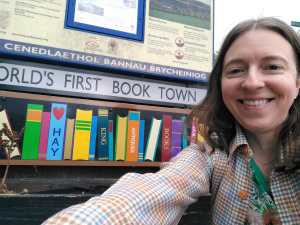
We didn’t begrudge the multiple spells of drizzle over the weekend, even when they coincided with walks to Cusop and The Warren. We’ve been coming to Hay since 2004 and can remember when it was struggle to find a decent evening meal. Good coffee? Forget it. Now one is spoilt for choice for eateries, though we kept costs down a bit by bringing packet curries to cover two nights’ dinners.
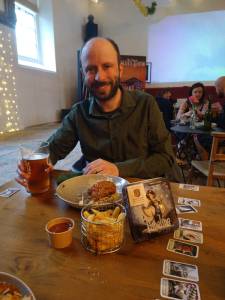 The Globe, an arts venue with café and restaurant, was like our home away from home. We went there on the first evening for a burgers and board games night in partnership with Herefordshire Board Gamers. We played a couple quick hands of card game Timeline (Music and Cinema, then British History) before our food came, then invited another couple to join us for Ticket to Ride Europe, where you have to construct several simultaneous train journeys. The HBG rep acted as a coach, reminding us of the rules – we have a copy but haven’t played it for many years – and advising players about their next move if they asked for help. What a great initiative! He was going to be at the Castle on Saturday afternoon, too.
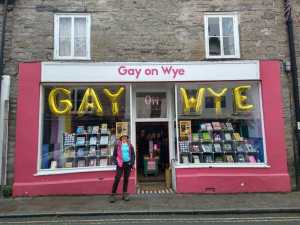
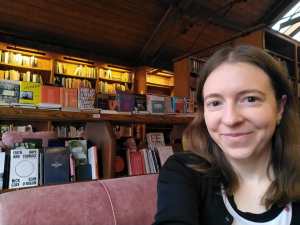
We returned to The Globe on Friday for an hour of its open mic night, which featured a mix of folk and blues acts of various abilities; and again on Saturday morning. We didn’t realize when we booked our stay that we would be in the town for Hay Music Festival. We browsed the programme and plumped for a concert by a wind quintet (flute, oboe, bassoon, French horn and clarinet, with piano accompaniment on some numbers) of young musicians from Sinfonia Cymru. Their repertoire ranged from the familiar (Mozart and sea shanties) to the obscure (Samuel Barber’s “Summer Music” and a Ludwig Thuille piece). I also appreciated the spotlight on two female composers, Mel Bonis and Louise Farrenc. It was a phenomenal performance, and how civilized that the ticket price included coffee and cake from the café.
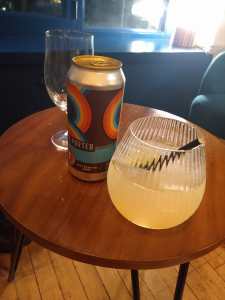
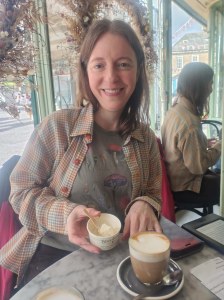
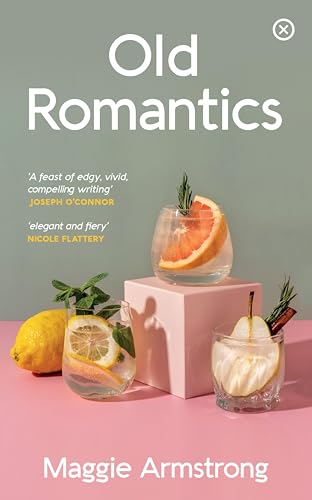
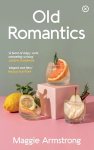 Hay Distillery and Shepherds ice cream parlour got two visits apiece. I was particularly delighted with my “Campfire Mule” concoction of Dr Beaky’s gin (which has a fascinating smoky flavour), maple syrup and ginger beer; and my scoop of gooseberry and elderflower sheep’s milk ice cream. Appropriately, my main reading for the weekend was Maggie Armstrong’s linked short story collection Old Romantics, which has cocktails on the cover.
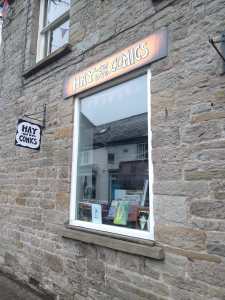
Often, if we haven’t visited in a while, we’ll see that a few bookshops and other independent businesses have closed. So what a pleasant surprise to find that four new shops have opened since our last visit: Christie & Doyle – a classic crime extension to Murder & Mayhem, Hay Comics, Bookshop 451 for science fiction and fantasy, and A Shop Called Alice, which appears to be exclusively Alice in Wonderland- and Lewis Carroll-related books and memorabilia. (And a favourite coffee spot, The Bean Box, that we thought had closed has reopened; perhaps we just missed their seasonal hours last spring.) All in all, there are about 20 places in the town to shop for books, and we browsed most of them.

Here’s my haul of 16 books from 8 shops, which included a few by favourite authors, some that I’ve wanted to get hold of for ages, and others that I’d seen mentioned by fellow bloggers. I was especially pleased to locate The Victorian Chaise-Longue, one of my bibliotherapy prescriptions from way back in 2018, in Addymans’ outdoor Book Passage for £1. A couple of purchases that I’ll try to read right away are Gloria Naylor’s novel-in-stories, The Women of Brewster Place, at Booths (for Short Story September); and a remainder copy of Octavia E. Butler’s Fledgling at Hay Cinema Bookshop (for R.I.P.). A slightly pricier haul for me this time, with a few remainder copies plus rarer secondhand finds, but the total of £46.42 still works out to an average of less than £3/book. Mr F’s different foci – nature writing, collectible Observer books, bird field guides and New Zealand-set novels in advance of his trip there in November–December – meant he supported several additional shops.
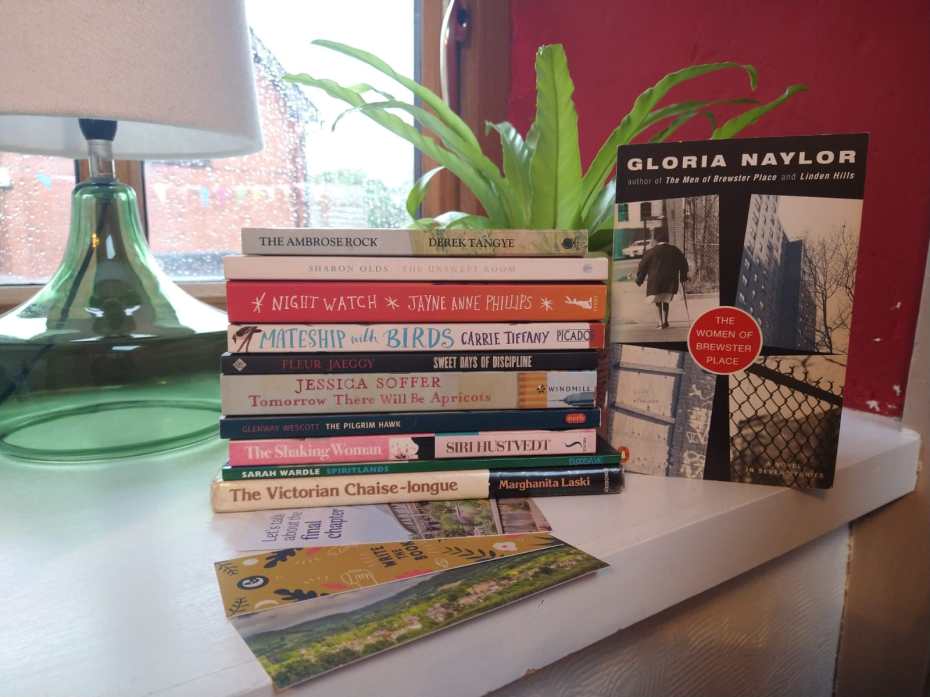
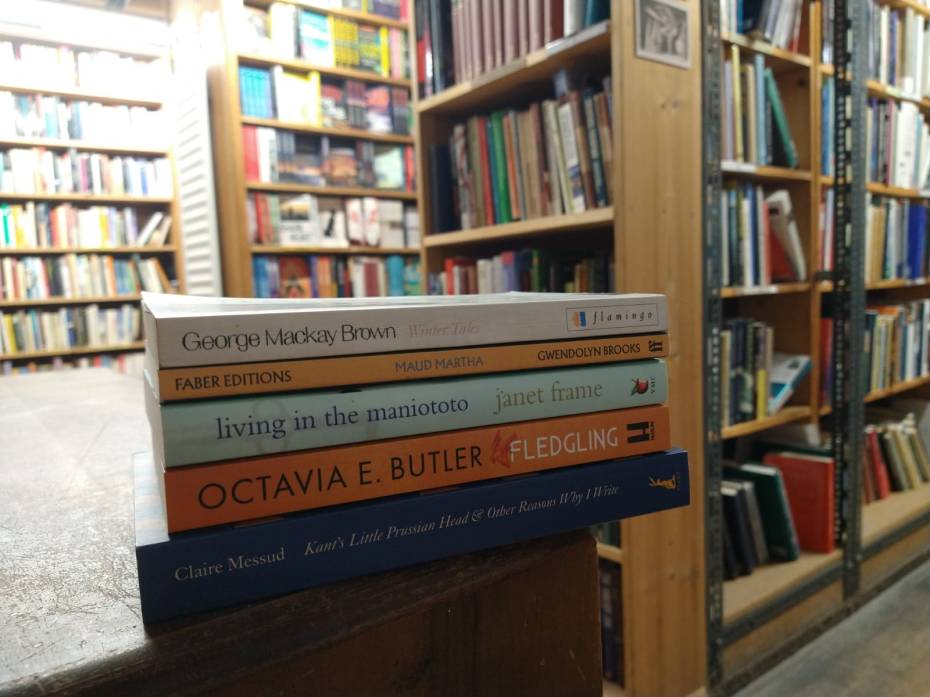
The Naylor was the only specific book that was on the paper wish list I brought with me (which also including Butler generally), while the Hustvedt and Wescott titles were on my Goodreads “priority to find” shelf. Weirdly, as I browsed I kept coming across copies of Michèle Roberts’ During Mother’s Absence and books by Janette Turner Hospital, an Australian author I hadn’t knowingly encountered before.
We often ask ourselves what Richard Booth, the Book Town founder and self-proclaimed “King of Hay,” would think about the town’s gentrification. He was not a fan of the Festival, for instance, and his stack-’em-high-sell-’em-cheap philosophy (“He once said he would much rather sell a million books for one pound than one book for a million pounds”) – which softened over the years as mentors helped him identify and price antiquarian material appropriately – seems rather at odds with the bougie boutiques and hipster cafes. But it’s by attracting a wider and younger clientele that Hay has retained its independent spirit. So I hope rather than turning in his grave he would be grateful to those who have kept the place alive.
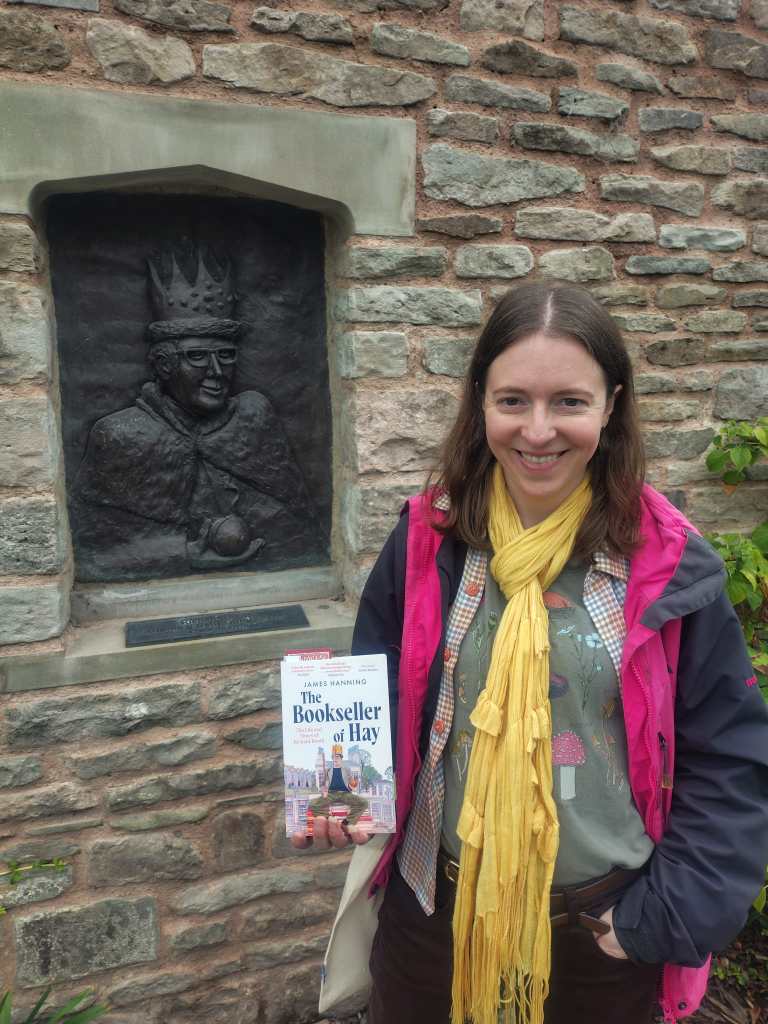
I read nearly the first third of the recent biography of Booth, The Bookseller of Hay, while there. James Hanning makes a good case for Booth being that biographical cliché, the bundle of contradictions: privileged but happy to be one of the common men; passionate about his ventures but sometimes sloppy and misguided; with great capacity for compassion but also thoughtlessness. I didn’t know that in 1964 he was responsible for the death of a passenger due to reckless and probably drunk driving. Hanning believes this haunted him for the rest of his life. It’s intriguing to see the different people he interacted with, e.g. Margaret Drabble visited the town with a boyfriend and was dismissive: “Did he ever read books? The books themselves were just the product. I don’t think Richard was interested in literature.” Hanning depicts Booth as an eccentric who would today be considered on the spectrum. I’ll finish reading this to try to keep the Hay spirit alive a bit longer, and might follow it up with a reread of Sixpence House, Paul Collins’s memoir of living and working in Hay.
Though we were sad to leave – mostly because we know we’re facing a long, busy term and the inevitable slide into winter – we know we’ll be back, sooner rather than later.
#ShortStorySeptember: Single Stories by Barnes, Bellow, Enright, P. Fitzgerald, Mackay, and Norman
Thanks for all the contributions to Short Story September thus far! I usually review whole collections, but today I’m highlighting individual stories I read either as stand-alones, in an unrelated volume, or as a taster from a book I might finish some other time. A few really surprised me for being so dissimilar to other work by the author. These six seem to illustrate different techniques or situations that short stories are good at exploring, thus my headings. (Beware mild spoilers in most of these brief responses.)
The Pastiche
“Homage to Hemingway” by Julian Barnes (2011)
[from Through the Window]
 The protagonist is a literature instructor and failed novelist whom we see undertaking three different teaching gigs (in rural Wales, the Alps, and the American Midwest), like the triptych of expatriate Americans waiting for trains in Hemingway’s “Homage to Switzerland,” which is specifically referenced here. He believes fiction is “omnivorous and essentially amoral” and hopes to inspire his students to “reflect on life’s influence on art, and then art’s influence back on life.” This is, of course, a huge theme across Barnes’s oeuvre. Luckily, Barnes doesn’t attempt mimicry of Hemingway’s style, which really wouldn’t suit him at all, but I enjoyed the barbs his students throw. For example, Kate describes Hemingway as “the ultimate dead white male … celebration of machismo. Boys with toys.” This wasn’t very memorable but has me hankering to track down and reread Barnes’s full-length story collections. (Public library)
The Character Study
“Leaving the Yellow House” by Saul Bellow (1958)
[Penguin Modern: 36]
 I wouldn’t have recognized this as Bellow’s writing were his name not on the cover. I think of him as a chronicle of Jewish city-dwellers; this is the story of a woman in a tiny town in the American West. Everyone in Sego Desert Lake knows that Hattie is an alcoholic. She’s now in her early seventies and pretty much has bourbon running through her veins. When she gets her car stuck on train tracks while driving drunk and breaks her arm in the ensuing kerfuffle, she and her acquaintances are forced to think seriously about what’s going to happen to her. She looks back on her two marriages and her relationship with India, who used to own her house – I never did work out who India was to her; a friend? an employer? – as she sets to the task of writing her will. Who deserves to have the house in turn? The title has a double meaning and also points to the final leave-taking of death. Hattie is not a very likeable character but has a certain admirable dignity, like Olive Kitteridge or Hagar in The Stone Angel. I liked her fancy that her whole life has been filmed and she’ll soon be able to revisit any moment she chooses. A melancholy slice of mid-century Americana. (Secondhand – Community Furniture Project, Newbury)
The Shock Ending
“Pillow” by Anne Enright (2008)
[from Taking Pictures]
 Alison, from Ireland, is part of a set of international roommates at her American college. Li is always asking her questions about what things mean or how they work. The first lines have her querying “What is a homosexual?” With this Enright sets us up to think that Li has a crush on Alison. First, the roommates find out that Li is her surname and really they should call her Ping. And then one morning Alison wakes up struggling to breathe because Ping is trying to smother her with the title object. I gasped aloud! The incident seems to come out of nowhere but I guess illustrates how easy it can be to hide mental illness. I kind of wish it wasn’t the Chinese girl who ended up being unstable, though. I’m not sure short stories are where Enright shines; I read the first two stories in this volume but won’t finish it. (Public library)
The Visual Pun
“The Axe” by Penelope Fitzgerald (1975)
[from The Means of Escape]
 An office worker recalls having to make redundancies, including of his dignified clerical assistant, W. S. Singlebury. He feels even worse about it when the man invites him to visit his home. This faux report to the Company boss chronicles a growing sense of unease as he returns to work and finds the fired man still in the office, gruesomely injured and leaking blood all over. Fitzgerald has playfully imagined Singlebury getting the axe, literally, and then haunting the man responsible. I’ve never experienced such gleeful mischief from Fitzgerald – I only knew her austere historical novellas – but sure enough, this originally appeared in The Times Anthology of Ghost Stories. (Secondhand – Community Furniture Project, Newbury)
The Family Drama in Miniature
“The Worlds Smallest Unicorn” by Shena Mackay (1999)
[from The Worlds Smallest Unicorn and Other Stories]
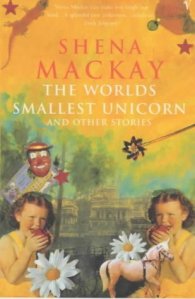 Fan’s brother-in-law, Teddy, has just returned from Hong Kong and she’s not happy about it: “now here was this succubus squatting in her kitchen, expecting to be fed.” She sees in the newspaper that an old flame of his, a singer, has died and he sets out for the funeral, passing a circus billet advertising the title act. (Since it reproduces what was on the tacky poster, I can let Mackay off for the grammatical gaffe, though it doth offend the eyes!) It seems to be a metaphor for anything that’s too good to be true, such as Fan’s affair with Teddy years ago. Her adolescent daughters’ banter and the South London environs are highlights in this one, but so far the book is not living up to the collection I read by Mackay last year, Dreams of Dead Women’s Handbags. (Secondhand – Slightly Foxed, Berwick)
The Relationship Study
“Kiss in the Hotel Joseph Conrad” by Howard Norman (1989)
[from Kiss in the Hotel Joseph Conrad]
 The narrator is dishonourably discharged from Canada’s air force for faking an emergency beach landing during a practice flight in 1943. “We’ve come up with a new, Asshole category,” the colonel declares as he dismisses him. Still, this amiable joker hopes his pluck will endear him to Imogene Linny, who has a kissing booth for would-be soldiers on the Halifax wharf. She recognizes him from his prank and says, “You can kiss something, but it ain’t, I guarantee you, my lips.” In the two decades that follow, he keeps tabs on Imogene as she marries into a hotel empire and he works on the greyhound tracks. After all, he paid his dollar at that booth but never got his kiss. This could have gone creepy but Norman keeps it quirky and sweet instead. His novels, too, often feature Atlantic Canada, oddballs, and hotels. (Secondhand – Hay Cinema Bookshop)
Are any of these authors, and their stories, familiar to you?
Which of these six story types do you prefer?
Six Degrees of Separation: From H Is for Hawk to Notes from an Exhibition
It’s been several years since I last participated in Kate’s Six Degrees meme. I’m not sure why I fell out of the habit, after posting pretty faithfully from February 2020 until August 2023. This month I was drawn back by the individualized starting point: your book club’s current read. (See Kate’s opening post.)
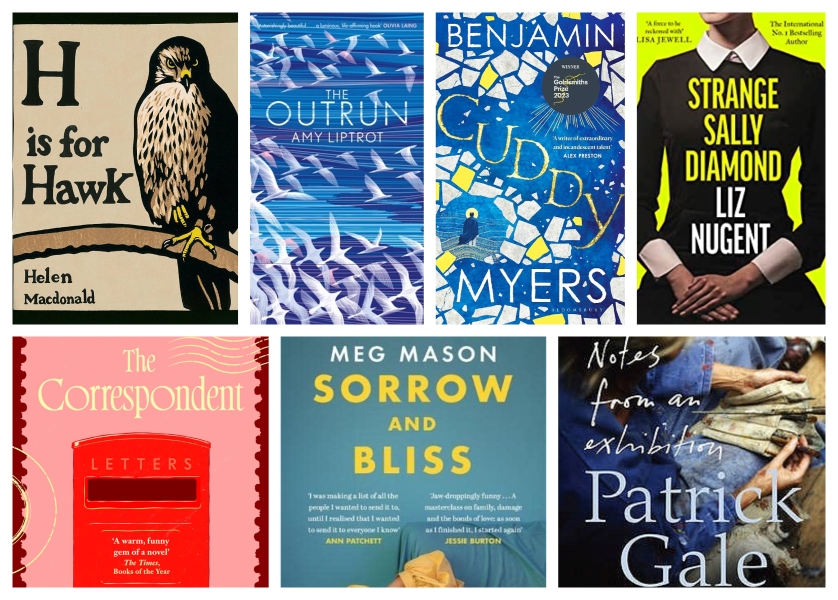
 So I start with Helen Macdonald’s H Is for Hawk, which I look forward to rereading for our next meeting in early October, and every link that follows is (or is connected to) a book we’ve read in book club.
 #1 H Is for Hawk was a vanguard of a new trend in nature writing that came to dominate the Wainwright Prize list in the UK: blending a hard/sad personal story with a quest that involves travel and/or communion with the natural world. In the case of Macdonald (who now uses they/them pronouns), they work through grief for their father by taking up falconry and training a goshawk.
I went with some members of my book club to see the excellent film starring Claire Foy, followed by a Q&A with the author, earlier this year. Another early example of the misery memoir-meets-nature book vogue was The Outrun by Amy Liptrot (a Wainwright winner), which combines her struggle with alcoholism with her return to the Orkney Islands and her work for the RSPB surveying endangered corncrakes. Another link: I saw the film version with Saoirse Ronan, which probably surpassed the book, with a book club friend. We then tried to get the others interested in rereading it with us, but it only got a few votes.
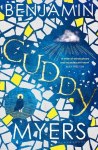 #2 Liptrot lives in Hebden Bridge, Yorkshire, which is famous for its hippie artists and inclusivity (a Brighton of the North?). Among the other nearby residents (in the village of Mytholmroyd) is Benjamin Myers, whose experimental historical novel about Saint Cuthbert, Cuddy, we discussed in book club a year ago. I had skimmed it when it was first published, and enjoyed it in parts but thought it more pretentious than readable. It was not very well received by most members…
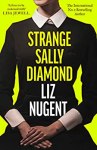 #3 …unlike the quirky and suspenseful Strange Sally Diamond by Liz Nugent, which we’d read the year before and was a hit with almost everyone. Cuddy is set in Northumberland, and I associate Sally with that county because I read it on holiday there.
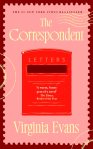 #4 Sally Diamond has some autistic-like traits, in terms of her lack of understanding of social conventions. We questioned whether this was an attempt by the author to reproduce the effects of trauma. The same book club member brought this up in relation to Sybil Van Antwerp, the protagonist of the most recent Women’s Prize winner, The Correspondent by Virginia Evans, which was our September read. I’d picked up on the characterization of her young friend Harry Landy as autistic, but Sybil herself? That hadn’t occurred to me. It just goes to show how discussing books in a group turns up fresh ideas about them.
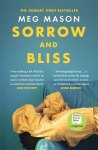 #5 We had also talked diagnoses with one of our previous reads, Sorrow and Bliss by Meg Mason, who scrupulously avoided naming her protagonist’s mental health condition, though it seemed pretty clear to us that it was meant to be bipolar. Another connection: we read that novel as part of our official Women’s Prize shadowing in 2022.
 #6 The Correspondent, Sorrow and Bliss, and Patrick Gale’s Notes from an Exhibition, which shares the theme of mental illness, are all among our top 10 reads of all time, with a score of 18.5/20. We’ve read two Gale novels now and he’s a reliable author for us.
The Marriage Plot: Family Family by Laurie Frankel (2024)
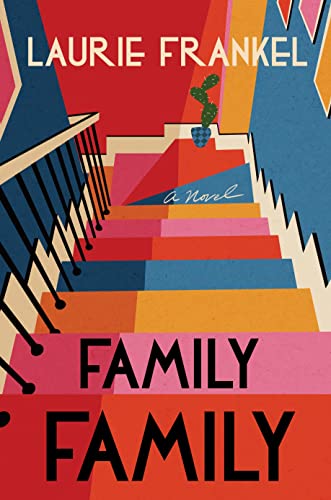
In case you missed the announcement, “The Marriage Plot” is the new name for the online book club formerly known as “Literary Wives.” Part of our reasoning behind the rebrand was to be more inclusive in our thinking about love and roles in long-term partnerships. But even from that wider perspective, Laurie Frankel’s fifth novel, Family Family, ended up being an outlier, because there’s no central marriage or core partners. Instead, the book makes the point that “families get formed in all sorts of ways” and “look all sorts of ways and are made up of all sorts of people and still count as family.” Specifically, Frankel – and her flamboyant actress protagonist, India Allwood – want to counter traumatic adoption stories by showing that placing for adoption and/or adopting can be a first choice rather than a last resort.
{BEWARE SPOILERS IN THE REST!}
There are two narrative threads, one set across eight days in 2020 and another advancing in fits and starts from 1998 to meet up with it. In the former, India is in trouble with her agent and television studio for badmouthing the last movie she made because she felt it promulgated tired, negative stories about adoptees. One of her adopted Korean American twins, 10-year-old Fig, decides to come to her mother’s defense by locating the two children India gave up for adoption (Rebecca and Lewis), their biological fathers (Robbie and Davis), and the adoptive parents (Camille and the Andrews). En route to a big, messy, unlikely family reunion, alternating chapters fill in India’s career – from high school dramatics to her current superhero hit, Val Halla – and unconventional decisions about motherhood.
 In terms of our club reads, this reminded me most of Lessons in Chemistry for how the protagonists resist marriage and prioritize independent vocations. All of the mothers on display are single parents: Camille and India, yes, but also India’s mother before her, who tells her, when she is first pregnant at 16, “having a baby has nothing to do with having a husband.” When India again falls pregnant unintentionally at age 20 (which does rather strain belief), she reminds herself, “parenting need not have anything to do with partnering.”
Long before I ever read a novel by Frankel, I’d come across a first-person piece she wrote for the Guardian about adopting a child from Korea. The experience of having a transgender child then led to her third novel, This Is How It Always Is (2017). I read that from the library because it had been a hit with my book club before I joined. There’s no denying the agenda behind either, but it was subtler in that earlier case. The characters here are quirky and their interactions amusing, but Frankel seems rather too pleased with her own wit. In addition, India is A Bit Much and Fig is on the verge of annoyingly precocious. Although the story bops along nicely, I would probably cut the page length by a third or more. So this was good-hearted fun, if overlong and moralistic. I’ll read more by Frankel, though, and I fancy appropriating India’s habit of keeping torn-up index cards in her pockets in case she needs confetti for an impromptu celebration. (Secondhand – Better World Books) 
(Be sure to check out the reviews by Becky, Kate, Kay, and Marianne, too!)
The club’s next read will be The Eden Test by Adam Sternbergh, in December. I’m skipping this one as a) I couldn’t find an affordable copy and b) I didn’t fancy it. So the next read for me will be Wedded Wife by Rachael E. Lennon (March 2027) – I’m looking forward to it, as it will make a change for being nonfiction, and from a queer author.
My Year in Short Stories (#ShortStorySeptember)
The Short Story September link-up is open (see my pinned post). At the start of the month, I’m inviting you to tell about the short stories you’ve already read this year, especially any that you’ve particularly enjoyed.
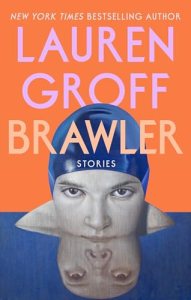
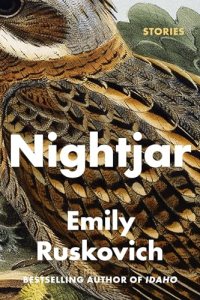
I don’t consider myself a great short story reader, so I was surprised to look back and find that I’ve already read 17 collections this year. I include in that four books that I consider to be linked short story collections, even though they were all published as novels rather than stories. (I’m sure Susan is right when she theorizes that this is about marketing – what’s expected to sell.) The best have been Brawler by Lauren Groff and Nightjar by Emily Ruskovich, which are actually quite similar.
Some other favourites were:
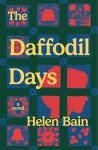 The Daffodil Days by Helen Bain: A slantwise biographical portrait of Sylvia Plath through her interactions in the last years of her life. The 16 chapters adopt the points-of-view of various secondary characters (e.g., Plath’s housekeeper, riding teacher, and brother), but the kernel of each is an encounter with Plath that illuminates her personality and state of mind. (Reviewed for Shelf Awareness)
Strange Weather in Tokyo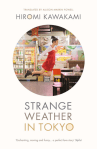 by Hiromi Kawakami: Tsukiko is a lonely barfly in her late thirties when she bumps into a secondary school teacher again. She calls him “Sensei,” and they start meeting up for low-key adventures. Kawakami infuses the book with attention to the seasons’ changes and everyday sensual pleasures like food. A lovely, subtle romance.
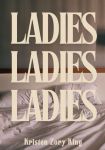 Ladies, Ladies, Ladies by Kristen Zory King: A “chapbook” containing 18 flash stories. It’s remarkable how much is packed into a few pages: a voice, a character, a setting and situation, an incident, a salient backstory, and some kind of epiphany or resolution. Fifteen of the pieces focus on one named character. Each story is distinctive, with no words wasted.
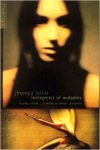 Interpreter of Maladies by Jhumpa Lahiri: Lahiri won the Pulitzer for this debut. Her characters tend to be Indian or Bengali immigrants in New England. Relationship studies trade off with accounts of encounters with strangers across generations and/or cultures. Often, food is a reminder of home. An overall theme is denying or affirming common humanity.
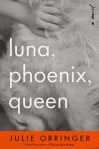 Luna, Phoenix, Queen by Julie Orringer: In Orringer’s wonderful third novel, the secrets between two literature professors and the adoption of a remarkable dog fuel an absorbing story of love, memory, and connection beyond words. Chapters take on different characters’ perspectives. (Review forthcoming for Shelf Awareness)
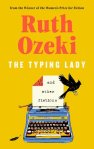 The Typing Lady and Other Fictions by Ruth Ozeki: Ozeki is up to her usual auto/metafiction tricks here, blurring the lines between fact and fiction, life and death. Themes include memory, creativity, language, ageing and cross-generation connections. The stories are playful without being twee, and represent a real return to form.
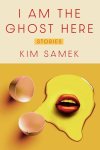 I Am the Ghost Here by Kim Samek: The television producer’s inventive debut recalls Ed Park and George Saunders with its focus on the mixed blessing of technology. Her speculative short stories’ protagonists deal with grief or new motherhood, often while also struggling with their health. Samek sets up unusual situations with knock-out first lines. (Reviewed for BookBrowse)
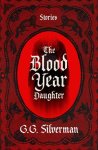 The Blood Year Daughter by G.G. Silverman: A remarkable collection that mixes feminist horror and twisted fairy tales into potent concoctions. Women’s bodies are imperiled by sadistic men and acts of self-sacrifice. Blood is a symbol of desire or power. Motherhood and sisterhood are vital bonds. Among bleak storylines come flashes of morbid humor. (Reviewed for Foreword Reviews)
All by women!
And the rest:
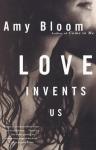
- Love Invents Us by Amy Bloom
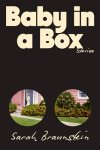
- Baby in a Box by Sarah Braunstein (Reviewed for BookBrowse)
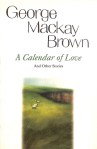
- A Calendar of Love and Other Stories by George Mackay Brown
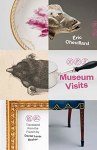
- Museum Visits by Éric Chevillard
- Lesser Known Monsters of the 21st Century by Kim Fu
- It Will Come Back to You: Collected Stories by Sigrid Nunez
- The Book of Mating by Laksmi Pamuntjak [trans. from Indonesian by Annie Tucker] (Review forthcoming for Foreword Reviews)
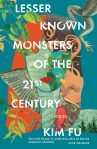
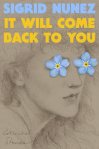
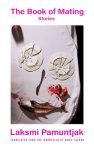
(All but two by women!)
What are some of your recent favorite experiences with short fiction?
Welcome to Short Story September! (#ShortStorySeptember)
Join me in celebrating the art of the short story this month! Simply read one or more individual stories (or collections) and share your review by adding a blog post or social media post to the InLinkz party below. (Or paste a link in a comment and I can add it for you.)
You can find more information about the challenge here. This post will be pinned to the top of my blog, and at the end of the month I will post a recap of what everyone has reviewed.
(The first batch of 50 links is here.)
20 Books of Summer, 17–20: Jaouad, Kim, Merwin, Piñeiro (#WITMonth)
It’s time to draw a line under 20 Books of Summer so I can focus on hosting Short Story September. I’m technically not quite finished with these first two I’m technically not quite finished with these first two [70 pages to go in the Jaouad and 46 in the Kim], but I’ve read enough to form an opinion and will pop back later to add in final thoughts and ratings. My final four are a memoir of cancer in young adulthood; a page-turning courtroom drama about experimental autism treatment gone wrong; gorgeous nature poems; and a novella in translation that comments on disability, motherhood and mental health issues. Skip to the end for my one DNF of the challenge and a look back at some stats plus my most successful reads.
Between Two Kingdoms: What Almost Dying Taught Me about Living by Suleika Jaouad (2021)
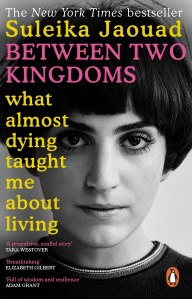
{Updated on 7 September} Jaouad wrote a New York Times column about going through leukaemia treatment in her early twenties and what came next. After months of itching and fatigue, she fell properly ill while working her first postgraduate job in Paris and her blood test results were so bad that she flew home to New York. She would be in and out of hospital for the next five years, enduring multiple rounds of chemo and a bone marrow transplant from her brother. It’s a terrific granular account of the physical and emotional rigours of illness, as well as the strain it put on her relationships – being her primary caregiver was too much for her boyfriend, Will. But she also found a community of young cancer patients, many (like Max Ritvo) now dead. After 60% of the book’s length, as the title – its metaphor taken from Susan Sontag – suggests, the new challenge for Jaouad was resuming life. “I’ve spent the past fifteen hundred days working tirelessly toward a single goal—survival. And now that I’ve survived, I’m realizing I don’t know how to live.” She decides to undertake a cross-country road trip punctuated by visits to people who wrote to her through her column: fellow cancer survivors, a mother who lost a son to suicide, a man on death row in Texas. At first I thought this content felt tacked on and should have been a sequel, but ultimately it illustrates why she wouldn’t edit out her illness if she had it all to do again. I hadn’t heard of Jaouad before I stumbled on this book; from Instagram, I learned she’s now (at age 38) weathered cancer three times. (Little Free Library) 
Miracle Creek by Angie Kim (2019)
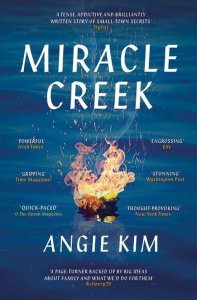
{Updated on 7 September} After enjoying Happiness Falls so much, I wanted to go back to Kim’s debut, for which she won an Edgar Award. (There’s an autistic boy and discussion of therapies in that second book as well.) The bulk of the novel is set during the four days of an August 2009 trial. It’s been a year since a horrific accident at Pak Yoo’s “Miracle Submarine,” a rural Virginia hyperbaric oxygen chamber where regulars came for twice-daily treatment of autism, cerebral palsy, and infertility. Meanwhile, protesters gathered outside to draw attention to what they believed to be a dangerous and unproven technique, the equivalent of child abuse. Someone with Camel cigarettes and matches from a local 7-11 set a small fire under an oxygen tank; the resulting explosion killed two and seriously injured two more. The mother of one of the autistic boys was arrested for suspected arson and attempted murder, but as the trial goes on suspicion seems to shift to members of the Korean American family who ran the HBOT operation. There’s a lot to sink the teeth into here. Each character has secrets, and little revelations are emerging all the time, such that the prosecutor and defence lawyer are always having to adjust their approach. Like I’ve experienced with Kim before, this was intelligent, thought-provoking, and absorbing. It’s just the sort of crime-adjacent fiction I like. An author Q&A at the end reveals a couple of autobiographical inspirations: working in her immigrant parents’ convenience store near Baltimore as a teenager, and taking one of her sons, who had neurological deafness and chronic illnesses, for HBOT. (Gift from my wish list)
The Vixen by W.S. Merwin (1996)
it seems that the world is made of a single
summer as it always has been (from “Entry”)
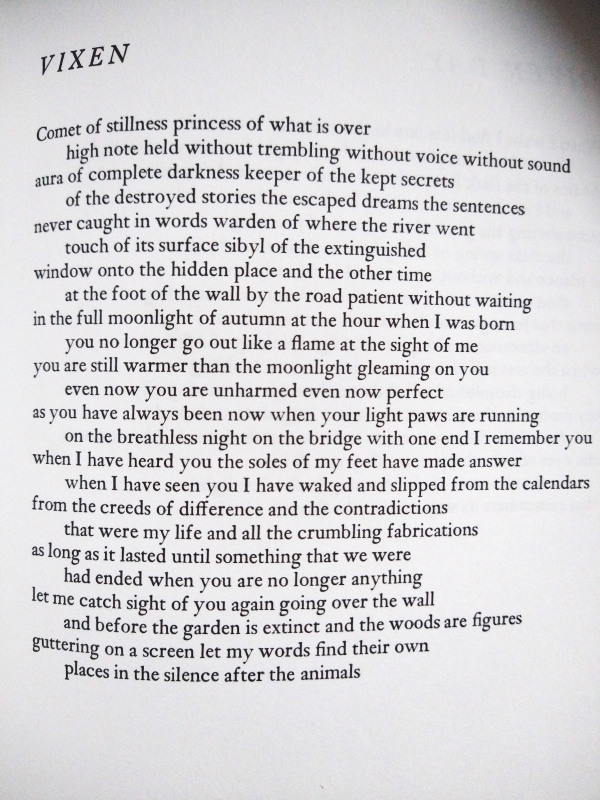
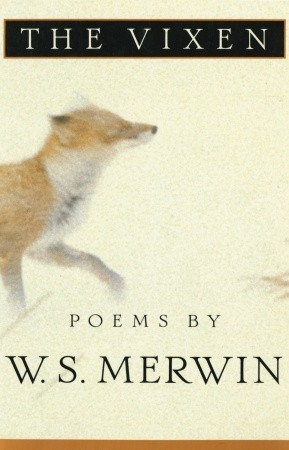 I took this off the shelf because Merwin was one of the POV characters in The Daffodil Days, Helen Bain’s excellent novel about Sylvia Plath’s final years. I had no idea what to expect, and it took me a while to get used to his entirely unpunctuated verse. Only by reading aloud or in my head was I able to split the text blocks into meaning-rich phrases. The fox is a revenant flitting through many of these poems as they pinpoint natural rhythms and human traces across the seasons and centuries. A lot reference summer, in particular, so this was a perfect choice for the challenge. There are a few historical portraits but most of the pieces feel timeless, evoking a countryside locale where the speaker returns to find derelict dwellings given over to birds and trees. Mostly it feels like this could be England, but sometimes a dry aridity suggests the Mediterranean. There is a strong sense of temporality, especially of afterness – the close of a day, the tail end of a season, the still-resonant emptiness after life has left or activity has finished. But there is also the hint of an eternal present:
Seen from afterward the time appears to have been
all of a piece which of course it was but how seldom
it seemed that way when it was still happening (from “Completion”)
In a long book (~65 pieces), there were only a few poems that washed over me without making any impression. The run-on pace, alliteration, and close attention to the natural world made this utterly mesmerizing. I’ll be sure to read more by Merwin. (Secondhand – Bridport Old Books) 
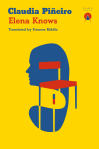
Elena Knows by Claudia Piñeiro (2007; 2021)
[Translated from Spanish by Frances Riddle]
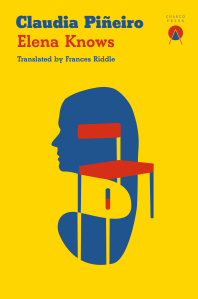 Piñeiro is an Argentinian author known for infusing her detective novels with a political conscience. Elena Knows is a mystery of sorts, in which the title character devotes herself to investigating her daughter’s death (Rita was found hanging in the belfry of a church). But several elements make this atypical for crime fiction: Elena has Parkinson’s disease – “that f—ing whore illness,” she calls it; refuses to accept the police’s conclusion that Rita died by suicide – she would never have gone there in the rain, she insists; and drags her uncooperative body across Buenos Aires to confront an acquaintance she thinks might be able to shed some light. It’s a circadian narrative, divided into sections by Elena’s pill schedule, but expands its timeline through flashbacks to consider the complications of the mother–daughter relationship as Elena became more physically dependent. The eventual encounter with Isabel presents a contrast in the form of a woman who didn’t want to become a mother but had to because of a prohibition on abortion, which was only legalized in Argentina in 2020. While the approach and themes were appealing, I found this repetitive and the long blocks of dialogue in italics were challenging to read. This was shortlisted for the International Booker Prize, though I thought it had a better chance in that year’s Barbellion Prize race (returning this year!). (Gift from my wish list)
And a DNF:
Blonde by Joyce Carol Oates (2000)
Her problem wasn’t she was a dumb blonde, it was she wasn’t a blonde and she wasn’t dumb.
Sigh. Between February and July I read about 200 pages, then skimmed another 100 or so, then finally gave up. (My third Oates DNF. I don’t think she and I are meant to be, though I seem to have better luck with her short stories and own another couple of her books to try.) I engaged most with the early pages about her childhood with a vain, neglectful mother who ends up in a mental hospital; and then with her teenage marriage to Bucky Glazer and involvement in the war effort.
She was a sweet kid but so emotional. Wanting love all the time. She was immature and unreliable and I guess so was I; we were too young. If she’d been a better cook and not so emotional, it might’ve worked out.
Except that people were dying and being injured and the world filling up with smoldering rubble, Norma Jeane liked the War. The War was as steady and reliable as hunger or sleep. Always, the War was there.
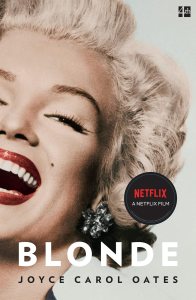 In the part that I skimmed, she is starting to become known in Hollywood, with a nude photo shoot (for which she only earned $50), bit parts in films, and her famous stage name.
In the introductory Author’s Note, Oates writes, “for all its length, synecdoche is the principle of appropriation.” So, for instance, instead of multiple foster families, we just get one. Always, there was unwanted male attention, including molestation. I was surprised to find that the pick-and-choose, fact–fiction hybrid approach became a problem for me. I wanted to know if she really married a man named Bucky and wrote poetry. Yet I didn’t want to have to be verifying every fact either.
Oates’s kitchen-sink style involves imagined scenes and dialogue plus retrospective commentary and knowing asides; long, looping sentences and short ones; direct and indirect speech; lots of exclamation points. Lots of everything. The repetition will be deliberate, for effect, but I kept longing for a streamlined version that cut, say, three of every five sentences.
Anyway, this was certainly a project worth undertaking for Oates; you can see why it was irresistible to unearth the reality behind a legend. Norma Jeane is intriguing for her simultaneous childlike innocence and cultivated sensuality. (Secondhand – Awesomebooks.com)
20 Books Statistics:
14 fiction
4 nonfiction
2 poetry
7 by BIPOC
3 towards WIT Month (for which I reviewed 8 in total, with library reads and Foreword reviews)
3 rereads
I’ve learned this year that it’s important, momentum-wise, to build in a number of shorter books (6 of novella length + 2 poetry collections) and best to avoid doorstoppers. I was wise to pick some addictive, undemanding novels that tread the line between popular and literary fiction (Kim, Mantel, O’Farrell, Reid, Sullivan); anything that feels like hard work (Oates!) is definitely not a summer read.
I only read a risible 4 of the specific books I set out as options in my planning post, plus 1 of my additional ideas. (It’s ironic that I struggled to finish this set of 20 when I could have labelled anything from my shelves part of the challenge – in total, I read 39 of my own books this summer.)
My favourites of the 20 were Strange Weather in Tokyo, Prodigal Summer & The Vanishing Act of Esme Lennox (both rereads), and The Vixen. But What Belongs to You, Miracle Creek, Mitz, The Employees, Commencement, and Flush were also great reads. To be able to single out half of the books equals a huge success!
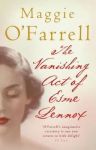
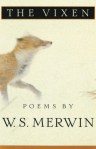
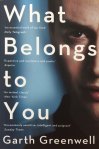
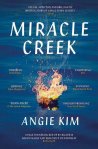
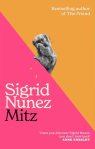
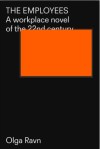
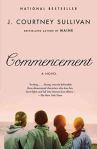
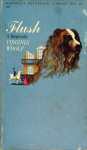
I also completed a 4-book diagonal on the Bingo card!
- Summer in the title (PRODIGAL SUMMER)
- A classic you’ve been meaning to (RE-)read (FLUSH)
- Features a family holiday (MITZ)
- Published in summer (ELENA KNOWS – July 2021)
Love Your Library: August 2026
Thanks to Eleanor, Marcie, and Skai for posting about their library borrowing and reading!
This month marks six years that I’ve been volunteering in my local public library. I’m perversely nostalgic for those early days in summer 2020, when we were closed to the public and staff and volunteers socially distanced around an otherwise empty library.
In a normal year, I always forget just how busy the library gets during the school holidays. The children’s shelves, especially, look ransacked and the number of reservation requests shoots up as kids (and some adults) work towards the Summer Reading Challenge. I look forward to things quieting down again.
My library recently acquired the Wainwright Prize shortlists, so I’m taking advantage of the opportunity to read most of the Conservation titles (whereas the Nature writing titles mostly struck me as samey). I’m hoping it will also buy more from the Booker Prize longlist – besides the Harrison and Perry, which I’m waiting for. You can see I’ve also been stocking up on short story collections for Short Story September, which starts tomorrow!
My library use over the last month:
(links are to any book reviews not already featured on the blog)
READ
- Our Spoons Came from Woolworths by Barbara Comyns (for Classics book club)

- I Feel Bad about My Neck by Nora Ephron
- One Ukrainian Summer by Viv Groskop
- The Shock of the Light by Lori Inglis Hall
- Kakigori Summer by Emily Itami
- The New Carthaginians by Nick Makoha
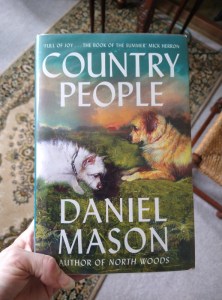
- Country People by Daniel Mason
- The Heartstopper Yearbook by Alice Oseman
- Heartstopper: Volume 6 by Alice Oseman
- The Land and Its People by David Sedaris
+
Women in Translation Month reads:
(All originally published in French, though Valckx is Dutch?)
 The Years by Annie Ernaux [transl. Alison L. Strayer]: This was a buddy read with Marcie of Buried in Print, though she quickly zoomed ahead! I preferred it to some of Ernaux’s other short memoirs (Happening, I Remain in Darkness, A Woman’s Story) precisely because it is not a memoir but a portrait of her life and times, mostly delivered in the first-person plural with some third person – in the late pages she herself calls it an “impersonal autobiography.” I was most wowed by the opening and closing litanies of the random memories lost whenever any individual ceases to exist. Elsewhere, when not used to depict her actual experiences (via scenes or photographs), the approach does tend toward the generic, yet it gives a good sense of social fads and political trends all the same. Education and consumerism seem like routes out of poverty, whereas novelty and technology offer false promise. Reading something like this would be a good way for younger generations to summon up some sympathy for Boomers.
Favourite lines: “Our parents and the middle-aged were from another time” / “She does not feel any particular age, though certainly feels a young woman’s arrogance vis-a-vis older women, a condescension towards the post-menopausal. It is unlikely she will ever be one of them herself.”
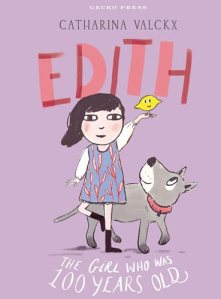 Edith: The Girl Who Was 100 Years Old by Catharina Valckx [transl. Antony Shugaar]: Speaking of never growing old… This is a charming middle-grade fantasy about a girl given two blessings by fairies: the ability to animate objects, and the gift of eternal childhood. The former is good fun, allowing her to have a sentient grandfather clock and a pet lemon named Squirt; the latter comes to seem like more of a curse, though. Edith has long outlived her parents and starts to think her condition is “eternal boredom.” She, Squirt and Bolster the dog set out to find the original fairy, now herself an old lady, and see if the spell can be reversed so Edith can experience life in all its stages. Somehow I can’t see this message catching on in the USA! I loved the illustrations and the whimsy but wanted it to go further, Moomins-like, into Edith’s losses and longing.
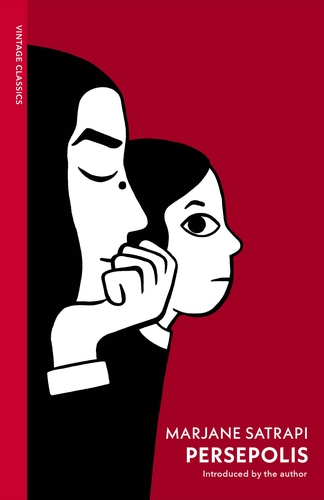 Persepolis by Marjane Satrapi [transl. L’Association / Anjali Singh]: This was one of the first graphic memoirs I ever read (along with Fun Home), a classic of the genre. I wanted to reread it because it has, unfortunately, taken on renewed relevance because of war in Iran and the author’s death earlier this year. Her memoir of growing up in the 1980s and 1990s illuminates what it’s like to live under an authoritarian religious regime in a time of war, and likely planted the seeds for novels such as Martyr! and The Persians.
Satrapi’s parents had secular values but, after the 1979 Islamic Revolution, everyone had to fall in line: she wore the veil whenever she left her house, and though her family made wine they were ready to dump it down the toilet at a minute’s notice. On the one hand, she and her friends were normal Westernized adolescents interested in pop music and trendy clothing; on the other, there were shortages, bombings, and rumours of relatives and neighbours being disappeared for voicing revolutionary ideas. A missile exploded in her neighbourhood, narrowly missing her building but killing their Jewish acquaintances.
Volume 2, “The Story of a Return,” has Satrapi attending school in Austria and encountering a whole new world of drugs and sex. “The harder I tried to assimilate, the more I had the feeling that I was distancing myself from my culture, betraying my parents and my origins”. She returned to Iran four years later to find a country that was still repressive but beginning to be rebuilt after war. Art school (with fully clothed life models) and a brief marriage in her early twenties followed, but she had to leave Iran for good to find a life of creative fulfilment.
Her father’s wise words: “As long as there is oil in the Middle East we will never have peace”; “We Iranians, we’re crushed not only by the government but by the weight of our traditions.”


CURRENTLY READING
- Taking Pictures by Anne Enright
- I Remember Nothing and Other Reflections by Nora Ephron
- The Given World by Melissa Harrison
- Night, Neon and Other Stories of Suspense by Joyce Carol Oates
- Natural Disaster by Lisa Owens
- Hum by Helen Phillips (a buddy read with Marcie of Buried in Print)
- Crossing the Water by Sylvia Plath (from university library)
- The Original by Nell Stevens
- The Queen’s Gambit by Walter S. Tevis
SKIMMED
- Come What May: Life-Changing Lessons for Coping with Crisis by Lucy Easthope
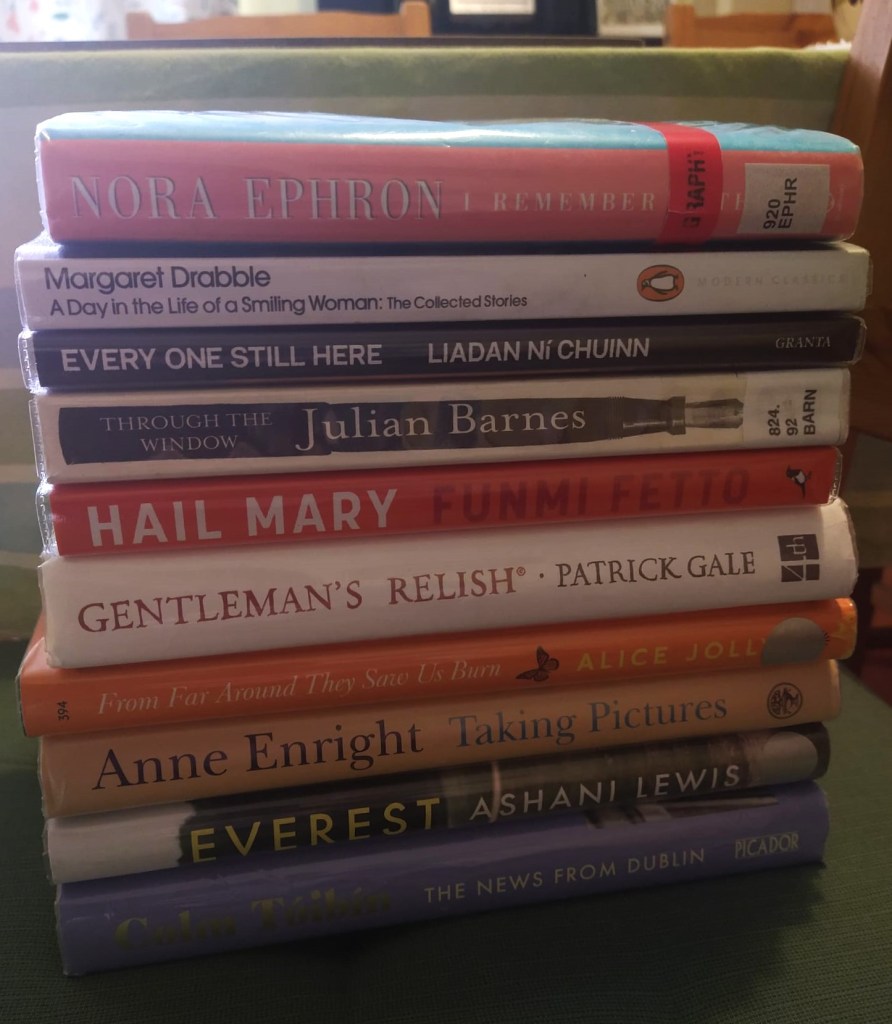
CHECKED OUT, TO BE READ
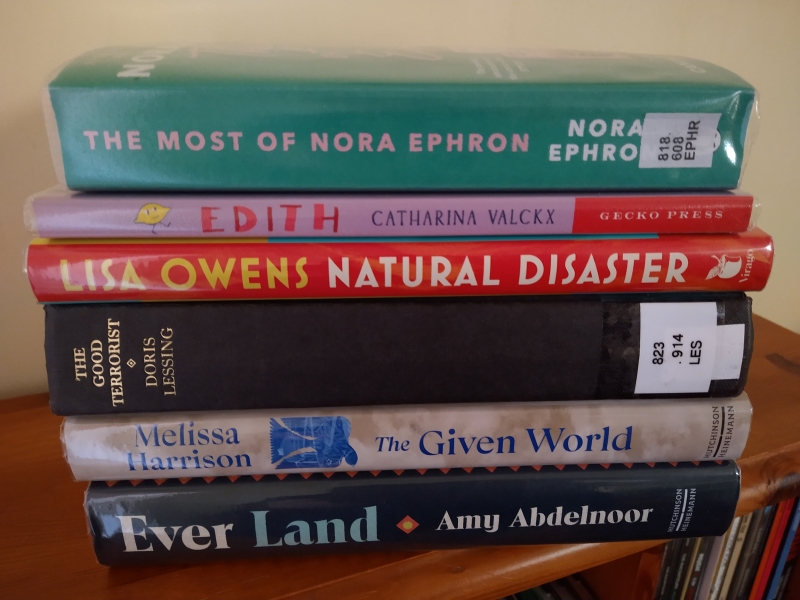
- Ever Land by Amy Abdelnoor
- Through the Window by Julian Barnes (to reread)
- A Day in the Life of a Smiling Woman: The Collected Stories by Margaret Drabble
- The Most of Nora Ephron – I’m on an Ephron kick at the moment!
- Hail Mary by Funmi Fetto
- Gentleman’s Relish by Patrick Gale
- From Far Around They Saw Us Burn by Alice Jolly
- The Good Terrorist by Doris Lessing (from university library, for Classics book club)
- Everest by Ashani Lewis
- The News from Dublin by Colm Tóibín
ON HOLD, TO BE COLLECTED
- In Meadowlight by Sussie Anie
- The Savage Landscape by Cal Flyn
- The Leveret by Anna Goldreich
- Eat the Planet Well: How to Fix Our Toxic Food System – One Meal at a Time by Dave Goulson
- The End of Everything by M. John Harrison
- When the Forest Breathes: Renewal and Resilience in the Natural World by Suzanne Simard
- Fiesta: A Journey through Festivity by Daniel Stables
IN THE RESERVATION QUEUE
- The Strangers by Naomi Alderman
- Stop All the Clocks: Poems of Love and Loss by W.H. Auden
- Dodge City by Patrick deWitt
- Honour & Other People’s Children by Helen Garner
- Every Last Fish by Rose George
- Neurodivergent by Nature by Joe Harkness
- Hag: Forgotten Folktales Retold by Daisy Johnson et al.
- How to Be Hopeful by Caitlin Moran
- The Winter Guest by Sarah Moss
- Autumn by Kate Mosse
- Sunrise by Téa Obreht
- May We Feed the King by Rebecca Perry
- Green Crime by Julia Shaw
- The Housekeeper by Rose Tremain
RETURNED UNREAD
- Every One Still Here by Liadan Ní Chuinn – It takes a lot for me to overcome my groundless antipathy to stories about The Troubles.
What have you been reading or reviewing from the library recently?

Share a link to your own post in the comments. Feel free to use the above image. The hashtag is #LoveYourLibrary.
Summer Reads, Part II: Ellis, Faulkner (Reread), Groskop, Ruskovich
Thankfully, since I last wrote about summer, we’ve had abundant rainfall – a cosy wet weekend after nearly two months of drought. Our pond is looking full again and our apple tree is perking up, but it will take much more to fill the country’s coffers. I’ve spent significantly less time outdoors than usual this summer, taking refuge indoors from the unremitting heat and sun. Luckily, there have been plenty of books to keep me company.
Book 2 of The Summerhouse Trilogy
The Skeleton in the Cupboard by Alice Thomas Ellis (1988)
Summer was a dull season. In spring things were growing; in autumn they were harvested; in winter they were waiting. Summer was pointless, designed for idleness. An inbred Yorkshire Puritanism led me to despise it.
{SPOILERS IN THIS ONE}
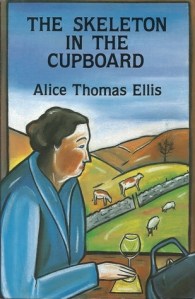 After The Clothes in the Wardrobe (1987), this novella felt conventional and superfluous. Repeating the run-up to Margaret and Syl’s wedding from the perspective of Margaret’s mother-in-law-to-be, Mrs Monro, is only worthwhile in that it allows for two key revelations: one, that Margaret was molested by her father, which goes some way toward explaining her flat affect and inability to love Syl; and two, that Lili also slept with Syl’s father in the summerhouse, long before she bedded Syl himself there on the morning of the wedding. Otherwise, this is a collection of sad and somewhat clichéd meditations on the loneliness of alcoholism-prone older age and widowhood. Provided it doesn’t simply reproduce stereotypes of the seductress, I’m hoping the third volume, from Lili’s perspective, will end up being the most interesting; the middle book of a trilogy always kinda sucks, right? I’ll read Book 3 for one last seasonal instalment before the autumn equinox. (Secondhand – Regent Books, Wantage)
Light in August by William Faulkner (1932)
Memory believes before knowing remembers.
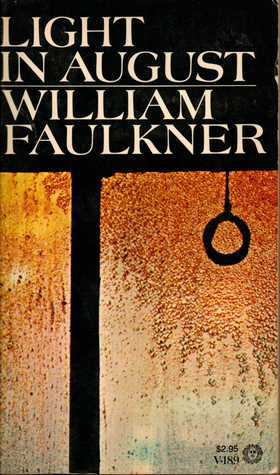 In my second year as a college English major, I took a senior elective on Faulkner & Morrison. Ever since, I’ve remembered this and Song of Solomon as my favourite from each author – the books I’d read again even without them being assigned. For several of the last few Augusts I’ve meant to pick this up, but when I finally did I found Faulkner’s style oppressive and only succeeded in a quick skim. The one thing I’d remembered beforehand is that there is a mixed-race character named Joe Christmas. But the first character we’re introduced to is the indomitable Lena Grove, who’s heavily pregnant and has hitchhiked from Alabama to Mississippi to find her baby daddy. She still believes he’ll do right by her and their child, but the fact that he’s living under an assumed name is our clue that he has no intention of taking responsibility. The plot is set in motion by a misunderstanding: she’s looking for Lucas Burch, but others know there’s a Byron Bunch nearby, and he takes a shine to Lena.
Meanwhile, Burch is going by Joe Brown and rooming with the sadistic Joe Christmas, who gets caught up in bootlegging and murder and goes on the run. The language about his “black blood” driving him to do things, and what happens to him, is awful, but true to its time as well as to Faulkner’s vision of tragic inevitability. I only got the bare bones from a skim, but did love how the novel feels epic yet only spans about a month; it completes a full circle as Lena and her baby move on again, this time to Tennessee. I also liked the neologism in the description of a town’s “garland of Augusttremulous lights.” All told, I’m unlikely to read Faulkner again; he’s like a darker version of Steinbeck, who I’d recommend instead. (Secondhand – Wonder Book and Video)
My original rating:
My rating now:
One Ukrainian Summer: A memoir about falling in love and coming of age in the former USSR by Viv Groskop (2024)
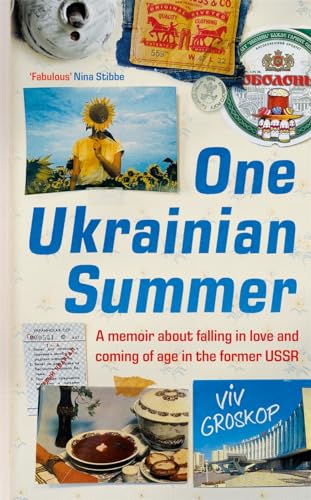 As part of her Russian degree course at Cambridge, Groskop spent a year abroad in St Petersburg, where she also conducted English lessons for adults. She arrived in September 1993 and the next month, in a nightclub, met Bogdan Bogdanovich (“God’s Gift, Son of God’s Gift”), a young man whose rock band called itself “Ukraine answer to Red Hot Chili Pepper.” She would be the solitary groupie on their tour the following summer, but first she had to get through a freezing winter of too much alcohol, too many cigarettes, and turbulent living situations. Her pen portraits of friends and acquaintances are quite amusing. There’s an appealing blend of self-deprecation and nostalgia to her outlook: “I was a clueless, lovesick, pedantic linguist. But I held the future of Ukrainian rock ’n’ roll in my hands.” I never got a particular sense of any of the cities she visits, but the long train ride from Moscow to Kiev is evocative. Each chapter is headed by a vocabulary word, given in Russian and then in the (very similar) Ukrainian. There are lots of Slavic phrases in the text, too, rendered in Roman script. I enjoyed reading them to myself in my head, but none of them has stuck. Let’s see if I can commit this one to memory: “Babine leto” (Ukr.) = “grandmother’s summer,” the equivalent of an Indian summer. Kudos to Groskop and her agents, all of whom donated their proceeds/fees to PEN International, which supports writers at risk. (Public library)
Nightjar: Stories by Emily Ruskovich (2026)
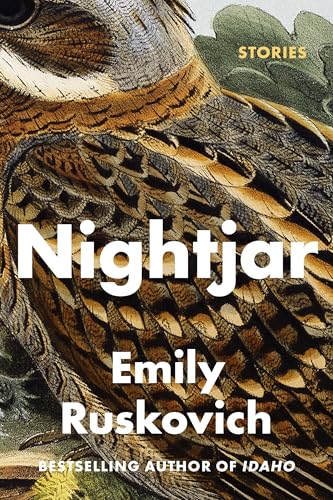 I abandoned Ruskovich’s 2018 debut novel, Idaho, early on, but will absolutely go back to it now because these stories are phenomenal. There are only five, so they tread the border between short story and novella at ~50 pages each and reminded me in their intricacy and depth of short fiction by Lauren Groff and Alice Munro. All are set in the American West and circle themes of loss and remembrance, and they often feature animals prominently. “Victor’s Room” sees a young wife become obsessed with exposing her husband’s false memory of the Oregon house where his brother died in childhood. In “Owl,” the only first-person, historical story, the narrator’s wife is accidentally shot by boys who mistake her for an owl in the night; as she convalesces, her old life lures her back. “Round Lake,” probably my favourite, finds violinist Jade adrift in Tokyo, where she agreed to meet a love interest. There’s water in her ears from an Idaho lake, which she only learned after her swim was where her mother drowned. “Petty Creek Road,” about middle-aged brothers, introduces a subtle note of magic realism (through Will’s premonitions of danger) that is echoed in the final, title story in the tangible reflections that Tess finds each morning in a bucket of water. Jade keeps orphaned hedgehogs, Jane feeds stray cats in “Owl,” and Tess communes with a goat named Panic Boy. The writing and character development are extraordinary, and the question of how memories become stories, or take on physical weight, truly resonated with me.
I’ve included this in my summer round-up because, for me, nightjars are synonymous with warm evenings on Newtown Common, where we go once a year to catch up with nightjars (not the same species as Tess encounters in Montana). This small scrubby nature reserve never fails to turn up several nightjars: unearthly with their gaping mouths, alternating churring and yipping, and jerky flaps against the gathering dusk. We made our annual pilgrimage on 15 July and it didn’t disappoint. (Edelweiss) 
I have a few more summery reads lined up to take me through what I sincerely hope is this season’s last gasp. I’m looking forward to getting out my corduroy coat, wearing hoodies and lap blankets around the house, and eating autumnal goodies based around squash and apples.
 Bookish Beck = Rebecca Foster. American transplant to England. Freelance proofreader and book reviewer.
