December Reading Plans
November is always a busy blogging month what with co-hosting Novellas in November and making small contributions to several other challenges: Nonfiction November, German Literature Month, and Margaret Atwood Reading Month.
In the final month of the year, my ambitions are always split:
I want to get to as many 2022 releases as possible … but I also want to dip a toe into the 2023 offerings.
I need to work on my review copy backlog … but I also want to relax and read some cosy wintry or holiday-themed stuff.
I want to get to the library books I’ve had out for ages … but I also want to spend some time reading from my shelves.
And that’s not even to mention my second year of McKitterick Prize judging (my manuscript longlist is due at the end of January).
My set-aside shelves (yes, literal shelves plural) are beyond ridiculous, and I have another partial shelf of review books not yet started. I do feel bad that I’ve accepted so many 2022 books for review and not read them, let alone reviewed them. But books are patient, and I’m going to cut myself some slack given that my year has contained two of the most stressful events possible (buying and moving into a house, and the death of a close family member).
I’m not even going to show you my preposterous backlog, because my WordPress media library is at capacity. “Looks like you have used 3.0 GB of your 3.0 GB upload limit (99%).” I’ll have to work on deleting lots of old images later on this month so that I can post photos of my best-of stacks towards the end of the year.
 So, for December I’ll work a bit on all of the above. My one final challenge to self is “Diverse December” – not official since 2020, when Naomi Frisby spearheaded it, but worth doing anyway. This is the second year that I’ve specifically monitored my reading of BIPOC authors. Last year, I managed 18.5%. I have no idea where I stand now, but would like to see a higher total.
 I’ll start with a December review book, A Down Home Meal for These Difficult Times by Meron Hadero, and see how I go from there. I was a lucky recipient of a proof copy of The Late Americans by Brandon Taylor, one of my new favourite authors; it doesn’t come out until May 23 in the USA and June 22 in the UK, but I will also see if I can read it early. Another potential 2023 release I have by a BIPOC author is Camp Zero by Michelle Min Sterling, a debut dystopian novel about climate refugees, which arrived unsolicited last month.
Among the other tempting options on my dedicated BIPOC-author shelf:
Leave the World Behind by Rumaan Alam
Black Buck by Mateo Askaripour
Fruit of the Drunken Tree by Ingrid Rojas Contreras
The Inheritance of Loss by Kiran Desai
Diamond Hill by Kit Fan
A Fine Balance by Rohinton Mistry
Still Born by Guadalupe Nettel
The Last of Her Kind by Sigrid Nunez
Names of the Women by Jeet Thayil
What are your year-end bookish plans? Happy December reading!
Novellas in November 2022: That’s a Wrap!
This was Cathy’s and my third year co-hosting Novellas in November. We’ve done our best keeping up with your posts, which Cathy has collected as links on her master post.
The challenge seemed doomed at points, what with my bereavement and Cathy catching Covid a second time, but we persisted! At last count, we had 42 bloggers who took part this year, contributing just over 150 posts covering some 170+ books.
Ten of us read our chosen buddy read, Foster by Claire Keegan (with four bloggers reading Keegan’s Small Things Like These also/instead). I’ve gathered the review links here.
Our next most popular novella was a recent release, Maureen [Fry and the Angel of the North] by Rachel Joyce, which was reviewed four times. Other books highlighted more than once were Follow the Rabbit-Proof Fence, Mrs Caliban, The Swimmers, The Time Machine, Winter in Sokcho, Ti Amo, Body Kintsugi, Notes on Grief, and Another Brooklyn.
Thank you all for being so engaged with #NovNov22! We’ll see you back here next year.
Five Final Novellas: Adichie, Glück, Jhabvala, Victory for Ukraine, Woodson (#NovNov22)
We’ll wrap up Novellas in November and give some final statistics tomorrow. Today, I have mini reviews of another five novellas I read this month: one short nonfiction reread and then fiction ranging from India in the 1920s to short stories in comics about the war in Ukraine.
Notes on Grief by Chimamanda Ngozi Adichie (2021)
[85 pages]
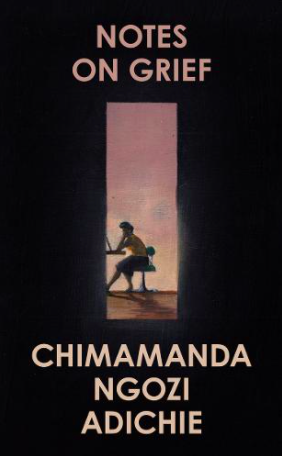 This came out in May last year – I pre-ordered it from Waterstones with points I’d saved up, because I’m that much of a fan – and it’s rare for me to reread something so soon, but of course it took on new significance for me this month. Like me, Adichie lived on a different continent from her family and so technology mediated her long-distance relationships. She saw her father on their weekly Sunday Zoom on June 7, 2020 and he appeared briefly on screen the next two days, seeming tired; on June 10, he was gone, her brother’s phone screen showing her his face: “my father looks asleep, his face relaxed, beautiful in repose.”
My experience of my mother’s death was similar: everything was sudden; my sister was the one there at the hospital, while all I could do was wait by the phone/laptop for news. So these details were particularly piercing, but the whole essay resonated with me as she navigates the early days of grief and remembers what she most admires about her father, including his piety, record-keeping and pride in her. (How lucky I am that Covid travel restrictions were no longer a factor; they delayed his memorial service.) My original review is here. Cathy also reviewed it. If you wish, you can read the New Yorker piece it arose from here. 
Marigold and Rose: A Fiction by Louise Glück (2022)
[52 pages]
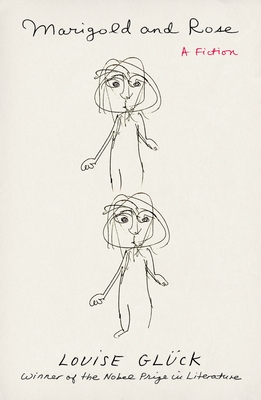 The first (and so far only) fiction by the poet and 2020 Nobel Prize winner, this is a curious little story that imagines the inner lives of infant twins and closes with their first birthday. Like Ian McEwan’s Nutshell, it ascribes to preverbal beings thoughts and wisdom they could not possibly have. Marigold, the would-be writer of the pair, is spiky and unpredictable, whereas Rose is the archetypal good baby.
Marigold did not like people. She liked Mother and Father; everyone else had not yet been properly inspected. Rose did like people and she intended them to like her. … Everyone understood that Marigold lived in her head and Rose lived in the world.
Now every day was like the days when the twins did not perform well at naptime. Then Mother and Father would begin to look tired and harassed. Mother explained that babies got tired too; often, they cried because they were tired. I don’t cry because I’m tired, Marigold thought. I cry because something has disappointed me.
As a psychological allegory, this tracks personality development and the growing awareness of Mother and Father as separate people with their own characteristics, some of which each girl replicates. But I failed to find much of a point. 
With thanks to Carcanet Press for the free e-copy for review.
Heat and Dust by Ruth Prawer Jhabvala (1975)
[181 pages]
 A lesser-known Booker Prize winner that we read for our book club’s women’s classics subgroup. My reading was interrupted by the last-minute trip back to the States, so I ended up finishing the last two-thirds after we’d had the discussion and also watched the movie. I found I was better able to engage with the subtle story and understated writing after I’d seen the sumptuous 1983 Merchant Ivory film: the characters jumped out for me much more than they initially had on the page, and it was no problem having Greta Scacchi in my head.
In 1923, Olivia is a bored young officer’s wife in India who becomes infatuated with the Nawab, an Indian prince involved in some dodgy dealings. In the novel’s present day, Olivia’s step-granddaughter (never named; in the film she’s called Anne, played by Julie Christie and changed to a great-niece for some reason) is also in India, enjoying the hippie freedom and rediscovering Olivia’s life through the letters she wrote to her sister. Both novel and film cut quickly and often between the two time periods to draw increasingly overt parallels between the women’s lives, culminating in unexpected pregnancies and difficult decisions to be made. I enjoyed the atmosphere (see also The Painted Veil and China Room) and would recommend the film, but I doubt I’ll seek out more by Jhabvala. (Public library) 
PEREMOHA: Victory for Ukraine (2022)
[96 pages]
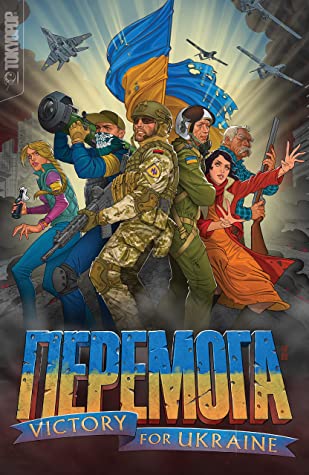 Various writers and artists contributed these graphic shorts, so there are likely to be some stories you enjoy more than others. “The Ghost of Kyiv” is about a mythical hero from the early days of the Russian invasion who shot down six enemy planes in a day. I got Andy Capp vibes from “Looters,” about Russian goons so dumb they don’t even recognize the appliances they haul back to their slum-dwelling families. (Look, this is propaganda. Whether it comes from the right side or not, recognize it for what it is.) In “Zmiinyi Island 13,” Ukrainian missiles destroy a Russian missile cruiser. Though hospitalized, the Ukrainian soldiers involved – including a woman – can rejoice in the win. “A pure heart is one that overcomes fear” is the lesson they quote from a legend. “Brave Little Tractor” is an adorable Thomas the Tank Engine-like story-within-a-story about farm machinery that joins the war effort. A bit too much of the superhero, shoot-’em-up stylings (including perfectly put-together females with pneumatic bosoms) for me here, but how could any graphic novel reader resist this Tokyopop compilation when a portion of proceeds go to RAZOM, a nonprofit Ukrainian-American human rights organization? (Read via Edelweiss)
Another Brooklyn by Jacqueline Woodson (2016)
[175 pages]
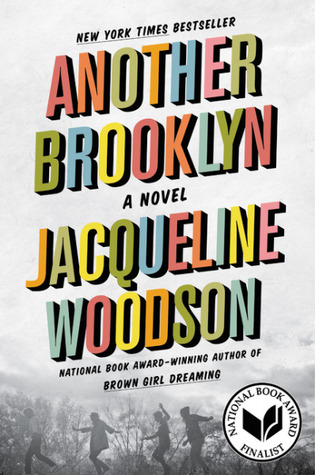 August looks back on her coming of age in 1970s Bushwick, Brooklyn. She lived with her father and brother in a shabby apartment, but friendship with Angela, Gigi and Sylvia lightened a gloomy existence: “as we stood half circle in the bright school yard, we saw the lost and beautiful and hungry in each of us. We saw home.” As in Very Cold People, though, this is not an untroubled girlhood. Male threat is everywhere, and if boyfriends bring sexual awakening they are also a constant goad to do more than girls are ready for. In short, flitting paragraphs, Woodson explores August’s past – a childhood in Tennessee, her uncle who died in the Vietnam War, her father’s growing involvement with the Nation of Islam. What struck me most, though, was August’s coming to terms with her mother’s death, a fact she doesn’t even acknowledge at first, and the anthropological asides about other cultures’ death rituals. This was my second from Woodson after the Women’s Prize-longlisted Red at the Bone, and I liked them about the same. A problem for me was that Brown Girls, which, with its New York City setting and focus on friendships between girls of colour, must have at least partially been inspired by Another Brooklyn, was better. (Public library)
In total, I read 17 novellas this November, though if you add in the ones I’d read in advance and then reviewed over the course of the month, I managed 24. All things considered, I think that’s a great showing. The 5-star stand-outs for me were The Hero of This Book and Body Kintsugi, but Up at the Villa was also a great read.
November Releases: Dickens and Prince, Bratwurst Haven, Routes
Here are a few November books I read early for review, or that didn’t quite fit into the month’s other challenges – although, come to think of it, all are technically of novella length! (Come back tomorrow for a roundup of all the random novellas I’ve finished late in the month, and on Thursday for a retrospective of this year’s Novellas in November.)
Dickens and Prince: A Particular Kind of Genius by Nick Hornby
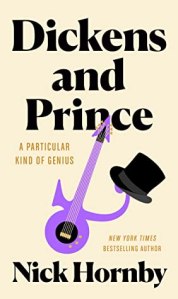 This exuberant essay, a paean to energy and imagination, draws unexpected connections between two of Hornby’s heroes. Both came from poverty, skyrocketed to fame in their twenties, were astoundingly prolific/workaholic artists, valued performance perhaps more highly than finished products, felt the industry was cheating them, had a weakness for women and died at a similar age. Biographical research shares the page with shrewd cultural commentary and glimpses of Hornby’s writing life. Whether a fan of both subjects, either or none, you’ll surely admire these geniuses’ vitality, too. (Full review forthcoming in the December 30th issue of Shelf Awareness.)
Bratwurst Haven: Stories by Rachel King
 In a dozen gritty linked short stories, lovable, flawed characters navigate aging, parenthood, and relationships. Set in Colorado in the recent past, the book depicts a gentrifying area where blue-collar workers struggle to afford childcare and health insurance. As Gus, their boss at St. Anthony Sausage, withdraws their benefits and breaks in response to a recession, it’s unclear whether the business will survive. Each story covers the perspective of a different employee. The connections between tales are subtle. Overall, an endearing composite portrait of a working-class community in transition. (See my full review for Foreword.)
Routes by Rhiya Pau
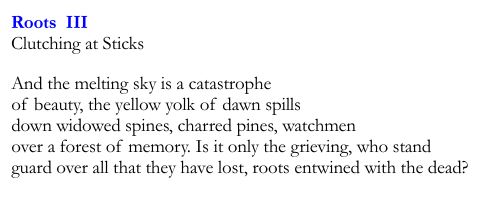
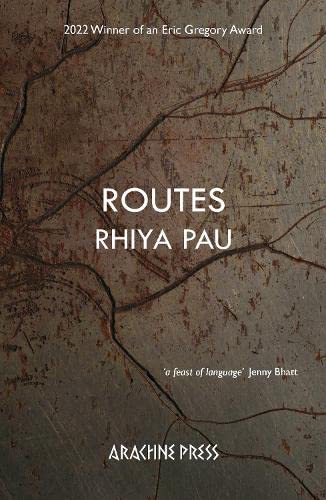 Pau’s ancestors were part of the South Asian diaspora in East Africa, and later settled in the UK. Her debut, which won one of this year’s Eric Gregory Awards (from the Society of Authors, for a collection by a British poet under the age of 30), reflects on that stew of cultures and languages. Colours and food make up the lush metaphorical palette.
When I was small, I spoke two languages.
At school: proper English, pruned and prim,
tip of the tongue taps roof of the mouth,
delicate lips, like lace frilling rims of my white
cotton socks. At home, a heady brew:
Gujarati Hindi Swahili
swim in my mouth, tie-dye my tongue
with words like bandhani.
Alongside loads of alliteration (my most adored poetic technique)—
My goddess is a mother in marigold garland
—there are delightfully unexpected turns of phrase, almost synaesthetic in their blending of the senses:
right as I worry I have forgotten the scent
of grief, I catch the first blossom of the season
and we are back circling the Spring.
~
I am a chandelier of possibility.
Besides family history and Hindu theology, current events and politics are sources of inspiration. For instance, “We Gotta Talk About S/kincare” explores the ironies and nuances of attitudes towards Black and Brown public figures, e.g., lauding Barack Obama and Kamala Harris, but former UK Home Secretary Priti Patel? “our forever – guest of honour / would deport her own mother – if she could.” I also loved the playfulness with structure: “Ode to Corelle” employs a typically solemn form for a celebration of crockery, while the yoga-themed “Salutation” snakes across two pages like a curving spine. This reminded me of poetry I’ve enjoyed by other young Asian women: Romalyn Ante, Cynthia Miller, Nina Mingya Powles and Jenny Xie. A fantastic first book.
With thanks to Arachne Press for the proof copy for review.
Any more November releases you can recommend?
Love Your Library, November 2022
Eleanor got loads of her R.I.P. reads from the library last month. Several of my novellas for this month have come from the public library, and before long it’ll be time to gather up a few holiday-appropriate reads.
I cut down my library volunteering from four hours a week to two, to claw back a little more time for work and for myself – between adjusting my meal times and walking there and back, it felt like I lost the whole of my Thursday afternoons, and already I enjoy having them free.
Early next month the library will close for two days for a complete stock take. I’ll go in on my usual Tuesday morning to help out with that for a few hours. I know to expect a lot of standing and repetitive work, but we’ve been promised tea and cake at break time!
Since last month:
READ
- Strangers on a Pier: Portrait of a Family by Tash Aw
- Fair Play by Tove Jansson
- The Magic Pudding by Norman Lindsay

CURRENTLY READING
- Standard Deviation by Katherine Heiny
- Pages & Co.: The Treehouse Library (Pages & Co. #5) by Anna James
- Heat and Dust by Ruth Prawer Jhabvala
- Everything the Light Touches by Janice Pariat
- Leap Year by Helen Russell
- The Family Retreat by Bev Thomas
- Another Brooklyn by Jacqueline Woodson
- Crying in H Mart by Michelle Zauner
What have you been reading or reviewing from the library recently?

Share a link to your own post in the comments. Feel free to use the above image. The hashtag is #LoveYourLibrary.
For Thy Great Pain… and Ti Amo for #NovNov22
On Friday evening we went to see Aqualung give his first London show in 12 years. (Here’s his lovely new song “November.”) I like travel days because I tend to get loads of reading done on my Kindle, and this was no exception: I read both of the below novellas, plus two-thirds of a poetry collection. Novellas aren’t always quick reads, but these were.
For Thy Great Pain Have Mercy on My Little Pain by Victoria Mackenzie (2023)
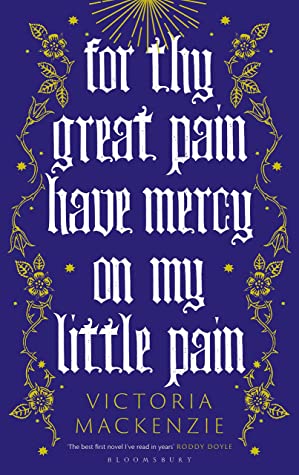 Two female medieval mystics, Julian of Norwich and Margery Kempe, are the twin protagonists of Mackenzie’s debut. She allows each to tell her life story through alternating first-person strands that only braid together very late on when she posits that Margery visited Julian in her cell and took into safekeeping the manuscript of her “shewings.” I finished reading Julian’s Revelations of Divine Love earlier this year and, apart from a couple of biographical details (she lost her husband and baby daughter to an outbreak of plague, and didn’t leave her cell in Norwich for 23 years), this added little to my experience of her work.
I didn’t know Margery’s story, so found her sections a little more interesting. A married mother of 14, she earned scorn for preaching, prophesying and weeping in public. Again and again, she was told to know her place and not dare to speak on behalf of God or question the clergy. She was a bold and passionate woman, and the accusations of heresy were no doubt motivated by a wish to see her humiliated for claiming spiritual authority. But nowadays, we would doubtless question her mental health – likewise for Julian when you learn that her shewings arose from a time of fevered hallucination. If you’re new to these figures, you might be captivated by their bizarre life stories and religious obsession, but I thought the bare telling was somewhat lacking in literary interest. (Read via NetGalley) [176 pages]
Coming out on January 19th from Bloomsbury.
Ti Amo by Hanne Ørstavik (2020; 2022)
[Translated from the Norwegian by Martin Aitken; Archipelago Books]
 Ørstavik wrote this in the early months of 2020 while she was living in Milan with her husband, Luigi Spagnol, who was her Italian publisher as well as a painter. They had only been together for four years and he’d been ill for half of that. The average life expectancy for someone who had undergone his particular type of pancreatic cancer surgery was 15–20 months; “We’re at fifteen months now.” Indeed, Spagnol would die in June 2020. But Ørstavik writes from that delicate in-between time when the outcome is clear but hasn’t yet arrived:
What’s real is that you’re still here, and at the same time, as if embedded in that, the fact that soon you’re going to die. Often I don’t feel a thing.
She knows, having heard it straight from his doctor’s lips, that her husband is going to die in a matter of months, but he doesn’t know. And now he wants to host a New Year’s Eve party, as is their annual tradition. Ørstavik skips between the present, the couple’s shared past, and an incident from her recent past that she hasn’t yet told anyone else: not long ago, while in Mexico for a literary festival, she fell in love with A., her handler. And while she hasn’t acted on that, beyond a kiss on the cheek, it’s smouldering inside her, a secret from the husband she still loves and can’t bear to hurt. Novels are where she can be most truthful, and she knows the one she needs to write will be healing.
There are many wrenching scenes and moments here, but it’s all delivered in a fairly flat style that left little impression on me. I wonder if I’d appreciate her fiction more. (Read via Edelweiss) [124 pages]
Miscellaneous Novellas: Jungle Nama, The Magic Pudding, Tree Glee (#NovNov22)
Here’s a random trio of short books I read earlier and haven’t managed to review until now. Novellas in November is a deliberately wide-ranging challenge, taking in almost any genre you care to read – here I have a retold fable, a bizarre children’s classic, and a self-help work celebrating our connection with trees. I’ll do a couple more of these miscellaneous round-ups before the end of the month.
Jungle Nama: A Story of the Sunderban by Amitav Ghosh (2021)
 My first from Ghosh. It’s a retelling in verse of a local Indian legend about Dhona, a greedy merchant who arrives in the mangrove swamps to exploit their resources. To gain wealth he is willing to sacrifice his destitute cousin, Dhukey, to placate Dokkhin Rai, a jungle-dwelling demon that takes the form of a man-eating tiger.
However, Dhukey’s mother, distrustful of their cousin, prepared her son for trouble, telling him that if he calls on the goddess Bon Bibi in dwipodi-poyar (rhyming couplets of 24 syllables), she will rescue him. I loved this idea of poetry itself saving the day.
The legend is told, then, in that very Bengali verse style. The insistence on rhyme sometimes necessitates slightly silly word choices, but the text feels very musical. Beyond the fairly obvious messages of forgiveness—
But you must forgive him, rascal though he is;
to hate forever is to fall into an abyss.
—and not grasping for more than you need—
All you need do, is be content with what you’ve got;
to be always craving more, is a demon’s lot.
—I appreciated the idea of ordered verse replicating, or even creating, the order of nature:
Thus did Bon Bibi create a dispensation,
that brought peace to the beings of the Sundarban;
every creature had a place, every want was met,
all needs were balanced, like the lines of a couplet.
With illustrations by Salman Toor. (Public library) [79 pages]
The Magic Pudding by Norman Lindsay (1918)
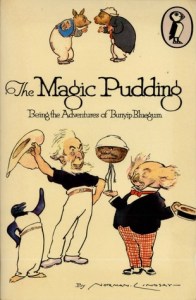 This is one of the stranger books I’ve ever read. I happened to see it on Project Gutenberg and downloaded it pretty much for the title alone, without knowing anything about it. It’s an obscure Australian children’s chapter book peopled largely by talking animals. Bill Barnacle (a human), Bunyip Bluegum (a koala bear) and Sam Sawnoff (a penguin) come into possession of a magical pudding by the name of Albert. Cut into the puddin’ as often as you like for servings of steak and kidney pudding and apple dumpling – or your choice from a limited range of other comforting savoury and sweet dishes – and he simply regenerates.
Naturally, others want to get their hands on this handy source of bounteous food, and the characters have to fend off would-be puddin’-snatchers such as a possum and a wombat and even take their case before a judge. The four chapters are called “Slices,” there are lots of songs reminiscent of Edward Lear, and the dialogue often veers into the farcical:
“‘You can’t wear hats that high, without there’s puddin’s under them,’ said Bill. ‘That’s not puddin’s,’ said the Possum; ‘that’s ventilation. He wears his hat like that to keep his brain cool.’”
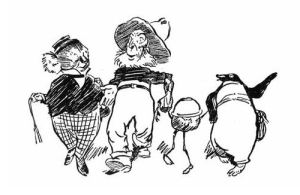
I did find it all amusing, but also inane, such that I don’t necessarily think it earns its place as a rediscovered classic. It didn’t help that I then borrowed a copy of the book from the library and found that it was a terribly reproduced “Alpha Editions” version in Comic Sans with distorted illustrations and no line breaks in the songs. (Public library) [169 pages]
Tree Glee: How and Why Trees Make Us Feel Better by Cheryl Rickman (2022)
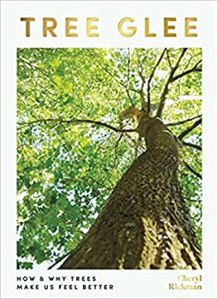 This is a small-format coffee table self-help book for nature lovers. It affirms something that many of us know intuitively: being around trees improves our mood and our health. Rickman looks at this from a psychological and a cultural perspective, and talks about her own love of trees and how it helped her get through difficult times in life such as when she lost her mum when she was a teenager. She includes some practical ideas for how to spend more time in nature and how we can fight to preserve trees. Unfortunately, a lot of the information was very familiar to me from books such as Rooted by Lyanda Lynn Haupt and Losing Eden by Lucy Jones – for a long time, forest bathing was one of the themes that kept recurring across my reading – such that this felt like an unnecessary rehashing, illustrated with stock photographs that are nice enough to look at but don’t add anything. [182 pages]
With thanks to Welbeck for the free copy for review.
Body Kintsugi by Senka Marić: A Peirene Press Novella (#NovNov22)
This is my eleventh translated novella from Peirene Press* and, in my opinion, their best yet. It’s an intense work of autofiction about two years of hellish treatment for breast cancer, all the more powerful due to the second-person narration that displaces the pain from the protagonist and onto the reader.
This is a story about the body. Its struggle to feel whole while reality shatters it into fragments. The gash goes from the right nipple towards your back, and after five centimetres makes a gentle curve up and continues to your armpit. It’s still fresh and red.
How does the story crumbling under your tongue and refusing to take on a firm shape begin to be told?
You knew on that day, sixteen years ago, when your mother’s diagnosis was confirmed, that you’d get cancer?
Or
Ever since that day, sixteen years ago, when your mother’s diagnosis was confirmed, that you’d never get cancer?
Both are equally true.
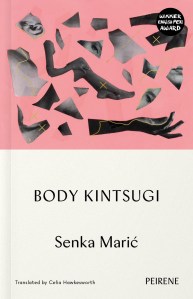 In 2014, just a couple of months after her husband leaves her – making her, in her early forties, a single mother to a son and a daughter – she discovers a lump in her right breast.
As she endures five operations, chemotherapy and adjuvant therapies, as well as endless testing and hospital stays, her mind keeps going back to her girlhood and adolescence, especially the moments when she felt afraid or ashamed. Her father, alcoholic and perpetually ill, made her feel like she was an annoyance to him.
Coming of age in a female body was traumatic in itself; now that same body threatens to kill her. Even as she loses the physical signs of femininity, she remains resilient. Her body will document what she’s been through: “Perfectly sculpted through all your defeats, and your victories. The scars scrawled on it are the map of your journey. The truest story about you, which words cannot grasp.”
As forthright as it is about the brutality of cancer treatment, the novella can also be creative, playful and even darkly comic.
Things you don’t want to think about:
Your children
Your boobs
Your cancer
Your bald head
Your death
Almost unbearable nausea delivers her into a new space: “Here, the only colours are black and red. You’re lost in a vast hotel. However hard you try, you can’t count the floors.” One snowy morning, she imagines she’s being visited by a host of Medusa-like women in long black dresses who minister to her. Whether it’s a dream or a medication-induced hallucination, it feels mystical, like she’s part of a timeless lineage of wise women. The themes, tone and style all came together here for me, though I can see how this book might not be for everyone. I have a college friend who’s going through breast cancer treatment right now. She’s only 40. She was diagnosed in the summer and has already had surgery and a few rounds of chemo. I wonder if this book is just what she would want to read right now … or the last thing she would want to think about. All I can do is ask.
(Translated from the Bosnian by Celia Hawkesworth) [165 pages] 
With thanks to Peirene Press for the free copy for review.
*Other Peirene Press novellas I’ve reviewed:
Mr. Darwin’s Gardener by Kristina Carlson
The Looking-Glass Sisters by Gøhril Gabrielsen
Ankomst by Gøhril Gabrielsen
Dance by the Canal by Kerstin Hensel
The Last Summer by Ricarda Huch
Snow, Dog, Foot by Claudio Morandini
Her Father’s Daughter by Marie Sizun
The Orange Grove by Larry Tremblay
The Man I Became by Peter Verhelst
Winter Flowers by Angélique Villeneuve
The Hero of This Book by Elizabeth McCracken (#NovNov22)
The hero of this book is Elizabeth McCracken’s mother, Natalie (1935–2018).
Is it autofiction or a bereavement memoir? Both and neither. It’s clear that the subject is her late mother, but less obvious that the first-person narrator must be McCracken or that the framework she has set up – an American writer wanders London, seeing the sights but mostly reminiscing about her mother – is other than fiction.
In August 2019, the writer rents a hotel room in Clerkenwell and plays the flaneuse around the city. Her tour takes in the London Eye, a ferry ride across the Thames from one Tate museum to another, a production of A Midsummer Night’s Dream, and so on. London had been a favourite destination for her and her mother, their final trip together falling just three years before. McCracken is so funny on the quirks of English terminology – and cuisine:
The least appetizing words in the world concern English food: salad cream, baps, butties, carvery, goujons.
Always, though, her thoughts return to her mother, whom she describes through bare facts and apt anecdotes. A twin born with cerebral palsy. A little disabled Jewish lady with unmanageable hair. An editor and writer based at Boston University. Opinionated, outspoken, optimistic; set in her ways. Delightful and maddening in equal measure – like all of us. (“All mothers are unknowable, being a subset of human beings.”)

The writer’s parents were opposites you never would have paired up. (Her father, too, is gone now, but his death is only an aside here.) Their declines were predictably hard to forecast. The New England family home has been emptied and is now on the market; an excruciating memory resurfaces from the auction of the contents.
As well as a tribute to a beloved mother and a matter-of-fact record of dealing with ageing parents and the aftermath of loss, this is a playful cross-examination of literary genres:
I hate novels with unnamed narrators. I didn’t mean to write one.
My mother was known to say with disgust, “Oh, those people who write memoirs about the worst thing that ever happened to them!” I said it, too. Some years later a terrible thing happened to me, and there was nothing to do but to write a memoir.
That was An Exact Replica of a Figment of My Imagination, about the stillbirth of her first child. As bereavement memoirs go, it’s one of the very best and still, 10 years after I read it, stands as one of my absolute favourite books, with some of the strongest last lines out there. McCracken has done it again, producing a book that, though very different in approach and style (this time reminding me most of Jenny Offill’s Weather), somehow achieves the same poignancy and earns a spot in my personal hall of fame, for the reasons you’ll see below…
The hero of this review is my mother, Carolyn (1947–2022).
I find it hard to believe that she’s been gone for three and a half weeks already. One week after her funeral, I was reading this book on my Kindle in London, waiting for a climate march to start. So many lines penetrated my numbness; all could pertain to my own mother:
[Of a bad time when her mother was in hospital with an infection] Those days were a dress rehearsal for my mother’s easy actual death seven years later.
My mother was a great appreciator. It was a pleasure to take her places, because she enjoyed herself so much and so audibly. That was her form of gratitude.
My mother all by herself was a holiday, very good at buying presents and exceptional at receiving them.
Quirky, somebody once called my mother. What a colossally condescending word: I hate it. It means you’ve decided that you don’t have to take that person seriously.
My mother’s last illness was a brain aneurysm.
The dead have no privacy left, is what I’ve decided.
The adrenaline of a busy week back in the States – meeting up with family members, writing and delivering a eulogy, packing up most of her belongings, writing thank-you notes, starting on paperwork (“sadmin”) – has long worn off and I’m back into my routines of work and volunteering and trying to make our house habitable as winter sets in. It would be easy to feel as if that middle-of-the-night phone call in late October, and everything that followed, was merely a vivid, horribly extended dream and that tomorrow she’ll pop back up in my inbox with some everyday gossip.
Reminders of her are everywhere if I look. Clothes she gave me, or I inherited from her, or she sent me the money to buy; a box of extra-strong Earl Grey teabags, left over from what we handed out along with memorial cards at the visitation; her well-worn Bible and delicate gold watch; the five boxes of journals in my sister’s basement – 150 volumes each carefully labelled with a number and date range. I have the first few and the last, incomplete one here with me now. What a trove of family stories, precious or painful, await me when I’m strong enough to read them.
With Thanksgiving coming up tomorrow – a whole holiday devoted to gratitude! nothing could more perfectly suit my mother – I’m grateful for all of those mementoes, and for the books that are getting me through. Starting with this one. [192 pages] (Read via Edelweiss)
A Contemporary Classic: Foster by Claire Keegan (#NovNov22)
This year for Novellas in November, Cathy and I chose to host one overall buddy read, Foster by Claire Keegan. I ended up reviewing it for BookBrowse. My full review is here and I also wrote a short related article on Keegan’s career and the unusual publishing history of this particular novella. Here are short excerpts from both:
Claire Keegan’s delicate, heart-rending novella tells the story of a deprived young Irish girl sent to live with rural relatives for one pivotal summer. Although Foster feels like a timeless fable, a brief mention of IRA hunger strikers dates it to 1981. It bears all the hallmarks of a book several times its length: a convincing and original voice, rich character development, an evocative setting, just enough backstory, psychological depth, conflict and sensitive treatment of difficult themes like poverty and neglect. I finished the one-sitting read in a flood of tears, hoping the Kinsellas’ care might be enough to protect the girl from the harshness she may face in the rest of her growing-up years. Keegan unfolds a cautionary tale of endangered childhood, also hinting at the enduring difference a little compassion can make. [128 pages]
 Foster is now in print for the first time in the USA (from Grove Atlantic), having had an unusual path to publication. It first appeared in the New Yorker in 2010, but in abridged form. Keegan told the Guardian she felt the condensed version “was very well done but wasn’t the whole story. It had some of the layers taken out, but I think the heart was the same.” She herself has described Foster as a long short story; “It is definitely not a novella. It doesn’t have the pace of a novella.” Faber & Faber first published it as a standalone volume in the UK in 2010. A 2022 Irish-language film version of Foster, called The Quiet Girl (which names the main character Cait) became a favorite on the international film festival circuit.
[Edited on December 1st]
A number of you joined us in reading Foster this month:
Lynne at Fictionophile
Karen at The Simply Blog
Davida at The Chocolate Lady’s Book Reviews
Tony at Tony’s Book World
Brona at This Reading Life
Janet at Love Books Read Books
Jane at Just Reading a Book
Kate at Books Are My Favourite and Best
Carol at Reading Ladies
(Cathy also reviewed it last year.)
Our bloggers have been impressed with the spare, precise writing style and the emotional heft of this little tale. Their only complaint? The slight ambiguity of the ending. Read it yourself to find out what you think! If you’d still like to take part in the buddy read and have an hour or two free, remember you can access the original version of the story here.
 Bookish Beck = Rebecca Foster. American transplant to England. Freelance proofreader and book reviewer.
 Bookish Beck