Review Catch-Up: Brackenbury, McLaren, Wellcome Collection
As usual, I have a big backlog of 2021–22 releases I’m working my way through. I’ll get there eventually! Today I’m reporting on a poetry collection about English ancestry and wildlife, a vision of post-doubt Christian faith, and a set of essays on connection to nature, specifically flora. (I also take a brief look at some autofiction that didn’t work for me.)
Thorpeness by Alison Brackenbury (2022)
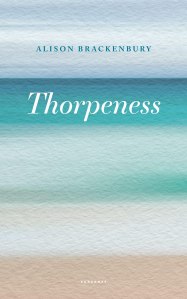 I’m familiar with Brackenbury from her appearance at New Networks for Nature in 2016 and her latest selected poems volume, Gallop. This, her tenth stand-alone collection, features abundant imagery of animals and the seasons, as in “Cucu” and “Postcard,” which marks the return of swifts. Alliteration is prominent, but there is also a handful of rhymes, like in “Fern.” Family history and the perhaps-idyllic rural underpin the verse set in Lincolnshire and Gloucestershire as Brackenbury searches for ancestral graves and delivers elegies.
I especially loved “Aunt Margaret’s Pudding,” a multipart poem about her grandmother’s life as a professional cook and then a mother of four, and “My Grandmother Waits for Christmas,” about a simple link between multiple generations’ Christmases: a sugar mouse. Caring for horses is another recurring theme; a 31-year-old blind pony receives a fond farewell.
There are also playful meetings between historical figures (“Purple Haze,” a dialogue between George Frideric Handel and Jimi Hendrix, who saw the composer’s ghost in their shared London home) and between past and contemporary, like “Thomas Hardy sends an email” (it opens “I need slide no confessions under doors”). “Charles Dickens at Home” was another favourite of mine. The title is the never-to-be-reached destination in the final poem, “Shingle.” A number of these poems were first broadcast on BBC Radio. 
With thanks to Carcanet Press for the e-copy for review.
Faith after Doubt: Why Your Beliefs Stopped Working and What to Do about It by Brian McLaren (2021)
I’ve explained before how McLaren’s books were pivotal to my spiritual journey, even before I attended the church he founded in Maryland. (I’ve also reviewed his previous book, God Unbound). His progressive, environmentalist theology is perfect for continuing searchers like me. At one of last year’s online Church Times Festival events, I saw him introduce the schema that underpins this book. He proposes that the spiritual life (not just Christian) has four stages that may overlap or repeat: simplicity, complexity, perplexity and harmony. The first stage is for new zealots who draw us–them divisions and are most concerned with orthodoxy. In the second, practitioners are more concerned with practicalities: what works, what makes life better. Perplexity is provoked by cynicism about injustice and hypocrisy, while harmony moves beyond dualism and into connection with other people and with nature.
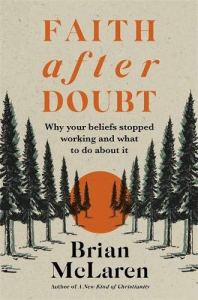 McLaren suggest that honest doubting, far from being a problem, might present an opportunity for changing in the right direction, getting us closer to the “revolutionary love” at the heart of the gospel. He shares stories from his own life, in and out of ministry, and from readers who have contacted him remotely or come up to him after events, caught in dilemmas about what they believe and whether they want to raise their children into religion. Though he’s fully aware of the environmental crisis and doesn’t offer false hope that we as a species will survive it, he isn’t ready to give up on religion; he believes that a faith seasoned by doubt and matured into an understanding of the harmony of all things can be part of a solution.
It’s possible some would find McLaren’s ideas formulaic and his prose repetitive. His point of view always draws me in and gives me much to think about. I’ve been stuck in perplexity for, ooh, 20 years? I frequently ask myself why I persist in going to church when it’s so boring and so often feels like a social club for stick-in-the-mud white people instead of a force for change. But books like this and Robin Wall Kimmerer’s Braiding Sweetgrass, my current soul food, encourage me to keep pursuing spiritual connection as a worthwhile path. I’ll be seeking out his forthcoming book (due out in May), Do I Stay Christian?, too.
Some favourite lines:
“only doubt can save the world. Only doubt will open a doorway out of hostile orthodoxies – whether religious, cultural, economic or political. Only through the difficult passage of doubt can we emerge into a new stage of faith and a new regenerative way of life. Everything depends on making this passage.”
“Among all the other things doubt is – loss, loneliness, crisis, doorway, descent, dissent [these are each the subject of individual chapters early on in the book] – it is also this: a crossroads. At the crossroads of doubt, we either become better or bitter. We either break down or break through. We become cynics or sages, hollow or holy. We choose love or despair.”
“Blessed are the wonderers, for they shall find what is wonderful. … Blessed are the doubters, for they shall see through false gods. Blessed are the lovers, for they shall see God everywhere.”
With thanks to Hodder & Stoughton for the free copy for review.
This Book Is a Plant: How to Grow, Learn and Radically Engage with the Natural World (2022)
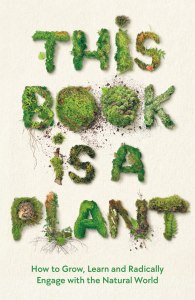 This collection of new essays and excerpts from previously published volumes accompanies the upcoming Wellcome Collection exhibition Rooted Beings (a collaboration with La Casa Encendida, Madrid, it’s curated by Bárbara Rodríguez Muñoz and Emily Sargent and will run from 24 March to 29 August). The overarching theme is our connection with plants and fungi, and the ways in which they communicate. Some of the authors are known for their nature writing – there’s an excerpt from Merlin Sheldrake’s Entangled Life, Jessica J. Lee (author of Turning and Two Trees Make a Forest) contributes an essay on studying mosses, and a short section from Kimmerer’s Braiding Sweetgrass closes the book – while others are better known in other fields, like Susie Orbach and Abi Palmer (author of Sanatorium).
I especially enjoyed novelist Rowan Hisayo Buchanan’s “Wilder Flowers,” which is about landscape painting, balcony gardening in pots, and what’s pretty versus what’s actually good for nature. (Wildflowers aren’t the panacea we are sometimes sold.) I was also interested to learn about quinine, which comes from the fever tree, in Kim Walker and Nataly Allasi Canales’ “Bitter Barks.” Sheila Watt-Cloutier’s essay on the Western influence on Inuit communities in northern Canada, reprinted from Granta, is one of the best individual pieces – forceful and with a unique voice, it advocates reframing the climate change debate in terms of human rights as opposed to the economy – but has nothing to do with plants specifically. There are also a couple of pieces that go strangely mystical, such as one on plant metaphors in the Kama Sutra. So, a mixed bag that jumbles science, paganism and postcolonial thought, but if you haven’t already encountered the Kimmerer and Sheldrake (or, e.g., Rooted by Lyanda Lynn Haupt and Losing Eden by Lucy Jones) you might find this a good primer. 
With thanks to Profile Books / Wellcome Collection for the free copy for review.
And one that really didn’t work for me; my apologies to the author and publisher.
I Love You but I’ve Chosen Darkness by Claire Vaye Watkins (2021)
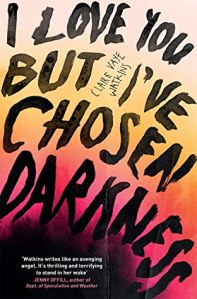 What a letdown after Gold Fame Citrus, one of my favourite novels of 2015. I’d also read Watkins’s debut short story collection, Battleborn, which won the Dylan Thomas Prize. Despite the amazing title and promising setup – autofiction that reflects on postpartum depression and her Mojave Desert upbringing as a daughter of one of the Manson Family cult members – this is indulgent, misguided, and largely unreadable.
A writer named Claire Vaye Watkins flies to Nevada to give a lecture and leaves her husband and baby daughter behind – for good? To commemorate her mother Martha, who died of an opiate overdose, she reprints Martha’s 1970s letters, which are unspeakably boring. I feel like Watkins wanted to write a memoir but didn’t give herself permission to choose nonfiction, so tried to turn her character Claire’s bad behaviour into a feminist odyssey of sexual freedom and ended up writing such atrocious lines as the below:
“I mostly boinked millennial preparers of beverages and schlepped to book festivals to hook up with whatever adequate rando lurked at the end of my signing line. This was what our open marriage looked like”
“‘Psychedelics tend to find me when I need them,’ she said, sending a rush of my blood to my vulva.”
Her vagina dentata (a myth, or a real condition?!) becomes a bizarre symbol of female power and rage. I could only bear to skim this. 
Some lines I liked:
Listen: I am a messenger from the future. I am you in ten years. Pay attention! Don’t fetishize marriage and babies. Don’t succumb to the axial tilt of monogamy! I don’t pretend to know the details of your…situation, but I guarantee you, you’re as free as you’ll ever be. Have sex with anyone you want. Enjoy the fact that it might happen any minute. You could have sex with a man, a woman, both—tonight!
I went from being raised by a pack of coyotes to a fellowship at Princeton where I sat next to John McPhee at a dinner and we talked about rocks and he wasn’t at all afraid of me.
With thanks to riverrun for the proof copy for review.
Would you be interested in reading one or more of these?
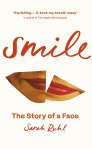
Smile: The Story of a Face by Sarah Ruhl
“Ten years ago, my smile walked off my face, and wandered out in the world. This is the story of my asking it to come back.”
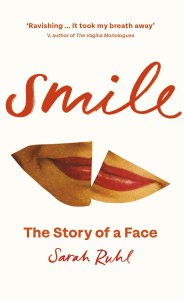 Sarah Ruhl is a lauded New York City playwright (Eurydice et al.). These warm and beautifully observed autobiographical essays stem from the birth of her twins and the slow-burning medical crises that followed. Shortly after the delivery, she developed Bell’s palsy, a partial paralysis of the face that usually resolves itself within six months but in rare cases doesn’t go away, and later discovered that she had celiac disease and Hashimoto’s disease, two autoimmune disorders. Having a lopsided face, grimacing and squinting when she tried to show expression on her paralyzed side – she knew this was a minor problem in the grand scheme of things, yet it provoked thorny questions about to what extent the body equates to our identity:
Can one experience joy when one cannot express joy on one’s face? Does the smile itself create the happiness? Or does happiness create the smile?
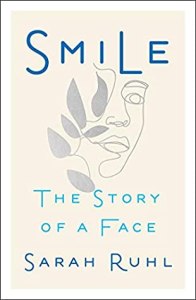
As (pretty much) always, I prefer the U.S. cover.
Women are accustomed to men cajoling them into a smile, but now she couldn’t comply even had she wanted to. Ruhl looks into the psychology and neurology of facial expressions, such as the Duchenne smile, but keeps coming back to her own experience: marriage to Tony, a child psychiatrist; mothering Anna and twins William and Hope; teaching and writing and putting on plays; and seeking alternative as well as traditional treatments (acupuncture and Buddhist meditation versus physical therapy; she rejected Botox and experimental surgery) for the Bell’s palsy. By the end of the book she’s achieved about a 70% recovery, but it did take a decade. “A woman slowly gets better. What kind of story is that?” she wryly asks. The answer is: a realistic one. We’re all too cynical these days to believe in miracle cures. But a story of graceful persistence, of setbacks alternating with advances? That’s relatable.
The playwright’s skills are abundantly evident here: strong dialogue and scenes; a clear sense of time, such that flashbacks to earlier life, including childhood, are interlaced naturally; a mixture of exposition and forceful one-liners. She is also brave to include lots of black-and-white family photographs that illustrate the before and after. While reading I often thought of Lucy Grealy’s Autobiography of a Face and Terri Tate’s A Crooked Smile, which are both about life with facial deformity after cancer surgery. I’d also recommend this to readers of Flesh & Blood by N. West Moss, one of my 2021 favourites, and Anne Lamott’s essays on facing everyday life with wit and spiritual wisdom.
More lines I loved:
imperfection is a portal. Whereas perfection and symmetry create distance. Our culture values perfect pictures of ourselves, mirage, over and above authentic connection. But we meet one another through the imperfect particular of our bodies.
Lucky the laugh lines and the smile lines especially: they signify mobility, duration, and joy.
My rating: 
With thanks to Bodley Head for the free copy for review.
Quick Thoughts on the Women’s Prize 2022 Longlist & My Reading Plans
Tuesday is my volunteering morning at the library, but at 9:45 I nipped onto one of the public access PCs so I could find out which books were on the Women’s Prize longlist. I just couldn’t wait until I got home! It’s a surprising list. Those who thought Rooney and Yanagihara would be snubbed were absolutely right. Debuts and historical fiction aren’t as plentiful as forecast, but there are two doorstoppers on there, plus another 450+-pager. And it is great to see a list that is half by BIPOC women.
Of my wishes and predictions, 1 and 2 were correct, so I got 3 right overall, with my wildcard choice being the only nominee I’ve read in full so far. I’m currently reading another 2 and have 3 more set to read – the moment I got the news I marched over to borrow a couple more.
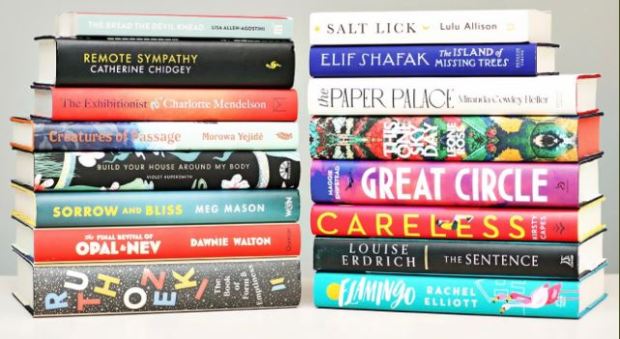
Fair play to the judges – I hadn’t even HEARD of these SIX titles:
- The Bread the Devil Knead by Lisa Allen-Agostini
- Salt Lick by Lulu Allison
- Careless by Kirsty Capes
- Remote Sympathy by Catherine Chidgey
- Flamingo by Rachel Elliott
- Creatures of Passage by Morowa Yejidé
I haven’t had a chance to look into these half-dozen, but will do so later on. I’m only likely to pick them up if a) others rave about them and/or b) they’re shortlisted.
Read:
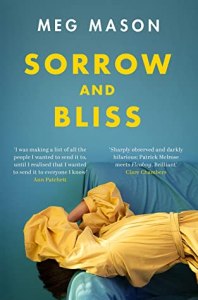 Sorrow and Bliss by Meg Mason: They say turning 40 can do weird things to you. Martha Friel gets a tattoo – so far, so stereotypical – but also blows up her marriage to Patrick, who’s been devoted to her since they were teens and met as family friends. In the year that follows, she looks back on a life that’s been defined by mental illness. As a young woman she was told she should never have children, but recently she met a new psychiatrist who gave her a proper diagnosis and told her motherhood was not out of the question. But is it too late for Martha and Patrick? Martha’s narration is a delight, wry and deadpan but also with moments of wrenching emotion. Her relationship with her sister, Ingrid, who gives birth to her first child on their aunt’s bathroom floor and eventually has four under the age of nine, is a highlight, and it’s touching to see how their mother and their aunt, both initially standoffish, end up being pillars of support. (My full review)
Currently reading:
 Build Your House Around My Body by Violet Kupersmith – I’m just over half done, and loving it. A weird and magical and slightly horror-tinged story set in Vietnam past and present, it builds on her debut ghost stories. Sort of plays the role Our Wives Under the Sea would have had on the longlist (though I dearly wish it could have been nominated as well).
 Set aside last year because it’s twee and annoying, but will now continue (ARGH + le sigh):
The Book of Form and Emptiness by Ruth Ozeki
 Own and will read soon (this was a treat to self with birthday money last year):
The Final Revival of Opal and Nev by Dawnie Walton
 Borrowed from library:
The Paper Palace by Miranda Cowley Heller
The Island of Missing Trees by Elif Shafak
 DNFed last year (twice); will not attempt again:
Great Circle by Maggie Shipstead
 On request from the library:
The Sentence by Louise Erdrich
The Exhibitionist by Charlotte Mendelson
Not interested in reading:
This One Sky Day by Leone Ross – I saw Ross speak about this and read an excerpt as part of a Faber showcase. I have a limited tolerance for magic realism and don’t think this appeals.
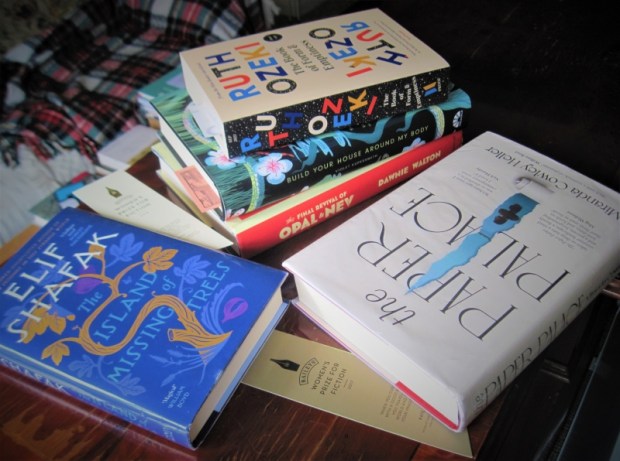
Above: my reading plans. Plenty to be getting on with before the shortlist announcement on 27th April!
What have you read, or might you read, from the longlist?
Solidarity with Ukraine
I don’t think I realized how serious the Russian invasion of Ukraine was until I heard a neighbour who is in the Royal Navy speak of it in the same breath as 9/11.
It is so hard to predict the end game. Wars can last years, even decades, and a situation like this could draw many more countries in. Like with Covid, there could be much longer term effects than we’re currently expecting.
I attended a candlelit vigil for Ukraine in the town square on Friday.
I donated to the Disasters Emergency Committee’s Ukraine Humanitarian Appeal at church yesterday morning, and will donate more. (Those in other countries might choose to send money through Doctors Without Borders, the Red Cross, or UNICEF.)
And I was prompted by a friend’s post to assemble this “Solidarity Stack” on Instagram over the weekend:
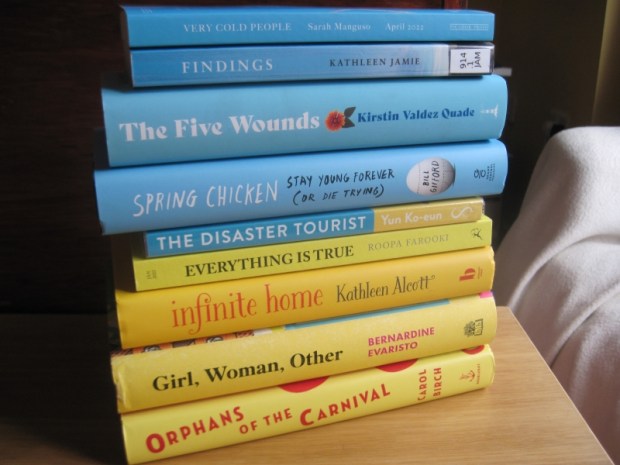
But I still feel like I have done so little.
I can hardly bear to keep up with the news; we don’t have a television or get a newspaper and I never listen to the radio, but I do see the headlines through my Facebook and Twitter feeds. Some heartening stories, but mostly horrible ones.
I wish I knew more about Ukraine. The only books I can think of that I’ve read by Ukrainians and Ukrainian Americans are Deaf Republic by Ilya Kaminsky, Death and the Penguin by Andrey Kurkov*, and My Dead Parents by Anya Yurchyshyn. There is a Ukraine setting to The Summer Guest by Alison Anderson, and Henry Marsh goes on medical missions to Ukraine in Do No Harm. Everything Is Illuminated by Jonathan Safran Foer is about his Ukrainian Jewish heritage (as is his mother Esther’s I Want You to Know We’re Still Here); The Reason Why by Cecil Woodham-Smith and The Rose of Sebastopol by Katharine McMahon are about the Crimean War.
Over the past couple of weeks a number of Ukrainian reading lists have come out, like this one from Book Riot. Ron Charles (of the Washington Post) also put me onto I Will Die in a Foreign Land by Kalani Pickhart, which is about the 2014 revolution in Ukraine (when Putin tried to annex the Crimea). A portion of her proceeds will be donated to the Ukrainian Red Cross.
*Apparently on a most wanted list for his vocal opposition to Putin; his work has been banned in Russia since 2014.
Any other thoughts on what we can do to help, understand, and work for the good?
Six Degrees of Separation: From The End of the Affair to Nutshell

 This month we begin with The End of the Affair by Graham Greene, a perfect excuse for me to review a novel I finished more than a year ago. This was only my second novel from Greene, after The Quiet American many a year ago. It’s subtle: low on action and majoring on recollection and regret. Mostly what we get are the bitter memories of Maurice Bendrix, a writer who had an affair with his clueless friend Henry’s wife Sarah during the last days of the Second World War. After she broke up with him, he remained obsessed with her and hired Parkis, a lower-class private detective, to figure out why. To his surprise, Sarah’s diaries revealed, not that she’d taken up with another man, but that she’d found religion. Maurice finds himself in the odd position of being jealous of … God? (More thoughts here.)
 #1 I asked myself if I’d ever read another book where someone was jealous of a concept rather than a fellow human being, and finally came up with one. I enjoyed Cooking as Fast as I Can by Cat Cora even though I wasn’t aware of this Food Network celebrity and restaurateur. Her memoir focuses on her Mississippi upbringing in a half-Greek adoptive family and the challenges of being gay in the South. Separate obsessions plagued her marriage; I remember at one point she gave her wife an ultimatum: it’s either me or the hot yoga.
 #2 Yoga for People Who Can’t Be Bothered to Do It by Geoff Dyer is one of my favourite-ever book titles. The title is his proposed idea for a self-help book, but … wait for the punchline … he couldn’t be bothered to write it. It’s a book of disparate travel essays, with him as the bumbling antihero, sluggish and stoned. This wasn’t one of his better books, but his descriptions and one-liners are always amusing (my review).
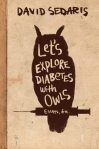 #3 Another book with a fantastic title that has nothing to do with the contents: Let’s Explore Diabetes with Owls by David Sedaris. Again, not my favourite of his essay collections (try Me Talk Pretty One Day or When You Are Engulfed in Flames instead), but he’s reliable for laughs.
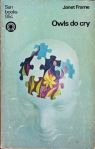 #4 No more about owls than the previous one; Owls Do Cry by Janet Frame is an autobiographical novel that tells the same story as her An Angel at My Table trilogy (but less compellingly): a hardscrabble upbringing in New Zealand and mental illness that led to incarceration in psychiatric hospitals. The title phrase is from Ariel’s song in The Tempest, which the Withers siblings learn at school. I’ve been ‘reading’ this for nearly a year and a half; really, it’s mostly been on the set-aside shelf for that time.
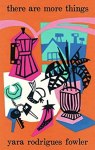 #5 Another title drawn from Shakespeare: there are more things by Yara Rodrigues Fowler is one of my Most Anticipated Books of 2022. It’s about a female friendship that links Brazil and London. I’m holding out hope for a review copy.
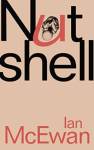 #6 Fowler’s title comes from Hamlet, which provides the plot for Ian McEwan’s Nutshell, one of his strongest novels of recent years. Within a few pages, I was captivated and utterly convinced by the voice of this contemporary, in utero Hamlet. Not even born and already a snob with an advanced vocabulary and a taste for fine wine, this foetus is a delight to spend time with. His captive state pairs perfectly with Hamlet’s existential despair, but also makes him (and us as readers) part of the conspiracy: even as he wants justice for his father, he has to hope his mother and uncle will get away with their crime; his future depends on it.
Where will your chain take you? Join us for #6Degrees of Separation! (Hosted on the first Saturday of each month by Kate W. of Books Are My Favourite and Best.)
Have you read any of my selections? Tempted by any you didn’t know before?
March Reading Plans
It’s beginning to look a lot like spring, with daffodils a-blooming, so I have amassed a set of appropriate reads and aim to report on them in two installments between April and May. I was already partway through Davidson’s novel, I’m getting stuck into the Fitzgerald and Knausgaard, and I hope to start the Woolf soon. I also have a review copy of Ghosts of Spring by Luis Carrasco.

Much as I tried with #FinishItFebruary, I still have some set-aside titles I couldn’t get through before the end of last month. It’s a good thing that (as I’ll never forget Damian Barr commenting) books are patient. I’ll reintroduce these to my stacks in the weeks to come, but NO MORE BOOKS can join them. I’m going to be strict with myself: keep going with a book or DNF it; no more limbo.
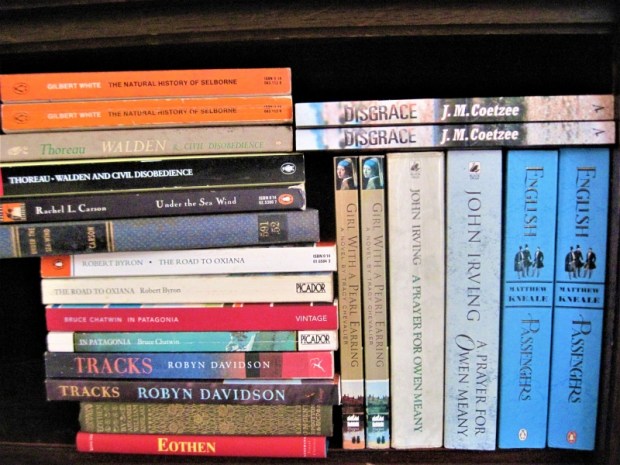
One of my informal goals for the rest of the year is to have a buddy read on the go with my husband at all times. I’d noticed that I happened to have duplicate copies of a couple of books, and then started to look out for extra copies at the free mall bookshop and Little Free Library in 2019–21, so I’ve ended up with 11 books in total: three nature classics, four travel books, three novels to reread, and one to read for the first time. Nature/travel is where our taste most often overlaps, but John Irving is our mutual favourite author and English Passengers is a novel we both loved. We’ll work out a schedule for 1–2 per month. He reads faster than I do (but has much less time to read overall), so we’ll agree on a time frame and chat either as we go or when we’ve both finished a book. Let me know if you fancy joining in with any of these.
Of course, it’s also Reading Ireland Month, hosted by Cathy of 746 Books, and I’ve earmarked these fiction options for the next few weeks. So far I’ve started Maggie O’Farrell’s debut novel. Plus I just got Wendy Erskine’s story collection Dance Move out from the library, and I have Colm Tóibín’s forthcoming poetry collection on my e-reader.
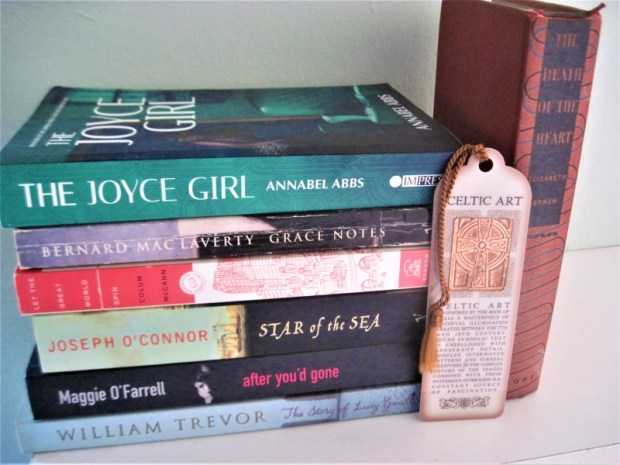
I’m currently reading A Portrait of the Artist as a Young Girl, a collection of autobiographical essays by Irish women writers that originated on the radio. I also got a jump-start in late February by reading these two short books by writers from Ireland:
Wild Child: A Journey through Nature by Dara McAnulty; illus. Barry Falls (2021)
 I’d expected this to be just a picture book. Instead, it’s a guided tour through four landscapes – the garden, the woods, the uplands, and a river – and it combines Robert Macfarlane-esque poetry (the rhyming and alliteration are reminiscent of The Lost Words books) with facts and crafts/activities. It starts small, with the birds a child in the UK might be able to see out their window, and then ventures further afield. There is a teaching focus, with information on species’ classification, life cycles and migrations. I also learned to recognize hazel catkins and flowers, and then identified them on our walk later the same day! But the main aim, I think, is simply to encourage wonder and inspire children to get outside and explore the nature around them. I liked the illustrations, but wish the birds hadn’t been given slightly googly eyes. (Public library)
To Star the Dark by Doireann Ní Ghríofa (2021)
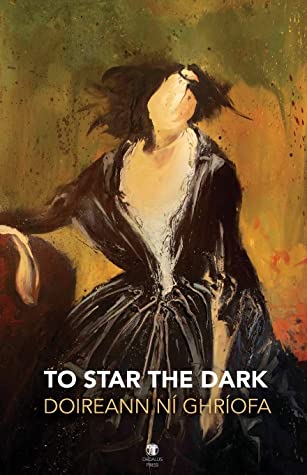 Like many, I discovered Ní Ghríofa through A Ghost in the Throat, a genre-bending work of feminist autofiction. I treated myself to a copy of this, her sixth poetry collection, as part of a Waterstones haul with my Christmas book token. One poem actually mentions Eibhlín Dubh, subject of A Ghost in the Throat, and the work as a whole has some of the same attributes, blending biographical portraits and historical reflection with autobiographical material.
“Two Daydreams” connects a teenager in a history exam with the generations leading back to the Famine. “An Experiment to Engineer an Inheritance of Fear” wonders if there is an inherited Irish trauma: “Give her terror in a meadow. / Bind her fear to a black potato. … / When exposed to the ancestral scent, great-grandchildren will show signs of distress.” A newborn’s stay in the NICU occasions “Seven Postcards from a Hospital” (originally addressed to Sara Baume, Ní Ghríofa reveals in the Notes). Marine biologist Maude Delap is the subject of one multi-part poem.
Sensual imagery abounds, and there are several incantatory spells, including the spring one below. My favourite poem was “Craquelure,” likening cracks in a fellow bus passenger’s phone screen to the weathering old paintings develop. (New purchase)
Women’s Prize 2022: Longlist Wishes vs. Predictions
Next Tuesday the 8th, the 2022 Women’s Prize longlist will be announced.
First I have a list of 16 novels I want to be longlisted, because I’ve read and loved them (or at least thought they were interesting), or am currently reading and enjoying them, or plan to read them soon, or am desperate to get hold of them.
Wishlist
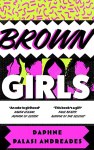
Brown Girls by Daphne Palasi Andreades
Our Wives Under the Sea by Julia Armfield (my review)
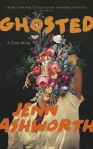
Ghosted by Jenn Ashworth (my review)
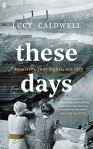
These Days by Lucy Caldwell

Damnation Spring by Ash Davidson – currently reading
Olga Dies Dreaming by Xóchitl González – currently reading
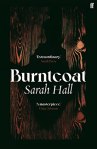
Burntcoat by Sarah Hall (my review)
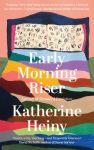
Early Morning Riser by Katherine Heiny (my review)


Pure Colour by Sheila Heti
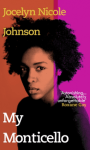
My Monticello by Jocelyn Nicole Johnson (my review)
Devotion by Hannah Kent – currently reading
Build Your House Around My Body by Violet Kupersmith – currently reading



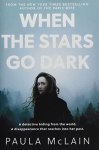
When the Stars Go Dark by Paula McLain (my review)
The Swimmers by Julie Otsuka – review coming to Shiny New Books on Thursday
Brood by Jackie Polzin (my review)
The Performance by Claire Thomas (my review)


Then I have a list of 16 novels I think will be longlisted mostly because of the buzz around them, or they’re the kind of thing the Prize always recognizes (like danged GREEK MYTHS), or they’re authors who have been nominated before – previous shortlistees get a free pass when it comes to publisher submissions, you see – or they’re books I might read but haven’t gotten to yet.
Predictions
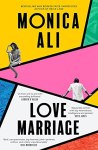
Love Marriage by Monica Ali
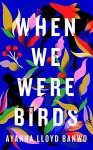
When We Were Birds by Ayanna Lloyd Banwo
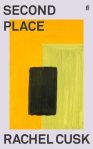
Second Place by Rachel Cusk (my review)
Matrix by Lauren Groff

Free Love by Tessa Hadley
The Other Black Girl by Zakiya Dalila Harris (my review)
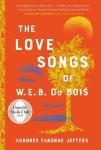
The Love Songs of W.E.B. Du Bois by Honorée Fanonne Jeffers
The Fell by Sarah Moss (my review)



My Phantoms by Gwendoline Riley
Beautiful World, Where Are You by Sally Rooney (my review)
Ariadne by Jennifer Saint
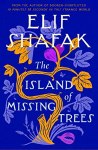
The Island of Missing Trees by Elif Shafak


Great Circle by Maggie Shipstead
Pandora by Susan Stokes-Chapman
Still Life by Sarah Winman
To Paradise by Hanya Yanagihara – currently reading


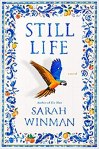

*A wildcard entry that could fit on either list: Sorrow and Bliss by Meg Mason (my review).*

Okay, no more indecision and laziness. Time to combine these two into a master list that reflects my taste but also what the judges of this prize generally seem to be looking for. It’s been a year of BIG books – seven of these are over 400 pages; three of them over 600 pages even – and a lot of historical fiction, but also some super-contemporary stuff. Seven BIPOC authors as well, which would be an improvement over last year’s five and closer to the eight from two years prior. A caveat: I haven’t given thought to publisher quotas here.
MY WOMEN’S PRIZE FORECAST
Love Marriage by Monica Ali
Our Wives Under the Sea by Julia Armfield
When We Were Birds by Ayanna Lloyd Banwo
Olga Dies Dreaming by Xóchitl González
Matrix by Lauren Groff
The Love Songs of W.E.B. Du Bois by Honorée Fanonne Jeffers
Devotion by Hannah Kent
Build Your House Around My Body by Violet Kupersmith
The Fell by Sarah Moss
My Phantoms by Gwendoline Riley
Beautiful World, Where Are You by Sally Rooney
Ariadne by Jennifer Saint
The Island of Missing Trees by Elif Shafak
Great Circle by Maggie Shipstead
Pandora by Susan Stokes-Chapman
To Paradise by Hanya Yanagihara
What do you think?
See also Laura’s, Naty’s, and Rachel’s predictions (my final list overlaps with theirs on 10, 5 and 8 titles, respectively) and Susan’s wishes.
Just to further overwhelm you, here are the other 62 eligible 2021–22 novels that were on my radar but didn’t make the cut:
In Every Mirror She’s Black by Lola Akinmade Åkerström
Violeta by Isabel Allende
The Leviathan by Rosie Andrews
Somebody Loves You by Mona Arshi
The Stars Are Not Yet Bells by Hannah Lillith Assadi
The Manningtree Witches by A.K. Blakemore
Mary Jane by Jessica Anya Blau
Defenestrate by Renee Branum
Songs in Ursa Major by Emma Brodie
Assembly by Natasha Brown
We Were Young by Niamh Campbell
The Raptures by Jan Carson
A Very Nice Girl by Imogen Crimp
Scary Monsters by Michelle de Kretser
Empire of Wild by Cherie Dimaline
Infinite Country by Patricia Engel
Love & Saffron by Kim Fay
Mrs March by Virginia Feito
Booth by Karen Joy Fowler
Tides by Sara Freeman
I Couldn’t Love You More by Esther Freud
Of Women and Salt by Gabriela Garcia
Libertie by Kaitlyn Greenidge
Listening Still by Anne Griffin
The Twyford Code by Janice Hallett
Mrs England by Stacey Halls
Three Rooms by Jo Hamya
The Giant Dark by Sarvat Hasin
The Paper Palace by Miranda Cowley Heller
Violets by Alex Hyde
Fault Lines by Emily Itami
Beasts of a Little Land by Juhea Kim
Woman, Eating by Claire Kohda
Notes on an Execution by Danya Kukafka
Paul by Daisy Lafarge
Circus of Wonders by Elizabeth Macneal
The Truth About Her by Jacqueline Maley
Wahala by Nikki May
Once There Were Wolves by Charlotte McConaghy
Cleopatra and Frankenstein by Coco Mellors
The Exhibitionist by Charlotte Mendelson
Chouette by Claire Oshetsky
The Book of Form and Emptiness by Ruth Ozeki
The Anthill by Julianne Pachico
The Vixen by Francine Prose
The Five Wounds by Kirstin Valdez Quade
Malibu Rising by Taylor Jenkins Reid
Cut Out by Michèle Roberts
This One Sky Day by Leone Ross
Secrets of Happiness by Joan Silber
Cold Sun by Anita Sivakumaran
Hear No Evil by Sarah Smith
Oh William! by Elizabeth Strout
Animal by Lisa Taddeo
Daughter of the Moon Goddess by Sue Lynn Tan
Lily by Rose Tremain
French Braid by Anne Tyler
We Run the Tides by Vendela Vida
I Love You but I’ve Chosen Darkness by Claire Vaye Watkins
Black Cake by Charmaine Wilkerson
The Dictionary of Lost Words by Pip Williams
Nightbitch by Rachel Yoder
Love Your Library, February 2022
We’re now onto the fifth month of the Love Your Library feature. A big thank you to…
- “The Fab Four of Cley,” who run a Little Free Library in their area. They found last month’s post and gave me a link to a bilingual piece they wrote about a book sale they ran at their local church, with the thousands of books they’d amassed. Heavenly!
- Margaret of From Pyrenees to Pennines for her lovely account (with photos!) of a visit to the Central Public Library of Valencia.
- Mary R. of Bibliographic Manifestations for her post on interlibrary loans.
Blogger Laila of Big Reading Life also mentioned ILLs recently. I know some states and provinces are able to offer this service for free. When I lived in Maryland, statewide ILLs were free and I took full advantage of it. It’s how I binged on books by Marcus Borg, Frederick Buechner, Jan Morris, and many others during the year between my Master’s degree and moving back to England permanently. For my thesis research I’d had the University of Leeds’ ILL team get me an obscure Victorian novel on microfiche all the way from Australia. I also cheekily put through a few university ILLs for myself while I worked for King’s College London’s library system. Where I live now in the UK, a public library ILL costs £3 per book, so isn’t worth doing; you might as well find a secondhand copy at that price. I do miss the freedom of knowing that I could borrow (almost) anything I want.
Two funny moments from my recent library volunteering: I found Mrs Dalloway shelved under D, and an M. C. Beaton “Agatha Raisin” mystery shelved under R!
Read from the library recently:
 The Jasper & Scruff series by Nicola Colton: Having insisted I don’t like sequels or series … I do sometimes make exceptions, like I did for these early reader books (meant for, I don’t know, maybe ages 7 to 9?). I was drawn by the grey and white cat with a bowtie – that’s Jasper, a dapper fellow who likes the fine things in life and desperately wants to be admitted to the Sophisticats’ club, until he realizes they’re snooty and just plain mean. Whereas Scruff the puppy, though he makes life messy, is loving and fun. I liked the sequels more than the original because they build on each other, bringing back characters from the earlier books for a pirate-themed scavenger hunt, a reality TV-style talent show, and bookshop and diner ventures. There are good lessons about being honest and fair, even if others are cheating to outcompete you, and being yourself instead of putting on airs. I also like the menagerie of mammals: not just dogs and cats, but African megafauna, too.
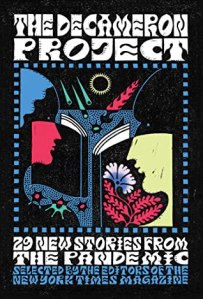 The Decameron Project: 29 New Stories from the Pandemic (originally published in The New York Times): Creative responses to Covid-19, ranging from the prosaic to the fantastical. I appreciated the mix of authors, some in translation and some closer to genre fiction than lit fic. Standouts were by Victor LaValle (NYC apartment neighbours; magic realism), Colm Tóibín (lockdown prompts a man to consider his compatibility with his boyfriend), Karen Russell (time stops during a bus journey), Rivers Solomon (an abused girl and her imprisoned mother get revenge), Matthew Baker (a feuding grandmother and granddaughter find something to agree on), and John Wray (a relationship starts up during quarantine in Barcelona). The best story of all, though, was by Margaret Atwood.
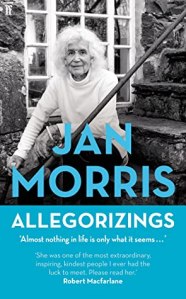 Allegorizings by Jan Morris: Disparate, somewhat frivolous essays written mostly pre-2009, or in 2013, and kept in trust by her publisher for publication as a posthumous collection, so strangely frozen in time. She was old but not super-old; thinking vaguely about death, but not at death’s door. The organizing principle, that everything can be understood on more than one level and so we must think beyond the literal, is interesting but not particularly applicable to the contents. There are mini travel pieces and pen portraits, but I got more out of the explorations of concepts (maturity, nationalism) and universal experiences (being caught picking one’s nose, sneezing).
 The Priory by Dorothy Whipple (read for book club): A cosy between-the-wars story, pleasant to read even though some awful things happen, or nearly happen. Like in Downton Abbey and the Cazalet Chronicles, there’s an upstairs/downstairs setup that’s appealing. It was interesting to watch how my sympathies shifted. The Persephone afterword provides useful information about the Welsh house (where Whipple stayed for a month in 1934) and family that inspired the novel. Whipple is a new author for me and I’m sure the rest of her books would be just as enjoyable, but I would only attempt another if it was significantly shorter than this one.
Borrowed since last month:

My latest university library book haul. Paradise by Toni Morrison is to read with my women’s classics book club subgroup in mid-April. Findings is to reread just because Kathleen Jamie is amazing. The other three are in preparation for the 1954 Club coming up in April.

Do share a link to your own post in the comments, and feel free to use the above image. I’ve co-opted a hashtag that is already popular on Twitter and Instagram: #LoveYourLibrary.
Here’s a reminder of my ideas of what you might choose to post (this list will stay up on the project page):
- Photos or a list of your latest library book haul
- An account of a visit to a new-to-you library
- Full-length or mini reviews of some recent library reads
- A description of a particular feature of your local library
- A screenshot of the state of play of your online account
- An opinion piece about library policies (e.g. Covid procedures or fines amnesties)
- A write-up of a library event you attended, such as an author reading or book club.
If it’s related to libraries, I want to hear about it!
Book Serendipity, January to February 2022
This is a bimonthly feature of mine. I call it Book Serendipity when two or more books that I read at the same time or in quick succession have something in common – the more bizarre, the better. Because I usually 20–30 books on the go at once, I suppose I’m more prone to such incidents. (I’ve realized that, of course, synchronicity is really the more apt word, but this branding has stuck.) I always like hearing about your bookish coincidences, too!
The following are in roughly chronological order.
- The author takes Valium to cope with fear of flying in two memoirs I read at the same time, I Came All This Way to Meet You by Jami Attenberg and This Boy We Made by Taylor Harris.


- The fact that the Spanish brought wild horses to the USA is mentioned in the story “The Team” by Tommy Orange (in The Decameron Project) and the poetry collection Rise and Float by Brian Tierney – this also links back to a book I reread in late 2021, Misty of Chincoteague by Marguerite Henry.
- There are roaches in a New York City apartment in I Came All This Way to Meet You by Jami Attenberg and the story “Other People’s Lives” in Loss of Memory Is Only Temporary by Johanna Kaplan.
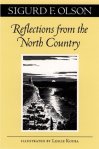
- The same Dostoevsky passage from The Brothers Karamazov, about loving everything (“Love all the earth, every ray of God’s light, every grain of sand or blade of grass, every living thing. If you love the earth enough, you will know the divine mystery” and so on), is quoted in Faith after Doubt by Brian McLaren and Reflections from the North Country by Sigurd Olson.

- A description of nicotine-stained yellow fingers in What I Wish People Knew About Dementia by Wendy Mitchell, The Cure for Sleep by Tanya Shadrick, and Free by Lea Ypi.
- Joni Mitchell’s music is mentioned in The Reactor by Nick Blackburn and The Cure for Sleep by Tanya Shadrick, two memoirs I was reading at the same time.
- From one summer camp story to another … I happened to follow up The Interestings by Meg Wolitzer with Honor Girl by Maggie Thrash.
- Audre Lorde’s definition of the erotic is quoted in Body Work by Melissa Febos and Heaven Is a Place on Earth by Adrian Shirk, both of which are March 15, 2022 nonfiction releases I’ve reviewed for Shelf Awareness.


- The 2017 white supremacist terrorist attack in Charlottesville, Virginia is mentioned in This Boy We Made by Taylor Harris (who lives there), Faith after Doubt by Brian McLaren (who was part of the clergy counterprotest group that day), and Heaven Is a Place on Earth by Adrian Shirk (she went there for a literary event a few months later).
- The Salvador Dalí painting The Persistence of Memory (that’s the one with the melting clock) is described in The Reactor by Nick Blackburn and This Boy We Made by Taylor Harris.
- On the same day, I came across the fact that Mary Shelley was pregnant while she wrote Frankenstein in two books: Linea Nigra by Jazmina Barrera and Smile by Sarah Ruhl.

- The fact that cysts in female organs can contain teeth comes up in Heaven Is a Place on Earth by Adrian Shirk and I Love You but I’ve Chosen Darkness by Claire Vaye Watkins.
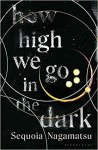
- Reading two novels by Japanese-American authors who grew up in Hawaii at the same time: How High We Go in the Dark by Sequoia Nagamatsu and To Paradise by Hanya Yanagihara.
- Twins are everywhere! Including, just in a recent reading pile, in Hands by Lauren Brown (she’s a twin, so fair enough), Birth Notes by Jessica Cornwell, The Snow Collectors by Tina May Hall, Smile by Sarah Ruhl (this and the Cornwell are memoirs about birthing twins, so also fair enough), Ordinary Love by Jane Smiley, and The Priory by Dorothy Whipple. For as uncommon as they are in real life, they turn up way too often in fiction.
- Bell’s palsy AND giving birth to twins are elements in Birth Notes by Jessica Cornwell and Smile by Sarah Ruhl.
- There’s a no-nonsense maternity nurse in Birth Notes by Jessica Cornwell and The Priory by Dorothy Whipple.


- U.S. West Coast wolves (a particular one in each case, known by a tracking number) are the subject of a poem in Postcolonial Love Poem by Natalie Diaz and The Necessity of Wildfire by Caitlin Scarano.
- Herons appear and/or have metaphorical/symbolic meaning in Thorpeness by Alison Brackenbury, What Willow Says by Lynn Buckle, Maggie Blue and the Dark World by Anna Goodall, and The Priory by Dorothy Whipple.

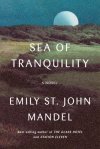
- There’s a character named Edwin in Booth by Karen Joy Fowler and Sea of Tranquility by Emily St. John Mandel.

- The use of “hoard” where it should be “horde” in Maggie Blue and the Dark World by Anna Goodall and Acts of Desperation by Megan Nolan – both errors were encountered in the same evening.
- I read about Lindisfarne in Jini Reddy’s essay in Women on Nature (ed. Katharine Norbury) and The Interior Silence by Sarah Sands in the same evening.
- “Flitting” as a synonym for moving house in Thorpeness by Alison Brackenbury and Nature Cure by Richard Mabey.

- A brother named Paul in Tides by Sara Freeman and Sea of Tranquility by Emily St. John Mandel.
- A woman knows her lover is on the phone with his ex by his tone of voice in Tides by Sara Freeman and Acts of Desperation by Megan Nolan.
- In two novels I’ve read so far this year – but I won’t say which ones as it’s a spoiler – the big reveal, towards the very end, is that a woman was caught breastfeeding someone who was not her baby and it caused a relationship-destroying rupture.
- Reading a second memoir this year where the chapters are titled after pop songs: Dear Queer Self by Jonathan Alexander (for a Foreword review) and now This Will Only Hurt a Little by Busy Philipps.


- A second short novel entitled The Swimmers this year: the first was Julie Otsuka’s, recently reviewed for Shiny New Books; a proof copy is on the way to me of Chloe Lane’s, coming out from Gallic Books in May.
- Reading a second memoir this year whose author grew up in the Chicago suburbs of Illinois (Arlington Heights/Buffalo Grove vs. Oak Park): I Came All This Way to Meet You by Jami Attenberg and This Will Only Hurt a Little by Busy Philipps.
- The linea nigra (a stripe of dark hair down a pregnant woman’s belly) provides the title for Linea Nigra by Jazmina Barrera and is also mentioned in Birth Notes by Jessica Cornwell.
 The famous feminist text Our Bodies, Ourselves is mentioned in Birth Notes by Jessica Cornwell and I Love You but I’ve Chosen Darkness by Claire Vaye Watkins.
- Childbirth brings back traumatic memories of rape in Birth Notes by Jessica Cornwell and This Will Only Hurt a Little by Busy Philipps.
What’s the weirdest reading coincidence you’ve had lately?
Acts of Desperation by Megan Nolan
I read this after its shortlisting for the Charlotte Aitken Trust/Sunday Times Young Writer of the Year Award, as well as its longlisting for the Dylan Thomas Prize. It is a truth universally acknowledged that any novel by a young Irish woman will only and ever be compared to Sally Rooney … but that works in Nolan’s favour. I would certainly call this a readalike to Rooney’s first two books, but there’s an added psychological intensity here.
 A young woman reflects on an obsessive affair that she began in Dublin in April 2012. Was it love at first sight for her with Ciaran? No, actually, it was more like pity: “The first time I saw him, I pitied him terribly,” the novel opens. “I stood in that gallery and felt not only sexual attraction (which I was aware of, dimly, as background noise) but what I can only describe as grave and troubling pity.” That doesn’t bode well now, does it?
Ciaran is an insecure, hot-tempered magazine writer. He’s also still half in love with his ex-girlfriend, Freja, whom he left behind in Copenhagen, and our narrator (an underemployed would-be writer) feels she has to fight for his attention and affections. She has body issues and drinks too much, but she’s addicted to love, and sex specifically, as much as to alcohol.
A central on-again, off-again relationship is hardly a new subject for fiction, but I admired Nolan’s work for its sharp insights into the psyche of an emotionally fragile young woman whose frantic search for someone to value her leads her into masochistic behaviours. Brief looks back at the events of 2012–14 from a present storyline set in Athens in 2019 create helpful hindsight yet reveal how much she still struggles to affirm her self-worth.
The short chapters are like freeze-frames, concentrated bursts of passion that will resonate even if the characters’ specific situations do not. And it’s not all despair and damage; there are beautiful moments here, too, like the sweet habit they had of buying an apple each and then just walking around town for a cheap outing – the source of the cover image. I marked passage after passage, but will share just a couple:
How impoverished my internal life had become, the scrabbling for a token of love from somebody who didn’t want to offer it.
I was taking away his ability to live without me easily. I subbed his rent, I cooked his food, I cleaned his clothes, so that one day soon there would come a time when he could no longer remember how he had ever done without me, and could not imagine doing so ever again.
Even if you’re burnt out on what pace amore libri blogger Rachel dubs “disaster woman” books, make an exception for this potent story of self-sabotage and -recovery. Especially if you’re a fan of Emma Jane Unsworth, The Inland Sea by Madeleine Watts, and, yes, Sally Rooney. (Also reviewed by Annabel.)
My rating:
With thanks to FMcM Associates and Jonathan Cape for the free copy for review.
The rest of the shortlist:
After about 50 pages I DNFed Here Comes the Miracle by Anna Beecher, which had MA-course writing-by-numbers and seemed to be building towards When God Was a Rabbit mawkishness (how on earth did it get shortlisted?!).
See my mini reviews of the other three nominees here.
I am still rooting for Cal Flyn to win for her excellent and perennially relevant travel book, Islands of Abandonment.
Tonight there’s a shortlist readings event taking place in London. If anyone goes, do share photos! The award will be given tomorrow, the 24th. I’ll look out for the announcement.
 Bookish Beck = Rebecca Foster. American transplant to England. Freelance proofreader and book reviewer.
 Bookish Beck