January Releases, Part III: Taylor Harris, Cathy Rentzenbrink & Tanya Shadrick
Rounding off my three-part look at some of the month’s new releases with two memoirs plus a memoir-writer’s self-help guide today. (Can you tell I’m a memoir junkie?) Topics range from medical mysteries and covert racism to a reclaiming of life after a near-death experience, but these three nonfiction works by women are linked by the determination to overcome self-doubt.
This Boy We Made: A Memoir of Motherhood, Genetics, and Facing the Unknown by Taylor Harris
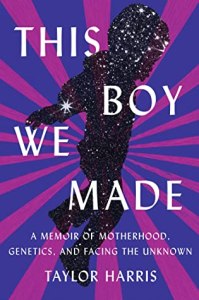 One morning, Taylor Harris and her husband (an African American family based in Charlottesville, Virginia) found their 22-month-old son Christopher, nicknamed “Tophs,” awake but unresponsive in his crib. In the years that followed, she and his doctors looked for answers as to why his body couldn’t regulate his blood sugar levels, sometimes leading to seizures, and to why his speech and mental processing remained delayed. All their tests and theories have never amounted to a conclusive diagnosis. This was a book that repeatedly surprised me. I’d assumed it would be exclusively about the medical mystery of Tophs’s physical and intellectual disability. But Harris elegantly weaves in a lot of other themes, too: mental illness, her own physical concerns (a BRCA2 mutation), racism, faith, and advocating for her children’s health and education. (Full review at BookBrowse.)
Write It All Down: How to put your life on the page by Cathy Rentzenbrink
Cathy Rentzenbrink is a lovely human being, and I’ve always appreciated her enthusiastic support of books. I’ve read all of her work even though I’ve been disappointed with her last few releases. There are so many writing guides out there – including several on memoir-writing specifically – that the first question to ask about one is, does it offer anything new? For me, this one doesn’t. In fact, it’s more of a therapy session than a practical writing guide.
 The undemanding prose slides right down, but 60 pages in (at the end of Part One, “Preparation”) I realized all we’d had thus far was enumerating and countering the hang-ups of unconfident, procrastinating would-be writers. The rest of the book does then get into the nitty-gritty of producing a first draft (“Excavation”) of a life story and editing it into a more polished form. Rentzenbrink peppers in little tricks to keep oneself at the desk, like setting a timer or micro-goals, writing a section in the form of a letter, and dredging up sensory details. Most of the mini chapters are just a couple of pages. Several end with a series of prompts. I’m notorious for skipping the application questions in self-help books, but I’d be interested to hear if other readers have actually gone through these exercises and found them helpful.
I’m so familiar with the author’s own story from her three autobiographical works that I was less than patient about encountering certain incidents again here – though I was intrigued to learn that she gave up alcohol in the recent past after realizing that she was a problem drinker. I’ve also read most of the material in her Further Reading list; all told, I didn’t feel this book offered me much, as a lay reader or a maybe-some-day memoirist. But it seems to have been enormously popular among critics and readers (its average Goodreads rating is 4.38), so clearly a lot of people have been finding Rentzenbrink’s down-to-earth approach reassuring.
With thanks to Emma Finnigan PR and Bluebird for the proof copy for review.
The Cure for Sleep: Memoir of a Late-Waking Life by Tanya Shadrick
From my Most Anticipated list. Shadrick hangs around the fringes of nature writing cliques on Twitter, so I expected this to have more of a nature/travel element. Instead, it bears a fairy tale ambience, of a little girl lost in the woods and craving freedom; of a sleepwalking woman deciding to live more deliberately. It opens with a near-death experience: Shadrick, new mother to a son conceived after infertility treatment, suffered a severe haemorrhage after the placenta tore an artery and was rushed to hospital for emergency surgery.
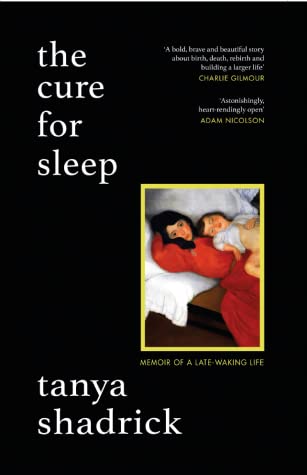 From this point she returns to the beginning of her life and proceeds chronologically, pausing at joyful or traumatic moments. Her childhood feels like the key to understanding everything else: her father left when she was a baby; her mother, all too aware of being of lower class, was driven to improve herself. Shadrick wanted her mother all to herself, at the same time as she felt trapped by her. She injured herself jumping off an outhouse roof in protest at her mother’s new boyfriend, who became her stepfather. At university she reacted against her upbringing in predictable ways, failing her first year and having an abortion. Even once happily married, she kept unconsciously searching for surrogate father (older male) figures.
After the postnatal operation, she felt a need to escape – by suicide if necessary – yet forced herself to stay, make connections in her town and be present for her children. But she remained a free spirit, swimming and writing a mile-long scroll as public performance art. Her work with hospice patients, recording their memories, qualified her to edit Lynne Roper’s wild swimming diaries into a Wainwright Prize-longlisted book.
Awakening versus sleep is the figurative framework for the memoir, with a feminist insistence on freedom and self-fulfilment at the same time as being a mother. This is an unusual book – at times overwritten and too deliberately moulded into tropes as a rebuttal to randomness, even though, looking back, I can’t decipher a coherent plot to the events – that reminded me most of Free Woman by Lara Feigel and I Am, I Am, I Am by Maggie O’Farrell.
With thanks to W&N for the free copy for review.
Does one of these books appeal to you?
January Releases II: Nick Blackburn, Wendy Mitchell & Padraig Regan
The January new releases continue! I’ll have a final batch of three tomorrow. For today, I have an all-over-the-place meditation masquerading as a bereavement memoir, an insider’s look at what daily life with dementia is like, and a nonbinary poet’s debut.
The Reactor: A Book about Grief and Repair by Nick Blackburn
I’ll read any bereavement memoir going, and the cover commendations from Olivia Laing and Helen Macdonald made this seem like a sure bet. Unfortunately, this is not a bereavement memoir but an exercise in self-pity and free association. The book opens two weeks after Blackburn’s father’s death – “You have died but it’s fine, Dad.” – and proceeds in titled fragments of one line to a few paragraphs. Blackburn sometimes addresses his late father directly, but more often the “you” is himself. He becomes obsessed with the Chernobyl disaster (even travelling to Belarus), which provides the overriding, and overstretched, title metaphor – “the workings of grief are unconscious, invisible. Like radiation.”
 From here the author indulges in pop culture references and word association: Alexander McQueen’s fashion shows, Joni Mitchell’s music, Ingmar Bergman’s films, Salvador Dalí’s paintings and so on. These I at least recognized; there were plenty of other random allusions that meant nothing to me. All of this feels obfuscating, as if Blackburn is just keeping busy: moving physically and mentally to distract from his own feelings. A therapist focusing on LGBT issues, he surely recognizes his own strategy here. This seems like a diary you’d keep in a bedside drawer (there’s also the annoyance of no proper italicization or quotation marks for works of art), not something you’d try to get published as a bereavement memoir.
The bigger problem is there is no real attempt to convey a sense of his father. It would be instructive to go back and count how many pages actually mention his father. One page on his death; a couple fleeting mentions of his mental illness being treated with ECT and lithium. Most revealing of all, ironically, is the text of a postcard he wrote to his mother on a 1963 school trip to Austria. “I want to tell you more about my father, but honestly I feel like I hardly knew him. There was always his body and that was enough,” Blackburn writes. Weaselling out of his one task – to recreate his father for readers – made this an affected dud.
With thanks to Faber for the free copy for review.
What I Wish People Knew About Dementia: From Someone Who Knows by Wendy Mitchell
I loved Mitchell’s first book, Somebody I Used to Know. She was diagnosed with early-onset Alzheimer’s at age 58 in 2014. This follow-up, too, was co-written with Anna Wharton (they have each written interesting articles on their collaboration process, here and here). Whereas her previous work was a straightforward memoir, this has more of a teaching focus, going point by point through the major changes dementia causes to the senses, relationships, communication, one’s reaction to one’s environment, emotions, and attitudes.
 I kept shaking my head at all these effects that would never have occurred to me. You tend not to think beyond memory. Food is a major issue for Mitchell: she has to set iPad reminders to eat, and chooses the same simple meals every time. Pasta bowls work best for people with dementia as they can get confused trying to push food around a plate. She is extra sensitive to noises and may have visual and olfactory hallucinations. Sometimes she is asked to comment on dementia-friendly building design. For instance, a marble floor in a lobby looks like water and scares her, whereas clear signage and bright colours cheer up a hospital trip.
The text also includes anonymous input from her friends with dementia, and excerpts from recent academic research on what can help. Mitchell and others with Alzheimer’s often feel written off by their doctors – her diagnosis appointment was especially pessimistic – but her position is that the focus should be on what people can still do and adaptations that will improve their everyday lives. Mitchell lives alone in a small Yorkshire village and loves documenting the turning of the seasons through photographs she shares on social media. She notes that it’s important for people to live in the moment and continue finding activities that promote a flow state, a contrast to some days that pass in a brain haze.
This achieves just what it sets out to: give a picture of dementia from the inside. As it’s not a narrative, it’s probably best read in small doses, but there are some great stories along the way, like the epilogue’s account of her skydive to raise money for Young Dementia UK.
With thanks to Bloomsbury for the proof copy for review.
Some Integrity by Padraig Regan
The sensual poems in this debut collection are driven by curiosity, hunger and queer desire. Flora and foods are described as teasing mystery, with cheeky detail:
I’m thinking of how mushrooms will haunt a wet log like bulbous ghosts
The chicken is spatchcocked & nothing
like a book, but it lies open & creases
where its spine once was.
For as long as it take a single drop of condensation to roll its path
down the curve of a mojito glass before it’s lost in the bare wood of the table,
everything is held // in its hall of mirrors

 An unusual devotion to ampersands; an erotic response to statuary, reminiscent of Richard Scott; alternating between bold sexuality and masochism to the point of not even wanting to exist; a central essay on the Orlando nightclub shooting and videogames – the book kept surprising me. I loved the fertile imagery, and appreciated Regan’s exploration of a nonbinary identity:
Often I envy the Scandinavians for their months of sun,
unpunctuated. I think I want some kind of salad. I want to feel like a real boy, sometimes.
Thank you
for this chain of daisies to wear around my neck — it makes me look so pretty.
Highly recommended, especially to readers of Séan Hewitt and Stephen Sexton.
With thanks to Carcanet Press for the free copy for review.
Does one of these books appeal to you?
January 2022 Releases, Part I: Jami Attenberg and Roopa Farooki
It’s been a big month for new releases! I’m still working on a handful and will report back on two batches of three, tomorrow and Sunday; more will likely turn up in review roundups in future months. For today, I have a memoir in essays about a peripatetic writer’s life and an excerpt from my review of a junior doctor’s chronicle of the early days of the pandemic.
I Came All This Way to Meet You: Writing Myself Home by Jami Attenberg
 I’ve enjoyed Attenberg’s four most recent novels (reviewed here: The Middlesteins and All This Could Be Yours) so was intrigued to hear that she was trying out nonfiction. She self-describes as a “moderately successful author,” now in her early fifties – a single, independent feminist based in New Orleans after years in Manhattan and then Brooklyn. (Name-dropping of author friends: “Lauren” (Groff), “Kristen” (Arnett) and “Viola” (di Grado), with whom she stays in Italy.) Leaving places abruptly had become a habit; travelling from literary festival to holiday to writing residency was her way of counterbalancing a safe, quiet writing life at home. She tells of visiting a friend in Hong Kong and teaching fiction for two weeks in Vilnius – where she learned that, despite her Jewish heritage, Holocaust tourism is not her thing. Anxiety starts to interfere with travel, though, and she takes six months off flying. Owning a New Orleans home where she can host guests is the most rooted she’s ever been.
Along with nomadism, creativity and being a woman are key themes. Attenberg notices how she’s treated differently from male writers at literary events, and sometimes has to counter antifeminist perspectives even from women – as in a bizarre debate she ended up taking part in at a festival in Portugal. She takes risks and gets hurt, physically and emotionally. Break-ups sting, but she moves on and tries to be a better person. There are a lot of hard-hitting one-liners about the writing life and learning to be comfortable in one’s (middle-aged) body:
I believe that one must arrive at an intersection of hunger and fear to make great art.
Who was I hiding from? I was only ever going to be me. I was only ever going to have this body forever. Life was too short not to have radical acceptance of my body.
Whenever my life turns into any kind of cliché, I am furious. Not me, I want to scream. Not me, I am special and unusual. But none of us are special and unusual. Our stories are all the same. It is just how you tell them that makes them worth hearing again.
I did not know yet how books would save me over and over again. I did not know that a book was a reason to live. I did not know that being alive was a reason to live.
Late on comes her #MeToo story, which in some ways feels like the core of the book. When she was in college, a creative writing classmate assaulted her on campus while drunk. She reported it but nothing was ever done; it only led to rumours and meanness towards her, and a year later she attempted suicide. You know how people will walk into a doctor’s appointment and discuss three random things, then casually drop in a fourth that is actually their overriding concern? I felt that way about this episode: that really the assault was what Attenberg wanted to talk about, and could have devoted much more of the book to.
The chapters are more like mini essays, flitting between locations and experiences in the same way she has done, and sometimes repeating incidents. I think the intent was to mimic, and embrace, the random shape that a life takes. Each vignette is like a competently crafted magazine piece, but the whole is no more than the sum of the parts.
With thanks to Serpent’s Tail for the proof copy for review.
Everything Is True: A Junior Doctor’s Story of Life, Death and Grief in a Time of Pandemic by Roopa Farooki
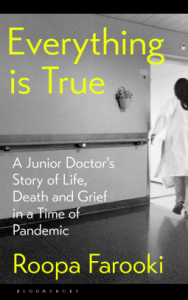 Farooki is a novelist, lecturer, mum of four, and junior doctor. Her storytelling choices owe more to literary fiction than to impassive reportage. The second-person, present-tense narration drops readers right into her position. Frequent line breaks and repetition almost give the prose the rhythm of performance poetry. There is also wry humour, wordplay, slang and cursing. In February 2020, her sister Kiron had died of breast cancer. During the first 40 days of the initial UK lockdown – the book’s limited timeframe – she continues to talk to Kiron, and imagines she can hear her sister’s chiding replies. Grief opens the door for magic realism, despite the title – which comes from a Balzac quote. A hybrid work that reads as fluidly as a novel while dramatizing real events, this is sure to appeal to people who wouldn’t normally pick up a bereavement or medical memoir. (Full review coming soon at Shiny New Books.)
A great addition to my Covid chronicles repertoire!
With thanks to Bloomsbury for the proof copy for review.
Would one of these books interest you?
Barbellion Prize Shortlist Reviews: Ultimatum Orangutan & What Willow Says
The shortlist for the second annual Barbellion Prize was announced earlier this month. I had already read one of the books, and publishers have kindly sent me two of the others for review. Still in the running this year are two novels, a poetry collection and a memoir (you can read a bit more about the longlist here).
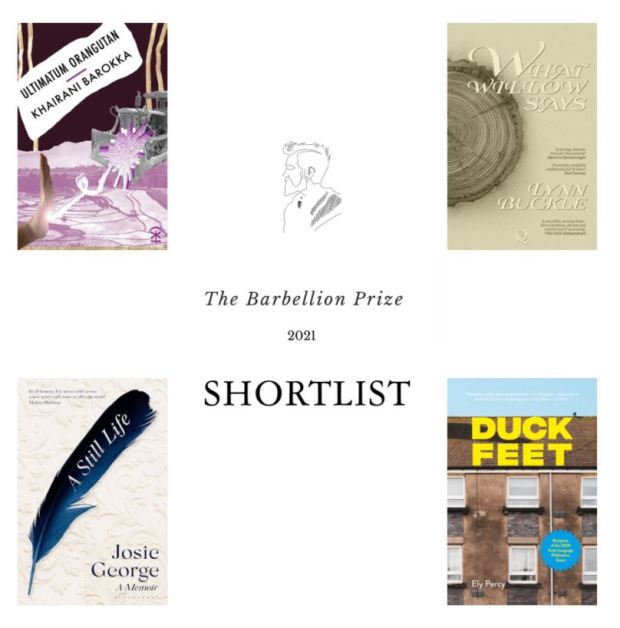
Ultimatum Orangutan by Khairani Barokka (2021)
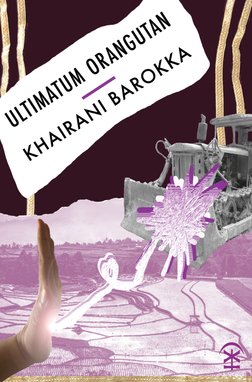 Barokka is an Indonesian poet and performance artist based in London. The topics of her second collection include chronic pain, the oppression of women, and the environmental crisis. While she’s distressed at the exploitation of nature, she sprinkles in humanist reminders of Indigenous peoples whose needs should also be valued. For instance, in the title poem, whose points of reference range from King Kong to palm oil plantations, she acknowledges that orangutans must be saved, but that people are also suffering in her native Indonesia. It’s a subtle plea for balanced consideration.
An early sequence about a visit to a Natural History Museum exemplifies the blend of themes. From her wheelchair, the poet ponders “the event” that killed the dinosaurs and human bias towards fellow vertebrates. Why can’t we appreciate a tiger for its own sake rather than its cultural and metaphorical associations? she asks in the following poem.
Medical realities aren’t as prominent as in some nominees – nowhere is it made clear what condition Okka has – but illness haunts certain lines: “my pills lie as armor with so many / glasses of water, upright and tensile / to save life against terrors by way / of circulatory relief” (from “on lying down, apocalyptic”). Concern about the environment also tips over into the apocalyptic in “situation report” and below:

“Fence and Repetition” sets out a palindrome of lines, and later on there are a golden shovel and an abecedarian, with tips of the hat to other poets. This more formal verse is in contrast with looser poems lacking capitalization or articles; in places the language even reads like pidgin. I found the phrasing unusual, forcing close attention to what’s actually going on. This wasn’t generally my cup of tea, but makes a striking entry on this year’s shortlist, and was a good chance to add my first Indonesian writer to my internal library.
With thanks to Nine Arches Press for the free copy for review.
What Willow Says by Lynn Buckle (2021)
 This is a delicate novella about the bond between a grandmother and her eight-year-old granddaughter, who is deaf. After the death of the girl’s mother, Grandmother has been her primary guardian. She raises her on Irish legends and a love of nature, especially their local trees. They mourn when they see hedgerows needlessly flailed, and the girl often asks what her grandmother hears the trees saying. Because Grandmother narrates in the form of journal entries, there is dramatic irony between what readers learn and what she is not telling the little girl; we ache to think about what might happen for her in the future.
Yet Buckle takes care not to let the mood get too sombre, even though there is disquiet aplenty: empty housing blocks from the aftermath of the Celtic Tiger, rage at the stereotypes and ableism that the granddaughter faces, and the darkness of the myths surrounding the peat bogs and those who drown. This is mostly thanks to the lyrical writing wrapped around the six months or so of the action. Focusing on the relationship between these two, a lot of what happens is quiet and seasonal, from a picnic in the park to preparations for Christmas, but there is also a sign language class that introduces some other characters.
At points I found the prose too thick – it’s rare for me to come across vocabulary I don’t know and, especially in such a short book, terms like “ombrogenous mires,” “chironomy” and “sestude” stood out, not necessarily in a good way. But, overall, I enjoyed this study of other forms of communication – with hands, in writing, between humans and more-than-human nature, and perhaps even beyond the grave.
A favourite passage:
We struggle to hear in our household. Age, degeneration, aural complications and congenital conditions. Ignorance. We have confusing discussions, mistaken arrangements, and fights over hearing aid batteries. Plus, the convenience of not hearing when it suits us. Now we are trying to listen, to each other, and to trees. There is so much that we have never heard, so little time to hear it.
With thanks to Époque Press for the free copy for review.
The other two books on the shortlist are:
 A Still Life: A Memoir by Josie George (Bloomsbury)
My TLS review excerpt: Chronic illness long ago reduced her territory to her home and garden. The magic of A Still Life is in how she finds joy and purpose despite extreme limitations. Opening on New Year’s Day and travelling from one winter to the next, the book is a window onto George’s quiet existence as well as the turning of the seasons.
Duck Feet by Ely Percy (Monstrous Regiment)
From the synopsis: “A coming-of-age novel, set in the mid-noughties in Renfrew and Paisley, Scotland. … This book is a celebration of youth in an ever-changing world. It uses humour to tackle hard-hitting subjects such as drugs, bullying, sexuality, and teenage pregnancy.”
I haven’t had a chance to read Duck Feet, so it’s hard to make any predictions about the winner. Last year a memoir by a woman won, so I’m not sure A Still Life will win, even though it’s my clear favourite of the three I’ve read. Perhaps it will be a novel this year?
The Barbellion Prize, awarded “to an author whose work has best represented the experience of chronic illness and/or disability,” will be announced on 12 February.
Do any of the shortlisted books appeal to you?
Young Writer of the Year Award 2021 Shortlist: Reactions and Prediction
Being on the shadow panel for the Sunday Times Young Writer of the Year Award was a bookish highlight of 2017 for me and, looking back, still one of the best things I’ve achieved in my time as a book blogger. Each year I eagerly keep an eye out for the award shortlist to see how many I’ve read and who I think the judges will choose as the winner. The prize has a higher profile and cash fund this year thanks to new sponsorship from the Charlotte Aitken Trust and partnership with Waterstones.
Last May I started a list of books and authors I expected would be eligible, and continued updating it throughout the year. I was certainly expecting Open Water to make the cut, but I had a lot of other wishes that didn’t come true, particularly Charlie Gilmour for Featherhood, Daisy Johnson for Sisters, Will McPhail for In, Merlin Sheldrake for Entangled Life, and Eley Williams for The Liar’s Dictionary.
Yesterday the five nominees – three debut novels, one work of nonfiction, and one poetry collection – were announced in the Sunday Times and on the website. I happen to have already read three of them. I was vaguely interested in Megan Nolan’s novel already so will get it out from the library to read soon; I had not heard of Anna Beecher’s at all but would be willing to read a review copy if one came my way.

 Here Comes the Miracle by Anna Beecher: Sounds potentially mawkish in a Jodi Picoult or Sarah Winman way. Publisher’s blurb: “It begins with a miracle: a baby born too small and too early, but defiantly alive. This is Joe. Decades before, another miracle. In a patch of nettle-infested wilderness, a seventeen-year-old boy falls in love with his best friend, Jack. This is Edward. Joe gains a sister, Emily. From the outset, her life is framed by his. She watches him grow into a young man who plays the violin magnificently and longs for a boyfriend. A young man who is ready to begin. Edward, after being separated from Jack, builds a life with Eleanor. They start a family and he finds himself a grandfather to Joe and Emily. When Joe is diagnosed with stage 4 cancer, Emily and the rest of the family are left waiting for a miracle.”
 Islands of Abandonment by Cal Flyn: One of my top nonfiction books of 2021, but I’ll confess I hadn’t realized Flyn was eligible. (Now that I’m, ahem, a few years past the cutoff age myself, I can find it difficult to gauge the difference between early 30s and late 30s in appearance.) Flyn travels to neglected and derelict places, looking for the traces of human impact and noting how landscapes restore themselves – how life goes on without us. Places like a wasteland where there was once mining, nuclear exclusion zones, the depopulated city of Detroit, and areas that have been altered by natural disasters and conflict. The writing is literary and evocative, at times reminiscent of Peter Matthiessen’s. It’s a nature/travel book with a difference, and the poetic eye helps you to see things anew.
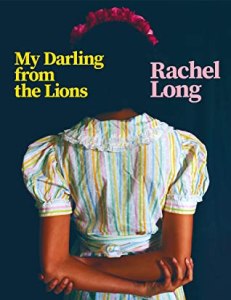 My Darling from the Lions by Rachel Long: I read this when it was shortlisted for last year’s Costa Awards and reviewed it when it was shortlisted for the Folio Prize. It’s had a lot of critical attention now, but wasn’t my cup of tea. Race, sex, and religion come into play, but the focus is on memories of coming of age, with the voice sometimes a girl’s and sometimes a grown woman’s. Her course veers between innocence and hazard. She must make her way beyond the world’s either/or distinctions and figure out how to be multiple people at once (biracial, bisexual). Her Black mother is a forceful presence; “Red Hoover” is a funny account of trying to date a Nigerian man to please her mother. Much of the rest of the book failed to click with me, but the experience of poetry is so subjective that I find it hard to give any specific reasons why that’s the case.
 Open Water by Caleb Azumah Nelson: I always enjoy the use of second person narration. It works pretty well in this love story between two young Black British people in South London. The title is a metaphor for the possibilities and fear of intimacy. The protagonist, a photographer, doesn’t know what to do with his anger about how young Black men are treated. I felt Nelson was a little heavy-handed in his treatment of this theme, though I did love that the pivotal scene is set in a barbershop, a place where men reveal more of themselves than usual – I was reminded of a terrific play I saw a few years ago, Barber Shop Chronicles. Ultimately, I wasn’t convinced that fiction was the right vehicle for this story, especially with all the references to other authors, from Hanif Abdurraqib to Zadie Smith (NW, in particular); I think a memoir with cultural criticism was what Nelson really intended. I’ll keep an eye out for him, though – with his next book he might truly find his voice.
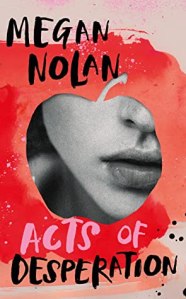 Acts of Desperation by Megan Nolan: Another debut from an Irish writer – heir to Sally Rooney? Publisher’s blurb: “In the first scene of this provocative gut-punch of a novel, our unnamed narrator meets a magnetic writer named Ciaran and falls, against her better judgment, completely in his power. After a brief, all-consuming romance he abruptly rejects her, sending her into a tailspin of jealous obsession and longing. … Part breathless confession, part lucid critique, Acts of Desperation renders a consciousness split between rebellion and submission, between escaping degradation and eroticizing it, between loving and being lovable. With unsettling, electric precision, Nolan dissects one of life’s most elusive mysteries: Why do we want what we want, and how do we want it?”
You can read more about these books and the judges’ reactions to them on the website. This year’s judges are authors Tahmima Anam, Sarah Moss, and Andrew O’Hagan; critic Claire Lowdon; and creative writing teacher Gonzalo C. Garcia. The chair, as always, is Sunday Times literary editor Andrew Holgate.
Reasoning and Prediction
- Poetry has won the last two years in a row.
- Nelson has just won the Costa First Novel Award (though the judges chose Raymond Antrobus, at that time already a recipient of multiple major awards).
- We haven’t had a female winner since 2017, so it’s past time.
- We haven’t had a nonfiction winner since Adam Weymouth in 2018 for Kings of the Yukon.
So, I’d love for Cal Flyn to win for the excellent and timely Islands of Abandonment. She’s had a few nominations (the Baillie Gifford Prize, the Saltire Award, the Wainwright Prize) but not won anything, and richly deserves to.

I haven’t heard yet if there will be a shadow panel this year. Anyone got any intel on this? If it goes ahead in person this year, I’ll hope to attend the awards ceremony in London on 24 February. In any case, I’ll be looking out for the winner announcement.
Have you read anything from this year’s shortlist?
These Precious Days by Ann Patchett
I consider myself an Ann Patchett fan, having read eight of her books by now. Although she’s better known for her novels, I have a slight preference for her nonfiction – Truth and Beauty, her memoir of her friendship with Lucy Grealy; and her two collections of autobiographical essays, This Is the Story of a Happy Marriage and now These Precious Days, which made it onto my Best of 2021 list last month. Compared to the previous volume, the essays here, though no less sincere and thoughtful, are more melancholy. The preoccupation with death and drive to simplify life (“My Year of No Shopping,” “How to Practice”) seem appropriate for Covid times.
The opening essay, “Three Fathers,” gives wry portraits of her father and her two stepfathers, contrasting their careers, her relationship with each, and their deaths. In a final piece before the epilogue, she notes the bittersweet privilege of her membership in the American Academy of Arts and Letters – new members are only inducted to replace senior ones, for each of whom she receives a death notice in the mail. Memento mori are everywhere; “The human impulse is to look for order, but there isn’t any. People come and go. When you try to find your place among all the living and dead, the numbers are unmanageable.”
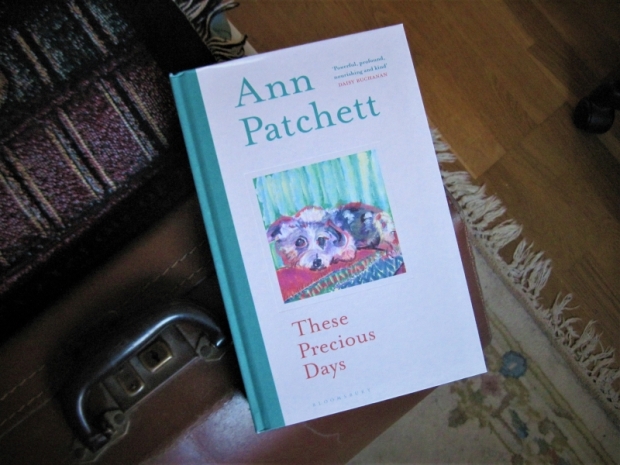
The long title essay, first published in Harper’s, is about her stranger-than-fiction friendship with Tom Hanks’s personal assistant, Sooki Raphael (her painting of Patchett’s dog Sparky adorns the cover). They first made contact after Patchett read an early copy of Hanks’s short story collection, gave it a nice endorsement, and then interviewed him at the D.C. stop on his book tour. Sooki had recurrent pancreatic cancer; Patchett’s husband Karl, a doctor, got her into a medical trial in Nashville and she lived with them throughout her treatment, including during Covid. There are so many twists to this story, so many moments when it might have faltered. Patchett is well aware of the unlikelihood and uses it to comment on her own plots, and the fact that sometimes what she thinks a novel is about ends up being far from the truth.
Patchett also expresses her appreciation of other authors (“Eudora Welty, an introduction,” “Reading Kate DiCamillo”), looks back to her young adulthood (“The First Thanksgiving,” “The Paris Tattoo”) and explores her other key relationships: her ever-youthful mother is the subject of “Sisters,” she celebrates a childhood friend in “Tavia,” and her worry over her 16-years-older husband fuels “Flight Plan” (about his amateur pilot hobby) and “The Moment Nothing Changed” (about his heart attack scare). Many of the shorter pieces first appeared in other publications or anthologies; a few verge on throwaway if I’m being harsh (did we need the essays on Snoopy and knitting?).
But it’s the approach that distinguishes the work as a whole: a clear eye on herself and others; honesty and deep emotion that never tip into mawkishness. I also enjoyed the little glimpses into her everyday domestic life, as well as her work behind the scenes at Parnassus Books. The one essay that meant the most to me, though, was “There Are No Children Here,” which matter-of-factly covers everything I’d ever like to say or hear about childlessness. At their best, Patchett’s books are not just pleasant reads but fond companions on the journey of life, and that’s how I felt about this one. (Susan included it on her list of comfort reading, too.)
With thanks to Bloomsbury for the free copy for review.
Recovery by Gavin Francis: Review and Giveaway
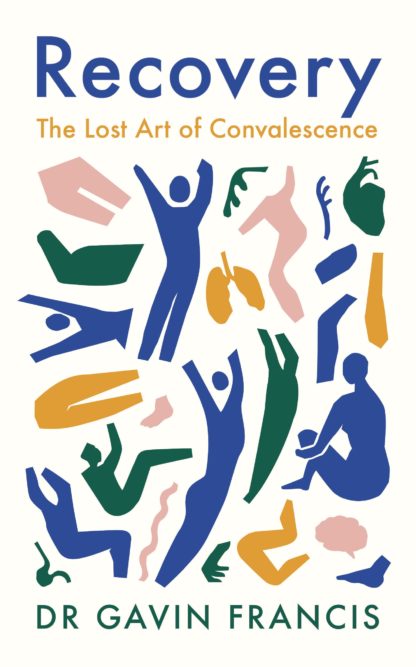
Just over a year ago, I reviewed Dr Gavin Francis’s Intensive Care, his record of the first 10 months of Covid-19, especially as it affected his work as a GP in Scotland. It ended up on my Best of 2021 list and is still the book I point people to for reflections on the pandemic. Recovery serves as a natural sequel: for those contracting Covid, as well as those who have had it before and may be suffering the effects of the long form, the focus will now be on healing as much as it is on preventing the spread of the virus. This lovely little book spins personal and general histories of convalescence, and expresses the hope that our collective brush with death will make us all more determined to treasure our life and wellbeing.
Francis remembers times of recovery in his own life: after meningitis at age 10, falling off his bike at 12, and a sinus surgery during his first year of medical practice. Refuting received wisdom about scammers taking advantage of sickness benefits (government data show only 1.7% of claims are fraudulent), he affirms the importance of a social safety net that allows necessary recovery time. Convalescence is subjective, he notes; it takes as long as it takes, and patients should listen to their bodies and not push too hard out of frustration or boredom.
Traditionally, travel, rest and time in nature have been non-medical recommendations for convalescents, and Francis believes they still hold great value – not least for the positive mental state they promote. He might also employ “social prescribing,” directing his patients to join a club, see a counsellor, get good nutrition or adopt a pet. A recovery period can be as difficult for carers as for patients, he acknowledges, and most of us will spend time as both.
I read this in December while staying with my convalescent mother, and could see how much of its practical advice applied to her – “Plan rests regularly throughout the day,” “Use aids to avoid bending and reaching,” “Set achievable goals.” If only everyone being discharged from hospital could be issued with a copy – pocket-sized and only just over 100 pages, it would be a perfect companion through any recovery period. I’d especially recommend this to readers of Maggie O’Farrell’s I Am, I Am, I Am and Christie Watson’s The Language of Kindness.
Favourite lines:
At one level, convalescence has something in common with dying in that it forces us to engage with our limitations, the fragile nature of our existence. Why not, then, live fully while we can?
If we can take any gifts or wisdom from the experience of illness, surely it’s this: to deepen our appreciation of health … in the knowledge that it can so easily be taken away.
Published by Profile Books/Wellcome Collection today, 13 January. My thanks to the publisher for the free copy for review.
*The Profile publicity team has offered a giveaway copy to be sent to one of my readers. If you’d like to be entered in the draw (UK only, sorry), please mention so in your comment below. I’ll choose a winner at random next Friday morning (the 21st) and contact them by e-mail.*
Catching Up: Mini Reviews of Some Notable Reads from Last Year
I do all my composition on an ancient PC (unconnected to the Internet) in a corner of our lounge. On top of the CPU sit piles of books waiting to be reviewed. Some have been residing there for an embarrassingly long time since I finished reading them; others were only recently added to the stack but had previously languished on my set-aside shelf. I think the ‘oldest’ of the set below is the Olson, which I started reading in November 2019. In every case, the book earned a spot on the pile because I felt it was worth a review, but I’ll stick to a brief paragraph on why each was memorable. Bonus: I get my Post-its back, and can reshelve the books so they get packed sensibly for our upcoming move.
Fiction
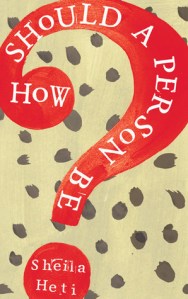 How Should a Person Be? by Sheila Heti (2012): My second from Heti, after Motherhood; both landed with me because they nail aspects of my state of mind. Heti writes autofiction about writers dithering about their purpose in life. Here Sheila is working in a hair salon while trying to finish her play – some absurdist dialogue is set out in script form – and hanging out with artists like her best friend Margaux. The sex scenes are gratuitous and kinda gross. In general, I alternated between sniggering (especially at the ugly painting competition) and feeling seen: Sheila expects fate to decide things for her; God forbid she should ever have to make an actual choice. Heti is self-deprecating about an admittedly self-indulgent approach, and so funny on topics like mansplaining. This was longlisted for the Women’s Prize in 2013. (Little Free Library)
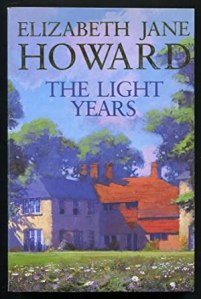 The Light Years by Elizabeth Jane Howard (1990): The first volume of The Cazalet Chronicles, read for a book club meeting last January. I could hardly believe the publication date; it’s such a detailed, convincing picture of daily life in 1937–8 for a large, wealthy family in London and Sussex that it seems it must have been written in the 1940s. The retrospective angle, however, allows for subtle commentary on how limited women’s lives were, locked in by marriage and pregnancies. Sexual abuse is also calmly reported. One character is a lesbian, but everyone believes her partner is just a friend. The cousins’ childhood japes are especially enjoyable. And, of course, war is approaching. It’s all very Downton Abbey. I launched straight into the second book afterwards, but stalled 60 pages in. I’ll aim to get back into the series later this year. (Free mall bookshop)
Nonfiction
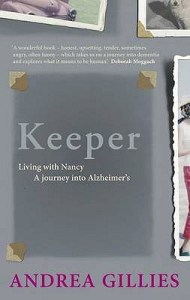 Keeper: Living with Nancy—A journey into Alzheimer’s by Andrea Gillies (2009): The inaugural Wellcome Book Prize winner. The Prize expanded in focus over a decade; I don’t think a straightforward family memoir like this would have won later on. Gillies’ family relocated to remote northern Scotland and her elderly mother- and father-in-law, Nancy and Morris, moved in. Morris was passive, with limited mobility; Nancy was confused and cantankerous, often treating Gillies like a servant. (“There’s emptiness behind her eyes, something missing that used to be there. It’s sinister.”) She’d try to keep her cool but often got frustrated and contradicted her mother-in-law’s delusions. Gillies relays facts about Alzheimer’s that I knew from In Pursuit of Memory. What has remained with me is a sense of just how gruelling the caring life is. Gillies could barely get any writing done because if she turned her back Nancy might start walking to town, or – the single most horrific incident that has stuck in my mind – place faeces on the bookshelf. (Secondhand purchase)
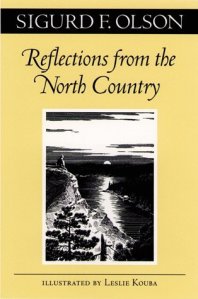 Reflections from the North Country by Sigurd F. Olson (1976): Olson was a well-known environmental writer in his time, also serving as president of the National Parks Association. Somehow I hadn’t heard of him before my husband picked this out at random. Part of a Minnesota Heritage Book series, this collection of passionate, philosophically oriented essays about the state of nature places him in the vein of Aldo Leopold – before-their-time conservationists. He ponders solitude, wilderness and human nature, asking what is primal in us and what is due to unfortunate later developments. His counsel includes simplicity and wonder rather than exploitation and waste. The chief worry that comes across is that people are now so cut off from nature they can’t see what they’re missing – and destroying. It can be depressing to read such profound 1970s works; had we heeded environmental prophets like Olson, we could have changed course before it was too late. (Free from The Book Thing of Baltimore)
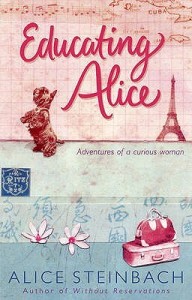 Educating Alice: Adventures of a Curious Woman by Alice Steinbach (2004): I’d loved her earlier travel book Without Reservations. Here she sets off on a journey of discovery and lifelong learning. I included the first essay, about enrolling in cooking lessons in Paris, in my foodie 20 Books of Summer 2020. In other chapters she takes dance lessons in Kyoto, appreciates art in Florence and Havana, walks in Jane Austen’s footsteps in Winchester and environs, studies garden design in Provence, takes a creative writing workshop in Prague, and trains Border collies in Scotland. It’s clear she loves meeting new people and chatting – great qualities in a journalist. By this time she had quit her job with the Baltimore Sun so was free to explore and make her life what she wanted. She thinks back to childhood memories of her Scottish grandmother, and imagines how she’d describe her adventures to her gentleman friend, Naohiro. She recreates everything in a way that makes this as fluent as any novel, such that I’d even dare recommend it to fiction-only readers. (Free mall bookshop)
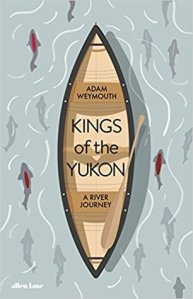 Kings of the Yukon: An Alaskan River Journey by Adam Weymouth (2018): I didn’t get the chance to read this when it was shortlisted for, and then won, the Sunday Times Young Writer of the Year Award, but I received a copy from my wish list for Christmas that year. Alaska is a place that attracts outsiders and nonconformists. During the summer of 2016, Weymouth undertook a voyage by canoe down the nearly 2,000 miles of the Yukon River – the same epic journey made by king/Chinook salmon. He camps alongside the river bank in a tent, often with his partner, Ulli. He also visits a fish farm, meets reality TV stars and native Yup’ik people, and eats plenty of salmon. “I do occasionally consider the ethics of investigating a fish’s decline whilst stuffing my face with it.” Charting the effects of climate change without forcing the issue, he paints a somewhat bleak picture. But his descriptive writing is so lyrical, and his scenes and dialogue so natural, that he kept me eagerly riding along in the canoe with him. (Secondhand copy, gifted)
Would you be interested in reading one or more of these?
2022 Proof Copies & Early Recommendations (Julia Armfield’s Debut Novel, Lily King’s Short Stories)
I didn’t feel like I’d done a lot of pre-release reading yet, but put it all together and somehow it looks like a lot…
My top recommendations for 2022 (so far):
Our Wives Under the Sea by Julia Armfield
Coming on March 3rd from Picador (UK) and on July 12th from Flatiron Books (USA)
I loved Armfield’s 2019 short story collection Salt Slow, which I reviewed when it was shortlisted for the Sunday Times Young Writer of the Year Award. Her strategy in her debut novel is similar: letting the magical elements seep in gradually so that, lulled into a false sense of familiarity, you find the creepy stuff all the more unsettling.
 Miri is relieved to have her wife back when Leah returns from an extended Centre for Marine Inquiry expedition. But something went wrong with the craft while in the ocean depths and it was too late to evacuate. What happened to Leah and the rest of the small crew? Miri starts to worry that Leah – who now spends 70% of her time in the bathtub – will never truly recover. Chapters alternate between Miri describing their new abnormal and Leah recalling the voyage. As Miri tries to tackle life admin for both of them, she feels increasingly alone and doesn’t know how to deal with persistent calls from the sister of one of the crew members.
This is a really sensitive consideration of dependency and grief – Miri recently lost her mother and Leah’s father also died. I especially liked the passages about Miri’s prickly mother: it was impossible not to offend her, and she truly believed that if she resisted ageing she might never die. Leah seems shell-shocked; her matter-of-fact narration is a contrast to Miri’s snark. Armfield gives an increasingly eerie story line a solid emotional foundation, and her words about family and romantic relationships ring true. I read this in about 24 hours in early December, on my way back from a rare trip into London; it got the 2022 releases off to a fab start to me. Plus, the title and cover combo is killer. I’d especially recommend this to readers of Carmen Maria Machado and Banana Yoshimoto. (Read via NetGalley)
Five Tuesdays in Winter by Lily King
Coming on January 20th from Picador (UK); released in the USA in November 2021
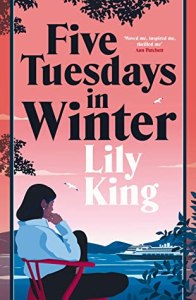 The same intimate understanding of emotions and interactions found in Euphoria and Writers & Lovers underlies King’s first short story collection. Some stories are romantic; others are retrospective coming-of-age narratives. Most are set in New England, but the time and place varies from the 1960s to the present day and from Maine to northern Europe. Several stories look back to a 1980s adolescence. “South” and “The Man at the Door” are refreshingly different, incorporating touches of magic and suspense. However, there are also a few less engaging stories, and there aren’t particularly strong linking themes. Still, the questions of love’s transience and whether any relationship can ever match up to expectations linger. I’d certainly recommend this to fans of King’s novels. (See my full review at BookBrowse. See also my related article on contemporary New England fiction.)
With thanks to Picador for the proof copy for review.
Other 2022 releases I’ve read:
(In publication date order)
 Write It All Down: How to put your life on the page by Cathy Rentzenbrink [Jan. 6, Bluebird] I’ve read all of Rentzenbrink’s books, but the last few have been disappointing. Alas, this is more of a therapy session than a practical memoir-writing guide. (Full review coming later this month.)
 Recovery: The Lost Art of Convalescence by Gavin Francis [Jan. 13, Wellcome Collection]: A short, timely book about the history and subjectivity of recovering from illness. (Full review and giveaway coming next week.)
 The Store-House of Wonder and Astonishment by Sherry Rind [Jan. 15, Pleasure Boat Studio]: In her learned and mischievous fourth collection, the Seattle poet ponders Classical and medieval attitudes towards animals. (Full review coming to Shelf Awareness soon.)
 Stepmotherland by Darrel Alejandro Holnes [Feb. 1, University of Notre Dame Press]: Holnes’s debut collection, winner of the Andrés Montoya Poetry Prize, ponders a mixed-race background and queerness through art, current events and religion. Poems take a multitude of forms; the erotic and devotional mix in provocative ways. (See my full review at Foreword.)
 Rise and Float: Poems by Brian Tierney [Feb. 8, Milkweed Editions]: A hard-hitting debut collection with themes of bereavement and mental illness – but the gorgeous imagery lifts it above pure melancholy. (Full review coming to Shelf Awareness soon.)
 Cost of Living: Essays by Emily Maloney [Feb. 8, Henry Holt]: Probing mental illness and pain from the medical professional’s perspective as well as the patient’s, 16 autobiographical essays ponder the value of life. (Full review coming to Shelf Awareness soon.)
 Circle Way: A Daughter’s Memoir, a Writer’s Journey Home by Mary Ann Hogan [Feb. 15, Wonderwell]: A posthumous memoir of family and fate that focuses on a father-daughter pair of writers. A fourth-generation Californian, Hogan followed in her father Bill’s footsteps as a local journalist. Collage-like, the book features song lyrics and wordplay as well as family anecdotes. (See my full review at Foreword.)
 Cold Enough for Snow by Jessica Au [Feb. 23, Fitzcarraldo Editions]: A delicate work of autofiction – it reads like a Chloe Aridjis or Rachel Cusk novel – about a woman and her Hong Kong-raised mother on a trip to Tokyo. (Full review coming up in a seasonal post.)
 The Carriers: What the Fragile X Gene Reveals about Family, Heredity, and Scientific Discovery by Anne Skomorowsky [May 3, Columbia UP]: Blending stories and interviews with science and statistics, this balances the worldwide scope of a disease with its intimate details. (Full review coming to Foreword soon.)
Currently reading:
(In release date order)
 This Boy We Made: A Memoir of Motherhood, Genetics, and Facing the Unknown by Taylor Harris [Jan. 11, Catapult] (Reading via Edelweiss; to review for BookBrowse)
To Paradise by Hanya Yanagihara [Jan. 11, Picador] (Blog review coming … eventually)
I Came All This Way to Meet You: Writing Myself Home by Jami Attenberg [Jan. 13, Serpent’s Tail] (Blog review coming later this month)
 Everything Is True: A Junior Doctor’s Story of Life, Death and Grief in a Time of Pandemic by Roopa Farooki [Jan. 20, Bloomsbury] (To review for Shiny New Books)
Some Integrity by Padraig Regan [Jan. 27, Carcanet] (Blog review coming later this month)
Additional proof copies on my shelf:
(In release date order; publisher blurbs from Goodreads/Amazon)

 What I Wish People Knew About Dementia by Wendy Mitchell [Jan. 20, Bloomsbury]: “When Mitchell was diagnosed with young-onset dementia at the age of fifty-eight, her brain was overwhelmed with images of the last stages of the disease – those familiar tropes, shortcuts and clichés that we are fed by the media, or even our own health professionals. … Wise, practical and life affirming, [this] combines anecdotes, research and Mitchell’s own brilliant wit and wisdom to tell readers exactly what she wishes they knew about dementia.”
 I Love You But I’ve Chosen Darkness by Claire Vaye Watkins [Came out in USA last year; UK release = Jan. 20, Quercus]: “Leaving behind her husband and their baby daughter, a writer gets on a flight for a speaking engagement in Reno, not carrying much besides a breast pump and a spiraling case of postpartum depression. … Deep in the Mojave Desert where she grew up, she meets her ghosts at every turn: the first love whose self-destruction still haunts her; her father, a member of the most famous cult in American history.”
 Beasts of a Little Land by Juhea Kim [Feb. 3, Oneworld]: “From the perfumed chambers of a courtesan school in Pyongyang to the chic cafes of a modernising Seoul and the thick forests of Manchuria, Juhea Kim’s unforgettable characters forge their own destinies as they shape the future of their nation. Immersive and elegant, firmly rooted in Korean folklore and legend, [this] unveils a world where friends become enemies, enemies become saviours, and beasts take many shapes.”

 Theatre of Marvels by Lianne Dillsworth [April 28, Hutchinson Heinemann]: “Unruly crowds descend on Crillick’s Variety Theatre. Young actress Zillah [a mixed-race orphan] is headlining tonight. … Rising up the echelons of society is everything Zillah has ever dreamed of. But when a new stage act disappears, Zillah is haunted by a feeling that something is amiss. Is the woman in danger? Her pursuit of the truth takes her into the underbelly of the city.” (Unsolicited) [Dillsworth is Black British.]
 The Secret Lives of Church Ladies by Deesha Philyaw [Came out in USA in 2020; UK release = May 5, Pushkin]: “explores the raw and tender places where Black women and girls dare to follow their desires and pursue a momentary reprieve from being good. … With their secret longings, new love, and forbidden affairs, these church ladies are as seductive as they want to be, as vulnerable as they need to be, as unfaithful and unrepentant as they care to be, and as free as they deserve to be.”
And on my NetGalley shelf:
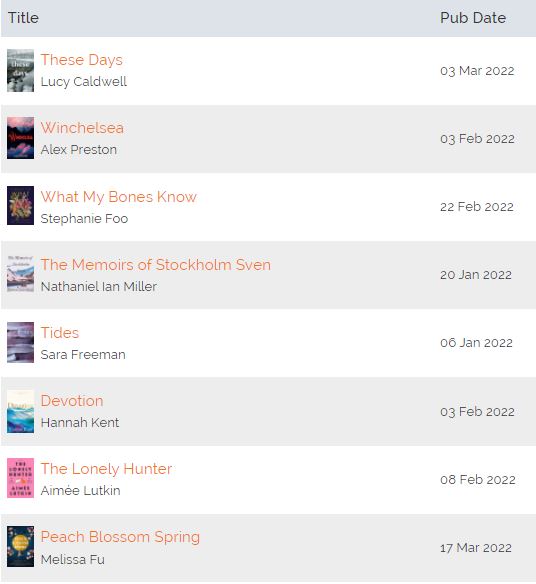
Will you look out for one or more of these titles?
Any other 2022 reads you can recommend?
Some of My Most Anticipated Releases of 2022
Ninety-nine 2022 releases have made it onto my Goodreads shelves so far. I’ve read about 10 already and will preview some of them tomorrow.
 This year we can expect new fiction from Julian Barnes, Carol Birch, Jessie Burton, Jennifer Egan, Karen Joy Fowler, David Guterson, Sheila Heti, John Irving (perhaps? at last), Liza Klaussman, Benjamin Myers, Julie Otsuka, Alex Preston and Anne Tyler; a debut novel from Emilie Pine; second memoirs from Amy Liptrot and Wendy Mitchell; another wide-ranging cultural history/self-help book from Susan Cain; another medical history from Lindsey Fitzharris; a biography of the late Jan Morris; and much more. (Already I feel swamped, and this in a year when I’ve said I want to prioritize backlist reads! Ah well, it is always thus.)
I’ve limited myself here to the 20 upcoming releases I’m most excited about. The low figure is a bit of a cheat: with a few exceptions, I’ve not included books I have / have been promised. I’ll be scurrying around requesting copies of most of the others soon. The following are due out between January and August and are in (UK) release date order, within sections by genre. (U.S. details given too/instead if USA-only. Quotes are extracted from publisher blurbs on Goodreads.)
U.S. covers – included where different – rule!
N.B. Fiction is winning this year!
Fiction
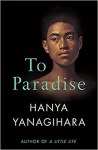 To Paradise by Hanya Yanagihara [Jan. 11, Picador / Doubleday] You’ll see this on just about every list; her fans are legion after the wonder that was A Little Life. Another doorstopper, but this time with the epic reach to justify the length: sections are set in an alternative 1893, 1993, and 2093 – “joined in an enthralling and ingenious symphony, as recurring notes and themes deepen and enrich one another.” [Proof copy]

UK cover
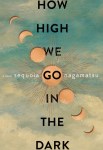 How High We Go in the Dark by Sequoia Nagamatsu [Jan. 18, Bloomsbury / William Morrow] Amazing author name! Similar to the Yanagihara what with the century-hopping and future scenario, a feature common in 2020s literature – a throwback to Cloud Atlas? I’m also reminded of the premise of Under the Blue, one of my favourites from last year. “Once unleashed, the Arctic Plague will reshape life on Earth for generations to come.”
Heartstopper, Volume 5 by Alice Oseman [Feb. ?, Hodder Children’s] I devoured the first four volumes of this teen comic last year. In 2020, Oseman tweeted that the fifth and final installment was slated for February 2022, but I don’t have any more information than that. Nick will be getting ready to go off to university, so I guess we’ll see how he leaves things with Charlie and whether their relationship will survive a separation. (No cover art yet.)
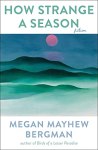 How Strange a Season by Megan Mayhew Bergman [March 29, Scribner] I enjoyed her earlier story collection, Almost Famous Women. “Bergman portrays women who wrestle with problematic inheritances: a modern glass house on a treacherous California cliff, a water-starved ranch, an abandoned plantation on a river near Charleston … provocative prose asks what are we leaving behind for our ancestors … what price will they pay for our mistakes?”
A Violent Woman by Ayana Mathis [April 7, Hutchinson] Her Oprah-approved 2013 debut, The Twelve Tribes of Hattie, got a rare 5-star review from me. About “an estranged mother and her daughter. Dutchess lives in Bonaparte, Alabama, a once thriving black town now in its death throes. Lena lives in Philadelphia in the 1980s. Her involvement with the radical separatist group STEP leads to transcendence and tragedy.” (No cover art yet.)
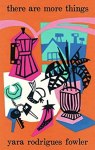 there are more things by Yara Rodrigues Fowler [April 28, Fleet] I so wanted her 2019 debut novel, Stubborn Archivist, to win the Young Writer of the Year Award. I love the cover and Hamlet-sourced title, and I’m here for novels of female friendship. “In January 2016, Melissa [South London native] and Catarina [born to well-known political family in Brazil] meet for the first time, and as political turmoil unfolds … their friendship takes flight.”


UK cover
Sea of Tranquility by Emily St. John Mandel [April 28, Picador / April 5, Knopf] This is the other title you’ll find on everyone else’s list. That’s because The Glass Hotel, even more so than Station Eleven, was amazing. Another history-to-future-hopper: “a novel of art, time, love, and plague that takes the reader from Vancouver Island in 1912 to a dark colony on the moon three hundred years later, unfurling a story of humanity across centuries and space.” [Edelweiss download]
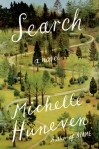 Search by Michelle Huneven [April 28, Penguin] A late addition to my list thanks to the Kirkus review. Sounds like one for readers of Katherine Heiny! “Dana Potowski is a restaurant critic and food writer … asked to join [her California Unitarian Universalist] church search committee for a new minister. Under pressure to find her next book idea, she agrees, and resolves to secretly pen a memoir, with recipes, about the experience.”


UK cover
Very Cold People by Sarah Manguso [April 28, Picador / Feb. 8, Hogarth] The debut novel from an author by whom I’ve read four nonfiction works. “For Ruthie, the frozen town of Waitsfield, Massachusetts, is all she has ever known. Once home to the country’s oldest and most illustrious families[,] … it is an unforgiving place awash with secrets. … Ruthie slowly learns how the town’s prim facade conceals a deeper, darker history…”
UK cover
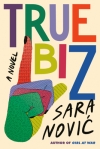
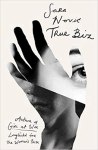
True Biz by Sara Nović [May 5, Little, Brown / April 5, Random House] Her 2015 Girl at War is one of my most-admired debuts of all time, and who can resist a campus novel?! “The students at the River Valley School for the Deaf just want to hook up, pass their history final, and have doctors, politicians, and their parents stop telling them what to do with their bodies. This revelatory novel plunges readers into the halls of a residential school for the deaf.”
 You Have a Friend in 10a: Stories by Maggie Shipstead [May 19, Transworld / May 17, Knopf] Shipstead’s Booker-shortlisted doorstopper, Great Circle, ironically, never took off for me; I’m hoping her short-form storytelling will work out better. “Diving into eclectic and vivid settings, from an Olympic village to a deathbed in Paris to a Pacific atoll, … Shipstead traverses ordinary and unusual realities with cunning, compassion, and wit.”

UK cover
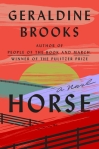 Horse by Geraldine Brooks [June 2, Little, Brown / June 14, Viking] You guessed it, another tripartite 1800s–1900s–2000s narrative! With themes of slavery, art and general African American history. I’m not big on horses, at least not these days, but Brooks’s March and Year of Wonders are among my recent favourites. “Based on the remarkable true story of the record-breaking thoroughbred, Lexington, who became America’s greatest stud sire.”

UK cover
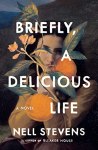
Briefly, a Delicious Life by Nell Stevens [June 23, Picador / June 21, Scribner] I’ve read her two previous autofiction-y memoirs and loved Mrs Gaskell & Me. The title, cover and Victorian setting of her debut novel beckon. “In 1473, fourteen-year-old Blanca dies in a hilltop monastery in Mallorca. Nearly four hundred years later, when George Sand, her two children, and her lover Frederic Chopin arrive in the village, Blanca is still there: a spirited, funny, righteous ghost.”
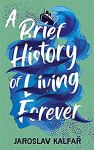 A Brief History of Living Forever by Jaroslav Kalfar [Aug. 4, Sceptre / Little, Brown] His Spaceman of Bohemia (2017) was terrific. “When Adela discovers she has a terminal illness, her thoughts turn to Tereza, the American-raised daughter she gave up at birth. … In NYC, Tereza is … the star researcher for two suspicious biotech moguls hellbent on developing a ‘god pill’ to extend human life indefinitely. … Narrated from the beyond by Adela.”
Nonfiction
 The Cure for Sleep by Tanya Shadrick [Jan. 20, Weidenfeld & Nicolson] Nature memoir / self-help. “On return from near-death, Shadrick vows to stop sleepwalking through life. … Around the care of young children, she starts to play with the shape and scale of her days: to stray from the path, get lost in the woods, make bargains with strangers … she moves beyond her respectable roles as worker, wife and mother in a small town.” [Review copy]
 The Invisible Kingdom: Reimagining Chronic Illness by Meghan O’Rourke [March 1, Riverhead] O’Rourke wrote one of the best bereavement memoirs ever. This ties in with my medical interests. “O’Rourke delivers a revelatory investigation into this elusive category of ‘invisible’ illness that encompasses autoimmune diseases, post-treatment Lyme disease syndrome, and now long COVID, synthesizing the personal and the universal.”

UK cover
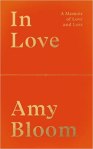
In Love: A Memoir of Love and Loss by Amy Bloom [April 7, Granta / March 8, Random House] The true story of how Bloom accompanied her husband Brian, who had Alzheimer’s, to Dignitas in Switzerland to end his life. I’ve read quite a lot around assisted dying. “Written in Bloom’s captivating, insightful voice and with her trademark wit and candor, In Love is an unforgettable portrait of a beautiful marriage, and a boundary-defying love.”
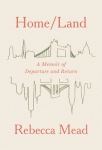 Home/Land: A Memoir of Departure and Return by Rebecca Mead [April 21, Grove Press UK / Feb. 8, Knopf] I enjoyed Mead’s bibliomemoir on Middlemarch. The Anglo-American theme is perfect for me: “drawing on literature and art, recent and ancient history, and the experience of encounters with individuals, environments, and landscapes in New York City and in England, Mead artfully explores themes of identity, nationality, and inheritance.”

UK cover
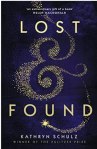
Lost & Found: A Memoir by Kathryn Schulz [April 28, Picador / Jan. 20, Random House] I loved her 2010 book Being Wrong, and bereavement memoirs are my jam. “Eighteen months before Kathryn Schulz’s father died, she met the woman she would marry. In Lost & Found, she weaves the story of those relationships into a brilliant exploration of the role that loss and discovery play in all of our lives … an enduring account of love in all its many forms.”
Poetry
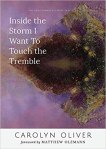 Inside the Storm I Want to Touch the Tremble by Carolyn Oliver [Aug. 19, Univ. of Utah Press] Carolyn used to blog at Rosemary and Reading Glasses. The poems she’s shared on social media are beautiful, and I’m proud of her for winning the Agha Shahid Ali Prize. “Inside this debut collection, girlhood’s dangers echo, transmuted, in the poet’s fears for her son. A body … is humbled by chronic illness. Stumbling toward joy across time and space, these poems hum with fear and desire, bewildering loss, and love’s lush possibilities.”
Themes arising: crossing three centuries; H & I titles, the word “brief”; moons and stars on covers. Mostly female authors (only two men here).
Do check out these other lists for more ideas!
Plus you can seek out all the usual lists (e.g. on Lit Hub and virtually every other book or newspaper site) … if you want to be overwhelmed!
 Bookish Beck = Rebecca Foster. American transplant to England. Freelance proofreader and book reviewer.
 Bookish Beck