Short Stories in September, Part III: Linked Collections by Jonathan Escoffery & Soraya Palmer
These two debut linked short story collections had enough in common to get a mention in yesterday’s Book Serendipity post, including a 2023 publication date, a central sibling pair, Jamaican heritage, and memories of a devastating hurricane.
If I Survive You by Jonathan Escoffery
A starred Kirkus review first put this on my radar, and I requested a copy back in February. Though I enjoyed the first two stories, I then set the book aside. Its longlisting for this year’s Booker Prize reminded me to pick it back up and it’s now one of the six on the shortlist.
Five of eight stories are filtered through the consciousness of Trelawny, the younger son of Topper and Sanya, who immigrated to Miami in the late 1970s to escape unrest in Kingston, Jamaica. Older brother Delano is the golden boy, yet in a post-recession landscape both sons struggle to get by. After their parents’ split, the family home seems like a totem of security.
An accident leads Delano to give up his tree service business and pursue reggae music professionally. Trees play a pivotal role: when Topper humiliates him at a party by calling him “soft” and “defective,” Trelawny attacks his father’s beloved ackee tree with an axe. After Topper kicks him out, Trelawny lives in his car, accepting a succession of strange and sordid gigs (the stuff of “Odd Jobs” and the title story; “in Miami … you’re as likely to wind up getting your organs harvested as you are to make a profit”) before settling on teaching.

Three stories are in the always engaging second person (one of those inhabiting Topper’s perspective), three are narrated in the first person by Trelawny, and two are in the third person – the one about Delano and another about their cousin Cukie (“Splashdown”). Family legacy, particularly from fathers, is a major theme. “I felt sick with hatred,” Trelawny says. “For her [racist] father, yes, but for all fathers, for their propensity for passing down the worst of themselves.”
Trelawny is an entertaining POV character, jaded but quick-witted as he navigates microaggressions. People are confused about whether he’s African American or Latino. “In Flux,” the opening story and probably the strongest, has him coming to terms with what it means to be Black in America while living in Florida or at college in the Midwest, prompted by a question he frequently has to field: “What are you?” My other favourite story was “Independent Living,” in which he’s an administrator for an oversubscribed senior housing block and has to become as wily as his residents.
Escoffery creates a strong sense of place and character. I suspect there’s a lot that’s autobiographical here, as is common in first books. His ambivalence about sites that hold personal significance is palpable. Ideally, a linked collection will be composed of confident stand-alone stories that together are more than the sum of their parts. I didn’t really feel that about these. While the voice is promising and several stories are highlights, the whole didn’t set me on fire. (And I’d be astonished if it won the Booker. That’ll go to a guy named Paul.) Maybe Escoffery has a great novel brewing, though. 
A favourite passage:
“On the day you are scheduled to begin the sixth grade, a hurricane named Andrew pops your house’s roof open, peeling it back like the lid of a Campbell’s soup can, pouring a fraction of the Atlantic into your bedroom, living room—everywhere—bloating carpet, drywall, and fibreboard with sopping sea salt corrosion. It disinters the kidney-colored fibreglass from the walls and ceiling, splaying the house’s entrails on the lawn. The storm chops your neighbor’s house to rubble, parks a tugboat at the far end of your street.”
With thanks to 4th Estate for the free copy for review.
Buy from Bookshop [affiliate link].
The Human Origins of Beatrice Porter & Other Essential Ghosts by Soraya Palmer
Sasha and Zora are steeped in Caribbean folklore absorbed from their parents. Nigel, from Jamaica, tells them about “Rolling Calf,” the vengeful ghost of a butcher paying penance for all the animals he slaughtered; Trinidadian Beatrice reminds them that the hero of the Anansi stories is a woman. Like the trickster spider, these Brooklyn adolescents will have to live by their wits when their family disintegrates – Nigel leaves to marry a German woman and Beatrice returns to Trinidad when she’s diagnosed with metastatic skin cancer.
 Apart from a few third-person segments about the parents, the chapters, set between 1997 and 2005, trade off first-person narration duties between Zora, a romantic would-be writer, and Sasha, the black sheep and substitute family storyteller-in-chief, who dates women and goes by Ashes when she starts wearing a binder. It’s interesting to discover examples of queer erasure in both parents’ past, connecting Beatrice more tightly to Sasha than it first appears – people always condemn most vehemently what they’re afraid of revealing in themselves.
I’ve had too much of the patois + legends/magic realism combo recently (e.g., When We Were Birds) and Palmer tries too hard to root her stories in time through 1990s pop culture references. She also exhibits a slightly annoying MFA stylistic showiness, whereas Escoffery’s work feels more natural. Still, this is more novel than stories (the opposite is true for If I Survive You) and thus the kind of book that would make a good wildcard selection on the Women’s Prize longlist. (Passed along by a book club friend) 
A favourite passage:
Zora: “It was like the end of a Jenga game, the way shit just fell apart. Our family foundation had been fading slowly for years, and yet when it all collapsed, it seemed to happen all at once.”
Buy from Bookshop [affiliate link].
Final reviews and a roundup coming up soon.
Currently reading: Hateship, Friendship, Courtship, Loveship, Marriage by Alice Munro; Close Company: Stories of Mothers and Daughters, ed. Christine Park; Small, Burning Things by Cathy Ulrich
Getting Ready for Novellas in November!
Novellas: “all killer, no filler”
~Joe Hill
For the fourth year in a row, Cathy of 746 Books and I are celebrating the art of the short* book by co-hosting Novellas in November as a month-long challenge. This time we have five prompts, adapted from ones commonly used for Nonfiction November. (*A reminder that we suggest 200 pages as the upper limit for a novella.)
Here’s the schedule:
Week 1 (starts Wednesday 1 November): My Year in Novellas
- During this partial week, tell us about any novellas you have read since last NovNov.
Week 2 (starts Monday 6 November): What Is a Novella?
- Ponder the definition, list favourites, or choose ones you think best capture the ‘spirit’ of a novella.
Week 3 (starts Monday 13 November): Broadening My Horizons
- Pick your top novellas in translation and think about new genres or authors you’ve been introduced to through novellas.

Week 4 (starts Monday 20 November): The Short and the Long of It
- Pair a novella with a nonfiction book or novel that deals with similar themes or topics.
Week 5 (starts Monday 27 November): New to My TBR
- In the last few days, talk about the novellas you’ve added to your TBR since the month began.
We also have two buddy read options, one contemporary and one classic. Please join us in reading one or both at any time in November!
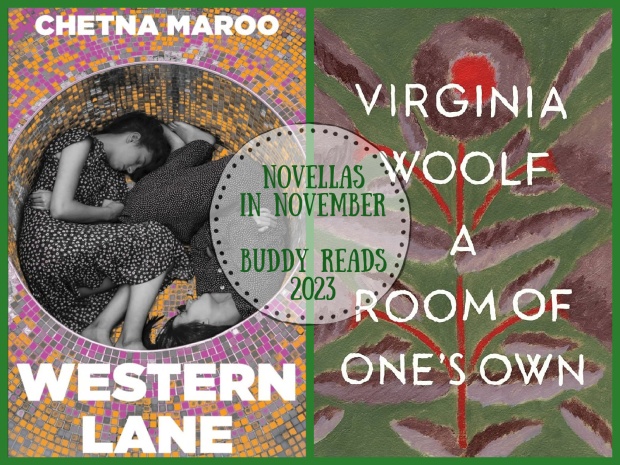
Western Lane by Chetna Maroo (2023) is on this year’s Booker Prize longlist; whether or not it advances to the shortlist on Thursday, it promises to be a one-of-a-kind debut novel about an eleven-year-old girl coming to terms with the loss of her mother and becoming deeply involved in the world of competitive squash.
A Room of One’s Own by Virginia Woolf (1929), an extended essay about the conditions necessary for women’s artistic achievement, is based on lectures she delivered at Cambridge’s women’s colleges. This feminist classic is in print or can be freely read online (Internet Archive or Project Gutenberg Canada).
It’s always a busy month in the blogging world, what with Nonfiction November, German Literature Month, and Margaret Atwood Reading Month. Why not search your shelves and/or local library for novellas that count towards multiple challenges? You might also consider participating in Annabel’s Beryl Bainbridge Reading Week (the 18th through 26th) as most of Bainbridge’s novels were under 200 pages.
We’re looking forward to having you join us! From 1 November there will be a pinned post on my site from which you can join the link-up. Keep in touch via Twitter (@cathy746books) and Instagram (@cathy_746books), and feel free to use the terrific feature images Cathy has made plus our new hashtag, #NovNov23.
Love Your Library & Miscellaneous News, July 2023
Thanks, as always, to Elle for her faithful participation (her post is here).
Today happens to be my 10th freelancing anniversary. I’m not much in the mood for celebrating as my career feels like it’s at a low ebb just now. However, I’m trying to be proactive: I contacted all my existing employers asking about the possibility of more work and a few opportunities are forthcoming. Plus I have a new paid review venue in the pipeline.
Tomorrow the Booker Prize longlist will be announced. I haven’t had a whole lot of time to think about it, but over the past few months I did keep a running list of novels I thought would be eligible, so here are 13 (a “Booker dozen”) that I think might be strong possibilities:
Old God’s Time, Sebastian Barry
The New Life, Tom Crewe
Fire Rush, Jacqueline Crooks
The Wren, The Wren, Anne Enright
The Vaster Wilds, Lauren Groff
Enter Ghost, Isabella Hammad
Hungry Ghosts, Kevin Jared Hosein
August Blue, Deborah Levy
The Sun Walks Down, Fiona McFarlane
Cuddy, Benjamin Myers
Shy, Max Porter
The Fraud, Zadie Smith
Land of Milk and Honey, C Pam Zhang
See also Clare’s and Susan’s predictions. All three of us coincide on one of these titles!
Back to the library content!
I appreciated this mini-speech by Bob Comet, the introverted librarian protagonist of Patrick deWitt’s The Librarianist, about why he loves libraries … but not people so much:
“I like the way I feel when I’m there. It’s a place that makes sense to me. I like that anyone can come in and get the books they want for free. The people bring the books home and take care of them, then bring them back so that other people can do the same. … I like the idea of people.”
I recently added a new regular task to my library volunteering roster: choosing a selection of the month’s new stock (30 fiction releases and 9 fiction) and adding them to a PDF template with the cover, title and author, and a blurb from the library catalogue or Goodreads, etc. The sheets are printed out at each branch library and displayed in a binder for patrons to browse. I was so proud to see my pages in there! There are three of us alternating this task, so I’ll be doing it four times a year. My next month is October.
On my Scotland travels last month, I took photos of two cute little libraries, one in Wigtown (L) and the other in Tarbert.


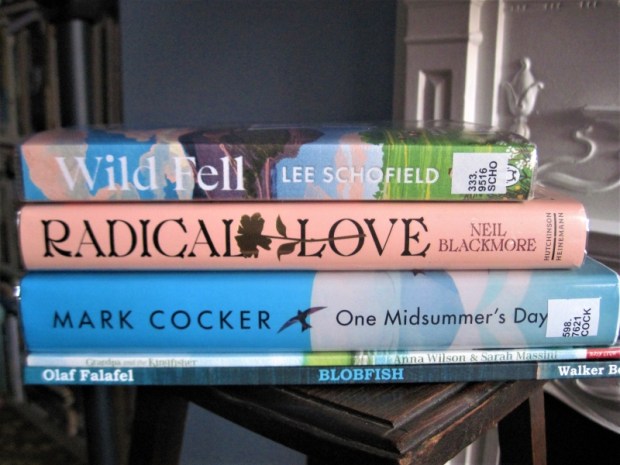
I’m currently on holiday again, with university friends in the Lake District for a week (Wild Fell, below, is for reading in advance of a trip to, and on location in, Haweswater), and you can be sure I brought plenty of library books along with me.
My reading and borrowing since last time:
READ
- The Happy Couple by Naoise Dolan
- Yellowface by Rebecca F. Kuang
- Death of a Bookseller by Alice Slater
- The Archaeology of Loss by Sarah Turlow

- The Legacy of Elizabeth Pringle by Kirsty Wark
- Sunburn by Andi Watson
- How Much of These Hills Is Gold by C. Pam Zhang (for book club)
+ 3 children’s picture books from the Wainwright Prize longlist:
- Blobfish by Olaf Falafel: Silly and with the merest scrape of an environmentalist message pasted on (the fish temporarily gets stuck in a plastic bag).

- The Zebra’s Great Escape by Katherine Rundell: Loved this super-cute, cheeky story of a little girl whose understanding of animal language allows her to become part of a natural network rescuing a menagerie held captive by an evil collector.
- Grandpa and the Kingfisher by Anna Wilson: Nice drawings and attention to nature and its seasonality, but rather mawkish. (Adult birds don’t die off annually!)
SKIMMED
- A Life of One’s Own: Nine Women Writers Begin Again by Joanna Biggs – The backstory is Biggs getting divorced in her thirties and moving to NYC. Her eight chosen female authors are VERY familiar, barring, perhaps, Zora Neale Hurston (thank goodness she chose two Black authors, as so many group biographies are all about white women). Do we need potted biographies of such well-known figures? Probably not. Nonetheless, it was clever how she wove her own story and reactions to their works into the biographical material, and the writing is so strong I could excuse any retreading of ground.

CURRENTLY READING
- One Midsummer’s Day by Mark Cocker
- King by Jonathan Eig
- Emily Wilde’s Encyclopaedia of Faeries by Heather Fawcett
- Milk by Alice Kinsella
- Wild Fell by Lee Schofield
CHECKED OUT, TO BE READ

Lots of lovely teal in this latest batch.
RETURNED UNFINISHED
- Undercurrent by Natasha Carthew – This was requested after me. I read 21% and will either pick it up on my Kindle via the NetGalley book or get it out another time.
- The Gifts by Liz Hyder – I’ll try this another time when I can give it more attention.
- Music in the Dark by Sally Magnusson – I loved The Ninth Child, but have DNFed her other two novels, alas! I even got to page 122 in this, but I had little interest in seeing how the storylines fit together.
- The Five Red Herrings by Dorothy L. Sayers – I’m awful about trying mystery series, usually DNFing or giving up after the first book. I just can’t care whodunnit.
What have you been reading or reviewing from the library recently?

Share a link to your own post in the comments. Feel free to use the above image. The hashtag is #LoveYourLibrary.
Booker Prize Longlist Reading & Shortlist Predictions
I’ve polished off another four from the Booker Prize longlist (my initial reactions and excerpts from existing reviews are here), with one more coming up for me next month.
Trust by Hernan Diaz
“History itself is just a fiction—a fiction with an army. And reality? Reality is a fiction with an unlimited budget.”
My synopsis for Bookmarks magazine:
Set in the 1920s and 1930s, this expansive novel is about the early days of New York City high finance. It is told through four interlocking narratives. The first is Bonds, a novel by Harold Vanner, whose main character is clearly based on tycoon Andrew Bevel. Bevel, outraged at his portrayal as well as the allegation that his late wife, Mildred, was a madwoman, responds by writing a memoir—the book’s second part. Part 3 is an account by Ida Partenza, Bevel’s secretary, who helps him plot revenge on Vanner. In the final section, Mildred finally gets her say. Her journal caps off a sumptuous, kaleidoscopic look at American capitalism.
 Ghostwriter Ida’s section was much my favourite, for her voice as well as for how it leads you to go back to the previous part – some of it still in shorthand (“Father. Describe early memories of him. … MATH in great detail. Precocious talent. Anecdotes.”) and reassess its picture of Bevel. His short selling in advance of the Great Depression made him a fortune, but he defends himself: “My actions safeguarded American industry and business.” Mildred’s journal entries, clearly written through a fog of pain as she was dying from cancer, then force another rethink about the role she played in her husband’s decision making. With her genius-level memory, philanthropy and love of literature and music, she’s a much more interesting character than Bevel – that being the point, of course, that he steals the limelight. This is clever, clever stuff. However, as admirable as the pastiche sections might be (though they’re not as convincing as the first section of To Paradise), they’re ever so dull to read.
With thanks to Picador for the free copy for review.
Case Study by Graeme Macrae Burnet
 That GMB is quite the trickster. From the biographical sections, I definitely assumed that A. Collins Braithwaite was a real psychiatrist in the 1960s. A quick Google when I got to the end revealed that he only exists in this fictional universe. I enjoyed the notebooks recounting an unnamed young woman’s visits to Braithwaite’s office; holding the man responsible for her sister’s suicide, she books her appointments under a false name, Rebecca Smyth, and tries acting just mad (and sensual) enough to warrant her coming back. Her family stories, whether true or embellished, are ripe for psychoanalysis, and the more she inhabits this character she’s created the more she takes on her persona. (“And, perhaps on account of Mrs du Maurier’s novel, Rebecca had always struck me as the most dazzling of names. I liked the way its three short syllables felt in my mouth, ending in that breathy, open-lipped exhalation.” I had to laugh at this passage! I’ve always thought mine a staid name.) But the different documents don’t come together as satisfyingly as I expected, especially compared to His Bloody Project. (Public library)
Those two are both literary show-off stuff (the epistolary found documents strategy, metafiction): the kind of book I would have liked more in my twenties. I’m less impressed with games these days; I prefer the raw heart of this next one.
Nightcrawling by Leila Mottley
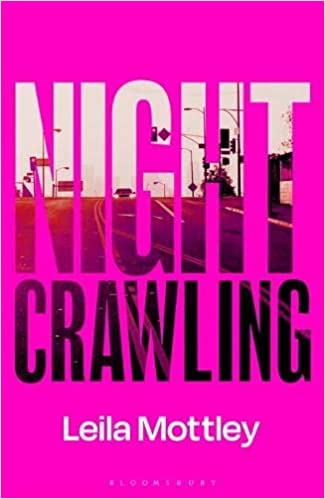 She may be only 20 years old, but Leila Mottley is the real deal. Her debut novel, laden with praise from her mentor Ruth Ozeki and many others, reminded me of Bryan Washington’s work. The first-person voice is convincing and mature as Mottley spins the (inspired by a true) story of an underage prostitute who testifies against the cops who have kept her in what is virtually sex slavery. At 17, Kiara is the de facto head of her household, with her father dead, her mother in a halfway house, and her older brother pursuing his dream of recording a rap album. When news comes of a rise in the rent and Kia stumbles into being paid for sex, she knows it’s her only way of staying in their Oakland apartment and looking after her neglected nine-year-old neighbour, Trevor.
I loved her relationships with Trevor, her best friend Alé (they crash funerals for the free food), and trans prostitute Camila, and the glimpses into prison life and police corruption. This doesn’t feel like misery for the sake of it, just realistic and compassionate documentation. There were a few places where I felt the joins showed, like a teacher had told her she needed to fill in some emotional backstory, and I noticed an irksome habit of turning adjectives into verbs or nouns (e.g., “full of all her loud,” “the sky is just starting to pastel”); perhaps this is an instinct from her start in poetry, but it struck me as precious. However, this is easily one of the more memorable 2022 releases I’ve read, and I’d love to see it on the shortlist and on other prize lists later this year and next. (Public library)
Oh William! by Elizabeth Strout
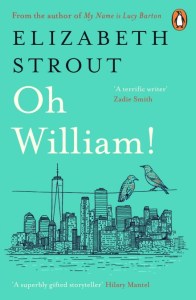 This was a DNF for me last year, but I tried again. The setup is simple: Lucy Barton’s ex-husband, William, discovers he has a half-sister he never knew about. William and Lucy travel from New York City to Maine in hopes of meeting her. For both of them, the quest sparks a lot of questions about how our origins determine who we are, and what William’s late mother, Catherine, was running from and to in leaving her husband and small child behind to forge a different life. Like Lucy, Catherine came from nothing; to an extent, everything that unfolded afterwards for them was a reaction against poverty and neglect.
The difficulty of ever really knowing another person, or even understanding oneself, is one of Strout’s recurring messages. There are a lot of strong lines and relatable feelings here. What I found maddening, though, is Lucy’s tentative phrasing, e.g. “And I cannot explain it except to say—oh, I don’t know what to say! Truly, it is as if I do not exist, I guess is the closest thing I can say.” She employs hedging statements like that all the time; it struck me as false that someone who makes a living by words would be so lacking in confidence about how to say what she means. So I appreciated the psychological insight but found Lucy’s voice annoying, even in such a short book. (Public library)
A Recap
I’ve read 6 of the 13 at this point, have imminent plans to read After Sappho for a Shelf Awareness review, and would still like to read the Mortimer if my library system acquires it. The others? Meh. I might consider catching up if they’re shortlisted.
My book group wasn’t chosen to shadow the Booker Prize this year, which is fair enough since we already officially shadowed the Women’s Prize earlier in the year (here are the six successful book clubs, if you’re interested). However, we have been offered the chance to send in up to five interview questions for the shortlisted authors. The Q&As will then be part of a website feature. And I was pleasantly surprised to see that my non-holiday snap of a Booker Prize nominee turned up in this round-up!
Here’s my (not particularly scientific) reasoning for what might make the shortlist:
A literary puzzle novel
Trust by Hernan Diaz or Case Study by Graeme Macrae Burnet
- Trust feels more impressive, and timely; GMB already had his chance.
A contemporary novel
Nightcrawling by Leila Mottley or Oh William! by Elizabeth Strout
- Oh William! is the weakest Strout novel I’ve read. Mottley’s is a fresh voice that deserves to be broadcast.

A satire
The Trees by Percival Everett or Seven Moons of Maali Almeida by Shehan Karunatilaka
- Without having read either, I’m going to hazard a guess that the Everett is too Ameri-centric/similar to The Sellout. The Booker tends to reward colourful Commonwealth books. [EDITED to add that I forgot to take into my considerations Glory by NoViolet Bulawayo; while it doesn’t perfectly fit this category, as a political allegory it’s close enough that I’ll include it here. I would not be at all surprised if it made the shortlist, along with the Karunatilaka.]

A couple of historical novels
Booth by Karen Joy Fowler or After Sappho by Selby Wynn Schwartz
and/or
A couple of Irish novels
Small Things Like These by Claire Keegan or The Colony by Audrey Magee
- I’m hearing such buzz about the Magee, and there’s such love out there for the Keegan, that I reckon both of these will make it through.


The odd one out?
Treacle Walker by Alan Garner or Maps of Our Spectacular Bodies by Maddie Mortimer
- Maybe nostalgia will spur the judges to give Garner a chance in his 80s.

My predicted shortlist:



On Tuesday evening we’ll find out if I got any of these right!
What have you read from the longlist? What do you most want to read, or see on the shortlist?
Bookish Bits and Bobs
It’s felt like a BIG week for prize news. First we had the Booker Prize longlist, about which I’ve already shared some thoughts. My next selection from it is Trust by Hernan Diaz, which I started reading last night. The shortlist comes out on 6 September. We have our book club shadowing application nearly ready to send off – have your fingers crossed for us!
Then on Friday the three Wainwright Prize shortlists (I gave my reaction to the longlists last month) were announced: one for nature writing, one for conservation writing, and – new this year – one for children’s books on either.
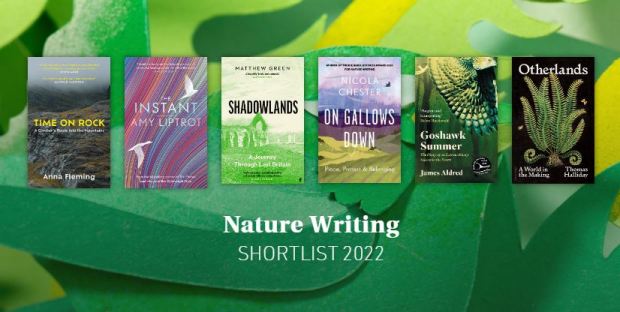
 I’m delighted that my top two overall picks, On Gallows Down by Nicola Chester and Silent Earth by Dave Goulson, are still in the running. I’ve read half of the nature list and still intend to read Shadowlands, which is awaiting me at the library. I’d happily read any of the remaining books on the conservation list and have requested the few that my library system owns. Of the children’s nominees, I’m currently a third of the way through Julia and the Shark and also have the Davies out from the library to read.
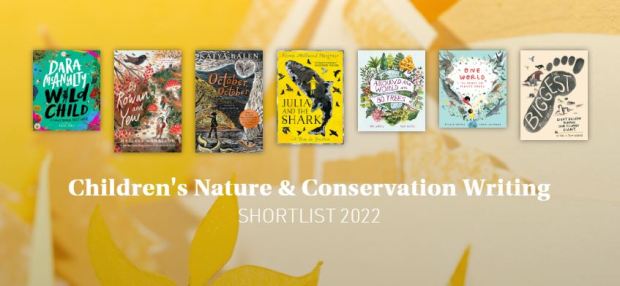
As if to make up for the recent demise of the Costa Awards, the Folio Prize has decided to split into three categories: fiction, nonfiction and poetry; the three finalists will then go head-to-head to compete for the overall prize. I’ve always wondered how the Folio judges pit such different books against each other. This makes theirs an easier job, I guess?
Speaking of prize judging, I’ve been asked to return as a manuscript judge for the 2023 McKitterick Prize administered by the Society of Authors, the UK trade union for writers. (Since 1990, the McKitterick Prize has been awarded to a debut novelist aged 40+. It’s unique in that it considers unpublished manuscripts as well as published novels – Political Quarterly editor Tom McKitterick, who endowed the Prize, had an unpublished novel at the time of his death.) Although I’d prefer to be assessing ‘real’ books, the fee is welcome. Submissions close in October, and I’ll spend much of November–December on the reading.
Somehow, it’s August. Which means:
- Less than a month left for the remaining 10 of my 20 Books of Summer. I’m actually partway through another 12 books that would be relevant to my flora theme, so I just have to make myself finish and review 10 of them.
- It’s Women in Translation month! I’m currently reading The Last Wild Horses by Maja Lunde and have The Summer Book by Tove Jansson out from the library. I also have review copies of two short novels from Héloïse Press, and have placed a library hold on The Disaster Tourist by Yun Ko-eun. We’ll see how many of these I get to.

 Marcie (Buried in Print) and I have embarked on a buddy read of Cloudstreet by Tim Winton. I’ve never read any of his major works and I’m enjoying this so far.
Goodreads, ever so helpfully, tells me I’m currently 37 books behind schedule on my year’s reading challenge. What the website doesn’t know is that, across my shelves and e-readers, I am partway through – literally – about 90 books. So if I could just get my act together to sit down and finish things instead of constantly grabbing for something new, my numbers would look a lot better. Nonetheless, I’ve read loads by anyone’s standard, and will read lots more before the end of the year, so I’m not going to sweat it about the statistics.
A new home has meant fun tasks like unpacking my library (as well as not-so-fun ones like DIY). As a reward for successfully hosting a housewarming party and our first weekend guests, I let myself unbox and organize most of the rest of the books in my new study. My in-laws are bringing us a spare bookcase soon; it’s destined to hold biographies, poetry and short story collections. I thought I’d be able to house all the rest of my life writing and literary reference books on two Billy bookcases, but it’s required some clever horizontal stacks, special ‘displays’ on the top of each case, and, alas, some double-stacking – which I swore I wouldn’t do.


Scotland and Victoriana displays, unread memoirs and literary reference books at left; medical reads display and read memoirs at right.
I need to acquire one more bookcase, a bit narrower than a Billy, to hold the rest of my read fiction plus some overflow travel and humour on the landing.
I get a bit neurotic about how my library is organized, so questions that others wouldn’t give much thought to plague me:
- Should I divide read from unread books?
- Do I hide the less sightly proof copies in a stack behind the rest?
- Is it better to have hardbacks and paperbacks all in one sequence, or separate them to maximize space?
(I’ve employed all of these options for various categories.)
I also have some feature shelves to match particular challenges, like novellas, future seasonal reads, upcoming releases and review books to catch up on, as well as signed copies and recent acquisitions to prioritize. Inevitably, once I’ve arranged everything, I find one or two strays that then don’t fit on the shelves I’ve allotted. Argh! #BibliophileProblems, eh?
I’ve been skimming through The Bookman’s Tale by Ronald Blythe, and this passage from the diary entry “The Bookshelf Cull” stood out to me:
“Should you carry a dozen volumes from one shelf to another, you will most likely be carrying hundreds before you finish. Sequences will be thrown out; titles will have to be regrouped; subjects will demand respect.”
What are your August reading plans? Following any literary prizes?
How are your shelves looking? Are they as regimented as mine, or more random?
Booker Prize Longlist Thoughts and Reading Plan
Yesterday the 2022 Booker Prize longlist was announced.

It’s an intriguing selection that for the most part avoids the usual suspects – although a few of these authors have previously been shortlisted, they’re not from the standard crop of staid white men. The website is making much of two pieces of trivia: that the longlist includes the youngest and oldest authors ever (Leila Mottley at 20 and Alan Garner at 87); and that Small Things Like These is the shortest book to be nominated.
I happen to have read two from the longlist so far, and I’m surprised by how many of the rest I want to read. I’ll go through each of the ‘Booker Dozen’ of 13 below (the brief summaries are from the Booker Prize announcement e-mail):
Glory by NoViolet Bulawayo
“This energetic and exhilarating joyride … is the story of an uprising, told by a vivid chorus of animal voices that help us see our human world more clearly.”
- Zimbabwean author Bulawayo was shortlisted for her debut novel, We Need New Names, in 2013. I’ve never been drawn to read that one, and have to wonder why we needed an extended Animal Farm remake…
Trust by Hernan Diaz
“A literary puzzle about money, power, and intimacy, Trust challenges the myths shrouding wealth, and the fictions that often pass for history.”
- I’m looking forward to this one after all the buzz from its U.S. release, and have a copy on the way to me from Picador.
The Trees by Percival Everett
“A violent history refuses to be buried in … Everett’s striking novel, which combines an unnerving murder mystery with a powerful condemnation of racism and police violence.”
- Susan is a fan of Everett’s. He’s known for his satirical fiction, whereas the only book of his that I happen to have read was poetry – not representative of his work. I’d happily read this if given the chance, but Everett’s stuff is hard to find over here.
Booth by Karen Joy Fowler
“Fowler’s epic novel about an ill-fated family of thespians, drinkers and dreamers, whose most infamous son is destined to commit a terrible and violent act.”
- I reviewed this for BookBrowse earlier in the year. (It’s Fowler’s second nomination, after We Are All Completely Beside Ourselves, a very different novel.) The present-tense narration helps it be less of a dull group biography, and there are two female point-of-view characters. The issues of racial equality, political divisions and mistrust of the government are just as important in our own day. However, the foreshadowing is sometimes heavy-handed, the extended timeline means there is some skating over of long periods, and the novel as a whole is low on scenes and dialogue, with Fowler conveying a lot of information through exposition. I gave it a tepid .
Treacle Walker by Alan Garner
“This latest fiction from a remarkable and enduring talent brilliantly illuminates an introspective young mind trying to make sense of the world around him.”
- Garner is a beloved fantasy writer in the UK. Though I didn’t care for The Owl Service when I read it in 2019, given that this is just over 150 pages, there would be no harm in taking a chance on it.
Seven Moons of Maali Almeida by Shehan Karunatilaka
“Karunatilaka’s rip-roaring epic is a searing, mordantly funny satire set amid the murderous mayhem of a Sri Lanka beset by civil war.”
- This is the sort of Commonwealth novel I’m wary of, fearing Rushdie-like indulgence. My library system tends to order all the Booker nominees, so I would gladly borrow this and try the early pages to see how I get on.
Small Things Like These by Claire Keegan
“Keegan’s tender tale of hope and quiet heroism is both a celebration of compassion and a stern rebuke of the sins committed in the name of religion.”
- I read and reviewed this late last year and appreciated it as a spare and heartwarming yuletide fable. A coal merchant in 1980s Ireland comes to value his quiet family life all the more when he sees how difficult existence is for the teen mothers sent to work in the local convent’s laundry service. I was familiar with the Magdalene Laundries from the movie The Magdalene Sisters and found this a fairly predictable narrative, with the nuns cartoonishly villainous. So I’m not as enthusiastic as many others have been, but feel like a Scrooge for saying so.
Case Study by Graeme Macrae Burnet
“Graeme Macrae Burnet offers a dazzlingly inventive – and often wickedly humorous – meditation on the nature of sanity, identity and truth itself.”
- Macrae Burnet was a dark horse in the 2016 Booker race for the terrific His Bloody Project. This new novel was one of Clare’s top picks for the longlist and sounds like a clever and playful book about a psychoanalyst and his patient; again the author blends fact and fiction and relies on ‘found documents’. I have it on request from the library.
The Colony by Audrey Magee
“In … Magee’s lyrical and brooding fable, two outsiders visit a small island off the west coast of Ireland, with unforeseen and haunting consequences.”
- One of Clare and Susan’s joint correct predictions (Susan’s review). On the face of it, it sounds too similar to one I read from last year’s longlist, An Island. I can’t say I’m particularly interested, though if this were to be shortlisted I might have a go.
Maps of Our Spectacular Bodies by Maddie Mortimer
“Under attack from within, Lia tries to keep the landscapes of her past, her present and her body separate. But time and bodies are porous, and unpredictable.”
- This Desmond Elliott Prize winner was already on my TBR for its medical theme and is one of two nominees I’m most excited about. It potentially sounds long and challenging, but has been received well by my Goodreads friends. I’ll hope my library system acquires a copy soon.
Nightcrawling by Leila Mottley
“At once agonising and mesmerising, Nightcrawling presents a haunting vision of marginalised young people navigating the darkest corners of an adult world.”
- Like many, I had this brought to my attention anew by Ruth Ozeki’s shout-out during her Women’s Prize acceptance speech (Mottley was her student). I’d already heard some chatter about it from its Oprah’s Book Club selection. The subject matter – sex workers in Oakland, California – will be tough, but I hope the prose and storytelling will make up for it. I have it on request from the library.
After Sappho by Selby Wynn Schwartz
“A joyous reimagining of the lives of a brilliant group of feminists, sapphists, artists and writers from the past, as they battle for control over their lives, for liberation and for justice.”
- The other novel I’m most excited about. It was totally new to me but sounds fantastic. It only came out this month, so I’ll see if Galley Beggar might be willing to send out a review copy.
Oh William! by Elizabeth Strout
“Strout returns to her beloved heroine Lucy Barton in a luminous novel about love, loss, and the family secrets that can erupt and bewilder us at any time.”
- I DNFed this one after just 20 or so pages last year, finding Lucy too annoyingly scatter-brained this time around (I’d enjoyed My Name Is Lucy Barton but not read the sequel). But I’m willing to give it another try, so have placed a library hold.
There we have it: 2 read, 4 I have immediate plans to read, 3 I’m keen to read if I can find them, 4 I’m less likely to read – but, unlike in most years, there are no entries I’m completely uninterested in or averse to reading.
Earlier this year my book club took part in a Women’s Prize shadowing project run by the Reading Agency. They’re organizing a similar thing on behalf of the Booker Prize, but the six groups (for six shortlisted books) will be chosen by the Prize organizers this time, so we’ve been encouraged to apply again. It’s a better deal in that members of successful groups will be invited to attend the shortlist party and then the awards ceremony. I’ll meet up with my co-leader later this week to work on our application.
What have you read from the longlist? Which book(s) do you most want to find?
Six Degrees: Ethan Frome to A Mother’s Reckoning
This month we began with Ethan Frome by Edith Wharton, which was our buddy read for the short classics week of Novellas in November. I reread and reviewed it recently. (See Kate’s opening post.)
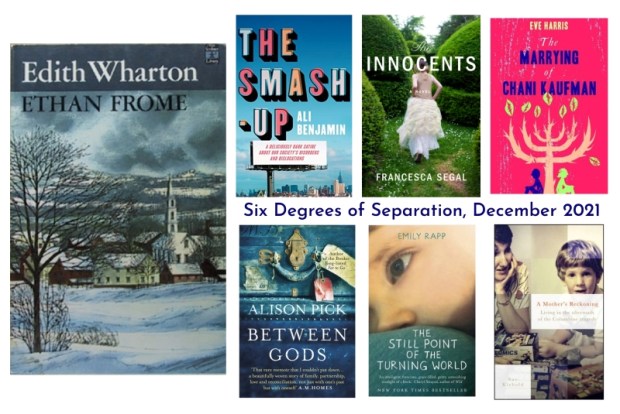
 #1 When I posted an excerpt of my Ethan Frome review on Instagram, I got a comment from the publicist who was involved with the recent UK release of The Smash-Up by Ali Benjamin, a modern update of Wharton’s plot. Here’s part of the blurb: “Life for Ethan and Zo used to be simple. Ethan co-founded a lucrative media start-up, and Zo was well on her way to becoming a successful filmmaker. Then they moved to a rural community for a little more tranquility—or so they thought. … Enter a houseguest who is young, fun, and not at all concerned with the real world, and Ethan is abruptly forced to question everything: his past, his future, his marriage, and what he values most.” I’m going to try to get hold of a review copy when the paperback comes out in February.
 #2 One of my all-time favourite debut novels is The Innocents by Francesca Segal, which won the Costa First Novel Award in 2012. It is also a contemporary reworking of an Edith Wharton novel, this time The Age of Innocence. Segal’s love triangle, set in a world I know very little about (the tight-knit Jewish community of northwest London), stays true to the emotional content of the original: the interplay of love and desire, jealousy and frustration. Adam Newman has been happily paired with Rachel Gilbert for nearly 12 years. Now engaged, Adam and Rachel seem set to become pillars of the community. Suddenly, their future is threatened by the return of Rachel’s bad-girl American cousin, Ellie Schneider.
 #3 Also set in north London’s Jewish community is The Marrying of Chani Kaufman by Eve Harris, which was longlisted for the Booker Prize in 2013. Chani is the fifth of eight daughters in an ultra-Orthodox Jewish family in Golders Green. The story begins and closes with Chani and Baruch’s wedding ceremony, and in between it loops back to detail their six-month courtship and highlight a few events from their family past. It’s a light-hearted, gossipy tale of interclass matchmaking in the Jane Austen vein.
 #4 I learned more about Jewish beliefs and rituals via several memoirs, including Between Gods by Alison Pick. Her paternal grandparents escaped Czechoslovakia just before the Holocaust; she only found out that her father was Jewish through eavesdropping. In 2008 the author (a Toronto-based novelist and poet) decided to convert to Judaism. The book vividly depicts a time of tremendous change, covering a lot of other issues Pick was dealing with simultaneously, such as depression, preparation for marriage, pregnancy, and so on.
 #5 One small element of Pick’s story was her decision to be tested for the BRCA gene because it’s common among Ashkenazi Jews. Tay-Sachs disease is usually found among Ashkenazi Jews, but because only her husband was Jewish, Emily Rapp never thought to be tested before she became pregnant with her son Ronan. Had she known she was also a carrier, things might have gone differently. The Still Point of the Turning World was written while her young son was still alive, but terminally ill.
 #6 Another wrenching memoir of losing a son: A Mother’s Reckoning by Sue Klebold, whose son Dylan was one of the Columbine school shooters. I was in high school myself at the time, and the event made a deep impression on me. Perhaps the most striking thing about this book is Klebold’s determination to reclaim Columbine as a murder–suicide and encourage mental health awareness; all author proceeds were donated to suicide prevention and mental health charities. There’s no real redemptive arc, though, no easy answers; just regrets. If something similar could happen to any family, no one is immune. And Columbine was only one of many major shootings. I finished this feeling spent, even desolate. Yet this is a vital book everyone should read.
So, I’ve gone from one unremittingly bleak book to another, via sex, religion and death. Nothing for cheerful holiday reading – or a polite dinner party conversation – here! All my selections were by women this month.
Where will your chain take you? Join us for #6Degrees of Separation! (Hosted on the first Saturday of each month by Kate W. of Books Are My Favourite and Best.)
Next month’s starting point is Rules of Civility by Amor Towles; I have a copy on the shelf and this would be a good excuse to read it!
Have you read any of my selections? Are you tempted by any you didn’t know before?
Booker Prize 2021: Longlist Reading and Shortlist Predictions
The 2021 Booker Prize shortlist will be announced tomorrow, September 14th, at 4 p.m. via a livestream. I’ve managed to read or skim eight of 13 from the longlist, only one of which I sought out specifically after it was nominated (An Island – the one no one had heard of; it turns out it was released by a publisher based just 1.5 miles from my home!). I review my four most recent reads below, followed by excerpts of reviews of ones I read a while ago and my brief thoughts on the rest, including what I expect to see on tomorrow’s shortlist.
Klara and the Sun by Kazuo Ishiguro
 Why ever did I put this on my Most Anticipated list of the year and pre-order a signed copy?! I’m a half-hearted Ishiguro fan at best (I love Nocturnes but am lukewarm on the other four I’ve read, including his Booker winner) and should have known that his take on AI would be no more inspiring than Ian McEwan’s (Machines Like Me) a couple of years back.
Klara is an Artificial Friend purchased as part of an effort to combat the epidemic of teenage loneliness – specifically, to cheer up her owner, Josie, who suffers from an unspecified illness and is in love with her neighbour, Rick, a bright boy who remains excluded. Klara thinks of the sun as a god, praying to it and eventually making a costly bargain to try to secure Josie’s future health.
Part One’s 45 pages are slow and tedious; the backstory could have been dispensed with in five fairy tale-like pages. There’s a YA air to the story: for much of the length I might have been rereading Everything, Everything. In fact, when I saw Ishiguro introduce the novel at a Guardian/Faber launch event, he revealed that it arose from a story he wrote for children. The further I got, the more I was sure I’d read it all before. That’s because the plot is pretty much identical to the final story in Mary South’s You Will Never Be Forgotten.
Klara’s highly precise diction, referring to everyone in the third person, also gives this the feeling of translated fiction. While that is part of Ishiguro’s aim, of course – to explore the necessarily limited perspective and speech of a nonhuman entity (“Her ability to absorb and blend everything she sees around her is quite amazing”) – it makes the prose dull and belaboured. The secondary characters include various campy villains, the ‘big reveals’ aren’t worth waiting for, and the ending is laughably reminiscent of Toy Story. This took me months and months to force myself through. What a slog! (New purchase)
An Island by Karen Jennings (2019)
 Seventy-year-old Samuel has been an island lighthouse keeper for 14 years when a brown-skinned stranger washes up on his beach. Sole survivor from a sunken refugee boat, the man has no English, so they communicate through gestures. Jennings convincingly details the rigors of the isolated life here: Samuel dug his own toilet pipes, burns his trash once a week, and gets regular deliveries from a supply boat. Nothing is wasted and everything is appreciated here, even the thirdhand magazines and videotapes he inherits from the mainland.
Although the core action takes place in just four days, Samuel is so mentally shaky that his memories start getting mixed up with real life. We learn that he has been a father, a prisoner and a beggar. Jennings is South African, and in this parallel Africa, racial hierarchy still holds sway and a general became a dictator through a military coup. Samuel’s father was involved in the independence movement, while Samuel himself was arrested for resisting the dictator.
The novella’s themes – jealousy, mistrust, possessiveness, suspicion, and a return to primitive violence – are of perennial relevance. Somehow, it didn’t particularly resonate for me. It’s not dissimilar in style to J. M. Coetzee’s vague but brutal detachment, and it’s a highly male vision à la Doggerland. Though highly readable, it’s ultimately a somewhat thin fable with a predictable message about xenophobia. Still, I’m glad I discovered it through the Booker longlist. 
My thanks to Holland House for the free copy for review.
Bewilderment by Richard Powers
 This has just as much of an environmentalist conscience as The Overstory, but a more intimate scope, focusing on a father and son who journey together in memory and imagination as well as in real life. The novel leaps between spheres: between the public eye, where neurodivergent Robin is a scientific marvel and an environmental activist, and the privacy of family life; between an ailing Earth and the other planets Theo studies; and between the humdrum of daily existence and the magic of another state where Robin can reconnect with his late mother. When I came to the end, I felt despondent and overwhelmed. But as time has passed, the book’s feral beauty has stuck with me. The pure sense of wonder Robin embodies is worth imitating. (Review forthcoming for BookBrowse.)
China Room by Sunjeev Sahota
 Sahota appeared on Granta’s list of Best Young British Novelists in 2013 and was previously shortlisted for The Year of the Runaways, a beautiful novel tracking the difficult paths of four Indian immigrants seeking a new life in Sheffield.
Three brides for three brothers: as Laura notes, it sounds like the setup of a folk tale, and there’s a timeless feel to this short novel set in the Punjab in the late 1920s and 1990s – it also reminded me of biblical stories like those of Jacob and Leah and David and Bathsheba. Mehar is one of three teenage girls married off to a set of brothers. The twist is that, because they wear heavy veils and only meet with their husbands at night for procreation, they don’t know which is which. Mehar is sure she’s worked out which brother is her husband, but her well-meaning curiosity has lasting consequences.
In the later storyline, a teenage addict returns from England to his ancestral estate to try to get clean before going to university and becomes captivated by the story of his great-grandmother and her sister wives, who were confined to the china room. The characters are real enough to touch, and the period and place details make the setting vivid. The two threads both explore limitations and desire, and the way the historical narrative keeps surging back in makes things surprisingly taut. See also Susan’s review. (Read via NetGalley)
Other reads, in brief:
(Links to my full reviews)
 Second Place by Rachel Cusk: Significantly more readable than the Outline trilogy and with psychological depths worth pondering, though Freudian symbolism makes it old-fashioned. M’s voice is appealing, as is the marshy setting and its isolated dwellings. This feels like a place outside of time. The characters act and speak in ways that no real person ever would – the novel is most like a play: melodramatic and full of lofty pronouncements. Interesting, but nothing to take to heart; Cusk’s work is always intimidating in its cleverness.
 A Town Called Solace by Mary Lawson: In 1972, Clara, a plucky seven-year-old, sits vigil for the return of her sixteen-year-old sister, who ran away from home; and their neighbour, who’s in the hospital. One day Clara sees a strange man moving boxes in next door. This is Liam Kane, who inherited the house from a family friend. Like Lawson’s other works, this is a slow burner featuring troubled families. It’s a tender and inviting story I’d recommend to readers of Tessa Hadley, Elizabeth Strout and Anne Tyler.
 No One Is Talking About This by Patricia Lockwood: This starts as a flippant skewering of modern life. A woman who became a social media star by tweeting quips like “Can a dog be twins?” reflects on life on “the portal” and under “the dictator.” Midway through the book, she gets a wake-up call when her mother summons her back to the Midwest for a family emergency. It’s the about-face that makes this novel, forcing readers to question the value of a digital existence based on glib pretence. Funny, but with an ache behind it.
 Light Perpetual by Francis Spufford: While I loved the premise, the execution didn’t live up to it. Spufford calls this an act of “literary resurrection” of five figures who survive a South London bombing. But these particular characters don’t seem worth spending time with; their narratives don’t connect up tightly, as expected, and feel derivative, serving only as ways to introduce issues (e.g. mental illness, sexual assault, racial violence, eating disorders) and try out different time periods. I would have taken a whole novel about Ben.
 This leaves five more: Great Circle (by Maggie Shipstead) I found bloated and slow when I tried it in early July, but I’m going to give it another go when my library hold comes in. The Sweetness of Water (Nathan Harris) I might try if my library acquired it, but I’m not too bothered – from Eric’s review on Lonesome Reader, it sounds like it’s a slavery narrative by the numbers. I’m not at all interested in the novels by Anuk Arudpragasam, Damon Galgut, or Nadifa Mohamed but can’t say precisely why; their descriptions just don’t excite me.
Here’s what I expect to still be in the running after tomorrow. Clear-eyed, profound, international; bridging historical and contemporary; much that’s unabashedly highbrow.
- Second Place by Rachel Cusk
 The Promise by Damon Galgut (will win)
- No One Is Talking About This by Patricia Lockwood
- Bewilderment by Richard Powers
- China Room by Sunjeev Sahota
- Light Perpetual by Francis Spufford
What have you read from the longlist? What do you expect to be shortlisted?
Book Serendipity, July to August 2021
I call it Book Serendipity when two or more books that I read at the same time or in quick succession have something pretty bizarre in common. Because I have so many books on the go at once (usually 20–30), I suppose I’m more prone to such incidents. I’ve realized that, of course, synchronicity is really the more apt word, but this branding has stuck. This used to be a quarterly feature, but to keep the lists from getting too unwieldy I’ve shifted to bimonthly.
The following are in roughly chronological order.
- I read two novels about the disappearance of a 15-year-old girl at the same time: Heatstroke by Hazel Barkworth and When the Stars Go Dark by Paula McLain.
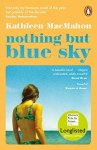
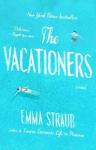
- Two novels in a row were set on a holiday in Spain: Nothing but Blue Sky by Kathleen MacMahon and The Vacationers by Emma Straub.
- I encountered mentions of the removal of the Edward Colston statue in God Is Not a White Man by Chine McDonald and I Belong Here by Anita Sethi on the same evening.
- Characters have the habit of making up names and backstories for strangers in Ruby by Ann Hood and Nothing but Blue Sky by Kathleen MacMahon.
- The main female character says she works out what she thinks by talking in Second Place by Rachel Cusk and The Amateur Marriage by Anne Tyler.

- A passive mother is bullied by her controlling husband in Nothing but Blue Sky by Kathleen MacMahon and Female Friends by Fay Weldon.
- Two reads in a row were a slim volume on the necessity of giving up denial: What White People Can Do Next by Emma Dabiri (re: racism) and What If We Stopped Pretending by Jonathan Franzen (re: climate change).

- Expressions of a strange sense of relief at disaster in Forecast by Joe Shute (re: flooding) and The Amateur Marriage by Anne Tyler (re: a car accident).
- The biomass ratios of livestock to humans to other mammals are cited in Silent Earth by Dave Goulson, The Anthropocene Reviewed by John Green, and Bewilderment by Richard Powers.
- Two Booker nominees referencing china crockery: An Island by Karen Jennings and China Room by Sunjeev Sahota (yep, it’s talking about the plates rather than the country).


- Teens sneak vodka in Heartstopper, Volume 3 by Alice Oseman and The Interestings by Meg Wolitzer.
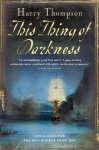
- Robert FitzRoy appears in The Glitter in the Green by Jon Dunn and Forecast by Joe Shute, and is the main subject of This Thing of Darkness by Harry Thompson, a doorstopper that has been languishing on my set-aside pile.
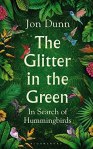

- Dave Goulson’s bumblebee research is mentioned in The Glitter in the Green by Jon Dunn, which I was reading at the same time as Goulson’s new book, Silent Earth.
- Reading two cancer memoirs that mention bucket lists at the same time: No Cure for Being Human by Kate Bowler and Year of Plagues by Fred D’Aguiar.


- Mentions of the damaging practice of clearing forest to plant eucalyptus in The Glitter in the Green by Jon Dunn and Forecast by Joe Shute.
- Mentions of mosquito coils being used (in Borneo or Australia) in Small Bodies of Water by Nina Mingya Powles and The Weekend by Charlotte Wood.


- Different words to the tune of Leonard Cohen’s “Hallelujah” in In Every Mirror She’s Black by Lola Akinmade Åkerström and How We Do Family by Trystan Reese.
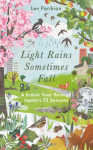 A brief mention of China and Japan’s 72 mini-seasons in Small Bodies of Water by Nina Mingya Powles: this will then be the setup for Light Rains Sometimes Fall by Lev Parikian, which I’ll be reading later in September.
- Beached whales feature in Fathoms by Rebecca Giggs and Small Bodies of Water by Nina Mingya Powles.
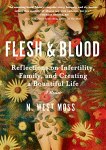
- A chapter in No Cure for Being Human by Kate Bowler is entitled “Flesh & Blood,” which is the title of the whole memoir by N. West Moss that I picked up next – and both are for Shelf Awareness reviews.
- A description of a sonogram appointment where the nurse calls the doctor in to interpret the results and they know right away that means the pregnancy is unviable, followed by an account of a miscarriage, in Flesh & Blood by N. West Moss and How We Do Family by Trystan Reese.

- Robin Wall Kimmerer and Robert Macfarlane quoted in Church of the Wild by Victoria Loorz and Small Bodies of Water by Nina Mingya Powles.
What’s the weirdest reading coincidence you’ve had lately?
Six Degrees of Separation: From a Redhead to a Blue Dress
This month we begin with Redhead by the Side of the Road (2020). (See Kate’s opening post.) Anne Tyler’s lackluster latest somehow got longlisted for the Booker Prize. Still, I’m a solid Tyler fan and I’m taking advantage of Liz’s readalong to get to the books of hers that I own but haven’t read yet. Currently reading: The Clock Winder (1972).
#1 Sorry to break it to you if you haven’t read the book yet, but the title refers not to a person with red hair but to a fire hydrant: Micah, a typically useless Tyler antihero, makes this visual mistake commonly when he’s out running without his glasses on.
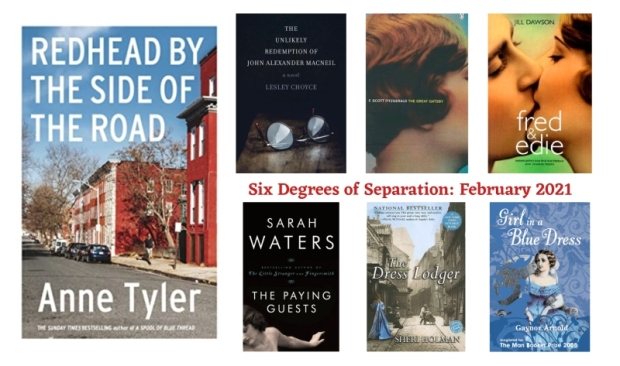
 The Unlikely Redemption of John Alexander MacNeil by Lesley Choyce (2017) is beloved of a couple of Canadian book blogger friends, including Naomi (here’s her review). I came across it on my Goodreads TBR the other day and the blurb caught my eye. An old man starts doing peculiar things, like picking up a hitchhiker … except that it’s actually a neighbour’s mailbox. This reminded me of Micah’s folly, not least because of the glasses on the cover.
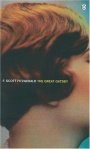 #2 One of the key images in The Great Gatsby (1925) is of the eyes of optician Dr. T. J. Eckleburg peering out from an old billboard. They’re explicitly equated to the eyes of God looking down on the immoral lifestyle of characters blinded by the pursuit of money and happiness. Gatsby was our neighbourhood book club choice this month. Whether we’d read it multiple times before (it was my third read) or not at all, we found a lot to talk about – and two members took the opportunity to dress up in vintage 1920s fashions for the Zoom meeting!
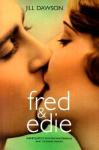 #3 Although those bespectacled eyes appeared on the copy I read in high school, the book group set cover featured a couple of 1920s figures: a woman on the front cover and a man on the back. They look rather like a young Scott and Zelda Fitzgerald, but I can’t find evidence that it’s an original photograph. In any case, I thought the image looked awfully familiar, and finally located it as the cover of Fred & Edie by Jill Dawson (2000), which is set in 1922 and was inspired by a true crime. In a sensational trial, Edith Thompson and her lover, Freddy Bywaters, were found guilty of murdering Edith’s husband and the pair were executed the following year. Cathy’s review whetted my appetite to read it.
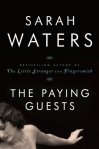 #4 Also featuring a murder committed in 1922 is The Paying Guests by Sarah Waters (2014). I will say no more – not least because I don’t fully remember what happens, though I have a vague sense that it is quite similar in plot to the Dawson – except that this was a stand-out from Waters. (My review for BookBrowse.)
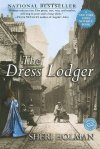 #5 “Paying guests” was an old-fashioned euphemism used by people who didn’t like to admit they had lodgers. Another random recent find on my virtual TBR was The Dress Lodger by Sheri Holman (2000), which is about a 15-year-old prostitute trying to provide for herself and her disabled baby boy during a cholera epidemic in Sunderland, England in 1831. Victorian pastiches can go either way for me, but when they’re good I adore them. There are enough positive friend reviews of this on Goodreads for me to keep it on the list: it sounds reminiscent of The Crimson Petal and the White, and the epidemic theme sure is relevant.
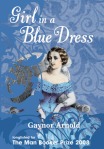 #6 The blue dress on the cover led me to Girl in a Blue Dress by Gaynor Arnold (2008), a novel about Charles Dickens’s longsuffering wife, Catherine. (Though the central pair are given different names, it’s very clear who they’re based on.) I’m a sucker for any book about Dickens. Like Redhead, this was longlisted for the Booker Prize.
This month I’ve gone round to a different primary colour, by way of a classic and much historical fiction (with 1920s settings aplenty, and lots of marcelled hair!).
Where will your chain take you? Join us for #6Degrees of Separation! (Hosted on the first Saturday of each month by Kate W. of Books Are My Favourite and Best.) Next month’s starting point is Phosphorescence by Julia Baird.
Have you read any of my selections? Are you tempted by any you didn’t know before?
 Bookish Beck = Rebecca Foster. American transplant to England. Freelance proofreader and book reviewer.
 Bookish Beck