Cover Love: My 13 Favourite Book Covers of 2022
As I did in 2019, 2020, and 2021, I’ve picked out some favourite book covers from the year’s new releases. Fewer have stood out to me this year for some reason, so it’s just a baker’s dozen here, and all of them are from books I’ve actually read.
Usually it’s the flora and fauna covers that get me. Not so many of those this year, though!

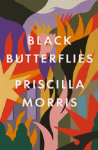
Instead, it was mostly about colour blocks and textures.

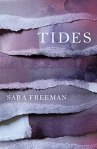


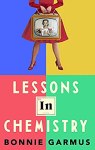
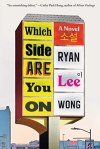
And a few of my favourites feature partial images of female bodies:

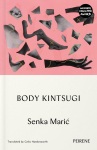

I also appreciate the use of a blocky 1980s-reminiscent font on these two. It’s appropriate to the contents in each case. Powell’s poems are loosely inspired by/structured like an old-school hip-hop album, and Zevin’s novel is about the love of vintage video games.
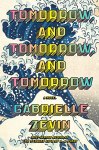
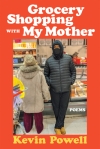
What cover trends have you noticed this year? Which ones tend to grab your attention?
This Year’s Pre-Christmas Reading
My household has been struck down by flu Covid this week, so we’ve had to cancel some all of our holiday plans and I haven’t had as much energy or festive good cheer as I would like. This is my favourite time of the blogging year what with everyone’s best-of lists appearing, so I hope that come Boxing Day I will be feeling up for starting my own countdown of superlatives and catching up on everything you all have posted recently.
Two of my recent reads were appropriate Yuletide choices:
 Robin by Helen F. Wilson: The most recent release from the “Animal” series issued by the British indie publisher Reaktion. (I’d previously read Seal.) Wilson introduces the breadth of international bird species that are known by the name “robin.” (The European robin, the protagonist of this monograph, is the only bird in its genus and is not as closely related to the American robin (a thrush) as to the bluebird; the name simply referenced the red breast. There are also magpie-robins in Southeast Asia.) Like another strikingly red bird, the cardinal in North America, the robin has long been associated with a) death and b) Christmas. They might be a portent of death, or an embodiment of the soul of the departed. For instance, the legend has it that a robin spent days in Westminster Abbey while Queen Mary II lay in state. Robins are the UK’s official favourite bird because they look cute and act endearing and sing sweetly, but they are violently territorial. (The old nursery rhyme “Who Killed Cock Robin?” also set up a weird and false vendetta between sparrows and robins.) This was a pleasant wander through biological and cultural information. I particularly loved the photos and other illustrations.
 Small Things Like These by Claire Keegan: I read this last year but reread it earlier this month for book club. A year ago, I called it a predictable narrative and thought the evil nuns were a stereotype. This time, Keegan really got me in the feels, just as she had with Foster a couple of months before. The Church-sanctioned abuse that was the Magdalen Laundries must have seemed like a system too big to tackle, but take a look at the title. One good man’s small act of rebellion was a way of standing up to the injustice and saying that these girls were of worth (indeed, this won the Orwell Prize for political fiction). This time around, I was especially impressed by how much Keegan fits into so few pages, including Bill working out who his father was. We also get a strong sense of a man in the middle of his life: privileged enough, happy enough, but wondering if this is all there is to it; if there is something more on offer. Like Foster, this is set in the 1980s but feels timeless, and seems to effortlessly encompass so much of what it means to be human. Absolutely beautiful.


Merry Christmas, all!
Novellas in November 2022: That’s a Wrap!
This was Cathy’s and my third year co-hosting Novellas in November. We’ve done our best keeping up with your posts, which Cathy has collected as links on her master post.

The challenge seemed doomed at points, what with my bereavement and Cathy catching Covid a second time, but we persisted! At last count, we had 42 bloggers who took part this year, contributing just over 150 posts covering some 170+ books.
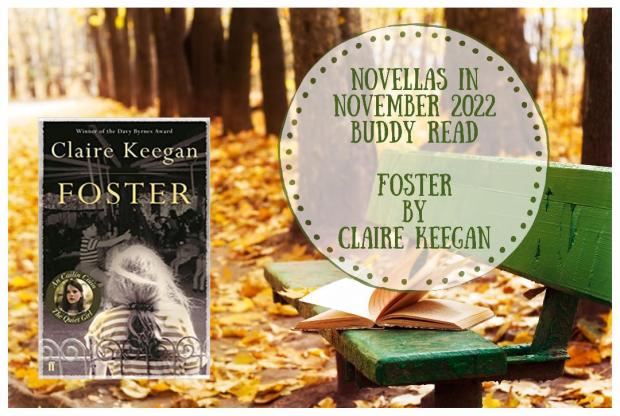
Ten of us read our chosen buddy read, Foster by Claire Keegan (with four bloggers reading Keegan’s Small Things Like These also/instead). I’ve gathered the review links here.
Our next most popular novella was a recent release, Maureen [Fry and the Angel of the North] by Rachel Joyce, which was reviewed four times. Other books highlighted more than once were Follow the Rabbit-Proof Fence, Mrs Caliban, The Swimmers, The Time Machine, Winter in Sokcho, Ti Amo, Body Kintsugi, Notes on Grief, and Another Brooklyn.
Thank you all for being so engaged with #NovNov22! We’ll see you back here next year.
A Contemporary Classic: Foster by Claire Keegan (#NovNov22)
This year for Novellas in November, Cathy and I chose to host one overall buddy read, Foster by Claire Keegan. I ended up reviewing it for BookBrowse. My full review is here and I also wrote a short related article on Keegan’s career and the unusual publishing history of this particular novella. Here are short excerpts from both:
Claire Keegan’s delicate, heart-rending novella tells the story of a deprived young Irish girl sent to live with rural relatives for one pivotal summer. Although Foster feels like a timeless fable, a brief mention of IRA hunger strikers dates it to 1981. It bears all the hallmarks of a book several times its length: a convincing and original voice, rich character development, an evocative setting, just enough backstory, psychological depth, conflict and sensitive treatment of difficult themes like poverty and neglect. I finished the one-sitting read in a flood of tears, hoping the Kinsellas’ care might be enough to protect the girl from the harshness she may face in the rest of her growing-up years. Keegan unfolds a cautionary tale of endangered childhood, also hinting at the enduring difference a little compassion can make. [128 pages]
 Foster is now in print for the first time in the USA (from Grove Atlantic), having had an unusual path to publication. It first appeared in the New Yorker in 2010, but in abridged form. Keegan told the Guardian she felt the condensed version “was very well done but wasn’t the whole story. It had some of the layers taken out, but I think the heart was the same.” She herself has described Foster as a long short story; “It is definitely not a novella. It doesn’t have the pace of a novella.” Faber & Faber first published it as a standalone volume in the UK in 2010. A 2022 Irish-language film version of Foster, called The Quiet Girl (which names the main character Cait) became a favorite on the international film festival circuit.
[Edited on December 1st]
A number of you joined us in reading Foster this month:
Lynne at Fictionophile
Karen at The Simply Blog
Davida at The Chocolate Lady’s Book Reviews
Tony at Tony’s Book World
Brona at This Reading Life
Janet at Love Books Read Books
Jane at Just Reading a Book
Kate at Books Are My Favourite and Best
Carol at Reading Ladies
(Cathy also reviewed it last year.)
Our bloggers have been impressed with the spare, precise writing style and the emotional heft of this little tale. Their only complaint? The slight ambiguity of the ending. Read it yourself to find out what you think! If you’d still like to take part in the buddy read and have an hour or two free, remember you can access the original version of the story here.
Get Ready for Novellas in November!
Novellas: “all killer, no filler” (said Joe Hill). For the third year in a row, Cathy of 746 Books and I are co-hosting Novellas in November as a month-long challenge, with four weekly prompts we’ll take it in turns to focus on. We’re announcing early to give you plenty of time to get your stacks ready.
Here’s the schedule:
1–7 November: Short classics (Rebecca)
8–14 November: Novellas in translation (Cathy)
15–21 November: Short nonfiction (Rebecca)
22–28 November: Contemporary novellas (Cathy)
29–30 November: You might like to post a “New to my TBR” or “My NovNov Month” roundup.
(As a reminder, we suggest 150–200 pages as the upper limit for a novella, and post-1980 as a definition of “contemporary.”)
This year we have one overall buddy read. Claire Keegan has experienced a resurgence of attention thanks to the Booker Prize shortlisting of Small Things Like These – one of our most-reviewed novellas from last year. Foster is a modern Irish classic that comes in at under 90 pages, and, in an abridged version, is free to read on the New Yorker website. You can find that here. (Or whet your appetite with Cathy’s review.)
Keegan describes Foster as a “long short story” rather than a novella, but it was published as a standalone volume by Faber in 2010. A new edition will be released by Grove Press in the USA on November 1st, and the book is widely available for Kindle. It is also the source material for the recent record-breaking Irish-language film The Quiet Girl, so there are several ways for you to encounter this story.
We’re looking forward to having you join us! We will each put up a pinned post where you can leave links starting on 1 November. Keep in touch via Twitter (@bookishbeck / @cathy746books) and Instagram (@bookishbeck / @cathy_746books), and feel free to use the terrific feature images Cathy has made and our new hashtag, #NovNov22.
Booker Prize Longlist Reading & Shortlist Predictions
I’ve polished off another four from the Booker Prize longlist (my initial reactions and excerpts from existing reviews are here), with one more coming up for me next month.
Trust by Hernan Diaz
“History itself is just a fiction—a fiction with an army. And reality? Reality is a fiction with an unlimited budget.”
My synopsis for Bookmarks magazine:
Set in the 1920s and 1930s, this expansive novel is about the early days of New York City high finance. It is told through four interlocking narratives. The first is Bonds, a novel by Harold Vanner, whose main character is clearly based on tycoon Andrew Bevel. Bevel, outraged at his portrayal as well as the allegation that his late wife, Mildred, was a madwoman, responds by writing a memoir—the book’s second part. Part 3 is an account by Ida Partenza, Bevel’s secretary, who helps him plot revenge on Vanner. In the final section, Mildred finally gets her say. Her journal caps off a sumptuous, kaleidoscopic look at American capitalism.
 Ghostwriter Ida’s section was much my favourite, for her voice as well as for how it leads you to go back to the previous part – some of it still in shorthand (“Father. Describe early memories of him. … MATH in great detail. Precocious talent. Anecdotes.”) and reassess its picture of Bevel. His short selling in advance of the Great Depression made him a fortune, but he defends himself: “My actions safeguarded American industry and business.” Mildred’s journal entries, clearly written through a fog of pain as she was dying from cancer, then force another rethink about the role she played in her husband’s decision making. With her genius-level memory, philanthropy and love of literature and music, she’s a much more interesting character than Bevel – that being the point, of course, that he steals the limelight. This is clever, clever stuff. However, as admirable as the pastiche sections might be (though they’re not as convincing as the first section of To Paradise), they’re ever so dull to read.
With thanks to Picador for the free copy for review.
Case Study by Graeme Macrae Burnet
 That GMB is quite the trickster. From the biographical sections, I definitely assumed that A. Collins Braithwaite was a real psychiatrist in the 1960s. A quick Google when I got to the end revealed that he only exists in this fictional universe. I enjoyed the notebooks recounting an unnamed young woman’s visits to Braithwaite’s office; holding the man responsible for her sister’s suicide, she books her appointments under a false name, Rebecca Smyth, and tries acting just mad (and sensual) enough to warrant her coming back. Her family stories, whether true or embellished, are ripe for psychoanalysis, and the more she inhabits this character she’s created the more she takes on her persona. (“And, perhaps on account of Mrs du Maurier’s novel, Rebecca had always struck me as the most dazzling of names. I liked the way its three short syllables felt in my mouth, ending in that breathy, open-lipped exhalation.” I had to laugh at this passage! I’ve always thought mine a staid name.) But the different documents don’t come together as satisfyingly as I expected, especially compared to His Bloody Project. (Public library)
Those two are both literary show-off stuff (the epistolary found documents strategy, metafiction): the kind of book I would have liked more in my twenties. I’m less impressed with games these days; I prefer the raw heart of this next one.
Nightcrawling by Leila Mottley
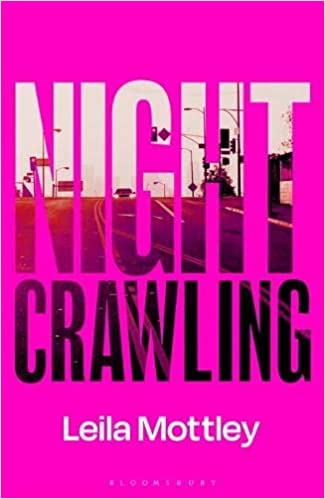 She may be only 20 years old, but Leila Mottley is the real deal. Her debut novel, laden with praise from her mentor Ruth Ozeki and many others, reminded me of Bryan Washington’s work. The first-person voice is convincing and mature as Mottley spins the (inspired by a true) story of an underage prostitute who testifies against the cops who have kept her in what is virtually sex slavery. At 17, Kiara is the de facto head of her household, with her father dead, her mother in a halfway house, and her older brother pursuing his dream of recording a rap album. When news comes of a rise in the rent and Kia stumbles into being paid for sex, she knows it’s her only way of staying in their Oakland apartment and looking after her neglected nine-year-old neighbour, Trevor.
I loved her relationships with Trevor, her best friend Alé (they crash funerals for the free food), and trans prostitute Camila, and the glimpses into prison life and police corruption. This doesn’t feel like misery for the sake of it, just realistic and compassionate documentation. There were a few places where I felt the joins showed, like a teacher had told her she needed to fill in some emotional backstory, and I noticed an irksome habit of turning adjectives into verbs or nouns (e.g., “full of all her loud,” “the sky is just starting to pastel”); perhaps this is an instinct from her start in poetry, but it struck me as precious. However, this is easily one of the more memorable 2022 releases I’ve read, and I’d love to see it on the shortlist and on other prize lists later this year and next. (Public library) 
Oh William! by Elizabeth Strout
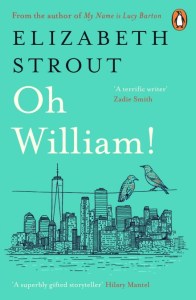 This was a DNF for me last year, but I tried again. The setup is simple: Lucy Barton’s ex-husband, William, discovers he has a half-sister he never knew about. William and Lucy travel from New York City to Maine in hopes of meeting her. For both of them, the quest sparks a lot of questions about how our origins determine who we are, and what William’s late mother, Catherine, was running from and to in leaving her husband and small child behind to forge a different life. Like Lucy, Catherine came from nothing; to an extent, everything that unfolded afterwards for them was a reaction against poverty and neglect.
The difficulty of ever really knowing another person, or even understanding oneself, is one of Strout’s recurring messages. There are a lot of strong lines and relatable feelings here. What I found maddening, though, is Lucy’s tentative phrasing, e.g. “And I cannot explain it except to say—oh, I don’t know what to say! Truly, it is as if I do not exist, I guess is the closest thing I can say.” She employs hedging statements like that all the time; it struck me as false that someone who makes a living by words would be so lacking in confidence about how to say what she means. So I appreciated the psychological insight but found Lucy’s voice annoying, even in such a short book. (Public library)
A Recap
I’ve read 6 of the 13 at this point, have imminent plans to read After Sappho for a Shelf Awareness review, and would still like to read the Mortimer if my library system acquires it. The others? Meh. I might consider catching up if they’re shortlisted.
My book group wasn’t chosen to shadow the Booker Prize this year, which is fair enough since we already officially shadowed the Women’s Prize earlier in the year (here are the six successful book clubs, if you’re interested). However, we have been offered the chance to send in up to five interview questions for the shortlisted authors. The Q&As will then be part of a website feature. And I was pleasantly surprised to see that my non-holiday snap of a Booker Prize nominee turned up in this round-up!
Here’s my (not particularly scientific) reasoning for what might make the shortlist:
A literary puzzle novel
Trust by Hernan Diaz or Case Study by Graeme Macrae Burnet
- Trust feels more impressive, and timely; GMB already had his chance.
A contemporary novel
Nightcrawling by Leila Mottley or Oh William! by Elizabeth Strout
- Oh William! is the weakest Strout novel I’ve read. Mottley’s is a fresh voice that deserves to be broadcast.

A satire
The Trees by Percival Everett or Seven Moons of Maali Almeida by Shehan Karunatilaka
- Without having read either, I’m going to hazard a guess that the Everett is too Ameri-centric/similar to The Sellout. The Booker tends to reward colourful Commonwealth books. [EDITED to add that I forgot to take into my considerations Glory by NoViolet Bulawayo; while it doesn’t perfectly fit this category, as a political allegory it’s close enough that I’ll include it here. I would not be at all surprised if it made the shortlist, along with the Karunatilaka.]

A couple of historical novels
Booth by Karen Joy Fowler or After Sappho by Selby Wynn Schwartz
and/or
A couple of Irish novels
Small Things Like These by Claire Keegan or The Colony by Audrey Magee
- I’m hearing such buzz about the Magee, and there’s such love out there for the Keegan, that I reckon both of these will make it through.


The odd one out?
Treacle Walker by Alan Garner or Maps of Our Spectacular Bodies by Maddie Mortimer
- Maybe nostalgia will spur the judges to give Garner a chance in his 80s.

My predicted shortlist:



On Tuesday evening we’ll find out if I got any of these right!
What have you read from the longlist? What do you most want to read, or see on the shortlist?
Booker Prize Longlist Thoughts and Reading Plan
Yesterday the 2022 Booker Prize longlist was announced.

It’s an intriguing selection that for the most part avoids the usual suspects – although a few of these authors have previously been shortlisted, they’re not from the standard crop of staid white men. The website is making much of two pieces of trivia: that the longlist includes the youngest and oldest authors ever (Leila Mottley at 20 and Alan Garner at 87); and that Small Things Like These is the shortest book to be nominated.
I happen to have read two from the longlist so far, and I’m surprised by how many of the rest I want to read. I’ll go through each of the ‘Booker Dozen’ of 13 below (the brief summaries are from the Booker Prize announcement e-mail):
Glory by NoViolet Bulawayo
“This energetic and exhilarating joyride … is the story of an uprising, told by a vivid chorus of animal voices that help us see our human world more clearly.”
- Zimbabwean author Bulawayo was shortlisted for her debut novel, We Need New Names, in 2013. I’ve never been drawn to read that one, and have to wonder why we needed an extended Animal Farm remake…
Trust by Hernan Diaz
“A literary puzzle about money, power, and intimacy, Trust challenges the myths shrouding wealth, and the fictions that often pass for history.”
- I’m looking forward to this one after all the buzz from its U.S. release, and have a copy on the way to me from Picador.
The Trees by Percival Everett
“A violent history refuses to be buried in … Everett’s striking novel, which combines an unnerving murder mystery with a powerful condemnation of racism and police violence.”
- Susan is a fan of Everett’s. He’s known for his satirical fiction, whereas the only book of his that I happen to have read was poetry – not representative of his work. I’d happily read this if given the chance, but Everett’s stuff is hard to find over here.
Booth by Karen Joy Fowler
“Fowler’s epic novel about an ill-fated family of thespians, drinkers and dreamers, whose most infamous son is destined to commit a terrible and violent act.”
- I reviewed this for BookBrowse earlier in the year. (It’s Fowler’s second nomination, after We Are All Completely Beside Ourselves, a very different novel.) The present-tense narration helps it be less of a dull group biography, and there are two female point-of-view characters. The issues of racial equality, political divisions and mistrust of the government are just as important in our own day. However, the foreshadowing is sometimes heavy-handed, the extended timeline means there is some skating over of long periods, and the novel as a whole is low on scenes and dialogue, with Fowler conveying a lot of information through exposition. I gave it a tepid
 .
.
Treacle Walker by Alan Garner
“This latest fiction from a remarkable and enduring talent brilliantly illuminates an introspective young mind trying to make sense of the world around him.”
- Garner is a beloved fantasy writer in the UK. Though I didn’t care for The Owl Service when I read it in 2019, given that this is just over 150 pages, there would be no harm in taking a chance on it.
Seven Moons of Maali Almeida by Shehan Karunatilaka
“Karunatilaka’s rip-roaring epic is a searing, mordantly funny satire set amid the murderous mayhem of a Sri Lanka beset by civil war.”
- This is the sort of Commonwealth novel I’m wary of, fearing Rushdie-like indulgence. My library system tends to order all the Booker nominees, so I would gladly borrow this and try the early pages to see how I get on.
Small Things Like These by Claire Keegan
“Keegan’s tender tale of hope and quiet heroism is both a celebration of compassion and a stern rebuke of the sins committed in the name of religion.”
- I read and reviewed this late last year and appreciated it as a spare and heartwarming yuletide fable. A coal merchant in 1980s Ireland comes to value his quiet family life all the more when he sees how difficult existence is for the teen mothers sent to work in the local convent’s laundry service. I was familiar with the Magdalene Laundries from the movie The Magdalene Sisters and found this a fairly predictable narrative, with the nuns cartoonishly villainous. So I’m not as enthusiastic as many others have been, but feel like a Scrooge for saying so.
Case Study by Graeme Macrae Burnet
“Graeme Macrae Burnet offers a dazzlingly inventive – and often wickedly humorous – meditation on the nature of sanity, identity and truth itself.”
- Macrae Burnet was a dark horse in the 2016 Booker race for the terrific His Bloody Project. This new novel was one of Clare’s top picks for the longlist and sounds like a clever and playful book about a psychoanalyst and his patient; again the author blends fact and fiction and relies on ‘found documents’. I have it on request from the library.
The Colony by Audrey Magee
“In … Magee’s lyrical and brooding fable, two outsiders visit a small island off the west coast of Ireland, with unforeseen and haunting consequences.”
- One of Clare and Susan’s joint correct predictions (Susan’s review). On the face of it, it sounds too similar to one I read from last year’s longlist, An Island. I can’t say I’m particularly interested, though if this were to be shortlisted I might have a go.
Maps of Our Spectacular Bodies by Maddie Mortimer
“Under attack from within, Lia tries to keep the landscapes of her past, her present and her body separate. But time and bodies are porous, and unpredictable.”
- This Desmond Elliott Prize winner was already on my TBR for its medical theme and is one of two nominees I’m most excited about. It potentially sounds long and challenging, but has been received well by my Goodreads friends. I’ll hope my library system acquires a copy soon.
Nightcrawling by Leila Mottley
“At once agonising and mesmerising, Nightcrawling presents a haunting vision of marginalised young people navigating the darkest corners of an adult world.”
- Like many, I had this brought to my attention anew by Ruth Ozeki’s shout-out during her Women’s Prize acceptance speech (Mottley was her student). I’d already heard some chatter about it from its Oprah’s Book Club selection. The subject matter – sex workers in Oakland, California – will be tough, but I hope the prose and storytelling will make up for it. I have it on request from the library.
After Sappho by Selby Wynn Schwartz
“A joyous reimagining of the lives of a brilliant group of feminists, sapphists, artists and writers from the past, as they battle for control over their lives, for liberation and for justice.”
- The other novel I’m most excited about. It was totally new to me but sounds fantastic. It only came out this month, so I’ll see if Galley Beggar might be willing to send out a review copy.
Oh William! by Elizabeth Strout
“Strout returns to her beloved heroine Lucy Barton in a luminous novel about love, loss, and the family secrets that can erupt and bewilder us at any time.”
- I DNFed this one after just 20 or so pages last year, finding Lucy too annoyingly scatter-brained this time around (I’d enjoyed My Name Is Lucy Barton but not read the sequel). But I’m willing to give it another try, so have placed a library hold.
There we have it: 2 read, 4 I have immediate plans to read, 3 I’m keen to read if I can find them, 4 I’m less likely to read – but, unlike in most years, there are no entries I’m completely uninterested in or averse to reading.
Earlier this year my book club took part in a Women’s Prize shadowing project run by the Reading Agency. They’re organizing a similar thing on behalf of the Booker Prize, but the six groups (for six shortlisted books) will be chosen by the Prize organizers this time, so we’ve been encouraged to apply again. It’s a better deal in that members of successful groups will be invited to attend the shortlist party and then the awards ceremony. I’ll meet up with my co-leader later this week to work on our application.
What have you read from the longlist? Which book(s) do you most want to find?
Thoughts on Literary Prizes, Sequels, and Finishing Books
I feel like my blogging is all over the place so far this month, but I’ll get back on track in the next couple of weeks with a few thematic roundups. Today, some disparate thoughts.
 Literary prize season will soon be in full swing, and can be overwhelming. I’m currently reading Megan Nolan’s Acts of Desperation, doing double duty from the Dylan Thomas Prize longlist and the Sunday Times Young Writer of the Year Award shortlist, and enjoying it more than expected given the inevitable Sally Rooney comparisons and messed-up young female tropes. However, I abandoned Here Comes the Miracle (from the latter) after 46 pages because it was just as When God Was a Rabbit as I feared.
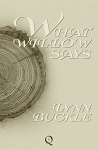 Today the second Barbellion Prize winner was announced: Lynn Buckle for What Willow Says, her lyrical novella about communication between a terminally ill woman, her deaf granddaughter, and the natural world. My choice from the shortlist would have been Josie George’s A Still Life, but I can see how the judges might have felt, in an early year when precedents are still being set, that it was important to recognize fiction as being just as valid a way of writing about disability and chronic illness.
Earlier in the week, the Rathbones Folio Prize shortlist was announced. Everyone remarked on the attractive mint green colour scheme! I found myself slightly disappointed; the Prize is usually more various since it includes nonfiction and poetry as well as fiction. Only one nonfiction title here: Philip Hoare going on (again) about whales. I’ve read another of poet Selima Hill’s collections so would gladly read this, too. I’ve already read the Brown and Keegan novellas and Sahota’s novel; I DNFed the Riley. Galgut has already won the Booker Prize. I’m awaiting a library hold of The Magician but I rather doubt my staying power with a 500-page biographical novel. My vote would, overwhelmingly, be for China Room.

I’m more tempted by the Fiction with a Sense of Place shortlist, announced as part of the Edward Stanford Travel Writing Awards early this month. What an intriguing and non-obvious set of nominees! Elena Knows was on the Barbellion longlist and the Greengrass and Shafak novels were previously shortlisted for the Costa Prize. I plan to try the Heller again this summer.

I’m also delighted to see that Small Bodies of Water by Nina Mingya Powles is shortlisted for the Stanford Dolman Travel Book of the Year Award.

I’ve been pondering my predictions and wishes (entirely separate things) for the Women’s Prize longlist and will post them early next month; for now, check out Laura’s.
I believe books should be self-contained and I struggle to engage with ANY series. Unpopular opinion alert: sequels are almost always indulgent and/or money-grubbing on the part of the author. Here are four high-profile literary fiction sequels I plan on skipping this year (in all the cases, I just didn’t like the original enough to continue the story):
- Either/Or by Elif Batuman – The Idiot was bizarre, deadpan and slightly entertaining, but I have no need to spend any more time with Selin.)
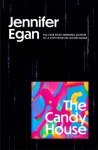 The Candy House by Jennifer Egan – A Visit from the Goon Squad didn’t stand up to a reread.
- Less Is Lost by Andrew Sean Greer – Less, only mildly funny, was hugely overrated by critics.
- Tracy Flick Can’t Win by Tom Perrotta – I read, and saw the Reese Witherspoon-starring movie version of, Election ages ago; this is the one I’d be most likely to change my mind about, if I read good reviews.
I learned via a friend’s Instagram post that there is such a thing as #FinishItFebruary and felt seen. My goal had been to clear my set-aside shelf by the end of January; of course that didn’t happen, but I have been making some progress, reducing it from about 40 to more like 25. I try to reintroduce a part-finished book into my stack every few days. Sometimes it ‘takes’ and I finish it shortly; other times it languishes again, just in a different location. I’ll see how many more I can get to before the end of February.

A reminder of that set-aside shelf, as of early January.
Following any literary prize races this year?
Do you also avoid sequels, and leave books part-read?
Book Serendipity, November to December 2021
I call it Book Serendipity when two or more books that I read at the same time or in quick succession have something pretty bizarre in common. Because I have so many books on the go at once (usually 20–30), I suppose I’m more prone to such incidents. I’ve realized that, of course, synchronicity is really the more apt word, but this branding has stuck. This used to be a quarterly feature, but to keep the lists from getting too unwieldy I’ve shifted to bimonthly.
The following are in roughly chronological order.
- The received wisdom that, in a medical school interview, when asked why you want to become a doctor, you should NOT say “because I want to help people” turns up in The Cure for Good Intentions by Sophie Harrison and Head First by Alastair Santhouse.
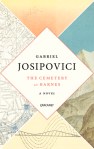
- The fact that long-time couples don’t use each other’s first names anymore is mentioned in The Mystery of Henri Pick by David Foenkinos and The Cemetery in Barnes by Gabriel Josipovici.

- A rare and thus precious letter from a father in Generations by Lucille Clifton and The Mystery of Henri Pick by David Foenkinos.
- The fact that woodpeckers will eat songbird chicks was mentioned in Orchard by Benedict Macdonald and Nicholas Gates and Light Rains Sometimes Fall by Lev Parikian.
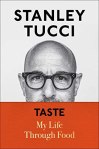
- Reading two books with covers featuring a partial head-on face at the same time: Taste by Stanley Tucci and Behind the Mask by Kate Walter.

- The fact that some of a baby’s cells remain within the mother even after she’s given birth is mentioned in The End We Start From by Megan Hunter and Frida Kahlo and My Left Leg by Emily Rapp Black.
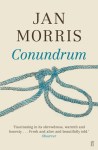
- The author’s body is described as a conundrum in Conundrum by Jan Morris and Frida Kahlo and My Left Leg by Emily Rapp Black.

- The potoo (a bird like a nightjar) is the subject of an essay in World of Wonders by Aimee Nezhukumatathil and a poem in The Store-House of Wonder and Astonishment by Sherry Rind (coming out in January 2022).
- Reading a second memoir this year by an English woman whose partner works for Lego in Denmark: first was A Still Life by Josie George, then The Year of Living Danishly by Helen Russell.


- A mention of the disorienting experience of going into a cinema while it’s still light and then coming out to find it dark in Sorrow and Bliss by Meg Mason and then in the 2022 novel Our Wives Under the Sea by Julia Armfield.
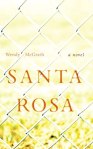
- A detailed account of making a Christmas cake appears in Small Things Like These by Claire Keegan, read late in the year, and the Santa Rosa trilogy by Wendy McGrath, read early in the year.
- After Deborah Levy’s The Cost of Living in November, I read a proof copy of a February 2022 essay collection called Cost of Living, by Emily Maloney, in December.
- Surviving Home by Katerina Canyon has a poem entitled “No More Poems about My Father” while The Kids by Hannah Lowe has a poem (“The River”) that opens with the line “Not another poem about my father”.
What’s the weirdest reading coincidence you’ve had lately?
Seasons’ Greetings: Winter (Part I) & Christmas Reading
My first few wintry reads for the season included a modern children’s classic, a wonderful poetry collection, and a so-so Advent-set novella. For my pre-Christmas reads, I have a couple of story-length classics and two recent novellas.
Winter Story by Jill Barklem (1980)
 My favourite of the series so far (just Spring still to go) for how nostalgic it is for winter traditions.
“Tobogganing tomorrow,” said Wilfred.
“Snow pancakes for tea,” said Clover.
“We’ll make a snow mouse,” said Catkin.
The mice host a Snow Ball at the Ice Hall, with outfits and dances out of Austen and victuals out of Dickens. As always, the tree-trunk interiors are lit up like doll’s house tableaux with cosy rooms and well-stocked larders. Nothing much happens in this one, but that was fine with me: no need for a conflict and its resolution when you’ve got such a lovely, lucky life. (Public library)
The Winter Orchards by Nina Bogin (2001)
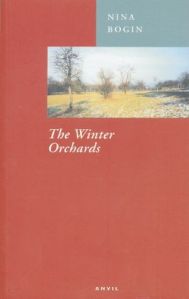 After enjoying Thousandfold in 2019, I was keen to catch up on Bogin’s previous poetry. Themes I’d noted in her latest work, nature and family, are key here, too. There is an overall wistful tone to the book, as in the passages below:
I didn’t like lungwort at first,
its spotted leaves, its furred
flowers, and I didn’t like its name.
But now I want to gather lungwort again,
now that I can’t return
to the brook meadow I picked it in (from “Lungwort”)
I’ll love the fallow and forgotten fields
because I have no choice, and woods
whose paths have been erased. (from “Landscape”)
The losses responded to are sometimes personal – saying Kaddish for her father – and sometimes more broadly representative, as when she writes about a dead bird found on the road or conflicts like the Gulf War and former Yugoslavia. Alongside beautiful nature poetry featuring birds and plants are vignettes from travels in France, Sweden, and upstate New York. (New purchase) 
An Advent Calendar by Shena Mackay (1978)
 I smugly started this on the first day of Advent, and initially enjoyed Mackay’s macabre habit of taking elements of the Nativity scene or a traditional Christmas and giving them a seedy North London twist. So we open on a butcher’s shop and a young man wearing “bloody swabbing cloths” rather than swaddling clothes, having lost a finger to the meat mincer (and later we see “a misty Christmas postman with his billowy sack come out of the abattoir’s gates”). In this way, John Wood becomes an unwitting cannibal after taking a parcel home from the butcher’s that day, and can’t forget about it as he moves his temporarily homeless family into his old uncle’s house and continues halfheartedly in his job as a cleaner. His wife has an affair; so does a teenage girl at the school where his sister works. No one is happy and everything is sordid. “Scouring powder snowed” and the animal at this perverse manger scene is the uncle’s neglected goat. This novella is soon read, but soon forgotten. (Secondhand purchase)
And so to Christmas…
“The Christmas Dinner” by Washington Irving (1820)
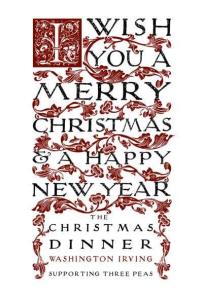 An evocative portrait of an English Christmas meal, hosted by a squire in the great hall of his manor, originally published in Irving’s The Sketch Book of Geoffrey Crayon, Gent. A boar’s head, a mummers’ play, the Lord of Misrule: you couldn’t get much more traditional. “Master Simon covered himself with glory by the stateliness with which, as Ancient Christmas, he walked a minuet with the peerless, though giggling, Dame Mince Pie.” Irving’s narrator knows this little tale isn’t profound or intellectually satisfying, but hopes it will raise a smile. He also has a sense that he is recording something that might soon pass away:
I felt also an interest in the scene, from the consideration that these fleeting customs were posting fast into oblivion. … There was a quaintness, too, mingled with all this revelry, that gave it a peculiar zest; it was suited to the time and place; and as the old Manor House almost reeled with mirth and wassail, it seemed echoing back the joviality of long-departed years.
A pleasant one-sitting read; so much better than a Christmas card!
This Renard Press pamphlet is in support of Three Peas, a charity providing food and medical care to refugees in Europe. Thanks to Annabel for my gifted copy!
Small Things Like These by Claire Keegan (2021)
Always, Christmas brought out the best and the worst in people.
This was our second most popular read during last month’s Novellas in November challenge. I’d read a lot about it in fellow bloggers’ posts and newspaper reviews so knew to expect a meticulously chiselled and heartwarming story about a coal merchant in 1980s Ireland who comes to value his quiet family life all the more when he sees how difficult existence is for the teen mothers sent to work in the local convent’s laundry service. Born out of wedlock himself nearly 40 years ago, he is grateful that his mother received kindness and wishes he could do more to help the desperate girls he meets when he makes deliveries to the convent.
I found this a fairly predictable narrative, and the nuns are cartoonishly villainous. So I wasn’t as enthusiastic as many others have been, but still enjoyed having this as one of my reads on my travel day to the USA. I was familiar with the Magdalene Laundries from the movie The Magdalene Sisters and found this a touching reminder to be grateful for what you have while helping those less fortunate. A perfect message for Christmas. (NetGalley)
Miss Marley by Vanessa Lafaye (2018)
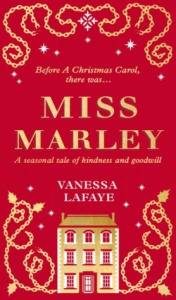 Lafaye was a local-ish author to me, an American expat living in Marlborough. When she died of breast cancer in 2018, she left this A Christmas Carol prequel unfinished, and fellow historical novelist Rebecca Mascull completed it for her. Clara and Jacob Marley come from money but end up on the streets, stealing from the rich to get by. Jacob sets himself up as a moneylender to the poor and then, after serving an apprenticeship alongside Ebenezer Scrooge, goes into business with him. They are a bad influence on each other, reinforcing each other’s greed and hard hearts. Jacob is determined never to be poor again. Because he’s forgotten what it’s like, he has no compassion when Clara falls in love with a luckless Scottish tea merchant. Like Scrooge, Jacob is offered one final chance to mend his ways. This was easy and pleasant reading, but I did wonder if there was a point to reading this when one could just reread Dickens’s original. (Secondhand purchase)
A Child’s Christmas in Wales by Dylan Thomas (1952)
(Illus. Edward Ardizzone, 1978)
 It’s a wonder I’d never managed to read this short story before. I was prepared for something slightly twee; instead, it is sprightly and imaginative, full of unexpected images and wordplay. In the Wales of his childhood, there were wolves and bears and hippos. Young boys could get up to all sorts of mischief, but knew that a warm house packed with relatives and a cosy bed awaited at the end of a momentous day. Reflective and magical in equal measure; a lovely wee volume that I am sure to reread year after year. (Little Free Library)
A favourite passage:
Our snow was not only shaken from whitewash buckets down the sky, it came shawling out of the ground and swam and drifted out of the arms and hands and bodies of the trees; snow grew overnight on the roofs of the houses like a pure and grandfather moss, minutely white-ivied the walls and settled on the postman, opening the gate, like a dumb, numb thunderstorm of white, torn Christmas cards.
If there’s been one adjective linking most of these books, it’s been “nostalgic.” There’s something about winter in general, and the holiday season in particular, that lends itself to thinking back to the past and trying to preserve traditions, isn’t there?
 Bookish Beck = Rebecca Foster. American transplant to England. Freelance proofreader and book reviewer.
 Bookish Beck