#1952Club: Patricia Highsmith, Paul Tillich & E.B. White
Simon and Karen’s classics reading weeks are always a great excuse to pick up some older books. I assembled an unlikely trio of lesbian romance, niche theology, and an animal-lover’s children’s classic.

Carol by Patricia Highsmith
Originally published as The Price of Salt under the pseudonym Claire Morgan, this is widely considered the first lesbian novel with a happy ending (it’s more open-ended, really, but certainly not tragic; suicide was a common consequence in earlier fiction). Therese, a 19-year-old aspiring stage designer in New York City, takes a job selling dolls in a department store one Christmas season. Her boyfriend, Richard, is a painter and has promised to take her to Europe, but she’s lukewarm about him and the physical side of their relationship has never interested her. One day, a beautiful blonde woman in a fur coat – “Mrs. H. F. Aird” (Carol) – comes to her counter to order a doll and have it sent to her out in New Jersey. Therese sends a Christmas card to the same address, and the women start meeting up for drinks and meals.
 It takes time for them to clarify their feelings to themselves, let alone to each other. “It would be almost like love, what she felt for Carol, except that Carol was a woman,” Therese thinks early on. When she first visits Carol’s home, a mothering dynamic prevails. Carol is going through a divorce and worries about its effect on her daughter, Rindy. The older woman tucks Therese into bed and brings her warm milk. Scenes like this have symbolic power but aren’t overdone; another has Therese and Richard out flying kites. She brings up homosexuality as a theoretical (“Did you ever hear of it? … I mean two people who fall in love suddenly with each other, out of the blue. Say two men or two girls”) and he cuts her kite strings.
The second half of the book has Carol and Therese setting out on a road trip out West. It should be an idyllic consummation, but they realize they’re being trailed by a private detective collecting evidence for Carol’s husband Harge to use against her in a custody battle. I was reminded of the hunt for Humbert Humbert and his charge in Lolita; “the whole world was ready to be their enemy,” Therese realizes, and to consider their relationship “sordid and pathological,” as Richard describes it in a letter.
The novel is a beautiful and subtle romance that unfolds despite the odds against it. I’d read five of Highsmith’s mysteries and thought them serviceable but nothing special (I don’t read crime in general). This does, however, share their psychological intensity and the suspense about how things will play out. Highsmith gives details about Therese’s early life and Carol’s previous intimate friendship that help to explain some things but never reduce either character to a diagnosis or a tendency. Neither of them wanted just anyone, some woman; it was this specific combination of souls that sparked at first sight. (Secondhand from a charity shop that closed long ago, so I know I’d had it on my shelf unread since 2016!) 
The Courage to Be by Paul Tillich
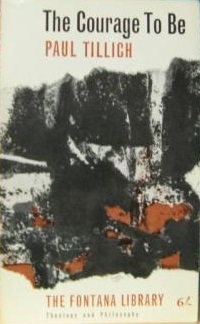 Tillich is a theologian who left Nazi Germany for the USA in 1933. I had to read selections from his work as part of my Religion degree (during the Pauline Theology tutorial I took in Oxford during my year abroad, I think). This book is based on a lecture series he delivered at Yale University. He posits that in an age of anxiety, which “becomes general if the accustomed structures of meaning, power, belief and order disintegrate” – certainly apt for today! – it is more important than ever to develop the courage to be oneself and to be “as a part.” The individual and the collective are of equal importance, then. Tillich discusses various philosophers and traditions, from the Stoics to Existentialism. I have to admit that I barely got anything out of this, I found it so jargon-filled, repetitive and elliptical. It’s been probably 15 years or more since I’ve read any proper theology. I adopted that old student skimming trick of reading the first paragraph of each chapter, followed by the topic sentence of each paragraph, but that left me mostly none the wiser. Anyway, I believe his conclusion is that, when assailed by doubt, we can rely on “the God above the God of theism” – by which I take it he means the ground of all being rather than the deity envisioned by any specific religious system. (University library)
Charlotte’s Web by E.B. White
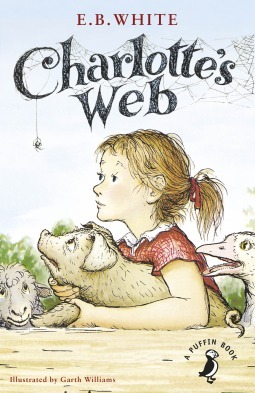 My library has a small section of the children’s department called “Family Matters” that includes the labels “First Time” (starting school, etc.), “Family” (divorce, new baby), “Health” (autism, medical conditions) and “Death.” I have the feeling Charlotte’s Web is not at all well known in the UK, whereas it’s a standard in the USA alongside L.M. Montgomery and Laura Ingalls Wilder. Were it more familiar to British children, it would be a great addition to that “Death” shelf. (Don’t read the Puffin Modern Classics introduction if you don’t want spoilers!) Wilbur is a doubly rescued pig. First, Fern Arable hand-rears him when he’s the doomed runt of the litter. When he’s transferred to Uncle Homer Zuckerman’s farm and an old sheep explains he’ll be fattened up for slaughter, his new friend Charlotte intervenes.
Charlotte is a fine specimen of a barn spider, well spoken and witty. She puts her mind to saving Wilbur’s bacon by weaving messages into her web, starting with “Some Pig.” He’s soon a county-wide spectacle, certain to survive the chop. But a farm is always, inevitably, a place of death. White fashions such memorable characters, including Templeton the gluttonous rat, and captures the hope of new life returning as the seasons turn over. Talking animals aren’t difficult to believe in when Fern can hear every word they say. The black-and-white line drawings are adorable. And making readers care about invertebrates? That’s a lasting achievement. I’m sure I read this several times as a child, but I appreciated it all the more as an adult. (Little Free Library) 
I’ve previously participated in the 1920 Club, 1956 Club, 1936 Club, 1976 Club, 1954 Club, 1929 Club, 1940 Club, 1937 Club, and 1970 Club.
Rereading Of Mice and Men for #1937Club
A year club hosted by Karen and Simon is always a great excuse to read more classics. Between my shelves and the library, I had six options for 1937. But I started reading too late, and had too many books on the go, to finish more than one – a reread. No matter; it was a good one I was glad to revisit, and I’ll continue with the other reread at my own pace.
Of Mice and Men by John Steinbeck
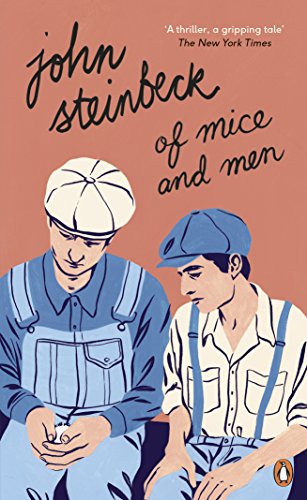 Are teenagers doomed to dislike the books they read in school? I think this must have been on the curriculum for 11th grade English. It was my third Steinbeck novella after The Red Pony and The Pearl, so to me it confirmed that he wrote contrived, depressing stuff with lots of human and animal suffering. Not until I read The Grapes of Wrath in college and East of Eden (THE Great American Novel) five years ago did I truly recognize Steinbeck’s greatness.
George and Lennie are itinerant farm workers in Salinas Valley, California. Lennie is a gentle giant, intellectually disabled and aware of his own strength when hauling sacks of barley but not when stroking mice and puppies. George looks after Lennie as a favour to Aunt Clara and they’re saving up to buy their own smallholding. This dream is repeated to the point of legend, somewhere between a bedtime story and scripture:
‘Someday—we’re gonna get the jack together and we’re gonna have a little house and a couple of acres an’ a cow and some pigs and—’ ‘An’ live off the fatta the lan’,’ Lennie shouted. ‘And have rabbits.’
They quickly settle in alongside the other ranch-hands and even convert two to their idyllic picture of independence. But the foreman, Curley, is a hothead and his bored would-be-starlet wife won’t stop roaming into the men’s quarters. No matter how much George tells Lennie to stay away from both of them, something is set in motion – an inevitable repeat of an incident from their previous employment that forced them to move on.
I remembered the main contours here but not the ultimate ending, and this time I appreciated the deliberate echoes and heavy foreshadowing (all that symbolism to write formulaic school essays about!): this is Shakespearean tragedy with the signs and stakes writ large against a limited background. Bar some paragraphs of scene-setting descriptions, it is like a play; no surprise it’s been filmed several times. (I wish I didn’t have danged John Malkovich in my head as Lennie; I can’t think of anyone else in that role, whereas Gary Sinise doesn’t necessarily epitomize George for me.) The characterization of the one Black character, Crooks, and the one woman are uncomfortably of their time. However, Crooks is given the dubious honour of conveying the bleak vision: “Nobody never gets to heaven, and nobody gets no land. It’s just in their head.” Like Hardy, Steinbeck knows what happens when the lower classes make the mistake of wanting too much. It’s a timeless tale of grit and desperation, the kind one can’t imagine not existing. (Public library)
Apposite listening: “The Great Defector” by Bell X1 (known for their quirky lyrics):
You’ve been teasing us farm boys
’til we start talking ’bout those rabbits, George
oh, won’t you tell us ’bout those rabbits, George?
Original rating (1999?): 
My rating now: 


Currently rereading: The Hobbit by J.R.R. Tolkien – My father gave me this for Christmas when I was 10. I think I finally read it sometime in my later teens, about when the Lord of the Rings films were coming out. I’m on page 70 now. I’d forgotten just how funny Tolkien is about the set-in-his-ways Bilbo and his devotion to a cosy, quiet life. When he’s roped into a quest to reclaim a mountain hoard of treasure from a dragon – along with 13 dwarves and Gandalf the wizard – he realizes he has much discomfort and many a missed meal ahead of him.


 DNFed: Journey by Moonlight by Antal Szerb – My second attempt with Hungarian literature, and I found it curiously similar to the other novel I’d read (Embers by Sandor Márai) in that much of it, at least the 50 pages I read, is a long story told by one character to another. In this case, Mihály, on his Italian honeymoon, tells his wife about his childhood best friends, a brother and sister. I wondered if I was meant to sense homoerotic attachment between Mihály and Tamás, which would appear to doom this marriage right at its outset. (Secondhand – Edinburgh charity shop, 2018)
 Skimmed: Out of Africa by Karen Blixen – I enjoyed the prose style but could tell I’d need a long time to wade through the detail of her life on a coffee farm in Kenya, and would probably have to turn a blind eye to the expected racism of the anthropological observation of the natives. (Secondhand – Way’s in Henley, 2015)
Here’s hoping for a better showing next time!
(I’ve previously participated in the 1920 Club, 1956 Club, 1936 Club, 1976 Club, 1954 Club, 1929 Club, and 1940 Club.)
Jane of Lantern Hill by L.M. Montgomery (1937) #ReadingLanternHill
I’m grateful to Canadian bloggers Naomi (Consumed by Ink) and Sarah for hosting the readalong: It’s been a pure pleasure to discover this lesser-known work by Lucy Maud Montgomery.
{SOME SPOILERS IN THE FOLLOWING}
Like Anne of Green Gables, this is a cosy novel about finding a home and a family. Fairytale-like in its ultimate optimism, it nevertheless does not avoid negative feelings. It also seemed to me ahead of its time in how it depicts parental separation.
Jane Victoria Stuart lives with her beautiful, flibbertigibbet mother and strict grandmother in a “shabby genteel” mansion on the ironically named Gay Street in Toronto. Grandmother calls her Victoria and makes her read the Bible to the family every night, a ritual Jane hates. Jane is an indifferent student, though she loves writing, and her best friend is Jody, an orphan who is in service next door. Her mother is a socialite breezing out each evening, but she doesn’t seem jolly despite all the parties. Jane has always assumed her father is dead, so it is a shock when a girl at school shares the rumour that her father is alive and living on Prince Edward Island. Apparently, divorce was difficult in Canada at that time and would have required a trip to the USA, so for nearly a decade the couple have been estranged.
It’s not just Jane who feels imprisoned on Gay Street: her mother and Jody are both suffering in their own ways, and long to live unencumbered by others’ strictures. For Jane, freedom comes when her father requests custody of her for the summer. Grandmother is of a mind to ignore the summons, but the wider family advise her to heed it. Initially apprehensive, Jane falls in love with PEI and feels like she’s known her father, a jocular writer, all the time. They’re both romantics and go hunting for a house that will feel like theirs right away. Lantern Hill fits the bill, and Jane delights in playing the housekeeper and teaching herself to cook and garden. Returning to Toronto in the autumn is a wrench, but she knows she’ll be back every summer. It’s an idyll precisely because it’s only part time; it’s a retreat.
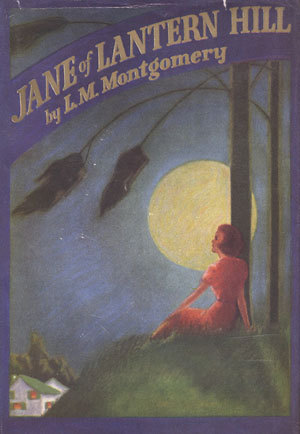
Jane is an appealing heroine with her can-do attitude. Her everyday adventures are sweet – sheltering in a barn when the car breaks down, getting a reward and her photo in the paper for containing an escaped circus lion – but I was less enamoured with the depiction of the quirky locals. The names alone point to country bumpkin stereotypes: Shingle Snowbeam, Ding-dong, the Jimmy Johns. I did love Little Aunt Em, however, with her “I smack my lips over life” outlook. Meddlesome Aunt Irene could have been less one-dimensional; Jody’s adoption by the Titus sisters is contrived (and closest in plot to Anne); and Jane’s late illness felt unnecessary. While frequent ellipses threatened to drive me mad, Montgomery has sprightly turns of phrase: “A dog of her acquaintance stopped to speak to her, but Jane ignored him.”
Could this have been one of the earliest stories of a child who shuttles back and forth between separated or divorced parents? I wondered if it was considered edgy subject matter for Montgomery. There is, however, an indulging of the stereotypical broken-home-child fantasy of the parents still being in love and reuniting. If this is a fairytale setup, Grandmother is the evil ogre who keeps the princess(es) locked up in a gloomy castle until the noble prince’s rescue. I’m sure both Toronto and PEI are lovely in their own way – alas, I’ve never been to Canada – and by the end Montgomery offers Jane a bright future in both.
Small qualms aside, I loved reading Jane of Lantern Hill and would recommend it to anyone who enjoyed the Anne books. It’s full of the magic of childhood. What struck me most, and will stick with me, is the exploration of how the feeling of being at home (not just having a house to live in) is essential to happiness. (University library) 
#ReadingLanternHill
Buy Jane of Lantern Hill from Bookshop.org [affiliate link]
Sapphira and the Slave Girl & Portrait of the Artist as a Young Dog (#1940Club)
(I was disgusted by the ad-ridden appearance of my blog, and defeated by the task of culling my media library, so I’ve upgraded to a paid plan for a trial year. I had until now vowed not to spend any money on the site since I don’t make any money from it, but WordPress hooked me in with a 30% off deal, and I’ll appreciate the no ads and extra storage space. I hope it looks better now!)

A year club hosted by Karen and Simon is always a great excuse to read more classics. One of these was a winner, if peculiar; the other was so-so, but helped clarify for me what a particular literary prize is looking for.
Sapphira and the Slave Girl by Willa Cather
{SPOILERS IN THIS ONE}
I was surprised to find that this was my seventh book by Cather, so I’ve actually read over half of her novels now. I think all her other works I know were set on the prairies of the Midwest (or in Santa Fe in the case of Death Comes for the Archbishop), so Sapphira and the Slave Girl feels like an odd one out not just for its antebellum historical subject matter but also for its setting in Cather’s hometown of Winchester, Virginia.
In 1856, the Colberts’ is a house divided: Henry, a miller from Quaker stock, disapproves of slavery; his wife, Sapphira, grew up with slaves and treats them severely. While the other Colbert brothers’ meddling with Black women is an open secret – one of them is assumed to have fathered Henry and Sapphira’s mixed-race teenage slave, Nancy – Henry looks fondly on Nancy and thinks of her almost like a second daughter. Sapphira resents that attention. When her Colbert nephew, Martin, a known cad, comes to visit, she arranges, or at least allows, convenient opportunities for Martin to be alone with Nancy.
 Nancy appeals to the Colberts’ adult daughter, Rachel Blake, to accompany her on her walks so that Martin will not “overtake” her in the woods. Although none of the white characters take the repeated threat of attempted rape seriously enough, Henry and Rachel do eventually help Nancy escape to Canada via the Underground Railroad. When Sapphira realizes her ‘property’ has been taken from her, she informs Rachel she is now persona non grata, but changes her mind when illness brings tragedy into Rachel’s household.
Had this been written 40–80 years later, it would have been completely different: first of all, I would expect it to much more graphically recount Black suffering, rather than depicting generally happy “darkies” with folksy accents and quirky character traits; secondly, there would be either a redemptive or a punitive plot arc for Sapphira. Instead, Cather paints her as a flawed human being who accepts the status quo but is also graceful in disability (she has dropsy and is in a wheelchair) and accepting of the approach of death.
I wish I remembered from the Hermione Lee biography more about the immediate inspiration for this novel, and its reception. Simply taking an interest in Black characters must have set it apart. For instance, there is a whole chapter on Nancy’s grandmother, Aunt Jezebel, the first generation kidnapped from Africa; and the final section has Nancy, now a sophisticated Montreal housekeeper dressed in silk and fur, visiting her mother 20 years after the Civil War. That Cather’s characterization otherwise doesn’t rise above cheerful mammy stereotypes can hardly be counted against her given the time period, right? It was good to experience a lesser-known American classic that I can imagine appealing to fans of Thomas Hardy and Edith Wharton as well. (From a Little Free Library in Queen Camel, Somerset; April 2021)
Portrait of the Artist as a Young Dog by Dylan Thomas
 Published when Thomas was in his mid-twenties, this is a series of 10 sketches, some of which are more explicitly autobiographical (as in first person, with a narrator named Dylan Thomas) than others. There is a rough chronological trajectory to the stories, with the main character a mischievous boy, then a grandstanding teenager, then a young journalist in his first job. The countryside and seaside towns of South Wales recur as settings, and – as will be no surprise to readers of Under Milk Wood – banter-filled dialogue is the priority. I most enjoyed the childhood japes in the first two pieces, “The Peaches” and “A Visit to Grandpa’s.” The rest failed to hold my attention, but I marked out two long passages that to me represent the voice and scene-setting that the Dylan Thomas Prize is looking for. The latter is the ending of the book and reminds me of the close of James Joyce’s “The Dead.” (University library)
I was a lonely night-walker and a steady stander-at-corners. I liked to walk through the wet town after midnight, when the streets were deserted and the window lights out, alone and alive on the glistening tram-lines in dead and empty High Street under the moon, gigantically sad in the damp streets by ghostly Ebenezer Chapel. And I never felt more a part of the remote and overpressing world, or more full of love and arrogance and pity and humility, not for myself alone, but for the living earth I suffered on… [etc.]
For a long time he waited on the stairs, though there was no love now to wait for and no bed but his own too many miles away to lie in, and only the approaching day to remember his discovery. All around him the disturbed inhabitants of the house were falling back into sleep. Then he walked out of the house on to the waste space and under the leaning cranes and ladders. The light of the one weak lamp in a rusty circle fell across the brick-heaps and the broken wood and the dust that had been houses once, where the small and hardly known and never-to-be-forgotten people of the dirty town had lived and loved and died and, always, lost.
(I’ve previously participated in the 1920 Club, 1956 Club, 1936 Club, 1976 Club, 1954 Club and 1929 Club.)
Chase of the Wild Goose by Mary Louisa Gordon: A Lurid Editions Reprint
 Chase of the Wild Goose, a playful, offbeat biographical novel about the Ladies of Llangollen, was first published by Leonard and Virginia Woolf’s Hogarth Press in 1936. I was delighted to be invited to take part in an informal blog tour celebrating the book’s return to print (today, 1 February) as the inaugural publication of Lurid Editions, which will focus on reprinting lesser-known and trailblazing 20th-century classics.
Mary Louisa Gordon was a medical doctor and early graduate of the London School of Medicine for Women. She also served as a prison inspector and had a special concern for the plight of female prisoners; another of her works was Penal Discipline (1922). Chase of the Wild Goose was published when she was 75. She underwrote the book to keep it in print until her death in 1941. A word-of-mouth success, it sold reasonably well in those first years.
I’d encountered the Ladies of Llangollen a couple of times before, in nonfiction: in The Art of the Wasted Day by Patricia Hampl, where they are among her exemplars of solitary, introspective living; and in Sign Here If You Exist and Other Essays by Jill Sisson Quinn, where, in the way that they blur the lines between romance and friendship, they presage her experience with an intimate female friend. This was a different way to explore their story.

Portrait of The Rt. Honble. Lady Eleanor Butler & Miss Ponsonby ‘The Ladies of Llangollen’. By James Henry Lynch, Public domain, via Wikimedia Commons. (Wearing their customary plain riding habits and top hats.)
“The two heroines of this story, the Lady Eleanor Butler and Miss Sarah Ponsonby, have a remarkable history. They achieved fame at a stroke. They made a noise in the world which has never since died out, and which we, their spiritual descendants, continue to echo.”
These are the opening lines of what, in its first half, is a fairly straightforward chronological account of the protagonists’ lives, from their first meeting to when they flee to Wales to set up house together at Plas Newydd. They grow up in Ireland and, although their prospects differ – EB has a wealthy upbringing at Kilkenny Castle, whereas teenage SP has recently lost her mother and is being passed around relatives and acquaintances – both are often told that marriage is the only viable option. The eccentric spinster stereotype is an unkind one, but one EB is willing to risk. In one terrific scene, she shames her archbishop great-uncle for being just like everyone else and threatening to sell her to the highest bidder in matrimony. Still, the notion persists that if only the right man comes courting, they’ll change their tune.
At their first meeting EB and SP engage in an intense discussion of the possibilities for women, and within two weeks they’re already pledging to be together forever: “I think that nothing cheap, or second-rate, or faute de mieux, will ever do for you or me … We think—you and I—that we want something strange and exceptional, but something different may be ordained for us,” Eleanor says to Sarah. “From now onwards I… won’t you keep me… in your heart?” Sarah asks in parting. Eleanor replies, “I think you have been in it since before we were born.”
The strength of that romantic conviction that they are fated for each other keeps them going despite difficulties – EB’s father disowns her and cuts her off, which has inevitable financial implications, though she had already bought Plas Newydd outright; and for both of them, leaving Ireland is a wrench because they feel certain that they can never go back.

Plas Newydd. Photo by Wolfgang Sauber, CC BY-SA 3.0 , via Wikimedia Commons.
By Part II, the erstwhile fugitives, settled into local life in North Wales, enter into a sedate middle age of visitors and correspondence. Much of the material for this section is drawn from the journal EB kept. Part III is where things get really interesting: in a metafictional twist, Gordon herself enters the narrative as she meets and converses with the long-dead Ladies at their house, reflecting on the social changes that have occurred since their time.
As the Afterword by Dr Nicola Wilson notes, Chase of the Wild Goose is creative nonfiction in the same vein as Orlando, building on real-life figures and relationships in a way that must have seemed ahead of its age, not least for how it looks back to venerate queer foremothers. Although there are long stretches of the book that are tedious with biographical detail and melodramatic speeches, there is enough in the way of convincing dialogue and scenes to make up for that. While I feel the novel probably has more to offer to academics and those with a particular interest in its subjects than to general readers, I was pleased to be able to experience a rediscovered classic. I marvelled every time I reminded myself that this largely takes place in the late eighteenth to early nineteenth century. Gordon ably reproduces the diction and mores of the Ladies’ time, but her modernist intrusion takes it beyond pastiche.
As for the title, I’m most accustomed to the wild goose as a metaphor for the Holy Spirit in Celtic Christian iconography, but of course it is also a pun on the proverbial wild-goose chase. Gordon nods to both connotations; the phrase appears several times in the text and is the protagonists’ private term for their search for a life together – for liberty and for love. You have to cheer for them, achieving what so few could in their time. Here’s to you, Ladies!
With thanks to D-M Withers and Lurid Editions for the free copy for review.
A first read for Karen and Lizzys #ReadIndies challenge. I will hope to add many more before the end of the month!

Liz has also reviewed the novel.
For more information, do also read this fascinating Guardian article.
Some 2022 Reading Goals
First of all, I need to give some proper attention to the books on my set-aside shelf (nearly 40 of them), preferably clearing this in January – while also catching up on review copies from last year and continuing with the January releases.

Thereafter, I’d like to concentrate on backlist books for the year. This may seem ironic given that I review new ones on the blog and for various other outlets, and that I’m going to be featuring my 20 most anticipated titles of 2022 in a post tomorrow, but I have a few reasons for wanting to focus on older material.
One is that backlist reading consistently produces new favourites. Another is that every time I shelve in the library’s back room rolling stacks, I see novels that I’ve always meant to read, or that look fantastic, and think, “I really should borrow more from in here” … then forget all about them and place holds on (sometimes disappointing) new books instead.
A final reason is that, as I pack up my library in preparation for moving and get a good look at the ~500 unread books all over again, I hope and expect that I will be inspired to read them – and also to revisit some long-neglected favourites. (Of course, I may also cull some before the move, which would be fine.) The plan is to eventually replace our fleet of white Billy bookcases with built-in shelving either side of the decorative fireplaces in a few rooms of the new house.


As always, I’d like to get to more classics, doorstoppers and literature in translation (I own hardly any translated titles, so most of this will have to be from the library). I’ll participate in all the usual annual blogger challenges plus any new ones I can fit in, including Annabel’s #NordicFINDS – I’m currently reading Sophie’s World by Jostein Gaarder to review later this month.
I’m sure to follow a similar set of literary prizes as last year, including the Young Writer of the Year Award, the Barbellion Prize, the Rathbones Folio Prize, the Wainwright Prize, and (to a lesser extent) the Dylan Thomas Prize, the Women’s Prize and the Booker Prize. And, of course, I’ll be carefully monitoring the later stages of the McKitterick Prize judging after sending off my own longlist for the unpublished manuscripts. These prize lists plus various review copies will ensure I have a regular influx of recent releases to counterbalance the backlist reads.
Brand new or backlist for you in 2022?
A Look Back at My 2021 Reading: Statistics and Superlatives
I hope everyone passed a lovely holiday week. We had house guests for a few days over New Year’s, so I haven’t had a chance to work up my statistics until now. Marcie sent me a spreadsheet template to keep track of my reading, and my tech whiz husband helped analyze the data. I look forward to catching up on everyone else’s best-of and stats posts, too.
How I did with my 2021 goals
 My simple reading goals for 2021 were to read more biographies, classics, doorstoppers and travel books – genres that tend to sit on my shelves unread. I read one biography in graphic novel form (Orwell by Pierre Christin), but otherwise didn’t manage any. I only read three doorstoppers the whole year, but 29 classics – defining them is always a nebulous matter, but I’m going with books from before 1980 – a number I’m happy with.
 Surprisingly, I did the best with travel books, perhaps because I’ve started thinking about travel writing more broadly and not just as a white man going to the other side of the world and seeing exotic things, since I don’t often enjoy such narratives. Granted, I did read a few like that, and they were exceptional (The Glitter in the Green by Jon Dunn, The Shadow of the Sun by Ryszard Kapuściński and Kings of the Yukon by Adam Weymouth), but if I include essays, memoirs and poetry with significant place-based and migration themes, I was at 26.
The numbers
Exactly the same total as last year (2019 had my maximum-ever of 343). From those three years’ evidence, I’d say I’ve found my natural limit. Next year I will aim for 340 again.
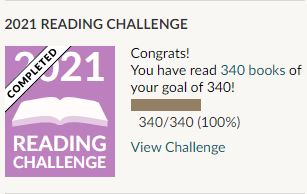
(This is what my lifestyle allows; yours is likely very different. I have bookish friends who read 80 books a year, 120, 150, 180, 200, and so on. My very busy university lecturer/town councillor husband felt bad for ‘only’ reading 65 books this past year, but keep in mind that the average person reads just 12 per year. My message to you, no matter your numbers, is YOU READ LOADS!)
Fiction: 49.7% (6.5% graphic novels; 5.3% short stories)
Nonfiction: 35%
Poetry: 15.3%
(Fiction and nonfiction are usually just about equal for me; I’m surprised that fiction pulled well ahead this year. I also read a bit more poetry this year than last.)
Female author: 66.47%
Male author: 30%
Nonbinary author: 0.88% (Meg-John Barker, Alice Hattrick and Olivia Laing)
Multiple genders (in anthologies): 2.65%
(I’ve been reading more and more by women each year, but this is the first time that female + nonbinary authors have outnumbered men by more than 2:1. I mostly attribute this to my interest in women’s stories. There were also three trans authors on my list.)
BIPOC author: 18.5%
(The first time I have specifically tracked this figure. Not too bad, but I’d prefer 25% or higher.)
Work in translation: 5%
(A decline from last year’s 7.2%. Must try harder!)
E-books: 13.2%
Print books: 86.8%
(Slightly higher than last year because of my new reviewing gig for Shelf Awareness, for which I read almost exclusively e-books.)
2021 releases: 41.8% (add in the 2020 releases and it’s 54.4%)
Pre-release books: 20%
Rereads: 12 (3.5%)
Where my books came from for the whole year:
- Free print or e-copy from publisher: 31.8%
- Public library: 24.7%
- Secondhand purchase: 16.8%
- Free (The Book Thing of Baltimore, the free mall bookshop, a giveaway, Little Free Libraries, etc.): 9.4%
- Downloaded from NetGalley or Edelweiss: 5.9%
- New purchase (sometimes at a bargain price): 5.6%
- University library: 3.8%
- Gifts: 2%
(Decreased from last year: review copies, NetGalley/Edelweiss, gifts; increased from last year: library borrowing, new and secondhand purchases, free books.)
Additional statistics courtesy of Goodreads:
73,520 pages read
Average book length: 216 pages (thank you, novellas and poetry!)
Average rating for 2021: 3.7
Extra Superlatives
First book completed:
Last book completed (also the shortest, at 46 pages)
Longest book, at 628 pages:
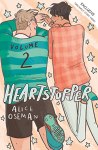
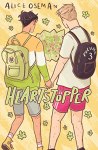
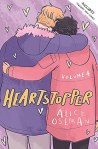
Authors I read the most by: Anne Tyler (5), thanks to Liz’s readalong project; Jim Davis and Alice Oseman cartoons (4 volumes each); Jim Crumley nature books and Emily Rapp Black memoirs (3 each)

Publishers I read the most from: Carcanet (18), then Picador (17), then Bloomsbury and Faber (14 each); in overall first place was undoubtedly Penguin and its many imprints.
My top discovery of the year: the Heartstopper teen graphic novel series.

My proudest bookish achievement: being asked to be a judge for the McKitterick Prize.
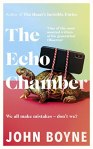
The books that made me laugh the most: The Echo Chamber by John Boyne and Early Morning Riser by Katherine Heiny.
Best book club selections: The Light Years by Elizabeth Jane Howard, Woman on the Edge of Time by Marge Piercy, The Year of Living Danishly by Helen Russell.
Most genuinely helpful book: How to Talk to a Science Denier by Lee McIntyre.

Best last lines encountered: “So where are we gonna go? / I don’t know. Let’s just drive and find out.” (from Heartstopper, Volume 4 by Alice Oseman).
Best 2021 book title: Mrs Death Misses Death.

Shortest book title encountered: In (Will McPhail), followed by Lot (Bryan Washington).
Biggest disappointments: Some of my lowest ratings went to Indelicacy by Amina Cain, Klara and the Sun by Kazuo Ishiguro, and Ness by Robert Macfarlane.
 A 2021 book that everyone loved but me: The Lincoln Highway by Amor Towles.
Themes that kept turning up in my reading: Covid-19, colours (thanks to my summer reading challenge), disability (thanks to shadowing the Barbellion Prize), the mental and physical health benefits of time in nature; perennial topics like friendship, parenting and sisterhood.
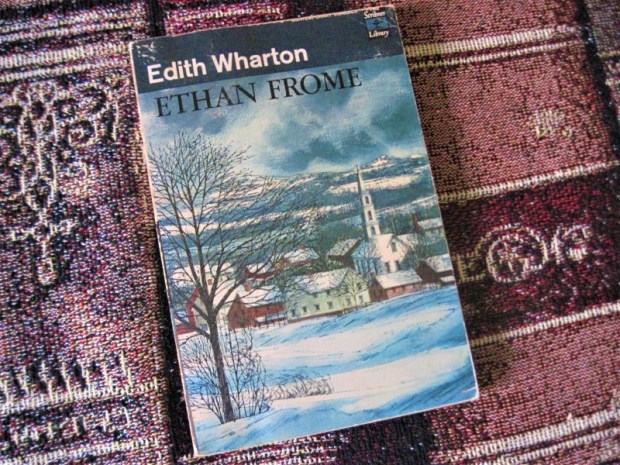
Ethan Frome by Edith Wharton (#NovNov Classics Week Buddy Read)
For the short classics week of Novellas in November, our buddy read is Ethan Frome by Edith Wharton (1911). You can download the book for free from Project Gutenberg here if you’d still like to join in.
Did you have to read Ethan Frome in school? For American readers, it’s likely that it was an assigned text in high school English. I didn’t happen to read it during my school days, but caught up in 2006 or 2008, I think, and was impressed with this condensed tragedy and the ambiance of a harsh New England winter. It struck me even more on a reread as a flawless parable of a man imprisoned by circumstance and punished for wanting more.
I had forgotten that the novella is presented as a part-imagined reconstruction of the sad events of Ethan Frome’s earlier life. A quarter-century later, the unnamed narrator is in Wharton’s fictional Starkfield, Massachusetts on business, and hears the bare bones of Ethan’s story from various villagers before meeting the man himself. Ethan, who owns a struggling sawmill, picks up extra money from odd jobs. He agrees to chauffeur the narrator to engineering projects in his sleigh, and can’t conceal his jealousy at a technical career full of travel – a reminder of what could have been had he been able to continue his own scientific studies. A blizzard forces the narrator to stay overnight in Ethan’s home, and the step over the threshold sends readers back in time to when Ethan was a young man of 28.
*There are SPOILERS in the following.*
Ethan’s household contains two very different women: his invalid wife, Zeena, eight years his elder; and her cousin, Mattie Silver, who serves as her companion and housekeeper. Mattie is dreamy and scatter-brained – not the practical sort you’d want in a carer role, but she had nowhere else to go after her parents’ death. She has become the light of Ethan’s life. By contrast, Zeena is shrewish, selfish, lazy and gluttonous. Wharton portrays her as either pretending or exaggerating about her chronic illness. Zeena has noticed that Ethan has taken extra pains with his appearance in the year since Mattie came to live with them, and conspires to get rid of Mattie by getting a new doctor to ‘prescribe’ her a full-time servant.
The plot turns on an amusing prop, “Aunt Philura Maple’s pickle-dish.” While Zeena is away for her consultation with Dr. Buck, Ethan and Mattie get one evening alone together. Mattie lays the table nicely with Zeena’s best dishes from the china cabinet, but at the end of their meal the naughty cat gets onto the table and knocks the red glass pickle dish to the floor, where it smashes. Before Ethan can obtain glue to repair it in secret, Zeena notices and acts as if this never-used dish was her most prized possession. She and Ethan are both to have what they most love taken away from them – but at least Ethan’s is a human being.
I had remembered that Ethan fell in love with a cousin (though I thought it was his cousin) and that there is a dramatic sledding accident. What I did not remember, however, was that the crash is deliberate: knowing they can never act on their love for each other, Mattie begs Ethan to steer them straight into the elm tree mentioned twice earlier. He dutifully does so. I thought I recalled that Mattie dies, while he has to live out his grief ever more. I was gearing myself up to rail against the lingering Victorian mores of the time that required the would-be sexually transgressing female to face the greatest penalty. Instead, in the last handful of pages, Wharton delivers a surprise. When the narrator enters the Frome household, he meets two women. One is chair-bound and sour; the other, tall and capable, bustles about getting dinner ready. The big reveal, and horrible irony, is that the disabled woman is Mattie, made bitter by suffering, while Zeena rose to the challenges of caregiving.
Ethan is a Job-like figure who lost everything that mattered most to him, including his hopes for the future. Unlike the biblical character, though, he finds no later reward. “Sickness and trouble: that’s what Ethan’s had his plate full up with, ever since the very first helping,” as one of the villagers tells the narrator. “He looks as if he was dead and in hell now!” the narrator observes. This man of sorrow is somehow still admirable: he and Zeena did the right thing in taking Mattie in again, and even when at his most desperate Ethan refused to swindle his customers to fund an escape with Mattie. In the end, Mattie’s situation is almost the hardest to bear: she only ever represented sweetness and love, and has the toughest lot. In some world literature, e.g. the Russian masters, suicide might be rendered noble, but here its attempt warrants punishment.
{END OF SPOILERS.}
I can see why some readers, especially if encountering this in a classroom setting, would be turned off by the bleak picture of how the universe works. But I love me a good classical tragedy, and admired this one for its neat construction, its clever use of foreshadowing and dread, its exploration of ironies, and its use of a rustic New England setting – so much more accessible than Wharton’s usual New York City high society. The cozy wintry atmosphere of Little Women cedes to something darker and more oppressive; “Guess he’s been in Starkfield too many winters,” a neighbor observes of Ethan. I could see a straight line from Jude the Obscure through Ethan Frome to The Great Gatsby: three stories of an ordinary, poor man who pays the price for grasping for more. I reread this in two sittings yesterday morning and it felt to me like a perfect example of how literature can encapsulate the human condition.
(Secondhand purchase) [181 pages]
My original rating (c. 2008):
My rating now: 
Keep in touch via Twitter (@bookishbeck / @cathy746books) and Instagram (@bookishbeck / @cathy_746books), using the hashtag #NovNov. We’ll add any of your review links in to our master posts.
Short Classics Week of #NovNov: Who Was Changed and Who Was Dead
Can you believe it’s the last week of Novellas in November?! I’m hosting our final theme, short classics, and my first review is of a strange, mesmerizing 1950s novella.
We hope some of you will join in with our last buddy read, Ethan Frome by Edith Wharton (free to download here from Project Gutenberg if you don’t already have access). I’m looking forward to rereading it – in one sitting, if I can manage it – on Tuesday afternoon or Wednesday morning and will review it on Thursday. This list of 10 favourite classic novellas I put together last year might give you some more ideas of what to read this week.
Who Was Changed and Who Was Dead by Barbara Comyns (1954)
[146 pages]
 I’d heard about this via its recent Daunt Books reissue and was attracted to the plague theme. The spark for the story was a real-life event in France in 1951, but Comyns takes imaginative liberties. In 1911, a Warwickshire village is overtaken by calamity: first a flood and then a mysterious sickness. The first line – “The ducks swam through the drawing-room window” – sets up a jolly, fable-like atmosphere as the Willoweed family go rowing through their garden. And yet there’s death all over the place. The multitude of drowned animals soon cedes to a roll call of human casualties. Some deaths are self-inflicted and others result from rapid illness, but all are gruesome. The general pattern of the sickness seems to be stomach pains, fits, bleeding and death, all within a few days. At first, we don’t know if what we’re looking at is a medical phenomenon or a case of mass hysteria. Either is rich fodder for fiction.
Ebin Willoweed writes it all up for the newspapers, leaving his motherless daughters to do the hard work of cleaning up from the flood damage and looking after their little brother. Meanwhile, Ebin’s brutal, selfish mother presides over the household like some ogre in a fairy tale. The title (which comes from Longfellow) makes it clear that even those who survive this epidemic will not escape totally unscathed.
Comyns is entirely unsentimental in this, her third novel; those characters who are not horrible are typically passive, and the humour is very black indeed. It’s illuminating to observe how each figure responds to tragedy and what their priorities are. In general, though, it’s not a rosy picture of human nature. While I was initially reminded of H.E. Bates’s The Darling Buds of May and Stella Gibbons’s Cold Comfort Farm, this feels darker. There is some casual racism and the morbidness probably won’t be for everyone, but I remained gripped, wondering how on earth this would conclude. I liked it enough to try more by Comyns – my library has a copy of the brilliantly titled Our Spoons Came from Woolworths, but I’m also open to other suggestions. (Secondhand purchase)
Keep in touch via Twitter (@bookishbeck / @cathy746books) and Instagram (@bookishbeck / @cathy_746books). We’ll add any of your review links in to our master posts. Feel free to use the terrific feature image Cathy made and don’t forget the hashtag #NovNov.
Any short classics on your reading pile?
The 1976 Club: Woman on the Edge of Time & The Takeover
It’s my fourth time participating in one of Simon and Karen’s reading weeks (after last year’s 1920 Club and 1956 Club and April’s 1936 Club). I start with a novel I actually read for my book club’s short-lived feminist classics subgroup way back in March but didn’t manage to review before now, and then have another I picked up especially for this challenge. Both were from the university library.

Woman on the Edge of Time by Marge Piercy
An unusual and fascinating novel with hints of science fiction, but still grounded in the real world (in a way that would attract fans of Octavia E. Butler’s Kindred and Parable duology), this contrasts utopian and dystopian scenes experienced by a Latina woman who’s been confined to a mental hospital. At 37, Connie Ramos has had a tough life marked by deprivation and domestic violence; “it was a crime to be born poor as it was a crime to be born brown.” She finds herself in conversation with Luciente, a plant geneticist who claims to be visiting from the future – coastal Massachusetts in 2137 – and has heard rumors of this prior Age of Greed and Waste. Luciente senses that Connie is a “catcher,” receptive to the wavelength of other times and places.
 When drawn into Luciente’s future, Connie thinks of it more as a peasant past because of the animal husbandry and agriculture, but comes to appreciate how technology and gender equality contribute to a peaceful society and environmentally restored landscape. I was intrigued by the dynamic Piercy imagines: everyone is of indeterminate gender (the universal pronouns are “person” and “per” – how about it? Both less confusing and more aesthetically pleasing than they/them!); embryos are cultured in machines and the resulting children raised communally with three honorary named “mother” figures. People choose their own names and change them in response to rites of passage. There’s no government or police. Free love reigns. “Our notions of evil center around power and greed” rather than sex, Connie is told.
With Connie and her fellow inmates facing mind-altering surgery in the ‘real’ world, Luciente’s community becomes a blessed escape. But on one of her time travels, she ends up in a dystopian future New York City instead. From 126 floors up, all that’s visible through the smoggy air is other towers. Everyone is genetically modified and everything is owned by corporations. Which scenario represents the authentic evolution of human society?
The way Piercy intersperses these visions with life at the mental hospital, and closes with excerpts from Connie’s patient notes, forces you to question whether they might all be hallucinations. We didn’t come to any firm conclusion during our Zoom discussion. The others found Connie’s life unremittingly bleak, but I love me a good mental hospital narrative. While I wearied a bit of the anthropological detail as the novel went on, I thought it an intense cultural commentary from a writer ahead of her time on gender roles and the environment (small-scale food production, foraging, renewable energy and reusing/recycling are givens in her utopia, and she questions the nonsensical reliance on cars. Why didn’t we listen to the prophets of the 1970s when we maybe had a chance to turn things around?!).
My rating:
The Takeover by Muriel Spark
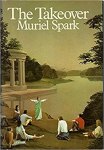 Had I read this in manuscript with no author name attached, I might have declared it to have been written by Iris Murdoch for the clutch of amoral characters, the love triangles, the peculiar religious society, the slight meanness of the attitude, and the detachment of the prose. Maggie Radcliffe is a rich American who owns three houses in the vicinity of Rome, one of which she rents out to Hubert Mallindaine, an effete homosexual who alleges that he is descended from the goddess Diana and founds a cult in her honour. He holds to this belief as fiercely as he defends his right to remain at Nemi even when Maggie decides she wants him out and employs lawyers to start eviction proceedings. There are odd priests, adulterous family members, scheming secretaries, and art and jewellery thieves, too. I wouldn’t say I’m a fan, but I liked this, my fourth novel by Spark, better than the rest. Italian bureaucracy makes for an amusing backdrop to what is almost a financial farce with an ensemble cast.
My rating:
Another 1976 release I’ve reviewed this year: The Easter Parade by Richard Yates.
 Bookish Beck = Rebecca Foster. American transplant to England. Freelance proofreader and book reviewer.
 Bookish Beck