Recapping the Not the Wellcome Prize Blog Tour Reviews
It’s hard to believe the Not the Wellcome Prize blog tour is over already! It has been a good two weeks of showcasing some of the best medicine- and health-themed books published in 2019. We had some kind messages of thanks from the authors, and good engagement on Twitter, including from publishers and employees of the Wellcome Trust. Thanks to the bloggers involved in the tour, and others who have helped us with comments and retweets.
This weekend we as the shadow panel (Annabel of Annabookbel, Clare of A Little Blog of Books, Laura of Dr. Laura Tisdall, Paul of Halfman, Halfbook and I) have the tough job of choosing a shortlist of six books, which we will announce on Monday morning. I plan to set up a Twitter poll to run all through next week. The shadow panel members will vote to choose a winner, with the results of the Twitter poll serving as one additional vote. The winner will be announced a week later, on Monday the 11th.

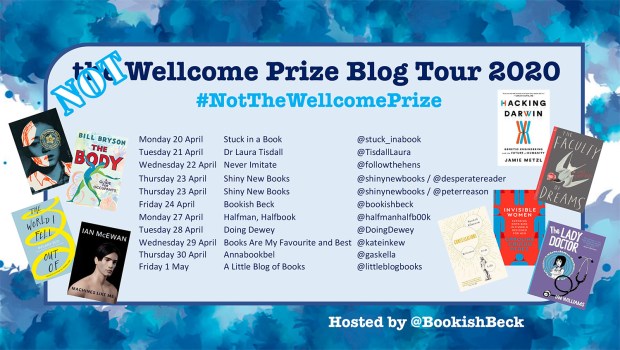
First, here’s a recap of the 19 terrific books we’ve featured, in chronological blog tour order. In fiction we’ve got: novels about child development, memory loss, and disturbed mental states; science fiction about AI and human identity; and a graphic novel set at a small-town medical practice. In nonfiction the topics included: anatomy, cancer, chronic pain, circadian rhythms, consciousness, disability, gender inequality, genetic engineering, premature birth, sleep, and surgery in war zones. I’ve also appended positive review coverage I’ve come across elsewhere, and noted any other awards these books have won or been nominated for. (And see this post for a reminder of the other 56 books we considered this year through our mega-longlist.)

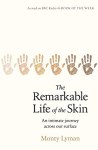 Notes Made While Falling by Jenn Ashworth & The Remarkable Life of the Skin by Monty Lyman: Simon’s reviews
*Monty Lyman was shortlisted for the 2019 Royal Society Science Book Prize.
[Bookish Beck review of the Ashworth]
[Halfman, Halfbook review of the Lyman]
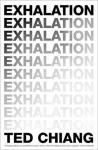
Exhalation by Ted Chiang & A Good Enough Mother by Bev Thomas: Laura’s reviews


 Constellations by Sinéad Gleeson & War Doctor by David Nott: Jackie’s reviews
*Sinéad Gleeson was shortlisted for the 2020 Rathbones Folio Prize.
[Rebecca’s Goodreads review of the Gleeson]
[Kate Vane’s review of the Gleeson]
[Lonesome Reader review of the Gleeson]
[Rebecca’s Shiny New Books review of the Nott]
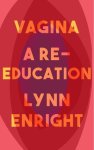
Vagina: A Re-education by Lynn Enright: Hayley’s Shiny New Books review
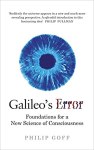
Galileo’s Error by Philip Goff: Peter’s Shiny New Books review

 Mother Ship by Francesca Segal & The Lady Doctor by Ian Williams: Rebecca’s reviews
[A Little Blog of Books review of the Segal]
[Annabookbel review of the Williams]
Chasing the Sun by Linda Geddes & The Nocturnal Brain by Guy Leschziner: Paul’s reviews
[Bookish Beck review of the Geddes]


 Invisible Women by Caroline Criado-Pérez: Katie’s review
*Caroline Criado-Pérez won the 2019 Royal Society Science Book Prize.
[Liz’s Shiny New Books review]
The Faculty of Dreams by Sara Stridsberg: Kate’s review

Machines Like Me by Ian McEwan: Kate’s review

 Hacking Darwin by Jamie Metzl & The Memory Police by Yoko Ogawa: Annabel’s reviews
*Yoko Ogawa is shortlisted for this year’s International Booker Prize.
[Lonesome Reader review of the Ogawa]

 The Body by Bill Bryson & The World I Fell Out Of by Melanie Reid: Clare’s reviews
[Bookish Beck review of the Bryson]
[Rebecca’s Goodreads review of the Reid]
And there we have it: the Not the Wellcome Prize longlist. I hope you’ve enjoyed following along with the reviews. Look out for the shortlist, and your chance to vote for the winner, here and via Twitter on Monday.
Which book(s) are you rooting for?
Recommended March Releases: Magnusson, May, Moor and More
March has been a huge month for new releases. With so many authors feeling let down about book tours and events being cancelled, it’s a great time for bloggers to step in and help. I attended two virtual book launches on Twitter on the 19th and have another one coming up on the 31st. I also have three more March releases on order from my local indie bookstore: Greenery by Tim Dee, tracking the arrival of spring; Footprints by David Farrier, about the fossil traces modern humans will leave behind; and The Bass Rock by Evie Wyld, a novel about violence against women set on the Scottish coast in three different time periods.
Today I have short reviews of five March releases I recommend (plus a bonus one now out in paperback): a Victorian pastiche infused with Scottish folklore, an essay collection about disparate experiences of motherhood, a thriller about victims of domestic violence, poems in graphic novel form, a novel about natural and personal disasters in Australia, and a lovely story of friendship and literature changing a young man’s life forever. All: 
The Ninth Child by Sally Magnusson
(Published by Two Roads on the 19th)
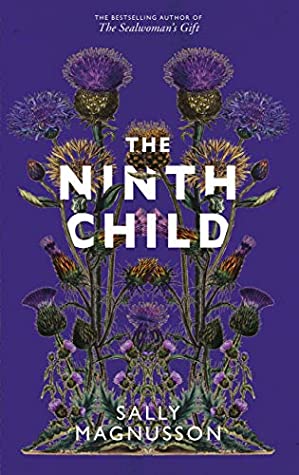 Like Hannah Kent’s The Good People and Sarah Perry’s The Essex Serpent, this is an intense, convincing work of fiction that balances historical realism with magical elements. In mid-1850s Britain, in the wake of a cholera epidemic, there is a drive to ensure clean water. Alexander Aird, hired as the on-site physician for the Glasgow waterworks, moves to the Loch Katrine environs with his wife, Isabel, who has had eight miscarriages or stillbirths. With no living babies requiring her care, Isabel spends her days wandering the hills and meets a strange scarecrow of a man, Reverend Robert Kirke … who died in 1692.
A real-life Episcopalian minister, Kirke wrote a book about fairies and other Celtic supernatural beings and, legend has it (as recounted by Sir Walter Scott and others), was taken into the faery realm after his death and continued to walk the earth looking for rest. It takes a while for Isabel to learn the truth about Kirke – though her servant, Kirsty McEchern, immediately intuits that something isn’t right about the man – and longer still to understand that he wants something from her. “Whatever else, Robert Kirke could be relied on to ruffle this mind of hers that was slowly opening to experience again, and to thinking, and to life.”
This was a rollicking read that drew me in for its medical elements (premature birth, a visit to Joseph Lister, interest in Florence Nightingale’s nursing methods) as well as the plot. It often breaks from the omniscient third-person voice to give testimonies from Kirsty and from Kirke himself. There are also amusing glimpses into the Royal household when Victoria and Albert stay at Balmoral and return to open the waterworks during the “heaviest, windiest, most umbrella-savaging, face-slashing deluge that Scotland had experienced in twenty years.” Best of all, it gives a very different picture of women’s lives in the Victorian period.
My thanks to the publisher for the proof copy for review.
The Best Most Awful Job: Twenty Writers Talk Honestly about Motherhood, edited by Katherine May
(Published by Elliott & Thompson on the 19th)
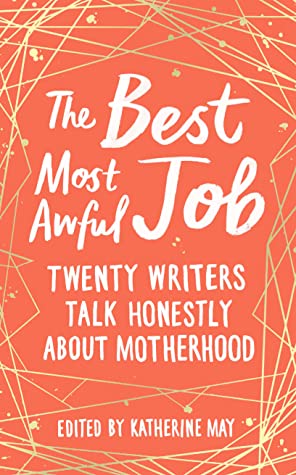 These are essays for everyone who has had a mother – not just everyone who has been a mother. I enjoyed every piece separately, but together they form a vibrant collage of women’s experiences. Care has been taken to represent a wide range of situations and attitudes. The reflections are honest about physical as well as emotional changes, with midwife Leah Hazard (author of Hard Pushed) kicking off with an eye-opening rundown of the intimate scarring some mothers will have for the rest of their lives. We hear from a mother of six who’s “addicted” to pregnancy (Jodi Bartle), but also from a woman who, after an ectopic pregnancy, realized “there are lots of ways to mother, even if your body won’t let you” (Peggy Riley, in one of my two favorite pieces in the book).
Women from BAME communities recount some special challenges related to cultural and family expectations, but others that are universal. An autistic mother (Joanne Limburg) has to work out how to parent a neurotypical child; queer parents (including author Michelle Tea) wonder how to raise a son at a time of toxic masculinity. There are also several single mothers, one of them disabled (Josie George – hers was my other favorite essay; do follow her on Twitter via @porridgebrain if you don’t already).
What I most appreciated is that these authors aren’t saying what they think they should say about motherhood; they’re willing to admit to boredom, disappointment and rage: “motherhood is an infinite, relentless slog from which there is no rest or recuperation … a ceaseless labour, often devoid of acknowledgment, recognition and appreciation” (Javaria Akbar); “I step barefoot on a rogue piece of Lego and it’s game over. I scream” (Saima Mir). These are punchy, distinctive slices of life writing perfectly timed for Mother’s Day. I plan to pass the book around my book club; mothers or not, I know everyone will appreciate it.
My thanks to the publisher for the proof copy for review.
Keeper by Jessica Moor
(Published by Viking/Penguin on the 19th)
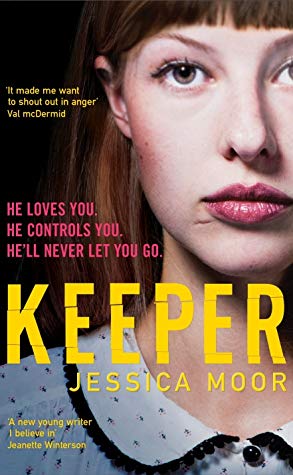 Val McDermid and Jeanette Winterson are among the fans of this, Penguin’s lead debut title of 2020. When a young woman is found drowned at a popular suicide site in the Manchester area, the police plan to dismiss the case as an open-and-shut suicide. But the others at the women’s shelter where Katie Straw worked aren’t convinced, and for nearly the whole span of this taut psychological thriller readers are left to wonder if it was suicide or murder.
The novel alternates between chapters marked “Then” and “Now”: in the latter story line, we follow the police investigation and meet the women of the refuge; in the former, we dive into Katie’s own experience of an abusive relationship back in London. While her mother was dying of cancer she found it comforting to have a boyfriend who was so attentive to her needs, but eventually Jamie’s obsessive love became confining.
I almost never pick up a mystery, but this one was well worth making an exception for. I started suspecting the twist at maybe the two-thirds point, but that didn’t detract from my enjoyment. Based on Moor’s year working in the violence against women sector, it’s a gripping and grimly fascinating story of why women stay with their abusers and what finally drives them to leave.
I picked up a proof copy at a Penguin Influencers event.
 Poems to See by: A Comic Artist Interprets Great Poetry by Julian Peters
(To be published by Plough Publishing House on the 31st)
Peters is a comics artist based in Montreal. Here he has chosen 24 reasonably well-known poems by the likes of e.e. cummings, Emily Dickinson, Robert Frost, Seamus Heaney, Langston Hughes, Edgar Allan Poe, Christina Rossetti and W.B. Yeats and illustrated each one in a markedly different fashion. From black-and-white manga to a riot of color and music, from minimalist calligraphy-like Japanese watercolor to imitations of Brueghel, there is such a diversity of style here that at first I presumed there were multiple artists involved (as in one of my favorite graphic novels of last year, ABC of Typography, where the text was written by one author but each chapter had a different illustrator). But no, this is all Peters’ work; I was impressed by his versatility.
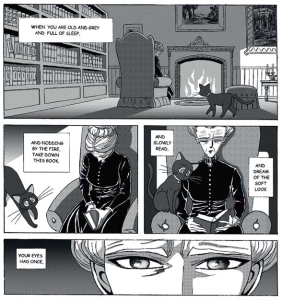
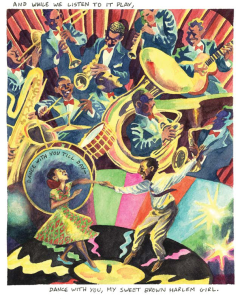
The illustrations range from realistic to abstract, with some more obviously cartoon-like. A couple of sequences reminded me of the style of Raymond Briggs. For “Caged Bird” by Maya Angelou, lines are inlaid on the squares of a painted patchwork quilt. Other sets look to have been done via wood engraving, or with old-fashioned crayons. You could quibble with the more obvious poetry selections, but I encountered a few that were new to me, including “Buffalo Dusk” by Carl Sandburg and “Conscientious Objector” by Edna St. Vincent Millay. Peters has grouped them into six thematic categories: self, others, art, nature, time and death. Teenagers, especially, will enjoy the introduction to a variety of poets and comics styles.
I read an e-copy via NetGalley.
The Inland Sea by Madeleine Watts
(Published by ONE/Pushkin on the 5th)
 “Emergency police fire, or ambulance?” The young female narrator of this debut novel lives in Sydney and works for Australia’s emergency call service. Over her phone headset she gets appalling glimpses into people’s worst moments: a woman cowers from her abusive partner; a teen watches his body-boarding friend being attacked by a shark. Although she strives for detachment, her job can’t fail to add to her anxiety – already soaring due to the country’s flooding and bush fires.
Against that backdrop of natural disasters, a series of minor personal catastrophes play out. The narrator is obsessed with a rape/murder case that’s dominating the television news, and narrowly escapes sexual assault herself. She drinks to excess, keeps hooking up with her ex-boyfriend, Lachlan, even after he gets a new girlfriend, and seems to think abortion and the morning after pill are suitable methods of birth control. Irresponsible to the point of self-sabotage, she’s planning a move to London but in the meantime is drifting through life, resigned to the fact that there is no unassailable shelter and no surefire way to avoid risk.
The title comes from the quest of John Oxley (presented here as the narrator’s ancestor), who in 1817 searched for a water body in the Australian interior. Quotations from his journals and discussions of the work of Patrick White, the subject of Lachlan’s PhD thesis, speak to the search for an Australian identity. But the inland sea is also the individual psyche, contradictory and ultimately unknowable. Like a more melancholy version of Jenny Offill’s Weather or a more cosmic autofiction than Yara Rodrigues Fowler’s Stubborn Archivist, this is a timely, quietly forceful story of how women cope with concrete and existential threats.
My thanks to the publisher for the PDF copy for review.
And a bonus…
The Offing by Benjamin Myers (2019)
(Paperback published by Bloomsbury on the 5th)
 With the Second World War only recently ended and nothing awaiting him apart from the coal mine where his father works, sixteen-year-old Robert Appleyard sets out on a journey. From his home in County Durham, he walks southeast, doing odd jobs along the way in exchange for food and lodgings. One day he wanders down a lane near Robin Hood’s Bay and gets a surprisingly warm welcome from a cottage owner, middle-aged Dulcie Piper, who invites him in for tea and elicits his story. Almost accidentally, he ends up staying for the rest of the summer, clearing scrub and renovating her garden studio.
Dulcie is tall, outspoken and unconventional – I pictured her as (Meryl Streep as) Julia Child in the movie Julie & Julia. She introduces Robert to whole new ways of thinking: that not everyone believes in God, that Germans might not be all bad, that life can be about adventure and pleasure instead of duty. “The offing” is a term for the horizon, as well as the title of a set of poems Robert finds in the dilapidated studio, and both literature and ambition change his life forever. Bright, languid and unpredictable, the novel delights in everyday sensual pleasures like long walks with a dog, dips in the ocean and an abundance of good food. I can’t think of another book I’ve read that’s quite like it – how refreshing is that?
I pre-ordered the paperback using a Waterstones voucher I got for Christmas.
What recent releases can you recommend?
Five Nonfiction Review Books: Hammond, Iorio, Rault, Riley & Rutt
A diagnosis of motor neurone disease; a father’s dispiriting experience of censorship trials. An illustrated history of fonts; an essay on grief; a cold weather-appropriate record of geese-watching. I gear up for Nonfiction November by catching up on five nonfiction review books I’ve been sent over the last couple of months. You can’t say that I don’t read a variety, even within nonfiction! See if one or more of these tempts you.
A Short History of Falling: Everything I Observed about Love whilst Dying by Joe Hammond
 Hammond, a playwright, takes a wry, clear-eyed approach to his diagnosis of motor neurone disease (ALS) and the knowledge that his physical capacities will only deteriorate from here on out. “New items arrive almost daily and I am unexpectedly becoming the curator of the Museum of my own Decline.” Yet he also freezes funnier moments, like blowing his nose on a slice of bread because he couldn’t reach a tissue box, or spending “six hours of my fiftieth birthday sat on this hospice toilet, with a bottle of good Scotch wedged between my knees.”
Still, Hammond regrets that he’s become like a third small child for his wife Gill to look after, joining his sons Tom and Jimmy, and that he won’t see his boys grow up. (This book arose from an article he wrote for the Guardian in 2018 about making 33 birthday cards for his sons to open in the years after his death.) Although I wasn’t as interested in the details of Hammond’s earlier life, or his relationship with his narcissistic father, I appreciated his quiet acceptance of disability, help and impending death. 
Favorite lines:
“I’ve waited all my life to know this peace. To know that I am nothing more than this body.”
“my place in all of this is becoming smaller, historic and just the right size of important.”
With thanks to 4th Estate for the free copy for review.
An Author on Trial: The Story of a Forgotten Writer by Luciano Iorio
 The author’s father, Giuseppe Jorio, was a journalist and schoolteacher who wrote an infamous novel based on an affair he had in the 1930s. Using italicized passages from his father’s diary and letters to Tina, who was 19 when their affair started, Iorio reconstructs the sordid events and unexpected aftermath in fairly vivid detail. Tina fell pregnant and decided to abort the baby. Meanwhile, Giuseppe’s wife, Bruna, got the truth out of him and responded with more grace than might be expected. Giuseppe was devastated at the loss of his potential offspring, and realized he wanted to have a child with Bruna. He bid Tina farewell and the family moved to Rome, where the author was born in 1937.
Giuseppe’s novel inspired by the affair, Il Fuoco del Mondo (The Fire of the World) was rejected by all major publishers and accused of obscenity in a series of five trials that threatened his reputation and morale. It’s a less familiar echo of the Lady Chatterley’s Lover trial, and a poignant portrait of a man who felt he never lived up to his potential because of bad luck and societal disapproval. I enjoyed learning a bit about Italian literature. However, inconsistent use of tenses and shaky colloquial English (preposition issues, etc.) suggest that a co-writer or translator was needed to bring this self-published work up to scratch. 
With thanks to the publicist for the free copy to review as part of a blog tour.
ABC of Typography by David Rault
[Translated from the French by Edward Gauvin]
 From cuneiform to Gutenberg to Comic Sans, this history of typography is delightful. Graphic designer David Rault wrote the whole thing, but each chapter has a different illustrator, so the resulting book is like a taster course in comics styles. As such, I would highly recommend it to those who are fairly new to graphic novels and want to see whose work appeals to them, as well as to anyone who enjoyed Simon Garfield’s book about fonts, Just My Type.
I found it fascinating to explore the technical characteristics (serif vs. sans serif, etc.) and aesthetic associations of various fonts. For instance, I didn’t realize that my mainstay – Times New Roman – is now seen as a staid choice: “Highly readable, but overexposed in the early days of the Internet, it took on a reputation for drabness that it hasn’t shed since the ’90s.” Nowadays, some newspapers and brands pay typeface creators to make a font for their exclusive use. Can you name the typeface that is used on German road signs, or in Barack Obama’s campaign materials? (You’ll be able to after you read this.)


With thanks to SelfMadeHero for the free copy for review.
Time Lived, Without Its Flow by Denise Riley
 What Virginia Woolf’s essay “On Being Ill” does for sickness, this does for bereavement. Specifically, Riley, whose son Jake died suddenly of a heart condition, examines how the experience of time changes during grief. “I’ll not be writing about death, but about an altered condition of life,” she opens. In short vignettes written from two weeks to three years after her son’s death, she reflects on how her thinking and feelings have morphed over time. She never rests with an easy answer when a mystery will do instead. “What if” questions and “as if” imaginings proliferate. Poetry – she has also written an exquisite book of poems, Say Something Back, responding to the loss of Jake – has a role to play in the acceptance of this new reality: “rhyme may do its minute work of holding time together.”
Max Porter provides a fulsome introduction to this expanded version of Riley’s essay, which first appeared in 2012. This small volume meant a lot more to him than it did to me; I preferred Riley’s poetic take on the same events. Still, this is sure to be a comfort for the bereaved.
Favorite passages:
“I’ll try to incorporate J’s best qualities of easy friendliness, warmth, and stoicism, and I shall carry him on in that way. Which is the only kind of resurrection of the dead that I know about.”
“I don’t experience him as in the least dead, but simply as ‘away’. Even if he’ll be away for my remaining lifetime. My best hope’s to have a hallucination of his presence when I’m dying myself.”
With thanks to Picador for the free copy for review.
Wintering: A Season with Geese by Stephen Rutt
 Rutt’s The Seafarers: A Journey among Birds, one of my favorite recent nature/travel books, came out in May. What have we done to deserve another publication from this talented young author just four months later?! I didn’t enjoy this as much as The Seafarers, yet it does a lot of the same things well: it provides stunning word portraits of individual bird species, explores the interaction between nature and one’s mental state, and gathers evidence of the cultural importance of birds through legends and classical writings.
Here the focus is on geese, which the author had mostly overlooked until the year he moved to southern Scotland. Suddenly they were impossible to ignore, and as he became accustomed to his new home these geese sightings were a way of marking the seasons’ turn. Ethical issues like hunting, foie gras and down production come into play, and, perhaps ironically, the author eats goose for Christmas dinner!
Rutt’s points of reference include Paul Gallico (beware plot spoilers!), Aldo Leopold, Mary Oliver and Peter Scott. The writing in this short book reminded me most of Horatio Clare (especially The Light in the Dark) and Jim Crumley (who’s written many short seasonal and single-species nature books) this time around.
A favorite passage (I sympathize with the feelings of nomadism and dislocation):
“I envy the geese their certainty, their habits of home. I am forever torn between multiple places that feel like home. Scotland where I live or Suffolk, Essex, Norfolk: the flatlands of golden evenings and reeds, mud and water and sand. The distant horizon and all the space in between I grew up with, which seems to lurk somewhere, subconsciously calling me back.”
[Neat aside: My husband and I both got quotes (about The Seafarers) on the press release for this book!]

With thanks to Elliott & Thompson for the free copy.
Would you be interested in reading one or more of these?
America Reading & Book Haul, Etc.
The wedding of a college friend – who I calculated I’ve known at least half my life – was the excuse we needed to book a trip back to the States for the last two weeks of May. Along with the classy nuptials in the Fell’s Point area of Baltimore, we enjoyed a day’s sightseeing in Philadelphia, a couple of outings to watch birds and other wildlife on Cape May (a migration hotspot in New Jersey), two meet-ups with other friends, and plenty of relaxation time with my mom and sister, including a Memorial Day picnic at my mom’s retirement community and a tour of Antietam Battlefield. It was much hotter than anticipated, including some days in the high 80s or even 90s, and the hayfever, ticks and mosquitoes were bad, too, but we survived.


While back in Maryland I continued the intermittent downsizing process I’ve been going through for a while now. After being on the market for nearly a year, my family home finally sold and went to closing while we were over there. So that provided a scrap of closure, but my current estrangement from my father (we don’t even know where he’s living) means there’s a lot of continuing uncertainty.
In any case, I managed to reduce the number of boxes I’m storing with my sister from 29 to 20 by recycling lots of my old schoolwork, consolidating my mementos, reselling one box of books and donating another, donating a box of figurines and decorative bottles to a thrift store, displaying some at my mom’s place, giving away a few trinkets to a friend’s kids, and packing a bunch of stuff – photo albums and decorations as well as 64 books – in our various suitcases and hand luggage to take back to the UK.


And I also acquired more books, of course! A whopping 46 of these were free: eight review copies were waiting for me at my mom’s place; three were from the outdoor free bin at 2nd & Charles, a secondhand bookstore; one was found in a Little Free Library near our friends’ place in New Jersey (Emerald City by Jennifer Egan, not pictured); and the rest were from The Book Thing of Baltimore, a legendary volunteer-run free bookshop. I mostly raided the biography section for an excellent selection of women’s life writing; the fiction is unalphabetized so harder to find anything in, but I picked up a few novels, too. My only purchases were new (remainder) copies of one novel and one memoir from Dollar Tree. Total book spending on the trip: just $2.12.
What I Read:
Two that I’d already started but finished on the plane ride over:
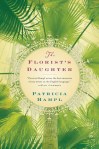 The Florist’s Daughter by Patricia Hampl: (As featured in my spring reading list.) “Love and flowers, death and flowers.” Poetic writing about small-town Minnesota life, a tense relationship with her late mother, and her late father’s flower shop.
 - The Girls by Lori Lansens: I love reading about sister relationships, and the Darlen girls’ situation is an extreme case of love and jealousy given that they literally can’t get away from each other. Not as good as the two other conjoined-twin novels I’ve read, Chang and Eng by Darin Strauss and Cutting for Stone by Abraham Verghese, but I would read more from Lansens, a solid Oprah Book Club sort of author.
Three review books that will be featuring here in the near future:
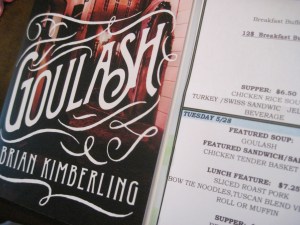
- Goulash by Brian Kimberling
- Sorry I’m Late, I Didn’t Want to Come: An Introvert’s Year of Living Dangerously by Jessica Pan
- Mother Ship by Francesca Segal
A few quick reads:
 A Certain Loneliness: A Memoir by Sandra Gail Lambert: (A proof copy passed on by an online book reviewing friend.) A memoir in 29 essays about living with the effects of severe polio. Most of the pieces were previously published in literary magazines. While not all are specifically about the author’s disability, the challenges of life in a wheelchair seep in whether she’s writing about managing a feminist bookstore or going on camping and kayaking adventures in Florida’s swamps. I was reminded at times of Constellations by Sinéad Gleeson.
  No Happy Endings: A Memoir by Nora McInerny: (Borrowed from my sister.) I didn’t appreciate this as much as the author’s first memoir, It’s Okay to Laugh, though it’s in the same style: lots of short, witty but bittersweet essays reflecting on life’s losses. Within a year of being widowed by cancer, she met a new partner and soon was – surprise! – pregnant with his baby. Together they formed a blended family of four children ranging from 0 to 15 and two wounded adults. McInerny also writes about her newfound spirituality and feminism. The problem with the essay format is that she cycles through aspects of the same stories multiple times.
  Native Guard by Natasha Trethewey: (Free from 2nd & Charles.) Trethewey writes beautifully disciplined verse about her mixed-race upbringing in Mississippi, her mother’s death and the South’s legacy of racial injustice. She occasionally rhymes, but more often employs forms that involve repeated lines or words. The title sequence concerns a black Civil War regiment in Louisiana. Two favorites from this Pulitzer-winning collection by a former U.S. poet laureate were “Letter” and “Miscegenation”; stand-out passages include “In my dream, / the ghost of history lies down beside me, // rolls over, pins me beneath a heavy arm” (from “Pilgrimage”) and “I return / to Mississippi, state that made a crime // of me — mulatto, half-breed” (from “South”).
 I also read the first half or more of: The Music Shop by Rachel Joyce, my June book club book; Hungry by Jeff Gordinier, a journalist’s travelogue of his foodie journeys with René Redzepi of Noma fame, coming out in July; and the brand-new novel In West Mills by De’Shawn Charles Winslow – these last two are for upcoming BookBrowse reviews.
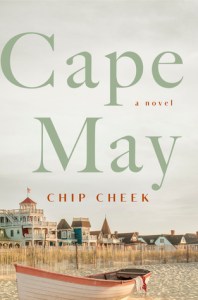
But the book I was most smug to have on my reading list for the trip was the recent novel Cape May by Chip Cheek. What could be more perfect for reading on location? I asked myself. Unfortunately, it stood out for the wrong reasons. In October 1957 a young pair of virgins, Effie and Henry, travel from Georgia to New Jersey for an off-season honeymoon in her uncle’s vacation home. They’re happy enough with each other but underwhelmed with the place (strangely, this matched my experience of Cape May), and even consider going home early until they fall in with Clara, a friend of Effie’s cousin; Clara’s lover, Max; and Max’s younger sister, Alma. Effie and Henry join the others for nightly drunken revelry.
[SPOILERS!] As the weeks pass Effie, ill and dejected, almost seems to disappear as Cheek delves into Henry’s besotted shenanigans, described in unnecessarily explicit sexual detail. When Effie makes a bid or two for her own sexual freedom late on, it only emphasizes the injustice of spending so much time foregrounding Henry’s perspective. Despite the strength of the period atmosphere and seaside location, this ends up being dull and dated. If you’re after a typically ‘trashy’ beach read and don’t mind lots of sex scenes, you may get on with it better than I did. 

Reading a few pages of Cape May over an ice-cold G&T at the wedding reception.
Bonus bookishness:
Vineland, New Jersey was on the way from our friends’ house to Cape May, so we stopped to take my proof copy of Barbara Kingsolver’s Unsheltered to its spiritual home. Alas, Vineland is an utterly boring small American town. However, Mary Treat at least appears on a painted mural on a building on the main street. The Historical Society, where Kingsolver did her research, was closed, but we photographed the outside.


What’s the last book you read ‘on location’? Did it work out well for you?
Rathbones Folio Prize Shortlist: The Perseverance by Raymond Antrobus
The Rathbones Folio Prize is unique in that nominations come from The Folio Academy, an international group of writers and critics, and any book written in English is eligible, so there’s nonfiction and poetry as well as fiction on this year’s varied shortlist of eight titles:
 Can You Tolerate This? by Ashleigh Young [essays]
- The Crossway by Guy Stagg [travel memoir]
- Mary Ann Sate, Imbecile by Alice Jolly [historical fiction]
- Milkman by Anna Burns [literary fiction]
- Ordinary People by Diana Evans [literary fiction]
- The Perseverance by Raymond Antrobus [poetry]
- There There by Tommy Orange [literary fiction]
- West by Carys Davies [historical fiction]

I’m helping to kick off the Prize’s social media tour by championing the debut poetry collection The Perseverance by Raymond Antrobus (winner of the 2018 Geoffrey Dearmer Award from the Poetry Society), issued by the London publisher Penned in the Margins last year. Antrobus is a British-Jamaican poet with an MA in Spoken Word Education who has held multiple residencies in London schools and works as a freelance teacher and poet. His poems dwell on the uneasiness of bearing a hybrid identity – he’s biracial and deaf but functional in the hearing world – and reflect on the loss of his father and the intricacies of Deaf history.
I was previously unaware of the difference between “deaf” and “Deaf,” but it’s explained in the book’s endnotes: Deaf refers to those who are born deaf and learn sign before any spoken language, so they tend to consider deafness part of their cultural identity; deaf means that the deafness was acquired later in life and is a medical consequence rather than a defining trait.
The opening poem, “Echo,” recalls how Antrobus’s childhood diagnosis came as a surprise because hearing problems didn’t run in the family.
I sat in saintly silence
during my grandfather’s sermons when he preached
The Good News I only heard
as Babylon’s babbling echoes.
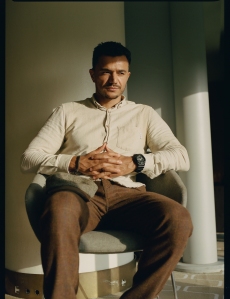
Raymond Antrobus. Photo credit: Caleb Femi.
Nowadays he uses hearing aids and lip reading, but still frets about how much he might be missing, as expressed in the prose poem “I Move through London like a Hotep” (his mishearing when a friend said, “I’m used to London life with no sales tax”). But if he had the choice, would Antrobus reverse his deafness? As he asks himself in one stanza of “Echo,” “Is paradise / a world where / I hear everything?”
Learning how to live between two worlds is a major theme of the collection, applying not just to the Deaf and hearing communities but also to the balancing act of a Black British identity. I first encountered Antrobus through the recent Black British poetry anthology Filigree (I assess it as part of a review essay in an upcoming issue of Wasafiri literary magazine), which reprints his poem “My Mother Remembers.” A major thread in that volume is art as a means of coming to terms with racism and constructing an individual as well as a group identity. The ghazal “Jamaican British” is the clearest articulation of that fight for selfhood, reinforced by later poems on being called a foreigner and harassment by security staff at Miami airport.
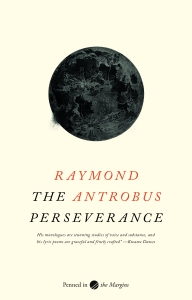 The title comes from the name of the pub where Antrobus’s father drank while his son waited outside. The title poem is an elegant sestina in which “perseverance” is the end word of one line per stanza. The relationship with his father is a connecting thread in the book, culminating in the several tender poems that close the book. Here he remembers caring for his father, who had dementia, in the final two years of his life, and devotes a final pantoum to the childhood joy of reading aloud with him.
A number of poems broaden the perspective beyond the personal to give a picture of early Deaf history. Several mention Alexander Graham Bell, whose wife and mother were both deaf, while in one the ghost of Laura Bridgeman (the subject of Kimberly Elkins’s excellent novel What Is Visible) warns Helen Keller about the unwanted fame that comes with being a poster child for disability. The poet advocates a complete erasure of Ted Hughes’s offensive “Deaf School” (sample lines: “Their faces were alert and simple / Like faces of little animals”; somewhat ironically, Antrobus went on to win the Ted Hughes Award last month!) and bases the multi-part “Samantha” on interviews with a Deaf Jamaican woman who moved to England in the 1980s. The text also includes a few sign language illustrations, including numbers that mark off section divisions.

The Perseverance is an issues book that doesn’t resort to polemic; a bereavement memoir that never turns overly sentimental; and a bold statement of identity that doesn’t ignore complexities. Its mixture of classical forms and free verse, the historical and the personal, makes it ideal for those relatively new to poetry, while those who enjoy the sorts of poets he quotes and tips the hat to (like Kei Miller, Danez Smith and Derek Walcott) will find a resonant postcolonial perspective.
A favorite passage from “Echo” (I’m a sucker for alliteration):
the ravelled knot of tongues,
of blaring birds, consonant crumbs
of dull doorbells, sounds swamped
in my misty hearing aid tubes.
The winner of the Rathbones Folio Prize will be announced on May 20th.
My thanks to the publisher for the free copy for review.
Just Okay for Me, Dawg
This was one of the catchphrases of long-time judge Randy Jackson on the reality TV show American Idol, which was my guilty pleasure viewing for a decade or more. The three recent books for which I provide short-ish reviews below have nothing much in common apart from the fact that I requested or accepted them from publishers and ended up feeling disappointed but like I still owed a review. You can consider them all  .
.
The Friendship Cure by Kate Leaver
(Duckworth, March 22nd)
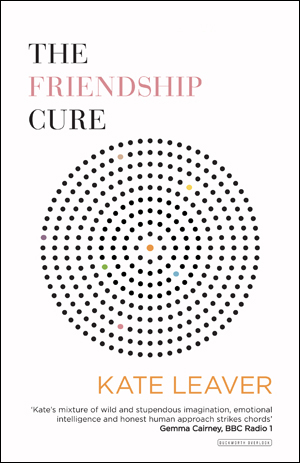 We’re in the middle of a loneliness epidemic, so friends are more important than ever. That’s the impetus for Kate Leaver’s jaunty, somewhat insubstantial book about modern friendship. She observes teen girls on the Tube and reflects on how we as primates still engage in social grooming – though language has replaced much of this more primitive bond-forming behavior. We experience a spike in our number of friends through adolescence and early adulthood, but friendships can fall by the wayside during our thirties as we enter long-term relationships and turn our attention to children and other responsibilities. Leaver argues that female friendships can amplify women’s voices and encourage us to embrace imperfection. She also surveys the bromance, mostly in its TV and film manifestations. There are plenty of pop culture references in the book; while I enjoy a Scrubs or Parks and Recreation scene or quotation as much as the next fan, the reliance on pop culture made the book feel lightweight.
Perhaps the most useful chapter was the one on online friendships (hi, book blogger friends!). We so often hear that these can’t replace IRL friendships, but Leaver sticks up for social media: it allows us to meet like-minded people, and is good for introverted and private people. Anything is better than isolation. The biggest problem I had with the book was the tone: Leaver is going for a Caitlin Moran vibe, and peppers in hip references to Taylor Swift, Lindsay Lohan and the like. But then she sometimes tries for more of a Mary Beard approach, yet doesn’t trust herself to competently talk about science, so renders it in matey, anti-intellectual language like “Robin [Dunbar, of Oxford University] did some fancy maths” (um, I think you mean “Dr. Dunbar”!) or “Let me hit you with a bit of research.”
Favorite lines:
“on some days, somewhere in our souls, we still count the number of social media connections as a measure of who we are”
“When you successfully recruit a new person into your friendship circle, you’re essentially confirming that you are a likable human being, worthy of someone’s time and emotional investment.”
You might choose to read instead: Kory Floyd’s The Loneliness Cure; Ann Patchett’s Truth and Beauty; Anna Quindlen’s essay “Girlfriends” from Lots of Candles, Plenty of Cake.
Writer’s Luck: A Memoir: 1976–1991 by David Lodge
(Harvill Secker, January 11th)
David Lodge has been one of my favorite authors for over a decade. His first memoir, Quite a Good Time to Be Born: A Memoir, 1935–1975 (see my Nudge review), is a good standalone read, even for non-fans, for its insight into the social changes of post-war Britain. However, this volume makes the mistake of covering much less ground, in much more detail – thanks to better record-keeping at the peak of his career – and the result is really rather tedious. The book opens with the publication of How Far Can You Go? and carries through to the reception of Paradise News, with a warning that he cannot promise a third volume; he is now 83. Conferences, lecture tours, and travels are described in exhaustive detail. There’s also a slightly bitter edge to Lodge’s attempts to figure out why ventures flopped or novels got negative reviews (Small World, though Booker-shortlisted, was better received in America), though he concludes that his career was characterized by more good luck than bad.
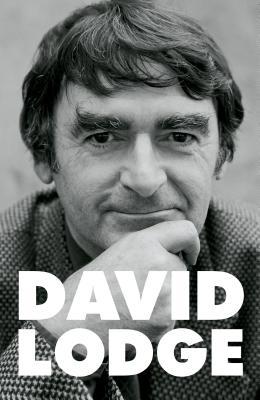 I liked the account of meeting Muriel Spark in Italy, and valued the behind-the-scenes look at the contentious task of judging the 1989 Booker Prize, which went to Kazuo Ishiguro for The Remains of the Days. Especially enjoyable is a passage about getting hooked on saunas via trips to Finland and to Center Parcs, a chain of all-inclusive holiday activity camps in England. Oh how I laughed at his description of nude sauna-going in midlife (whether I was supposed to or not, I’m not sure): “The difference in pleasure between swimming wearing a costume of any kind and the sensation of swimming without one, the water coursing unimpeded round your loins as you move through it, cannot be exaggerated, and I first discovered it in Center Parcs.” I also cringed at the Lodges placing “our Down’s son” Christopher in a residential care home – I do hope thinking about disability has moved on since the mid-1980s.
Ultimately, I’m not sure Lodge has had an interesting enough life to warrant a several-volume project. He’s an almost reassuringly dull chap; “The fact is that I am constitutionally monogamous,” he admits at one point. Although it was fun for me to see the genesis of novels like Paradise News, I don’t think I’d have the stomach for reading any more about why Lodge thinks his star faded starting in the 1990s. However, I’ll keep this on the shelf to go back to for some context when I finally get around to rereading Small World and Nice Work.
Favorite lines:
“there has been a downside to the Prize Culture which the Booker engendered. It has warped the evaluation of new fiction by measuring success as if it were a competitive sport.”
You might choose to read instead: Lodge’s Quite a Good Time to Be Born or John Carey’s The Unexpected Professor: An Oxford Life in Books – overall the better autobiography of a working-class, bookish lad.
The Parentations by Kate Mayfield
(Point Blank [Oneworld], March 29th)
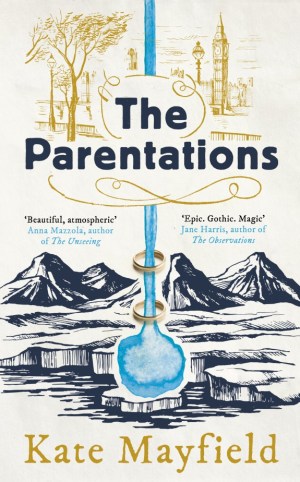 Sisters Constance and Verity Fitzgerald have been alive for over 200 years. A green pool in Iceland, first discovered in 1783, gives them “extended mortality” so long as they take the occasional two-week nap and only swallow two drops of the liquid at a time. In London in 2015, they eat a hearty stew by candlelight and wait for their boy to come. Then they try the churchyard: dead or alive, they are desperate to have him back. Meanwhile, Clovis Fowler is concealing extra phials of the elixir from her husband, their son and the maid. What’s going on here? We go back to Iceland in 1783 to see how the magic pool was first found, and then hop across to 1783 London to meet the sisters as children.
I read the first 67 pages, continued skimming to page 260, and then gave up. At well past the one-third point, the novel still hasn’t established basic connections. A book of nearly 500 pages has to hook the reader in sooner and more securely, not lull them with wordiness (case in point: on the first page of the first chapter, the adjective “macilent” – I looked it up and it means thin or lean, either of which would have been a far preferable word to use).
I could see faint echoes here of so many great books – Jonathan Strange and Mr. Norrell, A Discovery of Witches, Slade House, The Essex Serpent; works by Hannah Kent and Diane Setterfield, maybe even Matt Haig? I liked Mayfield’s memoir The Undertaker’s Daughter and had hoped for improvement with this debut novel. As it is, The Parentations has an interesting premise and lineage, but doesn’t deliver.
Favorite lines:
“His rage foments a decision. He will either take his place in the mounds of the dead, or he will find a good reason to stay alive.”
“Francis and Averil Lawless have impressed upon their daughters the concept of the consequences of a single moment, and there is no better teacher than the river’s majesty and its demand for respect for its waters, which can easily bring violence and ruin as well as wealth and peace.”
You might choose to read instead: Any of the literary fantasy novels listed above.
What books have disappointed or defeated you lately?
A Journey through Chronic Pain: Heal Me by Julia Buckley
Julia Buckley can pinpoint the very moment when her battle with chronic pain began: it was a Tuesday morning in May 2012, and she was reaching across her desk for a cold cup of coffee. Although she had some underlying health issues, the “fire ants” down her arm and “carving knife” in her armpit? These were new. From there it just got worse: neck and back pain, swollen legs, and agonizing periods. Heal Me is a record of four years of chronic pain and the search for something, anything to take the pain away. “I couldn’t say no – that was a forbidden word on my journey. You never know who’s going to be your saviour.”
 Having exhausted the conventional therapies available privately and via the NHS, most of which focus on cognitive behavioral therapy and coping strategies, Buckley quit work and registered as disabled. Ultimately she had to acknowledge that forces beyond the physiological might be at work. Despite her skepticism, she began to seek out alternative practitioners in her worldwide quest for a cure. Potential saviors included a guru in Vienna, traditional healers in Bali and South Africa, a witch doctor in Haiti, an herbalist in China, and a miracle worker in Brazil. She went everywhere from Colorado Springs (for medical marijuana) to Lourdes (to be baptized in the famous grotto). You know she was truly desperate when you read about her bathing in the blood and viscera of a sacrificial chicken.
Now the travel editor of the Independent and Evening Standard, Buckley captures all these destinations and encounters in vivid detail, taking readers along on her rollercoaster ride of new treatment ideas and periodically dashed hopes. She is especially incisive in her accounting of doctors’ interactions with her. All too often she felt like a statistic or a diagnosis instead of a person, and sensed that her (usually male) doctors dismissed her as a stereotypically hysterical woman. Fat shaming came into the equation, too. Brief bursts of compassion, wherever they came from, made all the difference.
I was morbidly fascinated with this story, which is so bizarre and eventful that it reads like a great novel. I’ll be cheering it on in next year’s Wellcome Book Prize race.
My rating:
Heal Me: In Search of a Cure is published today, January 25th, by Weidenfeld & Nicolson. My thanks to the publisher for a free copy for review.
Julia graciously agreed to take part in a Q&A over e-mail. We talked about invisible disabilities, the gendered treatment of pain, and whether she believes in miracles.
“I spent a day at the Paralympic stadium with tens of thousands cheering on equality, but when it was time to go home, nobody wanted to give me a seat on the Central Line. I was, I swiftly realised, the wrong kind of disabled.”
Yours was largely an invisible disability. How can the general public be made more aware of these?
I feel like things are very, very gradually moving forward – speaking as a journalist, I know that stories about invisible disabilities do very well, and I think as we all try to be more “on” things and “woke” awareness is growing. But people are still cynical – Heathrow and Gatwick now have invisible disability lanyards for travellers and someone I was interviewing about it said “How do I know the person isn’t inventing it?” I think the media has a huge part to play in raising awareness, as do things like books (cough cough). And when trains have signs saying things like “be aware that not all disabilities are visible” on their priority seats, I think that’s a step forward. Openness helps, too, if people are comfortable about it – I’m a huge believer in oversharing.
“I wondered whether it was a peculiarly female trait to blame oneself when a treatment fails.”
You make a strong case for the treatment of chronic pain being gendered, and your chapter epigraphs, many from women writers who were chronic pain or mental health patients, back this up. There’s even a name for this phenomenon: Yentl Syndrome. Can you tell us a little more about that? What did you do to push back against it?
Yentl Syndrome is the studied phenomenon that male doctors are un/consciously sexist in their dealings with female patients – with regards to pain, they’re twice as likely to ascribe female pain to psychological reasons and half as likely to give them adequate painkillers. In the US, women have to cycle through 12 doctors, on average, before they find the one to treat their pain adequately. There are equally shocking stats if you look at race and class, too.
I did absolutely nothing to push back against it when I was being treated, to be honest, because I didn’t recognise what was going on, had never heard of Yentl Syndrome and thought it was my problem, not theirs. It was really only when I met Thabiso, my sangoma in South Africa, that I felt the scales lift from my eyes about what had been going on. I make up for it now, though – I recently explained to a GP what it was, and suggested he be tested for it (long story, but we were on the phone and he was being incredibly patronising and not letting me speak). He hung up on me.
“In my head I added, I don’t care what they do to me, as long as it helps the pain.”
Meatloaf sang, “I would do anything for love, but I won’t do that.” Can you think of anything you wouldn’t have done in the search for a cure?
Well, I refused a spiritual surgery from John of God – I would have had the medical clamp up my nose or happily been cut into, but I was phobic about having my eyeball scraped – I had visions of Un Chien Andalou. So I had said repeatedly I was up for the other stuff but wouldn’t do the eye-scraping, and was told that probably meant I’d get the eye-scraping so I should go for the “invisible” surgery instead. But I can’t think of anything else I wouldn’t have done. The whole point, for me, was that if I didn’t throw myself into something completely, if I didn’t get better I’d never know if that was the treatment not working or my fault. Equally, my life was worthless to me – I knew I would probably be dead if I didn’t find an answer, so I didn’t have anything to lose.
Having said that, I know I would have had major difficulties slaughtering a goat if I’d gone back to Thabiso – I’m not sure if I could even have asked anyone else to do that for me.
Looking back, do you see your life in terms of a clear before and after? Are you the same person as you were before you went through this chronic pain experience?
There’s definitely a clear before and after in terms of how I think of my life – before the accident and after it. The date is in my head and I measure everything in my life around that, whether that’s a work event, a holiday, anything else – it’s always XX months/years before or after the accident. I don’t have the same thing with the day I got better because I try not to think about what happened and why, so I still calculate everything around the accident even though I should probably try and move my life to revolve around that happier day.
Largely I’m the same person. I still have the same interests and the same job, so I haven’t changed in that way. But I’d say I’m more focused – I lost so much of my life that I’m trying to make up for it now. So I don’t watch TV, I don’t go out to anything I’m not really interested in, I didn’t go to the work Christmas party because I could think of better things to do than stand around sober shouting over music … so I’m more ruthless about how I spend my time.
I also think invisible illness – or people’s reaction to it – hardens you. You have to grow a shell, otherwise you wouldn’t get through it. So I’m probably more brusque. I’m also really fucking angry about how I was treated and how I see other people – especially other women – being treated and I know that low-level anger shows through a lot. But as I said to a friend (male, obviously) recently, when he read my book and was upset at my anger: once you start noticing what’s going on, when you see people’s lives ruined because of pain, when in extreme cases you see women dying because of their gender, how can you not be angry? I think we should all be more angry. Maybe we could get more done.
You got a book contract before you’d completed all the travel. At that point you didn’t know what the conclusion of your quest would be: a cure, or acceptance of chronic pain as your new normal. Given that uncertainty, how did you go about shaping this narrative?
For the proposal for the book I did a country-by-country, treatment-by-treatment chapter plan (it was wildly ambitious, but pain and finances put the dampeners on it) and suggested the last chapter would be at a meditation retreat in Dorset, learning acceptance. I put in some waggish comment like “assuming I don’t get cured first hahaha”, but secretly I knew there was no way I could write the book if I wasn’t cured, partly on a very literal level – I physically wouldn’t be able to do it – but more because I didn’t see how I would ever be able to accept it. I actually postponed the deadline twice for the same reasons, and when I realised deadline 3 was looming and I wasn’t better and I was going to have to suck it up and write it I was distraught. I genuinely thought that putting all that I had been through onto the page and having to admit that I had failed – and failed my fellow pain people I was doing it for – would kill me. So I don’t know what I would have done if it had come to the crunch; luckily I got my pot of white chrysanthemums and didn’t have to see what happened.
You are leery of words like “miracle” and “cure,” so what terms might you use to describe what ended your pain after four years?
Something happened, and it happened in Brazil. But I would never tell anyone to hop on a plane to Brazil. What happened to me happened after four years of soul-searching and introspection as well as all those treatments. If I’d gone to Brazil first, I don’t know what would have happened.
Who do you see being among the audience for your book?
I’d love people who need it to read it and take what they need from it, but I’d also love doctors to read it – as an insight into patient psychology if nothing else – and I’d love it to be seen as a continuation of the whole #MeToo debate. That sounds holier than thou, and obviously it’d be great for people to read it as a Jon-Ronson-meets-Elizabeth-Gilbert-style romp because I’d feel like I’d succeeded from a writing point of view, but to be honest the only reason I wanted to write it in the first place was to show what’s happening to people in pain, and once I got better, the only thing that mattered to me was getting it into the hands of people who need it. I know how much I needed something like this.
I Found My Tribe by Ruth Fitzmaurice
Ruth Fitzmaurice’s husband, a filmmaker named Simon, was diagnosed with motor neurone disease in 2008. Like Stephen Hawking, he is wheelchair-bound and motionless, communicating only through the mechanical voice of an eye gaze computer.
My husband is a wonder to me but he is hard to find. I search for him in our home. He breathes through a pipe in his throat. He feels everything but cannot move a muscle. I lie on his chest counting mechanical breaths. I hold his hand but he doesn’t hold back. His darting eyes are the only windows left. I won’t stop searching.
Between their five children under the age of 10 (including twins conceived after Simon’s diagnosis), an aggressive basset hound, and Simon’s army of nurses coming and going 24 hours a day, this is one chaotic household. The recurring challenge is to find pockets of stillness – daydreaming, staring at trees outside her window – and to learn what things can bring her back from the brink of despair, again and again.
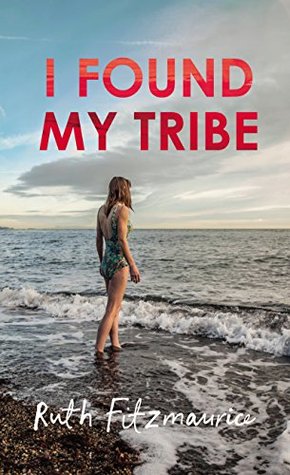 Often these are outdoor experiences: a last hurrah of a six-month holiday in Australia, running, and especially plunging into the Irish Sea with her “Tragic Wives’ Swimming Club” – a group that includes her friend Michelle, whose husband is also in a wheelchair after a motorbike crash, and her favorite of Simon’s nurses, Marian, who has a serious car accident.
Rather than a straight chronological narrative, this is a set of brief thematic essays with titles like “Dancing,” “Fear,” “Twins” and “Holidays.” Fitzmaurice’s story is one you piece together through vivid vignettes from her home life. Her prose is generally composed of short, simple phrases; as with Cathy Rentzenbrink’s The Last Act of Love, you can tell there is deep emotion pulsing under the measured sentences. With such huge questions in play – How much can one person take? What would losing one’s mind look like? – there’s no need for added drama, after all. Instead, the author turns to whimsy, toying with the superhero cliché for caregivers and wondering what magic might be at work in her situation.
I was particularly impressed by how Fitzmaurice holds the past and present in her mind, and by how she uses an outsider’s perspective to imagine herself out of her circumstances. At times she uses the third person for these visions of herself as a younger woman newly in love:
The young wife at her kitchen table knows about deep magic. But I know her future. Life is going to push and pull her like a wave. She doesn’t have a choice and neither do I. Come with me, dear girl, sit at my tablecloth. The journey is upon us and to survive it, you can’t just ride the wave, you have to become one. Can we do this? Let’s go. Becoming a wave just might be the deepest magic of them all.
There are so many poignant moments in this book: memories of their determinedly vegetarian wedding; pulling out all the stops for Simon’s fortieth birthday with customized art installations to brighten his view; leaving the marital bed – now a “hospital contraption” – after six years of MND being a part of their lives; a full moon swim with the Tragic Wives on her and Simon’s anniversary. But all the quiet, everyday stuff has power too, especially her interactions with her precocious children, who are confused about why Dadda is like this.
If I had one tiny complaint, it’s that Simon feels like something of a shadowy figure. In flashbacks we get a real sense of his forceful personality, but this new, silent Simon in the wheelchair is a mystery. Only once or twice does she record words he ‘says’ to her via his computer. Perhaps this is inevitable given how locked into himself he’s become. However, he was still capable of becoming the first person with MND to direct a feature film, on location in County Wicklow (My Name Is Emily). He has told his own story elsewhere; in his wife’s telling, their ventures now seem so separate that they rarely appear as equal partners.
It’s my tenth wedding anniversary tomorrow; as I was reading this I kept thinking that, for as much as I complain (to myself) about how hard marriage is, I’ve had it so easy. The stresses a couple face when caregiving of one partner is involved are immense. Fitzmaurice has found herself part of a tribe she probably never wanted to join: the walking wounded, with pain behind their eyes and worry never far from their minds. But in the midst of it she’s also found the band of family and friends who help her pull through each time. Her lovely book – wry, wise, and realistic – will strike a chord with anyone who has faced illness and family tragedy.
My rating:
I Found My Tribe is published in the UK today, July 6th, by Chatto & Windus. My thanks to the publisher for the review copy.
Note: Fitzmaurice got her book deal on the strength of a series of pieces she wrote for the Irish Times. You can read an extract from the book here. Film rights to her story have been sold to Element Pictures; more details are here. A documentary about Simon’s life, It’s Not Yet Dark, based on his memoir of the same title, has recently been released. For more information see here (this article also showcases multiple family photos).
Update: Simon Fitzmaurice died on October 26, 2017, aged 43.
Books in Brief: Five I Enjoyed Recently
Despite my largely successful resolution to focus on my own books for the summer, I’ve also gotten through plenty of e-books from NetGalley and Edelweiss, too. I just find it easier to fit time with the Kindle into my day, whether it’s 20 minutes over lunch (food-themed nonfiction works particularly well for such situations) or 30 minutes on the cross trainer. Here’s a sample of the e-books I’ve enjoyed this summer: four nonfiction and one fiction.
Pancakes in Paris: Living the American Dream in France
By Craig Carlson
 A good-natured memoir about the travails of opening the first American-style diner in Paris. Carlson charts his somewhat chaotic growing-up years in Connecticut, the college study abroad experience that kindled his love for France, his years trying to make it as a screenwriter and director in Hollywood, his long-held dream of opening Breakfast in America, and finding a French sweetheart of his own. Much of the book is devoted to a blow-by-blow of the bureaucratic nightmare of opening a restaurant, starting with getting investors on board and continuing through France’s ridiculously restrictive labor laws. (The impression I came away with was: France – great place to be an employee or rent property; terrible place to start a business.) Next time I’m in Paris, I will be looking to get myself a stack of his signature blueberry and white chocolate chip pancakes. Releases September 6th.
When in French: Love in a Second Language
By Lauren Collins
 Collins, a journalist from North Carolina, married a Frenchman named Olivier she met while working in London. They then moved to Geneva, a mutually unfamiliar place but one where French reigned. For the first time, she was forced to learn a new language to survive. I love how she blends her own story with the philosophy, history and science behind language use. As she learned how to do things she never expected to have to in French – deal with her in-laws and give birth, for instance – she developed a new appreciation for the marvel that is bilingualism and pondered whether she was the same person in a different language. My favorite section recounts a holiday to Corsica that brought her family and Olivier’s into close quarters and cast her in the unforeseen role of translator. There’s a surprising amount of linguistic detail here, but Collins incorporates it well. Releases September 13th.
A Body, Undone: Living On After Great Pain
By Christina Crosby
 Crosby teaches English and gender studies at Wesleyan University. Her inclusion in this “Sexual Cultures” series has to do with her lesbian feminist ideology but also the new understanding of her body an accident forced upon her at age 50. While she was cycling, a stick stuck in her spokes and she fell over onto concrete, breaking vertebrae in her neck that damaged her spinal cord. In the midst of a full and physical life, she became a quadriplegic. The great irony was that in this she joined her brother Jeff, whose MS had long since reduced him to a wheelchair. Here, in a memoir written 11 years after the accident, she reflects on chronic pain and new limitations – even including bowel habits – with blunt honesty as well as literary allusions. Along the way she remembers physical pleasures now denied to her. Nonetheless, she never comes across as sorry for herself. I found this to be highly absorbing.
The Reader on the 6.27
By Jean-Paul Didierlaurent
 Guylain Vignolles works in a paper pulping plant. Rather than an enemy of books, however, he’s really a champion of the written word and its power to improve people’s lives. Every day when he descends into the belly of “The Thing” to clean it, he rescues the stray pages that escaped destruction and reads them aloud the following morning on his twenty-minute train commute, or to the residents of an old-folks home, no matter what their subject. He also helps his disabled former colleague Giuseppe stockpile all the books made from the recycled paper created on the fateful day the machine shredded his legs. There’s a charming Amélie vibe to this short novel, especially in the later chapters when Guylain sets off on a romantic quest to find the lavatory attendant whose wry diary he finds on a memory stick on the train. Most of the subplots could do with some expanding, but it’s a pleasant and super-quick read.
Stir: My Broken Brain and the Meals that Brought Me Home
By Jessica Fechtor
 For me this is right up there with Molly Wizenberg and Ruth Reichl in how the author merges food writing with a frank recounting of personal experiences with crisis and heartache. At age 28 Fechtor, then a graduate student in history and Yiddish, collapsed on a treadmill with a brain bleed. Surgery to clip the aneurysm left her blind in one eye. During her long recovery process she started a food blog. At the end of each chapter she shares recipes that alternate between simple, favorite dishes and more involved ones. It’s that unpretentiousness that really endears her to me. She doesn’t think she was particularly brave in getting through an unwanted illness; nor does she think the perfect almond macaroon or cherry clafoutis is beyond anyone’s capability. Instead, she gives a glimpse into an ordinary life turned upside down and the foods that helped her regain a zest for life.
Have you read any of these? Which one takes your fancy?
Reviews Roundup, November–December
One of my goals with this blog is to have one convenient place where I can gather together all my writing that has appeared in disparate online locations. To that end, once a month I provide links to all book reviews I’ve published elsewhere, with a rating (below each description) and a taster so you can decide whether to read more. A few exceptions: I won’t point out my Kirkus Indie, BlueInk or Publishers Weekly reviews since I don’t get a byline.
The Bookbag
 In Search of Mary: The Mother of All Journeys by Bee Rowlatt: A BBC journalist and mother of four sets out, baby in tow, to trace the steps of Mary Wollstonecraft in Norway and France. A follow-up trip to California is a little off-topic, but allows Rowlatt to survey the development of feminism over the last few centuries. This isn’t as successful a bibliomemoir as many I’ve read in recent years, such as Rebecca Mead’s My Life in Middlemarch or Samantha Ellis’s How to Be a Heroine, but for readers interested in engaging in the ongoing debate about how women can balance work life with motherhood, and especially for any women who have attempted traveling with children, it’s a fun, sassy travelogue.

Foreword Reviews
 Italy Invades: How Italians Conquered the World by Christopher Kelly and Stuart Laycock: Proceeding alphabetically from Afghanistan to Zimbabwe, the authors give a comprehensive picture of Italians’ global reach through one- to five-page snapshots. There are many familiar names here, such as Caesar, Garibaldi and Marco Polo. Along with exploration, some major reasons for historical crossover were trade, war, colonialism and immigration. At times it feels as if the authors are grasping at straws; better to skip one-paragraph write-ups altogether and focus instead on the countries that have extensive links with Italy. Nonetheless, this is a lively, conversational book full of surprising facts.

Why You Won’t Go to Hell by Benjamin Vande Weerdhof Andrews: In a well-structured argument, Andrews prizes empirical thinking, rejects the supernatural, and affirms the possibility of godless morality. His central thesis is that religion doesn’t evolve to keep pace with society and so holds humanity back. The book’s tone is too often defensive, often in response to included website comments, and there are some failures of accuracy and fairness. Ultimately, though, this could be an inspirational book for atheists or believers, prompting both groups to question their assumptions and be willing to say “I don’t know.” Readers of Sam Harris and Christopher Hitchens will be particularly drawn to the book, but others should take a chance on it too.

 Cultured Food for Health by Donna Schwenk: When Schwenk started eating cultured foods in 2002, she had diabetes, high blood pressure, and a premature newborn. Keen to see if good bacteria could help with her medical problems, she started introducing the “healing powerhouse” of kefir (a fermented milk product resembling thin yogurt), kombucha (bubbly tea), and cultured vegetables into her diet, and soon reaped the rewards. About a quarter of the book is background information about probiotic foods. Bullet-pointed lists of health benefits, along with an alphabetical inventory of the diseases that cultured foods can treat, should prove helpful. The rest of the book is devoted to recipes, most vegetarian.
Three Simple Questions: Being in the World, But Not of It by Charlie Horton: Horton, trained as a social worker, was diagnosed with cerebellar degeneration in 1988. It has gradually affected his speech and movement. Despite having lived with disability for nearly three decades, he declares, “the world I live in is rich, and my spirit is young.” Here he documents how he deals with depression and physical limitations through guided meditations that bring him closer to God. Although he comes from a Christian perspective, he writes about spirituality in such inclusive terms that his work should speak to people of any faith.
Middle Passage: The Artistic Life of Lawrence Baker by Louis B. Burroughs, Jr.: This ghostwritten autobiography of an African-American artist is not only an evocative, eventful life story that moves from the Jim Crow South to the North, but also a forceful artist’s manifesto. Burroughs writes in Baker’s voice, a decision that works surprisingly well. The title is a powerful reference to the slave trade. Indeed, Burroughs consciously crafts Baker’s autobiography as an “up from slavery” narrative reminiscent of Richard Wright and Maya Angelou – with ‘slavery’ in this case being poverty and racism.
Nudge
 40 Sonnets by Don Patterson: All but one of the poems in this new book have the sonnet’s traditional 14 lines; “The Version” is a short prose story about writing an untranslatable poem. However, even in the more conventional verses, there is a wide variety of both subject matter and rhyme scheme. Topics range from love and death to a phishing phone call and a footpath blocked off by Dundee City Council. A few favorites were “A Powercut,” set in a stuck elevator; “Seven Questions about the Journey,” an eerie call-and-response; and “Mercies,” a sweet elegy to an old dog put to sleep. There weren’t quite enough stand-outs here for my liking, but I appreciated the book as a showcase for just how divergent in form sonnets can be.
 Without You There Is No Us by Suki Kim: This is a quietly gripping book even though not much of moment happens over Kim’s five months teaching young men at a missionary-run college in Pyongyang. She was in a unique position in that students saw her as ethnically one of their own but she brought an outsider’s perspective to bear on what she observed. Just before she flew back to the States in 2011, Kim Jong-Il died, an event she uses as a framing device. It could have represented a turning point for the country, but instead history has repeated itself with Kim Jong-un. Kim thus ends on a note of frustration: she wants better for these young men she became so fond of. A rare glimpse into a country that carefully safeguards its secrets and masks its truth.
 Alive, Alive Oh!: And Other Things that Matter by Diana Athill: Diana Athill turns 98 on December 21st. Apart from “Dead Right,” however, this collection is not primarily concerned with imminent death. Instead Athill is still grateful to be alive: marveling at a lifetime of good luck and health and taking joy in gardening, clothing, books, memories and friendships. Six of the 10 essays originally appeared elsewhere. The collection highlight is the title piece, about a miscarriage she suffered in her forties. Another stand-out is “The Decision,” about moving into a retirement home in her nineties. This doesn’t live up to her best memoirs, but is an essential read for a devoted fan, and a consolation given she will likely not publish anything else (though you never know). [For first-time Athill readers, I’d recommend starting with Somewhere Towards the End, followed by Stet, about her work as a literary editor.]
I also post reviews of most of my casual reading and skimming on Goodreads:
The Weightless World by Anthony Trevelyan: This debut novel blends postcolonial bureaucracy with steampunk zaniness. The setup is familiar enough: businessmen head overseas to take financial advantage of a former colony, puzzle over unfamiliar customs, and by the end are chastened but gain a clearer sense of values. Narrator Steven Strauss is the personal assistant to Raymond Ess, an entrepreneur with a history of mental illness. Their aviation company has gone bust; Strauss is to accompany Ess to India and keep him occupied by looking for an anti-gravity machine. Not anchored by either current events or convincing fantasy, the plot suffers in comparison to works by Geoff Dyer or Nick Harkaway. Despite entirely serviceable writing and a gravity-defying theme, it never really takes off.

 My Confection: Odyssey of a Sugar Addict by Lisa Kotin: 1978. Twenty-one-year-old mime goes to macrobiotic rehab to recover from sugar addiction. Fails. Shows signs of being a sex addict as well. Pared down to headlines, that’s how this fairly rambling memoir about Kotin’s relationships with food, family, lovers, and career opens. I kept waiting for a turn, some moment of revelation, when Kotin’s binge eating would be solved. Still, her recreation of her obsessive younger self can be pretty funny and charming, and her family sounds a bit like the Sedaris clan. I found this a bit dated, but others may find the time period and Jewish family background more evocative.
 Good on Paper by Rachel Cantor: I’m going to chalk this one up to blurb inflation. The writing is lively and the plot well crafted, with quirky postmodern touches, but the novel as a whole did not live up to my absurdly high expectations: it’s really nothing like A.S. Byatt’s Possession. It’s 1999 and Shira Greene is a failed translator from the Italian, now working as a temp in New York City and raising her daughter Andi with the help of her gay, Pakistani co-parent, Ahmad. One day she gets a call from Romei, a Nobel Prize-winning Italian poet who wants her to translate his new work, a version of Dante’s Vita Nuova that focuses on his relationship with his ill wife – and eventually starts to comment on Shira’s own life in surprising ways.
Water Sessions by James Lasdun: Wonderful poems from a severely underrated writer. The British Lasdun has relocated to small-town upstate New York, where he’s learned the spiritual worth of manual labor. There are such interesting rhyme schemes and half-rhymes throughout. One of the most striking poems, “Thing One and Thing Two,” compares human and animal sexuality in a rather disturbing way. The title sequence is a dialogue between a patient and a therapist, discussing what went wrong in a relationship and how arguments are never ‘about’ the thing that started it.
 The Secret Chord by Geraldine Brooks: A retelling of the life of King David from the perspective of the prophet Nathan. The naming takes some getting used to, but the stories – from gory massacres to moments of triumph – are recognizable from the Old Testament. What makes Brooks’s take unique is the different points of view it shows and the ways it subtly introduces doubt about David’s carefully cultivated image. It’s sensual historical fiction, full of rich descriptive language. Strangely unmemorable for me, perhaps because the storyline is just too familiar. Brooks doesn’t offer a radical reinterpretation but sows small seeds of doubt about the hero we think we know. (Full review in Jan/Feb 2016 issue of Third Way magazine.)
 When I Die: Lessons from the Death Zone by Philip Gould: Gould may be familiar to British readers as a key strategist of the New Labour movement and one of Tony Blair’s advisors. In 2008 he was diagnosed with esophageal cancer and chose to pay for private treatment at New York’s Sloan-Kettering hospital instead of going for a radical operation through the NHS – a fateful decision. Gould’s own account is fairly short, about 140 pages, but it’s supplemented by short reminiscences from his wife and two daughters. Daughter Georgia’s, especially, is a very good blow-by-blow of his final week. All royalties from the book went to the National Oesophago-Gastric Cancer Fund.
 Twain’s End by Lynn Cullen: “Twain’s End” was a possible name for the Clemens house in Connecticut, but it’s also a tip of the hat to Howards End and an indication of the main character’s impending death. In January 1909, when the novel opens, Samuel Clemens, 74, is busy dictating his autobiography and waiting for Halley’s Comet, the heavenly body that accompanied his birth, to see him back out. His secretary, Isabel Lyon, is 45 and it’s no secret that the two of them are involved. I love how the novel shifts between the perspectives of several strong female characters yet still gives a distinct portrait of Clemens/Twain. Interestingly, I found that it helped to have visited the Twain house in Connecticut – I could truly picture all the scenes, especially those set in the billiard room and conservatory.
 Meadowland: The Private Life of an English Field by John Lewis-Stempel: Lewis-Stempel is a proper, third-generation Herefordshire farmer, but also a naturalist with a poet’s eye. His day job might involve shooting rabbits, cutting hay and delivering lambs, but he still finds the time to notice and appreciate wildlife. He knows his field’s flowers, insects and birds as well as he knows his cows; he gets quiet and close enough to the ground to watch a shrew devouring beetles. June and July are the stand-out chapters, with some truly magical moments. When his mower breaks on a stone, he has to cut the hay by hand, returning him to a centuries-gone model of hard labor. All delivered in the loveliest prose.

Did You Ever Have a Family by Bill Clegg: A strong debut novel about personal and community responses to tragedy. Clegg’s multivocal approach works quite well, though there are perhaps a few too many voices diluting the mixture. I like how the revelations of what really happened that night before the wedding to cause the fatal house fire come gradually, making you constantly rethink who was responsible and what it all means. The small-town Connecticut setting is a good one, but I’d question the decision to set so much of the book in Washington, where the bereaved June drives on a whim. For a tragic story, it’s admirably lacking in melodrama.
 A Homemade Life: Stories and Recipes from My Kitchen Table by Molly Wizenberg: Foodoir extraordinaire! I liked this even better than Delancey, which is a terrific book about opening a pizza restaurant in Seattle with her husband. Here we get the prequel: the death of her father Burg from cancer, time spent living in Paris, building a new life in Seattle, starting her now-famous food blog (Orangette), and meeting her husband Brandon through it. Each brief autobiographical essay is perfectly formed and followed by a relevant recipe, capturing precisely how food is tied up with her memories. Wizenberg’s very fond of salad, but also of cake, and every recipe is full-on in terms of flavors and ingredients.
Ellen Foster by Kaye Gibbons: This was a random library book sale purchase, chosen almost entirely for the title. I set aside my usual dislike of child narrators and found an enjoyable voice-driven novella about a feisty ten-year-old who loses both her parents (good riddance to her father, at least) and finds her own unconventional family after cycling through the homes of some truly horrid relatives. Just as an example, her maternal grandmother sends her out to work picking cotton. The book is set in the South, presumably in the 1970s or 80s, so it’s alarming to see how strong racial prejudice still was.
 The Ecco Book of Christmas Stories, edited by Alberto Manguel: I read this over several years, a handful each holiday season. There are some very unusual choices, including some that really have hardly anything to do with Christmas (e.g. one by Bessie Head). Still, it’s a nice book to have to hand, even if just to skip through. Manguel strikes a good balance between well-known short story writers, authors you might never think to associate with Christmas, and fairly obscure works in translation. Four favorites: “A Christmas Memory,” Truman Capote (overall favorite); “Christmas Is a Sad Season for the Poor,” John Cheever; “The Zoo at Christmas,” Jane Gardam; and “O’Brien’s First Christmas,” Jeanette Winterson.
 Bookish Beck = Rebecca Foster. American transplant to England. Freelance proofreader and book reviewer.
 Bookish Beck