Women’s Prize Shadowing & Men Reading Books by Women
Back in April I announced that my book club was one of six selected to shadow this year’s Women’s Prize shortlist by reading and discussing one of the finalists. Our assigned title was one I’d already read, but I skimmed back through it before our meet-up and enjoyed getting reacquainted with Martha Friel. Here’s our group’s review:

Sorrow and Bliss by Meg Mason
Readability: 5/5
Characters: 5/5
Storyline: 4/5
Can’t Put It Down: 4.5/5
Total = 18.5/20
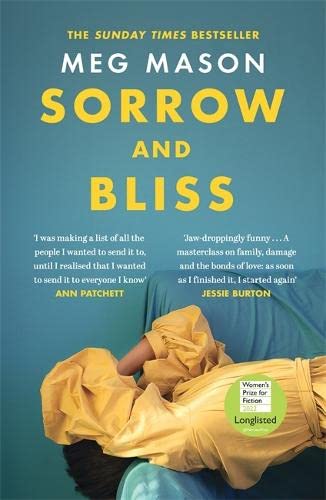 Our joint highest rating, and one of our best discussions – taking in mental illness and its diagnosis and treatment, marriage, childlessness, alcoholism, sisterhood, creativity, neglect, unreliable narrators and loneliness. For several of us, these issues hit close to home due to personal or family experience. We particularly noted the way that Mason sets up parallels between pairs of characters, accurately reflecting how family dynamics can be replicated in later generations.
Even the minor characters are fully rounded, and although Martha is not always pleasant to spend time with, her voice is impressively rendered. The picture of mental illness from the inside feels authentic, including the fact that Martha uses it as an excuse for her bad behaviour, becoming self-absorbed and not seeing how she is affecting others around her. Our main point of disagreement was about Mason’s decision not to name the mental illness Martha is suffering from. It seemed clear to several of us that it was meant to be bipolar disorder, so we wondered if it was a copout not to identify it as such.
We also thought about the meaning of the term “literary fiction”, and whether this has the qualities of a prize winner and will stand the test of time.
We had to fill out a feedback questionnaire about our experience of shadowing, and most of us sent in individual blurbs in response to the book. Some ended up in the final Reading Agency article. Here was mine:
“This deceptively light novel was a perfect book club selection, eliciting deep discussion about mental illness, family relationships and parenthood. Martha’s (unreliable) narration is a delight, wry and deadpan but also with moments of wrenching emotion. Mason masterfully controls the tone to create something that is witty and poignant all at once.”
Probably the main reason we were chosen for this opportunity is that we have a man – my husband, that is! – who attends regularly. This year the prize has been particularly keen to get more men reading books by women (see more below). So, he was responsible for giving The Male Response to the novel. No pressure, right? Luckily, he enjoyed it just as much as the rest of us. From the cover and blurb, it didn’t necessarily seem like the sort of book that he would pick up to read for himself, but he was fully engaged with the themes of mental illness, family relationships, and the question of whether or not to have children, and was so compelled that he read over half of it in a day.
I’m not sure who I expect to be awarded the Women’s Prize tomorrow. We of West Fields Readers would be delighted if it went to Meg Mason for Sorrow and Bliss, but I’d also be happy with a win for Louise Erdrich or Ruth Ozeki – though I wasn’t taken with their latest works compared with earlier ones I’ve read, they are excellent authors who deserve recognition. I don’t think The Bread the Devil Knead has a chance; I’d be disappointed in a win by Elif Shafak in that I would feel obligated to try her novel – the kind that gives magic realism a bad name – again; and, while I’m a Maggie Shipstead fan in general and admire the ambition of Great Circle, it would be galling for a book I DNFed twice to take the title!
Who are you rooting for/predicting?
I’d like to mock you with that thought,
jeer at the man
who won’t read novels
written by women –
at least not if they’re still alive
~from The Poet by Louisa Reid
Maybe you’ve seen on social media that the Women’s Prize has been canvassing opinion on the books by women that all men should read. This was prompted by some shocking statistics suggesting that even bestselling female authors can only attract a 20% male readership, whereas the best-known male authors are almost equally popular with men and women. They solicited 60 nominations from big names and ran a public poll. I voted for these 10:
Half of a Yellow Sun (Chimamanda Ngozi Adichie)
Possession (A.S. Byatt)
Homegoing (Yaa Gyasi)
The Poisonwood Bible (Barbara Kingsolver)
The Sea, The Sea (Iris Murdoch)
The Stone Diaries (Carol Shields)
We Need to Talk about Kevin (Lionel Shriver)
Olive Kitteridge (Elizabeth Strout)
The Goldfinch (Donna Tartt)
Orlando (Virginia Woolf)
*If I could have added to that list, though, my top recommendations for all men to read would be Station Eleven by Emily St. John Mandel and Bring Up the Bodies by Hilary Mantel (and probably a different Octavia E. Butler novel from the one nominated).


Three of my selections were among the 10 essential reads announced on the WP website. Their list was headed by Margaret Atwood’s The Handmaid’s Tale, though of her works I’d be more likely to direct men to Oryx and Crake.
I’ve seen discussions on Twitter about why men don’t read novels (at all, prioritizing nonfiction), or specifically not ones by women. Do you have any theories?
What one book by a woman do you think all men should read?
Review Catch-Up: Capildeo, Castillo, Nagamatsu & Wedlich
A second catch-up for April. Today I have a sprightly poetry collection about history, language and nature; a linked short story collection that imagines funerary rituals and human meaning in a post-pandemic future; and a wide-ranging popular science book about the diverse connotations and practical uses of slime. As a bonus, I have a preview essay from a forthcoming collection about how reading promotes empathy and social justice.
Like a Tree, Walking by Vahni Capildeo (2021)
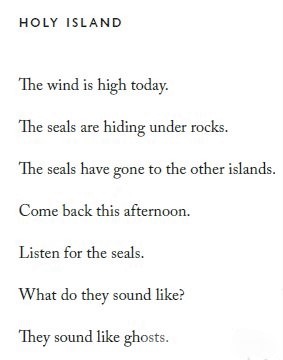
 Capildeo is a nonbinary Trinidadian Scottish poet and the current University of York writer in residence. Their fourth collection is richly studded with imagery of the natural world, especially birds and trees. “In Praise of Birds” makes a gorgeous start:
“In praise of high-contrast birds, purple bougainvillea thicketing the golden oriole. … In praise of grackles quarrelling on the lawn. / In praise of unbeautiful birds abounding in Old Norse, language of scavenging ravens, thought and memory, a treacherous duo”
and finds a late echo in “In Praise of Trees”: “If I could have translated piano practice into botany, the lichen is that Mozart phrase my left hand trialled endlessly.”
The title section (named after a moment from the book of Mark) draws on several numbered series – “Walk #2,” “Nocturne #1,” “Lullaby 4,” and so on – that appeared in a pamphlet they published last year. These are not uncomplicated idylls, though. Walks might involve dull scenery and asthma-inducing dust, as well as danger: “If nobody has abducted you, I’ll double back to meet you. … Before raper-man corner and the gingerbread house.” Lullabies wish for good sleep despite lawnmowers and a neighbour shooting his guns. There’s more bold defiance of expectations in phrases like “This is the circus for dead horses only”.
Language is a key theme, with translations from the French of Eugène Ionesco, and of Pierre de Ronsard into Trini patois. There are also dual-language erasure poems after Dame Julian of Norwich (Middle English) and Simone Weil (French). Much of the work is based on engagement with literature, or was written in collaboration with performers.
“Death is a thief in a stationery shop. He strolls out. The shopkeeper, a poor man, runs after, shouting. – I saw you! Give that back! – Give back what? Death says, strolling out. Hermes is a tram attendant who holds your coffee, helping you find the coin you dropped; it rolls underfoot.” (from “Odyssey Response”)
“Windrush Reflections” impresses for its research into the situation of Caribbean immigrants to Britain. It’s one of a number of long, multipart pieces, some of them prose poems. The verse relies mostly on alliteration and anaphora for its sonic qualities. Along with history, there is reflection on current events, as in “Plague Poems.” Experiences of casual racism fuel one of my favourite passages:
“the doorbell was ringing / the downstairs american oxford neighbours / wanted to check / by chatting on the intercom / if i was doing terrorism / i was doing transcriptions” (from “Violent Triage”)
Honorifics by Cynthia Miller, which I reviewed last week, had more personal resonance for me, but these are both powerful collections – alive to the present moment and revelling in language and in flora and fauna. However, only Capildeo progressed from the Jhalak Prize longlist onto the shortlist, which was announced yesterday.
With thanks to Carcanet Press for the free e-copy for review.
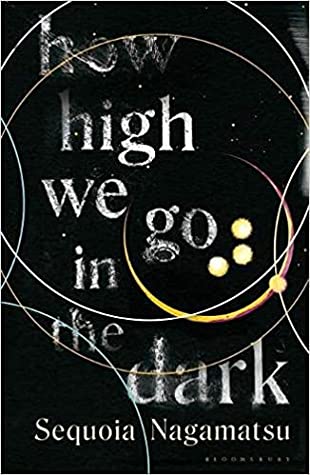
How High We Go in the Dark by Sequoia Nagamatsu (2022)
“Things are bad in every generation. But we still have to live our life.”
This linked short story collection was one of my most anticipated books of the year. Like two of its fellow entries on that list, Sea of Tranquility by Emily St. John Mandel and To Paradise by Hanya Yanagihara, it’s just the right blend of literary fiction and science fiction – an Octavia E. Butler level of the latter that I can handle. Opening in 2031 and stretching another 70 years into the future, it imagines how a pandemic reshapes the world and how communication and connection might continue after death. In the first story, Cliff is on the ground at the start of the Arctic plague, which emerges from a thawing Siberia (the same setup as in Under the Blue!), where his late daughter, Clara, had been part of a research group that discovered a 30,000-year-old Neanderthal girl they named Annie.
 The virus is highly transmissible and deadly, and later found to mostly affect children. In the following 13 stories (most about Asian Americans in California, plus a few set in Japan), the plague is a fact of life but has also prompted a new relationship to death – a major thread running through is the funerary rites that have arisen, everything from elegy hotels to “resomation.” In the stand-out story, the George Saunders-esque “City of Laughter,” Skip works at a euthanasia theme park whose roller coasters render ill children unconscious before stopping their hearts. He’s proud of his work, but can’t approach it objectively after he becomes emotionally involved with Dorrie and her son Fitch, who arrives in a bubble.
All but one of these stories are in the first person, so they feel like intimate testimonies of how a pandemic transforms existence. Almost all of the characters have experienced a bereavement, or are sick themselves. Relatives or acquaintances become protagonists in later stories. For instance, in “Pig Son,” Dorrie’s ex, David, is a scientist growing organs for transplantation. Bereavement coordinator Dennis and his doctor brother Bryan narrate #5 and #8, respectively. Six years on, Cliff’s wife Miki takes their granddaughter on a space mission. My other two favourites were “Through the Garden of Memory,” in which patients on a plague ward build a human pyramid and plot a sacrifice, and “Songs of Your Decay,” about a researcher at a forensic body farm who bonds with her one live donor over rock music.
Some stories are weaker or less original than others, but this is one case where the whole is definitely greater than the sum of its parts. The focus on illness and death, but also on the love that survives, made this a winner for me. I’d be especially likely to recommend it to fans of Kazuo Ishiguro and Karen Russell.
With thanks to Bloomsbury for the free copy for review.
Slime: A Natural History by Susanne Wedlich (2021)
[Translated from the German by Ayça Türkoğlu]
 This is just the sort of wide-ranging popular science book that draws me in. Like Entangled Life by Merlin Sheldrake, a work I’ve had many opportunities to recommend even to those who don’t normally pick up nonfiction, it incorporates many weird and wonderful facts about life forms we tend to overlook. Wedlich, a freelance science journalist in Germany, starts off at the Hunterian Museum in Glasgow, where she seeks a sample of the “primordial slime” collected by the HMS Challenger in 1876. “It seems to be an unwritten rule of horror: slime sells!” she remarks – from H. P. Lovecraft to Ghostbusters, it has provoked disgust. Jellyfish, snails, frogs and carnivorous plants – you’re in for a sticky tour of the natural world.
The technical blanket term for slimy substances is “hydrogels,” which are 99% water and held together by polymers. Biological examples have been inspiring new technologies, like friction reducers (e.g. in fire hoses) modelled on fish mucus, novel adhesives to repair organs and seal wounds, and glue traps to remove microplastics. Looking to nature to aid our lives is nothing new, of course: Wedlich records that slugs were once used to lubricate cart wheels.
The book branches off in a lot of directions. You’ll hear about writers who were spellbound or terrified by marine life (Patricia Highsmith kept snails, while Jean-Paul Sartre was freaked out by sea creatures), the Victorian fascination with underwater life, the importance of the microbiome and the serious medical consequences of its dysfunction, and animals such as amphibians that live between land and water. At times it felt like the narrative jumped from one topic to another, especially between the biological and the cultural, without following a particular plan, but there are enough remarkable nuggets to hold the interest.
With thanks to Granta for the free copy for review.
And a bonus:
 I was delighted to be sent a preview pamphlet containing the author’s note and title essay of How to Read Now by Elaine Castillo, coming from Atlantic in August. This guide to cultural criticism – how to read anything, not just a book – is alive to the biased undertones of everyday life. “Anyone who is perfectly comfortable with keeping the world just as it is now and reading it the way they’ve always read it … cannot be trusted”. Castillo writes that it is not the job of people of colour to enlighten white people (especially not through “the gooey heart-porn of the ethnographic” – war, genocide, tragedy, etc.); “if our stories primarily serve to educate, console and productively scold a comfortable white readership, then those stories will have failed their readers”. This is bold, provocative stuff. I’m sure to learn a lot.
Would you be interested in reading one or more of these?
To Paradise by Hanya Yanagihara (Doorstopper of the Quarter)
When I expressed interest in Hanya Yanagihara’s To Paradise on Twitter, having loved A Little Life and tepidly admired The People in the Trees, I didn’t expect to be chosen to receive one of my most anticipated releases of the year. A proof arrived while I was in the States for Christmas. As soon as I got back, I started it – with a vision of doing little else but reading it for a few days and reviewing it early in January. Instead, I read about 30 pages and set it aside, the 700-page heft mocking me from my coffee table stack for the better part of two months. Finally, I forced myself to set a daily reading goal: first 30 pages, then 40, then 60; and on Friday I read the last 100 pages over a couple sessions in the summerhouse. That regimented approach was what it took for me to get through my first doorstopper of the year.
The novel is in three parts – discrete enough to feel like separate books – set largely in 1893, 1993, and 2093. New York City’s Washington Square, even one particular house, recurs as a setting in all three, with some references to the American West and South and with flashbacks to time in Hawaii linking Books II and III.
The overarching theme is the American project: is freedom, both individual and collective, a worthy and attainable goal? Or are the country’s schisms too deep to be overcome? Class, race, sexuality, and physical and mental illness are some of the differences that Yanagihara explores. Even when equality of treatment has been won in one time and scenario – same-sex marriage is de rigueur in her alternative version of the 1890s, where the USA is divided into several nations – there is always the threat of a taken-for-granted right being retracted.
In Book I, David Bingham, who is to inherit his grandfather’s Washington Square property, considers a family-approved arranged marriage with an older man, Charles, versus eloping with a lower-class male teacher, Edward, with whom he has fallen in love. Edward wants them to light out for California, where new opportunities await but homosexuality is outlawed. Can they live in freedom if they’re repressing an essential part of their identity? The austere, elegant tone is a pitch-perfect pastiche of Henry James or Edith Wharton. Although this section took me the longest to read, it was the one I most appreciated for its flawless evocation of the time period and a rigid class structure. As in The Underground Railroad, though, the alt-history angle wasn’t really the most memorable aspect.
In Book II, David Bingham, also known as Kawika, is a paralegal having a secret affair with Charles, a partner in his law firm. Various friends and former lovers in their circle have AIDS, but Charles’s best friend Peter is dying of cancer. Before Peter flies to Switzerland for an assisted death, Charles throws him one last dinner party. Meanwhile, David receives a long letter from his ill father recounting their descent from Indigenous nobility and his failed attempt to set up a self-sufficient farm on their inherited land in Hawaii. This strand is closest to Yanagihara’s previous novels, the gay friendship circle reminiscent of A Little Life and the primitive back-to-the-land story recalling The People in the Trees. I also thought of Mrs Dalloway – David wanted to get the flowers for the party himself – and of Three Junes.
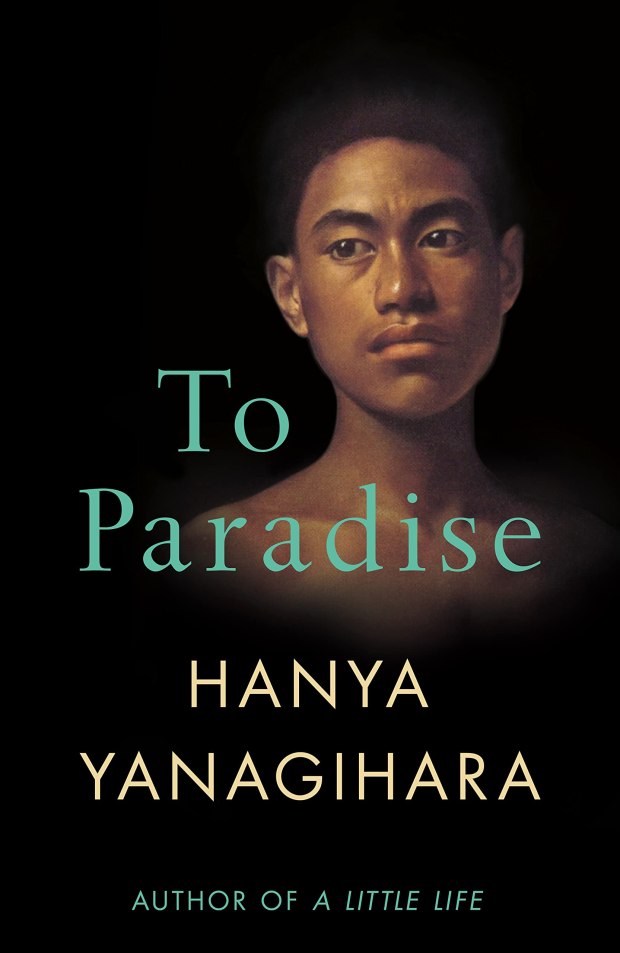 Book III is set in a dystopian future of extreme heat, rationing and near-constant pandemics. The totalitarian state institutes ever more draconian policies, with censorship, quarantine camps and public execution of insurgents. The narrator, intellectually disabled after a childhood illness, describes the restrictions with the flat affect of the title robot from Kazuo Ishiguro’s Klara and the Sun. When a stranger offers her the chance to escape, she is forced to weigh up freedom against safety. An alternating strand, based around letters sent by a Chinese Hawaiian character, traces how things got this bad, from the 2040s onwards.
While the closing speculative vision is all too plausible, two other literary/science fiction releases I’ve read this year, Sea of Tranquillity by Emily St. John Mandel and How High We Go in the Dark by Sequoia Nagamatsu, are more powerful and direct. Book III takes up half of the text and could stand alone, but the fact that it appears as a culmination of two other narratives creates false expectations that it can’t meet. The connections between the three are incidental – abandonment by a mother, a child raised by a grandparent, an arranged marriage, isolating illness – with recurring tactics like stories within stories and epistolary sections. The most overt cohesive strategy, the repeating of names across time periods, feels gimmicky and, again, sets readers up for a letdown by promising meaning that isn’t there.
Ultimately, the message seems to be: America’s problems are inherent, and so persist despite apparent progress. It takes a lot of words to build to that somewhat obvious point. I couldn’t suppress my disappointment that none of the storylines are resolved – this does, however, mean that one can choose to believe things will turn out happily for the characters. Their yearning for a more authentic life, even in a rotten state, makes it easy to empathize with their situations. I had high regard for the self-assured cross-genre prose (my interest waning only during the elder Kawika’s improbably long letter), but felt the ambition perhaps outshone the achievement.
As I learned when reviewing a recent book about American utopian projects, Heaven Is a Place on Earth, and interviewing its author, Adrian Shirk, an imagined utopia and a projected dystopia aren’t actually so different. Here was her response to one of my questions:
At one point you say, “utopia is never far from its opposite.” Dystopian novels are as popular as ever. To what extent do you think real-life utopias and fictional dystopias have the same aims?
I think real-life utopian experiments and fictional dystopias both offer warnings about the dangers of relying too much on ideology, and not enough on living, or choosing the person over the belief. So, in that way, real utopian experiments and fictional dystopian narratives are two sides of the same coin: a dystopia is a utopia that lost sight of—or never included—understanding itself as resistance to a violent empire, and thus starts to look like a violent empire itself.
Both start by diagnosing a societal sickness. The question is how we then get to paradise.
Page count: 701
Book I: 
Book II:
Book III: 
My overall rating:
With thanks to Picador for the proof copy for review.
Book Serendipity, January to February 2022
This is a bimonthly feature of mine. I call it Book Serendipity when two or more books that I read at the same time or in quick succession have something in common – the more bizarre, the better. Because I usually 20–30 books on the go at once, I suppose I’m more prone to such incidents. (I’ve realized that, of course, synchronicity is really the more apt word, but this branding has stuck.) I always like hearing about your bookish coincidences, too!
The following are in roughly chronological order.
- The author takes Valium to cope with fear of flying in two memoirs I read at the same time, I Came All This Way to Meet You by Jami Attenberg and This Boy We Made by Taylor Harris.


- The fact that the Spanish brought wild horses to the USA is mentioned in the story “The Team” by Tommy Orange (in The Decameron Project) and the poetry collection Rise and Float by Brian Tierney – this also links back to a book I reread in late 2021, Misty of Chincoteague by Marguerite Henry.
- There are roaches in a New York City apartment in I Came All This Way to Meet You by Jami Attenberg and the story “Other People’s Lives” in Loss of Memory Is Only Temporary by Johanna Kaplan.
- The same Dostoevsky passage from The Brothers Karamazov, about loving everything (“Love all the earth, every ray of God’s light, every grain of sand or blade of grass, every living thing. If you love the earth enough, you will know the divine mystery” and so on), is quoted in Faith after Doubt by Brian McLaren and Reflections from the North Country by Sigurd Olson.

- A description of nicotine-stained yellow fingers in What I Wish People Knew About Dementia by Wendy Mitchell, The Cure for Sleep by Tanya Shadrick, and Free by Lea Ypi.
- Joni Mitchell’s music is mentioned in The Reactor by Nick Blackburn and The Cure for Sleep by Tanya Shadrick, two memoirs I was reading at the same time.
- From one summer camp story to another … I happened to follow up The Interestings by Meg Wolitzer with Honor Girl by Maggie Thrash.
- Audre Lorde’s definition of the erotic is quoted in Body Work by Melissa Febos and Heaven Is a Place on Earth by Adrian Shirk, both of which are March 15, 2022 nonfiction releases I’ve reviewed for Shelf Awareness.


- The 2017 white supremacist terrorist attack in Charlottesville, Virginia is mentioned in This Boy We Made by Taylor Harris (who lives there), Faith after Doubt by Brian McLaren (who was part of the clergy counterprotest group that day), and Heaven Is a Place on Earth by Adrian Shirk (she went there for a literary event a few months later).
- The Salvador Dalí painting The Persistence of Memory (that’s the one with the melting clock) is described in The Reactor by Nick Blackburn and This Boy We Made by Taylor Harris.
- On the same day, I came across the fact that Mary Shelley was pregnant while she wrote Frankenstein in two books: Linea Nigra by Jazmina Barrera and Smile by Sarah Ruhl.

- The fact that cysts in female organs can contain teeth comes up in Heaven Is a Place on Earth by Adrian Shirk and I Love You but I’ve Chosen Darkness by Claire Vaye Watkins.
- Reading two novels by Japanese-American authors who grew up in Hawaii at the same time: How High We Go in the Dark by Sequoia Nagamatsu and To Paradise by Hanya Yanagihara.

- Twins are everywhere! Including, just in a recent reading pile, in Hands by Lauren Brown (she’s a twin, so fair enough), Birth Notes by Jessica Cornwell, The Snow Collectors by Tina May Hall, Smile by Sarah Ruhl (this and the Cornwell are memoirs about birthing twins, so also fair enough), Ordinary Love by Jane Smiley, and The Priory by Dorothy Whipple. For as uncommon as they are in real life, they turn up way too often in fiction.
- Bell’s palsy AND giving birth to twins are elements in Birth Notes by Jessica Cornwell and Smile by Sarah Ruhl.
- There’s a no-nonsense maternity nurse in Birth Notes by Jessica Cornwell and The Priory by Dorothy Whipple.


- U.S. West Coast wolves (a particular one in each case, known by a tracking number) are the subject of a poem in Postcolonial Love Poem by Natalie Diaz and The Necessity of Wildfire by Caitlin Scarano.
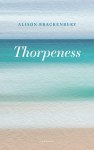
- Herons appear and/or have metaphorical/symbolic meaning in Thorpeness by Alison Brackenbury, What Willow Says by Lynn Buckle, Maggie Blue and the Dark World by Anna Goodall, and The Priory by Dorothy Whipple.

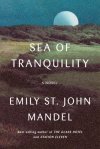
- There’s a character named Edwin in Booth by Karen Joy Fowler and Sea of Tranquility by Emily St. John Mandel.

- The use of “hoard” where it should be “horde” in Maggie Blue and the Dark World by Anna Goodall and Acts of Desperation by Megan Nolan – both errors were encountered in the same evening.
- I read about Lindisfarne in Jini Reddy’s essay in Women on Nature (ed. Katharine Norbury) and The Interior Silence by Sarah Sands in the same evening.
- “Flitting” as a synonym for moving house in Thorpeness by Alison Brackenbury and Nature Cure by Richard Mabey.

- A brother named Paul in Tides by Sara Freeman and Sea of Tranquility by Emily St. John Mandel.
- A woman knows her lover is on the phone with his ex by his tone of voice in Tides by Sara Freeman and Acts of Desperation by Megan Nolan.
- In two novels I’ve read so far this year – but I won’t say which ones as it’s a spoiler – the big reveal, towards the very end, is that a woman was caught breastfeeding someone who was not her baby and it caused a relationship-destroying rupture.
- Reading a second memoir this year where the chapters are titled after pop songs: Dear Queer Self by Jonathan Alexander (for a Foreword review) and now This Will Only Hurt a Little by Busy Philipps.


- A second short novel entitled The Swimmers this year: the first was Julie Otsuka’s, recently reviewed for Shiny New Books; a proof copy is on the way to me of Chloe Lane’s, coming out from Gallic Books in May.
- Reading a second memoir this year whose author grew up in the Chicago suburbs of Illinois (Arlington Heights/Buffalo Grove vs. Oak Park): I Came All This Way to Meet You by Jami Attenberg and This Will Only Hurt a Little by Busy Philipps.
- The linea nigra (a stripe of dark hair down a pregnant woman’s belly) provides the title for Linea Nigra by Jazmina Barrera and is also mentioned in Birth Notes by Jessica Cornwell.
 The famous feminist text Our Bodies, Ourselves is mentioned in Birth Notes by Jessica Cornwell and I Love You but I’ve Chosen Darkness by Claire Vaye Watkins.
- Childbirth brings back traumatic memories of rape in Birth Notes by Jessica Cornwell and This Will Only Hurt a Little by Busy Philipps.
What’s the weirdest reading coincidence you’ve had lately?
Some of My Most Anticipated Releases of 2022
Ninety-nine 2022 releases have made it onto my Goodreads shelves so far. I’ve read about 10 already and will preview some of them tomorrow.
 This year we can expect new fiction from Julian Barnes, Carol Birch, Jessie Burton, Jennifer Egan, Karen Joy Fowler, David Guterson, Sheila Heti, John Irving (perhaps? at last), Liza Klaussman, Benjamin Myers, Julie Otsuka, Alex Preston and Anne Tyler; a debut novel from Emilie Pine; second memoirs from Amy Liptrot and Wendy Mitchell; another wide-ranging cultural history/self-help book from Susan Cain; another medical history from Lindsey Fitzharris; a biography of the late Jan Morris; and much more. (Already I feel swamped, and this in a year when I’ve said I want to prioritize backlist reads! Ah well, it is always thus.)
I’ve limited myself here to the 20 upcoming releases I’m most excited about. The low figure is a bit of a cheat: with a few exceptions, I’ve not included books I have / have been promised. I’ll be scurrying around requesting copies of most of the others soon. The following are due out between January and August and are in (UK) release date order, within sections by genre. (U.S. details given too/instead if USA-only. Quotes are extracted from publisher blurbs on Goodreads.)
U.S. covers – included where different – rule!
N.B. Fiction is winning this year!
Fiction
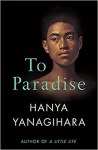 To Paradise by Hanya Yanagihara [Jan. 11, Picador / Doubleday] You’ll see this on just about every list; her fans are legion after the wonder that was A Little Life. Another doorstopper, but this time with the epic reach to justify the length: sections are set in an alternative 1893, 1993, and 2093 – “joined in an enthralling and ingenious symphony, as recurring notes and themes deepen and enrich one another.” [Proof copy]

UK cover
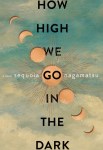 How High We Go in the Dark by Sequoia Nagamatsu [Jan. 18, Bloomsbury / William Morrow] Amazing author name! Similar to the Yanagihara what with the century-hopping and future scenario, a feature common in 2020s literature – a throwback to Cloud Atlas? I’m also reminded of the premise of Under the Blue, one of my favourites from last year. “Once unleashed, the Arctic Plague will reshape life on Earth for generations to come.”
Heartstopper, Volume 5 by Alice Oseman [Feb. ?, Hodder Children’s] I devoured the first four volumes of this teen comic last year. In 2020, Oseman tweeted that the fifth and final installment was slated for February 2022, but I don’t have any more information than that. Nick will be getting ready to go off to university, so I guess we’ll see how he leaves things with Charlie and whether their relationship will survive a separation. (No cover art yet.)
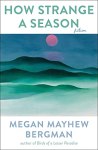 How Strange a Season by Megan Mayhew Bergman [March 29, Scribner] I enjoyed her earlier story collection, Almost Famous Women. “Bergman portrays women who wrestle with problematic inheritances: a modern glass house on a treacherous California cliff, a water-starved ranch, an abandoned plantation on a river near Charleston … provocative prose asks what are we leaving behind for our ancestors … what price will they pay for our mistakes?”
A Violent Woman by Ayana Mathis [April 7, Hutchinson] Her Oprah-approved 2013 debut, The Twelve Tribes of Hattie, got a rare 5-star review from me. About “an estranged mother and her daughter. Dutchess lives in Bonaparte, Alabama, a once thriving black town now in its death throes. Lena lives in Philadelphia in the 1980s. Her involvement with the radical separatist group STEP leads to transcendence and tragedy.” (No cover art yet.)
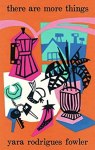 there are more things by Yara Rodrigues Fowler [April 28, Fleet] I so wanted her 2019 debut novel, Stubborn Archivist, to win the Young Writer of the Year Award. I love the cover and Hamlet-sourced title, and I’m here for novels of female friendship. “In January 2016, Melissa [South London native] and Catarina [born to well-known political family in Brazil] meet for the first time, and as political turmoil unfolds … their friendship takes flight.”


UK cover
Sea of Tranquility by Emily St. John Mandel [April 28, Picador / April 5, Knopf] This is the other title you’ll find on everyone else’s list. That’s because The Glass Hotel, even more so than Station Eleven, was amazing. Another history-to-future-hopper: “a novel of art, time, love, and plague that takes the reader from Vancouver Island in 1912 to a dark colony on the moon three hundred years later, unfurling a story of humanity across centuries and space.” [Edelweiss download]
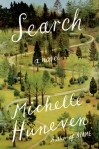 Search by Michelle Huneven [April 28, Penguin] A late addition to my list thanks to the Kirkus review. Sounds like one for readers of Katherine Heiny! “Dana Potowski is a restaurant critic and food writer … asked to join [her California Unitarian Universalist] church search committee for a new minister. Under pressure to find her next book idea, she agrees, and resolves to secretly pen a memoir, with recipes, about the experience.”


UK cover
Very Cold People by Sarah Manguso [April 28, Picador / Feb. 8, Hogarth] The debut novel from an author by whom I’ve read four nonfiction works. “For Ruthie, the frozen town of Waitsfield, Massachusetts, is all she has ever known. Once home to the country’s oldest and most illustrious families[,] … it is an unforgiving place awash with secrets. … Ruthie slowly learns how the town’s prim facade conceals a deeper, darker history…”
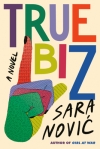
UK cover
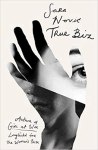
True Biz by Sara Nović [May 5, Little, Brown / April 5, Random House] Her 2015 Girl at War is one of my most-admired debuts of all time, and who can resist a campus novel?! “The students at the River Valley School for the Deaf just want to hook up, pass their history final, and have doctors, politicians, and their parents stop telling them what to do with their bodies. This revelatory novel plunges readers into the halls of a residential school for the deaf.”
 You Have a Friend in 10a: Stories by Maggie Shipstead [May 19, Transworld / May 17, Knopf] Shipstead’s Booker-shortlisted doorstopper, Great Circle, ironically, never took off for me; I’m hoping her short-form storytelling will work out better. “Diving into eclectic and vivid settings, from an Olympic village to a deathbed in Paris to a Pacific atoll, … Shipstead traverses ordinary and unusual realities with cunning, compassion, and wit.”

UK cover
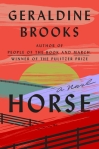 Horse by Geraldine Brooks [June 2, Little, Brown / June 14, Viking] You guessed it, another tripartite 1800s–1900s–2000s narrative! With themes of slavery, art and general African American history. I’m not big on horses, at least not these days, but Brooks’s March and Year of Wonders are among my recent favourites. “Based on the remarkable true story of the record-breaking thoroughbred, Lexington, who became America’s greatest stud sire.”

UK cover
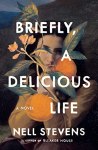
Briefly, a Delicious Life by Nell Stevens [June 23, Picador / June 21, Scribner] I’ve read her two previous autofiction-y memoirs and loved Mrs Gaskell & Me. The title, cover and Victorian setting of her debut novel beckon. “In 1473, fourteen-year-old Blanca dies in a hilltop monastery in Mallorca. Nearly four hundred years later, when George Sand, her two children, and her lover Frederic Chopin arrive in the village, Blanca is still there: a spirited, funny, righteous ghost.”
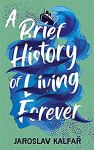 A Brief History of Living Forever by Jaroslav Kalfar [Aug. 4, Sceptre / Little, Brown] His Spaceman of Bohemia (2017) was terrific. “When Adela discovers she has a terminal illness, her thoughts turn to Tereza, the American-raised daughter she gave up at birth. … In NYC, Tereza is … the star researcher for two suspicious biotech moguls hellbent on developing a ‘god pill’ to extend human life indefinitely. … Narrated from the beyond by Adela.”
Nonfiction
 The Cure for Sleep by Tanya Shadrick [Jan. 20, Weidenfeld & Nicolson] Nature memoir / self-help. “On return from near-death, Shadrick vows to stop sleepwalking through life. … Around the care of young children, she starts to play with the shape and scale of her days: to stray from the path, get lost in the woods, make bargains with strangers … she moves beyond her respectable roles as worker, wife and mother in a small town.” [Review copy]
 The Invisible Kingdom: Reimagining Chronic Illness by Meghan O’Rourke [March 1, Riverhead] O’Rourke wrote one of the best bereavement memoirs ever. This ties in with my medical interests. “O’Rourke delivers a revelatory investigation into this elusive category of ‘invisible’ illness that encompasses autoimmune diseases, post-treatment Lyme disease syndrome, and now long COVID, synthesizing the personal and the universal.”

UK cover
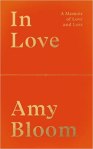
In Love: A Memoir of Love and Loss by Amy Bloom [April 7, Granta / March 8, Random House] The true story of how Bloom accompanied her husband Brian, who had Alzheimer’s, to Dignitas in Switzerland to end his life. I’ve read quite a lot around assisted dying. “Written in Bloom’s captivating, insightful voice and with her trademark wit and candor, In Love is an unforgettable portrait of a beautiful marriage, and a boundary-defying love.”
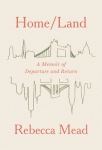 Home/Land: A Memoir of Departure and Return by Rebecca Mead [April 21, Grove Press UK / Feb. 8, Knopf] I enjoyed Mead’s bibliomemoir on Middlemarch. The Anglo-American theme is perfect for me: “drawing on literature and art, recent and ancient history, and the experience of encounters with individuals, environments, and landscapes in New York City and in England, Mead artfully explores themes of identity, nationality, and inheritance.”

UK cover
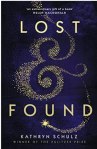
Lost & Found: A Memoir by Kathryn Schulz [April 28, Picador / Jan. 20, Random House] I loved her 2010 book Being Wrong, and bereavement memoirs are my jam. “Eighteen months before Kathryn Schulz’s father died, she met the woman she would marry. In Lost & Found, she weaves the story of those relationships into a brilliant exploration of the role that loss and discovery play in all of our lives … an enduring account of love in all its many forms.”
Poetry
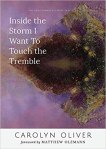 Inside the Storm I Want to Touch the Tremble by Carolyn Oliver [Aug. 19, Univ. of Utah Press] Carolyn used to blog at Rosemary and Reading Glasses. The poems she’s shared on social media are beautiful, and I’m proud of her for winning the Agha Shahid Ali Prize. “Inside this debut collection, girlhood’s dangers echo, transmuted, in the poet’s fears for her son. A body … is humbled by chronic illness. Stumbling toward joy across time and space, these poems hum with fear and desire, bewildering loss, and love’s lush possibilities.”
Themes arising: crossing three centuries; H & I titles, the word “brief”; moons and stars on covers. Mostly female authors (only two men here).
Do check out these other lists for more ideas!
Plus you can seek out all the usual lists (e.g. on Lit Hub and virtually every other book or newspaper site) … if you want to be overwhelmed!
What catches your eye here?
What other 2022 titles do I need to know about?
20 Books of Summer, #6–8: Aristide, Hood, Lamott
This latest batch of colour-themed summer reads took me from a depleted post-pandemic landscape to the heart of dysfunctional families in Rhode Island and California.
Under the Blue by Oana Aristide (2021)
Fans of Station Eleven, this one’s for you: the best dystopian novel I’ve read since Mandel’s. Aristide started writing this in 2017, and unknowingly predicted a much worse pandemic than Covid-19. In July 2020, Harry, a middle-aged painter inhabiting his late nephew’s apartment in London, finally twigs that something major is going on. He packs his car and heads to his Devon cottage, leaving its address under the door of the cute neighbour he sometimes flirts with. Hot days stack up and his new habits of rationing food and soap are deeply ingrained by the time the gal from #22, Ash – along with her sister, Jessie, a doctor who stocked up on medicine before fleeing her hospital – turn up. They quickly sink into his routines but have a bigger game plan: getting to Uganda, where their mum once worked and where they know they will be out of range of Europe’s at-risk nuclear reactors. An epic road trip ensues.
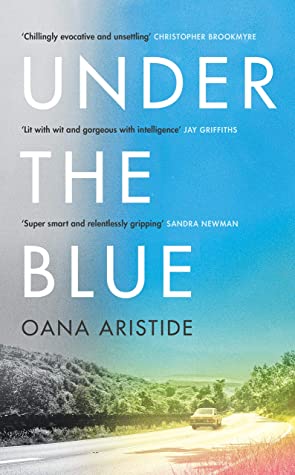 It gradually becomes clear that Harry, Ash and Jessie are among mere thousands of survivors worldwide, somehow immune to a novel disease that spread like wildfire. There are echoes of Cormac McCarthy’s The Road in the way that they ransack the homes of the dead for supplies, and yet there’s lightness to their journey. Jessie has a sharp sense of humour, provoking much banter, and the places they pass through in France and Italy are gorgeous despite the circumstances. It would be a privilege to wander empty tourist destinations were it not for fear of nuclear winter and not finding sufficient food – and petrol to keep “the Lioness” (the replacement car they steal; it becomes their refuge) going. While the vague sexual tension between Harry and Ash persists, all three bonds are intriguing.
In an alternating storyline starting in 2017, Lisa and Paul, two computer scientists based in a lab at the Arctic Circle, are programming an AI, Talos XI. Based on reams of data on history and human nature, Talos is asked to predict what will happen next. But when it comes to questions like the purpose of art and whether humans are worth saving, the conclusions he comes to aren’t the ones his creators were hoping for. These sections are set out as transcripts of dialogues, and provide a change of pace and perspective. Initially, I was less sure about this strand, worrying that it would resort to that well-worn trope of machines gone bad. Luckily, Aristide avoids sci-fi clichés, and presents a believable vision of life after the collapse of civilization.
The novel is full of memorable lines (“This absurd overkill, this baroque wedding cake of an apocalypse: plague and then nuclear meltdowns”) and scenes, from Harry burying a dead cow to the trio acting out a dinner party – just in case it’s their last. There’s an environmentalist message here, but it’s subtly conveyed via a propulsive cautionary tale that also reminded me of work by Louisa Hall and Maja Lunde. (Public library) 
Ruby by Ann Hood (1998)
Olivia had the perfect life: fulfilling, creative work as a milliner; a place in New York City and a bolthole in Rhode Island; a new husband and plans to try for a baby right away. But then, in a fluke accident, David was hit by a car while jogging near their vacation home less than a year into their marriage. As the novel opens, 37-year-old Olivia is trying to formulate a letter to the college girl who struck and killed her husband. She has returned to Rhode Island to get the house ready to sell but changes her mind when a pregnant 15-year-old, Ruby, wanders in one day.
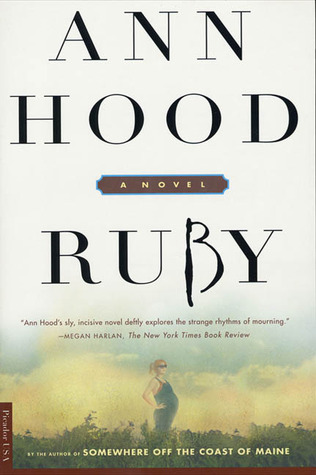 At first, I worried that the setup would be too neat: Olivia wants a baby but didn’t get a chance to have one with David before he died; Ruby didn’t intend to get pregnant and looks forward to getting back her figure and her life of soft drugs and petty crime. And indeed, Olivia suggests an adoption arrangement early on. But the outworkings of the plot are not straightforward, and the characters, both main and secondary (including Olivia’s magazine writer friend, Winnie; David’s friend, Rex; Olivia’s mother and sister; a local lawyer who becomes a love interest), are charming.
It’s a low-key, small-town affair reminiscent of the work of Anne Tyler, and I appreciated how it sensitively explores grief, its effects on the protagonist’s decision-making, and how daunting it is to start over (“The idea of that, of beginning again from nothing, made Olivia feel tired.”). It was also a neat touch that Olivia is the same age as me, so in some ways I could easily imagine myself into her position.
This was the ninth book I’ve read by Hood, an author little known outside of the USA – everything from grief memoirs to a novel about knitting. Ironically, its main themes of adoption and bereavement were to become hallmarks of her later work: she lost her daughter in 2002 and then adopted a little girl from China. (Secondhand purchase, June 2021)
[I’ve read another novel titled Ruby – Cynthia Bond’s from 2014.]
Blue Shoe by Anne Lamott (2002)
I’m a devoted reader of Lamott’s autobiographical essays about faith against the odds (see here), but have been wary of trying her fiction, suspecting I wouldn’t enjoy it as much. Well, it’s true that I prefer her nonfiction on the whole, but this was an enjoyably offbeat novel featuring the kind of frazzled antiheroine who wouldn’t be out of place in Anne Tyler’s work.
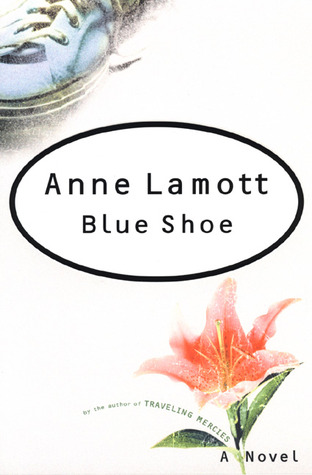 Mattie Ryder has left her husband and returned to her Bay Area family home with her young son and daughter. She promptly falls for Daniel, the handyman she hires to exterminate the rats, but he’s married, so she keeps falling into bed with her ex, Nicky, even after he acquires a new wife and baby. Her mother, Isa, is drifting ever further into dementia. A blue rubber shoe that Mattie finds serves as a totem of her late father – and his secret life. She takes a gamble that telling the truth, no matter what the circumstances, will see her right.
As in Ruby, I found the protagonist relatable and the ensemble cast of supporting characters amusing. Lamott crafts some memorable potted descriptions: “She was Jewish, expansive and yeasty and uncontained, as if she had a birthright for outrageousness” and “He seemed so constrained, so neatly trimmed, someone who’d been doing topiary with his soul all his life.” She turns a good phrase, and adopts the same self-deprecating attitude towards Mattie that she has towards herself in her memoirs: “She usually hoped to look more like Myrna Loy than an organ grinder’s monkey when a man finally proclaimed his adoration.”
At a certain point – maybe two-thirds of the way through – my inward reply to a lot of the novel’s threads was “okay, I get it; can we move on?” Yes, the situation with Isa is awful; yes, something’s gotta give with Daniel and his wife; yes, the revelations about her father seem unbearable. But with a four-year time span, it felt like Mattie was stuck in the middle for far too long. It’s also curious that she doesn’t apply her zany faith (a replica of Lamott’s) to questions of sexual morality – though that’s true of more liberal Christian approaches. All in all, I had some trouble valuing this as a novel because of how much I know about Lamott’s life and how closely I saw the storyline replicating her family dynamic. (Secondhand purchase, c. 2006 – I found a signed hardback in a library book sale back in my U.S. hometown for $1.) 
Hmm, altogether too much blue in my selections thus far (4 out of 8!). I’ll have to try to come up with some more interesting colours for my upcoming choices.
Next books in progress: The Other’s Gold by Elizabeth Ames and God Is Not a White Man by Chine McDonald.
Read any of these? Interested?
Book Serendipity, Early 2021
I call it Book Serendipity when two or more books that I read at the same time or in quick succession have something pretty bizarre in common. Because I have so many books on the go at once (usually 20‒30), I suppose I’m more prone to such incidents.
Josh Cohen’s How to Live. What to Do, a therapist’s guide to literature, explains why this might happen:
More than one writer – the French poet Stéphane Mallarmé, the Argentinian writer Jorge Luis Borges – has advanced the exhilarating idea that each book is an infinitesimally small piece of one single, endless Book. I’ve always felt that this idea, unlikely as it might sound, makes perfect sense if you read enough novels [also nonfiction, for me]. The incidents, descriptions, phrases and images in the book you’re reading will always recall the incidents in another, and those in turn will call up the incidents in another, so that even as you’re reading one book, you’re reading countless others.
The following are in roughly chronological order.
- Mother‒baby swimming sessions in Some Body to Love by Alexandra Heminsley and The Still Point of the Turning World by Emily Rapp.


- [I think it would be a spoiler to even name them, but two novels I read simultaneously in January featured 1) a marriage / close relationship between a man and a woman – even though the man is gay; and 2) a character who beat his wife and then died in a convenient ‘accident’. One was published in 1997 and the other in 2020.]
- Stomas appeared in Dazzling Darkness by Rachel Mann and First Time Ever by Peggy Seeger late in my 2020 reading, and then in early 2021 in Pain: The Science of the Feeling Brain by Abdul-Ghaaliq Lalkhen and Love’s Work by Gillian Rose.
- An account of the author’s experience of ovarian hyperstimulation syndrome in Hormonal by Eleanor Morgan and I Miss You when I Blink by Mary Laura Philpott.
- Salmon fishing takes place in Snow Falling on Cedars by David Guterson and Kings of the Yukon by Adam Weymouth.


- The medical motto “see one, do one, teach one” appears in Breathtaking by Rachel Clarke and Complications by Atul Gawande.
- Filipino medical staff feature in America Is Not the Heart by Elaine Castillo and Breathtaking by Rachel Clarke.
- Twin Peaks is mentioned in The Fragments of My Father by Sam Mills and the anthology Trauma: Essays on Art and Mental Health; a different essay in the latter talks about Virginia Woolf’s mental health struggle, which is a strand in the former.
- St. Teresa of Ávila is mentioned in Heart by Gail Godwin and Sanatorium by Abi Palmer.

- The same Rachel Long poem appears in her debut collection, My Darling from the Lions, and The Emma Press Anthology of Love – but under different titles (“Portent” vs. “Delayed Gratification”).
- There’s a matriarch named Dot in Unsettled Ground by Claire Fuller and The Magician’s Assistant by Ann Patchett.
- There’s an Alaska setting in The Quality of Silence by Rosamund Lupton and Kings of the Yukon by Adam Weymouth.
- Becoming a mother is described as a baptism in Sanctuary by Emily Rapp Black and The Fragments of My Father by Sam Mills.


- While reading America Is Not the Heart by Elaine Castillo, I saw Castillo mentioned in the Acknowledgements of My Darling from the Lions by Rachel Long.
- Polar explorers’ demise is discussed in Ex Libris by Anne Fadiman and The Still Point by Amy Sackville.
- “Butterfingers” / “butter-fingered” is used in America Is Not the Heart by Elaine Castillo and The Clock Winder by Anne Tyler.
- There’s a mention of someone eating paper torn from books (the horror!) in Ex Libris by Anne Fadiman and The Clock Winder by Anne Tyler.
- I was reading three pre-releases at once, each of 288 pages: Milk Fed by Melissa Broder, Unsettled Ground by Claire Fuller, and A Town Called Solace by Mary Lawson.
- The Jewish golem myth is the overarching metaphor of Milk Fed by Melissa Broder and Golem Girl by Riva Lehrer.
- There’s a ceremony to pay respects to those who donated their bodies for medical school dissection in Maybe You Should Talk to Someone by Lori Gottlieb and Golem Girl by Riva Lehrer.
- An old woman with dementia features in The Living Sea of Waking Dreams by Richard Flanagan, Keeper by Andrea Gillies, and The Clock Winder by Anne Tyler.


- A mother dies of cancer on Christmas Day in This Party’s Dead by Erica Buist and The Fragments of My Father by Sam Mills.
- The main character does stand-up comedy in Milk Fed by Melissa Broder and This Party’s Dead by Erica Buist.
- Winning a goldfish at a carnival in The Air Year by Caroline Bird, A Feather on the Breath of God by Sigrid Nunez, and Anna Vaught’s essay in the Trauma anthology.
- ECT (electroconvulsive therapy) is mentioned in Adventures in Human Being by Gavin Francis and Woman on the Edge of Time by Marge Piercy.


- There’s a father who is non-medical hospital staff in The Push by Ashley Audrain (a cleaner) and A Feather on the Breath of God by Sigrid Nunez (a kitchen worker).
- There’s a character named Hart in The Wild Laughter by Caoilinn Hughes and The Birth House by Ami McKay.
- Cannibalism is a point of reference, a major metaphor, or a (surreal) reality in Mother for Dinner by Shalom Auslander, Eat or We Both Starve by Victoria Kennefick, and Light Perpetual by Francis Spufford.
- Infertility and caring for animals were two big themes shared by Brood by Jackie Polzin and Catalogue Baby by Myriam Steinberg. This became clearer when I interviewed both authors in February. Also, both women have shocks of pink hair in their publicity photos!


- A young woman works at a hotel in The Distance between Us by Maggie O’Farrell and My Dark Vanessa by Kate Elizabeth Russell (and The Glass Hotel by Emily St. John Mandel, which I read late last year).
What’s the weirdest reading coincidence you’ve had lately?
Women’s Prize 2021: Predictions & Eligible Titles
In previous years I’ve been a half-hearted follower of the Women’s Prize – often half or more of the longlist doesn’t interest me – but given that nearly two-thirds of my annual reading is by women, and that I so enjoyed catching up on the previous winners last year, I somehow feel more invested this year. Following literary prizes is among my greatest bookish joys, so this time round I’ve made more of an effort to look back through a year of UK fiction releases by women, whether I’ve read the books or not, and make some informed predictions.
Here is the scope of the prize: “Any woman writing in English – whatever her nationality, country of residence, age or subject matter – is eligible. Novels must be published in the United Kingdom between 1 April in the year the Prize calls for entries, and 31 March the following year, when the Prize is announced.” (Note: no novellas or short stories; the judges are looking for the best work by a woman – or a trans person legally defined as a woman.)
Based on the books by women that I have admired, loved, or found most relevant in 2020‒21, here are my predictions for the longlist, which will be revealed on March 10th (two weeks from today) and will contain 16 titles. I’ve aimed for a balance between new and established voices, and a mix of genres. I link to my reviews where available.


- The Vanishing Half by Brit Bennett
- Piranesi by Susanna Clarke
- Exciting Times by Naoise Dolan
- Burnt Sugar by Avni Doshi
- Mrs Death Misses Death by Salena Godden
- Transcendent Kingdom by Yaa Gyasi
- Sisters by Daisy Johnson
- Pew by Catherine Lacey
- No One Is Talking about This by Patricia Lockwood – currently reading
- A Burning by Megha Majumdar*
- The Glass Hotel by Emily St. John Mandel
- Hot Stew by Fiona Mozley**
- Outlawed by Anna North
- Love After Love by Ingrid Persaud
- The Mermaid of Black Conch by Monique Roffey***
- The Liar’s Dictionary by Eley Williams
* Not read yet. It seems like this year’s Home Fire.
** Not read yet, but I loved Elmet so much that I’m confident this will be a hit with me, too.
*** Not read yet. I plan to read it, but after its Costa win there’s a long library holds queue.
Note: “The Prize only accepts novels entered by publishers, who may each submit a maximum of two titles per imprint and one title for imprints with a list of five fiction titles or fewer published in a year. Previously shortlisted and winning authors are awarded a ‘free pass’ in addition to a publisher’s general submissions.”
- Because of all the funds the publishers are expected to contribute to the Prize’s publicity at each level of judging, the process unfairly discriminates against small, independent publishers.
Bernardine Evaristo is the chair of judges this year, so I expect a strong showing from BIPOC and LGBTQ authors AND a leaning towards experimental prose, probably even more so than my above list reflects.
Other novels I considered:
Runners-up – books that I enjoyed and would be perfectly happy to see nominated:


- Milk Fed by Melissa Broder – not reviewed yet
- Here Is the Beehive by Sarah Crossan
- The Group by Lara Feigel
- Unsettled Ground by Claire Fuller – not reviewed yet
- Artifact by Arlene Heyman
- The Book of Longings by Sue Monk Kidd
- A Town Called Solace by Sue Lawson – not reviewed yet
- Monogamy by Sue Miller
- What Are You Going Through by Sigrid Nunez
- Islands of Mercy by Rose Tremain
Reads that didn’t match up for me, but would be eligible:


- When the Lights Go Out by Carys Bray
- The New Wilderness by Diane Cook
- Tennis Lessons by Susannah Dickey
- The Pull of the Stars by Emma Donoghue
- As You Were by Elaine Feeney (DNF)
- The Charmed Wife by Olga Grushin
- Miss Benson’s Beetle by Rachel Joyce
- The Animals in That Country by Laura Jean McKay
- Scenes of a Graphic Nature by Caroline O’Donoghue
- True Story by Kate Reed Petty (DNF)
- Rodham by Curtis Sittenfeld
- The Lamplighters by Emma Stonex – currently reading
- Redhead by the Side of the Road by Anne Tyler
- little scratch by Rebecca Watson
- Three Women and a Boat by Anne Youngson
Haven’t had a chance to read yet / don’t have access to, so can only list without comment (most likely alternative nominees in bold):


- Against the Loveless World by Susan Abulhawa
- You Exist Too Much by Zaina Arafat
- The Push by Ashley Audrain
- If I Had Your Face by Frances Cha
- [The Death of Vivek Oji by Akwaeke Emezi] – Update: would not be eligible according to the new requirement that trans people be legally defined as female; before that regulation was in place, Emezi was longlisted for Freshwater.
- Sea Wife by Amity Gaige
- The Wild Laughter by Caoilinn Hughes
- How We Are Translated by Jessica Gaitán Johannesson
- Consent by Annabel Lyon
- A Crooked Tree by Una Mannion
- The Last Migration by Charlotte McConaghy
- The Art of Falling by Danielle McLaughlin
- His Only Wife by Peace Adzo Medie
- A Ghost in the Throat by Doireann Ní Ghríofa
- Acts of Desperation by Megan Nolan
- Fake Accounts by Lauren Oyler
- An Ordinary Wonder by Buki Papillon
- Detransition, Baby by Torrey Peters
- Jack by Marilynne Robinson – gets a “free pass” entry as MR is a previous winner
- Belladonna by Anbara Salam
- Kololo Hill by Neema Shah
- All Adults Here by Emma Straub
- Friends and Strangers by J. Courtney Sullivan
- Saving Lucia by Anna Vaught
- We Are All Birds of Uganda by Hafsa Zayyan
- How Much of These Hills Is Gold by C. Pam Zhang
I overlapped with this Goodreads list (which I didn’t look at until after compiling mine) on 28 titles. It erroneously includes The Anthill by Julianne Pachico – not released in the UK until May 2021 – but otherwise has another nearly 50, mostly solid, ideas, such as Luster by Raven Leilani, Blue Ticket by Sophie Mackintosh, and Death in her Hands by Ottessa Moshfegh.
See also Laura’s and Rachel’s predictions.
Any predictions or wishes for the Women’s Prize longlist?
Best of 2020: Fiction and Poetry
I’ve managed to whittle down my favorite releases of 2020 to 17 in total: six each from nonfiction (that’s for tomorrow) and fiction, plus five poetry volumes. Plenty more books from all genres will turn up on my runners-up list, due Tuesday.
Let the countdown begin!
Fiction
-
 The Group by Lara Feigel: A kaleidoscopic portrait of five women’s lives in 2018. Stella, Kay, Helena, Polly, and Priss met as Oxbridge students. Now 40-ish, they live in London and remain close, though their lives have diverged. Fast-forward a Sally Rooney novel by 20 years and you have an idea of what to expect. This sexually frank and socially engaged story arose from the context of the #MeToo movement and fully acknowledges the privilege and limitations of its setting. The advantage of the apparent heterogeneity in the friend group is that it highlights depths of personality and subtleties of experience. Absorbing and relevant.
-
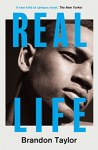 Real Life by Brandon Taylor: Over the course of one late summer weekend, Wallace questions everything about the life he has built. As a gay African American, he has always been an outsider at the Midwestern university where he’s a graduate student in biochemistry. Tacit prejudice comes out into the open in ugly ways; sex and violence are uneasily linked. I so admired how the novel is constructed: the condensed timeframe, the first and last chapters in the past tense (versus the rest in the present tense), the contrast between the cerebral and the bodily, and the thematic and linguistic nods to Virginia Woolf. A very fine debut indeed.
-
 Monogamy by Sue Miller: After 30 years, Annie and Graham are forced to scrutinize their marriage anew. Annie is a photographer; Graham owns a Cambridge, Massachusetts bookstore. Around them swirl a circle of family, friends, acquaintances, and former and would-be lovers. Miller knows her characters and how they interact intimately, and each viewpoint is thoroughly believable. Even in what seems a conventional story, she managed several proper made-me-gasp surprises. A beautifully observant novel about ambition, ageing and grief, reminiscent of Julia Glass, Sigrid Nunez, Maggie O’Farrell, and Carol Shields.
-
 Writers & Lovers by Lily King: Following a breakup and her mother’s sudden death, Casey Peabody is drowning in grief and debt. Between waitressing shifts, she chips away at the novel she’s been writing for six years. Life gets complicated, especially when two love interests appear. We see this character at rock bottom but also when things start to go well at long last. Thanks to the confiding first-person, present-tense narration, I felt I knew Casey through and through, and I cheered for her. I came to think of this as an older, sadder Sweetbitter, perhaps as written by Elizabeth Strout. It gives you all the feels, as they say.
-
 The Glass Hotel by Emily St. John Mandel: Mandel’s characters are rootless people stuck in literal or figurative states they don’t fully understand. Addiction is its own country for Paul, as is money for his half-sister, Vincent, who unexpectedly takes on the role of trophy wife to an older New York financier named Jonathan Alkaitis. Shuttling between the concrete (the shipping industry) and the abstract (even imaginary money can pay for luxuries), and laced with music and visual art, the novel explores liminal spaces, finding the fairy tales and nightmares that nip at the heels of real life. A satisfyingly layered story.
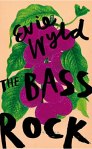 The Bass Rock by Evie Wyld: There’s no avoiding violence for the women and children of this fictional world. It’s a sobering theme, certainly, but Wyld convinced me hers is an accurate vision and a necessary mission. The novel cycles through its three strands in an ebb and flow pattern appropriate to the coastal setting, creating a sense of time’s fluidity. Themes and elements keep coming back, stinging a little more each time. An elegant, time-blending structure and an unrelenting course – that indifferent monolith off the coast of Scotland is the perfect symbol. Looking back, this is the novel that has most haunted my imagination.
Poetry
-
 How to Fly: In Ten Thousand Easy Lessons by Barbara Kingsolver: The opening segment, “How to Fly,” is full of folk wisdom from nature and the body’s intuitive knowledge. “Pellegrinaggio” is a set of poems about accompanying her Italian mother-in-law back to her homeland. “This Is How They Come Back to Us” is composed of elegies for the family’s dead; four short remaining sections are inspired by knitting, literature, daily life, and concern for the environment. The book gives equal weight to personal and collective losses, and Kingsolver builds momentum with her salient natural imagery and entrancing rhythms.
 Moving House by Theophilus Kwek: This is the Chinese Singaporean poet’s first collection to be published in the UK. Infused with Asian history, his elegant verse ranges from elegiac to romantic. Many poems are inspired by historical figures and real headlines; others are about the language and experience of love. I also enjoyed the touches of art and legend: “Monologues for Noh Masks” is about the Pitt-Rivers Museum collection, while “Notes on a Landscape” is about Iceland’s geology and folk tales. Highly recommended to readers of Mary Jean Chan and Ocean Vuong.
-
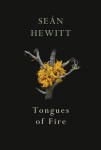 Tongues of Fire by Seán Hewitt: This debut collection is alive with striking imagery that draws links between the natural and the supernatural. Sex and grief, two major themes, are silhouetted against the backdrop of nature. Fields and forests are loci of meditation and epiphany, but also of clandestine encounters between men. Hewitt recalls travels to Berlin and Sweden, and charts his father’s rapid decline and death from an advanced cancer. The whole is capped off with the moving words addressed to the poet’s father: “You are not leaving, I know, // but shifting into image – my head / already is haunted with you”.
-
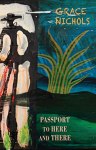 Passport to Here and There by Grace Nichols: Nichols’s ninth collection is split, like her identity, between the Guyana where she grew up and the England which she has made her home. Creole and the imagery of ghosts conjure up her coming of age in South America. She often draws on the natural world for her metaphors, and her style is characterized by alliteration and assonance. Nichols brings her adopted country to life with poems on everything from tea and the Thames to the London Underground and the Grenfell Tower fire. (My full review will appear in Issue 106 of Wasafiri literary magazine.)
-
 Dearly by Margaret Atwood: A treasure trove, rich with themes of memory, women’s rights, environmental crisis and bereavement and by turns reflective and playful, melancholy and hopeful. I can highly recommend it, even to non-poetry readers, because it is led by its themes; although there are layers to explore, the poems are generally about what they say they’re about, and more material than abstract. Alliteration, internal and slant rhymes, and neologisms will delight language lovers. Atwood’s imagery ranges from the Dutch masters to The Wizard of Oz; her frame of reference is as wide as the range of fields she’s written in.

(Books not pictured were read digitally, or have already gone back to the library.)
What were some of your top fiction and poetry reads of the year?
Tomorrow I’ll be naming my favorite nonfiction books from the year.
Book Serendipity in the Final Months of 2020
I call it Book Serendipity when two or more books that I read at the same time or in quick succession have something pretty bizarre in common. Because I have so many books on the go at once (20+), I suppose I’m more prone to such incidents than some. I also list these occasional reading coincidences on Twitter. (Earlier incidents from the year are here, here, and here.)
- Eel fishing plays a role in First Love, Last Rites by Ian McEwan and The Gospel of the Eels by Patrik Svensson.
- A girl’s body is found in a canal in First Love, Last Rites by Ian McEwan and Carrying Fire and Water by Deirdre Shanahan.
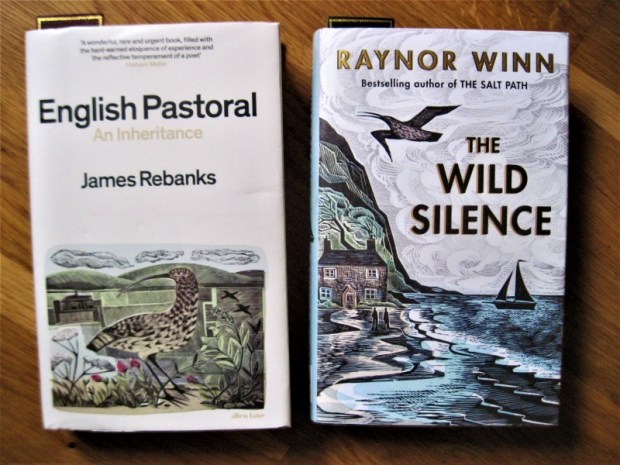
- Curlews on covers by Angela Harding on two of the most anticipated nature books of the year, English Pastoral by James Rebanks and The Wild Silence by Raynor Winn (and both came out on September 3rd).
- Thanksgiving dinner scenes feature in 666 Charing Cross Road by Paul Magrs and Such a Fun Age by Kiley Reid.
- A gay couple has the one man’s mother temporarily staying on the couch in 666 Charing Cross Road by Paul Magrs and Memorial by Bryan Washington.
- I was reading two “The Gospel of…” titles at once, The Gospel of Eve by Rachel Mann and The Gospel of the Eels by Patrik Svensson (and I’d read a third earlier in the year, The Gospel of Trees by Apricot Irving).

- References to Dickens’s David Copperfield in The Cider House Rules by John Irving and Mudbound by Hillary Jordan.
- The main female character has three ex-husbands, and there’s mention of chin-tightening exercises, in The Idea of Perfection by Kate Grenville and The Pumpkin Eater by Penelope Mortimer.
- A Welsh hills setting in On the Red Hill by Mike Parker and Along Came a Llama by Ruth Janette Ruck.


- Rachel Carson and Silent Spring are mentioned in A Year on the Wing by Tim Dee, The Frayed Atlantic Edge by David Gange, English Pastoral by James Rebanks and The Gospel of the Eels by Patrik Svensson. SS was also an influence on Losing Eden by Lucy Jones, which I read earlier in the year.
- There’s nude posing for a painter or photographer in The Glass Hotel by Emily St. John Mandel, How to Be Both by Ali Smith, and Adults by Emma Jane Unsworth.
- A weird, watery landscape is the setting for The Swallowed Man by Edward Carey and Piranesi by Susanna Clarke.
- Bawdy flirting between a customer and a butcher in The Idea of Perfection by Kate Grenville and Just Like You by Nick Hornby.


- Corbels (an architectural term) mentioned in The Idea of Perfection by Kate Grenville and Wakenhyrst by Michelle Paver.
- Near or actual drownings (something I encounter FAR more often in fiction than in real life, just like both parents dying in a car crash) in The Idea of Perfection, The Glass Hotel, The Gospel of Eve, Wakenhyrst, and Love and Other Thought Experiments.
- Nematodes are mentioned in The Gospel of the Eels by Patrik Svensson and Real Life by Brandon Taylor.
- A toxic lake features in The New Wilderness by Diane Cook and Real Life by Brandon Taylor (both were also on the Booker Prize shortlist).


- A black scientist from Alabama is the main character in Transcendent Kingdom by Yaa Gyasi and Real Life by Brandon Taylor.
- Graduate studies in science at the University of Wisconsin, and rivals sabotaging experiments, in Artifact by Arlene Heyman and Real Life by Brandon Taylor.
- A female scientist who experiments on rodents in Transcendent Kingdom by Yaa Gyasi and Artifact by Arlene Heyman.
- There are poems about blackberrying in Dearly by Margaret Atwood, Passport to Here and There by Grace Nichols, and How to wear a skin by Louisa Adjoa Parker. (Nichols’s “Blackberrying Black Woman” actually opens with “Everyone has a blackberry poem. Why not this?” – !)


 Bookish Beck = Rebecca Foster. American transplant to England. Freelance proofreader and book reviewer.
 Bookish Beck