Three on a Theme for Mother’s Day
In advance of (American) Mother’s Day, I picked up two novels and a set of short stories that explore the bonds between mothers and their children, especially daughters. The relationships can be fraught or fractured, but always provide good fodder for psychologically astute fiction.
Mother for Dinner by Shalom Auslander (2020)
Hope: A Tragedy, Auslander’s 2012 debut, is among my absolute favorites, an outrageously funny novel that imagines Anne Frank is alive and dwelling in a suburban attic, frantically tapping out her endless magnum opus. Solomon Kugel, the sap blessed to have an icon sharing his home, has a deluded mother who actually grew up in Brooklyn but believes she survived the Holocaust and now hoards food and curses the Nazis who ruined her life.
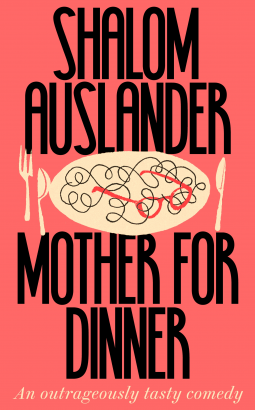 I start with that bit of synopsis because Mother for Dinner showcases rather analogous situations and attitudes, but ultimately didn’t come together as successfully for me. It’s a satire on the immigrant and minority experience in the USA – the American dream of ‘melting pot’ assimilation that we see contradicted daily by tribalism and consumerism. Seventh Seltzer works in Manhattan publishing and has to vet identity stories vying to be the next Great American Novel: “The Heroin-Addicted-Autistic-Christian-American-Diabetic one” and “the Gender-Neutral-Albino-Lebanese-Eritrean-American” one are two examples. But Seventh is a would-be writer himself, compelled to tell the Cannibal-American story.
For years Mudd, the Seltzer family matriarch, has been eating Whoppers for each meal in a customary fattening-up called the Cornucopiacation. She expects her 12 children, who are likely the last of the Cannibal kind, to carry on the tradition of eating her corpse after her death. It’s a way for ancestors to live on in their descendents. The Cannibal Guide, disguised as a deer processing manual, sets out the steps: Drain (within two hours), Purge, Partition, Consume (within 24 hours). Unclish, the Seltzers’ uncle, drilled the rules into them when they were kids through rhymes like “A bite and half / and you won’t need another, / whether it’s your father, your sister, / or even your mother.” From her deathbed, Mudd apportions her body parts to her offspring, some tenderly and some vengefully. Their inheritance – a Brooklyn dump that will still net $5.2 million – is conditional on them performing the ritual.
Interspersed with sections on the practicalities of butchering and cooking a morbidly obese woman are flashbacks to key moments of Cannibal history, which has turned into myth. In 1914, Julius Seltzer left the paradisiacal “Old Country” with his sister Julia, who pretended to be his wife and traveled with him to Detroit to work for Henry Ford. (An overt parody of Jeffrey Eugenides’ Middlesex.) Mudd is vocally intolerant of all other minority groups, from Blacks to homosexuals, and always chooses the version of history that reflects best on her own ancestors, while the Seltzers’ father was more willing to admit flaws.

My proof copy, with a joke on the cover, came with a napkin!
Auslander is pushing the boundary of what an author can get away with, not just with a literal cannibalism storyline but also with jokes about historical atrocities and the recent trend for outing beloved figures as reprehensible (what Seventh calls “Contemporary Assholization Studies”). He shares Lionel Shriver’s glee for tipping sacred cows. I did appreciate his picture of the pervasiveness of xenophobia – the “You’re Not Me” look that anyone can get when walking in an unfamiliar neighborhood – and his willingness to question the value of beliefs and ceremonies once they’ve stopped being reasonable or of use. But with all the siblings known by numbers, it’s hard to distinguish between them. The novel ends up heavy on ideas but light on characterization, and as a whole it leaves a bit of a bad taste in the mouth.
My rating: 
With thanks to Picador for the proof copy for review.
The Mothers by Brit Bennett (2016)
{CONTAINS MILD SPOILERS.}
Like so many who were impressed with the Women’s Prize-shortlisted The Vanishing Half, I rushed to get hold of Bennett’s California-set first novel, which, while not as skillfully put together, is nearly as emotionally engaging. After her mother’s suicide, 17-year-old Nadia Turner only has her father, a Marine, but they are bolstered by their church family at Upper Room Chapel. Nadia is a bright girl headed to Michigan for college, but in her senior year she gets mixed up with Pastor Sheppard’s 21-year-old son, Luke, leading to a pregnancy and abortion that his parents swiftly cover up / pay for. Luke drops her at the clinic and hands over the money, but doesn’t pick her up; that looks the acrimonious end of their relationship.
But in the years to come, especially when Nadia takes a break from law school to care for her father, their lives will intersect again. Nadia’s best friend in that final year of high school was Aubrey Evans, who is estranged from her mother, who failed to protect the girl from sexual abuse at the hands of her own boyfriend. Now Aubrey wears a purity ring, enamored with the idea that faith will make her clean again. Once Nadia leaves, she starts dating Luke, ignorant of her best friend’s history with him. This sets up a love triangle mired in layers of secrets.
 There is dramatic irony here between what the characters know about each other and what we, the readers, know – echoed by what “we,” the church Mothers, observe in the first-person plural sections that open most chapters. I love the use of a Greek chorus to comment on a novel’s action, and The Mothers reminded me of the elderly widows in the Black church I grew up attending. (I watched the video of a wedding that took place there early this month and there they were, perched on aisle seats in their prim purple suits and matching hats.)
Nadia and Aubrey are relatable characters, and Luke earns our sympathy after the cruel return of his football injury. (I was intrigued to see that Peter Ho Davies was one of Bennett’s teachers – his novel A Lie Someone Told You About Yourself is a rare picture of male grief after abortion, also present here.) Bennett explores multiple facets of motherhood: memories of a mother, the absence of a mother, the choice to become a mother, and people who act in the place of a mother by providing physical care or being a source of moral support.
The timeline is a bit too long, which makes the plot wander more than it needs to, but this is a warm and bittersweet novel that always held my interest. Bennett has produced two winners in a row, and I look forward to seeing what she’ll do next.
A favorite line: “Maybe mothers were inherently vast and unknowable.” (not literally vast like in the Auslander!)
Source: Birthday gift (secondhand) from my wishlist last year
My rating: 
Close Company: Stories of Mothers and Daughters, ed. by Christine Park and Caroline Heaton (1987)
I read 14 of 25 stories, skipping to the ones that most interested me (by familiar names like Sue Miller, Sylvia Plath, and Jeanette Winterson), and will read the rest next year. The only story I’d encountered before was Margaret Atwood’s “Significant Moments in the Life of My Mother,” originally published in Bluebeard’s Egg. The title phrase comes from Jamaica Kincaid’s story. A recurring theme is women’s expectations for their daughters, who might repeat or reject their own experiences. As the editors quote from Simone de Beauvoir in the introduction, “the daughter is for the mother at once her double and another person.”
 I particularly liked “The Pangs of Love” by Jane Gardam, a retelling of the Hans Christian Andersen fairy tale of “The Little Mermaid,” and “Swans” by Janet Frame, in which a mother takes her two little girls for a cheeky weekday trip to the beach. Fay and Totty are dismayed to learn that their mother is fallible: she chose the wrong beach, one without amenities, and can’t guarantee that all will be well on their return. A dusky lagoon full of black swans is an alluring image of peace, quickly negated by the unpleasant scene that greets them at home.
Two overall standouts thus far were “Everyday Use” by Alice Walker and “The Unnatural Mother” by Charlotte Perkins Gilman. In Walker’s story, which draws on the parable of the Prodigal Son, a hip Afro-wearing daughter returns to her mother’s rural home and covets the quilts and butter churn – to her this is quaint folk art that she wants to take away and display, but her mother and sister resent her condescension towards their ‘backward’ lives.
Gilman is best known for The Yellow Wallpaper, but this story has a neat connection with another classic work: the main character is named Esther Greenwood, which is also the protagonist’s name in Plath’s The Bell Jar (consider this a preview of my next Book Serendipity roundup!). A gossiping gaggle of women discuss Esther’s feral upbringing and blame it for her prioritizing altruism over her duty to her child. A perfect story.
Source: Free mall bookshop
My rating: (so far) 
If you read just one … Make it The Mothers. (But do also pick out at least a few stories from the Close Company anthology.)
Fairy Tales, Outlaws, Experimental Prose: Three More January Novels
Today I’m featuring three more works of fiction that were released this month, as a supplement to yesterday’s review of Mrs Death Misses Death. Although the four are hugely different in setting and style, and I liked some better than others (such is the nature of reading and book reviewing), together they’re further proof – as if we needed it – that female authors are pushing the envelope. I wouldn’t be surprised to see any or all of these on the Women’s Prize longlist in March.
The Charmed Wife by Olga Grushin
 What happens next for Cinderella?
Grushin’s fourth novel unpicks a classic fairy tale narrative, starting 13.5 years into a marriage when, far from being starry-eyed with love for Prince Roland, the narrator hates her philandering husband and wants him dead. As she retells the Cinderella story to her children one bedtime, it only underscores how awry her own romance has gone: “my once-happy ending has proved to be only another beginning, a prelude to a tale dimmer, grittier, far more ambiguous, and far less suitable for children”. She gathers Roland’s hair and nails and goes to a witch for a spell, but her fairy godmother shows up to interfere. The two embark on a good cop/bad cop act as the princess runs backward through her memories: one defending Roland and the other convinced he’s a scoundrel.
Part One toggles back and forth between flashbacks (in the third person and past tense) and the present-day struggle for the narrator’s soul. She comes to acknowledge her own ignorance and bad behaviour. “All I want is to be free—free of him, free of my past, free of my story. Free of myself, the way I was when I was with him.” In Part Two, as the princess tries out different methods of escape, Grushin coyly inserts allusions to other legends and nursery rhymes: a stepsister lives with her many children in a house shaped like a shoe; the witch tells a variation on the Bluebeard story; the fairy godmother lives in a Hansel and Gretel-like candy cottage; the narrator becomes a maid for 12 slovenly sisters; and so on.
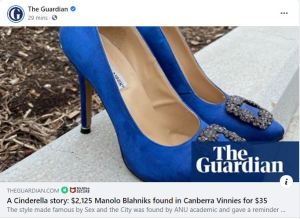 The plot feels fairly aimless in this second half, and the mixture of real-world and fantasy elements is peculiar. I much preferred Grushin’s previous book, Forty Rooms (and Angela Carter’s The Bloody Chamber, one of her chief inspirations). However, her two novels share a concern with how women’s ambitions can take a backseat to their roles, and both weave folktales and dreams into a picture of everyday life. But my favourite part of The Charmed Wife was the subplot: interludes about Brie and Nibbles, the princess’s pet mice; their lives being so much shorter, they run through many generations of a dramatic saga while the narrator (whose name we do finally learn, just a few pages from the end) is stuck in place.
With thanks to Hodder & Stoughton for the free copy for review.
Outlawed by Anna North
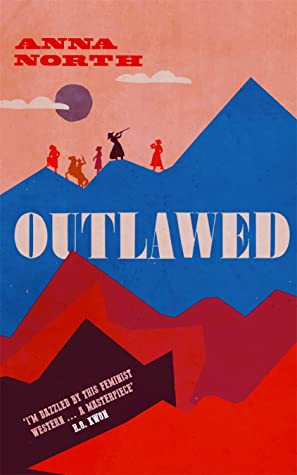 I was a huge fan of North’s previous novel, The Life and Death of Sophie Stark, which cobbles together the story of the title character, a bisexual filmmaker, from accounts by the people who knew her best. Outlawed, an alternative history/speculative take on the traditional Western, could hardly be more different. In a subtly different version of the United States, everyone now alive in the 1890s is descended from those who survived a vicious 1830s flu epidemic. The duty to repopulate the nation has led to a cult of fertility and devotion to the Baby Jesus. From her mother, a midwife and herbalist, Ada has learned the basics of medical care, but the causes of barrenness remain a mystery and childlessness is perceived as a curse.
Ada marries at 17 and fails to get pregnant within a year. After an acquaintance miscarries, rumours start to spread about Ada being a witch. Kicked out by her mother-in-law, she takes shelter first at a convent and then with the Hole in the Wall gang. She’ll be the doctor to this band of female outlaws who weren’t cut out for motherhood and shunned marriage – including lesbians, a mixed-race woman, and their leader, the Kid, who is nonbinary. The Kid is a mentally tortured prophet with a vision of making the world safe for people like them (“we were told a lie about God and what He wants from us”), mainly by, Robin Hood-like, redistributing wealth through hold-ups and bank robberies. Ada, who longs to conduct proper research into reproductive health rather than relying on religious propaganda, falls for another gender nonconformist, Lark, and does what she can to make the Kid’s dream a reality.
Reese Witherspoon choosing this for her Hello Sunshine book club was a great chance for North’s work to get more attention. However, I felt that the ideas behind this novel were more noteworthy than the execution. The similarity to The Handmaid’s Tale is undeniable, though I liked this a bit more. I most enjoyed the medical and religious themes, and appreciated the attention to childless and otherwise unconventional women. But the setup is so condensed and the consequences of the gang’s major heist so rushed that I wondered if the novel needed another 100 pages to stretch its wings. I’ll just have to await North’s next book.
With thanks to W&N for the proof copy for review.
little scratch by Rebecca Watson
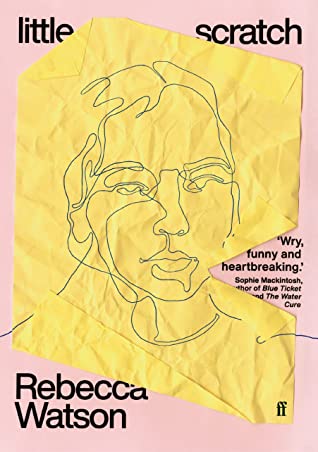 I love a circadian narrative and had heard interesting things about the experimental style used in this debut novel. I even heard Watson read a passage from it as part of the Faber Live Fiction Showcase and found it very funny and engaging. But I really should have tried an excerpt before requesting this for review; I would have seen at a glance that it wasn’t for me. I don’t have a problem with prose being formatted like poetry (Girl, Woman, Other; Stubborn Archivist; the prologue of Wendy McGrath’s Santa Rosa; parts of Mrs Death Misses Death), but here it seemed to me that it was only done to alleviate the tedium of the contents.
A young woman who, like Watson, works for a newspaper, trudges through a typical day: wake up, get ready, commute to the office, waste time and snack in between doing bits of work, get outraged about inconsequential things, think about her boyfriend (only ever referred to as “my him” – probably my biggest specific pet peeve about the book), and push down memories of a sexual assault. Thus, the only thing that really happens happened before the book even started. Her scratching, to the point of open wounds and scabs, seems like a psychosomatic symptom of unprocessed trauma. By the end, she’s getting ready to tell her boyfriend about the assault, which seems like a step in the right direction.
I might have found Watson’s approach captivating in a short story, or as brief passages studded in a longer narrative. At first it’s a fun puzzle to ponder how these mostly unpunctuated words, dotted around the pages in two to six columns, fit together – should one read down each column, or across each row, or both? – but when all the scattershot words are only there to describe a train carriage filling up or repetitive quotidian actions (sifting through e-mails, pedalling a bicycle), the style soon grates. You may have more patience with it than I did if you loved A Girl Is a Half-Formed Thing or books by Emma Glass.


A favourite passage: “got to do this thing again, the waking up thing, the day thing, the work thing, disentangling from my duvet thing, this is something, this is a thing I have to do then,” [appears all as one left-aligned paragraph]
With thanks to Faber & Faber for the free copy for review.
Tomorrow I’ll review three nonfiction works published in January, all on a medical theme.
What recent releases can you recommend?
Short Stories in September, Part I
Each September I make a bit more of an effort to read short stories, which otherwise tend to sit on my shelves and Kindle unread. I’ve read three collections recently, all of them released this August or September, and I have a few more on the go to report on later in the month.
Likes by Sarah Shun-Lien Bynum
 This was a hit and miss collection for me: I only loved one of the stories, and enjoyed another three; touches of magic realism à la Aimee Bender produce the two weakest stories, and there are a few that simply tail off without having made a point. My favorite was “Many a Little Makes,” about a trio of childhood best friends whose silly sleepover days come to an end as they develop separate interests and one girl sleeps with another one’s brother. In “Tell Me My Name,” set in a post-economic collapse California, an actress who was a gay icon back in New York City pitches a TV show to the narrator’s wife, who makes kids’ shows.
“Julia and Sunny,” about two couples – one that makes it and one that doesn’t – who all met in medical school, reminded me of a Wallace Stegner plot. “The Bears” has a wispy resemblance to Goldilocks and the Three Bears and stars a woman convalescing from a miscarriage at a retreat center while writing a chapter on William James. In James’s famous metaphor involving a bear, bodily action precedes emotion – we are afraid because we flee; not vice versa. The touch of magic in this story is light enough to not be off-putting, whereas “The Erlking” and “The Young Wife’s Tale” take their fairy tale similarities too far.
The title story, about a father trying to understand his 12-year-old through her Instagram posts either side of the Trump election, is promising but doesn’t go anywhere, and “The Burglar” and “Bedtime Story” struck me as equally insubstantial, making nothing of their setups. Seven of these nine stories had been previously published in other publications in some form.
My rating:
Published in the USA by Farrar, Straus and Giroux. I read an advanced e-copy via Edelweiss.
Black Light by Kimberly King Parsons
 Parsons’s debut collection, longlisted for the U.S. National Book Award in 2019, contains a dozen gritty stories set in or remembering her native Texas. Eleven of the 12 are in the first person, with the mostly female narrators unnamed or underdeveloped and thus difficult to differentiate from each other. The homogeneity of voice and recurring themes – drug use, dysfunctional families, overweight bodies, lesbian or lopsided relationships – lead to monotony.
“Glow Hunter” and “We Don’t Come Natural to It” are representative: in the former, Sarah and her girlfriend Bo have sex and go for a drive while tripping on magic mushrooms; in the latter, the narrator has a crush on her co-worker Suki, who has lost 200 pounds, and they remain obsessed with their and others’ fat bodies (the references are inescapable: “a pudgy,” “the fatty,” “some cow,” “thinspiration”). The opening story, “Guts,” is uncomfortable for the way that it both fetishizes fat and medicalizes sex: when unreliable, alcoholic receptionist Sheila turns up at her boyfriend Tim’s hospital saying there’s something wrong with her internally, he performs an examination that’s part striptease and part children playing doctor.
“The Light Will Pour In” is refreshingly different for its Lolita-type situation. “Into the Fold,” set at a girls’ boarding school, reminded me of Scarlett Thomas’s Oligarchy. In “Fiddlebacks,” my favorite, siblings on a night hunt for creepy-crawlies come across their newly religious mother and the handyman trysting in a car. “Starlite,” the only one in the third person, has colleagues, one a supervisor and both married, meet up in a seedy motel for drugs and junk food. The shortest stories at just a few pages each, “In Our Circle” and “The Animal Part” animate art therapy in a mental hospital and urban legends told while camping (though I’d forgotten it, I’d encountered the former in The Best Small Fictions 2017).
These stories engaged me at neither the sentence level nor the plot level, but many readers (and critics) have felt otherwise. Here are two lines I liked, from “Glow Hunter”: “Bo says everything that scares you is something to poke at with a stick, to pick up and turn in your hands” & “I’m very aware that we are organisms on the surface of a rock, orbiting a burning star.”
My rating: 
My thanks to Atlantic Books for the free copy for review.
You Will Never Be Forgotten by Mary South
“In the modern world, you might be easily forgotten, but you could also carve out your own niche.”

In the 10 stories of this debut collection, characters turn to technology to stake a claim on originality, compensate for their losses, and leave a legacy. In “Keith Prime,” a widowed nurse works at a warehouse that produces unconscious specimens for organ harvesting. When her favorite Keith wakes up, she agrees to raise him at home, but human development and emotional connection are inconveniences in a commodity. The narrator of “FAQs about Your Craniotomy” is a female brain surgeon who starts out by giving literal answers to potential patient questions and then segues into bitterly funny reflections on life after her husband’s suicide.
In “Architecture for Monsters,” a young woman interviews Helen Dannenforth, a formidable female architect whose designs are inspired by anatomy, specifically by her disabled daughter’s condition. The narrator’s mother, a molecular biologist, was assaulted and murdered by a lab technician. Dannenforth is a hero/replacement mother figure to her, even after she learns about the complicated situation with the architect’s sister, who was the surrogate for her niece but then got cut out of the child’s life.
I particularly liked “The Age of Love,” a funny one in which the nurses at a nursing home listen in to their elderly patients’ calls to phone sex lines. Their conversations aren’t about smut so much as they’re about loneliness and nostalgia. Another favorite of mine was “Camp Jabberwocky for Recovering Internet Trolls,” about a Martha’s Vineyard camp for teens who need a better relationship with social media. When camper Rex Hasselbach, who had posted foul content in his father’s name to get revenge on being beaten up at home, goes missing, three counselors with guilt or identity issues of their own go looking for him. The title story also engages with social media as a woman obsessively tracks her rapist and works as a “digital media curator” deleting distressing video content.
All of the characters have had a bereavement or other traumatic incident and are looking for the best way to move on, but some make bizarre and unhealthy decisions – such as to restage events from a dead daughter’s life, to breastfeed grown men, or to communicate by text with a deceased wife. These quirky, humorous stories never strayed so far into science fiction as to alienate me. I loved the medical themes and the subtle, incisive observations about a technology-obsessed culture. I’ll be looking out for what Mary South does next.
(Note: The cover image is a creepily pixelated version of the author’s photo.)
My rating: 
My thanks to Picador for the proof copy for review.
Are you a short story fan? Read any good ones recently?
Three Out-of-the-Ordinary Memoirs: Kalb, Machado, McGuinness
Recently I have found myself drawn to memoirs that experiment with form. I’ve read so many autobiographical narratives at this point that, if it’s to stand out for me, a book has to offer something different, such as a second-person point-of-view or a structure of linked essays. Here are a few such that I’ve read this year but not written about yet. All have strong themes of memory and the creation of the self or the family.
Nobody Will Tell You This But Me: A True (As Told to Me) Story by Bess Kalb (2020)
 You know from the jokes: Jewish (grand)mothers are renowned for their fiercely protective, unconditional love, but also for their tendency to nag. Both sides of a stereotypical matriarch are on display in this funny and heartfelt family memoir, narrated in the second person – as if straight to Kalb from beyond the grave – by her late grandmother, Barbara “Bobby” Bell.
Bobby gives her beloved Bessie a tour through four generations of strong women, starting with her own mother, Rose, and her lucky escape from a Belarus shtetl. The formidable émigré ended up in a tiny Brooklyn apartment, where she gave birth to five children on the dining room table. Bobby and her husband, a real estate entrepreneur and professor, had one daughter, Robin, who in turn had one daughter, Bess. Bobby and Robin had a fraught relationship, but Bess’s birth seemed to reset the clock. Grandmother and granddaughter had a special bond: Bobby was the one to take her to preschool and wait outside the door until she was sure she’d be okay, and always the one to pick her up from sleepovers gone wrong.
Kalb is a Los Angeles-based writer for Jimmy Kimmel Live! With her vivid scene-setting and comic timing, you can see why she’s earned a Writers Guild Award and an Emmy nomination. But she also had great material to work with: Bobby’s e-mails and verbatim voicemail messages are hilarious. Kalb dots in family photographs and recreates in-person and phone conversations, with her grandmother forthrightly questioning her fashion choices and non-Jewish boyfriend. As the title phrase shows, Bobby felt she was the only one who would come forward with all this (unwanted but) necessary advice. Kalb keeps things snappy, alternating between narrative chapters and the conversations and covering a huge amount of family history in just 200 pages. It gets a little sentimental towards the end, but with her grandmother’s death still fresh you can forgive her that. This was a real delight.
My rating:
My thanks to Zoe Hood and Kimberley Nyamhondera of Little, Brown (Virago) for the free PDF copy for review.
In the Dream House: A Memoir by Carmen Maria Machado (2019)
I’m stingy with 5-star ratings because, for me, giving a book top marks means a) it’s a masterpiece, b) it’s a game/mind/life changer, and/or c) it expands the possibilities of its particular genre. In the Dream House fits all three criteria. (Somewhat to my surprise, given that I couldn’t get through more than half of Machado’s acclaimed story collection, Her Body and Other Parties, and only enjoyed it in parts.)
Much has been written about this memoir of an abusive same-sex relationship since its U.S. release in November. I feel I have little to add to the conversation beyond my deepest admiration for how it prioritizes voice, theme and scenes; gleefully does away with the chronology and (not directly relevant) backstory – in other words, the boring bits – that most writers would so slavishly detail; and engages with history, critical theory and the tropes of folk tales to constantly interrogate her experiences and perceptions.
 Most of the book is, like the Kalb, in the second person, but in this case the narration is not addressing a specific other person; instead, it’s looking back at the self that was caught in this situation (“If, one day, a milky portal had opened up in your bedroom and an older version of yourself had stepped out and told you what you know now, would you have listened?”), as well as – what the second person does best – putting the reader right into the narrative.
The “Dream House” is the Victorian house where Machado lived with her ex-girlfriend in Bloomington, Indiana for two years while she started an MFA course. It was a paradise until it wasn’t; it was a perfect relationship until it wasn’t. No one, least of all her, would have believed the perky little blonde writer she fell for would turn sadistic. A lot of it was emotional manipulation and verbal and psychological abuse, but there was definitely a physical element as well. Fear and self-doubt kept her trapped in a fairy tale that had long since turned into a nightmare. Writing it all out seven years later, the trauma was still there. Yet there was no tangible evidence (a police report, a restraining order, photos of bruises) to site her abuse anywhere outside of her memory. How fleeting, yet indelible, it had all been.
The book is in relatively short sections headed “Dream House as _________” (fill in the blank with everything from “Time Travel” to “Confession”), and the way that she pecks at her memories from different angles is perfect for recreating the spiral of confusion and despair. She also examines the history of our understanding of queer domestic violence: lesbian domestic violence, specifically, wasn’t known about until 30-some years ago.
The story has a happy ending in that Machado is now happily married. The bizarre twist, though, is that her wife, YA author Val Howlett, was the girlfriend of the woman in the Dream House when they first met. To start with, it was an “open relationship” (or at least the blonde told her so) that Machado reluctantly got in the middle of, before Val drifted away. That the two of them managed to reconnect, and got past their mutual ex, is truly astonishing. (See some super-cute photos from their wedding here.)
Some favorite lines:
“Clarity is an intoxicating drug, and you spent almost two years without it, believing you were losing your mind”
“That there’s a real ending to anything is, I’m pretty sure, the lie of all autobiographical writing. You have to choose to stop somewhere. You have to let the reader go.”
My rating: 
I read an e-copy via NetGalley.
Other People’s Countries: A Journey into Memory by Patrick McGuinness (2014)
This is a wonderfully atmospheric tribute to Bouillon, Belgium, a Wallonian border town with its own patois. However, it’s chiefly a memoir about the maternal side of the author’s family, which had lived there for generations. McGuinness grew up spending summers in Bouillon with his grandparents and aunt. Returning to the place as an adult, he finds it half-derelict but still storing memories around every corner.
 It is as much a tour through memory as through a town, reflecting on how our memories are bound up with particular sites and objects – to the extent that I don’t think I would find McGuinness’s Bouillon even if I went back to Belgium. “When I’m asked about events in my childhood, about my childhood at all, I think mostly of rooms. I think of times as places, with walls and windows and doors,” he writes. The book is also about the nature of time: Bouillon seems like a place where time stands still or moves more slowly, allowing its residents (including his grandfather, and Paprika, “Bouillon’s laziest man, who held a party to celebrate sixty years on the dole”) a position of smug idleness.
The book is in short vignettes, some as short as a paragraph; each is a separate piece with a title that remembers a particular place, event or local character. Some are poems, and there are also recipes and an inventory. The whole is illustrated with frequent period or contemporary black-and-white photographs. It’s an altogether lovely book that overcomes its narrow local interest to say something about how the past remains alive for us.
Some favorite lines:
“that hybrid long-finished but real-time-unfolding present tense … reflects the inside of our lives far better than those three stooges, the past, present and future”
a fantastic last line: “What I want to say is: I misremember all this so vividly it’s as if it only happened yesterday.”
My rating:
I read a public library copy.
Other unusual memoirs I’ve loved and reviewed here:
 Notes Made while Falling by Jenn Ashworth (essays, experimental structures)
Winter Journal by Paul Auster (second person)
This Really Isn’t about You by Jean Hannah Edelstein (nonchronological)
Traveling with Ghosts by Shannon Leone Fowler (short sections and time shifts)
The Lost Properties of Love by Sophie Ratcliffe (nonchronological essays)
Any offbeat memoirs you can recommend?
11 Days, 11 Books: 2020’s Reads, from Best to Worst
I happen to have finished 11 books so far this year – though a number of them were started in 2019 (one as far back as September) and several of them are novelty books and/or of novella length. Just for kicks, I’ve arranged them from best to worst. Here’s how my reading year has started off…
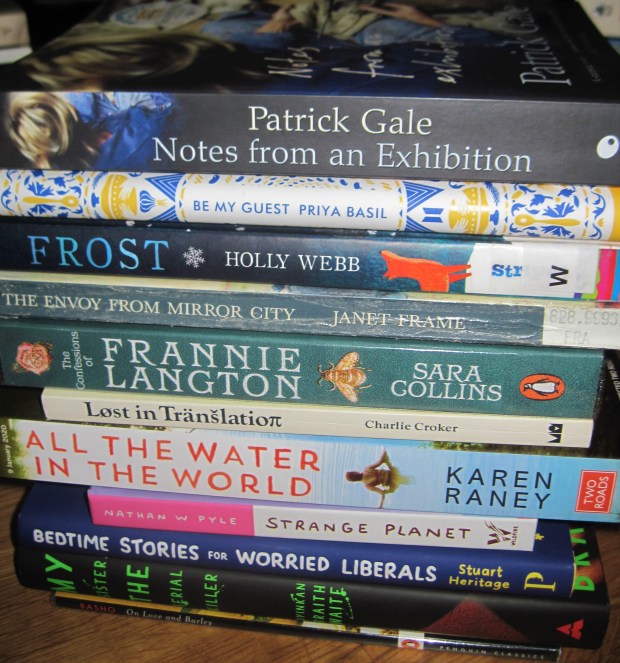
 Notes from an Exhibition by Patrick Gale – Nonlinear chapters give snapshots of the life of bipolar Cornwall artist Rachel Kelly and her interactions with her husband and four children, all of whom are desperate to earn her love. Quakerism, with its emphasis on silence and the inner light in everyone, sets up a calm and compassionate atmosphere, but also allows for family secrets to proliferate. There are two cameo appearances by an intimidating Dame Barbara Hepworth, and three wonderfully horrible scenes in which Rachel gives a child a birthday outing. The novel questions patterns of inheritance (e.g. of talent and mental illness) and whether happiness is possible in such a mixed-up family. (Our joint highest book club rating ever, with Red Dust Road. We all said we’d read more by Gale.)
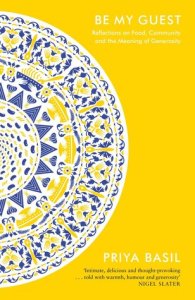 Be My Guest: Reflections on Food, Community and the Meaning of Generosity by Priya Basil – An extended essay whose overarching theme of hospitality stretches into many different topics. Part of an Indian family that has lived in Kenya and England, Basil is used to a culture of culinary abundance. Greed, especially for food, feels like her natural state, she acknowledges. However, living in Berlin has given her a greater awareness of the suffering of the Other – hundreds of thousands of refugees have entered the EU, often to be met with hostility. Yet the Sikhism she grew up in teaches unconditional kindness to strangers. She asks herself, and readers, how to cultivate the spirit of generosity. Clearly written and thought-provoking. (And typeset in Mrs Eaves, one of my favorite fonts.) See also Susan’s review, which convinced me to order a copy with my Christmas bookstore voucher.
 Frost by Holly Webb – Part of a winter animals series by a prolific children’s author, this combines historical fiction and fantasy in an utterly charming way. Cassie is a middle child who always feels left out of her big brother’s games, but befriending a fox cub who lives on scrubby ground near her London flat gives her a chance for adventures of her own. One winter night, Frost the fox leads Cassie down the road – and back in time to the Frost Fair of 1683 on the frozen Thames. I rarely read middle-grade fiction, but this was worth making an exception for. It’s probably intended for ages eight to 12, yet I enjoyed it at 36. My library copy smelled like strawberry lip gloss, which was somehow just right.
 The Envoy from Mirror City by Janet Frame – This is the last and least enjoyable volume of Frame’s autobiography, but as a whole the trilogy is an impressive achievement. Never dwelling on unnecessary details, she conveys the essence of what it is to be (Book 1) a child, (2) a ‘mad’ person, and (3) a writer. After years in mental hospitals for presumed schizophrenia, Frame was awarded a travel fellowship to London and Ibiza. Her seven years away from New Zealand were a prolific period as, with the exception of breaks to go to films and galleries, and one obsessive relationship that nearly led to pregnancy out of wedlock, she did little else besides write. The title is her term for the imagination, which leads us to see Plato’s ideals of what might be.
 The Confessions of Frannie Langton by Sara Collins – Collins won the first novel category of the Costa Awards for this story of a black maid on trial in 1826 London for the murder of her employers, the Benhams. Margaret Atwood hit the nail on the head in a tweet describing the book as “Wide Sargasso Sea meets Beloved meets Alias Grace” (she’s such a legend she can get away with being self-referential). Back in Jamaica, Frances was a house slave and learned to read and write. This enabled her to assist Langton in recording his observations of Negro anatomy. Amateur medical experimentation and opium addiction were subplots that captivated me more than Frannie’s affair with Marguerite Benham and even the question of her guilt. However, time and place are conveyed convincingly, and the voice is strong.
(The next one is a book my husband received for Christmas, as are the Heritage and Pyle, further down, which were from me. Yes, I read them as well. What of it?)
 Lost in Translation by Charlie Croker – This has had us in tears of laughter. It lists examples of English being misused abroad, e.g. on signs, instructions and product marketing. China and Japan are the worst repeat offenders, but there are hilarious examples from around the world. Croker has divided the book into thematic chapters, so the weird translated phrases and downright gobbledygook are grouped around topics like food, hotels and medical advice. A lot of times you can see why mistakes came about, through the choice of almost-but-not-quite-right synonyms or literal interpretation of a saying, but sometimes the mind boggles. Two favorites: (in an Austrian hotel) “Not to perambulate the corridors in the hours of repose in the boots of ascension” and (on a menu in Macao) “Utmost of chicken fried in bother.”
 All the Water in the World by Karen Raney – Like The Fault in Our Stars (though not YA), this is about a teen with cancer. Sixteen-year-old Maddy is eager for everything life has to offer, so we see her having her first relationship – with Jack, her co-conspirator on an animation project to be used in an environmental protest – and contacting Antonio, the father she never met. Sections alternate narration between her and her mother, Eve. I loved the suburban D.C. setting and the e-mails between Maddy and Antonio. Maddy’s voice is sweet yet sharp, and, given that the main story is set in 2011, the environmentalism theme seems to anticipate last year’s flowering of youth participation. However, about halfway through there’s a ‘big reveal’ that fell flat for me because I’d guessed it from the beginning.
This was published on the 9th. My thanks to Two Roads for the proof copy for review.
 Strange Planet by Nathan W. Pyle – I love these simple cartoons about aliens and the sense they manage to make of Earth and its rituals. The humor mostly rests in their clinical synonyms for everyday objects and activities (parenting, exercise, emotions, birthdays, office life, etc.). Pyle definitely had fun with a thesaurus while putting these together. It’s also about gentle mockery of the things we think of as normal: consider them from one remove, and they can be awfully strange. My favorites are still about the cat. You can also see his work on Instagram.

 Bedtime Stories for Worried Liberals by Stuart Heritage – I bought this for my husband purely for the title, which couldn’t be more apt for him. The stories, a mix of adapted fairy tales and new setups, are mostly up-to-the-minute takes on US and UK politics, along with some digs at contemporary hipster culture and social media obsession. Heritage quite cleverly imitates the manner of speaking of both Boris Johnson and Donald Trump. By its nature, though, the book will only work for those who know the context (so I can’t see it succeeding outside the UK) and will have a short shelf life as the situations it mocks will eventually fade into collective memory. So, amusing but not built to last. I particularly liked “The Night Before Brexmas” and its all-too-recognizable picture of intergenerational strife.
 My Sister, the Serial Killer by Oyinkan Braithwaite – The Booker Prize longlist and the Women’s Prize shortlist? You must be kidding me! The plot is enjoyable enough: a Nigerian nurse named Korede finds herself complicit in covering up her gorgeous little sister Ayoola’s crimes – her boyfriends just seem to end up dead somehow; what a shame! – but things get complicated when Ayoola starts dating the doctor Korede has a crush on and the comatose patient to whom Korede had been pouring out her troubles wakes up. My issue was mostly with the jejune writing, which falls somewhere between high school literary magazine and television soap (e.g. “My hands are cold, so I rub them on my jeans” & “I have found that the best way to take your mind off something is to binge-watch TV shows”).
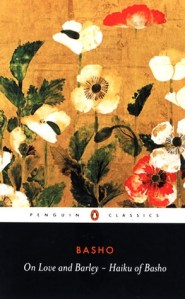 On Love and Barley – Haiku of Basho [trans. from the Japanese by Lucien Stryk] – These hardly work in translation. Almost every poem requires a contextual note on Japan’s geography, flora and fauna, or traditions; as these were collected at the end but there were no footnote symbols, I didn’t know to look for them, so by the time I read them it was too late. However, here are two that resonated, with messages about Zen Buddhism and depression, respectively: “Skylark on moor – / sweet song / of non-attachment.” (#83) and “Muddy sake, black rice – sick of the cherry / sick of the world.” (#221; reminds me of Samuel Johnson’s “tired of London, tired of life” maxim). My favorite, for personal relevance, was “Now cat’s done / mewing, bedroom’s / touched by moonlight.” (#24)
Any of these you have read or would read?
Onwards with the 2020 reading!
Margaret Atwood Reading Month: The Robber Bride and Moral Disorder
For this second annual Margaret Atwood Reading Month hosted by Marcie of Buried in Print and Naomi of Consumed by Ink, I chose two of her works of fiction pretty much at random. The Robber Bride, one of her last few major novels that I hadn’t yet read, and Moral Disorder, a linked short story collection I’d not heard of before, both came my way for free and became my 19th and 20th Atwood books overall. Women’s fulfillment, especially the question of having children or not, and the threat of suicide are two themes that connect the two despite the 13 years between them.
The Robber Bride (1993)
 Zenia is dead, to begin with. Or is she? Five years after her funeral, as Tony, Roz and Charis, the university frenemies from whom she stole lovers and money, are eating lunch at The Toxique, Zenia comes back. Much of the book delves into the Toronto set’s history, with Tony seeming to get the most space and sympathy – she’s a lot like Nell (see below), so probably the most autobiographical character here, and the one I warmed to the most. Tony’s mother left and her father committed suicide, so she’s always been an unusual loner with a rich inner life, speaking and writing backwards (like Adah in The Poisonwood Bible) and becoming obsessed with battle logistics. Now, as a professor of history at her alma mater, she has a good reason to indulge that geeky hobby of keeping model battlefields in the basement.
I found this quite slow, especially through the middle stretch, such that its nearly 500 pages of small type often felt interminable. It didn’t help that I developed very little interest in Roz and Charis. The setup is based on a gender-reversed version of the fairy tale “The Robber Bridegroom,” about a handsome man who lures women into the woods and eats them. Zenia is the (almost literal) femme fatale: “Brilliant, and also fearsome. Wolfish, feral, beyond the pale.” The topic of toxic friendship ties in with Cat’s Eye, and the examination of gender roles feels like it’s edging towards something more radical: when late on a minor character comes out, Roz thinks that for the next generation “the fences once so firmly in place around the gender corrals are just a bunch of rusty old wire.”
A favorite passage:
“Very beautiful people have that effect, [Tony] thinks: they obliterate you. In the presence of Zenia she feels more than small and absurd: she feels non-existent.”
Moral Disorder (2006)
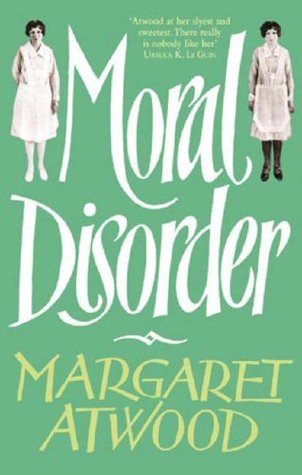 The title came from Atwood’s late partner, Graeme Gibson, who stopped writing novels in 1996 and gave her permission to reuse the name of his work in progress. It suggests that all is not quite as it should be. Then again, morality is subjective. Though her parents disapprove of Nell setting up a household with Tig, who is still married to Oona, the mother of his children, theirs ends up being a stable and traditional relationship; nothing salacious about it.
The first five and last two stories are in the first person, while a set of four in the middle is in the third person – including my favorites, “White Horse” and “The Entities,” two knockout stand-alones. Nell and Tig retreat to a farm for this segment, and Nell has to deal with her sister’s mental illness and her assumption that Tig doesn’t want to have more children. I also liked “The Art of Cooking and Serving,” in which Nell becomes a big sister at age 12. There are a few nothing-y stories, though, and I struggled to see this as having the main character all the way through – but that is probably part of the point: We have so many experiences, and change so much, in the course of a life that we feel we’ve become different people. This is about the memories and connections that last even as the externals alter beyond recognition. 
Two favorite passages:
“Maybe she would grow cunning, up here on the farm. Maybe she would absorb some of the darkness, which might not be darkness at all but only knowledge. She would turn into a woman others came to for advice. She would be called in emergencies. She would roll up her sleeves and dispense with sentimentality, and do whatever blood-soaked, bad-smelling thing had to be done. She would become adept with axes.”
“All that anxiety and anger, those dubious good intentions, those tangled lives, that blood. I can tell about it or I can bury it. In the end, we’ll all become stories. Or else we’ll become entities. Maybe it’s the same.”
Have you read any of Margaret Atwood’s books recently?
Which two should I earmark for next year? (I reckon The Testaments and Stone Mattress)
September Recommendations: Boyer, Doughty, Jamie, Patchett
For this second half of the year I chose just 15 of the new releases I was most excited about. Limiting myself in that way has been helpful for focusing the mind: I’ve already read six of my most anticipated books, I’m currently reading another, and I have several more awaiting me. Had I chosen 30 or more titles, I would likely be feeling overwhelmed by now, but as it is I have a good chance of actually getting to all these books before the end of the year. These September releases, while very different – their topics range from cancer and dead bodies to archaeological digs and family inheritance – all lived up to my expectations:
The Undying: Pain, Vulnerability, Mortality, Medicine, Art, Time, Dreams, Data, Exhaustion, Cancer, and Care by Anne Boyer
(Coming from Farrar, Straus and Giroux [USA] on the 17th and Allen Lane [UK] on October 3rd)
In 2014, Boyer, then a 41-year-old poet and professor at the Kansas City Art Institute (and a single mother) was diagnosed with triple-negative breast cancer. The book’s subtitle gives you clues to the sort of practical and emotional territory that’s covered here. Although she survived this highly aggressive cancer, she was not unscathed: the chemotherapy she had is so toxic it leads to lasting nerve damage and a brain fog that hasn’t completely lifted.
 All the more impressive, then, that Boyer has been able to put together this ferociously intellectual response to American cancer culture. Her frame of reference ranges from ancient Greece – Aelius Aristides, who lived in a temple, hoping the gods would reveal the cure to his wasting illness via dreams, becomes an offbeat hero for her – to recent breast cancer vloggers. She is scathing on vapid pink-ribbon cheerleading that doesn’t substantially improve breast cancer patients’ lives, and on profit-making healthcare schemes that inevitably discriminate against poor women of color and send people home from the hospital within a day or two of a double mastectomy. Through her own experience, she reflects on the pressure women are under to be brave, to be optimistic, to go to work as normal, and to look as beautiful as ever when they are in excruciating pain and beyond exhaustion.
Impossible to avoid comparisons to Susan Sontag’s Illness as Metaphor, but this book has a personal power I don’t remember finding in Sontag’s more detached, academic-level work. Boyer sees herself as one in a long lineage of women writing about their cancer – from Fanny Burney to Audre Lorde – and probes the limits of language when describing pain. I was reminded of another terrific, adjacent book from this year, Constellations by Sinéad Gleeson, especially where Boyer describes her imagined 10-part pain scale (Gleeson has a set of 20 poems based on the McGill Pain Index).
I could quote excellent passages all day, but here are a few that stood out to me:
“People with breast cancer are supposed to be ourselves as we were before, but also better and stronger and at the same time heart-wrenchingly worse. We are supposed to keep our unhappiness to ourselves but donate our courage to everyone.”
“The moral failure of breast cancer is not in the people who die: it is in the world that makes them sick, bankrupts them for a cure that also makes them sick, then blames them for their own deaths.”
“If suffering is like a poem, I want mine to be lurid, righteous, and goth.”
My thanks to FSG for the proof copy for review.
Will My Cat Eat My Eyeballs?: Big Questions from Tiny Mortals about Death by Caitlin Doughty
(Coming from W.W. Norton [USA] on the 10th and W&N [UK] on the 19th)
 This is the third book by the millennial mortician, and I’ve taken perverse glee in reading them all. Smoke Gets in Your Eyes explains cremation and combats misconceptions about death; From Here to Eternity surveys death rituals from around the world. This new book seems to be aimed at (morbid) children, but for me it was more like one of those New Scientist books (Why Don’t Penguins’ Feet Freeze?) or Why Do Men Have Nipples?
Some of the questions are more serious than others, but with her usual punning wit and pop culture references Doughty gives biologically sound answers to them all. For instance, she explains what might happen to a corpse in space, why the hair and fingernails of a cadaver appear to keep growing, and why the quantity of ashes from a cremation is about the same no matter the dead person’s girth (all the fat burns away; what would make your ashes weigh more is being taller and thus having longer bones). I was most interested in the chapter on why conjoined twins generally die at roughly the same time.
 Doughty also discusses laws relating to the dead, such as “abuse of corpse” regulations and whether or not deaths at a property have to be reported to potential buyers (it depends on what state or country you live in); and what happens in countries that are literally running out of space for burials. In highly population-dense places like Singapore, but also in countries such as Germany, one is considered to ‘rent’ grave space, which is then recycled after 15 years and the previous set of remains cremated. Or graves might get stacked vertically.
This is good fun, and features lots of cartoonishly gruesome black-and-white illustrations by Dianné Ruz. If you’ve got a particularly curious niece or nephew who might appreciate a dark sense of humor, this would make a good Christmas gift for one who is an older child or young teen.
My thanks to W&N for the free copy for review.
Surfacing by Kathleen Jamie
(Coming from Sort Of Books [UK] on the 19th and Penguin Books [USA] on the 24th)
I’m a big fan of Kathleen Jamie’s work, prose and poetry. Like her two previous essay collections, Sightlines and Findings, both of which I read in 2012, this fuses autobiography with nature and travel writing – two genres that are too often dominated by males. Jamie has a particular interest in birds, islands, archaeology and the oddities of the human body, all subjects that intrigue me, too.
 The bulk of Surfacing is given over to three long pieces set in Alaska, Orkney and Tibet. She was drawn to Quinhagak, Alaska, a village that’s about the farthest you can go before crossing the Bering Sea into Russia, by her fascination with the whaling artifacts found along the UK’s east coast. Here she helped out on a summer archaeological dig and learned about the language and culture of the Yup’ik people. Alarmingly, the ground here should have been frozen most of the way to the surface, forcing the crew to wear thermals; instead, the ice was a half-meter down, and Jamie found that she never needed her cold-weather gear.
On Westray, Orkney (hey, I’ve been there!), there was also evidence of environmental degradation in the form of rapid erosion. This Neolithic site, comparable to the better-known Skara Brae, leads Jamie to think about deep time and whether we’re actually much better off than people in the Bronze Age were. Prehistory fits the zeitgeist, as seen in two entries from the recent Wainwright Prize shortlist: Time Song by Julia Blackburn and Underland by Robert Macfarlane. It’s a necessary corrective to the kind of short-term thinking that has gotten us into environmental crisis.
A cancer biopsy coincides with a dream memory of being bitten by a Tibetan dog, prompting Jamie to get out her notebook from a trip to China/Tibet some 30 years ago. Xiahe was technically in China but ethnically and culturally Tibetan, and so the best they could manage at that time since Tibet was closed to foreigners. There’s an amazing amount of detail in this essay given how much time has passed, but her photos as well as her notebook must have helped with the reconstruction.
The depth and engagement of the long essays are admirable, yet I often connected more with the few-page pieces on experiencing a cave, spotting an eagle or getting lost in a forest. Jamie has made the interesting choice of delivering a lot of the memoir fragments in the second person. My favorite piece of all is “Elders,” which in just five pages charts her father’s decline and death and marks her own passage into unknown territory: grown children and no parents; what might her life look like now?
There is beautiful nature writing to be found in this volume, as you might expect, but also relatable words on the human condition:
What are you doing here anyway, in the woods? … You wanted to think about all the horror. The everyday news … No, not to think about it exactly but consider what to do with the weight of it all, the knowing … You are not lost, just melodramatic. The path is at your feet, see? Now carry on.
My thanks to Sort Of Books for the free copy for review.
The Dutch House by Ann Patchett
(Coming from Bloomsbury [UK] and Harper [USA] on the 24th)
Maeve and Danny Conroy are an inseparable brother-and-sister pair. Their mother left when Danny was little, so his older sister played a maternal role, too. And when their father dies, they become like Hansel and Gretel (or Cinderella and her little brother): cast out into the wilds by an evil stepmother who takes possession of the only home they’ve ever known, a suburban Philadelphia mansion built on the proceeds of the VanHoebeeks’ cigarette empire.
 It’s interesting to see Patchett take on a male perspective in this novel; she does it utterly convincingly. I also loved the medical threads running through: Maeve is diagnosed with diabetes as a teenager, and Danny spends many years in medical training even though his only ambition is to follow in his father’s footsteps as a property developer. There was a stretch in the middle of the book – something like 46% to 58% – when I was really bored with Danny’s dithering (‘but I don’t want to be a doctor … but I don’t want to marry Celeste’), and the chronology is unnecessarily complicated by flashbacks, though this is, I think, meant to convey Danny’s desultory composition of his memoirs.
In the end I didn’t like this quite as much as Commonwealth, but it’s a memorable exploration of family secrets and memories. As the decades pass you see how what happened to Maeve and Danny has been turned into myth: a story they repeat to themselves about how they were usurped, until this narrative has more power than the reality. Readers, meanwhile, are invited to question the people and places we base our security on, and to imagine what it would mean to forgive and forget and start living in a different way.
Patchett is always so good on the psychology of complicated families, and her sharp prose never fails to hit the nail on the head. The Goldfinch comes to mind as a readalike – not least because of the significance of a piece of art: the cover depicts a painting made of Maeve when she was 10 – as well as Nick Hornby’s How to Be Good.
I read an electronic proof copy via Edelweiss.
Have you read any September releases that you would recommend? Which of these tempt you?
R.I.P. Reads, Part I: Bender, Harkness, Hurley
I’ve been reading twisted fairy tales, a novel about witches and vampires with historical and contemporary timelines, and a subtle work of Gothic horror set on a remote stretch of the English coast.
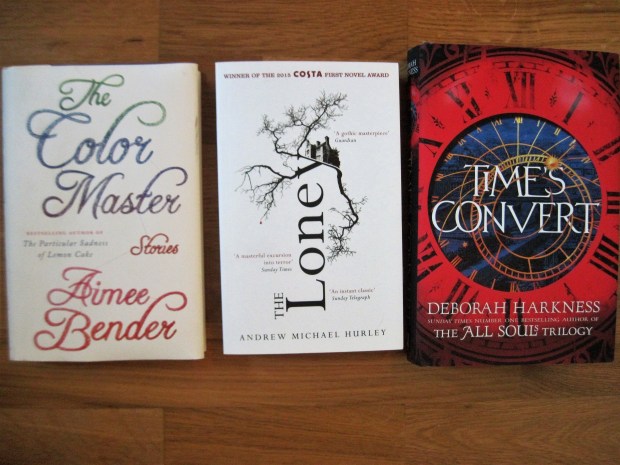
The Color Master by Aimee Bender (2013)
Aimee Bender is best known for The Particular Sadness of Lemon Cake. This is the second collection of her stories that I’ve read. Most have a touch of the bizarre to them – a tiny tweak to normal life – but some are set in completely alternate worlds. One character experiences extreme face blindness; another deludes himself that he was a famously vicious Nazi during the Second World War. Seamstresses take on odd tasks like repairing endangered animals or, in the title story, creating a dress that resembles the moon and embodies female anger. In “Appleless,” vigilantes punish a girl who won’t eat apples, while “The Devourings” is a dark riff on Shrek in which a woman comes to terms with her ogre husband’s innate violence.
 A few favorites were “A State of Variance,” in which a character can’t seem to avoid perfect facial symmetry no matter how he tries to mar his natural beauty, “The Doctor and the Rabbi,” a philosophical conversation between an ill rabbi and her atheist-leaning parishioner, and “The Red Ribbon” (which draws on the same source material as Carmen Maria Machado’s “The Husband Stitch”), about a bored housewife who starts acting out sexual fantasies to try to save her marriage.
Bender deploys a good mixture of voices and protagonists, though at least four of the 15 stories felt unnecessary to me. Her approach is similar to Kelly Link’s and Karen Russell’s, but I’ve failed to get on with their surreal stories before – Bender’s writing is that bit more accessible. I’d recommend her to fans of stories by Amy Bloom and Sarah Hall.
My rating:
Time’s Convert by Deborah Harkness (2018)
This is a companion volume to Harkness’s All Souls Trilogy, which is like the thinking gal’s Twilight, as written by a historian of science. I read the first book, A Discovery of Witches, in 2011 and surprised myself by completely loving the story of the witch Diana Bishop, who researches alchemy at the Bodleian Library and falls hard for a centuries-old vampire, Matthew de Clermont. Although Time’s Convert is likely intended to stand alone, I felt it could do with a dramatis personae at the start as I’d forgotten who many of the minor characters were.
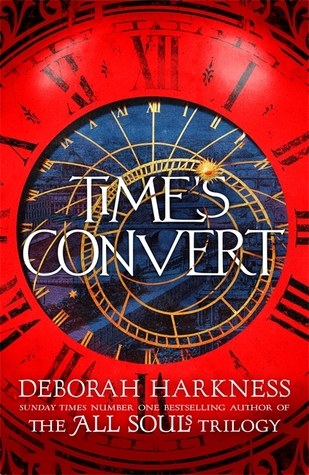 Diana and Matthew are still major characters, though not at the heart of the book. One strand has Diana and her family staying in the French countryside. She and Matthew now have toddler twins, Philip and Becca, who are just starting to show magical powers: Philip summons a griffon named Apollo as his familiar. Another is set in Paris, where Phoebe Taylor is willingly being transformed into a vampire so she can marry Matthew’s son, Marcus. A final strand recreates Marcus’s experiences during the American and French Revolutions and onward: he was born in Massachusetts in 1757 and was a surgeon during the Revolutionary War before he met Matthew and received the offer of immortality.
I almost always feel that sequels fail to live up to the original. Time’s Convert is most like Shadow of Night, the second book of the series and my least favorite because it spends so much time in 1590s England. Here the three different story lines split my focus and I resented being taken away from Diana’s first-person narration, which is much more engaging than the third-person material. I would only recommend this volume to diehard fans of the series.
My rating: 
With thanks to Headline for the free copy for review.
Note: A television adaptation of A Discovery of Witches recently aired on Sky One in the UK and is coming to North America in January.
The Loney by Andrew Michael Hurley (2014)
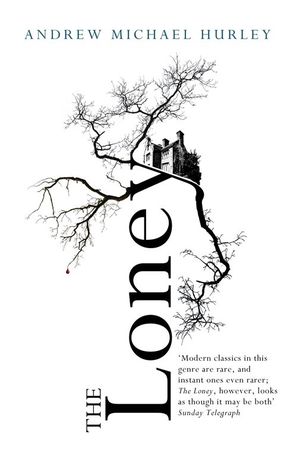 The Loney is not a monster, as I suppose I expected, but a place: an isolated coastline in the northwest of England that the narrator and his family visited on pilgrimage with their Roman Catholic congregation every Easter in the 1970s. The narrator, only identified by the nickname Tonto, explores their strange rental house – full of taxidermied animals and hidden rooms, it also has a rifle under the floorboards – and goes to the beach with his mute brother Andrew (“Hanny”). Mummer and Farther hold out hope that their son Hanny will be healed on a visit to the local shrine, and Mummer especially is frustrated that Father Bernard isn’t as strict and devout as their previous priest, Father Wilfred, who died under a cloud of suspicion not long before this trip.
Last year at around this time I read Hurley’s follow-up, Devil’s Day, which has a similarly bleak and eerie atmosphere. Both look at rural superstitions as experienced by outsiders. The Loney was more profound for me, though, in how it subverts religious rituals and posits a subtle evil influence without ever disappearing down doctrinal rabbitholes. It asks how far people will go to get what they want, what meaning there is to human life if there is no supernatural being looking out for us, and – through a framing story set 30 or more years later – how guilt and memory persist. I especially loved the Tenebrae service in a gloomy church featuring Bosch-like horrors in its artwork. This reminded me of a less abstract After Me Comes the Flood and a more contemporary The Short Day Dying; I highly recommend it.
Favorite lines:
“The Church of the Sacred Heart was an ancient place – dark and squat and glistening amphibiously in the rain.”
“The wind continued to rise and fall. Whining and shrilling. It was as insistent as the priest, louder sometimes, preaching an older sermon, about the sand and the sea.”
My rating:
Have you been reading anything fantastical or spooky this October?
Review and Q&A: Unruly Creatures by Jennifer Caloyeras
The 11 stories in Jennifer Caloyeras’ new collection, Unruly Creatures (released on October 3rd by West Virginia University Press), feature characters who find themselves in extreme situations and/or are let down by their bodies. Often, their tentative steps outside their own problematic situations involve making unexpected connections with the animal world: a neglected boy learns from a taxidermist, a trainer at the Institute for Privileged Primates is surprised by the depth of her feelings for one of the gorillas in her care, a woman who has just had a double mastectomy empathizes with a cow stuck in the crater left by a crashed meteor, and two teens realize they can only bond with their father when in animal costumes.
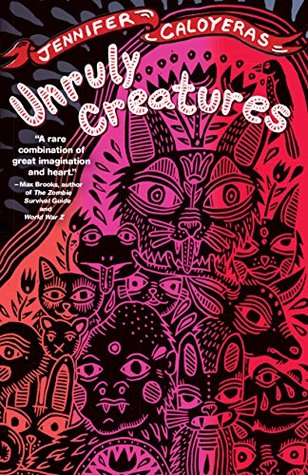 I appreciated the variety of forms and voices here. One story set in a dystopian future has an epistolary element, including letters and memos; two others use second-person or first-person plural narration, respectively. There’s also a lot to think about in terms of gender. For instance, one protagonist frets about out-of-control pubic hair, while another finds it difficult to maintain her trans identity on a male prison ward. “A Real Live Baby” was a stand-out for me. Its title is a tease, though, because Chloe is doing the Egg Baby project in school and ‘babysits’ for her delusional neighbor, who keeps a doll in a stroller. The conflation of dolls and babies is also an element in recent stories by Camilla Grudova and Lesley Nneka Arimah – proof, if we needed it, that modern motherhood is both an enigma and a work in progress.
I’d recommend this story collection to readers of Margaret Atwood and Karen Joy Fowler – and to book clubs. You certainly won’t run out of things to discuss!
My rating:
Jennifer kindly offered to take part in a Q&A over e-mail. We talked about eco-lit, fairy tales gone wild, and how writing and marketing short stories is different from novels.
Animals take on a variety of roles in these stories: research subjects, art projects, friends. Are you an animal lover? Or was that linking theme incidental? And what did you hope to convey about the ways the human and animal worlds intersect?
I am an animal lover. I always have been. When I was younger I really wanted to be a marine biologist. I couldn’t quite get around the math. Then for a while, I thought, animal psychologist. I’ve always been obsessed with animals and animal behavior and the ways in which humans are constantly distancing themselves from animals and their behavior. We have a bit of an unfair superiority complex when it comes to the animal world. I ended up going down an entirely different path (musician and singer) before applying to graduate school for a MA in English and then a MFA in creative writing.

Jennifer with her dogs. Photo by Gene Fama.
But to get back to your question, I didn’t set out to write a collection of linked animal stories; that ended up happening organically. I like to use animals as a mirror or lens through which we see ourselves: sometimes at our worst, most instinctive behavior – sometimes at our best. I think an apt metaphor is that of child staring at an animal at a cage in the zoo, internalizing the thought, “I am nothing like that animal. I am everything like that animal.”
Sometimes the humans are the truly unruly creatures – thinking especially of the obnoxious plane passenger in “Airborne” and Ernest, the persnickety postman in “Big Brother.” How does placing them alongside animal characters point up their flaws?
I am a huge fan of unlikable and unreliable narrators. And I think the short story genre lends itself to utilizing these types of narrators, because you don’t have to sustain this for the duration of an entire novel. In “Big Brother”, the reader aligns with everyone else in the story, not the protagonist. Ernest can’t get over the fact that Les, his co-worker, could have such a bond with a parrot, when Ernest has such a difficult time connecting with anyone, yet in the same story, Ernest’s earnest love for his dog is apparent. He has the key to connecting with people, he just doesn’t have the means to put this knowledge to use.
“H2O” imagines a future extreme drought situation in which only the elite can afford fresh water. Does this feel like a plausible scenario, especially where you live in California?
Oh, the water situation is really scary. I don’t think we’re far off from the scenario presented in this story. It’s always absurd to me when we hear about drought conditions and yet, here I am, driving by a huge verdant golf course. And the access for the wealthy in this particular story resonates in terms of access in general in a capitalistic society. In the story, which is a sort of eco-lit satire (I think I just made up that genre), water is the most coveted commodity, yet it’s marketed differently depending on economic status. Living in Los Angeles, there seems to be a production value to everything here, so I wanted to add that twist in the story – the commercialism of a commodity – how it would be talked about on a production set. How to do the perfect “hard sell” when it comes to water.
I especially love the fairy tale-gone-wild mood of “Unruly”: Caroline loathes the Rapunzel-like abundance of her pubic hair, and instead of a glass slipper we get glass shards in Tom’s arm. How does twisting a fairy tale play with readers’ expectations for a story?
I’ve always been obsessed with fairy tales. My second young adult novel, Strays, has a whole component where a high school English teacher introduces 16-year-old Iris, the protagonist, to Angela Carter’s The Bloody Chamber (if you’re a fairy tale fan, you have to read this one!), which is a feminist reinterpretation of fairy tales. I love how familiar all the fairy tale tropes are. I love the use of magical realism in fairy tales and I love the idea of playing with a familiar and predictable story and undercutting the reader’s expectations. To that end, I recently read (and loved) A. Igoni Barrett’s Blackass – which was a retelling of Kafka’s Metamorphosis. But instead of waking up as a cockroach, in this version – a black man in Lagos wakes up as a white man, afforded all of the benefits of white privilege. As a reader you’re thinking, “I know the story, but I don’t know this story.”
The story “Stuffed” was also inspired loosely by the fairy tale of Hansel and Gretel. The witch in the woods is replaced by a taxidermist (who is not evil) and instead, things with the child go dark pretty quickly.
Occasionally ersatz creatures are on display: doll babies, taxidermied animals, or animal costumes. What are we to make of that gulf between the real thing and the false one on display?
Surrogates are some of my favorite things to explore! I took a deep dive into the world of taxidermy while doing research for “Stuffed”. I really couldn’t get enough. I remember as a child getting lost for hours in the Hall of Mammals at the Natural History Museum in Los Angeles. I think, for me, it’s the idea of creating something to replace something, but the replacement is complete artifice. In terms of taxidermy, essentially, you are replacing death or recreating death to imitate life. A real dead animal is ugly, sunken, decayed. But we have these artists who take death, stuff it with synthetic material, replace eyeballs with beads and you have a recreation of an animal that sometimes looks better off than a live version of that animal. A lot of what is explored in these stories is a stripping down to raw human behavior. People hide behind the masks and costumes and artifice, but placed in certain situations, their animal instincts will always emerge.
[See also my review of the taxidermy-themed English Animals by Laura Kaye.]
Can you remember what the seed was for some of these stories? A particular line, scene, image, or character? Do you start writing a story with a title in mind, or does the title usually suggest itself later on?
Titles always come last for me. Always. I can’t name a thing until I know what that thing is. Writing is such a process and oftentimes I won’t end up where I think I’m going when I’m writing a story. They always surprise me. “Unruly” (the story of the pubic-haired Rapunzel) came directly out of this vivid dream I had when I was pregnant with my first child. I dreamed that I was naked with long flowing hair everywhere and a squirrel came out of a tree, nipped off a chunk of my hair and ran back to her nest and wove the hair into the nest. I remember waking up hysterically laughing. In hindsight it was such an obvious fertility dream; for the sake of the story, I made it a representation of coming-of-age/adolescence – a time where one’s body feels out of control, but I took it to the next level.
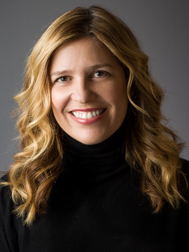
Photo by Gene Fama.
“The Sound of an Infinite Gesture” came directly from Koko the signing gorilla. It’s amazing that a gorilla can use sign language and communicate, but there was also something odd about people putting these very human ideas on a gorilla (remember they got her a pet kitten? And now I see they have her signing PSAs to save the environment?), so I started ruminating on what if we took this idea further – the gorilla communicates so well with her trainer that they begin to develop intimate feelings for one another.
Stories will often come out of an article I read (how leeches are being used in modern medicine led to “Bloodletting”) or from a friend, “Hey, did you know that people go to furry parties where they dress up in costumes and hug one another?” which led to “Plush” and I start playing around with what that might look like. It’s a lot of imaginative play involved. That’s my favorite part of writing – that dreamy time before I actually sit down to type – when it’s all just floating around my head and I’m trying to make a movie of it in my mind.
You’ve previously written YA novels. How different was the experience of writing these short stories? Do you see this work finding a dissimilar audience?
Writing a short fiction collection is not for the faint of heart. I was actually shocked at how slim the collection looked when it arrived in the mail. I kept thinking, “but I did all that work!” Each story, in a way, is treated like a novel. And I’m not talking just about the structure from beginning to end. Every word in a short story is precious; you have to economize. And, in order to get momentum for the collection, you want to publish stories from the collection in literary journals, which takes the same amount of energy and query letters that sending out your novel to an agent or publisher takes!
The audience for this book is completely different than the 13–17 demographic of the two other books. I have had a few people say, “Oh I bought your latest book for my child” and I’m quick to say, “it’s not for kids!” But read at your own risk.
Who are some of your favorite writers? Who has inspired your prose style or your story strategies?
I have so many favorite writers! And I read across all genres. It’s hard to say exactly who has influenced my work, but I will share my favorites! I love Lorrie Moore’s Birds of America. I think she is the best at synthesizing humor and pathos in the same space. I strive to do this in my stories. Pastoralia by George Saunders is another favorite collection. He is a master storyteller, satirist, humorist and his stories bring me to my knees from emotion in unexpected ways. I love Aimee Bender’s use of magical realism. I recently read Ottessa Moshfegh’s Homesick for Another World and loved it! There are so many amazing and varied voices when it comes to contemporary short fiction! The faculty member I worked closely with at the University of British Columbia when I was working on my MFA in creative writing was the Giller-nominated writer, Zsuzsi Gartner. In addition to being an incredible writer herself, she opened up the world of endless possibilities in short fiction, which was incredibly liberating.
What are you working on next?
Last year, I was selected as the writer-in-residence at the Annenberg in Santa Monica and I began working on a contemporary novel about expectations and parenthood. I’m still working on it and hope to be finished by the beginning of the new year. (Now that it’s in writing, maybe I will be further motivated!) I was pretty sure that I was done with short fiction for a while, but then ideas started coming to me again, so it’s my job to listen.
I also teach writing at UCLA Extension’s Writers’ Program. I will be teaching a new course, “Writing the Young Adult Novel”, in the winter and my usual “Intro to Short Fiction” in the spring. The classes are online, so if any of your readers are interested, sign up!
I spend a good amount of my time editing and helping to develop manuscripts and stories for clients. So it’s a nice balance between writing, editing and teaching.
My father, screenwriter Ron Clark, and I are toying with starting a podcast. Stay tuned!
Other places to reach Jennifer on social media:
Facebook Author Page: Jennifer Caloyeras
Twitter: @Jencaloyeras
Instagram: JenniferCaloyeras
Review: How Saints Die by Carmen Marcus
“A story is like a net: you have to make your own; you have to throw the loops just right; you have to be careful what gets in and what gets out, what you catch and what you keep.”
Ten-year-old Ellie Fleck isn’t like the other children in her North Yorkshire town. The daughter of Pete, a grizzled fisherman, and Kate, an Irish Catholic woman who’s in a mental hospital after a presumed suicide attempt, Ellie was raised on stories of selkies and martyrdoms. Superstition infuses her daily life, making her afraid of pool trips with her classmates – it’s bad luck for fishermen to learn to swim – and leading her to expect her dead grandmother’s soul to waft in through an open window on Halloween night.
 What with bullies’ beatings and her teacher Mr. Lockwood’s disapproval, it’s no wonder Ellie misses lots of school, going sea-coaling with her father or running off to the coast alone instead. But with Christmas approaching and Kate due home from the hospital, Ellie’s absences warrant an official visit. Social worker May Fletcher, the mother of Ellie’s new friend Fletch, is also concerned about Ellie’s home life. “How Saints Die,” Ellie and Fletch’s gruesome skit performed as an addendum to the school Nativity play, seems like proof that something is seriously wrong.
This is performance poet Carmen Marcus’s debut novel; from what I can tell it seems partially autobiographical. It powerfully conveys the pull of the sea and the isolation of an unconventional 1980s childhood. The dreamy, hypnotic prose alternates passages from Ellie’s perspective with shorter chapters from the points of view of the adults in her life, including her father, busybody neighbor Mrs. Forster, and May Fletcher. Marcus is equally skilled at the almost stream-of-consciousness passages describing Ellie’s trips to the sea and at humorous one-line descriptions:
Sand and salt in the cut, stinging. Her dad would know what to do. She wants him here, now, to show her. Without him the beach takes her up entirely, the shushshush of the sea and the coarse cackle of the waders at the waters-edge, creakcrackcreakcrackyawyaw; the wind tugging at the shell of her ear. All of it pulling, nipping, cutting at her – snipsnipsnip – and now blood, her edges ragged and wet.
Mrs Forster always smells faintly sweet and acidic like old Christmas cake.
– What are sins?
– They’re like germs but in your thoughts.
It’s easy to get lost in Ellie’s supernatural world of spirits and sea wolves, while the occasional outsider views make it clear just how dangerous some of her notions could be. Like Paula Cocozza’s How to Be Human, this sets up an intriguing contrast between magic realism and madness. The language is full of transformations and fairy tale tropes. I was reminded at times of Amy Sackville’s Orkney and Fiona Melrose’s Midwinter. Although there is perhaps one perilous situation too many at the climax and the resolution is a bit drawn out (and there is also less punctuation than I would like), this is still a strong and absorbing first novel and one I fully expect to see on next year’s Women’s Prize for Fiction longlist.
My rating:
How Saints Die is published in the UK today, July 13th, by Harvill Secker. My thanks to Louise Court for sending a free copy for review.
 Bookish Beck = Rebecca Foster. American transplant to England. Freelance proofreader and book reviewer.
 Bookish Beck