Seascraper by Benjamin Wood (#NovNov25 Buddy Read)
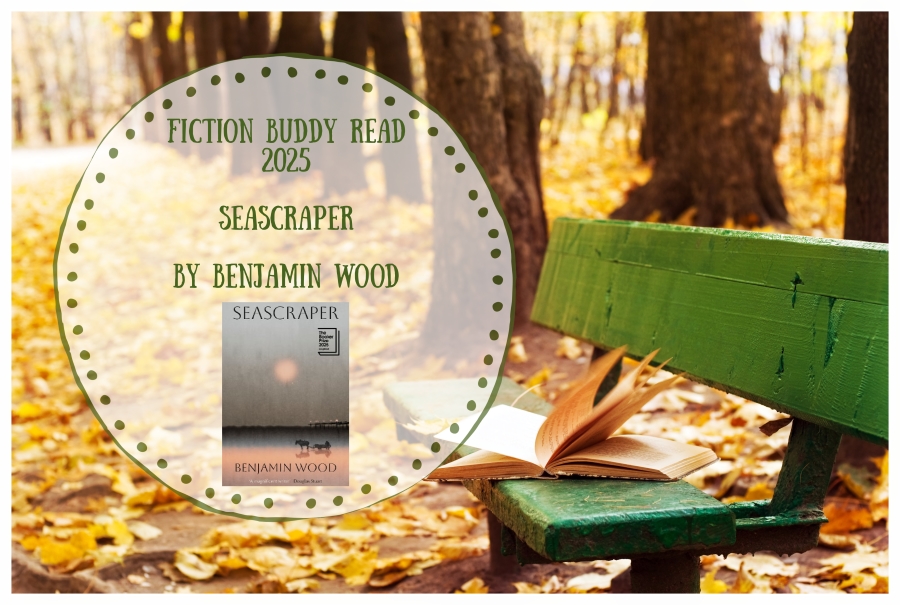
Seascraper is set in what appears to be the early 1960s yet could easily be a century earlier because of the protagonist’s low-tech career. Thomas Flett lives with his mother in fictional Longferry in northwest England and carries on his grandfather’s tradition of fishing with a horse and cart. Each day he trawls the seabed for shrimp – sometimes twice a day when the tide allows – and sells his catch to local restaurants. At around 20 years old, Thomas still lives with his mother, who is disabled by obesity and chronic pain. He’s the sole breadwinner in the household and there’s an unusual dynamic between them in that his mother isn’t all that many years older, having fallen pregnant by a teacher while she was still in school.
Their life is just a mindless trudge of work with cosy patterns of behaviour in between … He wants to wake up every morning with a better purpose.
It’s a humdrum, hardscrabble existence, and Thomas longs for a bigger and more creative life, which he hopes he might achieve through his folk music hobby – or a chance encounter with an American filmmaker. Edgar Acheson is working on a big-screen adaptation of a novel; to save money, it will be filmed here in Merseyside rather than in coastal Maine where it’s set. One day he turns up at the house asking Thomas to be his guide to the sands. Thomas reluctantly agrees to take Edgar out one evening, even though it will mean missing out on an open mic night. They nearly get lost in the fog and the cart starts to sink into quicksand. What follows is mysterious, almost like a hallucination sequence. When Thomas makes it back home safely, he writes an autobiographical song, “Seascraper” (you can listen to a recording on Wood’s website).
After this one pivotal and surprising day, Thomas’s fortunes might just change. This atmospheric novella contrasts subsistence living with creative fulfillment. There is the bitterness of crushed dreams but also a glimmer of hope. Its The Old Man and the Sea-type setup emphasizes questions of solitude, obsession and masculinity. Thomas wishes he had a father in his life; Edgar, even in so short a time frame, acts as a sort of father figure for him. And Edgar is a father himself – he shows Thomas a photo of his daughter. We are invited to ponder what makes a good father and what the absence of one means at different stages in life. Mental and physical health are also crucial considerations for the characters.

That Wood packs all of this into a compact circadian narrative is impressive. My admiration never crossed into warmth, however. I’ve read four of Wood’s five novels and still love his debut, The Bellwether Revivals, most, followed by his second, The Ecliptic. I’ve also read The Young Accomplice, which I didn’t care for as much, so I’m only missing out on A Station on the Path to Somewhere Better now. Wood’s plot and character work is always at a high standard, but his books are so different from each other that I have no clear sense of him as a novelist. Still, I’m pleased that the Booker longlisting has introduced him to many new readers.
Also reviewed by:
Annabel (AnnaBookBel)
Anne (My Head Is Full of Books)
Brona (This Reading Life)
Cathy (746 Books)
Davida (The Chocolate Lady’s Book Review Blog)
Eric (Lonesome Reader)
Jane (Just Reading a Book)
Helen (She Reads Novels)
Kate (Books Are My Favourite and Best)
Kay (What? Me Read?)
Nancy (The Literate Quilter)
Rachel (Yarra Book Club)
Susan (A life in books)
Check out this written interview with Wood (and this video one with Eric of Lonesome Reader) as well as a Q&A on the Booker Prize website in which Wood talks about the unusual situation in which he wrote the book.
(Public library)
[163 pages]

Three on a Theme for Father’s Day: Holt Poetry, Filgate & Virago Anthologies
A rare second post in a day for me; I got behind with my planned cat book reviews. I happen to have had a couple of fatherhood-themed books come my way earlier this year, an essay anthology and a debut poetry collection. To make it a trio, I finished an anthology of autobiographical essays about father–daughter relationships that I’d started last year.
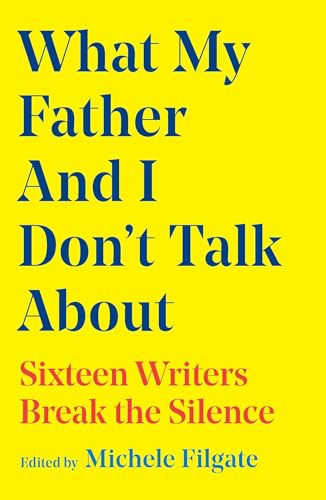
What My Father and I Don’t Talk About: Sixteen Writers Break the Silence, ed. Michele Filgate (2025)
This follow-up to Michele Filgate’s What My Mother and I Don’t Talk About is an anthology of 16 compassionate, nuanced essays probing the intricacies of family relationships.
 Understanding a father’s background can be the key to interpreting his later behavior. Isle McElroy had to fight for scraps of attention from their electrician father, who grew up in foster care; Susan Muaddi Darraj’s Palestinian father was sent to America to make money to send home. Such experiences might explain why the men were unreliable or demanding as adults. Patterns threaten to repeat across the generations: Andrew Altschul realizes his father’s hands-off parenting (he joked he’d changed a diaper “once”) was an outmoded convention he rejects in raising his own son; Jaquira Díaz learns that the depression she and her father battle stemmed from his tragic loss of his first family.
Some take the title brief literally: Heather Sellers dares to ask her father about his cross-dressing when she visits him in a nursing home; Nayomi Munaweera is pleased her 82-year-old father can escape his arranged marriage, but the domestic violence that went on in it remains unspoken. Tomás Q. Morín’s “Operation” has the most original structure, with the board game’s body parts serving as headings. All the essays display psychological insight, but Alex Marzano-Lesnevich’s—contrasting their father’s once-controlling nature with his elderly vulnerability—is the pinnacle.
Despite the heavy topics—estrangement, illness, emotional detachment—these candid pieces thrill with their variety and their resonant themes. (Read via Edelweiss)
Reprinted with permission from Shelf Awareness. (The above is my unedited version.)
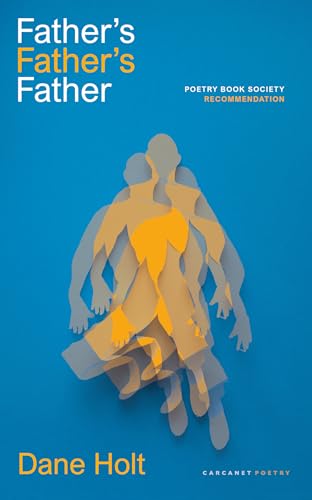
Father’s Father’s Father by Dane Holt (2025)
Holt’s debut collection interrogates masculinity through poems about bodybuilders and professional wrestlers, teenage risk-taking and family misdemeanours.
Your father’s father’s father
poisoned a beautiful horse,
that’s the story. Now you know this
you’ve opened the door marked
‘Family History’.
(from “‘The Granaries are Bursting with Meal’”)
The only records found in my grandmother’s attic
were by scorned women for scorned women
written by men.
(from “Tammy Wynette”)
He writes in the wake of the deaths of his parents, which, as W.S. Merwin observed, makes one feel, “I could do anything,” – though here the poet concludes, “The answer can be nothing.” Stylistically, the collection is more various than cohesive, with some of the late poetry as absurdist as you find in Caroline Bird’s. My favourite poem is “Humphrey Bogart,” with its vision of male toughness reinforced by previous generations’ emotional repression:
My grandfather
never told his son that he loved him.
I said this to a group of strangers
and then said, Consider this:
his son never asked to be told.
They both loved
the men Humphrey Bogart played.
…
There was
one thing my grandfather could
not forgive his son for.
Eventually it was his son’s dying, yes.
With thanks to Carcanet Press for the free e-copy for review.
Fathers: Reflections by Daughters, ed. Ursula Owen (1983; 1994)
“I doubt if my father will ever lose his power to wound me, and yet…”
~Eileen Fairweather
I read the introduction and first seven pieces (one of them a retelling of a fairy tale) last year and reviewed that first batch here. Some common elements I noted in those were service in a world war, Freudian interpretation, and the alignment of the father with God. The writers often depicted their fathers as unknown, aloof, or as disciplinarians. In the remainder of the book, I particularly noted differences in generations and class. Father and daughter are often separated by 40–55 years. The men work in industry; their daughters turn to academia. Her embrace of radicalism or feminism can alienate a man of conservative mores.
 Sometimes a father is defined by his emotional or literal absence. Dinah Brooke addresses her late father directly: “Obsessed with you for years, but blind – seeing only the huge holes you had left in my life, and not you at all. … I did so want someone to be a father to me. You did the best you could. It wasn’t a lot. The desire was there, but the execution was feeble.” Had Mary Gordon been tempted to romanticize her father, who died when she was seven, that aim was shattered when she learned how much he’d lied about and read his reactionary and ironically antisemitic writings (given that he was a Jew who converted to Catholicism).
I mostly skipped over the quotes from novels and academic works printed between the essays. There are solid pieces by Adrienne Rich, Michèle Roberts, Sheila Rowbotham, and Alice Walker, but Alice Munro knocks all the other contributors into a cocked hat with “Working for a Living,” which is as detailed and psychologically incisive as one of her stories (cf. The Beggar Maid with its urban/rural class divide). Her parents owned a fox farm but, as it failed, her father took a job as night watchman at a factory. She didn’t realize, until one day when she went in person to deliver a message, that he was a janitor there as well.
This was a rewarding collection to read and I will keep it around for models of autobiographical writing, but it now feels like a period piece: the fact that so many of the fathers had lived through the world wars, I think, might account for their cold and withdrawn nature – they were damaged, times were tough, and they believed they had to be an authority figure. Things have changed, somewhat, as the Filgate anthology reflects, though father issues will no doubt always be with us. (Secondhand – National Trust bookshop)
September Releases, Part II: Antrobus, Attenberg, Strout and More
As promised yesterday, I give excerpts of the six (U.S.) September releases I reviewed for Shelf Awareness. But first, my thoughts on a compassionate sequel about a beloved ensemble cast.
Tell Me Everything by Elizabeth Strout
“People always tell you who they are if you just listen”
Alternative title ideas: “Oh Bob!” or “Talk Therapy in Small-Town Maine.” I’ve had a mixed experience with the Amgash novels, of which I’ve now read four. Last year’s Lucy by the Sea was my favourite, a surprisingly successful Covid novel with much to say about isolation, political divisions and how life translates into art. Oh William!, though shortlisted for the Booker, seemed a low point. It’s presented as Lucy’s published memoir about her first husband, but irked me with its precious, scatter-brained writing. For me, Tell Me Everything was closer to the latter. It continues Strout’s newer habit of bringing her various characters together in the same narrative. That was a joy of the previous book, but here it’s overdone and, along with the knowing first-person plural narration (“As we mentioned earlier, housing prices in Crosby, Maine, had been going through the roof since the pandemic”; “Oh Jim Burgess! What are we to do with you?”), feels affected and hokey.
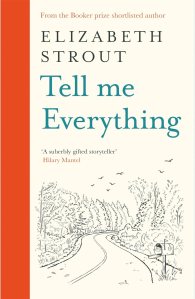
Strout makes it clear from the first line that this novel will mostly be devoted to Bob Burgess, who is not particularly interesting but perhaps a good choice of protagonist for that reason. A 65-year-old semi-retired lawyer, he’s a man of integrity who wins confidences because of his unassuming mien and willingness to listen and help where he can. One doesn’t read Strout for intrigue, but there is actually a mild murder mystery here. Bob ends up defending Matt Beach, a middle-aged man suspected of disposing of his mother’s body in a quarry. The Beaches are odd and damaged, with trauma threading through their history.
Sad stories are indeed the substance of the novel; Lucy trades in them. Literally: on her visits to Olive Kitteridge’s nursing home room, they swap bleak stories of the “unrecorded lives” they have observed or heard about. Lucy and Bob, who are clearly in love with each other, keep up a similar exchange of gloomy tales on their regular walks. Lucy asks Bob and Olive the point of these anecdotes, pondering the very meaning of life. Bob dismisses the question as immature; “as we have said, Bob was not a reflective fellow.” And because the book is filtered through Bob, we, too, feel this is just a piling up of depressing stories. Why should I care about Bob’s ex-wife’s alcoholism, his sister-in-law’s death from cancer, his nephew’s accident? Or any of the other unfortunate occurrences that make up a life. Bob and Lucy are appealingly ordinary characters, yet Strout suggests that they function as secular “sin-eaters,” accepting confessions. Forasmuch as they focus on others, they do each come to terms with childhood trauma and the reality of their marriages. Strout majors on emotional intelligence, but can be clichéd and soundbite-y. Such was my experience of this likable but diffuse novel.
With thanks to Viking (Penguin) for the proof copy for review.
Reviewed for Shelf Awareness:
Poetry:
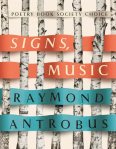 Signs, Music by Raymond Antrobus – The British-Jamaican poet’s intimate third collection contrasts the before and after of becoming a father—a transition that prompts him to reflect on his Deaf and biracial identity as well as the loss of his own father.
With thanks to Picador for the free copy for review.
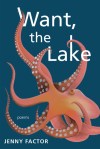 Want, the Lake by Jenny Factor – Factor’s long, intricate second poetry collection envisions womanhood as a tug of war between desire and constraint. “Elegy for a Younger Self” poems string together vivid reminiscences.
 Terminal Maladies by Okwudili Nebeolisa – The Iowa Writers’ Workshop graduate’s debut collection is a tender chronicle of the years leading to his mother’s death from cancer. Food and nature imagery chart the decline in Nkoli’s health and its effect on her family.
Fiction:
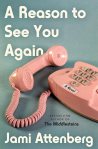 A Reason to See You Again by Jami Attenberg – Her tenth book evinces her mastery of dysfunctional family stories. From the Chicago-area Cohens, the circle widens and retracts as partners and friends enter and exit. Through estrangement and reunion, as characters grapple with sexuality and addictions, the decision is between hiding and figuring out who they are.
Nonfiction:
 We Are Animals: On the Nature and Politics of Motherhood by Jennifer Case – Case’s second book explores the evolution, politics, and culture of contemporary parenthood in 15 intrepid essays. Science and statistics weave through in illuminating ways. This forthright, lyrical study of maternity is an excellent companion read to Lucy Jones’s Matrescence.
 Question 7 by Richard Flanagan – Ten years after his Booker Prize win for The Narrow Road to the Deep North, Richard Flanagan revisits his father’s time as a POW—the starting point but ultimately just one thread in this astonishing and uncategorizable work that combines family memoir, biography, and history to examine how love and memory endure. (Published in the USA on 17 September.)
With thanks to Emma Finnigan PR and Vintage (Penguin) for the proof copy for review.
Any other September releases you’d recommend?
September Releases, Part I: Berzinska, Falomo, Fubini
September is always a big month for new releases. I reviewed a load for Shelf Awareness this month (excerpts and links in tomorrow’s post, along with one more full review) and I’m awaiting library holds of some other big-name titles.
As often seems to be the case, my main roundup features one book each from fiction, poetry and nonfiction. Today I have short reviews of a set of sweetly fantastical Latvian short stories for middle grade readers, a Nigerian American’s autobiography in verse, and a short book about how prioritizing flavour might be the key to fixing a broken globalized food system.
The Skeleton in the Cupboard by Lilija Berzinska (2018; 2024)
[Translated from the Latvian by Žanete Vēvere Pasqualini and Sara Smith]
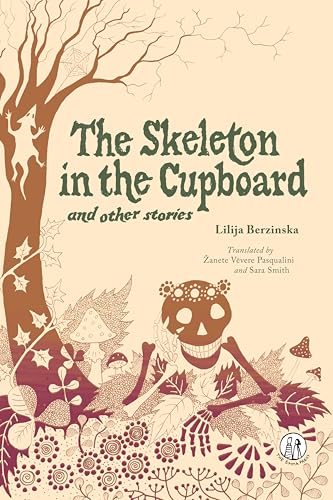 Something a bit different that still fit my September short stories focus: these nine linked fairytales feature sentient animals and fantastical creatures learning relatable life lessons. In the title story, Squishbod airs his closet once a year, which requires taking out the skeleton – a symbol of shameful secrets one holds close. Newfound friendship shades into obsession in “The Sea Wolf and the Hare” before the hare’s epiphany that love requires freedom. Characters wrestle with greed, fear and feelings of inadequacy or incompleteness. In “The End of the World,” which can be interpreted as a subtle climate fable, a thick fog induces panic. A puffin entertains thoughts of piracy. Spendthrift is compelled to have the latest in home décor while Mousekin frets over his lack of ambition. This is perfect for Moomins fans, who will embrace the blend of domesticity and adventure, melancholy and reassurance. I was also reminded of another European children’s novel-in-stories I’ve reviewed, Scary Fairy in Wicked Wood by Jana Bauer (translated from the Slovenian). The book is illustrated with whimsical drawings by the author, and a translators’ note explains how they assigned the creatures punning names. This is meant for children aged eight and up, but I loved it, too.
With thanks to The Emma Press for the free copy for review.
In September-released short stories, I also recently reviewed A New Day by Sue Mell.
Autobiomythography Of by Ayokunle Falomo
 The title is adapted from Audre Lorde’s term for Zami, “biomythography” (Kim Coleman Foote also borrowed it for Coleman Hill). This collection reminded me most of Jason Allen-Paisant’s multi-award-winning Self-Portrait as Othello. Both books pair an investigation of identity with musings on history and art, and six of Falomo’s poem titles begin with “Self-Portrait.” Another nine open with “Lugard & I,” referencing the early-1900s white high commissioner/governor/governor-general who effectively created Nigeria. Falomo contrasts his childhood understanding of his country with the more complicated postcolonial vision that has emerged in later decades.
Drawing on the Bible and mythology, the poet spins meditations on genealogy and describes himself as if from the outside, via others’ perceptions (“If Found,”) and erasure of official forms. “To You in Your Dark Lake Moving Darkly Now” is addressed to his child in utero, and a major theme is figuring out how to be a father differently from one’s own father (on which, see also Raymond Antrobus’s Signs, Music; I’ll link to my review tomorrow). The form varies a lot, from fragmented stanzas to paragraphs. I was impressed. A favourite passage (and a sample poem below):
The past will remain
what it is—a pastiche
of regrets and joys—
but lest I be accused of being
tethered to it, here is the snail-
sized horse I’ve named
Forgive. No, Forget.
Remind me.
I have forgotten who I was.
I have forgiven who I was supposed to be.
(from “Autobiography Of”)
With thanks to Alice James Books for the advanced e-copy for review.
In Search of the Perfect Peach: Why flavour holds the answer to fixing our food system by Franco Fubini
 Fubini is the CEO of Natoora, which supplies produce to world-class restaurants. He is passionate about restoring seasonal patterns of eating; just because we can purchase strawberries year-round doesn’t mean we should. Supermarkets (which control 85% or more of food stock in the USA and UK) are to blame, Fubini explains, because after the Second World War they “tricked families with feelings of value and convenience, yet what they really wanted was for them to consume more of this unhealthy, flavour-engineered food [i.e. ultra-processed foods], which is cheap to produce and easy to transport because of its industrial nature.” He gives a few examples of fruits that have been selected for flavour rather than shelf life, such as the winter tomato varieties he popularized via River Café, green citrus, and the divine Greta white peach that set him off on this journey in 2011. This is a concise and readable introduction to modern food issues.
While it didn’t contain a lot that was new to me and I found the prose only serviceable, I’d still recommend it to anyone wanting a quick and thought-provoking read about where food comes from. Fubini’s is a wise voice we would do well to heed; I saw him quoted in the Guardian the other day on how to choose ripe fruit.
With thanks to Chelsea Green Publishing for the proof copy for review.
Fathers: Reflections by Daughters (Virago Anthology)
Books that dwell on family bonds often spotlight mothers and daughters, or fathers and sons; it seems a bit less common to examine the relationship with the parent of the opposite sex. In advance of Father’s Day, I picked up Fathers: Reflections by Daughters (1983; 1994) and read the first third. As I once did for Mother’s Day with another Virago anthology, Close Company: Stories of Mothers and Daughters, I’ll end up reading it across several years. Where that was a short fiction collection, though, this is all autobiographical pieces.
The section I’ve read so far contains seven essays counting editor Ursula Owen’s introduction, plus a retelling of the fairy tale “Cap o’ Rushes.” Most of the authors were born in the 1940s or 1950s, so a common element is having a father who served in the Second World War – or the First (for Angela Carter and Doris Lessing). There’s a sense, therefore, of momentous past experience that will never be disclosed. As Lessing writes of her father, “I knew him when his best years were over” – that is, after he had lost a leg, given up his favourite foods due to diabetes, and undertaken a doomed farming enterprise in colonial Africa.
Freudian interpretation seems like a given for several of the memoirists. Anne Boston was a posthumous child whose father was killed in the last days of WWII; in “Growing Up Fatherless,” she explores how this might have affected her.
I’ve always tended to discount the effects of being without a father – quite wrongly, I think now. There were effects, and they continued to influence my entire life, if anything increasingly so.
Among these effects, she enumerates a lack of proper “sexual conditioning.” Anthropologist Olivia Harris, too, wonders how a father determines a woman’s relationships with other men:
How far do women choose in their spouses, encourage in their sons, the ideal remembrance of the father? Am I, but not being married, refusing to exchange my father, or am I diffusing that chain of being?
Two authors specifically interrogate the alignment of the father with God. In “Heavenly Father,” Harris compares visions of fatherhood in various cultures, including in Anglican Christianity. Here the father, in parallel with the deity, is something of a distant moral arbiter. Sara Maitland felt the same about her father:
he really did correspond to the archetype of the Father. Many women grow out of their father when they discover that he is not really like what fathers are supposed, imaginatively, mythologically to be: he is weak, or a failure, or dishonest, or uninterested, or goes away. My father was not a perfect person, but he was very Father-like.
Unknown, aloof, a disciplinarian … I wonder if those descriptions resonate with you as much as they do with me?
In between pieces, Owen has reprinted 1–4 quotes from novels or academic sources that are relevant to fathers and daughters. The result is, as she acknowledges in the introduction, “a sort of collage.” She also remarks on the fact that it was difficult for more than one contributor to find a photo of herself with her father because “Dad always takes the photograph.” The essay I haven’t yet mentioned is a sweet but inconsequential two-pager by 13-year-old Kate Owen; it’s just occurred to me that that’s probably the editor’s daughter.
I’ll be interested to see how Michèle Roberts, Adrienne Rich, Alice Munro and more will clarify or complicate the picture of father–daughter relationships in the rest of the volume. (Secondhand from a National Trust bookshop)
#NonFicNov Catch-Up 2: Abbs, Hattrick, Powles, DAD Anthology, Santhouse
I’m sneaking in with five more review books on the final day of Nonfiction November, after a first catch-up earlier on in the month. Today I have a sprightly travel book based on the journeys of female writers and artists, a probing account of repeated chronic illness in the family, an anthology of essays showcasing the breadth of fatherhood experiences, a lyrical memoir-in-essays exploring racial identity, and a psychiatrist’s case studies of how the mind influences what the body feels. My apologies to the publishers for the brief responses.
Windswept: Walking in the footsteps of remarkable women by Annabel Abbs
 After a fall landed her in hospital with a cracked skull, Abbs couldn’t wait to roam again and vowed all her future holidays would be walking ones. What time she had for pleasure reading while raising children was devoted to travel books; looking at her stacks, she realized they were all by men. Her challenge to self was to find the women and recreate their journeys. I was drawn to this because I’d enjoyed Abbs’s novel about Frieda Lawrence and knew she was the subject of the first chapter here. During research for Frieda, Abbs omitted the Lawrences’ six-week honeymoon in the German mountains, so now she makes it a family cycling holiday, imitating Frieda’s experience by walking in a skirt and sunbathing nude. Other chapters follow Welsh painter Gwen John in Bordeaux, Nan Shepherd in Scotland, Georgia O’Keeffe in the American Southwest, and so on. Questions of risk and compulsion recur as Abbs asks how these women sought to achieve liberation. The interplay between biographical information and travel narrative is carefully controlled, but somehow this never quite came together for me in the way that, for instance, Sara Wheeler’s O My America! did.
(Two Roads, June 2021.) With thanks to the publisher for the free copy for review.
Ill Feelings by Alice Hattrick
 “My mother and I have symptoms of illness without any known cause,” Hattrick writes. When they showed signs of the ME/CFS their mother had suffered from since 1995, it was assumed there was imitation going on – that a “shared hysterical language” was fuelling their continued infirmity. It didn’t help that both looked well, so could pass as normal despite debilitating fatigue. Into their own family’s story, Hattrick weaves the lives and writings of chronically ill women such as Elizabeth Barrett Browning (see my review of Fiona Sampson’s biography, Two-Way Mirror), Alice James and Virginia Woolf. All these figures knew that what Hattrick calls “crip time” is different: more elastic; about survival rather than achievement.
The book searches desultorily for answers – could this have something to do with Giardiasis at age two? – but ultimately rests in mystery. ME/CFS patients rarely experience magical recovery, instead exhibiting repeated cycles of illness and being ‘well enough’. Hattrick also briefly considers long Covid as another form of postviral syndrome. My mother had fibromyalgia for years, so I’m always interested to read more about related illnesses. Earlier in the year I read Tracie White’s Waiting for Superman, and this also reminded me of Suzanne O’Sullivan’s books, though it’s literary and discursive rather than scientific.
(Fitzcarraldo Editions, August 2021.) With thanks to the publisher for the free copy for review.
Small Bodies of Water by Nina Mingya Powles
 I loved Powles’s bite-size food memoir, Tiny Moons. She won the inaugural Nan Shepherd Prize for underrepresented voices in nature writing for this work in progress, and I was eager to read more of her autobiographical essays. Watery metaphors are appropriate for a poet’s fluid narrative about moving between countries and identities. Powles grew up in a mixed-race household in New Zealand with a Malaysian Chinese mother and a white father, and now lives in London after time spent in Shanghai. Water has been her element ever since she learned to swim in a pool in Borneo, where her grandfather was a scholar of freshwater fish.
The book travels between hemispheres, seasons and languages, and once again food is a major point of reference. “I am the best at being alone when cooking and eating a soft-boiled egg,” she writes. Many of the essays are in short fragments – dated, numbered or titled. A foodstuff or water body (like the ponds at Hampstead Heath) might serve as a link: A kōwhai tree, on which the unofficial national flower of New Zealand grows, when encountered in London, collapses the miles between one home and another. Looking back months later (given I failed to take notes), this evades my grasp; it’s subtle, slippery but admirable.
(Canongate, August 2021.) With thanks to the publisher for the free copy for review.
DAD: Untold Stories of Fatherhood, Love, Mental Health and Masculinity, edited by Elliott Rae
 Music.Football.Fatherhood, a British equivalent of Mumsnet, brings dads together in conversation. These 20 essays by ordinary fathers run the gamut of parenting experiences: postnatal depression, divorce, single parenthood, a child with autism, and much more. We’re used to childbirth being talked about by women, but rarely by their partners, especially things like miscarriage, stillbirth and trauma. I’ve already written on Michael Johnson-Ellis’s essay on surrogacy; I also found particularly insightful R.P. Falconer’s piece on trying to be the best father he can be despite not having a particularly good role model in his own absent father, and Sam Draper’s on breaking the mould as a stay-at-home dad (“the bar for expectations regarding fathers is low, very low”) – I never understood how parental leave works in the UK before reading this. The book is full of genial and relatable stories and half or more of its authors are non-white. It could do with more rigorous editing to get the grammar and writing style up to the standard of traditionally published work, but even for someone like me who is not in the target audience it was an enjoyable set of everyday voices.
(Music.Football.Fatherhood, June 2021.) With thanks for the free copy for review.
Head First: A Psychiatrist’s Stories of Mind and Body by Alastair Santhouse
 Santhouse is a consultant psychiatrist at London’s Guy’s and Maudsley hospitals. This book was an interesting follow-up to Ill Feelings (above) in that the author draws an important distinction between illness as a subjective experience and disease as an objective medical reality. Like Abdul-Ghaaliq Lalkhen does in Pain, Santhouse adopts a biopsychosocial approach: “to focus solely on the scientific and neglect he social aspects of illness is a mistake that we continue to make,” he says. Using a patchwork of anonymous case studies, he delves into topics like depression, altruism, obesity, self-diagnosis, medical mysteries, evidence-based medicine, and preparation for death. A discussion of CFS again echoes the Hattrick. He brings the picture up to date with a final chapter on Covid-19. I’ve read so many doctors’ memoirs that this one didn’t stand out for me at all, but those less familiar with the subject matter could find it a good introduction to some ins and outs of mind–body medicine.
(Atlantic Books, July 2021.) With thanks to the publicist for the free copy for review.
Would you be interested in reading one or more of these?
Three on a Theme for Father’s Day: Auster, Knausgaard, Lewis
In advance of Father’s Day, I picked out a few short memoirs from my shelves that explore the bonds between fathers and their children.
The Invention of Solitude by Paul Auster (1982)
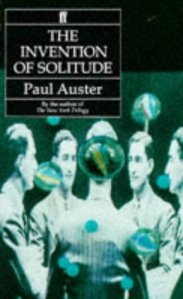 This was the nonfiction work of Auster’s I was most keen to read, and I thoroughly enjoyed its first part, “Portrait of an Invisible Man,” which includes a depiction of his late father, a discussion of his relationship with his son, and a brief investigation into his grandmother’s murder of his grandfather, which I’d first learned about from Winter Journal. Auster finds himself unable to cry and has to deal with all his father’s possessions. “There is nothing more terrible, I learned, than having to face the objects of a dead man … everything from a set of barbels to a broken toaster.” A personalized family photo album he finds is blank inside. That and the cover image, a trick photograph taken of his father at Atlantic City in the 1940s, feel like perfect symbols of an elusive heritage. I didn’t connect with the second, slightly longer half, though: “The Book of Memory” is more like Auster’s novels, describing the exploits of a lightly fictionalized character named “A.” and full of copious allusions to the likes of Flaubert, Freud and Tolstoy.
My rating: 
Fatherhood by Karl Ove Knausgaard (2009; 2013)
[Translated from the Norwegian by Don Bartlett]
 I assumed this was a stand-alone from Knausgaard; when it popped up during an author search on Awesomebooks.com and I saw how short it was, I thought why not? As it happens, this Vintage Minis paperback is actually a set of excerpts from A Man in Love, the second volume of his huge autofiction project, My Struggle (I’ve only read the first book, A Death in the Family). Knausgaard takes readers along on a few kiddie-oriented outings: a dinky circus, a children’s party, and baby rhyme time at the public library. His trademark granular detail gives a clear sense of all the characters involved. With him are his wife Linda and the three children they had by then, Vanja, Heidi and John; his friend Geir is his chief confidant.
It’s evident that he loves his children and delights in their individual personalities, but at the same time he feels his intellect assailed by the tedium of the repetitive tasks involved in parenting. He demands an hour to himself each afternoon to read and smoke in a café – even though he knows his wife doesn’t get such an allowance. Specifically, he writes that he feels feminized by carrying a baby or pushing a buggy. Recounting the children’s party, he recalls an earlier party when a heavily pregnant Linda got locked in a bathroom and not even a locksmith could get her out. He felt unmanned when a fellow guest (who happened to be a boxer) had to break down the door to free her. I didn’t know quite what to make of the fragile masculinity on display here, but was grateful to get some highlights from the second book.
My rating: 
Home Game: An Accidental Guide to Fatherhood by Michael Lewis (2009)
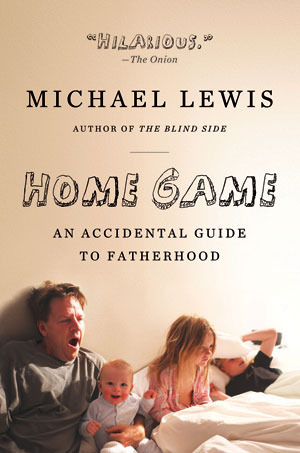 This was expanded from an occasional series of essays Lewis published in Slate in the 2000s, responding to the births of his three children, Quinn, Dixie and Walker, and exploring the modern father’s role, especially “the persistent and disturbing gap between what I was meant to feel and what I actually felt.” It took time for him to feel more than simply mild affection for each child; often the attachment didn’t arrive until after a period of intense care (as when his son Walker was hospitalized with RSV and he stayed with him around the clock). I can’t seem to find the exact line now, but Jennifer Senior (author of All Joy and No Fun) has said something to the effect of: you don’t take care of your children because you love them; you love them because you take care of them. And that indeed seems to encapsulate Lewis’s experience.
The family lived in Paris when Quinn was tiny, and the pieces on adjusting to the French parenting style reminded me of Pamela Druckerman’s French Children Don’t Throw Food / Bringing Up Bébé. His parenting adventures take him everywhere from the delivery room to a New Orleans racetrack at Mardi Gras to a Disneyland campground. He also, intriguingly, writes about a visit paid to Roald Dahl in the writer’s later years. Even when he’s exasperated, his writing is warm and funny. I especially laughed at the account of his post-Walker vasectomy. This maybe doesn’t break any new ground in terms of gender roles and equal responsibility for children’s needs, but I expect it’s still true to the experience of a lot of hapless males, and it was an entirely entertaining read.
[Postscript: My timing on this one was pretty ironic: I read it on the plane to the USA to visit my family and then handed it off to my brother-in-law as I think he’ll enjoy it too. My sister looked at the cover and said, “wait, didn’t his daughter just die in a car crash?!” She’d seen it on her phone’s news feed just hours earlier. I couldn’t believe that the sweet little girl with the squinchy face on the middle of the cover was gone! (Dixie, aged 19.)]
My rating: 
If you read just one … Make it Home Game.
Fathers seem to be a big theme in my recent and upcoming reading. There was Featherhood by Charlie Gilmour, a rare 5-star read for me, last month, and I have review copies of the thematically similar Will This House Last Forever? by Xanthi Barker as well as the essay collection DAD. I even pulled out another trio of father-themed memoirs from my shelves, but ended up running out of time to do a second set of three. There’s always next year!
 Bookish Beck = Rebecca Foster. American transplant to England. Freelance proofreader and book reviewer.
 Bookish Beck