October Books: Ballard, Czarnecki, Moss, Oliver, Ostriker, Steed & More
Apparently October is THE biggest month of the year for new releases. A sterling set came my way this year, including two beautiful novella-length memoirs, a luxuriantly illustrated work dedicated to an everyday bird species, two very different but equally elegant poetry collections, and a book of offbeat comics. Time and concentration only allow for a paragraph or so on each, but I hope that gives a flavour of the contents and will pique interest in the ones that suit you best. Plus I excerpt and link to my BookBrowse review of a poignant story of sisters and mental illness, and my Shelf Awareness review of a fantastic graphic novel adaptation.
Bound: A Memoir of Making and Remaking by Maddie Ballard
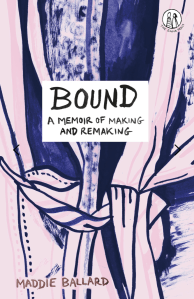 This collection of micro-essays considers sewing and much more. Each piece is headed by a pattern name and list of materials that Ballard made into an article of clothing for herself or for someone else. Among the minutiae of the craft, she slips in so many threads: about her mixed Chinese heritage and her relationship with her grandmother, about the environmental and financial benefits of making one’s own clothing, and especially about the upheaval of her twenties: the pandemic, a break-up, leaving a job to go back to school, finding roommates. I can barely mend a sock and I’m clueless when it comes to fashion, yet I can appreciate how sewing blends comfort and creativity. Ballard presents it as a meditative act of self-care:
I lower the needle and the world recedes. The process of sewing a garment – printing the pattern, tracing and cutting, sewing the first and the second and the fiftieth seam – is a lesson in taking your time.
Like gardening, sewing is an investment in the future – in what sort of person your future self will be, and how she will feel about her body, and what she will want to wear.
Similar to two other very short works of nonfiction I’ve read from The Emma Press, How Kyoto Breaks Your Heart by Florentyna Leow and Tiny Moons by Nina Mingya Powles (Ballard, too, is from New Zealand), this is a graceful, enriching book about a young woman making her way in the world and figuring out what is essential to her sense of home and identity. I commend it whether or not you have any particular interest in handicraft.
With thanks to The Emma Press for the free copy for review.
Encounters with Inscriptions: A Memoir Exploring Books Gifted by Parents by Kristin Czarnecki
When Kristin Czarnecki got in touch to offer a copy of her bibliomemoir about revisiting the books her late parents gifted her, I was instantly intrigued but couldn’t have known in advance how perfect it would be for me. Niche it might seem, but it combines several of my reading interests: bereavement, books about books, relationships with parents (especially a mother) and literary travels.
 The book starts, aptly, with childhood. A volume of Shel Silverstein poetry and A Child’s Christmas in Wales serve as perfect vehicles for the memories of how her parents passed on their love of literature and created family holiday rituals. Thereafter, the chapters are not strictly chronological but thematic. A work of women’s history opens up her mother’s involvement in the feminist movement; reading a Thomas Merton book reveals why his thinking was so important to her Catholic father. The interplay of literary criticism, cultural commentary and personal significance is especially effective in pieces on Alice Munro and Flannery O’Connor. A Virginia Woolf biography points to Czarnecki’s academic specialism and a cookbook to how food embodies memories.
It seems fitting to be reviewing this on the second anniversary of my mother’s death. The afterword, which follows on from the philosophical encouragement of a chapter on the Rubaiyat of Omar Khayyam, exhorts readers to cherish loved ones while we can – and be grateful for the tokens they leave behind. I had told Kristin about books my parents inscribed to me, as well as the journals I inherited from my mother. But I didn’t know there would be other specific connections between us, too, such as being childfree and hopeless in the kitchen. (Also, I have family in South Bend, Indiana, where she’s from, and our mothers were born in the first week of August.) All that to say, I felt that I found a kindred spirit in this lovely book, which is one of the nicest things that happens through reading.
With thanks to the author for the advanced e-copy for review.
The Starling: A Biography by Stephen Moss
 Moss has written a whole series of accessible bird species monographs suitable for nature buffs; this is the sixth. (I’ve not read the others, just Moss’s Wild Hares and Hummingbirds and Skylarks with Rosie, but we do have a copy of The Robin on the shelf that I’ve earmarked for Christmas.) The choice of the term ‘biography’ indicates the meeting of a comprehensive aim and intimate detail. The book conveys much anatomical and historical information about the starling’s relatives, habits, and worldwide spread, yet is only 187 pages – and plenty of those feature relevant paintings and photographs, too. It’s well known that starlings were introduced to Anglophone countries as part of misguided “acclimatisation” projects that we would now dub cultural imperialism. In the USA and elsewhere, the bird is still considered common. But with the industrialisation of agriculture, starlings are actually having less breeding success and thus are in decline.
Overall, the style of the book is dry and slightly workmanlike. However, when he’s recounting murmurations he’s seen in Somerset or read about, Moss’s enthusiasm lifts it into something special. Autumn dusk is a great time to start watching out for starling gatherings. I love observing and listening to the starlings just in the treetops and aerials of my neighbourhood, but we do also have a small local murmuration that I try to catch at least a few times in the season. Here’s how he describes their magic: “At a time when, both as a society and as individuals, we are less and less in touch with the natural world, attending this fleeting but memorable event is a way we can reconnect, regain our primal sense of wonder – and still be home in time for tea.”
With thanks to Square Peg, an imprint of Vintage (Penguin Random House) for the free copy for review.
The Alcestis Machine by Carolyn Oliver
 Carolyn is a blogger friend whose first collection, Inside the Storm I Want to Touch the Tremble, was on my Best Books of 2022 list. Her second is again characterized by precise vocabulary and crystalline imagery, often related to etymology, book history, or pigments (“You and I are marginalia shadowed / by a careless hand, we are gall-soaked vellum / invisible appetites consume.”). Astronomy and technology are a counterpoint, juxtaposing the ancient and the cutting-edge. I loved the language of sea creatures in “Strange Attractor” and the oblique approach to the passage of time (“Three popes ago, you and I”). The repeated three-word opening “In another life” gives a sense of many worlds, e.g., “In another life I’m a florist sometimes accused of inappropriate gravity.” Prose poems relay childhood memories. Love poems are tantalizing and utterly original: “If I promise not to describe the moon, will you / come with me a ways further into the night? / We’ll wash the forest floor / of ash and find a fairy ring / half-eaten, muted crescent bereft of power.” And alliteration never fails to win me over: “Tonight, snow tumbles over sophomores and starlings” and “the pillars in the water make a pillory not a pier”. Some of the collection remained cryptic for me; there was a bit less that grabbed me emotionally. But it’s still stirring work. And how flabbergasted was I to spot my name in the Acknowledgments? (Read via Edelweiss)
The Holy & Broken Bliss: Poems in Plague Time by Alicia Ostriker
“The words of an old woman shuffling the cards of her own decline the decline
of her husband the decline of her nation her plague-smitten world”
 Out of pandemic isolation come new rituals: watching days and seasons pass, fighting for her own health but mostly her husband’s, and lamenting public displays of hate. Lines feel stark with honesty; some poems are just haiku length. Elsewhere, repetition and alliteration create a wistful tone. Jewish scripture and mysticism are the source of much of the language and outlook. Music and nature, too, promise the transcendent. Simple and remarkable. Here’s a stanza about late autumn:
It is almost winter and still
as I walk to the clinic the gingkos
sing their seraphic air
as if there is no tomorrow
With thanks to Alice James Books for the advanced e-copy for review.
Forces of Nature by Edward Steed
 Steed is a longtime New Yorker cartoonist who produces single panels. This means there is no story progression (as in a graphic novel), just what you see on one page. Some of the comics are wordless; many scenes are visual gags which, to be entirely honest, I didn’t always grasp. Steed’s recurring characters are unhappy couples, exiles on desert islands, and dumb cops or criminals. His style is deliberately simplistic: the people not much more advanced than stick figures and the animals especially sketchy. There are multiple attempted prison breaks and satirical depictions of God and the Garden of Eden. Many of the setups are contrived, and the tone can be absurd or prickly, even shading into gruesome. These comics weren’t altogether my cup of tea, though I did get a laugh out of a few of them (a seasonal example is below). Endorsed if you fancy a cross between Edward Gorey and The Book of Bunny Suicides.
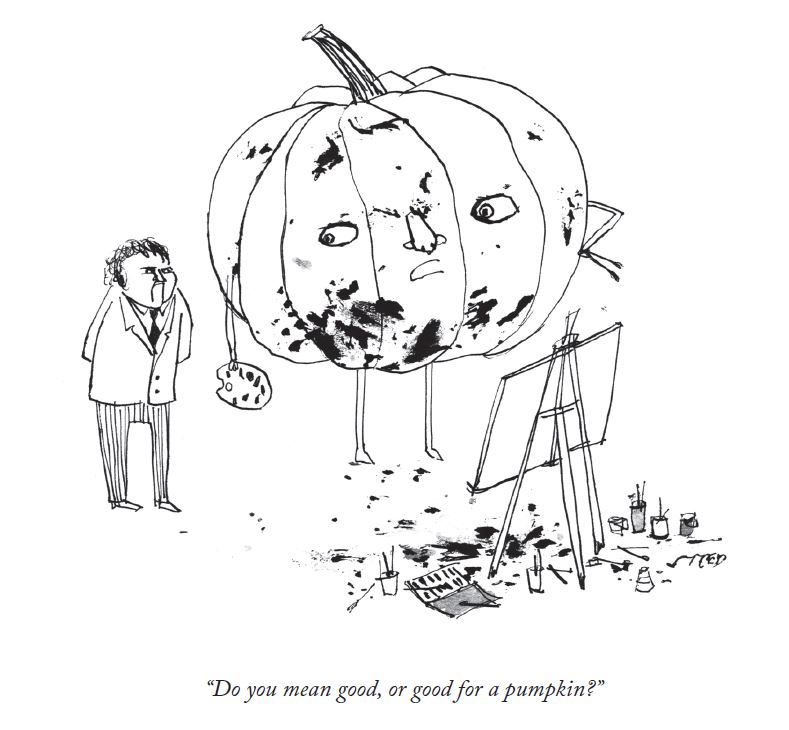
With thanks to Drawn & Quarterly for the e-copy for review.
Reviewed for BookBrowse:
 Shred Sisters by Betsy Lerner – “No one will love you more or hurt you more than a sister” is a wry aphorism that appears late in Lerner’s debut novel. Over the course of two decades, there is much heartache for the Shred family, but also moments of joy. Ultimately, a sisterly bond endures despite secrets, betrayals, and intermittent estrangement. Through her psychologically astute portrait of Olivia (“Ollie”) and Amy Shred, Lerner captures the lasting effects that mental illness can have on not just an individual, but an entire family.
Reviewed for Shelf Awareness:
 The Worst Journey in the World, Volume 1: Making Our Easting Down: The Graphic Novel by Sarah Airriess – The thrilling opening to a cinematically vivid adaptation of Apsley Cherry-Garrard’s 1922 memoir. He was an assistant zoologist on Robert Falcon Scott’s 1910-13 Terra Nova expedition to the South Pole. Even before the ship entered the pack ice, the journey was perilous. The book resembles a full-color storyboard for a Disney-style maritime adventure film. There is jolly camaraderie as the men sing sea shanties to boost morale. The second volume can’t arrive soon enough.
A Trip to Kyoto with Muriel Barbery and Florentyna Leow (#FrenchFebruary and #ReadIndies)
One of my most recent Book Serendipity incidents was reading these two 139-page books about a foreigner’s wanderings in Kyoto (often touring temples) at the same time. They’re also both from independent publishers, so I’m taking the opportunity to review them together for Read Indies month. The Barbery is also towards Marina Sofia’s casual French February challenge.
A Single Rose by Muriel Barbery (2020; 2021)
[Translated from the French by Alison Anderson]
 That Barbery is a Japanophile was clear from her whimsical The Writer’s Cats, which I reviewed for Novellas in November in 2021. Here she takes inspiration from a Japanese aesthetic of minimalist prose, melancholy walks in rainy gardens, and a mixture of legends and stoic Buddhist philosophy. Rose, the half-French, half-Japanese protagonist, is in Kyoto to hear the reading of the will made by her late father, Haru, a contemporary art dealer.
A 40-year-old botanist, Rose is adrift, her father’s death just the latest in a string of losses that have caused her to close off her heart. Her time in Kyoto, while she waits to meet with the lawyer, is a low-key cycle of visits to gardens and Buddhist temples, sake-soused meals, going to bed sad and tipsy, and waking up to rain and preparing to do it all over again. Her minder is Paul, a Belgian who was her father’s assistant. They initially find each other irritating, but are gradually drawn together as two damaged souls.
There are lovely descriptive passages, and the theme of the inescapability of suffering cannot be refuted. The universality of loss comes across in key quotes from Issa and Rainer Maria Rilke, respectively: “in this world / we walk on the roof of hell / gazing at flowers” and “A single rose is every rose.” Still, I somehow found this work both too subtle (the only vaguely relevant chapter-opening snippets of history or legend) and too obvious (“Everybody hurts” is hardly a groundbreaking message). This was my third novella by Barbery. Shall I carry on and read The Elegance of the Hedgehog as well?
With thanks to Gallic Books for the free copy for review.
How Kyoto Breaks Your Heart by Florentyna Leow (2023)
On the face of it, this collection has quite a lot in common with Nina Mingya Powles’s Tiny Moons, from the same publisher: travel- and food-inspired essays that loop through some of the same experiences of loneliness and disorientation. The writers also have a similar background, with Leow a Malaysian Chinese woman living in Japan. She is able to pass for Japanese and so is experienced at code-switching as she moves from temple to jazz bar to teahouse and learns new dialects and accents.
 For some years she made a living by leading tours she could never have afforded herself. Much as she loves Kyoto and its sights, she tired of the crowds and of seeing the same temples all the time. It took a stranger observing that she seemed unhappy in her work for her too realize it was time for a change.
This disillusionment and the end of her friendship with her female housemate are the main themes of this short book, especially in the six-part title essay. Interestingly, she describes the end of their relationship in the sort of terms that would generally be used for a romantic break-up, despondently querying what went wrong between them when they had been so happy picking and cooking the fruit from the persimmon tree outside their apartment window. Indeed, later on she cites the concept of a “romantic friendship.”
But I think what she was really mourning was the temporary nature of life. We’re nostalgic for golden times we can never get back. I think of parts of my early twenties like that. I wouldn’t necessarily trade my life now to go back in time (or maybe I would), but those periods will always glow in my memory.
My favourite essays were “Persimmons,” “A Bowl of Tea,” “A Rainy Day in Kyoto” and “Egg Love” – prove you care for someone by learning how they like their eggs. This wasn’t a particularly stand-out read for me, especially in comparison to the Powles, but I’d happily read more by Leow in the future.
A favourite passage:
REASONS FOR TEA
To celebrate. To thank someone. To enjoy the scent of different incense. To listen to the rain. To view an autumn moon reflected on a pond outside. To watch snow blanket the garden. To hear the texture of that silence. To walk through freshly fallen snow before dawn on the way to the teahouse. To drink tea by candlelight. To remember someone. To bask in the light, the cool of early summer mornings. Because it is spring. Because the leaves are changing colour. Because it is autumn. Because the plum blossoms are out. Because the world is beautiful. Because why not?
How Kyoto Breaks Your Heart will be published on 23 February. With thanks to The Emma Press for the proof copy for review.

Book Serendipity, Mid-December 2022 to Mid-February 2023
I call it “Book Serendipity” when two or more books that I read at the same time or in quick succession have something in common – the more bizarre, the better. This is a regular feature of mine every few months. Because I usually have 20–30 books on the go at once, I suppose I’m more prone to such incidents. The following are in roughly chronological order.
My biggest overall coincidence set this time was around Korean culture, especially food:
- A demanding Korean/American mother (“Umma”) in Sea Change by Gina Chung, Camp Zero by Michelle Min Sterling, and Crying in H Mart by Michelle Zauner.
- In the Chung and Zauner, she has eyebrows tattooed on.
- In the Chung and Sterling, there’s also a mall setting.
- Winter in Sokcho by Elisa Shua Dusapin was set in South Korea and mentioned a lot of the same cultural factors and foods. KIMCHI (which I’ve never had) was inescapable in these four books.


And the rest…
- The concept of Satan as “the enemy” in God’s Ex-Girlfriend by Gloria Beth Amodeo and All of Us Together in the End by Matthew Vollmer, two 2023 memoirs I reviewed for Foreword Reviews.
- A mention of the Newsboys (my favourite Christian rock band when I was a teenager) in God’s Ex-Girlfriend by Gloria Beth Amodeo and, of all places, Animal Life by Auður Ava Ólafsdóttir (the context: a list of songs with “Born” in the title; theirs is called – you guessed it! – “Born Again”).

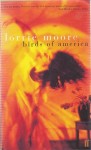
- Two Moores in my stack at once: Birds of America by Lorrie Moore and The Distance from Slaughter County by Steven Moore.
- A chapter in The Distance from Slaughter County by Steven Moore is called “Fight Night” and I was reading the early pages of Fight Night by Miriam Toews at the same time.
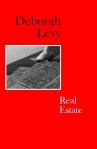
- A story in Birds of America by Lorrie Moore is called “Real Estate” and I was reading Real Estate by Deborah Levy at the same time.
- The Virgil quote “there are tears at the heart of things” and the theme of melancholy link Bittersweet by Susan Cain and The Heart of Things by Richard Holloway.
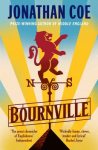
- A character who stutters in Bournville by Jonathan Coe and A Place Called Winter by Patrick Gale.

- (Werther’s) butterscotch candies are mentioned in Leila and the Blue Fox by Kiran Millwood Hargrave, Our Missing Hearts by Celeste Ng, What Napoleon Could Not Do by DK Nnuro, and How to Be Sad by Helen Russell.
- A mother who loves going to church in Bournville by Jonathan Coe and Born a Crime by Trevor Noah.
- The metaphor of a girl trapped in a block of marble ready to have her identity carved out in Sea Change by Gina Chung and Everything’s Changing by Chelsea Stickle.

- When I read a short story about a landmine-detecting rat in Everything’s Changing by Chelsea Stickle, I knew it wasn’t the first time I’d encountered that very specific setup. It took some digging, but I found out the other was in Attrib. by Eley Williams.
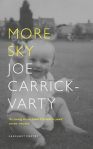
- Shane McCrae, whose forthcoming memoir Pulling the Chariot of the Sun I was also reading, is a named poetic influence/source in More Sky by Joe Varrick-Carty.

- I’m sure that after the one in Margaret Atwood’s The Door I encountered another poem about a frozen cat … but can’t now find it for the life of me.
- A character named Marnie in Martha Quest by Doris Lessing and City of Friends by Joanna Trollope.
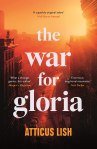
- Cape Verdean immigrants in the Boston area, then and now, in Daughters of Nantucket by Julie Gerstenblatt and The War for Gloria by Atticus Lish.

- Someone swaps green tea for coffee in Bittersweet by Susan Cain and City of Friends by Joanna Trollope.
- A half-French, half-Asian protagonist in a novella translated from the French: A Single Rose by Muriel Barbery and Winter in Sokcho by Elisa Shua Dusapin.
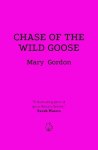
- A (semi-)historical lesbian couple as a subject of historical fiction in Daughters of Nantucket by Julie Gerstenblatt and Chase of the Wild Goose by Mary Gordon.
- A lesbian couple with a ten-year age gap breaks up because the one partner wants a baby and the other does not in My Mother Says by Stine Pilgaard and City of Friends by Joanna Trollope.
- After I specifically read three Frost Fairs books … 18th-century frolics on the frozen Thames were mentioned in The Secret Diaries of Charles Ignatius Sancho by Paterson Joseph.

- As I was reading The Secret Diaries of Charles Ignatius Sancho by Paterson Joseph, I saw him briefly mentioned in How to Be Sad by Helen Russell.
- From one 139-page book about a foreigner’s wanderings in Kyoto (often taking in temples) to another: I followed up A Single Rose by Muriel Barbery with How Kyoto Breaks Your Heart by Florentyna Leow.


- Persimmon jam is mentioned in Winter in Sokcho by Elisa Shua Dusapin and How Kyoto Breaks Your Heart by Florentyna Leow.
- A brave post-tragedy trip to a mothers and babies group ends abruptly when people are awkward or rude in All My Wild Mothers by Victoria Bennett and How to Be Sad by Helen Russell.


 As I was reading What We Talk about when We Talk about Love by Raymond Carver, I encountered a snippet from his poetry as a chapter epigraph in Bittersweet by Susan Cain.
- Sexologist Havelock Ellis inspired one of the main characters in The New Life by Tom Crewe and is mentioned in passing in Martha Quest by Doris Lessing.
What’s the weirdest reading coincidence you’ve had lately?
 Bookish Beck = Rebecca Foster. American transplant to England. Freelance proofreader and book reviewer.
 Bookish Beck