Book Serendipity, October to December 2023
I call it “Book Serendipity” when two or more books that I read at the same time or in quick succession have something in common – the more bizarre, the better. This is a regular feature of mine every couple of months. Because I usually have 20–30 books on the go at once, I suppose I’m more prone to such incidents. The following are in roughly chronological order.
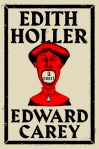
- A woman turns into a spider in Edith Holler by Edward Carey and The Human Origins of Beatrice Porter and Other Essential Ghosts by Soraya Palmer.

- Expulsion from Eden scenes (one literal, after the Masaccio painting; another more figurative by association) in Conversation Among Stones by Willie Lin and North Woods by Daniel Mason.
- Reading my second 2023 release featuring a theatre fire (after The House Is on Fire by Rachel Beanland, which I actually read last year): Edith Holler by Edward Carey.
- The protagonist cuts their foot in The Rituals by Rebecca Roberts and The Last House on Needless Street by Catriona Ward.


- On the same evening, I started two novels where the protagonist’s parents both died in a car crash: The Witches by Roald Dahl and Family Meal by Bryan Washington. This is something I encounter ALL THE TIME in fiction (versus extremely rarely in life) and it’s one of my major pet peeves. I can excuse it more in the children’s book as the orphan trope allows for adventures, but for the most part it just seems lazy to me. The author has decided they don’t want to delve into a relationship with parents at all, so they cut it out in the quickest and easiest possible way.
- A presumed honour killing in Behind You Is the Sea by Susan Muaddi Darraj and The Hundred and Ninety-Nine Steps by Michel Faber.


- A Houston, Texas setting in The Only Way Through Is Out by Suzette Mullen and Family Meal by Bryan Washington.
- Daniel Clowes, whose graphic novel Monica I was also in the middle of at the time, was mentioned in Robin Ince’s Bibliomaniac.
- The author/speaker warns the squeamish reader to look away for a paragraph in Robin Ince’s Bibliomaniac (recounting details of a gross-out horror plot) and one chapter of Daniel Mason’s North Woods.


- A mentally ill man who lives at the end of a lane in Daniel Mason’s North Woods and The Last House on Needless Street by Catriona Ward.
- Reading Last House before the Mountain by Monika Helfer and The Last House on Needless Street by Catriona Ward at the same time.
- The Daedalus myth (via Aeschylus or Brueghel, or just in general) is mentioned in Last House before the Mountain by Monika Helfer, The Ghost Orchid by Michael Longley, and Absolutely and Forever by Rose Tremain.
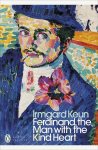
- A character goes to live with their aunt and uncle in Western Lane by Chetna Maroo and The House of Doors by Tan Twan Eng (both Booker-longlisted), but also The Woman in Black by Susan Hill, Train Dreams by Denis Johnson, and The Story Girl by L.M. Montgomery. I came across all five instances within a few days! Later I also encountered a brief mention of this in Ferdinand by Irmgard Keun. How can this situation be so uncommon in life but so common in fiction?!


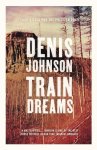

- The outdated terms “Chinaman” and “coolie” appear frequently in Train Dreams by Denis Johnson and The House of Doors by Tan Twan Eng.
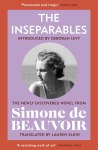
- A 15-year-old declares true love in The Inseparables by Simone de Beauvoir and Absolutely and Forever by Rose Tremain.
- A French character named Pascal in The Inseparables by Simone de Beauvoir and The Garrick Year by Margaret Drabble.

- A minor character called Mrs Biggs in Harriet Said… by Beryl Bainbridge and The House of Doors by Tan Twan Eng.
- The Chinese zither (guzheng) is mentioned in Dear Chrysanthemums by Fiona Sze-Lorrain, which I read earlier in the year, and The House of Doors by Tan Twan Eng.
- Oscar Wilde’s trial is mentioned in The House of Doors by Tan Twan Eng, as it was in The New Life by Tom Crewe, which I read earlier in the year – in both it was a cautionary case for older homosexual characters (based on real people: W. Somerset Maugham vs. John Addington Symonds) who were married to women but had a live-in male secretary generally known to be their lover. At the same time as I was reading The House of Doors, I was rereading Wilde’s De Profundis, which was written from prison.


- In Fifty Days of Solitude Doris Grumbach mentions reading Bear by Marian Engel. I read both during Novellas in November.
- Living funerals are mentioned in Ferdinand by Irmgard Keun and The Ritual Effect by Michael Norton.
- A character insists that lilac not be included in a bouquet in In the Sweep of the Bay by Cath Barton and Bright Young Women by Jessica Knoll.


- A woman has a lover named Frances in Bright Young Women by Jessica Knoll and The Cancer Journals by Audre Lorde.
- The final word of the Fanny Howe poem in Raised by Wolves (the forthcoming 50th anniversary poetry anthology from Graywolf Press) is “theophanies.” At the same time, I was reading the upcoming poetry collection Theophanies by Sarah Ghazal Ali.


- The Cancer Journals by Audre Lorde, which I’d read the month before, was a major influence on the cancer memoir All In by Caitlin Breedlove.
- Two foodie memoirs I read during our city break, A Waiter in Paris by Edward Chisholm and The Sweet Life in Paris by David Lebovitz, both likened a group of young men to a Dolce & Gabbana ad. (Chisholm initially lived at Porte des Lilas, the next Metro stop up from where we stayed in Mairie des Lilas.)
- A French slang term for penis, “verge,” is mentioned in both The Sweet Life in Paris by David Lebovitz and Learning to Drive by Katha Pollitt.


What’s the weirdest reading coincidence you’ve had lately?
Review Catch-Up: Monica, Bibliomaniac, Family Meal, Fudge & More
I’m catching up with reviews of the many October releases I read, including these four sent by publishers…
- a genre-bending, Technicolor graphic novel in the form of short comics
- a book-addict’s memoir of an ambitious Covid-times tour of Britain’s bookshops
- an understated novel about queer men of colour coping with death and mental illness
- and a quirky contemporary poetry collection I read in one sitting.
Followed by a bonus list of October books I reviewed for Shelf Awareness, similarly varied in genre: autofiction, flash fiction, horror-tinged historical fiction, graphic memoirs and more.
Monica by Daniel Clowes
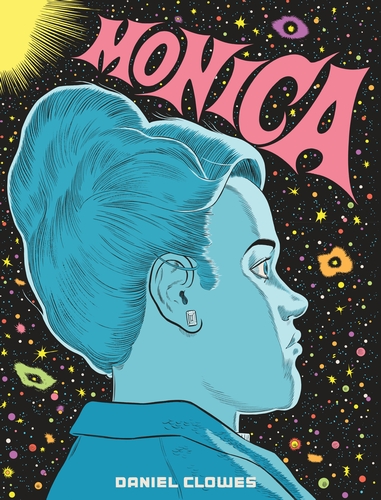 Daniel Clowes is a respected American graphic novelist best known for Ghost World, which was adapted into a 2001 film starring Scarlett Johansson. I’m not sure what I was expecting of Monica. Perhaps something closer to a quiet life story like Alison by Lizzy Stewart? In any case, not this jumble of 1970s nostalgia and supernatural horror. The book is in nine loosely connected stories that make the head spin with their genre and tonal shifts; one thing that stays constant is Clowes’s drawing style, which combines vibrant, campy colour with exaggerated faces and blunt haircuts.
At first it seems there will be a straightforward linear narrative: the prologue, “Foxhole,” has two soldiers dreaming of what life will be like Vietnam, with the one looking forward to a simple life with his fiancée Penny. “Pretty Penny” shatters those illusions as we see that Penny has fully embraced sexual liberation while he’s been away. She rejects her mother and, in a countercultural decision, keeps the baby when she gets pregnant. Young Monica has a sequence of stepfather figures before Penny dumps her with her parents and goes AWOL.
To an extent, the rest of the book is about Monica’s search for her parents. We see her as a young college student communicating with her dead grandfather via a radio, as a successful entrepreneur selling candles, and as an older woman caretaking for a California Airbnb. But in between there are bizarre sci-fi/folk horror interludes – “The Glow Infernal” and “The Incident” – about unconnected characters, and Monica’s involvement with a cult inevitably turns strange. I couldn’t get past the distasteful story lines or grotesque style. Mostly, I wasn’t convinced that Clowes liked or cared about any of his own characters, so why should I? (This might be Tom Cox’s dream book, but not mine.) I suppose I might try a classic work by Clowes one day, but only if I can be assured that it has more plot and heart.
With thanks to Jonathan Cape (Penguin) for the free copy for review.
Bibliomaniac: An Obsessive’s Tour of the Bookshops of Britain by Robin Ince
Do you know anyone who can buy just one book? Do you know anyone who leaves a bookshop only with what they walked in to buy?
I understand that Robin Ince is a radio personality and comedian who, though holding no formal qualifications, often delivers presentations about science. He was meant to undertake a stadium tour with Professor Brian Cox in the autumn of 2021, but a Covid resurgence put paid to that. Not one for sitting around at home – he comes across as driven, antsy; positively allergic to boredom – he formulated Plan B: 100+ events, most of them in independent bookshops (the oddest venue was a Chinese restaurant; he was speaking to the Plymouth Humanists), over the course of two months, criss-crossing Britain and hitting many favourite places such as Hay-on-Wye, Hungerford (my local indie) and Wigtown. The topic of his previous book was curiosity, which gave him free rein to feature anything that interested him, so no two talks were the same and he incorporated lots of ad hoc book recommendations.
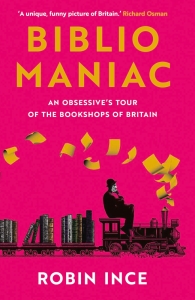 Ince is not just a speaker at the bookshops but, invariably, a customer – as well as at just about every charity shop in a town. Even when he knows he’ll be carrying his purchases home in his luggage on the train, he can’t resist a browse. And while his shopping basket would look wildly different to mine (his go-to sections are science and philosophy, the occult, 1960s pop and alternative culture; alongside a wide but utterly unpredictable range of classic and contemporary fiction and antiquarian finds), I sensed a kindred spirit in so many lines:
“A bookshop with a proximity to an interesting graveyard is a fine combination.”
“I like charity bookshops, because I can delude myself into believing that I am committing an altruistic act by purchasing too many books. I am not satisfying my consumer lust – I am digging a well in Uganda.”
“This is one of the wonders of books: the delight of being a species that can chronicle and preserve. I pick up a book from a shelf, and someone who is no more than ash or bone can still change me.”
He’s also refreshingly open-minded, determined not to become a white male dinosaur: he once spent a wonderful year reading only women authors, and gratefully accepts the gift of a Black queer feminist work – at which he knows a younger version of himself would have scoffed. I took lots of notes on shops I hadn’t heard of, but also appreciated the witty asides on British ways and on the rigours and coincidences of the tour. If you liked White Spines, this will be right up your street, though to me this was universal where the Royle was too niche. And it didn’t matter a jot that I was previously unfamiliar with Ince as a public figure.
Bibliomaniac came out in paperback on 5 October. My thanks to Atlantic Books for the free copy for review.
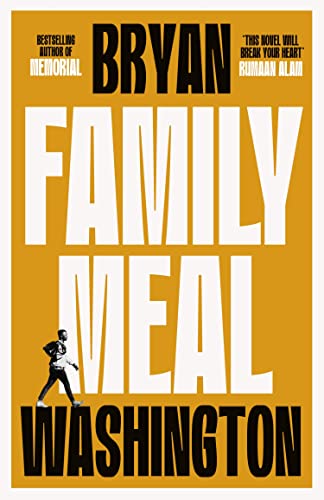
Family Meal by Bryan Washington
After the verve of his linked short stories (Lot, which won the Dylan Thomas Prize) and the offbeat tenderness of his debut novel, Memorial, I couldn’t wait for Bryan Washington’s next book. While it’s set in the multicultural Houston of his first book and similarly peopled by young queer men of colour, Family Meal shares the more melancholy edge of Memorial with its focus on bereavement and the habits and relationships that help the characters to cope.
Cam has moved back to Houston from Los Angeles after the untimely death of his boyfriend Kai, who had a budding career as a translator and spent part of each year in Japan. Cam works in a failing gay bar, crashes with his boss and has mostly stopped eating. Although he still loves cooking Asian food for others, he rarely tastes it himself; his overpowering appetite now is for pills and sex, leading him to arrange as many as four hook-ups per day. Kai still appears and communicates to him. “Easier to spend time dwelling on death than it is to live, says Kai.” Is it to escape this spectre, or the memory of what happened to Kai, that Cam descends into his addictions? Meanwhile, his estranged friend TJ, with whom Cam grew up at TJ’s Korean American family’s bakery after the death of Cam’s parents, has his own history of loss and unhealthy relationships. But a connection with the bakery’s new nonbinary employee, Noel, seems like it might be different.
If you’ve read Washington before, you’ll know what to expect: no speech marks, obscenity-strewn dialogue, sexually explicit scenes that seem to be there for the sake of it (because sex is part of life, rather than because they particularly advance the plot). An issue I had here, like with Memorial, is that having multiple first-person narrators doesn’t add anything; Kai and TJ sound so much like Cam, who narrates roughly the first half, that it’s hard to tell their affectless accounts apart. Such interchangeable voices two books running suggests to me that Washington hasn’t yet managed to fully imagine himself outside of his own personality.
The novel has much to convey about found family, food as nurture, and how we try to fill the emptiness in our lives with things that aren’t good for us. However, it often delivers these messages through what wise secondary characters say, which struck me as unsubtle.
“You don’t have to do this alone, says TJ.”
(Kai:) “My mother would say, Cooking is care. The act is the care.”
“Love can be a lot of things though, says Noel. Right? It’s pleasure but it’s also washing the dishes and sorting medication and folding the laundry. It’s picking out what to eat for dinner three nights in a row, even if you don’t want to. And it’s knowing when to speak up, and when to stay quiet, and when, I think, to move on. But also when to fight for it.”
“Sometimes the best we can do is live for each other, she [Kai’s sister] says. It’s enough. Even if it seems like it isn’t.”
There’s no doubting how heartfelt this story is. It brought tears to my eyes at the beginning and end, but in between did not captivate me as much as I hoped. While intermittently poignant on the subject of bereavement, it is so mired in the characters’ unhealthy coping mechanisms that it becomes painful to read.
In my mind Washington and Brandon Taylor are in the same basket, though that may be reductive or unimaginative of me (young, gay Black authors from the American South who have published three books and tend to return to the same themes and settings). Before this year I would have said Taylor had the edge, but The Late Americans was so disappointingly similar to his previous work that Washington has taken the lead. I just hope that with his next work he challenges himself instead of coasting along in the groove he’s created thus far.
I wish I could get a copy of this into the hands of Sufjan Stevens…
With thanks to Atlantic Books for the free copy for review.
Fudge by Andrew Weatherhead
 I read this over a chilled-out coffee at the Globe bar in Hay-on-Wye (how perfect, then, to come across the lines “I know the secret of life / Is to read good books”). Weatherhead mostly charts the rhythms of everyday existence in pandemic-era New York City, especially through a haiku sequence (“The blind cat asleep / On my lap—and coffee / Just out of reach” – a situation familiar to any cat owner). His style is matter-of-fact and casually funny, juxtaposing random observations about hipster-ish experiences. From “Things the Photoshop Instructor Said and Did”: “Someone gasped when he increased the contrast / I feel like everyone here is named Taylor.”
The central piece, “Poem While on Hold with NBA League Pass Customer Support Nov. 17, 2018,” descends into the absurd, but his four hours lost on the phone are reclaimed through his musings on a sport he once played (“I had begun to find meaning in art and music / I was always too cerebral a player anyways … That feeling—of perfect grace and equanimity— / must be what we’re all searching for in this life”) and on life in general. This is poetry that doesn’t feel like poetry, if that makes sense. I have a hunch that it might appeal to readers of David Foster Wallace.
Published by Publishing Genius. With thanks to publicist Lori Hettler for the e-copy for review.
Reviewed for Shelf Awareness:
(Links to full text)
The Flowers of Provence by Jamie Beck (Gift books feature): A gorgeous book of photographs, perfect for gardeners, romantics, and armchair travelers. Her still lifes are as detailed and colorful as medieval paintings.
Edith Holler by Edward Carey (forthcoming): A dark fairy tale about a precocious girl confined to her family’s theatre in Norwich, England yet driven to reveal the truth behind her city’s child disappearances. Reminiscent of Dahl, Dickens, and Shakespeare at their goriest.
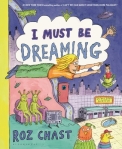
I Must Be Dreaming by Roz Chast: A laugh-out-loud-funny tour through her dream journal as well as a brief introduction to dream theory. Delightfully captures the randomness of dream topics and dialogues.

Tremor by Teju Cole: A kaleidoscopic work of autofiction that journeys between the US and Nigeria as it questions the ownership and meaning of Black art. The sophisticated structure is a highlight of this elegant study of art criticism, suffering, and subjectivity.
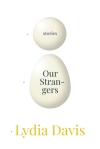
Our Strangers by Lydia Davis (Review and Q&A): In her ninth collection of mostly flash-length stories (a whopping 143 of them), an overarching theme is the mystery of human communication and connection. A real cornucopia of genres, structures, and voices. [Only available via Bookshop.org and independent bookstores.]
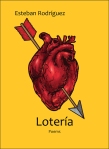
Lotería by Esteban Rodríguez: Lotería is a traditional Mexican game of chance. Each Spanish-language card is allotted a one-page poem in a creative, poignant recounting of his Mexican American family history.
Glass Half Empty by Rachael Smith: The British comics artist third graphic memoir is a refreshingly candid account of her recovery from alcoholism after her father’s death. In some panes, her adult self appears alongside her younger self, offering advice.


The Dead Peasant’s Handbook by Brian Turner: The final installment – after The Wild Delight of Wild Things and The Goodbye World Poem – in an intimate, autobiographical trilogy. Love is presented as the key to surviving bereavement and wartime trauma.
My Most Memorable Backlist Reads of 2021
Like many bloggers, I’m irresistibly drawn to the new books released each year. However, I consistently find that many of my most memorable reads were published years or decades ago. These 19 selections, in alphabetical order within genre, together with my Best of 2021 posts (fiction and nonfiction), make up the top 15% of my reading for the year. Three of the below were rereads.

(The three books not pictured were read electronically or from the library.)
Fiction
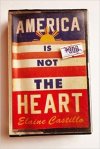 America Is Not the Heart by Elaine Castillo: Set in the early 1990s in the Filipino immigrant neighbourhoods of the Bay Area in California, this is a complex, confident debut novel that throws you into an unfamiliar culture at the deep end. The characters shine and the dialogue feels utterly authentic in this fresh immigration story.
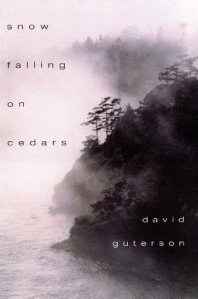
 Snow Falling on Cedars by David Guterson: The mystery element held me completely gripped – readers are just as in the dark as jurors until close to the end – but this is mostly a powerful picture of the lasting effects of racism. I was instantly immersed, whether in a warm courtroom with a snowstorm swirling outside or on a troop ship entering the Pacific Theater.
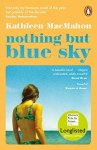 Nothing but Blue Sky by Kathleen MacMahon: David is back on Spain’s Costa Brava, where he and his wife Mary Rose holidayed every summer for 20 years. This is a quiet novel about what goes unsaid in any marriage, and a deeply touching look at loss and what comes next. Grief, memory, fate: some of my favourite themes, elegantly treated.
 A Feather on the Breath of God by Sigrid Nunez: From the little I know of Nunez, this seems close to autofiction, especially in terms of her parents. Identifying the self by the key relationships and obsessions of a life makes sense, and this speaks to the universals of how we cope with a troublesome past. It cemented her as one of my favourite authors.
 Woman on the Edge of Time by Marge Piercy: An unusual and fascinating novel with hints of science fiction, but still grounded in the real world, this contrasts utopian and dystopian scenes experienced by a Latina woman who’s been confined to a mental hospital. It’s an intense cultural commentary from a writer ahead of her time on gender roles and the environment.
 My Dark Vanessa by Kate Elizabeth Russell: Obsessed with Lolita since she was a teenager, Russell decided to tell the teenage girl’s side of the story. She uses a dual timeline to great effect, creating an utterly immersive novel – as good a first-person narrative as anything Curtis Sittenfeld has ever written, and the ultimate #MeToo story.
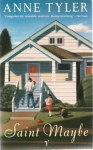 Saint Maybe by Anne Tyler: Ian Bedloe joins the puritanical Church of the Second Chance and drops out of college to help his parents raise his late brother’s three children. Anyone will be able to find themselves and their family in this story of the life chosen versus the life fallen into, and the difficult necessity of moving past regrets in the search for meaning.
 The Amateur Marriage by Anne Tyler: Unique in her oeuvre for how it bridges historical fiction and her more typical contemporary commentary. The Antons muddle their way through a volatile marriage for decades without figuring out how to change anything for the better. There is deep compassion for their foibles and how they affect the next generation.
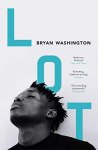 Lot by Bryan Washington: The musical equivalent might be a mixtape blasted from an open-top Corvette while touring the streets of Houston, Texas. Drug dealers, careworn immigrants, and prostitutes: Even the toughest guys have tender hearts in these 13 stories. Washington’s prose is earthy and slang-filled. The matter-of-fact phrasing made me laugh.
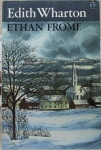 Ethan Frome by Edith Wharton: I was so impressed by this condensed tragedy and the ambiance of a harsh New England winter. It struck me even more on a reread as a flawless parable of a man imprisoned by circumstance and punished for wanting more. A perfect example of how literature can encapsulate the human condition.
Poetry
 The Air Year by Caroline Bird: I read this with a big smile on my face, delighting in the clever and playful poems. The impermanence of relationships is a recurring theme. Dreams and miscommunication are also common elements, and lists grow increasingly absurd. I particularly liked where structure creates meaning, e.g. the mise en abyme of “Dive Bar.”
Nonfiction
 Featherhood by Charlie Gilmour: As an aimless twentysomething, Gilmour tried to rekindle a relationship with his unreliable poet father. Meanwhile, he was raising Benzene, a magpie that fell out of its nest. He makes elegant use of connections and metaphors; he’s so good at scenes, dialogue, and emotion – a truly natural writer.
 Spring in Washington by Louis J. Halle: From first migrant in February to last in June, the author traced the D.C. spring of 1945 mostly through the birds that he saw. More so than the specific observations of familiar places, though, I valued the philosophical outlook. For me this was an ideal combination of thoughtful prose and vicarious travel.
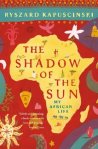 The Shadow of the Sun by Ryszard Kapuściński: This collection of essays spans decades and lots of African countries, yet feels like a cohesive narrative. Kapuściński saw many places right on the cusp of independence or in the midst of coup d’états. I appreciated how he never resorts to stereotypes or flattens differences. One of the few best travel books I’ve read.
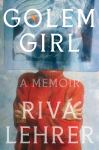 Golem Girl by Riva Lehrer: Lehrer has endured dozens of surgeries for spina bifida. Her touching family memoir is delivered in short, essay-like chapters, most named after books or films. It is also a primer in Disability theory and a miniature art gallery, filled with reproductions of her paintings. This inaugural Barbellion Prize winner is not to be missed.
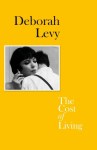 The Cost of Living by Deborah Levy: This sparse volume, the middle in an autobiographical trilogy, has Levy searching for the intellectual and physical freedom needed to reinvent her life after divorce. It is made up of conversations and memories; travels and quotations that have stuck with her. Each moment is perfectly chosen to reveal the self.
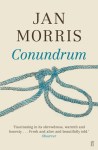 Conundrum by Jan Morris: Morris was a trans pioneer; this transformed my understanding of gender when I first read it in 2006. Born James, Morris knew by age four that she was really a girl. A journalism career, marriage, five children, and two decades of hormone therapy preceded sex reassignment surgery. She paints hers as a spiritual quest toward her true identity.
 You’re Not Listening: What You’re Missing and Why It Matters by Kate Murphy: We all fail to listen properly sometimes, for various reasons. A New York Times journalist, Murphy does a lot of listening to her interview subjects. She also talks with representatives of so-called listening careers. This is a short, interesting, and genuinely helpful self-help book.
 Writing in the Dust: After September 11 by Rowan Williams: Williams, then Archbishop of Wales, was in New York City on 9/11, just a few blocks from the World Trade Center. In the months that followed he pondered suffering, peacemaking, and the ways of God. He cautions against labelling the Other as Evil and responding with retribution. A superb book-length essay.
And if I really had to limit myself to just two favourites – my very best fiction and nonfiction reads of the year – they would be Snow Falling on Cedars and The Cost of Living.

What were your best backlist reads this year?
Merry Christmas!
(I’ll be back on the 27th with Love Your Library, then I have various year-end superlatives and statistics posts going through the 31st.)
Short Stories in September, Part III: Butler, Costello, MacLaverty, Washington
Today I have a third set of terrific and varied short story collections. Between this, my Part I and Part II posts, and a bonus review I have coming up on Friday, I’ve gotten through 12 volumes of stories this month. This feels like a great showing for me because I don’t naturally gravitate to short stories and have to force myself to make a special effort to read them every September; otherwise, they tend to languish unread on my shelves and TBR.
From science fiction and horror tales set in alternate worlds to gritty slices of real life in Texas via two sets of quiet Irish relationship studies, this quartet of books showcases a range of tones and genres but fairly straightforward story structures and points of view. This was such a strong batch, I had to wonder why I never call myself a short story fan. All: 
Bloodchild and Other Stories by Octavia E. Butler (2005)
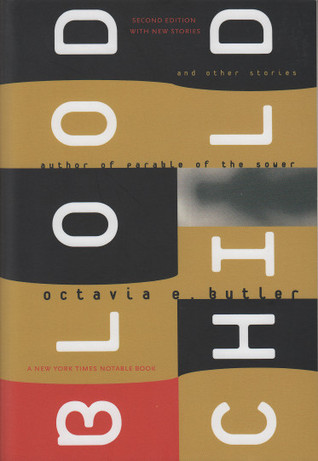 My first R.I.P. selection and one I can heartily recommend – even if you’re normally wary of dystopias, horror and science fiction. Butler makes these genres accessible by peopling her plots with relatable protagonists and carefully accounting for their bizarre predicaments without wasting time on extraneous world-building. The way in which she explores very human issues alongside the existence of alien beings reminds me of Mary Doria Russell’s The Sparrow, another of my rare forays into sci fi.
Along with the original five stories Butler published in 1970s and 1980s magazines and anthologies, this second edition contains two essays on her writing process and two new stories that date to 2003. In “Bloodchild,” a small band of humans live on another planet ruled by the Tlic, which sound like giant spiders or scorpions. Gan learns he is expected to play his part by being a surrogate for T’Gatoi’s eggs, but is haunted by what he’s heard this process involves. In a brief afterword (one is included with each piece here), Butler explains that the story arose from her terror of botflies, which she knew she might encounter in the Peruvian Amazon, and that she has always faced what scares her through her writing.
My other favorite story was “The Evening and the Morning and the Night,” about a subclass of people afflicted with Duryea-Gode disease. A cruel side effect of a parent’s cancer treatment, the illness compels sufferers to self-harm and they are often confined to asylums. Lynn and Alan visit his mother in one such institution and see what their future might hold. “Speech Sounds” and “Amnesty” reminded me most of the Parable novels, with the latter’s Noah a leader figure similar to Lauren. After an apocalyptic event, people must adapt and cooperate to survive. I appreciated how the two essays value persistence – more so than talent or inspiration – as the key to success as a writer. This was my fourth book by Butler and I don’t see why I shouldn’t keep going and read her whole oeuvre. (University library)

The China Factory by Mary Costello (2012)
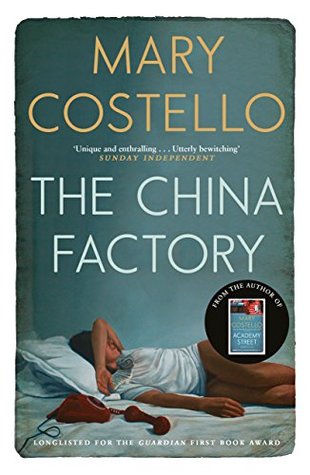 Academy Street is a near-perfect novella and I also enjoyed The River Capture, so I wanted to complete the set by reading Costello’s first book. Its dozen understated stories are about Irish men and women the course of whose lives are altered by chance meetings, surprise liaisons, or not-quite-affairs that needle them ever after with the could-have-been. The mood of gentle melancholy would suit a chilly moonlight drive along the coast road to Howth. In the opening title story, a teenage girl rides to her work sponging clay cups with an oddball named Gus. Others can’t get past things like his body odour, but when there’s a crisis at the factory she sees his calm authority save the day. Elsewhere, a gardener rushes his employer to the hospital, a woman attends her ex-husband’s funeral, and a school inspector becomes obsessed with one of the young teachers he observes.
Three favourites: In “And Who Will Pay Charon?” a man learns that, after he rejected Suzanne, she was hideously attacked in London. When she returns to the town as an old woman, he wonders what he might have done differently. “The Astral Plane” concerns a woman who strikes up a long-distance e-mail correspondence with a man from New York who picked up a book she left behind in a library. How will their intellectual affair translate into the corporeal world? The final story, “The Sewing Room,” reminded me most of Academy Street and could be a novel all of its own, as a schoolteacher and amateur fashion designer prepares for her retirement party and remembers the child she gave up for adoption. (Secondhand, gifted)
Blank Pages and Other Stories by Bernard MacLaverty (2021)
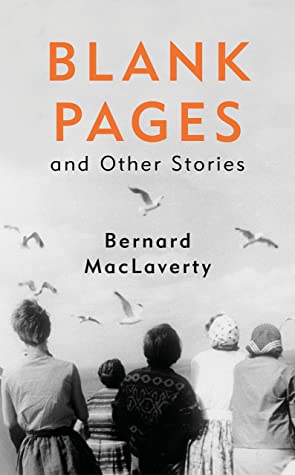 I knew from The Great Profundo that I liked MacLaverty’s stories, and I also enjoyed his latest novel, Midwinter Break, so I was delighted to hear news of a new collection. A number of the longer stories are set at turning points in twentieth-century history. In 1940, a mother is desperate to hear word of her soldier son; in 1971 Belfast, officers search a woman’s house. Two of the historical stories appealed to me for their medical elements: “The End of Days,” set in Vienna in 1918, dramatizes Egon Schiele’s fight with Spanish flu, while “Blackthorns” gives a lovely picture of how early antibiotics promoted miraculous recovery. In the title story, a cat is all a writer has left to remind him of his late wife. “Wandering” has a woman out looking for her dementia-addled mother. “The Dust Gatherer” muses on the fate of an old piano. Elderly parents and music recur, establishing filaments of thematic connection.
Three favourites: In “Glasshouses,” a man temporarily misplaces his grandchildren in the botanical gardens; “The Fairly Good Samaritan” is the fable of a jolly drunk who calls an ambulance for his poorly neighbour – but not before polishing off her brandy; and in the gorgeous “Sounds and Sweet Airs” a young woman’s harp music enthrals the passengers on a ferry.
With thanks to Jonathan Cape for the free copy for review.
Lot: Stories by Bryan Washington (2019)
 The musical equivalent of Lot might be a mixtape played on a boombox or blasted from an open-top Corvette while touring the streets of Houston, Texas. Most of this Dylan Thomas Prize-winning linked collection follows Nic, a mixed-race Black/Latino boy who works in the family restaurant. As his family situation realigns – his father leaves, his older brother Javi enlists, his sister Jan has a baby – he’s trying to come to terms with his homosexuality and wondering if this gentrifying city suits him anymore. But he knows he’ll take himself wherever he goes, and as the book closes with “Elgin” (the most similar in mood and setup to Washington’s debut novel, Memorial) he’s thinking of taking a chance on love.
Drug dealers, careworn immigrants and prostitutes: Even the toughest guys have tender hearts in these stories. Eleven of 13 stories are in the first person. Where the narration isn’t Nic’s, it’s usually the collective voice of the neighbourhood boys. As far as I can tell, most of the story titles refer to Houston sites: particular addresses or neighbourhoods, or more vague locations. Like in Memorial, there are no speech marks. Washington’s prose is earthy and slang-filled. The matter-of-fact phrasing made me laugh: “He knocked her up in the usual way. For six minutes it looked like he’d stick around”; “He’d been staying there since the Great Thanksgiving Rupture, back when his brother’d found the dick pic in his pillowcase.” With the melting pot of cultures, the restaurant setting, and the sharp humour, this reminded me of Elaine Castillo’s America Is Not the Heart.
Three favourites: In “Shepherd,” the narrator emulates a glamorous cousin from Jamaica; “Bayou” is completely different from the rest, telling the urban legend of a “chupacubra” (a mythical creature like a coyote); “Waugh,” the longest story and one of just two told in the third person, is about a brothel’s worth of male sex workers and their pimp. Its final page is devastating. Despite their bravado, Washington’s characters are as vulnerable as Brandon Taylor’s. I think of these two young gay African American writers as being similar at root even though their style and approach are so very different. (New purchase)
A side note: I’m wondering how an author chooses primarily first person or third person POVs for short stories. MacLaverty and Taylor write exclusively in an omniscient third person; Washington and Eley Williams almost always plump for the first person. (Here, Butler was about half and half and Costello only used first person in three stories.) Is the third person seen as more impartial and commanding – a more elevated form of fiction? Is first person more immediate, informal and natural, but also perhaps too easy? I wouldn’t say I prefer one or the other (not in my novels, either); it all depends on the execution. Notably, none of this year’s stories were in the second person or employed experimental structures.
Two more collections I’m reading are spilling across into October for R.I.P., but will I keep up the short story habit after that? I still have a shelf full of unread story collections, and I have my eye on My Monticello, which I got from NetGalley…
Two Recent Reviews for BookBrowse
The Bell in the Lake by Lars Mytting
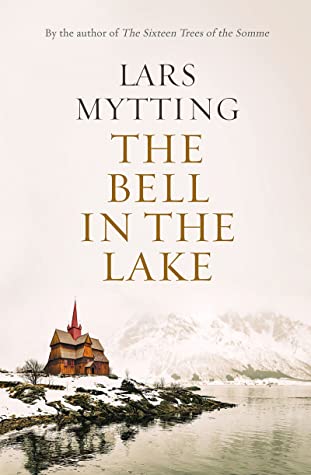 A legend from Mytting’s hometown tells of two centuries-old church bells that, like conjoined twins, were never meant to be separated. Inspired by that story and by the real-life move of a stave church from Norway to what is now Poland, he embarked on a trilogy in which history and myth mingle to determine the future of the isolated village of Butangen. The novel is constructed around compelling dichotomies. Astrid Hekne, a feminist ahead of her time, is in contrast with the local pastor’s conventional views on gender roles. She also represents the village’s unlearned folk; Deborah Dawkin successfully captures Mytting’s use of dialect in her translation, making Astrid sound like one of Thomas Hardy’s rustic characters.
- See my full review at BookBrowse.
- See also my related article on stave churches.
- One of the coolest things I did during the first pandemic lockdown in the UK was attend an online book club meeting on The Bell in the Lake, run by MacLehose Press, Mytting’s UK publisher. It was so neat to see the author and translator speak “in person” via a Zoom meeting and to ask him a couple of questions in the chat window.
- A readalike (and one of my all-time favorite novels) is Carsten Jensen’s We, the Drowned.
Memorial by Bryan Washington
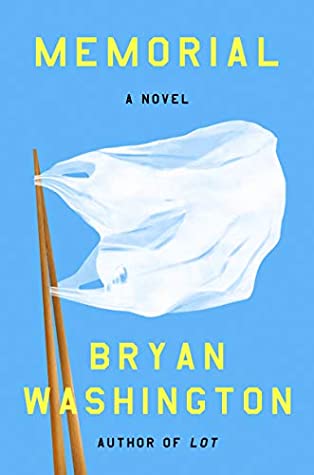 In Washington’s debut novel, set in Houston and Osaka, two young men reassess their commitments to their families and to each other. The narration is split between Benson and Mike, behind whose apparent lack of affect is a quiet seam of emotion. Both young men are still shaken by their parents’ separations, and haunted by patterns of abuse and addiction. Flashbacks to how they met create a tender backstory for a limping romance. Although the title (like most of the story titles in Lot) refers to a Houston neighborhood, it has broader significance, inviting readers to think about the place our loved ones have in our memories. Despite the tough issues the characters face, their story is warm-hearted rather than grim. Memorial is a candid, bittersweet work from a talented young writer whose career I will follow with interest.
- See my full review at BookBrowse.
- See also my related article on the use of quotation marks (or not!) to designate speech.
 I enjoyed this so much that I immediately ordered Lot with my birthday money. I’d particularly recommend it if you want an earthier version of Brandon Taylor’s Booker-shortlisted Real Life (which I’m halfway through and enjoying, though I can see the criticisms about its dry, slightly effete prose).
- This came out in the USA from Riverhead in late October, but UK readers have to wait until January 7th (Atlantic Books).
 Bookish Beck = Rebecca Foster. American transplant to England. Freelance proofreader and book reviewer.
 Bookish Beck