January Releases: Greathead, Kauffman, Mills & Watts (#ReadIndies)
I feel out of practice writing reviews after the endless period of sluggish and slightly lackluster reading that was January. Here we are at the start of Kaggsy and Lizzy Siddal’s Reading Independent Publishers Month challenge and I’m happy to make this my first tie-in post as these four books all happen to be from independent publishers. The first two are American novels (that could arguably be called linked short story collections) very much in my wheelhouse for their focus on dysfunctional families and disappointing characters. I also have a group biography aiming to illuminate bisexuality, and a poetry collection about girlhood/womanhood and nature.
The Book of George by Kate Greathead
The marketing for this novel courts relatability: you probably know a George – you might have dated one (women read the most litfic). Each chapter dates to a different period in George’s life, adolescence to late thirties. From the fact that 9/11 happened when he was a college freshman, I know he’s my exact contemporary, and I could indeed see bits of myself in this Everyman schmuck: indecisive, lazy, underachieving, privileged but never living up to his own or others’ expectations. Life keeps happening around him, but you wonder if he’ll ever make something happen for himself. Two gags are revealing: In college he is known for his impression of a clinically depressed penis going through airport security, and later he has 15 minutes of fame for appearing in a hidden-camera Super Bowl commercial. He’s been writing fiction for years – first a Stoner rip-off, then a Kerouac homage – but by the time he gets a short story collection together, it’s the height of #MeToo and he’s missed his moment to publish. Meanwhile, his cohort is doing great things, winning awards for documentaries (his pal Jeremiah) or becoming pro bono lawyers (his longsuffering girlfriend Jenny).
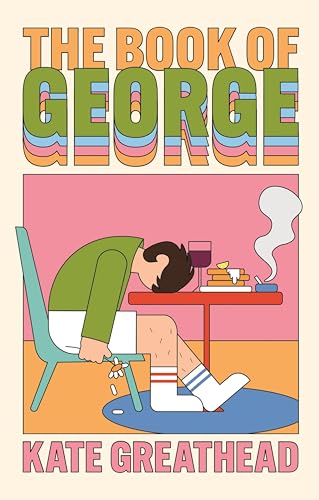 If you need to like a protagonist, expect frustration. Some of George’s behaviour is downright maddening, as when he obsessively plays his old Gameboy while his mother and Jenny pack up his childhood room. Tracing his relationships with his mother, his sister Cressida, and Jenny is rewarding. Sometimes they confront him over his shortcomings; other times they enable him. The novel is very funny, but it’s a biting, ironic humour, and there’s plenty of pathos as well. There are a few particular gut-punches, one relating to George’s father and others surrounding nice things he tries to do that backfire horribly. I thought of George as a rejoinder to all those ‘So-and-So Is Not Okay at All’ type of books featuring a face-planting woman on the cover. Greathead’s portrait is incisive but also loving. And yes, there is that hint of George, c’est moi recognition. His failings are all too common: the mildest of first-world tragedies but still enough to knock your confidence and make you question your purpose. For me this had something of the old-school charm of Jennifer Egan and Jonathan Safran Foer novels I read in the Naughties. I’ll seek out the author’s debut, Laura & Emma.
With thanks to Atlantic Books for the free copy for review. (Published in the USA by Henry Holt and Co. in 2024.)
I’ll Come to You by Rebecca Kauffman
Is 30 years long enough ago to count as historical fiction? In any case, this takes us through the whole of 1995, proceeding month by month and rotating through the close third-person perspectives of the members of one extended family as they navigate illnesses, break-ups and fraught parenting journeys. Corinne and Paul are trying to get pregnant; Paul’s mother, Ellen (again!), is still smarting from her husband leaving with no explanation; Corinne’s father, Bruce, has dementia but his wife, Janet, is doing her best to keep his cognitive deficiencies from the rest of the family. Son Rob is bitter about his ex-wife moving on so quickly, but both he and Ellen will have new romantic prospects before the end.
 The family’s lies and secrets – also involving a Christmas run-in with Bruce’s shell-shocked brother decades ago – lead to everything coming to a head in a snowstorm. (As best I can tell, the 1995 setting was important mostly so there wouldn’t be cell phones during this crisis.) As with The Book of George, the episodic nature of the narrative means that particular moments are memorable but the whole maybe less so, and the interactions between characters stand out more than the people themselves. I’ll Come to You, named after a throwaway line in the text, is poorly served by both its cover and title, which give no sense of the contents. However, it’s a sweet, offbeat portrait of genuine, if generic, Americans; I was most reminded of J. Ryan Stradal’s work. Although I DNFed Kauffman’s The Gunners some years back, I’d be interested in trying her again with Chorus, which sounds like another linked story collection.
With thanks to Counterpoint (USA) for the advanced e-copy for review.
Uneven: Nine Lives that Redefined Bisexuality by Sam Mills
Back in 2022 I reviewed Julia Shaw’s Bi: The hidden culture, history and science of bisexuality, which took a social sciences approach. By contrast, this is a group biography of nine bisexuals – make that 10, as there are plenty of short memoir-ish passages from Mills, too. Oscar Wilde, Colette, Marlene Dietrich, Anaïs Nin, Susan Sontag: more or less familiar names, though not all of them are necessarily known for their sexuality. The chapters deliver standard potted biographies of the individuals’ work and relationships, probably containing little that couldn’t be found elsewhere in recent scholarship and not really living up to the revolutionary promise of the subtitle. However, it was worthwhile for Mills to recover Wilde as a bisexual rather than a closeted homosexual. A final trilogy of chapters comes more up to date with David Bowie, Jean-Michel Basquiat and Madonna. The closer to the present day, the more satisfying connections there are between figures. For instance, Madonna looked to both Dietrich and Bowie as role models and fashion icons, and she and Basquiat were lovers.
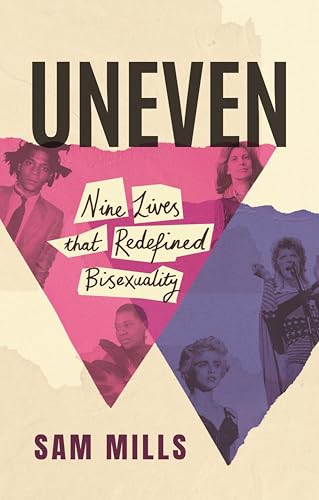 Mills and Shaw consider the same fundamental issues: bi erasure, with bisexuality the least understood and most easily overlooked element of LGBT and many passing as straight if in heterosexual marriages; and the stereotype of bis as hypersexual or promiscuous. Mills is keen to stress that bisexuals have very different trajectories and phases. Like Wilde, they might have a heterosexual era of happy marriage and parenthood followed by a homosexual spree. Or they might have simultaneous lovers of multiple genders. Some might never even act on strong same-sex desires. (Late last year I encountered a similar unity-in-diversity approach in Daniel Tamet’s Nine Minds, a group biography about autistic people.)
The 1890s to 1980s window allows for a record of changing mores yet means that the book seems rather dated. Were it written by an author of a later generation (Mills, who I knew for The Fragments of My Father, is around 50), the point of view and terminology would likely be quite different. Also, including a section on Bessie Smith within a chapter mostly on Colette felt tokenistic. (Though later considering Basquiat separately does add a BIPOC view.) Ultimately, though, my problem with Uneven was that I don’t want to know about behaviour – which is all that a biography can usually document – so much as the internal, soul stuff. Even from Mills, whose accounts of her long-term relationships and flings (including, yes, a threesome) can be titillating but not very enlightening, I didn’t get a sense of what it feels like. So neither the Shaw nor the Mills gave me precisely what I was looking for, which means that the perfect book on bisexuality either doesn’t exist or is out there but I haven’t found it yet. Any suggestions?
With thanks to Atlantic Books for the free copy for review.
The Face in the Well by Rebecca Watts
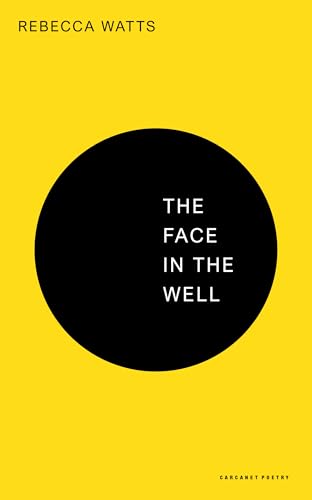 I’ve also read Watts’ The Met Office Advises Caution and Red Gloves; this is her third collection. The Suffolk and Cambridgeshire scenery of her early and adult lives weaves all through, sometimes as an idyll that blurs the lines between humans and nature (“Private No Access”) but other times provoking anxiety about common or gendered dangers, as in the title poem or “The Old Mill” (“What happened there, / down by the old mill, / they never tell. // Something about / a man and a girl / is the most you’ll hear.”). “Woman Seeks” is a tongue-in-cheek advert for the perfect man. Animals – a dolphin, a shark, rodents, a wandering albatross, a robin – recur, as do women poets, especially Emily Brontë, and Victorian death culture (“Victoriana” and “Baroque”). Adulthood brings routine whereas childhood stands out for minor miracles, such as a free soda from a vending machine.
The format and tone vary a lot, so the book is more of a grab bag than a cohesive statement. I noted slant rhymes and alliteration, always a favourite technique of mine. I especially liked “Entropy,” about finding a slice of cake in the freezer labeled by someone who is now dead (“Nothing ever // really dies: all the pieces of you / persist, riven and reconfigured / in infinite unknowable ways”) and “Personal Effects,” about the artefacts from her childhood that her mother guards under the bed (“twists of my hair, my teeth, / my bracelet from the hospital.”).
With thanks to Carcanet Press for the advanced e-copy for review.
Which of these appeal to you? What indie publishers have you been reading from recently?
Most Anticipated Releases of 2023
In real life, it can feel like I have little to look forward to. A catch-up holiday gathering and a shortened visit from my sister were over all too soon, and we have yet to book any trips for the summer months. Thankfully, there are always pre-release books to get excited about.


This list of my 20 most anticipated titles covers a bit more than the first half of the year, with the latest publication dates falling in August. I’ve already read 14 releases from 2023 (written up here), and I’m also looking forward to new work from Margaret Atwood, Rowan Hisayo Buchanan, Angie Cruz, Patrick deWitt, Naoise Dolan, Tessa Hadley, Louisa Hall, Leah Hazard, Christian Kiefer, Max Porter, Tom Rachman, Gretchen Rubin, Will Schwalbe, Jenn Shapland, Abraham Verghese, Bryan Washington, Anne Youngson and more, as well as to trying out various debut authors.
The following are in (UK) release date order, within sections by genre. U.S. details given too/instead if USA-only. Quotes are excerpts from the publisher blurbs, e.g., from Goodreads.
Fiction
 The End of Drum-Time by Hanna Pylväinen [Jan. 24, Henry Holt and Co.] I loved Pylväinen’s 2012 debut, We Sinners. This sounds like a winning combination of The Bell in the Lake and The Mercies. “A richly atmospheric saga that charts the repercussions of a scandalous nineteenth century love affair between a young Sámi reindeer herder in the Arctic Circle and the daughter of the renegade Lutheran minister whose teachings are upending the Sámi way of life.” (Edelweiss download)
Heartstopper, Volume 5 by Alice Oseman [Feb. 2, Hodder Children’s] A repeat from my 2022 Most Anticipated post. Will this finally be the year?? I devoured the first four volumes of this teen comic in 2021. Nick will be getting ready to go off to university, so I guess we’ll see how he leaves things with Charlie and whether their relationship will survive a separation. (No cover art yet.)
 I Have Some Questions for You by Rebecca Makkai [Feb. 21, Viking / Feb. 23, Fleet] Makkai has written a couple of stellar novels; this sounds quite different from her usual lit fic but promises Secret History vibes. “A fortysomething podcaster and mother of two, Bodie Kane is content to forget her past [, including] the murder of one of her high school classmates, Thalia Keith. … [But] when she’s invited back to Granby, the elite New England boarding school where she spent four largely miserable years, to teach a course, Bodie finds herself inexorably drawn to the case and its increasingly apparent flaws.” (Proof copy)
 Birnam Wood by Eleanor Catton [March 7, Granta / Farrar, Straus and Giroux] I was lukewarm on The Luminaries (my most popular Goodreads review ever) but fancy trying Catton again – though this sounds like Atwood’s Year of the Flood, redux. “Five years ago, Mira Bunting founded a guerrilla gardening group … Natural disaster has created an opportunity, a sizable farm seemingly abandoned. … Robert Lemoine, the enigmatic American billionaire, has snatched it up to build his end-times bunker. … A gripping psychological thriller … Shakespearean in its wit, drama, and immersion in character.” (NetGalley download)
 Romantic Comedy by Curtis Sittenfeld [April 4, Random House / April 6, Doubleday] Sittenfeld is one of my favourite contemporary novelists. “Sally Milz is a sketch writer for The Night Owls, the late-night live comedy show that airs each Saturday. … Enter Noah Brewster, a pop music sensation with a reputation for dating models, who signed on as both host and musical guest for this week’s show. … Sittenfeld explores the neurosis-inducing and heart-fluttering wonder of love, while slyly dissecting the social rituals of romance and gender relations in the modern age.”
 The Last Animal by Ramona Ausubel [April 18, Riverhead] “Jane is … on the cutting-edge team of a bold project looking to ‘de-extinct’ the woolly mammoth. … As Jane and her daughters ping-pong from the slopes of Siberia to a university in California, from the shores of Iceland to an exotic animal farm in Italy, The Last Animal takes readers on an expansive, bighearted journey that explores the possibility and peril of the human imagination on a changing planet, what it’s like to be a woman and a mother in a field dominated by men, and how a wondrous discovery can best be enjoyed with family. Even teenagers.”
 Saturday Night at the Lakeside Supper Club by J. Ryan Stradal [April 18, Pamela Dorman Books] Kitchens of the Great Midwest is one of my all-time favourite debuts. A repeat from my 2021 Most Anticipated post, hopefully here at last! “A story of a couple from two very different restaurant families in rustic Minnesota, and the legacy of love and tragedy, of hardship and hope, that unites and divides them … full of his signature honest, lovable yet fallible Midwestern characters as they grapple with love, loss, and marriage.” (Edelweiss download)
 The Memory of Animals by Claire Fuller [April 20, Fig Tree (Penguin) / June 6, Tin House] Fuller is another of my favourite contemporary novelists and never disappoints. “Neffy is a young woman running away from grief and guilt … When she answers the call to volunteer in a controlled vaccine trial, it offers her a way to pay off her many debts … [and] she is introduced to a pioneering and controversial technology which allows her to revisit memories from her life before.” And apparently there’s also an octopus? (NetGalley download)
 The Late Americans by Brandon Taylor [May 23, Riverhead / June 22, Jonathan Cape (Penguin)] “In the shared and private spaces of Iowa City, a loose circle of lovers and friends encounter, confront, and provoke one another in a volatile year of self-discovery. … These three [main characters] are buffeted by a cast of poets, artists, landlords, meat-packing workers, and mathematicians who populate the cafes, classrooms, and food-service kitchens … [T]he group heads to a cabin to bid goodbye to their former lives—a moment of reckoning that leaves each of them irrevocably altered.” (Proof copy)
Speak to Me by Paula Cocozza [June 8, Tinder Press] I loved her debut novel, How to Be Human, and this sounds timely. (I have never owned a smartphone.) “When Kurt’s phone rings during sex—and he reaches to pick it up—Susan knows that their marriage has passed the point of no return. … This sense of loss becomes increasingly focused on a cache of handwritten letters, from her first love, Antony, mementoes of a time when devotion seemed to spill out easily onto paper. Increasingly desperate and out of synch with the contemporary world, Susan embarks on a journey of discovery that will reconnect her to her younger self, while simultaneously revealing her future.” (No cover art yet.)
 I Am Homeless If This Is Not My Home by Lorrie Moore [June 20, Faber / Knopf] What a title! I’m keen to read more from Moore after her Birds of America got a 5-star rating from me late last year. “Finn is in the grip of middle-age and on an enforced break from work: it might be that he’s too emotional to teach history now. He is living in an America hurtling headlong into hysteria, after all. High up in a New York City hospice, he sits with his beloved brother Max, who is slipping from one world into the next. But when a phone call summons Finn back to a troubled old flame, a strange journey begins, opening a trapdoor in reality.”
 A Manual for How to Love Us by Erin Slaughter [July 5, Harper Collins] “A debut, interlinked collection of stories exploring the primal nature of women’s grief. … Slaughter shatters the stereotype of the soft-spoken, sorrowful woman in distress, queering the domestic and honoring the feral in all of us. … Seamlessly shifting between the speculative and the blindingly real. … Set across oft-overlooked towns in the American South.” Linked short stories are irresistible for me, and I like the idea of a focus on grief.
 Learned by Heart by Emma Donoghue [Aug. 24, Pan Macmillan / Aug. 29, Little, Brown] Donoghue’s contemporary settings have been a little more successful for me, but she’s still a reliable author whose career I am happy to follow. “Drawing on years of investigation and Anne Lister’s five-million-word secret journal, … the long-buried love story of Eliza Raine, an orphan heiress banished from India to England at age six, and Anne Lister, a brilliant, troublesome tomboy, who meet at the Manor School for young ladies in York in 1805 … Emotionally intense, psychologically compelling, and deeply researched”.
Nonfiction
 The Year of the Cat: A Love Story by Rhiannon Lucy Cosslett [Jan. 19, Tinder Press] “When Rhiannon fell in love with, and eventually married her flatmate, she imagined they might one day move on. … The desire for a baby is never far from the surface, but … after a childhood spent caring for her autistic brother, does she really want to devote herself to motherhood? Moving through the seasons over the course of lockdown, [this] nimbly charts the way a kitten called Mackerel walked into Rhiannon’s home and heart, and taught her to face down her fears and appreciate quite how much love she had to offer.”
 Fieldwork: A Forager’s Memoir by Iliana Regan [Jan. 24, Blackstone] “As Regan explores the ancient landscape of Michigan’s boreal forest, her stories of the land, its creatures, and its dazzling profusion of plant and vegetable life are interspersed with her and Anna’s efforts to make a home and a business of an inn that’s suddenly, as of their first full season there in 2020, empty of guests due to the COVID-19 pandemic. … Along the way she struggles … with her personal and familial legacies of addiction, violence, fear, and obsession—all while she tries to conceive a child that she and her immune-compromised wife hope to raise in their new home.” (Edelweiss download)
 Enchantment: Reawakening Wonder in an Exhausted Age by Katherine May [Feb. 28, Riverhead / March 9, Faber] I was a fan of her previous book, Wintering. “After years of pandemic life—parenting while working, battling anxiety about things beyond her control, feeling overwhelmed by the news-cycle and increasingly isolated—Katherine May feels bone-tired, on edge and depleted. Could there be another way to live? One that would allow her to feel less fraught and more connected, more rested and at ease, even as seismic changes unfold on the planet? Craving a different path, May begins to explore the restorative properties of the natural world”. (Proof copy)
 Monsters: A Fan’s Dilemma by Claire Dederer [April 25, Knopf / May 25, Sceptre] “What do we do with the art of monstrous men? Can we love the work of Roman Polanski and Michael Jackson, Hemingway and Picasso? Should we love it? Does genius deserve special dispensation? Is history an excuse? What makes women artists monstrous? And what should we do with beauty, and with our unruly feelings about it? Dederer explores these questions and our relationships with the artists whose behaviour disrupts our ability to apprehend the work on its own terms. She interrogates her own responses and her own behaviour, and she pushes the fan, and the reader, to do the same.”
 Undercurrent: A Cornish Memoir of Poverty, Nature and Resilience by Natasha Carthew [May 25, Hodder Studio] Carthew hangs around the fringes of UK nature writing, mostly considering the plight of the working class. “Carthew grew up in rural poverty in Cornwall, battling limited opportunities, precarious resources, escalating property prices, isolation and a community marked by the ravages of inequality. Her world existed alongside the postcard picture Cornwall … part-memoir, part-investigation, part love-letter to Cornwall. … This is a journey through place, and a story of hope, beauty, and fierce resilience.”
Grief Is for People by Sloane Crosley [June 25, MCD Books] According to Crosley, this is “a five-part book about many kinds of loss.” The press release adds to that: “Telling the interwoven story of a burglary, the suicide of Crosley’s closest friend, and the onset of Covid in New York City, [this] is the first full-length work of nonfiction by a writer best known for her acclaimed, bestselling books of essays.” (No cover art yet.)
Poetry
Bright Fear by Mary Jean Chan [Aug. 23, Faber] Their debut collection, Flèche, was my top poetry release in 2019. “These piercing poems fearlessly explore intertwined themes of queer identity, multilingualism and postcolonial legacy: interrogating acts of Covid racism, instances of queerphobia and the hegemony of the English language. Questions of acceptance and assimilation are further explored through a family’s evolving dynamics over time, or through the specious jargon of ‘Equality, Diversity and Inclusion’.” (No cover art yet.)
Other lists for more ideas:
What catches your eye here? What other 2023 titles do I need to know about?
Some of My Most Anticipated Releases of 2021
Although 120+ books that will be published in 2021 are already on my radar, I’ve limited myself to the 20 I’m most excited about. The modest number is a cheat in that I’ve already read a couple of books from this period in advance (and I’m currently reading another two), and I haven’t listed any that I already own as proofs or finished copies (pictured here) or have been promised. With a couple of exceptions, these books are due out between January and June.
I’m also not counting these three forthcoming books that I’ve sponsored via Kickstarter (the Trauma anthology) or Unbound:


Two that I read as U.S. e-books but would recommend that UK-based readers look out for in 2021 are Memorial by Bryan Washington (Jan. 7, Atlantic) and Transcendent Kingdom by Yaa Gyasi (March 4, Penguin).


The following are in UK release date order, within sections by genre; the quoted descriptions are from the publisher blurbs on Goodreads. Much more fiction is catching my eye this time.
Fiction
 The Living Sea of Waking Dreams by Richard Flanagan [Jan. 14, Chatto & Windus / May 25, Knopf] “In a world of perennial fire and growing extinctions, Anna’s aged mother … increasingly escapes through her hospital window … When Anna’s finger vanishes and a few months later her knee disappears, Anna too feels the pull of the window. … A strangely beautiful novel about hope and love and orange-bellied parrots.” I’ve had mixed success with Flanagan, but the blurb draws me and I’ve read good early reviews so far. [Library hold]
 The Charmed Wife by Olga Grushin [Jan. 21, Hodder & Stoughton / Jan. 12, Putnam] “Cinderella married the man of her dreams – the perfect ending she deserved after diligently following all the fairy-tale rules. Yet now, two children and thirteen-and-a-half years later, things have gone badly wrong. One night, she sneaks out of the palace to get help from the Witch who, for a price, offers love potions to disgruntled housewives.” A feminist retelling. I loved Grushin’s previous novel, Forty Rooms. [Edelweiss download]
 The Prophets by Robert Jones Jr. [Jan. 21, Quercus / Jan. 5, G.P. Putnam’s Sons] “A singular and stunning debut novel about the forbidden union between two enslaved young men on a Deep South plantation, the refuge they find in each other, and a betrayal that threatens their existence.” Lots of hype about this one. I’m getting Days Without End vibes, and the mention of copious biblical references is a draw for me rather than a turn-off. The cover looks so much like the UK cover of The Vanishing Half! [Publisher request pending]
 Mrs Death Misses Death by Salena Godden [Jan. 28, Canongate] “Mrs Death has had enough. She is exhausted from spending eternity doing her job and now she seeks someone to unburden her conscience to. Wolf Willeford, a troubled young writer, is well acquainted with death, but until now hadn’t met Death in person – a black, working-class woman who shape-shifts and does her work unseen. Enthralled by her stories, Wolf becomes Mrs Death’s scribe, and begins to write her memoirs.” [NetGalley download / Library hold]
 No One Is Talking About This by Patricia Lockwood [Feb. 16, Bloomsbury / Riverhead] “A woman known for her viral social media posts travels the world speaking to her adoring fans … Suddenly, two texts from her mother pierce the fray … [and] the woman confronts a world that seems to contain both an abundance of proof that there is goodness, empathy and justice in the universe, and a deluge of evidence to the contrary.” Lockwood’s memoir, Priestdaddy, is an all-time favorite of mine. [NetGalley download / Publisher request pending]
 A Town Called Solace by Mary Lawson [Feb. 18, Chatto & Windus / Feb. 16, Knopf Canada] “It’s North Ontario in 1972, and seven-year-old Clara’s teenage sister Rose has just run away from home. At the same time, a strange man – Liam – drives up to the house next door, which he has just inherited from Mrs Orchard, a kindly old woman who was friendly to Clara … A beautiful portrait of a small town, a little girl and an exploration of childhood.” I’ve loved the two Lawson novels I’ve read. [Publisher request pending]
 Klara and the Sun by Kazuo Ishiguro [March 2, Faber & Faber / Knopf] Synopsis from Faber e-mail: “Klara and the Sun is the story of an ‘Artificial Friend’ who … is warned not to invest too much in the promises of humans. A luminous narrative about humanity, hope and the human heart.” I’m not an Ishiguro fan per se, but this looks set to be one of the biggest books of the year. I’m tempted to pre-order a signed copy as part of an early bird ticket to a Faber Members live-streamed event with him in early March.
 Hot Stew by Fiona Mozley [March 18, Hodder & Stoughton / April 20, Algonquin Books] “The Soho that Precious and Tabitha live and work in is barely recognizable anymore. … Billionaire-owner Agatha wants to kick the women out to build expensive restaurants and luxury flats. Men like Robert, who visit the brothel, will have to go elsewhere. … An insightful and ambitious novel about property, ownership, wealth and inheritance.” This sounds very different to Elmet, but I liked Mozley’s writing enough to give it a try.
 Libertie by Kaitlyn Greenidge [March 30, Algonquin Books; April 29, Serpent’s Tail] “Coming of age as a free-born Black girl in Reconstruction-era Brooklyn, Libertie Sampson” is expected to follow in her mother’s footsteps as a doctor. “When a young man from Haiti proposes, she accepts, only to discover that she is still subordinate to him and all men. … Inspired by the life of one of the first Black female doctors in the United States.” I loved Greenidge’s underappreciated debut, We Love You, Charlie Freeman. [Edelweiss download]
 An Ordinary Wonder by Buki Papillon [April 9, Dialogue Books] “Richly imagined with art, proverbs and folk tales, this moving and modern novel follows Oto through life at home and at boarding school in Nigeria, through the heartbreak of living as a boy despite their profound belief they are a girl, and through a hunger for freedom that only a new life in the United States can offer. … a powerful coming-of-age story that explores complex desires as well as challenges of family, identity, gender and culture, and what it means to feel whole.”
 Great Circle by Maggie Shipstead [May 4, Doubleday / Knopf] “In 1940s London, after a series of reckless romances and a spell flying to aid the war effort, Marian embarks on a treacherous, epic flight in search of the freedom she has always craved. She is never seen again. More than half a century later, Hadley Baxter, a troubled Hollywood starlet beset by scandal, is irresistibly drawn to play Marian Graves in her biopic.” I loved Seating Arrangements and have been waiting for a new Shipstead novel for seven years!
 The Anthill by Julianne Pachico [May 6, Faber & Faber; this has been out since May 2020 in the USA, but was pushed back a year in the UK] “Linda returns to Colombia after 20 years away. Sent to England after her mother’s death when she was eight, she’s searching for the person who can tell her what’s happened in the time that has passed. Matty – Lina’s childhood confidant, her best friend – now runs a refuge called The Anthill for the street kids of Medellín.” Pachico was our Young Writer of the Year shadow panel winner.
 Filthy Animals: Stories by Brandon Taylor [June 24, Daunt Books / June 21, Riverhead] “In the series of linked stories at the heart of Filthy Animals, set among young creatives in the American Midwest, a young man treads delicate emotional waters as he navigates a series of sexually fraught encounters with two dancers in an open relationship, forcing him to weigh his vulnerabilities against his loneliness.” Sounds like the perfect follow-up for those of us who loved his Booker-shortlisted debut novel, Real Life.
Saturday Night at the Lakeside Supper Club by J. Ryan Stradal [USA only? Pamela Dorman Books; no cover or exact date yet, just “Summer 2021”] “Combines the comedic pathos of John Irving with the brilliant generational storytelling of Jane Smiley and the wildly rich and quirky characters of fellow Minnesotan Anne Tyler … set on a lake in Northern Minnesota, about a beloved but dying family restaurant and whether it can be saved.” I was disappointed by Stradal’s latest, but love Kitchens of the Great Midwest enough to give him another try.
Matrix by Lauren Groff [Sept. 23, Cornerstone / Riverhead; no cover yet] “Cast out of the royal court by Eleanor of Aquitaine, … seventeen-year-old Marie de France is sent to England to be the new prioress of an impoverished abbey, its nuns on the brink of starvation and beset by disease. … a mesmerizing portrait of consuming passion, aberrant faith, and a woman that history moves both through and around.” Yuck to medieval history in general as a setting, but I love Groff’s work enough to get hold of this one anyway.
Nonfiction
 Islands of Abandonment: Nature Rebounding in the Post-Human Landscape by Cal Flyn [Jan. 21, William Collins; June 1, Viking] “A variety of wildlife not seen in many lifetimes has rebounded on the irradiated grounds of Chernobyl. A lush forest supports thousands of species that are extinct or endangered everywhere else on earth in the Korean peninsula’s narrow DMZ. … Islands of Abandonment is a tour through these new ecosystems … ultimately a story of redemption”. Good news about nature is always nice to find. [Publisher request pending]
 The Believer by Sarah Krasnostein [March 2, Text Publishing – might be Australia only; I’ll have an eagle eye out for news of a UK release] “This book is about ghosts and gods and flying saucers; certainty in the absence of knowledge; how the stories we tell ourselves to deal with the distance between the world as it is and as we’d like it to be can stunt us or save us.” Krasnostein was our Wellcome Book Prize shadow panel winner in 2019. She told us a bit about this work in progress at the prize ceremony and I was intrigued!
 A History of Scars: A Memoir by Laura Lee [March 2, Atria Books; no sign of a UK release] “In this stunning debut, Laura Lee weaves unforgettable and eye-opening essays on a variety of taboo topics. … Through the vivid imagery of mountain climbing, cooking, studying writing, and growing up Korean American, Lee explores the legacy of trauma on a young queer child of immigrants as she reconciles the disparate pieces of existence that make her whole.” I was drawn to this one by Roxane Gay’s high praise.
 Everybody: A Book about Freedom by Olivia Laing [April 29, Picador / May 4, W. W. Norton & Co.] “The body is a source of pleasure and of pain, at once hopelessly vulnerable and radiant with power. … Laing charts an electrifying course through the long struggle for bodily freedom, using the life of the renegade psychoanalyst Wilhelm Reich to explore gay rights and sexual liberation, feminism, and the civil rights movement.” Wellcome Prize fodder from the author of The Lonely City.
 Rooted: Life at the Crossroads of Science, Nature, and Spirit by Lyanda Lynn Haupt [May 4, Little, Brown Spark; no sign of a UK release] “Cutting-edge science supports a truth that poets, artists, mystics, and earth-based cultures across the world have proclaimed over millennia: life on this planet is radically interconnected. … In the tradition of Rachel Carson, Elizabeth Kolbert, and Mary Oliver, Haupt writes with urgency and grace, reminding us that at the crossroads of science, nature, and spirit we find true hope.” I’m a Haupt fan.
Which of these do you want to read, too?
What other upcoming 2021 titles are you looking forward to?
Other 2019 Superlatives and Some Statistics
My best discoveries of the year: The poetry of Tishani Doshi; Penelope Lively and Elizabeth Strout (whom I’d read before but not fully appreciated until this year); also, the classic nature writing of Edwin Way Teale.


The authors I read the most by this year: Margaret Atwood and Janet Frame (each: 2 whole books plus parts of 2 more), followed by Doris Lessing (2 whole books plus part of 1 more), followed by Miriam Darlington, Paul Gallico, Penelope Lively, Rachel Mann and Ben Smith (each: 2 books).
Debut authors whose next work I’m most looking forward to: John Englehardt, Elizabeth Macneal, Stephen Rutt, Gail Simmons and Lara Williams.
My proudest reading achievement: A 613-page novel in verse (Mary Ann Sate, Imbecile by Alice Jolly) + 2 more books of over 600 pages (East of Eden by John Steinbeck and Cutting for Stone by Abraham Verghese).


Best book club selection: Red Dust Road by Jackie Kay was our first nonfiction book and received our highest score ever.
Some best first lines encountered this year:
 “What can you say about a twenty-five-year old girl who died?” (Love Story by Erich Segal)
- “The women of this family leaned towards extremes” (Away by Jane Urquhart)
- “The day I returned to Templeton steeped in disgrace, the fifty-foot corpse of a monster surfaced in Lake Glimmerglass.” (from The Monsters of Templeton by Lauren Groff)
The downright strangest book I read this year: Lanny by Max Porter
The 2019 books everybody else loved (or so it seems), but I didn’t: Fleishman Is in Trouble by Taffy Brodesser-Akner, The Topeka School by Ben Lerner, Underland by Robert Macfarlane, The Boy, The Mole, The Fox and The Horse by Charlie Mackesy, Three Women by Lisa Taddeo and The Nickel Boys by Colson Whitehead
 The year’s major disappointments: Cape May by Chip Cheek, We Are the Weather: Saving the Planet Begins at Breakfast by Jonathan Safran Foer, Letters to the Earth: Writing to a Planet in Crisis, ed. Anna Hope et al., Bowlaway by Elizabeth McCracken, Rough Magic: Riding the World’s Loneliest Horse Race by Lara Prior-Palmer, The Lager Queen of Minnesota by J. Ryan Stradal, The Knife’s Edge by Stephen Westaby and Frankissstein by Jeanette Winterson
The worst book I read this year: Jonathan Livingston Seagull by Richard Bach
Some statistics on my 2019 reading:
Fiction: 45.4%
Nonfiction: 43.4%
Poetry: 11.2%
(As usual, fiction and nonfiction are neck and neck. I read a bit more poetry this year than last.)
Male author: 39.4%
Female author: 58.9%
Nonbinary author (the first time this category has been applicable for me): 0.85%
Multiple genders (anthologies): 0.85%
(I’ve said this the past three years: I find it interesting that female authors significantly outweigh male authors in my reading; I have never consciously set out to read more books by women.)
E-books: 10.3%
Print books: 89.7%
(My e-book reading has been declining year on year, partially because I’ve cut back on the reviewing gigs that involve only reading e-books and partially because I’ve done less traveling; also, increasingly, I find that I just prefer to sit down with a big stack of print books.)
Work in translation: 7.2%
(Lower than I’d like, but better than last year’s 4.8%.)
Where my books came from for the whole year:
- Free print or e-copy from publisher: 36.8%
- Public library: 21.3%
- Secondhand purchase: 13.8%
- Free (giveaways, The Book Thing of Baltimore, the free mall bookshop, etc.): 9.2%
- Downloaded from NetGalley, Edelweiss or Project Gutenberg: 7.8%
- Gifts: 4.3%
- University library: 2.9%
- New purchase (usually at a bargain price): 2.9%
- Church theological library: 0.8%
- Borrowed: 0.2%
(Review copies accounted for over a third of my reading; I’m going to scale way back on this next year. My library reading was similar to last year’s; my e-book reading decreased in general; I read more books that I either bought new or got for free.)
Number of unread print books in the house: 440
(Last thing I knew the figure was more like 300, so this is rather alarming. I blame the free mall bookshop, where I volunteer every Friday. Most weeks I end up bringing home at least a few books, but it’s often a whole stack. Surely you understand. Free books! No strings attached!)
Short Story Collections Read Recently
This is the fourth year in a row that I’ve made a concerted effort to read more short stories in the alliterative month of September. (See also my 2016, 2017 and 2018 performances.) Short story collections are often hit and miss for me, and based on a few recent experiences I seem to be prone to DNFing them after two stories – when I’ve had my fill of the style and content. I generally have better luck with linked stories like Olive Kitteridge and its sequel, because they rely on a more limited set of characters and settings, and you often get intriguingly different perspectives on the same situations.
So far this year, I’ve read just five story collections – though that rises to 13 if I count books of linked short stories that are often classed as novels (Barnacle Love, Bottled Goods, Jesus’ Son, The Lager Queen of Minnesota, Olive Kitteridge, Olive, Again, That Time I Loved You and The Unchangeable Spots of Leopards). Twelve is my minimum goal for short story collections in a year – the equivalent of one per month – so I’m pleased to have surpassed that, and will continue to pick up the occasional short story collection as the year goes on.
The first two books I review here were hits with me, while the third disappointed me a bit.
The Assassination of Margaret Thatcher by Hilary Mantel (2014)
 Four of these 10 stories first appeared in the London Review of Books, and another four in the Guardian. Most interestingly, the opening story, “Sorry to Disturb,” about a bored housewife trying to write a novel while in Saudi Arabia with her husband in 1983–4, was published in the LRB with the subtitle “A Memoir.” That it’s one of the best few ‘stories’ here doesn’t negate Mantel’s fictional abilities so much as prove her talent for working in the short form.
My other few favorites were the very short ones, about a fatal discovery of adultery, an appalling accident on a holiday in Greece, and a sighting of a dead father on a train. I also enjoyed “How Shall I Know You?” in which an author is invited to give a talk to a literary society. I especially liked the jokey pep talks to self involving references to other authors: “come now, what would Anita Brookner do?” and “for sure A.S. Byatt would have managed it better.” Other topics include children’s horror at disability, colleague secrets at a Harley Street clinic, and a sister’s struggle with anorexia. The title story offers an alternative history in which Thatcher is assassinated by the IRA upon leaving an eye hospital after surgery.
In her stories Mantel reminds me most of Tessa Hadley. It’s high time I read another Mantel novel; most likely that will be the third Thomas Cromwell book, due out next year.
My rating: 
In the Driver’s Seat by Helen Simpson (2005)
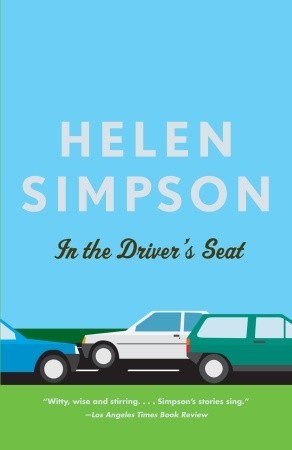 I liked this even more than Simpson’s first book, Four Bare Legs in a Bed, which I reviewed last year. The themes include motherhood (starting, in a couple of cases, in one’s early 40s), death versus new beginnings, and how to be optimistic in a world in turmoil. There’s gentle humor and magic to these stories that tempers some of the sadness. I especially liked “The Door,” about a grieving woman looking to restore her sense of security after a home break-in, “The Green Room,” a Christmas Carol riff (one of two Christmas-themed stories here) in which a woman is shown how her negative thoughts and obsession with the past are damaging her, and “Constitutional,” set on a woman’s one-hour circular walk during her lunch break and documenting her thoughts about everything from pregnancy to a nonagenarian friend’s funeral. [The UK title of the collection is Constitutional.]
In two stories, “Every Third Thought” and “If I’m Spared,” a brush with death causes a complete change of outlook – but will it last? “The Year’s Midnight” creates a brief connection between frazzled mums at the swimming pool in the run-up to the holidays. “Up at a Villa” and the title story capture risky moments that blend fear and elation. In “The Tree,” which is funny and cringeworthy all at the same time, a man decides to take revenge on the company that ripped off his forgetful old mother. Prize for the best title goes to “The Phlebotomist’s Love Life,” though it’s the least interesting story of the 11.
(Found in a Little Free Library at the supermarket near my parents’ old house.)
Some favorite lines:
“the inevitable difficulty involved in discovering ourselves to others; the clichés and blindness and inadvertent misrepresentations”
“Always a recipe for depression, Christmas, when complex adults demanded simple joy without effort, a miraculous feast of stingless memory.”
“You shouldn’t be too interested in the past. You yourself now are the embodiment of what you have lived. What’s done is done.”
My rating: 
The Lager Queen of Minnesota by J. Ryan Stradal (2019)
I had sky-high hopes for Stradal’s follow-up after Kitchens of the Great Midwest (it was on my Most Anticipated list for the second half of the year). Theoretically, a novel about three pie-baking, beer-making female members of a Minnesota family should have been terrific. Like Kitchens, this is female-centered, on a foodie theme, set in the Midwest and structured as linked short stories. Here the chapters are all titled after amounts of money; they skip around in time between the 1950s and the present day and between the perspectives of Edith Magnusson, her estranged younger sister Helen Blotz, and Edith’s granddaughter, Diana Winter.
 Edith and Helen have a rivalry as old as the Bible, based around an inheritance that Helen stole to reopen her husband’s family brewery, instead of sharing it with Edith. Ever since, Edith has had to work minimum-wage jobs at nursing homes and fast food restaurants to make ends meet. When Diana comes to live with her as a teenager, she, too, works hard to contribute to the family, but then gets caught up in a dodgy money-making scheme. It’s in penance for this error that she starts working at a local brewery, but beer soon becomes as much of an obsession for Diana as it once was for her great-aunt Helen.
I had a few problems with the book’s setup: Helen is portrayed as a villain, and never fully sheds that stereotypical designation; meanwhile, Edith is passive and boring, just a bit “wet” (in British slang). Edith and Diana suffer more losses than seems likely or fair, and there are too many coincidences involved in Diana’s transformation into a master brewer. I also found it far-fetched that a brewery would hire her as a 19-year-old and let her practice making many, many batches of lager, all while she’s still underage. None of the characters fully came alive for me, though Diana was the closest. The ending wasn’t as saccharine as I expected, but still left me indifferent. I did like reading about the process of beer-making and flavor development, though, even though I’m not a beer drinker.
My rating: 
Short story DNFs this year (in chronological order):
Mr Wrong by Elizabeth Jane Howard – I read the two shortest stories, “Summer Picnic” and “The Proposition.” The former was pleasantly like Elizabeth Taylor or Tessa Hadley lite; I got zero out of the latter.
 I Want to Show You More by Jamie Quatro – I read the first two stories. “Decomposition,” about a woman’s lover magically becoming a physical as well as emotional weight on her and her marriage, has an interesting structure as well as second-person narration, but I fear the collection as a whole will just be a one-note treatment of a woman’s obsession with her affair.
Multitudes: Eleven Stories by Lucy Caldwell – I read the first two stories. I enjoyed the short opener, “The Ally Ally O,” which describes a desultory ride in the car with mother and sisters with second-person narration and no speech marks. I should have given up on “Thirteen,” though, a tired story of a young teen missing her best friend.
The Country Ahead of Us, the Country Behind by David Guterson – I read “Angels in the Snow” (last Christmas) and “Wood Grouse on a High Promontory Overlooking Canada” (the other week). Both were fine but not particularly memorable; a glance at the rest suggests that they’ll all be about baseball and hunting. If I wanted to read about dudes hunting I’d turn to Ernest Hemingway or David Vann. Nevertheless, I’ll keep this around in case I want to try it again after reading Snow Falling on Cedars this winter.
Currently reading:
 Ship Fever by Andrea Barrett – Elegant stories about history, science and human error. Barrett is similar to A.S. Byatt in her style and themes, which are familiar to me from my reading of Archangel. This won a National Book Award in 1996.
- Descent of Man by T. Coraghessan Boyle – Even in this slim volume, there are SO MANY stories, and all so different from each other. Some I love; some are meh. I’m tempted to leave a few unread, though then I can’t count this towards my year total…
- Sum: Tales from the Afterlives by David Eagleman – A bibliotherapy prescription for reading aloud. My husband and I read a few stories to each other, but I’m going it alone for the rest. This is fairly inventive in the vein of Alan Lightman’s Einstein’s Dreams, yet I find it repetitive.
Future prospects:
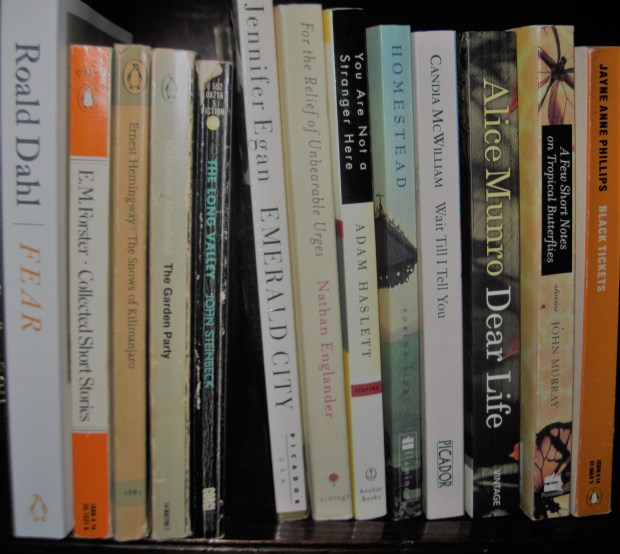
See also Laura’s excellent post about her favorite individual short stories.
Are you a short story fan? Read any good ones recently?
My Most Anticipated Releases of the Second Half of 2019
Although over 90 books from the second half of the year are already on my radar, I’ve managed to narrow it down to the 15 July to November releases that I’m most excited about. I have access to a few of these already, and most of the rest I will try requesting as soon as I’m back from Milan. (These are given in release date order within thematic sections; the quoted descriptions are from the publisher blurbs on Goodreads.)
[By the way, here’s how I did with my most anticipated releases of the first half of the year:
- 16 out of 30 read; of those 9 were somewhat disappointing (i.e., 3 stars or below) – This is such a poor showing! Is it a matter of my expectations being too high?
- 10 I still haven’t managed to find
- 1 print review copy arrived recently
- 1 I have on my Kindle to read
- 1 I skimmed
- 1 I lost interest in]
Fiction
 The Lager Queen of Minnesota by J. Ryan Stradal [July 23, Pamela Dorman Books] Stradal’s Kitchens of the Great Midwest (2015) is one of my recent favorites. This one has a foodie theme again, and sounds a lot like Louise Miller’s latest – two sisters: a baker of pies and a founder of a small brewery. “Here we meet a cast of lovable, funny, quintessentially American characters eager to make their mark in a world that’s often stacked against them.”
 Hollow Kingdom by Kira Jane Buxton [August 6, Grand Central Publishing / Headline Review] As soon as I heard that this was narrated by a crow, I knew I was going to have to read it. (And the Seattle setting also ties in with Lyanda Lynn Haupt’s book.) “Humanity’s extinction has seemingly arrived, and the only one determined to save it is a foul-mouthed crow whose knowledge of the world around him comes from his TV-watching education.”
 Inland by Téa Obreht [August 13, Random House / Weidenfeld & Nicolson] However has it been eight years since her terrific debut novel?! “In the lawless, drought-ridden lands of the Arizona Territory in 1893, two extraordinary lives collide. … [L]yrical, and sweeping in scope, Inland subverts and reimagines the myths of the American West.” The synopsis reminds me of Eowyn Ivey’s latest.
 A Door in the Earth by Amy Waldman [August 27, Little, Brown and Company] I loved The Submission, Waldman’s 2011 novel about a controversial (imagined) 9/11 memorial. “Parveen Shamsa, a college senior in search of a calling, feels pulled between her charismatic and mercurial anthropology professor and the comfortable but predictable Afghan-American community in her Northern California hometown [and] travels to a remote village in the land of her birth to join the work of his charitable foundation.” (NetGalley download)
 Bloomland by John Englehardt [September 10, Dzanc Books] “Bloomland opens during finals week at a fictional southern university, when a student walks into the library with his roommate’s semi-automatic rifle and opens fire. In this richly textured debut, Englehardt explores how the origin and aftermath of the shooting impacts the lives of three characters.” (print review copy from publisher)
 The Dutch House by Ann Patchett [September 25, Harper / Bloomsbury UK] I’m more a fan of Patchett’s nonfiction, but will keep reading her novels thanks to Commonwealth. “At the end of the Second World War, Cyril Conroy combines luck and a single canny investment to begin an enormous [Philadelphia] real estate empire … Set over … five decades, The Dutch House is a dark fairy tale about two smart people who cannot overcome their past.”
Medical themes
 Will My Cat Eat My Eyeballs?: Big Questions from Tiny Mortals about Death by Caitlin Doughty [September 10, W.W. Norton / September 19, Weidenfeld & Nicolson] I’ve read Doughty’s previous books about our modern attitude towards mortality and death customs around the world. She’s wonderfully funny and iconoclastic. Plus, how can you resist this title?! Although it sounds like it’s geared towards children, I’ll still read the book. “Doughty blends her mortician’s knowledge of the body and the intriguing history behind common misconceptions … to offer factual, hilarious, and candid answers to thirty-five … questions.”
 The Undying: Pain, Vulnerability, Mortality, Medicine, Art, Time, Dreams, Data, Exhaustion, Cancer, and Care by Anne Boyer [September 17, Farrar, Straus and Giroux] “A week after her forty-first birthday, the acclaimed poet Anne Boyer was diagnosed with highly aggressive triple-negative breast cancer. … A genre-bending memoir in the tradition of The Argonauts, The Undying will … show you contemporary America as a thing both desperately ill and occasionally, perversely glorious.” (print review copy from publisher)

From the author’s Twitter page.
Breaking and Mending: A doctor’s story of burnout and recovery by Joanna Cannon [September 26, Wellcome Collection] I haven’t gotten on with Cannon’s fiction, but a memoir should hit the spot. “A frank account of mental health from both sides of the doctor-patient divide, from the bestselling author of The Trouble with Goats and Sheep and Three Things About Elsie, based on her own experience as a doctor working on a psychiatric ward.”
 The Body: A Guide for Occupants by Bill Bryson [October 3, Doubleday / Transworld] His last few books have been somewhat underwhelming, but I’d read Bryson on any topic. He’s earned a reputation for making history, science and medicine understandable to laymen. “Full of extraordinary facts and astonishing stories, The Body: A Guide for Occupants is a brilliant, often very funny attempt to understand the miracle of our physical and neurological makeup.”
 The Depositions: New and Selected Essays on Being and Ceasing to Be by Thomas Lynch [November 26, W.W. Norton] Lynch is such an underrated writer. A Michigan undertaker, he crafts essays and short stories about small-town life, the Irish-American experience and working with the dead. I discovered him through Greenbelt Festival some years back and have read three of his books. Some of what I’ve already read will likely be repeated here, but will be worth a second look anyway.
Other Nonfiction
 Confessions of a Bookseller by Shaun Bythell [August 29, Profile Books] The Diary of a Bookseller was a treat in 2017. I’ve read the first two-thirds of this already while in Milan, and I wish I was in Wigtown instead! This sequel picks up in 2015 and is very much more of the same – the daily routines of buying and selling books and being out and about in a small town – so it’s up to you whether that sounds boring or comforting. I’m finding it strangely addictive. (NetGalley download)
We Are the Weather: Saving the Planet Begins at Breakfast by Jonathan Safran Foer [September 17, Farrar, Straus and Giroux / October 10, Hamish Hamilton] Foer’s Eating Animals (2009) was a hard-hitting argument against eating meat. In this follow-up he posits that meat-eating is the single greatest contributor to climate change. “With his distinctive wit, insight and humanity, Jonathan Safran Foer presents this essential debate as no one else could, bringing it to vivid and urgent life, and offering us all a much-needed way out.”
 Surfacing by Kathleen Jamie [September 19, Sort of Books] Jamie is a Scottish poet who writes exquisite essays about the natural world. I’ve read her two previous essay collections, Findings and Sightlines, as well as a couple of volumes of her poetry. “From the thawing tundra linking a Yup’ik village in Alaska to its hunter-gatherer past to the shifting sand dunes revealing the impressively preserved homes of neolithic farmers in Scotland, Jamie explores how the changing natural world can alter our sense of time.”
 Unfollow by Megan Phelps-Roper [October 8, Farrar, Straus and Giroux / riverrun] Ties in with my special interest in women’s religious memoirs. “In November 2012, at the age of twenty-six, [Phelps-Roper] left [Westboro Baptist Church], her family, and her life behind. Unfollow is a story about the rarest thing of all: a person changing their mind. It is a fascinating insight into a closed world of extreme belief, a biography of a complex family, and a hope-inspiring memoir of a young woman finding the courage to find compassion.”
Which of these do you want to read, too?
What other upcoming 2019 titles are you looking forward to?
March Reading Plans and Books to Look out For
My apologies if you’ve already heard this story on social media: I was supposed to be in France this past weekend, but for the fourth time in a row we’ve been plagued by transport problems on a holiday: a flat tire in Wigtown, a cancelled train to Edinburgh, a cancelled flight to the States, and now car trouble so severe we couldn’t get on the ferry to Normandy. Though we made it all the way to the ferry port in Poole, our car was by then making such hideous engine noises that it would have been imprudent to drive it any further. We got a tow back to the auto shop where our car is usually serviced and currently await its prognosis. If it can be fixed, we may be able to reschedule our trip for this coming weekend.
The good news about our strange (non-)travel day: I got a jump on my Doorstopper of the Month, Cutting for Stone by Abraham Verghese, a terrific read that reminds me of a cross between Midnight’s Children and The Cider House Rules, and also started Priestdaddy by Patricia Lockwood – though my husband made me stop reading it because I couldn’t stop sniggering while he was trying to make important phone calls about the car. We ended up having a nice weekend at home anyway: going out for Nepalese food, gelato and a screening of The Favorite; doing some gardening and getting bits of work and writing done; and (of course) doing plenty of reading. Waking up with a purring cat on my legs and tucking into a stack of pancakes with maple syrup, I thought to myself, being home is pretty great, too.
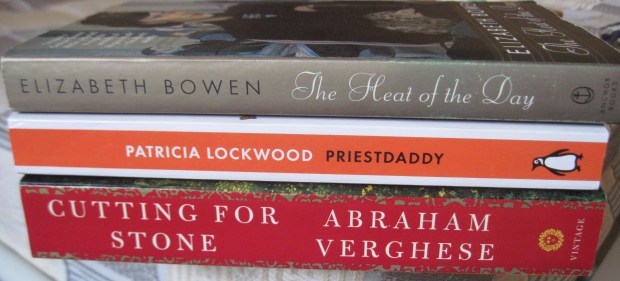
What I packed to read in France.
Reading Ireland Month 2019
This will be my second time participating in the annual challenge hosted by Cathy of 746 Books. I recently started The Heat of the Day by Elizabeth Bowen and I’m also currently reading two nonfiction books by Irish women: a review copy of Vagina: A Re-Education by Lynn Enright (which releases on March 7th) and the essay collection Notes to Self by Emilie Pine, on my Kindle. I have several other novels to choose from – two of which are set in Ireland rather than by Irish authors – plus a classic travel book by Dervla Murphy.
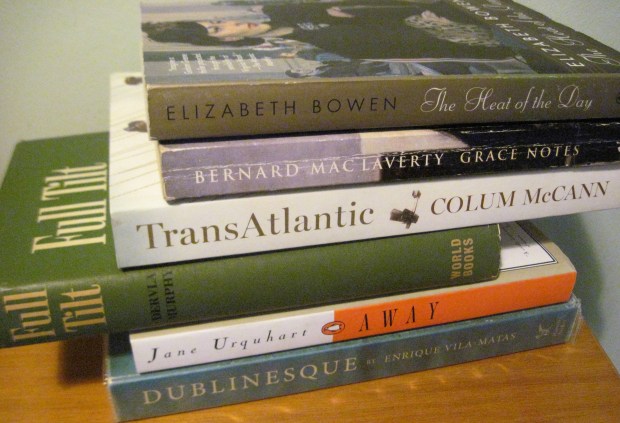
Irish selections.
Wellcome Book Prize
The second of my ‘assigned’ longlist reviews will be going up on Wednesday. I’m currently reading another three books from the longlist and will post some brief thoughts on them if I manage to finish them before the shortlist announcement on the 19th. At that point I will have read 10 out of the 12 books on the longlist, so should feel pretty confident about making predictions (or at least stating wishes) for what will go through to the next round.
Blog Tours
I have two blog tours coming up later in the month, including the official one that’s being run for the Dylan Thomas Prize longlist.
Review Books
I’ve got a pile-up of review copies that came out in February or are releasing early this month – 9, I think? Some I’ve already read and some are still in progress. So I will be doing my best to group these sensibly and write short reviews, but you may well notice a lot of posts from me.
Blog Anniversary
This Friday marks four years that I’ve been blogging about books!
Here are a few March releases I’ve read that you may want to look out for:
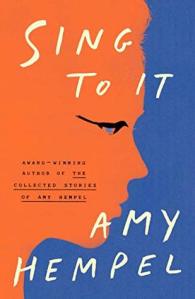 Sing to It: New Stories by Amy Hempel [releases on the 26th]: “When danger approaches, sing to it.” That Arabian proverb provides the title for Amy Hempel’s fifth collection of short fiction, and it’s no bad summary of the purpose of the arts in our time: creativity is for defusing or at least defying the innumerable threats to personal expression. Only roughly half of the flash fiction achieves a successful triumvirate of character, incident and meaning. The author’s passion for working with dogs inspired the best story, “A Full-Service Shelter,” set in Spanish Harlem. A novella, Cloudland, takes up the last three-fifths of the book and is based on the case of the “Butterbox Babies.” (Reviewed for the Pittsburgh Post-Gazette.)
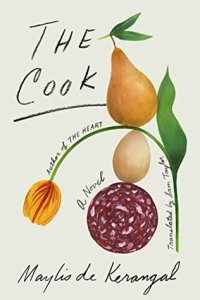 The Cook by Maylis de Kerangal (translated from the French by Sam Taylor) [releases on the 26th]: This is a pleasant enough little book, composed of scenes in the life of a fictional chef named Mauro. Each chapter picks up with the young man at a different point as he travels through Europe, studying and working in various restaurants. If you’ve read The Heart / Mend the Living, you’ll know de Kerangal writes exquisite prose. Here the descriptions of meals are mouthwatering, and the kitchen’s often tense relationships come through powerfully. Overall, though, I didn’t know what all these scenes are meant to add up to. Kitchens of the Great Midwest does a better job of capturing a chef and her milieu.
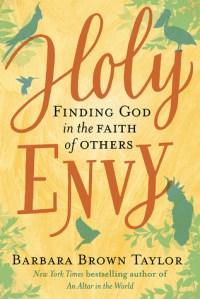 Holy Envy: Finding God in the Faith of Others by Barbara Brown Taylor [releases on the 12th]: After she left the pastorate, Taylor taught Religion 101 at Piedmont College, a small Georgia institution, for 20 years. This book arose from what she learned about other religions – and about Christianity – by engaging with faith in an academic setting and taking her students on field trips to mosques, temples, and so on. She emphasizes that appreciating other religions is not about flattening their uniqueness or looking for some lowest common denominator. Neither is it about picking out what affirms your own tradition and ignoring the rest. It’s about being comfortable with not being right, or even knowing who is right.
What’s on your reading docket for March?
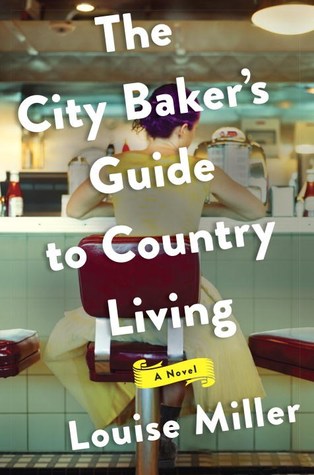
A Perfect Book for Autumn: The City Baker’s Guide to Country Living
When Olivia Rawlings, the protagonist of pastry chef Louise Miller’s debut novel, The City Baker’s Guide to Country Living, arrives in Guthrie, Vermont one September, it’s with a weight of guilt and rumor behind her. She left Boston’s Emerson Club in ignominy after setting the place on fire with a Baked Alaska and sleeping with a married boss twice her age. Now her best friend, Hannah, is determined to help Livvy make a fresh start in a small town. She uses her clout as the local doctor’s wife to get Livvy a job as the chief baker at the Sugar Maple Inn, run by a formidable older lady named Margaret.
 Livvy sets up in the sugar house with her Irish wolfhound, Salty, and settles into a daily routine of baking muffins, bread and cakes for the guests. She gets to know the local community by soaking up atmosphere at the Black Bear Tavern and playing banjo with the Hungry Mountaineers band at country dances. The McCrackens, in particular, become a kind of surrogate family for this lonely woman in her early thirties: Dotty is Margaret’s best friend; her husband Henry is battling colon cancer; and their youngest son Martin has temporarily given up his normal life in Seattle to help out. A love of food and music binds Livvy to the McCrackens, and Henry is like a stand-in for the father she lost as a teenager.
This is a warm, cozy read full of well-drawn secondary characters and romantic possibilities for Livvy. There’s nothing clichéd about it, though. Livvy is a sassy narrator whose hair goes from purple to orange to turquoise and whose promiscuous past matches her reputation for perfect macaroons and apple pie. I didn’t love the conflict at the three-quarters point that briefly takes Livvy back to Boston, but it all comes together in a satisfying dénouement.
I love how Miller documents the rhythms of the small-town country year, including tapping the maple trees in the early spring and a pie baking contest at the summer county fair. But I’m calling this a perfect book for autumn because of how the early chapters depict pivotal events from Livvy’s first months in Guthrie, especially the annual Harvest Festival supper (corn consommé, baby green salad with walnuts and maple vinaigrette, goat cheese on apple spice bread, prime rib or mushroom risotto, chive popovers, Vermont cheddar with quince paste, and pumpkin crème brûlée) and a boisterous Thanksgiving meal with the McCrackens.
Kitchens of the Great Midwest by J. Ryan Stradal was one of my top fiction picks of last year, and this is a worthy 2016 counterpart. Though not quite as edgy, Miller’s debut also shares the foodie theme of my favorite novel of 2016 so far, Sweetbitter by Stephanie Danler. All three of these books capture the almost theatrical magic of the restaurant meal. I’ll leave you with this extended passage describing the setup for the Harvest Festival. Though I’ve never been to New England in the fall, it makes me nostalgic for it all the same:
There is a moment after the prep is done and before the theater of the dinner service begins when I love to escape the kitchen. Dusk had fallen, and when I stepped outside, I was drawn to the light spilling from the barn, golden and inviting. I poked my head in. Margaret had outdone herself. The long tables were covered in cream linen. Squash-colored tapers stood tall in sparkling silver candelabras. Fat bouquets of sunflowers, goldenrod, and black-eyed Susans stuffed into mason jars were surrounded by tiny pumpkins and crab apples. I looked up to see a thousand white Christmas lights hanging from the rafters. The whole room glowed.
The City Baker’s Guide to Country Living was published by Pamela Dorman Books on August 9th. My electronic review copy came from NetGalley.
My rating: 
Watch the Movie or Read the Book?
It’s a risky business, adapting a well-loved book into a film. I’m always curious to see how a screenwriter and director will pull it off. The BBC generally does an admirable job with the classics, but contemporary book adaptations can be hit or miss. I’ve racked my brain to think of cases where the movie was much better than the book or vice versa, but to my surprise I’ve found that I can only think of a handful of examples. Most of the time I think the film and book are of about equal merit, whether that’s pretty good or excellent.
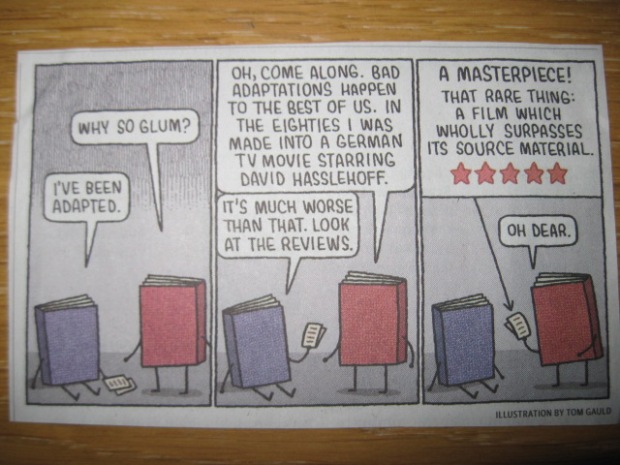
From one of my favorite Guardian cartoonists.
Watch the Movie Instead:
Birdsong [Sebastian Faulks] – Eddie Redmayne, anyone? The book is a slog, but the television miniseries is lovely.
One Day [David Nicholls] – Excellent casting (though Rafe Spall nearly steals the show). Feels less formulaic and mawkish than the novel.
 Father of the Bride and its sequel [Edward Streeter] – The late 1940s/early 1950s books that served as very loose source material are hopelessly dated.
This Is Where I Leave You [Jonathan Tropper] – Again, perfect casting. Less raunchy and more good-natured than the book.
Read the Book Instead:
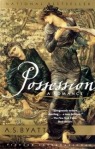 Possession [A.S. Byatt] – This is one of my favorite novels of all time. It has a richness of prose and style (letters, poems, etc.) that simply cannot be captured on film. Plus Aaron Eckhart couldn’t act his way out of a paper bag.
Everything Is Illuminated [Jonathan Safran Foer] – The movie’s not bad, but if you want to get a hint of Foer’s virtuosic talent you need to read the novel he wrote at 25.
A Prayer for Owen Meany [John Irving] – The film version, Simon Birch, was so mediocre that Irving wouldn’t let his character’s name be associated with it.
It’s Pretty Much Even:
Decent book and movie: Harry Potter and the Sorcerer’s Stone, The Help, The Hours, Memoirs of a Geisha, Never Let Me Go, The Remains of the Day
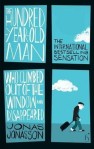 Terrific book and movie: The Fault in Our Stars, The Hundred-Year-Old Man Who Climbed out of the Window and Disappeared (Swedish language), The Orchid Thief / Adaptation (both great but in very different ways!), Tamara Drewe (based on a graphic novel, which itself is based on Far From the Madding Crowd)
If I’m interested in a story, my preference is always to watch the movie before I read the book. If you do it the other way round, you’re likely to be disappointed with the adaptation. Alas, this means that the actors’ and actresses’ faces will be ineradicably linked with the characters in your head when you try to read the book. I consider this a small disadvantage. Reading the book after you’ve already enjoyed the storyline on screen means you get to go deeper with the characters and the plot, since subplots are often eliminated in movie versions.
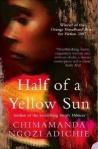 So although I’ve seen the films, I’m still keen to read Half of a Yellow Sun and The Kite Runner. I’m eager to both see and read The English Patient and The Shipping News (which would be my first by Proulx). All four of these I own in paperback. I’m also curious about two war novels being adapted this year, Billy Lynn’s Long Halftime Walk and The Yellow Birds. There’s every chance I’d like these better as movies than I did as books.
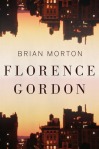 As to books I’m interested in seeing on the big screen, the first one that comes to mind is Kitchens of the Great Midwest by J. Ryan Stradal. It might also be interesting to see how the larger-than-life feminist heroines of Siri Hustvedt’s The Blazing World and Brian Morton’s Florence Gordon would translate for cinema. Can you think of any others?
What film adaptations have impressed or disappointed you recently? Do you watch the movie first, or read the book first?
Reviews Roundup, January–February
One of my goals with this blog is to have one convenient place where I can gather together all my writing that has appeared in disparate online locations. To that end, once a month I provide links to all book reviews I’ve published elsewhere, with a rating (below each description) and a taster so you can decide whether to read more. A few exceptions: I won’t point out my Kirkus Indie, BlueInk or Publishers Weekly reviews since I don’t get a byline. Meanwhile, I’ve done my first review for the Pittsburgh Post-Gazette – exciting!
The Bookbag
The Noise of Time by Julian Barnes: “Art is the whisper of history, heard above the noise of time.” Through a fictionalized biography of the Russian composer Shostakovich, Barnes questions how art can withstand political oppression. Knowing Barnes’s penchant for stylistic experimentation, this was never going to be a straightforward, chronological life story. Instead, as he so often does, he sets up a tripartite structure, focusing on three moments when Shostakovich has a reckoning with Power. The book is full of terrific one-liners (“Integrity is like virginity: once lost, never recoverable”), but there are not many memorable scenes to latch on to.

Motions and Moments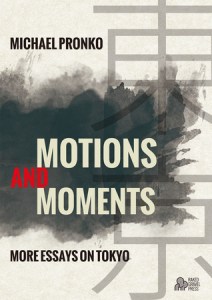 : More Essays on Tokyo (& interview) by Michael Pronko: Pronko’s third collection of essays about his adopted city is an eloquent tribute to a place full of contradictions and wonders. Compared to his earlier collection, Beauty and Chaos, I sense Pronko is now more comfortable in his surroundings, perhaps happier to include himself in ‘we’ rather than looking on passively at ‘them’. For instance – inspired by Japanese women’s perfect outfits – he consciously tries to dress better, and he’s taken to eating ramen and sleeping on a futon, just like a native. The highlight is a set of pieces written in the aftermath of the 2011 earthquake / tsunami.

BookBrowse
 The Portable Veblen by Elizabeth McKenzie: Veblen, named after the late-nineteenth-century Norwegian-American economist, is one of the oddest heroines you’ll ever meet. She thinks squirrels are talking to her and kisses flowers. But McKenzie doesn’t just play Veblen for laughs; she makes her a believable character well aware of her own psychological backstory. I suspect the squirrel material could be a potential turn-off for readers who can’t handle too much whimsy. Over-the-top silly in places, this is nonetheless a serious account of the difficulty of Veblen and Paul, her neurology researcher fiancé, blending their dysfunctional families and different ideologies – which is what marriage is all about.
 Weathering by Lucy Wood: This atmospheric debut novel is set in a crumbling house by an English river and stars three generations of women – one of them a ghost. Ada has returned to her childhood home after 13 years to scatter her mother Pearl’s ashes, sort through her belongings, and get the property ready to sell. In a sense, then, this is a haunted house story. Yet Wood introduces the traces of magical realism so subtly that they never feel jolting. Like the river, the novel is fluid, moving between the past and present with ease. The vivid picture of the English countryside and clear-eyed look at family dynamics remind me most of Tessa Hadley (The Past) and Polly Samson (The Kindness).
Foreword Reviews
When We Were Invincible by Jonathan Harnisch: In this short novel, a young man wrestles with depression and Tourette’s syndrome, which together drive him to the point of suicide. A series of dreams and chance meetings, along with the possibility of romance and faith in God, pull him back from the edge. The book successfully introduces philosophical themes and gives a sympathetic picture of mental illness. However, it is weaker at filling in background and providing transitions, and there are many awkward, unlikely lines of dialogue. Recommended to fans of The Curious Incident of the Dog in the Night-Time.

Nudge
 The Life and Death of Sophie Stark by Anna North: The twisty, clever story of a doomed filmmaker – perfect for fans of Hausfrau. Who is Sophie Stark? A New York City-based indie director whose four documentary-style movies are “almost more like life than life itself.” Bisexual and with certain traits of high-functioning autism, Sophie is easily misunderstood. She’s a rebel who doesn’t conform to social niceties. The book is told through five first-person reminiscences from the people closest to her. In this respect the novel’s format recalls Kitchens of the Great Midwest. My favorite sections, though, are the reviews of her films, all by the same critic.
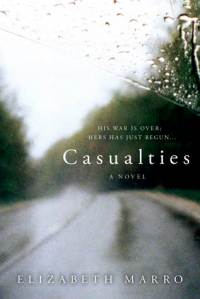 Casualties by Betsy Marro: A powerful, melancholy debut novel about how war affects whole families, not just individual soldiers. As in Bill Clegg’s Did You Ever Have a Family, which Casualties resembles in tone if not in style, a bereaved mother sets off on a journey. Ruth’s unlikely companion on the road trip east is a Gulf War amputee who appears little more than a conman but genuinely wants to clean up his act so he can reconcile with his teenage daughter. At times the road trip scenario felt a little far-fetched to me, and Casey too obvious a replacement son figure. Yet as both he and Ruth ponder how much they have lost and the small things they can try to put right, they together form a touching picture of the various ways war’s effects can linger.
Pittsburgh Post-Gazette
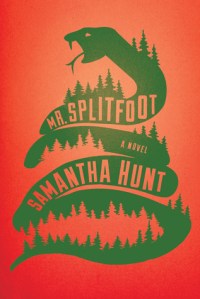 Mr. Splitfoot by Samantha Hunt: “All stories are ghost stories,” Samantha Hunt proclaims in her quirky third novel about the crossover between motherhood and mysticism. In a dual storyline that takes in fundamentalist cults, unlikely mediums and a pregnant woman’s pilgrimage, Hunt asks whether one can ever believe in the unseen. Mr. Splitfoot has the offbeat charm of Scarlett Thomas’s work. While the plot ultimately feels like a bit of a jumble, its vision of unexpected love and loyalty remains compelling. “The End’s always coming,” but it is how one lives in the face of brutality and impending extinction that matters.
I also post reviews of most of my casual reading and skimming on Goodreads:
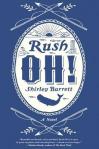 Rush Oh! by Shirley Barrett: A debut novel in which an Australian whaler’s daughter looks back at 1908, a catastrophic whaling season but also her first chance at romance. I felt that additional narrators, such as a whaleman or an omniscient voice, would have allowed for more climactic scenes. Still, I found this gently funny, especially the fact that the family’s cow and horse are inseparable and must be together on any outing. There are some great descriptions of whales, too.
 Felicity by Mary Oliver: I was disappointed with my first taste of Mary Oliver’s poetry. So many readers praise her work to the skies, and I’ve loved excerpts I’ve read elsewhere. However, I found these to be rather simplistic and clichéd, especially poems’ final lines, e.g. “Soon now, I’ll turn and start for home. / And who knows, maybe I’ll be singing.” or “Late, late, but now lovely and lovelier. / And the two of us, together—a part of it.” I’ll definitely try more of her work, but I’ll look out for an older, classic collection.
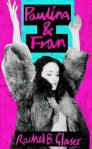 Paulina & Fran by Rachel B. Glaser: Full of blunt, faux-profound sentences and smutty, two-dimensional characters. Others may rave about it, but this wasn’t for me. I get that it is a satire on female friendship and youth entitlement. But I hated how the main characters get involved in a love triangle, and once they leave college any interest I had in them largely disappeared. Least favorite lines: “Paulina. She’s like Cleopatra, but more squat.” / “She’s more like Humphrey Bogart” and “She craved the zen-ness of being rammed.”

 Noah’s Wife by Lindsay Starck: I kept wanting to love this book, but never quite did. It’s more interesting as a set of ideas – a town where it won’t stop raining, a minister losing faith, homeless zoo animals sheltering with ordinary folk – than as an executed plot. My main problem was that the minor characters take over so that you never get to know the title character, who remains nameless. There’s also a ton of platitudes towards the end. It reminded me most of The Readers of Broken Wheel Recommend and Not Forgetting the Whale (another cozy environmental dystopia based around biblical allusions).
 Spill Simmer Falter Wither by Sara Baume: This sounded like a charmingly offbeat story about a loner and his adopted dog setting off on a journey. As it turns out, this debut is much darker than expected, but what saves it from being unremittingly depressing is the same careful attention to voice you encounter in fellow Irish writers like Donal Ryan and Anne Enright. It’s organized into four sections, with the title’s four verbs as headings. In a novel low on action, the road trip is much the most repetitive section, extending to the language as well. Even so, Baume succeeds in giving a compassionate picture of a character whose mental state comes into question. (Full review in March 2016 issue of Third Way magazine.)
 Medium Hero by Korby Lenker: Lenker is an indie musician, and the 27 autobiographical stories in his debut collection are about the everyday challenges of being on the road versus trying to pay the bills. Many feature “Korby” or “Simon” as fictional stand-ins, and recurring locations include his hometown of Twin Falls, Idaho and his adopted home of Nashville. As the title suggests, Lenker has no illusions about being famous or out of the ordinary. Most of the time he just tries to be a decent guy, the kind who prays for family members in distress even though he’s not sure he believes in God. Lest that sound too serious, though, there are also stories about peeing his pants and the perils of being a metrosexual.
 Glitter and Glue by Kelly Corrigan: Slides down like ice cream. And I say that even though the whole basis for this memoir feels rather thin. Corrigan frames it around five months in the early 1990s when she worked as a nanny for two Australian kids whose mother died of cancer. For a young woman fresh out of college, it was like a trial run for being a mother, and also gave her a new appreciation for everything her own mother had done for her during her Philadelphia Catholic upbringing. If Corrigan’s father was the ‘glitter’ of the family, her mother was the ‘glue’ – holding everything together in the background. This is impressively reconstructed, dialogue and all, from letters, journals and photos.
 The Ballroom by Anna Hope: This novel was inspired by the story of the author’s great-great-grandfather, an Irishman who was a patient at Menston Asylum in West Yorkshire from 1909 to 1918. The novel zeroes in on the long, hot summer of 1911, focusing through alternating close third-person chapters on John Mulligan, a new patient named Ella Fay, and Dr. Charles Fuller, who wants to put his mental hospital at the frontline of eugenics research. Ultimately I didn’t like this quite as much as Wake, but I think it cements Anna Hope’s reputation as a solid historical fiction writer. I hope with her next book she’ll move beyond the years around World War I to consider a less-chronicled era.
 Life without a Recipe by Diana Abu-Jaber: The Jordanian–American writer reflects on how various food cultures have sustained her through a life that hasn’t always turned out as expected. Three marriages, a move from Portland to Florida, a winding path to motherhood in her forties, and her father’s death from leukemia are some of the main events. Like Sasha Martin’s Life from Scratch, this is more about family and personal history than it is about food (and there are no recipes). Still, food is the stuff of memories, and it is what binds her to two strong characters: her Jordanian father Bud with his stuffed grape leaves, and her maternal grandmother Grace with her frequent baking and the pastries they consumed together in Paris.
 Arctic Summer by Damon Galgut: This fictionalized account of the life of E.M. Forster focuses on the drawn-out composition of A Passage to India, which he began in 1913 but wouldn’t complete and publish until 1924. In between he broke off to write his explicitly homosexual novel Maurice (only published posthumously), spent three years working in Egypt during the war, and served as a secretary to an Indian maharajah. As fictionalized biographies of authors go, I’d rate this somewhere between David Lodge’s A Man of Parts (H.G. Wells) and Colm Tóibín’s superior The Master (Henry James); all three share a heavy focus on the author’s sexuality. “Buggery in the colonies. It wasn’t noble” is one of my favorite random snippets from this novel, and sums up, for me, its slightly prurient aftertaste.
 Bookish Beck = Rebecca Foster. American transplant to England. Freelance proofreader and book reviewer.
 Bookish Beck