Best Backlist Reads of the Year
I consistently find that many of my most memorable reads are older rather than current-year releases. Four of these are from 2023–4; the other nine are from 2012 or earlier, with the oldest from 1939. My selections are alphabetical within genre but in no particular rank order. Repeated themes included health, ageing, death, fascism, regret and a search for home and purpose. Reading more from these authors would probably help to ensure a great reading year in 2026!
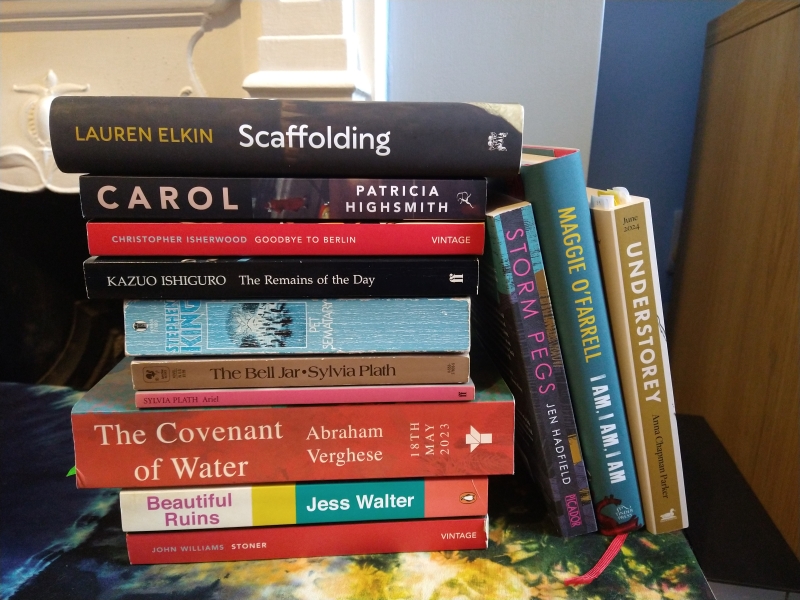
Some trivia:
- 4 were read for 20 Books of Summer (Hadfield, King, Verghese and Walter)
- 3 were rereads for book club (Ishiguro, O’Farrell and Williams) – just like last year!
- 1 was part of my McKitterick Prize judge reading (Elkin)
- 1 was read for 1952 Club (Highsmith)
- 1 was a review catch-up book (Parker)
- 1 was a book I’d been ‘reading’ since 2021 (The Bell Jar)
- The title of one (O’Farrell) was taken from another (The Bell Jar)
Fiction & Poetry
 Scaffolding by Lauren Elkin: Psychoanalysis, motherhood, and violence against women are resounding themes in this intellectual tour de force. As history repeats itself during one sweltering Paris summer, the personal and political structures undergirding the protagonists’ parallel lives come into question. This fearless, sophisticated work ponders what to salvage from the past—and what to tear down. This was our collective runner-up for the 2025 McKitterick Prize, but would have been my overall winner.
 Carol by Patricia Highsmith: Widely considered the first lesbian novel with a happy ending. Therese, a 19-year-old aspiring stage designer, meets a wealthy housewife – “Mrs. H. F. Aird” (Carol) – in a New York City department store one Christmas. When the women set off on a road trip, they’re trailed by a private detective looking for evidence against Carol in a custody battle. It’s a beautiful and subtle romance that unfolds despite the odds and shares the psychological intensity of Highsmith’s mysteries.
 Goodbye to Berlin by Christopher Isherwood: Isherwood intended for these autofiction stories to contribute to a “huge episodic novel of pre-Hitler Berlin.” Two “Berlin Diary” segments from 1930 and 1933 reveal a change in tenor accompanying the rise of Nazism. Even in lighter pieces, menace creeps in through characters’ offhand remarks about “dirty Jews” ruining the country. Famously, the longest story introduces club singer Sally Bowles. I later read Mr Norris Changes Trains as well. Witty and humane, restrained but vigilant.
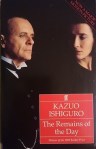 The Remains of the Day by Kazuo Ishiguro: I first read this pre-blog, back when I dutifully read Booker winners whether or not I expected to like them. I was too young then for its theme of regret over things done and left undone; I didn’t yet know that sometimes in life, it really is too late. When I reread it for February book club, it hit me hard. I wrote no review at the time (more fool me), but focused less on the political message than on the refined depiction of upper-crust English society and the brilliance of Stevens the unreliable, repressed narrator.
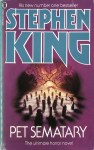 Pet Sematary by Stephen King: A dread-laced novel about how we deal with the reality of death. Is bringing the dead back a cure for grief or a horrible mistake? A sleepy Maine town harbours many cautionary tales, and the Creeds have more than their fair share of sorrow. Louis is a likable protagonist whose vortex of obsession and mental health is gripping. In the last quarter, which I read on a long train ride, I couldn’t turn the pages any faster. Sterling entertainment, but also surprisingly poignant. (And not gruesome until right towards the end.)
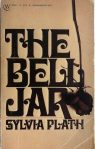
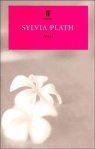 The Bell Jar & Ariel by Sylvia Plath: Given my love of mental hospital accounts, it’s a wonder I’d not read this classic work of women’s autofiction before. Esther Greenwood is the stand-in for Plath: a talented college student who, after working in New York City during the remarkable summer of 1953, plunges into mental ill health. An enduringly relevant and absorbing read. / Ariel takes no prisoners. The images and vocabulary are razor-sharp and the first and last lines or stanzas are particularly memorable.
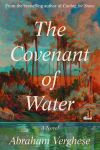 The Covenant of Water by Abraham Verghese: Wider events play out in the background (wars, partition, the fall of the caste system), but this saga sticks with one Kerala family in every generation of which someone drowns. I enjoyed the window onto St. Thomas Christianity, felt fond of all the characters, and appreciated how Verghese makes the Condition a cross between mystical curse and a diagnosable ailment. An intelligent soap opera that makes you think about storytelling, purpose and inheritance, this is extraordinary.
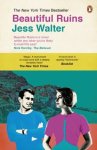 Beautiful Ruins by Jess Walter: I was captivated by the shabby glamour of Pasquale’s hotel in Porto Vergogna on the coast of northern Italy. A myriad of threads and formats – a movie pitch, a would-be Hemingway’s first chapter of a never-finished wartime opus, an excerpt from a producer’s autobiography and a play transcript – coalesce to flesh out what happened in the summer of 1962 and how the last half-century has treated all the supporting players. Warm, timeless and with great scenes, one of which had me in stitches. Fantastic.
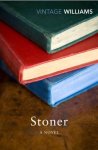 Stoner by John Williams: What a quiet masterpiece. A whole life, birth to death, with all its sadness and failure and tragedy; but also joy and resistance and dignity. One doesn’t have to do amazing things that earn the world’s accolades to find vocation and meaning. Just as powerful a second time (I first read it in 2013). I was especially struck by the power plays in Stoner’s marriage and university department, and how well Williams dissects them. It’s more about atmosphere than plot – and that melancholy tone will stay with you.
Nonfiction
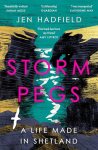 Storm Pegs by Jen Hadfield: Not a straightforward memoir but a set of atmospheric vignettes. Hadfield, a British Canadian poet, moved to Shetland in 2006 and soon found her niche. It’s a life of wild swimming, beachcombing, fresh fish, folk music, seabirds, kind neighbours, and good cheer that warms the long winter nights. After the isolation of the pandemic comes the unexpected joy of a partner and pregnancy in her mid-forties. I savoured this for its language and sense of place; it made me hanker to return to Shetland.
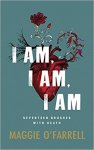 I Am, I Am, I Am: Seventeen Brushes with Death by Maggie O’Farrell: (The final book club reread.) The memoir-in-essays is a highly effective form because it focuses on themes or moments of intensity and doesn’t worry about accounting for boring intermediate material. These pieces form a vibrant picture of a life and also inspire awe at what the human body can withstand. The present tense and a smattering of second person make the work immediate and invite readers to feel their way into her situations. The last two essays are the pinnacle.
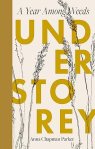 Understorey: A Year among Weeds by Anna Chapman Parker: I owe this a full review in the new year. Parker set out to study and sketch weeds as a way of cultivating attention and stillness as well as celebrating the everyday and overlooked. Daily drawings and entries bear witness to seasons changing but also to the minute alterations she observes in herself and her children. For me, this was all the more special because I’ve holidayed in Berwick-on-Tweed and could picture a lot of the ‘overgrown’ spaces she honours by making them her subjects.
What were some of your best backlist reads this year?
The 2025 McKitterick Prize Winner & SoA Awards Ceremony
Yesterday the Society of Authors’ awards were announced and the prizes handed out at a ceremony in London. As a McKitterick Prize judge, I was asked last month to give a 50-word blurb on the shortlist as a whole—
Each of these six novels has a fully realized style. So confident and inviting are they that it’s hard to believe they are debuts. With nuanced characters and authentic settings and dilemmas, they engage the mind and delight the emotions. I will be following these authors’ careers with keen interest.
—and on each individual shortlisted title:
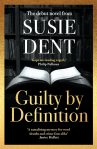 Etymology and Shakespeare studies are the keys to solving a cold case in Susie Dent’s clever, engrossing mystery, Guilty by Definition.
Psychoanalysis, motherhood, and violence against women are resounding themes in Lauren Elkin’s Scaffolding. As history repeats itself one sweltering Paris summer, the personal and political structures undergirding the protagonists’ parallel lives come into question. This fearless, sophisticated work ponders what to salvage from the past—and what to tear down.
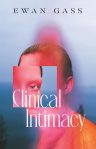 Clinical Intimacy’s mysterious antihero comes to life through interviews with his family, friends and clients. The brilliant oral history format builds a picture of isolation among vulnerable populations, only alleviated by care and touch—especially during Covid-19. Ewan Gass’s intricate story reminds us of the ultimate unknowability of other people.
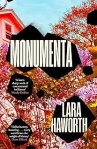
In Monumenta, Lara Haworth braids satire, magic realism, and metafiction into a compact and surprising meditation on how we seek to memorialise the tragedies of history.
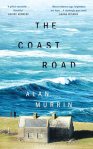
Set in small-town Ireland, The Coast Road is a subtle, compassionate novel in which the characters learn to write their own stories rather than bow to convention and fate. Alan Murrin is a must-read author for fans of Claire Keegan, Louise Kennedy, and Colm Tóibín.
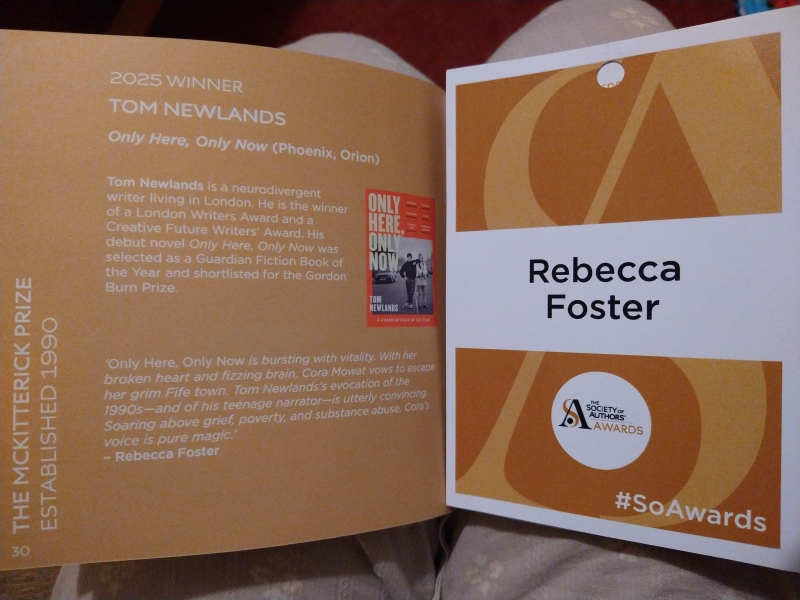
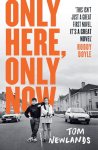 Only Here, Only Now is bursting with vitality. With her broken heart and fizzing brain, Cora Mowat vows to escape her grim Fife town. Tom Newlands’s evocation of the 1990s—and of his teenage narrator—is utterly convincing. Soaring above grief, poverty, and substance abuse, Cora’s voice is pure magic.
Our winner was Tom Newlands for Only Here, Only Now and our runner-up was Lauren Elkin for Scaffolding. (What an honour to have my blurb for the former used in the winners press release, the ceremony programme, and social media publicity.)


Newlands was also a runner-up for the ADCI Literary Prize “for a disabled or chronically ill writer, for an outstanding novel containing a disabled or chronically ill character or characters.” Here’s an excerpt from his statement for the press release:
To have my debut novel recognised in these two categories is particularly meaningful for me because they are linked by my experience. I didn’t start writing until the age of 40, in large part because growing up neurodivergent I didn’t feel my thought processes or methods of working were compatible with the production of a novel. There were no role models out there publishing stories like mine, and in the end, I wrote Only Here, Only Now because I couldn’t find the novel I wanted to read – a warm, vivid and funny story that examined poverty, disability and belonging, and that featured characters rarely found in British fiction.
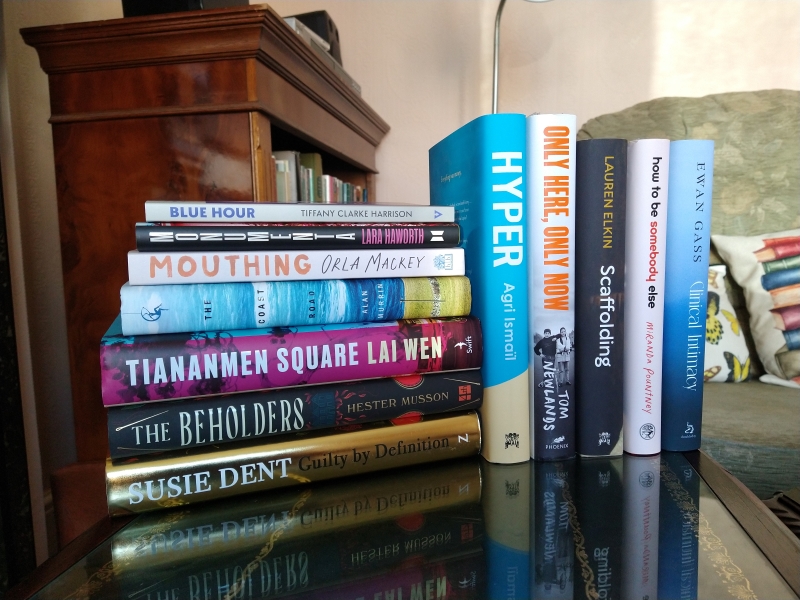
Looking back to early on in this prize journey (which started back in November) … here was some of my early reading:
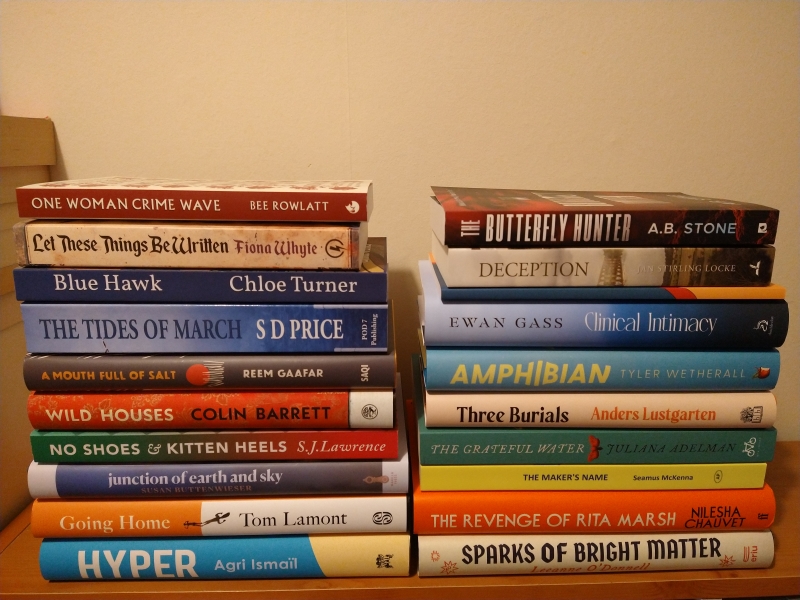
And our longlist:
A couple of my favourite books from my reading that didn’t make the shortlist were:
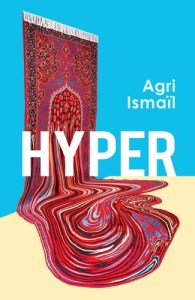 Hyper by Agri Ismaïl [I longlisted it – and then shortlisted it – but was outvoted]
Following a Kurdish family across several decades, this is a zeitgeist-y story that examines questions of national and personal autonomy. With its Dubai, Baghdad, London, and New York settings, it sets the second generation’s luxury, high finance, and fully online worlds against their parents’ bitter experience of exile after a failed independence movement. With its themes of dysfunction and failures and the long view of how we got here from there, it reminded me of Jonathan Franzen’s body of work.
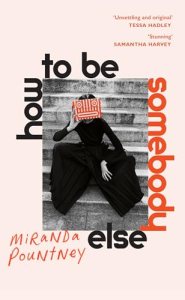 How to Be Somebody Else by Miranda Pountney [It had two votes to make the shortlist, but because it was so similar to Scaffolding in its basics (a thirtysomething woman in a big city, the question of motherhood, and pregnancy loss) we decided to cut it.]
This is the addictively readable story of Dylan, a late-thirties English woman who gives up her New York City advertising job and ponders authorship and motherhood while house-sitting an acquaintance’s apartment—and carrying on an affair with the married downstairs neighbour. As we see her interact with family and friends, we come to appreciate her not as some stereotypical ‘sad girl’ or ‘disaster woman’, but as an Everywoman seeking the time and space to become herself. It’s a sharp and witty novel for fans of Sally Rooney.
For the first time, I got to attend the SoA Awards ceremony in person yesterday. It was a hot day to be travelling in London, and after the oven of the Bakerloo line I was grateful to escape into the cool of Southwark Cathedral and its grounds. It was such a juxtaposition between the sleek City architecture and the ancient refuge of a church.
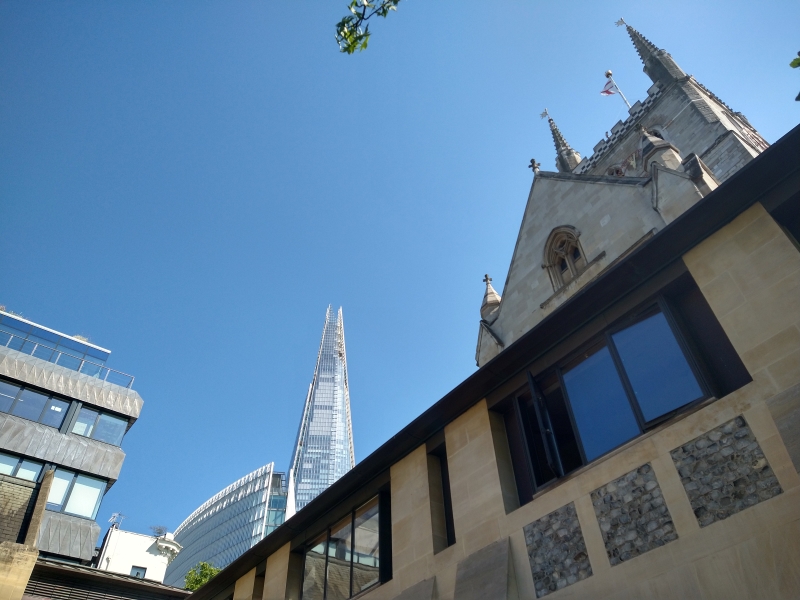
I worried that on such a warm and then busy day Hodge the cathedral cat wouldn’t show himself, but as I picked up my name badge he was asking to be let inside from the courtyard. He didn’t seem interested in strokes so I followed him at a respectful distance and let him settle in for a watchful rest.


Nominated authors and judges were treated to an exceptional afternoon tea, followed by the ceremony and drinks reception. It was lovely to meet my fellow judges Anietie Isong and Kathy O’Shaughnessy (author of the fantastic In Love with George Eliot, which won the SoA’s Paul Torday Memorial Prize) in the flesh as I’d only met them on Zoom before. We chatted a good bit with Lara Haworth, one of our shortlistees, and with Anne Booth, one of the Queen’s Knickers Award (children’s books) nominees, and also got to briefly meet Tom Newlands when he arrived for the ceremony. I always look out for literary ‘celebrities’ at such events and yesterday spotted Naomi Alderman, Caroline Bird, Joanne Harris and Alice Jolly.
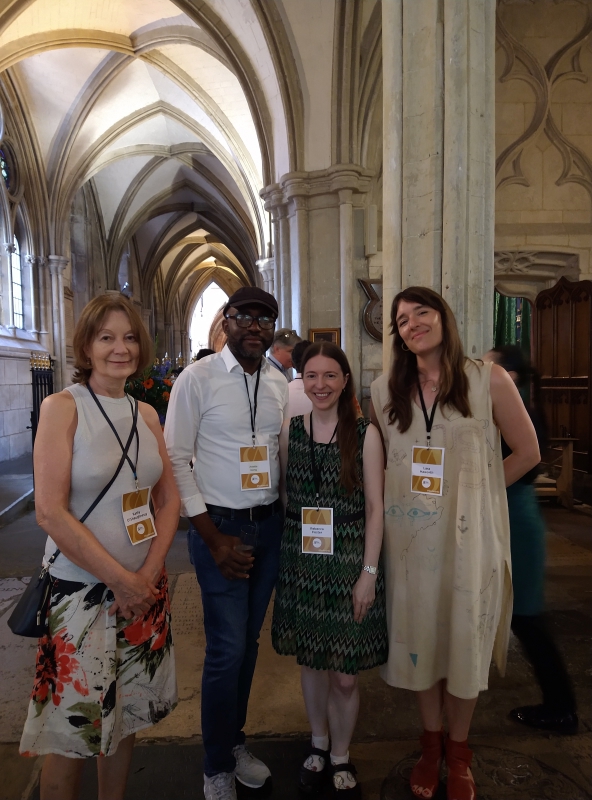


Dean Rev. Mark Oakley gave a welcome address via video, praising authors for bringing “resonance” rather than just “relevance.” He exhorted us, in the words of David Copperfield, to “read as if for life.” Joseph Coelho then gave a terrific keynote speech celebrating words written by humans (as opposed to an inaccurate AI-written bio of himself that he once encountered) and encouraging shortlistees, especially, to take time to bask in their achievement. Rejection is an ongoing, annual thing for him even at this stage of his career – he still remembers the £50 poetry gigs, changing in library toilets and school staff rooms; and the 12 years he spent trying to get published – even after he became the youngest-ever children’s laureate in 2022. “Wait for no one,” he challenged us: no one is going to give you permission or come save you, so go out there and do what you’re meant to do.
What an all-round fantastic experience this was! I’m so grateful to the Society of Authors for the opportunity.
Other notable winners announced yesterday included:
- Ashani Lewis (the only double winner): the Betty Trask Prize and Somerset Maugham award for Winter Animals
- Hisham Matar & Elif Shafak: the Gordon Bowker Volcano Prize (for a novel focusing on the experience of travel away from home), joint winners for My Friends and There Are Rivers in the Sky
The 2025 McKitterick Prize Shortlist
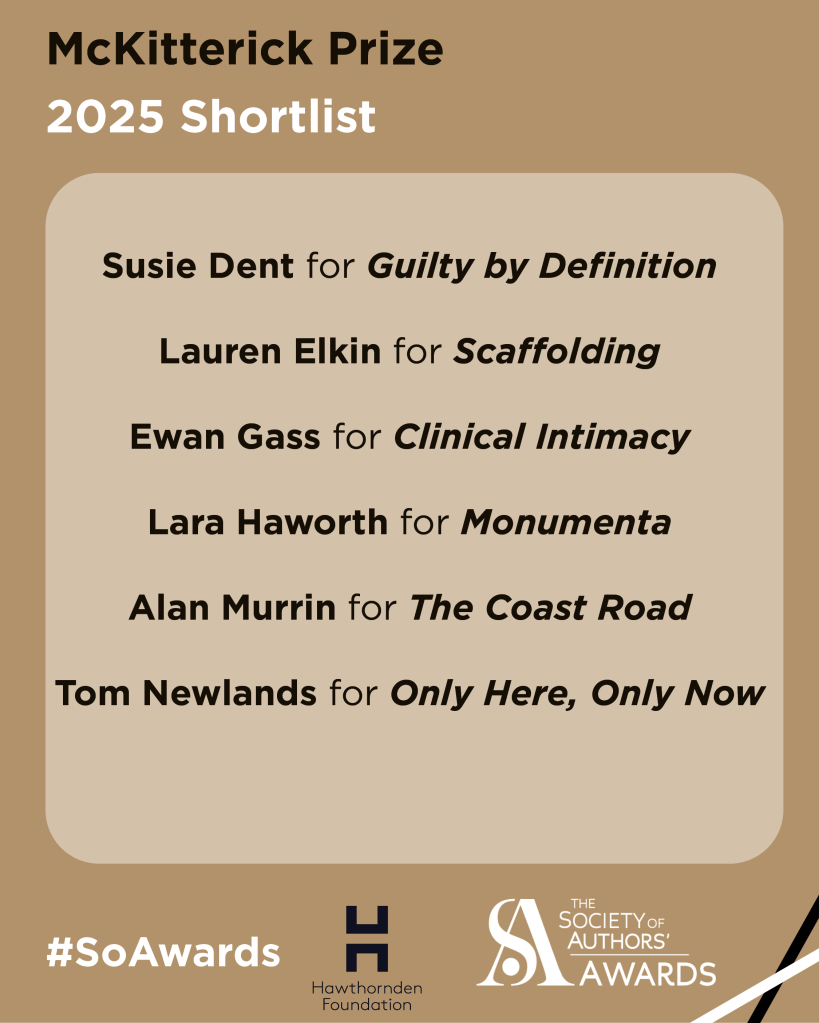
For the fourth year in a row, I’ve been involved in judging the McKitterick Prize (for a first novel, published or unpublished, by a writer over 40). However, after three years of helping to assess the unpublished manuscripts, this was my first time as a judge for the published submissions. It has been a great experience! Today the shortlists for all of the 2025 Society of Authors Awards have been announced, so I can share our finalists below.
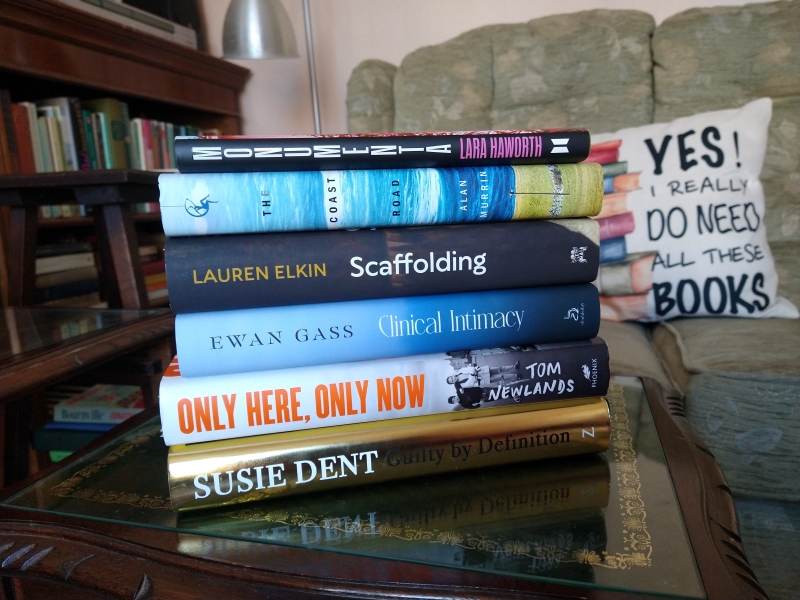
My three fellow judges and I were all asked for 50-word blurbs about each book and about the shortlist as a whole. I’m honoured that my overall blurb was chosen to accompany the McKitterick rundown in the press release:
Each of these six novels has a fully realized style. So confident and inviting are they that it’s hard to believe they are debuts. With nuanced characters and authentic settings and dilemmas, they engage the mind and delight the emotions. I will be following these authors’ careers with keen interest.
Notably, Tom Newlands’s Only Here, Only Now is a finalist for two of the prizes this year, the other being the ACDI Literary Prize, which is awarded to “a disabled or chronically ill writer, for an outstanding novel containing a disabled or chronically ill character or characters.” (A worthy successor to the Barbellion Prize, which, unfortunately, only ran for three years, 2020–22.) His teenage protagonist grows up in working-class Scotland in the 1990s with undiagnosed ADHD.
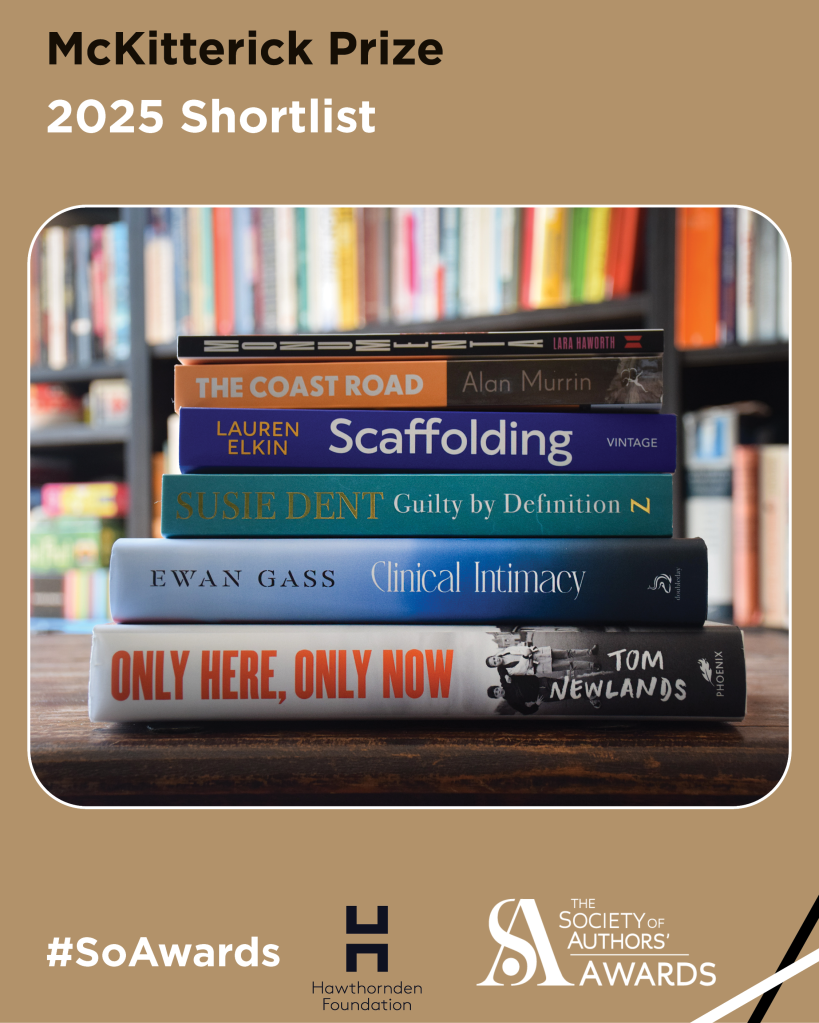
The winner and runner-up will be announced in advance of the SoA Awards ceremony in London on 18 June. In previous years, I have stayed home and watched the livestream, but this year I’ll attend in person and hope to meet Southwark Cathedral’s resident cat, Hodge!
Have you read anything from the McKitterick shortlist, or one of the other prize lists?
Book Serendipity, Mid-February to Mid-April
I call it “Book Serendipity” when two or more books that I read at the same time or in quick succession have something in common – the more bizarre, the better. This is a regular feature of mine every couple of months. Because I usually have 20–30 books on the go at once, I suppose I’m more prone to such incidents. People frequently ask how I remember all of these coincidences. The answer is: I jot them down on scraps of paper or input them immediately into a file on my PC desktop; otherwise, they would flit away!
The following are in roughly chronological order.
- The protagonist isn’t aware that they’re crying until someone tells them / they look in a mirror in The Remains of the Day by Kazuo Ishiguro and Three Days in June by Anne Tyler.
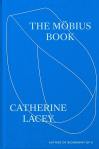
- A residential complex with primal scream therapy in Confessions by Catherine Airey and The Möbius Book by Catherine Lacey.
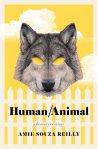
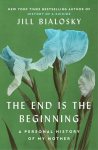
- Memories of wiping down groceries during the early days of the pandemic in The End Is the Beginning by Jill Bialosky and Human/Animal by Amie Souza Reilly.
- A few weeks before I read Maurice and Maralyn by Sophie Elmhirst, I’d finished reading the author’s husband’s debut novel (Going Home by Tom Lamont); I had no idea of the connection between them until I got to her Acknowledgements.
- A mention of the same emergency money passing between friends in Alligator Tears by Edgar Gomez ($20) and The Möbius Book by Catherine Lacey ($100).
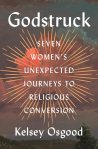
- Autobiographical discussions of religiosity and anorexia in The Möbius Book by Catherine Lacey and Godstruck by Kelsey Osgood.
- The theme of the dark night sky in The Wild Dark by Craig Childs, followed almost immediately by Night Magic by Leigh Ann Henion.
- Last year I learned about Marina Abramović’s performance art where she and her ex trekked to China’s Great Wall from different directions, met in the middle, and continued walking away to dramatize their breakup in The Ritual Effect by Michael Norton. Recently I saw it mentioned again in The Möbius Book by Catherine Lacey. Abramović’s work is also mentioned in Human/Animal by Amie Souza Reilly and is the basis for the opening track on Anne-Marie Sanderson’s album Old Light, “Amethyst Shoes.”
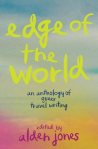
- The idea of running towards danger appears in Alex Marzano-Lesnevich’s essay in Edge of the World, a queer travel anthology edited by Alden Jones; and the bibliography of The Möbius Book by Catherine Lacey.
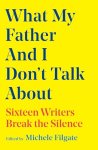
- I then read another Alex Marzano-Lesnevich essay in quick succession (both were excellent, by the way) in What My Father and I Don’t Talk About, edited by Michele Filgate.
- A scene in which a woman goes to a police station and her concerns are dismissed because she has no evidence and the man/men’s behaviour isn’t ‘bad enough’ in I Am, I Am, I Am by Maggie O’Farrell and Human/Animal by Amie Souza Reilly.
- Too many details as the sign of a lie in Dream Count by Chimamanda Ngozi Adichie and Three Days in June by Anne Tyler.
- Scenes of throwing all of a spouse’s belongings out on the yard/street in Old Soul by Susan Barker, How to Survive Your Mother by Jonathan Maitland, and Human/Animal by Amie Souza Reilly.
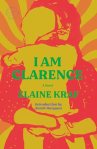
- Reading two lost American classics about motherhood and time spent in a mental institution at the same time: The Shutter of Snow by Emily Holmes Coleman and I Am Clarence by Elaine Kraf.
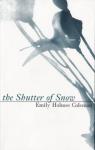
- Disorientation underwater: a literal experience in I Am, I Am, I Am by Maggie O’Farrell, then used as a metaphor for what it was like to be stuck in a blizzard on Annapurna in 2014 in The Secret Life of Snow by Giles Whittell.
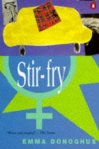
- A teenager who has a job cleaning hotels in Old Soul by Susan Barker and I Am, I Am, I Am by Maggie O’Farrell. (In Stir-Fry by Emma Donoghue, Maria is also a teenaged cleaner, but of office buildings.)
- A vacuum cleaner bag splits in Stir-Fry by Emma Donoghue and one story of Are You Happy? by Lori Ostlund – in the latter it’s deliberate, searching for evidence of the character’s late son after cleaning his room.

- An ailing tree or trees that have to be cut down in one story of The Accidentals by Guadalupe Nettel and The Lost Trees of Willow Avenue by Mike Tidwell.
- Buchenwald was mentioned in one poem each in A God at the Door by Tishani Doshi and The Ghost Orchid by Michael Longley.
- A reference to Robin Wall Kimmerer’s Braiding Sweetgrass in To Have or to Hold by Sophie Pavelle and Human/Animal by Amie Souza Reilly.

- A mentally unwell woman deliberately burns her hands in I Am Clarence by Elaine Kraf and Every Day Is Mother’s Day by Hilary Mantel.
- A mention of the pollution caused by gas stoves in We Do Not Part by Han Kang and The Lost Trees of Willow Avenue by Mike Tidwell.
- An art installation involving part-buried trees was mentioned in Immemorial by Lauren Markham and then I encountered a similar project a few months later in We Do Not Part by Han Kang. Burying trees as a method of carbon storage is then discussed in The Lost Trees of Willow Avenue by Mike Tidwell.

- Imagining the lives of the people living in an apartment you didn’t end up renting in Scaffolding by Lauren Elkin and one story of The Accidentals by Guadalupe Nettel.
- The Anthropocene is mentioned in Scaffolding by Lauren Elkin and The Alternatives by Caoilinn Hughes.
- I was reading three debut novels from the McKitterick Prize longlist at the same time, all of them with very similar page counts of 383, 387, and 389 (i.e., too long!).
- Being appalled at an institutionalized mother’s appearance in The End Is the Beginning by Jill Bialosky and Every Day Is Mother’s Day by Hilary Mantel.
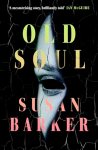 A remote artist’s studio and severed fingers in Old Soul by Susan Barker and We Do Not Part by Han Kang.
- A lesbian couple in New Mexico, the experience of being watched through a window, and the mention of a caftan/kaftan, in Old Soul by Susan Barker and one story of Are You Happy? by Lori Ostlund.
- Refusal to go to a hospital despite being in critical condition in I Am, I Am, I Am by Maggie O’Farrell and one story of Are You Happy? by Lori Ostlund.
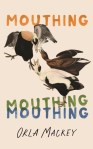
- It’s not a niche stylistic decision anymore; I was reading four novels with no speech marks at the same time: Old Soul by Susan Barker, Scaffolding by Lauren Elkin, The Alternatives by Caoilinn Hughes, and We Do Not Part by Han Kang. [And then, a bit later, three more: Wild Boar by Hannah Lutz, Mouthing by Orla Mackey, and How to Be Somebody Else by Miranda Pountney.]
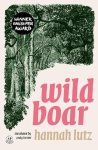
 A lesbian couple is alarmed by the one partner’s family keeping guns in Spent by Alison Bechdel and one story of Are You Happy? by Lori Ostlund.
- Responding to the 2021 murder of eight Asian spa workers in Atlanta in Foreign Fruit by Katie Goh and Find Me as the Creature I Am by Emily Jungmin Yoon.
- Disposing of a late father’s soiled mattress in Mouthing by Orla Mackey and one story of Are You Happy? by Lori Ostlund.
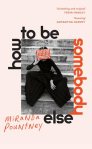 New York City tourist slogans in Apple of My Eye by Helene Hanff and How to Be Somebody Else by Miranda Pountney.
- A Jewish care home for the elderly in The End Is the Beginning by Jill Bialosky and Joanna Rakoff’s essay in What My Father and I Don’t Talk About (ed. Michele Filgate).
- A woman has no memory between leaving a bar and first hooking up with the man she’s having an affair with in If You Love It, Let It Kill You by Hannah Pittard and How to Be Somebody Else by Miranda Pountney.
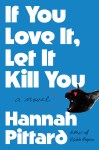 A stalker-ish writing student who submits an essay to his professor that seems inappropriately personal about her in one story of Are You Happy? by Lori Ostlund and If You Love It, Let It Kill You by Hannah Pittard.
- A pygmy goat as a pet (and a one-syllable, five-letter S title!) in Spent by Alison Bechdel and Sleep by Honor Jones.
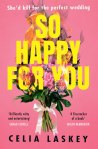
- A Brooklyn setting and thirtysomething female protagonist in Sleep by Honor Jones, So Happy for You by Celia Laskey, and How to Be Somebody Else by Miranda Pountney.
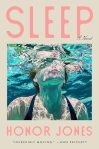
- A mention of the American Girl historical dolls franchise in Sleep by Honor Jones and If You Love It, Let It Kill You by Hannah Pittard, both of which I’m reviewing early for Shelf Awareness.
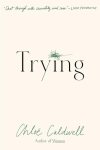 A writing professor knows she’s a hypocrite for telling her students what (not) to do and then (not) doing it herself in Trying by Chloé Caldwell and If You Love It, Let It Kill You by Hannah Pittard. These two books also involve a partner named B (or Bruce), metafiction, porch drinks with parents, and the observation that a random statement sounds like a book title.
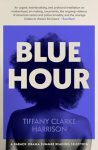
- The protagonist’s therapist asks her to find more precise words for her feelings in Blue Hour by Tiffany Clarke Harrison and So Happy for You by Celia Laskey.
- The protagonist “talks” with a dying dog or cat in The Möbius Book by Catherine Lacey and If You Love It, Let It Kill You by Hannah Pittard.
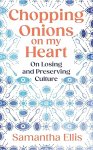 Shalimar perfume is mentioned in Scaffolding by Lauren Elkin and Chopping Onions on My Heart by Samantha Ellis.
- The Rapunzel fairytale is a point of reference in In the Evening, We’ll Dance by Anne-Marie Erickson and Secret Agent Man by Margot Singer, both of which I was reading early for Foreword Reviews.
What’s the weirdest reading coincidence you’ve had lately?
Paul Auster Reading Week: Invisible (#ReadIndies) & Siri Hustvedt’s The Blindfold (#AusterRW25)
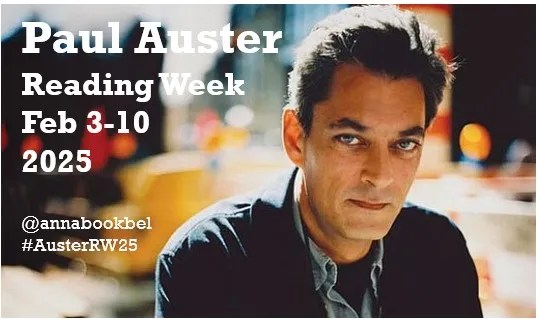
The first time Annabel ran a Paul Auster Reading Week, in 2020, it was a great excuse for me to read six of his books (Winter Journal and The New York Trilogy were amazing; I also really enjoyed Oracle Night). I won’t manage so many this time, but maybe three, as well as one by his widow, Siri Hustvedt. Auster would have been 78 today but died of lung cancer in 2024. As a buddy read, Annabel is inviting people to read his final novel, Baumgartner. I’m partway through that and have another of his novellas waiting in the wings in case I find time.
For now, I’m focusing on a novel that exemplifies some recurring elements of his fiction: a book within a book, fragmented narratives, differing perspectives, cryptic events and the inscrutability of memory and language. I’m pairing it with Hustvedt’s debut novel, which is – not coincidentally, I should think – similarly intricate, weird and unsettling.
Invisible (2009)
To start with, I thought we were in autofiction territory, but Auster swiftly adopts a more typical metafictional approach. Adam Walker is a 20-year-old would-be poet studying at Columbia University in 1967. At a party he meets Rudolf Born, a visiting international affairs professor from Paris, and it seems a good omen: Born invests generously in Adam’s literary magazine and also seems open to sharing his beautiful girlfriend, Margot. But when the men are caught up in an attempted mugging, Adam turns against his idol.
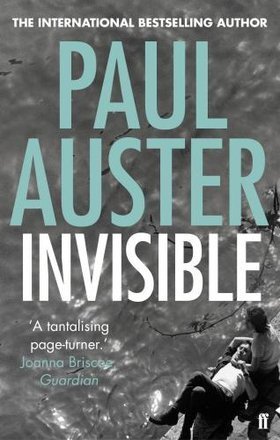 That’s at the heart of Part I (“Spring”). Across four sections, the perspective changes and the narrative is revealed to be 1967, a manuscript Adam began while dying of cancer. “Summer,” in the second person, shines a light on his relationship with his sister, Gwyn. “Fall,” adapted from Adam’s third-person notes by his college friend and fellow author, Jim Freeman, tells of Adam’s study abroad term in Paris. Here he reconnected with Born and Margot with unexpected results. Jim intends to complete the anonymized story with the help of a minor character’s diary, but the challenge is that Adam’s memories don’t match Gwyn’s or Born’s.
I can’t say more about the themes without giving too much away, but this is a provocative novel that makes you question how truth is created or preserved. Who has the right to tell the story, and will justice be done? I wouldn’t say I enjoyed it, but I certainly admired how it was constructed. Auster conjures such a sense of unease, and I always felt like I had no idea what might happen next. With no speech marks, it all flows together in a compulsively readable way. (Secondhand purchase – Awesomebooks.com) 
Faber, Auster’s longtime publisher, counts towards Reading Independent Publishers Month.
The Blindfold by Siri Hustvedt (1992)
“Strange, I thought. Everything is strange.”
I read Hustvedt (The Blazing World) well before I ever tried Auster, and wouldn’t have realized then how similar their books are; they almost seem part of the same body of work. Was Hustvedt a fan or a student of his before they married? I don’t actually know and am loath to dispel the mystery for myself by looking into it. Anyway, there are striking connections between this and Invisible: the narrator is fairly autobiographical and a Columbia University student, the novel is in four loosely connected parts, and the sordid content culminates in a sudden, odd ending. (There’s also the little Easter egg here of “I heard someone shout the name Paul.”) But overall, this is more reminiscent of The New York Trilogy in its surreal randomness and subtly symbolic naming (e.g., the landlord is Mr. Then).
 Iris Vegan (Hustvedt’s mother’s surname), like many an Auster character, is bewildered by what happens to her. An impoverished graduate student in literature, she takes on peculiar jobs. First Mr. Morning hires her to make audio recordings meticulously describing artefacts of a woman he’s obsessed with. Iris comes to believe this woman was murdered and rejects the work as invasive. Next she’s a photographer’s model but hates the resulting portrait and tries to take it off display. Then she’s hospitalized for terrible migraines and has upsetting encounters with a fellow patient, old Mrs. O. Finally, she translates a bizarre German novella and impersonates its protagonist, walking the streets in a shabby suit and even telling people her name is Klaus.
I worked out that the chronological order of the parts is 2 – 4 – 3 – 1, with 1 including a recap of the others. The sections feel like separate vignettes, perhaps reflecting Hustvedt’s previous experience with the short story form, and make a less than satisfying whole. I was most engaged with the segment on working for Mr. Morning and thought that might recur, but it doesn’t. Many of the secondary characters are grotesque, whereas Iris is the intellectual waif trying to make her way in the cruel city, almost like a Dickens or Gissing (anti)hero.
It’s refreshing to get a female take on the Bildungsroman and a little bit of gender-bending with the cross-dressing. (Iris reminds me of Lauren Elkin’s Flaneuse.) The title felt like an enigma to me until close to the end, when it’s revealed to be a tool of sexual sadism. Indeed, each of the sections, in its own way, addresses male exploitation of and violence against women. Disappointingly, Iris remains defined by her relationships with men. She deserves better. Heck, she deserves a sequel! It’s interesting to see where Hustvedt got her start, but I didn’t warm to this as I did to later novels including What I Loved. (Secondhand purchase – Community Furniture Project, Newbury) 
Three in Translation for #NovNov23: Baek, de Beauvoir, Naspini
I’m kicking off Week 3 of Novellas in November, which we’ve dubbed “Broadening My Horizons.” You can interpret that however you like, but Cathy and I have suggested that you might like to review some works in translation and/or think about any new genres or authors you’ve been introduced to through novellas. Literature in translation is still at the edge of my comfort zone, so it’s good to have excuses such as this (and Women in Translation Month each August) to pick up books originally published in another language. Later in the week I’ll have a contribution or two for German Lit Month too.

I Want to Die but I Want to Eat Tteokbokki by Baek Se-hee (2018; 2022)
[Translated from the Korean by Anton Hur]
 Best title ever. And a really appealing premise, but it turns out that transcripts of psychiatry appointments are kinda boring. (What a lazy way to put a book together, huh?) Nonetheless, I remained engaged with this because the thoughts and feelings she expresses are so relatable that I kept finding myself or other people I know in them. Themes that emerge include co-dependent relationships, pathological lying, having impossibly high standards for oneself and others, extreme black-and-white thinking, the need for attention, and the struggle to develop a meaningful career in publishing.
There are bits of context and reflection, but I didn’t get a clear overall sense of the author as a person, just as a bundle of neuroses. Her psychiatrist tells her “writing can be a way of regarding yourself three-dimensionally,” which explains why I’ve started journaling – that, and I want believe that the everyday matters, and that it’s important to memorialize.
I think the book could have ended with Chapter 14, the note from her psychiatrist, instead of continuing with another 30+ pages of vague self-help chat. This is such an unlikely bestseller (to the extent that a sequel was published, by the same title, just with “Still” inserted!); I have to wonder if some of its charm simply did not translate. (Public library) [194 pages]
The Inseparables by Simone de Beauvoir (2020; 2021)
[Translated from the French by Lauren Elkin]
 Earlier this year I read my first work by de Beauvoir, also of novella length, A Very Easy Death, a memoir of losing her mother. This is in the same autobiographical mode: a lightly fictionalized story of her intimate friendship with Elisabeth Lacoin (nicknamed “Zaza”) from ages 10 to 21, written in 1954 but not published until recently. The author’s stand-in is Sylvie and Zaza is Andrée. When they meet at school, Sylvie is immediately enraptured by her bold, talented friend. “Many of her opinions were subversive, but because she was so young, the teachers forgave her. ‘This child has a lot of personality,’ they said at school.” Andrée takes a lot of physical risks, once even deliberately cutting her foot with an axe to get out of a situation (Zaza really did this, too).
Whereas Sylvie loses her Catholic faith (“at one time, I had loved both Andrée and God with ferocity”), Andrée remains devout. She seems destined to follow her older sister, Malou, into a safe marriage, but before that has a couple of unsanctioned romances with her cousin, Bernard, and with Pascal (based on Maurice Merleau-Ponty). Sylvie observes these with a sort of detached jealousy. I expected her obsessive love for Andrée to turn sexual, as in Emma Donoghue’s Learned by Heart, but it appears that it did not, in life or in fiction. In fact, Elkin reveals in a translator’s note that the girls always said “vous” to each other, rather than the more familiar form of you, “tu.” How odd that such stiffness lingered between them.
This feels fragmentary, unfinished. De Beauvoir wrote about Zaza several times, including in Memoirs of a Dutiful Daughter, but this was her fullest tribute. Its length, I suppose, is a fitting testament to a friendship cut short. (Passed on by Laura – thank you!) [137 pages]
(Introduction by Deborah Levy; afterword by Sylvie Le Bon de Beauvoir, de Beavoir’s adopted daughter. North American title: Inseparable.)
Tell Me About It by Sacha Naspini (2020; 2022)
[Translated from the Italian by Clarissa Botsford]
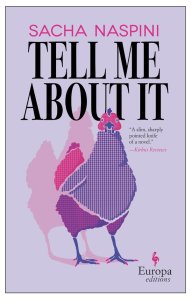 The Tuscan novelist’s second work to appear in English has an irresistible setup: Nives, recently widowed, brings her pet chicken Giacomina into the house as a companion. One evening, while a Tide commercial plays on the television, Giacomina goes as still as a statue. Nives places a call to Loriano Bottai, the local vet and an old family friend who is known to spend every night inebriated, to ask for advice, but they stay on the phone for hours as one topic leads to another. Readers learn much about these two, whom, it soon emerges, have a history.
The text is saturated with dialogue; quick wits and sharp tempers blaze. You could imagine this as a radio or stage play. The two characters discuss their children and the town’s scandals, including a lothario turned artist’s muse and a young woman who died by suicide. “The past is full of ghosts. For all of us. That’s how it is, and that’s how it will always be,” Loriano says. There’s a feeling of catharsis to getting all these secrets out into the open. But is there a third person on the line?
A couple of small translation issues hampered my enjoyment: the habit of alternating between calling him Loriano and Bottai (whereas Nives is always that), and the preponderance of sayings (“What’s true is that the business with the nightie has put a bee in my bonnet”), which is presumably to mimic the slang of the original but grates. Still, a good read. (Passed on by Annabel – thank you!) [128 pages]

Books in Brief: Five I Loved Recently
Feminist social history, visits with the world’s bees, a novel about a peculiar child and his reclusive writer mother, witty notes on Englishness, and tips on surviving heartbreak: five very different books, but I hope one or more of them is something that you’d enjoy.
Flâneuse: Women Walk the City in Paris, New York, Tokyo, Venice and London
By Lauren Elkin
 Raised in New York and now a Paris resident, Lauren Elkin has always felt at home in cities. Here she traces how women writers and artists have made the world’s great cities their own, blending memoir, social history and literary criticism. In a neat example of form flowing from content, the book meanders from city to city and figure to figure. My interest waned during later chapters on protesting (‘taking to the streets’) and the films of Agnès Varda. However, especially when she’s musing on Martha Gellhorn’s rootlessness, Elkin captures the angst of being a woman caught between places and purposes in a way that expatriates like myself will appreciate. It’s in making the history of the flâneuse personal that Elkin opens her book up to a wider swathe of readers than just the feminist social historians and literary critics who might seem like her natural audience. I would particularly recommend this to readers of Rebecca Solnit and Olivia Laing. (See my full review at The Bookbag.)
My rating: 
Bee Quest: In Search of Rare Bees
By Dave Goulson
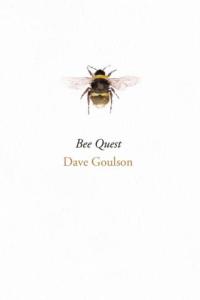 Goulson grows more like Bill Bryson and Gerald Durrell with each book. Although the topic of this, his third nature book (all of them are broadly about insects), is probably of least personal interest to me, there are plenty of wonderful asides and pieces of trivia that make it worth journeying along with him from Poland to Ecuador in the search for rare bees. For as close-up as his view often is, he also sees the big picture of environmental degradation and species loss. I learned some fairly dismaying facts: gold mining is extremely destructive to the environment, producing 20 tons of toxic material per ring; and it takes five liters of water to produce one almond in California. As for a more hopeful statistic: the billions of dollars it would take to set up conservation efforts for all the world’s species would still only equate to cutting world Coke consumption by 20%. It’s all a matter of priorities.
A favorite line:
“As is often the case in entomology, in the end it all comes down to the genitals.”
My rating:
Be Frank with Me
By Julia Claiborne Johnson
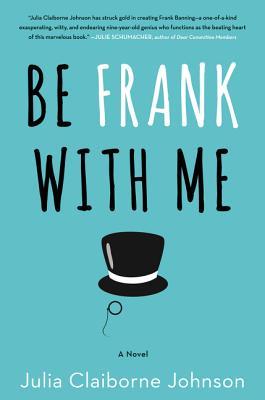 Alice, a young publishing assistant, is sent from New York City to Los Angeles to encourage one-hit wonder and Harper Lee type M.M. Banning to produce her long-delayed second novel. But when she arrives she discovers her most pressing duty is keeping an eye on Mimi’s oddball son, nine-year-old Frank. I doubt you’ve ever met a character quite like Frank. (I appreciated how, although he is clearly on what would be termed the autistic spectrum, Johnson avoids naming his condition.) Alice narrates the whole book in the first person. She finds herself caught in a four-person battle of wits – Alice, Mimi, Frank, and “itinerant male role model” Xander – inside Mimi’s big glass-fronted fishbowl of a house. There were a couple moments when I wondered where this madcap plot could be going. In particular, we have to wait a long time to find out whether Mimi is actually going to deliver another book. But the payout is worth waiting for. (See my full review at The Bookbag.)
My rating:
How to Be an Alien
By George Mikes
 (The first volume in the How to Be a Brit omnibus; originally published in 1946.) You can draw a straight line from this through Bill Bryson’s Notes from a Small Island to the “Very British Problems” phenomenon. Mikes (that’s “mee-cash” – he was a Hungarian journalist who accidentally moved to England permanently when he was sent to London as a correspondent just before World War II) made humorous observations that have, in general, aged well. The mini-essays on tea, weather, and queuing struck me as particularly apt. I’d heard this line before, though I can’t remember where: “An Englishman, even if he is alone, forms an orderly queue of one.”
Another favorite passage:
“It is all right to have central heating in an English home, except the bath room, because that is the only place where you are naked and wet at the same time, and you must give British germs a fair chance.” [This reminds me of when my mother made her first trip to England in 2004 to visit me during my study abroad year; in her family newsletter reporting on the experience, one of her key observations was, “British bathrooms are antiquated.” My husband and I still quote this to each other regularly.]
My rating:
A Manual for Heartache
By Cathy Rentzenbrink
 This is a follow-up to Rentzenbrink’s memoir, The Last Act of Love, which was about the accident that left her brother in a vegetative state for eight years and the legal battle she and her parents fought to be able to end his life. The first quarter of this book contains fairly generic advice for people who have been through family tragedy, illness or some other hardship. It’s when Rentzenbrink makes things personal, talking about her own struggles with PTSD and depression and strategies that have helped her over the years, that the book improves, and it maintains a pretty high standard therafter. Although you wouldn’t really call anything in here groundbreaking, it’s a slim and accessible volume that I could see being helpful for anyone who’s grieving, even someone who’s not usually a reader or has a short attention span. (I won a copy in a Goodreads giveaway.)
A couple favorite passages:
“Experiencing grief for the first time is like the dark twin of falling in love. It feels a bit crazy, and we don’t think anyone has ever felt exactly as we do. But of course they have.”
“We don’t need to be unbroken. Our first step is simply to stop trying to hide our scars. Heartache is human.”
My rating: 
 Bookish Beck = Rebecca Foster. American transplant to England. Freelance proofreader and book reviewer.
 Bookish Beck