Book Serendipity, April to May 2024
I call it “Book Serendipity” when two or more books that I read at the same time or in quick succession have something in common – the more bizarre, the better. Of course, the truer term would be synchronicity, but the branding has stuck. In Liz Jensen’s Your Wild and Precious Life, she mentions that Carl Jung coined the term “synchronicity” for what he described as “a meaningful coincidence of two or more events where something other than the probability of chance is involved.” I like thinking that it’s not just a matter of luck.
This is a regular feature of mine every couple of months. I would normally have waited until the end of June, but I had way too many coincidences stored up! Because I usually have 20–30 books on the go at once, I suppose I’m more prone to finding them. People frequently ask how I remember all of these incidents. The answer is: I jot them down on scraps of paper or input them immediately into a file on my PC desktop; otherwise, they would flit away.
The following are in roughly chronological order.
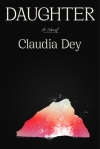
- Reading two King Lear updates at the same time: Private Rites by Julia Armfield and Daughter by Claudia Dey. The former has been specifically marketed as a “lesbian Lear,” but I had no idea that the latter also features two sisters plus a younger half-sister and their interactions with a larger-than-life father.

- Eating beans straight out of the tin in The Waterfall by Margaret Drabble and Of Mice and Men by John Steinbeck.
- Dead mice in Of Mice and Men by John Steinbeck and Stone Yard Devotional by Charlotte Wood.

-

- Screenshot
- Cloth holding the jaw of a corpse closed in one story from Barcelona by Mary Costello and A Woman’s Story by Annie Ernaux.
- Others see a character’s wife as a whore but the husband is oblivious in The Shipping News by E. Annie Proulx and Of Mice and Men by John Steinbeck.
 Setting up a game of solitaire in The Snow Hare by Paula Lichtarowicz and Of Mice and Men by John Steinbeck.
- Main character called Mona in Daughter by Claudia Dey and Mona of the Manor by Armistead Maupin.
- Being surprised at an older man still having his natural hair colour in one story of Barcelona by Mary Costello (where he’s aged 76) and Life in the Balance by Jim Down (where it’s Alan Bennett, at 84!).
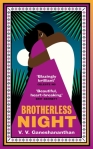
- A character named Anjali in Brotherless Night by V.V. Ganeshananthan and Moral Injuries by Christie Watson.

- A character named Cherry in Daughter by Claudia Dey and one story of This Is Why We Can’t Have Nice Things by Naomi Wood.
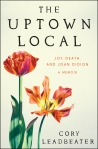
- My second memoir in two months in which a twentysomething son dies suddenly of a presumed heart problem: Fi by Alexandra Fuller, followed by Your Wild and Precious Life by Liz Jensen. (And a third in which his young friend died in the same way: The Uptown Local by Cory Leadbeater.) Also, Fuller and Jensen both see signs of their sons’ continued presence in bird sightings.
- Scratches on the inside of a coffin as proof of being buried alive in one story of Barcelona by Mary Costello and Life in the Balance by Jim Down.


- Surprise that one didn’t know the exact moment that a loved one died in one story of Barcelona by Mary Costello and Your Wild and Precious Life by Liz Jensen.
- Discussion of the meaning of brain stem death and a mention of meningococcal sepsis in Life in the Balance by Jim Down and Moral Injuries by Christie Watson.
- A scene set in a Denny’s diner in The Whole Staggering Mystery by Sylvia Brownrigg and After Dark by Haruki Murakami.


- A description of halal butchery in Barcelona by Mary Costello and Between Two Moons by Aisha Abdel Gawad.
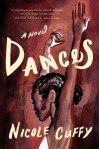
- A mention of ballet choreographer George Balanchine in Dances by Nicole Cuffy and The Uptown Local by Cory Leadbeater.
- A woman has an affair with a female postal worker in Mona of the Manor by Armistead Maupin and The Shipping News by Annie Proulx, both of which I DNFed.
- A character named Magdalena in Cloistered by Catherine Coldstream and The Snow Hare by Paula Lichtarowicz. The latter goes by Lena, which is also the name of the main character in Jungle House by Julianne Pachico. And there’s a character named Lina in Between Two Moons by Aisha Abdel Gawad.


- Being presented with powdered milk in Cloistered by Catherine Coldstream and Whale Fall by Elizabeth O’Connor.
- First I read a novel about a convent plagued by mice (Stone Yard Devotional by Charlotte Wood). Then I read a memoir about a convent plagued by feral cats (Cloistered by Catherine Coldstream).
- Buffalo, New York as a setting in Consent by Jill Ciment and The Age of Loneliness by Laura Marris. It’s also mentioned in Enter Ghost by Isabella Hammad.

- Watching pigeons on one’s balcony in Keep by Jenny Haysom, Your Wild and Precious Life by Liz Jensen, and The Uptown Local by Cory Leadbeater.
 The family’s pet chicken is cooked for dinner in Coleman Hill by Kim Coleman Foote and The Snow Hare by Paula Lichtarowicz.
- The mother is named Gloria in Consent by Jill Ciment and Cold Spring Harbor by Richard Yates (and The War for Gloria by Atticus Lish, a DNF).
- A character named Anton in The Snow Hare by Paula Lichtarowicz and Jungle House by Julianne Pachico.
- A cat named Dog in The Door-to-Door Bookstore by Carsten Henn and a dog named Tiger in Jungle House by Julianne Pachico.
- Two nature books that feature wild cold-water swimming (though don’t they all these days?!): In All Weathers by Matt Gaw and Your Wild and Precious Life by Liz Jensen.

- Two nature books that mention W.H. Hudson: In All Weathers by Matt Gaw and North with the Spring by Edwin Way Teale.
 A large anonymous donation to a church in Slammerkin by Emma Donoghue and Excellent Women by Barbara Pym (£10–11, which was much more in the 18th century of the former than in the 1950s of the latter).
- A mention of Poughkeepsie, New York in Birdeye by Judith Heneghan and Woman of Interest by Tracy O’Neill.
- A 1950s scene of perusing a lipstick display in Recipe for a Perfect Wife by Karma Brown and Excellent Women by Barbara Pym.

- A woman with a broken leg worries about how her garden will fare in Recipe for a Perfect Wife by Karma Brown and Remarkably Bright Creatures by Shelby Van Pelt.
- The same silent film image of a spaceship entering the moon’s eye (from Georges Méliès’s A Trip to the Moon) appears in Knife by Salman Rushdie and The Invention of Hugo Cabret by Brian Selznick. (I think this is the uncanniest coincidence of all this time!)

- A cleric who wears a biretta in Excellent Women by Barbara Pym and Daughters of the House by Michèle Roberts.
- A Black single mother who believes in the power of crystals in Company by Shannon Sanders and Another Word for Love by Carvell Wallace.


- An older woman really doesn’t want to leave her home but is moving into a retirement facility in Keep by Jenny Haysom and Remarkably Bright Creatures by Shelby Van Pelt. (There’s also a young woman who refuses to leave her house in Recipe for a Perfect Wife by Karma Brown.)
 A man throws his tie over his shoulder before eating in Recipe for a Perfect Wife by Karma Brown and Keep by Jenny Haysom.
- A mother writing a bad check becomes an important plot point in Remarkably Bright Creatures by Shelby Van Pelt and Another Word for Love by Carvell Wallace.
 A scene of self-induced abortion in Recipe for a Perfect Wife by Karma Brown and Sleeping with Cats by Marge Piercy.
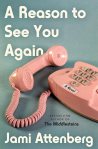
- The Yiddish word feh (an expression of disappointment) appears in Feh by Shalom Auslander (no surprise there!) but also in A Reason to See You Again by Jami Attenberg, both of which are pre-release books I am reading for Shelf Awareness reviews.

What’s the weirdest reading coincidence you’ve had lately?
Book Serendipity, March to April 2024
I call it “Book Serendipity” when two or more books that I read at the same time or in quick succession have something in common – the more bizarre, the better. This is a regular feature of mine every couple of months. Because I usually have 20–30 books on the go at once, I suppose I’m more prone to such incidents. The following are in roughly chronological order.
- I encountered quotes from “The Second Coming” by W.B. Yeats on the same day in Immanuel by Matthew McNaught and Waiting for the Monsoon by Rod Nordland. A week or so later, I found another allusion to it – a “rough _________ slouching toward ________” – in Mothership by Greg Wrenn.
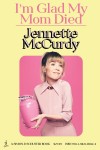
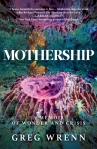
- Reading my second memoir this year in which the author’s mother bathed them until they were age 17 (in other words, way past when it ceased to be appropriate): I’m Glad My Mom Died by Jennette McCurdy was followed by Mothership by Greg Wrenn.
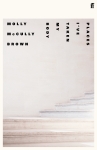
- Quoting a poem with the word “riven” in it (by Christian Wiman) in Places I’ve Taken My Body by Molly McCully Brown and (by a character in the novel) in Bright and Tender Dark by Joanna Pearson. The word “riven” (which is really not a very common one, is it?) also showed up in Sleepless by Annabel Abbs. And then “riving” in one of the poems in The Intimacy of Spoons by Jim Minick.
- East Timor as a destination in Waiting for the Monsoon by Rod Nordland and Mothership by Greg Wrenn.
- Quoting John Donne in Places I’ve Taken My Body by Molly McCully Brown and The Bee Sting by Paul Murray (to which a Donne line is the epigraph); mimicking Donne in one poem of Fields Away by Sarah Wardle.
- “Who do you think you are?” as a question an abusive adult asks of a child in The Beggar Maid (aka Who Do You Think You Are?) by Alice Munro and Mothership by Greg Wrenn.
- Sylvia Plath is mentioned in Sleepless by Annabel Abbs and The Bee Sting by Paul Murray … and Katherine Mansfield in Sleepless by Annabel Abbs and The Beggar Maid by Alice Munro.
- Mosquitoes are mentioned in a poem in Rapture’s Road by Seán Hewitt and Divisible by Itself and One by Kae Tempest.

- Reading two memoirs that quote a Rumi poem (and that released on 9 April and that I reviewed for Shelf Awareness): Fi: A Memoir of My Son by Alexandra Fuller and Somehow: Thoughts on Love by Anne Lamott. (Rumi was also quoted as an epigraph in Viv Fogel’s poetry collection Imperfect Beginnings.)
- Bereavement memoirs that seek significance in eagle sightings (i.e. as visitations from the dead): Sleepless by Annabel Abbs and Fi: A Memoir of My Son by Alexandra Fuller.
- Snyder’s pretzels as a snack in Somehow: Thoughts on Love by Anne Lamott and Come and Get It by Kiley Reid.

- Reading two C-PTSD memoirs at the same time: A Flat Place by Noreen Masud and Mothership by Greg Wrenn.
 Information about coral reefs dying in Martyr! by Kaveh Akbar and Mothership by Greg Wrenn.
- The gay slang term “twink” appears in The Bee Sting by Paul Murray and Mothership by Greg Wrenn.
- Assisting a mother who reads tarot cards in Intervals by Marianne Brooker and The Year of the Cat by Rhiannon Lucy Cosslett. (Tarot is also read in First Love by Lilly Dancyger and The Future by Catherine Leroux.)

- An Asian American character who plays poker in a graphic novel: Advocate by Eddie Ahn and Lunar New Year Love Story by Gene Luen Yang.
- Vivian Gornick’s Fierce Attachments, which I was also reading at the time, is mentioned in Intervals by Marianne Brooker.
 An Uncle Frank in an Irish novel with no speech marks: Trespasses by Louise Kennedy and The Bee Sting by Paul Murray.
- Martin Luther King’s “I Have a Dream” speech is quoted in Some Kids I Taught & What They Taught Me by Kate Clanchy and How to Raise a Viking by Helen Russell.
- Using quarters for laundry in Come and Get It by Kiley Reid and one story from Dressing Up for the Carnival by Carol Shields.

- A scene of someone watching from a lawn chair as someone else splits wood in Martyr! by Kaveh Akbar and Becoming Little Shell by Chris La Tray.
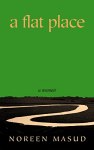 Quotes from cultural theorist Sara Ahmed in Intervals by Marianne Brooker and A Flat Place by Noreen Masud.
- I read about windows being blocked up because of high taxes on the same evening in Trespasses by Louise Kennedy and one story from Dressing Up for the Carnival by Carol Shields.
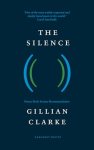
- I saw Quink ink mentioned in The Silence by Gillian Clarke and Trespasses by Louise Kennedy on the same evening.
- The song “It’s a Long Way to Tipperary” is mentioned in You’re on Your Own, Snoopy by Charles M. Schulz and Welcome to Glorious Tuga by Francesca Segal.
- A pet magpie in George by Frieda Hughes and A Council of Dolls by Mona Susan Power.

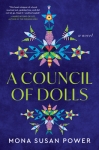
- A character tests to see what will happen (will God strike them down?) when they mess with the Host (by stealing the ciborium or dropping a wafer on the floor, respectively) in A Council of Dolls by Mona Susan Power and one story from Dressing Up for the Carnival by Carol Shields.
- Marrying the ‘wrong’ brother in The Bee Sting by Paul Murray and A Council of Dolls by Mona Susan Power.
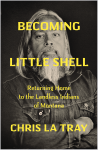 Indigenous author, Native versus Catholic religion, and descriptions of abuse and cultural suppression at residential schools in Becoming Little Shell by Chris La Tray and A Council of Dolls by Mona Susan Power.
- Teen girls obsessed with ‘sad girl’ poetry, especially by Sylvia Plath, in First Love by Lilly Dancyger and The Bee Sting by Paul Murray.
- “Hyacinth” is a poem in Solutions for the Problem of Bodies in Space by Catherine Barnett, and “Hyacinth Girl” a story in Cocktail by Lisa Alward. (Hyacinths are also mentioned in a poem in The Iron Bridge by Rebecca Hurst.)


- A character named Sissy in A Council of Dolls by Mona Susan Power and Stone Yard Devotional by Charlotte Wood.
- Harming amphibians, whether deliberately or accidentally, in a story in Barcelona by Mary Costello, a poem in Baby Schema by Isabel Galleymore, and Mothership by Greg Wrenn.
- A significant character called Paul in Dances by Nicole Cuffy, Daughter by Claudia Dey (those two were both longlisted for the Carol Shields Prize), and Moral Injuries by Christie Watson.
- Out of Africa (the film and then the book), which I was looking through for the #1937Club, is mentioned in The Whole Staggering Mystery by Sylvia Brownrigg – her writer grandfather lived in Nairobi’s “Happy Valley” in the 1930s.
- Reading two novels at the same time in which a teen girl’s plans to study medicine are derailed by war: Brotherless Night by V.V. Ganeshananthan and The Snow Hare by Paula Lichtarowicz.
What’s the weirdest reading coincidence you’ve had lately?
The Woman in Black, Train Dreams, and Absolutely & Forever (#NovNov23)
I’ve been slow off the mark this year, mostly because instead of reading a sensible one or two novellas at a time, I’ve had 10 or 15 on the go. It might mean I’ll read more overall, but from day to day it feels like crawling through loads of books, never to finish any. Except I did finally finish these three, all of which were great reads. After my thoughts on each, I’ll ponder this week’s prompt, “What Is a Novella?”
The Woman in Black by Susan Hill (1983)
This was a reread for me and our November book club book, as well as part of my casual project to read books from my birth year. I’ve generally been underwhelmed by Hill’s ghost stories, but I found this spookier than remembered and enjoyed spotting the nods to Victorian literature and to classic ghost story tropes. (Best of all, because it was so short, everyone actually read the book and came to the discussion. All 12 group members. I can’t recall the last time that happened!)
 Hill keeps the setting deliberately vague, but it seems that it might be the Lincolnshire Fens in the 1930s or so. Arthur Kipps is a young lawyer tasked with attending the funeral of old Mrs Drablow and sorting through her papers. Locals don’t envy him the time spent in Eel Marsh House, and when he starts seeing a wasting-away, smallpox-pocked woman dressed in black in the churchyard, he understands why. This place harbours a malevolent ghost, and from the empty nursery with its creaking rocking chair to the marsh’s treacherous mud, Arthur fears that it’s out to get him.
The rational male narrator who insists he doesn’t believe in ghosts until he can’t deny an experience of one is a feature of the traditional ghost story à la M.R. James – and indeed, one of the chapter titles here (“Whistle and I’ll Come to You”) is a direct adaptation of a James story title. A framing story has Kipps as an older man writing the ghost story to share with his stepchildren. Some secondary characters have Dickensian names and there’s a Bleak House-esque description of a thick fog. The novel’s title must be an homage to Wilkie Collins’s sensation novel The Woman in White, with which it shares the theme of debated parentage.
A few members of our book club had seen the play or one of two film versions. Curiously, it seems like both movies alter the ending. Why, when the last four pages are such a perfect kicker? I might have dismissed the whole as a bit dull were it not for the brilliant conclusion. (Public library) [160 pages] 
Train Dreams by Denis Johnson (2002)
This is Cathy’s example of a perfect novella. I picked it up on her recommendation and read it within a few days (though you could easily do so in one sitting). Robert Grainier is a manual labourer in the American West. His body shattered by logging before he turns 40 and his spirit nearly broken by the loss of his home to a forest fire, he looks for meaning in the tragedy and a purpose to the rest of his long life. Is he being punished for participating in the attempted lynching of a Chinese worker decried as a thief? Or for not helping an injured man he came across in the woods as a teenager?
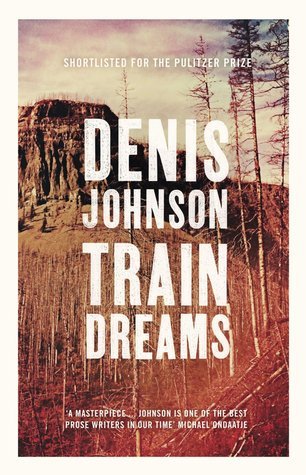 Although Grainier might appear to be a Job-like figure, his loneliness never shades into despair, lightened by comic dialogues and the mildest of supernatural interventions. He starts a haulage business and keeps dogs. There are rumours of a wolf-girl in the area, and, convinced that his dog’s new pups are part-wolf, he teaches them to howl – his own favourite way of letting off steam.
A couple of gratuitously bleak scenes (a confession of incest and an accidental death) made me think Cormac McCarthy would be a major influence, but the tone is lighter than that. Richard Brautigan came to mind, and I imagine many contemporary writers have found inspiration here: Carys Davies, Ash Davidson, Donald Ray Pollock, even Patrick deWitt.
Gritty yet light, this presents life as an arbitrary accumulation of error and incident, longing (“Pulchritude!”) and effort. Grainier is an effective Everyman, such that his story feels not just all-American but universal. (Free from a neighbour) [116 pages] 
Absolutely and Forever by Rose Tremain (2023)
I had lost track of Tremain’s career a bit; I find her work hit and miss – perhaps too varied, though judging by her last five novels, she seems to have settled on historical fiction as her wheelhouse. I wasn’t sure what to expect from this latest book, but seeing that it was novella length, I was willing to give it a try. Tremain follows her heroine, Marianne Clifford, from the 1950s up to perhaps 1970. At age 15, she falls hopelessly in love with an 18-year-old aspiring writer, Simon Hurst, and loses her virginity in the back of his pale blue Morris Minor. She feels grown-up and sophisticated, and imagines their romance as a grand adventure that will whisk her away from her parents’ stultifying ordinariness –
when I thought about my future as Mrs Simon Hurst (riding a camel in Egypt, floating along in a gondola in Venice, driving through the Grand Canyon in an open-topped Cadillac, watching elephants drink from a waterhole in Africa) and about Mummy’s future (in the red-brick house in Berkshire with the shivery birch tree and the two white columns, playing Scrabble with Daddy and shopping at Bartlett’s of Newbury), I could see that my life was going to be more interesting than hers and that she might already be envious
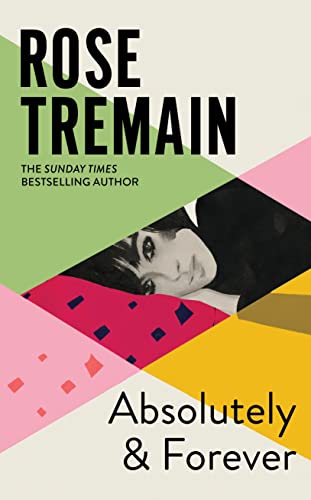 – but his new post-school life in Paris doesn’t have room for her. As she moves to London and trains for secretarial work, Marianne is bolstered by friendships with plain-speaking Scot Petronella (“Pet”) and Hugo Forster-Pellisier, her surfing and ping-pong partner on their parents’ Cornwall getaways. Forasmuch as her life changes over the next 15 years or so – taking on a traditional wife and homemaker role; her parents quietly declining – her attachment to her first love never falters.
This has the chic and convincing 1960s setting of Tessa Hadley’s work. Marianne’s narration is a delight, droll but not as blasé as she tries to appear. Tremain could have easily fallen into the trap of making her purely naïve (in the moment) or nostalgic (looking back), but instead she’s rendered her voice knowing yet compassionate, and made her a real wit (“I thought, Everything in Paris looks as if it’s practising the waltz, whereas quite a lot of things in London … appear as if they’ve just come out of hospital after a leg operation”). Pet is very funny, too. And it’s always fun for me to have nearby locations: Newbury, Reading, Marlborough. In imagining a different life for herself, Marianne resists repeating her mother’s mistakes and coincides with the rising feminist movement. There are two characters named Marianne, and two named Simon; the revelations about these doubles are breathtaking.
This really put me through an emotional wringer. It’s no cheap tear-jerker but a tender depiction of love in all its forms. I think, with Academy Street by Mary Costello, it may be my near-perfect novella. (Public library) [181 pages] 
Novellas in November, Week 2: What Is a Novella?
- Ponder the definition, list favourites, or choose ones you think best capture the ‘spirit’ of a novella.

A novella is defined by its length in words, but because that’s often difficult for readers to gauge, for this challenge we go by the number of pages instead, making 200 an absolute maximum – though some books with wide margins and spacing may top that but still seem slight enough to count (while those with tiny type can feel much longer than 160–200 pages).
Thematically, a novella is said to be concentrated on one character or small set of characters, with one plotline rather than several. This week I’ve been musing on a theory: a novella is to a novel what a memoir is to an autobiography. That is, if the latter is a comprehensive and often chronological story, the former focuses on a particular time or experience and shapes a narrative around it. What it potentially sacrifices in scope it makes up for with intensity.
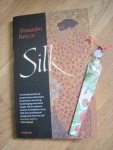
But as soon as I’d formulated this hypothesis to myself, I started thinking of exceptions on either side. Train Dreams, like Silk by Alessandro Baricco and A Whole Life by Robert Seethaler, conveys a pretty complete life story. And no doubt there are many full-length novels that are almost claustrophobic in their adherence to one point of view and timeline.

The simplest way I’d put it is that a novella is a book that doesn’t outstay its welcome. I think it must be easier to write a doorstopper than a novella. Once you’ve arrived at a voice and a style, just keeping going can become a question of habit. But to continue paring back to get at the essence of a character and a situation – that takes real discipline. My other criterion would be that it has to portray the full range of human emotion, even if within a limited set of circumstances. Based on that, Train Dreams and Absolutely and Forever both triumph.
A few classic novellas that do this particularly well (links to my reviews):
Giovanni’s Room by James Baldwin
A Month in the Country by J. L. Carr
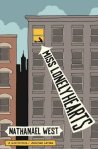
Miss Lonelyhearts by Nathanael West
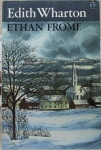
Ethan Frome by Edith Wharton


A few more contemporary novellas that do this particularly well (links to my reviews):
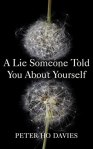
A Lie Someone Told You about Yourself by Peter Ho Davies
Our Souls at Night by Kent Haruf
Foster by Claire Keegan
A Feather on the Breath of God by Sigrid Nunez


Book Serendipity, September to October 2021
I call it Book Serendipity when two or more books that I read at the same time or in quick succession have something pretty bizarre in common. Because I have so many books on the go at once (usually 20–30), I suppose I’m more prone to such incidents. I’ve realized that, of course, synchronicity is really the more apt word, but this branding has stuck. This used to be a quarterly feature, but to keep the lists from getting too unwieldy I’ve shifted to bimonthly.
The following are in roughly chronological order.
- Young people studying An Inspector Calls in Somebody Loves You by Mona Arshi and Heartstoppers, Volume 4 by Alice Oseman.
- China Room (Sunjeev Sahota) was immediately followed by The China Factory (Mary Costello).


- A mention of acorn production being connected to the weather earlier in the year in Light Rains Sometimes Fall by Lev Parikian and Noah’s Compass by Anne Tyler.
- The experience of being lost and disoriented in Amsterdam features in Flesh & Blood by N. West Moss and Yearbook by Seth Rogen.
- Reading a book about ravens (A Shadow Above by Joe Shute) and one by a Raven (Fox & I by Catherine Raven) at the same time.


- Speaking of ravens, they’re also mentioned in The Elements by Kat Lister, and the Edgar Allan Poe poem “The Raven” was referred to and/or quoted in both of those books plus 100 Poets by John Carey.
- A trip to Mexico as a way to come to terms with the death of a loved one in This Party’s Dead by Erica Buist (read back in February–March) and The Elements by Kat Lister.
- Reading from two Carcanet Press releases that are Covid-19 diaries and have plague masks on the cover at the same time: Year of Plagues by Fred D’Aguiar and 100 Days by Gabriel Josipovici. (Reviews of both coming up soon.)


- Descriptions of whaling and whale processing and a summary of the Jonah and the Whale story in Fathoms by Rebecca Giggs and The Woodcock by Richard Smyth.
 An Irish short story featuring an elderly mother with dementia AND a particular mention of her slippers in The China Factory by Mary Costello and Blank Pages and Other Stories by Bernard MacLaverty.
- After having read two whole nature memoirs set in England’s New Forest (Goshawk Summer by James Aldred and The Circling Sky by Neil Ansell), I encountered it again in one chapter of A Shadow Above by Joe Shute.
- Cranford is mentioned in Corduroy by Adrian Bell and Cut Out by Michèle Roberts.
- Kenneth Grahame’s life story and The Wind in the Willows are discussed in On Gallows Down by Nicola Chester and The Elements by Kat Lister.


- Reading two books by a Jenn at the same time: Ghosted by Jenn Ashworth and The Other Mothers by Jenn Berney.
- A metaphor of nature giving a V sign (that’s equivalent to the middle finger for you American readers) in On Gallows Down by Nicola Chester and Light Rains Sometimes Fall by Lev Parikian.
- Quince preserves are mentioned in The Book of Difficult Fruit by Kate Lebo and Light Rains Sometimes Fall by Lev Parikian.
- There’s a gooseberry pie in Talking to the Dead by Helen Dunmore and The Book of Difficult Fruit by Kate Lebo.


- The ominous taste of herbicide in the throat post-spraying shows up in On Gallows Down by Nicola Chester and Damnation Spring by Ash Davidson.
- People’s rude questioning about gay dads and surrogacy turns up in The Echo Chamber by John Boyne and the DAD anthology from Music.Football.Fatherhood.
- A young woman dresses in unattractive secondhand clothes in The Echo Chamber by John Boyne and Beautiful World, Where Are You by Sally Rooney.

- A mention of the bounty placed on crop-eating birds in medieval England in Orchard by Benedict Macdonald and Nicholas Gates and A Shadow Above by Joe Shute.
- Hedgerows being decimated, and an account of how mistletoe is spread, in On Gallows Down by Nicola Chester and Orchard by Benedict Macdonald and Nicholas Gates.
 Ukrainian secondary characters in Ghosted by Jenn Ashworth and The Echo Chamber by John Boyne; minor characters named Aidan in the Boyne and Beautiful World, Where Are You by Sally Rooney.
- Listening to a dual-language presentation and observing that the people who know the original language laugh before the rest of the audience in The Book of Difficult Fruit by Kate Lebo and Beautiful World, Where Are You by Sally Rooney.
- A character imagines his heart being taken out of his chest in Tender Is the Flesh by Agustina Bazterrica and The Book of Form and Emptiness by Ruth Ozeki.

- A younger sister named Nina in Talking to the Dead by Helen Dunmore and Sex Cult Nun by Faith Jones.
- Adulatory words about George H.W. Bush in The Echo Chamber by John Boyne and Thinking Again by Jan Morris.
- Reading three novels by Australian women at the same time (and it’s rare for me to read even one – availability in the UK can be an issue): Sorrow and Bliss by Meg Mason, The Performance by Claire Thomas, and The Weekend by Charlotte Wood.


- There’s a couple who met as family friends as teenagers and are still (on again, off again) together in Sorrow and Bliss by Meg Mason and Beautiful World, Where Are You by Sally Rooney.
- The Performance by Claire Thomas is set during a performance of the Samuel Beckett play Happy Days, which is mentioned in 100 Days by Gabriel Josipovici.
 Human ashes are dumped and a funerary urn refilled with dirt in Tender Is the Flesh by Agustina Bazterrica and Public Library and Other Stories by Ali Smith.
- Nicholas Royle (whose White Spines I was also reading at the time) turns up on a Zoom session in 100 Days by Gabriel Josipovici.
- Richard Brautigan is mentioned in both The Mystery of Henri Pick by David Foenkinos and White Spines by Nicholas Royle.


- The Wizard of Oz and The Railway Children are part of the plot in The Book Smugglers (Pages & Co., #4) by Anna James and mentioned in Public Library and Other Stories by Ali Smith.
What’s the weirdest reading coincidence you’ve had lately?
Short Stories in September, Part III: Butler, Costello, MacLaverty, Washington
Today I have a third set of terrific and varied short story collections. Between this, my Part I and Part II posts, and a bonus review I have coming up on Friday, I’ve gotten through 12 volumes of stories this month. This feels like a great showing for me because I don’t naturally gravitate to short stories and have to force myself to make a special effort to read them every September; otherwise, they tend to languish unread on my shelves and TBR.
From science fiction and horror tales set in alternate worlds to gritty slices of real life in Texas via two sets of quiet Irish relationship studies, this quartet of books showcases a range of tones and genres but fairly straightforward story structures and points of view. This was such a strong batch, I had to wonder why I never call myself a short story fan. All:
Bloodchild and Other Stories by Octavia E. Butler (2005)
 My first R.I.P. selection and one I can heartily recommend – even if you’re normally wary of dystopias, horror and science fiction. Butler makes these genres accessible by peopling her plots with relatable protagonists and carefully accounting for their bizarre predicaments without wasting time on extraneous world-building. The way in which she explores very human issues alongside the existence of alien beings reminds me of Mary Doria Russell’s The Sparrow, another of my rare forays into sci fi.
Along with the original five stories Butler published in 1970s and 1980s magazines and anthologies, this second edition contains two essays on her writing process and two new stories that date to 2003. In “Bloodchild,” a small band of humans live on another planet ruled by the Tlic, which sound like giant spiders or scorpions. Gan learns he is expected to play his part by being a surrogate for T’Gatoi’s eggs, but is haunted by what he’s heard this process involves. In a brief afterword (one is included with each piece here), Butler explains that the story arose from her terror of botflies, which she knew she might encounter in the Peruvian Amazon, and that she has always faced what scares her through her writing.
My other favorite story was “The Evening and the Morning and the Night,” about a subclass of people afflicted with Duryea-Gode disease. A cruel side effect of a parent’s cancer treatment, the illness compels sufferers to self-harm and they are often confined to asylums. Lynn and Alan visit his mother in one such institution and see what their future might hold. “Speech Sounds” and “Amnesty” reminded me most of the Parable novels, with the latter’s Noah a leader figure similar to Lauren. After an apocalyptic event, people must adapt and cooperate to survive. I appreciated how the two essays value persistence – more so than talent or inspiration – as the key to success as a writer. This was my fourth book by Butler and I don’t see why I shouldn’t keep going and read her whole oeuvre. (University library)

The China Factory by Mary Costello (2012)
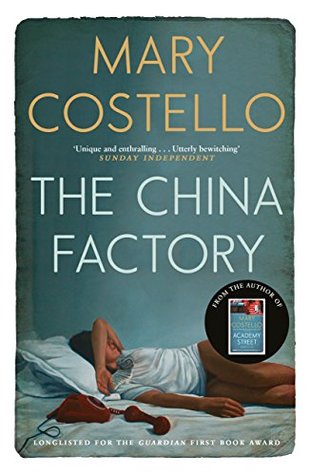 Academy Street is a near-perfect novella and I also enjoyed The River Capture, so I wanted to complete the set by reading Costello’s first book. Its dozen understated stories are about Irish men and women the course of whose lives are altered by chance meetings, surprise liaisons, or not-quite-affairs that needle them ever after with the could-have-been. The mood of gentle melancholy would suit a chilly moonlight drive along the coast road to Howth. In the opening title story, a teenage girl rides to her work sponging clay cups with an oddball named Gus. Others can’t get past things like his body odour, but when there’s a crisis at the factory she sees his calm authority save the day. Elsewhere, a gardener rushes his employer to the hospital, a woman attends her ex-husband’s funeral, and a school inspector becomes obsessed with one of the young teachers he observes.
Three favourites: In “And Who Will Pay Charon?” a man learns that, after he rejected Suzanne, she was hideously attacked in London. When she returns to the town as an old woman, he wonders what he might have done differently. “The Astral Plane” concerns a woman who strikes up a long-distance e-mail correspondence with a man from New York who picked up a book she left behind in a library. How will their intellectual affair translate into the corporeal world? The final story, “The Sewing Room,” reminded me most of Academy Street and could be a novel all of its own, as a schoolteacher and amateur fashion designer prepares for her retirement party and remembers the child she gave up for adoption. (Secondhand, gifted)
Blank Pages and Other Stories by Bernard MacLaverty (2021)
 I knew from The Great Profundo that I liked MacLaverty’s stories, and I also enjoyed his latest novel, Midwinter Break, so I was delighted to hear news of a new collection. A number of the longer stories are set at turning points in twentieth-century history. In 1940, a mother is desperate to hear word of her soldier son; in 1971 Belfast, officers search a woman’s house. Two of the historical stories appealed to me for their medical elements: “The End of Days,” set in Vienna in 1918, dramatizes Egon Schiele’s fight with Spanish flu, while “Blackthorns” gives a lovely picture of how early antibiotics promoted miraculous recovery. In the title story, a cat is all a writer has left to remind him of his late wife. “Wandering” has a woman out looking for her dementia-addled mother. “The Dust Gatherer” muses on the fate of an old piano. Elderly parents and music recur, establishing filaments of thematic connection.
Three favourites: In “Glasshouses,” a man temporarily misplaces his grandchildren in the botanical gardens; “The Fairly Good Samaritan” is the fable of a jolly drunk who calls an ambulance for his poorly neighbour – but not before polishing off her brandy; and in the gorgeous “Sounds and Sweet Airs” a young woman’s harp music enthrals the passengers on a ferry.
With thanks to Jonathan Cape for the free copy for review.
Lot: Stories by Bryan Washington (2019)
 The musical equivalent of Lot might be a mixtape played on a boombox or blasted from an open-top Corvette while touring the streets of Houston, Texas. Most of this Dylan Thomas Prize-winning linked collection follows Nic, a mixed-race Black/Latino boy who works in the family restaurant. As his family situation realigns – his father leaves, his older brother Javi enlists, his sister Jan has a baby – he’s trying to come to terms with his homosexuality and wondering if this gentrifying city suits him anymore. But he knows he’ll take himself wherever he goes, and as the book closes with “Elgin” (the most similar in mood and setup to Washington’s debut novel, Memorial) he’s thinking of taking a chance on love.
Drug dealers, careworn immigrants and prostitutes: Even the toughest guys have tender hearts in these stories. Eleven of 13 stories are in the first person. Where the narration isn’t Nic’s, it’s usually the collective voice of the neighbourhood boys. As far as I can tell, most of the story titles refer to Houston sites: particular addresses or neighbourhoods, or more vague locations. Like in Memorial, there are no speech marks. Washington’s prose is earthy and slang-filled. The matter-of-fact phrasing made me laugh: “He knocked her up in the usual way. For six minutes it looked like he’d stick around”; “He’d been staying there since the Great Thanksgiving Rupture, back when his brother’d found the dick pic in his pillowcase.” With the melting pot of cultures, the restaurant setting, and the sharp humour, this reminded me of Elaine Castillo’s America Is Not the Heart.
Three favourites: In “Shepherd,” the narrator emulates a glamorous cousin from Jamaica; “Bayou” is completely different from the rest, telling the urban legend of a “chupacubra” (a mythical creature like a coyote); “Waugh,” the longest story and one of just two told in the third person, is about a brothel’s worth of male sex workers and their pimp. Its final page is devastating. Despite their bravado, Washington’s characters are as vulnerable as Brandon Taylor’s. I think of these two young gay African American writers as being similar at root even though their style and approach are so very different. (New purchase)
A side note: I’m wondering how an author chooses primarily first person or third person POVs for short stories. MacLaverty and Taylor write exclusively in an omniscient third person; Washington and Eley Williams almost always plump for the first person. (Here, Butler was about half and half and Costello only used first person in three stories.) Is the third person seen as more impartial and commanding – a more elevated form of fiction? Is first person more immediate, informal and natural, but also perhaps too easy? I wouldn’t say I prefer one or the other (not in my novels, either); it all depends on the execution. Notably, none of this year’s stories were in the second person or employed experimental structures.
Two more collections I’m reading are spilling across into October for R.I.P., but will I keep up the short story habit after that? I still have a shelf full of unread story collections, and I have my eye on My Monticello, which I got from NetGalley…
Final Book Serendipity Incidents to Close out 2019
Just a short post this time. I call it serendipitous when two or more books that I’m reading at the same time or in quick succession have something pretty bizarre in common. Because I have so many books on the go at once – usually between 10 and 20 – I guess I’m more prone to such incidents. I post these occasional reading coincidences on Twitter. What’s the weirdest one you’ve had lately? (The following are in rough chronological order.)
[Previous 2019 Book Serendipity posts covered April, July and October.]
- Characters sit for a portrait in The Confession by Jessie Burton and The Hoarder by Jess Kidd.
- An obsession with saints in Fifth Business by Robertson Davies and The Hoarder by Jess Kidd.

- A mention of the urban myth regarding why our fingertips prune in water (something about an outdated evolutionary strategy for gripping underwater) in The Body by Bill Bryson and Humiliation: Stories by Paulina Flores.
- Memories of childhood trips to Martha’s Vineyard in Chances Are by Richard Russo and The Dearly Beloved by Cara Wall.
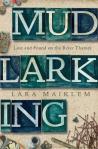
- The River Thames is the setting for Mudlarking by Lara Maiklem and Once Upon a River by Diane Setterfield.

- Mentions of pelicans being clubbed to death in God Unbound: Theology in the Wild by Brian McLaren and Autumn Across America by Edwin Way Teale.
- A character who speaks and writes backwards words in The Poisonwood Bible and The Robber Bride.
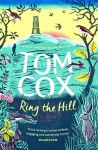
- Epigraphs containing folk names for the hare, and soon enough a dead hare, in Ring the Hill by Tom Cox and Starve Acre by Andrew Michael Hurley.

- An unexpected THIRD set of conjoined twins encountered this year (after Cutting for Stone and The Girls) in Fall on Your Knees by Ann-Marie Macdonald.
- The song “Oh My Darling, Clementine” is quoted in The Robber Bride and Fall on Your Knees.
- Warming an orphaned lamb in a low oven in Moral Disorder by Margaret Atwood and The Dig by Cynan Jones.
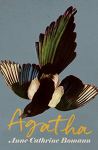
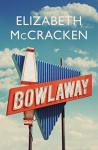
- A character is presumed incapable of laughter in Agatha by Anne Cathrine Bomann and Bowlaway by Elizabeth McCracken.
- Marilynne Robinson’s Housekeeping is mentioned in The River Capture by Mary Costello and Surrender by Joanna Pocock.
Imitation Is the Sincerest Form of Flattery: Costello, O’Shaughnessy & Smyth
These three books – two novels and a memoir – pay loving tribute to a particular nineteenth- or twentieth-century writer. In each case, the author incorporates passages of pastiche, moving beyond thematic similarity to make their language an additional homage.
Although I enjoyed the three books very much, they differ in terms of how familiar you should be with the source material before embarkation. So while they were all  reads for me, I have added a note below each review to indicate the level of prior knowledge needed.
The River Capture by Mary Costello
 Luke O’Brien has taken a long sabbatical from his teaching job in Dublin and is back living at the family farm beside the river in Waterford. Though only in his mid-thirties, he seems like a man of sorrows, often dwelling on the loss of parents, aunts and romantic relationships with both men and women. He takes quiet pleasure in food, the company of pets, and books, including his extensive collection on James Joyce, about whom he’d like to write a tome of his own. The novel’s very gentle crisis comes when Luke falls for Ruth and it emerges that her late father ruined his beloved Aunt Ellen’s reputation.
At this point a troubled Luke is driven into 100+ pages of sinuous contemplation, a bravura section of short fragments headed by questions. Rather like a catechism, it’s a playful way of organizing his thoughts and likely more than a little Joycean in approach – I’ve read Portrait of the Artist and Dubliners but not Ulysses or Finnegans Wake, so I feel less than able to comment on the literary ventriloquism, but I found this a pleasingly over-the-top stream-of-consciousness that ranges from the profound (“What fear suddenly assails him? The arrival of the noonday demon”) to the scatological (“At what point does he urinate? At approximately three-quarters of the way up the avenue”).
While this doesn’t quite match Costello’s near-perfect novella, Academy Street, it’s an impressive experiment in voice and style, and the treatment of Luke’s bisexuality struck me as sensitive – an apt metaphorical manifestation of the novel’s focus on fluidity. (See also Susan’s excellent review.)
Why Joyce? “integrity … commitment to the quotidian … refusal to take conventions for granted”
Familiarity required: Moderate
Also recommended: The Sixteenth of June by Maya Lang
With thanks to Canongate for the free copy for review.
In Love with George Eliot by Kathy O’Shaughnessy
Many characters, fictional and historical, are in love with George Eliot over the course of this debut novel by a literary editor. The whole thing is a book within a book – fiction being written by Kate, an academic at London’s Queen Elizabeth College who’s preparing for two conferences on Eliot and a new co-taught course on life writing at the same time as she completes her novel, which blends biographical information and imagined scenes.
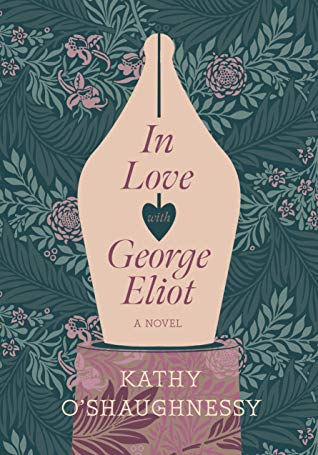 1857: Eliot is living with George Henry Lewes, her common-law husband, and working on Adam Bede, which becomes a runaway success, not least because of speculation about its anonymous author. 1880: The great author’s death leaves behind a mentally unstable widower 20 years her junior, John Walter Cross, once such a close family friend that she and Lewes called him “Nephew.”
Between these points are intriguing vignettes from Eliot’s life with her two great loves, and insight into her scandalous position in Victorian society. Her estrangement from her dear brother (the model for Tom in The Mill on the Floss) is a plangent refrain, while interactions with female friends who have accepted the norms of marriage and motherhood reveal just how transgressive her life is perceived to be.
In the historical sections O’Shaughnessy mimics Victorian prose ably, yet avoids the convoluted syntax that can make Eliot challenging. I might have liked a bit more of the contemporary story line, in which Kate and an alluring colleague make their way to Venice (the site of Eliot’s legendarily disastrous honeymoon trip with Cross), but by making this a minor thread O’Shaughnessy ensures that the spotlight remains on Eliot throughout.
Highlights: A cameo appearance by Henry James; a surprisingly sexy passage in which Cross and Eliot read Dante aloud to each other and share their first kiss.
Why Eliot? “As an artist, this was her task, to move the reader to see people in the round.”
Familiarity required: Low
Also recommended: 142 Strand by Rosemary Ashton, Sophie and the Sibyl by Patricia Duncker, and My Life in Middlemarch by Rebecca Mead
With thanks to Scribe UK for the free copy for review.
All the Lives We Ever Lived: Seeking Solace in Virginia Woolf by Katharine Smyth
 Smyth first read To the Lighthouse in Christmas 2001, during her junior year abroad at Oxford. Shortly thereafter her father had surgery in Boston to remove his bladder, one of many operations he’d had during a decade battling cancer. But even this new health scare wasn’t enough to keep him from returning to his habitual three bottles of wine a day. Woolf was there for Smyth during this crisis and all the time leading up to her father’s death, with Lighthouse and Woolf’s own life reflecting Smyth’s experience in unanticipated ways. The Smyths’ Rhode Island beach house, for instance, was reminiscent of the Stephens’ home in Cornwall. Woolf’s mother’s death was an end to the summer visits, and to her childhood; Lighthouse would become her elegy to those bygone days.
Often a short passage by or about Woolf is enough to launch Smyth back into her memories. As an only child, she envied the busy family life of the Ramsays in Lighthouse. She delves into the mystery of her parents’ marriage and her father’s faltering architecture career. She also undertakes Woolf tourism, including the Cornwall cottage, Knole, Charleston and Monk’s House (where Woolf wrote most of Lighthouse). Her writing is dreamy, mingling past and present as she muses on time and grief. The passages of Woolf pastiche are obvious but short enough not to overstay their welcome; as in the Costello, they tend to feature water imagery. It’s a most unusual book in the conception, but for Woolf fans especially, it works. However, I wished I had read Lighthouse more recently than 16.5 years ago – it’s one to reread.
Why Woolf? “I think it’s Woolf’s mastery of moments like these—moments that hold up a mirror to our private tumult while also revealing how much we as humans share—that most draws me to her.”
Undergraduate wisdom: “Woolf’s technique: taking a very complex (usually female) character and using her mind as an emblem of all minds” [copied from notes I took during a lecture on To the Lighthouse in a “Modern Wasteland” course during my sophomore year of college]
Familiarity required: High
Also recommended: Virginia Woolf in Manhattan by Maggie Gee, Vanessa and Her Sister by Priya Parmar, and Adeline by Norah Vincent
With thanks to Atlantic Books for the free copy for review.
Two “Summer” Reads: Knausgaard and Trevor
Last year at about this time I reviewed Jonathan Smith’s Summer in February and Elizabeth Taylor’s In a Summer Season, two charming English novels about how love can upend ordinary life. This month I read my first William Trevor novel, Love and Summer, which is very much in that vein. My other selection, Karl Ove Knausgaard’s last of four seasonal installments written for his young daughter, is a mostly nonfiction hybrid.
Summer by Karl Ove Knausgaard (2016; English translation, 2018)

Illustrated by German artist Anselm Kiefer.
I’ve now read three volumes from the Seasons Quartet – all but Spring. The series started with Knausgaard addressing his fourth child in utero. By now she’s two years old but still the recipient of his nostalgic, slightly didactic essays on seasonal topics, as well as the “you” some of his journal entries are written to. I wasn’t so keen on Autumn, but Winter and Summer are both brilliant for how they move from tangibles – ice cream cones, camping, fruit flies, seagulls, butterflies and the circus – into abstract notions of thought, memory, identity and meaning. That fluidity is especially notable here when Knausgaard drifts in and out of the imagined experience of an elderly woman of his grandfather’s acquaintance who fell in love with an Austrian soldier and abandoned her children during World War II.
I especially enjoyed two stories: traveling with his son to Brazil for a literary festival where he ran into English surgeon Henry Marsh, and fainting at an overcrowded publisher party in London. He’s always highly aware of himself (he never gives open-mouthed smiles because of his awful teeth) and of others (this woman at the party is desperate to appear young). But more so than these stand-out events and his memories of childhood, he gives pride of place to everyday life, things like chauffeuring his three older children to their various activities and shopping at the supermarket for barbecue food. “By writing it I reveal that not only do I think about it, I attach importance to it. … I love repetition. Repetitions turn time into a place, turn the days into a house.” I highlighted dozens of passages in the Kindle book. I’ll need to catch up on Spring, and then perhaps return to the My Struggle books; I only ever read the first.
My rating:
Love and Summer by William Trevor (2009)
 Trevor (1928–2016) was considered a writer’s writer and a critic’s dream for the simple profundity of his prose. I had long meant to try his work. This short novel is set over the course of one summer in a small Irish town in the 1950s, and opens on the day of the funeral of old Mrs. Connulty. A stranger is seen taking photographs around town, and there is much murmuring about who he might be. He is Florian Kilderry, who recently inherited his Anglo-Italian artist parents’ crumbling country house. It’s impossible to pay the debts and keep the house going, so he plans to sell it and its contents as soon as possible and move abroad, perhaps to Scandinavia.
But he hasn’t passed through Rathmoye without leaving ripples. Ellie Dillahan, a young farmer’s wife who was raised by nuns and initially moved to Dillahan’s as his housekeeper, falls in love with the stranger almost before she meets him, and they embark on a short-lived liaison. Blink and you’ll miss that the relationship is actually sexual; Trevor only uses the word “embraced” twice, I think. That reticence keeps it from being a torrid affair, yet we do get a sense of how wrenching the thought of Florian leaving becomes for Ellie. Trevor often moves from descriptions of nature or farm chores straight into Ellie’s thoughts, or vice versa.
“In the crab-apple orchard she scattered grain and the hens came rushing to her. She hadn’t been aware that she didn’t love her husband. Love hadn’t come into it”
“He [Florian] would be gone, as the dead are gone, and that would be there all day, in the kitchen and in the yard, when she brought in anthracite for the Rayburn, when she scalded the churns, while she fed the hens and stacked the turf.”
This is quietly beautiful writing – perhaps too quiet for me, despite the quirky secondary characters around the town (including the busybody Connulty daughter and the madman Orpen Wren) – but I would recommend Trevor to readers of Mary Costello and Colm Tóibín. I would also like to try Trevor’s short stories, for which he was particularly known; I think in small doses his subtle relationship studies and gentle writing would truly shine.
My rating: 
Summery reading options for next year: The Heat of the Day by Elizabeth Bowen, One Summer: America, 1927 by Bill Bryson, and The Go-Between by L. P. Hartley (set over a long, hot summer). I may also get Sunburn by Laura Lippman and Heat Wave by Penelope Lively out from the library.
Have you read any “Summer” books lately?
Reading Ireland Month 2018: Seamus Deane and Edna O’Brien
It’s my first time participating in Reading Ireland Month, run each March by Cathy of 746 Books and Niall of The Fluff is Raging. I enjoyed scouring my shelves for Irish reads – though in the end I only had time for two.

Reading in the Dark by Seamus Deane (1996)
I don’t recall how I first heard about this book, but its title was familiar to me when I picked it up for a matter of pence at a charity shop last year. When I saw it on Cathy’s recent list of her top five Irish books of all time, I knew I was in for something special. These vivid vignettes of childhood and young adulthood are so convincing that I could have been fooled into believing I was reading a memoir. Indeed, this debut novel has generally been interpreted as heavily autobiographical, with the anonymous narrator, the third of seven children born to Catholic parents in Derry, Northern Ireland, taken to be a stand-in for Deane.
 Ireland’s internecine violence is the sinister backdrop to this family’s everyday sorrows, including the death of a child and the mother’s shaky mental health. The narrator also learns a family secret from his dying maternal grandfather that at first thrills him – he knows something his father doesn’t! – but later serves to drive him away from his parents. The short chapters take place between 1945 and 1971: starting when the boy is five years old and encountering a household ghost on the stairs and ending as, in his early thirties, he lays his father to rest in the midst of the Troubles.
The Irish have such a knack for holding humor and tragedy up side by side – think John Boyne, James Joyce and Frank McCourt. The one force doesn’t negate the other, but the juxtaposition reminds you that life isn’t all gloom or laughs. There are some terrifically funny incidents in Reading in the Dark, like the individual sex ed. chat with Father Nugent (“And semen is the Latin for seed. Do you have to know Latin to do this?”) and going to investigate the rumor of a brothel by the football ground. But there is also perhaps the best ghost story I’ve ever read, an eerie tale of shape-shifting children he hears from his aunt.
This book captures all the magic, uncertainty and heartache of being a child, in crisp scenes I saw playing out in my mind. If I have one small, strange complaint, it’s that there’s too much plot – most of the chapters function perfectly well as stand-alone short stories, so, particularly in the last third, the growing obsession with the family secret feels like an unnecessary attempt to tie everything together. That plus the slight irrelevance of the title are the only reasons this misses out on 5 stars from me.
Still, I’d agree with Cathy: this is probably one of my favorite Irish reads, along with Boyne’s The Heart’s Invisible Furies, Mary Costello’s Academy Street, Anne Enright’s The Green Road, and Joyce’s A Portrait of the Artist as a Young Man. It’s no wonder Deane won so many prizes for this: the Irish Times International Fiction Prize, the Guardian Fiction Prize, and the Irish Literature Prize; he was also shortlisted for the 1996 Booker Prize.
Favorite lines:
“Child, she’d tell me, I think sometimes you’re possessed. Can’t you just let the past be the past?”
“He looked up at me, smiling, to say: ah well, it was all blood under the bridge now”
“Politics destroyed people’s lives in this place, he said. People were better not knowing some things”
My rating: 
Mother Ireland by Edna O’Brien (1976)
 This slim volume combines travel writing, history and memoir, with plentiful black and white photographs (by Fergus Bourke) along the way. Often, even where O’Brien is clearly drawing on autobiographical material, she resists saying “I”, instead opting for “one,” “you,” or “we.” I think she was aiming at the universalities of the Irish experience, but instead it ends up coming off as generic. That and a long opening chapter on Ireland’s history set me to skimming. (Also, the book is maddeningly underpunctuated, and the photos in particular seem very dated.) By far my favorite of the seven essays was the last, “Escape to England.” In just three pages, she explains what it’s like to start a new life in another country and how the experience allowed her to appreciate home all the more. Should I try O’Brien’s fiction?
Favorite lines:
“Irish people do not like to be contradicted. Foiled again and again[,] they have in them a rage that comes at you unawares like a briar jutting out of a hedge.”
“You are Irish[,] you say lightly, and allocated to you are the tendencies to be wild, wanton, drunk, superstitious, unreliable, backward, toadying and prone to fits, whereas you know that in fact a whole entourage of ghosts resides in you, ghosts with whom the inner rapport is as frequent, as perplexing, as defiant as with any of the living.”
My rating:
No time for these this year – maybe next year, if not sooner?

Mini-Reviews: The Graybar Hotel & Saints for All Occasions
My attention was drawn to The Graybar Hotel, the debut story collection by Curtis Dawkins, because the author is a convicted murderer serving a life sentence in a Michigan prison. (You can read more about his background in this Guardian article.) These 14 short stories are all set at least partially in prison, and feature men learning how to live with the consequences of their mistakes and how to fill long, empty days. They perfect their amateur tattooing skills, write raps, or carve soap figures; they watch TV or make collect calls to random numbers. There’s a kind of make-do attitude in the air, as well as the idea that you can reinvent yourself – starting with your past. But of course there are also more destructive forces around, with drugs, suicide, and violent revenge always lurking in the background.
 Perhaps of necessity, the collection is rather homogeneous. For instance, all but two stories are in the first person, with the typical narrator an observer who recounts other prisoners’ dreams and desperate actions but reveals little or nothing about himself. My favorite stories are those that also look backward and/or forward to show the protagonist’s life before and after prison rather than just dwelling on daily life in the pen. In one stand-out, “Leche Quemada,” Clyde is released after 12 years and tries to slip back into life with Melissa but finds that – like the boiled milk candies his Hispanic cellmates made and he always coveted – what you’ve been waiting for all this time might not be all that you hope for. My overall favorite is “Engulfed,” in which Steven, who admitted selling phony security systems after he fell for a set designer, calls his roommate out for lies about his past. Fire as a destructive yet cleansing force that reveals the truth is a potent symbol here as well as in “Six Pictures of a Fire at Night.”
*All proceeds from the book go into an education fund for Dawkins’s children.
My rating:
The Graybar Hotel was published in the UK by Canongate on July 20th. My thanks to Alice Laing for the free copy for review.
 Having enjoyed J. Courtney Sullivan’s The Engagements, I was keen to try her new novel, Saints for All Occasions. It opens in 2009 with Nora Rafferty, a mother of four, rushing to the hospital after being informed of a death in the family. She reluctantly accepts that her next task will be to contact the abbey where her estranged sister Theresa, now known as Mother Cecilia, lives. From County Clare, the girls moved to Boston together in the late 1950s: Nora to join Charlie, the fiancé she didn’t really love, and Theresa to have a chance at a new and exciting life. Moving back and forth between 2009 and earlier points in the sisters’ history, the novel considers the way their decisions have played out over the course of half a century, musing over what was fated and what they might have changed. We meet and spend much time with Nora’s children, especially John, who worked on the campaigns of a suspiciously Mitt Romney-esque figure and adopted a daughter from China with his wife; and Bridget, who’s planning to have a baby with her partner Natalie but hasn’t come out to her mother yet.
I’m not sure I ever gave this book a fair shake; from the earliest pages it reminded me so strongly of other Irish-American family stories I’ve read: Mary Costello’s Academy Street, Anne Enright’s The Green Road, Nick Laird’s Modern Gods, Maggie O’Farrell’s This Must Be the Place, and Colm Tóibín’s Brooklyn. With these forebears in my mind, it was hard to judge the book on its own merits. I also thought the ‘secret’ was as plain as day from the beginning. If it’s a less familiar story line for you, you may well enjoy it more than I did.
Favorite lines:
Charlie gave her a sad smile. ‘Isn’t there anything you like about Boston?’ Nora thought it over. ‘Brigham’s vanilla ice cream,’ she said. ‘That’s it.’
It was amazing that you did not become your grief entirely, and walk around leaking it everywhere. It could lie dormant inside of you for days, weeks, years. You could seem a perfectly whole person to everyone you met. Without warning, grief might poke you in the ribs, punch you in the gut, knock the wind out of you. But even then, you seemed just fine. The world went on and on.
My rating:
Saints for All Occasions is published in the UK today, August 31st, by Fleet. My thanks to Hayley Camis for the free review copy.
 Bookish Beck = Rebecca Foster. American transplant to England. Freelance proofreader and book reviewer.
 Bookish Beck