Three “Love” or “Heart” Books for Valentine’s Day: Ephron, Lischer and Nin
Every year I say I’m really not a Valentine’s Day person and yet put together a themed post featuring books that have “Love” or a similar word in the title. This is the eighth year in a row, in fact (after 2017, 2018, 2019, 2020, 2021, 2022, and 2023)! Today I’m looking at two classic novellas, one of them a reread and the other my first taste of a writer I’d expected more from; and a wrenching, theologically oriented bereavement memoir.
Heartburn by Nora Ephron (1983)
I’d already pulled this out for my planned reread of books published in my birth year, so it’s pleasing that it can do double duty here. I can’t say it better than my original 2013 review:
The funniest book you’ll ever read about heartbreak and betrayal, this is full of wry observations about the compromises we make to marry – and then stay married to – people who are very different from us. Ephron readily admitted that her novel is more than a little autobiographical: it’s based on the breakdown of her second marriage to investigative journalist Carl Bernstein (All the President’s Men), who had an affair with a ludicrously tall woman – one element she transferred directly into Heartburn.
Ephron’s fictional counterpart is Rachel Samstad, a New Yorker who writes cookbooks or, rather, memoirs with recipes – before that genre really took off. Seven months pregnant with her second child, she has just learned that her second husband is having an affair. What follows is her uproarious memories of life, love and failed marriages. Indeed, as Ephron reflected in a 2004 introduction, “One of the things I’m proudest of is that I managed to convert an event that seemed to me hideously tragic at the time to a comedy – and if that’s not fiction, I don’t know what is.”
As one might expect from a screenwriter, there is a cinematic – that is, vivid but not-quite-believable – quality to some of the moments: the armed robbery of Rachel’s therapy group, her accidentally flinging an onion into the audience during a cooking demonstration, her triumphant throw of a key lime pie into her husband’s face in the final scene. And yet Ephron was again drawing on experience: a friend’s therapy group was robbed at gunpoint, and she’d always filed the experience away in a mental drawer marked “Use This Someday” – “My mother taught me many things when I was growing up, but the main thing I learned from her is that everything is copy.” This is one of celebrity chef Nigella Lawson’s favorite books ever, for its mixture of recipes and rue, comfort food and folly. It’s a quick read, but a substantial feast for the emotions.
 Sometimes I wonder why I bother when I can’t improve on reviews I wrote over a decade ago (see also another upcoming reread). What I would add now, without disputing any of the above, is that there’s more bitterness to the tone than I’d recalled, even though Ephron does, yes, play it for laughs. But also, some of the humour hasn’t aged well, especially where based on race/culture or sexuality. I’d forgotten that Rachel’s husband isn’t the only cheater here; pretty much every couple mentioned is currently working through the aftermath of an affair or has survived one in the past. In one of these, the wife who left for a woman is described not as a lesbian but by another word, each time, which felt unkind rather than funny.
Still, the dialogue, the scenes, the snarky self-portrayal: it all pops. This was autofiction before that was a thing, but anyone working in any genre could learn how to write readable content by studying Ephron. “‘I don’t have to make everything into a joke,’ I said. ‘I have to make everything into a story.’ … I think you often have that sense when you write – that if you can spot something in yourself and set it down on paper, you’re free of it. And you’re not, of course; you’ve just managed to set it down on paper, that’s all.” (Little Free Library)
My original rating (2013): 
My rating now:
Stations of the Heart: Parting with a Son by Richard Lischer (2013)
“What we had taken to be a temporary unpleasantness had now burrowed deep into the family pulp and was gnawing us from the inside out.” Like all life writing, the bereavement memoir has two tasks: to bear witness and to make meaning. From a distance that just happens to be Mary Karr’s prescribed seven years, Lischer opens by looking back on the day when his 33-year-old son Adam called to tell him that his melanoma, successfully treated the year before, was back. Tests revealed that the cancer’s metastases were everywhere, including in his brain, and were “innumerable,” a word that haunted Lischer and his wife, their daughter, and Adam’s wife, who was pregnant with their first child.
 The next few months were a Calvary of sorts, and Lischer, an emeritus professor at Duke Divinity School, draws deliberate parallels with the biblical and liturgical preparations for Good Friday that feel appropriate for this Ash Wednesday. Lischer had no problem with Adam’s late-life conversion from Protestantism to Catholicism, whose rites he followed with great piety in his final summer. He traces Adam and Jenny’s daily routines as well as his own helpless attendance at hospital appointments. Doped up on painkillers, Adam attended one last Father’s Day baseball game with him; one last Fourth of July picnic. Everyone so desperately wanted him to keep going long enough to meet his baby girl. To think that she is now a young woman and has opened all the presents Adam bought to leave behind for her first 18 birthdays.
The facts of the story are heartbreaking enough, but Lischer’s prose is a perfect match: stately, resolute and weighted with spiritual allusion, yet never morose. He approaches the documenting of his son’s too-short life with a sense of sacred duty: “I have acquired a new responsibility: I have become the interpreter of his death. God, I must do a better job. … I kissed his head and thanked him for being my son. I promised him then that his death would not ruin my life.” This memoir brought back so much about my brother-in-law’s death from brain cancer in 2015, from the “TEAM [ADAM/GARNET]” T-shirts to Adam’s sister’s remark, “I never dreamed this would be our family’s story.” We’re not alone. (Remainder book from the Bowie, Maryland Dollar Tree) 
A Spy in the House of Love by Anaïs Nin (1954)
 I’d heard Nin spoken of in the same breath as D.H. Lawrence, so thought I might similarly appreciate her because of, or despite, comically overblown symbolism around sex. I think I was also expecting something more titillating? (I guess I had this confused for Delta of Venus, her only work that would be shelved in an Erotica section.) Many have tried to make a feminist case for this novella about Sabina, an early liberated woman in New York City who has extramarital sex with four other men who appeal to her for various not particularly good reasons (the traumatized soldier whom she comforts like a mother; the exotic African drummer – “Sabina did not feel guilty for drinking of the tropics through Mambo’s body”). She herself states, “I want to trespass boundaries, erase all identifications, anything which fixes one permanently into one mould, one place without hope of change.” The most interesting aspect of the book was Sabina’s questioning of whether she inherited her promiscuity from her father (it’s tempting to read this autobiographically as Nin’s own father left the family for another woman, a foundational wound in her life).
Come on, though, “fecundated,” “fecundation” … who could take such vocabulary seriously? Or this sex writing (snort!): “only one ritual, a joyous, joyous, joyous impaling of woman on a man’s sensual mast.” I charge you to use the term “sensual mast” wherever possible in the future. (Secondhand – Oxfam, Newbury) 
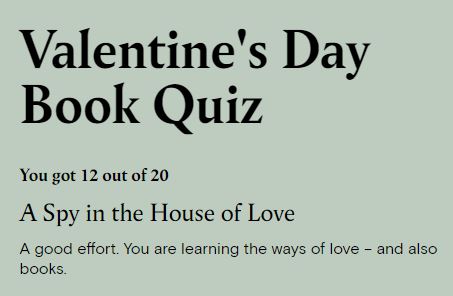
But hey, check out my score for the Faber Valentine’s quiz!
The Lost Supper by Taras Grescoe (Blog Tour)
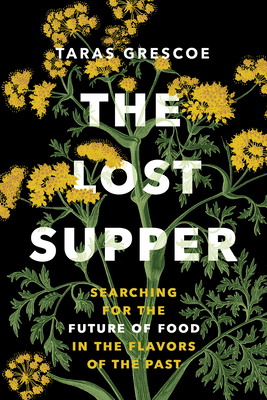
“Searching for the Future of Food in the Flavors of the Past” is the instructive subtitle of this globe-trotting book of foodie exploration in the vein of A Cook’s Tour and The Omnivore’s Dilemma. With its firm grounding in history, it also reminded me of Twain’s Feast. Journalist Tara Grescoe is based in Montreal. Dodging Covid lockdowns, he managed to make visits to the homes of various traditional foods, such as the more nutritious emmer wheat that sustained the Çatalhöyük settlement in Turkey 8,500 years ago; the feral pigs that live on Ossabaw Island off of Georgia, USA: the Wensleydale cheese that has been made in Yorkshire for more than 700 years; the olive groves of Puglia; and the potato-like tuber called camas that is a staple for the Indigenous peoples of Vancouver Island.
One of the most fascinating chapters is about the quest to recreate “garum,” a fermented essence of salted fish (similar to modern-day Asian fish sauces) used ubiquitously by the Romans. Grescoe journeys to Cádiz, Spain, where the sauce is being made again in accordance with the archaeological findings at Pompeii. He experiences a posh restaurant tasting menu where garum features in every dish – even if just a few drops – and then has a go at making his own. “Garum seemed to subject each dish to the culinary equivalent of italicization,” he found, intensifying the existing flavours and giving an inimitable umami hit. I’m also intrigued by the possibilities of entomophagy (eating insects) so was interested in his hunt for water boatman eggs, “the caviar of Mexico”; and his outing to the world’s largest edible insect farm near Peterborough, Ontario.
Grescoe seems to be, like me, a flexitarian, focusing on plants but indulging in occasional high-quality meat and fish. He advocates for eating as locally as you can, and buying from small producers whose goods reflect the care taken over the raising. “Everybody who eats cheap, factory-made meat is eating suffering,” he insists, having compared an industrial-scale slaughterhouse in North Carolina with small farms of heritage pigs. He acknowledges other ecological problems, too, however, such as the Ossabaw hogs eating endangered loggerhead turtles’ eggs and the overabundance of sheep in the Yorkshire Dales leading to a loss of plant diversity. This ties into the ecological conscience that is starting to creep into foodie lit (as opposed to a passé Bourdain eat-everything mindset), as witnessed by Dan Saladino’s Eating to Extinction winning the Wainwright Prize (Conservation) last year.
Another major theme of the book is getting involved in the food production process yourself, however small the scale (growing herbs or tomatoes on a balcony, for instance). “With every home food-making skill I acquired, I felt like I was tapping into some deep wellspring of self-sufficiency that connected me to my historic—and even prehistoric—ancestors,” Grescoe writes. He also cites American farmer-philosopher Wendell Berry’s seven principles for responsible eating, as relevant now as they were in the 1980s. The book went a little deeper into history and anthropology than I needed, but there was still plenty here to hold my interest. Readers may not follow Grescoe into grinding their own wheat or making their own cheese, but we can all be more mindful about where our food comes from, showing gratitude rather than entitlement. This was a good Nonfiction November and pre-Thanksgiving read!
With thanks to Random Things Tours and Greystone Books for the proof copy for review.
Buy The Lost Supper from Bookshop UK [affiliate link]
I was delighted to be part of the blog tour for The Lost Supper. See below for details of where other reviews have appeared or will be appearing soon.
Book Serendipity, August to September 2023
I call it “Book Serendipity” when two or more books that I read at the same time or in quick succession have something in common – the more bizarre, the better.
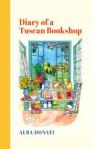
In Diary of a Tuscan Bookshop, Alba Donati remarks on this phenomenon: “Jung called these coincidences ‘synchronicities’, postulating that the universe possessed its own form of intelligence, which generated harmonies. A universe that detects and brings together the elements it feels are seeking each other in the endless swirl of life. Chance be damned.”
This is a regular feature of mine every couple of months. Because I usually have 20–30 books on the go at once, I suppose I’m more prone to such incidents. The following are in roughly chronological order.
- A memoir that opens with a little girl being injured in a bicycle accident: Some of Us Just Fall by Polly Atkin and Pharmakon by Almudena Sánchez.
- Telling stories through embroidery in Cross-Stitch by Jazmina Barrera and The Farmer’s Wife by Helen Rebanks.

- A small boy nicknamed “Willmouse” (real name: William) in Mary and the Birth of Frankenstein by Anne Eekhout and The Greengage Summer by Rumer Godden.
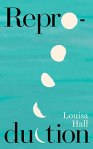
- An account of a routine sonogram that ends with the technician leaving the doctor to deliver bad news in Reproduction by Louisa Hall and The Unfamiliar by Kirsty Logan.
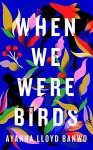
- Black dreadlocks/braid/ponytail being cut off in When We Were Birds by Ayanna Lloyd Banwo, The Wren, The Wren by Anne Enright, and Rebecca, Not Becky by Christine Platt and Catherine Wigginton Greene.

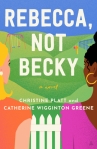
- Wondering how to arm a Black daughter against racist microaggressions in Rebecca, Not Becky by Christine Platt and Catherine Wigginton Greene and Ordinary Notes by Christina Sharpe.
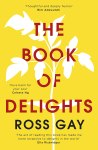
- Countering the commodification or romanticization of Black suffering in The Book of Delights by Ross Gay and Ordinary Notes by Christina Sharpe.

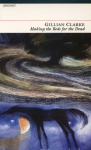
- An account of how the foot and mouth disease outbreak of 2001 affected the UK, especially northwest England, in Making the Beds for the Dead by Gillian Clarke and The Farmer’s Wife by Helen Rebanks.
- I encountered the quote from Elaine Scarry’s The Body in Pain about pain being inexpressible in Reproduction by Louisa Hall and The Invisible Kingdom by Meghan O’Rourke on the same day. It’s also referenced in Mary Jean Chan’s Bright Fear.
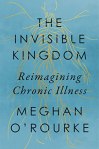
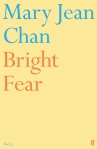
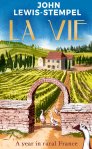
- A mention of eating frogs’ legs in The Book of Delights by Ross Gay and La Vie by John Lewis-Stempel.
- I read about the effects of heavy metal pollution on the body in The Invisible Kingdom by Meghan O’Rourke and Windswept by Annie Worsley in the same evening.
- Composer Erik Satie is mentioned in Making the Beds for the Dead by Gillian Clarke and August Blue by Deborah Levy.
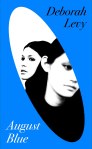
- Stendhal syndrome and Florence are mentioned in The Wren, The Wren by Anne Enright and Pharmakon by Almudena Sánchez.
- Swallows nesting in an old Continental building in Diary of a Tuscan Bookshop by Alba Donati and La Vie by John Lewis-Stempel.
- France being all about the rules and a “Putain de merde” exclamation to bad news in Dirt by Bill Buford and La Vie by John Lewis-Stempel.

- A character named Nomi in Friends and Strangers by J. Courtney Sullivan and one called Noemi in Diary of a Tuscan Bookshop by Alba Donati.
- Epigenetics (trauma literally determining the genetic traits that are passed on) is discussed in The Invisible Kingdom by Meghan O’Rourke and Pharmakon by Almudena Sánchez.
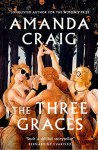
- Women of a certain age in Tuscany in The Three Graces by Amanda Craig and Diary of a Tuscan Bookshop by Alba Donati.
- Audre Lorde is quoted in Tremor by Teju Cole, Bibliomaniac by Robin Ince, The Invisible Kingdom by Meghan O’Rourke, Alone by Daniel Schreiber, and Ordinary Notes by Christina Sharpe.
- A Galway Kinnell poem is mentioned/quoted in The Dead Peasant’s Handbook by Brian Turner and Otherwise by Julie Marie Wade.
- The Bamiyan Buddhas are mentioned in Tremor by Teju Cole and The Dead Peasant’s Handbook by Brian Turner.


- Both The Three Graces by Amanda Craig and The Story of Lucy Gault by William Trevor open with a man shooting someone from his bedroom window.
- Linked short story collections about two children’s relationship with their Jamaican father, and mention of a devastating hurricane, in If I Survive You by Jonathan Escoffery and The Human Origins of Beatrice Porter and Other Essential Ghosts by Soraya Palmer. (Dual review coming up tomorrow!)
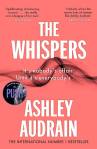
- Characters named Ben and Mara in The Whispers by Ashley Audrain and one story in Kate Doyle’s I Meant It Once.
- Occasional uncut pages in my copies of I Meant It Once by Kate Doyle and The Unfamiliar by Kirsty Logan.
- A Florida setting and mention of the Publix supermarket chain in If I Survive You by Jonathan Escoffery and Arms and Legs by Chloe Lane.
- A down-at-heel English seaside town near Scarborough features in The Seaside by Madeleine Bunting and Penance by Eliza Clark.

- A fictional northern town with “Crow” in the name: Crow-on-Sea in Penance by Eliza Clark and Crows Bank in Weyward by Emilia Hart.
- Claw-machine toys are mentioned in Penance by Eliza Clark and Directions to Myself by Heidi Julavits.
- Reading books by two Nobel Prize winners at the same time: Abdulrazak Gurnah (By the Sea) and Alice Munro (Hateship, Friendship, Courtship, Loveship, Marriage).
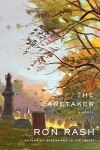
- Reading my second 2023 release featuring North Carolina ghost lights (after All of Us Together in the End by Matthew Vollmer, which I actually read last year): The Caretaker by Ron Rash.
- Reading my second 2023 release featuring a cat named Virginia Woolf (after Tell the Rest by Lucy Jane Bledsoe, which I actually read last year): one of the short stories in I Meant It Once by Kate Doyle.
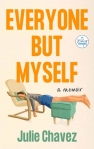
- A character named Shay in Everyone but Myself by Julie Chavez, The Human Origins of Beatrice Porter and Other Essential Ghosts by Soraya Palmer and The Caretaker by Ron Rash.

What’s the weirdest reading coincidence you’ve had lately?
Two Memoirs by Freaks and Geeks Alumni
 These days, I watch no television. At all. I haven’t owned a set in over eight years. But as a kid, teen and young adult, I loved TV. I devoured cartoons and reruns every day after school (Pinky and the Brain, I Love Lucy, Gilligan’s Island, The Brady Bunch, etc.); I was a devoted watcher of the TGIF line-up, and petitioned my parents to let me stay up late to watch Murphy Brown. We subscribed to the TV Guide magazine, and each September I would eagerly read through the pilot descriptions with a highlighter, planning which new shows I was going to try. It’s how I found ones like Alias, Felicity, Scrubs and 24 that I followed religiously. Starting in my freshman year of college, I was a mega-fan of American Idol for its first 12 seasons. And so on. Versus now I know nothing about what’s on telly and all the Netflix and box set hits have passed me by.
Ahem. On to the point.
Freaks and Geeks was my favourite show in high school (it aired in 1999–2000, when I was a junior) and the first DVD series I ever owned – a gift from my sister’s boyfriend, who became her first husband. It’s now considered a cult classic, but I can smugly say that I recognized its brilliance from the start. So did critics, but viewers? Not so much, or at least not enough; it was cancelled after just one season. I’ve vaguely followed the main actors’ careers since then, and though I normally don’t read celebrity autobiographies I’ve picked up two by former cast members in the last year. Both: 
Yearbook by Seth Rogen (2021)
 I have seen a few of Rogen’s (generally really dumb) movies. The fun thing about this autobiographical essay collection is that you can hear his deadpan voice in your head on every line. That there are three F-words within the first three paragraphs of the book tells you what to expect; if you have a problem with a potty mouth, you probably won’t get very far.
Rogen grew up Jewish in Vancouver in the 1980s and did his first stand-up performance at a lesbian bar at age 13. During his teens he developed an ardent fondness for drugs (mostly pot, but also mushrooms, pills or whatever was going), and a lot of these stories recreate the ridiculous escapades he and his friends went on in search of drugs or while high. My favourite single essay was about a trip to Amsterdam. He also writes about weird encounters with celebrities like George Lucas and Steve Wozniak. A disproportionately long section is devoted to the making of the North Korea farce The Interview, which I haven’t seen.
.jpg)
Seth Rogen speaking at the 2017 San Diego Comic Con International. Photo by Gage Skidmore, from Wikimedia Commons.
Individually, these are all pretty entertaining pieces. But by the end I felt that Rogen had told some funny stories with great dialogue but not actually given readers any insight into his own character; it’s all so much posturing. (Also, I wanted more of the how he got from A to B; like, how does a kid in Canada get cast in a new U.S. TV series?) True, I knew not to expect a sensitive baring of the soul, but when I read a memoir I like to feel I’ve been let in. Instead, the seasoned comedian through and through, Rogen keeps us laughing but at arm’s length.
This Will Only Hurt a Little by Busy Philipps (2018)
I hadn’t kept up with Philipps’s acting, but knew from her Instagram account that she’d gathered a cult following that she spun into modelling and paid promotions, and then a short-lived talk show hosting gig. Although she keeps up a flippant, sarcastic façade for much of the book, there is welcome introspection as she thinks about how women get treated differently in Hollywood. I also got what I wanted from the Rogen but didn’t get: insight into the how of her career, and behind-the-scenes gossip about F&G.
Philipps grew up first in the Chicago outskirts and then mostly in Arizona. She was a headstrong child and her struggle with anxiety started early. When she lost her virginity at age 14, it was actually rape, though she didn’t realize it at the time. At 15, she got pregnant and had an abortion. She developed a habit of seeking validation from men, even if it meant stringing along and cheating on nice guys.
 I enjoyed reading about her middle and high school years because she’s just a few years older than me, so the cultural references were familiar (each chapter is named after a different pop song) and I could imagine the scenes – like one at a junior high dance where she got trapped in a mosh pit and dislocated her knee, the first of three times that specific injury happens in the book – taking place in my own middle school auditorium and locker hallway.
She never quite made it to the performing arts summer camp she was supposed to attend in upstate New York, but did act in school productions and got an agent and headshots, so that when Mattel came to Scottsdale looking for actresses to play Barbie dolls in her junior year, she was perfectly placed to be cast as a live-action Cher from Clueless. She enrolled in college in Los Angeles (at LMU) but focused more on acting than on classes. After F&G, Dawson’s Creek was her biggest role. It involved moving to Wilmington, North Carolina and introduced her to her best friend, Michelle Williams, but she never felt she fit with the rest of the cast; her impression is that it was very much a star vehicle for Katie Holmes.

Busy Philipps at the Television Critics Association Awards in 2010. Photo by Greg Hernandez, from Wikimedia Commons.
Other projects that get a lot of discussion here are the Will Ferrell ice-skating movie Blades of Glory, which was her joint idea with her high school boyfriend Craig, and had a script written with him and his brother Jeff – there was big drama when they tried to take away her writing credit; and Cougar Town (with Courteney Cox), for which she won the inaugural Television Critics’ Choice Award. She auditioned a lot, including for TV pilots each year, but roles were few and far between, and she got rejected based on her size (when carrying baby weight after her daughters’ births, or once being cast as “the overweight friend”).
Anyway, I was here for the dish on Freaks and Geeks, and it’s juicy, especially about James Franco, who was her character Kim Kelly’s love interest on the show. Kim and Daniel had an on-again, off-again relationship, and the tension between them on camera reflected real life.
“Franco had come back from our few months off and was clearly set on being a VERY SERIOUS ACTOR … [he] had decided that the only way to be taken seriously was to be a fucking prick. Once we started shooting the series, he was not cool to me, at all. Everything was about him, always. His character’s motivation, his choices, his props, his hair, his wardrobe. Basically, he fucking bullied me. Which is what happens a lot on sets. Most of the time, the men who do this get away with it, and most of the time they’re rewarded.”
At one point, he pushed her over on the set; the directors slapped him on the wrist and made him apologize, but she knew nothing was going to come of it. Still, it was her big break:
what we were doing was totally different from the unrealistic teen shows every other network was putting out.
I didn’t know it then, but getting the call about was the first of many you-got-it calls I would get over the course of my career.
when [her daughter] Birdie turns thirteen, I’m going to watch the entire series with her.
And as a P.S., “Seth Rogen was cast as a guest star on [Dawson’s Creek] and he came out and did an episode with me, which was fun. He and Judd had brought me back to L.A. to do two episodes of Undeclared” & she was cast on one season of ER with Linda Cardellini.
The reason I don’t generally read celebrity autobiographies is that the writing simply isn’t strong enough. While Philipps conveys her voice and personality through her style (cursing, capital letters, cynical jokes), some of the storytelling is thin. I mean, there’s not really a chapter’s worth of material in an anecdote about her wandering off when she was two years old. And I think she overeggs it when she insists she’s always gone out and gotten what she wants; the number of rejections she’s racked up says otherwise. I did appreciate the #MeToo feminist perspective, though, looking back to her upbringing and the Harvey Weinsteins of the Hollywood world and forward to how she hopes things will be different for her daughters. I also admired her honesty about her mental health. But I wouldn’t really recommend this unless you are a devoted fan.

I loved these Freaks and Geeks-themed Valentines that a fan posted to Judd Apatow on Twitter this past February.


Recent Writing for BookBrowse, Shiny New Books and the TLS
A peek at the bylines I’ve had elsewhere so far this year.
BookBrowse
 A Good Neighborhood by Therese Anne Fowler: In Fowler’s sixth novel, issues of race and privilege undermine a teen romance and lead to tragedy in a seemingly idyllic North Carolina neighborhood. A Good Neighborhood is an up-to-the-minute story packed with complex issues including celebrity culture, casual racism, sexual exploitation, and environmental degradation. It is narrated in a first-person plural voice, much like the Greek chorus of a classical tragedy. If you loved Tayari Jones’s An American Marriage, this needs to be next on your to-read list. It is a book that will make you think, and a book that will make you angry; I recommend it to socially engaged readers and book clubs alike.
 Pew by Catherine Lacey: Lacey’s third novel is a mysterious fable about a stranger showing up in a Southern town in the week before an annual ritual. Pew’s narrator, homeless, mute and amnesiac, wakes up one Sunday in the middle of a church service, observing everything like an alien anthropologist. The stranger’s gender, race, and age are entirely unclear, so the Reverend suggests the name “Pew”. The drama over deciphering Pew’s identity plays out against the preparations for the enigmatic Forgiveness Festival and increasing unrest over racially motivated disappearances. Troubling but strangely compelling; recommended to fans of Shirley Jackson and Flannery O’Connor. [U.S. publication pushed back to July 21st]
Shiny New Books
 Losing Eden: Why Our Minds Need the Wild by Lucy Jones: While nature’s positive effect on human mental health is something we know intuitively and can explain anecdotally, Jones was determined to investigate the scientific mechanism behind it. She set out to make an empirical enquiry and discovered plenty of evidence in the scientific literature, but also attests to the personal benefits that nature has for her and explores the spiritual connection that many have found. Losing Eden is full of both common sense and passion, cramming masses of information into 200 pages yet never losing sight of the big picture. Just as Silent Spring led to real societal change, let’s hope Jones’s work inspires steps in the right direction.
[+ Reviews of 4 more Wainwright Prize (for nature writing) longlistees on the way!]
 The Bass Rock by Evie Wyld: While it ranges across the centuries, the novel always sticks close to the title location. Just as the louring rock is inescapable in the distance if you look out from the Edinburgh hills, there’s no avoiding violence for the women and children of the novel. It’s a sobering theme, certainly, but Wyld convinced me that hers is an accurate vision and a necessary mission. The novel cycles through its three strands in an ebb and flow pattern that seems appropriate to the coastal setting and creates a sense of time’s fluidity. The best 2020 novel I’ve read, memorable for its elegant, time-blending structure as well as its unrelenting course – and set against that perfect backdrop of an indifferent monolith.
Times Literary Supplement
 I Am an Island by Tamsin Calidas: A record of a demoralizing journey into extreme loneliness on a Scottish island, this offers slivers of hope that mystical connection with the natural world can restore a sense of self. In places the narrative is a litany of tragedies and bad news. The story’s cathartic potential relies on its audience’s willingness to stick with a book that can be – to be blunt –depressing. The writing often tends towards the poetic, but is occasionally marred by platitudes and New Age sentiments. As with Educated, it’s impossible not to marvel at all the author has survived. Admiring Calidas’s toughness, though, doesn’t preclude relief at reaching the final page. (Full review in May 29th issue.)
 We Swim to the Shark: Overcoming fear one fish at a time by Georgie Codd: Codd’s offbeat debut memoir chronicles her quest to conquer a phobia of sea creatures. Inspired by a friend’s experience of cognitive behavioral therapy to cure arachnophobia, she crafted a program of controlled exposure. She learned to scuba dive before a trip to New Zealand, returning via Thailand with an ultimate challenge in mind: her quarry was the whale shark, a creature even Jacques Cousteau only managed to sight twice. The book has a jolly, self-deprecating tone despite its exploration of danger and dread. A more directionless second half leads to diminished curiosity about whether that elusive whale shark will make an appearance. (Full review in a forthcoming issue.)
 Dottoressa: An American Doctor in Rome by Susan Levenstein: In the late 1970s, Levenstein moved from New York City to Rome with her Italian husband and set up a private medical practice catering to English-speaking expatriates. Her light-hearted yet trenchant memoir highlights the myriad contrasts between the United States and Italy revealed by their health care systems. Italy has a generous national health service, but it is perennially underfunded and plagued by corruption and inefficiency. The tone is conversational and even-handed. In the pandemic aftermath, though, Italian sloppiness and shortages no longer seem like harmless matters to shake one’s head over. (Full review coming up in June 19th issue.)
Do any of these books (all by women, coincidentally) interest you?
Calypso by David Sedaris
“Why Aren’t You Laughing?” is one of the essay titles in Calypso, David Sedaris’s tenth book; it’s an ironically appropriate question you might ask of the whole book. It’s not that this isn’t funny – it is, very much so, in places – but that there’s a melancholy aura I hadn’t sensed in his work before. “Now We Are Five,” the second piece, sets the tone, explaining that Tiffany, Sedaris’s youngest sister, committed suicide in 2013, aged 49. He hadn’t spoken to her for the eight years prior to that. The siblings learn that she did it with pills plus a plastic bag over her head. These facts are just thrown out there for us: there’s no getting around how horrific it all was, but Sedaris doesn’t do much obvious hand-wringing or soul-searching.

Tiffany’s suicide is an occasional point of reference in these 21 short essays, as is their mother’s alcoholism and death from cancer. The remaining middle-aged family members – and their 90-something dad – make an effort to stay close, chiefly through meet-ups at the beach cottage Sedaris and his partner, Hugh Hamrick, buy in Emerald Isle, North Carolina. They name the place Sea Section, and it’s the setting for about a third of the book. Two-thirds of these essays were published previously, which entails some repetition, especially in the setup of each piece. I wondered if an adjustment to the sequencing and some editing out of repeated details could have made the Emerald Isle material flow together a bit better.
Sedaris’s trouble communicating with his father, a thrift-conscious hoarder, is one major theme of the book. “We’re like a pair of bad trapeze artists, reaching for each other’s hands and missing every time,” he writes. Their relationship mostly consists of trying to avoid talk of politics lest his father spout pro-Trump propaganda, and his father nagging him about his health. Despite advancing age, Sedaris’s medical crises are trivial and turned to humorous effect: broken ribs from falling off a ladder, an awful stomach virus that provides scatological background to a reading tour, and a fatty tumor he decides to freeze and feed to the snapping turtles the next time he’s on Emerald Isle.* O-kaaaay.
There are echoes of Me Talk Pretty One Day and When You Are Engulfed in Flames in the delight in languages and travel. “Your English Is So Good” skewers the annoyances of small talk and jargon, especially as used by waitstaff and shop assistants. Another essay is about what people in various countries shout when they get cut off in traffic – unsurprisingly, this one is rather foul-mouthed. Sedaris gets addicted to clothes shopping in Tokyo and obsesses over achieving his daily Fitbit steps goal while litter picking near his home in West Sussex. Some of my favorite essays were “A Modest Proposal,” reflecting on the Supreme Court’s legalization of gay marriage; “Untamed,” about feeding a local fox; and “Boo-Hooey,” in which he scoffs at ghost stories yet wonders if his dead mother visits him in dreams.
This collection doesn’t quite live up to the two I’ve already mentioned, and there were moments when I was put off by the author’s unthinking adherence to a luxurious lifestyle, but this is a solid book you wouldn’t have to be an existing fan to enjoy.
Favorite lines:
“The battle for gay marriage was, in essence, the fight to be as square as straight people, to say things like ‘My husband tells me that the new Spicy Chipotle Burger they’ve got at Bennigan’s is awesome!’”
“We’re not pessimists, exactly, but in late middle age, when you envision your life ten years down the line, you’re more likely to see a bedpan than a Tony Award.”
My rating: 
*The topic of the title essay. He’s affronted when he learns that the local kids know about ‘his’ snapping turtle and even have a name for it – he likens this to finding out that your cat is being secretly fed by the neighbors, who call it “Calypso.” It’s an obscure reference, definitely; then again, this is the same man who titled books Dress Your Family in Corduroy and Denim and Let’s Explore Diabetes with Owls. The cover design even has some slight relevance within the book: “Calypso” mentions an old friend he meets up with on an American book tour, Janet, and her woodgrain art.
Calypso comes out today, July 5th, in the UK from Little, Brown. It was released in the USA on May 29th. My thanks to the publisher for sending a free copy for review.
 Bookish Beck = Rebecca Foster. American transplant to England. Freelance proofreader and book reviewer.
 Bookish Beck