Being the Expert for #NonficNov / Three on a Theme: “Care”
The Being/Becoming/Asking the Expert week of the month-long Nonfiction November challenge is hosted by Rennie of What’s Nonfiction. This is my second entry for the week after Monday’s post on postpartum depression, as well as the second installment in my new “Three on a Theme” series, where I review three books that have something significant in common and tell you which one to pick up if you want to read into the topic for yourself.

It will be no surprise to regular readers that both of my ‘expert’ posts have been on a health theme: I have an amateur’s love of medical memoirs and works of medical history, and I’ve followed the Wellcome Book Prize closely for a number of years – participating in official blog tours, creating a shadow panel, and running this past year’s Not the Wellcome Prize.
The three books below are linked by the word “Care” in the title or subtitle; all reflect, in the wake of COVID-19, on the ongoing crisis in UK healthcare and the vital role of nurses.
Labours of Love: The Crisis of Care by Madeleine Bunting
 Bunting’s previous nonfiction work could hardly be more different: Love of Country was a travel memoir about the Scottish Hebrides. It was the first book I finished reading in 2017, and there could have been no better start to a year’s reading. With a background in history, journalism and politics, the author is well placed to comment on current events. Labours of Love arose from five years of travel to healthcare settings across the UK: care homes for the elderly and disabled, hospitals, local doctors’ surgeries, and palliative care units. Forget the Thursday-night clapping and rainbows in the windows: the NHS is perennially underfunded and its staff undervalued, by conservative governments as well as by people who rely on it.
We first experience bodily care as infants, Bunting notes, and many of the questions that run through her book originated in her early days of motherhood. Despite all the advances of feminism, parental duties follow the female-dominated pattern evident in the caring careers:
By the age of fifty-nine, women will have a fifty-fifty chance of being, or having been, a carer for a sick or elderly person. At the same time, many are still raising their teenage children and almost half of those over fifty-five are providing regular care for grandchildren.
Women dominate caring professions such as nursing (89 per cent), social work (75 per cent) and childcare (98 per cent). They now form the majority of GPs (54 per cent) and three out of four teachers are female. And they provide the vast bulk of the army of healthcare workers in the NHS (80 per cent) and social-care workers (82 per cent) for the long-term sick, disabled and frail elderly.
These are things we know intuitively, but seeing the numbers laid out so plainly is shocking. I most valued the general information in Bunting’s introduction and in between her interviews, while I found that the bulk of the book alternated between dry statistics and page after page of interview transcripts. However, I did love hearing more from Marion Coutts, the author of the 2015 Wellcome Book Prize winner, The Iceberg, about her husband’s death from brain cancer. (Labours of Love was longlisted for the Baillie Gifford Prize for Non-Fiction 2020.) 
My thanks to Granta for the free copy for review.
Duty of Care: One NHS Doctor’s Story of Courage and Compassion on the COVID-19 Frontline by Dr Dominic Pimenta
 We’re going to see a flood of such books; I’m most looking forward to Dr Rachel Clarke’s Breathtaking (coming in January). Given how long it takes to get a book from manuscript to published product, I was impressed to find this on my library’s Bestsellers shelf in October. Pimenta’s was an early voice warning of the scale of the crisis and the government’s lack of preparation. He focuses on a narrow window of time, from February – when he encountered his first apparent case of coronavirus – to May, when, in protest at a government official flouting lockdown (readers outside the UK might not be familiar with the Cummings affair), he resigned his cardiology job at a London hospital to focus on his new charity, HEROES, which supports healthcare workers via PPE, childcare grants, mental health help and so on.
It felt uncanny to be watching events from earlier in the year unfold again: so clearly on a trajectory to disaster, but still gripping in the telling. Pimenta’s recreated dialogue and scenes are excellent. He gives a real sense of the challenges in his personal and professional lives. But I think I’d like a little more distance before I read this in entirety. Just from my skim, I know that it’s a very fluid book that reads almost like a thriller, and it ends with a sober but sensible statement of the situation we face. (All royalties from the book go to HEROES.) 
The Courage to Care: A Call for Compassion by Christie Watson
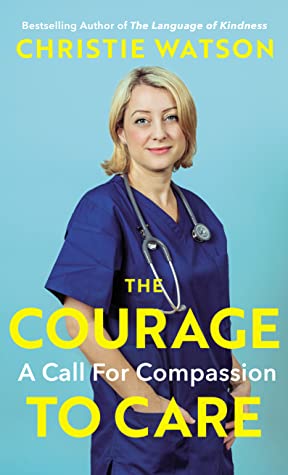 I worried this would be a dull work of polemic; perhaps the title, though stirring, is inapt, as the book is actually a straightforward sequel to Watson’s 2018 memoir about being a nurse, The Language of Kindness. Although, like Bunting, Watson traveled widely to research the state of care in the country, she mostly relies on her own experience of various nursing settings over two decades: a pediatric intensive care unit, home healthcare for the elderly, a children’s oncology day center, a residential home for those with severe physical and learning disabilities, a community mental-health visiting team, and the emergency room. She also shadows military nurses and prison doctors.
With a novelist’s talent for scene-setting and characterization, Watson weaves each patient and incident into a vibrant story. Another strand is about parenthood: giving birth to her daughter and the process of adopting her son – both are now teenagers she raises as a single mother. She affirms the value of everyday care delivered by parents and nurses alike. I was especially struck by the account of a teenage girl who contracted measles (then pneumonia, meningitis and encephalitis) and was left blind and profoundly disabled, all because her parents were antivaxxers. In general, I’ve wearied of doctors’ memoirs composed of obviously anonymized case studies, but I’ll always make an exception for Clarke and Watson because of their gorgeous writing. 
Note: Watson had left nursing to write full-time, but explains in an afterword that she returned to critical care in a London hospital during COVID-19.
What I learned:
Empathy is a key term for all three authors. They emphasize that the skills of compassion and listening are just as important as the ability to perform the required medical procedures.
A chilling specific fact I learned: 43,000 people died in the Blitz* in the UK. Pimenta cited that figure and warned that COVID-19 could be worse. And indeed, as of now, over 63,000 people have died of COVID-19 in the UK. The American death toll is even more alarming.
Here are some passages that stood out for me from each book:
Bunting: “Good care is as much an art as a skill, as much competence as tact. … Care is where we make profound collective decisions about the worth of an individual life. … There is no tradition of ageing wisely in the West, unlike in many Asian and African cultures where age has prestige, status and is associated with wisdom … We need to speak about care in a different language, instead of the relentless macho repetition of words such as ‘efficiency’, ‘quality’, ‘driving’, ‘choice’, ‘delivery’ and productivity.’”
Pimenta: “this will be akin to the Blitz*, and … we need to start thinking of it like that. A marathon, not a sprint. … The challenges to come – a second or even third wave, a global recession, climate change, mass misinformation … and political and societal upheaval … – will all require more from all of us if we hope to meet them. The challenge of our generation is not behind us, it is only just beginning. I plan to continue doing something about it, and perhaps now you do as well. So stay informed, stay safe and be kind.”
Watson: “So much of nursing, I think to myself, seems obvious, and yet seeing that need in the first place is difficult and takes experience, training and something extra. … The mundanity of human existence is where I find the most beauty … It takes my breath away: how fragile, extraordinary and vulnerable, how full of hatred and love and obsession and complexity we all are – every single one of us.”
*I highly recommend all of folk artist Kris Drever’s latest album, Where the World Is Thin, but especially the song “Hunker Down / That Old Blitz Spirit,” which has become my lockdown anthem.

If you read just one, though… Make it The Courage to Care by Christie Watson.
Can you see yourself reading any of these books?
Reading from the Wainwright Prize Longlists
Another day, another prize longlist! This year the Wainwright Prize has split into two awards for writing on 1) UK nature and 2) global conservation themes. Tomorrow (July 30th), they will be whittled down to shortlists. I happen to have read and reviewed 10 of the nominees already. I took the opportunity to experience a few more before the shortlist announcement. I give a paragraph on each below (forgive me for, in some cases, repeating the excerpts that appeared in my reviews roundups and best-of lists).
From the UK nature writing longlist:

 Dark, Salt, Clear: Life in a Cornish Fishing Town by Lamorna Ash: In her early 20s, Ash made multiple trips from London to stay in Newlyn: walking to the cove that bears her name, going out on fishing trawlers, and getting accepted into the small community. Gruelling and lonely, the fishermen’s way of life is fading away. The book goes deeper into Cornish history than non-locals need, but I enjoyed the literary allusions – the title is from Elizabeth Bishop. I liked the writing, but this was requested after me at the library, so I could only skim it.
 Wild Child: Coming Home to Nature by Patrick Barkham: Childhood has moved indoors over the course of three generations, the Guardian journalist observes. Highlighting activities that will engage budding naturalists in every season and accompanying his three children to outdoor nursery, he suggests how connection with nature can be part of everyday life. An engaging narrative not just for parents and educators but for anyone who has a stake in future generations’ resolve to conserve the natural world – which is to say, all of us. (Reviewed for Shiny New Books)
 Bird Therapy by Joe Harkness: In 2013, Harkness was in such a bad place that he attempted suicide. Although he’s continued to struggle with OCD and depression in the years since then, birdwatching has given him a new lease on life. Avoiding the hobby’s more obsessive, competitive aspects (like listing and twitching), he focuses on the benefits of outdoor exercise and mindfulness. He can be lyrical when describing his Norfolk patch and some of his most magical sightings, but the writing is weak. (My husband helped crowdfund the book via Unbound.)
 Dancing with Bees: A Journey Back to Nature by Brigit Strawbridge Howard: Bees were the author’s gateway into a general appreciation of nature, something she lost for a time in midlife because of the rat race and family complications. Allotment gardening gives her opportunities to observe bee behaviour and marvel at their various lookalikes (like hoverflies), identify plants, work on herbal remedies, and photograph her finds. She delights in discovery and is devoted to lifelong learning in a book characterized by curiosity and warmth. (On my runners-up of 2019 list)
 Surfacing by Kathleen Jamie: Jamie has a particular interest in birds, islands, archaeology and the oddities of the human body. The bulk of the book is three long pieces set in Alaska, Orkney and Tibet. Neolithic sites lead her to think about deep time – a necessary corrective to short-term thinking that has gotten us into environmental crisis. I connected with the few-page pieces on experiencing a cave, spotting an eagle or getting lost in a forest. Beautiful nature writing and relatable words on the human condition. (My #9 nonfiction book of 2019)
 Native: Life in a Vanishing Landscape by Patrick Laurie: Galloway may be the forgotten corner of Scotland, but this third-generation cattle farmer can’t imagine living anywhere else. In his year-long nature diary, each month brings rewards as well as challenges as he strives to manage the land in a manner beneficial to wildlife. I’m lucky to have visited Wigtown and the surrounding area. You needn’t have been in person, though, to appreciate this pensive account rich with the sense of place and balanced between solastalgia and practicality. (Reviewed for Shiny New Books)
 Wintering by Katherine May: May’s sympathetic memoir considers winter not only as a literal season, but also as an emotional state. Although “depression” could be substituted for “wintering” in most instances, the book gets much metaphorical mileage out of the seasonal reference as she recounts how she attempted to embrace rather than resist the gloom and chill through rituals such as a candlelit St. Lucia service and an early morning solstice gathering at Stonehenge. Wintering alternates travel and research, mind and body. (Reviewed for TLS)
 Diary of a Young Naturalist by Dara McAnulty: McAnulty is the UK’s answer to Greta Thunberg: a leader in the youth environmental movement and an impassioned speaker on the love of nature. This is a wonderfully observant and introspective account of his fifteenth year: of disruptions – moving house and school, of outrage at the state of the world and at individual and political indifference, of the complications of being autistic, but also of the joys of everyday encounters with wildlife. Impressive perspective and lyricism. (Reviewed for Shiny New Books; on my Best of 2020 so far list.)
 Wanderland: A Search for Magic in the Landscape by Jini Reddy: Reddy has often felt like a nomad and an outsider. Through a year of travelling to holy sites, she seeks to be rooted in the country she has come to call home. The quest takes her all over the British Isles, creating an accessible introduction to its sacred spots. Recovering a sense of reverence for nature can only help in the long-term mission to preserve it. Reddy is the first person of colour nominated for the Wainwright Prize in its seven-year history. (Reviewed for Shiny New Books)
 I think this year’s is an especially appealing longlist. It’s great to see small presses and debut authors getting recognition. I’ve now read 8 out of 13 (and skimmed one), and am interested in the rest, too, especially The Frayed Atlantic Edge by David Gange. The final three, all combining nature and (auto)biographical writing, are On the Red Hill by Mike Parker, The Well-Gardened Mind by Sue Stuart-Smith, and Rootbound: Rewilding a Life by Alice Vincent.
From the writing on global conservation longlist:

 Greenery: Journeys in Springtime by Tim Dee: From the Cape of Good Hope to the Arctic Circle, Dee tracks the spring as it travels north. From first glimpse to last gasp, moving between his homes in two hemispheres, he makes the season last nearly half the year. His main harbingers are migrating birds, starting with swallows. The book is steeped in allusions and profound thinking about deep time and what it means to be alive in an era when nature’s rhythms are becoming distorted. A fresh, masterful model of how to write about nature. (Review reprinted at Shiny New Books; on my Best of 2020 so far list.)
 Irreplaceable: The Fight to Save Our Wild Places by Julian Hoffman: Species and habitat loss are hard to comprehend even when we know the facts. This exquisitely written book is about taking stock, taking responsibility, and going beyond the numbers to tell the stories of front-line conservation work. Irreplaceable is an elegy of sorts, but, more importantly, it’s a call to arms. It places environmentalism in the hands of laypeople and offers hope that in working together in the spirit of defiance we can achieve great things. (Reviewed for Shiny New Books; my #1 nonfiction book of 2019)
 Losing Eden: Why Our Minds Need the Wild by Lucy Jones: While nature’s positive effect on human mental health is something we know intuitively and can explain anecdotally, Jones wanted to investigate the scientific mechanism behind it. She makes an empirical enquiry but also attests to the personal benefits nature has. Losing Eden is full of common sense and passion, cramming masses of information into 200 pages yet never losing sight of the big picture. Like Silent Spring, on which it is patterned, I can see this leading to real change. (Reviewed for Shiny New Books; on my Best of 2020 so far list.)
 Notes from an Apocalypse: A Personal Journey to the End of the World and Back by Mark O’Connell: The same satirical outlook that made O’Connell’s first book so funny is perfect for approaches to the end of the world, especially in the early chapter about preppers. Preparing = retreating, so he travels to South Dakota bunkers; a Mars Society Conference in Los Angeles; New Zealand, where billionaires plan to take refuge; and the wilderness of the Scottish Highlands. While pessimism strikes him as the only rational attitude, he decides constant anxiety is no way to live. (More extended thoughts here.)
The other book from this longlist that I’m interested in reading is Rebirding by Benedict Macdonald. I DNFed Bloom (all you ever wanted to know about algae!) last year; the other five seem too similar to other things I’ve read.
My predictions-cum-wish lists:
UK nature writing:
- The Frayed Atlantic Edge by David Gange
- Surfacing by Kathleen Jamie*
- On the Red Hill by Mike Parker
- Diary of a Young Naturalist by Dara McAnulty
- Wanderland by Jini Reddy
- Rootbound: Rewilding a Life by Alice Vincent
Writing on global conservation:
- Greenery by Tim Dee
- What We Need to Do Now for a Zero Carbon Future by Chris Goodall
- Irreplaceable by Julian Hoffman*
- Losing Eden by Lucy Jones
- Bloom by Ruth Kassinger
- Harvest: The Hidden Histories of Seven Natural Objects by Edward Posnett
*Predicted overall winners.
Have you read anything from the Wainwright Prize longlists? Do any of these books interest you?
Four June Releases (Fiction & Poetry): Bennett, Gabrielsen, Kwek and Watts
(A rare second post in a day from me, to make way for tomorrow’s list of the best books of the first half of the year.) My four new releases for June are a novel about the complications of race and sexuality in 1950s–80s America, a novella in translation about a seabird researcher struggling through a time of isolation, and two new poetry books from Carcanet Press. As a bonus just in time for Pride Month, I finish with a mini write-up of The Book of Queer Prophets, an anthology of autobiographical essays that was published late last month.
The Vanishing Half by Brit Bennett
 Like some lost mid-career gem from Toni Morrison, this novel is meaty with questions of racial and sexual identity and seems sure to follow in the footsteps of Ruby and An American Marriage with a spot in Oprah’s book club and on Barack Obama’s summer reading list.
It’s the story of light-skinned African American twins Stella and Desiree Vignes, and how their paths divide in 1954. Both are desperate to escape from Mallard, Louisiana, where their father was lynched and their mother cleans white people’s houses. Desiree works in fingerprinting for the FBI in Washington, D.C., but in 1968 leaves an abusive marriage to return to Mallard with her dark-skinned daughter, Jude Winston. Stella, on the other hand, has been passing as white for over a decade. She was a secretary for the man who became her husband, Blake Sanders, and now lives a life of comfort in a Los Angeles subdivision.
The twins’ decisions affect the next generation, too. Both have one daughter. Jude goes to college in L.A., where she meets and falls in love with photographer Reese (born Therese), who is, in a different sense, “passing” until he can afford the surgery that will align his body with his gender. In a coincidence that slightly strains belief, Jude runs into Stella’s daughter, Kennedy, and over the next seven years the cousins – one a medical student; the other an actress – continue to meet occasionally, marvelling at how two family lines that started in Mallard, a tiny town that doesn’t even exist anymore, could have diverged so dramatically.
This is Bennett’s second novel, after The Mothers, which I’m keen to read. It’s perceptive and beautifully written, with characters whose struggles feel genuine and pertinent. Though its story line ends in the late 1980s, it doesn’t feel passé at all. The themes of self-reinvention and running from one’s past resonate. I expected certain characters to be forced into moments of reckoning, but the plot is a little messier than that – and that’s more like real life. A shoo-in for next year’s Women’s Prize list.
My rating:
My thanks to Dialogue Books for the free copy for review.
Ankomst by Gøhril Gabrielsen (2017)
[Translated from the Norwegian by Deborah Dawkin]
 The unnamed narrator of Gabrielsen’s fifth novel is a 36-year-old researcher working towards a PhD on the climate’s effects on populations of seabirds, especially guillemots. During this seven-week winter spell in the far north of Norway, she’s left her three-year-old daughter behind with her ex, S, and hopes to receive a visit from her lover, Jo, even if it involves him leaving his daughter temporarily. In the meantime, they connect via Skype when signal allows. Apart from that and a sea captain bringing her supplies, she has no human contact.
Daily weather measurements and bird observations still leave too much time alone in a cramped cabin, and this starts to tell in the protagonist’s mental state: she’s tormented by sexual fantasies, by memories of her life with S, and by the thought of a local family, the Berthelsens, who experienced a disastrous house fire in 1870. More and more frequently, she finds herself imagining what happened to Olaf and Borghild Berthelsen. Solitude and this growing obsession with ghosts of the past make her start to lose her grip on reality.
I’d encountered an unreliable narrator and claustrophobic setting before from Gabrielsen with her second novel, The Looking-Glass Sisters. Extreme weather and isolation account for this being paired with Snow, Dog, Foot by Claudio Morandini as the first two books in Peirene’s 2020 “Closed Universe” trilogy. I was also reminded of Sarah Moss’s Night Waking. However, I found this novella’s metaphorical links – how seabirds and humans care for their young; physical and emotional threats; lowering weather and existential doom – too obvious.
My rating:
My thanks to Peirene Press for the free copy for review.
Moving House by Theophilus Kwek
 This is the first collection of the Chinese Singaporean poet’s work to be published in the UK. Infused with Asian history, his elegant verse ranges from elegiac to romantic in tone. Many of the poems are inspired by historical figures and real headlines. There are tributes to soldiers killed in peacetime training and accounts of high-profile car accidents; “The Passenger” is about the ghosts left behind after a tsunami. But there are also poems about the language and experience of love. I also enjoyed the touches of art and legend: “Monologues for Noh Masks” is about the Pitt-Rivers Museum collection, while “Notes on a Landscape” is about Iceland’s geology and folk tales. In most places alliteration and enjambment produce the sonic effects, but there are also a handful of rhymes and half-rhymes, some internal.
My individual favorite poems included “Prognosis,” “Sophia” (made up of two letters Sir Thomas Stamford Raffles writes home to his wife while surveying in Singapore), and “Operation Thunderstorm.” As an expat and something of a nomad, I especially loved the title poem, which comes last and explains the cover image: “every house has a skeleton – / while the body learns it must carry less / from place to place, a kind of tidiness / that builds, hardens. Some call it fear, // of change, or losing what we cannot keep. / Others, experience.” Recommended to fans of Mary Jean Chan, Nausheen Eusuf, Kei Miller and Ocean Vuong.
My rating:
My thanks to Carcanet Press for the PDF copy for review.
Red Gloves by Rebecca Watts
 I noted the recurring comparison of natural and manmade spaces; outdoors (flowers, blackbirds, birds of prey, the sea) versus indoors (corridors, office life, even Emily Dickinson’s house in Massachusetts). The style shifts from page to page, ranging from prose paragraphs to fragments strewn across the layout. Most of the poems are in recognizable stanzas, though these vary in terms of length and punctuation. Alliteration and repetition (see, as an example of the latter, her poem “The Studio” on the TLS website) take priority over rhymes. I was reminded of Elizabeth Bishop in places, while “Whereas” had me thinking of Stephen Dunn’s collection of that name (Layli Long Soldier also has a poetry book of the same title). A few of my individual favorite poems were “Surveillance,” “Building” and “Admission” (on a medical theme: “What am I afraid of? / The breaching of skin. / Violation of laws that / separate outside from in. / Liquidation of the thing / I call me.”).
My rating:
My thanks to Carcanet Press for the PDF copy for review.
And a bonus for Pride Month:
The Book of Queer Prophets: 24 Writers on Sexuality and Religion, edited by Ruth Hunt
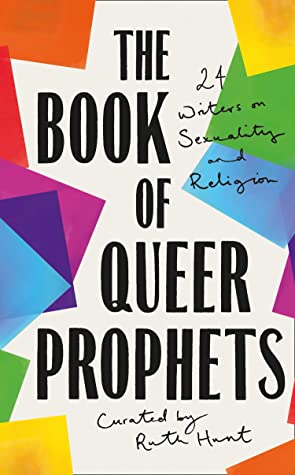 There isn’t, or needn’t be, a contradiction between faith and queerness, as the authors included in this anthology would agree. Many of them are stalwarts at Greenbelt, a progressive Christian summer festival – Church of Scotland minister John L. Bell even came out there, in his late sixties, in 2017. I’m a lapsed regular attendee, so a lot of the names were familiar to me, including those of poets Rachel Mann and Padraig O’Tuama.
Most of the contributors are Christian, then, including ordained priests like Desmond Tutu’s daughter, Mpho, and LGBT ally Kate Bottley, but we also hear from Michael Segalov, a gay Jewish man in London, and from Amrou Al-Kahdi (author of Unicorn: The Memoir of a Muslim Drag Queen), who describes the affirmation they found in the Sufi tradition. Dustin Lance Black tells of the exclusion LGBT Mormons still encounter.
Jarel Robinson-Brown addresses his lament on mistreatment to his nephew, as James Baldwin did in “My Dungeon Shook” (in The Fire Next Time). Tamsin Omond recounts getting married to Melissa on a London bridge in the middle of an Extinction Rebellion protest. Erin Clark, though bisexual, knows she can pass as straight because she’s marrying a man – so is she ‘gay enough?’ Two trans poets write of the way cathedrals drew them into faith. The only weaker pieces are by Jeanette Winterson (there’s nothing new if you’ve read her memoir) and Juno Dawson (entirely throwaway; ‘I’m an atheist, but it’s okay to be religious, too’).
Again and again, these writers voice the certainty that they are who God means them to be. A few of them engage with particular passages from the Bible, offering contextual critiques or new interpretations, but most turn to scripture for its overall message of love and justice. Self-knowledge is a key component of their search for truth. And the truth sets people free.
My rating:
I read an e-copy via NetGalley.
What recent releases can you recommend?
The Not the Wellcome Prize Blog Tour: Francesca Segal and Ian Williams
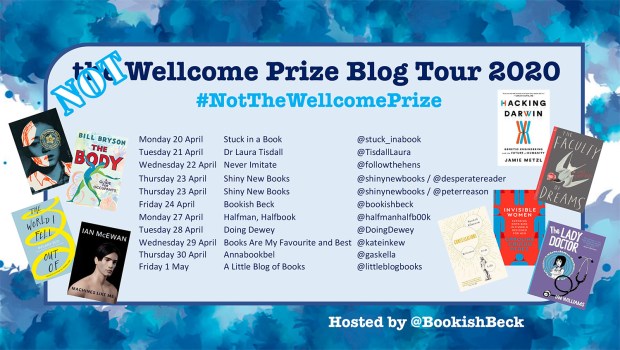
It’s my stop on the “Not the Wellcome Prize” blog tour. With two dozen reviews of health-themed 2019 books to choose from, I decided to nominate these two for the longlist because they’re under the radar compared to some other medical releases, plus they showcase the breadth of the books that the Prize recognizes: from a heartfelt memoir of a mother welcoming premature babies to a laugh-out-loud graphic novel about a doctor practicing in a small town in Wales. (The Prize website says “picture-led books are not eligible,” so in fact it is likely that graphic novels have never been considered, but we’ve been flexible with the rules for this unofficial blog tour.)
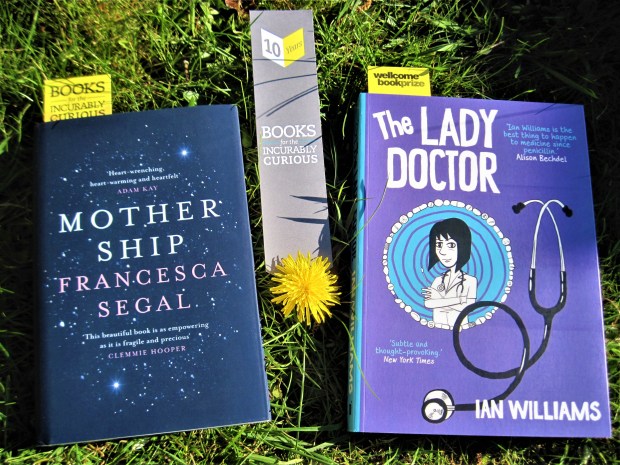
Mother Ship by Francesca Segal
 This first work of nonfiction from the author of the exquisite The Innocents is a visceral diary of the first eight weeks in the lives of her twin daughters, who were born by Caesarean section at 29 weeks in October 2015 and spent the next two months in the NICU, “an extremely well-funded prison or perhaps more accurately a high-tech zoo.” In Mother Ship, she strives to come to terms with this unnatural start to motherhood. “Taking my unready daughters from within me felt not like a birth but an evisceration,” she writes. “My children do not appear to require mothering. Instead they need sophisticated medical intervention.”
Segal describes with tender precision the feeling of being torn: between the second novel she’d been in the middle of writing and the all-consuming nature of early parenthood; and between her two girls (known for much of the book as “A-lette” and “B-lette”), who are at one point separated in different hospitals. Her attitude towards the NHS is pure gratitude.
As well as portraying her own state of mind, she crafts twinkly pen portraits of the others she encountered in the NICU, including the staff but especially her fellow preemie mums, who met in a “milking shed” where they pumped breast milk for the babies they were so afraid of losing that they resisted naming. (Though it was touch and go for a while, A-lette and B-lette finally earned the names Raffaella and Celeste and came home safely.) Female friendship is thus a subsidiary theme in this exploration of desperate love and helplessness.
The Lady Doctor by Ian Williams
 This sequel to 2014’s The Bad Doctor returns to a medical practice in small-town Wales. This time, though, the focus is on Iwan James’s colleague, Dr. Lois Pritchard, who also puts in two days a week treating embarrassing ailments at the local hospital’s genitourinary medicine clinic. At nearly 40, Lois is a divorcee with no children; just a dog. She enjoys her nights out drinking with her best friend, Geeta, but her carefree life is soon beset by various complications: she has to decide whether she wants to join the health centre as a full partner, a tryst with her new fella goes horribly wrong, and her estranged mother suddenly reappears in her life, hoping that Lois will give her a liver transplant. And that’s not to mention all the drug addicts and VD-ridden lotharios hanging about.
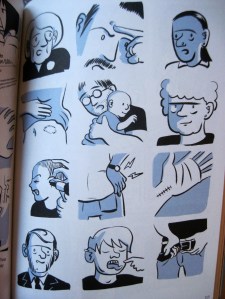 Williams was a GP in North Wales for 20 years, and no doubt his experiences have inspired his comics. His tone is wonderfully balanced: there are plenty of hilarious, somewhat raunchy scenes, but also touching moments where Lois learns that a doctor is never completely off duty and has no idea what medical or personal challenge will crop up next. The drawing style reminded me most of Alison Bechdel’s or Posy Simmonds’, with single shades from rose to olive alternating as the background. I especially loved the pages where each panel depicts a different patient to show the range of people and complaints a doctor might see in a day. Myriad Editions have a whole “Graphic Medicine” series that I’m keen to explore.
See below for details of the blogs where other reviews have appeared or will be appearing soon.
The shadow panel will choose a shortlist of six titles to be announced on 4 May. We will then vote to choose a winner, with the results of a Twitter poll serving as one additional vote. The Not the Wellcome Prize winner will be announced on 11 May.
Review Books Roundup: Blackburn, Bryson, Pocock, Setterwall, Wilson
I’m attempting to get through all my 2019 review books before the end of the year, so expect another couple of these roundups. Today I’m featuring a work of poetry about one of Picasso’s mistresses, a thorough yet accessible introduction to how the human body works, a memoir of personal and environmental change in the American West, Scandinavian autofiction about the sudden loss of a partner, and a novel about kids who catch on fire. You can’t say I don’t read a variety! See if one or more of these tempts you.
The Woman Who Always Loved Picasso by Julia Blackburn
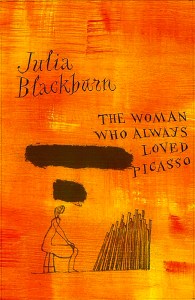 Something different from Blackburn: biographical snippets in verse about Marie-Thérèse Walter, one of Pablo Picasso’s many mistress-muses. When they met she was 17 and he was 46. She gave birth to a daughter, Maya – to his wife Olga’s fury. Marie-Thérèse’s existence was an open secret: he rented a Paris apartment for her to live in, and left his home in the South of France to her (where she committed suicide three years after his death), but unless their visits happened to overlap she was never introduced to his friends. “I lived in the time I was born into / and I kept silent, / acquiescing / to everything.”
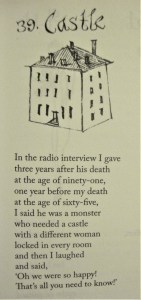 In Marie-Thérèse’s voice, Blackburn depicts Picasso as a fragile demagogue: in one of the poems that was a highlight for me, “Bird,” she describes how others would replace his caged birds when they died, hoping he wouldn’t notice – so great was his horror of death. I liked getting glimpses into a forgotten female’s life, and appreciated the whimsical illustrations by Jeffrey Fisher, but as poems these pieces don’t particularly stand out. (Plus, there are no page numbers! which doesn’t seem like it should make a big difference but ends up being annoying when you want to refer back to something. Instead, the poems are numbered.)
My rating:
With thanks to Carcanet Press for the free copy for review. Published today.
The Body: A Guide for Occupants by Bill Bryson
 Shelve this next to Being Mortal by Atul Gawande in a collection of books everyone should read – even if you don’t normally choose nonfiction. Bryson is back on form here, indulging his layman’s curiosity. As you know, I read a LOT of medical memoirs and popular science. I’ve read entire books on organ transplantation, sleep, dementia, the blood, the heart, evolutionary defects, surgery and so on, but in many cases these go into more detail than I need and I can find my interest waning. That never happens here. Without ever being superficial or patronizing, the author gives a comprehensive introduction to every organ and body system, moving briskly between engaging anecdotes from medical history and encapsulated research on everything from gut microbes to cancer treatment.
Bryson delights in our physical oddities, and his sense of wonder is infectious. He loves a good statistic, and while this book is full of numbers and percentages, they are accessible rather than obfuscating, and will make you shake your head in amazement. It’s a persistently cheerful book, even when discussing illness, scientists whose work was overlooked, and the inevitability of death. Yet what I found most sobering was the observation that, having conquered many diseases and extended our life expectancy, we are now overwhelmingly killed by lifestyle, mostly a poor diet of processed and sugary foods and lack of exercise.
My rating:
With thanks to Doubleday for the free copy for review.
Surrender: Mid-Life in the American West by Joanna Pocock
 Prompted by two years spent in Missoula, Montana and the disorientation felt upon a return to London, this memoir-in-essays varies in scale from the big skies of the American West to the smallness of one human life and the experience of loss and change. Then in her late forties, Pocock had started menopause and recently been through the final illnesses and deaths of her parents, but was also mother to a fairly young daughter. She explores personal endings and contradictions as a kind of microcosm of the paradoxes of the Western USA.
It’s a place of fierce independence and conservatism, but also mystical back-to-the-land sentiment. For an outsider, so much of the lifestyle is bewildering. The author attends a wolf-trapping course, observes a Native American buffalo hunt, meets a transsexual rewilding activist, attends an ecosexuality conference, and goes foraging. All are attempts to reassess our connection with nature and ask what role humans can play in a diminished planet.
This is an elegantly introspective work that should engage anyone interested in women’s life writing and the environmental crisis. There are also dozens of black-and-white photographs interspersed in the text. In 2018 Pocock won the Fitzcarraldo Editions Essay Prize for this work-in-progress. It came to me as an unsolicited review copy and hung around on my shelves for six months before I picked it up; I’m glad I finally did.
My rating:
With thanks to Fitzcarraldo Editions for the free copy for review.
Let’s Hope for the Best by Carolina Setterwall
[Trans. from the Swedish by Elizabeth Clark Wessel]
 Although this is fiction, it very closely resembles the author’s own life. She wrote this debut novel to reflect on the sudden loss of her partner and how she started to rebuild her life in the years that followed. It quickly splits into two parallel story lines: one begins in April 2009, when Carolina first met Aksel at a friend’s big summer bash; the other picks up in October 2014, after Aksel’s death from cardiac arrest. The latter proceeds slowly, painstakingly, to portray the aftermath of bereavement. In the alternating timeline, we see Carolina and Aksel making their life together, with her always being the one to push the relationship forward.
Setterwall addresses the whole book in the second person to Aksel. When the two story lines meet at about the two-thirds point, it carries on into 2016 as she moves house, returns to work and resumes a tentative social life, even falling in love. This is a wrenching story reminiscent of In Every Moment We Are Still Alive by Tom Malmquist, and much of it resonated with my sister’s experience of widowhood. There are many painful moments that stick in the memory. Overall, though, I think it was too long by 100+ pages; in aiming for comprehensiveness, it lost some of its power. Page 273, for instance (the first anniversary of Aksel’s death, rather than the second, where the book actually ends), would have made a fine ending.
My rating:
With thanks to Bloomsbury UK for the proof copy for review.
Nothing to See Here by Kevin Wilson
 I’d read a lot about this novel while writing a synopsis and summary of critical opinion for Bookmarks magazine – perhaps too much, as it felt familiar and offered no surprises. Lillian, a drifting twentysomething, is offered a job as a governess for her boarding school roommate Madison’s stepchildren. Madison’s husband is a Tennessee senator in the running for the Secretary of State position, so it’s imperative that they keep a lid on the situation with his 10-year-old twins, Bessie and Roland.
You see, when they’re upset these children catch on fire; flames destroy their clothes and damage nearby soft furnishings, but leave the kids themselves unharmed. Temporary, generally innocuous spontaneous combustion? Okay. That’s the setup. Wilson writes so well that it’s easy to suspend your disbelief about this, but harder to see a larger point, except perhaps creating a general allegory for the challenges of parenting. This was entertaining enough, mostly thanks to Lillian’s no-nonsense narration, but for me it didn’t soar.
My rating:
With thanks to Text Publishing UK for the PDF for review. This came out in the States in October and will be released in the UK on January 30th.
Would you be interested in reading one or more of these?
Kinds of Love: Three Books for Valentine’s Day
At about this time of year I try to read a handful of books with “love” in the title. I’m currently reading Iris Murdoch’s The Sacred and Profane Love Machine for the #IMReadalong, and I have one more “love” title towards the end of this post, but it turns out that my focus this year has been more on the kinds of love that tend to get ignored around Valentine’s Day – familial love for one’s ageing parents and grandparents.

Be With: Letters to a Carer by Mike Barnes (2018)
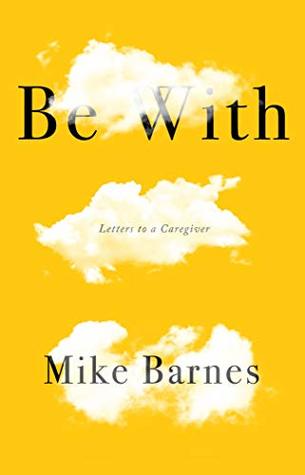 Mike Barnes, a Toronto poet and novelist, has been a primary caregiver for his mother, Mary, in the nine years since her Alzheimer’s diagnosis disease. She grew up on a Saskatchewan farm and is now in her nineties; he’s in his sixties. A bipolar sufferer, Barnes has spent his own fair share of time in hospitals and on disability. He’s moved Mary between care homes four times as her condition has deteriorated. Though he laments her gradual loss of words and awareness of her family, he can still discern instances of her bravery and the beauty of life.
This book of fragments – memories and advice delivered via short letters – was written in between demanding caregiving tasks and is meant to be read in those same gaps. Dementia is one situation in which you should definitely throw money at a problem, Barnes counsels, to secure the best care you can, even round-the-clock nursing help. However, as the title suggests, nothing outweighs simply being there. Your presence, not chiefly to make decisions, but just to sit, listen and place a soothing hand on a forehead, is the greatest gift.
There are many excellent, pithy quotations in this book. Here are a few of my favorites:
Dementia is…
“a retreat under fire”
“a passage of exquisite vulnerability”
By your loved one’s side is “Not where things are easy, or satisfactorily achieved, or achievable, or even necessarily pleasant. But where you ought to be, have to be, and are. It brings a peace.”
The goal is “Erring humanely”.
I can imagine this being an invaluable companion for caregivers, to be tucked into a pocket or purse and pulled out for a few moments of relief. On the theme of a parent’s dementia, I’d also recommend Paulette Bates Alden’s book of linked short stories, Unforgettable.
My rating:
Out now from Myriad Editions. My thanks for the free copy for review.
The Smallest Things: On the enduring power of family: A memoir of tiny dramas by Nick Duerden (2019)
 Journalist Nick Duerden always appreciated how his maternal grandparents, Nonna and Nonno, seemed so ordinary and unchanging. Every trip to see them in the Milan suburbs was, comfortingly, the same. He’d muddle along with his meager Italian, and they’d look after him in their usual clucking way. It was only as he reached middle age and realized that his grandparents were undeniably very old – his grandmother is 99 and in a care home at the time of writing – that he realized how lucky he was to still have them in his life and how unlikely it was that they’d be around for much longer.
Duerden compares his small immediate family with his Spanish wife’s large extended one, and his uptight paternal grandparents with the more effusive set. There are also some family secrets still to uncover. I made the mistake of reading a previous nonfiction book of Duerden’s just the week before this one: Get Well Soon (2018), which has a long chapter about his grandparents that told me all I needed to know about them. That’s probably the main reason why this short book struck me as lightweight, though I did ultimately find it a touching tribute, especially to his grandmother. It could make a good Mother’s Day present.
My rating: 
Out today from Elliott & Thompson. My thanks for a proof copy for review.
Love Story by Erich Segal (1970)
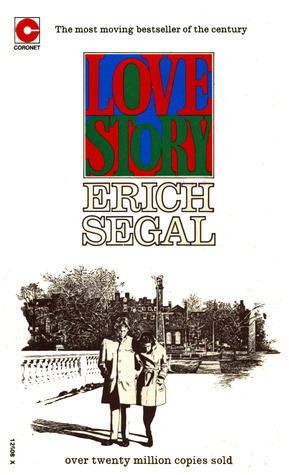 This offbeat novella was a bestseller and a successful film. You surely know its most famous line: “Love means not ever having to say you’re sorry.” Oliver Barrett IV is a golden boy: his banker father and previous generations of the eminent Barrett family funded various buildings at Harvard, where Oliver is a hockey player in the late 1960s. Jenny Cavilleri, on the other hand, comes from a single-parent Italian-American family in New Jersey. She’s made it to Radcliffe as a harpsichordist, but her father is just a baker; she’d never be considered good enough for the likes of Oliver. But they meet at the Radcliffe library and, sure enough, fall for each other. She calls him “Preppie”; he calls her a bitch. They’re only partially joking. It may be true love against the odds, but it has an expiration date, as we know from the first line: “What can you say about a twenty-five-year old girl who died?”
I wanted to like this more. There’s a pleasing lightness to the style, but because the whole book is from Oliver’s perspective, I felt like Jenny got short shrift: she’s the wise-cracking gal from the block, and then she’s the innocent victim in the hospital bed. Because this is only about 120 pages, there’s not much space in between for her character to be developed. I was somewhat appalled to learn about a 1977 sequel in which Oliver finds a new love.
(Segal’s daughter Francesca is also a novelist (The Innocents).)
My rating:
Have you read any “love” books, or books about love of any kind, lately?
How Not to Decide: Motherhood by Sheila Heti
Should one have children? No matter who’s asking the question or in what context, you’re going to get the whole gamut of replies, as proven by this recent Literary Hub survey of authors. Should I have children? Turn the question personal and, even if it’s actually rhetorical, you’ll still get an opinion from every quarter. As The Decision looms over her, the narrator of Sheila Heti’s new novel, a 37-year-old writer from Toronto, isn’t sure who to listen to. Her neurotic inner voice makes her second-guess her life. “The question of a child is a bug in the brain—it’s a bug that crawls across everything, every memory, and every sense of my own future.” Meanwhile, acquaintances and strangers alike all have their two cents to chip in. Everywhere she goes on her book tour, for instance, she hears other people’s stories and has to sift through them. She’s something like the protagonist of Rachel Cusk’s Outline trilogy, though with a stronger personality and internal commentary.
Having a child is an act of creation, and Heti’s narrator worries that she only has sufficient creative energy for one or the other: writing or breeding. Her identity as an artist is so precious to her that she is terrified of giving it up, or watering it down, to risk being a (not very good?) mother. Yet she has the sense that to remain childless she had better come up with a really good excuse. People will want to know what she is going to do with her life instead, and they’re unlikely to be satisfied by the notion that her books are like her babies.

The novel is in short, aphoristic paragraphs and is dominated by cogitation rather than scenes, though there are some concrete events and secondary characters, such as the narrator’s mother; her friend Libby, a new mother; and her partner, Miles, who has a 12-year-old daughter from a previous relationship. The sections are given headings like “PMS,” “Bleeding,” “Follicular,” and “Ovulating,” which suggest the cyclical nature of life: whether she likes it or not, this character is part of a physical process geared towards reproduction.
The cyclical workings of the female body mirror the circularity of her thoughts: she keeps revolving around the same questions, never seeming to get any closer to a decision – though by the end she does decide. The temptation is always to offload the choice onto an external, fate-like force. The narrator wants the oracular voice of the universe to answer everything for her via coin tosses. (Heti writes in a prefatory note that these were based on actual coin tosses.) She asks series of yes/no questions and reports what the coins have to say. It’s a way of avoiding responsibility for her own decision, and produces some truly hilarious passages. Oh, the absurdity of having a dialogue with an impersonal force!
Our heroine does ultimately realize how random and meaningless the coins’ yes/no answers are, but she continues to look outside herself for wisdom: to a fortune teller, psychics, dreams, and even a crazy woman in New York City who hits her up for money. Anything to bypass the wringer of her own mind. She also latches onto the biblical story of Jacob wrestling with the angel, and contrasts this with the symbol of a kitchen knife, which represents a demon that robs her of hope.
 Every woman is a daughter as well as a potential mother, and a particularly moving strand of Motherhood is the narrator’s relationship with her female ancestors. Her Hungarian grandmother, Magda, survived Auschwitz only to die of cancer at 53; her mother, a doctor, devoted herself to her career and left the traditional household and childrearing tasks to her husband. This dual legacy of suffering and professional pride helps explain the narrator’s feelings. Deep down, she believes her family line was meant to end in a concentration camp; how dare she continue it now? She also emulates her mother’s commitment to a cerebral vocation – “So I also wanted to be the brains: to be nothing but words on a page.”
Chance, inheritance, and choice vie for pride of place in this relentless, audacious inquiry into the purpose of a woman’s life. I marked out dozens of quotes that could have been downloaded directly from my head or copied from my e-mails and journal pages. The book encapsulates nearly every thought that has gone through my mind over the last decade as I’ve faced the intractable question of whether to have children. I suspect it will mean the most to people who are still unsure or have already decided against children; parents may interpret Heti’s arguments as personal barbs, even though the narrator insists her own decision is not an inherent comment on anyone else’s. It’s a book I could have written, but now don’t have to; Heti has captured brilliantly what it’s like to be in this situation in this moment in time.
Here are a few of my favorite passages. They should give you an idea of whether this book might resonate with you, or at least interest you academically:
“On the one hand, the joy of children. On the other hand, the misery of them. On the one hand, the freedom of not having children. On the other hand, the loss of never having had them—but what is there to lose?”
“for a woman of curiosity, no decision will ever feel like the right one. In both, too much is missing. What can I say, except: I forgive myself for every time I neglected to take a risk, for all the narrowings and winnowings of my life. I understand that fear beckons to a person as much as possibility does, and even more strongly.”
“I don’t have to live every possible life, or to experience that particular love. I know I cannot hide from life; that life will give me experiences no matter what I choose. Not having a child is no escape from life, for life will always put me in situations, and show me new things, and take me to darknesses I wouldn’t choose to see, and all sorts of treasures of knowledge I cannot comprehend.”
My rating:
Motherhood was published in the UK by Harvill Secker on May 24th. My thanks to the publisher for the free copy for review. It came out in North America on May 1st (Knopf Canada / Henry Holt and Co.).
 Bookish Beck = Rebecca Foster. American transplant to England. Freelance proofreader and book reviewer.
 Bookish Beck