Three on a Theme: Matrescence Memoirs (and a Bonus Novel)
I think of pregnancy and childbirth like any extreme adventure (skydiving, polar exploration): wholly extraordinary experiences with much to recommend them – though better appreciated retrospectively than in the moment – to which my response is a hearty “no, thanks.” But just as books have taken me to deserts and the frozen north, miles above or below the earth, into many eras and cultures, they’ve long been my window onto motherhood.
Matrescence, a word coined by anthropologist Dana Raphael in the 1970s, is the process of becoming a mother. It’s a transition period, like adolescence, that involves radical physical and mental changes and has lasting effects. And as Lucy Jones reports, up to 45% of women describe childbirth as traumatic. That’s not a niche experience; it’s an epidemic. If it was men going through this, you can bet it would be at the top of international research agendas.
These three memoirs (and a bonus novel) are bold, often harrowing accounts of the metamorphosis involved in motherhood. They’re personal yet political in how they expose the lack of social support for creating and raising the next generation. All four of these 2023 releases are eye-opening, lyrical and vital; they deserve to be better known.
Matrescence: On the Metamorphosis of Pregnancy, Childbirth and Motherhood by Lucy Jones
Like Jones’s previous book, Losing Eden, about climate breakdown and the human need for nature, Matrescence is a potent blend of scientific research and stories from the frontline. She has synthesized a huge amount of information into a tight 260-some pages that are structured thematically but also proceed roughly chronologically through her own matrescence. Not long into her pregnancy with her first child, a daughter, she realised the extent to which outdated and sexist expectations still govern motherhood: concepts like “natural childbirth” and “maternal instinct,” the judgemental requirement for exclusive breastfeeding, the idea that a parent should “enjoy every minute” of their offspring’s babyhood rather than admitting depression or overwhelm. After the cataclysm of birth, loneliness set in. “Matrescence was another country, another planet. I didn’t know how to talk about the existential crisis I was facing, or the confronting, encompassing relationship I was now in.”
 Jones is now a mother of three. You might think delivery would get easier each time, but in fact the birth of her second son was worst, physically: she had to go into immediate surgery for a fourth-degree anal sphincter tear. In reflecting on her own experiences, and speaking with experts, she has become passionate about fostering open discussion about the pain and risk of childbirth, and how to mitigate them. Women who aren’t informed about what they might go through suffer more because of the shock and isolation. There’s the medical side, but also the equally important social implications: new mothers need so much more practical and mental health support, and their unpaid care work must be properly valued by society. “Yet the focus remains on individual responsibility, maintaining the illusion that we are impermeable, impenetrable machines, disconnected from the world around us.”
The hybrid nature of the book is its genius. A purely scientific approach might have been dry; a social history well-trod and worthy; a memoir too inward-looking to make wider points. Instead it’s equally committed to all three purposes. I appreciated the laser focus on her own physical and emotional development, but the statistical and theoretical context gives a sense of the universal. The literary touches – lists and word clouds, verse-like meditations and flash vignettes about natural phenomena – are not always successful, but there is a thrill to seeing Jones experimenting. Like Leah Hazard’s Womb, this is by no means a book that’s just for mothers; it’s for anyone who’s ever had a mother.
With thanks to Allen Lane (Penguin) for the free copy for review.
Milk: On Motherhood and Madness by Alice Kinsella
 Kinsella is an Irish poet who became a mother in her mid-twenties; that’s young these days. In unchronological vignettes dated in relation to her son’s birth – the number of months after; negative numbers to indicate that it happened before – she explores her personality, mental health and bodily experiences, but also comments more widely on Irish culture (the stereotype of the ‘mammy’; the only recent closure of Magdalene laundries and overturning of anti-abortion laws) and theories about motherhood.
I liked this most when the author stuck close to her own sensory and emotional life; overall, the book felt too long and I thought a late segue into an argument against the dairy industry was unnecessary. Had I been the editor, I would have cut the titled essays and just stuck to the time-stamped pieces. At its best, though, this is a poetic engagement with the tropes and reality of motherhood, sometimes delivered in paragraphs that more closely resemble verse:
+1 I have become the common myth. Mother. The sleepy hum of early memories. The smell of shampoo, of Olay, of lavender. The feeling of safety. The absence of fear.
+2 There’s a possibility,
that we are among the happiest
people in the world:
mothers.[Record freeze preserve.] Fighting death by reproducing our days. Fighting death by reproducing. Here: your life on paper. Here: their life to come.
We’re expected to be mothers the instant we lock eyes with our baby. To shed everything we were and be reborn: Madonnas.
The baby’s favourite thing to do is sit on my lap and interact with other people. This is what mothers are for, I think. Comfort, security, a place to get to know the world from.
The language is gorgeous, and while Kinsella complains of disorientation to the point of worrying about losing herself (although she had struggled with mental health earlier in life, the subtitle’s reference to ‘madness’ seemed to me like overkill compared to other memoirs I’ve read of postpartum depression, trauma or psychosis, such as Inferno by Catherine Cho and Birth Notes by Jessica Cornwell), she comes across as entirely lucid. Her goal here is to find and add to the missing literature of motherhood, in much the same way that Jazmina Barrera, another young mother and writer, attempted with Linea Nigra. This would also make a good companion read to A Ghost in the Throat by Doireann Ní Ghríofa.
Kinsella is among my predictions for the Sunday Times Charlotte Aitken Young Writer of the Year Award shortlist, along with Eliza Clark (Penance) and Tom Crewe (The New Life). (Public library)
The Unfamiliar: A Queer Motherhood Memoir by Kirsty Logan
 I’ve read one of Kirsty Logan’s novels and dipped into her short stories. I immediately knew her parenting memoir would be up my street, but wondered how her fantasy/horror style might translate into nonfiction. Second-person narration is perfect for describing her journey into motherhood: a way of capturing the bewildering weirdness of this time but also forcing the reader to experience it firsthand. It is, in a way, as feminist and surreal as her other work. “You and your partner want a baby. But your two bodies can’t make a baby together. So you need some sperm.” That opening paragraph is a jolt, and the frank present-tense storytelling carries all through.
To start with, Logan’s wife Annie tried getting pregnant. They had a known sperm donor and did home insemination, then advanced to IVF. But after three miscarriages and a failed cycle, they took a doctor’s advice and switched to the younger womb – Logan’s, by four years. As “The Planning” makes way for “The Growing,” it helps that Annie knows exactly what she’s going through. The pregnancy sticks, though the fear of something going wrong never abates, and after the alternating magic and discomfort of those nine months (“You’ve reached the ‘shoplifting a honeydew’ stage”) it’s time for “The Birth,” as horrific an account as I’ve read. The baby had shifted to be back-to-back, which required an emergency C-section, but before that there was a sense of total helplessness, abandonment to unmanaged pain.
Finally the doctor comes. She asks what you would like, and you, shaking shitting pissing bleeding, unable to see when the pain reaches its peak, not screaming, not swearing, not being rude to anyone, not begging for an epidural, … say: I’d like to try some gas and air, if that’s okay, please.
What is remarkable is how Logan recreates this time so intensely – she took notes all through the pregnancy, plus on her phone in hospital and in the early days after bringing the baby home – but can also see how, even in the first hours, she was shaping it into a narrative. “You like that it’s a story. You like that it’s Gothic and gory … and funny.” Except it wasn’t. “You thought you were going to die.” And yet. “How can the lucid, everyday world explain this? The wonder, the curiosity, the recognition. The baby has lived inside your body, and you’ve only just met. The baby is your familiar, and deeply unfamiliar.”
This reminded me of other memoirs I’ve read about queer family-making, especially small by Claire Lynch, which similarly turns on the decision about which female partner will carry the pregnancy and is written in an experimental style. The Unfamiliar is utterly absorbing and conveys so much about the author and her family, even weaving in her father’s death seven years before. I’ve signed up for Logan’s online memoir-writing course (“Where to Start and Where to End”) organised by Writers & Artists (part of Bloomsbury) for next month.
With thanks to Virago Press for the free copy for review.
And, as a bonus, a short novel that deals with many of these same themes:
Reproduction by Louisa Hall
 Procreation. Duplication. Imitation. All three connotations are appropriate for the title of an allusive novel about motherhood and doppelgangers. A pregnant writer starts composing a novel about Mary Shelley and finds the borders between fiction and (auto)biography blurring: “parts of her story detached themselves from the page and clung to my life.” The first long chapter, “Conception,” is full of biographical information about Shelley and the writing and plot of Frankenstein, chiming with Mary and the Birth of Frankenstein by Anne Eekhout, which I read last year. It’s a recognisable piece of autofiction, moving with Hall from Texas to New York to Montana to Iowa as she marries, takes on various university teaching roles and goes through two miscarriages and then, in the “Birth” section, the traumatic birth of her daughter, after which she required surgery and blood transfusions.
These first two sections are exceptional. There’s a sublime clarity to them, like life has been transcribed to the page exactly as it was lived. The change of gears to the third section, “Science Fiction,” put me off, and it took me a long time to get back into the flow. In this final part, the narrator reconnects with a friend and colleague, Anna, who is determined to get pregnant on her own and genetically engineer her embryos to minimise all risk. Here she is more like a Rachel Cusk protagonist, eclipsed by another’s story and serving primarily as a recorder. I found this tedious. It all takes place during Trump’s presidency [Laura F. told me I accidentally published with that saying pregnancy – my brain was definitely saturated with the topic after these reads!] and the Covid pandemic, heightening the strangeness of matrescence and of the lengths Anna goes to. “What, after all, in these end times we lived in, was still really ‘natural’ at all?” the narrator ponders. She casts herself as the narrating Walton, and Anna as Dr. Frankenstein (or sometimes his monster), in this tale of transformation – chosen or not – and peril in a country hurtling toward self-implosion. It’s brilliantly envisioned, and – almost – flawlessly executed. (Public library)
Additional related reading:
Notes Made while Falling by Jenn Ashworth
After the Storm by Emma Jane Unsworth
And coming out in 2025: Mother, Animal by Helen Jukes (Elliott & Thompson)
Preposterous #NovNov23 Catch-Up Post
I have a big pile of novellas I read last month but never wrote about, plus a few more I’ve sneaked in by finishing them over the past couple of days. I tweaked my shoulder last weekend and the discomfort has moved into my neck, making daily life, and sleep, difficult. A taste of what it’s like to live with chronic pain, I suppose. Add in the freezing temperatures of recent days and I’ve been feeling pretty sorry for myself and haven’t succeeded in sitting at a computer for the time required to write at least a bit about these short books. But as today is the day our link-up finishes, I’m tucked up in bed with laptop, electric blanket, heater, cat, cup of tea and ice pack, ready to do all 16 the best justice I can through a paragraph each.
Fiction:
In the Sweep of the Bay by Cath Barton (2020)
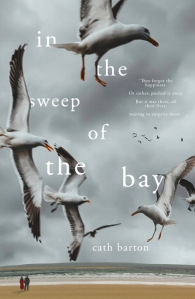 Susan put this on my radar and I bought it in publisher Louise Walters Books’ closing-down sale. Set in Morecambe, this bittersweet story of a half-century marriage and the figures on its margins – co-workers, children, even strangers – is both ambitious and intimate. Ted and Rene Marshall marry in the 1950s and soon drift into drudgery and traditional gender roles; “They forgot the happiness. Or rather, they pushed it away.” While Ted becomes a celebrated ceramics designer in the family company, Rene stagnates at home. It is not so much suspected infidelity as simply taking each other for granted that threatens their relationship. Barton moves through the decades and varies the perspective, letting us hear from one of the Marshalls’ daughters and giving kind attention to a gay couple. Strictly Come Dancing fans and those familiar with the northwest might take particular pleasure, but I enjoyed this quiet book reminiscent of Anne Tyler’s French Braid and (though less political) Jonathan Coe’s Bournville. (New purchase) [104 pages]
The Visitor by Maeve Brennan (2000)
 This posthumous novella was written in the 1940s but never published in Brennan’s lifetime. From Dublin, she was a longtime New Yorker staff member and wrote acclaimed short stories. After her mother’s death, Anastasia King travels from Paris, where the two set up residence after leaving her father, to Ireland to stay in the family home with her grandmother. Anastasia considers it a return, a homecoming, but her spiteful grandmother makes it clear that she is an unwelcome interloper. Mrs King can’t forgive the wrong done to her son, and so won’t countenance Anastasia’s plan to repatriate her mother’s remains. Rejection and despair eat away at Anastasia’s mental health (“She saw the miserable gate of her defeat already open ahead. There only remained for her to come up to it and pass through it and be done with it”) but she pulls herself together for an act of defiance. Most affecting for me was a scene in which we learn that Anastasia is so absorbed in her own drama that she does not fulfill the simple last wish of a dying friend. This brought to mind James Joyce’s The Dead. (Secondhand purchase – The Bookshop, Wigtown) [81 pages]
Bear by Marian Engel (1976)
 If you’ve heard of this, it’ll be for the fact that the main character – Lou, a librarian sent to archive the holdings of an octagonal house on an island one summer – has sex with a bear. That makes it sound much more repulsive and/or titillating than it actually is. The further I read the more I started to think of it as an allegory for women’s awakening; perhaps the strategy inspired Melissa Broder’s The Pisces (stuffed full of sex with a merman). “I have an odd sense of being reborn,” Lou writes to her boss, the Institute director, with whom she’d been having an affair. The bear lives in an outbuilding and at first Lou is indifferent, only feeding him as necessary. Then he becomes a friend, joining her for swims. Then he comes into the house. Bestiality is a taboo for a reason, but what mostly bothers me is the lack of mutuality, the sense of taking advantage. I’m also wary of stories in which animals have a primarily instrumental or metaphorical role. Still, this was a solid read, offbeat and nearly as shocking today as when it first appeared. (Secondhand purchase online) [167 pages]
So Late in the Day by Claire Keegan (2023)
 Several of us reviewed this for #NovNov though unsure it counts: in the UK the title story (originally for the New Yorker) was published in a standalone volume by Faber, while the U.S. release includes two additional earlier stories; I read the latter. The title story has Cathal spending what should have been his wedding weekend moping about Sabine calling off their engagement at the last minute. It’s no mystery why she did: his misogyny, though not overt, runs deep, most evident in the terms in which he thinks about women. And where did he learn it? From his father. (“The Long and Painful Death” is from Keegan’s second collection, Walk the Blue Fields, and concerns a woman on a writing residency at an author’s historic house in Ireland. She makes a stand for her own work by refusing to cede place to an entitled male scholar. The final story is “Antarctica,” the lead story in that 1999 volume and a really terrific one I’d already experienced before. It’s as dark and surprising as an early Ian McEwan novel.) Keegan proves, as ever, to be a master at portraying emotions and relationships, but the one story is admittedly slight on its own, and its point obvious. (Read via Edelweiss) [64 pages]
Swallowing Geography by Deborah Levy (1993)
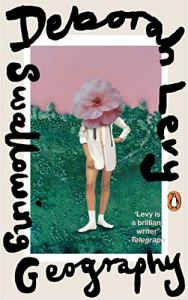 “She is Europe’s eerie child, and she is part of the storm.” J.K. is a young woman who totes her typewriter around different European locations, sleeps with various boyfriends, hears strangers’ stories, and so on. Many of the people she meets are only designated by an initial. By contrast, the most fully realized character is her mother, Lillian Strauss. The chapters feel unconnected and the encounters within them random, building to nothing. Though a bit like Crudo, this has very little detail to latch onto and so was pretentious in its opacity. I’ve generally gotten on much better with Levy’s nonfiction (see below) than her fiction. This, along with the Keegan (above), was my chosen train entertainment for the Booker Prize evening. I got so little out of it that it seemed like wasted reading time. Here’s a decent excerpted passage: “The arrogance of metaphor when facts save people’s lives. The succour of metaphor when facts inadequately describe people’s lives.” (Public library) [83 pages]
Nonfiction:
Starting with two from the Bloomsbury Object Lessons series, a great source of short monographs. These have been among my favourites so far.
Grave by Allison C. Meier (2023)
 Meier is a cemetery tour guide in Brooklyn, where she lives. She surveys American burial customs in particular, noting the lack of respect for Black and Native American burial grounds, the Civil War-era history of embalming, the increasing popularity of cremation, and the rise of garden cemeteries such as Mount Auburn in Cambridge, Massachusetts, which can serve as wildlife havens. The mass casualties and fear of infection associated with Covid-19 brought back memories of the AIDS epidemic, especially for those in New York City. Meier travels to a wide range of resting places, from potter’s fields for unclaimed bodies to the most manicured cemeteries. She also talks about newer options such as green burial, body composting, and the many memorial objects ashes can be turned into. I’m a dedicated reader of books about death and so found this fascinating, with the perfect respectful and just-shy-of-melancholy tone. It’s political and philosophical in equal measures. (Read via NetGalley) [168 pages]
Pregnancy Test by Karen Weingarten (2023)
 Laboratory pregnancy tests have been available since the 1930s and home pregnancy tests – the focus here – since the 1970s. All of them work by testing urine for the hormone hCG (human chorionic gonadotropin). What is truly wild is that pregnancy used to be verifiable only with laboratory animals – female mice and rabbits had to be sacrificed to see if their ovaries had swelled after the injection of a woman’s urine; later, female Xenopus toads were found to lay eggs in response, so didn’t need to be killed. Home pregnancy kits were controversial and available in Canada before the USA because it was thought that they could be unreliable or that they would encourage early abortions. Weingarten brings together the history, laypeople-friendly science, and cultural representations (taking a pregnancy test is excellent TV shorthand) in a readable narrative and makes a clear feminist statement: “the home pregnancy test gave back to women what should have always been theirs: first-hand knowledge about how their bodies worked” and thus “had the potential to upend a paternalistic culture.” (Read via NetGalley) [160 pages]
And from a different Bloomsbury series for monographs about seminal albums, 33 1/3:
Jesus Freak by Will Stockton and D. Gilson (2019)
 The dc Talk album Jesus Freak (1995) is the first CD I ever owned. My best friend and I listened to it (along with Bloom by Audio Adrenaline and Take Me to Your Leader by Newsboys) so many times that we knew every word and note by heart. So it’s hard for me to be objective rather than nostalgic; I was intrigued to see what two secular academics would have to say. Crucially, they were teenage dc Talk fans, now ex-Evangelicals and homosexual partners. As English professors, their approach is to spot musical influences (Nirvana on the title track; R&B and gospel elsewhere), critically analyse lyrics (with “Colored People” proving problematic for its “neoliberal multiculturalism and its potential for post-racial utopianism”), and put a queer spin on things. For those who don’t know, dc Talk were essentially a boy band with three singers, one Black and two white – one of these a rapper. Stockton and Gilson chronicle the confusion of living with a same-sex attraction they couldn’t express as teens, and cheekily suggest there may have been something going on between dc Talk members Toby McKeehan and Michael Tait, who were roommates at Liberty University and apparently dismantled their bunk beds so they could sleep side by side. Hmmm! I was interested enough in the subject matter to overlook the humanities jargon. (Birthday gift from my wish list last year) [132 pages]
And the rest:
Fifty Days of Solitude by Doris Grumbach (1994)
 Grumbach died last year at age 104. This was my third of her books; I read two previous memoirs, Extra Innings and The Presence of Absence, when they were brought back into print as Open Road Media e-books. I knew of Grumbach through her association with May Sarton, and the two in fact had a lot in common, including lesbianism, living in Maine and writing about older age. I was expecting something on a par with Sarton’s Journal of a Solitude, one of my favourite books, but this fell short in comparison. Grumbach spent a month and a half alone in Maine during the winter of 1993 while her partner, Sybil, was away amassing stock for their bookstore. The book is a collection of unconnected meditations about nature, the cold, creativity and so on. She finds herself writing fiction so the characters can keep her company, and notes “how much more I was aware of my vices.” Although she tries to avoid the news, word reaches her of acquaintances’ demises, and she recalls the recent death from AIDS of a young local man. Amusingly, she rereads Bear (see above) during the 50 days. Some atmosphere, but low on insight. (Secondhand purchase – Wonder Book and Video, Hagerstown) [114 pages]
Things I Don’t Want to Know: On Writing by Deborah Levy (2013)
 It feels like I made an error by reading Levy’s “Living Autobiography,” out of order. I picked up the middle volume of the trilogy, The Cost of Living, for #NovNov in 2021 and it ended up being my favourite nonfiction read of that year. I then read part of the third book, Real Estate, last year but set it aside. And now I’ve read the first because it was the shortest. It’s loosely structured around George Orwell’s four reasons for writing: political purpose, historical impulse, sheer egoism and aesthetic enthusiasm. The frame story has her flying to Majorca at a time when she was struggling with her mental health. She vaguely follows in the footsteps of George Sand and then pauses to tell a Chinese shopkeeper the story of her upbringing in apartheid-era South Africa and the family’s move to London. Although I generally admire recreations of childhood and there are some strong pen portraits of minor characters, overall there was little that captivated me here and I was too aware of the writerly shaping. (Secondhand purchase – 2nd & Charles, Hagerstown) [111 pages]
The Private Life of the Hare by John Lewis-Stempel (2019)
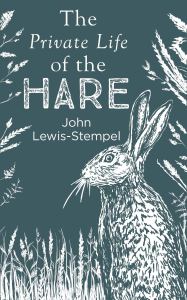 I reviewed a couple of JLS’s species-specific monographs for #NovNov in 2018: The Secret Life of the Owl and The Glorious Life of the Oak. There’s a similar range of material here: anatomy, natural history and cultural significance, including in poetry. There are chapters on hunting, the hare as food, and its appearances in myth and religion. I was engaged about half of the time; I tended to skip over longer excerpts from historical documents. The reliance on lengthy quotations and use of bullet points make it feel like a half-finished research project, with the kind of information you could find anywhere else. Too many of his recent books have felt like they were rushed into print. I would only pick this up if you’re particularly fascinated by hares. (Public library) [99 pages]
The Cancer Journals by Audre Lorde (1980)
 I’ve read so many cancer stories that it takes a lot to make one stand out. This feels like a random collection of documents rather than a coherent memoir. One of the three essays was originally a speech, and two were previously printed in another of her books. Lorde was diagnosed with breast cancer in 1978 and had a mastectomy. A Black lesbian feminist, she resisted wearing prostheses and spoke up about the potential environmental causes of breast cancer that need to be addressed in research (“I may be a casualty in the cosmic war against radiation, animal fat, air pollution, McDonald’s hamburgers and Red Dye No. 2”). Her actual journal entries make up little of the text, which is for the best because fear and pain can bring out the cliches in us – but occasionally a great quote like “if bitterness were a whetstone, I could be sharp as grief.” Another favourite line: “Pain does not mellow you, nor does it ennoble, in my experience.” I’m keen to read her memoir Zami. (University library) [77 pages]
A Month in Siena by Hisham Matar (2019)
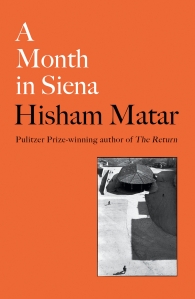 I’d not read Matar before I spotted this art book-cum-memoir and thought, why not. A Libyan American novelist who lives in London, Matar had long been fascinated by the Sienese School of painting (13th to 15th centuries), many of whose artists depicted biblical scenes or religious allegories – even though he’s not a Christian. He spent a month in Italy immersed in the art he loves; there are 15 colour reproductions here. His explications of art history are generalist enough to be accessible to all readers, but I engaged more with the glimpses into his own life. For instance, he meets a fellow Arabic speaker and they quickly form a brotherly attachment, and a Paradise scene gives him fanciful hope of being reunited with his missing father – the subject of his Folio Prize-winning memoir The Return, which I’d like to read soon. His prose is beautiful as he reflects on history, death and how memories occupy ‘rooms’ in the imagination. A little more interest in the art would have helped, though. (Little Free Library) [118 pages]
A Childhood in Scotland by Christian Miller (1981)
 I had high hopes for this childhood memoir that originally appeared in the New Yorker and was reprinted as part of the Canongate Classics series. But I soon resorted to skimming as her recollections of her shabby upper-class upbringing in a Highlands castle are full of page after page of description and dull recounting of events, with few scenes and little dialogue. This would be of high historical value for someone wanting to understand daily life for a certain fraction of society at the time, however. When Miller’s father died, she was only 10 and they had to leave the castle. I was intrigued to learn from her bio that she lived in Newbury for a time. (Secondhand purchase – Barter Books) [98 pages]
Here and Now: Living in the Spirit by Henri J.M. Nouwen (1994)
 This collection of micro-essays under themed headings like “Living in the Present” and “Suffering” was a perfect introduction to Nouwen’s life and theology. The Dutch Catholic priest lived in an Ontario community serving the physically and mentally disabled, and died of a heart attack just two years after this was published. I marked out many reassuring or thought-provoking passages. Here’s a good pre-Christmas one:
“God became a little child in the midst of a violent world. Are we surprised by joy or do we keep saying: ‘How nice and sweet, but the reality is different.’ What if the child reveals to us what is really real?”
I was taken by the ideas that the life of compassion is one of “downward mobility” and that inner freedom only comes when you don’t judge anyone. He encourages readers to not live in a past of shame and regret, but to be grateful for opportunities for God’s mercy and guidance. Very peaceful and readable; a good bedside devotional book. (Free from my stepfather) [175 pages] 
De Profundis by Oscar Wilde (1897)
 My only reread for the month. Wilde wrote this from prison. No doubt he had a miserable time there, but keeping in mind that he was a flamboyant dramatist and had an eye to this being published someday, this time around I found it more exaggerated and self-pitying than I had before. “Suffering is one very long moment. … Where there is sorrow there is holy ground,” he writes, stating that he has found “harmony with the wounded, broken, and great heart of the world.” He says he’s not going to try to defend his behaviour … but what is this but one extended apologia and humble brag, likening himself to a Greek tragic hero (“The gods had given me almost everything. But I let myself be lured into long spells of senseless and sensual ease. I amused myself with being a flâneur, a dandy, a man of fashion”) and even to Christ in his individuality as well as in his suffering at the hands of those who don’t understand him (the scene where he was pilloried consciously mimics a crucifixion tableau). As a literary document, it’s extraordinary, but I didn’t buy his sincerity. He feigns remorse but, really, wasn’t sorry about anything, merely sorry he got caught. (Free from a neighbour) [151 pages]
Original rating (2011):
Rating now:
Average:
Which of these have you read?
And which do you want to read? (You may choose no more than 4!)
In total, I read 27 novellas this November – close to my 2021 record of 29. The highlights included the Barton, Meier, Nouwen and Weingarten above plus Train Dreams by Denis Johnson and Western Lane by Chetna Maroo, but the best of the lot was Absolutely and Forever by Rose Tremain.
Coming right up, final statistics on the month’s participants and posts!
May Poetry Releases: Blood & Cord Anthology; Connolly, Goss, Harrison
Apart from Monsters, my focus for May releases has been on poetry, with three Carcanet collections plus a poetry-heavy anthology of writing on early parenthood. Love, history, nature and parental bonds are a few underlying subjects that connect some or all of these.
The Recycling by Joey Connolly
Joey Connolly’s second collection reminded me most of Caroline Bird’s work (especially the mise en abyme ending to “For Such a Widely Used Material, Glass Sure Does Have Some Downsides”): effusive and sometimes absurdist, with unexpected imagery and wordplay.
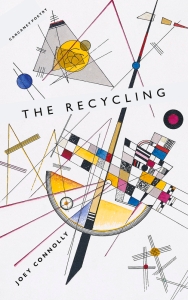 In keeping with the title, there are environmentalist considerations and musings on materials, but also the connotation of reusing language or rehashing ideas. I appreciated this strategy when he’s pondering etymology (“Strange noun full of verb, noun / bending to verb, strange / idea of repeating repetition” in the title poem) or reworking proverbs in the hilarious “Poem in Which Is Is Sufficient” (“Sufficient unto the glaze / is the primer thereunder. Sufficient / unto the applecart is the upset / thereof” and so on) but perhaps less so during 22 indulgent pages of epigraphs. The distance-designated poems of the inventive “Solvitur Ambulando” section range from history to science fiction: “Abstracted, ankle deep in the proto-gutters of Elizabethan London: / how were you ejected from your life to wash up here?”
It’s such a versatile book. I loved the philosophical self-questioning of “Why Try and Be Good When This World” (“the / mental carapace required to weather the hardness / of indifference insulates you from what it means to be alive”) and the utterly original love poetry (“I will take out the bins, and I will try not to leave the keys / in the door, and I will continue / to love you / to the fullest extent to which I find myself able. Oh love. Checkmate”). Eminently quotable stuff. Here are two of my favourite passages:
like an
amateur kintsugi enthusiast in the ruined chinashop
of my childhood idealism
What sweet sorrow
to persist within this disappeared world
With thanks to Carcanet Press for the advanced e-copy for review.
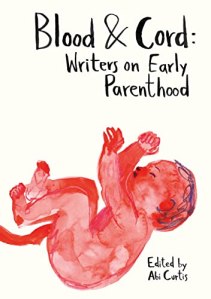
Blood & Cord: Writers on Early Parenthood, edited by Abi Curtis
“The introduction of a new baby rearranges a life, and this requires a new language and a new kind of engagement with the world,” Abi Curtis writes in her introduction. These poems and pieces of flash autofiction or memoir are often visceral, as the title and cover image by Elīna Brasliņa indicate. Elizabeth Hogarth’s “Animal Body” tracks how primal instinct takes over. Second- and third-person narratives distance the speaker from the experience, as in Ruth Charnock’s hybrid “three tarot cards for the new mother.” As I’ve come to expect from The Emma Press, there’s a wide variety of formats, styles and even page layout, with some poems printed in landscape.
 Curtis’s four poems are, together, the strongest entry. I particularly loved the final lines of “September Birth”: “We listen close but cannot fathom / Your new language. We will spend / The rest of our days learning it.” Naomi Booth, too, zeroes in on language in “What is tsunami?” A daughter’s acquisition of language provides entertainment (“She names her favourite doll, Hearty Campfire”) but also induces apprehension:
There are certain words that you dread hearing her say. The first is money. … You dread the way it will become as concrete to her as sky and cat and gate. Mu-nee. Mu-nee.
Not all of these are jubilant birth stories. There are children who are longed for but never arrive. There are also babies who never breathe, or soon die. Alex McRae Dimsdale’s “Bath” is a heartbreaking poem about bidding goodbye to a stillborn son:
It wasn’t the first time that a couple had to leave
the hospital without their newborn.
What could they give us instead?
Here, a small white wooden box –
inside, a packet of wildflower seeds,
your wristband, little
stripy hat. A curlicued certificate
inked with your footprints.
…
what maternal sin did I commit,
deciding who you were
for a whole life that was
already stopped before it started?
“Other Mothers,” a prose essay by poet Rebecca Goss (from whom more below), is about her infant daughter’s death in hospital.
There are a few male contributors, outnumbered five to one by women writers. Poets Liz Berry and Gail McConnell illuminate same-sex motherhood. The two short stories – i.e., those that are clearly fiction rather than memoir by different pronouns – were among the weakest pieces for me: the one piles cruel irony on misery (no real surprise as it’s by an author I’ve had a strong reaction against in the past; the only saving grace was a clever reference to Hemingway’s six-word story about baby shoes); the other is silly and contrived.
I think this was my seventh Emma Press book, and my fourth of their anthologies, of which I’d recommend The Emma Press Anthology of Love. This one was a bit more uneven for me, but I can see it holding appeal for new parents who are of a literary bent.
Published in association with the York Centre for Writing, York St John University. With thanks to The Emma Press for the free copy for review.
Latch by Rebecca Goss
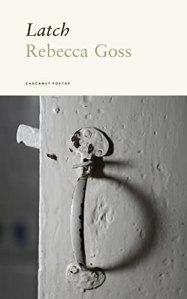 Rebecca Goss’s fourth poetry collection arises from a rural upbringing in Suffolk. Her parents’ farm was a “[s]emi-derelict, ramshackle whimsy of a place”. There’s nostalgia for the countryside left behind and for a less complicated family life before divorce, yet this is no carefree pastoral. From the omnipresent threats to girls to the challenges of motherhood, Goss is awake to the ways in which women are compelled to adapt to life in male spheres. The title/cover image has multiple connotations: the first bond between mother and child; the gates and doors that showcase craftsmanship (as in “Blacksmith, Making”) or seek to shut menacing forces out (see “The Hounds”), but cannot ensure safety.
Even the individual poem titles tell tales: “The Retired Agronomist Drives a Tractor in the Summer Because He Likes the Oily Smell of the Machine” and three with the enticing pattern “Woman Returns to Childhood Home…” Trees and animals provide much of the imagery. A few of my personal favourites were “Rooks,” “Weir,” and “In Song Flight.”

With thanks to Carcanet Press for the advanced e-copy for review.
Kitchen Music by Lesley Harrison
Lesley Harrison is a Scottish poet with a number of pamphlets and collections to her name. Orkney and other remote islands are settings for these atmospheric poems filled with whale song and weather (“the vast dark hung with / ropes of song”), birds and wordplay. Language and folktales inspire the poet, and she engages in word association and creates rebuses built around middle letters rather than first. There are also black-and-white photographs, and whale images by Marina Rees punctuating “C-E-T-A-C-E-A.” My attention threatened to drift away from the sometimes wispy lines and paragraphs, but this would be well worth taking on holiday to read on location.

With thanks to Carcanet Press for the advanced e-copy for review.
Would you be interested in reading one or more of these?
Spring Reads, Part I: Violets and Rain
We had both rain and spring sunshine on a recent overnight trip to Bridport, Dorset – a return visit after enjoying it so much in 2019. Several elements were repeated: Dorset Nectar cider farm, dinner at Dorshi, and a bookshop and charity shop crawl of the main streets. While we didn’t revisit Thomas Hardy sites, I spent plenty of time at Max Gate by reading Elizabeth Lowry’s The Chosen. Beach walks plus one in the New Forest on the way back were splendid. This was my haul from Bridport Old Books. Stocking up on novellas and poetry, plus a novel by a Canadian author I’ve enjoyed work from before.
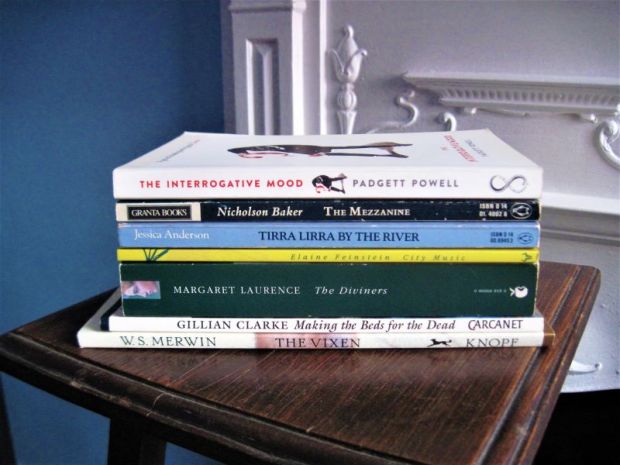
Now for a quick look at two tangentially spring-related books I’ve read recently: a short novel about two women’s wartime experiences of motherhood and an elegiac and allusive poetry collection.
Violets by Alex Hyde (2022)
I was intrigued by the sound of this debut novel, which juxtaposes the lives of two young British women named Violet at the close of the Second World War. One miscarries twins and, told she’ll not be able to bear children, has to rethink her whole future; another sails from Wales to Italy on ATS war service, hiding the fact that she’s pregnant by a departed foreign soldier. Hyde’s spare style – no speech marks; short paragraphs or solitary lines separated by spaces – alternates between their stories in brief numbered chapters, bringing them together in a perhaps predictable way that also forms a reimagining of her father’s life story. The narration at times addresses this future character in poems that I think are supposed to be fond and prophetic but I instead found strangely blunt and even taunting (as in the excerpt below). There’s inadequate time to get to know, or care about, either Violet. 

Can you feel it, Pram Boy?
Can you march in time?
A change, a hardening,
the jarring of the solid ground as she treads,
gets her pockets picked.
[…]
Quick! March!
And your Mama, Pram Boy,
yeasty in her private parts.
Granta sent a free copy. Violets came out in paperback in February.
Rain by Don Paterson (Faber, 2009)
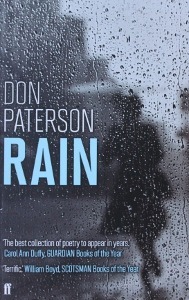 I’d previously read Paterson’s 40 Sonnets, in 2015. This collection is in memoriam of the late poet Michael Donaghy, the subject of the late multi-part “Phantom.” There are a couple of poems in Scots and a sequence of seven nature-infused ones designated as being “after” poets from Li Po to Robert Desnos. Several appear to express concern for a son. There’s a haiku-like rhythm to the short stanzas of “Renku: My Last Thirty-Five Deaths.” I didn’t understand why “Unfold i.m. Akira Yoshizawa” was a blank page until I looked him up and learned that he was a famous origamist. The title poem closes the collection:
I love all films that start with rain:
rain, braiding a windowpane
or darkening a hung-out dress
or streaming down her upturned face;
one big thundering downpour
right through the empty script and score
before the act, before the blame,
before the lens pulls through the frame
to where the woman sits alone
beside a silent telephone
I liked individual passages or images but didn’t find much of a connecting theme behind Paterson’s disparate interests. (University library) 
Another favourite passage:
So I collect the dull things of the day
in which I see some possibility
[…]
I look at them and look at them until
one thing makes a mirror in my eyes
then I paint it with the tear to make it bright.
This is why I sit up through the night.
(from “Why Do You Stay Up So Late?”)
And a DNF:
 Corpse Beneath the Crocus by N.N. Nelson – I loved the title and the cover, and a widow’s bereavement memoir in poems seemed right up my street. I wish I’d realized Atmosphere is a vanity press, which would explain why these are among the worst poems I’ve read: cliché-riddled and full of obvious sentiments and metaphors as she explores specific moments but mostly overall emotions. Three excerpts:
All things die
In the flowering cycle
Of growth and life
Time passes
Like sand in an hourglass
Feelings are changeful
Like the tide
Ebbing and flowing
“Love Letter,” a prose piece, held the most promise, which suggests Nelson would have been better off attempting memoir. I slogged (hate-read, really) my way through to the halfway point but could bear it no longer. (NetGalley)
I have a few more spring-themed books on the go: Hoping for a better set next time!
Any spring reads on your plate?
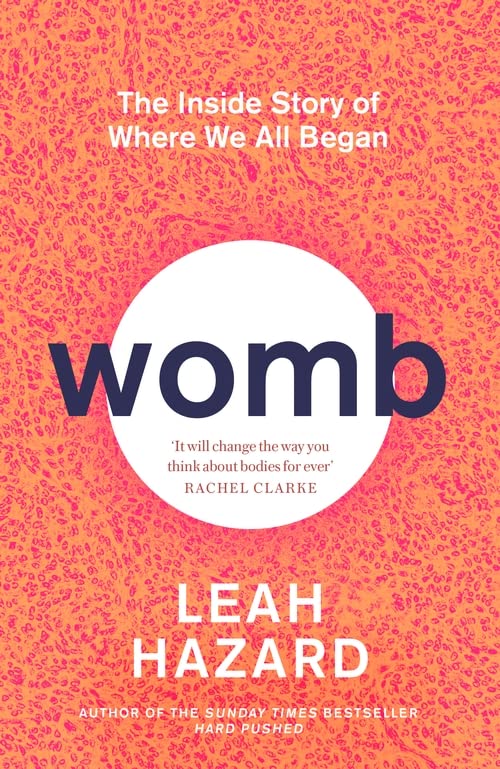
Womb: The Inside Story of Where We All Began by Leah Hazard
Back in 2019, I reviewed Hard Pushed, Leah Hazard’s memoir of being a midwife in a busy Glasgow hospital. Here she widens the view to create a wide-ranging and accessible study of the uterus. As magisterial in its field as Siddhartha Mukherjee’s The Emperor of All Maladies was for cancer, it might have shared that book’s ‘A Biography’ subtitle and casts a feminist eye over history and future alike. Blending medical knowledge and cultural commentary, it cannot fail to have both personal and political significance for readers of any gender.
The thematic structure of the chapters also functions as a roughly chronological tour of how life with a uterus might proceed: menstruation, conception, pregnancy, labour, caesarean section, ongoing health issues, menopause. With much of Hazard’s research taking place at the height of the pandemic, she had to conduct many of her interviews online. She consults mostly female experts and patients, meeting people with surprisingly different opinions. For instance, she encounters opposing views on menstruation from American professors: one who believes it is now optional, a handicap – for teenagers, especially – and that the body was never meant to endure 350–400 periods compared to the historical average of 100 (based on shorter lifespan plus more frequent pregnancy and breastfeeding); versus another who is concerned about the cognitive effects of constant hormonal intervention.
The book forcefully conveys how gynaecological wellness is threatened by a lack of knowledge, sexist stereotypes, and devaluation of certain wombs. Even today, little is known about the placenta, she reports, so research involves creating organoids from stem cells that act like it would. The use of emotionally damaging language like “irritable/hostile uterus,” “incompetent cervix” and “too posh to push” is a major problem. The sobering chapter on “Reprocide” elaborates on enduring threats to reproductive freedom, such as non-consensual sterilization of women in detention centres and the revoking of abortion rights. And even routine problems like endometriosis and fibroids disproportionately affect women of colour.
Hazard has taken pains to adopt an inclusive perspective, referring to “menstruators” or “people with a uterus” as often as to women and mentioning health concerns specific to transgender people. She is also careful to depict the sheer variety of experience: age at first menses, subjective reactions to labour or hysterectomy, severity of menopause symptoms, and so on. Where events have potentially traumatic effects, she presents alternatives, such as a “gentle” or “natural” Caesarean, which is less clinical and more empowering. The prose is pitched at a good level for laypeople: conversational, and never bombarding with information. That I have not had children myself was no obstruction to my enjoyment of the book. It is full of fascinating content that is relevant to all (as in the Harry and Chris solidarity-themed song “Womb with a View,” which has the repeated line “we’ve all been in a womb”). 
Here are just some of the mind-blowing facts I learned:
- Infant girls bleed in what as known as pseudomenses.
- Research is underway to regularly test menstrual effluent for endometriosis, etc. and the uterine microbiome for signs of cancer.
- The cervix can store sperm and release it later for optimal fertilization.
- Caesarean section and induction with oxytocin now occur in one-third of pregnancies, despite the WHO recommendation of no more than 10% for the former and the danger of postpartum haemorrhage with the latter.
- After childbirth, a discharge called lochia continues for 4–6 weeks.
- There have been successful uterine transplants from living donors and cadavers.
- Artificial wombs (“biobags”) have been used for other mammals and are in development; Hazard cautions about possible misogynistic exploitation.
With thanks to Virago Press for the free copy for review.
All My Wild Mothers by Victoria Bennett & I Have Some Questions for You by Rebecca Makkai
I’m catching up with reviews of two February releases that I spent the whole of last month submerged in. These are early entries on my Best of 2023 list: A lovely memoir about grief and gardening, caring for an ill child and a dying parent; and a riveting true crime-inspired novel, set on a boarding school campus, that rages at injustice and violence against women.
All My Wild Mothers: Motherhood, loss and an apothecary garden by Victoria Bennett
Early in February, I attended the online book launch via Sam Read Bookseller in Grasmere. With conversation, readings and song, it was the ideal introduction to the themes of this debut memoir by a poet. The book is composed of dozens of brief autobiographical, present-tense essays, each titled after a wildflower with traditional healing properties. The chapters are headed by a black-and-white woodcut of each plant (by Bennett’s husband, Adam Clarke) and a précis of its medicinal uses, as well as where it is found. Again and again, these descriptions site the flora on edgelands or “disturbed ground” – the perfect metaphorical tie-in to Bennett’s tumultuous life and the comfort that creating an apothecary garden brought.
Bennett is the youngest of six children. When she was expecting her son – much longed for after multiple pregnancy losses – news came that her eldest sister had died in a canoeing accident. At age two, her son was diagnosed with type 1 diabetes; managing his condition has imposed a heavy emotional burden. And years later, she was the primary caregiver for her elderly mother as she was dying of mesothelioma. The memoir’s format – which arose in part because it was written over the course of 10 years, during stolen moments – realistically presents bereavement and caring as ongoing, cyclical challenges rather than one-time events.

There are no simple solutions offered here, nothing so pat as that ‘gardening heals all hurts’, but Bennett writes into the broken places and finds joy in what comes to life spontaneously in nature or in her ramshackle yard on a social housing estate in Cumbria. She recalls a horse chestnut tree that looked over her outside the window of her childhood home; she and her son take impish delight in guerrilla gardening and sometimes disastrous cooking projects with foraged fruit. Some of my favourite individual vignettes were “Elder,” about the magic and medicine of making elderberry syrup from the few village trees that escape the chainsaw; “Dandelion,” about her trio of older sisters, who were Greenham Common protestors and always tried to protect her as well as nature; “Herb Robert,” about her sister-in-law’s funeral; and especially “Honeysuckle,” about a local agricultural show where the officious organizers make them feel like interlopers yet her son wins first place for their feral, fecund garden.
Many side topics twine into the narrative as well: a difficult relationship with a controlling mother; a family history that takes in boarding schools, cults, road trips, risk taking and mental health issues; the economic disparity that leads to one set of rules for the rich and another for those on benefits. But the core of the book is a tender mother–son relationship. “I can give him this: a seed, with all its defiant hope against the dark; and the memory that once, we grew a garden out of rock, and waste, and all things broken, and it thrived.” Sitting somewhere between creative nonfiction and nature essays, it’s a beautiful read for any fan of women’s life writing, especially if you share the interests in grief or gardening. I hope we’ll see it recognized on the Barbellion and Wainwright Prize shortlists alike.
Readalikes I have reviewed: A Still Life by Josie George, The Book of Difficult Fruit by Kate Lebo, The Cure for Sleep by Tanya Shadrick
With thanks to Victoria Bennett and Two Roads for the free copy for review.
I Have Some Questions for You by Rebecca Makkai
I’m a big fan of Makkai’s first two novels, The Borrower and The Hundred-Year House, and have her other two books lined up to read, so I was excited to hear about this new work and put it on my Most Anticipated list for the year. My interest was redoubled by Laura’s review, which likens it to a cross between Prep and My Dark Vanessa – irresistible.
Bodie Kane grew up in a deprived and dysfunctional family in Indiana, and has beneficent Mormon neighbours to thank for the tuition money that allowed her to attend Granby, an exclusive New Hampshire boarding school, in the early to mid-1990s. She was an angry and awkward high school student, yet her memories of Granby and the friendships she made there are still an emotional mainstay more than two decades later. In 2018, she is a successful film professor with a podcast about Hollywood starlets. Although she is separated from Jerome, her artist husband, he lives next door and they co-parent their two children.
After an invitation comes from Granby to teach a two-week course on podcasting, Bodie trades Los Angeles for a bitter New England winter. It’s the perfect excuse to indulge her obsession with the 1995 murder of her former Granby roommate, Thalia Keith, who was found dead in the swimming pool one March morning after a play performance. Bodie has never been comfortable with the flawed case against the Black athletics coach, Omar Evans, who has been imprisoned ever since. When one of her students chooses to make Thalia’s murder the subject of a podcast, it’s all the justification Bodie needs to dive deep into her pet hypothesis: Thalia was sleeping with the music director, Denny Bloch, and he was involved in her death in some way. Her blinkered view threatens to exclude a key explanation. Still, the informal sleuthing she and her students do is enough to warrant a follow-up hearing in 2022, but they – and Omar – are up against a broken system.

Makkai has taken her cues from the true crime genre and constructed a convincing mesh of evidence and theories. There’s a large cast of secondary characters, from Dorian, the bully who once humiliated Bodie with sexual slurs, to Fran, the faculty kid/gay best friend who now lives and works on campus herself and continues to be Bodie’s trusty backup. The combinations of background + teenage behaviour + 40-something lives all feel authentic in their randomness (when I saw that Makkai sourced 24 names from indie bookstore supporters, I realized afresh just how real, as opposed to ‘made-up’, these characters feel).
At times I wondered if there was too much detail on the case and the former classmates; I might even have streamlined the novel by doing away with the 2022 section altogether, though it ends up being crucial to the plot. But Makkai has so carefully crafted these pen portraits, and so intimately involved us in Bodie’s psyche, that it’s easy to become invested in the story. What’s more, the novel introduces a seam of rage about violence towards women – so predictably excused and allowed to recur by a justice system weighted against victims –
What’s as perfect as a girl stopped dead, midformation? Girl as blank slate. Girl as reflection of your desires, unmarred by her own. Girl as sacrifice to the idea of girl.
let’s say it was the one where the rugby team covered up the girl’s death and the school covered for the rugby team. Actually it was the one where the therapist spent years grooming her. It was the one where the senator, then a promising teenager, shoved his d*ck in the girl’s face. … It was the one where her body was never found. It was the one where her body was found in the snow. It was the one where he left her body for dead under the tarp.
– yet also finds nuance in the situation when Bodie’s ex-husband is subjected to exaggerated #MeToo accusations. It’s timely, daring, intelligent, enthralling storytelling. Susan (review here) and I are both hoping to see this make the Women’s Prize longlist next week.
Readalikes I have reviewed: Ghost Wall by Sarah Moss, My Dark Vanessa by Kate Elizabeth Russell, The Bass Rock by Evie Wyld
With thanks to Fleet for the proof copy for review.
What are the best 2023 books you’ve read so far?
Three on a Theme: “Birds” Short Story Collections
I read these three collections one at a time over three and a half months of last year, initially intending to write them up as part of my short story focus in September but ultimately deciding to spend more time with the latter two (and then falling ill with Covid before I could write them all up in 2022). They topped my Best Backlist Reads.
The word from the title is incidental, really; the books do have a lot in common in terms of theme and tone, though. The environment, fidelity and motherhood are recurring elements. The warmth and psychological depth are palpable. Each story feels fleshed out enough that I could happily read an entire novel set in its realm, but also complete unto itself.
Birds of a Lesser Paradise by Megan Mayhew Bergman (2012)
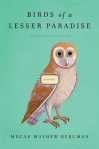
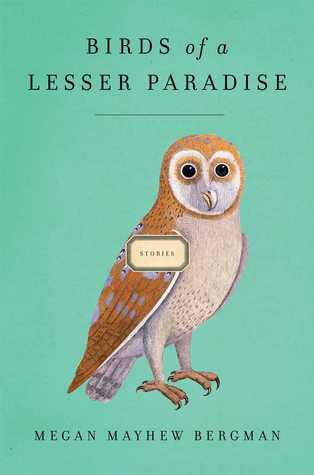 I knew Bergman from her second of three collections, Almost Famous Women; this was her debut. As is common for a first book, it incorporates autobiographical characteristics: North Carolina settings, a preponderance of animals (her husband is a vet), and pregnancy and early motherhood. Eleven of the 12 stories are in the first person, there are no speech marks, and the protagonists are generally women in their twenties or thirties coping with young children, crumbling households, ageing parents, and ethical dilemmas at work.
Creatures are companions or catalysts here. In “Housewifely Arts,” a single mother and her son embark on a road trip to rescue her late mother’s African gray parrot. In the title story, Mae accompanies her father and her new beau on a search for the ivory-billed woodpecker. Fear grapples with openness to change for many of these characters, as expressed in the final lines: “I wished for things to stay the same. I wished for stillness everywhere, but I opened up the rest of the bedroom windows and let the world in.”
Environmental threat blares in the background, but usually fades in comparison to everyday concerns; the 2050-set “The Artificial Heart” is more alarmed about her aged father’s bionic existence than about a dying planet. In “Yesterday’s Whales,” the overall standout for me, ambivalence about motherhood meets climate catastrophism. The narrator’s boyfriend, Malachi, founded a nonprofit called Enough with Us, which asks members to vow not to reproduce so the human race can die out and nature can take over. Embarrassing, then, that she finds herself pregnant and unwilling to tread the hard line he’s drawn. This one is funny and poignant, capturing so many of my own feelings, and seems 10 years ahead of its time.
When someone’s ideal is the absence of all human life, romance is kind of a joke.
I wanted, then, to become what I most admired, what now seemed most real to me. I wanted to be that exalted, complicated presence in someone’s life, the familiar body, the source of another’s existence. But I knew what I wanted was not always what I needed.
I envied my mother’s childhood, the awe with which she’d turned to her country and the world, the confidence she’d had in her right to exist and bear children. The world and mothers alike, I knew, had lost a little freshness.
(Secondhand, a gift from my wish list a couple of years ago)
Delicate Edible Birds by Lauren Groff (2009)
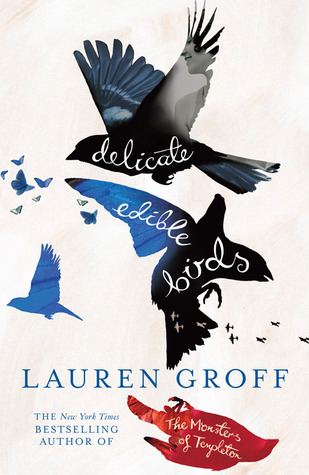 What a clever decision to open with “Lucky Chow Fun,” a story set in Templeton, the location of Groff’s debut novel – it forms a thread of continuity between her first book and her second. Elizabeth, the only girl on the varsity swim team, comes to a number of realizations about her family and her community, including that the title Chinese restaurant is a front for a brothel that exploits trafficked women. The story becomes a wider parable about appearances and suspicion. “In these dark days, there is so much distrust in this town. … You never know quite what to think about people”. And what a brilliant last line: “I like to think it’s a happy ending, though it is the middle that haunts me.”
“L. DeBard and Aliette” recasts in the notorious Héloïse and Abelard romance an Olympic swimmer and a schoolgirl in Spanish flu-plagued New York City. The other seven stories alternate between historical fiction and contemporary, the USA and abroad, first person and third person, speech marks or none. Desire and boundaries, accomplishment and escape, fear and risk are contradictory pulls. While the details have faded for me, I remember that, while I was reading them, each of these stories enveloped me in a particular world – 30 pages seems like the ideal length here to fully explore a set of characters and a situation. If I had to choose a favourite, it would be “Blythe,” about a woman who feels responsible for her alcoholic best friend. (From my birthday book haul last year)
Birds of America by Lorrie Moore (1998)
Life: what an absurd little story it always made.
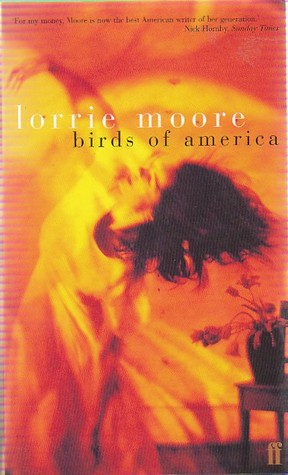 I’d read a few of Moore’s works before (A Gate at the Stairs, Bark, Who Will Run the Frog Hospital?) and not grasped what the fuss is about; turns out I’d just chosen the wrong ones to read. This collection is every bit as good as everyone has been saying for the last 25 years. Amy Bloom, Carol Shields and Helen Simpson are a few other authors who struck me as having a similar tone and themes. Rich with psychological understanding of her characters – many of them women passing from youth to midlife, contemplating or being affected by adultery – and their relationships, the stories are sometimes wry and sometimes wrenching (that setup to “Terrific Mother”!). There were even two dysfunctional-family-at-the-holidays ones (“Charades” and “Four Calling Birds, Three French Hens”) for me to read in December.
I’ll single out four of the 12 as favourites, though, really, any or all would be worthy of anthologizing in a volume epitomizing the art of the short story. “Which Is More than I Can Say about Some People” has a mother and daughter learning new things about each other on a vacation to Ireland. “What You Want to Do Fine,” another road trip narrative, stars an unlikely gay couple, one half of which is the flamboyant (and blind) Quilty. “People Like That Are the Only People Here” is so vivid on the plight of parents with a child in the paediatric oncology ward that I feel I should check whether Moore lived through that too. And the best of the best: “Real Estate” (not least because she dared to print two full pages of laughter: “Ha!”), which turns gently surreal as Ruth and her philandering husband move into a house that turns out to be a wreck, infested by both animal and human pests.
Moore is as great at the sentence level as she is at overarching plots. Here are a few out-of-context lines I saved to go back to:
She was starting to have two speeds: Coma and Hysteria.
In general, people were not road maps. People were not hieroglyphs or books. They were not stories. A person was a collection of accidents. A person was an infinite pile of rocks with things growing underneath.
Never a temple, her body had gone from being a home, to being a house, to being a phone booth, to being a kite. Nothing about it gave her proper shelter.
(From Oxfam Books, Hexham – a stop on our Northumberland trip last year)
Two of these writers are best known for their short stories; the third (Groff), to my mind, should be. Unusual for me to fall so wholeheartedly for short stories – these all earned my rarest rating: 
Five Final Novellas: Adichie, Glück, Jhabvala, Victory for Ukraine, Woodson (#NovNov22)
We’ll wrap up Novellas in November and give some final statistics tomorrow. Today, I have mini reviews of another five novellas I read this month: one short nonfiction reread and then fiction ranging from India in the 1920s to short stories in comics about the war in Ukraine.
Notes on Grief by Chimamanda Ngozi Adichie (2021)
[85 pages]
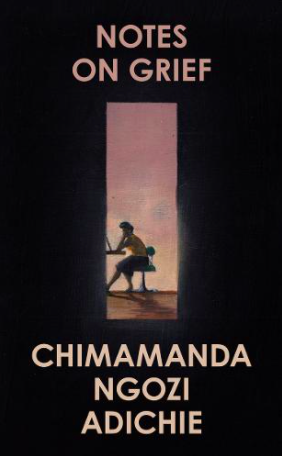 This came out in May last year – I pre-ordered it from Waterstones with points I’d saved up, because I’m that much of a fan – and it’s rare for me to reread something so soon, but of course it took on new significance for me this month. Like me, Adichie lived on a different continent from her family and so technology mediated her long-distance relationships. She saw her father on their weekly Sunday Zoom on June 7, 2020 and he appeared briefly on screen the next two days, seeming tired; on June 10, he was gone, her brother’s phone screen showing her his face: “my father looks asleep, his face relaxed, beautiful in repose.”
My experience of my mother’s death was similar: everything was sudden; my sister was the one there at the hospital, while all I could do was wait by the phone/laptop for news. So these details were particularly piercing, but the whole essay resonated with me as she navigates the early days of grief and remembers what she most admires about her father, including his piety, record-keeping and pride in her. (How lucky I am that Covid travel restrictions were no longer a factor; they delayed his memorial service.) My original review is here. Cathy also reviewed it. If you wish, you can read the New Yorker piece it arose from here. 
Marigold and Rose: A Fiction by Louise Glück (2022)
[52 pages]
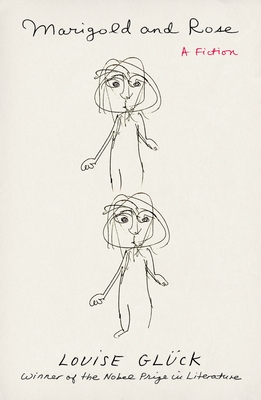 The first (and so far only) fiction by the poet and 2020 Nobel Prize winner, this is a curious little story that imagines the inner lives of infant twins and closes with their first birthday. Like Ian McEwan’s Nutshell, it ascribes to preverbal beings thoughts and wisdom they could not possibly have. Marigold, the would-be writer of the pair, is spiky and unpredictable, whereas Rose is the archetypal good baby.
Marigold did not like people. She liked Mother and Father; everyone else had not yet been properly inspected. Rose did like people and she intended them to like her. … Everyone understood that Marigold lived in her head and Rose lived in the world.
Now every day was like the days when the twins did not perform well at naptime. Then Mother and Father would begin to look tired and harassed. Mother explained that babies got tired too; often, they cried because they were tired. I don’t cry because I’m tired, Marigold thought. I cry because something has disappointed me.
As a psychological allegory, this tracks personality development and the growing awareness of Mother and Father as separate people with their own characteristics, some of which each girl replicates. But I failed to find much of a point. 
With thanks to Carcanet Press for the free e-copy for review.
Heat and Dust by Ruth Prawer Jhabvala (1975)
[181 pages]
 A lesser-known Booker Prize winner that we read for our book club’s women’s classics subgroup. My reading was interrupted by the last-minute trip back to the States, so I ended up finishing the last two-thirds after we’d had the discussion and also watched the movie. I found I was better able to engage with the subtle story and understated writing after I’d seen the sumptuous 1983 Merchant Ivory film: the characters jumped out for me much more than they initially had on the page, and it was no problem having Greta Scacchi in my head.
In 1923, Olivia is a bored young officer’s wife in India who becomes infatuated with the Nawab, an Indian prince involved in some dodgy dealings. In the novel’s present day, Olivia’s step-granddaughter (never named; in the film she’s called Anne, played by Julie Christie and changed to a great-niece for some reason) is also in India, enjoying the hippie freedom and rediscovering Olivia’s life through the letters she wrote to her sister. Both novel and film cut quickly and often between the two time periods to draw increasingly overt parallels between the women’s lives, culminating in unexpected pregnancies and difficult decisions to be made. I enjoyed the atmosphere (see also The Painted Veil and China Room) and would recommend the film, but I doubt I’ll seek out more by Jhabvala. (Public library) 
PEREMOHA: Victory for Ukraine (2022)
[96 pages]
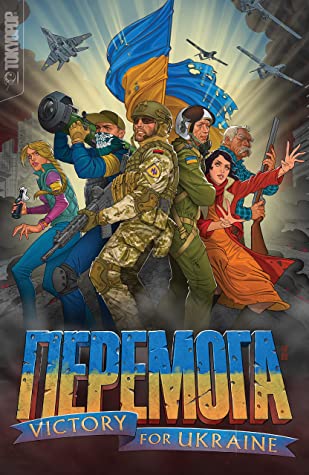 Various writers and artists contributed these graphic shorts, so there are likely to be some stories you enjoy more than others. “The Ghost of Kyiv” is about a mythical hero from the early days of the Russian invasion who shot down six enemy planes in a day. I got Andy Capp vibes from “Looters,” about Russian goons so dumb they don’t even recognize the appliances they haul back to their slum-dwelling families. (Look, this is propaganda. Whether it comes from the right side or not, recognize it for what it is.) In “Zmiinyi Island 13,” Ukrainian missiles destroy a Russian missile cruiser. Though hospitalized, the Ukrainian soldiers involved – including a woman – can rejoice in the win. “A pure heart is one that overcomes fear” is the lesson they quote from a legend. “Brave Little Tractor” is an adorable Thomas the Tank Engine-like story-within-a-story about farm machinery that joins the war effort. A bit too much of the superhero, shoot-’em-up stylings (including perfectly put-together females with pneumatic bosoms) for me here, but how could any graphic novel reader resist this Tokyopop compilation when a portion of proceeds go to RAZOM, a nonprofit Ukrainian-American human rights organization? (Read via Edelweiss)
Another Brooklyn by Jacqueline Woodson (2016)
[175 pages]
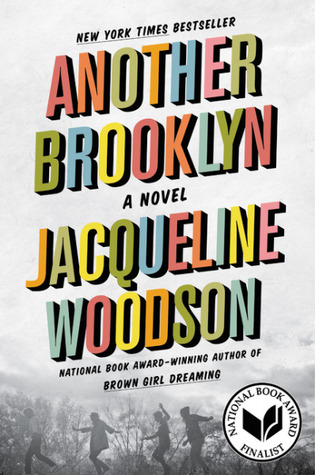 August looks back on her coming of age in 1970s Bushwick, Brooklyn. She lived with her father and brother in a shabby apartment, but friendship with Angela, Gigi and Sylvia lightened a gloomy existence: “as we stood half circle in the bright school yard, we saw the lost and beautiful and hungry in each of us. We saw home.” As in Very Cold People, though, this is not an untroubled girlhood. Male threat is everywhere, and if boyfriends bring sexual awakening they are also a constant goad to do more than girls are ready for. In short, flitting paragraphs, Woodson explores August’s past – a childhood in Tennessee, her uncle who died in the Vietnam War, her father’s growing involvement with the Nation of Islam. What struck me most, though, was August’s coming to terms with her mother’s death, a fact she doesn’t even acknowledge at first, and the anthropological asides about other cultures’ death rituals. This was my second from Woodson after the Women’s Prize-longlisted Red at the Bone, and I liked them about the same. A problem for me was that Brown Girls, which, with its New York City setting and focus on friendships between girls of colour, must have at least partially been inspired by Another Brooklyn, was better. (Public library)
In total, I read 17 novellas this November, though if you add in the ones I’d read in advance and then reviewed over the course of the month, I managed 24. All things considered, I think that’s a great showing. The 5-star stand-outs for me were The Hero of This Book and Body Kintsugi, but Up at the Villa was also a great read.
Book Serendipity, Mid-August to Mid-October 2022
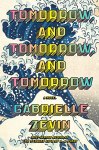
It’s my birthday today and we’re off to Kelmscott Manor, where William Morris once lived, so I’ll start with a Morris-related anecdote even if it’s not a proper book coincidence. One of his most famous designs, the Strawberry Thief, is mentioned in Tomorrow, and Tomorrow, and Tomorrow by Gabrielle Zevin, and I happen to be using a William Morris wall calendar this year. I will plan to report back tomorrow on our visit plus any book hauls that occur.
I call it “Book Serendipity” when two or more books that I read at the same time or in quick succession have something in common – the more bizarre, the better. This is a regular feature of mine every few months. Because I usually have 20–30 books on the go at once, I suppose I’m more prone to such incidents. The following are in roughly chronological order.
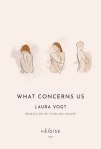
 There’s a character named Verena in What Concerns Us by Laura Vogt and Summer by Edith Wharton. Add on another called Verona from Stories from the Tenants Downstairs by Sidik Fofana.
- Two novels with a female protagonist who’s given up a singing career: Brief Lives by Anita Brookner and What Concerns Us by Laura Vogt.
- Two books featuring Black characters, written in African American Vernacular English, and with elements of drug use and jail time plus rent rises driving people out of their apartments and/or to crime (I’ve basically never felt so white): Stories from the Tenants Downstairs by Sidik Fofana and Nightcrawling by Leila Mottley.

- Two books on my stack with the protagonist an African American woman from Oakland, California: Red Island House by Andrea Lee and Nightcrawling by Leila Mottley
- A middle-aged woman’s hair is described as colourless and an officious hotel staff member won’t give the protagonist a cup of coffee/glass of wine in Brief Lives by Anita Brookner and Oh William! by Elizabeth Strout.
- There’s a central Switzerland setting in Mountain Song by Lucy Fuggle and What Concerns Us by Laura Vogt.
- On the same day, I encountered two references to Mary Oliver’s famous poem “The Summer Day” (“what is it you plan to do / with your one wild and precious life?”): in Mountain Song by Lucy Fuggle and This Beauty by Nick Riggle. (Fuggle and Riggle – that makes me laugh!)
- In the same evening I found mentions of copperhead snakes in Demon Copperhead by Barbara Kingsolver (no surprise there), but also on the very first page of Birds of a Lesser Paradise by Megan Mayhew-Bergman.

- Crop circles are important to What Remains? by Rupert Callender and The Perfect Golden Circle by Benjamin Myers.
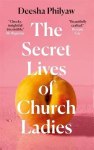
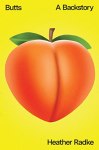
- I was reading two books with provocative peaches on the cover at the same time: The Secret Lives of Church Ladies by Deesha Philyaw and Butts: A Backstory by Heather Radke.
- A main character is pregnant but refuses medical attention in The Language of Flowers by Vanessa Diffenbaugh and What Concerns Us by Laura Vogt.
- An Australian setting and the slang “Carn” or “C’arn” for “come on” in Cloudstreet by Tim Winton and one story (“Halflead Bay”) from The Boat by Nam Le.
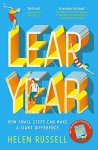
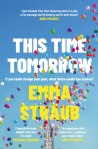
- Grape nuts cereal is mentioned in Leap Year by Helen Russell and This Time Tomorrow by Emma Straub.
- A character wagers their hair in a short story from Bratwurst Haven by Rachel King and one from Anthropology by Dan Rhodes.
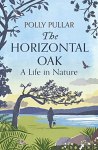
- Just after I started reading a Jackie Kay poetry collection (Other Lovers), I turned to The Horizontal Oak by Polly Pullar and found a puff from Kay on the front cover. And then one from Jim Crumley, whose The Nature of Spring I was also reading, on the back cover! (All Scottish authors, you see.)
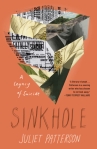
- Reading two memoirs that include a father’s suicide – Sinkhole by Juliet Patterson and The Horizontal Oak by Polly Pullar – at the same time.
- Middle school students reading Of Mice and Men in Ms. Hempel Chronicles by Sarah Shun-lien Bynum and Stories from the Tenants Downstairs by Sidik Fofana.
- A second novel in two months in which Los Angeles’s K-Town (Korean neighbourhood) is an important location: after Which Side Are You On by Ryan Lee Wong, Tomorrow, and Tomorrow, and Tomorrow by Gabrielle Zevin.
- The main character inherits his roommate’s coat in one story of The Dinner Party by Joshua Ferris, and Tomorrow, and Tomorrow, and Tomorrow by Gabrielle Zevin.
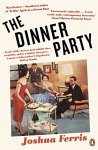
- The Groucho Marx quote “Whatever it is, I’m against it” turns up in What Remains? by Rupert Callender and Blurb Your Enthusiasm by Louise Willder (where it’s adapted to “we’re” as the motto of 3:AM Magazine).
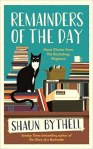 In Remainders of the Day by Shaun Bythell, Polly Pullar is mentioned as one of the writers at that year’s Wigtown Book Festival; I was reading her The Horizontal Oak at the same time.
- Marilyn Monroe’s death is mentioned in Sinkhole by Juliet Patterson and Tomorrow, and Tomorrow, and Tomorrow by Gabrielle Zevin.
- The types of standard plots that there are, and the fact that children’s books get the parents out of the way as soon as possible, are mentioned in And Finally by Henry Marsh and Blurb Your Enthusiasm by Louise Willder.
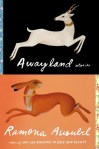
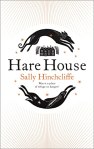
- Two books in quick succession with a leaping hare (and another leaping mammal, deer vs. dog) on the cover: Awayland by Ramona Ausubel, followed by Hare House by Sally Hinchcliffe.
- Three fingers held up to test someone’s mental state after a head injury in The House Is on Fire by Rachel Beanland and The Fear Index by Robert Harris.
- A scene where a teenage girl has to help with a breech livestock delivery (goat vs. sheep) in Belzhar by Meg Wolitzer and The Truants by Kate Weinberg.
- Two memoirs by a doctor/comedian that open with a scene commenting on the genitals of a cadaver being studied in medical school: Catch Your Breath by Ed Patrick wasn’t funny in the least, so I ditched it within the first 10 pages or so, whereas Undoctored by Adam Kay has been great so far.
What’s the weirdest reading coincidence you’ve had lately?
Short Stories in September, Part II: Andreades, Ferris, Fliss and Mulvey
It’s my aim to read as many short story collections as possible in September. After a first three earlier in the month, here are my next four.
Brown Girls by Daphne Palasi Andreades (2022)
 It was Susan’s review that first enticed me to read this linked story collection. I’m always intrigued by the use of the first-person plural, though it can have downsides – in trying to be inclusive of the breadth of experiences of the “us,” the content can edge toward generic. I worried things were going that way in the early chapters about girlhood “in the dregs of Queens, New York,” but the more I read the more I admired Andreades’s debut. Each chapter is a fantastic thematic fragment adding up to a glistening mosaic of what it means to be a woman of colour in the USA. Desires and ambitions shift as they move from childhood to adolescence to college years to young adulthood, but some things stay the same: their parents’ high expectations, the pull of various cultures, and near-daily microaggressions.
Our families’ legacies, the histories we’ve inherited: grandparents who never learned to read, U.S.-backed dictatorships, bombs, wars, refugee camps, naval bases, canals, gold, diamonds, oil, missionaries, brain drain, the American Dream.
No matter their zip code or tax bracket, listen as these white people deem us and our families the good immigrants, the hard-working ones—not like the lazy people in this country who are a burden on the system.
The fulcrum is the sudden death of one of their number, Trish, which has repercussions through the second half of the book. It raises questions of mental health and whether friendships will last even when they move beyond Queens.
I especially loved Part Five, about a trip back to the motherland that leaves the brown girls disoriented from simultaneous sensations of connection, privilege and foreignness. “The colonized, the colonizer. Where do we fall?” My individual favourite chapters were “Duty,” about giving up on parentally prescribed medical studies to pursue a passion for art; “Patriotic,” about deciding whether or not to have children; and “Our Not-Reflections,” about age allowing them to understand what their mothers went through when they were new to the country. One critique: I would have omitted the final Part Eight, which is about Covid and death in general; the book didn’t need an update to feel timely. It’s a shame this wasn’t at least longlisted for the Women’s Prize this past year. (New purchase with a book token)
The Dinner Party by Joshua Ferris (2017)
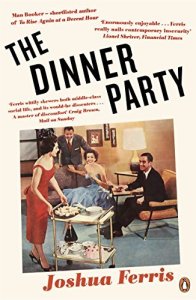 I’ve read a couple of Ferris’s novels but this collection had passed me by. “More Abandon (Or Whatever Happened to Joe Pope?)” is set in the same office building as Then We Came to the End. Most of the entries take place in New York City or Chicago, with “Life in the Heart of the Dead” standing out for its Prague setting. The title story, which opens the book, sets the tone: bristly, gloomy, urbane, a little bit absurd. A couple are expecting their friends to arrive for dinner any moment, but the evening wears away and they never turn up. The husband decides to go over there and give them a piece of his mind, only to find that they’re hosting their own party. The betrayal only draws attention to the underlying unrest in the original couple’s marriage. “Why do I have this life?” the wife asks towards the close.
Marital discontent and/or infidelity is a recurring feature, showing up in “A Night Out” and “The Breeze,” which presents the different ways a couple’s evening might have gone. I liked this line about the difficulty of overcoming incompatibilities: “Why could she not be more like him and why could he not be more like her?” It seems from my short story reading that there is always one story I would give a different title. Here I would rename “The Valetudinarian” (about a Florida retiree who ends up in a comical health crisis) “They don’t give you a manual” after his repeated catchphrase.
A few of the 11 stories weren’t so memorable, but the collection ends with a bang. “A Fair Price” appears to have a typically feeble male protagonist, frustrated that the man he’s hired to help move his belongings out of a storage unit is so taciturn, but the innocuous setup hides a horrific potential. (Public library)
The Predatory Animal Ball by Jennifer Fliss (2021)
 These 40 flash fiction stories try on a dizzying array of genres and situations. They vary in length from a paragraph (e.g., “Pigeons”) to 5–8 pages, and range from historical to dystopian. A couple of stories are in the second person (“Dandelions” was a standout) and a few in the first-person plural. Some have unusual POV characters. “A Greater Folly Is Hard to Imagine,” whose name comes from a William Morris letter, seems like a riff on “The Yellow Wallpaper,” but with the very wall décor to blame. “Degrees” and “The Thick Green Ribbon” are terrifying/amazing for how quickly things go from fine to apocalyptically bad.
Grief and especially pregnancy loss are repeated elements. In “Yolk,” a woman finds a chicken embryo inside a cracked egg and it brings back memories of her recent stillbirth. In “All Your Household Needs,” a bereaved voice-over artist sympathizes with a child who picks up a stuffed Lucky the Dog whose speech she recorded. In “What Goes with Us,” an unreturned library book is a treasured reminder of a dead partner; “May His Memory Be a Blessing” lists many other such mementoes. Even the title story, whose main character is a mouse, opens with the loss of a loved one and posits compassion from an unexpected source.
It’s hard to get a sense of an author’s overall style from such disparate material, so I was pleased to learn that Fliss is working on her first novel, which I’ll be keen to read.
With thanks to publicist Lori Hettler for the e-copy for review.
Hearts & Bones: Love Songs for Late Youth by Niamh Mulvey (2022)
 Having read these 10 stories over the course of a few months, I now struggle to remember what many of them were about. If there’s an overarching theme, it’s (young) women’s relationships. “My First Marina,” about a teenager discovering her sexual power and the potential danger of peer pressure in a friendship, is similar to the title story of Milk Blood Heat by Dantiel W. Moniz. In “Mother’s Day,” a woman hopes that a pregnancy will prompt a reconciliation between her and her estranged mother. In “Childcare,” a girl and her grandmother join forces against the mum/daughter, a would-be actress. “Currency” is in the second person, with the rest fairly equally split between first and third person. “The Doll” is an odd one about a ventriloquist’s dummy and repeats events from three perspectives.
I had two favourites: “Feathers” and “Good for You, Cecilia.” In the former, a woman rethinks her relationship with her boyfriend when the 2010 volcanic eruption restricts her to his French flat and she gets chatting with his cleaner. In the latter, a mother and daughter go to watch their daughter/sister’s dance recital in Dublin and witness the fall of a statue of St. Cecilia in a church they stop into. These are all matter-of-fact, somewhat detached stories set in European cities over the last decade or so. None of the protagonists had me particularly emotionally engaged with their plights. Overall, this felt reminiscent of Wendy Erskine’s work (I’ve reviewed Dance Move), but not as original or powerful. 
With thanks to Picador for the proof copy for review.
Currently reading: Ms. Hempel Chronicles by Sarah Shun-lien Bynum, Delicate Edible Birds by Lauren Groff, Playing Sardines by Michèle Roberts
Up next: The High Places by Fiona McFarlane, Birds of America by Lorrie Moore
 Bookish Beck = Rebecca Foster. American transplant to England. Freelance proofreader and book reviewer.
