Victorian-Themed Novels by Annie Elliot and Livi Michael (#ReadIndies)
I’m going back to my roots as a Victorianist (I completed an MA in Victorian Literature at the University of Leeds in 2006) with these two new novels, the one about Charles Dickens’s turbulent marriage and the other about the real-life inspiration for Elizabeth Gaskell’s Ruth. Both redress the balance of Victorian literature by placing women at the centre of the action, and both were comfortably in the 200–300-page range: turns out that’s how I like my Victoriana these days; none of your triple-decker nonsense.
Mr & Mrs Charles Dickens: Her Story by Annie Elliot
I used to proclaim Dickens my favourite author yet haven’t managed to read one of his novels in 15+ years; I seem to be allergic to all that verbiage. He managed to write all those millions of words thanks to his increasing status and wealth, but also thanks to his long-suffering wife, Catherine. Kate sacrificed her health and ambitions to bear and raise his nine children (along with one who died) and – along with sisters and servants – keep a house calm and quiet enough to enable his work.
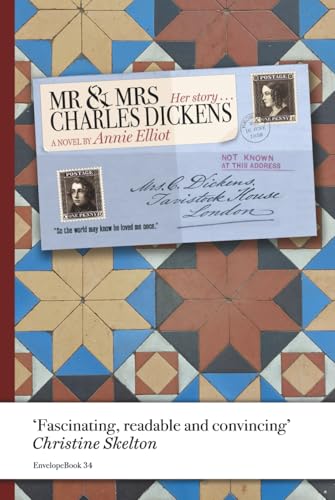 On her deathbed, Kate begged her daughter to give her love letters from Charles to the British Museum “so the world may know he loved me once.” Annie Elliot has used that phrase as the tagline for her absorbing and vigilantly researched debut novel. The structure perfectly mimics romantic illusions ceding to disenchantment. The framing story is set on 10 June 1870 – the day Kate, the estranged wife, learns of Charles’s death. Sections alternate between the bereaved Kate’s fragile state of mind (depicted in the third person) and first-person flashbacks to their relationship, from first meeting in 1834 to infamous separation in 1858.
It’s all narrated in the present tense, which creates an eternal now: nothing can be dated when it’s all happening at once for Kate. To start with, the Dickens marriage seems to be based on real love and physical passion. But before long it’s clear that he’s using Kate as ego boost and sexual outlet. She walks on eggshells lest anything shake his confidence. While the death of their baby daughter Dora nearly breaks her, he keeps up a frenzy of writing, travel, property acquisition, and new ventures such as public speaking and the theatre. And, of course, it’s through dramatics that he meets young Nelly Ternan and finds his excuse to push Kate aside.
Though much of this material was familiar to me from Claire Tomalin’s biographies as well as Gaynor Arnold’s novel about Kate, Girl in a Blue Dress, I appreciated the recreation of Kate’s perspective, the glimpses of their children’s lives, and the flashes of humour such as the proliferation of Pickwick memorabilia and a visit from Hans Christian Andersen. This is – yes, still – a necessary corrective to Dickens’s image as the dutiful husband and paterfamilias. And such a beautifully presented book, too. I wish Elliot well for next year’s McKitterick Prize race.
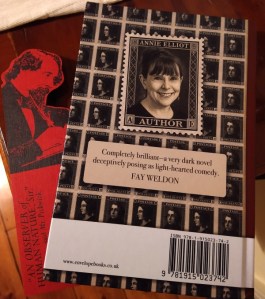
To be published on 1 March. With thanks to the author and EnvelopeBooks for the free copy for review.
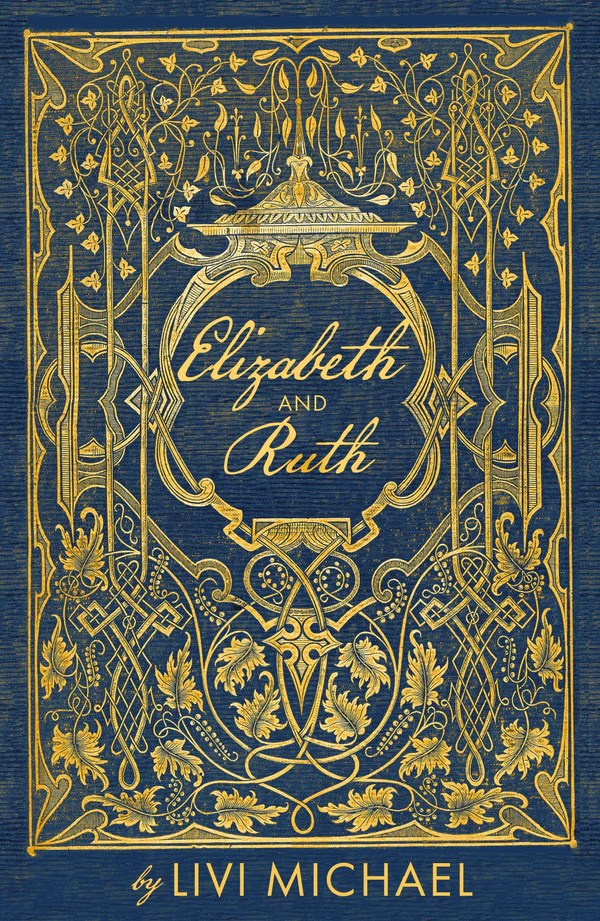
Elizabeth and Ruth by Livi Michael
The Manchester of 1849 is a sordid complex of sweatshops, brothels and workhouses – if you’re Pasley, an Irish teenager abandoned by her mother and shunted from one bad situation to another. Or the Manchester of 1849 is a rarefied colloquium of forward-thinking authors, ministers and politicians – if you’re Elizabeth Gaskell, who’s been revealed as the mind behind the anonymously published sensation Mary Barton.
The two worlds collide when Elizabeth visits Pasley at the New Bailey Prison. She feels for this young woman who’s been a victim of deception, trafficking, and rape and narrowly escaped death by suicide only to end up imprisoned for theft when she made a desperate bid for freedom. There’s only so much that Pasley can bear to tell Mrs Gaskell on these short visits, though; her past would shock a preacher’s wife. Through euphemisms and evasions, Pasley is able to convey that she was taken advantage of by a doctor. Elizabeth suspects that there was a baby, but only readers know the whole truth.
Chapters alternate between Elizabeth’s experience – in an omniscient third person cleverly reminiscent of Victorian prose – and Pasley’s first-person recollections. Elizabeth wants to follow through on her do-gooder reputation and truly help Pasley, who reminds her of her own infant and pregnancy losses. Achieving justice for the girl would be a bonus. All she knows to do is use her pen to change hearts and minds, as she has before (including for Dickens’s magazine) to draw attention to the plight of the poor. Thus, Ruth was born.
This is a riveting and touching novel about the rigidity of convention and the limits of compassion. Livi Michael is a prolific author of whom I’d not heard before Salt sent me this surprise, perfectly suited parcel. Her vivid scenes bring the two-tiered Manchester society to life and reminded me of my visit to the Gaskell House in 2015. My only small complaint would be that the blurb makes it sound as if Gaskell’s correspondence with Dickens will be a central element, when in fact it only appears once, two-thirds of the way through, with one cameo appearance by Dickens right at the end. He’s the better-known author, but after reading this you’ll agree that Gaskell was the subtler, more elegant chronicler.
Published on 9 February. With thanks to Salt Publishing for the proof copy for review.
#NovNov24 Catch-Up, I: Comyns, Figes, McEwan, Radcliffe, Thériault
Still more to finish reading and/or belatedly review this week before the Novellas in November link-up closes – another, er, nine books after this, I think! I’ll save the short nonfiction for a couple of other posts. For now I have five novellas that range from black comedy to utter heartbreak and from quotidian detail to magic realism.
The House of Dolls by Barbara Comyns (1989)
 What a fantastic opening line: “Amy Doll, are you telling me that all those old girls upstairs are tarts?” Amy is a respectable widow and single mother to Hetty; no one would guess her boarding house is a brothel where gentlemen of a certain age engage the services of Berti, Evelyn, Ivy and the Señora. When a policeman starts courting Amy, she feels it’s time to address her lodgers’ profession and Hetty’s truancy. The older women disperse: move, marry or seek new employment. Sequences where Berti, who can barely boil an egg, tries to pass as a cook for a highly exacting couple, and Evelyn gets into the gin while babysitting, are hilarious. But there is pathos to the spinsters’ plight as well. “The thing that really upset [Berti] was her hair, long wisps of white with blazing red ends which she kept hidden under a scarf. The fact that she was penniless, and with no prospects, had become too terrible to contemplate.” She and Evelyn take to attending the funerals of strangers for the free buffet and booze. Comyns’ last novel (I’d only previously read Who Was Changed and Who Was Dead) is typically dark, but the wit counteracts the morbid nature. It reminded me of Beryl Bainbridge, late Barbara Pym, Lore Segal, and Muriel Spark. (Passed on by Liz – thank you! Even with the hideous cover.) [156 pages]
Light by Eva Figes (1983)
 I read this as part of my casual ongoing project to read books from my birth year. This was recently reissued and I can see why it is considered a lost classic and was much admired by Figes’ fellow authors. A circadian novel, it presents Claude Monet and his circle of family, friends and servants at home in Giverny. The perspective shifts nimbly between characters and the prose is appropriately painterly: “The water lilies had begun to open, layer upon layer of petals folded back to the sky, revealing a variety of colour. The shadow of the willow lost depth as the sun began to climb, light filtering through a forest of long green fingers. A small white cloud, the first to be seen on this particular morning, drifted across the sky above the lily pond”. There are also neat little hints about the march of time: “‘Telephone poles are ruining my landscapes,’ grumbled Claude”. But this story takes plotlessness to a whole new level, and I lost patience far before the end, despite the low page count, and so skimmed half or more. If you are a lover of lyrical writing and can tolerate stasis, it may well be your cup of tea. (Secondhand – Community Furniture Project?) [91 pages]
On Chesil Beach by Ian McEwan (2007)
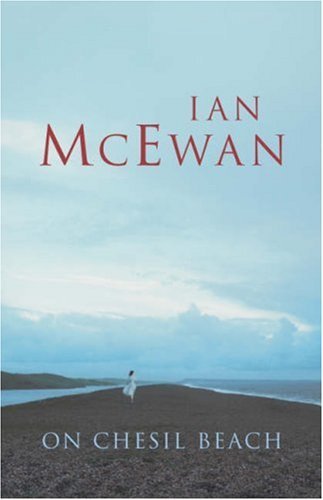 “They were young, educated, and both virgins on this, their wedding night, and they lived in a time when a conversation about sexual difficulties was plainly impossible.” Another stellar opening line to what I think may be a perfect novella. Its core is the night in July 1962 when Edward and Florence attempt to consummate their marriage in a Dorset hotel, but it stretches back to cover everything we need to know about this couple – their family dynamics, how they met, what they want from life – and forward to see their lives diverge. Is love enough? “And what stood in their way? Their personalities and pasts, their ignorance and fear, timidity, squeamishness, lack of entitlement or experience or easy manners, then the tail end of a religious prohibition, their Englishness and class, and history itself. Nothing much at all.” I had forgotten the sources of trauma: Edward’s mother’s brain injury, perhaps a hint that Florence was sexually abused by her father? (But she also says things that would today make us posit asexuality.) I knew when I read this at its release that it was a superior McEwan, but it’s taken the years since – perhaps not coincidentally, the length of my own marriage – to realize just how special. It’s a maturing of the author’s vision: the tragedy is not showy and grotesque like in his early novels and stories, but quiet, hinging on the smallest of actions, or the words not said. This absolutely flayed me emotionally on a reread. (Little Free Library) [166 pages]
The Old Haunts by Allan Radcliffe (2023)
 I was sent this earlier in the year in a parcel containing the 2024 McKitterick Prize shortlist. It’s been instructive to observe the variety just in that set of six (and so much the more in the novels I’m assessing for the longlist now). The short, titled chapters feel almost like linked flash stories that switch between the present day and scenes from art teacher Jamie’s past. Both of his parents having recently died, Jamie and his boyfriend, a mixed-race actor named Alex, get away to remote Scotland. His parents were older when they had him; growing up in the flat above their newsagent’s shop in Edinburgh, Jamie felt the generational gap meant they couldn’t quite understand him or his art. Uni in London was his chance to come out and make supportive friends, but being honest with his parents seemed a step too far. When Alex is called away for an audition, Jamie delves deeper into his memories. Kit, their host at the cottage, has her own story. Some lovely, low-key vignettes and passages (“A smell of soaked fruit. Christmas cake. My mother liked to be organised. She was here, alive, only yesterday.”), but overall a little too soft for the grief theme to truly pierce through. [158 pages]
With thanks to the Society of Authors for the free copy for review.
The Peculiar Life of a Lonely Postman by Denis Thériault (2005; 2008)
[Translated from the French by Liedewy Hawke]
 {BEWARE SPOILERS} Like many, I was drawn in by the quirky title and Japan-evoking cover. To start with, it’s the engaging story of Bilodo, a Montreal postman with a naughty habit of steaming open various people’s mail. He soon becomes obsessed with the haiku exchange between a certain Gaston Grandpré and his pen pal in Guadeloupe, Ségolène. When Grandpré dies a violent death, Bilodo decides to impersonate him and take over the correspondence. He learns to write poetry – as Thériault had to, to write this – and their haiku (“the art of the snapshot, the detail”) and tanka grow increasingly erotic and take over his life, even supplanting his career. But when Ségolène offers to fly to Canada, Bilodo panics. I had two major problems with this: the exoticizing of a Black woman (why did she have to be from Guadeloupe, of all places?), and the bizarre ending, in which Bilodo, who has gradually become more like Grandpré, seems destined for his fate as well. I imagine this was supposed to be a psychological fable, but it was just a little bit silly for me, and the way it’s marketed will probably disappoint readers who are looking for either Harold Fry heart warming or cute Japanese cat/phone box adventures. (Public library) [108 pages]
Which of these catches your eye?
Christmas Reading and Book Haul
I recently read two novels set in the week of Christmas. Both were good reminders to appreciate the family that you have because whatever your dysfunctional situation, it could probably be much worse.
 Christmas Holiday by W. Somerset Maugham (1939): Twenty-three-year-old Charley Mason heads to Paris on Christmas Eve to see his old friend Simon and live it up in the big city. First thing, Simon takes him to a brothel, where Charley dances with topless Russian prostitute “Princess Olga.” Before things go any further, he ducks out to attend a Mass he happened to get tickets for, and she begs to accompany him. When Lydia (for that is her real name) starts weeping during the service, he takes her back to his hotel and listens with rapt horror as she tells him the sordid story of how her husband, a petty criminal named Robert Berger, murdered a man for fun and ended up in prison overseas. From here on, Charley’s primary feeling for Lydia is pity and any desire he had is neutralized. Simon, too, is fascinated with the Berger case for what it reveals about essential human egoism. The chaste relationship with Lydia and the intensity of the interactions with Simon made me wonder if there was covert homoeroticism here. It was interesting, shortly after my Paris trip, to read something about how sleazy it is rather than how magical. (Secondhand purchase)
 Flight by Lynn Steger Strong (2022): I couldn’t resist the setup: three grown-up siblings and their families meet at the one brother’s house in upstate New York to celebrate their first Christmas since their mother died. The novel takes place over just four days, the 22nd through Christmas Day, but Strong pumps in a lot of backstory about the sibling dynamic and the three marriages. The late Helen has already ascended into legend, and her coastal home in Florida is a bargaining chip. Tess, Martin’s lawyer wife, approaches the problem practically: sell it and split the profits three ways. Henry, an environmentalist artist, wants to sell the land to the state to be part of a nature preserve. Kate, the sentimental one, wants to live in the house herself but isn’t sure she and Josh can afford to buy her brothers out. At first I thought this was going to be a slightly irksome story of privileged white people and their ‘problems’, but there is a biracial character and an ex-heroin addict and her daughter also become key characters. As the family build igloos, bake pies and plan the perfect photo shoot, offences are simmering under the surface (“Mostly they resent each other from a comfortable enough distance that they might call it love”). These all fade, though, when a child goes missing. I was reminded subtly of Ann Patchett’s work, but more, with the environmental and parenting themes, of Ramona Ausubel and Megan Mayhew Bergman. I’d read more by Strong. (Public library)
And now for the promised Christmas book haul.
Here’s what I bought with store credit at 2nd & Charles while in the States for my sister’s graduation with her bachelor’s in nursing.
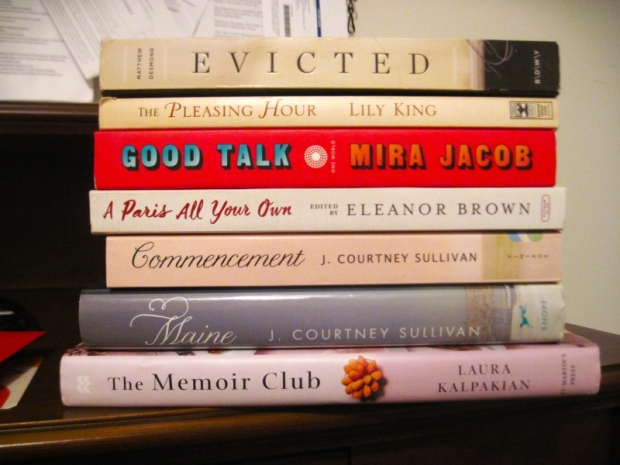
We got to do some fun family Christmassy things while I was there for 10 days, then I flew back to the UK into Christmas Eve and got to do actual Christmas with my in-laws. It’s been a whirlwind of a month!


I had this book post waiting for me when I got back.
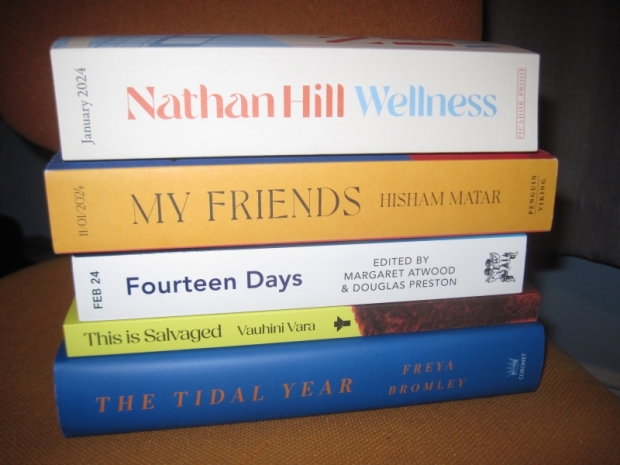
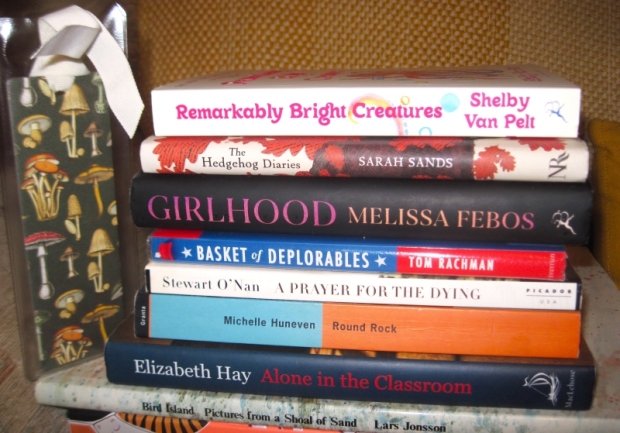
And received these for Christmas!
Booker Prize Longlist Reading & Shortlist Predictions
I’ve polished off another four from the Booker Prize longlist (my initial reactions and excerpts from existing reviews are here), with one more coming up for me next month.
Trust by Hernan Diaz
“History itself is just a fiction—a fiction with an army. And reality? Reality is a fiction with an unlimited budget.”
My synopsis for Bookmarks magazine:
Set in the 1920s and 1930s, this expansive novel is about the early days of New York City high finance. It is told through four interlocking narratives. The first is Bonds, a novel by Harold Vanner, whose main character is clearly based on tycoon Andrew Bevel. Bevel, outraged at his portrayal as well as the allegation that his late wife, Mildred, was a madwoman, responds by writing a memoir—the book’s second part. Part 3 is an account by Ida Partenza, Bevel’s secretary, who helps him plot revenge on Vanner. In the final section, Mildred finally gets her say. Her journal caps off a sumptuous, kaleidoscopic look at American capitalism.
 Ghostwriter Ida’s section was much my favourite, for her voice as well as for how it leads you to go back to the previous part – some of it still in shorthand (“Father. Describe early memories of him. … MATH in great detail. Precocious talent. Anecdotes.”) and reassess its picture of Bevel. His short selling in advance of the Great Depression made him a fortune, but he defends himself: “My actions safeguarded American industry and business.” Mildred’s journal entries, clearly written through a fog of pain as she was dying from cancer, then force another rethink about the role she played in her husband’s decision making. With her genius-level memory, philanthropy and love of literature and music, she’s a much more interesting character than Bevel – that being the point, of course, that he steals the limelight. This is clever, clever stuff. However, as admirable as the pastiche sections might be (though they’re not as convincing as the first section of To Paradise), they’re ever so dull to read.
With thanks to Picador for the free copy for review.
Case Study by Graeme Macrae Burnet
 That GMB is quite the trickster. From the biographical sections, I definitely assumed that A. Collins Braithwaite was a real psychiatrist in the 1960s. A quick Google when I got to the end revealed that he only exists in this fictional universe. I enjoyed the notebooks recounting an unnamed young woman’s visits to Braithwaite’s office; holding the man responsible for her sister’s suicide, she books her appointments under a false name, Rebecca Smyth, and tries acting just mad (and sensual) enough to warrant her coming back. Her family stories, whether true or embellished, are ripe for psychoanalysis, and the more she inhabits this character she’s created the more she takes on her persona. (“And, perhaps on account of Mrs du Maurier’s novel, Rebecca had always struck me as the most dazzling of names. I liked the way its three short syllables felt in my mouth, ending in that breathy, open-lipped exhalation.” I had to laugh at this passage! I’ve always thought mine a staid name.) But the different documents don’t come together as satisfyingly as I expected, especially compared to His Bloody Project. (Public library)
Those two are both literary show-off stuff (the epistolary found documents strategy, metafiction): the kind of book I would have liked more in my twenties. I’m less impressed with games these days; I prefer the raw heart of this next one.
Nightcrawling by Leila Mottley
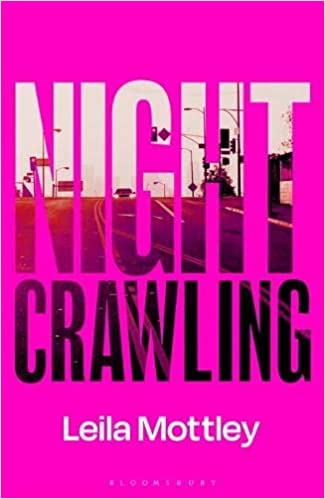 She may be only 20 years old, but Leila Mottley is the real deal. Her debut novel, laden with praise from her mentor Ruth Ozeki and many others, reminded me of Bryan Washington’s work. The first-person voice is convincing and mature as Mottley spins the (inspired by a true) story of an underage prostitute who testifies against the cops who have kept her in what is virtually sex slavery. At 17, Kiara is the de facto head of her household, with her father dead, her mother in a halfway house, and her older brother pursuing his dream of recording a rap album. When news comes of a rise in the rent and Kia stumbles into being paid for sex, she knows it’s her only way of staying in their Oakland apartment and looking after her neglected nine-year-old neighbour, Trevor.
I loved her relationships with Trevor, her best friend Alé (they crash funerals for the free food), and trans prostitute Camila, and the glimpses into prison life and police corruption. This doesn’t feel like misery for the sake of it, just realistic and compassionate documentation. There were a few places where I felt the joins showed, like a teacher had told her she needed to fill in some emotional backstory, and I noticed an irksome habit of turning adjectives into verbs or nouns (e.g., “full of all her loud,” “the sky is just starting to pastel”); perhaps this is an instinct from her start in poetry, but it struck me as precious. However, this is easily one of the more memorable 2022 releases I’ve read, and I’d love to see it on the shortlist and on other prize lists later this year and next. (Public library) 
Oh William! by Elizabeth Strout
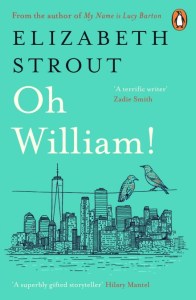 This was a DNF for me last year, but I tried again. The setup is simple: Lucy Barton’s ex-husband, William, discovers he has a half-sister he never knew about. William and Lucy travel from New York City to Maine in hopes of meeting her. For both of them, the quest sparks a lot of questions about how our origins determine who we are, and what William’s late mother, Catherine, was running from and to in leaving her husband and small child behind to forge a different life. Like Lucy, Catherine came from nothing; to an extent, everything that unfolded afterwards for them was a reaction against poverty and neglect.
The difficulty of ever really knowing another person, or even understanding oneself, is one of Strout’s recurring messages. There are a lot of strong lines and relatable feelings here. What I found maddening, though, is Lucy’s tentative phrasing, e.g. “And I cannot explain it except to say—oh, I don’t know what to say! Truly, it is as if I do not exist, I guess is the closest thing I can say.” She employs hedging statements like that all the time; it struck me as false that someone who makes a living by words would be so lacking in confidence about how to say what she means. So I appreciated the psychological insight but found Lucy’s voice annoying, even in such a short book. (Public library)
A Recap
I’ve read 6 of the 13 at this point, have imminent plans to read After Sappho for a Shelf Awareness review, and would still like to read the Mortimer if my library system acquires it. The others? Meh. I might consider catching up if they’re shortlisted.
My book group wasn’t chosen to shadow the Booker Prize this year, which is fair enough since we already officially shadowed the Women’s Prize earlier in the year (here are the six successful book clubs, if you’re interested). However, we have been offered the chance to send in up to five interview questions for the shortlisted authors. The Q&As will then be part of a website feature. And I was pleasantly surprised to see that my non-holiday snap of a Booker Prize nominee turned up in this round-up!
Here’s my (not particularly scientific) reasoning for what might make the shortlist:
A literary puzzle novel
Trust by Hernan Diaz or Case Study by Graeme Macrae Burnet
- Trust feels more impressive, and timely; GMB already had his chance.
A contemporary novel
Nightcrawling by Leila Mottley or Oh William! by Elizabeth Strout
- Oh William! is the weakest Strout novel I’ve read. Mottley’s is a fresh voice that deserves to be broadcast.

A satire
The Trees by Percival Everett or Seven Moons of Maali Almeida by Shehan Karunatilaka
- Without having read either, I’m going to hazard a guess that the Everett is too Ameri-centric/similar to The Sellout. The Booker tends to reward colourful Commonwealth books. [EDITED to add that I forgot to take into my considerations Glory by NoViolet Bulawayo; while it doesn’t perfectly fit this category, as a political allegory it’s close enough that I’ll include it here. I would not be at all surprised if it made the shortlist, along with the Karunatilaka.]

A couple of historical novels
Booth by Karen Joy Fowler or After Sappho by Selby Wynn Schwartz
and/or
A couple of Irish novels
Small Things Like These by Claire Keegan or The Colony by Audrey Magee
- I’m hearing such buzz about the Magee, and there’s such love out there for the Keegan, that I reckon both of these will make it through.


The odd one out?
Treacle Walker by Alan Garner or Maps of Our Spectacular Bodies by Maddie Mortimer
- Maybe nostalgia will spur the judges to give Garner a chance in his 80s.

My predicted shortlist:



On Tuesday evening we’ll find out if I got any of these right!
What have you read from the longlist? What do you most want to read, or see on the shortlist?
Short Stories in September, Part III: Butler, Costello, MacLaverty, Washington
Today I have a third set of terrific and varied short story collections. Between this, my Part I and Part II posts, and a bonus review I have coming up on Friday, I’ve gotten through 12 volumes of stories this month. This feels like a great showing for me because I don’t naturally gravitate to short stories and have to force myself to make a special effort to read them every September; otherwise, they tend to languish unread on my shelves and TBR.
From science fiction and horror tales set in alternate worlds to gritty slices of real life in Texas via two sets of quiet Irish relationship studies, this quartet of books showcases a range of tones and genres but fairly straightforward story structures and points of view. This was such a strong batch, I had to wonder why I never call myself a short story fan. All:
Bloodchild and Other Stories by Octavia E. Butler (2005)
 My first R.I.P. selection and one I can heartily recommend – even if you’re normally wary of dystopias, horror and science fiction. Butler makes these genres accessible by peopling her plots with relatable protagonists and carefully accounting for their bizarre predicaments without wasting time on extraneous world-building. The way in which she explores very human issues alongside the existence of alien beings reminds me of Mary Doria Russell’s The Sparrow, another of my rare forays into sci fi.
Along with the original five stories Butler published in 1970s and 1980s magazines and anthologies, this second edition contains two essays on her writing process and two new stories that date to 2003. In “Bloodchild,” a small band of humans live on another planet ruled by the Tlic, which sound like giant spiders or scorpions. Gan learns he is expected to play his part by being a surrogate for T’Gatoi’s eggs, but is haunted by what he’s heard this process involves. In a brief afterword (one is included with each piece here), Butler explains that the story arose from her terror of botflies, which she knew she might encounter in the Peruvian Amazon, and that she has always faced what scares her through her writing.
My other favorite story was “The Evening and the Morning and the Night,” about a subclass of people afflicted with Duryea-Gode disease. A cruel side effect of a parent’s cancer treatment, the illness compels sufferers to self-harm and they are often confined to asylums. Lynn and Alan visit his mother in one such institution and see what their future might hold. “Speech Sounds” and “Amnesty” reminded me most of the Parable novels, with the latter’s Noah a leader figure similar to Lauren. After an apocalyptic event, people must adapt and cooperate to survive. I appreciated how the two essays value persistence – more so than talent or inspiration – as the key to success as a writer. This was my fourth book by Butler and I don’t see why I shouldn’t keep going and read her whole oeuvre. (University library)

The China Factory by Mary Costello (2012)
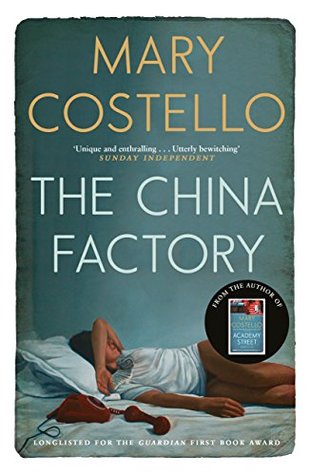 Academy Street is a near-perfect novella and I also enjoyed The River Capture, so I wanted to complete the set by reading Costello’s first book. Its dozen understated stories are about Irish men and women the course of whose lives are altered by chance meetings, surprise liaisons, or not-quite-affairs that needle them ever after with the could-have-been. The mood of gentle melancholy would suit a chilly moonlight drive along the coast road to Howth. In the opening title story, a teenage girl rides to her work sponging clay cups with an oddball named Gus. Others can’t get past things like his body odour, but when there’s a crisis at the factory she sees his calm authority save the day. Elsewhere, a gardener rushes his employer to the hospital, a woman attends her ex-husband’s funeral, and a school inspector becomes obsessed with one of the young teachers he observes.
Three favourites: In “And Who Will Pay Charon?” a man learns that, after he rejected Suzanne, she was hideously attacked in London. When she returns to the town as an old woman, he wonders what he might have done differently. “The Astral Plane” concerns a woman who strikes up a long-distance e-mail correspondence with a man from New York who picked up a book she left behind in a library. How will their intellectual affair translate into the corporeal world? The final story, “The Sewing Room,” reminded me most of Academy Street and could be a novel all of its own, as a schoolteacher and amateur fashion designer prepares for her retirement party and remembers the child she gave up for adoption. (Secondhand, gifted)
Blank Pages and Other Stories by Bernard MacLaverty (2021)
 I knew from The Great Profundo that I liked MacLaverty’s stories, and I also enjoyed his latest novel, Midwinter Break, so I was delighted to hear news of a new collection. A number of the longer stories are set at turning points in twentieth-century history. In 1940, a mother is desperate to hear word of her soldier son; in 1971 Belfast, officers search a woman’s house. Two of the historical stories appealed to me for their medical elements: “The End of Days,” set in Vienna in 1918, dramatizes Egon Schiele’s fight with Spanish flu, while “Blackthorns” gives a lovely picture of how early antibiotics promoted miraculous recovery. In the title story, a cat is all a writer has left to remind him of his late wife. “Wandering” has a woman out looking for her dementia-addled mother. “The Dust Gatherer” muses on the fate of an old piano. Elderly parents and music recur, establishing filaments of thematic connection.
Three favourites: In “Glasshouses,” a man temporarily misplaces his grandchildren in the botanical gardens; “The Fairly Good Samaritan” is the fable of a jolly drunk who calls an ambulance for his poorly neighbour – but not before polishing off her brandy; and in the gorgeous “Sounds and Sweet Airs” a young woman’s harp music enthrals the passengers on a ferry.
With thanks to Jonathan Cape for the free copy for review.
Lot: Stories by Bryan Washington (2019)
 The musical equivalent of Lot might be a mixtape played on a boombox or blasted from an open-top Corvette while touring the streets of Houston, Texas. Most of this Dylan Thomas Prize-winning linked collection follows Nic, a mixed-race Black/Latino boy who works in the family restaurant. As his family situation realigns – his father leaves, his older brother Javi enlists, his sister Jan has a baby – he’s trying to come to terms with his homosexuality and wondering if this gentrifying city suits him anymore. But he knows he’ll take himself wherever he goes, and as the book closes with “Elgin” (the most similar in mood and setup to Washington’s debut novel, Memorial) he’s thinking of taking a chance on love.
Drug dealers, careworn immigrants and prostitutes: Even the toughest guys have tender hearts in these stories. Eleven of 13 stories are in the first person. Where the narration isn’t Nic’s, it’s usually the collective voice of the neighbourhood boys. As far as I can tell, most of the story titles refer to Houston sites: particular addresses or neighbourhoods, or more vague locations. Like in Memorial, there are no speech marks. Washington’s prose is earthy and slang-filled. The matter-of-fact phrasing made me laugh: “He knocked her up in the usual way. For six minutes it looked like he’d stick around”; “He’d been staying there since the Great Thanksgiving Rupture, back when his brother’d found the dick pic in his pillowcase.” With the melting pot of cultures, the restaurant setting, and the sharp humour, this reminded me of Elaine Castillo’s America Is Not the Heart.
Three favourites: In “Shepherd,” the narrator emulates a glamorous cousin from Jamaica; “Bayou” is completely different from the rest, telling the urban legend of a “chupacubra” (a mythical creature like a coyote); “Waugh,” the longest story and one of just two told in the third person, is about a brothel’s worth of male sex workers and their pimp. Its final page is devastating. Despite their bravado, Washington’s characters are as vulnerable as Brandon Taylor’s. I think of these two young gay African American writers as being similar at root even though their style and approach are so very different. (New purchase)
A side note: I’m wondering how an author chooses primarily first person or third person POVs for short stories. MacLaverty and Taylor write exclusively in an omniscient third person; Washington and Eley Williams almost always plump for the first person. (Here, Butler was about half and half and Costello only used first person in three stories.) Is the third person seen as more impartial and commanding – a more elevated form of fiction? Is first person more immediate, informal and natural, but also perhaps too easy? I wouldn’t say I prefer one or the other (not in my novels, either); it all depends on the execution. Notably, none of this year’s stories were in the second person or employed experimental structures.
Two more collections I’m reading are spilling across into October for R.I.P., but will I keep up the short story habit after that? I still have a shelf full of unread story collections, and I have my eye on My Monticello, which I got from NetGalley…
 Bookish Beck = Rebecca Foster. American transplant to England. Freelance proofreader and book reviewer.
 Bookish Beck