Three on a Theme: Armchair Travels at the Italian Coast (Rachel Joyce, Sarah Moss and Jess Walter – #18 of 20 Books)
I’ve done a lot of journeying through Italy’s lakes and islands this summer. Not in real life, thank goodness – it would be far too hot! – but via books. I started with the Moss, then read the Joyce, and rounded off with the Walter, a book that had been on my TBR for 12 years and that many had heartily recommended, so I was delighted to finally experience it for myself.
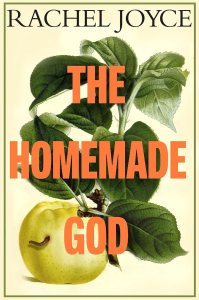
The Homemade God by Rachel Joyce (2025)
Joyce has really upped her game. I’ve somehow read all of her books though I often found them, from Harold Fry onward, disappointingly sentimental and twee. But with this she’s entering the big leagues, moving into the more expansive, elegant and empathetic territory of novels by Anne Enright (The Green Road), Patrick Gale (Notes from an Exhibition), Maggie O’Farrell (Instructions for a Heatwave) and Tom Rachman (The Italian Teacher). It’s the story of four siblings, initially drawn together and then dramatically blown apart by their father’s death. Despite weighty themes of alcoholism, depression and marital struggles, there is an overall lightness of tone and style that made this a pleasure to read.
Vic Kemp, the title figure, was a larger-than-life, womanizing painter whose work divided critics. After his first wife’s early death from cancer, he raised three daughters and a son with the help of a rotating cast of nannies (whom he inevitably slept with). At 76 he delivered the shocking news that he was marrying again: Bella-Mae, an artist in her twenties – much younger than any of his children. They moved from London to his second home in Italy just weeks before he drowned in Lake Orta. Netta, the eldest daughter, is sure there’s something fishy; he knew the lake so well and would never have gone out for a swim with a mist rolling in. Did Bella-Mae kill him for his money? And where is his last painting? Funny how waiting for an autopsy report and searching for a new will and carping with siblings over the division of belongings can ruin what should be paradise.
The interactions between Netta, Susan, Goose (Gustav) and Iris, plus Bella-Mae and her cousin Laszlo, are all flawlessly done, and through flashbacks and surges forward we learn so much about these flawed and flailing characters. The derelict villa and surrounding small town are appealing settings, and there are a lot of intriguing references to food, fashion and modern art.
My only small points of criticism are that Iris is less fleshed out than the others (and her bombshell secret felt distasteful), and that Joyce occasionally resorts to delivering some of her old obvious (though true) messages through an omniscient narrator, whereas they could be more palatable if they came out organically in dialogue or indirectly through a character’s thought process. Here’s an example: “When someone dies or disappears, we can only tell stories about what might have been the case or what might have happened next.” (One I liked better: “There were some things you never got over. No amount of thinking or talking would make them right: the best you could do was find a way to live alongside them.”) I also don’t think Goose would have been able to view his father’s body more than two months after his death; even with embalming, it would have started to decay within weeks.
You can tell that Joyce got her start in theatre because she’s so good at scenes and dialogue, and at moving people into different groups to see what they’ll do. She’s taken the best of her work in other media and brought it to bear here. It’s fascinating how Goose starts off seeming minor and eventually becomes the main POV character. And ending with a wedding (good enough for a Shakespearean comedy) offers a lovely occasion for a potential reconciliation after a (tragi)comic plot. More of this calibre, please! (Public library) 
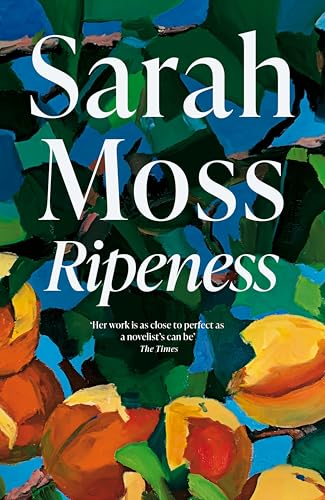
Ripeness by Sarah Moss (2025)
One sneaky little line, “Ripeness, not readiness, is all,” a Shakespeare mash-up (“Ripeness is all” is from King Lear vs. “the readiness is all” is from Hamlet), gives a clue to how to understand this novel: As a work of maturity from Sarah Moss, presenting life with all its contradictions and disappointments, not attempting to counterbalance that realism with any false optimism. What do we do, who will we be, when faced with situations for which we aren’t prepared?
Now that she’s based in Ireland, Moss seems almost to be channelling Irish authors such as Claire Keegan and Maggie O’Farrell. The line-up of themes – ballet + sisters + ambivalent motherhood + the question of immigration and belonging – should have added up to something incredible and right up my street. While Ripeness is good, even very good, it feels slightly forced. As has been true with some of Moss’s recent fiction (especially Summerwater), there is the air of a creative writing experiment. Here the trial is to determine which feels closer, a first-person rendering of a time nearly 60 years ago, or a present-tense, close-third-person account of the now. [I had in mind advice from one of Emma Darwin’s Substack posts: “What you’ll see is that ‘deep third’ is really much the same as first, in the logic of it, just with different pronouns: you are locking the narrative into a certain character’s point-of-view, but you don’t have a sense of that character as the narrator, the way you do in first person.” Except, increasingly as the novel goes on, we are compelled to think about Edith as a narrator, of her own life and others’.
In the current story line, everyone in rural West Ireland seems to have come from somewhere else (e.g. Edith’s lover Gunter is German). “She’s going to have to find a way to rise above it, this tribalism,” Edith thinks. She’s aghast at her town playing host to a small protest against immigration. Fair enough, but including this incident just seems like an excuse for some liberal handwringing (“since it’s obvious that there is enough for all, that the problem is distribution not supply, why cannot all have enough? Partly because people like Edith have too much.”). The facts of Maman being French-Israeli and having lost family in the Holocaust felt particularly shoehorned in; referencing Jewishness adds nothing. I also wondered why she set the 1960s narrative in Italy, apart from novelty and personal familiarity. (Teenage Edith’s high school Italian is improbably advanced, allowing her to translate throughout her sister’s childbirth.)
Though much of what I’ve written seems negative, I was left with an overall favourable impression. Mostly it’s that the delivery scene and the chapters that follow it are so very moving. Plus there are astute lines everywhere you look, whether on dance, motherhood, or migration. It may simply be that Moss was taking on too much at once, such that this lacks the focus of her novellas. Ultimately, I would have been happy to have just the historical story line; the repeat of the surrendering for adoption element isn’t necessary to make any point. (I was relieved, anyway, that Moss didn’t resort to the cheap trick of having the baby turn out to be a character we’ve already been introduced to.) I admire the ambition but feel Moss has yet to return to the sweet spot of her first five novels. Still, I’m a fan for life. (Public library) 
#18 of my 20 Books of Summer
(Completing the second row on the Bingo card: Book set in a vacation destination)


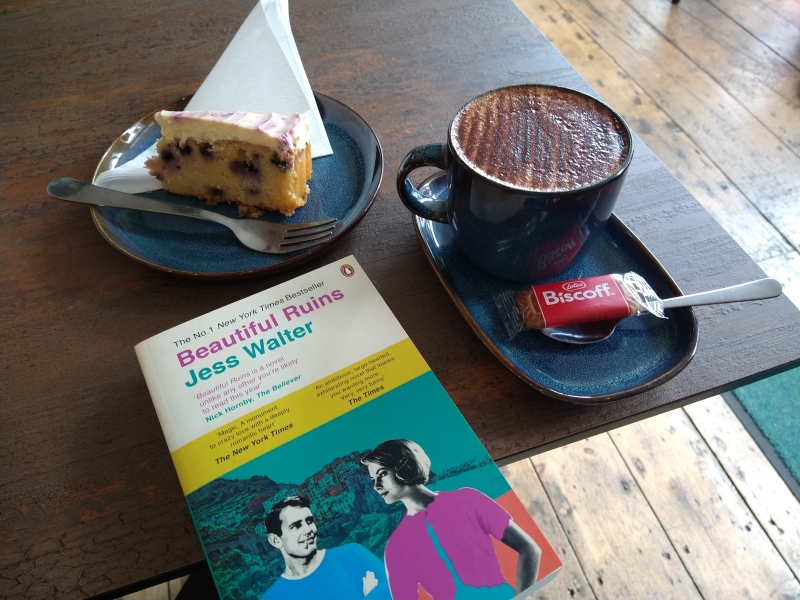
Beautiful Ruins by Jess Walter (2012)
 I loved how Emma Straub described the ideal summer read in one of her Substack posts: “My plan for the summer is to read as many books as possible that make me feel that drugged-up feeling, where you just want to get back to the page.” I wish I’d been able to read this faster – that I hadn’t had so much on my plate all summer so I could have been fully immersed. Nonetheless, every time I returned to it I felt welcomed in. So many trusted bibliophiles love this book – blogger friends Laila and Laura T.; Emma Milne-White, owner of Hungerford Bookshop, who plugged it at their 2023 summer reading celebration; and Maris Kreizman, who in a recent newsletter described this as “One of my favorite summer reading novels ever … escapist magic, a lush historical novel.”
I’m relieved to report that Beautiful Ruins lived up to everyone’s acclaim – and my own high expectations after enjoying Walter’s So Far Gone, which I reviewed for BookBrowse earlier in the summer. I was immediately captivated by the shabby glamour of Pasquale’s hotel in Porto Vergogna on the coast of northern Italy. With refreshing honesty, he’s dubbed the place “Hotel Adequate View.” In April 1962, he’s attempting to build a cliff-edge tennis court when a boat delivers beautiful, dying American actress Dee Moray. It soon becomes clear that her condition is nothing nine months won’t fix and she’s been dumped here to keep her from meddling in the romance between the leads in Cleopatra, filming in Rome. In the present day, an elderly Pasquale goes to Hollywood to find out whatever happened to Dee.
A myriad of threads and formats – a movie pitch, a would-be Hemingway’s first chapter of a never-finished wartime masterpiece, an excerpt from a producer’s autobiography and a play transcript – coalesce to flesh out what happened in that summer of 1962 and how the last half-century has treated all the supporting players. True to the tone of a novel about regret, failure and shattered illusions, Walter doesn’t tie everything up neatly, but he does offer a number of the characters a chance at redemption. This felt to me like a warmer and more timeless version of A Visit from the Goon Squad. There are so many great scenes, none better than Richard Burton’s drunken visit to Porto Vergogna, which had me in stitches. Fantastic. (Hungerford Bookshop – 40th birthday gift from my husband from my wish list) 
Reading Ireland Month, Part II: Barrett, More Donoghue, O’Farrell x 2
My second set of contributions to Cathy’s Reading Ireland Month. Emma Donoghue also appeared in my first instalment of reviews. Today I’m featuring her latest novel, published just a couple of weeks ago, and taking a quick look at a few other Irish books I’ve read recently: a light-hearted debut featuring small-town criminals, and two by Maggie O’Farrell: a reread of her only nonfiction work to date (for book club), and her newest children’s book.
Wild Houses by Colin Barrett (2024)
 When Doll English is kidnapped by the Ferdia brothers in revenge for a huge loss on a drug deal, his girlfriend, mother and brother must go to unexpected lengths to set him free. There’s plenty of cursing and violence in this small-town crime caper, yet Barrett has a light touch; the dialogue, especially, is funny. The dialect is easy enough to decipher. Nicky, Doll’s girlfriend, lost both parents young and works in a hotel bar. She’s a strong character reminiscent of the protagonist in Trespasses. Overall, I felt that this was nicely written but that Barrett’s talent was somewhat wasted on a thin story. I’ve encountered similar plots in better books by Paul Murray and Donal Ryan. (Free from the publisher)
The Paris Express by Emma Donoghue
 Inspired by a real-life disaster involving a train on the approach to Paris’s Montparnasse station in 1895. The Author’s Note at the end reveals the blend of characters included: people known to have been on that particular train, whether as crew or passengers; those who might have journeyed on it because they spent time in Paris at around that period (such as Irish playwright John Millington Synge); and those made up from scratch. It’s a who’s-who of historical figures, many of whom represent different movements or social issues, such as a woman medical student and an African American painter who can pass as white in certain circumstances. Donoghue clearly intends to encompass the entire social hierarchy, from a maid to a politician with a private carriage. She also crafts a couple of queer encounters.
The premise is appealing: a train hurtling toward catastrophe is in a sense a locked room, seeding much drama and intrigue. A young female radical is on board with a bomb, so all along you speculate about whether she’ll set it off and when. While I found the general thrust engaging, it was harder to develop interest in the large cast of characters. I also found the passages personifying the train (she “carries death in her belly”) hokey and thought that, as has sometimes been the case with Donoghue’s historical work, there’s too much research that’s there just for the sake of it, because she came across a fact she found fascinating and couldn’t bear to leave out (“These days every public building has three rubbish bins—one for the reclaiming of paper and cloth, the next for glass, ceramics, and oyster shells, and the last for perishables, which is where she drops the handkerchief.”). So this was enjoyable enough but not among her best.
With thanks to Picador for the proof copy for review.
I Am, I Am, I Am: Seventeen Brushes with Death by Maggie O’Farrell (2017)
 This was a reread for book club, and oh how brilliant it is. I’m more convinced than ever that the memoir-in-essays is a highly effective form because it focuses on themes or moments of great intensity and doesn’t worry about accounting for all the boring intermediate material. A few of these pieces feel throwaway, but together they form a vibrant picture of a life and also inspire awe at what the human body can withstand. No doubt on Wednesday we will each pick out different essays that resonated the most with us, perhaps because they run very close to our own experience. I imagine our discussion will start there – and with sharing our own NDEs. Stylistically, the book has a lot in common with O’Farrell’s fiction, which often employs the present tense and a complicated chronology. The present tense and a smattering of second person make the work immediate and invite readers to feel their way into her situations. Otherwise, my thoughts are as before – the last two essays are the pinnacle.
My original review from 2018:
We are, all of us, wandering about in a state of oblivion, borrowing our time, seizing our days, escaping our fates, slipping through loopholes, unaware of when the axe may fall.
O’Farrell captures fragments of her life through 17 essays on life-threatening illnesses and other narrow escapes she’s experienced. The pieces aren’t in chronological order and aren’t intended to be comprehensive. Instead, they crystallize the fear and pain of particular moments in time, and are rendered with the detail you’d expect from a scene in one of her novels. (Indeed, you can spot a lot of the real-life influences on her fiction, particularly This Must Be the Place – travels in China and Chile; eczema and stammering.)
She’s been mugged at machete point, has nearly drowned several times, had a risky first labour, and was almost the victim of a serial killer. (My life feels awfully uneventful by comparison!) But the best section of the book is its final quarter: an essay about her childhood encephalitis and its lasting effects, followed by another about her daughter’s extreme allergies. Only now, as a mother, can she understand how terrifying it must have been for her parents to wait at her side during days when she might not have survived. O’Farrell depicts parenthood better than any other author I can think of – letting those of us who haven’t experienced it do so vicariously. (Gift from my wish list)
My original rating (2018): 
My rating now:
When the Stammer Came to Stay by Maggie O’Farrell (2024)
 This is actually her third children’s book, after Where Snow Angels Go (2020) and The Boy Who Lost His Spark (2022). All are illustrated by Daniela Jaglenka Terrazzini, who has a richly colourful and slightly old-fashioned style; she makes kids look as dignified as adults. The books are intended for slightly older children in that they’re on the longer side, have more words than pictures, and are more serious than average. They all weave in gentle magic as a way of understanding and coping with illness, a mental health challenge, or a disability.
When the Stammer Came to Stay is a perfect follow-on to I Am, I Am, I Am because it, too, draws on O’Farrell’s personal struggles. It’s the fable-like story of two sisters, Bea and Min, who share an attic room. The one is perfectly tidy; the other is a messy tomboy. When the stammer, pictured as a blob of silver ectoplasm above the shoulder, starts stealing Min’s words, they gather advice from their parents and the lodgers about how she can accept her new reality instead of fighting it or closing herself off by not speaking at all. The mycologist’s symbiosis metaphor is perhaps a bit too neat, but it contrasts with the impish connotations of the dibbuk, another useful parallel the girls discover. With this I’ve now read O’Farrell’s complete published works!
November Releases Including #NovNov24: Bennett, Pimlott, Rishøi, Shattuck
Two belated novellas: one a morbid farce set at an old folks’ home; the other a sweet Norwegian tale that offers sisterhood and magic as ways to survive a rough upbringing. Plus a lovely poetry pamphlet about the early days of widowhood and a linked short story collection spanning several centuries of art and relationships in New England.
Killing Time by Alan Bennett
I’d only previously read The Uncommon Reader by Alan Bennett; I perpetually have him confused with Arnold Bennett, by whom I know more. It could be debated whether this is a novella by word count, but even if more of a short story, for me it counts for #NovNov24 because it’s in a stand-alone volume, as publishing partner Faber produced for Claire Keegan’s So Late in the Day last year.
I polished this off in one sitting. Bennett’s black comedy is set at a posh home for the elderly, the Edwardian mansion Hill Topp House. (Residents know to be on their best behaviour lest they be demoted to an inferior neighbouring facility, Low Moor.) When a prospective client calls, Mrs McBryde enthusiastically lists the assets:
We have a choir and on special occasions a glass of dry sherry. It’s less of a home and more of a club and very much a community. We go on frequent trips out. Only last week we went to a local farm where they have a flamingo. … We don’t vegetate at Hill Topp. And the cuisine is not unadventurous. It’s not long since we had a Norwegian evening.
 The dialogue is sparkling, just like you’d expect from a playwright. As in the Hendrik Groen books and Elizabeth Taylor’s Mrs Palfrey at the Claremont, the situation invites cliques and infantilizing. The occasional death provides a bit more excitement than jigsaws and knitting. Ageing bodies may be pitiable (the incontinence!), but sex remains a powerful impulse.
Here is where readers might start to feel disconnected from Bennett’s dated humour. The window cleaner turned gigolo is somewhat amusing; the repeated gag of a flasher, not so much. “Has she seen the sights yet?” two ladies ask. And a jesting conversation about clerical sexual abuse scandals seems particularly ill considered given recent news.
The story is most interesting and fresh once Covid comes onto the scene. Some perish early on; the survivors, ungoverned, do their best. I loved the detail of a resident turning a velvet dress into 60 masks. Two objects, one of them depicted on the cover (it’s not a grenade as I thought at first!), come to have particular importance. I liked this but thought by favouring broad humour it sacrificed characterization or compassion. You’ll enjoy it if you’re fond of wicked comedy by the likes of Alan Ayckbourn. [112 pages]
With thanks to Profile Books for the free copy for review.
After the Rites and Sandwiches: Poems by Kathy Pimlott
 The 18 poems in this pamphlet (in America it would be called a chapbook) orbit the sudden death of Pimlott’s husband a few years ago. By the time she found Robert at the bottom of the stairs, there was nothing paramedics could do. What next? The callousness of bureaucracy: “Your demise constitutes a quarter off council tax; / the removal of a vote you seldom cast and then / only to be contrary; write-off of a modest overdraft; / the bill for an overpaid pension” (from “Death Admin I”). Attempts at healthy routines: “I’ve written my menu for the week. Today’s chowder. / I manage ten pieces of the 1000-piece jigsaw’s scenes / from Jane Austen. Tomorrow I’ll visit friends and say // it’s alright, it’s alright, seventy, eighty percent / alright” (from “How to be a widow”). Pimlott casts an eye over the possessions he left behind, remembering him in gardens and on Sunday walks of the sort they took together. Grief narratives can err towards bitter or mawkish, but this one never does. Everyday detail, enjambment and sprightly vocabulary lend the wry poems a matter-of-fact grace. I plan to pass on my copy to a new book club member who was widowed unexpectedly in May – no doubt she’ll recognise the practical challenges and emotional reality depicted.
With thanks to The Emma Press for the free copy for review.
Brightly Shining by Ingvild Rishøi (2021; 2024)
[Translated from the Norwegian by Caroline Waight]
 Ten-year-old Ronja and her teenage sister Melissa have to stick together – their single father may be jolly and imaginative, but more often than not he’s drunk and unemployed. They can’t rely on him to keep food in their Tøyen flat; they subsist on cereal. When Ronja hears about a Christmas tree seller vacancy, she hopes things might turn around. Their father lands the job but, after his crew at a local pub pull him back into bad habits, Melissa has to take over his hours. Ronja hangs out at the Christmas tree stand after school, even joining in enthusiastically with publicity. The supervisor, Tommy, doesn’t mind her being around, but it’s clear that Eriksen, the big boss, is uncomfortable with even a suggestion of child labour.
It’s touching to see Melissa take on a caring role and to meet the few indisputably good people who help the sisters, such as their elderly neighbour, Aronsen. Ronja’s innocent narration emphasizes her disbelief at their father’s repeated failings and also sets the story up for a late swerve into what seems like magic realism. I’m genuinely not sure what’s supposed to happen at the end, but the sisters find themselves alone in a wintry storm and the language of miracles is used. Rishøi’s debut will surely be compared to Small Things Like These and other classic holiday novellas. I found it a little obvious and saccharine, but if you find the right mood and moment it might just tug at your heart in the run-up to Christmas. [182 pages]
With thanks to Grove Press UK for the free copy for review.
The History of Sound by Ben Shattuck
“history is personal, even when it isn’t”
The dozen stories of Shattuck’s fiction debut form a “hook-and-chain” structure of five couplets, bookended by a first and last story that are related to each other. The links are satisfyingly overt: A pair might take place in the same house in different centuries, or the second will fill in the history of the characters from the first. In “Edwin Chase of Nantucket,” the eponymous figure recognizes his bereaved mother’s loneliness and does her a kindness. “Silver Clip,” which follows, is separated by 200 years, but its accounts of a young painter living in his ancestral island home reprises the motifs of grief, compassion and memory. “Graft,” about a woman spurned in the 1880s, and “Tundra Swan,” in which a man concocts a swindle to pay for his son’s rehab in the present day, are connected by a Cape Cod orchard. Artefacts and documents also play important roles: a journal accounts for a mysterious mass death, a radio transcript and a photograph explain a well-meaning con, and an excerpt from a history textbook follows up on the story of the religious cult in “The Children of New Eden.”
 My favourite individual story was “August in the Forest,” about a poet whose artist’s fellowship isn’t all it cracked up to be – the primitive cabin being no match for a New Hampshire winter. His relationships with a hospital doctor, Chloe, and his childhood best friend, Elizabeth, seem entirely separate until Elizabeth returns from Laos and both women descend on him at the cabin. Their dialogues are funny and brilliantly awkward (“Sorry not all of us are quietly chiseling toward the beating heart of the human experience, August. One iamb at a time”) and it’s fascinating to watch how, years later, August turns life into prose. But the crowning achievement is the opening title story and its counterpart, “Origin Stories,” about folk music recordings made by two university friends during the First World War – and the afterlife of both the songs and the men.
From the start I was reminded strongly of North Woods by Daniel Mason, and particular sequences recall Shoot the Horses First by Leah Angstman and An Account of the Decline of the Great Auk, According to One Who Saw It by Jessie Greengrass. It’s a slight shame for Shattuck that what he was doing here didn’t seem as original to me because of my familiarity with these predecessors. Yet, to my surprise, I found that The History of Sound was more consistent than any of those. With the exception of a few phrases from “Graft” (“living room,” “had sex” and “boring” don’t strike me as 1880s lingo), all of the stories are historically convincing, and the very human themes of lust, parenthood, sorrow and frustrated ambition resonate across centuries and state lines. Really beautiful. (See Susan’s review too.)
[Some you-couldn’t-make-it-up trivia about Shattuck: he’s married to Jenny Slate (author of Little Weirds et al., as well as an actress known to me as Mona Lisa from Parks and Recreation); and he runs the oldest general store in America, built in 1793.]
With thanks to Swift Press for the free copy for review.
Which of these November releases catches your eye? What others can you recommend?
October Books: Ballard, Czarnecki, Moss, Oliver, Ostriker, Steed & More
Apparently October is THE biggest month of the year for new releases. A sterling set came my way this year, including two beautiful novella-length memoirs, a luxuriantly illustrated work dedicated to an everyday bird species, two very different but equally elegant poetry collections, and a book of offbeat comics. Time and concentration only allow for a paragraph or so on each, but I hope that gives a flavour of the contents and will pique interest in the ones that suit you best. Plus I excerpt and link to my BookBrowse review of a poignant story of sisters and mental illness, and my Shelf Awareness review of a fantastic graphic novel adaptation.
Bound: A Memoir of Making and Remaking by Maddie Ballard
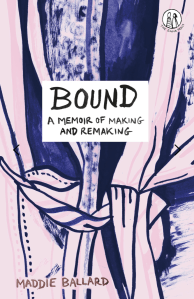 This collection of micro-essays considers sewing and much more. Each piece is headed by a pattern name and list of materials that Ballard made into an article of clothing for herself or for someone else. Among the minutiae of the craft, she slips in so many threads: about her mixed Chinese heritage and her relationship with her grandmother, about the environmental and financial benefits of making one’s own clothing, and especially about the upheaval of her twenties: the pandemic, a break-up, leaving a job to go back to school, finding roommates. I can barely mend a sock and I’m clueless when it comes to fashion, yet I can appreciate how sewing blends comfort and creativity. Ballard presents it as a meditative act of self-care:
I lower the needle and the world recedes. The process of sewing a garment – printing the pattern, tracing and cutting, sewing the first and the second and the fiftieth seam – is a lesson in taking your time.
Like gardening, sewing is an investment in the future – in what sort of person your future self will be, and how she will feel about her body, and what she will want to wear.
Similar to two other very short works of nonfiction I’ve read from The Emma Press, How Kyoto Breaks Your Heart by Florentyna Leow and Tiny Moons by Nina Mingya Powles (Ballard, too, is from New Zealand), this is a graceful, enriching book about a young woman making her way in the world and figuring out what is essential to her sense of home and identity. I commend it whether or not you have any particular interest in handicraft.
With thanks to The Emma Press for the free copy for review.
Encounters with Inscriptions: A Memoir Exploring Books Gifted by Parents by Kristin Czarnecki
When Kristin Czarnecki got in touch to offer a copy of her bibliomemoir about revisiting the books her late parents gifted her, I was instantly intrigued but couldn’t have known in advance how perfect it would be for me. Niche it might seem, but it combines several of my reading interests: bereavement, books about books, relationships with parents (especially a mother) and literary travels.
 The book starts, aptly, with childhood. A volume of Shel Silverstein poetry and A Child’s Christmas in Wales serve as perfect vehicles for the memories of how her parents passed on their love of literature and created family holiday rituals. Thereafter, the chapters are not strictly chronological but thematic. A work of women’s history opens up her mother’s involvement in the feminist movement; reading a Thomas Merton book reveals why his thinking was so important to her Catholic father. The interplay of literary criticism, cultural commentary and personal significance is especially effective in pieces on Alice Munro and Flannery O’Connor. A Virginia Woolf biography points to Czarnecki’s academic specialism and a cookbook to how food embodies memories.
It seems fitting to be reviewing this on the second anniversary of my mother’s death. The afterword, which follows on from the philosophical encouragement of a chapter on the Rubaiyat of Omar Khayyam, exhorts readers to cherish loved ones while we can – and be grateful for the tokens they leave behind. I had told Kristin about books my parents inscribed to me, as well as the journals I inherited from my mother. But I didn’t know there would be other specific connections between us, too, such as being childfree and hopeless in the kitchen. (Also, I have family in South Bend, Indiana, where she’s from, and our mothers were born in the first week of August.) All that to say, I felt that I found a kindred spirit in this lovely book, which is one of the nicest things that happens through reading.
With thanks to the author for the advanced e-copy for review.
The Starling: A Biography by Stephen Moss
 Moss has written a whole series of accessible bird species monographs suitable for nature buffs; this is the sixth. (I’ve not read the others, just Moss’s Wild Hares and Hummingbirds and Skylarks with Rosie, but we do have a copy of The Robin on the shelf that I’ve earmarked for Christmas.) The choice of the term ‘biography’ indicates the meeting of a comprehensive aim and intimate detail. The book conveys much anatomical and historical information about the starling’s relatives, habits, and worldwide spread, yet is only 187 pages – and plenty of those feature relevant paintings and photographs, too. It’s well known that starlings were introduced to Anglophone countries as part of misguided “acclimatisation” projects that we would now dub cultural imperialism. In the USA and elsewhere, the bird is still considered common. But with the industrialisation of agriculture, starlings are actually having less breeding success and thus are in decline.
Overall, the style of the book is dry and slightly workmanlike. However, when he’s recounting murmurations he’s seen in Somerset or read about, Moss’s enthusiasm lifts it into something special. Autumn dusk is a great time to start watching out for starling gatherings. I love observing and listening to the starlings just in the treetops and aerials of my neighbourhood, but we do also have a small local murmuration that I try to catch at least a few times in the season. Here’s how he describes their magic: “At a time when, both as a society and as individuals, we are less and less in touch with the natural world, attending this fleeting but memorable event is a way we can reconnect, regain our primal sense of wonder – and still be home in time for tea.”
With thanks to Square Peg, an imprint of Vintage (Penguin Random House) for the free copy for review.
The Alcestis Machine by Carolyn Oliver
 Carolyn is a blogger friend whose first collection, Inside the Storm I Want to Touch the Tremble, was on my Best Books of 2022 list. Her second is again characterized by precise vocabulary and crystalline imagery, often related to etymology, book history, or pigments (“You and I are marginalia shadowed / by a careless hand, we are gall-soaked vellum / invisible appetites consume.”). Astronomy and technology are a counterpoint, juxtaposing the ancient and the cutting-edge. I loved the language of sea creatures in “Strange Attractor” and the oblique approach to the passage of time (“Three popes ago, you and I”). The repeated three-word opening “In another life” gives a sense of many worlds, e.g., “In another life I’m a florist sometimes accused of inappropriate gravity.” Prose poems relay childhood memories. Love poems are tantalizing and utterly original: “If I promise not to describe the moon, will you / come with me a ways further into the night? / We’ll wash the forest floor / of ash and find a fairy ring / half-eaten, muted crescent bereft of power.” And alliteration never fails to win me over: “Tonight, snow tumbles over sophomores and starlings” and “the pillars in the water make a pillory not a pier”. Some of the collection remained cryptic for me; there was a bit less that grabbed me emotionally. But it’s still stirring work. And how flabbergasted was I to spot my name in the Acknowledgments? (Read via Edelweiss)
The Holy & Broken Bliss: Poems in Plague Time by Alicia Ostriker
“The words of an old woman shuffling the cards of her own decline the decline
of her husband the decline of her nation her plague-smitten world”
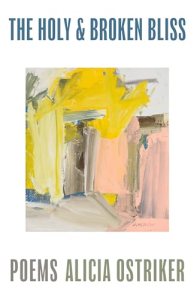 Out of pandemic isolation come new rituals: watching days and seasons pass, fighting for her own health but mostly her husband’s, and lamenting public displays of hate. Lines feel stark with honesty; some poems are just haiku length. Elsewhere, repetition and alliteration create a wistful tone. Jewish scripture and mysticism are the source of much of the language and outlook. Music and nature, too, promise the transcendent. Simple and remarkable. Here’s a stanza about late autumn:
It is almost winter and still
as I walk to the clinic the gingkos
sing their seraphic air
as if there is no tomorrow
With thanks to Alice James Books for the advanced e-copy for review.
Forces of Nature by Edward Steed
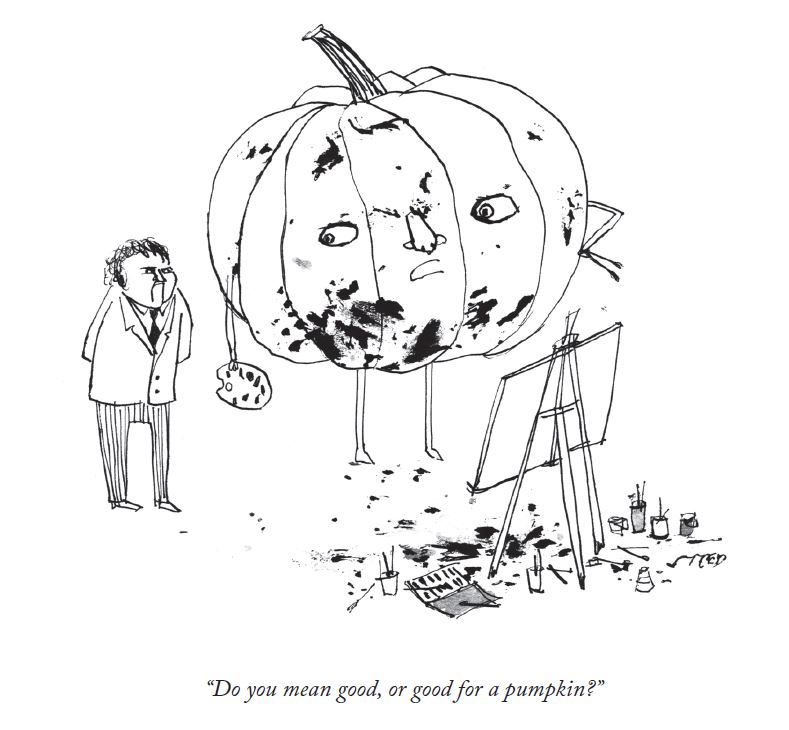
 Steed is a longtime New Yorker cartoonist who produces single panels. This means there is no story progression (as in a graphic novel), just what you see on one page. Some of the comics are wordless; many scenes are visual gags which, to be entirely honest, I didn’t always grasp. Steed’s recurring characters are unhappy couples, exiles on desert islands, and dumb cops or criminals. His style is deliberately simplistic: the people not much more advanced than stick figures and the animals especially sketchy. There are multiple attempted prison breaks and satirical depictions of God and the Garden of Eden. Many of the setups are contrived, and the tone can be absurd or prickly, even shading into gruesome. These comics weren’t altogether my cup of tea, though I did get a laugh out of a few of them (a seasonal example is below). Endorsed if you fancy a cross between Edward Gorey and The Book of Bunny Suicides.
With thanks to Drawn & Quarterly for the e-copy for review.
Reviewed for BookBrowse:
 Shred Sisters by Betsy Lerner – “No one will love you more or hurt you more than a sister” is a wry aphorism that appears late in Lerner’s debut novel. Over the course of two decades, there is much heartache for the Shred family, but also moments of joy. Ultimately, a sisterly bond endures despite secrets, betrayals, and intermittent estrangement. Through her psychologically astute portrait of Olivia (“Ollie”) and Amy Shred, Lerner captures the lasting effects that mental illness can have on not just an individual, but an entire family.
Reviewed for Shelf Awareness:
 The Worst Journey in the World, Volume 1: Making Our Easting Down: The Graphic Novel by Sarah Airriess – The thrilling opening to a cinematically vivid adaptation of Apsley Cherry-Garrard’s 1922 memoir. He was an assistant zoologist on Robert Falcon Scott’s 1910-13 Terra Nova expedition to the South Pole. Even before the ship entered the pack ice, the journey was perilous. The book resembles a full-color storyboard for a Disney-style maritime adventure film. There is jolly camaraderie as the men sing sea shanties to boost morale. The second volume can’t arrive soon enough.
Review: The Tidal Year by Freya Bromley (2023)
The Nero Book Awards category winners will be announced on Tuesday. I haven’t had a chance to read as many of the nominees as I would like, but I’m catching up on one that I’ve wanted to read ever since I first heard about it early last year. Even though Stephen Collins sums up about my feelings about coldwater swimming well in this cartoon –

– I was drawn to The Tidal Year for several reasons. First off, I’ll read just about any bereavement memoir going. Second, I love following along on a year challenge. Third, even though I haven’t been much of a swimmer since childhood, I appreciate how outdoor swimming combines observation of nature and the seasons with achievable bodily exploits; you don’t have to be an exercise nut or undergo lots of training to get into it. There was a spate of swimming memoirs back in 2017, including Jessica J. Lee’s superb Turning and Ruth Fitzmaurice’s I Found My Tribe. Headlines often tout the physical benefits of coldwater swimming, but it’s the emotional benefits that Bromley emphasizes in this record of facing grief and opening up to love.
Bromley was the middle of five children but her boisterous family’s dynamic went out of kilter when her younger brother Tom was diagnosed with bone cancer and died at age 19. Suddenly she could hardly talk to her mother, let alone to Tom’s twin, Emma. Isolated in London, where she worked in music journalism, she roped her friend Miri into wild swimming excursions and threw herself into Internet dating. She and Miri concocted a plan to swim in all of Britain’s mainland tidal pools (saltwater enclosed by manmade elements) in a year; she started seeing Jem, a free-spirited documentary filmmaker – but also Flip, a Black actor she met when he came to buy her neighbour’s antique chairs; he nicknamed her “Poet” and encouraged her in her writing.
Each short chapter is identified by a place name and its geographical coordinates. Most often, these correspond to a swimming destination, but they can also be clues to interludes or flashbacks, whether set in London (“Jem’s Skylight”), on the last night she spent by Tom’s hospital bedside, or at the Brecon Beacons home her parents moved to after Tom’s death. A lot of the tidal pools are in Devon and Cornwall, but she and Miri also make expeditions to Scotland and Wales and elsewhere along the south coast.

At a certain point Bromley realizes that they aren’t going to hit every single pool before the year is over, but the goal starts to matter less than the slow internal transformation that’s taking place. “Swimming had been a way for me to rediscover my body as a place of power, play and movement.” We see the gradual shifts: she’s more able to talk about Tom, she commits to her writing through a Cambridge course, she’s a supportive big sister to Emma, and she breaks it off with one of the boyfriends.
I had to suppress my judgemental side here. I know monogamy is not a universal value, especially among a younger generation, and Bromley does acknowledge that she was behaving badly in stringing two partners along – grief leads people to make decisions they might not normally. The other niggle for this pedantic proofreader was the non-standard way of introducing dialogue. Bromley chose to put all dialogue in italics – fine with me – but doesn’t consistently bracket phrases with “I said” or “she asked.” Usually it’s clear enough, but sometimes the interruption of speech with gesture is downright maddening, e.g., “There’s this, I blew on the tea, well inside me” and “It’s magic isn’t it, Miri rolled down her window”.
But I was (mostly) able to excuse this stylistic quirk because Bromley writes so acutely about herself and others, giving a lucid sense of the passage of time and the particularities of place. She’s observant and funny, too. “I find what people often mean when they say ‘resilient’ is that they want people to be good at suffering in silence.” Youthful, playful, sexy: those are unusual characteristics for a book on the fringes of nature writing. The voice was distinctive enough that, though I’ve rarely met a 400+-page book that couldn’t stand to be closer to 300, I thoroughly enjoyed my time spent with it.
The Nero Awards judges chose an all-female inaugural shortlist made up of four works of opinionated nonfiction. I’ve read the first 42 pages of Undercurrent, Natasha Carthew’s memoir of growing up in poverty in Cornwall, and will probably leave it there; I didn’t care for the writing in Fern Brady’s Strong Female Character, her memoir of being a young autistic woman (it’s said to be funny but I didn’t get the humour). Hags, Victoria Smith’s book about the societal marginalizing of older women, is the sort of book I’d skim from the library but am unlikely to read in its entirety. I would have been very happy for Bromley to win. 
With thanks to Coronet (Hodder & Stoughton) for the free copy for review.
#NovNov23 Buddy Reads Reviewed: Western Lane & A Room of One’s Own
This year we set two buddy reads for Novellas in November: one contemporary work of fiction and one classic work of short nonfiction. Do let us know if you’ve been reading them and what you think!
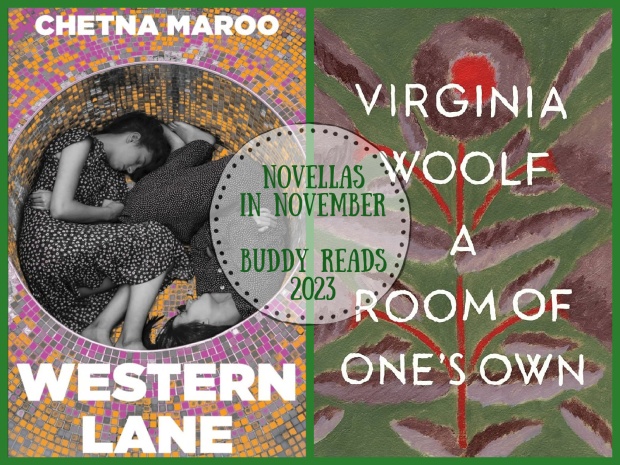 A version of the below review, submitted via their Facebook book club group, won me a pair of tickets to this year’s Booker Prize ceremony!
You may also wish to have a look at the excellent reading guide on the Booker website.
Western Lane by Chetna Maroo (2023)
In the same way that you don’t have to love baseball or video games to enjoy The Art of Fielding or Tomorrow, and Tomorrow, and Tomorrow, it’s easy to warm to Western Lane even if you’ve never played squash. Debut author Chetna Maroo assumes reader unfamiliarity with her first line: “I don’t know if you have ever stood in the middle of a squash court – on the T – and listened to what is going on next door.” As Gopi looks back to the year that she was eleven – the year after she lost her mother – what she remembers is the echo of a ball hitting a wall. That first year of mourning, which was filled with compulsive squash training, reverberates just as strongly in her memory.
To make it through, Pa tells his three daughters, “You have to address yourself to something.” That something will be their squash hobby, he decides, but ramped up to the level of an obsession. Having lost my own mother just over a year ago, I could recognize in these characters the strategies people adopt to deflect grief. Keep busy. Go numb. Ignore your feelings. Get angry for no particular reason. Even within this small family, there’s a range of responses. Pa lets his electrician business slip; fifteen-year-old Mona develops a mild shopping addiction; thirteen-year-old Khush believes she still sees their mother.
Preparing for an upcoming squash tournament gives Gopi a goal to work towards, and a crush on thirteen-year-old Ged brightens long practice days. Maroo emphasizes the solitude and concentration required, alternating with the fleeting elation of performance. Squash players hover near the central T, from which most shots can be reached. Maroo, too, sticks close to the heart. Like all the best novellas, hers maintains a laser focus on character and situation. A child point-of-view can sound precocious or condescending. That is by no means the case here. Gopi’s perspective is convincing for her age at the time, yet hindsight is the prism that reveals the spectrum of intense emotions she experienced: sadness, estrangement from her immediate family, and rejection on the one hand; first love and anticipation on the other.

This offbeat, delicate coming-of-age story eschews the literary fireworks of other Booker Prize nominees. In place of stylistic flair is the sense that each word and detail has been carefully placed. Less is more. Rather than the dark horse in the race, I’d call it the reader favourite: accessible but with hidden depths. There are cinematic scenes where little happens outwardly yet what is unspoken between the characters – the gazes and tension – is freighted with meaning. (I could see this becoming a successful indie film.)
she and my uncle stood outside under the balcony of my bedroom until much later, and I knelt above them with my blanket around me. The three of us looked out at the black shapes of the rose arbour, the trees, the railway track. Stars appeared and disappeared. My knees began to ache. Below me, Aunt Ranjan wanted badly to ask Uncle Pavan how things stood now and Uncle Pavan wanted to tell her, but she wasn’t sure how to ask and he wasn’t sure how to begin. Soon, I thought, it would be morning, and night, and morning again, and it wouldn’t matter, except to someone watching from so far off that they couldn’t know yet.
The novella is illuminating on what is expected of young Gujarati women in England; on sisterhood and a bereaved family’s dynamic; but especially on what it is like to feel sealed off from life by grief. “I think there’s a glass court inside me,” Gopi says, but over the course of one quietly momentous year, the walls start to crack. (Public library) [161 pages]
A Room of One’s Own by Virginia Woolf (1929)
Here’s the thing about Virginia Woolf. I know she’s one of the world greats. I fully acknowledge that her books are incredibly important in the literary canon. But I find her unreadable. The last time I had any success was when I was in college. Orlando and To the Lighthouse both blew me away half a lifetime ago, but I’ve not been able to reread them or force my way through anything else (and I have tried: Mrs Dalloway, The Voyage Out and The Waves). In the meantime, I’ve read several novels about Woolf and multiple Woolf-adjacent reads (ones by Vita Sackville-West, or referencing the Bloomsbury Group). So I thought a book-length essay based on lectures she gave at Cambridge’s women’s colleges in 1928 would be the perfect point of attack.
Hmm. Still unreadable. Oh well!
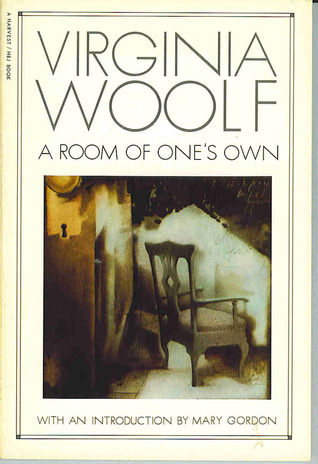 In the end I skimmed A Room of One’s Own for its main ideas – already familiar to me, as was some of the language – but its argumentation, reliant as much on her own made-up examples as on literary history, failed to move me. Woolf alternately imagines herself as Mary Carmichael, a lady novelist trawling an Oxbridge library and the British Museum for her forebears; and as a reader of Carmichael’s disappointingly pedestrian Life’s Adventure. If only Carmichael had had the benefit of time and money, Woolf muses, she might have been good. As it is, it would take her another century to develop her craft. She also posits a sister for Shakespeare and probes the social conditions that made her authorship impossible.
This is important to encounter as an early feminist document, but I would have been okay with reading just the excerpts I’d already come across.
Some favourite lines:
“I thought how unpleasant it is to be locked out; and I thought how it is worse perhaps to be locked in”
“A very queer, composite being thus emerges. Imaginatively she [the woman in literature] is of the highest importance; practically she is completely insignificant. She pervades poetry from cover to cover; she is all but absent from history.”
“Poetry depends upon intellectual freedom. And women have always been poor, not for two hundred years merely, but from the beginning of time. Women have had less intellectual freedom than the sons of Athenian slaves. Women, then, have not had a dog’s chance of writing poetry. That is why I have laid so much stress on money and a room of one’s own.”
(Secondhand purchase many years ago) [114 pages]

The Best Books from the First Half of 2023
Yes, it’s that time of year already! It remains to be seen how many of these will make it onto my overall best-of year list, but for now, these are my 20 highlights. Plus, I sneakily preview another great novel that won’t release until September. (For now I’m highlighting 2023 releases, whereas at the end of the year I divide my best-of lists into current year and backlist. I’ve read 86 current-year releases so far and am working on another 20, so I’m essentially designating a top 20% here.) I give review excerpts and link to the full text from this site or elsewhere. Pictured below are the books I read in print; all the others were e-copies.

Fiction
 Shoot the Horses First by Leah Angstman: In 16 sumptuous historical stories, outsiders and pioneers face disability and prejudice with poise. The flash entries crystallize moments of realization, often about health. Longer pieces shine as their out-of-the-ordinary romances have space to develop. In the novella Casting Grand Titans, a botany professor in 1850s Iowa learns her salary is 6% of a male colleague’s. She strives for intellectual freedom, reporting a new-to-science species of moss, while working towards liberation for runaway slaves.
 The House Is on Fire by Rachel Beanland: Moving at a propulsive pace, Beanland’s powerful second novel rotates through the perspectives of these main characters – two men and two women; two white people and two enslaved Black people – caught up in the Richmond Theater Fire of 1811 (one of the deadliest events in early U.S. history) and its aftermath. Painstakingly researched and full of historical detail and full-blooded characters, it dramatizes the range of responses to tragedy and how people rebuild their lives.
 The New Life by Tom Crewe: Two 1890s English sex researchers (based on John Addington Symonds and Havelock Ellis) write a book called Sexual Inversion drawing on ancient Greek history and containing case studies of homosexual behaviour. Oscar Wilde’s trial puts everyone on edge; not long afterwards, their own book becomes the subject of an obscenity trial, and each man has to decide what he’s willing to give up in devotion to his principles. This is deeply, frankly erotic stuff, and, on the sentence level, just exquisite writing.
 Daughters of Nantucket by Julie Gerstenblatt: (Yes, another historical fire novel, and I reviewed both for Shelf Awareness!) This engrossing debut explores the options for women in the mid-19th century. Metaphorical conflagrations blaze in the background in the days leading up to the great Nantucket fire of 1846: each of three female protagonists (a whaling captain’s wife, a museum curator, and a pregnant Black entrepreneur) holds a burning secret and longs for a more expansive, authentic life. Tense and sultry; for Sue Monk Kidd fans.
 I Have Some Questions for You by Rebecca Makkai: When an invitation comes from her boarding school alma mater, Granby, to teach a two-week course on podcasting, Bodie indulges her obsession with the 1995 murder of her former roommate. Makkai has taken her cues from the true crime genre and constructed a convincing mesh of evidence and theories. She so carefully crafts her pen portraits, and so intimately involves us in Bodie’s psyche, that it’s impossible not to get invested. This is timely, daring, intelligent, enthralling storytelling.
 Sidle Creek by Jolene McIlwain: In this debut collection of 22 short stories, loosely linked by their location in the Appalachian hills in western Pennsylvania and a couple of recurring minor characters, McIlwain softens the harsh realities of addiction, poverty and violence with the tender bruises of infertility and lost love. Grief is a resonant theme in many of the stories, with pregnancy or infant loss a recurring element. At times harrowing, always clear-eyed, these stories are true to life and compassionate about human foibles and animal pain.
 Hello Beautiful by Ann Napolitano: Oprah’s 100th book club pick. It’s a family story spanning three decades and focusing on the Padavanos, a working-class Italian American Chicago clan with four daughters. Julia meets melancholy basketball player William Waters while at Northwestern in the late 1970s. There is such warmth and intensity to the telling, and brave reckoning with bereavement, mental illness, prejudice and trauma. I love sister stories in general, and the subtle echoes of Leaves of Grass and Little Women add heft.
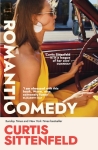 Romantic Comedy by Curtis Sittenfeld: Through her work as a writer for a sketch comedy show modelled on Saturday Night Live, Sally Milz meets Noah Brewster, a pop star with surfer-boy good looks. Plain Jane getting the hot guy – that never happens, right? In fact, Sally has a theory about this very dilemma… As always, Sittenfeld’s inhabiting of a first-person narrator is flawless, and Sally’s backstory and Covid-lockdown existence endeared her to me. Could this be called predictable? Well, what does one want from a romcom?
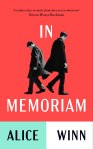 In Memoriam by Alice Winn: Heartstopper on the Western Front; swoon! Will Sidney Ellwood and Henry Gaunt both acknowledge that this is love and not just sex, as it is for so many teenage boys at their English boarding school? And will one or both survive the trenches of the First World War? Winn depicts the full horror of war, but in between there is banter, friendship and poetry. Some moments are downright jolly. This debut is obsessively researched, but Winn has a light touch with it. Engaging, thrilling, and, yes, romantic.
A bonus:
 The Vaster Wilds by Lauren Groff (Riverhead/Hutchinson Heinemann, 12 September): Groff’s fifth novel combines visceral detail and magisterial sweep as it chronicles a runaway Jamestown servant’s struggle to endure the winter of 1610. Flashbacks to traumatic events seep into her mind as she copes with the harsh reality of life in the wilderness. The style is archaic and postmodern all at once. Evocative and affecting – and as brutal as anything Cormac McCarthy wrote. A potent, timely fable as much as a historical novel. (Review forthcoming for Shelf Awareness.)
Nonfiction
 All My Wild Mothers by Victoria Bennett: A lovely memoir about grief and gardening, caring for an ill child and a dying parent. The book is composed of dozens of brief autobiographical, present-tense essays, each titled after a wildflower with traditional healing properties. The format realistically presents bereavement and caring as ongoing, cyclical challenges rather than one-time events. Sitting somewhere between creative nonfiction and nature essays, it’s a beautiful read for any fan of women’s life writing.
 Monsters by Claire Dederer: The question posed by this hybrid work of memoir and cultural criticism is “Are we still allowed to enjoy the art made by horrible people?” It begins, in the wake of #MeToo, by reassessing the work of film directors Roman Polanski and Woody Allen. The book is as compassionate as it is incisive. While there is plenty of outrage, there is also much nuance. Dederer’s prose is forthright and droll; lucid even when tackling thorny issues. Erudite, empathetic and engaging from start to finish.
 Womb by Leah Hazard: A wide-ranging and accessible study of the uterus, this casts a feminist eye over history and future alike. Blending medical knowledge and cultural commentary, it cannot fail to have both personal and political significance for readers of any gender. The thematic structure of the chapters also functions as a roughly chronological tour of how life with a uterus might proceed: menstruation, conception, pregnancy, labour, caesarean section, ongoing health issues, menopause. Inclusive and respectful of diversity.
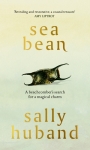 Sea Bean by Sally Huband: Stories of motherhood, the quest to find effective treatment in a patriarchal medical system, volunteer citizen science projects, and studying Shetland’s history and customs mingle in a fascinating way. Huband travels around the archipelago and further afield, finding vibrant beachcombing cultures. In many ways, this is about coming to terms with loss, and the author presents the facts about climate crisis with sombre determination. She writes with such poetic tenderness in this radiant debut memoir.
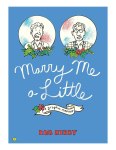 Marry Me a Little by Robert Kirby: Hopping around in time, this graphic memoir tells the story of how the author and his partner John decided to get married in 2013. The blue and red color scheme is effective at evoking a polarized America and the ebb and flow of emotions, with blue for calm, happy scenes and concentrated red for confusion or anger. This is political, for sure, but it’s also personal, and it balances those two aims well by tracing the history of gay marriage in the USA and memorializing his own relationship.
 All of Us Together in the End by Matthew Vollmer: In 2019, Vollmer’s mother died of complications of Alzheimer’s and Parkinson’s. Months later, his father reported blinking lights in the woods near the family cemetery. Although Vollmer had left the Seventh-Day Adventist Church in college, his religious upbringing influenced his investigation, which overlapped with COVID-19. Grief, mysticism, and acceptance of the unexplained are resonant themes. An unforgettable record of “a collision with the ineffable.”
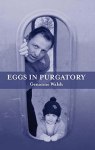 Eggs in Purgatory by Genanne Walsh: This autobiographical essay tells the story of the last few months of her father’s life. Aged 89, he lived downstairs from Walsh and her wife in San Francisco. He was quite the character: idealist, stubborn, outspoken; a former Catholic priest. Although he had no terminal conditions, he was sick of old age and its indignities and ready to exit. The task of a memoir is to fully mine the personal details of a situation but make of it something universal, and that’s just what she does here. Stunning.
Poetry
 More Sky by Joe Carrick-Varty: In this debut collection, the fact of his alcoholic father’s suicide is inescapable. The poet alternates between an intimate “you” address and third-person scenarios, auditioning coping mechanisms. His frame of reference is wide: football, rappers, Buddhist cosmology. The word “suicide” itself is repeated to the point where it becomes just a sibilant collection of syllables. The tone is often bitter, as is to be expected, but there is joy in the deft use of language.
 Lo by Melissa Crowe: This incandescent autobiographical collection delves into the reality of sexual abuse and growing up in rural poverty. Guns are insidious, used for hunting or mass shootings. Trauma lingers. “Maybe home is what gets on you and can’t / be shaken loose.” The collection is so carefully balanced in tone that it never feels bleak. In elegies and epithalamiums (poems celebrating marriage), Crowe honors family ties that bring solace. The collection has emotional range: sensuality, fear, and wonder at natural beauty.
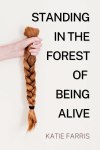 Standing in the Forest of Being Alive by Katie Farris: This debut collection addresses the symptoms and side effects of breast cancer treatment at age 36, but often in oblique or cheeky ways – it can be no mistake that “assistance” appears two lines before a mention of haemorrhoids, for instance, even though it closes an epithalamium distinguished by its gentle sibilance (Farris’s husband is Ukrainian American poet Ilya Kaminsky.) She crafts sensual love poems, and exhibits Japanese influences. (Review forthcoming at The Rumpus.)
 The House of the Interpreter by Lisa Kelly: Kelly is half-Danish and has single-sided deafness, and her second collection engages with questions of split identity. One section ends with the Deaf community’s outrage that the Prime Minister’s Covid briefings were not translated into BSL. Bizarre but delightful is the sequence of alliteration-rich poems about fungi, followed by a miscellany of autobiographical poems full of references to colour, nature and travel.
What are some of the best books you’ve read so far this year?
What 2023 releases should I catch up on right away?
Book Serendipity, Mid-April through Early June
I call it “Book Serendipity” when two or more books that I read at the same time or in quick succession have something in common – the more bizarre, the better. This is a regular feature of mine every few months. Because I usually have 20–30 books on the go at once, I suppose I’m more prone to such incidents. The following are in roughly chronological order.
- Fishing with dynamite takes place in Glowing Still by Sara Wheeler and In Memoriam by Alice Winn.
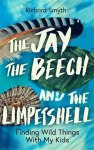
- Egg collecting (illegal!) is observed and/or discussed in Sea Bean by Sally Huband and The Jay, the Beech and the Limpetshell by Richard Smyth.

- Deborah Levy’s Things I Don’t Want to Know is quoted in What I’d Rather Not Think About by Jente Posthuma and Glowing Still by Sara Wheeler. I then bought a secondhand copy of the Levy on my recent trip to the States.
- “Piss-en-lit” and other folk names for dandelions are mentioned in The House of the Interpreter by Lisa Kelly and The Furrows by Namwali Serpell.
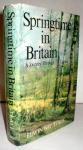
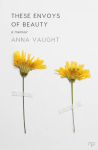
- Buttercups and nettles are mentioned in The House of the Interpreter by Lisa Kelly and Springtime in Britain by Edwin Way Teale (and other members of the Ranunculus family, which includes buttercups, in These Envoys of Beauty by Anna Vaught).

- The speaker’s heart is metaphorically described as green in a poem in Lo by Melissa Crowe and The House of the Interpreter by Lisa Kelly.
- Discussion of how an algorithm can know everything about you in Tomb Sweeping by Alexandra Chang and I’m a Fan by Sheena Patel.
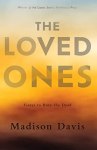
- A brother drowns in The Loved Ones: Essays to Bury the Dead by Madison Davis, What I’d Rather Not Think About by Jente Posthuma, and The Furrows by Namwali Serpell.


A few cases of a book recalling a specific detail from an earlier read:
- This metaphor in The Chosen by Elizabeth Lowry links it to The Marriage Portrait by Maggie O’Farrell, another work of historical fiction I’d read not long before: “He has further misgivings about the scalloped gilt bedside table, which wouldn’t look of place in the palazzo of an Italian poisoner.”
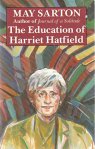
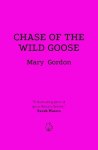
- This reference in The Education of Harriet Hatfield by May Sarton links it back to Chase of the Wild Goose by Mary Louisa Gordon (could it be the specific book she had in mind? I suspect it was out of print in 1989, so it’s more likely it was Elizabeth Mavor’s 1971 biography The Ladies of Llangollen): “Do you have a book about those ladies, the eighteenth-century ones, who lived together in some remote place, but everyone knew them?”
- This metaphor in Things My Mother Never Told Me by Blake Morrison links it to The Chosen by Elizabeth Lowry: “Moochingly revisiting old places, I felt like Thomas Hardy in mourning for his wife.”
- A Black family is hounded out of a majority-white area by harassment in The Education of Harriet Hatfield by May Sarton and Ordinary Notes by Christina Sharpe.
 Wartime escapees from prison camps are helped to freedom, including with the help of a German typist, in My Father’s House by Joseph O’Connor and In Memoriam by Alice Winn.
- A scene of eating a deceased relative’s ashes in 19 Claws and a Black Bird by Agustina Bazterrica and The Loved Ones by Madison Davis.
- A girl lives with her flibbertigibbet mother and stern grandmother in “Wife Days,” one story from How Strange a Season by Megan Mayhew Bergman, and Jane of Lantern Hill by L.M. Montgomery.
- Macramé is mentioned in How Strange a Season by Megan Mayhew Bergman, The Memory of Animals by Claire Fuller, Floppy by Alyssa Graybeal, and Sidle Creek by Jolene McIlwain.
- A fascination with fractals in Floppy by Alyssa Graybeal and one story in Sidle Creek by Jolene McIlwain. They are also mentioned in one essay in These Envoys of Beauty by Anna Vaught.
- I found disappointed mentions of the fact that characters wear blackface in Laura Ingalls Wilder’s Little Town on the Prairie in Monsters by Claire Dederer and, the very next day, Ordinary Notes by Christina Sharpe.


- Moon jellyfish are mentioned in the Blood and Cord anthology edited by Abi Curtis, Floppy by Alyssa Graybeal, and Sea Bean by Sally Huband.
- A Black author is grateful to their mother for preparing them for life in a white world in the memoirs-in-essays I Can’t Date Jesus by Michael Arceneaux and Ordinary Notes by Christina Sharpe.
- The children’s book The Owl Who Was Afraid of the Dark by Jill Tomlinson is mentioned in The Jay, the Beech and the Limpetshell by Richard Smyth and These Envoys of Beauty by Anna Vaught.
- The protagonist’s father brings home a tiger as a pet/object of display in The Marriage Portrait by Maggie O’Farrell and The Memory of Animals by Claire Fuller.

- Bloor Street, Toronto is mentioned in Jane of Lantern Hill by L.M. Montgomery and Ordinary Notes by Christina Sharpe.
- Ralph Waldo Emerson’s thinking about the stars is quoted in Jane of Lantern Hill by L.M. Montgomery and These Envoys of Beauty by Anna Vaught.
- Wondering whether a marine animal would be better off in captivity, where it could live much longer, in The Memory of Animals by Claire Fuller (an octopus) and Sea Bean by Sally Huband (porpoises).
 Martha Gellhorn is mentioned in The Collected Regrets of Clover by Mikki Brammer and Monsters by Claire Dederer.
- Characters named June in “Indigo Run,” the novella-length story in How Strange a Season by Megan Mayhew Bergman, and The Cats We Meet Along the Way by Nadia Mikail.
- “Explicate!” is a catchphrase uttered by a particular character in Girls They Write Songs About by Carlene Bauer and The Lake Shore Limited by Sue Miller.
- It’s mentioned that people used to get dressed up for going on airplanes in Fly Girl by Ann Hood and The Lights by Ben Lerner.
- Green-Wood Cemetery in Brooklyn is a setting in The Lights by Ben Lerner and Grave by Allison C. Meier.
- Last year I read Tomorrow, and Tomorrow, and Tomorrow by Gabrielle Zevin, in which Oregon Trail re-enactors (in a video game) die of dysentery; this is also a live-action plot point in “Pioneers,” one story in Lydia Conklin’s Rainbow Rainbow.
- A bunch (4 or 5) of Italian American sisters in Circling My Mother by Mary Gordon and Hello Beautiful by Ann Napolitano.
What’s the weirdest reading coincidence you’ve had lately?
Recent Writing for BookBrowse, Foreword, Shelf Awareness, Shiny New Books, and the TLS
I’ve compiled excerpts from some reviews I’ve contributed to other websites and publications this year. I link to the full text where available. (When writing a paid review, I seek to be balanced but positive. Ratings reflect my personal response.)
BookBrowse
 The Last Animal by Ramona Ausubel: In Ausubel’s offbeat third novel, a widowed scientist and her two daughters embark on a rogue plan to make history by resurrecting the woolly mammoth. There is a quirky combination of cosmic and domestic concerns here. A winsome sister duo is at the heart of the unusual and timely story, with priority given to the points of view of teenagers Eve and Vera, whose banter is a highlight. Ausubel has wisely chosen not to dwell on the scientific details of de-extinction, yet that means that this becomes more like speculative fiction or a fairy tale. Ironically, the fabulist-leaning novel is best when most realist, documenting struggles with bereavement, sexism and parenting teens.
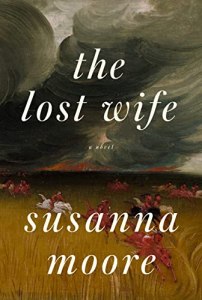 The Lost Wife by Susanna Moore: Moore’s hard-hitting novella is based in part on the memoir Six Weeks in the Sioux Tepees: A Narrative of Indian Captivity. In Moore’s version, Sarah, 25, leaves her baby behind when she flees an abusive husband, and once in Minnesota Territory marries John Brinton, who becomes a doctor on a Sioux reservation. By 1862, Sarah is friendly with the Native women. Although the Civil War is unfolding, the greater threat here is of revolt by the starving Indigenous residents. There is much of anthropological and historical interest, but Sarah’s flat storytelling, which may represent a pastiche of period style, means threatening or climactic scenes lose some of their potential gravity.
Foreword
 My Mother Says by Stine Pilgaard (trans. from the Danish by Hunter Simpson): After breaking up with her zookeeper girlfriend over their age gap and their conflicting takes on motherhood, the heroine moves back in with her father, a pastor who’s obsessed with Pink Floyd, and her stepmother. Her mother visits often, nagging her to finish her thesis. The line between her conversations and internal thoughts is thin. From her mansplaining doctor, she learns that the brain’s hippocampus is named for its seahorse shape. This inspires “Monologues of a Seahorse,” interludes of stream-of-consciousness association. Experimental and whimsical, this delivers deadpan narration of everyday woes.
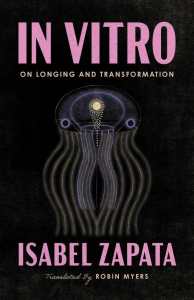 In Vitro: On Longing and Transformation by Isabel Zapata (trans. from the Spanish by Robin Myers): A Mexican poet probes the enduring mysteries of pregnancy and birth in a memoir in fragments that travels from fertility treatment through to the early weeks of pandemic-time motherhood. The clinical language of a gynecological history—late menstruation, polycystic ovary syndrome, eighteen years on the pill, and infertility—and the embryo transfer process contrasts with Zapata’s mystical thinking. The microessays integrate family stories, history, and artistic explorations. This resolute account of a personal metamorphosis alchemizes tender experiences into enchanting vignettes.
Shelf Awareness
Fiction
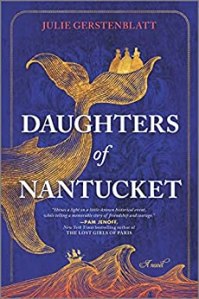 Daughters of Nantucket by Julie Gerstenblatt: This engrossing debut novel explores the options for women in the mid-19th century while bringing a historical tragedy to life. Metaphorical conflagrations blaze in the background in the days leading up to the great Nantucket fire of 1846: each of three female protagonists (a whaling captain’s wife, a museum curator, and a pregnant Black entrepreneur) holds a burning secret and longs for a more expansive, authentic life. The action spans two tense weeks, one week before the fire through eight days after. The women’s lives collide in two climactic scenes. Gerstenblatt’s eye for detail results in sultry historical fiction for Sue Monk Kidd’s readers.
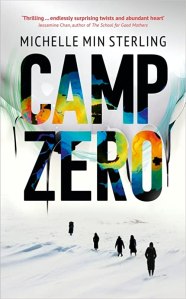 Camp Zero by Michelle Min Sterling: Sterling’s brilliantly unsettling debut novel is set in mid-21st-century, post-oil North America. Prioritizing perspectives from two all-female communities, it contrasts the heights of opulence and technology with the basic instinct for survival. How the strands connect is a mystery sustained through much of the book. Characters go by multiple names and harbor ulterior motives; scenes echo each other as disparate subplots meet in unexpected ways. The background is all too plausible. Sterling also takes to its logical extreme the state of being constantly online. Compelling dystopian cli-fi with three-dimensional characters—perfect for fans of Station Eleven and To Paradise.
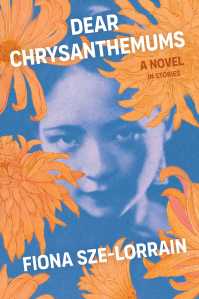 Dear Chrysanthemums by Fiona Sze-Lorrain: In this elegant collection of 11 linked short stories by a poet and translator, China’s mid-20th-century political upheaval casts a long shadow. Music and food, not to mention love, bring meaning to those displaced in the aftermath of dissent. The stories—set in China, Singapore, Paris, and New York—span seven decades but always take place in a year ending in a six, a sacred number in Chinese divination. A highlight is “News from Saigon,” in which a prostitute meets Marguerite Duras in a Paris café. The connections are subtle, with the final story pulling together many strands. Ideal for readers of Madeleine Thien’s Do Not Say We Have Nothing.
Nonfiction
 Stranded by Maddalena Bearzi: Bearzi developed a deep love for marine fauna during childhood summers in Sardinia and cofounded the Ocean Conservation Society in the 1990s. Temporarily confined to land by Covid-19 lockdowns, she adopts a different tactic for exploring animal behavior: “an urban safari in my backyard and neighborhood.” These nature essays exemplify evenhandedness, curiosity, and close observation. From wasps to night-blooming flowers, her interest is wide-ranging. Gardening is a relaxing pastime and a connection to her mother while they are separated. As a behavioral ecologist, she views even her dog as a subject of study. A passionate primer to appreciating everyday nature.
Poetry
 Lo by Melissa Crowe: This incandescent autobiographical collection travels from girlhood to marriage and motherhood in post-pandemic USA. Crowe delves into sexual abuse and growing up in rural poverty. Yet the collection is so carefully balanced in tone that it never feels bleak. The emotional range is enhanced by alliteration and botanical imagery.
 Dislocations by Karen Enns: The fourth collection by Canadian poet Enns skillfully evokes a rural upbringing and revels in the beauty of nature and music. One of its aphorisms could encapsulate the entire collection: “The ratio of love to grief / we understood as music.” Updating the pastoral tradition, the bittersweet verse also takes solace in the past.
Shiny New Books
A Fortunate Woman by Polly Morland & A Fortunate Man by John Berger: The similarities go much further than the title and subject matter: these two biographical works, both illustrated with black-and-white photographs, are set in the same English valley and the female subject of Morland’s is the next-but-one successor of the doctor who stars in Berger’s.
 Berger (1926–2017), an art critic and Booker Prize-winning novelist, spent six weeks shadowing the doctor, to whom he gives the pseudonym John Sassall, with Swiss documentary photographer Jean Mohr, his frequent collaborator. Sassall’s dedication was legendary: he attended every birth in this community, and nearly every death. Sassall’s middle-class origins set him apart from his patients. There’s something condescending about how Berger depicts the locals as simple peasants. Mohr’s photos include soft-focus close-ups on faces exhibiting a sequence of emotions, a technique that feels outdated in the age of video. Along with recording the day-to-day details of medical complaints and interventions, Berger waxes philosophical on topics such as infirmity and vocation. A Fortunate Man is a curious book, part intellectual enquiry and part hagiography.
 With its layers of local history and its braided biographical strands, A Fortunate Woman takes up many of the same heavy questions but feels more subtle and timely. It also soon delivers a jolting surprise: the doctor Berger called John Sassall was likely bipolar and, soon after the death of his beloved wife Betty, committed suicide in 1982. His story still haunts this community, where many of the older patients remember going to him for treatment. Like Berger, Morland keenly follows a range of cases. As the book progresses, we see this beautiful valley cycle through the seasons, with certain of Richard Baker’s landscape shots deliberately recreating Mohr’s scene setting. The timing of Morland’s book means that it morphs from a portrait of the quotidian for a doctor and a community to, two-thirds through, an incidental record of the challenges of medical practice during COVID-19.
 The Memory of Animals by Claire Fuller: Neffy has nothing to lose when she enrolls in a controversial vaccine trial in a familiar mid-pandemic landscape. The novel is presented as her journal. The bulk takes place in two weeks she spends on a locked unit with four fellow test subjects. In the meantime, she is introduced to an experimental technology for reliving memories. The characterisation of the four other cast members is somewhat thin, and the elements feel randomly assembled. The world-building and tech are unlikely to stand up to science fiction fans’ scrutiny, but this has just the right dose of the speculative for literary fiction readers. It also happens to fit into a recent vogue for octopus novels.
Times Literary Supplement
A late-twenties journalist sets out to survey the situation on the ground for ten British species being squeezed out by anthropogenic climate change: The mission is very similar, and both authors embody passionate dedication to conservation, but the difference in tone of these travel narratives makes them likely to appeal to separate audiences…
In Search of One Last Song by Patrick Galbraith & Forget Me Not by Sophie Pavelle:
 Galbraith’s is an elegiac tour through imperilled countryside and urban edgelands. Each chapter resembles an in-depth magazine article: a carefully crafted profile of a beloved bird species, with a focus on the specific threats it faces. Galbraith recognises the nuances of land use. However, shooting plays an outsized role. (Curious for his bio not to disclose that he is editor of the Shooting Times.) The title’s reference is to literal birdsong, but the book also celebrates birds’ cultural importance through their place in Britain’s folk music and poetry. He is clearly enamoured of countryside ways, but too often slips into laddishness, with no opportunity missed to mention him or another man having a “piss” outside. Readers could also be forgiven for concluding that “Ilka” (no surname, affiliation or job title), who briefs him on her research into kittiwake populations in Orkney, is the only female working in nature conservation in the entire country; with few exceptions, women only have bit parts: the farm wife making the tea, the receptionist on the phone line, and so on.
 Pavelle’s book is a tonic in more ways than one. Employed by Beaver Trust, she is enthusiastic and self-deprecating. Her nature quest has a broader scope, including insects like the marsh fritillary and marine species such as seagrass and the Atlantic salmon. Travelling between lockdowns in 2020–1, Pavelle took low-carbon transport wherever possible and bolsters her trip accounts with context, much of it gleaned from Zoom calls and e-mail correspondence with experts from museums and universities. Refreshingly, around half of these interviewees are women, and the animal subjects are never the obvious choices. Instead, she seeks out “underdog” species. The explanations are at a suitable level for laymen, true to her job as a science communicator. The snappy, casual prose (“the future of the bilberry bumblebee and its Aperol arse can be bright, but only if we get off our own”) could even endear her to teenage readers. As image goes, Pavelle’s cheerful naïveté holds more charm than Galbraith’s hardboiled masculinity.
 Taking Flight by Lev Parikian: Parikian’s accessible account of the animal kingdom’s development of flight exhibits a layman’s enthusiasm for an everyday wonder. He explicates the range of flying strategies and the structural adaptations that made them possible. The archaeopteryx section, chronicling the transition between dinosaurs and birds, is a highlight. Though the most science-heavy of the author’s six works, this, perhaps ironically, has fewer footnotes. His usual wit is on display: he describes the feral pigeon as “the Volkswagen Golf of birds” and penguins as “piebald blubber tubes”. This makes it a pleasure to tag along on a journey through evolutionary time, one sure to engage even history- and science-phobes.
Do any of these catch your eye?
10 Days in the USA and What I Read (Plus a Book Haul)
On October 29th, I went to an evening drinks party at a neighbour’s house around the corner. A friend asked me about whether the UK or the USA is “home” and I replied that the States feels less and less like home every time I go, that the culture and politics are ever more foreign to me and the UK’s more progressive society is where I belong. I even made an offhand comment to the effect of: once my mother passed, I didn’t think I’d fly back there often, if at all. I was thinking about 5–10 years into the future; instead, a few hours after I got home from the party, we were awoken by the middle-of-the-night phone call saying my mother had suffered a nonrecoverable brain bleed. The next day she was gone.
I haven’t reflected a lot on the irony of that timing, probably because it feels like too much, but it turns out I was completely wrong: in fact, I’m now returning to the States more often. With our mom gone and our dad not really in our lives, my sister and I have gotten closer. Since October I’ve flown back twice and she’s visited here once. There are 7.5 years between us and we’ve always been at different stages of life, with separate preoccupations and priorities; I was also lazy and let my mom be the go-between, passing family news back and forth. Now there’s a sense that we are all we have, and we have to stick together.


So it was doubly important for me to be there for my sister’s graduation from nursing school last week. If we follow each other on Facebook or Instagram, you will have already seen that she finished at the top of her cohort and was one of just two students recognized for academic excellence out of the college’s over 200 graduates – and all of this while raising four children and coping with the disruption of Mom’s death seven months ago. There were many times when she thought she would have to pause or give up her studies, but she persisted and will start work as a hospice nurse soon. We’re all as proud as could be, on our mom’s behalf, too.
The trip was a mixture of celebratory moments and sad duties. We started the process of going through our mom’s belongings and culling what we can, but the files, photos and mementoes are the real challenge and had to wait for another time. There were dozens of books I’d given her for birthdays and holidays, mostly by her favourite gentle writers – Gerald Durrell, Jan Karon, Gervase Phinn – invariably annotated with her name, the date and occasion. I looked back through them and then let them go.


Between my two suitcases I managed to bring back the rest of her first box of journals (there are 150 of them in total, spanning 1989 to 2022), and I’m halfway through #4 at the moment. We moved out of my first home when I was nine, and I don’t have a lot of vivid memories of those early years. But as I read her record of everyday life it’s like I’m right back in those rooms. I get new glimpses of myself, my dad, my sister, but especially of her – not as my mother, but as a whole person. As a child I never realized she was depressed: distressed about her job situation, worried over conflicts with her siblings and my sister, coping with ill health (she was later diagnosed with fibromyalgia) and resisting ageing. For as strong as her Christian faith was, she was really struggling in ways I couldn’t appreciate then.
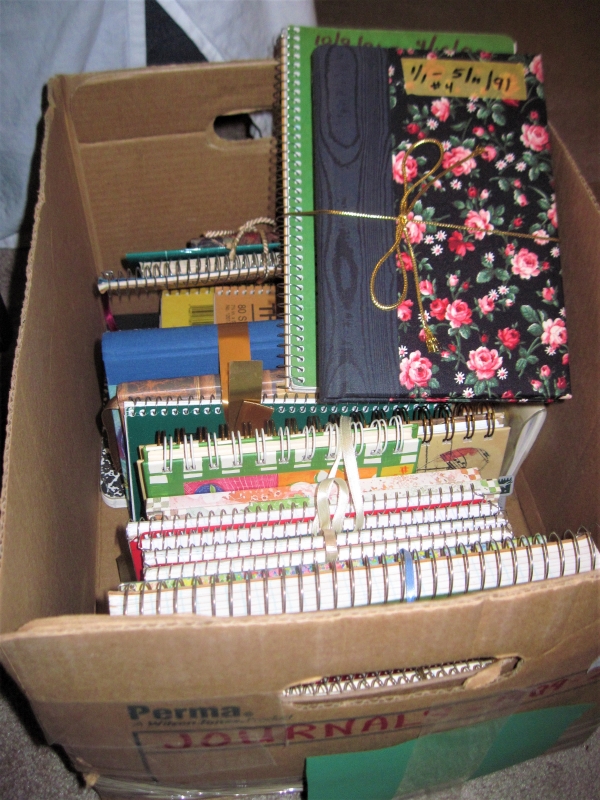
I hope that later journals will introduce hindsight, now that she’s not around to give a more circumspect view. In any case, they’re an incredible legacy, a chance for me to relive much of my life that I otherwise would only remember in fragments through photographs, and perhaps have a preview of what I can expect from the course of our shared kidney disease.
What I Read
 The Housekeepers by Alex Hay – A historical heist novel with shades of Downton Abbey, this comes out in July. Reviewed for Shelf Awareness.

Cowboys Are My Weakness by Pam Houston – Terrific: stark, sexy stories about women who live out West and love cowboys and hunters (as well as dogs and horses). Ten of the stories are in the first person, voiced by women in their twenties and thirties who are looking for romance and adventure and anxiously pondering motherhood (“by the time you get to be thirty, freedom has circled back on itself to mean something totally different from what it did at twenty-one”). The remaining two are in the second person, which I always enjoy. The occasional Montana setting reminded me of stories I’ve read by Maile Meloy and Maggie Shipstead, while the relationship studies made me think of Amy Bloom’s work.

The Harpy by Megan Hunter – Read for Literary Wives club. Review coming up on Monday.

The Lake Shore Limited by Sue Miller – A solid set of narratives alternating between the POVs of four characters whose lives converge around a play inspired by the playwright’s loss of her boyfriend on one of the hijacked planes on 9/11. Her mixed feelings about him towards the end of his life and about being shackled to his legacy as his ‘widow’ reverberate in other sections: one about the lead actor, whose wife has ALS; and one about a widower the playwright is being set up with on a date. Fitting for a book about a play, the scenes feel very visual. A little underpowered, but subtlety is to be expected from a Miller novel. She, Anne Tyler and Elizabeth Berg write easy reads with substance, just the kind of book I want to take on an airplane, as indeed I did with this one. I read the first 2/3 on my travel day (although with the 9/11 theme this maybe wasn’t the best choice!).
 For apposite plane reading, I also started Fly Girl by Ann Hood, her memoir of being a TWA flight attendant in the 1970s, the waning glory days of air travel. I’ve read 10 or so of Hood’s books before from various genres, but lost interest in the minutiae of her job applications and interviews. Another writer would probably have made a bigger deal of the inherent sexism of the profession, too. I read 30%.
 Hello Beautiful by Ann Napolitano – I knew I wanted to read this even before it was Oprah’s 100th book club pick. It’s a family story spanning three decades and focusing on the Padavanos, a working-class Italian American Chicago clan with four daughters: Julia, Sylvie, and twins Cecilia and Emeline. Julia meets melancholy basketball player William Waters while at Northwestern in the late 1970s and they marry and have a daughter; Sylvie, a budding librarian, makes out with boys in the stacks until her great romance comes along; Cecilia is an artist and Emeline loves babies and manages a nursery. More than once a character think of their collective story as a “soap opera,” and there’s plenty of melodrama here – an out-of-wedlock pregnancy, estrangements, a suicide attempt, a coming out, stealing another’s man – as well as far-fetched coincidences, including the two major deaths falling on the same day as a birth and a reconciliation.
There is such warmth and intensity to the telling, and brave reckoning with mental illness, prejudice and trauma, that I excused flaws such as dwelling overly much in characters’ heads through close third person narration, to the detriment of scenes and dialogue. I love sister stories in general, and the subtle echoes of Leaves of Grass and Little Women (the connections aren’t one to one and you’re kept guessing for most of the book who will be the Beth) add heft. I especially appreciated how a late parent is still remembered in daily life after 30 years have passed. This is, believe it or not, the second basketball novel I’ve loved this year, after Tell the Rest by Lucy Jane Bledsoe.
I always try to choose thematically appropriate reads, so I also started:
 Circling My Mother by Mary Gordon – A memoir she began after her nonagenarian mother’s death with dementia. Intriguingly, the structure is not chronological but topic by topic, built around key relationships: so far I’ve read “My Mother and Her Bosses” and “My Mother: Words and Music.”
Grave by Allison C. Meier – My sister and I made a day trip up to my mother’s grave for the first time since her burial. She has a beautiful spot in a rural cemetery dating back to the 1780s, but it’s in full sun and very dry, so we tried to cheer up the dusty plot with some extra topsoil and grass seed, marigolds, and a butterfly flag.


 Meier is a cemetery tour guide in Brooklyn, where she lives. In the third of the e-book I’ve read so far, she looks at American burial customs, the lack of respect for Black and Native American burial sites, and the rise of garden cemeteries such as Mount Auburn in Cambridge, Massachusetts. I’ve been reading death-themed books for over a decade and have delighted in exploring cemeteries (including Mount Auburn, as part of my New England honeymoon) for even longer, so this is right up my street and one of the better Object Lessons monographs.
What I Bought
I traded in most of my mother’s books at 2nd & Charles and Wonder Book and Video but, no surprise, promptly spent the store credit on more secondhand books. Thanks to clearance shelves at both stores, I only had to chip in another $12.25 for the below haul, which also covered two Dollar Tree purchases (I felt bad for Susan Minot having signed editions end up remaindered!). Some tried and true authors here, as well as novelties to test out, with a bunch of short stories and novellas to read later in the year.


 Bookish Beck = Rebecca Foster. American transplant to England. Freelance proofreader and book reviewer.
 Bookish Beck