Women in Translation Month 2019, Part I: Ernaux and Poschmann
Two rather different books to start off #WITMonth: a brief (c. 70 pp.) account of a mother’s decline with dementia; and a haiku-inspired novel of the quest for life and death in disorienting modern Japan. Both are admirable but detached – a judgment I seem more likely to make about work in translation – so don’t earn my wholehearted recommendation. My rating for both: 
I Remain in Darkness by Annie Ernaux (1997; English translation, 1999)
[Translated from the French by Tanya Leslie]
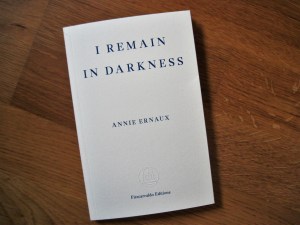 This is the second short, somewhat harrowing autobiographical work I’ve read by Ernaux this year (after Happening, her account of her abortion, in March). A collection of mostly present-tense fragments, it’s drawn from the journal she kept during her mother’s final years, 1983–6. “I Remain in Darkness” were the last words her mother wrote, in a letter to a friend (“Je ne suis pas sortie de ma nuit,” which more literally means “I have not left my night,” strikes me as cryptic and poetic, though maybe I’m missing a colloquialism). Slipping into Alzheimer’s, her mother spent these years in a long-term hospital geriatric ward. Ernaux could see her mother becoming like a child again:
This morning she got up and, in a timid voice, said: ‘I wet the bed. I couldn’t help it.’ The same words I would use when I was a child.
Now her room is on the third floor. A bunch of women circle us, addressing my mother with the familiar tu form: ‘You’re going to be in our group?’ They are like kids talking to the ‘new girl’ at school. When I take leave of her, she looks at me in panic and confusion: ‘You’re not leaving, are you?’
—and herself becoming like her mother: “It’s crystal-clear: she is me in old age and I can see the deterioration of her body threatening to take hold of me – the wrinkles on her legs, the creases in her neck”. Ernaux vacillates between guilt, fear and cruelty in how she approaches her mother. She tenderly shaves the older woman’s face every week when she visits, and buys her all manner of sweets. Food is one of her mother’s last remaining pleasures, though she often misses her mouth when she tries to eat the cakes her daughter brings.
Superficially, this is very similar to another book I’ve reviewed this year, Be With by Mike Barnes, a series of short letters written during his time as a caregiver to his mother, who also has Alzheimer’s. But where Barnes is reassuring and even humorous at times, Ernaux refuses to give any comfort, false or otherwise. This hospital is a bleak place that reeks of urine and is hiding excrement everywhere (really). A lazier reviewer than I generally try to be would brandish the word “unflinching.”
The entries from a few days after her mother’s death explain what the author is trying to do with her work, whether memoir or autofiction: “I am incapable of producing books that are not precisely that – an attempt to salvage part of our lives, to understand, but first to salvage … I’ll have to tell her story in order to ‘distance myself from it’.” That dual purpose, saving and distancing, makes her work honest yet unemotional, such that I have trouble warming to it.
This is easily read in a sitting. I may try again to get into Ernaux’s novel The Years, which, like the Poschmann (below), was on this past year’s Man Booker International Prize shortlist.
I Remain in Darkness will be released on September 18th. With thanks to Fitzcarraldo Editions for the free copy for review.
The Pine Islands by Marion Poschmann (2017; English translation, 2018)
[Translated from the German by Jen Calleja]
(Though I read this mostly in July, I finished it on August 1st, so I’m including it in my WIT Month coverage. It’s the first of the author’s books to be made available in English.)
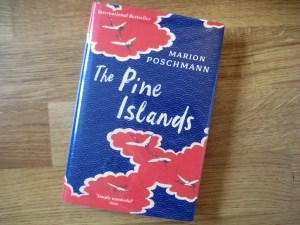 A man wakes up from a dream convinced that his wife is cheating on him, and sets off for Tokyo on a whim, where he embarks on a Bashō-inspired pilgrimage to the pine islands of Matsushima. This Gilbert Silvester, a beard historian, acquires an unlikely companion: a young man named Yosa, who’s looking for the best place to kill himself and takes Gilbert along to cliffs and forests famous for their suicide rates. Although there are still cherry blossoms and kabuki theatre, Gilbert soon learns that this isn’t Bashō’s Japan anymore.
From the haikus he composes and the letters he writes to Mathilda back home, we track his inward journey as it contrasts with the outward ones he undertakes. I enjoyed the surreal touches – Yosa says he once dated a woman who was actually a fox – and the Murakami setup (the wife’s adultery and the hair patterns are reminiscent of The Wind-Up Bird Chronicle).
Somehow, though, for me this is a book that succeeds more in its ideas (searching for the essence of a place but only finding the clichés; coniferous versus deciduous trees as a metaphor for what lasts in life versus what fades) than in its actual execution. It never all quite comes together, and the inconclusive ending makes you question how much of this has been a dream or a fantasy. It’s ambitious and intellectually impressive, but something about its dignified aloofness is hard to be enthusiastic about.
Do watch Lost in Translation, one of my favorite films, afterwards…
And a DNF: The Days of Abandonment by Elena Ferrante. The time has come to admit that I simply do not appreciate Ferrante’s work. I could only make it 25 pages into this one; I’ve read a different short novel of hers (The Lost Daughter), and skimmed another (My Brilliant Friend). While I enjoyed the narrator’s voice well enough, and loved the scene in which her errant husband finds broken glass in his dinner, I found that I had no interest in how this seemingly predictable story of the end of a marriage might play out.
Up next for Part II: The Wind that Lays Waste by Selva Almada, on its way from Charco Press, and The Awakening of Miss Prim by Natalia Sanmarin Fenollera.
Are you doing any special reading for Women in Translation month this year?
Three Recommended July Releases: Starling Days, Hungry, Supper Club
While very different, these three books tie together nicely with their themes of the hunger for food, adventure and/or love.
Starling Days by Rowan Hisayo Buchanan
(Coming on July 11th from Sceptre [UK])
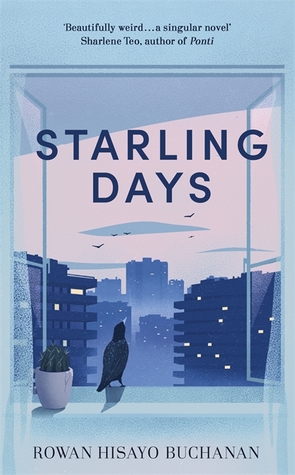 Buchanan’s second novel reprises many of the themes from her first, Harmless Like You, including art, mental illness, and having one’s loyalties split across countries and cultures. Oscar and Mina have been together for over a decade, but their marriage got off to a bad start six months ago: on their wedding night Mina took an overdose, and Oscar was lucky to find her in time. The novel begins and ends with her contemplating suicide again; in between, Oscar takes her from New York City to England, where he grew up, for a change of scenery and to work on getting his father’s London flats ready to sell. For Mina, an adjunct professor and Classics tutor, it will be labeled a period of research on her monograph about the rare women who survive in Greek and Roman myth. But when work for his father’s Japanese import company takes Oscar back to New York, Mina is free to pursue her fascination with Phoebe, the sister of Oscar’s childhood friend.
Both Oscar and Mina have Asian ancestry and complicated, dysfunctional family histories. For Oscar, his father’s health scare is a wake-up call, reminding him that everything he has taken for granted is fleeting, and Mina’s uncertain mental and reproductive health force him to face the fact that they might never have children. Although I found this less original and compelling than Buchanan’s debut, I felt true sympathy for the central couple. It’s a realistic picture of marriage: you have to keep readjusting your expectations for a relationship the longer you’re together, and your family situation is inevitably going to have an impact on how you envision your future. I also admired the metaphors and the use of color.
The title is, I think, meant to refer to a sort of time outside of time when wishes can come true; in Mina’s case that’s these few months in London. Bisexuality is something you don’t encounter too often in fiction, so I guess that’s reason enough for it to be included here as a part of Mina’s story, though I wouldn’t say it adds much to the narrative. If it had been up to me, instead of birds I would have picked up on the repeated peony images (Mina has them tattooed up her arms, for instance) for the title and cover. 
Hungry: Eating, Road-Tripping, and Risking It All with the Greatest Chef in the World by Jeff Gordinier
(Coming on July 9th from Tim Duggan Books [USA] and on October 3rd from Icon Books [UK])
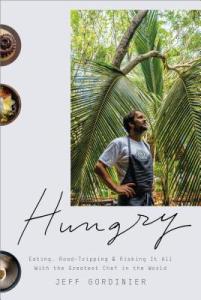 Noma, René Redzepi’s restaurant in Copenhagen, Denmark, has widely been considered the best in the world. In 2013, though, it suffered a fall from grace when some bad mussels led to a norovirus outbreak that affected dozens of customers. Redzepi wanted to shake things up and rebuild Noma’s reputation for culinary innovation, so in the four years that followed he also opened pop-up restaurants in Tulum, Mexico and Sydney, Australia. Journalist Jeff Gordinier, food and drinks editor at Esquire magazine, went along for the ride and reports on the Noma team’s adventures, painting a portrait of a charismatic, driven chef. For foodies and newbies alike, it’s a brisk, delightful tour through world cuisine as well as a shrewd character study. (Full review coming soon to BookBrowse.)
Supper Club by Lara Williams
(Coming on July 9th from G.P. Putnam’s Sons [USA] and July 4th from Hamish Hamilton [UK])
“What could violate social convention more than women coming together to indulge their hunger and take up space?” Roberta and Stevie become instant besties when Stevie is hired as an intern at the fashion website where Roberta has been a writer for four years. Stevie is a would-be artist and Roberta loves to cook; they decide to combine their talents and host Supper Clubs that allow emotionally damaged women to indulge their appetites. The pop-ups take place at down-at-heel or not-strictly-legal locations, the food is foraged from dumpsters, and there are sometimes elaborate themes and costumes. These bacchanalian events tend to devolve into drunkenness, drug-taking, partial nudity and food fights.
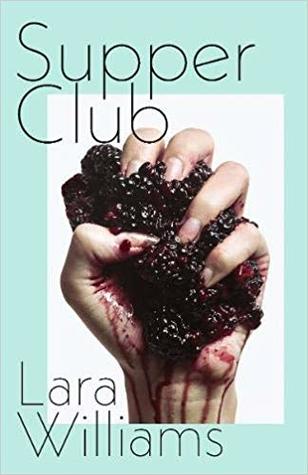 The central two-thirds of the book alternates chapters between the present day, when Roberta is 28–30, and her uni days. I don’t think it can be coincidental that Roberta and Stevie are both feminized male names; rather, we are meant to ask to what extent all the characters have defined themselves in terms of the men in their lives. For Roberta, this includes the father who left when she was seven and now thinks he can send her chatty e-mails whenever he wants; the fellow student who raped her at uni; and the philosophy professor she dated for ages even though he treated her like an inconvenient child. Supper Club is performance art, but it’s also about creating personal meaning when family and romance have failed you.
I was slightly disappointed that Supper Club itself becomes less important as time goes on, and that we never get closure about Roberta’s father. I also found it difficult to keep the secondary characters’ backstories straight. But overall this is a great debut novel with strong themes of female friendship and food. Roberta opens most chapters with cooking lore and tips, and there are some terrific scenes set in cafés. I suspect this will mean a lot to a lot of young women. Particularly if you’ve liked Sweetbitter (Stephanie Danler) and Friendship (Emily Gould), give it a taste.
With thanks to Sapphire Rees of Penguin for the proof copy for review.
Have you read any other July releases you would recommend?
Recent Writing for BookBrowse, Shiny New Books and the TLS
We’re back from a pleasant but whirlwind weekend in France. Even just sticking to one corner of Normandy, there was far too much to see and do and not enough good weather to do it all in. Highlights were the Bayeux tapestry, the gorse-covered rocky cliff above a river at Les Roches de Ham, a delicious three-course meal in a restaurant just outside Bayeux, fresh bread and cake from boulangeries, and the enormous Sunday morning open-air market in Caen. (Low point: being sick on the boat on the way back. I hate sailing.) I finished up The Dreamers by Karen Thompson Walker, read all of A Breath of French Air by H.E. Bates, and started a few more books.
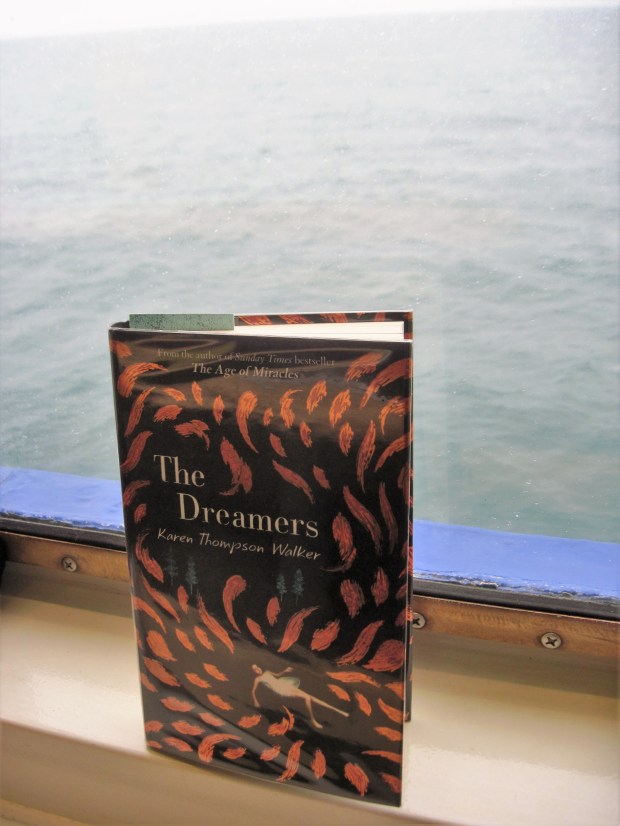
It was good to have a gripping novel to take my mind off the rocking motion of the ferry on the trip out.
Here are excerpts from and links to some of my recent print or online writing for other places. (No surprise that four out of the five are nonfiction and involve medical or bereavement themes!)
BookBrowse
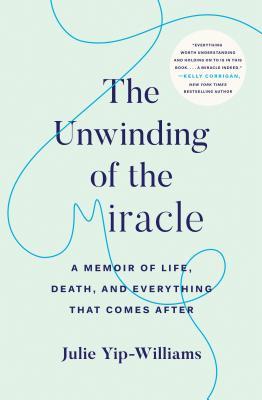 The Unwinding of the Miracle: A Memoir of Life, Death, and Everything That Comes After by Julie Yip-Williams: A lawyer facing late-stage cancer reflects on the happy life she had despite disability and an inauspicious start, and bids farewell to her family. It was miracle enough to have survived her first few years (blindness, a euthanasia attempt, and fleeing Vietnam by boat), but she eventually graduated from Harvard Law School and joined a Wall Street law firm. The author dubs herself “a somewhat ruthless realist.” Early on she vowed she would do nothing desperate or bizarre in her quest for healing, in contravention of what she calls the American “hope industrial complex.” Yet she also left room for spirituality to surprise her. The book resembles a set of journal entries or thematic essays, written at various times over her five years with colon cancer. Some stories are told more than once; an editor might have combined or cut some passages to avoid repetitiveness. Still, this posthumous memoir stands as a testament to a remarkable life of overcoming adversity, asking questions, and appreciating beauty wherever it’s found. (See also my list of other recommended posthumous cancer memoirs.)
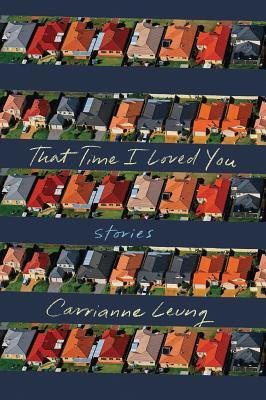 That Time I Loved You: Stories by Carrianne Leung: The residents of a Toronto suburb cope with growing up amid a spate of surprise suicides in the late 1970s and early 1980s. Leung explores different points of view on the same events and changes that take place in a community over several years. Three of the stories are narrated by June, who is 11 years old at the start. Her parents came over from Hong Kong 15 years ago. Other stories fill in a kaleidoscopic view of the neighborhood, showing how lonely the residents are – and how segregated along ethnic lines. Leung returns to June’s perspective at the beginning, middle, and end of the book, so we see her growing up and learning how the world works. Hard lessons are in store for her: people are sometimes punished for their differences, and the older generation doesn’t have it all figured out. Suburbia gets a bad rap, but it’s where so many of us come from, so it’s heartening to see a writer taking it seriously here. (See also my article on linked short story collections, for which I enlisted lots of blogger help via book Twitter.)
Shiny New Books
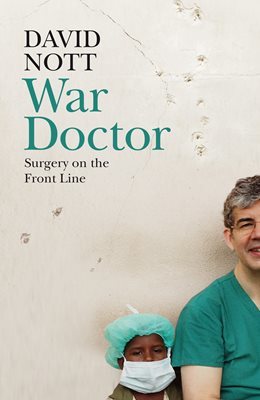 War Doctor: Surgery on the Front Line by David Nott: Welsh surgeon David Nott combines advanced technical skills with extreme altruism: for weeks of every year he takes unpaid leave to volunteer with a medical charity like Médecins sans Frontières or Syria Relief in war zones or disaster areas around the world. The kinds of procedures he has performed in Sarajevo, Kabul and Darfur are a world away from his normal work as an NHS consultant in London: amputations, treating injuries caused by homemade bombs, and delivering the babies of young rape victims. His memoir is mostly structured by countries and/or time periods. There are gripping moments – such as completing a difficult amputation by following instructions texted to him by a London colleague – but also some less fascinating chronology. The book is slow to start and took me weeks to get through. However, it shines when Nott recalls particular patients who have stood out for him. All told, his is an amazing and inspiring story.
As if you haven’t already heard enough about the Wellcome Book Prize from me (!), I also wrote this article for Shiny about the Prize’s history and the range of books that have won or been nominated over the last 10 years, finishing up with some reflections on this year’s shortlist.
Times Literary Supplement
Somehow I seem to have become a TLS regular. The biography editor periodically contacts me with lists of recent memoirs to be reviewed in 400 words for the “In Brief” section, and I’ve been doing about one per month this year.
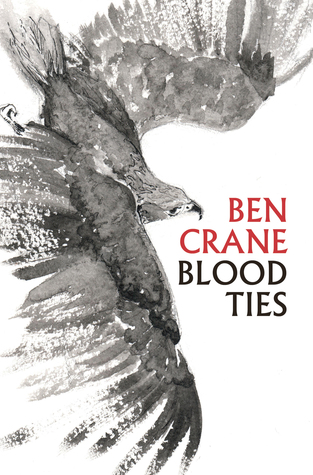 Blood Ties by Ben Crane: Artist Ben Crane has developed a passion for birds of prey, raising hawks and training as a falconer. “I saw that my feelings towards nature, and birds of prey in particular, ran in parallel with my feelings for my son,” he writes. Blood Ties accordingly cuts between the story of rehabilitating a pair of rescued sparrowhawks named Girl and Boy and a parallel story about raising his son as a part-time single father. Together these strands emphasize the common concerns that arise when caring for any creature. Crane’s descriptive language is memorably sharp. Whatever struggles his Asperger’s entails, it seems to heighten his observational skills. Pruning the travel segments would have produced a more focused memoir, but this is a powerful story all the same – of the ties that bind us, both to nature and our own families. (Full review in February 8th issue.)
 Notes for the Everlost: A Field Guide to Grief by Kate Inglis: Inglis, a Nova Scotian photographer and children’s author, has written this delicate, playful handbook – something between a bereavement memoir and a self-help guide – for people who feel they might disappear into grief for ever. In 2007, Inglis’s identical twin sons were born premature, at twenty-seven weeks. Ben lived but Liam died. Every milestone in Ben’s life would serve as a reminder of the brother who should have been growing up alongside him. The unfairness was particularly keen on the day she returned to hospital for two appointments: Ben’s check-up and a report on Liam’s autopsy. Unable to sustain the eye-popping freshness of the prose in the introduction, Inglis resorts to some clichés in what follows. But this kooky, candid book will be valuable to anyone facing bereavement or supporting a loved one through it. (Full review in March 15th issue.)
Would any of these books interest you?
Four Recent Review Books: Ernaux, Nunez, Rubin & Scharer
Two nonfiction books: a frank account of an abortion; clutter-busting techniques.
Two novels: amusing intellectual fare featuring a big dog or the Parisian Surrealists.
Happening by Annie Ernaux (2000; English translation, 2019)
[Translated from the French by Tanya Leslie]
 “I believe that any experience, whatever its nature, has the inalienable right to be chronicled,” Ernaux writes. In 1963, when she was 23 and living in a student residence in Rouen, she realized she was pregnant. An appointment with a gynecologist set out the facts starkly: “Pregnancy certificate of: Mademoiselle Annie Duchesne. Date of delivery: 8 July, 1964. I saw summer, sunshine. I tore up the certificate.” Abortion was illegal in France at that time. Ernaux tried to take things into her own hands – “plunging a knitting needle into a womb weighed little next to ruining one’s career” – but couldn’t go through with it. Instead she went to the home of a middle-aged nurse she’d heard about…
This very short book (just 60-some pages) is told in a matter-of-fact style – apart from the climactic moment when her pregnancy ends: “It burst forth like a grenade, in a spray of water that splashed the door. I saw a baby doll dangling from my loins at the end of a reddish cord.” It’s such a garish image, almost cartoonish, that I didn’t know whether to laugh or be horrified. Mostly, Ernaux reflects on memory and the reconstruction of events. I haven’t read many nonfiction accounts of abortion/miscarriage and for that reason found this interesting, but it was perhaps too brief and detached for me to be fully engaged.
My rating:
With thanks to Fitzcarraldo Editions for the free copy for review.
The Friend by Sigrid Nunez (2018)
 “Does something bad happen to the dog?” We animal lovers are wary when approaching a book about a pet. Nunez playfully anticipates that question as she has her unnamed female narrator reflect on her duty of care to her dead friend’s dog. The narrator is a writer and academic – like her late friend, a Bellovian womanizer who recently committed suicide, leaving behind two ex-wives, a widow, and Apollo the aging Great Dane. She addresses the friend directly as “you” for almost the whole book, which unfolds – in a similar style to Jenny Offill’s Department of Speculation – via quotations, aphorisms, and stories from literary history as well as mini-incidents from a life.
This won the 2018 National Book Award in the USA and is an unashamedly high-brow work whose intertextuality comes through in direct allusions to many classic works of autofiction (Coetzee, Knausgaard and Lessing) and/or doggy lit (Ackerley; Coetzee again – Disgrace). As Apollo starts to take up more physical, mental and emotional space in the narrator’s life, she waits for a miracle that will allow her to keep him despite an eviction notice and muses on lots of questions: Is all writing autobiographical? Why does animal suffering pain us so much (especially compared to human suffering)? I was impressed: it feels like Nunez has encapsulated everything she’s ever known or thought about, all in just over 200 pages, and alongside a heart-warming little plot. (Animal lovers need not fear.)
My rating:
With thanks to Virago for the free copy for review.
Outer Order, Inner Calm: Declutter and Organize to Make More Room for Happiness by Gretchen Rubin (2019)
 What with all the debate over Marie Kondo’s clutter-reducing tactics, the timing is perfect for this practical guide to culling and organizing all the stuff that piles up around us at home and at work. Unlike the rest of Rubin’s self-help books, this is not a narrative but a set of tips – 150 of them! It’s not so much a book to read straight through as one to keep at your bedside and read a few pages to summon up motivation for the next tidying challenge.
 Famously, Kondo advises one to ask whether an item sparks joy. Rubin’s central questions are more down-to-earth: Do I need it? Do I love it? Do I use it? With no index, the book is a bit difficult to navigate; you just have to flip through until you find what you want. The advice seems in something of a random order and can be slightly repetitive. But since this is really meant as a book of inspiration, I think it will be a useful jumping-off point for anyone trying to get on top of clutter. I plan to work through the closet checklist before I pass the book to my sister – who’s dealing with a basement full of stuff after she and her second husband merged their households. If I could add one page, it would be a flowchart of what to do with unwanted stuff that corresponds to the latest green recommendations.
My rating:
With thanks to Two Roads for the free copy for review.
The Age of Light by Whitney Scharer (2019)
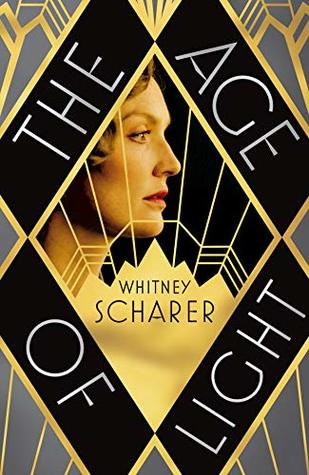 This novel about Lee Miller’s relationship with Man Ray is in the same vein as The Paris Wife, Z, Loving Frank and Frieda: all of these have sought to rescue a historical woman from the shadow of a celebrated, charismatic male and tell her own fascinating life story. Scharer captures the bohemian atmosphere of 1929–30 Paris in elegant but accessible prose. Along with the central pair we meet others from the Dada group plus Jean Cocteau, and get a glimpse of Josephine Baker. The novel is nearly 100 pages too long, I think, such that my interest in the politics of the central relationship – Man becomes too possessive and Lee starts to act out, longing for freedom again – started to wane.
Miller was a photographer as well as a model and journalist, and this is an appropriately visual novel that’s interested in appearances, lighting and what gets preserved for posterity. It’s also fairly sexually explicit for literary fiction, sometimes unnecessarily so, so keep that in mind if it’s likely to bother you. I especially enjoyed the brief flashes of Lee at other points in her life: in London during the Blitz, photographing the aftermath of the war in Germany (there’s a famous image of her in Hitler’s bathtub), and hoping she’s more than just a washed-up alcoholic in the 1960s. It would be a boon to have a prior interest in or some knowledge of the Surrealists.
My rating:
With thanks to Picador for the free copy for review.
Would you be interested in reading one or more of these?
Two Final Wellcome Book Prize Longlist Reviews: Krasnostein & Moshfegh
I’ve now read eight of the 12 titles longlisted for the Wellcome Book Prize 2019 and skimmed another two, leaving just two unexplored.
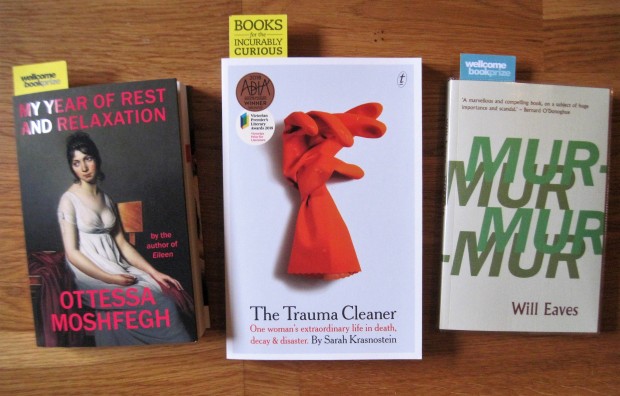
My latest two reads are books that I hugely enjoyed yet would be surprised to see make the shortlist (both ):
The Trauma Cleaner: One Woman’s Extraordinary Life in Death, Decay and Disaster by Sarah Krasnostein (2017)
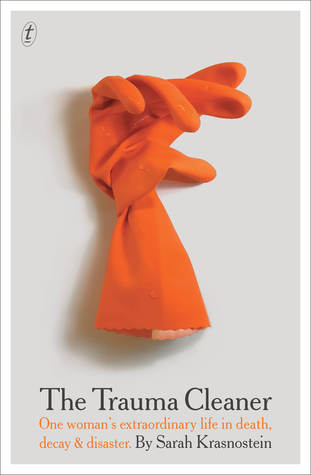 I guarantee you’ve never read a biography quite like this one. For one thing, its subject is still alive and has never been much of a public figure, at least not outside Victoria, Australia. For another, your average biography is robustly supported by archival evidence; to the contrary, this is a largely oral history conveyed by an unreliable narrator. And lastly, whether a biography is critical or adulatory overall, the author usually at least feigns objectivity. Sarah Krasnostein doesn’t bother with that. Sandra Pankhurst’s life is an incredible blend of ordinary and bizarre circumstances and experiences, and it’s clear Krasnostein is smitten with her. “I fall in love … anew each time I listen to her speak,” she gushes towards the book’s end. At first I was irked by all the fawning adjectives she uses for Sandra, but eventually I stopped noticing them and allowed myself to sink into this astonishing story.
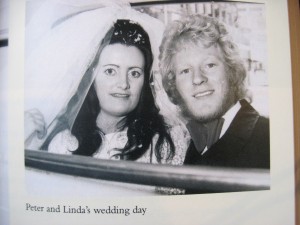
Sandra was born male and adopted by a couple whose child had died. When they later conceived again, they basically disowned ‘Peter’, moving him to an outdoor shed and making him scrounge for food. His adoptive father was an abusive alcoholic and kicked him out permanently when he was 17. Peter married ‘Linda’ at age 19 and they had two sons in quick succession, but he was already going to gay bars and wearing makeup; when he heard about the possibility of a sex change, he started taking hormones right away. Even before surgery completed the gender reassignment, Sandra got involved in sex work, and was a prostitute for years until a brutal rape at the Dream Palace brothel drove her to seek other employment. Cleaning and funeral home jobs nicely predicted the specialty business she would start after the hardware store she ran with her late husband George went under: trauma cleaning.
 Krasnostein parcels this chronology into tantalizing pieces, interspersed with chapters in which she accompanies Sandra and her team on assignments. They fumigate and clean up bodily fluids after suicides and overdoses, but also deal with clients who have lost control of their possessions – and, to some extent, their lives. They’re hoarders, cancer patients and ex-convicts; their homes are overtaken by stuff and often saturated with mold or feces. Sandra sympathizes with the mental health struggles that lead people into such extreme situations. Her line of work takes “Great compassion, great dignity and a good sense of humour,” she tells Krasnostein; even better if you can “not … take the smell in, ’cause they stink.”
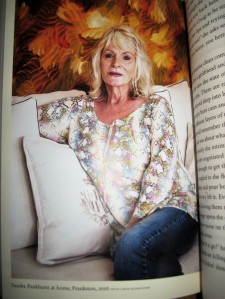 The author does a nice job of staying out of the narrative: though she’s an observer and questioner, there’s only the occasional paragraph in which she mentions her own life. Her mother left when she was young, which helps to explain why she is so compassionate towards the addicts and hoarders she meets with Sandra. Some of the loveliest passages have her pondering how things got so bad for these people and affirming that their lives still have value. As for Sandra herself – now in her sixties and increasingly ill with lung disease and cirrhosis – Krasnostein believes she’s never been unconditionally loved and so has never formed true human connections.
This book does many different things in its 250 pages. It’s part journalistic exposé and part “love letter”; it’s part true crime and part ordinary life story. It considers gender, mental health, addiction, trauma and death. It’s also simply a terrific read that should draw in lots of people who wouldn’t normally pick up nonfiction. I don’t expect it to advance to the shortlist, but if it does I’ll be not-so-secretly delighted.
A favorite passage:
Sometimes, listening to Sandra try to remember the events of her life is like watching someone reel in rubbish on a fishing line: a weird mix of surprise, perplexity and unexpected recognition. No matter how many times we go over the first three decades of her life, the timeline of places and dates is never clear. Many of her memories have a quality beyond being merely faded; they are so rusted that they have crumbled back into the soil of her origins. Others have been fossilised, frozen in time, and don’t have a personal pull until they defrost slightly in the sunlit air between us as we speak. And when that happens there is a tremor in her voice as she integrates them back into herself, not seamlessly but fully.
See also:
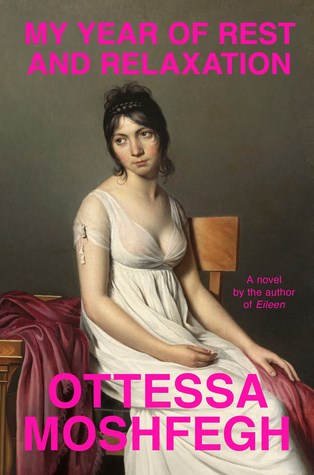
My Year of Rest and Relaxation by Ottessa Moshfegh (2018)
If you’ve read her Booker-shortlisted debut, Eileen, you’ll be unsurprised to hear that Moshfegh has written another love-it-or-hate-it book with a narrator whose odd behavior is hard to stomach. This worked better for me than Eileen, I think because I approached it as a deadpan black comedy in the same vein as Elif Batuman’s The Idiot. Its inclusion on the Wellcome longlist is somewhat tenuous: in 2000 the unnamed narrator, in her mid-twenties, gets a negligent psychiatrist to prescribe her drugs for insomnia and depression and stockpiles them so she can take pill cocktails to knock herself out for days at a time. In a sense this is a way of extending the numbness that started with her parents’ deaths – her father from cancer and her mother by suicide. But there’s also a more fantastical scheme in her mind: “when I’d slept enough, I’d be okay, I’d be renewed, reborn. I would be a whole new person.”
 Ever since she was let go from her job at a gallery that showcases ridiculous modern art, the only people in this character’s life are an on-again, off-again boyfriend, Trevor, and her best (only) friend from college, longsuffering Reva, who keeps checking up on her in her New York City apartment even though she consistently treats Reva with indifference or disdain. Soon her life is a bleary cycle of sleepwalking and sleep-shopping, interspersed with brief periods of wakefulness, during which she watches a nostalgia-inducing stream of late-1990s movies on video (the kind of stuff I watched at sleepovers with my best friend during high school) – she has a weird obsession with Whoopi Goldberg.
It’s a wonder the plot doesn’t become more repetitive. I like reading about routines, so I was fascinated to see how the narrator methodically takes her project to extremes. Amazingly, towards the middle of the novel she gets herself from a blackout situation to Reva’s mother’s funeral – about the only time we see somewhere that isn’t her apartment, the corner shop, the pharmacy or Dr. Tuttle’s office – and this interlude is just enough to break things up. There are lots of outrageous lines and preposterous decisions that made me laugh. Consumerism and self-medication to deaden painful emotions are the targets of this biting satire. As 9/11 approaches, you wonder what it will take to wake this character up to her life. I’ve often wished I could hibernate through British winters, but I wouldn’t do what Moshfegh’s antiheroine does. Call this a timely cautionary tale about privilege and disengagement.
Favorite lines:
“Initially, I just wanted some downers to drown out my thoughts and judgments, since the constant barrage made it hard not to hate everyone and everything. I thought life would be more tolerable if my brain were slower to condemn the world around me.”
“Oh, sleep, nothing else could ever bring me such pleasure, such freedom, the power to feel and move and think and imagine, safe from the miseries of my waking consciousness.”
Reva: “you’re not changing anything in your sleep. You’re just avoiding your problems. … Your problem is that you’re passive. You wait around for things to change, and they never will. That must be a painful way to live. Very disempowering.”
See also:
And one more that I got out from the library and skimmed:
Murmur by Will Eaves (2018)
 The subject is Alec Pryor, or “the scientist.” It’s clear that he is a stand-in for Alan Turing, quotes from whom appear as epigraphs at the head of most chapters. Turing was arrested for homosexuality and subjected to chemical castration. I happily read the first-person “Part One: Journal,” which was originally a stand-alone story (shortlisted for the BBC National Short Story Award 2017), but “Part Two: Letters and Dreams” was a lot harder to get into, so I ended up just giving the rest of the book a quick skim. If this is shortlisted, I promise to return to it and give it fair consideration.
See also:
We will announce our shadow panel shortlist on Friday. Follow along here and on Halfman, Halfbook, Annabookbel, A Little Blog of Books, and Dr. Laura Tisdall for reviews, predictions and reactions.
Memoirs by Casey Gerald and Catherine Simpson
These two memoirs may be very different in terms of the setting (Texas and Yale versus rural Lancashire) and particulars, but I’m reviewing them together because they are both about dysfunctional families and the extent to which external circumstances determine how others see us – and how we view ourselves.
There Will Be No Miracles Here: A Memoir from the Dark Side of the American Dream by Casey Gerald (2018)
The title comes from a seventeenth-century sign in a French village that was intended to get the God-dazzled peasants back to work. For Gerald it’s a somewhat tongue-in-cheek reminder that his life, even if he has made good after an unpromising beginning, is not some American dream or fairytale. It’s more complicated than that. Still, there’s no sugar-coating his family issues. His father missed his tenth birthday party because he was next door with dope fiends; his bipolar mother was in the psych ward while his father was in jail, and then disappeared for several years. Gerald and his older sister, a college dropout, got an apartment and set their own lax rules. In the meantime, he was coming to terms with the fact that he was gay and trying to reconcile his newfound sexual identity with his Christian faith.
 In spite of it all, Gerald shone academically and athletically. He was his Texas high school’s valedictorian and followed his father into a thriving college football career – at Yale, where he accidentally fell into leadership via a Men of Color council across the Ivy League schools. It wasn’t until he got to Yale that it even occurred to him that he was poor. (I was reminded of the moment in Michelle Obama’s memoir when she got to Princeton and experienced being a minority for the first time.) As he neared graduation, he decided to go into investment banking “simply because I did not have any money and none of my people had any money.” Back in Texas after a year in a Washington, D.C. think tank, he even considered a run for Congress under the slogan “We can dream again.”
I loved the prologue, which has the 12-year-old Gerald cowering with his church congregation on the last night of 1999, in fear of being left behind at the end of the world. I think I expected religion to continue as a stronger theme throughout the book. The style wasn’t really what I imagined either: it’s a coy combination of reader address, stream-of-consciousness memories, and remembered speech in italics that often set me skimming. Whereas landmark events like his mother’s departure are left impressionistic, football games and the inner workings of Yale’s societies are described in great detail. Scenes in the classroom and with boyfriends, though still occasionally tedious, at least feel more relevant.
Gerald proudly calls himself a “faggot” and is going for a kind of sassy, folksy charm here. For me the tone only landed sometimes. Mostly I appreciated his alertness to how others (often wrongly) perceived him – a great instance of this is when he meets George W. Bush in 2007 and tells him the bare bones of his story, only for Dubya to later twist it into an example in a speech. The memoir tails off into a rather odd and sudden ending, and overall I wasn’t sure it had enough to say to fill close to 400 pages. Perhaps Gerald could have waited another 10 years? As a more successful take on similar themes, I’d recommend the memoir-in-essays Live Through This: Surviving the Intersections of Sexuality, God, and Race by Clay Cane.
My rating:
There Will Be No Miracles Here was hand-picked by Colm Tóibín for publication by Tuskar Rock Press, a new imprint of Serpent’s Tail, on January 10th. It was published in the USA by Riverhead Books in October 2018. My thanks to the UK publisher for the free copy for review.
When I Had a Little Sister: The Story of a Farming Family that Never Spoke by Catherine Simpson (2019)
On December 7, 2013, Simpson’s younger sister, Tricia, was found dead by their 87-year-old father at the family farmhouse where she lived in Lancashire. She was 46 and had been receiving daily mental health visits for her bipolar disorder, but the family had never been notified about a previous suicide attempt just three weeks before. Simpson excavates her family history to ask how things could have gotten so bad that they didn’t realize that Tricia’s depression had reached suicidal levels.
Simpson’s grandparents – her grandfather a World War I veteran – moved into the property in 1925, so by this time there was literally generations’ worth of stuff to clear out. “I ask myself now: is it possible to dispose of a person’s effects with dignity?” Simpson frets. As she and her father sifted through antique furniture, gadgets and craft supplies, she recalls the previous death in the family: her mother’s from non-Hodgkin’s lymphoma seven years before. Growing up on a cattle farm in the 1970s, the three daughters were expected to be practical and unsentimental; there was never any discussion of emotions, and they got the sense that their overworked, unfulfilled mother would rather they weren’t around at all. In this context, it was hard for Tricia to cope with everyday challenges like struggling with schoolwork and the death of a beloved cousin. She started smoking at 12 and went on antidepressants at 19.
 Simpson started writing this family memoir on a fellowship at Hawthornden Castle in February 2016. The first step of her project was to read all of Tricia’s diaries, from age 14 on. There were happy experiences, like six months as a nanny in Vienna and a travel grant to a kibbutz in Israel. There were also unwelcome surprises, like a 1981 suicide note – from when Tricia was just 15. Simpson had never realized just how prone her little sister was to all-or-nothing thinking. She dove headlong into short-lived relationships and, when they failed, feared she would never find love again. Over the years Tricia grew increasingly paranoid, believing she was being watched on the farm and her sisters were plotting to sell the property and leave her with nothing. One time she even locked her parents in to keep them safe.
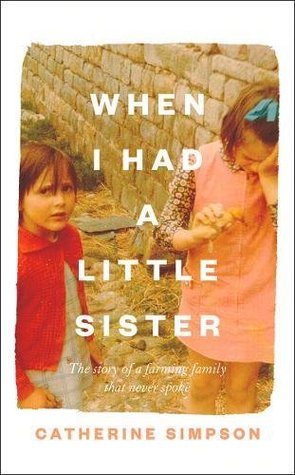
Although the subtitle is melodramatic, it conveys all that went unsaid in this family: not just sadness, but also love and tenderness. The cover image shows Simpson crying over a dead duckling; Tricia is at the left, her look of consternation startlingly intense for a three-year-old. “It’s only a duck. There’s plenty more where that came from” was their father’s hardhearted response. There are many other family photographs printed in black and white throughout the text; Tricia loved fashion, and is stunning in her glamour shots. While the book is probably overlong, I was absorbed in the family’s story, keen to see how Simpson would reconstruct events through objects, photographs and journals. (My sister is a Tricia, too.) Recommended to readers of Jill Bialosky’s History of a Suicide and Clover Stroud’s The Wild Other.
My rating:
When I Had a Little Sister will be published by Fourth Estate on February 7th. My thanks to the publisher for an early proof copy for review.
Calypso by David Sedaris
“Why Aren’t You Laughing?” is one of the essay titles in Calypso, David Sedaris’s tenth book; it’s an ironically appropriate question you might ask of the whole book. It’s not that this isn’t funny – it is, very much so, in places – but that there’s a melancholy aura I hadn’t sensed in his work before. “Now We Are Five,” the second piece, sets the tone, explaining that Tiffany, Sedaris’s youngest sister, committed suicide in 2013, aged 49. He hadn’t spoken to her for the eight years prior to that. The siblings learn that she did it with pills plus a plastic bag over her head. These facts are just thrown out there for us: there’s no getting around how horrific it all was, but Sedaris doesn’t do much obvious hand-wringing or soul-searching.

Tiffany’s suicide is an occasional point of reference in these 21 short essays, as is their mother’s alcoholism and death from cancer. The remaining middle-aged family members – and their 90-something dad – make an effort to stay close, chiefly through meet-ups at the beach cottage Sedaris and his partner, Hugh Hamrick, buy in Emerald Isle, North Carolina. They name the place Sea Section, and it’s the setting for about a third of the book. Two-thirds of these essays were published previously, which entails some repetition, especially in the setup of each piece. I wondered if an adjustment to the sequencing and some editing out of repeated details could have made the Emerald Isle material flow together a bit better.
Sedaris’s trouble communicating with his father, a thrift-conscious hoarder, is one major theme of the book. “We’re like a pair of bad trapeze artists, reaching for each other’s hands and missing every time,” he writes. Their relationship mostly consists of trying to avoid talk of politics lest his father spout pro-Trump propaganda, and his father nagging him about his health. Despite advancing age, Sedaris’s medical crises are trivial and turned to humorous effect: broken ribs from falling off a ladder, an awful stomach virus that provides scatological background to a reading tour, and a fatty tumor he decides to freeze and feed to the snapping turtles the next time he’s on Emerald Isle.* O-kaaaay.
There are echoes of Me Talk Pretty One Day and When You Are Engulfed in Flames in the delight in languages and travel. “Your English Is So Good” skewers the annoyances of small talk and jargon, especially as used by waitstaff and shop assistants. Another essay is about what people in various countries shout when they get cut off in traffic – unsurprisingly, this one is rather foul-mouthed. Sedaris gets addicted to clothes shopping in Tokyo and obsesses over achieving his daily Fitbit steps goal while litter picking near his home in West Sussex. Some of my favorite essays were “A Modest Proposal,” reflecting on the Supreme Court’s legalization of gay marriage; “Untamed,” about feeding a local fox; and “Boo-Hooey,” in which he scoffs at ghost stories yet wonders if his dead mother visits him in dreams.
This collection doesn’t quite live up to the two I’ve already mentioned, and there were moments when I was put off by the author’s unthinking adherence to a luxurious lifestyle, but this is a solid book you wouldn’t have to be an existing fan to enjoy.
Favorite lines:
“The battle for gay marriage was, in essence, the fight to be as square as straight people, to say things like ‘My husband tells me that the new Spicy Chipotle Burger they’ve got at Bennigan’s is awesome!’”
“We’re not pessimists, exactly, but in late middle age, when you envision your life ten years down the line, you’re more likely to see a bedpan than a Tony Award.”
My rating:
*The topic of the title essay. He’s affronted when he learns that the local kids know about ‘his’ snapping turtle and even have a name for it – he likens this to finding out that your cat is being secretly fed by the neighbors, who call it “Calypso.” It’s an obscure reference, definitely; then again, this is the same man who titled books Dress Your Family in Corduroy and Denim and Let’s Explore Diabetes with Owls. The cover design even has some slight relevance within the book: “Calypso” mentions an old friend he meets up with on an American book tour, Janet, and her woodgrain art.
Calypso comes out today, July 5th, in the UK from Little, Brown. It was released in the USA on May 29th. My thanks to the publisher for sending a free copy for review.
Wellcome Book Prize Blog Tour: Sigrid Rausing’s Mayhem
“Now that it’s all over I find myself thinking about family history and family memories; the stories that hold a family together and the acts that can split it apart.”
Sigrid Rausing’s brother, Hans, and his wife, Eva, were wealthy philanthropists – and drug addicts who kept it together long enough to marry and have children before relapsing. Hans survived that decade-long dive back into addiction, but Eva did not: in July 2012 the 48-year-old’s decomposed body was found in a sealed-off area of the couple’s £70 million Chelsea mansion. The postmortem revealed that she had been using cocaine, which threw her already damaged heart into a chaotic rhythm. She’d been dead in their drug den for over two months.
Those are the bare facts. Scandalous enough for you? But Mayhem is no true crime tell-all. It does incorporate the straightforward information that is in the public record – headlines, statements and appearances – but blends them into a fragmentary, dreamlike family memoir that proceeds through free association and obsessively deliberates about the nature and nurture aspects of addictive personalities. “We didn’t understand that every addiction case is the same dismal story,” she writes, in a reversal of Tolstoy’s maxim about unhappy families.

Rausing’s memories of idyllic childhood summers in Sweden reminded me of Tove Jansson stories, and the incessant self-questioning of a family member wracked by remorse is similar to what I’ve encountered in memoirs and novels about suicide in the family, such as Jill Bialosky’s History of a Suicide and Miriam Toews’ All My Puny Sorrows. Despite all the pleading letters and e-mails she sent Hans and Eva, and all the interventions and rehab spells she helped arrange, Rausing has a nagging “sense that when I tried I didn’t try hard enough.”
The book moves sinuously between past and present, before and after, fact and supposition. There are a lot of peculiar details and connections in this story, starting with the family history of dementia and alcoholism. Rausing’s grandfather founded the Tetra Pak packaging company, later run by her father. Eva had a pet conspiracy theory that her father-in-law murdered Swedish Prime Minister Olof Palme in 1986.
Rausing did anthropology fieldwork in Estonia and is now the publisher of Granta Books and Granta magazine. True to her career in editing, she’s treated this book project like a wild saga that had to be tamed, “all the sad and sordid details redacted,” but “I fear I have redacted too much,” she admits towards the end. She’s constantly pushing back against the more sensational aspects of this story, seeking instead to ground it in family experience. The book’s sketchy nature is in a sense necessary because information about her four nieces and nephews, of whom she took custody in 2007, cannot legally be revealed. But if she’d waited until they were all of age, might this have been a rather different memoir?
Mayhem effectively conveys the regret and guilt that plague families of addicts. It invites you to feel what it is really like to live through the “years of failed hope” that characterize this type of family tragedy. It doesn’t offer any easy lessons seen in hindsight. That makes it an uncomfortable read, but an honest one.
With thanks to Midas PR for the free copy for review.
My gut feeling: This book’s style could put off more readers than it attracts. I can think of two other memoirs from the longlist that I would have preferred to see in this spot. I suppose I see why the judges rate Mayhem so highly – Edmund de Waal, the chair of this year’s judging panel, describes the Wellcome shortlist as “books that start debates or deepen them, that move us profoundly, surprise and delight and perplex us” – but it’s not in my top tier.
See what the rest of the shadow panel has to say about this book:
Annabel’s review: “Rausing is clearly a perceptive writer. She is very hard on herself; she is brutally honest, knowing that others will be hurt by the book.”
Clare’s review: “Rausing writes thoughtfully about the nature of addiction and its many contradictions.”
Laura’s review: “One of the saddest bits of Mayhem is when Rausing simply lists some of the press headlines that deal with her family story in reverse order, illustrating the seemingly inescapable spiral of addiction.”
Paul’s review: “It is not an easy read subject wise, thankfully Rausing’s sparse but beautiful writing helps makes this an essential read.”
Also, be sure to visit Laura’s blog today for an exclusive extract from Mayhem.
Shortlist strategy: Tomorrow I’ll post a quick response to Meredith Wadman’s The Vaccine Race.
If you are within striking distance of London, please consider coming to one of the shortlist events being held this Saturday and Sunday.
I was delighted to be asked to participate in the Wellcome Book Prize blog tour. See below for details of where other reviews and extracts have appeared or will be appearing soon.

Some Accidental Thematic Overlaps in My Recent Reading
Five of the books I’ve read recently (most of them while traveling to and from the States) have shared an overarching theme of loss, with mental illness, alcoholism, suicide, and dogs as subsidiary topics running through two or more of them. I hadn’t deliberately chosen these books for their commonalities, so it was uncanny to see the same elements keep popping up. I wanted to come up with some kind of impressively complex Venn diagram to show off these unexpected connections but couldn’t quite manage it, so you’ll have to imagine it instead.
Mental Illness
The Archivist by Martha Cooley
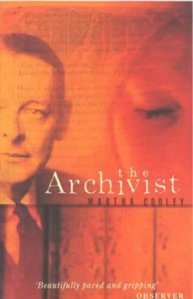 Matthias Lane is the archivist of the Mason Room, a university collection of rare books and literary papers. One of its treasures is a set of letters that passed between T.S. Eliot and his friend Emily Hale (held at Princeton in real life). Matt is haunted by memories of his late wife, Judith, a poet incarcerated in a mental hospital for over five years. A reckoning comes for Matt when he’s approached by Roberta Spire, a graduate student determined to view the Eliot–Hale letters even though they’re legally sealed until 2020. The more time Matt spends with Roberta, the more similarities start to arise between her and Judith; and between his situation and Eliot’s when the latter also put his wife away in a mental hospital. The novel asks what we owe the dead: whether we conform to their wishes or make our own decisions.
The Summer without Men by Siri Hustvedt
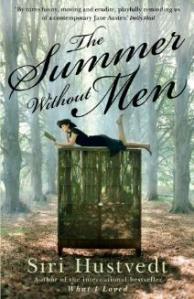 Thirty years on, poet Mia Fredricksen’s husband Boris asks her for a pause in their marriage so he can explore his feelings for his young French lab assistant. First things first: Mia goes crazy and ends up in a mental hospital for a short time. But then she sucks it up and goes back to her Minnesota hometown to teach poetry writing to teen girls for a summer, getting sucked into a bullying drama. This is a capable if not groundbreaking story of the shifts that occur in a long marriage and the strange things we all do as we face down the possibility of death. There are also wry comments about the unappreciated talents of the female artist. However, compared to the other two novels I’ve read from Hustvedt, this seemed feeble. Still, a quick and enjoyable enough read.
The Dogs of Babel by Carolyn Parkhurst
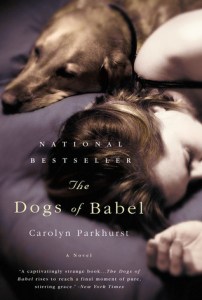 A delicious debut novel intellectual enough to bypass labels like ‘women’s fiction’ and ‘mystery’. One thing that sets it apart is how successfully Parkhurst writes from the perspective of a male narrator, Paul Iverson, who’s been knocked for six by the sudden death of his wife Lexy, a mask designer. While he was at the university where he teaches linguistics, she climbed to the top of the apple tree in their backyard and – what? fell? or jumped? The only ‘witness’ was their Rhodesian Ridgeback, Lorelei; in his grief Paul uses his sabbatical to research efforts to teach dogs to communicate, hoping one day Lorelei might tell all. Woven through are scenes from Paul and Lexy’s courtship and marriage; though Lexy occasionally struggled with her mental health, their dialogue is fun and zippy, like you might hear on The Gilmore Girls.
Suicide
The Archivist by Martha Cooley & The Dogs of Babel by Carolyn Parkhurst


Alcoholism
Don’t Let’s Go to the Dogs Tonight by Alexandra Fuller
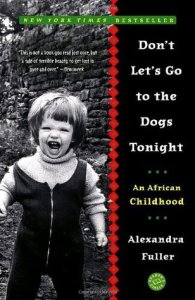 A classic memoir that conjures up all the sights, sounds, smells and feelings of Africa on the cusp of a colonial to postcolonial transition. Fuller’s family were struggling tobacco and cattle farmers in Rhodesia (Zimbabwe), Malawi and Zambia. She had absorbed the notion that white people were there to benevolently shepherd the natives, but came to question it when she met Africans for herself. While giving a sense of the continent’s political shifts, she mostly focuses on her own family: the four-person circus that was Bobo (that’s her), Van (older sister Vanessa), Dad, and Mum (an occasionally hospitalized manic-depressive alcoholic who lost three children) – not to mention an ever-changing menagerie of horses, dogs and other pets. This really takes you away to another place and time, as the best memoirs do, and the plentiful black-and-white photos are a great addition.
Let’s Take the Long Way Home by Gail Caldwell
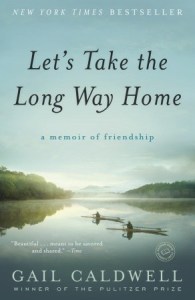 If you loved Ann Patchett’s Truth and Beauty, pick this up immediately. It’s a similar story of best friends: one who dies and one who survives. Caldwell’s best friend was Caroline Knapp (author of Drinking: A Love Story, among other nonfiction), whom she met via puppy ownership in Cambridge, Massachusetts. They were both single and childless, full-time authors with a history of alcoholism. Besides long walks with their dogs, they loved swimming and rowing together. In 2002 Caroline was diagnosed with stage-four lung cancer, inoperable and already metastasized. Despite all their proactive optimism, she was dead a matter of weeks later. In this moving and accessible short memoir, Caldwell drifts through her past, their friendship, Caroline’s illness, and the years of grief that followed the loss of Caroline and then her beloved Samoyed, Clementine, sharing what she learned about bereavement.
Dogs
The Dogs of Babel, Don’t Let’s Go to the Dogs Tonight & Let’s Take the Long Way Home


Do you ever find coincidental thematic connections in your reading?
Reviews Roundup, October–November
One of my goals with this blog is to have one convenient place where I can gather together all my writing that has appeared in disparate online locations. To that end, once a month I provide links to all book reviews I’ve published elsewhere, with a rating (below each description) and a taster so you can decide whether to read more. A few exceptions: I won’t point out my Kirkus Indie, BlueInk or Publishers Weekly reviews since I don’t get a byline.
This month you may recognize a few books I already previewed in my posts on books as beautiful objects and library books read in October.
The Bookbag
Charlotte Brontë’s Secret Love by Jolien Janzing: Charlotte and Emily Brontë’s time in Belgium – specifically, Charlotte’s passion for her teacher, Constantin Heger – is the basis for this historical novel. The authoritative yet inviting narration is a highlight, but some readers may be uncomfortable with the erotic portrayal; it doesn’t seem to fit the historical record, which suggests an unrequited love affair. My other issue with the book is a couple of subplots that only seem to have minor significance.

In Fidelity by Jack Wilson: In this 1970s-set novel, the central couple’s relationship is tested by illness and extramarital sexual experiences. Moving from New England to Nigeria and back, the story asks what loyalty really requires when a once-strong connection has faded over time. Strongly reminiscent of John Updike in Part One, this is the male view of adultery. Something about the self-justifying tone stuck in my craw. A more balanced book would give the wife’s perspective, too, as Carol Shields did in Happenstance, or like Lauren Groff recently did to great success in Fates and Furies.

BookBrowse
 The Tsar of Love and Techno by Anthony Marra [subscription service]: This collection of tightly linked short stories, an intimate look at Russia and Chechnya in wartime and afterwards, reveals how politics, family, and art intertwine. Ranging from 1937 to 2013, the pieces show how fear and propaganda linger in the post-Stalinist era. In art as much as in politics, it can be difficult to distinguish airbrushed history from bitter reality. Just as he did in his excellent debut novel, A Constellation of Vital Phenomena, Marra renders unspeakable tragedies bearable because of his warm and witty writing. All his characters’ voices are well-realized and inviting, and he comes up with terrific one-liners.

BookTrib
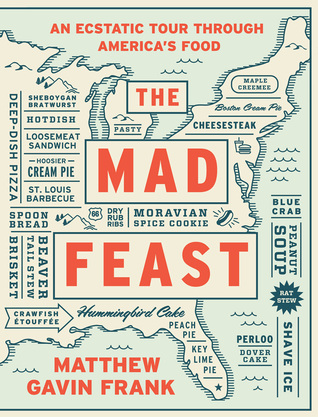 Mad Feast by Matthew Gavin Frank: This is the cookbook David Foster Wallace might have written. In an off-the-wall blend of memoir, travel, history and fiction, Frank proceeds region by region, choosing for each American state one beloved dish and interrogating its origins as well as its metaphors and associations. It’s a mixed bag of familiar foods and ones that only locals are likely to know about. Each chapter ends with a recipe for the signature plate, whether from a Lutheran church or a posh restaurant. Frank’s digressive, anecdotal approach takes some getting used to. If you appreciate the style of writers like Geoff Dyer, Maggie Nelson and Will Self, this should be your next food-themed read.
For Books’ Sake
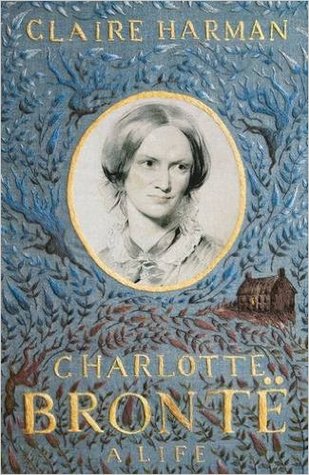 Charlotte Brontë: A Life by Claire Harman: With her bicentennial approaching in April 2016, it’s the perfect time to revisit Charlotte Brontë’s timeless stories. One of the things Harman’s biography does best is trace how the Brontës’ childhood experiences found later expression in fiction. A chapter on the publication of Jane Eyre is a highlight. Diehard fans might not encounter lots of new material, but Harman does make a revelation concerning Charlotte’s cause of death – not TB, as previously believed, but hyperemesis gravidarum (extreme morning sickness). This will help you appreciate afresh a “poet of suffering” whose novels were “all the more subversive because of [their] surface conventionality.”

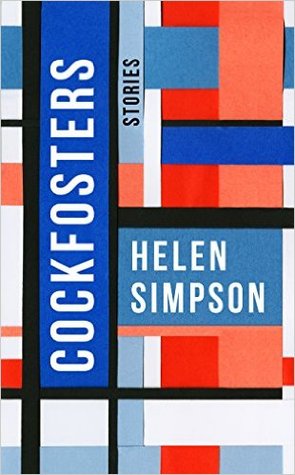
Cockfosters by Helen Simpson: Simpson’s sixth story collection is full of wry, incisive reflections on aging, loss, regrets, gender roles, and a changing relationship to sex. Most of Simpson’s characters are in their late forties, a liminal time when they’re caught between older parents and still-needy children. Many pieces are dialogue-driven, like scenes in plays. In “Kentish Town,” book club members meet to discuss Dickens’s The Chimes. Simpson weaves in discussion of the plot with commentary on the state of the nation as the ladies set the world to rights and make New Year’s resolutions. It’s a perfect story to read in the run-up to Christmas. The overall stand-out is “Erewhon,” named for Samuel Butler’s 1872 satirical utopian novel. It quickly becomes clear that gender roles are reversed in its fictional world.
Foreword Reviews
 Addiction Is Addiction by Raju Hajela, Paige Abbott and Sue Newton: This comprehensive, well-organized guide discusses the features of addictive thinking and feeling, suggests holistic recovery methods, and offers useful definitions, diagrams, and case studies. The authors are affiliated with Health Upwardly Mobile Inc., Calgary, Alberta. Tracing the history of addiction back to the eighteenth century, when it was first known as “alcoholic disease syndrome,” they present an expert view of the disease’s symptoms and outlook. Strongly recommended to those who have participated in groups like Alcoholics Anonymous or Narcotics Anonymous.
Kirkus
Indie Spotlight: Books about Religion: Self-publishing allows writers to tell their full stories. An article based on interviews with four indie religion authors and mini-reviews of their books.
Nudge
Notes on Suicide by Simon Critchley: Critchley is a philosophy professor at New York’s New School for Social Research. Although he reassures readers with his first line that “This book is not a suicide note,” he also hints that its writing was inspired by personal trouble: “my life has dissolved over the past year or so, like sugar in hot tea.” Not suicidal himself, then, but sympathetic to those who are driven to self-murder. This concise essay illuminates arguments surrounding suicide, with points of reference ranging from Greek philosophers to Robin Williams. Overall, though, it feels cursory and inconclusive.
 The Gratitude Diaries by Janice Kaplan: We can all do with a little encouragement to appreciate what we already have. In so many areas of life – finances, career, relationship, even the weather – we’re all too often hoping for more or better than what we are currently experiencing. Here Kaplan undertakes a year-long experiment to see if gratitude can improve every aspect of her life. She draws her information from interviews with researchers and celebrities, quotes from philosophers, and anecdotes from her own and friends’ lives. It’s easy, pleasant reading I’d recommend to fans of Gretchen Rubin.
 The Water Book by Alok Jha: An interdisciplinary look at water’s remarkable properties and necessity for life on earth. For the most part, Jha pitches his work at an appropriate level. However, if it’s been a while since you studied chemistry at school, you may struggle. Part IV, on the search for water in space, is too in-depth for popular science and tediously long. In December 2013 Jha was part of a month-long Antarctic expedition. He uses the trip as an effective framing device, but I would have liked more memoiristic passages. All in all, I was hoping for less hard science and more reflection on water’s importance to human culture.
 Claxton: Field Notes from a Small Planet by Mark Cocker: Mark Cocker is the Guardian’s country diarist for Norfolk. The short pieces in this book are reprints of his columns, some expanded or revised. I would advise keeping this as a bedside or coffee table book from which you read no more than one or two entries a week, so that you always stay in chronological sync. You’ll appreciate the book most if you experience nature along with Cocker, rather than reading from front cover to back in a few sittings. The problem with the latter approach is that there is inevitable repetition of topics across years. All told, after spending a vicarious year in Claxton, you’ll agree: “How miraculous that we are all here, now, in this one small place.”
 A Mile Down by David Vann: Vann, better known for fiction, tells the real-life story of his ill-fated journeys at sea. He hired a Turkish crew to build him a boat of his own, and before long shoddy workmanship, language difficulties, bureaucracy, and debts started to make it all seem like a very bad idea. Was he cursed? Would he follow his father into suicide? The day-to-day details of boat-building and sailing can be tedious, and there’s an angry tone that’s unpleasant; Vann seems to think everybody else was incompetent or a crook. However, he does an incredible job of narrating two climactic storms he sailed through.
Wasafiri
The Triumph of the Snake Goddess by Kaiser Haq: Beginning with the creation of the world and telling climactic tales of the snake goddess Manasa’s interactions with humans, Haq crafts a uniquely playful set of sacred stories that bear striking similarities to those from other religious traditions. Like Greek myths, the Manasa stories are full of shape-shifting and mistaken identity; rape and incest; jealousy and revenge; and over-the-top exploits of warring gods. She even wears snakes in her hair, like Medusa. Many parallels can also be drawn with the Hebrew and Christian scriptures. Haq’s rendering of the creation account, in particular, resembles the language of Genesis. This book will appeal to students of comparative religion, but can be read with equal enjoyment by laymen in search of engaging storytelling.
I also post reviews of most of my casual reading and skimming on Goodreads.
Mrs. Stevens Hears the Mermaids Singing by May Sarton: Although I’m a huge fan of Sarton’s memoirs, this was my first taste of her fiction. I was underwhelmed: it’s slight and strangely unfeminist. Part of the problem may be that I know so much about Sarton that I couldn’t help but see all the autobiographical detail here. Most of the novel’s action takes place in one day, as Mrs. Stevens awaits the arrival of two interviewers and reflects on past love affairs (some with women) and the meaning of the Muse. For me, Sarton’s journals are a better source of deep thoughts on the writer’s vocation, the value of solitude and the memory of love. This was seen as Sarton’s coming-out book, although it’s not at all sexually explicit.
 Running on the March Wind by Lenore Keeshig: Keeshig is a First Nations Canadian; these poems are full of images of Nanabush the Trickster, language from legal Indian acts, and sly subversion of stereotypes – cowboys and Indians, the only good Indian is a dead Indian (in “Making New”), the white man’s burden, and so on. In places I found these more repetitive and polemical than musical, though I did especially like the series of poems on trees.
The Cartographer Tries to Map a Way to Zion by Kei Miller: Kei Miller is a Jamaican writer who uses island patois and slang, and Rastafarian images and language, alongside standard English. Here he sets up (especially with the long, multi-part title poem) a playful contrast between the cartographer, emblem of civilization and unbiased science, and the rastaman, who takes an altogether more laidback approach to mapping his homeland. This was the perfect poetry collection to be reading in tandem with A Brief History of Seven Killings (see below).
 Very British Problems Abroad by Rob Temple: This is possibly ever so slightly funnier than the original (Very British Problems). A lot of it rings true. Once again the fact that the book originated as tweets means you can’t read too much of it at a time or the one-liners grow tiresome. A couple of my favorites were: “The feeling of dread as you approach the campsite and only then remembering that last year you said you’d never, ever do this again” and “Noticing an avalanche heading your way and hoping your umbrella’s up to the job.”
 Purity by Jonathan Franzen: By starting and ending with Purity ‘Pip’ Tyler, Franzen emphasizes his debt to Dickens: shades of both Bleak House and Great Expectations are there in the discovery of true parentage and unexpected riches. This is strong on the level of character and theme. Secrecy, isolation and compassion are recurring topics. East Germany, Bolivia and Oakland, California: Franzen doesn’t quite pull all his settings and storylines together, but this is close. With a more dynamic opening section, it might have been 5 stars.
 A Brief History of Seven Killings by Marlon James: This is an edgy, worthwhile Booker pick, but not for the faint-hearted. For the most part, James alternates patois and standard speech, but nearly every section is packed with local slang and expletives. Whether in monologue or dialogue, the many voices form a captivating chorus. The novel is in five parts, each named after a popular song or album of the time. James’s scope, especially as he follows Josey Wales to the Bronx, is too wide. All the narrative switches, once so dynamic, grow tiresome. At 350 pages this would have been a 5-star read. Nevertheless, I’ll be watching the HBO miniseries. (Full review to appear in December 2015 issue of Third Way magazine.)
 Kitchens of the Great Midwest by J. Ryan Stradal: One of my favorite debuts of 2015. Stradal has revealed that his grandmother’s Lutheran church cookbook was the inspiration for this culinary-themed novel that takes place over the course of 30 years. His unique structure takes what are essentially short stories from different perspectives and time periods and links them loosely through Eva Thorvald. Eva’s pop-up supper club gains fame thanks to her innovative adaptations of traditional Midwestern foods like venison or Scandinavian lutefisk; it charges $5,000 a head. I loved almost all of Stradal’s ordinary, flawed characters. If you want a peek at how average Americans live (apart from the $5,000 meals), you’ll find it here.
 The Japanese Lover by Isabel Allende: Allende is a wonderful storyteller. This isn’t up to the level of her South American novels (e.g. The House of the Spirits), and in elaborating both Alma’s and Irina’s stories there’s a bit too much telling rather than showing, but I thoroughly enjoyed the book all the same – I devoured it in just a few days. Allende is sensitive to both the process of aging and the various strategies for dealing with traumatic events from the past.
 Accidental Saints: Finding God in All the Wrong People by Nadia Bolz-Weber: I knew of Nadia Bolz-Weber through Greenbelt Festival. She’s a foul-mouthed, tattooed, fairly orthodox Lutheran pastor. This brief, enjoyable memoir is about how she keeps believing despite her own past issues and the many messed-up and outwardly unlovable people who show up at her church, House for All Sinners and Saints in Denver. In my favorite section, she zeroes in on one Holy Week and shows the whole range of emotions and trauma that religion can address. The Ash Wednesday chapter is the overall highlight.
 The Road to Little Dribbling: Adventures of an American in Britain by Bill Bryson: Bryson’s funniest book for many years. It meant a lot to me since I am also an American expat in England. Two points of criticism, though: although he moves roughly from southeast to northwest in the country, the stops he makes are pretty arbitrary, and his subjects of mockery are often what you’d call easy targets. Do we really need Bryson’s lead to scorn litterbugs and reality television celebrities? Still, I released many an audible snort of laughter while reading.
 Shaler’s Fish by Helen Macdonald: I was a huge fan of Macdonald’s memoir, H is for Hawk, so was excited to read her poetry collection, originally published in 2001 but to be reissued by Atlantic Monthly Press. Unfortunately, despite the occasional bird and nature imagery (e.g. in “Monhegan”), I found these poems largely inaccessible. Perhaps it was the sprinkling of archaic vocabulary and spellings, or the general lack of punctuation apart from annoying slashes and ampersands.

Portrait of an Addict as a Young Man: A Memoir by Bill Clegg: One of the finest memoirs I’ve come across (and I read a heck of a lot of them). Through this book I followed literary agent Bill Clegg on dozens of taxi rides between generic hotel rooms and bar toilets and New York City offices and apartments; together we smoked innumerable crack pipes and guzzled dozens of bottles of vodka while letting partners and family members down and spiraling further down into paranoia and squalor. Every structural and stylistic decision works: the present tense, short paragraphs, speech set out in italics, occasional flashback chapters distanced through third-person narration. Clegg achieves a perfect balance between his feelings at the time – being out of control and utterly enslaved to his next hit – and the hindsight that allows him to see what a pathetic figure he was becoming.
 Landfalls by Naomi J. Williams: An enjoyable novel of eighteenth-century maritime adventure, based on a true story and reminiscent of Matthew Kneale’s English Passengers and Peter Carey’s Parrot and Olivier in America. Williams moves between the perspectives of various crew members and outsiders, sometimes employing first person and sometimes third. Key chapters are set in South America, California, Alaska, Macao, and the Solomon Islands. I especially enjoyed a chapter from the point-of-view of a native Alaskan girl – one of the few times the novel focuses on female experience.
 Dept. of Speculation by Jenny Offill: Not as innovative or profound as I was expecting given the rapturous reviews from so many quarters. It’s an attempt to tell an old, old story in a new way: wife finds out her husband is cheating. Offill’s style is fragmentary and aphoristic. Some of the facts and sayings are interesting, but most just sit there on the page and don’t add to the story. What I did find worthwhile was tracing the several tense and pronoun changes: from first-person, past tense into present tense, then to third-person and back to first-person for the final page.
 As Far As I Know by Roger McGough: A bit silly for my tastes; lots of puns and other plays on words. In style they feel like children’s poems, but with vocabulary and themes more suited to adults. I did like “Indefinite Definitions,” especially BRUPT: “A brupt is a person, curt and impolite / Brusque and impatient / Who thinks he’s always right.” The whole series is like that: words with the indefinite article cut off and an explanation playing on the original word’s connotations. From the “And So to Bed” concluding cycle, I loved Camp bed: “A la Recherche du Temps Perdu / on the bedside table / Gardenia on the pillow / Silk pyjamas neatly folded.”
 The Penguin Lessons: What I Learned from a Remarkable Bird by Tom Michell: Marley & Me with a penguin. Well, sort of. A sweet if slight story about the author keeping a Magellanic penguin as a pet while teaching in an Argentina boarding school in the 1970s. On a vacation to Uruguay the twentysomething rescued a penguin from an oil spill and named him Juan Salvado. The uproarious process of cleaning the oil-sodden bird, achieved with a bidet, string bag, and plenty of dish soap, was my favorite passage. However, I’m hesitant about anthropomorphizing, and the language can be stiff – I would have dated this to the 1950s by the speech. Also, there’s precious little evidence of Argentina’s political upheaval.
 Bookish Beck = Rebecca Foster. American transplant to England. Freelance proofreader and book reviewer.
