Book Serendipity, September through Mid-November
I call it “Book Serendipity” when two or more books that I read at the same time or in quick succession have something in common – the more bizarre, the better. This is a regular feature of mine every couple of months. Because I usually have 20–30 books on the go at once, I suppose I’m more prone to such incidents. People frequently ask how I remember all of these coincidences. The answer is: I jot them down on scraps of paper or input them immediately into a file on my PC desktop; otherwise, they would flit away.
Thanks to Emma and Kay for posting their own Book Serendipity moments! (Liz is always good about mentioning them as she goes along, in the text of her reviews.)
The following are in roughly chronological order.
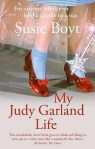
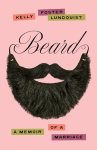
- An obsession with Judy Garland in My Judy Garland Life by Susie Boyt (no surprise there), which I read back in January, and then again in Beard: A Memoir of a Marriage by Kelly Foster Lundquist.
- Leaving a suicide note hinting at drowning oneself before disappearing in World War II Berlin; and pretending to be Jewish to gain better treatment in Aimée and Jaguar by Erica Fischer and The Lilac People by Milo Todd.
- Leaving one’s clothes on a bank to suggest drowning in The Covenant of Water by Abraham Verghese, read over the summer, and then Benbecula by Graeme Macrae Burnet.
- A man expecting his wife to ‘save’ him in Amanda by H.S. Cross and Beard: A Memoir of a Marriage by Kelly Foster Lundquist.
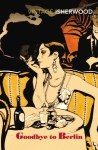 A man tells his story of being bullied as a child in Goodbye to Berlin by Christopher Isherwood and Beard by Kelly Foster Lundquist.
- References to Vincent Minnelli and Walt Whitman in a story from Touchy Subjects by Emma Donoghue and Beard by Kelly Foster Lundquist.
- The prospect of having one’s grandparents’ dining table in a tiny city apartment in Beard by Kelly Foster Lundquist and Wreck by Catherine Newman.
- Ezra Pound’s dodgy ideology was an element in The Dime Museum by Joyce Hinnefeld, which I reviewed over the summer, and recurs in Swann by Carol Shields.
- A character has heart palpitations in Andrew Miller’s story from The BBC National Short Story Award 2025 anthology and Endling by Maria Reva.
- A (semi-)nude man sees a worker outside the window and closes the curtains in one story of Cathedral by Raymond Carver and one from Good and Evil and Other Stories by Samanta Schweblin.
- The call of the cuckoo is mentioned in The Edge of Silence by Neil Ansell and Of All that Ends by Günter Grass.
 A couple in Italy who have a Fiat in Of All that Ends by Günter Grass and Caoilinn Hughes’s story from The BBC National Short Story Award 2025 anthology.
- Balzac’s excessive coffee consumption was mentioned in Au Revoir, Tristesse by Viv Groskop, one of my 20 Books of Summer, and then again in The Writer’s Table by Valerie Stivers.
- The main character is rescued from her suicide plan by a madcap idea in The Wedding People by Alison Espach and Endling by Maria Reva.
- The protagonist is taking methotrexate in Sea, Poison by Caren Beilin and Wreck by Catherine Newman.

- A man wears a top hat in Benbecula by Graeme Macrae Burnet and one story of Cathedral by Raymond Carver.
- A man named Angus is the murderer in Benbecula by Graeme Macrae Burnet and Swann by Carol Shields.
 The thing most noticed about a woman is a hair on her chin in the story “Pluck” in Touchy Subjects by Emma Donoghue and Swann by Carol Shields.
- The female main character makes a point of saying she doesn’t wear a bra in Sea, Poison by Caren Beilin and Find Him! by Elaine Kraf.
- A home hairdressing business in one story of Cathedral by Raymond Carver and Emil & the Detectives by Erich Kästner.
- Painting a bathroom fixture red: a bathtub in The Diary of a Nobody by George Grossmith, one of my 20 Books of Summer; and a toilet in Find Him! by Elaine Kraf.
- A teenager who loses a leg in a road accident in individual stories from A Wild Swan by Michael Cunningham and the Racket anthology (ed. Lisa Moore).
- Digging up the casket of a loved one in the wee hours features in Pet Sematary by Stephen King, one of my 20 Books of Summer; and one story of Pretty Monsters by Kelly Link.
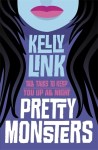
- A character named Dani in the story “The St. Alwynn Girls at Sea” by Sheila Heti and The Silver Book by Olivia Laing; later, author Dani Netherclift (Vessel).
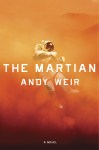 Obsessive cultivation of potatoes in Benbecula by Graeme Macrae Burnet and The Martian by Andy Weir.
- The story of Dante Gabriel Rossetti digging up the poems he buried with his love is recounted in Sharon Bala’s story in the Racket anthology (ed. Lisa Moore) and one of the stories in Pretty Monsters by Kelly Link.
- Putting French word labels on objects in Alone in the Classroom by Elizabeth Hay and Find Him! by Elaine Kraf.
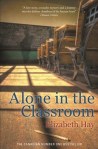
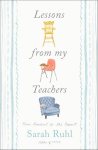 A man with part of his finger missing in Find Him! by Elaine Kraf and Lessons from My Teachers by Sarah Ruhl.
- In Minor Black Figures by Brandon Taylor, I came across a mention of the Italian film director Pier Paolo Pasolini, who is a character in The Silver Book by Olivia Laing.
- A character who works in an Ohio hardware store in Flashlight by Susan Choi and Buckeye by Patrick Ryan (two one-word-titled doorstoppers I skimmed from the library). There’s also a family-owned hardware store in Alone in the Classroom by Elizabeth Hay.
- A drowned father – I feel like drownings in general happen much more often in fiction than they do in real life – in The Homecoming by Zoë Apostolides, Flashlight by Susan Choi, and Vessel by Dani Netherclift (as well as multiple drownings in The Covenant of Water by Abraham Verghese, one of my 20 Books of Summer).
- A memoir by a British man who’s hard of hearing but has resisted wearing hearing aids in the past: first The Quiet Ear by Raymond Antrobus over the summer, then The Edge of Silence by Neil Ansell.
 A loved one is given a six-month cancer prognosis but lives another (nearly) two years in All the Way to the River by Elizabeth Gilbert and Lessons from My Teachers by Sarah Ruhl.
- A man’s brain tumour is diagnosed by accident while he’s in hospital after an unrelated accident in Flashlight by Susan Choi and Saltwash by Andrew Michael Hurley.
- Famous lost poems in What We Can Know by Ian McEwan and Swann by Carol Shields.
- A description of the anatomy of the ear and how sound vibrates against tiny bones in The Edge of Silence by Neil Ansell and What Stalks the Deep by T. Kingfisher.
- Notes on how to make decadent mashed potatoes in Beard by Kelly Foster Lundquist, Death of an Ordinary Man by Sarah Perry, and Lessons from My Teachers by Sarah Ruhl.
- Transplant surgery on a dog in Russia and trepanning appear in The Heart of a Dog by Mikhail Bulgakov and the poetry collection Common Disaster by M. Cynthia Cheung.
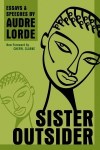
- Audre Lorde, whose Sister Outsider I was reading at the time, is mentioned in Lessons from My Teachers by Sarah Ruhl. Lorde’s line about the master’s tools never dismantling the master’s house is also paraphrased in Spent by Alison Bechdel.
- An adult appears as if fully formed in a man’s apartment but needs to be taught everything, including language and toilet training, in The Heart of a Dog by Mikhail Bulgakov and Find Him! by Elaine Kraf.
 Two sisters who each wrote a memoir about their upbringing in Spent by Alison Bechdel and Vessel by Dani Netherclift.
- The fact that ragwort is bad for horses if it gets mixed up into their feed was mentioned in Ghosts of the Farm by Nicola Chester and Understorey by Anna Chapman Parker.
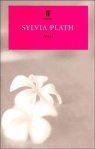
- The Sylvia Plath line “the O-gape of complete despair” was mentioned in Vessel by Dani Netherclift, then I read it in its original place in Ariel later the same day.
- A mention of the Baba Yaga folk tale (an old woman who lives in the forest in a hut on chicken legs) in Common Disaster by M. Cynthia Cheung and Woman, Eating by Claire Kohda. [There was a copy of Sophie Anderson’s children’s book The House with Chicken Legs in the Little Free Library around that time, too.]
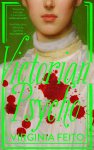
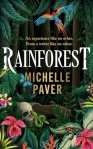
- Coming across a bird that seems to have simply dropped dead in Victorian Psycho by Virginia Feito, Vessel by Dani Netherclift, and Rainforest by Michelle Paver.
- Contemplating a mound of hair in Vessel by Dani Netherclift (at Auschwitz) and Year of the Water Horse by Janice Page (at a hairdresser’s).
- Family members are warned that they should not see the body of their loved one in Vessel by Dani Netherclift and Rainforest by Michelle Paver.
- A father(-in-law)’s swift death from oesophageal cancer in Year of the Water Horse by Janice Page and Death of an Ordinary Man by Sarah Perry.
- I saw John Keats’s concept of negative capability discussed first in My Little Donkey by Martha Cooley and then in Understorey by Anna Chapman Parker.
- I started two books with an Anne Sexton epigraph on the same day: A Portable Shelter by Kirsty Logan and Slags by Emma Jane Unsworth.
- Mentions of Martin Luther King, Jr.’s assassination in Q’s Legacy by Helene Hanff and Sister Outsider for Audre Lorde, both of which I was reading for Novellas in November.
- Mentions of specific incidents from Samuel Pepys’s diary in Q’s Legacy by Helene Hanff and Gin by Shonna Milliken Humphrey, both of which I was reading for Nonfiction November/Novellas in November.
- Starseed (aliens living on earth in human form) in Beautyland by Marie-Helene Bertino and The Conspiracists by Noelle Cook.
- Reading nonfiction by two long-time New Yorker writers at the same time: Life on a Little-Known Planet by Elizabeth Kolbert and Joyride by Susan Orlean.
- The breaking of a mirror seems like a bad omen in The Spare Room by Helen Garner and The Bell Jar by Sylvia Plath.
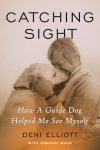 The author’s husband (who has a name beginning with P) is having an affair with a lawyer in Catching Sight by Deni Elliott and Joyride by Susan Orlean.
- Mentions of Lewis Hyde’s book The Gift in Lessons from My Teachers by Sarah Ruhl and The Serviceberry by Robin Wall Kimmerer; I promptly ordered the Hyde secondhand!
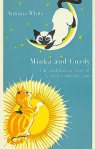
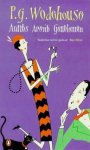
- The protagonist fears being/is accused of trying to steal someone else’s cat in Minka and Curdy by Antonia White and Aunts Aren’t Gentlemen by P.G. Wodehouse, both of which I was reading for Novellas in November.
What’s the weirdest reading coincidence you’ve had lately?
Book Serendipity, Mid-June through August
I call it “Book Serendipity” when two or more books that I read at the same time or in quick succession have something in common – the more bizarre, the better. This is a regular feature of mine every couple of months. Because I usually have 20–30 books on the go at once, I suppose I’m more prone to such incidents. People frequently ask how I remember all of these coincidences. The answer is: I jot them down on scraps of paper or input them immediately into a file on my PC desktop; otherwise, they would flit away!
The following are in roughly chronological order.
- A description of the Y-shaped autopsy scar on a corpse in Pet Sematary by Stephen King and A Truce that Is Not Peace by Miriam Toews.
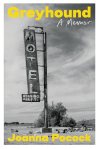
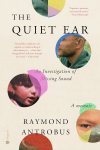
- Charlie Chaplin’s real-life persona/behaviour is mentioned in The Quiet Ear by Raymond Antrobus and Greyhound by Joanna Pocock.
- The manipulative/performative nature of worship leading is discussed in Don’t Forget We’re Here Forever by Lamorna Ash and Jarred Johnson’s essay in the anthology Queer Communion: Religion in Appalachia. I read one scene right after the other!
- A discussion of the religious impulse to celibacy in Don’t Forget We’re Here Forever by Lamorna Ash and The Dry Season by Melissa Febos.
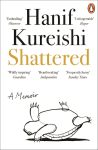
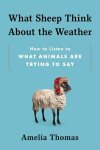
- Hanif Kureishi has a dog named Cairo in Shattered; Amelia Thomas has a son by the same name in What Sheep Think About the Weather.
- A pilgrimage to Virginia Woolf’s home in The Dry Season by Melissa Febos and Writing Creativity and Soul by Sue Monk Kidd.
- Water – Air – Earth divisions in the Nature Matters (ed. Mona Arshi and Karen McCarthy Woolf) and Moving Mountains (ed. Louise Kenward) anthologies.
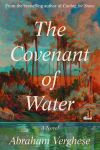 The fact that humans have two ears and one mouth and so should listen more than they talk is mentioned in What Sheep Think about the Weather by Amelia Thomas and The Covenant of Water by Abraham Verghese.
- Inappropriate sexual comments made to female bar staff in The Most by Jessica Anthony and Isobel Anderson’s essay in the Moving Mountains (ed. Louise Kenward) anthology.
- Charlie Parker is mentioned in The Most by Jessica Anthony and The Quiet Ear by Raymond Antrobus.
- The metaphor of an ark for all the elements that connect one to a language and culture was used in Chopping Onions on My Heart by Samantha Ellis, which I read earlier in the year, and then again in The Quiet Ear by Raymond Antrobus.
- A scene of first meeting their African American wife (one of the partners being a poet) and burning a list of false beliefs in The Dry Season by Melissa Febos and The Quiet Ear by Raymond Antrobus.
- The Kafka quote “a book must be the axe for the frozen sea inside us” appears in Shattered by Hanif Kureishi and Writing Creativity and Soul by Sue Monk Kidd. They also both quote Dorothea Brande on writing.
- The simmer dim (long summer light) in Shetland is mentioned in Storm Pegs by Jen Hadfield and Sally Huband’s piece in the Moving Mountains (ed. Louise Kenward) anthology (not surprising as they both live in Shetland!).
- A restaurant applauds a proposal or the news of an engagement in The Homemade God by Rachel Joyce and Likeness by Samsun Knight.
- Noticing that someone ‘isn’t there’ (i.e., their attention is elsewhere) in Woodworking by Emily St. James and Palaver by Bryan Washington.
- I was reading Leaving Atlanta by Tayari Jones and Leaving Church by Barbara Brown Taylor – which involves her literally leaving Atlanta to be the pastor of a country church – at the same time. (I was also reading Leave the World Behind by Rumaan Alam.)
- A mention of an adolescent girl wearing a two-piece swimsuit for the first time in Leave the World Behind by Rumaan Alam, The Summer I Turned Pretty by Jenny Han, and The Stirrings by Catherine Taylor.
- A discussion of John Keats’s concept of negative capability in My Little Donkey by Martha Cooley and What Sheep Think About the Weather by Amelia Thomas.
- A mention of JonBenét Ramsey in Leave the World Behind by Rumaan Alam and the new introduction to Leaving Atlanta by Tayari Jones.
- A character drowns in a ditch full of water in Leaving Atlanta by Tayari Jones and The Covenant of Water by Abraham Verghese.
 A girl dares to question her grandmother for talking down the girl’s mother (i.e., the grandmother’s daughter-in-law) in Cekpa by Leah Altman and Leaving Atlanta by Tayari Jones.
- A woman who’s dying of stomach cancer in The Covenant of Water by Abraham Verghese and Book of Exemplary Women by Diana Xin.
- A woman’s genitals are referred to as the “mons” in Leave the World Behind by Rumaan Alam and The Covenant of Water by Abraham Verghese.
- A girl doesn’t like her mother asking her to share her writing with grown-ups in People with No Charisma by Jente Posthuma and one story of Book of Exemplary Women by Diana Xin.
- A girl is not allowed to walk home alone from school because of a serial killer at work in the area, and is unprepared for her period so lines her underwear with toilet paper instead in Leaving Atlanta by Tayari Jones and The Stirrings by Catherine Taylor.
 When I interviewed Amy Gerstler about her poetry collection Is This My Final Form?, she quoted a Walt Whitman passage about animals. I found the same passage in What Sheep Think About the Weather by Amelia Thomas.
- A character named Stefan in The Dime Museum by Joyce Hinnefeld and Palaver by Bryan Washington.
- A father who is a bad painter in The Dime Museum by Joyce Hinnefeld and The Homemade God by Rachel Joyce.
- The goddess Minerva is mentioned in The Dime Museum by Joyce Hinnefeld and The Stirrings by Catherine Taylor.
- A woman finds lots of shed hair on her pillow in In Late Summer by Magdalena Blažević and The Dig by John Preston.
 An Italian man who only uses the present tense when speaking in English in The Homemade God by Rachel Joyce and Beautiful Ruins by Jess Walter.
- The narrator ponders whether she would make a good corpse in People with No Charisma by Jente Posthuma and Terminal Surreal by Martha Silano. The former concludes that she would, while the latter struggles to lie still during savasana (“Corpse Pose”) in yoga – ironic because she has terminal ALS.
- Harry the cat in The Wedding People by Alison Espach; Henry the cat in Calls May Be Recorded by Katharina Volckmer.
- The protagonist has a blood test after rapid weight gain and tiredness indicate thyroid problems in Voracious by Małgorzata Lebda and The Stirrings by Catherine Taylor.
- It’s said of an island that nobody dies there in Somebody Is Walking on Your Grave by Mariana Enríquez and Beautiful Ruins by Jess Walter.
- A woman whose mother died when she was young and whose father was so depressed as a result that he was emotionally detached from her in The Wedding People by Alison Espach and People with No Charisma by Jente Posthuma.
 A scene of a woman attending her homosexual husband’s funeral in The Homemade God by Rachel Joyce and Novel About My Wife by Emily Perkins.
- There’s a ghost in the cellar in In Late Summer by Magdalena Blažević, The Covenant of Water by Abraham Verghese and Book of Exemplary Women by Diana Xin.
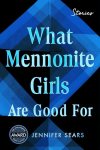
- Mention of harps / a harpist in The Wedding People by Alison Espach, The Homemade God by Rachel Joyce, and What Mennonite Girls Are Good For by Jennifer Sears.
- “You use people” is an accusation spoken aloud in The Dry Season by Melissa Febos and Beautiful Ruins by Jess Walter.
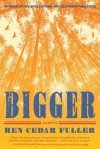
- Let’s not beat around the bush: “I want to f*ck you” is spoken aloud in The Wedding People by Alison Espach and Novel About My Wife by Emily Perkins; “Want to/Wanna f*ck?” is also in The Wedding People by Alison Espach and in Bigger by Ren Cedar Fuller.
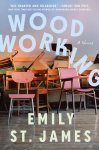 A young woman notes that her left breast is larger in Voracious by Małgorzata Lebda and Woodworking by Emily St. James. (And a girl fondles her left breast in one story of Book of Exemplary Women by Diana Xin.)
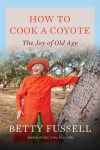
- A shawl is given as a parting gift in How to Cook a Coyote by Betty Fussell and one story of What Mennonite Girls Are Good For by Jennifer Sears.
- The author has Long Covid in Alec Finlay’s essay in the Moving Mountains anthology, and Pluck by Adam Hughes.
- An old woman applies suncream in Kate Davis’s essay in the Moving Mountains anthology, and How to Cook a Coyote by Betty Fussell.
- There’s a leper colony in What Mennonite Girls Are Good For by Jennifer Sears and The Covenant of Water by Abraham Verghese.
- There’s a missionary kid in South America in Bigger by Ren Cedar Fuller and What Mennonite Girls Are Good For by Jennifer Sears.
 A man doesn’t tell his wife that he’s lost his job in Novel About My Wife by Emily Perkins and The Summer House by Philip Teir.
- A teen brother and sister wander the woods while on vacation with their parents in Leave the World Behind by Rumaan Alam and The Summer House by Philip Teir.
- Using a famous fake name as an alias for checking into a hotel in one story of Single, Carefree, Mellow by Katherine Heiny and Seascraper by Benjamin Wood.
- A woman punches someone in the chest in the title story of Dreams of Dead Women’s Handbags by Shena Mackay and Novel About My Wife by Emily Perkins.
What’s the weirdest reading coincidence you’ve had lately?
Books of Summer, 6–8: Elizabeth Berg, Patricia Lockwood & Wendy Mitchell
Although I have foodie lit as a background theme for the summer’s reading, my main goal is simply to read books that I own, especially recent acquisitions and long-time shelf-sitters (whereas last year, in slavish conformity to a theme, I substituted in a bunch of library books, review books and e-books). My latest batch includes a slightly twee novel, an outlandish poetry collection, and an uneven nonfiction swan song.
The Year of Pleasures by Elizabeth Berg (2005)
 From the cover, I was expecting this to be more foodie than it was. The protagonist does enjoy cooking for other people and reading cookbooks, though. Betta Nolan, 55 and recently widowed by cancer, drives from Boston to the Midwest and impulsively purchases a house in a Chicago suburb, something she and her late husband had fantasized about doing in retirement. It’s the kind of sweet little town where the only realtor is a one-woman operation and Betta as a newcomer automatically gets invited onto the local radio show. She also reconnects with her college roommates, tries dating, and mulls over her dream of opening a women’s boutique that sells silk scarves, handmade journals, essential oils and brownies.
While Berg is true to the shifting emotions that accompany grief, and gives Betta plenty of cute opportunities to make friends across the generations – with Lydia, the nonagenarian former owner of her house, now in a nursing home; Matthew, the fickle young man who does some odd jobs for her; and Benny, the next-door neighbor’s nine-year-old boy – I found the subplot about Matthew’s messy house and relationships silly, and Betta’s “What a Woman Wants” shop idea is so stereotyping I could feel myself rolling my eyes. Still, Berg’s novels, of which this was my fifth, are always reliably light and pleasant reads in an Anne Tyler vein. (Secondhand – 2nd & Charles) 
Motherland Fatherland Homelandsexuals by Patricia Lockwood (2014)
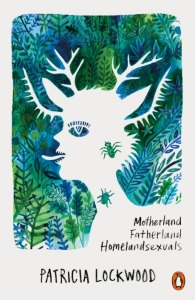 One of the more bizarre books I’ve ever read. I loved both Priestdaddy and No One Is Talking About This, but had no idea what to expect from Lockwood’s poems. They’re somewhere between absurdist monologues and thought experiments, often choosing an object or abstraction to animate (“A Recent Transformation Tries to Climb the Stairs”) and generally sexualized to the max (“Nessie Wants to Watch Herself Doing It”). Though they’re in stanzas, they aren’t heavy on poetic techniques. Some tangential topics are Bambi, Canada, basketball, waterfalls, King Kong adaptations, American poetry, Shirley Temple, and childhood hobbies like Animorphs, Egyptology and Magic Eye puzzles.
But really, her poetry is only “about” things in the loosest sense; the repetition, wordplay and snark are paramount. If you’ve heard of one, it’s likely to be the lengthy “Rape Joke,” which went as viral as it’s possible for a poem to and is, ironically, probably the sincerest entry here. Presumably based on her own bad experience with a teenage boyfriend, it is heartbreakingly banal: “The rape joke is that he was your father’s high school student … The rape joke is that come on, you should have seen it coming. … The rape joke is that you asked why he did it. The rape joke is he said he didn’t know, like what else would a rape joke say?”
A couple of my favourites were “List of Cross-Dressing Soldiers” and “He Marries the Stuffed-Owl Exhibit at the Indiana Welcome Center”; “The Father and Mother of American Tit-Pics,” in which a resurrected Emily Dickinson and Walt Whitman swap genders, had some of the more outrageous lines: “Walt Whitman is the Number Two Beach Body every year, because look at the way he snapped back into shape only months after giving birth to American Poetry.” Not really like any other poetry I’ve ever read. (New purchase with Christmas money) 
One Last Thing: Conversations on Life, Death and Assisted Dying by Wendy Mitchell with Anna Wharton (2023)
“We talk so often about prolonging life, but we are actually prolonging death by not discussing the suffering part of it.”
Wendy Mitchell’s first two books, Somebody I Used to Know and What I Wish People Knew About Dementia, are valuable peeks into daily life with young-onset Alzheimer’s. She has been a dedicated activist and educator in the nine years since her diagnosis, and I admire the work she’s done to get dementia services into the public eye.
 The problem with her final book is that I’ve read so much about preparations for dying and the question of assisted suicide and she doesn’t bring much new to the discussion – apart from the specific viewpoint of someone deciding when and how to end their life when they don’t know what the future course of their illness looks like. Mitchell believes people should have this choice, but current UK law does not allow for assisted dying. A loophole is voluntarily stopping eating and drinking (VSED), which she deems her best option. She stopped attending assessments in 2017 and has filed forms with her GP refusing treatment – her nightmare situation is being reliant on care in hospital and she doesn’t want to become that future, dependent Wendy.
Like Henry Marsh’s farewell book, And Finally, this gives the impression of having been written in a hurry and rushed into print, and so could have been edited more. As it is, it’s fairly scattered, repetitive and unpolished. The interviews could all be streamlined and tidied up, and the one with Kathryn Mannix is split up in a confusing way.
For readers new to the topic, however, this could be a useful introduction to the issues. It’s up-to-date in that Mitchell attends a Death Café, meets an end-of-life doula, and talks through the different forms (power of attorney, advance directive and so on) with experts. I also thought the epilogue was a lovely touch: after going for a ‘wing walking’ airplane adventure, she imagines that, having taken a bus into York, she sees her pre-diagnosis self and tells her everything she would want her to know, good and bad, about the challenges to come. (Proof copy from Hungerford Bookshop Summer Reading Celebration) [Different subtitle on finished edition?] 
10 Days in the USA and What I Read (Plus a Book Haul)
On October 29th, I went to an evening drinks party at a neighbour’s house around the corner. A friend asked me about whether the UK or the USA is “home” and I replied that the States feels less and less like home every time I go, that the culture and politics are ever more foreign to me and the UK’s more progressive society is where I belong. I even made an offhand comment to the effect of: once my mother passed, I didn’t think I’d fly back there often, if at all. I was thinking about 5–10 years into the future; instead, a few hours after I got home from the party, we were awoken by the middle-of-the-night phone call saying my mother had suffered a nonrecoverable brain bleed. The next day she was gone.
I haven’t reflected a lot on the irony of that timing, probably because it feels like too much, but it turns out I was completely wrong: in fact, I’m now returning to the States more often. With our mom gone and our dad not really in our lives, my sister and I have gotten closer. Since October I’ve flown back twice and she’s visited here once. There are 7.5 years between us and we’ve always been at different stages of life, with separate preoccupations and priorities; I was also lazy and let my mom be the go-between, passing family news back and forth. Now there’s a sense that we are all we have, and we have to stick together.


So it was doubly important for me to be there for my sister’s graduation from nursing school last week. If we follow each other on Facebook or Instagram, you will have already seen that she finished at the top of her cohort and was one of just two students recognized for academic excellence out of the college’s over 200 graduates – and all of this while raising four children and coping with the disruption of Mom’s death seven months ago. There were many times when she thought she would have to pause or give up her studies, but she persisted and will start work as a hospice nurse soon. We’re all as proud as could be, on our mom’s behalf, too.
The trip was a mixture of celebratory moments and sad duties. We started the process of going through our mom’s belongings and culling what we can, but the files, photos and mementoes are the real challenge and had to wait for another time. There were dozens of books I’d given her for birthdays and holidays, mostly by her favourite gentle writers – Gerald Durrell, Jan Karon, Gervase Phinn – invariably annotated with her name, the date and occasion. I looked back through them and then let them go.


Between my two suitcases I managed to bring back the rest of her first box of journals (there are 150 of them in total, spanning 1989 to 2022), and I’m halfway through #4 at the moment. We moved out of my first home when I was nine, and I don’t have a lot of vivid memories of those early years. But as I read her record of everyday life it’s like I’m right back in those rooms. I get new glimpses of myself, my dad, my sister, but especially of her – not as my mother, but as a whole person. As a child I never realized she was depressed: distressed about her job situation, worried over conflicts with her siblings and my sister, coping with ill health (she was later diagnosed with fibromyalgia) and resisting ageing. For as strong as her Christian faith was, she was really struggling in ways I couldn’t appreciate then.

I hope that later journals will introduce hindsight, now that she’s not around to give a more circumspect view. In any case, they’re an incredible legacy, a chance for me to relive much of my life that I otherwise would only remember in fragments through photographs, and perhaps have a preview of what I can expect from the course of our shared kidney disease.
What I Read
 The Housekeepers by Alex Hay – A historical heist novel with shades of Downton Abbey, this comes out in July. Reviewed for Shelf Awareness.

Cowboys Are My Weakness by Pam Houston – Terrific: stark, sexy stories about women who live out West and love cowboys and hunters (as well as dogs and horses). Ten of the stories are in the first person, voiced by women in their twenties and thirties who are looking for romance and adventure and anxiously pondering motherhood (“by the time you get to be thirty, freedom has circled back on itself to mean something totally different from what it did at twenty-one”). The remaining two are in the second person, which I always enjoy. The occasional Montana setting reminded me of stories I’ve read by Maile Meloy and Maggie Shipstead, while the relationship studies made me think of Amy Bloom’s work.

The Harpy by Megan Hunter – Read for Literary Wives club. Review coming up on Monday. 

The Lake Shore Limited by Sue Miller – A solid set of narratives alternating between the POVs of four characters whose lives converge around a play inspired by the playwright’s loss of her boyfriend on one of the hijacked planes on 9/11. Her mixed feelings about him towards the end of his life and about being shackled to his legacy as his ‘widow’ reverberate in other sections: one about the lead actor, whose wife has ALS; and one about a widower the playwright is being set up with on a date. Fitting for a book about a play, the scenes feel very visual. A little underpowered, but subtlety is to be expected from a Miller novel. She, Anne Tyler and Elizabeth Berg write easy reads with substance, just the kind of book I want to take on an airplane, as indeed I did with this one. I read the first 2/3 on my travel day (although with the 9/11 theme this maybe wasn’t the best choice!).
 For apposite plane reading, I also started Fly Girl by Ann Hood, her memoir of being a TWA flight attendant in the 1970s, the waning glory days of air travel. I’ve read 10 or so of Hood’s books before from various genres, but lost interest in the minutiae of her job applications and interviews. Another writer would probably have made a bigger deal of the inherent sexism of the profession, too. I read 30%.
 Hello Beautiful by Ann Napolitano – I knew I wanted to read this even before it was Oprah’s 100th book club pick. It’s a family story spanning three decades and focusing on the Padavanos, a working-class Italian American Chicago clan with four daughters: Julia, Sylvie, and twins Cecilia and Emeline. Julia meets melancholy basketball player William Waters while at Northwestern in the late 1970s and they marry and have a daughter; Sylvie, a budding librarian, makes out with boys in the stacks until her great romance comes along; Cecilia is an artist and Emeline loves babies and manages a nursery. More than once a character think of their collective story as a “soap opera,” and there’s plenty of melodrama here – an out-of-wedlock pregnancy, estrangements, a suicide attempt, a coming out, stealing another’s man – as well as far-fetched coincidences, including the two major deaths falling on the same day as a birth and a reconciliation.
There is such warmth and intensity to the telling, and brave reckoning with mental illness, prejudice and trauma, that I excused flaws such as dwelling overly much in characters’ heads through close third person narration, to the detriment of scenes and dialogue. I love sister stories in general, and the subtle echoes of Leaves of Grass and Little Women (the connections aren’t one to one and you’re kept guessing for most of the book who will be the Beth) add heft. I especially appreciated how a late parent is still remembered in daily life after 30 years have passed. This is, believe it or not, the second basketball novel I’ve loved this year, after Tell the Rest by Lucy Jane Bledsoe.
I always try to choose thematically appropriate reads, so I also started:
 Circling My Mother by Mary Gordon – A memoir she began after her nonagenarian mother’s death with dementia. Intriguingly, the structure is not chronological but topic by topic, built around key relationships: so far I’ve read “My Mother and Her Bosses” and “My Mother: Words and Music.”
Grave by Allison C. Meier – My sister and I made a day trip up to my mother’s grave for the first time since her burial. She has a beautiful spot in a rural cemetery dating back to the 1780s, but it’s in full sun and very dry, so we tried to cheer up the dusty plot with some extra topsoil and grass seed, marigolds, and a butterfly flag.


 Meier is a cemetery tour guide in Brooklyn, where she lives. In the third of the e-book I’ve read so far, she looks at American burial customs, the lack of respect for Black and Native American burial sites, and the rise of garden cemeteries such as Mount Auburn in Cambridge, Massachusetts. I’ve been reading death-themed books for over a decade and have delighted in exploring cemeteries (including Mount Auburn, as part of my New England honeymoon) for even longer, so this is right up my street and one of the better Object Lessons monographs.
What I Bought
I traded in most of my mother’s books at 2nd & Charles and Wonder Book and Video but, no surprise, promptly spent the store credit on more secondhand books. Thanks to clearance shelves at both stores, I only had to chip in another $12.25 for the below haul, which also covered two Dollar Tree purchases (I felt bad for Susan Minot having signed editions end up remaindered!). Some tried and true authors here, as well as novelties to test out, with a bunch of short stories and novellas to read later in the year.


20 Books of Summer, 14–16: Barba, Bersweden and Solnit
I’m all about flowers today: American wildflowers in poetry and prose, a year of hunting down the flora of the British Isles, and a discursive account of a famous English author’s life and times through the prism of his rose garden.
American Wildflowers: A Literary Field Guide, ed. Susan Barba; illus. Leanne Shapton (2022)
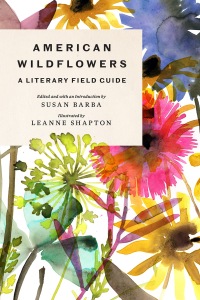 This comes out from Abrams Press in the USA on 8 November and I’ll be reviewing it for Shelf Awareness, so I’ll just give a few brief thoughts for now. Barba is a poet and senior editor for New York Review Books. She has collected pieces from a wide range of American literature, including essays, letters and early travel writings as well as poetry, which dominates.
Apart from a closing section on various/anonymous wildflowers, where particular species are named they are grouped into families, which are arranged alphabetically. The Asteraceae section is particularly strong, with poems on dandelions and sunflowers, a typically prophetic Aldo Leopold fragment about the decline of native flora, and “Asters and Goldenrod,” an extract from Robin Wall Kimmerer’s Braiding Sweetgrass (itself one of my 20 Books of Summer – review to come in the week) that I think was also excerpted in This Book Is a Plant.
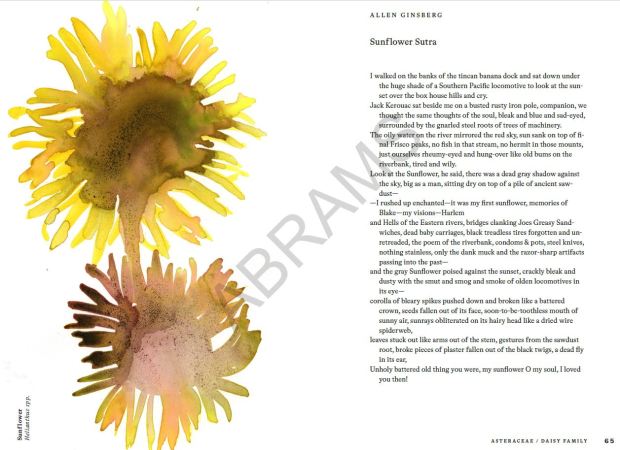
Sample two-page spread with a Leanne Shapton watercolor and part of an Allen Ginsberg poem.
In general, I engaged more with the poetry than with the prose. Barba has ensured a real variety of styles, with good representation for BIPOC. What draws it all together into a beautiful whole I wish I could see as a physical object is Leanne Shapton’s watercolor illustrations, painted from pressed flowers. “What a gift to stare at flowers—these ephemeral miracles of color and synthesis and botany,” she writes in an opening note. This would be a perfect coffee table book for any gardener or nature lover. (E-review copy)
Where the Wildflowers Grow: My Botanical Journey through Britain and Ireland by Leif Bersweden (2022)
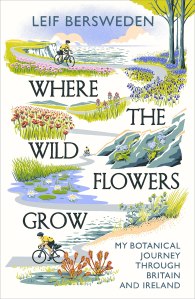 A good case of nominative determinism – the author’s name is pronounced “leaf” – and fun connections abound: during the course of his year-long odyssey, he spends time plant-hunting with Jon Dunn and Sophie Pavelle, whose books featured earlier in my flora-themed summer reading: Orchid Summer and Forget Me Not. With Dunn on Unst, Shetland, he sees not only rare flowers but close-up orcas. Like Pavelle, who he meets up with in Cornwall, he has an eye to how species will be affected by climate change and commits to doing his hunting by train and bike; there’s only so much you can see when zooming by in a car. Bersweden makes a case for spending time with plants – after all, they don’t move, so once you’ve found them you can commune in a way you can’t during, say, a fleeting mammal encounter.
He starts 2021 with a New Year Plant Hunt in central London with his mother – more is in bloom in January than ever before, at least in part due to climate warming. Even when the weather is foul on his travels, there is plenty to be seen. Everywhere he goes, he meets up with fellow experts and plant enthusiasts to marvel at bluebell woodlands or ancient pine forests, alpine or bog species. The floral circuit (documented in full on the book’s website through chapter-by-chapter photographs; there are two small sections of colour plates in the hardback) is also a chance to tour the British Isles, from Kent to Cork, coast to mountaintop.
Bersweden has been in love with plants ever since childhood; he believes they have nostalgia value for many people, and can be an easy way into appreciation of nature. “A wildflower growing from a crack in the wall is an everyday miracle.” His casual writing style and clear zeal for his subject – his author photo is of him hugging a tree, and another has such a cute caption: “Being given the opportunity to hold a Greater Bladderwort (Utricularia vulgaris) was one of the best things that’s ever happened to me!” – make this a pleasure even though it’s a bit overlong at points. (Public library)
Orwell’s Roses by Rebecca Solnit (2021)
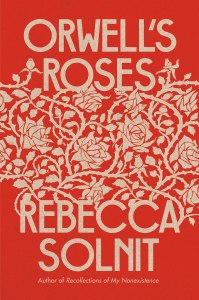 I was fascinated by the concept behind this one. “In the spring of 1936 a writer planted roses” is Solnit’s refrain; from there sprawls a book that’s somehow about everything: botany, geology, history, politics and war – as well as, of course, George Orwell’s life and works (with significant overlap with the graphic novel biography of him that I read last year). On a trip to England with a friend who is a documentary filmmaker, Solnit had the impulse to go find what might be left of Orwell’s garden. When she arrived in the Hertfordshire village of Wallington, the current owners of his home kindly showed her round. His fruit trees had long since been cut down, but the rosebushes were still going strong some 80 years later.
This goes down as a skim for me: though I read the first 30%, after that I just browsed to the end. Some side tracks lost me, e.g. Tina Modotti’s presentation of roses in her photographs; Orwell’s interest in mining, which leads Solnit to investigate how coal is formed; much history; and a week spent observing the rose-growing industry in Colombia. I most enjoyed the book when it stayed close to Orwell’s biography and writings, positing gardening as his way of grounding his ideas in the domestic and practical. “Pursuits like that can bring you back to earth from the ether and the abstractions.” I also liked – briefly, at least – thinking about the metaphorical associations of roses, and flowers in general.
If you’ve read Solnit before, you’ll know that her prose is exquisite, but I think this was the stuff of a long article rather than a full book. As it is, it’s a pretty indulgent project. (Kaggsy reviewed this recently and came to somewhat similar conclusions.) (NetGalley)
Nonfiction Week of #NovNov: Short Memoirs by Lucille Clifton, Alice Thomas Ellis and Deborah Levy
It’s nonfiction week of Novellas in November, which for me usually means short memoirs (today) and nature books (coming up on Wednesday). However, as my list of 10 nonfiction favorites from last year indicates, there’s no shortage of subjects covered in nonfiction works of under 200 pages; whether you’re interested in bereavement, food, hospitality, illness, mountaineering, nature, politics, poverty or social justice, you’ll find something that suits. This week is a great excuse to combine challenges with Nonfiction November, too.

We hope some of you will join in with our buddy read for the week, The Story of My Life by Helen Keller (free to download here from Project Gutenberg if you don’t already have access). At a mere 85 pages, it’s a quick read. I’ve been enjoying learning about her family history and how meeting her teacher was the solution to her desperate need to communicate.
My first three short nonfiction reads of the month are all in my wheelhouse of women’s life writing, with each one taking on a slightly different fragmentary form.
Generations: A Memoir by Lucille Clifton (1976)
[87 pages]
 After her father’s death, Clifton, an award-winning poet, felt compelled to delve into her African American family’s history. Echoing biblical genealogies, she recites her lineage in a rhythmic way and delivers family anecdotes that had passed into legend. First came Caroline, “Mammy Ca’line”: born in Africa in 1822 and brought to America as a child slave, she walked north from New Orleans to Virginia at age eight, became a midwife, and died free. Mammy Ca’line’s sayings lived on through Clifton’s father, her grandson: she “would tell us that we was Sayle people and we didn’t have to obey nobody. You a Sayle, she would say. You from Dahomey women.” Then came Caroline’s daughter, Lucy Sale, famously the first Black woman hanged in Virginia – for shooting her white lover. And so on until we get to Clifton herself, who grew up near Buffalo, New York and attended Howard University.
The chapter epigraphs from Walt Whitman’s “Song of Myself” call into question how much of an individual’s identity is determined by their family circumstances. While I enjoyed the sideways look at slavery and appreciated the poetic take on oral history, I thought more detail and less repetition would have produced greater intimacy.
Reissued by NYRB Classics tomorrow, November 9th, with a new introduction by Tracy K. Smith. My thanks to the publisher for the proof copy for review.
Home Life, Book Four by Alice Thomas Ellis (1989)
[169 pages]
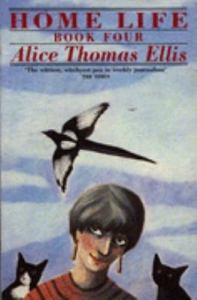 For four years, Ellis wrote a weekly “Home Life” column for the Spectator. Her informal pieces remind me of Caitlin Moran’s 2000s writing for the Times – what today might form the kernel of a mums’ blog. In short, we have a harried mother of five trying to get writing done while maintaining a household – but given she has homes in London and Wales AND a housekeeper, and that her biggest problems include buying new carpet and being stuck in traffic, it’s hard to work up much sympathy. These days we’d say, Check your privilege.
The sardonic complaining rubbed me the wrong way, especially when the subject was not finding anything she wanted to read even though she’d just shipped four boxes of extraneous books off to her country house, or using noxious sprays to get rid of one harmless fly, or a buildup of rubbish bags because they’d been “tidying.” These essays feel of their time for the glib attitude and complacent consumerism. It’s rather a shame they served as my introduction to Ellis, but I think I’d still give her fiction a try. (Secondhand purchase, Barter Books) 
The Cost of Living by Deborah Levy (2018)
[187 pages]
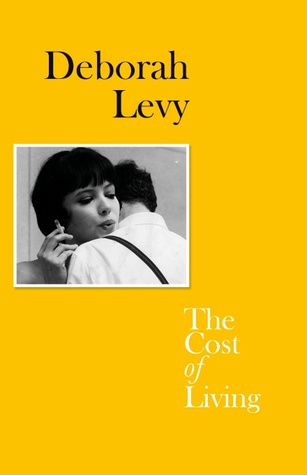 In the space of a year, Levy separated from her husband and her mother fell ill with the cancer that would kill her. Living with her daughters in a less-than-desirable London flat, she longed for a room of her own. Her octogenarian neighbor, Celia, proffered her garden shed as a writing studio, and that plus an electric bike conferred the intellectual and physical freedom she needed to reinvent her life. That is the bare bones of this sparse volume, the middle one in an autobiographical trilogy, onto which Levy grafts the tissue of experience: conversations and memories; travels and quotations that have stuck with her.
It’s hard to convey just what makes this brilliant. The scenes are everyday – set at her apartment complex, during her teaching work or on a train; the dialogue might be overheard. Yet each moment feels perfectly chosen to reveal her self, or the emotional truth of a situation, or the latent sexism of modern life. “All writing is about looking and listening and paying attention to the world,” she writes, and it’s that quality of attention that sets this apart. I’ve had mixed success with Levy’s fiction (though I loved Hot Milk), but this was flawless from first line to last. I can only hope the rest of the memoir lives up to it. (New purchase) 
Keep in touch via Twitter (@bookishbeck / @cathy746books) and Instagram (@bookishbeck / @cathy_746books). We’ll add any of your review links in to our master posts. Feel free to use the terrific feature image Cathy made and don’t forget the hashtag #NovNov.
Any short nonfiction on your reading pile?
Review Book Catch-Up: Motherhood, Nature Essays, Pandemic, Poetry
July slipped away without me managing to review any current-month releases, as I am wont to do, so to those three I’m adding in a couple of other belated review books to make up today’s roundup. I have: a memoir-cum-sociological study of motherhood, poems of Afghan women’s experiences, a graphic novel about a fictional worst-case pandemic, seasonal nature essays from voices not often heard, and poetry about homosexual encounters.
(M)otherhood: On the choices of being a woman by Pragya Agarwal
“Mothering would be my biggest gesture of defiance.”
 Growing up in India, Agarwal, now a behavioural and data scientist, wished she could be a boy for her father’s sake. Being the third daughter was no place of honour in society’s eyes, but her parents ensured that she got a good education and expected her to achieve great things. Still, when she got her first period, it felt like being forced onto a fertility track she didn’t want. There was a dearth of helpful sex education, and Hinduism has prohibitions that appear to diminish women, e.g. menstruating females aren’t permitted to enter a temple.
Married and unexpectedly pregnant in 1996, Agarwal determined to raise her daughter differently. Her mother-in-law was deeply disappointed that the baby was a girl, which only increased her stubborn pride: “Giving birth to my daughter felt like first love, my only love. Not planned but wanted all along. … Me and her against the world.” No element of becoming a mother or of her later life lived up to her expectations, but each apparent failure gave a chance to explore the spectrum of women’s experiences: C-section birth, abortion, divorce, emigration, infertility treatment, and finally having further children via a surrogate.
While I enjoyed the surprising sweep of Agarwal’s life story, this is no straightforward memoir. It aims to be an exhaustive survey of women’s life choices and the cultural forces that guide or constrain them. The book is dense with history and statistics, veers between topics, and needed a better edit for vernacular English and smoothing out academic jargon. I also found that I wasn’t interested enough in the specifics of women’s lives in India.
With thanks to Canongate for the free copy for review.
Forty Names by Parwana Fayyaz
“History has ungraciously failed the women of my family”
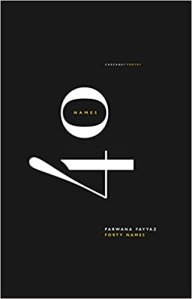 Have a look at this debut poet’s journey: Fayyaz was born in Kabul in 1990, grew up in Afghanistan and Pakistan, studied in Bangladesh and at Stanford, and is now, having completed her PhD, a research fellow at Cambridge. Many of her poems tell family stories that have taken on the air of legend due to the translated nicknames: “Patience Flower,” her grandmother, was seduced by the Khan and bore him two children; “Quietude,” her aunt, was a refugee in Iran. Her cousin, “Perfect Woman,” was due to be sent away from the family for infertility but gained revenge and independence in her own way.
Fayyaz is bold to speak out about the injustices women can suffer in Afghan culture. Domestic violence is rife; miscarriage is considered a disgrace. In “Roqeeya,” she remembers that her mother, even when busy managing a household, always took time for herself and encouraged Parwana, her eldest, to pursue an education and earn her own income. However, the poet also honours the wisdom and skills that her illiterate mother exhibited, as in the first three poems about the care she took over making dresses and dolls for her three daughters.
As in Agarwal’s book, there is a lot here about ideals of femininity and the different routes that women take – whether more or less conventional. “Reading Nadia with Eavan” was a favourite for how it brought together different aspects of Fayyaz’s experience. Nadia Anjuman, an Afghan poet, was killed by her husband in 2005; many years later, Fayyaz found herself studying Anjuman’s work at Cambridge with the late Eavan Boland. Important as its themes are, I thought the book slightly repetitive and unsubtle, and noted few lines or turns of phrase – always a must for me when assessing a poetry collection.
With thanks to Carcanet Press for the free copy for review.
Resistance by Val McDermid; illus. Kathryn Briggs
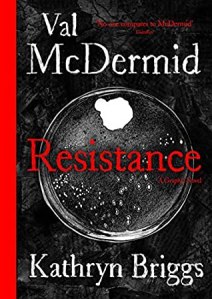 The second 2021 release I read in quick succession in which all but a small percentage of the human race (here, 2 million people) perishes in a pandemic – the other was Under the Blue. Like Aristide’s novel, this story had its origins in 2017 (in this case, on BBC Radio 4’s “Dangerous Visions”) but has, of course, taken on newfound significance in the time of Covid-19. McDermid imagines the sickness taking hold during a fictional version of Glastonbury: Solstice Festival in Northumberland. All the first patients, including a handful of rockstars, ate from Sam’s sausage sandwich van, so initially it looks like food poisoning. But vomiting and diarrhoea give way to a nasty rash, listlessness and, in many cases, death.
Zoe Beck, a Black freelance journalist who conducted interviews at Solstice, is friends with Sam and starts investigating the mutated swine disease, caused by an Erysipelas bacterium and thus nicknamed “the Sips.” She talks to the festival doctor and to a female Muslim researcher from the Life Sciences Centre in Newcastle, but her search for answers takes a backseat to survival when her husband and sons fall ill.
The drawing style and image quality – some panes are blurry, as if badly photocopied – let an otherwise reasonably gripping story down; the best spreads are collages or borrow a frame/backdrop (e.g. a medieval manuscript, NHS forms, or a 1910s title page).


SPOILER
{The ending, which has an immune remnant founding a new community, is VERY Parable of the Sower.}
With thanks to Profile Books/Wellcome Collection for the free copy for review.
Gifts of Gravity and Light: A Nature Almanac for the 21st Century, ed. Anita Roy and Pippa Marland
I hadn’t heard about this upcoming nature anthology when a surprise copy dropped through my letterbox. I’m delighted the publisher thought of me, as this ended up being just my sort of book: 12 autobiographical essays infused with musings on landscapes in Britain and elsewhere; structured by the seasons to create a gentle progression through the year, starting with the spring. Best of all, the contributors are mostly female, BIPOC (and Romany), working class and/or queer – all told, the sort of voices that are heard far too infrequently in UK nature writing. In momentous rites of passage, as in routine days, nature plays a big role.
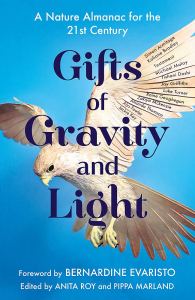 A few of my favourite pieces were by Kaliane Bradley, about her Cambodian heritage (the Wishing Dance associated with cherry blossom, her ancestors lost to genocide, the Buddhist belief that people can be reincarnated in other species); Testament, a rapper based in Leeds, about capturing moments through photography and poetry and about the seasons feeling awry both now and in March 2008, when snow was swirling outside the bus window as he received word of his uni friend’s untimely death; and Tishani Doshi, comparing childhood summers of freedom in Wales with growing up in India and 2020’s Covid restrictions.
Most of the authors hold two places in mind at the same time: for Michael Malay, it’s Indonesia, where he grew up, and the Severn estuary, where he now lives and ponders eels’ journeys; for Zakiya McKenzie, it’s Jamaica and England; for editor Anita Roy, it’s Delhi versus the Somerset field her friend let her wander during lockdown. Trees lend an awareness of time and animals a sense of movement and individuality. Alys Fowler thinks of how the wood she secretly coppices and lays on park paths to combat the mud will long outlive her, disintegrating until it forms the very soil under future generations’ feet.
A favourite passage (from Bradley): “When nature is the cuddly bunny and the friendly old hill, it becomes too easy to dismiss it as a faithful retainer who will never retire. But nature is the panic at the end of a talon, and it’s the tree with a heart of fire where lightning has struck. It is not our friend, and we do not want to make it our enemy.”
Also featured: Bernardine Evaristo (foreword), Raine Geoghegan, Jay Griffiths, Amanda Thomson, and Luke Turner.
With thanks to Hodder & Stoughton for the free copy for review.
Records of an Incitement to Silence by Gregory Woods
 Woods is an emeritus professor at Nottingham Trent University, where he was appointed the UK’s first professor of Gay & Lesbian Studies in 1998. Much of his sixth poetry collection is composed of unrhymed sonnets in two stanzas (eight lines, then six). The narrator is often a randy flâneur, wandering a city for homosexual encounters. One assumes this is Woods, except where the voice is identified otherwise, as in “[Walt] Whitman at Timber Creek” (“He gives me leave to roam / my idle way across / his prairies, peaks and canyons, my own America”) and “No Title Yet,” a long, ribald verse about a visitor to a stately home.
Other times the perspective is omniscient, painting a character study, like “Company” (“When he goes home to bed / he dare not go alone. … This need / of company defeats him.”), or of Frank O’Hara in “Up” (“‘What’s up?’ Frank answers with / his most unseemly grin, / ‘The sun, the Dow, my dick,’ / and saunters back to bed.”). Formalists are sure to enjoy Woods’ use of form, rhyme and meter. I enjoyed some of the book’s cheeky moments but had trouble connecting with its overall tone and content. That meant that it felt endless. I also found the end rhymes, when they did appear, over-the-top and silly (Demeter/teeter, etc.).
Two favourite poems: “An Immigrant” (“He turned away / to strip. His anecdotes / were innocent and his / erection smelled of soap.”) and “A Knot,” written for friends’ wedding in 2014 (“make this wedding supper all the sweeter / With choirs of LGBT cherubim”).
With thanks to Carcanet Press for the free copy for review.
Would you be interested in reading one or more of these?
Paul Auster Reading Week: Winter Journal & The New York Trilogy
Before this year, I’d read only one book by Paul Auster: Timbuktu, which fit into last year’s all-animal 20 Books of Summer for its canine main character. This year I’ve enjoyed having Annabel’s Paul Auster Reading Week as an excuse to binge on more Auster, including one of his memoirs, Winter Journal, and his most famous set of novels, the New York Trilogy. I’m reading another two Auster books, one fiction and nonfiction, and will see if I can finish and write them up before the week ends.

Winter Journal (2012)
This is one of the most remarkable memoirs I’ve ever read. Approaching age 64 and the winter of his life, Auster decided to assemble his most visceral memories. Here he parades them past in a seemingly random order yet manages to give a sense of the sweep of his life. The use of the second person draws readers in to (re-)experience things along with the author, while also creating an artistic distance between the subject and his reminiscences. Auster describes his aim thus:
Time is running out, after all. Perhaps it is just as well to put aside your stories for now and try to examine what it has felt like to live inside this body from the first day you can remember being alive until this one. A catalogue of sensory data. What one might call a phenomenology of breathing.
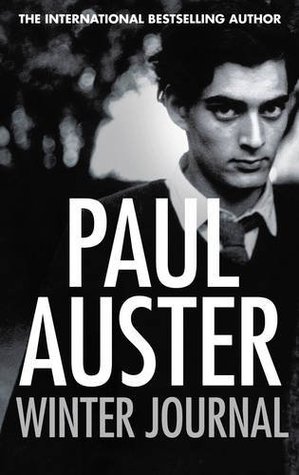 His life reappears through scars, through accidents and near-misses, through what his hands felt and his eyes observed. A three-year-old rips his cheek open on a protruding nail in a department store. A teenager slowly builds up a portfolio of sexual experiences. A young man lives and works in Paris and the South of France. A marriage to one fellow author (Lydia Davis) ends and a relationship with another (Siri Hustvedt) begins. A fiftysomething rushing to get home to the toilet makes an ill-advised turn against traffic and totals his car – luckily, he and his family escape unhurt. Numbness after his mother’s death cedes to a panic attack.
I particularly enjoyed the 53-page section in which Auster gives tours through the 21 places he’s lived since infancy, recounting the details he remembers of the dwellings and what happened during his time there. It’s impressive how much he can condense, but also how much he can convey in just a few pages on each home. This is the sort of format I could imagine borrowing for a short autobiographical piece – it would be a way of redeeming that involuntarily nomadic period when my husband and I moved every six to 18 months.
Reading this alongside the New York Trilogy allowed me to spot the ways, big and small, in which those novels draw on Auster’s life story. I’m now keen to read more of his nonfiction, especially The Invention of Solitude, which offended his relatives by revealing the shameful family story of how his grandmother shot and killed his grandfather in their kitchen.
Annabel says: “The book is written in the second person – addressing himself; it gives a real sense of intimacy to his story. … Auster is an unconventional, analytical and eloquent writer, and this unconventional memoir was a delight to read, he can look with humour at himself as well as being serious.”
Laura F. says: “You know how people say they’d read anything by their favourite author, even a grocery list? Winter Journal gets pretty close to that territory. … I’ve never read a memoir like this, and though focused on the physical, it’s a fully emotional experience.”
Some favorite lines:
“as long as you continue to travel, the nowhere that lies between the here of home and the there of somewhere else will continue to be one of the places where you live.”
“We are all aliens to ourselves, and if we have any sense of who we are, it is only because we live inside the eyes of others.”
“you can only conclude that every life is marked by a number of close calls, that everyone who manages to reach the age you have come to now has already wriggled out of a number of potentially absurd, nonsensical deaths. All in the course of what you would call ordinary life.”
Readalikes: I Am, I Am, I Am by Maggie O’Farrell & The Lost Properties of Love by Sophie Ratcliffe
The New York Trilogy
(also my Doorstopper of the Month at 580 pages)
City of Glass (1985)
 A metafictional mystery about a crime writer named Daniel Quinn who turns private investigator when he gets a phone call asking for the Paul Auster Detective Agency. This is one of those books where what actually happens is a lot less important than the atmosphere it creates. So what feels essential to me here is the sense of a labyrinthine New York City and a confusion of languages and relationships. Quinn, who is helpfully untethered after the death of his wife and son, is hired to tail Peter Stillman’s father, who has recently been released from a mental hospital, where he was sentenced after being judged insane for keeping his son in isolation in a dark apartment for nine years.
Feral children, maps, eggs, the Tower of Babel and Don Quixote are some of the recurring sources of metaphors in a deliberately disorienting and intertextually rich short novel that kept me turning the pages even when I didn’t know precisely what was going on. We get a glimpse of Auster himself, and are invited to muse on such tiny subjects as destiny, the limitations of language, the purpose of books, and the nature of truth. I’m curious to see whether the other two novels follow on from the story at all or just resemble it thematically.
Ghosts (1986)
I jumped straight into this from City of Glass, and it suffered by comparison. It is not a sequel per se, because it has different characters and is set in the late 1940s instead of the early 1980s, but it shares some of the same concerns (with literature, identity, doubling, the essential otherness of the writer, and so on) and again is a sort of metafictional mystery.
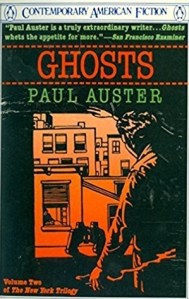 Part of why I couldn’t take this novella entirely seriously is the silly naming: White hires Blue to trail Black (really; all of the secondary characters are named after colors, too). It turns out Black is a writer who does little besides sit in his apartment, writing. Only when Blue disguises himself as a tramp and then as a salesman and meets Black in various other contexts does he realize that Black, too, is an investigator … writing up a case of following a writer who hardly leaves his desk.
While I appreciated the circularity and the uncertainty over whether these accidental twins would destroy each other, as well as the literary references to Whitman, Thoreau and Hawthorne, the whole felt slightly inconsequential (“Blue watches Black, and little of anything happens.”). Plotlessness is part of the point, but makes for only a moderately interesting read.
[There is one coded reference to Auster here: the fact that the book opens on February 3, 1947, the day he was born.]
The Locked Room (1986)
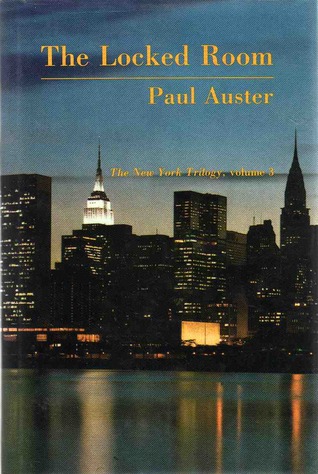 While most of the New York Trilogy is told in the third person, this is a first-person narrative that seems to pick up where City of Glass left off. It begins in 1977, when the unnamed narrator gets a letter from Sophie Fanshawe, the wife of his childhood best friend, telling him that Fanshawe disappeared six months ago, and despite the best efforts of a detective, Quinn (in another link to CoG, the narrator encounters Peter Stillman on a later trip to Paris), no trace can be found. The narrator has been named Fanshawe’s literary executor and takes it upon himself to get the man’s unpublished work out into the world: plays are produced, novels are published. He also starts writing a biography of the friend he always envied.
Except it’s more like he’s becoming Fanshawe, especially when he marries Sophie. Doubling has been a major theme of the trilogy, and here the metaphorical kill-or-be-killed situation seems to turn literal at the conclusion, which I didn’t particularly understand (e.g. he acquires and destroys a red notebook – is this in some way meant to be the same red notebook Quinn left behind at the end of CoG?). The narrator presents himself as the author of all three books, and asserts, “These three stories are finally the same story, but each one represents a different stage in my awareness of what it is about. I don’t claim to have solved any problems.”
The metafictional aspect of this novel is that Fanshawe’s early life is a lot like Auster’s as revealed in Winter Journal, while Sophie’s resembles his wife Siri Hustvedt’s (and the pair would later name their daughter Sophie).
 Themes of the trilogy:
- Identity complications, including disguises, doubles and substitutes
- Writers and writing; the creator versus characters
- The limits of language (e.g. Stillman’s monologue in CoG is astonishing)
- Freedom/randomness versus fate
One representative passage from each volume:
- “New York was an inexhaustible space, a labyrinth of endless steps, and no matter how far he walked, no matter how well he came to know its neighbourhoods and streets, it always left him with the feeling of being lost. Lost, not only in the city, but within himself as well. … New York was the nowhere he had built around himself” (City of Glass)
- “Writing is a solitary business. It takes over your life. In some sense, a writer has no life of his own. Even when he’s there, he’s not really there. / Another ghost. / Exactly.” (Ghosts)
- “In the end, each life is no more than the sum of contingent facts, a chronicle of chance intersections, of flukes, of random events that divulge nothing but their own lack of purpose.” (The Locked Room)
My rating for the trilogy as a whole:
Have you tried anything by Paul Auster? Grab one of his books and join us for this week’s readalong!
Dylan Thomas Prize Blog Tour: Eye Level by Jenny Xie
The Swansea University International Dylan Thomas Prize recognizes the best published work in the English language written by an author aged 39 or under. All literary genres are eligible, so short stories and poetry sit alongside novels on this year’s longlist of 12 titles:
- Nana Kwame Adjei-Brenyah, Friday Black
- Michael Donkor, Hold
- Clare Fisher, How the Light Gets In
- Zoe Gilbert, Folk
- Emma Glass, Peach
- Guy Gunaratne, In Our Mad and Furious City
- Louisa Hall, Trinity
- Sarah Perry, Melmoth
- Sally Rooney, Normal People
- Richard Scott, Soho
- Novuyo Rosa Tshuma, House of Stone
- Jenny Xie, Eye Level
For this stop on the official blog tour, I’m featuring the debut poetry collection Eye Level by Jenny Xie (winner of the Walt Whitman Award of the Academy of American Poets), which was published by Graywolf Press in 2018 and was a National Book Award finalist in the USA last year. Xie, who was born in Hefei, China and grew up in New Jersey, now teaches at New York University. Her poems focus on the sense of displacement that goes hand in hand with immigration or just everyday travel, and on familial and evolutionary inheritance.
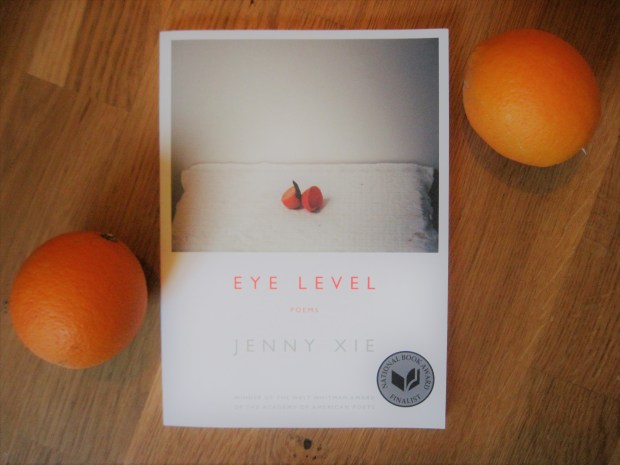
The opening sequence of poems is set in Vietnam, Cambodia and Corfu, with heat and rain as common experiences that also enter into the imagery: “See, counting’s hard in half-sleep, and the rain pulls a sheet // over the sugar palms and their untroubled leaves” and “The riled heat reaches the river shoal before it reaches the dark.” The tragic and the trivial get mixed up in ordinary sightseeing:
The tourists curate vacation stories,
days summed up in a few lines.
Killing fields tour, Sambo the elephant
in clotted street traffic,
dusky-complexioned children hesitant in their approach.
Seeing and being seen are a primary concern, with the “eye” of the title deliberately echoing the “I” that narrates most of the poems. I actually wondered if there was a bit too much first person in the book, which always complicates the question of whether the narrator equals the poet. One tends to assume that the story of a father going to study in the USA and the wife following, giving up her work as a doctor for a dining hall job, is autobiographical. The same goes for the experiences in “Naturalization” and “Exile.”
The metaphors Xie uses for places are particularly striking, often likening a city/country to a garment or a person’s appearance: “Seeing the collars of this city open / I wish for higher meaning and its histrionics to cease,” “The new country is ill fitting, lined / with cheap polyester, soiled at the sleeves,” and “Here’s to this new country: / bald and without center.”
The poet contemplates what she has absorbed from her family line and upbringing, and remembers the sting of feeling left behind when a romance ends:
I thought I owned my worries, but here I was only pulled along by the needle
of genetics, by my mother’s tendency to pry at openings in her life.
Love’s laws are simple. The leaving take the lead.
The left-for takes a knife to the knots of narrative.
Those last two lines are a good example of the collection’s reliance on alliteration, which, along with repetition, is used much more often than end rhymes and internal or slant rhymes. Speaking of which, this was my favorite pair of lines:
Slant rhyme of current thinking
and past thinking.
Meanwhile, my single favorite poem was “Hardwired,” about the tendency to dwell on the negative:
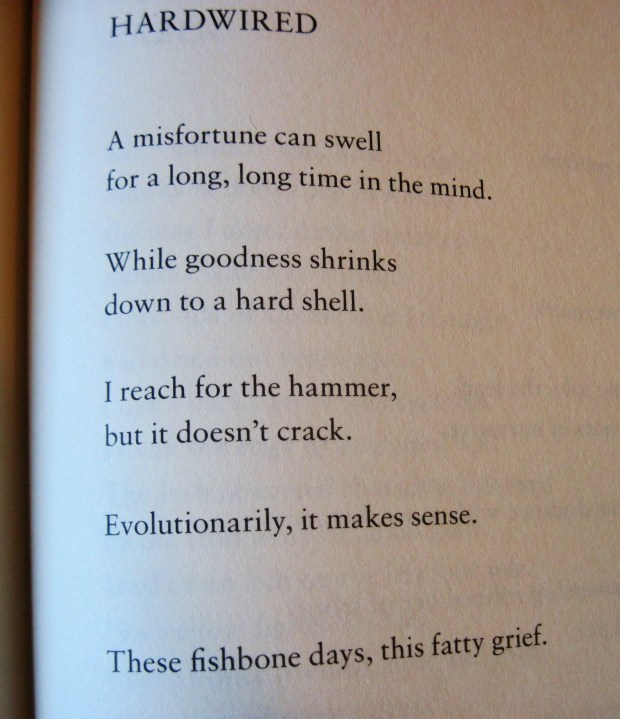
Though I didn’t always connect with Xie’s style – it can be slightly detached and formal in a way that is almost at odds with the fairly personal subject matter, and there were some pronouncements that seemed to me not as profound as they intended to be (it may well be that her work would be best read aloud) – there were occasional lines and images that pulled me up short and made me think, Yes, she gets it. What it’s like to be from one place but live in another; what it’s like to be fond but also fearful of the ways in which you resemble your parents. I expect this to be a strong contender for the Dylan Thomas Prize shortlist, which will be announced on April 2nd. The winner is then announced on May 16th.
My thanks to Midas PR for the free copy for review.
Recent Poetry Reads
I love interspersing poetry with my other reading, and this year it seems like I’m getting to more of it than ever. Although I try to have a poetry collection on the go at all times, I still consider myself a novice and enjoy discovering new-to-me poets. However, I know many readers who totally avoid poetry because they assume they won’t understand it or it would feel too much like hard work.
Sinking into poems is certainly a very different experience from opening up a novel or a nonfiction narrative. Often I read parts of a poem two or three times – to make sure I’ve taken it in properly, or just to savor the language. I try to hear the lines aloud in my head so I can appreciate the sonic techniques at work, whether rhyming or alliteration. Reading or listening to poetry engages a different part of the brain, and it may be best to experience it in something of a dreamlike state.
I hope you’ll find a book or two that appeals from the selection below.
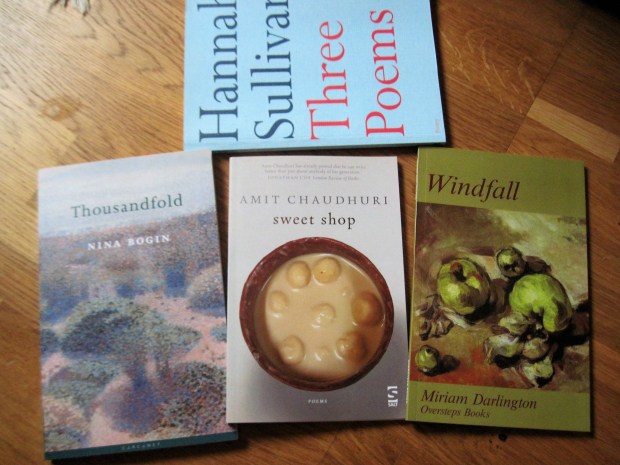
Thousandfold by Nina Bogin (2019)
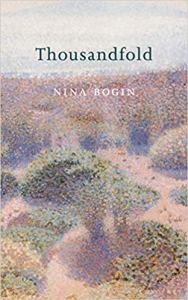 This is a lovely collection whose poems devote equal time to interactions with nature and encounters with friends and family. Birds – along with their eggs and feathers – are a frequent presence. Often a particular object will serve as a totem as the poet remembers the most important people in her life: her father’s sheepskin coat, her grandmother’s pink bathrobe, and the slippers her late husband shuffled around in – a sign of how diminished he’d become due to dementia. Elsewhere Bogin greets a new granddaughter and gives thanks for the comforting presence of her cat. Gentle rhymes and half-rhymes lend a playful or incantatory nature. I’d recommend this to fans of Linda Pastan.
My rating:
Thousandfold will be published by Carcanet Press on January 31st. My thanks to the publisher for the free copy for review.
Sweet Shop by Amit Chaudhuri (2019)
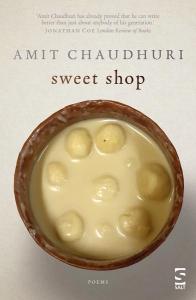 I was previously unfamiliar with Chaudhuri’s work, and unfortunately this insubstantial book about his beloved Indian places and foods hasn’t lured me into trying any more. The one poem I liked best was “Creek Row,” about a Calcutta lane used as a shortcut: “you are a thin, short-lived, / decaying corridor” and an “oesophageal aperture”. I also liked, as stand-alone lines go, “Refugees are periodic / like daffodils.” Nothing else stood out for me in terms of language, sound or theme. Poetry is so subjective; all I can say is that some poets will click with you and others don’t. In any case, the atmosphere is similar to what I found in Korma, Kheer and Kismet: Five Seasons in Old Delhi by Pamela Timms.
My rating: 
My thanks to Salt Publishing for the free copy for review.
Windfall by Miriam Darlington (2008)
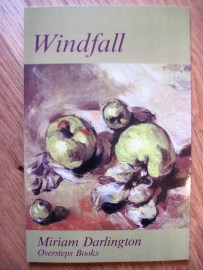 Before I picked this up from the bookstall at the New Networks for Nature conference in November, I had no idea that Darlington had written poetry before she turned to nature writing (Otter Country and Owl Sense). These poems are rooted in the everyday: flipping pancakes, sitting down to coffee, tending a garden, smiling at a dog. Multiple poems link food and erotic pleasure; others make nature the source of exaltation. I loved her descriptions of a heron (“a standing stone / perched in silt / a wrap of grey plumage”) and a blackbird (“the first bird / a glockenspiel in C / an improvisation on morning / a blue string of notes”), Lots of allusions and delicious alliteration. Pick this up if you’re missing Mary Oliver.
My rating: 
A Responsibility to Awe by Rebecca Elson (2018)
 Elson, an astronomer who worked on the Hubble Space Telescope, died of breast cancer; this is a reprint of her posthumous 2001 publication. Along with a set of completed poems, the volume includes an autobiographical essay and extracts from her notebooks. Her impending mortality has a subtle presence in the book. I focused on the finished poems, which take their metaphors from physics (“Dark Matter”), mathematics (“Inventing Zero”) and evolution (indeed, “Evolution” was my favorite). In the essay that closes the book, Elson remembers long summers of fieldwork and road trips across Canada with her geologist father (I was reminded of Margaret Atwood’s Cat’s Eye), and traces her academic career as she bounced between the United States and Great Britain.
My rating:
My thanks to Carcanet Press for the free copy for review.
These next two were on the Costa Prize for Poetry shortlist, along with Hannah Sullivan’s Three Poems, which was one of my top poetry collections of 2018 and recently won the T. S. Eliot Prize. I first encountered the work of all three poets at last year’s Faber Spring Party.
Us by Zaffar Kunial (2018)
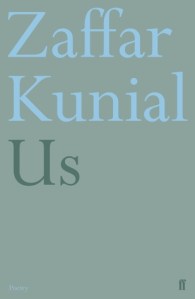 Many of these poems are about split loyalties and a composite identity – Kunial’s father was Kashmiri and his mother English – and what the languages we use say about us. He also writes about unexpectedly developing a love for literature, and devotes one poem to Jane Austen and another to Shakespeare. My favorites were “Self Portrait as Bottom,” about doing a DNA test (“O I am translated. / The speech of numbers. / Here’s me in them / and them in me. … What could be more prosaic? / I am split. 50% Europe. / 50% Asia.”), and the title poem, a plea for understanding and common ground.
My rating:
Soho by Richard Scott (2018)
 When I saw him live, Scott read two of the amazingly intimate poems from this upcoming collection. One, “cover-boys,” is about top-shelf gay porn and what became of the models; the other, “museum,” is, on the face of it, about mutilated sculptures of male bodies in the Athens archaeological museum, but also, more generally, about “the vulnerability of / queer bodies.” If you appreciate the erotic verse of Mark Doty and Andrew McMillan, you need to pick this one up immediately. Scott channels Verlaine in a central section of gritty love poems and Whitman in the final, multi-part “Oh My Soho!”
My rating:
Don’t Call Us Dead by Danez Smith (2017)
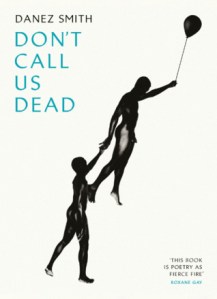 Like Claudia Rankine’s Citizen, this is a book whose aims I can admire even though I didn’t particularly enjoy reading it. It’s about being black and queer in an America where both those identifiers are dangerous, where guns and HIV are omnipresent threats. “reader, what does it / feel like to be safe? white?” Smith asks. “when i was born, i was born a bull’s-eye.” The narrator and many of the other characters are bruised and bloody, with blood used literally but also metaphorically for kinship and sexual encounters. By turns tender and biting, exultant and uncomfortable, these poems are undeniably striking, and a necessary wake-up call for readers who may never have considered the author’s perspective.
My rating:
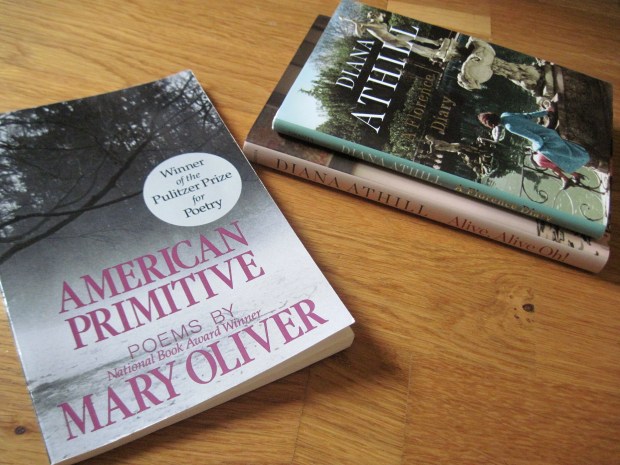
Up next: This Pulitzer-winning collection from the late Mary Oliver, whose work I’ve had mixed success with before (Dream Work is by far her best that I’ve read so far). We lost two great authors within a week! RIP Diana Athill, too, who was 101.
 Bookish Beck = Rebecca Foster. American transplant to England. Freelance proofreader and book reviewer.
 Bookish Beck