Women’s Prize Longlist 2020 Thoughts & Other Prize Reading Projects
Next Wednesday the 22nd, the Women’s Prize shortlist will be revealed. However, the winner announcement has been delayed until September 9th, so we all get extra time to read the finalists (which is handy since the 900-page Hilary Mantel is a shoo-in). I happen to have gotten through half of the longlist so far. There were some books I cared for more than others. Of the remainder, I plan to pick up a few more once my library reopens.
Here’s how I’ve fared this year, in categories from best to worst, with excerpts and links to any I’ve reviewed in full:
Loved! (5)
 Dominicana by Angie Cruz: In 1965, 15-year-old Ana Canción, married off to an older man, leaves the Dominican Republic for New York City. With not a word of English, she feels trapped in her apartment and in this abusive relationship. Yet Ana is such a plucky and confiding narrator that you’re drawn into her world and cheer for her as she figures out what she wants from her life. This compassionate novel is proof that not all the immigration stories have been told yet.
 Girl, Woman, Other by Bernardine Evaristo: A terrific linked short story collection about 12 black women in twentieth-century and contemporary Britain balancing external and internal expectations and different interpretations of feminism to build lives of their own. The prose is more like poetry: a wry, radical stream of consciousness. A warm, spirited book, it never turns strident. It’s timely and elegantly constructed – and, it goes without saying, a worthy Booker Prize winner. To win the Women’s Prize too would be unprecedented, I think? But no surprise.
 Weather by Jenny Offill: Could there be a more perfect book for 2020? It’s a blunt, unromanticized but wickedly funny novel about how eco-anxiety permeates everyday life. Set either side of Trump’s election, it amplifies many voices prophesying doom, from environmentalists to Bible-thumpers. Lizzie’s sardonic narration is an ideal way of capturing relatable feelings of anger and helplessness. Don’t expect to come away with your worries soothed, though there is some comfort to be found in the feeling that we’re all in this together.
 The Dutch House by Ann Patchett: A memorable exploration of family secrets and memories. Maeve and Danny Conroy are an inseparable brother-and-sister pair. When their father dies, they become like Hansel and Gretel: cast out into the wilds by an evil stepmother who takes possession of the only home they’ve ever known, a suburban Philadelphia mansion built on the proceeds of the VanHoebeek cigarette empire. Patchett always captures the psychology of complicated families, and her sharp prose never fails to hit the nail on the head.
 Red at the Bone by Jacqueline Woodson: Like a family saga in miniature, this short novel stretches backward from Melody’s 16th birthday party, held in Brooklyn in 2001, to explore previous generations of the African American experience. Chapters alternate between first- and third-person narration, highlighting the perspectives of all the major family members. I raced through to see who would follow in family footsteps, or not. The title is apt: the book is sometimes raw and sometimes tender. It’s an emotionally engaging story of loss and memory.
Currently skimming (1)
 The Mirror and the Light by Hilary Mantel: I’ve stalled around page 200. I’ll be totally engrossed for a few pages of exposition and Cromwell one-liners, but then everything gets talky or plotty and I skim for 20‒30 pages and put it down. My constant moving between 10‒20 books and the sudden loss of a deadline have not served me well: I feel overwhelmed by the level of detail and the cast of characters, and haven’t built up momentum. Still, I can objectively recognize the prose as top-notch.
Did not particularly enjoy (3)
 Fleishman Is in Trouble by Taffy Brodesser-Akner: To me this didn’t stand out at all from the sea of fiction about crumbling marriages and upper-middle-class angst.
- Actress by Anne Enright: A slow-burning backstory of trauma and mental illness. I found I wasn’t warming to the voice or main characters and mostly skimmed this.

- Hamnet by Maggie O’Farrell: In comparison with other historical fiction, this fell short. Overall, I found the prose flat and repetitive, which diluted the portrait of grief.

Attempted but couldn’t get through (1)
 Djinn Patrol on the Purple Line by Deepa Anappara – I’m wary of child narrators anyway, and the voice didn’t grab me within the first few pages.
Still plan to read (3)
 Queenie by Candice Carty-Williams
- How We Disappeared by Jing-Jing Lee
- The Most Fun We Ever Had by Claire Lombardo
Not interested (3)
 Nightingale Point by Luan Goldie: Sounds subpar.
- A Thousand Ships by Natalie Haynes: Say no to updated Greek classics.
- Girl by Edna O’Brien: I don’t care for O’Brien’s writing. Though this was well received by the critics, it’s not finding much love among my trusted bloggers. (Plus there’s the cultural appropriation issue.)
My ideal shortlist
(A wishlist based on my reading and what I want to read)
 Dominicana by Angie Cruz
Girl, Woman, Other by Bernardine Evaristo
How We Disappeared by Jing-Jing Lee
The Mirror and the Light by Hilary Mantel
Weather by Jenny Offill
The Dutch House by Ann Patchett
vs.
My predicted shortlist
 Queenie by Candice Carty-Williams
Actress by Anne Enright
Girl, Woman, Other by Bernardine Evaristo
The Mirror and the Light by Hilary Mantel
Girl by Edna O’Brien OR Hamnet by Maggie O’Farrell
The Dutch House by Ann Patchett
Callum, Eric, Laura and Rachel have been posting lots of reviews and thoughts related to the Women’s Prize. Have a look at their blogs!
In this 25th anniversary year of the Women’s Prize, readers are also being encouraged to catch up on previous winners.
- I’ve read 13 so far (and am currently rereading On Beauty by Zadie Smith).
 I already had Half of a Yellow Sun by Chimamanda Ngozi Adichie and The Idea of Perfection by Kate Grenville on my shelves, plus The Song of Achilles by Madeline Miller on my Nook.
- I recently found a copy of A Crime in the Neighborhood by Suzanne Berne at the free bookshop where I volunteer.
- On my current library stack are When I Lived in Modern Times by Linda Grant, Property by Valerie Martin and Fugitive Pieces by Anne Michaels.
I can’t promise to be a completist about this project because the prospect of reading A Girl Is a Half-formed Thing and The Glorious Heresies fills me with dread, but we’ll see…
Other Prize Reading Projects
 I’d been trying to make my way through some previous Wellcome Book Prize winners and nominees, but have been scuppered by my library’s closure. At the moment I have Adam Rutherford’s A Brief History of Everyone Who Ever Lived (2017 longlist; passed on from my father-in-law) and Steve Silberman’s Neurotribes (2016 shortlist; from the library) on my pile to read or, more likely, skim.
 I also had the idea to read all the Bellwether Prize winners because I loved The Leavers so much. (Known in full as the PEN/Bellwether Prize for Socially Engaged Fiction, it is a biennial award given by PEN America and Barbara Kingsolver, who created and funds the prize, “to a U.S. citizen for a previously unpublished work of fiction that address issues of social justice.”) This project did not start particularly well as I DNFed Running the Rift by Naomi Benaron. However, I own copies of Mudbound by Hillary Jordan and The Girl Who Fell from the Sky by Heidi W. Durrow and hope I’ll have better luck with them.
What prize lists or other reading projects are keeping you busy?
Polio and the Plague: Epidemics in Fiction
Back in January I had the idea to catch up as much as I can on previous Wellcome Book Prize long- and shortlists while the Prize is on hiatus. I decided to start with a pair of novels about polio from my public library system: The Golden Age by Joan London and Nemesis by Philip Roth. The latter, especially, has taken on new significance due to its evocation of a time of panic over a public health crisis (see this article, but beware spoilers). On a fellow book reviewer’s recommendation, I also took Year of Wonders by Geraldine Brooks off the shelf and read it at the same time as the Roth.
The Golden Age by Joan London (2014)
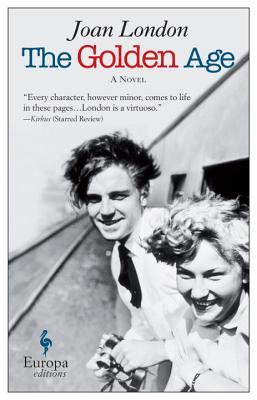 [First published in the UK in 2016; on the Wellcome Book Prize 2017 longlist]
The Golden Age was a real children’s polio hospital in Western Australia, but London has peopled it with her own fictional cast. In 1953–4, Frank Gold and Elsa Briggs, polio patients aged 12 going on 13, fall in love in the most improbable of circumstances: “The backs of their hands brushed as they walked side by side on their crutches. Their bloodstreams recharged by exercise and fresh air, they experienced a fiery burst of pleasure.”
Frank is much the more vibrant character thanks to his family’s wartime past in Hungary and his budding vocation as a poet, which was spurred on by his friendship with Sullivan, a fellow inmate at his previous rehabilitation center. The narrative spends time with the nurses, parents and other patients but keeps coming back to Frank and Elsa. However, Chapter 7, with Frank and his mother Ida still back in Budapest, was my favorite.
I was reminded of Tracy Farr’s work (The Life and Loves of Lena Gaunt), especially the look back from decades later. This has a strong premise and some great lines, but for me there was something slightly lacking in the execution.
Favorite lines:
There was beauty everywhere, strange beauty, even—especially?—in a children’s polio hospital.
Polio is like love, Frank says … Years later, when you think you have recovered, it comes back.
My rating:
Nemesis by Philip Roth (2010)
[On the Wellcome Book Prize 2011 shortlist]
 In the summer of 1944 Newark, New Jersey is hit hard by polio. As a local playground director, 23-year-old Bucky Cantor is distressed when several of his charges become ill; a couple of them even die within a matter of days.
At first Bucky, whose poor eyesight kept him out of the War, sees his job as his own field of duty, but gradually fear and helplessness drive him away. He escapes to the Pocono Mountains to join his fiancée, Marcia, as a summer camp counselor, but soon realizes the futility of trying to outrun a virus. Unable to accept the randomness of bad luck, he blames God – and himself – for the epidemic’s spread.
Despite our better general understanding of epidemiology today, there were still many passages in this novel that rang true for me as they picture life proceeding as normal until paranoia starts to take hold:
Despite polio’s striking in the neighborhood, the store-lined main street was full of people out doing their Saturday grocery shopping…
(Bucky) Look, you mustn’t be eaten up with worry … What’s important is not to infect the children with the germ of fear. We’ll come through this, believe me. We’ll all do our bit and stay calm and do everything we can to protect the children, and we’ll all come through this together.
The important thing, he said, was always to wash your hands after you handled paper money or coins. What about the mail, someone else said … What are you going to do, somebody retorted, suspend delivering the mail? The whole city would come to a halt. Six or seven weeks ago they would have been talking about the war news.
Roth really captures the atmosphere of alarm and confusion, but doesn’t always convey historical and medical information naturally, sometimes resorting to paragraphs of context and representative conversations like in the last quote above. I also wasn’t sure about the use of a minor character (revealed on page 108 to be one of Bucky’s playground kids and a polio patient) as the narrator. This seemed to me to make Bucky more of a symbolic hero than a genuine character. Still, this was a timely and riveting read.
My rating:

A period warning about polio reprinted at the back of Paul Auster’s Report from the Interior.
Year of Wonders by Geraldine Brooks (2001)
 In 1665, with the Derbyshire village of Eyam in the grip of the Plague, the drastic decision was made to quarantine it. A benevolent landowner arranged for regular deliveries of food and other supplies to just outside the parish boundaries. The villagers made an oath that no one would leave until the pestilence was eradicated. One year later, two-thirds of its residents were dead. Brooks imagines that the “plague seeds” came to the village in a bolt of cloth that was delivered from London to the tailor George Viccars, who lodged with widow Anna Frith. Viccars is the first victim and the disease quickly spreads outward from Anna’s home.
Anna barely has time to grieve her own losses before she’s called into service: along with the minister’s wife, Elinor Mompellion, she steps in as a midwife, herbal healer and even a miner. The village succumbs to several sobering trajectories. Suspicion of women’s traditional wisdom leads some to take vigilante action against presumed witches. Unscrupulous characters like Anna’s father, who sets up as a gravedigger, try to make a profit out of others’ suffering. Frustration with the minister’s apparent ineffectuality attracts others to forms of religious extremism. Like Bucky, people cannot help but see the hand of God here.
Perhaps what I was most missing in the London and Roth novels (and in Hamnet, which bears such striking thematic similarities to Year of Wonders) was intimate first-person narration, which is just what you get here from Anna. The voice and the historical recreation are flawless, and again there were so many passages that felt apt:
Stay here, in the place that you know, and in the place where you are known. … Stay here, and here we will be for one another.
the current times did seem to ask us all for every kind of sacrifice
(once they start meeting for church in a meadow) We placed ourselves so that some three yards separated each family group, believing this to be sufficient distance to avoid the passing of infection.
Yet it is a good day, for the simple fact that no one died upon it. We are brought to a sorry state, that we measure what is good by such a shortened yardstick.
I’ve docked a half-star only because of a far-fetched ending that reminded me of that to The Wonder by Emma Donoghue. Apart from that, this is just what I want from my historical fiction.
My rating: 
Are you doing any reading about epidemics?
Pandemic Reading Strategies & Recommendations, Serious or Tongue-in-Cheek
If you’ve been spending time blog-hopping or on Twitter over the last few weeks, you will have seen countless riffs on this topic. Everyone’s pondering what’s best to read in these times. All we can get our hands on about plagues (Boccaccio, Camus, Defoe)? Allegories of similarly challenging worldwide disasters (WWII, 9/11)? Childhood favorites? Comfort reads? Funny books? Light, undemanding stuff? Rereads?
My general answer would be: as always, read whatever you want or can – anything that captures your attention is worthwhile. We’re under so much stress that our reading should be entirely unpressured. But to be a little more specific, I’ve gathered reading recommendations on a variety of topics, drawing on lists that others have made and linking to my own blog reviews where applicable.
(Some of these ideas are less serious than others.)
If you are brave enough to learn about zoonotic diseases:
 Spillover: Animal Infections and the Next Human Pandemic by David Quammen: This is top-notch scientific journalism: pacey, well-structured, and gripping. The best chapters are on Ebola and SARS; the SARS chapter, in particular, reads like a film screenplay, if this were a far superior version of Contagion. It’s a sobering subject, with some quite alarming anecdotes and statistics, but this is not scare-mongering for the sake of it; Quammen is frank about the fact that we’re still all more likely to get heart disease or be in a fatal car crash.
If you can’t look away from pandemic stories, historical or imagined:


I already had Philip Roth’s Nemesis (set in 1940s New Jersey amid a polio epidemic) out from the library because it was on the Wellcome Book Prize shortlist in 2011. I was also inspired to take Year of Wonders by Geraldine Brooks (set in the 1660s and featuring an English village that quarantined itself during the Plague) off the shelf. I’m nearing the end of these two and should have my reviews up next week.
You will see no one book referenced more than Station Eleven by Emily St. John Mandel. It’s a wholly believable dystopian novel in which 99% of the population has been wiped out by a pandemic. The remnant bands together not just to survive but to create and preserve art. “What was lost in the collapse: almost everything, almost everyone, but there is still such beauty.” (My full BookBrowse review from December 2014.)
See also this Publishers Weekly list of “13 Essential Pandemic Novels.”
If you’re feeling cooped up…
 Infinite Home by Kathleen Alcott: “Edith is a widowed landlady who rents apartments in her Brooklyn brownstone to an unlikely collection of humans, all deeply in need of shelter.” (I haven’t read it, but I do have a copy; now would seem like the time to read it!)
…yet want to appreciate the home you’re stuck in:


Years ago I read and loved At Home: A Short History of Private Life by Bill Bryson and Happier at Home by Gretchen Rubin. I can’t tell you anything more than that because it was before the days when I reviewed everything I read, but these are both reliable authors.
 I love the sound of A Journey Around My Room by Xavier de Maistre: “Finding himself locked in his room for six weeks, a young officer journeys around his room in his imagination, using the various objects it contains as inspiration for a delightful parody of contemporary travel writing and an exercise in Sternean picaresque.”
I’m also drawn to Home: The Story of Everyone Who Ever Lived in Our House by Julie Myerson, who combed archives for traces of all the former residents of her 1870s terraced house in Clapham.
If you’re struggling with being on your own:


The Lonely City by Olivia Laing: This remarkable book on outsider artists interweaves biography, art criticism and memoir. Laing is a tour guide into the peculiar, lonely crowdedness you find in a world city.
How to Be Alone by Sara Maitland: Maitland argues that although being alone is easy to achieve, there is an art to doing it properly, and solitude and loneliness are by no means the same thing. Profiling everyone from the Desert Fathers of early Christianity to the Romantic poets, she enumerates all the benefits that solitude confers.
Journal of a Solitude by May Sarton: A one-year account of her writing life in New Hampshire, this is Sarton’s best. The book dwells on the seasonal patterns of the natural world (shovelling snow, gardening, caring for animals) but also the rhythms of the soul – rising in hope but also falling into occasional, inevitable despair.
See also this Penguin UK list of books to read in self-isolation.
If you’ve been passing the time by baking…
 The City Baker’s Guide to Country Living by Louise Miller: As chief baker at the Sugar Maple Inn in Guthrie, Vermon, Olivia Rawlings settles into a daily routine of baking muffins, bread and cakes. This is a warm, cozy debut novel full of well-drawn secondary characters and romantic possibilities. There’s nothing clichéd about it, though. Livvy is a sassy narrator, and I loved how Miller documents the rhythms of the small-town country year, including tapping the maple trees in the early spring and a pie baking contest at the summer county fair.
 Sourdough by Robin Sloan: Lois Clary, a Bay Area robot programmer, becomes obsessed with baking. “I needed a more interesting life. I could start by learning something. I could start with the starter.” She attempts to link her job and her hobby by teaching a robot arm to knead the bread she makes for a farmer’s market. Madcap adventures ensue. It’s a funny and original novel and it makes you think, too – particularly about the extent to which we should allow technology to take over our food production.
…but can’t find yeast or eggs in the shop:
Yeast: A Problem by Charles Kingsley (1851). Nope, I haven’t read it, but our friend has a copy in his Everyman’s Library collection and the title makes us laugh every time we see it.
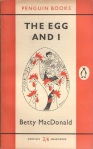 The Egg & I by Betty Macdonald: MacDonald and her husband started a rural Washington State chicken farm in the 1940s. Her account of her failure to become the perfect farm wife is hilarious. The voice reminded me of Doreen Tovey’s: mild exasperation at the drama caused by household animals, neighbors, and inanimate objects. “I really tried to like chickens. But I couldn’t get close to the hen either physically or spiritually, and by the end of the second spring I hated everything about the chicken but the egg.” Perfect pre-Easter reading.
And here are a few lists I put together for Hungerford Bookshop:
If you need a laugh:
Fiction:
Lucky Jim by Kingsley Amis
The Darling Buds of May (and sequels) by H.E. Bates
Ella Minnow Pea by Mark Dunn
Heartburn by Nora Ephron
 Cold Comfort Farm by Stella Gibbons
Anything by Nick Hornby
Three Men in a Boat by Jerome K. Jerome
Anything by David Lodge
Dear Committee Members by Julie Schumacher
The Rosie Project (and sequels) by Graeme Simsion
To Say Nothing of the Dog by Connie Willis
Nonfiction:
 Anything by Bill Bryson
21st-Century Yokel by Tom Cox
Anything by Gerald Durrell
Anything by Nora Ephron (essays)
This Is Going to Hurt by Adam Kay
Priestdaddy by Patricia Lockwood
Dear Lupin by Roger Mortimer
Anything by David Sedaris
Little Failure by Gary Shteyngart
If you want to disappear into a long book:


The Heart’s Invisible Furies by John Boyne
Jonathan Strange & Mr Norrell by Susanna Clarke
David Copperfield by Charles Dickens
Middlesex by Jeffrey Eugenides
The Crimson Petal and the White by Michel Faber
The Signature of All Things by Elizabeth Gilbert
The Nix by Nathan Hill
We, the Drowned by Carsten Jensen
Mary Ann Sate, Imbecile by Alice Jolly
The Poisonwood Bible by Barbara Kingsolver
The Wind-Up Bird Chronicle by Haruki Murakami
The Sparrow by Mary Doria Russell
American Wife by Curtis Sittenfeld
East of Eden by John Steinbeck
The Goldfinch by Donna Tartt
Cutting for Stone by Abraham Verghese
The Paying Guests by Sarah Waters
If you’re looking for some hope:
 Almost Everything: Notes on Hope by Anne Lamott
Hope in the Dark by Rebecca Solnit
Hope Dies Last: Making a Difference in an Indifferent World by Studs Terkel
I’ve been doing a combination of the above strategies, reading about historical plagues in fiction and nonfiction but also doing some rereading and consuming lighter genre stuff like mysteries. I continue to dip into new releases, and I enjoy the ongoing challenge of my reading projects. Right now, I’m working through a few current Women’s Prize longlistees, as well as some past Wellcome Book Prize nominees and Women’s Prize winners, and I’m about to start a third #1920Club title. Plus I’m already thinking about my 20 Books of Summer (I’m considering an all-foodie theme).
Further reading:
- Book Riot pinpoints seven categories of books to read during a pandemic.
- Clare surveys the post-pandemic literary landscape.
- Elle logs her pandemic reading and viewing.
- Laura discusses pandemic reading strategies and distraction reading.
- Literary Hub looks at parallel situations, including post-9/11 reads, to make predictions, and asks what your “go-to quarantine read” says about you. (I’ve read Kindred most recently, but I wouldn’t say that describes me.)
- Simon thinks about what we can and should read.
- Susan highlights some comfort reads.
What are your current reading strategies?
2020 Reading Goals and Anticipated Releases
Review copies have started to feel like an obligation I don’t want. Almost as soon as one comes through the door, I regret having asked for or accepted it. (Now I have to read the danged thing, and follow through with a review!) So I’m going to cut back severely this year. The idea is to wait until late in 2020 to figure out which are the really worthwhile releases, and then only read those instead of wading through a lot of mediocre stuff.
“Until one has some kind of professional relationship with books one does not discover how bad the majority of them are. In much more than nine cases out of ten the only objectively truthful criticism would be ‘This book is worthless,’ while the truth about the reviewer’s own reaction would probably be ‘This book does not interest me in any way, and I would not write about it unless I were paid to’. … The best practice, it has always seemed to me, would be simply to ignore the great majority of books and to give very long reviews … to the few that seem to matter.” (from “Confessions of a Book Reviewer” in Books v. Cigarettes by George Orwell)
These are the January to May 2020 releases I own so far, with perhaps a few more on the way. I acquired a lot of these in September through November, before I made the decision to cut down on review copies.

I’m also looking forward to new books by Sebastian Barry, Susanna Clarke, Stephanie Danler, Anne Enright, Yaa Gyasi, John Irving, Daisy Johnson, Daniel Kehlmann, Sue Monk Kidd, Rebecca Dinerstein Knight, Maya Shanbhag Lang, Helen Macdonald, Hilary Mantel, David Mitchell, Sarah Moss, Mark O’Connell, Maggie O’Farrell, Anne Tyler, Abraham Verghese, Raynor Winn and Molly Wizenberg.
I can still access new/pre-release books via my public library and NetGalley/Edelweiss, especially fiction to review for BookBrowse and nonfiction for Kirkus and the TLS.
This resolution is not about denying or punishing myself, as bloggers’ book-buying bans sometimes seem to be, so if an unmissable book (e.g. HAMNET) is offered on Twitter or via my blog, I won’t consider it cheating to say yes. FOMO will likely be a chronic condition for me this year, but ultimately I hope to do myself a favor.
With the reading time I’m saving, I plan to make major inroads into those 440 print books I own and haven’t read yet, and to do a lot of re-reading (I only managed one and a bit rereads in 2019). I might well blog less often and only feature those books that have been exceptional for me. I’ve set aside this shelf of mostly fiction that I think deserves re-reading soon:

“I do not think we go back to the exciting books,—they do not usually leave a good taste in the mouth; neither to the dull books, which leave no taste at all in the mouth; but to the quiet, mildly tonic and stimulating books,—books that have the virtues of sanity and good nature, and that keep faith with us.” (from “On the Re-Reading of Books” in Literary Values by John Burroughs)
I hope (as always) to read more classics, literature in translation and doorstoppers. Travel and biography are consistently neglected categories for me. Though I won’t set specific goals for these genres, I will aim to see measurable progress. I will also take advantage of the Wellcome Book Prize being on hiatus this year to catch up on some of the previous winners and shortlisted books that I’ve never managed to read.
Mostly, I want to avoid any situations that make me feel guilty or mean (so no more books received direct from the author, and any review books that disappoint will be quietly dropped), follow my whims, and enjoy my reading.
What are some of your goals (reading-related or otherwise) for 2020?
The Lost Properties of Love by Sophie Ratcliffe
Everything was in its place.
Particulars moved
along designated rails.
Even the arranged meeting
occurred. […]
In paradise lost
of probability.
From “Railway station” by Wisława Szymborska
The art of losing isn’t hard to master;
so many things seem filled with the intent
to be lost that their loss is no disaster.
From “One Art” by Elizabeth Bishop
 This is not your average memoir. For one thing, it ends with 34 pages of notes and bibliography. Sophie Ratcliffe is an associate professor of English at the University of Oxford, and it’s clear that her life and the narrative have been indelibly shaped by literature. In this work of creative nonfiction she is particularly interested in the lives and works of Leo Tolstoy and Anthony Trollope and the women they loved. For another, the book is based around train journeys – real and fictional, remembered and imagined. Trains are appropriate symbols for many of the book’s dichotomies: scheduling versus unpredictability, having or lacking a direction in life, monotony versus momentous events, and fleeting versus lasting connections.
Each chapter, marked with a location and a year, functions as a mini-essay; as the nonchronological pieces accrete you develop a sense of what have been the most important elements of Ratcliffe’s life. One was her father’s death from cancer when she was 13, an early loss that inevitably affected the years that followed. Another was a love affair with a married photographer 30 years her senior. A number of chapters are addressed directly to this ex-lover in the second person. Although they’ve had no contact since she got married, she still thinks about him – and wonders if she’ll have a right to mourn him when he dies.
Could she have been his muse, as Kate Field was for Trollope? Field appeared in fictional guises in much of his work and thereby inspired Anna Karenina, for Tolstoy was a devoted reader of Trollope and gave his heroine a penchant for reading English novels, too. Ratcliffe seems to see herself in Anna, a wife and mother who longs for a life of her own: she writes of her love for her two children but also of the boredom that comes with motherhood’s minutiae.

Sophie Ratcliffe
Much of life’s daily tedium is bound up in physical objects, like the random objects that litter the cover. “I am a lover of small things – and of clutter,” Ratcliffe confesses. She notes that generations of literary critics have asked what was in the red handbag Anna Karenina left behind, too. What does such lost property say about its owner? What can be saved from a life in which loss is so prevalent? These are questions the book explores through its metaphors, stories and memories. It ends with the hope that writing things down gives them meaning.
If you enjoy nonstandard memoirs (like Jean Hannah Edelstein’s This Really Isn’t About You) and books about how what we read makes us who we are (such as Samantha Ellis’s How to Be a Heroine and Lucy Mangan’s Bookworm), you have a real treat in store here.
Some favorite lines:
“Life is in the between-ness, the space in the margins – not in the headlines.”
“Books, like trains, are another way of tricking time, of moving to a different beat, a different space.”
“Has my reading been a way of keeping me company – of helping me through the worlds of nearlys and barelys and the feelings of missing, and the hopeless messiness?”
“Writing is better than nothing. Better than thin air.”
My rating:
With thanks to William Collins for the free copy for review.
I first heard of the author when she was a Wellcome Book Prize judge in 2018. I was delighted to be invited to take part in the blog tour for The Lost Properties of Love.
Three Review Books: Brian Kimberling, Jessica Pan & Francesca Segal
Three May–June releases: A fish-out-of-water comic novel about teaching English in Prague; and memoirs about acting like an extrovert and giving birth to premature twins.
Goulash by Brian Kimberling
 “Look where we are. East meets West. Communism meets capitalism.” In 1998 Elliott Black leaves Indiana behind for a couple of years to teach English in Prague. The opening sequence, in which he discovers that his stolen shoes have been incorporated into an art installation, is an appropriate introduction to a country where bizarre things happen. Elliott doesn’t work for a traditional language school; his students are more likely to be people he meets in the pub or tobacco company executives. Their quirky, deadpan conversations are the highlight of the book.
Elliott starts dating a fellow teacher from England, Amanda (she “looked like azaleas in May and she spoke like the BBC World Service”), who also works as a translator. They live together in an apartment they call Graceland. Much of this short novel is about their low-key, slightly odd adventures, together and separately, while the epilogue sees Elliott looking back at their relationship from many years later.
I was tickled by a number of the turns of phrase, but didn’t feel particularly engaged with the plot, which was inspired by Kimberling’s own experiences living in Prague.
With thanks to Tinder Press for a proof copy to review.
Favorite passages:
“Sorrowful stories like airborne diseases made their way through the windows and under the doorframe, bubbled up like the bathtub drain. It was possible to fill Graceland with light and color and music and the smell of good food, and yet the flat was like a patient with some untreatable condition, and we got tired of palliative care.”
“‘It’s good to be out of Prague,’ he said. ‘Every inch drenched in blood and steeped in alchemy, with a whiff of Soviet body odor.’ ‘You should write for Lonely Planet,’ I said.”
Sorry I’m Late, I Didn’t Want to Come: An Introvert’s Year of Living Dangerously by Jessica Pan
 Like Jessica Pan, I’m a shy introvert (a “shintrovert”) as well as an American in the UK, so I was intrigued to see the strategies she employed and the experiences she sought out during a year of behaving like an extrovert. She forced herself to talk to strangers on the tube, give a talk at London’s Union Chapel as part of the Moth, use friendship apps to make new girlfriends, do stand-up comedy and improv, go to networking events, take a holiday to an unknown destination, eat magic mushrooms, and host a big Thanksgiving shindig.
Like Help Me!, which is a fairly similar year challenge book, it’s funny, conversational and compulsive reading that was perfect for me to be picking up and reading in chunks while I was traveling. Although I don’t think I’d copy any of Pan’s experiments – there’s definitely a cathartic element to reading this; if you’re also an introvert, you’ll feel nothing but relief that she’s done these things so you don’t have to – I can at least emulate her in initiating deeper conversations with friends and pushing myself to attend literary and networking events instead of just staying at home.
With thanks to Doubleday UK for a proof copy to review.
Mother Ship by Francesca Segal
I’m a big fan of Segal’s novels, especially The Innocents, one of the loveliest debut novels of the last decade, so I was delighted to hear she was coming out with a health-themed memoir about giving birth to premature twins. Mother Ship is a visceral diary of the first eight weeks in the lives of her daughters, who were born by Caesarean section at 29 weeks in October 2015 and spent the next two months in the NICU, “an extremely well-funded prison or perhaps more accurately a high-tech zoo.”
Segal strives to come to terms with this unnatural start to motherhood. “Taking my unready daughters from within me felt not like a birth but an evisceration,” she writes; “my children do not appear to require mothering. Instead they need sophisticated medical intervention.” She describes with tender precision the feeling of being torn: between the second novel she’d been in the middle of writing and the all-consuming nature of early parenthood; and between her two girls (known for much of the book as “A-lette” and “B-lette”), who are at one point separated in different hospitals.

Spotted at Philadelphia airport.
As well as portraying her own state of mind, Segal crafts twinkly pen portraits of the others she encountered in the NICU, including the staff but especially her fellow preemie mums, who met in a “milking shed” where they pumped breast milk for the babies they were so afraid of losing that they resisted naming. (Though it was touch and go for a while, A-lette and B-lette finally earned the names Raffaella and Celeste and came home safely.) Female friendship is a subsidiary theme in this exploration of desperate love and helplessness. The layman’s look at the inside workings of medicine would have made this one of my current few favorites for next year’s Wellcome Book Prize (which, alas, is on hiatus). After encountering some unpleasant negativity about the NHS in a recent read, I was relieved to find that Segal’s outlook is pure gratitude.
With thanks to Chatto & Windus for the free copy for review.
Would you be interested in reading one or more of these?
Hard Pushed: A Midwife’s Story by Leah Hazard
“For fans of Adam Kay’s This Is Going to Hurt and Christie Watson’s The Language of Kindness,” the blurb on my press release for Leah Hazard’s memoir opens. The publisher’s comparisons couldn’t be more perfect: Hard Pushed has the gynecological detail and edgy sense of humor of Kay’s book (“Another night, another vagina” is its first line, and the author has been known to introduce herself with “Midwife Hazard, at your cervix!”), and matches Watson’s with its empathetic picture of patients’ plights and medical professionals’ burnout.
Hazard alternates between anonymized case studies of patients she has treated and general thoughts on her chosen career (e.g. “Notes on Triage” and “Notes on Being from Somewhere Else”). Although all of the patients in her book are fictional composites, their circumstances are rendered so vividly that you quickly forget these particular characters never existed. Visceral details of sights, smells and feelings put you right there in the delivery room with Eleanor, one-half of a lesbian couple welcoming a child thanks to the now-everyday wonder of IVF; Hawa, a Somali woman whose pregnancy is complicated by the genital mutilation she underwent as a child; and Pei Hsuan, a Chinese teenager who was trafficked into sex work in Britain.
Sometimes we don’t learn the endings to these stories. Will 15-year-old Crystal have a healthy baby after she starts leaking fluid at 23 weeks? What will happen next for Pei Hsuan after her case is passed on to refugee services? Hazard deliberately leaves things uncertain to reflect the partial knowledge a hospital midwife often has of her patients: they’re taken off to surgery or discharged, and when they eventually come back to deliver someone else may be on duty. All she can do is to help each woman the best she can in the moment.
 A number of these cases allow the author to comment on the range of modern opinions about pregnancy and childrearing, including some controversies. A pushy new grandmother tries to pressure her daughter into breastfeeding; a woman struggles with her mental health while on maternity leave; a rape victim is too far along to have a termination. At the other end of the spectrum, we meet a hippie couple in a birthing pool who prefer to speak of “surges” rather than contractions. Hazard rightly contends that it’s not her place to cast judgment on any of her patients’ decisions; her job is simply to deal with the situation at hand.
I especially liked reading about the habits that keep the author going through long overnight shifts, such as breaking the time up into 15-minute increments, each with its own assigned task. The excerpts from her official notes – in italics and full of shorthand and jargon – are a neat window into the science and reality of a midwife’s work, with a glossary at the end of the book ensuring that nothing is too technical for laypeople.
Hazard, an American, lives in Scotland and has a Glaswegian husband and two daughters. Her experience of being an NHS midwife has not always been ideal; there were even moments when she was ready to quit. Like Kay and Watson, she has found that the medical field can be unforgiving what with low pay, little recognition and hardly any time to wolf down your dinner during a break, let alone reflect on the life-and-death situations you’ve been a part of. Yet its rewards outweigh the downsides.
Hard Pushed has none of the sentimentality of Call the Midwife – a relief since I’m not one to gush over babies. Still, it’s a heartfelt read as well as a vivid and pacey one, and it’s alternately funny and sobering. If you like books that follow doctors and nurses down hospital hallways, you’ll love it. This was one of my most anticipated books of the first half of the year, and it lived up to my expectations. It’s also one of my top contenders for the 2020 Wellcome Book Prize so far.
A few favorite passages:
“So many things in midwifery are ‘wee’ [in Scotland, at least!] – a wee cut, a wee tear, a wee bleed, the latter used to describe anything from a trickle to a torrent. Euphemisms are one of our many small mercies: we learn early on to downplay and dissemble. The brutality of birth is often self-evident; there is little need to elaborate.”
“Whenever I dress a wound in this way, I remember that this is an act of loving validation; every wound tells a story, and every dressing is an acknowledgement of that story – the midwife’s way of saying, I hear you, and I believe you.”
“midwives do so much more than catch babies. We devise and implement plans of care; we connect, console, empathise and cheerlead; we prescribe; we do minor surgery. … We may never have met you until the day we ride into battle for you and your baby; … you may not even recognise the cavalry that’s been at your back until the drapes are down and the blood has dried beneath your feet.”
My rating:
Hard Pushed was published in the UK on May 2nd (just a few days before International Midwives’ Day) by Hutchinson. My thanks to the publisher for the free proof copy for review.
The Wellcome Book Prize 2019 Awards Ceremony
The winner of the 10th anniversary Wellcome Book Prize is Murmur, Will Eaves’s experimental novel about Alan Turing’s state of mind and body after being subjected to chemical castration for homosexuality. It is the third novel to win the Prize. Although it fell in the middle of the pack in our shadow panel voting because of drastically differing opinions, it was a personal favorite for Annabel and myself – though we won’t gloat (much) for predicting it as the winner!

Clare, Laura and I were there for the announcement at the Wellcome Collection in London. It was also lovely to meet Chloe Metzger, another book blogger who was on the blog tour, and to see UK book v/blogging legends Eric Karl Anderson and Simon Savidge again.
The judges’ chair, novelist Elif Shafak, said, “This prize is very special. It opens up new and vital conversations and creates bridges across disciplines.” At a time when we “are pushed into monolithic tribes and artificial categories, these interdisciplinary conversations can take us out of our comfort zones, encouraging cognitive flexibility.” She praised the six shortlisted books for their energy and the wide range of styles and subjects. “Each book, each author, from the beginning, has been treated with the utmost respect,” she reassured the audience, and the judges approached their task with “an open mind and an open heart,” arriving at an “inspiring, thought-provoking, but we believe also accessible, shortlist.”
The judges brought each of the five authors present (all but Thomas Page McBee) onto the stage one at a time for recognition. Shafak admired how Sandeep Jauhar weaves together his professional expertise with stories in Heart, and called Sarah Krasnostein’s The Trauma Cleaner a “strangely life-affirming and uplifting book about a remarkable woman. … It’s about transitions.”
Doctor and writer Kevin Fong championed Amateur, his answer to the question “which of these books, if I gave it to someone, would make them better.” McBee’s Canongate editor received the recognition/flowers on the author’s behalf.

Writer and broadcaster Rick Edwards chose Arnold Thomas Fanning’s Mind on Fire for its “pressability factor” – the book about which he kept saying to friends and family, “you must read this.” It’s an “uncomfortably honest” memoir, he remarked, “a vivid and unflinching window, and for me it was revelatory.”
Writer, critic and academic Jon Day spoke up for Murmur, “a novel of great power and astonishing achievement,” about “what it means to know another person.”
Lastly, writer, comedian and presenter Viv Groskop spoke about Ottessa Moshfegh’s My Year of Rest and Relaxation, which she described as “Jane Eyre meets Prozac Nation.” The judges “had a lot of fun” with this novel, she noted; it’s “caustic, feminist … original, playful, [and] strangely profound.”
But only one book could win the £30,000 10th anniversary prize, and it was one that Shafak predicted will be “a future classic,” Murmur. Will Eaves thanked Charles Boyle of CB Editions for taking a chance on his work. He also acknowledged Alan Turing, who, like him, attended King’s College, Cambridge. As he read Turing’s papers, Eaves reported, he was gripped by the quality of the writing – “there’s a voice there.” Finally, in a clearly emotional moment, he thanked his mother, who died several years ago and grew up in relative poverty. She was a passionate believer in education, and Eaves encouraged the audience to bear in mind the value of a state education when going to the polls.
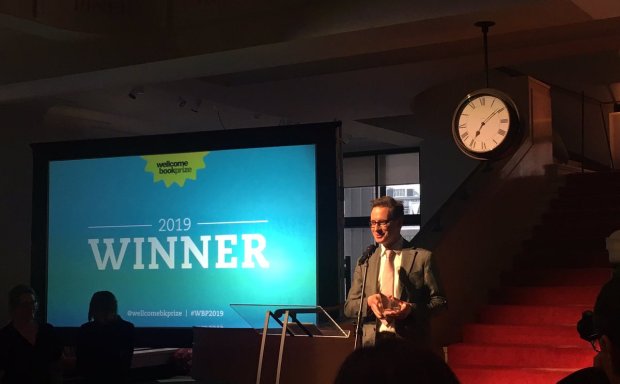
Photo by Eric Karl Anderson.
After the announcement we found Sarah Krasnostein, our shadow panel winner, and got a photo and a signature. She gave us the scoop on her work-in-progress, which examines six case studies, three from Australia and three from the USA, of people with extreme religious or superstitious beliefs, such as a widow who believes her husband was abducted by aliens. She’s exploring the “cognitive dissonance” that goes on in these situations, she said. Can’t wait for the new book!
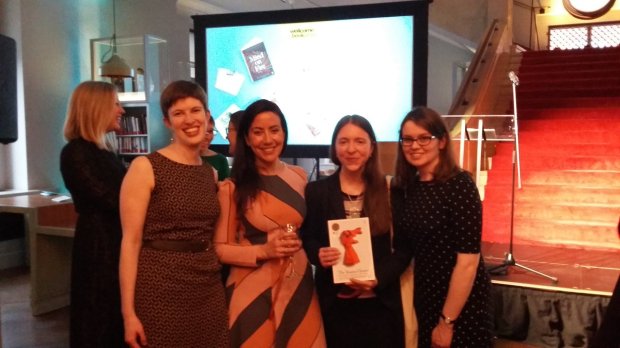
Laura, Sarah Krasnostein, me, Clare.
I also congratulated Will Eaves, whose book I’d covered for the blog tour, and got a signature. Other ‘celebrities’ spotted: Suzanne O’Sullivan, Ruth Padel and Robin Robertson. (Also a couple of familiar faces from Twitter that I couldn’t place, one of whom I later identified as Katya Taylor.)
I again acquired a Wellcome goody bag: this year’s limited-edition David Shrigley tote (I now have two so will pass one on to Annabel, who couldn’t be there) with an extra copy of The Trauma Cleaner to give to my sister.


Another great year of Wellcome festivities! Thanks to Midas PR, the Wellcome Book Prize and my shadow panel. Looking forward to next year already – I have a growing list of 2020 hopefuls I’ve read or intend to read.
See also: Laura’s post on the ceremony and the 5×15 event that took place the night before.
Wellcome Book Prize 2019: Our Shadow Panel Winner Is…
The Trauma Cleaner: One Woman’s Extraordinary Life in Death, Decay and Disaster by Sarah Krasnostein
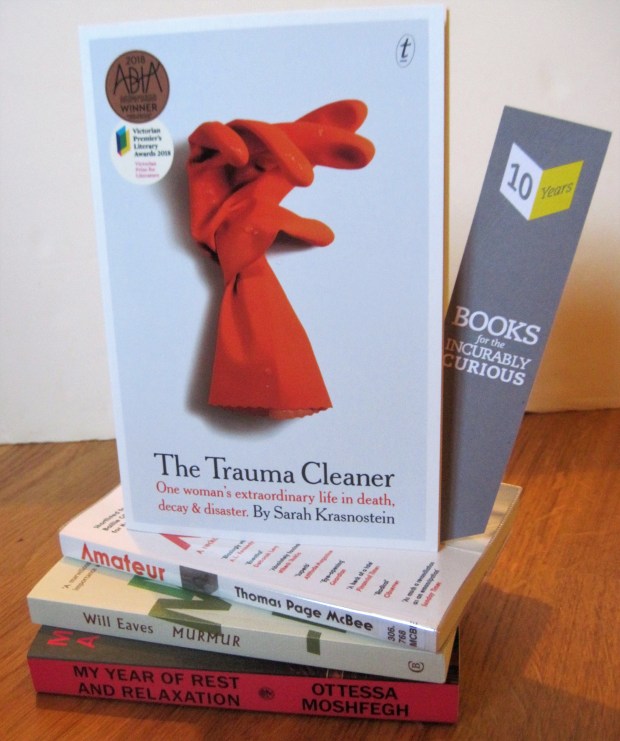
This year there was no clear favourite among the shadow panel. Two of us picked one book as our favourite, two picked another, and a third picked yet another book! However, by each person assigning each book a point value from 1 to 6, we were able to decide based on the one that got the most points in total. (Though there was only 1 point separating our first place from our runner-up!)
Here’s what the shadow panel have to say about our pick:
Annabel: “I was glad to have read this book. It was an easy read despite its oft grim subject matter, fascinating and very sympathetic too.”
Clare: “The structure of the book reveals the many layers and contradictions of Sandra gradually … even though it’s one of the least objective biographies I’ve read in a very long time, it is also one of the most memorable and fascinating.”
Laura: “The Trauma Cleaner is a book it will be difficult to forget in a hurry. … Krasnostein is rightly impressed by Sandra’s resilience, and, in telling her story, she makes the right choice, I think, to remain as a largely invisible presence.”
Paul: “Pankhurst is one remarkable lady, even after a horrendous childhood and working in the prostitution trade, she has an amazing amount of empathy for all of her clients. … if you want to have a no-holds-barred look at a part of society that almost everyone will be unaware of then this is one to read.”
Rebecca: “I guarantee you’ve never read a biography quite like this one. … It’s part journalistic exposé and part ‘love letter’; it’s part true crime and part ordinary life story. It considers gender, mental health, addiction, trauma and death. It’s also simply a terrific read that should draw in lots of people who wouldn’t normally pick up nonfiction.”
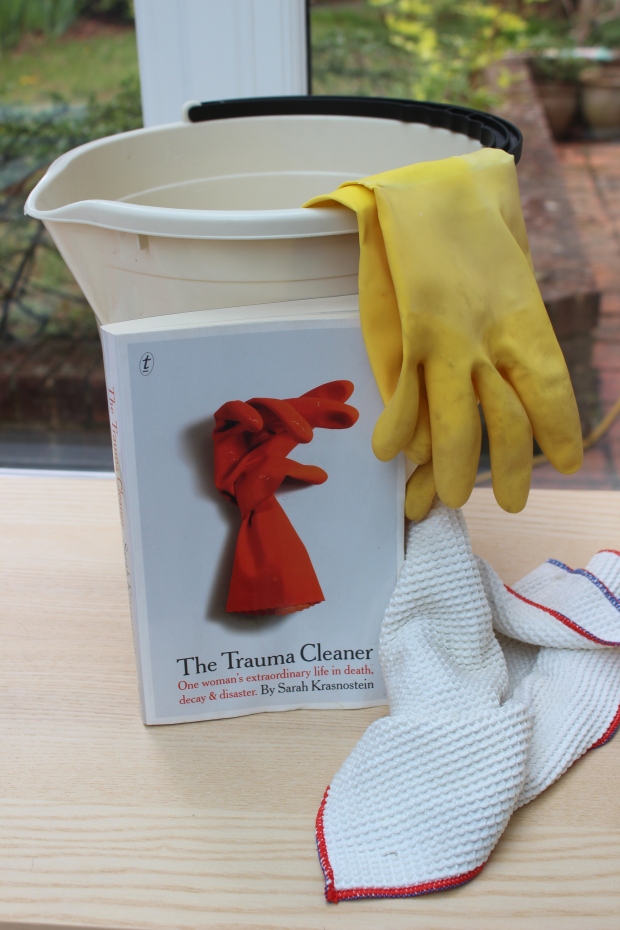
Photo by Annabel Gaskell.
On Wednesday, at an evening ceremony at the Wellcome Collection, we will find out which book the official judges have chosen as the winner of the 10th anniversary prize. I have no idea who it will be!
Who are you rooting for?
Wellcome Book Prize Blog Tour: Will Eaves’s Murmur
“This is the death of one viewpoint, and its rebirth, like land rising above the waves, or sea foam running off a crowded deck: the odd totality of persons each of whom says ‘me’.”
When I first tried reading Murmur, I enjoyed the first-person “Part One: Journal,” which was originally a stand-alone story (shortlisted for the BBC National Short Story Award 2017) but got stuck on “Part Two: Letters and Dreams” and ended up just giving the rest of the book a brief skim. I’m glad that the book’s shortlisting prompted me to return to it and give it proper consideration because, although it was a challenge to read, it was well worth it.

Eaves’s protagonist, Alec Pryor, sometimes just “the scientist,” is clearly a stand-in for Alan Turing, quotes from whom appear as epigraphs heading most chapters. Turing was a code-breaker and early researcher in artificial intelligence at around the time of the Second World War, but was arrested for homosexuality and subjected to chemical castration. Perhaps due to his distress at his fall from grace and the bodily changes that his ‘treatment’ entailed, he committed suicide at age 41 – although there are theories that it was an accident or an assassination. If you’ve read about the manner of his death, you’ll find eerie hints in Murmur.
Every other week, Alec meets with Dr Anthony Stallbrook, a psychoanalyst who encourages him to record his dreams and feelings. This gives rise to the book’s long central section. As is common in dreams, people and settings whirl in and out in unpredictable ways, so we get these kinds of flashes: sneaking out from the boathouse at night with his schoolboy friend, Chris Molyneux, who died young; anti-war protests at Cambridge; having sex with men; going to a fun fair; confrontations with his mother and brother; and so on. Alec and his interlocutors discuss the nature of time, logic, morality, and the threat of war.
There are repeated metaphors of mirrors, gold and machines, and the novel’s language is full of riddles and advanced vocabulary (volutes, manumitted, pseudopodium) that sometimes require as much deciphering as Turing’s codes. The point of view keeps switching, too, as in the quote I opened with: most of the time the “I” is Alec, but sometimes it’s another voice/self observing from the outside, as in Akwaeke Emezi’s Freshwater. There are also fragments of second- and third-person narration, as well as imagined letters to and from June Wilson, Alec’s former Bletchley Park colleague and fiancée. All of these modes of expression are ways of coming to terms with the past and present.
 I am usually allergic to any book that could be described as “experimental,” but I found Murmur’s mosaic of narrative forms an effective and affecting way of reflecting its protagonist’s identity crisis. There were certainly moments where I wished this book came with footnotes, or at least an Author’s Note that would explain the basics of Turing’s situation. (Is Eaves assuming too much about readers’ prior knowledge?) For more background I recommend The Imitation Game, starring Benedict Cumberbatch as Turing.
To my surprise, given my initial failure to engage with Murmur, it is now my favorite to win the Wellcome Book Prize. For one thing, it’s a perfect follow-on from last year’s winner, To Be a Machine. (“It is my fate to make machines that think,” Alec writes.) For another, it connects the main themes of this year’s long- and shortlists: mental health and sexuality. In particular, Alec’s fear that in developing breasts he’s becoming a sexual hybrid echoes the three books from the longlist that feature trans issues. Almost all of the longlisted books could be said to explore the mutability of identity to some extent, but Murmur is the very best articulation of that. A playful, intricate account of being in a compromised mind and body, it’s written in arresting prose. Going purely on literary merit, this is my winner by a mile.
My rating:
With thanks to Midas PR for the free copy for review.

From Gallop: Selected Poems by Alison Brackenbury. Originally published in the volume After Beethoven.
Will Eaves is an associate professor in the Writing Programme at the University of Warwick and a former arts editor of the Times Literary Supplement. Murmur, his fourth novel, was also shortlisted for the 2018 Goldsmiths Prize and was the joint winner of the 2019 Republic of Consciousness Prize. He has also published poetry and a hybrid memoir.
Opinions on this book vary within our shadow panel; our final votes aren’t in yet, so it remains to be seen who we will announce as our winner on the 29th.
If you are within striking distance of London, please consider coming to the “5×15” shortlist event being held next Tuesday evening the 30th.
I was delighted to be asked to participate in the Wellcome Book Prize blog tour. See below for details of where other reviews have appeared or will be appearing soon.

 Bookish Beck = Rebecca Foster. American transplant to England. Freelance proofreader and book reviewer.
 Bookish Beck