Salt & Skin by Eliza Henry-Jones (Blog Tour)
I was drawn to Eliza Henry-Jones’s fifth novel, Salt & Skin (2022), by the setting: the remote (fictional) island of Seannay in the Orkneys. It tells the dark, intriguing story of an Australian family lured in by magic and motivated by environmentalism. History overshadows the present as they come to realize that witch hunts are not just a thing of the past. This was exactly the right evocative reading for me to take on my trip to some other Scottish islands late last month. The setup reminded me of The Last Animal by Ramona Ausubel, while the novel as a whole is reminiscent of The Night Ship by Jess Kidd and Night Waking by Sarah Moss.
Only a week after the Managans – photographer Luda, son Darcy, 16, and daughter Min, 14 – arrive on the island, they witness a hideous accident. A sudden rockfall crushes a little girl, and Luda happens to have captured it all. The photos fulfill her task of documenting how climate change is affecting the islands, but she earns the locals’ opprobrium for allowing them to be published. It’s not the family’s first brush with disaster. The kids’ father died recently; whether in an accident or by suicide is unclear. Nor is it the first time Luda’s camera has gotten her into trouble. Darcy is still angry at her for selling a photograph she took of him in a dry dam years before, even though it raised a lot of money and awareness about drought.
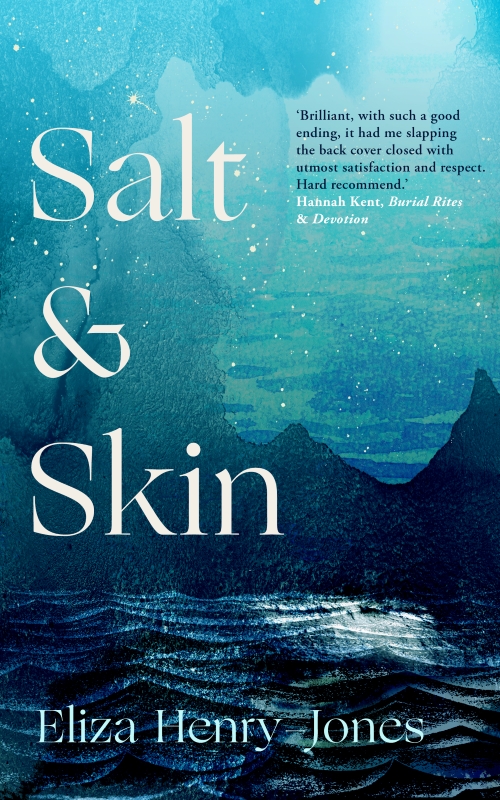
The family live in what has long been known as “the ghost house,” and hints of magic soon seep in. Luda’s archaeologist colleague wants to study the “witch marks” at the house, and Darcy is among the traumatized individuals who can see others’ invisible scars. Their fate becomes tied to that of Theo, a young man who washed up on the shore ten years ago as a web-fingered foundling rumoured to be a selkie. Luda becomes obsessed with studying the history of the island’s witches, who were said to lure in whales. Min collects marine rubbish on her deep dives, learning to hold her breath for improbable periods. And Darcy fixates on Theo, who also attracts the interest of a researcher seeking to write a book about his origins.
It’s striking how Henry-Jones juxtaposes the current and realistic with the timeless and mystical. While the climate crisis is important to the framework, it fades into the background as the novel continues, with the focus shifting to the insularity of communities and outlooks. All of the characters are memorable, including the Managans’ elderly relative, Cassandra (calling to mind a prophetic figure from Greek mythology), though I found Father Lee, the meddlesome priest, aligned too readily with clichés. While the plot starts to become overwrought in later chapters, I appreciated the bold exploration of grief and discrimination, the sensitive attention to issues such as addiction and domestic violence, and the frank depictions of a gay relationship and an ace character. I wouldn’t call this a cheerful read by any means, but its brooding atmosphere will stick with me. I’d be keen to read more from Henry-Jones.
With thanks to Random Things Tours and September Publishing for the free copy for review.
Buy Salt & Skin from the Bookshop UK site. [affiliate link]
or
Pre-order Salt & Skin (U.S. release: September 5) from Bookshop.org. [affiliate link]
I was delighted to help kick off the blog tour for Salt & Skin on its UK publication day. See below for details of where other reviews have appeared or will be appearing soon.

Scottish Travels & Book Haul: Wigtown, Arran, Islay and Glasgow
When I was a kid, one-week vacations were rare and precious – Orlando or Raleigh for my dad’s church conferences, summer camp in Amish-country Pennsylvania, spring break with my sister in California – and I mourned them when they were over. As an adult, I find that after a week I’m ready to be home … and yet just days after we got back from Scotland, I’m already wondering why I thought everyday life was so great. Oh well. I like to write up my holidays because otherwise it’s all too easy to forget them. This one had fixed start and end points – several days of beetle recording in Galloway for my husband; meeting up with my sister and nephew in Glasgow one evening the next week – and we filled in the intervening time with excursions to two new-to-us Scottish islands; we’re slowly collecting them all.
First Stop, Wigtown
Hard to believe it had been over five years since our first trip to Wigtown. The sleepy little town had barely changed; a couple of bookshops had closed, but there were a few new ones I didn’t remember from last time. The weather was improbably good, sunny and warm enough that I bought a pair of cutoffs at the Community Shop. Each morning my husband set off for bog or beach or wood for his fieldwork and I divided the time until he got back between bits of paid reviewing, reading and book shopping. Our (rather spartan) Airbnb apartment was literally a minute’s walk into town and so was a perfect base.


I paced myself and parcelled out the eight bookshops and several other stores that happen to sell books across the three and a bit days that I had. It felt almost like living there – except I would have to ration my Reading Lasses visits, as a thrice-weekly coffee-and-cake habit would soon get expensive as well as unhealthy. (I spent more on books than on drinks and cakes over the week, though only ~25% more: £44 vs. £32.)


I also had the novelty of seeing my husband interact with his students when we were invited to a barbecue at one’s family home on the Mull of Galloway – and realizing that we’re almost certainly closer in age to the mum than to the student. Getting there required two rural bus journeys to the middle of nowhere, an experience all in itself.
‘Pro’ tips: New Chapter Books was best for bargains, with sections for 50p and £1 paperbacks and free National Geographics. Well-Read Books was good for harder-to-find fiction: among my haul were two Jane Urquhart novels, and the owner was knowledgeable and pleasant. Byre Books carries niche subjects and has scant opening hours, but I procured two poetry collections and a volume of Dorothy Wordsworth’s journals. The Old Bank Bookshop and The Bookshop are the two biggest shops; wander for an hour or more if you can. The Open Book tends to get castoffs from other shops and withdrawn library stock, but I still made two purchases and ended up being the first customer for the week’s hosts: Debbie and Jenny, children’s book authors and long-distance friends from opposite coasts of the USA. Overall, I was pleased with my novella, short story and childhood memoir acquisitions. A better haul than last time.

‘Celebrity’ sightings: On our walk down to the bird hide on the first evening, we passed Jessica Fox, an American expat who’s been influential in setting up the literary festival and The Open Book. She gave us a cheery “hello.” I also spotted Ben of The Bookshop Band twice, once in Reading Lasses and another time on his way to the afternoon school run. Both times he had the baby in tow and I decided not to bother him, not even to introduce myself as one of their Patreon supporters.
On our last morning in town, we lucked out and found Shaun Bythell behind the counter at The Bookshop. He’d just taken delivery of a book-print kilt his staff surprised him by ordering with his credit card, and Nicky (not as eccentric as she’s portrayed in Diary of a Bookseller; she’s downright genteel, in fact) had him model it. He posted a video to Facebook that includes The Open Book hosts on the 23rd, if you wish to see it, and his new cover photo shows him and his staff members wearing the jackets that match the kilt. I bought a few works of paperback fiction and then got him to sign my own copies of two of his books.


As last time, he was chatty and polite, taking an interest in our travels and exhorting us to come back sooner than five years next time. I congratulated him on his success and asked if we could expect more books. He said that depends on his publisher, who worry the market is saturated at the moment, though he has another SIX YEARS of diaries in draft form and the Remainders of the Day epilogue would be quite different if he wrote it now. Tantalizing!
Note to self: Next time, plan to be in town through a Friday evening – we left at noon, so I was sad to miss out on a Beth Porter (the other half of The Bookshop Band) children’s songs concert at Foggie Toddle Books at 3:00, followed by a low-key cocktail party at The Open Book at 5:30 – but not until a Monday, as pretty much everything shuts that day. How I hope someone buys Reading Lasses (the owner is retiring) and maintains the café’s high standard!
 Appropriate reading: I read the first third of Dorothy L. Sayers’s The Five Red Herrings because it’s set in the area (first line: “If one lives in Galloway, one either fishes or paints”), and found it entertaining, though not enough to care whodunnit. In general, I’m terrible for trying mystery series and DNFing or giving up after the first book. Lord Peter Wimsey seemed like he’d be an amusing detective in the Sherlock Holmes vein, but the rendering of Scottish accents was OTT and the case relied too much on details of train schedules and bicycles.
Arran
Our short jaunt to Arran started off poorly with a cancelled ferry sailing, leaving us stranded in Ardrossan (which Bythell had almost prophetically dubbed a “sh*thole” that morning!) for several hours until the next one, and we struggled with a leaky rear tyre and showery weather for much of the time, but we were still enamoured with this island that calls itself “Scotland in miniature.” That was particularly delightful for me because I come from the state nicknamed “America in miniature,” Maryland. This Airbnb was plush by comparison, we obtained excellent food from the Blackwater Bakehouse and a posh French takeaway, and we enjoyed walks at the Machrie stone circles and Brodick Castle as well as at the various bays (one with a fossilized dinosaur footprint) that we stopped off at on our driving tour.


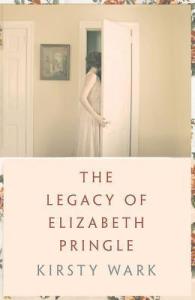 Appropriate reading: The Legacy of Elizabeth Pringle by Kirsty Wark, the only Arran-set novel on my library’s catalogue, is an enjoyable dual-timeline story linked by the Lamlash home of the title character. When she died in her nineties in 2006, she bequeathed her home to a kind woman who used to walk past on summer holidays with her daughter in a pram. Martha Morrison was that baby, and with her mother, Anna, suffering from dementia, it’s up to her to take possession and root out Elizabeth’s secrets. Every other chapter is a first-person fragment from Elizabeth’s memoir, cataloguing her losses of parents and lovers and leading ever closer to the present, when she befriended Saul, an American Buddhist monk based at Holy Island across the water, and Niall, a horticulturist at Brodick Castle. It’s a little too neat how the people in her life pair off (sub-Maggie O’Farrell; more Joanna Trollope, perhaps), but it was fun to be able to visualize the settings and to learn about Arran’s farming traditions and wartime history.
Islay
Islay is a tourist mecca largely because of its nine distilleries – what a pity we don’t care for whiskey! – but we sought it out for its wildlife and scenery, which were reminiscent of what we saw in the Outer Hebrides last year. Our B&B was a bit fusty (there was a rotary phone in the hall!), but we had an unbeatable view from our window and enjoyed visiting two RSPB reserves. The highlight for me was the walk to the Mull of Oa peninsula and the cow-guarded American Monument, which pays tribute to the troops who died in two 1918 naval disasters – a torpedoed boat and a shipwreck – and the heroism of locals who rescued survivors.


We spent a very rainy Tuesday mooching from one distillery shop to another. There are two gin-makers whose products we were eager to taste, but we also relished our mission to buy presents for two landmark birthdays, one of an American friend who’s a whiskey aficionado. Even having to get the tyre replaced didn’t ruin the day. There’s drink aplenty on Islay, but quality food was harder to acquire, so if we went back we’d plump for self-catering.


Incidental additional hauls: I found this 50th anniversary Virago tote bag under a bench at Bowmore harbour after our meal at Peatzeria. I waited a while to see if anyone would come back for it, but it was so sodden and sandy that it must have been there overnight. I cleaned it up and brought home additional purchases in it: two secondhand finds at a thrift store in Tarbert, the first town back on the mainland, and a Knausgaard book I got free with my card points from a Waterstones in Glasgow.


Glasgow
 My 15-year-old nephew is currently on a school trip to Scotland and my sister went along as an unofficial chaperone. I couldn’t let them come to the UK without meeting up, so for months we’d pencilled in an evening in Glasgow. When we booked our Airbnb room in a suburb, it was because it was on a super-convenient train line … which happened to be closed for engineering works while we were there. Plan B: rail replacement buses, which were fine. We greatly enjoyed the company of Santos the Airbnb cat, who mugged us for scraps of our breakfasts.
With our one day in Glasgow, we decided to prioritize the Burrell Collection, due to the enthusiastic recommendations from Susan, our Arran hosts, and Bill Bryson in Notes on a Small Island (“Among the city’s many treasures, none shines brighter, in my view”). It’s a museum with a difference, housed in a custom-built edifice that showcases the wooded surroundings as much as the stunning objects. We were especially partial to the stained glass.


Our whistle-stop city tour also included a walk past the cathedral, a ramble through the Necropolis (where, pleasingly, I saw a grave for one Elizabeth Pringle), and the Tenement Museum, a very different sort of National Trust house that showed how one woman, a spinster and hoarder, lived in the first half of the 20th century. Then on to an exceptional seafood-heavy meal at Kelp, also recommended by Susan, and an all-too-brief couple of hours with my family at their hotel and a lively pub.


We keep returning to Scotland. Where next in a few years? Possibly the southern islands of the Outer Hebrides, which we didn’t have time for last year, or the more obscure of the Inner Hebrides, before planning return visits to some favourites. All the short ferry rides were smooth this time around, so I can cope with the thought of more.

We got home to find our mullein plants attempting to take over the world.
The Best Books from the First Half of 2023
Yes, it’s that time of year already! It remains to be seen how many of these will make it onto my overall best-of year list, but for now, these are my 20 highlights. Plus, I sneakily preview another great novel that won’t release until September. (For now I’m highlighting 2023 releases, whereas at the end of the year I divide my best-of lists into current year and backlist. I’ve read 86 current-year releases so far and am working on another 20, so I’m essentially designating a top 20% here.) I give review excerpts and link to the full text from this site or elsewhere. Pictured below are the books I read in print; all the others were e-copies.

Fiction
 Shoot the Horses First by Leah Angstman: In 16 sumptuous historical stories, outsiders and pioneers face disability and prejudice with poise. The flash entries crystallize moments of realization, often about health. Longer pieces shine as their out-of-the-ordinary romances have space to develop. In the novella Casting Grand Titans, a botany professor in 1850s Iowa learns her salary is 6% of a male colleague’s. She strives for intellectual freedom, reporting a new-to-science species of moss, while working towards liberation for runaway slaves.
 The House Is on Fire by Rachel Beanland: Moving at a propulsive pace, Beanland’s powerful second novel rotates through the perspectives of these main characters – two men and two women; two white people and two enslaved Black people – caught up in the Richmond Theater Fire of 1811 (one of the deadliest events in early U.S. history) and its aftermath. Painstakingly researched and full of historical detail and full-blooded characters, it dramatizes the range of responses to tragedy and how people rebuild their lives.
 The New Life by Tom Crewe: Two 1890s English sex researchers (based on John Addington Symonds and Havelock Ellis) write a book called Sexual Inversion drawing on ancient Greek history and containing case studies of homosexual behaviour. Oscar Wilde’s trial puts everyone on edge; not long afterwards, their own book becomes the subject of an obscenity trial, and each man has to decide what he’s willing to give up in devotion to his principles. This is deeply, frankly erotic stuff, and, on the sentence level, just exquisite writing.
 Daughters of Nantucket by Julie Gerstenblatt: (Yes, another historical fire novel, and I reviewed both for Shelf Awareness!) This engrossing debut explores the options for women in the mid-19th century. Metaphorical conflagrations blaze in the background in the days leading up to the great Nantucket fire of 1846: each of three female protagonists (a whaling captain’s wife, a museum curator, and a pregnant Black entrepreneur) holds a burning secret and longs for a more expansive, authentic life. Tense and sultry; for Sue Monk Kidd fans.
 I Have Some Questions for You by Rebecca Makkai: When an invitation comes from her boarding school alma mater, Granby, to teach a two-week course on podcasting, Bodie indulges her obsession with the 1995 murder of her former roommate. Makkai has taken her cues from the true crime genre and constructed a convincing mesh of evidence and theories. She so carefully crafts her pen portraits, and so intimately involves us in Bodie’s psyche, that it’s impossible not to get invested. This is timely, daring, intelligent, enthralling storytelling.
 Sidle Creek by Jolene McIlwain: In this debut collection of 22 short stories, loosely linked by their location in the Appalachian hills in western Pennsylvania and a couple of recurring minor characters, McIlwain softens the harsh realities of addiction, poverty and violence with the tender bruises of infertility and lost love. Grief is a resonant theme in many of the stories, with pregnancy or infant loss a recurring element. At times harrowing, always clear-eyed, these stories are true to life and compassionate about human foibles and animal pain.
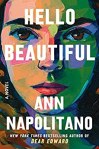 Hello Beautiful by Ann Napolitano: Oprah’s 100th book club pick. It’s a family story spanning three decades and focusing on the Padavanos, a working-class Italian American Chicago clan with four daughters. Julia meets melancholy basketball player William Waters while at Northwestern in the late 1970s. There is such warmth and intensity to the telling, and brave reckoning with bereavement, mental illness, prejudice and trauma. I love sister stories in general, and the subtle echoes of Leaves of Grass and Little Women add heft.
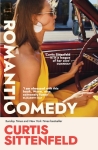 Romantic Comedy by Curtis Sittenfeld: Through her work as a writer for a sketch comedy show modelled on Saturday Night Live, Sally Milz meets Noah Brewster, a pop star with surfer-boy good looks. Plain Jane getting the hot guy – that never happens, right? In fact, Sally has a theory about this very dilemma… As always, Sittenfeld’s inhabiting of a first-person narrator is flawless, and Sally’s backstory and Covid-lockdown existence endeared her to me. Could this be called predictable? Well, what does one want from a romcom?
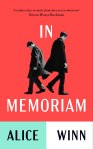 In Memoriam by Alice Winn: Heartstopper on the Western Front; swoon! Will Sidney Ellwood and Henry Gaunt both acknowledge that this is love and not just sex, as it is for so many teenage boys at their English boarding school? And will one or both survive the trenches of the First World War? Winn depicts the full horror of war, but in between there is banter, friendship and poetry. Some moments are downright jolly. This debut is obsessively researched, but Winn has a light touch with it. Engaging, thrilling, and, yes, romantic.
A bonus:
 The Vaster Wilds by Lauren Groff (Riverhead/Hutchinson Heinemann, 12 September): Groff’s fifth novel combines visceral detail and magisterial sweep as it chronicles a runaway Jamestown servant’s struggle to endure the winter of 1610. Flashbacks to traumatic events seep into her mind as she copes with the harsh reality of life in the wilderness. The style is archaic and postmodern all at once. Evocative and affecting – and as brutal as anything Cormac McCarthy wrote. A potent, timely fable as much as a historical novel. (Review forthcoming for Shelf Awareness.)
Nonfiction
 All My Wild Mothers by Victoria Bennett: A lovely memoir about grief and gardening, caring for an ill child and a dying parent. The book is composed of dozens of brief autobiographical, present-tense essays, each titled after a wildflower with traditional healing properties. The format realistically presents bereavement and caring as ongoing, cyclical challenges rather than one-time events. Sitting somewhere between creative nonfiction and nature essays, it’s a beautiful read for any fan of women’s life writing.
 Monsters by Claire Dederer: The question posed by this hybrid work of memoir and cultural criticism is “Are we still allowed to enjoy the art made by horrible people?” It begins, in the wake of #MeToo, by reassessing the work of film directors Roman Polanski and Woody Allen. The book is as compassionate as it is incisive. While there is plenty of outrage, there is also much nuance. Dederer’s prose is forthright and droll; lucid even when tackling thorny issues. Erudite, empathetic and engaging from start to finish.
 Womb by Leah Hazard: A wide-ranging and accessible study of the uterus, this casts a feminist eye over history and future alike. Blending medical knowledge and cultural commentary, it cannot fail to have both personal and political significance for readers of any gender. The thematic structure of the chapters also functions as a roughly chronological tour of how life with a uterus might proceed: menstruation, conception, pregnancy, labour, caesarean section, ongoing health issues, menopause. Inclusive and respectful of diversity.
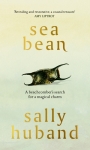 Sea Bean by Sally Huband: Stories of motherhood, the quest to find effective treatment in a patriarchal medical system, volunteer citizen science projects, and studying Shetland’s history and customs mingle in a fascinating way. Huband travels around the archipelago and further afield, finding vibrant beachcombing cultures. In many ways, this is about coming to terms with loss, and the author presents the facts about climate crisis with sombre determination. She writes with such poetic tenderness in this radiant debut memoir.
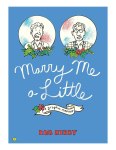 Marry Me a Little by Robert Kirby: Hopping around in time, this graphic memoir tells the story of how the author and his partner John decided to get married in 2013. The blue and red color scheme is effective at evoking a polarized America and the ebb and flow of emotions, with blue for calm, happy scenes and concentrated red for confusion or anger. This is political, for sure, but it’s also personal, and it balances those two aims well by tracing the history of gay marriage in the USA and memorializing his own relationship.
 All of Us Together in the End by Matthew Vollmer: In 2019, Vollmer’s mother died of complications of Alzheimer’s and Parkinson’s. Months later, his father reported blinking lights in the woods near the family cemetery. Although Vollmer had left the Seventh-Day Adventist Church in college, his religious upbringing influenced his investigation, which overlapped with COVID-19. Grief, mysticism, and acceptance of the unexplained are resonant themes. An unforgettable record of “a collision with the ineffable.”
 Eggs in Purgatory by Genanne Walsh: This autobiographical essay tells the story of the last few months of her father’s life. Aged 89, he lived downstairs from Walsh and her wife in San Francisco. He was quite the character: idealist, stubborn, outspoken; a former Catholic priest. Although he had no terminal conditions, he was sick of old age and its indignities and ready to exit. The task of a memoir is to fully mine the personal details of a situation but make of it something universal, and that’s just what she does here. Stunning.
Poetry
 More Sky by Joe Carrick-Varty: In this debut collection, the fact of his alcoholic father’s suicide is inescapable. The poet alternates between an intimate “you” address and third-person scenarios, auditioning coping mechanisms. His frame of reference is wide: football, rappers, Buddhist cosmology. The word “suicide” itself is repeated to the point where it becomes just a sibilant collection of syllables. The tone is often bitter, as is to be expected, but there is joy in the deft use of language.
 Lo by Melissa Crowe: This incandescent autobiographical collection delves into the reality of sexual abuse and growing up in rural poverty. Guns are insidious, used for hunting or mass shootings. Trauma lingers. “Maybe home is what gets on you and can’t / be shaken loose.” The collection is so carefully balanced in tone that it never feels bleak. In elegies and epithalamiums (poems celebrating marriage), Crowe honors family ties that bring solace. The collection has emotional range: sensuality, fear, and wonder at natural beauty.
 Standing in the Forest of Being Alive by Katie Farris: This debut collection addresses the symptoms and side effects of breast cancer treatment at age 36, but often in oblique or cheeky ways – it can be no mistake that “assistance” appears two lines before a mention of haemorrhoids, for instance, even though it closes an epithalamium distinguished by its gentle sibilance (Farris’s husband is Ukrainian American poet Ilya Kaminsky.) She crafts sensual love poems, and exhibits Japanese influences. (Review forthcoming at The Rumpus.)
 The House of the Interpreter by Lisa Kelly: Kelly is half-Danish and has single-sided deafness, and her second collection engages with questions of split identity. One section ends with the Deaf community’s outrage that the Prime Minister’s Covid briefings were not translated into BSL. Bizarre but delightful is the sequence of alliteration-rich poems about fungi, followed by a miscellany of autobiographical poems full of references to colour, nature and travel.
What are some of the best books you’ve read so far this year?
What 2023 releases should I catch up on right away?
June Releases by K Patrick, Brandon Taylor and More
These two sensual, campus-set queer novels were perfect additional reading for Pride Month. As a bonus, I read a recently reissued postcolonial poetry collection.
Mrs S by K Patrick
Like Tom Crewe’s The New Life, this was one of the Guardian’s 2023 debuts to look out for, and both are seriously sexy. Patrick’s unnamed narrator is an early-twenties Australian, shunned by her family, who has come to England to be a matron at a girls’ boarding school. No other characters are named, either, with The Girls discussed in aggregate and the whole institution – a tradition-bound place that issues a classical education – in thrall to the memory of “the dead author,” an Emily Brontë-like figure whose genius is both inspiration and burden.
The narrator is butch and wears a binder, and in fact, we soon learn, is not the only lesbian on staff. She and the Housemistress become drinking buddies, even venturing into the nearest large town to frequent a gay bar. But there’s also Mrs S, the headmaster’s wife, perhaps 20 years her senior, whose attention initially seems maternal – as they tend the rose garden, lead an art lesson together and fill in for a play performance – but gradually becomes more erotic when they go wild swimming and meet in the kitchen during a dinner party.
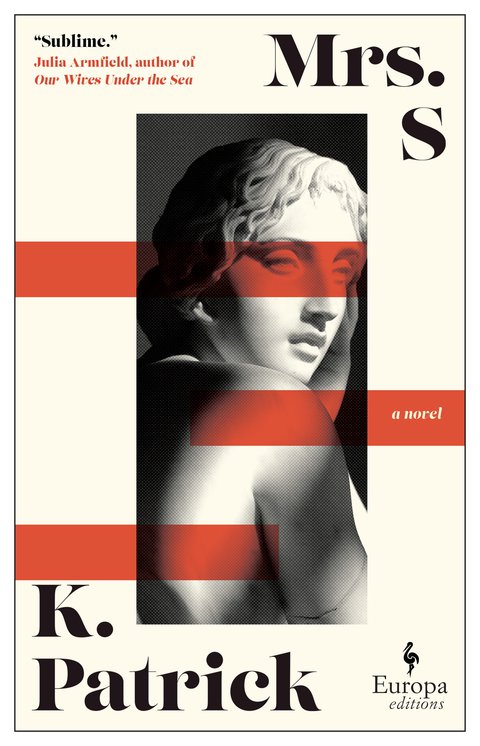
A heat wave gives the novel a sultry atmosphere as hints give way to explicit scenes. The Girls’ little dramas (one punches a boy and breaks his nose at a campus party; one group gets drunk while another gets high on mushrooms) pale in comparison to the steamy secrets. Summer romances can never last, but their intensity is legendary, and this feels like an instant standard of the type. Given the pre-Internet clues, it likely dates to the 1990s, and Mrs S and the narrator are on different pages about gender roles; had it been today, the narrator would surely have been frankly nonbinary like Patrick.
Her heterosexuality, public-facing. Its cosy violence. Who does she want to be? If I ask her that, she might fall apart. If I ask her that, I must be willing to live through the answer. … She is trying to be two people, I am not. Maybe I was. Not anymore.
The author takes the no-speech-marks thing to another level, the dialogue all in paragraph form with no new lines for each speaker. That and the under-punctuation are deliberate choices that make this somehow hyper-contemporary and a throwback to the Bloomsbury modernists all at once – what with the metaphors of propagating roses and garden fecundity, I couldn’t help but think of Virginia Woolf and Vita Sackville-West. Mrs S isn’t your average coming-of-age story, seduction narrative, or cougar stereotype. It’s a new queer classic.
With thanks to Europa Editions for the free copy for review. Released in the UK by Fourth Estate.
The Late Americans by Brandon Taylor
I was a huge fan of Taylor’s debut novel, the Booker-shortlisted Real Life, and also admired his follow-up linked story collection, Filthy Animals. This third book falls somewhere between the two in style. Although it’s been marketed as a novel, the nine close third person chapters are so discrete as to be more like short stories, all orbiting a group of students at the University of Iowa: many BIPOC, most gay; lots of them current or former ballet dancers.
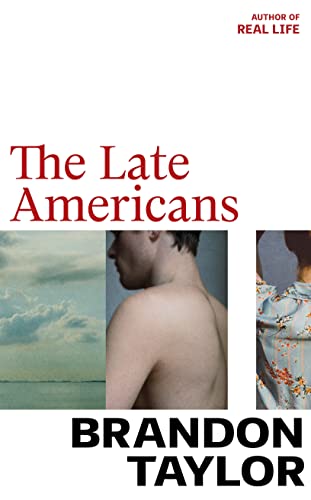 Seamus is the subject of the opening title story and “Gorgon’s Head,” so he felt to me like the core of the novel and I would happily have had him as the protagonist throughout. He’s a spiky would-be poet who ends up offending his classmates with his snobby opinions (“her poems were, in the words of a fictional Robert Lowell in an Elizabeth Bishop biopic, ‘observations broken into lines’ … she lacked a poetic intelligence”) and funds his studies by working in the kitchen at a hospice, where he meets a rough local named Bert and they have a sexual encounter that shades into cruelty.
Other characters include on-again, off-again homosexual couples Fyodor and Timo, and Ivan and Goran. Their fundamental differences account for why they so often spar: Fyodor works in a meat-packing plant, while Timo is vegetarian; Goran lives off family wealth, whereas Ivan has to get by on his own, and starts making amateur pornography for money. Noah, too, has the misfortune to get involved with Bert; most of the men, in fact, sleep with one or more of the other men. It’s hard to believe in the durability of this incestuous group. They’re all facing transitions as their studies come to an end, looking for jobs or internships, sometimes switching fields and deciding whether to leave relationships behind. Two late chapters from the perspectives of women, Noah’s neighbour Bea and dancer Fatima, who experiences sexualized shaming, were refreshing. Overall, I’m torn: Taylor’s writing can be stunning:
Iowa was a kind of cultural winter—they had all come to this speck of a city in the middle of a middle state in order to study art, to hone themselves and their ideas like perfect, terrifying weapons, and in the monastic kind of deprivation they found here, they turned to one another. Every dying species sought its own kind of comfort.
They were all posturing all the time. Everything they did was a posture, defensive or offensive, meant to demonstrate something to the outside world, perhaps that they were worthy or good or all right, perhaps to imply that they were in on the joke, that they were nothing and all they had were these crude choreographies of the self.
But it can also be laughable:
There was a resinous, burning taste in Noah’s mouth, and he wondered if it was from the semen or the cigarette or the pepper on the trout at dinner.
And even when it’s sublime, it feels a bit wasted on repetitive stories of meaningless hook-ups, assault, and resentment. This ended up being something of a disappointment from my Most Anticipated list. After three books about angsty homosexuals at midwestern universities, the author is in real danger of being perceived as a one-trick pony. I hope he’ll stretch himself and try something different with his next book.
With thanks to Jonathan Cape for the proof copy for review. Released in the USA by Riverhead.
And a bonus:
The Fat Black Woman’s Poems by Grace Nichols (1984)
 I discovered Grace Nichols a few years ago when I reviewed Passport to Here and There for Wasafiri. One of “Five Gold Reads” to mark Virago’s 50th anniversary, this was the Guyanese-British poet’s second collection (the reissue also includes a few poems from her first book, I Is a Long-Memoried Woman).
The title character is a woman of pleasures, jovial and sensual, but not without cliches (“Come up and see me sometime // My breasts are huge exciting / amnions of watermelon”). I preferred the later sections of the book about childhood memories and the expat’s dilemma: what you miss haunts you, even if what you gained in leaving was objectively better.
In London
every now and then
I get this craving
for my mother’s food
I leave art galleries
in search of plantains
These islands
not picture postcards
for unravelling tourist
you know
…
Poverty is the price we pay for the sun
The patois reminded me of work I’ve read by Bernardine Evaristo and Jackie Kay, and I might recommend the collection as a whole to readers of Fire Rush or Cane, Corn & Gully. But it didn’t spark much for me compared with Nichols’ more recent poetry.
With thanks to Virago for the free copy for review.
Love Your Library, June 2023
Thanks, as always, to Elle for her participation, and to Laura and Naomi for their reviews of books borrowed from libraries. Ever since she was our Sunday Times Young Writer of the Year Award shadow panel winner, I’ve followed Julianne Pachico’s blog. A recent post lists books she currently has from the library. I like her comment that borrowing books “is definitely scratching that dopamine itch for me”! On Instagram I spotted this post celebrating both libraries and Pride Month.

And so to my reading and borrowing since last time.
Most of my reservations seemed to come in all at once, right before we left for Scotland, so I’m taking a giant pile along with me (luckily, we’re traveling by car so I don’t have space or weight restrictions) and will see which I can get to, while also fitting in Scotland-themed reads, June review copies, e-books for paid review, and a few of my 20 Books of Summer!
READ
- Rainbow Rainbow: Stories by Lydia Conklin
- The Greengage Summer by Rumer Godden

- Under the Rainbow by Celia Laskey

- Scattered Showers: Stories by Rainbow Rowell
- A Cat in the Window by Derek Tangye

- Cats in Concord by Doreen Tovey

CURRENTLY READING
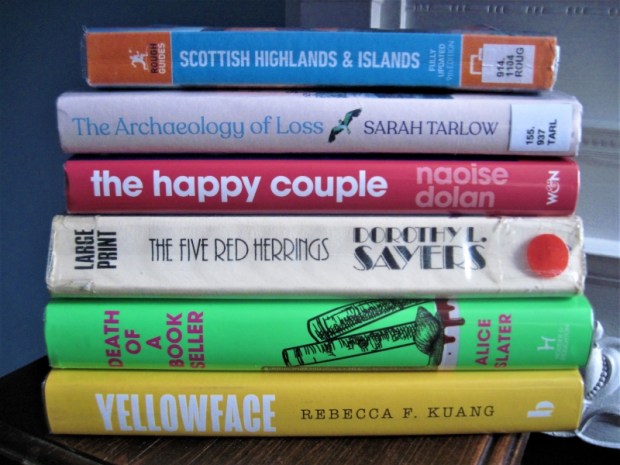
- The Happy Couple by Naoise Dolan
- The Gifts by Liz Hyder
- Milk by Alice Kinsella
- Yellowface by Rebecca F. Kuang
- Music in the Dark by Sally Magnusson
- Five Red Herrings by Dorothy L. Sayers
- Death of a Bookseller by Alice Slater
- The Archaeology of Loss by Sarah Turlow
- The Legacy of Elizabeth Pringle by Kirsty Wark
CHECKED OUT, TO BE READ


RETURNED UNREAD
- Pod by Laline Paull – I wanted to give this a try because it made the Women’s Prize shortlist, but I looked at the first few pages and skimmed through the rest and knew I just couldn’t take it seriously. I mean, look at lines like these: “The Rorqual wanted to laugh, but it was serious. The dolphin had been in some physical horror and had lost his mind. Google could not bear his mistake. The sound he raced toward was not Base, but this thing, this creature, he had never before encountered.”
What have you been reading or reviewing from the library recently?

Share a link to your own post in the comments. Feel free to use the above image. The hashtag is #LoveYourLibrary.
Books of Summer, 3–4: Anthony Bourdain and Meron Hadero
Back to the foodie lit. A chef’s memoir of adventurous travel and eating, and a short story collection about Ethiopian American immigrants – for some of whom learning how to cook traditional American food is a sign of integration.
A Cook’s Tour: In Search of the Perfect Meal by Anthony Bourdain (2001)
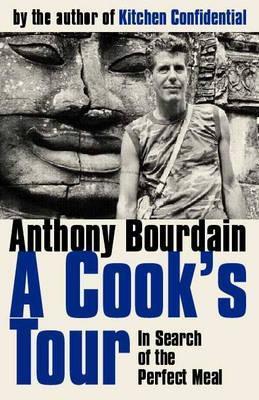 Anthony Bourdain also appeared on my summer reading list when I reviewed Kitchen Confidential in 2020; I have both books in an omnibus edition. The chef acknowledges there’s no such thing as a perfect dining experience as there are many subjective factors apart from the food, but a few of his meals here are pretty close to ideal. Others are horrific. But everywhere he goes, from England to Cambodia, he gives a fair try. Four interspersed chapters are set in Vietnam, a country he falls in love with, but the rest are like individual essays with a different destination each time: Spain, Russia, Morocco, Japan, Scotland…
Some places are chosen due to personal significance or professional connections. He goes back to where he spent childhood summers in France, but it doesn’t live up to expectations: “I’d thought everything would be instant magic. That the food would taste better because of all the memories. … But you can never be ten years old again.” His boss arranges a pig roast for him in Portugal; he travels to the state in Mexico where most of his kitchen staff come from. With several other chefs, he journeys to Thomas Keller’s The French Laundry in California for a 20-course tasting menu – the rundown of the dishes takes him several pages. The key ingredients of this and the other near-perfect meals seem to be excellent quality of food, innovative flavors, a variety of dishes, and a languid pace with the alcohol flowing.
Bourdain sheepishly confesses that his travels were documented for television; the Food Network made him agree to some filming opportunities he would otherwise have avoided. Vegetarians be warned: some of these involve slaughter, and/or eating exotic animals. Aside from the pig, there’s a whole lamb cooked over a fire in the desert in Morocco, a turkey he beheads, and rabbits he shoots. And while you might think he’d eat anything with pleasure, there are in fact a few meals that leave him feeling ill: iguana tamales, bird’s nest soup, and dishes that use up all parts of a cobra. A notorious vegetarian hater, he even agrees to attend a vegan potluck in Berkeley, but reports that “not one of them could cook a f***ing vegetable.”
This was fast-moving, brash and funny; just as good as Kitchen Confidential and something I’d recommend to anyone who enjoys cooking shows or stunt travel. (Free – swap shop)
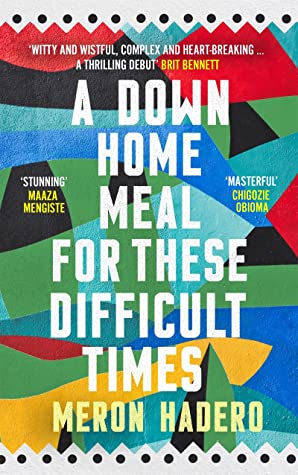
A Down Home Meal for These Difficult Times by Meron Hadero (2022)
Debut author Hadero won the Restless Books Prize for New Immigrant Writing for this work in progress, many of whose stories had been published in periodicals in 2015–20. The 15 stories are roughly half in the first person and half in the third person, and apart from a couple whose place or character origins aren’t specified, I think all are about Ethiopians or Ethiopian Americans. Often, the protagonist is a recent immigrant. Yohannes, in “Medallion,” is recruited by his taxi driver almost immediately upon his arrival in Los Angeles, but finds that his American dream never comes through. In “The Thief’s Tale,” an old Ethiopian man who speaks no English is lost in Prospect Park. When the man who holds him up at knifepoint realizes there is no watch or wallet to take, he lets him call his daughter from a payphone and, as they wait, the two strangers share their stories of failure and regret.
Sometimes Ethiopia is the setting instead. “The Suitcase” has Saba getting ready to return to the USA after a one-month visit to Addis Ababa, her bag 10 kilograms too heavy because of everything people are sending back with her. In “The Street Sweep,” Getu hopes to impress a departing NGO worker enough at his leaving party at the Addis Sheraton that he’ll get a life-changing job offer. This one was a standout, though distressing for how it rests on misunderstanding.
 My favorites seem like they could be autobiographical for the author. “The Wall” is narrated by a man who immigrated to Iowa via Berlin at age 10 in the mid-1980s. At a potluck dinner, he met Professor Johannes Weill, who gave him free English lessons. Six years later, he heard of the Berlin Wall coming down and, though he’d lost touch with the professor, made a point of sending a note. The connection across age, race and country is touching. “Sinkholes” is a short, piercing one about the single Black student in a class refusing to be the one to write the N-word on the board during a lesson on Invisible Man. The teacher is trying to make a point about not giving a word power, but it’s clear that it does have significance whether uttered or not. “Swearing In, January 20, 2009” is a poignant flash story about an immigrant’s patriotic delight in Barack Obama’s inauguration, despite prejudice encountered.
The title story is the only foodie link, but it’s a sweet one. Two women who attend church Amharic classes in New York City admit that they can’t cook, but want to impress at the PTA bake sale, so go in search of a quintessential American cookbook, and in the years to come prepare dishes from The Good Housekeeping Illustrated Cookbook every time there is a crisis. “When Yeshi’s husband left her for a blonde waitress, they made Broiled Hamburg Steak, just the once. … When Jazarah’s credit cards were stolen and maxed out, they made trays of Corn Fritters.” Eventually, they start to make a living from their own food truck.
There were no bad stories here per se, but several too many, and not enough variety. I also didn’t warm to the couple of political satires involving manuscripts. “The Case of the Missing _______,” set in 2036 and counting backwards from Day 100, is a document full of erasure, produced by the Minnesota newspaper The Exile Gazeta and concerning an absent authoritarian leader. It made me think of Ella Minnow Pea, or perhaps novels by Jonathan Safran Foer and Hernan Diaz, and felt different to the rest, but not in a good way. It would be interesting to try a novel by Hadero someday. See also Liz’s review. (Other challenges this met: review catch-up, set-aside) 
With thanks to Canongate for the proof copy for review.
Books of Summer, 2: The Story of My Father by Sue Miller
I followed up my third Sue Miller novel, The Lake Shore Limited, with her only work of nonfiction, a short memoir about her father’s decline with Alzheimer’s and eventual death. James Nichols was an ordained minister and church historian who had been a professor or dean at several of the USA’s most elite universities. The first sign that something was wrong was when, one morning in June 1986, she got a call from police in western Massachusetts who had found him wandering around disoriented and knocking at people’s doors at 3 a.m. On the road and in her house after she picked him up, he described vivid visual delusions. He still had the capacity to smile “ruefully” and reply, when Miller explained what had happened and how his experience differed from reality, “Doggone, I never thought I’d lose my mind.”
Until his death five years later, she was the primary person concerned with his wellbeing. She doesn’t say much about her siblings, but there’s a hint of bitterness that the burden fell to her. “Throughout my father’s disease, I struggled with myself to come up with the helpful response, the loving response, the ethical response,” she writes. “I wanted to give him as much of myself as I could. But I also wanted, of course, to have my own life. I wanted, for instance to be able to work productively.” She had only recently found success with fiction in her forties and published two novels before her father died; she dedicated the second to him, but too late for him to understand the honor. Her main comfort was that he never stopped being able to recognize her when she came to visit.
Although the book moves inexorably towards a death, Miller lightens it with many warm and admiring stories from her father’s past. Acknowledging that she’ll never be able to convey the whole of his personality, she still manages to give a clear sense of who he was, and the trajectory of his illness, all within 170 pages. The sudden death of her mother, a flamboyant lyric poet, at age 60 of a heart attack, is a counterbalance as well as a potential contributing factor to his slow fading as each ability was cruelly taken from him: living alone, reading, going outside for walks, sleeping unfettered.

Sutton Hill, the nursing home where he lived out his final years, did not have a dedicated dementia ward, and Miller regrets that he did not receive the specialist care he needed. “I think this is the hardest lesson about Alzheimer’s disease for a caregiver: you can never do enough to make a difference in the course of the disease. Hard because what we feel anyway is that we have never done enough. We blame ourselves. We always find ourselves deficient in devotion.” She conceived of this book as a way of giving her father back his dignity and making a coherent story out of what, while she was living through it, felt like a chaotic disaster. “I would snatch him back from the meaninglessness of Alzheimer’s disease.”
And in the midst of it all, there were still humorous moments. Her poor father fell in love with his private nurse, Marlene, and believed he was married to her. Awful as it was, there was also comedy in an extended family story Miller tells, one I think I’m unlikely to forget: They had always vacationed in New Hampshire rental homes, and when her father learned one of the opulent ‘cottages’ was coming up for sale, he agreed to buy it sight unseen. The seller was a hoarder … of cats. Eighty of them. He had given up cleaning up after them long ago. When they went to view the house her father had already dropped $30,000 on, it was a horror. Every floor was covered inches deep in calcified feces. It took her family an entire summer to clean the place and make it even minimally habitable. Only afterwards could she appreciate the incident as an early sign of her father’s impaired decision making.
I’ve read a fair few dementia-themed memoirs now. As people live longer, this suite of conditions is only going to become more common; if it hasn’t affected one of your own loved ones, you likely have a friend or neighbor who has had it in their family. This reminded me of other clear-eyed, compassionate yet wry accounts I’ve read by daughter-caregivers Elizabeth Hay (All Things Consoled) and Maya Shanbhag Lang (What We Carry). It was just right as a pre-Father’s Day read, and a novelty for fans of Miller’s novels. (Charity shop)
Reading the Meow: Cat Books by Nadia Mikail, Derek Tangye and Doreen Tovey
Reviews of books about cats have been a standard element on my blog over the years, though not for quite a while now. The new Reading the Meow challenge, hosted by Mallika of Literary Potpourri, was a good excuse to revive the feature. I read all of these from the library. #ReadingtheMeow2023 #LoveYourLibrary

Alfie, who turned 15 last month, accompanies me in all things, including reading. I made him a medallion for his birthday that reads “World’s Best Cat” on one side and “World’s Most Annoying Cat” on the other.


The Cats We Meet Along the Way by Nadia Mikail (2022)
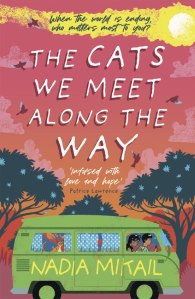 Just the one cat, actually. (Ripoff!) But Fleabag, a one-eared stray ‘the colour of gone-off curry’ who just won’t leave, is a fine companion on this end-of-the-world Malaysian road trip. Mikail’s debut teen novel, which won the Waterstones Children’s Book Prize 2023, imagines that news has come of an asteroid that will make direct contact with Earth in one year. The clock is ticking; just nine months remain. Teenage Aisha and her boyfriend Walter have come to terms with the fact that they’ll never get to do all the things they want to, from attending university to marrying and having children.
Aisha’s father died of cancer when she was young, and her older sister June disappeared two years ago. Aisha decides that what is most important now is finding June and trying to heal their estrangement, so she and Walter set out in a campervan with his parents and her mother (and Fleabag, of course). Mikail sensitively portrays the tangle of anger, grief and fear these characters feel, and it’s interesting to encounter the food and flora of a country that will be unfamiliar to many. Even though everything feels doomed, there are hopeful tasks Aisha and her family can be part of. Teens will no doubt be smart enough to realise that we face a similar calamity in the form of climate breakdown; it’s just that the timescale is a little different. 
A Cat in the Window by Derek Tangye (1962)
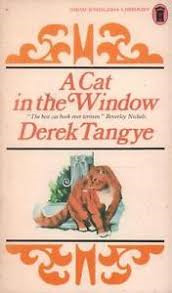 My second from Tangye. I’ve read from The Minack Chronicles out of order because I happened to find a free copy of Lama a few years ago and read it for Novellas in November. Tangye wasn’t a cat fan to start with, but Monty won him over. They met in the Savoy hotel when Tangye and Jeannie were newlyweds of three months, and Monty was six weeks old. He lived with them first in the London suburb of Mortlake, then on their flower farm in Cornwall. During the London years they kept long hours and often returned from gatherings at 2 a.m., to be met with Monty in the front window giving a lordly and annoyed glare.
When they moved to Minack there was a sense of giving Monty his freedom and taking joy in watching him live his best life. In between, they were evacuated to St Albans and briefly lived with Jeannie’s parents and Scottie dog, who became Monty’s nemesis. Ever after, he would attack dogs he saw on the canal path. In Cornwall, the threats to a free-roaming cat included foxes and rabbit traps, but Monty survived into his 16th year, happily tolerating a few resident birds: Hubert the gull, Charlie the chaffinch and Tim the robin.
Tangye writes warmly and humorously about Monty’s ways and his own development into a man who is at a cat’s mercy.
I had observed … that cat owners … were apt to fall into two types. Either they ignored the cat, put it out a night whatever the weather, left it to fend for itself when they went away on holidays, and treated it, in fact, as a kind of better class vermin; or else they worshipped the animal like a god. The first category appeared callous, the second devoid of sense.
He portrays life as a series of manageable incidents. This was really the perfect chronicle of life with a cat, from adoption through farewell. It’s the kind of thing I might like to write about Alfie, if only for my husband’s and my benefit, after he shuffles off this kitty coil.
Cats in Concord by Doreen Tovey (2001)
 My seventh from Tovey. I can hardly believe that, having started her writing career in the 1950s, she was still publishing into the new millennium! (She lived 1918–2008.) Tovey was addicted to Siamese cats. As this volume opens, she’s so forlorn after the death of Saphra, her fourth male, that she instantly sets about finding a replacement. Although she sets strict criteria she doesn’t think can be met, Rama fits the bill and joins her and Tani, her nine-year-old female. They spar at first, but quickly settle into life together. As always, there are various mishaps involving mischievous cats and eccentric locals (I have a really low tolerance for accounts of folksy neighbours’ doings). The most persistent problem is Rama’s new habit of spraying.
Towards the end, Tani succumbs to a virus while Rama recovers … and guess what, Tovey immediately gets a replacement. In fact, the last lines of the book are “If anyone reading this book has lost a beloved cat and is grieving, I would urge them to get another. I am sure they were put into this world for our admiration—and I think that they think that way too.” I’m probably done with Tovey; Cats in the Belfry and Cats in May were terrific, but it’s been diminishing returns ever since and I’ve ended up skimming most of the last few I tried.
I also recently enjoyed these two picture books, one about a cat’s mercurial day-and-night moods and the other about an indoor cat who doesn’t realize how good he has it. (Also pictured in the left-hand photograph above.)


Three on a Theme: “Rainbow” Books for Pride Month
Two of these are short story collections (and one almost is); two are specifically queer in outlook; all attracted me for their colorful covers, and all were borrowed from the library. #LoveYourLibrary

Rainbow Rainbow: Stories by Lydia Conklin (2022)
The 10 stories in this confident debut collection are unabashedly queer, and half involve the trans experience, whether ideation or reality. Conklin is nonbinary, so it’s tempting to read several stories as autobiographical: female characters long to get top surgery and transition to male or nonbinary, but worry it will change how they are perceived or desired. “Pink Knives” and “Boy Jump,” especially, have the flavor of autofiction, with protagonists traveling in Poland and feeling attraction to people of various genders. (The former has a pandemic setting, which I’ve noticed has at this point started to feel dated.) My overall favorite was “Sunny Talks,” in which middle-aged Lillia accompanies her trans teenage nephew to a conference for celebrity YouTubers but can’t bring herself to announce her own intended transition. Though life hasn’t been easy for Sunny, he has support she lacked growing up.
 Asher and Ivan, two characters of nebulous sexuality and future gender, are the core of “Cheerful Until Next Time” (check out the acronym), which has the fantastic opening line “The queer feminist book club came to an end.” “Laramie Time” stars a lesbian couple debating whether to have a baby (in the comic Leigh draws, a turtle wishes “reproduction was automatic or mandatory, so no decision was necessary”). “A Fearless Moral Inventory” features a pansexual who is a recovering sex addict. Adolescent girls are the focus in “The Black Winter of New England” and “Ooh, the Suburbs,” where they experiment with making lesbian leanings public and seeking older role models. “Pioneer,” probably my second favorite, has Coco pushing against gender constraints at a school Oregon Trail reenactment. Refusing to be a matriarch and not allowed to play a boy, she rebels by dressing up as an ox instead. The tone is often bleak or yearning, so “Counselor of My Heart” stands out as comic even though it opens with the death of a dog; Molly’s haplessness somehow feels excusable.
Six of the stories are in the third person and four in first person. I’d be interested to try Conklin’s longer-form work, and think first-person narration would particularly suit her. I didn’t really sense that this was a book meant for me, but that’s okay; a lot of readers will feel seen and represented. Pair this with, or have it on hand as a follow-up to, work by Allison Blevins, Melissa Febos and, most of all, Eley Williams.
Under the Rainbow by Celia Laskey (2020)
In Laskey’s debut, which has been marketed as a novel but reads more like linked short stories, a favorite format of mine, researchers have identified Big Burr, Kansas as the most homophobic town in America. A task force from Acceptance Across America descends on the rural backwater for a targeted two-year program promoting education and friendship. Each chapter is a first-person, present-tense confession from a local or a queer visitor, whose stories interlock and push the chronology forward. For every positive step – a gender-neutral bathroom in the high school, a closeted individual who summons up the courage to come out – there is a regressive one, such as a AAA billboard being set on fire or a house being egged.
 Laskey inhabits all 11 personae with equal skill and compassion. Avery, the task force leader’s daughter, resents having to leave L.A. and plots an escape with her new friend Zach, a persecuted gay teen. Christine, a Christian homemaker, is outraged about the liberal agenda, whereas her bereaved neighbor, Linda, finds purpose and understanding in volunteering at the AAA office. Food hygiene inspector Henry is thrown when his wife leaves him for a woman, and meat-packing maven Lizzie agonizes over the question of motherhood. Task force members David, Tegan and Harley all have their reasons for agreeing to the project, but some characters have to sacrifice more than others.
Little references in later chapters catch you up on what’s happened with the others. I only questioned the need for Elsie as a POV character, and the exclusion of Jamal (presumably Laskey thought it unwise to write from the perspective of a Black man, but he’s a glaring omission). A final chapter, returning to one of the protagonists and set 10 years later, presents a town that’s changed enough to host its first gay wedding and first LGBTQ-owned business.
The novel is realistically sad, but not overly so, and was compellingly readable and heartwarming in a way that reminded me of how I felt about Shotgun Lovesongs. You might not want to live there, but I guarantee you’ll develop a certain fondness for Big Burr.
Scattered Showers: Stories by Rainbow Rowell; illus. Jim Tierney (2022)
I spotted this collection while shelving in the YA section of the library one day and admired the sky blue naked hardback for its red sprayed edges, chunky rainbow endpapers, distinctive font, and teal and magenta interior color scheme. I’d read one Rowell book before, the graphic novel Pumpkinheads. This is probably a better match for her dedicated fans in that three of the stories are spin-offs from her fiction and a few of the rest are one-offs (Amazon Original Stories, a World Book Day publication, a contribution to an anthology), such that I felt a little like I was reading leftovers. A B-sides volume, if you will.
 Four of the nine are holiday-themed, so this could make a good Twixtmas read if you like seasonality; eight are in the third person and just one has alternating first person narrators. All are what could be broadly dubbed romances, with most involving meet-cutes or moments when long-time friends realize their feelings go deeper (“Midnights” and “The Snow Ball”). Only one of the pairings is queer, however: Baz and Simon (who are a vampire and … a dragon-man, I think? and the subjects of a trilogy) in the Harry Potter-meets Twilight-meets Heartstopper “Snow for Christmas.” The rest are pretty straightforward boy-girl stories.
I liked “Kindred Spirits,” in which Elena joins a small group (“three cold nerds”) of hardcore Star Wars fans waiting in line for the first sequel and notices Gabe, a classmate, as if for the first time; “Winter Songs for Summer,” in which a sensitive jock proves he knows his upstairs dorm mate better than anyone through the breakup-recovery tracks he puts on a mix CD for her; and “If the Fates Allow,” about Nebraska neighbors who bond over Jell-O salad during a couple of pandemic Christmases.
I wasn’t as enamored by the couple of fantasy stories, “The Prince and the Troll,” a fairy tale twisted into a vague environmental dystopian parable (“This isn’t easy. This is just another kind of hard. That’s all that’s left now, for any of us”), and “In Waiting,” about the evolving characters incubating in a writer’s head. “Mixed Messages” was refreshing for having middle-aged characters, two friends texting back and forth to try to work out whether the one missed a period because she’s pregnant or in perimenopause, but I doubt I’d be tempted to seek out the book these characters originated in (Attachments), or any of Rowell’s others.
There was a clear winner here: Under the Rainbow!
Extra goodies:
Celebrate Pride Month! The Bookshop.org team has curated this list of books by LGBTQIA+ authors for you to enjoy. Please enjoy 20% OFF all titles. [affiliate link]
A song Sufjan Stevens wrote for Pride Month 2019.
20 Books of Summer, 1: Small Fires by Rebecca May Johnson
So far I’m sticking to my vague plan and reading foodie lit, like it’s 2020 all over again. At the same time, I’m tackling a few books that I received as review copies last year but that have been on my set-aside pile for longer than I’d like to admit. Later in the summer I’ll branch out from the food theme, but always focusing on books I own and have been meaning to read.
Without further ado, my first of 20 Books of Summer:
Small Fires: An Epic in the Kitchen by Rebecca May Johnson (2022)
“I tried to write about cooking, but I wrote a hot red epic.”
Johnson’s debut is a hybrid work, as much a feminist essay collection as it is a memoir about the role that cooking has played in her life. She chooses to interpret apron strings erotically, such that the preparation of meals is not gendered drudgery or oppression but an act of self-care and love for others.
“The kitchen is a space for theorizing!”
While completing a PhD on the reception of The Odyssey and its translation history, Johnson began to think about dishes as translations, or even performances, of a recipe. In two central chapters, “Hot Red Epic” and “Tracing the Sauce Text,” she reckons that she has cooked the same fresh Italian tomato sauce, with nearly infinite small variations, a thousand times over ten years. Where she lived, what she looked like, who she cooked for: so many external details changed, but this most improvisational of dishes stayed the same.

Just a peek at the authors cited in her bibliography – not just the expected subjects like MFK Fisher and Nigella Lawson but also Goethe, Lorde, Plath, Stein, Weil, Winnicott – gives you an idea of how wide-ranging and academically oriented the book is, delving into the psychology of cooking and eating. Oh yes, there will be Freudian sausages. There are also her own recipes, of a sort: one is a personal prose piece (“Bad News Potatoes”) and another is in poetic notation, beginning “I made Mrs Beeton’s / recipe for frying sausages”.
“The recipe is an epic without a hero.”
I particularly enjoyed the essay “Again and Again, There Is That You,” in which Johnson determinedly if chaotically cooks a three-course meal for someone who might be a lover. The mixture of genres and styles is inventive, but a bit strange; my taste would call for more autobiographical material and less theory. The most similar work I’ve read is Recipe by Lynn Z. Bloom, which likewise pulled in some seemingly off-topic strands. I’d be likely to recommend Small Fires to readers of Supper Club.
With thanks to Pushkin Press for the free copy for review.

 Bookish Beck = Rebecca Foster. American transplant to England. Freelance proofreader and book reviewer.
 Bookish Beck