Women’s Prize Shortlist & Reading Group Shadowing
A quick follow-up to yesterday’s post (in which I correctly predicted three of the shortlist) with an exciting announcement. My book club is one of six selected to shadow this year’s Women’s Prize shortlist by reading and discussing one of the finalists. We’d unsuccessfully applied to this Reading Agency initiative last year but this time were chosen from nearly 50 pitches!
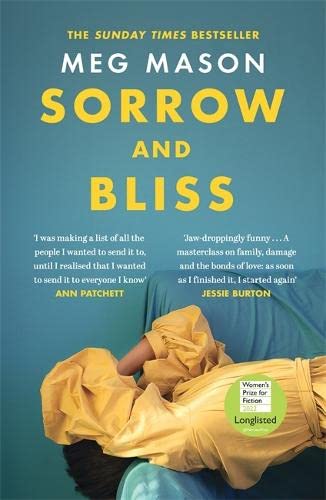
We are lucky to have been allocated one of our preferred titles, Sorrow and Bliss by Meg Mason – my favourite of the three I’ve read from the shortlist, and one with a good chance of winning overall. (Oh the relief of not having to attempt Great Circle a third time, or The Island of Missing Trees a second!)
Our copies will arrive next week and we then have until June 8th to read and discuss the book and send in our feedback to be featured on the website (e.g. last year’s roundup).

I’ll be sure to post more about how our shadowing goes.
What do you plan to read from the shortlist?
Women’s Prize Longlist Reviews (Erdrich, Mendelson, Ozeki) & Predictions
Tomorrow the Women’s Prize shortlist will be revealed. I’ve become much more invested in this prize over the past few years and will be following the 2022 race especially closely – look out for a related announcement soon. In recent years the nominees have tended to cluster thematically, which can feel redundant. This longlist has a notably high ghost quotient. Two novels I review below feature unquiet spirits, an appearance by the author, and the magical powers of books. The third is a straightforward contemporary dysfunctional family story.
The Sentence by Louise Erdrich
My second from Erdrich (I gave Love Medicine, her first novel, 5 stars in 2020). I will be revisiting this in June because it is our first pick for my tenure in the Literary Wives online book club. For that post I’ll focus on the relationship between Tookie and Pollux, which I won’t mention in this more general response. I was worried that a take on very recent events – this is set in Minneapolis between 2019 and 2020 and covers the first six months of the pandemic plus local protests following George Floyd’s murder – would seem either rushed or dated. I’m still unsure how I feel about encountering Covid-19 in fiction (vs. I’ve read 20 or more nonfiction records now), but I think this novel functions as a sturdy time capsule.
 Tookie, the narrator, has a tough exterior but a tender heart. When she spent 10 years in prison for a misunderstanding-cum-body snatching, books helped her survive, starting with the dictionary. Once she got out, she translated her love of words into work as a bookseller at Birchbark Books, Louise Erdrich’s Minnesota independent bookshop (Louise herself is an occasional character). Bibliophiles are sure to enjoy the mentions of the books she presses into customers’ hands; there’s also a fun appendix of recommendations on particular topics.
However, the central mystery about Flora, a dead customer who haunts the store until Tookie figures out why she died and how to exorcise her, struck me as silly. I only appreciated this storyline to the extent that it explores authenticity (Flora may have fabricated her Native heritage) and the inescapability of history. I preferred real life: Tookie getting locked down with her stepdaughter and baby grandson and filling book orders from a closed shop.
Erdrich weaves in Indigenous customs naturally and the banter between the characters, including young shop employees, makes this hip and lighthearted, even as it deals with serious subjects. I smiled at the bookish lingo, like Tookie’s division of her reading into a Lazy Stack and a Hard Stack (“books I would avoid reading until some wellspring of mental energy was uncapped” – my occasional and set-aside titles could comprise the latter) and the “cowbirds,” self-published titles secreted on the shelves that aren’t found until inventory day. There’s also an excellent passage on novellas that I’ll be bringing out in November.
Like a vintage armchair, this is a little overstuffed, but so comfortable you’ll want to stay a while. (See also Laura’s review.) (Public library) 
The Exhibitionist by Charlotte Mendelson
~SPOILERS IN THIS ONE~
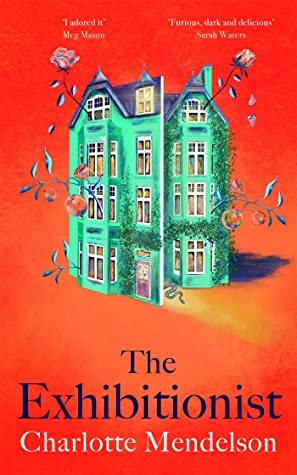 Artists, dysfunctional families, and limited settings (here, one crumbling London house and its environs; and about two days across one weekend) are irresistible elements for me, and I don’t mind a work being peopled with mostly unlikable characters. That’s just as well, because the narrative orbits Ray Hanrahan, a monstrous narcissist who insists that his family put his painting career above all else. His wife, Lucia, is a sculptor who has always sacrificed her own art to ensure Ray’s success. But now Lucia, having survived breast cancer, has the chance to focus on herself. She’s tolerated his extramarital dalliances all along; why not see where her crush on MP Priya Menon leads? What with fresh love and the offer of her own exhibition in Venice, maybe she truly can start over in her fifties.
Ray and Lucia’s three grown children, Leah, Patrick and Jess, are all home for Ray’s new exhibition. They’re mere sketches: Leah is Ray’s staunchest supporter and is infatuated with the no-show caterer; Patrick’s mental health is shaky, interfering with his job prospects; Jess, a teacher in Edinburgh, is pregnant but not sure she’s committed to her boyfriend long term. I wanted more depth from all the characters, but especially the offspring. I also expected a climactic late scene on Hampstead Heath to come to more.
Still, the build-up to the exhibit (followed by a laughably pitiful reveal) and Lucia’s inner life form an adequately strong foundation for Mendelson’s sardonic prose. The dialogue, full of interruptions, is true to life. This is her fifth novel and called to mind Jami Attenberg’s and Claire Fuller’s work. (Liz found shades of Iris Murdoch. Susan loved it, too.) I wouldn’t say I’m compelled to seek out more by Mendelson, but this was a solid read. (Public library)
The Book of Form and Emptiness by Ruth Ozeki
A Tale for the Time Being is one of my favourite novels of the century (and one of my most popular Goodreads reviews ever), My Year of Meats was a terrific backlist read a couple of summers ago, and I’m eager to catch up on All Over Creation. So I’d built up this fourth Ozeki novel in my head, thinking a library setting and magic realist elements presaged something deliciously Murakami-esque.
 What I actually found, having limped through it off and on for seven months, was something of a disappointment. A frank depiction of the mental health struggles of the Oh family? Great. A paean to how books and libraries can save us by showing us a way out of our own heads? A-OK. The problem is with the twee way that The Book narrates Benny’s story and engages him in a conversation about fate versus choice.
When Kenji Oh, a jazz musician, is run over by a chicken truck, Annabelle finds herself a single mother to Benny, a troubled teen who starts to hear everyday objects speaking to him. His voices and Annabelle’s hoarding habit jeopardize the viability of their household: Benny spends time on a psychiatric hospital ward for minors and Annabelle is threatened with eviction. For Benny, the library and the acquaintances he makes there – a fellow pedi-psych patient named Alice who calls herself The Aleph, an Eastern European philosopher who goes by The Bottleman (= Slavoj Žižek?), even the Ozeki figure tapping away on her laptop – may be his salvation; for Annabelle, it could be the book Tidy Magic (modelled on Marie Kondo’s work), written by a Buddhist nun. But until then, their stories get very dark indeed.
Concern for the principal pair and their relationship kept me reading even though this is too long and I wearied of Ozeki’s habit of literalizing metaphors (books speaking to people; being crushed by one’s belongings; crows playing a protective role). I’m still sympathetic to Ozeki’s aims, even if she doesn’t quite pull it all off here. If I pit the rather similar The Sentence and The Book of Form and Emptiness against each other, Erdrich comes out ahead. 
With thanks to Canongate for the proof copy for review.
I’ve gotten to six books from the longlist so far and have a few more on order at the library. The others I’ve read, with ratings and links to my reviews, are:
Build Your House around My Body by Violet Kupersmith
Sorrow and Bliss by Meg Mason 
I’m also partway through The Final Revival of Opal & Nev by Dawnie Walton, which is enjoyable enough but, alas, suffers in comparison to Daisy Jones and the Six, whose format (a composite oral history of a fictional 1960s/70s musical act) it repeats. The addition of the race issue doesn’t feel sufficient to call it original.
I’ve also DNFed a few from the longlist, two of them multiple times, so I have my fingers crossed that they don’t advance!
- The Paper Palace by Miranda Cowley Heller
- The Island of Missing Trees by Elif Shafak
- Great Circle by Maggie Shipstead
My attitude to the rest of the longlist is…
- The Bread the Devil Knead by Lisa Allen-Agostini – No plans to read.
- Salt Lick by Lulu Allison – I might read this from the library. I’m leery of dystopias, but I’m there for a chorus of cows.
- Careless by Kirsty Capes – No plans to read.
- Remote Sympathy by Catherine Chidgey – I would happily read it if it’s shortlisted, but at over 500 pages I fear it’ll be too dense.
- Flamingo by Rachel Elliott – Maybe. Sounds like pretty standard Sarah Winman-type stuff, but it could go down well with a book club.
- This One Sky Day by Leone Ross – No plans to read.
- Creatures of Passage by Morowa Yejidé – I was actually pretty keen to read this one, so I have it on reserve at the library. Egyptian mythology makes a change from the overdone Greeks, and the Washington, D.C. setting is a big draw. Laura’s review has tempered my expectations, but I might still give it a go.
My ideal shortlist (a wish list based on my reading and what I still want to read):
The Sentence by Louise Erdrich
Build Your House around My Body by Violet Kupersmith
Sorrow and Bliss by Meg Mason
The Exhibitionist by Charlotte Mendelson
The Final Revival of Opal & Nev by Dawnie Walton
Creatures of Passage by Morowa Yejidé
vs.
My predicted shortlist:
Remote Sympathy by Catherine Chidgey
The Sentence by Louise Erdrich
Sorrow and Bliss by Meg Mason
The Exhibitionist by Charlotte Mendelson
This One Sky Day by Leone Ross
The Island of Missing Trees by Elif Shafak
An overall winner? Gosh, it’s too early to tell. But maybe The Sentence, Sorrow and Bliss or The Island of Missing Trees.
See also Laura’s shortlist predictions.
What have you read from the longlist so far?
Which of these books are calling to you?
Quick Thoughts on the Women’s Prize 2022 Longlist & My Reading Plans
Tuesday is my volunteering morning at the library, but at 9:45 I nipped onto one of the public access PCs so I could find out which books were on the Women’s Prize longlist. I just couldn’t wait until I got home! It’s a surprising list. Those who thought Rooney and Yanagihara would be snubbed were absolutely right. Debuts and historical fiction aren’t as plentiful as forecast, but there are two doorstoppers on there, plus another 450+-pager. And it is great to see a list that is half by BIPOC women.
Of my wishes and predictions, 1 and 2 were correct, so I got 3 right overall, with my wildcard choice being the only nominee I’ve read in full so far. I’m currently reading another 2 and have 3 more set to read – the moment I got the news I marched over to borrow a couple more.
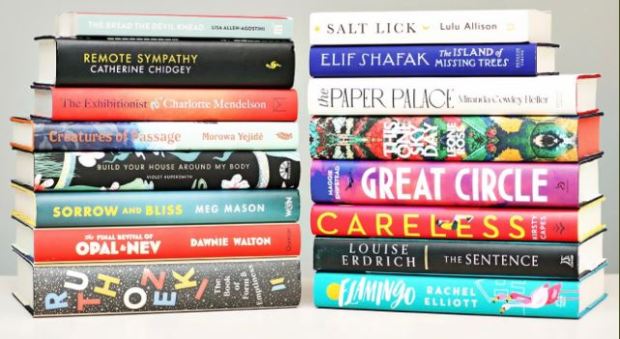
Fair play to the judges – I hadn’t even HEARD of these SIX titles:
- The Bread the Devil Knead by Lisa Allen-Agostini
- Salt Lick by Lulu Allison
- Careless by Kirsty Capes
- Remote Sympathy by Catherine Chidgey
- Flamingo by Rachel Elliott
- Creatures of Passage by Morowa Yejidé
I haven’t had a chance to look into these half-dozen, but will do so later on. I’m only likely to pick them up if a) others rave about them and/or b) they’re shortlisted.
Read:
 Sorrow and Bliss by Meg Mason: They say turning 40 can do weird things to you. Martha Friel gets a tattoo – so far, so stereotypical – but also blows up her marriage to Patrick, who’s been devoted to her since they were teens and met as family friends. In the year that follows, she looks back on a life that’s been defined by mental illness. As a young woman she was told she should never have children, but recently she met a new psychiatrist who gave her a proper diagnosis and told her motherhood was not out of the question. But is it too late for Martha and Patrick? Martha’s narration is a delight, wry and deadpan but also with moments of wrenching emotion. Her relationship with her sister, Ingrid, who gives birth to her first child on their aunt’s bathroom floor and eventually has four under the age of nine, is a highlight, and it’s touching to see how their mother and their aunt, both initially standoffish, end up being pillars of support. (My full review)
Currently reading:
 Build Your House Around My Body by Violet Kupersmith – I’m just over half done, and loving it. A weird and magical and slightly horror-tinged story set in Vietnam past and present, it builds on her debut ghost stories. Sort of plays the role Our Wives Under the Sea would have had on the longlist (though I dearly wish it could have been nominated as well).
 Set aside last year because it’s twee and annoying, but will now continue (ARGH + le sigh):
The Book of Form and Emptiness by Ruth Ozeki
 Own and will read soon (this was a treat to self with birthday money last year):
The Final Revival of Opal and Nev by Dawnie Walton
 Borrowed from library:
The Paper Palace by Miranda Cowley Heller
The Island of Missing Trees by Elif Shafak
 DNFed last year (twice); will not attempt again:
Great Circle by Maggie Shipstead
 On request from the library:
The Sentence by Louise Erdrich
The Exhibitionist by Charlotte Mendelson
Not interested in reading:
This One Sky Day by Leone Ross – I saw Ross speak about this and read an excerpt as part of a Faber showcase. I have a limited tolerance for magic realism and don’t think this appeals.
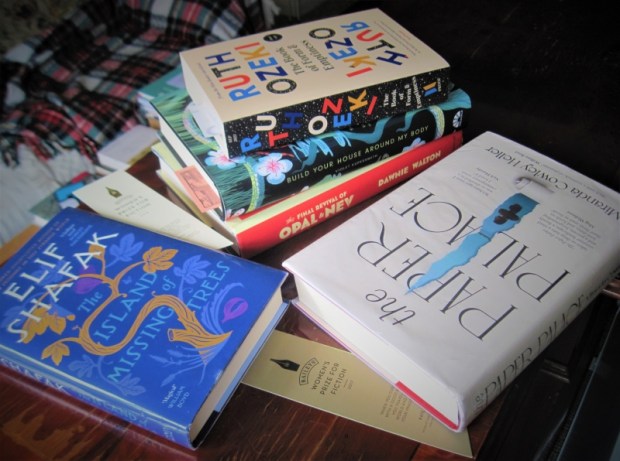
Above: my reading plans. Plenty to be getting on with before the shortlist announcement on 27th April!
What have you read, or might you read, from the longlist?
Women’s Prize 2022: Longlist Wishes vs. Predictions
Next Tuesday the 8th, the 2022 Women’s Prize longlist will be announced.
First I have a list of 16 novels I want to be longlisted, because I’ve read and loved them (or at least thought they were interesting), or am currently reading and enjoying them, or plan to read them soon, or am desperate to get hold of them.
Wishlist
Brown Girls by Daphne Palasi Andreades
Our Wives Under the Sea by Julia Armfield (my review)
Ghosted by Jenn Ashworth (my review)
These Days by Lucy Caldwell

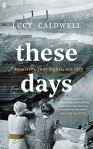
Damnation Spring by Ash Davidson – currently reading
Olga Dies Dreaming by Xóchitl González – currently reading
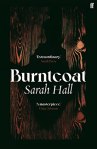
Burntcoat by Sarah Hall (my review)
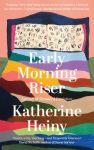
Early Morning Riser by Katherine Heiny (my review)


Pure Colour by Sheila Heti
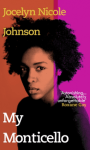
My Monticello by Jocelyn Nicole Johnson (my review)
Devotion by Hannah Kent – currently reading
Build Your House Around My Body by Violet Kupersmith – currently reading



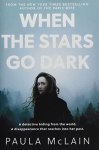
When the Stars Go Dark by Paula McLain (my review)
The Swimmers by Julie Otsuka – review coming to Shiny New Books on Thursday
Brood by Jackie Polzin (my review)
The Performance by Claire Thomas (my review)


Then I have a list of 16 novels I think will be longlisted mostly because of the buzz around them, or they’re the kind of thing the Prize always recognizes (like danged GREEK MYTHS), or they’re authors who have been nominated before – previous shortlistees get a free pass when it comes to publisher submissions, you see – or they’re books I might read but haven’t gotten to yet.
Predictions
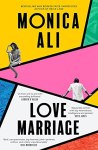
Love Marriage by Monica Ali
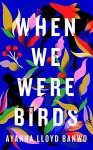
When We Were Birds by Ayanna Lloyd Banwo
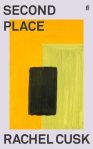
Second Place by Rachel Cusk (my review)
Matrix by Lauren Groff

Free Love by Tessa Hadley
The Other Black Girl by Zakiya Dalila Harris (my review)
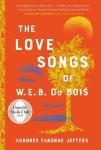
The Love Songs of W.E.B. Du Bois by Honorée Fanonne Jeffers
The Fell by Sarah Moss (my review)



My Phantoms by Gwendoline Riley
Beautiful World, Where Are You by Sally Rooney (my review)
Ariadne by Jennifer Saint
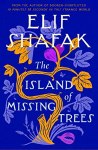
The Island of Missing Trees by Elif Shafak


Great Circle by Maggie Shipstead
Pandora by Susan Stokes-Chapman
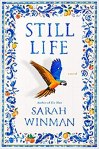
Still Life by Sarah Winman
To Paradise by Hanya Yanagihara – currently reading



*A wildcard entry that could fit on either list: Sorrow and Bliss by Meg Mason (my review).*

Okay, no more indecision and laziness. Time to combine these two into a master list that reflects my taste but also what the judges of this prize generally seem to be looking for. It’s been a year of BIG books – seven of these are over 400 pages; three of them over 600 pages even – and a lot of historical fiction, but also some super-contemporary stuff. Seven BIPOC authors as well, which would be an improvement over last year’s five and closer to the eight from two years prior. A caveat: I haven’t given thought to publisher quotas here.
MY WOMEN’S PRIZE FORECAST
Love Marriage by Monica Ali
Our Wives Under the Sea by Julia Armfield
When We Were Birds by Ayanna Lloyd Banwo
Olga Dies Dreaming by Xóchitl González
Matrix by Lauren Groff
The Love Songs of W.E.B. Du Bois by Honorée Fanonne Jeffers
Devotion by Hannah Kent
Build Your House Around My Body by Violet Kupersmith
The Fell by Sarah Moss
My Phantoms by Gwendoline Riley
Beautiful World, Where Are You by Sally Rooney
Ariadne by Jennifer Saint
The Island of Missing Trees by Elif Shafak
Great Circle by Maggie Shipstead
Pandora by Susan Stokes-Chapman
To Paradise by Hanya Yanagihara
What do you think?
See also Laura’s, Naty’s, and Rachel’s predictions (my final list overlaps with theirs on 10, 5 and 8 titles, respectively) and Susan’s wishes.
Just to further overwhelm you, here are the other 62 eligible 2021–22 novels that were on my radar but didn’t make the cut:
In Every Mirror She’s Black by Lola Akinmade Åkerström
Violeta by Isabel Allende
The Leviathan by Rosie Andrews
Somebody Loves You by Mona Arshi
The Stars Are Not Yet Bells by Hannah Lillith Assadi
The Manningtree Witches by A.K. Blakemore
Mary Jane by Jessica Anya Blau
Defenestrate by Renee Branum
Songs in Ursa Major by Emma Brodie
Assembly by Natasha Brown
We Were Young by Niamh Campbell
The Raptures by Jan Carson
A Very Nice Girl by Imogen Crimp
Scary Monsters by Michelle de Kretser
Empire of Wild by Cherie Dimaline
Infinite Country by Patricia Engel
Love & Saffron by Kim Fay
Mrs March by Virginia Feito
Booth by Karen Joy Fowler
Tides by Sara Freeman
I Couldn’t Love You More by Esther Freud
Of Women and Salt by Gabriela Garcia
Libertie by Kaitlyn Greenidge
Listening Still by Anne Griffin
The Twyford Code by Janice Hallett
Mrs England by Stacey Halls
Three Rooms by Jo Hamya
The Giant Dark by Sarvat Hasin
The Paper Palace by Miranda Cowley Heller
Violets by Alex Hyde
Fault Lines by Emily Itami
Beasts of a Little Land by Juhea Kim
Woman, Eating by Claire Kohda
Notes on an Execution by Danya Kukafka
Paul by Daisy Lafarge
Circus of Wonders by Elizabeth Macneal
The Truth About Her by Jacqueline Maley
Wahala by Nikki May
Once There Were Wolves by Charlotte McConaghy
Cleopatra and Frankenstein by Coco Mellors
The Exhibitionist by Charlotte Mendelson
Chouette by Claire Oshetsky
The Book of Form and Emptiness by Ruth Ozeki
The Anthill by Julianne Pachico
The Vixen by Francine Prose
The Five Wounds by Kirstin Valdez Quade
Malibu Rising by Taylor Jenkins Reid
Cut Out by Michèle Roberts
This One Sky Day by Leone Ross
Secrets of Happiness by Joan Silber
Cold Sun by Anita Sivakumaran
Hear No Evil by Sarah Smith
Oh William! by Elizabeth Strout
Animal by Lisa Taddeo
Daughter of the Moon Goddess by Sue Lynn Tan
Lily by Rose Tremain
French Braid by Anne Tyler
We Run the Tides by Vendela Vida
I Love You but I’ve Chosen Darkness by Claire Vaye Watkins
Black Cake by Charmaine Wilkerson
The Dictionary of Lost Words by Pip Williams
Nightbitch by Rachel Yoder
Acts of Desperation by Megan Nolan
I read this after its shortlisting for the Charlotte Aitken Trust/Sunday Times Young Writer of the Year Award, as well as its longlisting for the Dylan Thomas Prize. It is a truth universally acknowledged that any novel by a young Irish woman will only and ever be compared to Sally Rooney … but that works in Nolan’s favour. I would certainly call this a readalike to Rooney’s first two books, but there’s an added psychological intensity here.
 A young woman reflects on an obsessive affair that she began in Dublin in April 2012. Was it love at first sight for her with Ciaran? No, actually, it was more like pity: “The first time I saw him, I pitied him terribly,” the novel opens. “I stood in that gallery and felt not only sexual attraction (which I was aware of, dimly, as background noise) but what I can only describe as grave and troubling pity.” That doesn’t bode well now, does it?
Ciaran is an insecure, hot-tempered magazine writer. He’s also still half in love with his ex-girlfriend, Freja, whom he left behind in Copenhagen, and our narrator (an underemployed would-be writer) feels she has to fight for his attention and affections. She has body issues and drinks too much, but she’s addicted to love, and sex specifically, as much as to alcohol.
A central on-again, off-again relationship is hardly a new subject for fiction, but I admired Nolan’s work for its sharp insights into the psyche of an emotionally fragile young woman whose frantic search for someone to value her leads her into masochistic behaviours. Brief looks back at the events of 2012–14 from a present storyline set in Athens in 2019 create helpful hindsight yet reveal how much she still struggles to affirm her self-worth.
The short chapters are like freeze-frames, concentrated bursts of passion that will resonate even if the characters’ specific situations do not. And it’s not all despair and damage; there are beautiful moments here, too, like the sweet habit they had of buying an apple each and then just walking around town for a cheap outing – the source of the cover image. I marked passage after passage, but will share just a couple:
How impoverished my internal life had become, the scrabbling for a token of love from somebody who didn’t want to offer it.
I was taking away his ability to live without me easily. I subbed his rent, I cooked his food, I cleaned his clothes, so that one day soon there would come a time when he could no longer remember how he had ever done without me, and could not imagine doing so ever again.
Even if you’re burnt out on what pace amore libri blogger Rachel dubs “disaster woman” books, make an exception for this potent story of self-sabotage and -recovery. Especially if you’re a fan of Emma Jane Unsworth, The Inland Sea by Madeleine Watts, and, yes, Sally Rooney. (Also reviewed by Annabel.)
My rating:
With thanks to FMcM Associates and Jonathan Cape for the free copy for review.
The rest of the shortlist:
After about 50 pages I DNFed Here Comes the Miracle by Anna Beecher, which had MA-course writing-by-numbers and seemed to be building towards When God Was a Rabbit mawkishness (how on earth did it get shortlisted?!).
See my mini reviews of the other three nominees here.
I am still rooting for Cal Flyn to win for her excellent and perennially relevant travel book, Islands of Abandonment.
Tonight there’s a shortlist readings event taking place in London. If anyone goes, do share photos! The award will be given tomorrow, the 24th. I’ll look out for the announcement.
Thoughts on Literary Prizes, Sequels, and Finishing Books
I feel like my blogging is all over the place so far this month, but I’ll get back on track in the next couple of weeks with a few thematic roundups. Today, some disparate thoughts.
 Literary prize season will soon be in full swing, and can be overwhelming. I’m currently reading Megan Nolan’s Acts of Desperation, doing double duty from the Dylan Thomas Prize longlist and the Sunday Times Young Writer of the Year Award shortlist, and enjoying it more than expected given the inevitable Sally Rooney comparisons and messed-up young female tropes. However, I abandoned Here Comes the Miracle (from the latter) after 46 pages because it was just as When God Was a Rabbit as I feared.
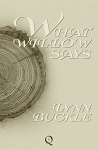 Today the second Barbellion Prize winner was announced: Lynn Buckle for What Willow Says, her lyrical novella about communication between a terminally ill woman, her deaf granddaughter, and the natural world. My choice from the shortlist would have been Josie George’s A Still Life, but I can see how the judges might have felt, in an early year when precedents are still being set, that it was important to recognize fiction as being just as valid a way of writing about disability and chronic illness.
Earlier in the week, the Rathbones Folio Prize shortlist was announced. Everyone remarked on the attractive mint green colour scheme! I found myself slightly disappointed; the Prize is usually more various since it includes nonfiction and poetry as well as fiction. Only one nonfiction title here: Philip Hoare going on (again) about whales. I’ve read another of poet Selima Hill’s collections so would gladly read this, too. I’ve already read the Brown and Keegan novellas and Sahota’s novel; I DNFed the Riley. Galgut has already won the Booker Prize. I’m awaiting a library hold of The Magician but I rather doubt my staying power with a 500-page biographical novel. My vote would, overwhelmingly, be for China Room.

I’m more tempted by the Fiction with a Sense of Place shortlist, announced as part of the Edward Stanford Travel Writing Awards early this month. What an intriguing and non-obvious set of nominees! Elena Knows was on the Barbellion longlist and the Greengrass and Shafak novels were previously shortlisted for the Costa Prize. I plan to try the Heller again this summer.

I’m also delighted to see that Small Bodies of Water by Nina Mingya Powles is shortlisted for the Stanford Dolman Travel Book of the Year Award.

I’ve been pondering my predictions and wishes (entirely separate things) for the Women’s Prize longlist and will post them early next month; for now, check out Laura’s.
I believe books should be self-contained and I struggle to engage with ANY series. Unpopular opinion alert: sequels are almost always indulgent and/or money-grubbing on the part of the author. Here are four high-profile literary fiction sequels I plan on skipping this year (in all the cases, I just didn’t like the original enough to continue the story):
- Either/Or by Elif Batuman – The Idiot was bizarre, deadpan and slightly entertaining, but I have no need to spend any more time with Selin.)
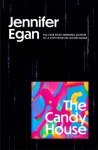 The Candy House by Jennifer Egan – A Visit from the Goon Squad didn’t stand up to a reread.
- Less Is Lost by Andrew Sean Greer – Less, only mildly funny, was hugely overrated by critics.
- Tracy Flick Can’t Win by Tom Perrotta – I read, and saw the Reese Witherspoon-starring movie version of, Election ages ago; this is the one I’d be most likely to change my mind about, if I read good reviews.
I learned via a friend’s Instagram post that there is such a thing as #FinishItFebruary and felt seen. My goal had been to clear my set-aside shelf by the end of January; of course that didn’t happen, but I have been making some progress, reducing it from about 40 to more like 25. I try to reintroduce a part-finished book into my stack every few days. Sometimes it ‘takes’ and I finish it shortly; other times it languishes again, just in a different location. I’ll see how many more I can get to before the end of February.

A reminder of that set-aside shelf, as of early January.
Following any literary prize races this year?
Do you also avoid sequels, and leave books part-read?
The 2022 Dylan Thomas Prize Longlist
The Swansea University International Dylan Thomas Prize recognizes the best published work in the English language written by an author aged 39 or under. The 12-strong longlist for the 2022 prize, announced this morning, features lots of women and diverse voices. All literary genres are eligible. There are eight novels, two poetry collections and two short story collections in the running:

- A Passage North by Anuk Arudpragasam (Granta)
- What Noise Against the Cane by Desiree Bailey (Yale University Press)
- Keeping the House by Tice Cin (And Other Stories)
- Auguries of a Minor God by Nidhi Zak/Aria Eipe (Faber)
- The Sweetness of Water by Nathan Harris (Tinder Press/Headline)
- No One Is Talking About This by Patricia Lockwood (Bloomsbury Circus)
- Milk Blood Heat by Dantiel W. Moniz (Atlantic Books)
- Hot Stew by Fiona Mozley (John Murray Press)
- Open Water by Caleb Azumah Nelson (Viking, Penguin General)
- Acts of Desperation by Megan Nolan (Jonathan Cape)
- Peaces by Helen Oyeyemi (Faber)
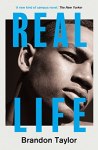
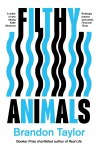
- Filthy Animals by Brandon Taylor (Daunt Books Publishing)
 Coming just a week and a half after the Young Writer of the Year Award shortlist news, the longlist repeats two of its titles, Open Water and Acts of Desperation. No One Is Talking About This was shortlisted for the Booker and Women’s Prizes last year. A Passage North was also Booker shortlisted, while The Sweetness of Water was on the longlist.
 I happen to have already read and reviewed No One Is Talking About This, Open Water, and Filthy Animals; I DNFed Hot Stew (some thoughts here). I am being sent a copy of Acts of Desperation for my Young Writer of the Year Award reading.
Of the rest, I’m most interested in reading the short story collection Milk Blood Heat and the two poetry nominees, What Noise Against the Cane and Auguries of a Minor God. I’m hoping that review copies of these few, perhaps as part of a longlist blog tour, will be a possibility.
Looking at the longlist, Brandon Taylor immediately jumps out to me as a deserving winner. I feel like his debut novel and follow-up story collection establish him as a confident writer with a mature voice and style that will be with us for the long haul.
This year’s judges are novelist and Swansea University lecturer Alan Bilton, Jaipur Literature Festival founder and director Namita Gokhale (chair), poet Luke Kennard, and novelists Irenosen Okojie and Rachel Trezise.
The shortlist will be announced on 31 March and the winner on 12 May.
(My previous Dylan Thomas Prize coverage: I reviewed a few nominees for the blog tours in 2019 and 2020, and introduced the shortlist in 2021.)
Have you read any of the nominated titles? Which ones appeal to you?
Barbellion Prize Shortlist Reviews: Ultimatum Orangutan & What Willow Says
The shortlist for the second annual Barbellion Prize was announced earlier this month. I had already read one of the books, and publishers have kindly sent me two of the others for review. Still in the running this year are two novels, a poetry collection and a memoir (you can read a bit more about the longlist here).
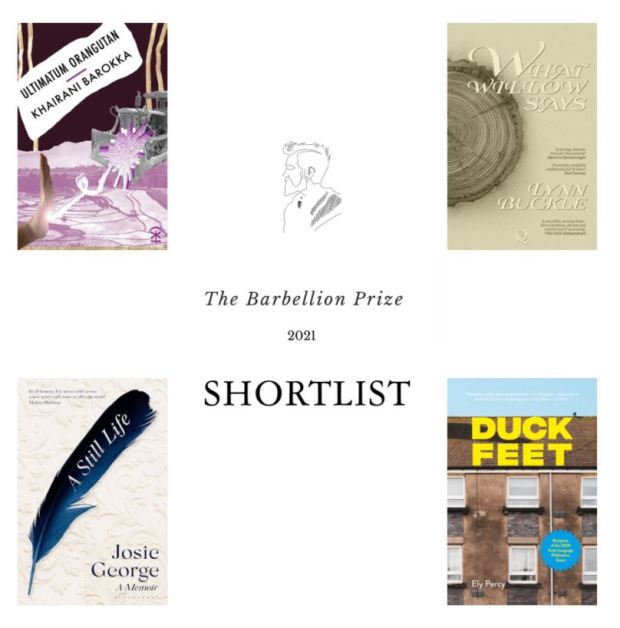
Ultimatum Orangutan by Khairani Barokka (2021)
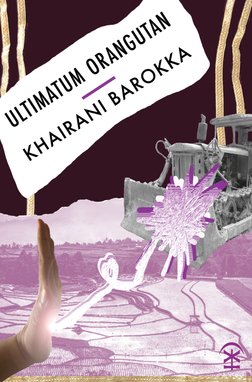 Barokka is an Indonesian poet and performance artist based in London. The topics of her second collection include chronic pain, the oppression of women, and the environmental crisis. While she’s distressed at the exploitation of nature, she sprinkles in humanist reminders of Indigenous peoples whose needs should also be valued. For instance, in the title poem, whose points of reference range from King Kong to palm oil plantations, she acknowledges that orangutans must be saved, but that people are also suffering in her native Indonesia. It’s a subtle plea for balanced consideration.
An early sequence about a visit to a Natural History Museum exemplifies the blend of themes. From her wheelchair, the poet ponders “the event” that killed the dinosaurs and human bias towards fellow vertebrates. Why can’t we appreciate a tiger for its own sake rather than its cultural and metaphorical associations? she asks in the following poem.
Medical realities aren’t as prominent as in some nominees – nowhere is it made clear what condition Okka has – but illness haunts certain lines: “my pills lie as armor with so many / glasses of water, upright and tensile / to save life against terrors by way / of circulatory relief” (from “on lying down, apocalyptic”). Concern about the environment also tips over into the apocalyptic in “situation report” and below:

“Fence and Repetition” sets out a palindrome of lines, and later on there are a golden shovel and an abecedarian, with tips of the hat to other poets. This more formal verse is in contrast with looser poems lacking capitalization or articles; in places the language even reads like pidgin. I found the phrasing unusual, forcing close attention to what’s actually going on. This wasn’t generally my cup of tea, but makes a striking entry on this year’s shortlist, and was a good chance to add my first Indonesian writer to my internal library.
With thanks to Nine Arches Press for the free copy for review.
What Willow Says by Lynn Buckle (2021)
 This is a delicate novella about the bond between a grandmother and her eight-year-old granddaughter, who is deaf. After the death of the girl’s mother, Grandmother has been her primary guardian. She raises her on Irish legends and a love of nature, especially their local trees. They mourn when they see hedgerows needlessly flailed, and the girl often asks what her grandmother hears the trees saying. Because Grandmother narrates in the form of journal entries, there is dramatic irony between what readers learn and what she is not telling the little girl; we ache to think about what might happen for her in the future.
Yet Buckle takes care not to let the mood get too sombre, even though there is disquiet aplenty: empty housing blocks from the aftermath of the Celtic Tiger, rage at the stereotypes and ableism that the granddaughter faces, and the darkness of the myths surrounding the peat bogs and those who drown. This is mostly thanks to the lyrical writing wrapped around the six months or so of the action. Focusing on the relationship between these two, a lot of what happens is quiet and seasonal, from a picnic in the park to preparations for Christmas, but there is also a sign language class that introduces some other characters.
At points I found the prose too thick – it’s rare for me to come across vocabulary I don’t know and, especially in such a short book, terms like “ombrogenous mires,” “chironomy” and “sestude” stood out, not necessarily in a good way. But, overall, I enjoyed this study of other forms of communication – with hands, in writing, between humans and more-than-human nature, and perhaps even beyond the grave.
A favourite passage:
We struggle to hear in our household. Age, degeneration, aural complications and congenital conditions. Ignorance. We have confusing discussions, mistaken arrangements, and fights over hearing aid batteries. Plus, the convenience of not hearing when it suits us. Now we are trying to listen, to each other, and to trees. There is so much that we have never heard, so little time to hear it.
With thanks to Époque Press for the free copy for review.
The other two books on the shortlist are:
 A Still Life: A Memoir by Josie George (Bloomsbury)
My TLS review excerpt: Chronic illness long ago reduced her territory to her home and garden. The magic of A Still Life is in how she finds joy and purpose despite extreme limitations. Opening on New Year’s Day and travelling from one winter to the next, the book is a window onto George’s quiet existence as well as the turning of the seasons.
Duck Feet by Ely Percy (Monstrous Regiment)
From the synopsis: “A coming-of-age novel, set in the mid-noughties in Renfrew and Paisley, Scotland. … This book is a celebration of youth in an ever-changing world. It uses humour to tackle hard-hitting subjects such as drugs, bullying, sexuality, and teenage pregnancy.”
I haven’t had a chance to read Duck Feet, so it’s hard to make any predictions about the winner. Last year a memoir by a woman won, so I’m not sure A Still Life will win, even though it’s my clear favourite of the three I’ve read. Perhaps it will be a novel this year?
The Barbellion Prize, awarded “to an author whose work has best represented the experience of chronic illness and/or disability,” will be announced on 12 February.
Do any of the shortlisted books appeal to you?
Young Writer of the Year Award 2021 Shortlist: Reactions and Prediction
Being on the shadow panel for the Sunday Times Young Writer of the Year Award was a bookish highlight of 2017 for me and, looking back, still one of the best things I’ve achieved in my time as a book blogger. Each year I eagerly keep an eye out for the award shortlist to see how many I’ve read and who I think the judges will choose as the winner. The prize has a higher profile and cash fund this year thanks to new sponsorship from the Charlotte Aitken Trust and partnership with Waterstones.
Last May I started a list of books and authors I expected would be eligible, and continued updating it throughout the year. I was certainly expecting Open Water to make the cut, but I had a lot of other wishes that didn’t come true, particularly Charlie Gilmour for Featherhood, Daisy Johnson for Sisters, Will McPhail for In, Merlin Sheldrake for Entangled Life, and Eley Williams for The Liar’s Dictionary.
Yesterday the five nominees – three debut novels, one work of nonfiction, and one poetry collection – were announced in the Sunday Times and on the website. I happen to have already read three of them. I was vaguely interested in Megan Nolan’s novel already so will get it out from the library to read soon; I had not heard of Anna Beecher’s at all but would be willing to read a review copy if one came my way.

 Here Comes the Miracle by Anna Beecher: Sounds potentially mawkish in a Jodi Picoult or Sarah Winman way. Publisher’s blurb: “It begins with a miracle: a baby born too small and too early, but defiantly alive. This is Joe. Decades before, another miracle. In a patch of nettle-infested wilderness, a seventeen-year-old boy falls in love with his best friend, Jack. This is Edward. Joe gains a sister, Emily. From the outset, her life is framed by his. She watches him grow into a young man who plays the violin magnificently and longs for a boyfriend. A young man who is ready to begin. Edward, after being separated from Jack, builds a life with Eleanor. They start a family and he finds himself a grandfather to Joe and Emily. When Joe is diagnosed with stage 4 cancer, Emily and the rest of the family are left waiting for a miracle.”
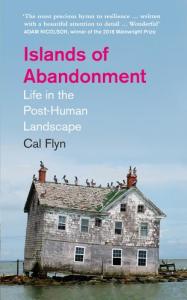 Islands of Abandonment by Cal Flyn: One of my top nonfiction books of 2021, but I’ll confess I hadn’t realized Flyn was eligible. (Now that I’m, ahem, a few years past the cutoff age myself, I can find it difficult to gauge the difference between early 30s and late 30s in appearance.) Flyn travels to neglected and derelict places, looking for the traces of human impact and noting how landscapes restore themselves – how life goes on without us. Places like a wasteland where there was once mining, nuclear exclusion zones, the depopulated city of Detroit, and areas that have been altered by natural disasters and conflict. The writing is literary and evocative, at times reminiscent of Peter Matthiessen’s. It’s a nature/travel book with a difference, and the poetic eye helps you to see things anew.
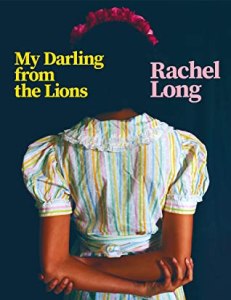 My Darling from the Lions by Rachel Long: I read this when it was shortlisted for last year’s Costa Awards and reviewed it when it was shortlisted for the Folio Prize. It’s had a lot of critical attention now, but wasn’t my cup of tea. Race, sex, and religion come into play, but the focus is on memories of coming of age, with the voice sometimes a girl’s and sometimes a grown woman’s. Her course veers between innocence and hazard. She must make her way beyond the world’s either/or distinctions and figure out how to be multiple people at once (biracial, bisexual). Her Black mother is a forceful presence; “Red Hoover” is a funny account of trying to date a Nigerian man to please her mother. Much of the rest of the book failed to click with me, but the experience of poetry is so subjective that I find it hard to give any specific reasons why that’s the case.
 Open Water by Caleb Azumah Nelson: I always enjoy the use of second person narration. It works pretty well in this love story between two young Black British people in South London. The title is a metaphor for the possibilities and fear of intimacy. The protagonist, a photographer, doesn’t know what to do with his anger about how young Black men are treated. I felt Nelson was a little heavy-handed in his treatment of this theme, though I did love that the pivotal scene is set in a barbershop, a place where men reveal more of themselves than usual – I was reminded of a terrific play I saw a few years ago, Barber Shop Chronicles. Ultimately, I wasn’t convinced that fiction was the right vehicle for this story, especially with all the references to other authors, from Hanif Abdurraqib to Zadie Smith (NW, in particular); I think a memoir with cultural criticism was what Nelson really intended. I’ll keep an eye out for him, though – with his next book he might truly find his voice.
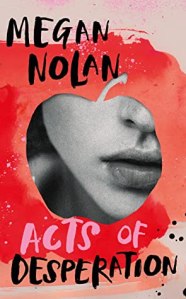 Acts of Desperation by Megan Nolan: Another debut from an Irish writer – heir to Sally Rooney? Publisher’s blurb: “In the first scene of this provocative gut-punch of a novel, our unnamed narrator meets a magnetic writer named Ciaran and falls, against her better judgment, completely in his power. After a brief, all-consuming romance he abruptly rejects her, sending her into a tailspin of jealous obsession and longing. … Part breathless confession, part lucid critique, Acts of Desperation renders a consciousness split between rebellion and submission, between escaping degradation and eroticizing it, between loving and being lovable. With unsettling, electric precision, Nolan dissects one of life’s most elusive mysteries: Why do we want what we want, and how do we want it?”
You can read more about these books and the judges’ reactions to them on the website. This year’s judges are authors Tahmima Anam, Sarah Moss, and Andrew O’Hagan; critic Claire Lowdon; and creative writing teacher Gonzalo C. Garcia. The chair, as always, is Sunday Times literary editor Andrew Holgate.
Reasoning and Prediction
- Poetry has won the last two years in a row.
- Nelson has just won the Costa First Novel Award (though the judges chose Raymond Antrobus, at that time already a recipient of multiple major awards).
- We haven’t had a female winner since 2017, so it’s past time.
- We haven’t had a nonfiction winner since Adam Weymouth in 2018 for Kings of the Yukon.
So, I’d love for Cal Flyn to win for the excellent and timely Islands of Abandonment. She’s had a few nominations (the Baillie Gifford Prize, the Saltire Award, the Wainwright Prize) but not won anything, and richly deserves to.

I haven’t heard yet if there will be a shadow panel this year. Anyone got any intel on this? If it goes ahead in person this year, I’ll hope to attend the awards ceremony in London on 24 February. In any case, I’ll be looking out for the winner announcement.
Have you read anything from this year’s shortlist?
The Barbellion Prize 2021 Longlist
This is the second year that the Barbellion Prize will be awarded “to an author whose work has best represented the experience of chronic illness and/or disability.” It was a joy to read the entire shortlist for the inaugural prize this past February and support the well-deserved win of Riva Lehrer for Golem Girl. I’ll be following the 2021–22 race with interest again, not least because one of the three judges is a long-time blogger friend of mine, Eleanor Franzen.
This year’s longlist looks fascinating: it contains fiction, poetry and memoir, and includes two works in translation. I happen to have already read the three nonfiction selections, but hadn’t heard of the other nominees.

Click on any title below for more information from the publisher website.
Ultimatum Orangutan by Khairani Barokka (Nine Arches Press)
From the synopsis: “Barokka’s second poetry collection is an intricate exploration of colonialism and environmental injustice … Through these defiant, potent verses, the body—particularly the disabled body—is centred as an ecosystem in its own right.”
What Willow Says by Lynn Buckle (Époque Press)
From the synopsis: “Sharing stories of myths, legends and ancient bogs, a deaf child and her grandmother experiment with the lyrical beauty of sign language. A poignant tale of family bonding and the quiet acceptance of change.”
A Still Life: A Memoir by Josie George (Bloomsbury)
Excerpt from my TLS review: Chronic illness long ago reduced George’s territory to her home and garden. The magic of A Still Life is in how she finds joy and purpose despite extreme limitations. Opening on New Year’s Day and travelling from one winter to the next, the book is a window onto her quiet existence as well as the turning of the seasons. (One of my favourites of the year.)
I Live a Life Like Yours: A Memoir by Jan Grue (Farrar, Straus and Giroux, and Pushkin Press). Translated by B. L. Crook
Excerpt from my Shelf Awareness review: The University of Oslo professor was diagnosed with spinal muscular atrophy at age three and relies on an electric wheelchair. In his powerful, matter-of-fact memoir, he alternates between his own story and others’, doctors’ reports and theorists’ quotations, mingling the academic and the intimate. 
Ill Feelings by Alice Hattrick (Fitzcarraldo Editions)
Excerpt from my blog review: Hattrick and their mother share a ME/CFS diagnosis. The book searches desultorily for medical answers but ultimately rests in mystery. Into a family story, Hattrick weaves the lives and writings of chronically ill women such as Elizabeth Barrett Browning, Alice James and Virginia Woolf.
The Coward by Jarred McGinnis (Canongate)
From the synopsis: “After a car accident Jarred discovers he’ll never walk again. … Add in a shoplifting habit, an addiction to painkillers and the fact that total strangers now treat him like he’s an idiot, it’s a recipe for self-destruction. How can he stop himself careering out of control?”
Duck Feet by Ely Percy (Monstrous Regiment)
From the synopsis: “A coming-of-age novel, set in the mid-noughties in Renfrew and Paisley, Scotland. … This book is a celebration of youth in an ever-changing world. It uses humour to tackle hard-hitting subjects such as drugs, bullying, sexuality, and teenage pregnancy.”
Elena Knows by Claudia Piñeiro (Charco Press). Translated by Frances Riddle
From the synopsis: “After Rita is found dead in the bell tower of the church she used to attend, the official investigation into the incident is quickly closed. Her sickly mother is the only person still determined to find the culprit.”
I’m most keen to read Ultimatum Orangutan (that title!), but would gladly read any of the new-to-me titles. The shortlist will be announced in January 2022.
Do any of the nominees appeal to you?
 Bookish Beck = Rebecca Foster. American transplant to England. Freelance proofreader and book reviewer.
 Bookish Beck