Short Fiction for September
I toyed with the wild idea of only reading short stories as my fiction for the month of September, but it was never really going to happen: I just don’t find short stories compelling enough, and in some ways they feel like hard work – every few pages, it seems, you have to adjust to a new scene and set of characters. In the end I made it through one anthology of flash fiction this month, and read parts of three other story collections. Mini reviews below…
Best Small Fictions 2017, edited by Amy Hempel
 Now in its third year, the Best Small Fictions anthology collects the year’s best short stories under 1000 words. (I reviewed the two previous volumes for BookTrib and the Small Press Book Review.) Starting with a zinger of a first line is one strategy for making a short-short story stand out, and there are certainly some excellent opening sentences here. Symbols and similes are also crucial to conveying shorthand meaning. Two stand-outs are “States of Matter,” Tara Laskowski’s deliciously creepy story of revenge aided by a gravedigger; and Matthew Baker’s “The President’s Doubles,” in which an island nation becomes so protective of its imperiled leader that he ends up a prisoner. They’ve saved the best for last in this collection, though: the late Brian Doyle’s “My Devils,” in which an Irish-American boy learns how to interpret the adult world by deciphering what people say versus what they mean. It’s remarkable how concisely a coming of age and loss of blind faith are conveyed. Although there are fewer overall highlights than in the first volume, this is an excellent snapshot of contemporary super-short story writing, recommended for story lovers and newbies alike. (See my full review for the Pittsburgh Post-Gazette.)
The Bus Driver Who Wanted to Be God and Other Stories by Etgar Keret
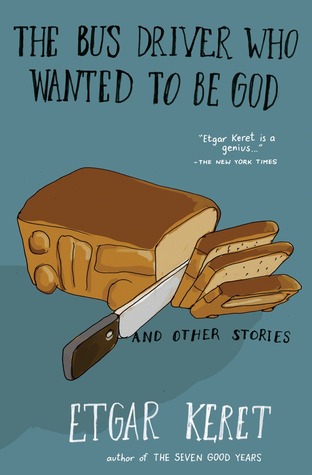 How can you not want to read a book with that title? Unfortunately, “The Story about a Bus Driver Who Wanted to Be God” is the first story and probably the best, so it’s all a slight downhill journey from there. That story stars a bus driver who’s weighing justice versus mercy in his response to one lovelorn passenger, and retribution is a recurring element in the remainder of the book. Most stories are just three to five pages long. Important characters include an angel who can’t fly, visitors from the mouth of Hell in Uzbekistan, and an Israeli ex-military type with the ironic surname of Goodman who’s hired to assassinate a Texas minister for $30,000. You can never predict what decisions people will make, Keret seems to be emphasizing, or how they’ll choose to justify themselves; “Everything in life is just luck.”
Aside from the title story, I particularly liked “Pipes,” in which the narrator makes himself a giant pipe through which to escape to Heaven, a place for misfits who’ve never found a way to be happy on Earth. Twisted biblical allusions like this are rife, including “Plague of the Firstborn.” A few stories have a folktale-like ambiance. It felt like there were too many first-person narrators, though, and too many repeating plots: “Good Intentions” takes up the same contract killing theme as “Goodman,” while both “Katzenstein” and “Jetlag” involve ejection from a plane. I read everything bar the 86-page novella Kneller’s Happy Campers; after so much flash fiction I wasn’t prepared to change pace so dramatically. So I’ve marked this as unfinished even though I read 110 pages in total. (Read in translation from the Hebrew.) 
Honeydew by Edith Pearlman
I don’t know what it is with me lately, but I seem to lack staying power with story collections. I read the first 40% of Pearlman’s most recent book on my Kindle and then just felt no need to continue. You could consider that a virtue of story collections: you can read as much or as little at a time as you want and pick and choose what bits interest you, in a way that you can’t with novels. Or you could say an author must be doing something wrong if a reader doesn’t long to keep turning the pages.
 At any rate, I enjoyed Pearlman’s stories well enough. They all apparently take place in suburban Boston and many consider unlikely romances. My favorite was “Castle 4,” set in an old hospital. Zephyr, an anesthetist, falls in love with a cancer patient, while a Filipino widower who works as a security guard forms a tender relationship with the gift shop lady who sells his disabled daughter’s wood carvings. I also liked “Tenderfoot,” in which a pedicurist helps an art historian see that his heart is just as hard as his feet and that may be why he has an estranged wife. “Blessed Harry” amused me because the setup is a bogus e-mail requesting that a Latin teacher come speak at King’s College London (where I used to work). Two stories in a row (four in total, I’m told) center around Rennie’s antique shop – a little too Mitford quaint for me.
Favorite lines: “Happiness lengthens time. Every day seemed as long as a novel. Every night a double feature. Every week a lifetime, a muted lifetime, a lifetime in which sadness, always wedged under her breast like a doorstop, lost some of its bite.” (from “Stone”)
Even though I didn’t finish either of these books, I’d gladly try something else by the authors. Can you recommend something to me?
Currently reading: After enjoying Bernard MacLaverty’s Midwinter Break so much, I picked up one of his short story collections (along with Keret’s) from Book-Cycle in Exeter earlier this month. So far I’ve read the first two stories in The Great Profundo, one about a struggling artist and a lonely widow who connect over an Emily Dickinson passage, and another about a cardinal whose father confesses he lost his faith years ago.

Upcoming: I have collections by Andrea Barrett, T.C. Boyle, Tessa Hadley and Alice Munro on the shelf. I also have far too many languishing on my Kindle, including For a Little While by Rick Bass, Whatever Happened to Interracial Love? by Kathleen Collins, We Come to Our Senses by Odie Lindsey, Music in Wartime by Rebecca Makkai and 99 Stories of God by Joy Williams. The ones I’m most likely to get to fairly soon, I think, are Difficult Women by Roxane Gay and The Garden Party by Katherine Mansfield.

Are you a short story fan? Read any good ones recently?
Ghent and Amsterdam, and What I Read
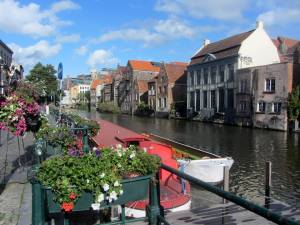
Ghent. Photo by Chris Foster
We got back on Monday from a packed week in Ghent and Amsterdam. Despite the chilly, showery weather and a slightly disappointing Airbnb experience in Ghent, it was a great trip overall. Our charming little B&B apartment in Broek in Waterland, a 20-minute bus ride from Amsterdam, more than made up for the somewhat lackluster accommodation in Belgium and was a perfect base for exploring the area. With our three-day, all-inclusive regional travel passes we were free to hop on as many trams and buses as we wanted.
On Saturday we crammed in lots of Amsterdam’s main attractions: the Rijksmuseum, the Begijnhof cloisters, the Botanical Gardens and the Anne Frank House, interspersed with window shopping, a rainy picnic lunch and an Indonesian takeaway dinner eaten by a canal. I also got to visit a more off-the-beaten-track attraction I’d spotted in our guide book: De Poezenboot or “The Cat Boat,” a home for strays moored on the Singel canal. Alas, the resident kitties were not as friendly as many we met on the rest of the trip, but it was still fun.


The highlight of our Amsterdam stay was the Van Gogh Museum on Sunday morning. It was crowded – everything was; though Ghent was very quiet, Amsterdam doesn’t seem to be into its off season yet, if it even has one – but we took our time and saw every single painting, many of which I’d never come across in reproductions. The galleries are organized in chronological order, so you get to trace Van Gogh’s style and state of mind over the years. Superb.

Marken. Photo by Chris Foster
At this point we were just about overwhelmed by the big city atmosphere, so we spent much of the next day and a half in the outlying Dutch towns of Marken and Edam. Flat fields and dykes, cows, cobbled streets and bicycles everywhere – it’s what you’d expect of Holland’s countryside, apart from a surprising dearth of windmills.


Bookish highlights:
- This Ghent University library – I’m presuming it held Special Collections/rare books:


- The American Book Center in Amsterdam:

Photo by Chris Foster
What I read:
 Pnin by Vladimir Nabokov: A comic novel about a Russian professor on an American college campus. While there are indeed shades of Lucky Jim – I certainly laughed out loud at Timofey Pnin’s verbal gaffes and slapstick falls – there’s more going on here. In this episodic narrative spanning 1950–4, Pnin is a figure of fun but also of pathos: from having all his teeth out and entertaining the son his ex-wife had by another man to failing to find and keep a home of his own, he deserves the phrase Nabokov originally thought to use as a title, “My Poor Pnin”.
 Cork Dork by Bianca Bosker: Bosker gave herself a year and a half to learn everything about wine in hopes of passing the Court of Master Sommeliers exam. Along the way she worked in various New York City restaurants, joined blind tasting clubs and attended an olfactory conference. The challenge included educating her palate, absorbing tons of trivia about growers and production methods, and learning accepted standards for sommelier service. The resulting book is a delightful blend of science, memoir and encounters with people who are deadly serious about wine.
 You Should Have Left by Daniel Kehlmann: And I thought my Airbnb experience was a nightmare? This is a horror novella about a writing retreat gone bad. The narrator is a screenplay writer who’s overdue delivering the sequel to Besties. As he argues with his partner, tries to take care of his daughter and produces fragments of the screenplay, the haunted house in the mountains starts to close in on him. I’ve loved Kehlmann’s work before (especially F), but he couldn’t convince me of the narrator’s state of mind or the peril. I actually found the book unintentionally humorous.
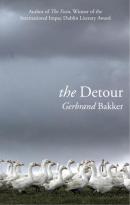 The Detour by Gerbrand Bakker: A Dutch translator and Emily Dickinson scholar has fled a mistake in her personal life and settled in rural Wales at the foot of Snowdon. “She had left everything behind, everything except the poems. They would have to see her through. She forgot to eat.” On her farmstead is a dwindling flock of geese and, later on, a young man surveying for a new footpath. Amidst her quiet, secret-filled days we also learn of her husband’s attempts to find her back in Amsterdam. Bakker’s writing is subtle and lovely, yet the story never quite took off for me.
 Tulip Fever by Deborah Moggach: If you liked Girl with a Pearl Earring and The Miniaturist, you may also enjoy this atmospheric, art-inspired novel set in the 1630s. (Originally from 1999, it’s recently been adapted into a film.) Sophia, married off to an old merchant, falls in love with Jan van Loos, the painter who comes to do their portrait. If Sophia and Jan are ever to be together, they’ll have to scrape together enough money to plot an elaborate escape. I thought this was rather soap opera-ish most of the way through, though I was satisfied with how things turned out in the end.
Plus other books I had on the go (lots of short works and literature in translation):
 Dangling Man by Saul Bellow
- Diary of a Bookseller by Shaun Bythell
- Madame Bovary by Gustave Flaubert
- The Unseen by Roy Jacobsen
- The Bus Driver Who Wanted to Be God and Other Stories by Etgar Keret
- Notes on a Banana: A Memoir of Food, Love and Manic Depression by David Leite
- The Fact of a Body: A Murder and a Memoir by Alexandria Marzano-Lesnevich
- Honeydew: Stories by Edith Pearlman
- A Girl Walks into a Book: What the Brontës Taught Me about Life, Love, and Women’s Work by Miranda Pennington
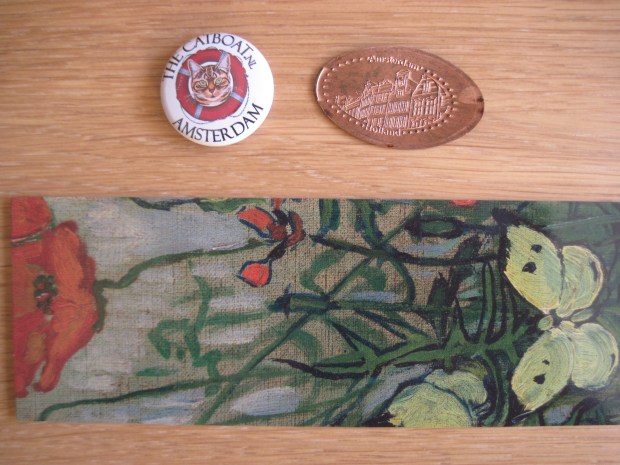
Extremely cheap souvenirs of Amsterdam to add to my collections: a badge, a pressed coin, and a Van Gogh bookmark.
What have you been reading recently?
Do you find that books read ‘on location’ never quite live up to your expectations?
Three Novellas in Translation
The Institute by Vincent Bijlo
[London’s Holland Park Press specializes in making classic and contemporary Dutch literature available in English translation.]
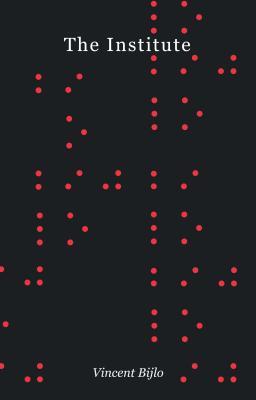 Otto Iking is a resident at the Institute, a boarding school for the blind. He characterizes his fellow students firstly according to their smell – “foul soap,” “piss” or “grated Swiss cheese” – only later adding in details about their speech and habits. It’s a zany sort of place, powered by pranks and strange decisions. Some stand-out scenes include hiding Harry’s glass eyes and a visit from the president of Surinam, a former Dutch colony. The slapstick humor works well (“When I walked into a lamppost, I said sorry. When I struck my head against a traffic sign, I said sorry. No one has ever apologised to street furniture as often as I did”), but some humor translates less well, seeming cruel or even offensive (“Tony was fat and deaf and black-skinned”).
Alongside the silliness is the matter of Otto’s coming of age. He has the first inklings of what sex is about and falls for Sonja, and also undergoes training to prepare him for the real world, things like reading and writing Braille, preparing and eating tricky meals (soup’s a killer). One day he hopes to go to a mainstream school and broadcast radio programs. The institutional setting and quirky cast reminded me of The Secret Diary of Hendrik Groen, 83¼ Years Old and Linda Grant’s The Dark Circle.
The Institute, originally from 1998, was published on April 27th. Translated from the Dutch by Susan Ridder. My thanks to Bernadette Jansen op de Haar for sending a free copy for review.
This is the first of three Otto Iking novels. Vincent Bijlo, a Dutch stand-up comedian, was born blind.
My rating:
Dance by the Canal by Kerstin Hensel
[Peirene Press issues its translated European novellas in trios. This is the final installment in the “East and West: Looking Both Ways” series; I’ve also reviewed the first two, The Last Summer by Ricarda Huch and The Orange Grove by Larry Tremblay.]
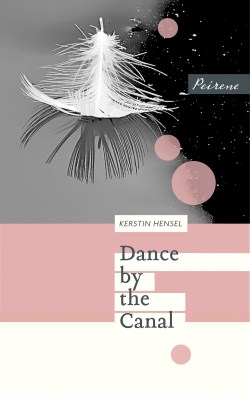 I don’t think I’ve ever read a novel narrated by a homeless person before. Gabriela von Haßlau has a noble name and a solid upper-middle-class background – her father was a surgeon and chief medical officer specializing in varicose veins; her mother was trained as a radiographer before becoming a housewife and society hostess – but her life took a turn for the worse at some point and she now lives in an encampment under a canal bridge in the town of Leibnitz (a fictional stand-in for Leipzig).
It’s July 1994 and she decides to write her life story on whatever scraps of paper she can get her hands on. She remembers being forced to play the violin as a child even though she was largely unmusical, enduring mockery at school for being one of the intelligentsia, playing hooky with her best friend Katka, and failing at a mechanical engineering apprenticeship. The narrative toggles between Gabriela’s memories and her present situation: getting blankets and food from a shelter and trying to avoid being sent to the mental hospital.
My unfamiliarity with German history, especially that relating to East Germany and reunification, means I probably missed some nuances of the plot; I found the ending quite sudden. What was most worthwhile about the book for me was experiencing homelessness with Gabriela and tracing some of the unfortunate events that led her to this situation. It’s also interesting to see how she shapes her life story in scenes and streams of consciousness.
Dance by the Canal, originally from 1994, was published on July 3rd. Translated from the German by Jen Calleja. With thanks to Peirene Press for the free copy for review.
My rating:
Hair Everywhere by Tea Tulić
[London’s Istros Books specializes in Balkans and South-Eastern European literature in translation.]
 How could I resist such a terrific title and cover image? This was Croatian novelist Tea Tulić’s first book. In brief, titled vignettes almost like flash fiction stories, she dramatizes how a cancer diagnosis affects three generations of women. The book is strong on place, sensual detail and scene-setting. The narrator’s mother is in the hospital, and all the specialists and medicinal plant extracts in the world don’t seem to be helping. In such a restrictive narrative format, a line or two of dialogue can reveal a lot about a character’s attitude. The grandmother is a weary pessimist – “I just need to help your mother get through this and then I can die” – while the narrator is quite the hypochondriac.
The tone ranges from poignant to cynical, as in the absurd two-page sequence in which the family cannot locate an on-duty doctor who can read the latest X-ray results for them. The deadpan language and mixture of black humor and pathos reminded me of Adios, Cowboy by Olja Savičevi, which coincidentally is the only other Croatian novel I’ve encountered, and was originally published in the same year, 2011.
A few favorite lines:
“One little cloud was urinating.”
“While I watch her lying in bed, I can feel the umbilical cord between us. Something I have tried to cut a thousand times already. And now I hold onto that invisible cord as though I were hanging from a bridge.”
“Patrick Swayze” in its entirety: “My brother is angry because the doctors say they cannot help Mum. I tell him Patrick Swayze had lots of money but he still died of cancer.”
Hair Everywhere was published on May 22nd. Translated from the Croatian by Coral Petkovich. My thanks to Susan Curtis for sending a free copy for review – and to TJ at My Book Strings for making me aware of this title during Women in Translation Month.
My rating: 
Virginia Woolf Down Under: The Singing Ship by Rebecca Winterer
Memories are stored vertically, fluid and accessible from the strangest depths. … [T]o explore was to salvage, to record a story was to remember one.
Rebecca Winterer won the 2016 Del Sol Press First Novel Prize for The Singing Ship, her sophisticated story of the afflictions and creative transformations that shape the Pilgrim family of Mt. Isaac, Queensland over the course of six decades. However, the book opens with an even longer view – a cosmic one – via a prologue offering a millennia-old perspective on human life. An epilogue returns full circle, telescoping from the Pilgrims back out to the enormity of the earth without belittling the value of the individual. In between those two points of vastness, we spend time on the dusty Australian ground with four characters who nurse their traumas with some unusual obsessions.
 Eleven-year-old Bernadette emulates her hero, nineteenth-century explorer Charles Sturt, by trekking out into the bush with a log book and carefully amassed provisions. Younger sister Jane combats her nightmares by focusing on stories of the saints and constructing little altars, “earnestly fabricating solace and safe havens.” Already the signs of who they’ll grow up to be are evident – Bernadette an award-winning historian, and Jane a nun. But the road there will not be easy: Winterer plants tiny hints of an attack the girls suffer out in the bush.
Meanwhile, the girls’ father, Robert, admits to a sexual peccadillo with a customer at his department store and has a nervous breakdown. Their mother Audrey, an unfulfilled housewife with creative ambitions, responds with affairs of her own but also embarks on her magnum opus, an enormous quilt decorated with her button collection. One day the quilt will be part of the permanent folk art collection at the National Gallery in Canberra. For now it’s like an echo of the bowerbird nest Bernadette finds: a visual display of newfound confidence.
The novel follows the Pilgrims from perhaps the late 1950s through to the present day; and from drought-plagued Mt. Isaac to the university where Bernadette teaches and the convent where Jane lives. There will be more losses along the way – deaths and broken relationships – but these characters keep reinventing themselves to survive. In two cases name changes are symbolic of leaving a previous life behind: we learn that Robert chose the new surname Pilgrim when he escaped from his father’s hotel-cum-brothel, to signify his eagerness in setting out on his life’s journey; and when Jane takes her vows she becomes Sister Ava.
I was impressed by how much ground this novel covers in just 210 pages. It takes in so many weighty topics: mental illness, adultery, sexual assault, bereavement, suicide, art, history, legacy and culture. Perhaps for that reason, I found that I had to parcel it out into small chunks, reading just 10 pages or so at a time. The chronology can be difficult to follow – unspecified lengths of time pass between the sections and the narrative skips back and forth, such that I longed for date headings to help me orient myself. But some of this is deliberate, I’m sure: as in Virginia Woolf’s work, the past bleeds into the present, with memory and action sometimes indistinguishable. Indeed, one part is entitled “The Voyage Out”; though I’m unfamiliar with that Woolf novel, I had To the Lighthouse in mind while reading.

The Singing Ship sculpture at Emu Park, Queensland. ZayZayEM at the English language Wikipedia [CC-BY-SA-3.0 (http://creativecommons.org/licenses/by-sa/3.0/)%5D, via Wikimedia Commons.
The title itself has metaphorical significance, referring to a sculpture of Captain Cook’s Endeavor, sited on a headland over Keppel Bay. It’s “white as bleached cuttlebone” and fitted with organ pipes so that when the wind passes through it creates an uncanny music. Later on Winterer likens the sculpture to the human body. That’s one of the images that will stick with me from this dreamy novel: of music emerging from the detritus of troubled lives.
My rating:
The Singing Ship was published by Del Sol Press on July 21st. My thanks to the author for sending a free copy for review.
Mini-Reviews: The Graybar Hotel & Saints for All Occasions
My attention was drawn to The Graybar Hotel, the debut story collection by Curtis Dawkins, because the author is a convicted murderer serving a life sentence in a Michigan prison. (You can read more about his background in this Guardian article.) These 14 short stories are all set at least partially in prison, and feature men learning how to live with the consequences of their mistakes and how to fill long, empty days. They perfect their amateur tattooing skills, write raps, or carve soap figures; they watch TV or make collect calls to random numbers. There’s a kind of make-do attitude in the air, as well as the idea that you can reinvent yourself – starting with your past. But of course there are also more destructive forces around, with drugs, suicide, and violent revenge always lurking in the background.
 Perhaps of necessity, the collection is rather homogeneous. For instance, all but two stories are in the first person, with the typical narrator an observer who recounts other prisoners’ dreams and desperate actions but reveals little or nothing about himself. My favorite stories are those that also look backward and/or forward to show the protagonist’s life before and after prison rather than just dwelling on daily life in the pen. In one stand-out, “Leche Quemada,” Clyde is released after 12 years and tries to slip back into life with Melissa but finds that – like the boiled milk candies his Hispanic cellmates made and he always coveted – what you’ve been waiting for all this time might not be all that you hope for. My overall favorite is “Engulfed,” in which Steven, who admitted selling phony security systems after he fell for a set designer, calls his roommate out for lies about his past. Fire as a destructive yet cleansing force that reveals the truth is a potent symbol here as well as in “Six Pictures of a Fire at Night.”
*All proceeds from the book go into an education fund for Dawkins’s children.
My rating:
The Graybar Hotel was published in the UK by Canongate on July 20th. My thanks to Alice Laing for the free copy for review.
 Having enjoyed J. Courtney Sullivan’s The Engagements, I was keen to try her new novel, Saints for All Occasions. It opens in 2009 with Nora Rafferty, a mother of four, rushing to the hospital after being informed of a death in the family. She reluctantly accepts that her next task will be to contact the abbey where her estranged sister Theresa, now known as Mother Cecilia, lives. From County Clare, the girls moved to Boston together in the late 1950s: Nora to join Charlie, the fiancé she didn’t really love, and Theresa to have a chance at a new and exciting life. Moving back and forth between 2009 and earlier points in the sisters’ history, the novel considers the way their decisions have played out over the course of half a century, musing over what was fated and what they might have changed. We meet and spend much time with Nora’s children, especially John, who worked on the campaigns of a suspiciously Mitt Romney-esque figure and adopted a daughter from China with his wife; and Bridget, who’s planning to have a baby with her partner Natalie but hasn’t come out to her mother yet.
I’m not sure I ever gave this book a fair shake; from the earliest pages it reminded me so strongly of other Irish-American family stories I’ve read: Mary Costello’s Academy Street, Anne Enright’s The Green Road, Nick Laird’s Modern Gods, Maggie O’Farrell’s This Must Be the Place, and Colm Tóibín’s Brooklyn. With these forebears in my mind, it was hard to judge the book on its own merits. I also thought the ‘secret’ was as plain as day from the beginning. If it’s a less familiar story line for you, you may well enjoy it more than I did.
Favorite lines:
Charlie gave her a sad smile. ‘Isn’t there anything you like about Boston?’ Nora thought it over. ‘Brigham’s vanilla ice cream,’ she said. ‘That’s it.’
It was amazing that you did not become your grief entirely, and walk around leaking it everywhere. It could lie dormant inside of you for days, weeks, years. You could seem a perfectly whole person to everyone you met. Without warning, grief might poke you in the ribs, punch you in the gut, knock the wind out of you. But even then, you seemed just fine. The world went on and on.
My rating:
Saints for All Occasions is published in the UK today, August 31st, by Fleet. My thanks to Hayley Camis for the free review copy.
Doorstopper of the Month: By Gaslight by Steven Price
My 2017 goal of reading one book of 500+ pages per month has been a mixed success. With the best doorstoppers the pages fly by and you enjoy every minute spent in a fictional world. From this past year Murakami’s The Wind-Up Bird Chronicle fits that bill, and a couple of novels I read years ago on holidays also come to mind: Susanna Clarke’s Jonathan Strange and Mr. Norrell and Michel Faber’s The Crimson Petal and the White. But then there are the books that feel like they’ll never end and you have to drag yourself through page by page.
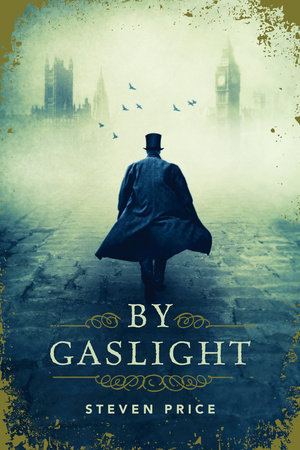 Unfortunately, Steven Price’s second novel, By Gaslight, a Victorian cat-and-mouse mystery, tended more towards the latter group for me. Like Eleanor Catton’s The Luminaries, it has the kernel of a fascinating story but piles up the words unnecessarily. Between July and August I read the first 300 pages and then skimmed the rest (in total the paperback has 731 small-type pages). This is the story of William Pinkerton, a 39-year-old Civil War veteran and private investigator from Chicago who comes to London in 1885 to chase up a name from his father’s files: Edward Shade. His best lead comes to nothing when Charlotte Reckitt evades him and turns up as a set of dismembered remains in the Thames. Keeping in mind the rudimentary state of forensics, though, there’s some uncertainty about the corpse’s identity.
The other central character in this drama is Adam Foole, a master thief. Half Indian and half English, he has violet eyes and travels in the company of Molly, a young pickpocket he passes off as his daughter, and Japheth Fludd, a vegetarian giant just out of prison. Foole was Charlotte’s lover ten years ago in South Africa, where they together pulled off a legendary diamond heist. Now he’s traveling back to England: she’s requested his help with a job as she knows she’s being tailed by a detective. The remaining cast is large and Dickensian: a medium and her lawyer brother, Charlotte’s imprisoned uncle, sewer dwellers, an opium dealer, and so on. Settings include a rare goods emporium, a Miss Havisham-type lonely manor house, the Record Office at Chancery Lane, and plenty of shabby garrets.
What I most enjoyed about the book was the restless, outlaw spirit of both main characters, but particularly Pinkerton. His troubled relationship with his father, in whose footsteps he’s following as a detective, is especially poignant: “William feared him and loved him and loathed him every day of his life yet too not a day passed that he did not want to be him.”
Price’s style is not what you’d generally expect of a Victorian pastiche. He uses no speech marks and his punctuation is non-standard, with lots of incomplete or run-in sentences like the one above. The critics’ blurbs liken By Gaslight to William Faulkner or Cormac McCarthy, apt comparisons that tell you just how unusual a hybrid it is.
I liked Price’s writing and starting around page 150 found the book truly gripping for a time, but extended flashbacks to Pinkerton and Foole’s earlier years really drag the story down, taking away from the suspense of the hunt. Meanwhile, the two major twists aren’t confirmed until over halfway through, but are hinted at so early that the watchful reader will know what’s going on long before the supposedly shrewd Pinkerton does. The salient facts about both characters’ past might have been conveyed in one short chapter each and the 1885 plot streamlined to make a taut novel of less than half the length.
There are many reasons to admire this Canadian novelist’s achievement, but whether it’s a reading experience you’d enjoy is something you’ll have to decide for yourself.
A favorite passage:
There is in every life a shadow of the possible, she said to him. The almost and the might have been. There are the histories that never were. We imagine we are keeping our accounts but what we are really saying is, I was here, I was real, this did happen once. It happened.
My rating:
By Gaslight was first published in the UK by Oneworld in September 2016. My thanks to Margot Weale for sending a free paperback for review.
Fun trivia: Steven Price is married to Esi Edugyan, author of the Booker Prize-shortlisted novel Half Blood Blues.
Two “Summer” Books
With summer winding down, I decided it was time to read a couple of books with the word in the title to try to keep the season alive. These turned out to be charming, low-key English novels that I would recommend to fans of costume dramas. Both:
I knew very little about Jonathan Smith’s Summer in February when I picked it up in a charity shop. From the ads for the 2013 film adaptation with Dan Stevens, I had in mind that this was an obscure classic. It was actually published in 1995, but is inspired by real incidents spanning 1909 to 1949. It’s set among a group of Royal Academy-caliber artists in Lamorna, Cornwall, including Alfred Munnings, who went on to become the academy’s president.
The crisis comes when Munnings and Captain Gilbert Evans, a local land manager, fall for the same woman. A love triangle might not seem like a very original story idea, but I enjoyed this novel particularly for its Cornish setting (“From dawn to dusk it had rained non-stop, as only Cornwall can”; “The sea was slate grey and the sky streaky bacon”) and for the larger-than-life Munnings, who has a huge store of memorized poetry and is full of outspoken opinions. Two characters describe his contradictions thusly: “I can see he’s crude and loud and unpolished and Joey says he cuts his toenails at picnics but…”; “he’s one in a million, a breath of fresh air, and he’s frank and fearless, which is always a fine thing.” The title refers to the way that love can make any day feel like summer.
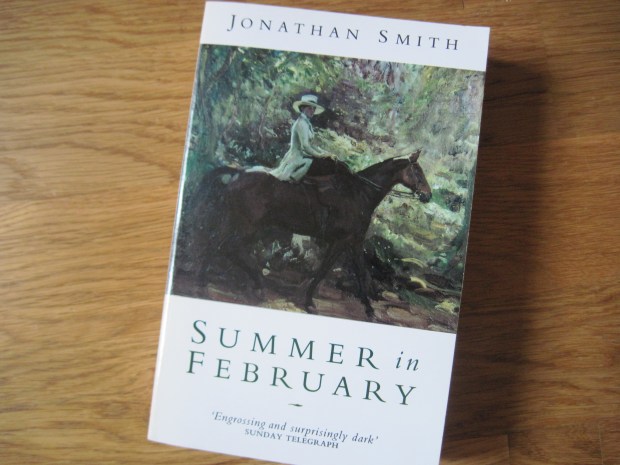
The cover image is the painting Morning Ride by A.J. Munnings.
For more information on Munnings, see here.
For more information on Gilbert Evans, see here. (Beware the spoilers!)
From 1961, In a Summer Season was Elizabeth Taylor’s eighth novel. The ensemble cast is led by Kate Heron – newly remarried to Dermot, a man ten years her junior, after the death of her first husband – and made up of her family circle, a few members of the local community, and her best friend Dorothea’s widower and daughter, who return from living abroad about halfway through the book. Set in the London commuter belt, this is full of seemingly minor domestic dilemmas that together will completely overturn staid life before the end.
From Kate dyeing her hair yet being keen to avoid accusations of “mutton dressed as lamb” to her son Tom’s disgust at his grandfather’s ageing body, old age and wasting one’s time on trivialities are a twin paranoia here. The title is not only a literal note of when much of the action takes place, but also a metaphor for the fleeting nature of happiness (as well as life itself). Kate remembers pleasant days spent with her best friend and their young children: “It was a long summer’s afternoon and it stood for all the others now. There had been many. And she and Dorothea were together day after day. Their friendship was as light and warming as the summer’s air.”
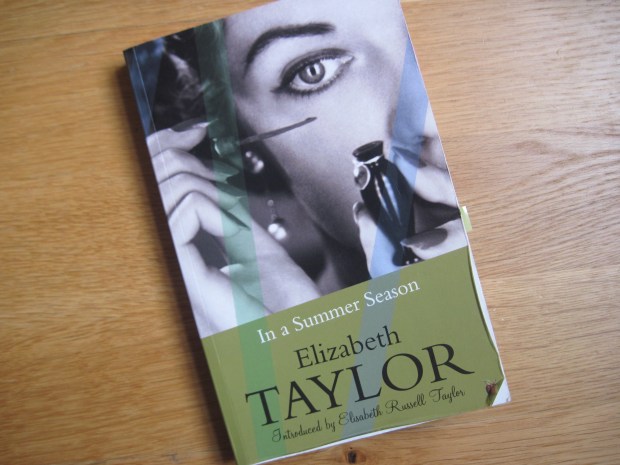
So much happens in the last seven pages. I wished the book could have turned out differently, yet the conclusion effectively sews it all up, and all within a cozy 220 pages. If you enjoy writers like Muriel Spark and Barbara Pym, you must try Elizabeth Taylor. Her work is similarly built around wry, perceptive observations about relationships and ways of life. This was my fourth novel by her, and I’d call it my second favorite so far after Mrs. Palfrey at the Claremont.
(Secondhand books are such good value: These two charity shop paperbacks cost me less than 85 pence in total. Such a low total spend per hour of enjoyment!)
This month I also read The Summer without Men by Siri Hustvedt (discussed here along with a few other recent reads). Earlier in the year I reviewed Ricarda Huch’s The Last Summer, and last year I reviewed the Summer anthology from the Wildlife Trusts. “Summer” turns up fairly frequently in titles of books I’ve read or want to read, in fact. Here’s the whole list!
Have you read any “Summer” books lately?
Classic of the Month: Fathers and Sons by Ivan Turgenev
Last month’s classic was Father and Son (Edmund Gosse); this month is Fathers and Sons, the 1861 novel by Ivan Turgenev (1818–83). I couldn’t resist pairing up the similar titles, and it turns out that even though one is nonfiction and the other fiction, they are thematically similar, dwelling on the clash of generations and contrasting romanticism and rationalism.
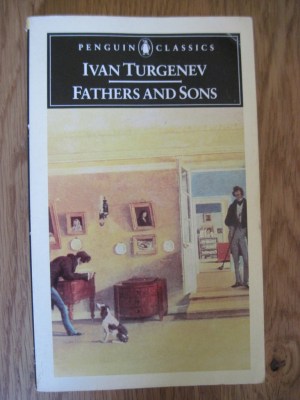 Nikolai Kirsanov’s son Arkady, newly graduated from university, has just returned to his father’s estate with his haughty fellow student Yevgeny Bazarov in tow. Bazarov intends to take a medical degree and follow in his father’s footsteps as a country doctor, so spends the time at his friend’s house dutifully poring over chemistry texts and dissecting frogs. Arkady, by contrast, seems earnest but aimless, happy to simply while away the days. The major change at home is that his father, a widower, has taken the servant girl Fenichka as his mistress and they have a baby, Mitya. (Gasp!) Yet the real shock in the world of the novel seems to be that Nikolai is consorting with someone of the lower classes. “In any case, it’s not for a son to sit in judgment on his father – least of all for me, and least of all with a father like you, who has never restricted my freedom in any way,” Arkady graciously concedes.
Together Nikolai and his rakish brother Pavel (“Women lost their heads over him, and men dubbed him a fop but were secretly envious”) represent an outmoded idealism that values art, nature, poetry, and true love. On the other side is Bazarov, who means to tear down those dated notions and recruit Arkady to the side of realism, even nihilism. “Nature is not a temple, but a workshop, and man’s the workman in it,” he explains to Arkady. But the pals’ notions get uncomfortably muddled when they meet the regal widow Anna Odintsov at the governor’s ball. On extended visits to her country house, Bazarov and Arkady become fixated on her and her younger sister, Katya, but differ in their willingness to give in to love.
Romantic love may be a madness best avoided in some of the characters’ view, but family love is a constant. Even Bazarov, though he makes a show of being embarrassed by their fussing when he goes home briefly after three years away, values his parents’ approval. His father proudly takes him along on his medical rounds, while his superstitious mother buttresses him with her prayers. She reminds her husband that Yevgeny is fundamentally different from them: “A son is an independent person. He’s like a falcon that comes when he wills and flies off when he lists; but you and I are like the funguses growing in a hollow tree.”
I was pleasantly surprised by how enjoyable and accessible Turgenev’s writing is. My experience with the Russian masters is shamefully limited; Leo Tolstoy’s The Death of Ivan Ilyich might literally be the only thing I’ve read previously. I was worried that all the patronymics, place names, and historical and cultural references would trip me up, but it’s no trouble to adjust to them here. You might think of Fathers and Sons as a friendly way of easing in to works like War and Peace: although elements of the story reminded me of Tolstoy’s epic (as I know it purely from the recent BBC miniseries) – the range of characters, from rich to poor, and their interactions; the long visits to acquaintances; the peaceful countryside; even a duel – it is on a much smaller scale, and has a correspondingly lower page count of about 220.
Something in nearly every character’s psyche rang true for me: Arkady’s relief at being home; Nikolai’s sense of being left behind; Bazarov’s feeling of smallness in an uncaring universe; his mother’s benevolent contentment with the status quo; Madame Odintsov’s well-ordered but purposeless life; and so on. Turgenev’s asides about Russia and about human nature give the narration a playful, knowing quality reminiscent of George Eliot. The idea of fathers and children being on different tracks extends to other forms of paternalism: religion (though this is a minor theme compared to in Father and Son) as well as masters versus serfs. “We all know there’s the master’s will; on account of you bein’ like our fathers. An’ the more strict the master rules, the better it be for us peasants,” as one rustic opines to Bazarov.
This is a thought-provoking but markedly readable classic that I can heartily recommend. Turgenev only wrote five other novels; if they’re all as strong (and roughly as short) as this one, I’d be happy to read them all – and will likely return to Fathers and Sons in the future.
My rating:
(With thanks to Karen at Kaggsy’s Bookish Ramblings for putting Turgenev on my radar.)
I read a Penguin Classics edition of Rosemary Edmonds’s 1965 translation. Her brief introduction gives helpful background and is a lovely piece of writing in its own right. Beware: only read a literary introduction after finishing the text, because critics assume you know the basic story line and so spoil who falls in love with whom, who dies in the end, etc. My edition is preceded by a lengthy lecture Isaiah Berlin gave on Turgenev in 1970.
Madness Is Better than Defeat by Ned Beauman
I’ve been a Ned Beauman fan ever since I read his debut, Boxer, Beetle, in 2011. Born in 1985, the Londoner is now the author of four novels and was named one of Granta’s 20 best British novelists under the age of 40. His books are madcap and complex; three out of four have historical settings (all broadly in the World War II era), but this is definitely not historical fiction as we know it. If I tell you that some common elements in his work are Nazis, pharmaceuticals and gay sex, and that his first two books reminded me most of Nick Harkaway, you’ll get some idea of the niche he’s working in.
 Madness Is Better than Defeat takes its title from a line in Orson Welles’s never-filmed screenplay of Heart of Darkness. We open in 1959 with Zonulet, a 43-year-old alcoholic CIA officer, writing a tell-all memoir about what happened when two parties set out to find a Mayan temple in Honduras in 1938. Sadistic business magnate Elias Coehorn, Sr. sent his feckless son, Elias Jr., to dismantle the temple and bring it back to New York City, while Arnold Spindler, chairman of Kingdom Pictures, tasked Jervis Whelt with directing a movie on location at the temple: Hearts in Darkness, a comedy about a spoiled society boy who’s sent on an archaeological dig to a Mayan temple and opens a nightclub when he gets there.
The scene is set for a clash of cultures: the New York faction bent on destruction versus the Los Angeles crew intent on creation. They’re joined by Joan Burlingame, a stuffy Cambridge anthropologist, and Leland Trimble, a gossip journalist who was formerly Zonulet’s colleague at the New York Evening Mirror. To start with the screwball plot is uncannily similar to that of Hearts in Darkness itself, and it seems the stalemate between the two groups will be mined purely for comic potential. But as the years pass and the deadlock continues, this becomes more of a psychological study of a community in isolation, rather like The Lord of the Flies or T.C. Boyle’s The Terranauts.
Alliances are formed and broken based on blackmail over the characters’ past and present indiscretions; routines and workarounds are developed (though an attempt to recreate Bloody Marys and Eggs Benedict fails); soon a whole new generation is being raised with little knowledge of what’s happened outside this jungle for more than a decade; all they have to go on is false information about the outcome of World War II conveyed by an ex-Nazi.
They spoke in American accents and they had all been taught a sort of eschatology in which they would one day return with their parents to Hollywood or New York. But they belonged to the rainforest and to the temple. And the geometry of the latter … was so primal to them that any talk of disassembly or reassembly struck them as abstract, almost paradoxical.
One of the hardest things to believe about the story line – so you’ll simply have to suspend your disbelief – is that no one was overly concerned when these two groups failed to reappear after assignments that were meant to last only a matter of weeks. Not until Zonulet gets to Honduras in 1956 to learn more about a secret CIA guerrilla training camp in the area is there sustained interest in what became of these exiled Americans, and it’s another two years before their jungle idyll comes to an explosive end.
What we have here is a twist on the Mummy’s Curse trope, with the temple causing many to lose their minds or their lives. I wish the novel could have retained its initial screwball charm without going quite so dark and strange, but that’s Beauman for you. I also thought that this was a good 100–150 pages too long, with many more secondary characters, subplots and asides than necessary. Ironically, even after nearly 500 pages, its conclusion left me wondering about some loose ends. But the writing is consistently amusing, particularly the voices captured in letters or diaries and the wacky metaphors:
- “The sky in the west was mixing an Old-Fashioned”
- “All her blood had thickened in her head like the last of the catsup”
- “They were so slathered in mulch that their two bodies together might have been some octopod newly burped from a mudpot.”
- “To describe the truck as temperamental would have been condescending; rather, I had the impression it had been earnestly wrestling with a deep crisis of personal faith about the very principle of internal combustion as a motive power.”
If you’re new to Ned Beauman, I’d suggest starting with The Teleportation Accident, my favorite of his novels. From there you could move on to Boxer, Beetle or Glow; this one can wait until you’re a confirmed admirer.
My rating:
Madness Is Better than Defeat is published in the UK today, August 24th, by Sceptre and will be available in the USA in February. With thanks to Ruby Mitchell for the free review copy.
The Booker Dark Horse: Elmet by Fiona Mozley
The dark horse in this year’s Man Booker Prize race is Elmet, a brilliant, twisted fable about the clash of the land-owning and serf classes in contemporary England. I’d love to see this win the Booker, or make the shortlist at the very least. You’d hardly believe it’s a debut novel, or that it’s by a 29-year-old PhD candidate in medieval history. The epigraph from Ted Hughes defines “Elmet” as an ancient Celtic kingdom encompassing what is now West Yorkshire. The word still appears in a few Yorkshire place names today. Metaphorically, Hughes notes, the region was a “‘badlands’, a sanctuary for refugees from the law.” That’s an apt setting for Mozley’s central characters: a family living on the edge of poverty and respectability – off-grid and not quite legal.
 Daniel and Cathy Oliver – 14 and 15, respectively – live with their father, John Smythe, in a simple house he built with his own hands in a copse. They mostly eat whatever they can hunt. Daddy is a renowned pugilist not above beating people up when they owe his friends money. Feisty Cathy is bullied by boys at school; when teachers don’t believe her, she has no choice but to hit back. There’s a strong us-against-the-world ethos to the novel, but underneath that defensiveness there’s a sense of unease: Daniel, the narrator, isn’t a fighter like his father and sister. He’s a sensitive soul who’s happiest cooking and playing with his dogs.
Like the reader, Daniel watches in grim fascination as Mr. Price, a powerful local landlord, starts issuing threats. Price warns Daddy that his family is trespassing. If they don’t leave he’ll make life difficult for them. A group of tenants, many of them just out of prison and barely getting by, bands together to take revenge on Price, planning to withhold rent and farm labor until conditions improve. No longer will they accept £20 payments for 10-hour work days. At first it seems their fight for rights might be successful, but Price and his goons retrench. Things come to a head when Price promises to sign their plot of land over to Daniel – if Daddy agrees to call off the strike and fight one last climactic match in the woods.
The final 70 pages of Elmet blew me away: a crescendo of fateful violence that reaches Shakespearean proportions. This knocks all those Hogarth remakes (which generally, with the exception of Hag-Seed, adhere too slavishly to the plots and so fail to channel the spirit) into a cocked hat. Though oddly similar to two other novels on the Booker longlist that unearth disturbing doings in a superficially pastoral England – Reservoir 13 by Jon McGregor and Autumn by Ali Smith – Elmet achieves the better balance between lush nature writing and Hardyesque pessimism. Mozley’s countryside is no idyll but a fallen edgeland:
And if the hare was made of myths then so too was the land at which she scratched. Now pocked with clutches of trees, once the whole county had been woodland and the ghosts of the ancient forest could be marked when the wind blew. The soil was alive with ruptured stories that cascaded and rotted then found form once more and pushed up through the undergrowth and back into our lives.
The characters usually speak in Yorkshire dialect, but where many authors would render the definite article as “t’,” Mozley simply elides it. For instance, here’s John shaking his head over the injustice of land ownership:
It’s idea a person can write summat on a bit of paper about a piece of land that lives and breathes, and changes and quakes and floods and dries, and that that person can use it as he will, or not at all, and that he can keep others off it, all because of a piece of paper. That’s part which means nowt to me.
The author is not entirely consistent with the transcription of dialect, though, and sometimes her use of spoken language is off: too ornate to be believable in certain characters’ mouths, like Cathy or a man who comes to the door to deliver bad news late on. These are such minor lapses of authorial control that I barely think them worth mentioning, but take it as proof that Mozley will only get better in the years to come. This is a gorgeous, timeless tale of the determination to overcome helplessness by facing down those who might harm the body but cannot destroy the spirit.
My rating: 
Elmet was published in the UK by JM Originals on August 10th. With thanks to Yassine Belkacemi and Katherine Burdon at John Murray Press for the free review copy.
 Bookish Beck = Rebecca Foster. American transplant to England. Freelance proofreader and book reviewer.
 Bookish Beck