Best Backlist Reads of the Year
I consistently find that many of my most memorable reads are older rather than current-year releases. Four of these are from 2023–4; the other nine are from 2012 or earlier, with the oldest from 1939. My selections are alphabetical within genre but in no particular rank order. Repeated themes included health, ageing, death, fascism, regret and a search for home and purpose. Reading more from these authors would probably help to ensure a great reading year in 2026!
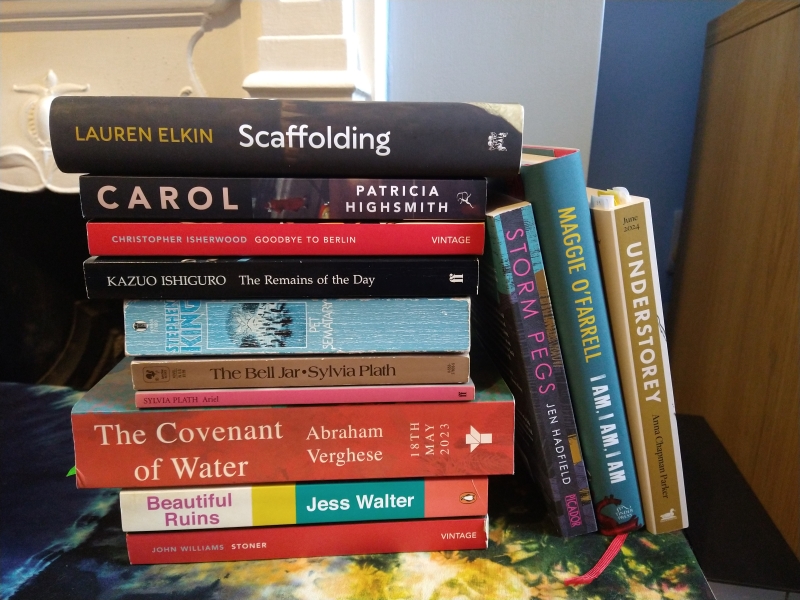
Some trivia:
- 4 were read for 20 Books of Summer (Hadfield, King, Verghese and Walter)
- 3 were rereads for book club (Ishiguro, O’Farrell and Williams) – just like last year!
- 1 was part of my McKitterick Prize judge reading (Elkin)
- 1 was read for 1952 Club (Highsmith)
- 1 was a review catch-up book (Parker)
- 1 was a book I’d been ‘reading’ since 2021 (The Bell Jar)
- The title of one (O’Farrell) was taken from another (The Bell Jar)
Fiction & Poetry
 Scaffolding by Lauren Elkin: Psychoanalysis, motherhood, and violence against women are resounding themes in this intellectual tour de force. As history repeats itself during one sweltering Paris summer, the personal and political structures undergirding the protagonists’ parallel lives come into question. This fearless, sophisticated work ponders what to salvage from the past—and what to tear down. This was our collective runner-up for the 2025 McKitterick Prize, but would have been my overall winner.
 Carol by Patricia Highsmith: Widely considered the first lesbian novel with a happy ending. Therese, a 19-year-old aspiring stage designer, meets a wealthy housewife – “Mrs. H. F. Aird” (Carol) – in a New York City department store one Christmas. When the women set off on a road trip, they’re trailed by a private detective looking for evidence against Carol in a custody battle. It’s a beautiful and subtle romance that unfolds despite the odds and shares the psychological intensity of Highsmith’s mysteries.
 Goodbye to Berlin by Christopher Isherwood: Isherwood intended for these autofiction stories to contribute to a “huge episodic novel of pre-Hitler Berlin.” Two “Berlin Diary” segments from 1930 and 1933 reveal a change in tenor accompanying the rise of Nazism. Even in lighter pieces, menace creeps in through characters’ offhand remarks about “dirty Jews” ruining the country. Famously, the longest story introduces club singer Sally Bowles. I later read Mr Norris Changes Trains as well. Witty and humane, restrained but vigilant.
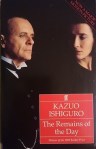 The Remains of the Day by Kazuo Ishiguro: I first read this pre-blog, back when I dutifully read Booker winners whether or not I expected to like them. I was too young then for its theme of regret over things done and left undone; I didn’t yet know that sometimes in life, it really is too late. When I reread it for February book club, it hit me hard. I wrote no review at the time (more fool me), but focused less on the political message than on the refined depiction of upper-crust English society and the brilliance of Stevens the unreliable, repressed narrator.
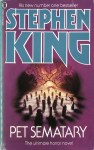 Pet Sematary by Stephen King: A dread-laced novel about how we deal with the reality of death. Is bringing the dead back a cure for grief or a horrible mistake? A sleepy Maine town harbours many cautionary tales, and the Creeds have more than their fair share of sorrow. Louis is a likable protagonist whose vortex of obsession and mental health is gripping. In the last quarter, which I read on a long train ride, I couldn’t turn the pages any faster. Sterling entertainment, but also surprisingly poignant. (And not gruesome until right towards the end.)
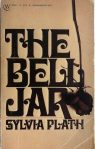
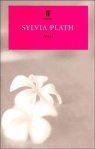 The Bell Jar & Ariel by Sylvia Plath: Given my love of mental hospital accounts, it’s a wonder I’d not read this classic work of women’s autofiction before. Esther Greenwood is the stand-in for Plath: a talented college student who, after working in New York City during the remarkable summer of 1953, plunges into mental ill health. An enduringly relevant and absorbing read. / Ariel takes no prisoners. The images and vocabulary are razor-sharp and the first and last lines or stanzas are particularly memorable.
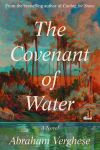 The Covenant of Water by Abraham Verghese: Wider events play out in the background (wars, partition, the fall of the caste system), but this saga sticks with one Kerala family in every generation of which someone drowns. I enjoyed the window onto St. Thomas Christianity, felt fond of all the characters, and appreciated how Verghese makes the Condition a cross between mystical curse and a diagnosable ailment. An intelligent soap opera that makes you think about storytelling, purpose and inheritance, this is extraordinary.
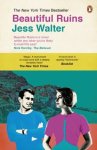 Beautiful Ruins by Jess Walter: I was captivated by the shabby glamour of Pasquale’s hotel in Porto Vergogna on the coast of northern Italy. A myriad of threads and formats – a movie pitch, a would-be Hemingway’s first chapter of a never-finished wartime opus, an excerpt from a producer’s autobiography and a play transcript – coalesce to flesh out what happened in the summer of 1962 and how the last half-century has treated all the supporting players. Warm, timeless and with great scenes, one of which had me in stitches. Fantastic.
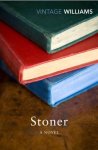 Stoner by John Williams: What a quiet masterpiece. A whole life, birth to death, with all its sadness and failure and tragedy; but also joy and resistance and dignity. One doesn’t have to do amazing things that earn the world’s accolades to find vocation and meaning. Just as powerful a second time (I first read it in 2013). I was especially struck by the power plays in Stoner’s marriage and university department, and how well Williams dissects them. It’s more about atmosphere than plot – and that melancholy tone will stay with you.
Nonfiction
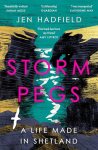 Storm Pegs by Jen Hadfield: Not a straightforward memoir but a set of atmospheric vignettes. Hadfield, a British Canadian poet, moved to Shetland in 2006 and soon found her niche. It’s a life of wild swimming, beachcombing, fresh fish, folk music, seabirds, kind neighbours, and good cheer that warms the long winter nights. After the isolation of the pandemic comes the unexpected joy of a partner and pregnancy in her mid-forties. I savoured this for its language and sense of place; it made me hanker to return to Shetland.
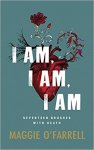 I Am, I Am, I Am: Seventeen Brushes with Death by Maggie O’Farrell: (The final book club reread.) The memoir-in-essays is a highly effective form because it focuses on themes or moments of intensity and doesn’t worry about accounting for boring intermediate material. These pieces form a vibrant picture of a life and also inspire awe at what the human body can withstand. The present tense and a smattering of second person make the work immediate and invite readers to feel their way into her situations. The last two essays are the pinnacle.
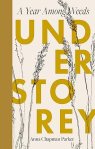 Understorey: A Year among Weeds by Anna Chapman Parker: I owe this a full review in the new year. Parker set out to study and sketch weeds as a way of cultivating attention and stillness as well as celebrating the everyday and overlooked. Daily drawings and entries bear witness to seasons changing but also to the minute alterations she observes in herself and her children. For me, this was all the more special because I’ve holidayed in Berwick-on-Tweed and could picture a lot of the ‘overgrown’ spaces she honours by making them her subjects.
What were some of your best backlist reads this year?
Three on a Theme of Sylvia Plath (The Slicks by Maggie Nelson for #NonfictionNovember & #NovNov25; The Bell Jar and Ariel)
A review copy of Maggie Nelson’s brand-new biographical essay on Sylvia Plath (and Taylor Swift) was the excuse I needed to finally finish a long-neglected paperback of The Bell Jar and also get a taste of Plath’s poetry through the posthumous collection Ariel, which is celebrating its 60th anniversary. These are the sorts of works it’s hard to believe ever didn’t exist; they feel so fully formed and part of the zeitgeist. It also boggles the mind how much Plath accomplished before her death by suicide at age 30. What I previously knew of her life mostly came from hearsay and was reinforced by Euphoria by Elin Cullhed. For the mixture of nonfiction, fiction and poetry represented below, I’m counting this towards Nonfiction November’s Book Pairings week.
The Slicks: On Sylvia Plath and Taylor Swift by Maggie Nelson (2025)
 Can young women embrace fame amidst the other cultural expectations of them? Nelson attempts to answer this question by comparing two figures who turn(ed) life into art. The link between them was strengthened by Swift titling her 2024 album The Tortured Poets Department. “Plath … serves as a metonym – as does Swift – for a woman who makes art about a broken heart,” Nelson writes. “When women make the personal public, the charge of whorishness always lurks nearby.” What women are allowed to say and do has always, it seems, attracted public commentary, and “anyone who puts their work into the world, at any level, must learn to navigate between self-protectiveness and risk, becoming harder and staying soft.”
Nelson acknowledges a major tonal difference between Plath and Swift, however. Plath longed for fame but didn’t get the chance to enjoy it; she’s the patron saint of sad-girl poetry and makes frequent reference to death, whereas Swift spotlights joy and female empowerment. It’s a shame this was out of date before it went to print; my advanced copy, at least, isn’t able to comment on Swift’s engagement and the baby rumour mill sure to follow. It would be illuminating to have an afterword in which Nelson discusses the effect of spouses’ competing fame and speculates on how motherhood might change Swift’s art.
Full confession: I’ve only ever knowingly heard one Taylor Swift song, “Anti-Hero,” on the radio in the States. (My assessment was: wordy, angsty, reasonably catchy.) Undoubtedly, I would have gotten more out of this essay were I equally familiar with the two subjects. Nonetheless, it’s fluid and well argued, and I was engaged throughout. If you’re a Swiftie as well as a literary type, you need to read this.


[66 pages]
With thanks to Vintage (Penguin) for the advanced e-copy for review.
The Bell Jar by Sylvia Plath (1963)
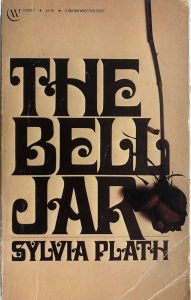 Given my love of mental hospital accounts and women’s autofiction, it’s a wonder I’d not read this before my forties. It was first published under the pseudonym “Victoria Lucas” because Plath thought it immature, “an autobiographical apprentice work which I had to write in order to free myself from the past.” Esther Greenwood is the stand-in for Plath: a talented college student who, after working in New York City during the remarkable summer of 1953, plunges into mental ill health. Chapter 13 is amazing and awful at the same time as Esther attempts suicide thrice in one day, toying with a silk bathrobe cord and ocean waves before taking 50 pills and walling herself into a corner of the cellar. She bounces between various institutional settings, undergoing electroshock therapy – the first time it’s horrible, but later, under a kind female doctor, it’s more like it’s ‘supposed’ to be: a calming reset.
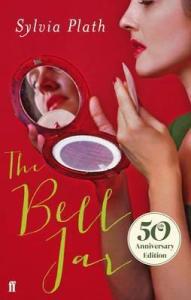 The 19-year-old is obsessed with the notion of purity. She has a couple of boyfriends but decides to look for someone else to take her virginity. Beforehand, the asylum doctor prescribes her a fitting for a diaphragm. A defiant claim to the right to contraception despite being unmarried is a way of resisting the bell jar – the rarefied prison – of motherhood. Still, Esther feels guilty about prioritizing her work over what seems like feminine duty: “Why was I so maternal and apart? Why couldn’t I dream of devoting myself to baby after fat puling baby? … I was my own woman.” Plath never reconciled parenthood with poetry. Whether that’s the fault of Ted Hughes, or the times they lived in, who can say. For her and for Esther, the hospital is a prison as well – but not so hermetic as the turmoil of her own mind. How ironic to read “I took a deep breath and listened to the old brag of my heart. I am, I am, I am” knowing that this was published just a few weeks before this literary genius ceased to be.
Apart from an unfortunate portrayal of a “negro” worker at the hospital, this was an enduringly relevant and absorbing read, a classic to sit alongside Emily Holmes Coleman’s The Shutter of Snow and Janet Frame’s Faces in the Water.
(Secondhand – it’s been in my collection so long I can’t remember where it’s from, but I’d guess a Bowie Library book sale or Wonder Book & Video / Public library – I was struggling with the small type so switched to a recent paperback and found it more readable)
Ariel by Sylvia Plath (1965)
Impossible not to read this looking for clues of her death to come:
Dying
Is an art, like everything else.
I do it exceptionally well.
(from “Lady Lazarus”)
Eternity bores me,
I never wanted it.
(from “Years”)
The woman is perfected.
Her dead
Body wears the smile of accomplishment
(from “Edge”)
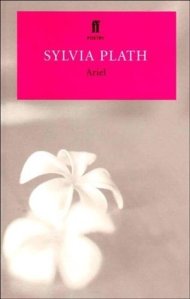 I feel incapable of saying anything fresh about this collection, which takes no prisoners. The images and vocabulary are razor-sharp. First and last lines or stanzas are particularly memorable. (“Morning Song” starts “Love set you going like a fat gold watch”; “Lady Lazarus” ends “Out of the ash / I rise with my red hair / And I eat men like air.”) Words and phrases repeat and gather power as they go. “The Applicant” mocks the obligations of a wife: “A living doll … / It can sew, it can cook. It can talk, talk, talk. … // … My boy, it’s your last resort. / Will you marry it, marry it, marry it.” I don’t know a lot about Plath’s family life, only that her father was a Polish immigrant and died after a long illness when she was eight, but there must have been some daddy issues there – after all, “Daddy” includes the barbs “Daddy, I have had to kill you” and “If I’ve killed one man, I’ve killed two— / The vampire who said he was you / And drank my blood for a year, / Seven years, if you want to know.” It ends, “Daddy, daddy, you bastard, I’m through.” Several later poems in a row, including “Stings,” incorporate bee-related imagery, and Plath’s father was an international bee expert. I can see myself reading this again and again in future, and finding her other collections, too – all but one of them posthumous. (Secondhand – RSPCA charity shop, Newbury)
All Souls’ Day Reading: Armitage, Campbell, Mah & Perry
Along with my Halloween-tide R.I.P. reading (here and here), I’ve been reading books about ancestors and the dead – appropriate for All Saints’ Day (yesterday) and All Souls’ Day (today). Both are in the Church calendar but less a part of popular culture.
My mind naturally turns toward the dead as October advances: on the 30th, it was three years since my mother’s death (plus the 25th marked a year since we started losing sweet Alfie). To allay dread at the impending anniversary, I booked myself a treat to look forward to that day. For some reason, Wantage Literary Festival included a Gin Tasting Extravaganza alongside its bookish events. I didn’t fancy any book talks but was keen to try 10 British Isles gins, 9 of which were new to me and 5 of which were ticks in my 101 Gins to Try before You Die book.


Beforehand, I did some secondhand book shopping. Regent is an excellent and enormous maze of a bookshop that I’d been to once before. It has an exhaustive selection and great prices (£2.50 paperbacks / £3–5 hardbacks) that haven’t changed in three years. I considered this return trip a chance for another birthday book haul and was delighted with my finds (the Gleeson was from a charity shop in the town).


My All Souls’ stack includes a poetry collection and three #NonfictionNovember reads.
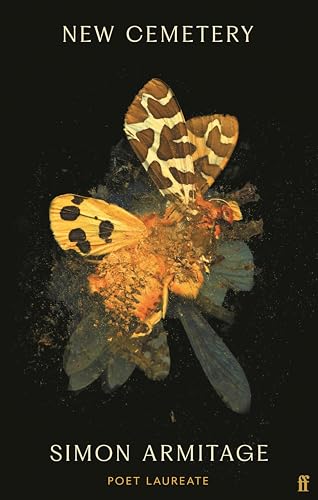
New Cemetery by Simon Armitage (2025)
Not far from the English Poet Laureate’s home in Huddersfield, some cow fields were recently converted into a municipal graveyard. I can’t do better than Armitage’s own description of the style in this collection: “short-lined tercets linked with/by intermittent rhymes and half-rhymes … like threading daisy chains.” Each one is titled in brackets after a species of moth, in a rather arbitrary way, as he acknowledges. The point was to – in a time of climate breakdown – include nature in the inevitable march of death and decay. I most liked the poems about the cemetery, whereas the majority of the book is about everyday moments from a writer’s life.
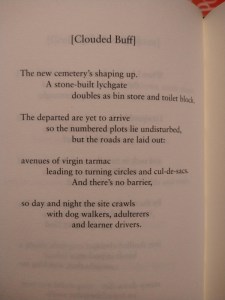
There are some amusing and poignant lines among the rest:
 I died and went
to Bristol Parkway
for my sins,
interchange
between soul and flesh
the whispered half-rhymes
of earth and death
on the spade’s tongue.
I also appreciated this haiku-like stanza: “Almond blossom / slash rotten confetti / clogging the church drains.” But there was little that struck me otherwise. I’ve tried to love Armitage’s poetry, but this third experience again leaves me unmoved. I’ve preferred his travel memoirs. Still, the book ends on the perfect note:
the dead are patiently
killing time
between visiting hours,
deaf, blind, mute
and numb,
unable to love
but capable still
of being loved.
(Public library) 
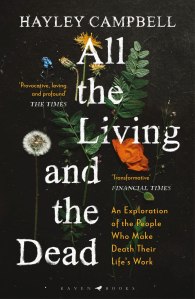 I’ve read the first two chapters of a long-neglected review copy of All the Living and the Dead by Hayley Campbell (2022), in which she shadows various individuals who work in the death industry, starting with a funeral director and the head of anatomy services for the Mayo Clinic in Minnesota. In Victorian times, corpses were stolen for medical students to practice on. These days, more people want to donate their bodies to science than can usually be accommodated. The Mayo Clinic receives upwards of 200 cadavers a year and these are the basis for many practical lessons as trainees prepare to perform surgery on the living. Campbell’s prose is journalistic, detailed and matter-of-fact, but I’m struggling with the very small type in my paperback. Upcoming chapters will consider a death mask sculptor, a trauma cleaner, a gravedigger, and more. If you’ve enjoyed Caitlin Doughty’s books, try this.
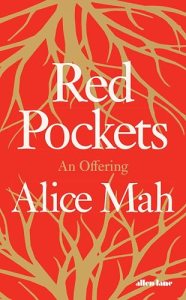 I’m halfway through Red Pockets: An Offering by Alice Mah (2025) from the library. I borrowed it because it was on the Wainwright Prize for Conservation Writing shortlist. During the Qingming Festival, the Chinese return to their hometowns to honour their ancestors. By sweeping their tombs and making offerings, they prevent the dead from coming back as hungry ghosts. When Mah, who grew up in Canada and now lives in Scotland, returns to South China with a cousin in 2017, she finds little trace of her ancestors but plenty of pollution and ecological degradation. Their grandfather wrote a memoir about his early life and immigration to Canada. In the present day, the cousins struggle to understand cultural norms such as gifting red envelopes of money to all locals. This is easy reading but slightly dull; it feels like Mah included every detail from her trips simply because she had the material, whereas memoirs need to be more selective. But I’m reminded of the works of Jessica J. Lee, which is no bad thing.
Death of an Ordinary Man by Sarah Perry (2025)
Perry recognises what a sacred privilege it was to witness her father-in-law’s death, which occurred just nine days after his diagnosis with oesophageal cancer. She concludes, like Simone de Beauvoir does of her mother in A Very Easy Death, that David’s end was as good as one might hope for. Viz., he was in his late seventies, remained at home, was looked after by his son and daughter-in-law, more or less maintained his mental capacity until the end, and showed minimal signs of pain or distress. Still, every death is fraught, to some degree, with bureaucracy, medical error and pangs of regret. There is a searing encounter here with an unfeeling GP; on the other hand, there is such kindness from nurses, relatives and a pastor.
The beauty of Perry’s memoir is its patient, clear-eyed unfolding of every stage of dying, a natural and inexorable process that in other centuries would have been familiar to anyone – having observed it with siblings, children, parents, neighbours, distant relatives and so on. She felt she was joining a specifically womanly lineage of ministering, a destiny so quotidian that she didn’t feel uncomfortable with any of the intimate care involved. I thought of my sister and her mother- and sister-in-law sitting vigil at my brother-in-law’s deathbed in 2015.
 Perry traces the physical changes in David as he moved with alarming alacrity from normal, if slowed, daily life to complete dependency to death’s door. At the same time, she is aware that this is only her own perspective on events, so she records her responses and emotional state and, to a lesser extent, her husband’s. Her quiver of allusions is perfectly chosen and she lands on just the right tone: direct but tender. Because of her and David’s shared upbringing, the points of reference are often religious, but not obtrusive. My only wish is to have gotten more of a sense of David alive. There’s a brief section on his life at the start, mirrored by a short “Afterlife” chapter at the end telling what succeeded his death. But the focus is very much on the short period of his illness and the days of his dying. During this time, he appears confused and powerless. He barely says anything beyond “I’m in a bit of a muddle,” to refer to anything from incontinence to an inability to eat. At first I thought this was infantilizing him. But I came to see it as a way of reflecting how death strips everything away.
As I read, I often had tears in my eyes, thinking of the deaths I have experienced at second hand and the many more that will come my way until my own. In this gift of a book, Perry captures the emotional poles of bearing witness, and the dignity and uniqueness of every life:
There was relief, and there was loss – it was the saddest thing we’d ever seen, and the best thing we had ever done – all these things existing together undiminished, and never cancelling each other out.
now I understand there are no ordinary lives – that every death is the end of a single event in time’s history: an event so improbable it represents a miracle, and irreplaceable in every particular.
(Public library) 
Death and grief are common topics in my stacks at all times of year. I see more books on dying and the dead in my immediate future, starting with two rereads for #NovNov – The Death of Ivan Ilych and Death in Venice, along with The Field by Robert Seethaler (narrated by the inhabitants of a cemetery), the latter two for #GermanLitMonth; and A Single Man by Christopher Isherwood.
20 Books of Summer, 13–16: Tony Chan, Jen Hadfield, Kenward Anthology, Catherine Taylor
Three from my initial list (all nonfiction) and one substitute picked up at random (poetry). These are strongly place-based selections, ranging from Sheffield to Shetland and drawing on travels while also commenting on how gender and dis/ability affect daily life as well as the experience of nature.
Four Points Fourteen Lines by Tony Chan (2016)
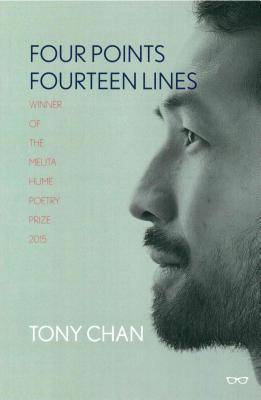 Chan is a schoolteacher who, in 2015, left his day job to undertake a 78-day solo walk between “the four extreme cardinal points of the British mainland”: Dunnet Head (North) to Ardnamurchan Point (West) in Scotland, down to Lowestoft Ness (East) in Suffolk and across to Lizard Point, Cornwall (South). It was a solo trek of 1,400 miles. He wrote one sonnet per day, not always adhering to the same rhyme scheme but fitting his sentiments into 14 lines of standard length. He doesn’t document much practical information, but does admit he stayed in decent hotels, ate hot meals, etc. Each poem is named for the starting point and destination, but the topic might be what he sees, an experience on the road, a memory, or whatever. “Evanton to Inverness” decries a gloomy city; “Inverness to Foyers” gives thanks for his shoes and lycra undershorts. He compares Highlanders to heroic Trojans: “Something sincere in their browned, moss-green tweeds, / In their greeting voice of gentle tenor. / From ancient Hector or from ancient clans, / Here live men most earnest in words and deeds.” None of the poems are laudable in their own right, but it’s a pleasant enough project. Too often, though, Chan resorts to outmoded vocabulary to fit the form or try to prove a poetic pedigree (“Suddenly comes an Old Testament of deluge and / Tempest, deluding the sense wholly”; “I know these streets, whence they come and whither / They run”; “I learnt well some verses of Tennyson / Years ago when noble dreams were begat”) when he might have been better off varying the form and/or using free verse. (Signed copy from Little Free Library)
Storm Pegs: A Life Made in Shetland by Jen Hadfield (2024)
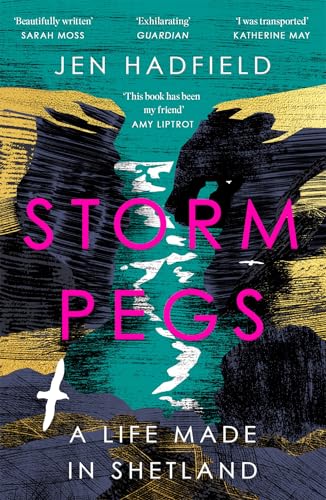 This is not so much a straightforward memoir as a set of atmospheric vignettes, each headed by a relevant word or phrase in the Shaetlan dialect. Hadfield, who is British Canadian, moved to the islands in her late twenties in 2006 and soon found her niche. “My new life quickly debunked those Edge-of-the-World myths – Shetland was too busy to feel remote, and had too strong a sense of its own identity to feel frontier-like.” It’s gently ironic, she notes, that she’s a terrible sailor and gets vertigo at height yet lives somewhere with perilous cliff edges that is often reachable only by sea. Living in a trailer waiting for her home to be built on West Burra, she feels the line between indoors and out is especially thin. It’s a life of wild swimming, beachcombing, fresh fish, folk music, seabirds, kind neighbours, and good cheer that warms long winter nights. After the isolation of the pandemic period comes the unexpected joy of a partner and a pregnancy in her mid-forties. Hadfield is a Windham-Campbell Prize-winning poet, and her lyrical prose is full of lovely observations that made me hanker to return to Shetland – it’s been 19 years since my only visit, after all. This was a slow read I savoured for its language and sense of place.
With thanks to Picador for the free paperback copy for review.
From Shetland authors, I have also reviewed:
Orchid Summer by Jon Dunn (Hadfield mentions him)
Sea Bean by Sally Huband (Hadfield meets her)
The Valley at the Centre of the World by Malachy Tallack
Moving Mountains: Writing Nature through Illness and Disability, ed. Louise Kenward (2023)
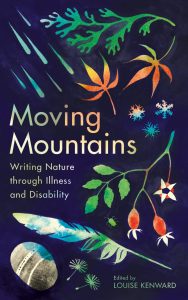 I often read memoirs about chronic illness and disability – the sort of narratives recognized by the Barbellion and ACDI Literary Prizes – and the idea of nature essays that reckon with health limitations was an irresistible draw. The quality in this anthology varies widely, from excellent to barely readable (for poor prose or pretentiousness). I’ll be kind and not name names in the latter category; I’ll only say the book has been poorly served by the editing process. The best material is generally from authors with published books: Polly Atkin (Some of Us Just Fall; see also her recent response to the Raynor Winn fiasco), Victoria Bennett (All My Wild Mothers), Sally Huband (as above!), and Abi Palmer (Sanatorium). For the first three, the essay feels like an extension of their memoir, while Palmer’s inventive piece is about recreating seasons for her indoor cats. My three favourite entries, however, were Louisa Adjoa Parker’s poem “This Is Not Just Tired,” Nic Wilson’s “A Quince in the Hand” (she’s an acquaintance through New Networks for Nature and has a memoir out this summer, Land Beneath the Waves), and Eli Clare’s “Moving Close to the Ground,” about being willing to scoot and crawl to get into nature. A number of the other pieces are repetitive, overlong or poorly shaped and don’t integrate information about illness in a natural way. Kudos to Kenward for including BIPOC and trans/queer voices, though. (Christmas gift from my wish list)
The Stirrings: Coming of Age in Northern Time by Catherine Taylor (2023)
“A typical family and an ordinary story, although neither the family nor the story seems commonplace when it is your family and your story.”
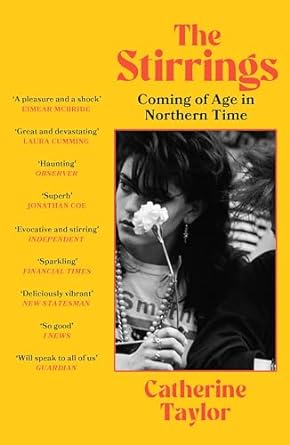 Taylor, who was born in New Zealand and grew up in Sheffield, won the Ackerley Prize for this memoir. (After Dunmore and King, this is the third in my intended four-in-a-row on the 20 Books of Summer Bingo card, fulfilling the “Book published in summer” category – August 2023.) It is bookended by two pivotal summers: 1976, the last normal season in her household before her father left; and 1989, the “Second Summer of Love,” when she had an abortion (the subject of “Milk Teeth,” the best individual chapter and a strong stand-alone essay). In between, fear and outrage overshadow her life: the Yorkshire Ripper is at large, nuclear war looms, mines are closing and protesters meet with harsh reprisals, and her own health falters until she gets a diagnosis of Graves’ disease. Then, in her final year at Cardiff, one of their housemates is found dead. Taylor draws reasonably subtle links to the present day, when fascism, global threats, and femicide are, unfortunately, as timely as ever. She’s the sort of personality I see at every London literary event I attend: Wellcome Book Prize ceremonies, Weatherglass’s Future of the Novella event, and so on. I got the feeling this book is more about bearing witness to history than revealing herself, and so I never warmed to it or to her on the page. But if you’d like to get a feel for the mood of the times, or you have experience of the settings and period, you may well enjoy it more than I did. (New purchase from Bookshop.org with a Christmas book token)
The Best Books from the First Half of 2025
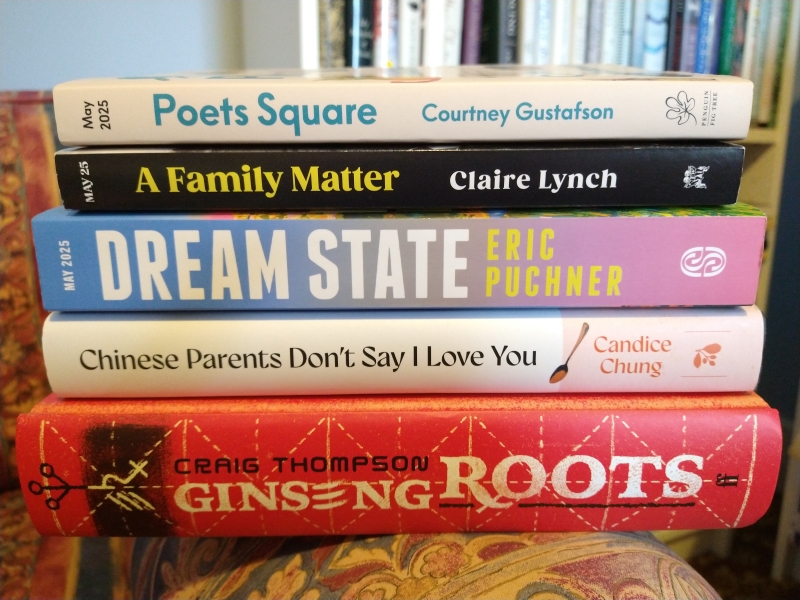
Hard to believe it, but it’s that time of year already. It’s the ninth year in a row that I’ve been making a first-half superlatives list. It remains to be seen how many of these will make it onto my overall best-of year rundown, but for now, these are my 16 favourite 2025 releases that I’ve read so far (representing the top ~21% of my current-year reading). Pictured below are the ones I read in print; all the others were e-copies. Links are to my full reviews.
Fiction
 Spent: A Comic Novel by Alison Bechdel: Alison has writer’s block and is consumed with anxiety about the state of the world. “Who can draw when the world is burning?” Then she has an idea for a book – or maybe a reality TV series – called $UM that will wean people off of capitalism. That creative journey is mirrored here. Through Alison’s ageing hippie friends and their kids, Bechdel showcases alternative ways of living. Even the throwaway phrases are hilarious. It’s a gleeful and zeitgeist-y satire, yet draws to a touching close.
 Sleep by Honor Jones: A breathtaking character study of a woman raising young daughters and facing memories of childhood abuse. Margaret’s 1990s New Jersey upbringing seems idyllic, but upper-middle-class suburbia conceals the perils of a dysfunctional family headed by a narcissistic, controlling mother. Jones crafts unforgettable, crystalline scenes. There are subtle echoes throughout as the past threatens to repeat. Reminiscent of Sarah Moss and Evie Wyld, and astonishing for its psychological acuity, this promises great things from Jones.
 Save Me, Stranger by Erika Krouse: Twelve first-person narratives voiced by people in crisis, for whom encounters with strangers tender the possibility of transformation. In the title story, the narrator is taken hostage in a convenience store hold-up. Others are set in Thailand and Japan as well as various U.S. states. Krouse focuses on young women presented with dilemmas and often eschews tidy endings, leaving characters on the brink and allowing readers to draw inferences. Fans of Danielle Evans and Lauren Groff have a treat in store.
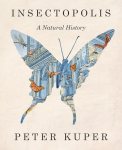 Insectopolis: A Natural History by Peter Kuper: “If insects were to vanish, the environment would collapse into chaos.” (E. O. Wilson) After an unspecified apocalypse, only insects remain. Group by group, they guide readers through an empty New York Public Library exhibit, interacting within and across species. It’s a sly blend of science, history, stories and silliness. There are interludes about insects in literature and unsung heroines of entomology. Informative and entertaining at once; what could be better? Welcome our insect overlords!
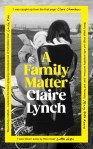 A Family Matter by Claire Lynch: In her research into UK divorce cases in the 1980s, Lynch learned that 90% of lesbian mothers lost custody of their children. Her earnest, delicate debut novel, which bounces between 2022 and 1982, imagines such a situation through close portraits of three family members. Maggie knew only that her mother, Dawn, abandoned her when she was little. Lynch’s compassion is equal for all three characters. This confident, tender story of changing mores and steadfast love is the new Carol for our times.
 Are You Happy? by Lori Ostlund: Nine short fictions form a stunning investigation into how violence and family dysfunction reverberate. “The Peeping Toms” and “The Stalker” are a knockout pair featuring Albuquerque lesbian couples under threat by male acquaintances. Characters are haunted by loss and grapple with moral dilemmas. Each story has the complexity and emotional depth of a novel. Freedom versus safety for queer people is a resonant theme in an engrossing collection ideal for Alice Munro and Edward St. Aubyn fans.
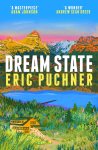 Dream State by Eric Puchner: It starts as a glistening romantic comedy about t Charlie and Cece’s chaotic wedding at a Montana lake house in summer 2004. First half the wedding party falls ill with norovirus, then the best man, Garrett, falls in love with the bride. The rest examines the fallout of this uneasy love triangle as it stretches towards 2050 and imagines a Western USA smothered in smoke from near-constant forest fires. Still, there are funny set-pieces and warm family interactions. Cross Jonathan Franzen and Maggie Shipstead.
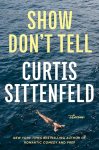 Show Don’t Tell by Curtis Sittenfeld: Sittenfeld’s second collection features characters negotiating principles and privilege in midlife. Split equally between first- and third-person perspectives, the 12 contemporary storylines spotlight everyday marital and parenting challenges. Dual timelines offer opportunities for hindsight on the events of decades ago. Nostalgic yet clear-eyed, these witty stories exploring how decisions determine the future are perfect for fans of Rebecca Makkai, Kiley Reid, and Emma Straub.
Nonfiction
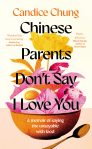 Chinese Parents Don’t Say I Love You: A memoir of saying the unsayable with food by Candice Chung: A vibrant essay collection spotlighting food and family. Chung reconnects with her semi-estranged parents by taking them along on restaurant review gigs for a Sydney newspaper. Fresh from a 13-year relationship with “the psychic reader,” she starts dating again and quickly falls in deep with “the geographer.” The essays range in time and style, delicately contrasting past and present, singleness and being partneredr.
 Poets Square: A Memoir in 30 Cats by Courtney Gustafson: Working for a food bank, trapped in a cycle of dead-end jobs and rising rents: Gustafson saw firsthand how broken systems and poverty wear people down. She’d recently started feeding and getting veterinary care for a feral cat colony in her Tucson, Arizona neighbourhood. With its radiant portraits of individual cats and its realistic perspective on personal and collective problems, this is a cathartic memoir and a probing study of building communities of care in times of hardship.
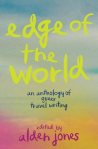 Edge of the World: An Anthology of Queer Travel Writing, ed. Alden Jones: Sixteen authors of diverse sexual orientations and genders contrast here and there and then and now as they narrate sensory memories and personal epiphanies. In these pieces, time abroad sparks clarity. There’s power in queer solidarity, whether one is in Berlin or Key West. Alex Marzano-Lesnevich’s piece is the highlight. A stellar anthology of miniature travelogues that are as illuminating about identity as they are about the places they feature.
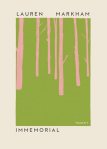 Immemorial by Lauren Markham: An outstanding book-length essay that compares language, memorials, and rituals as strategies for coping with climate anxiety and grief. The dichotomies of the physical versus the abstract and the permanent versus the ephemeral are explored. Forthright, wistful, and determined, the book treats grief as a positive, as “fuel” or a “portal.” Hope is not theoretical in this setup, but solidified in action. This is an elegant meditation on memory and impermanence in an age of climate crisis.
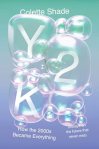 Y2K: How the 2000s Became Everything (Essays on the Future that Never Was) by Colette Shade: Shade’s debut collection contains 10 perceptive essays that contrast the promise and political pitfalls of “the Y2K Era” (1997–2008). The author recalls the thrill of early Internet use and celebrity culture. Consumerism was a fundamental doctrine but the financial crash prompted a loss of faith in progress. Outer space motifs, reality television, Smashmouth lyrics: it’s a feast of millennial nostalgia. Yet this hard-hitting work of cultural criticism, recommended to Jia Tolentino fans, reminisces only to burst bubbles.
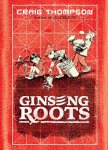 Ginseng Roots by Craig Thompson: A book about everything, by way of ginseng. It begins with Thompson’s childhood summers working on American ginseng farms with his siblings in Marathon, Wisconsin. As an adult, he travels first to Midwest ginseng farms and festivals and then through China and Korea to learn about the plant’s history, cultivation, lore, and medicinal uses. Roots are symbolic of a family story that unfolds in parallel. Both expansive and intimate, this is a surprising gem from one of the best long-form graphic storytellers.
Poetry
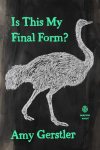 Is This My Final Form? by Amy Gerstler: This delightfully odd collection amazes with its range of voices and techniques. It leaps from surrealism to elegy as it ponders life’s unpredictability. The language of transformation is integrated throughout. Aging and the seasons are examples of everyday changes. Elsewhere, speakers fall in love with the bride of Frankenstein or turn to dinosaur urine for a wellness regimen. Monologues and sonnets recur. Alliteration plus internal and end rhymes create satisfying resonance.
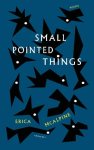 Small Pointed Things by Erica McAlpine: McAlpine’s second collection is full of flora and fauna imagery. The title phrase comes from the opening poem, “Bats and Swallows” – in the “gloaming,” it’s hard to tell the difference between the flying creatures. The verse is bursting with alliteration and end rhymes. She expands the view through conversations, theories and travel. What-ifs, consequences and regrets; mythical allusions, elegies and the concerns of motherhood. Just my sort of poetry: sweet on the ear, rooted in nature and the everyday.
Which of these grab your attention? What other 2025 releases should I catch up on?
20 Books of Summer, 1–3: Chimamanda Ngozi Adichie, Daisy Johnson & Ruth Padel
It’s been a slow start to #20BooksofSummer2025 for me, but I’ll hope to do some catching up during our Scotland holiday and then once we’re home in July. So far, I’m sticking to the list I chose last month. These first few were slightly disappointing, to be honest, but I have no doubt I’ll find some gems among my original selections.
Dream Count by Chimamanda Ngozi Adichie (2025)
This was one of my Most Anticipated books of the year and had a lot to live up to as Adichie’s first novel since the amazing Americanah. When I first attempted to read it, I was dismayed by how much it felt like a rehashing of Americanah, with Chia (a travel writer in Maryland) and her cousin Omelogor (a feminist blogger) together reminiscent of Ifemelu. It did get more readable and somewhat more interesting as it went on. But instead of finding the narration and structure natural, I ended up full of questions about what Adichie intended.
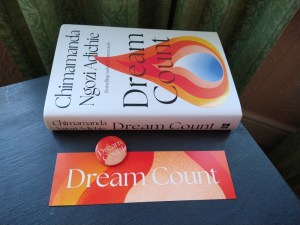
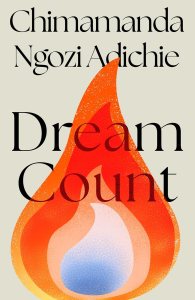 Why four main characters? Why is it the one non-Nigerian who’s poor, victimized, and less proficient in English? (That Kadiatou is based on a real person doesn’t explain enough. Her plight does at least provide what plot there is.) Why are the other three, to varying extents, rich and pretentious? Why are two narratives in the first person and two in the third person? Why in such long chunks instead of switching the POV more often? Why so many men, all of them more or less useless? (All these heterosexual relationships – so boring!) Why bring Covid into it apart from for verisimilitude? But why is the point in time important? What point is she trying to convey about pornography, the subject of Omelogor’s research?
It’s Adichie, so of course she writes solid prose with engaging characters, convincing dialogue, and provocative ideas. There’s a focus here on women’s experiences of attempted or actual motherhood (e.g., PMDD, fibroids, single parenthood or pressure to adopt), and, as per usual, a bit about race (specifically colorism, ethnic prejudice, and code-switching). But the characters’ connections seem weak, their coverage of the range of women’s experiences narrow. The title is, I suppose, the best clue to what Adichie wanted to do with the novel. Everyone dreams of finding, or preserving, love and family. Chia yearns for someone who will truly know her, and because she’s convinced this will be a romantic bond she devotes lockdown to a mental inventory of past relationships. Kadiatou dreams of peace more than of justice, and only in that she gets what she wants is there a happy ending of sorts. I wish I could be more positive, but this was a slog for me. (New purchase – Hungerford Bookshop)
The Hotel by Daisy Johnson (2024)
I’d really enjoyed Johnson’s two novels, Everything Under and Sisters, and have a copy of her previous short story collection, Fen, on the shelf. This completely passed my notice last year. I liked the idea of eerie linked short stories, but I wish I’d known this was originally written for radio as I think it accounts for how simplistic and insubstantial the 15 tales are.
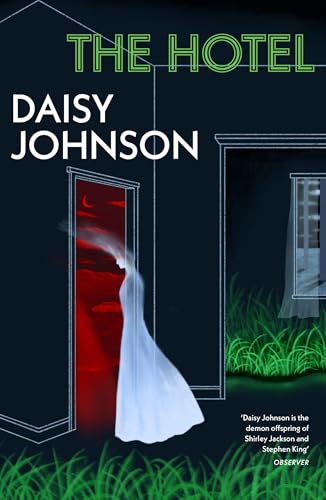 The Hotel is a fenland folly, built on the site of a pond where a suspected witch was drowned. Ever after, it is a cursed place. Those who build the hotel and stay in it are subject to violence, fear, and eruptions of the unexplained – especially if they go in Room 63. Anyone who visits once seems doomed to return. Most of the stories are in the first person, which makes sense for dramatic monologues. The speakers are guests, employees, and monsters. Some are BIPOC or queer, as if to tick off demographic boxes. Just before the Hotel burns down in 2019, it becomes the subject of an amateur student film like The Blair Witch Project.
Scary books don’t tend to work for me because I am often too aware of how they are constructed and so fail to give myself over to the reading experience and take them seriously. I can’t summon much enthusiasm for these stories, though I suppose the setting is rather atmospheric. My favourite was “Infestation,” about two girls – the one (not randomly) named Shirley – who think they discover something down in the laundry room in 1968. Only one of them makes it out alive. Okay, this one was creepy, but the rest left me unmoved. (Gift – purchased with Hungerford Bookshop with Christmas token) 
Girl by Ruth Padel (2024)
Padel is one of my favourite poets and a repeat appearance on my summer reading list; I reviewed her Emerald in 2021. I’ve read 12 of her books now. This collection is about girlhood, by way of personal history and myth.
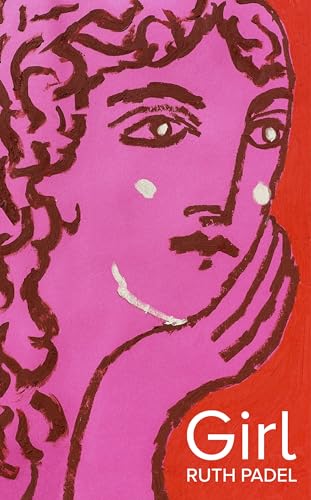 The first section, “When the Angel Comes for You,” is about the Virgin Mary, its 15 poems corresponding to the 15 Mysteries of the Rosary (as Padel explains in a note at the end; had she not, that would have gone over my head). The opening poem about the Annunciation is the most memorable its contemporary imagery emphasizing Mary’s youth and naivete: “a flood of real fear / and your heart / in the cowl-neck T-shirt from Primark / suddenly convulsed. But your old life // now seems dry as a stubbed / cigarette.” The third section, “Lady of the Labyrinth,” is about Ariadne, inspired by the snake goddess figurines in a museum on Crete. The message here is the same: “there is always the question of power / and girl is a trajectory / of learning how to deal with it”.
But the only poems that truly stood out to me are in the central autobiographical section arising from Padel’s own girlhood as well as her observations of her daughter and grandchild (setting up a Maiden–Mother–Crone triad). “Girl in a Forest” and “Tomboy and Panther” draw on the lure of the jungle to depict a wild child who chooses trousers over skirts. I loved “Fair Verona” for its traveler’s nostalgia but also for the hint of menace: so many tourists fondled the breast on a statue of Juliet that it had to be replaced. “How much touching // does it take for a bronze breast to crack?” the poet asks.
There’s some good alliteration throughout, and I warmed to the vision of girlhood as a time of promise and possibility: “the wonder / the where shall I go what new thing / will this day bring of being a girl.” Overall, though, I didn’t think the book had a lot of substance to convey about its theme. (Gift – purchased with Hungerford Bookshop with Christmas token)
Off to Scotland today. I’ve packed Ice Cream by Helen Dunmore and Pet Sematary by Stephen King from my 20 Books list, plus other books I may substitute in. I’m scheduling a few posts for while we’re away; forgive me if I don’t reply to comments until July.
Three on a Theme for Father’s Day: Holt Poetry, Filgate & Virago Anthologies
A rare second post in a day for me; I got behind with my planned cat book reviews. I happen to have had a couple of fatherhood-themed books come my way earlier this year, an essay anthology and a debut poetry collection. To make it a trio, I finished an anthology of autobiographical essays about father–daughter relationships that I’d started last year.
What My Father and I Don’t Talk About: Sixteen Writers Break the Silence, ed. Michele Filgate (2025)
This follow-up to Michele Filgate’s What My Mother and I Don’t Talk About is an anthology of 16 compassionate, nuanced essays probing the intricacies of family relationships.
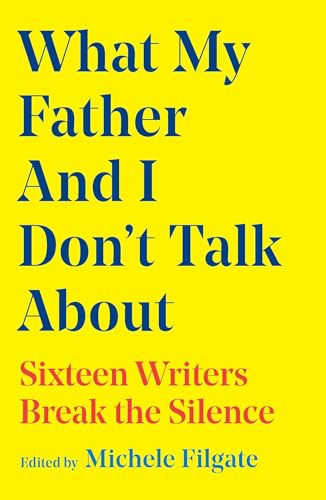 Understanding a father’s background can be the key to interpreting his later behavior. Isle McElroy had to fight for scraps of attention from their electrician father, who grew up in foster care; Susan Muaddi Darraj’s Palestinian father was sent to America to make money to send home. Such experiences might explain why the men were unreliable or demanding as adults. Patterns threaten to repeat across the generations: Andrew Altschul realizes his father’s hands-off parenting (he joked he’d changed a diaper “once”) was an outmoded convention he rejects in raising his own son; Jaquira Díaz learns that the depression she and her father battle stemmed from his tragic loss of his first family.
Some take the title brief literally: Heather Sellers dares to ask her father about his cross-dressing when she visits him in a nursing home; Nayomi Munaweera is pleased her 82-year-old father can escape his arranged marriage, but the domestic violence that went on in it remains unspoken. Tomás Q. Morín’s “Operation” has the most original structure, with the board game’s body parts serving as headings. All the essays display psychological insight, but Alex Marzano-Lesnevich’s—contrasting their father’s once-controlling nature with his elderly vulnerability—is the pinnacle.
Despite the heavy topics—estrangement, illness, emotional detachment—these candid pieces thrill with their variety and their resonant themes. (Read via Edelweiss)
Reprinted with permission from Shelf Awareness. (The above is my unedited version.)
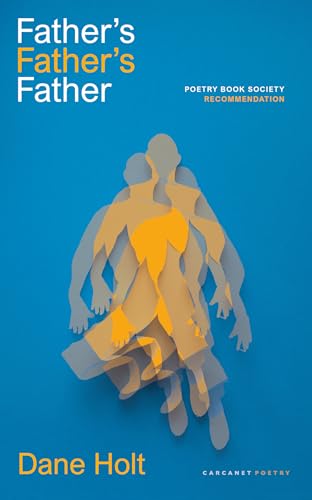
Father’s Father’s Father by Dane Holt (2025)
Holt’s debut collection interrogates masculinity through poems about bodybuilders and professional wrestlers, teenage risk-taking and family misdemeanours.
Your father’s father’s father
poisoned a beautiful horse,
that’s the story. Now you know this
you’ve opened the door marked
‘Family History’.
(from “‘The Granaries are Bursting with Meal’”)
The only records found in my grandmother’s attic
were by scorned women for scorned women
written by men.
(from “Tammy Wynette”)
He writes in the wake of the deaths of his parents, which, as W.S. Merwin observed, makes one feel, “I could do anything,” – though here the poet concludes, “The answer can be nothing.” Stylistically, the collection is more various than cohesive, with some of the late poetry as absurdist as you find in Caroline Bird’s. My favourite poem is “Humphrey Bogart,” with its vision of male toughness reinforced by previous generations’ emotional repression:
My grandfather
never told his son that he loved him.
I said this to a group of strangers
and then said, Consider this:
his son never asked to be told.
They both loved
the men Humphrey Bogart played.
…
There was
one thing my grandfather could
not forgive his son for.
Eventually it was his son’s dying, yes.
With thanks to Carcanet Press for the free e-copy for review.
Fathers: Reflections by Daughters, ed. Ursula Owen (1983; 1994)
“I doubt if my father will ever lose his power to wound me, and yet…”
~Eileen Fairweather
I read the introduction and first seven pieces (one of them a retelling of a fairy tale) last year and reviewed that first batch here. Some common elements I noted in those were service in a world war, Freudian interpretation, and the alignment of the father with God. The writers often depicted their fathers as unknown, aloof, or as disciplinarians. In the remainder of the book, I particularly noted differences in generations and class. Father and daughter are often separated by 40–55 years. The men work in industry; their daughters turn to academia. Her embrace of radicalism or feminism can alienate a man of conservative mores.
 Sometimes a father is defined by his emotional or literal absence. Dinah Brooke addresses her late father directly: “Obsessed with you for years, but blind – seeing only the huge holes you had left in my life, and not you at all. … I did so want someone to be a father to me. You did the best you could. It wasn’t a lot. The desire was there, but the execution was feeble.” Had Mary Gordon been tempted to romanticize her father, who died when she was seven, that aim was shattered when she learned how much he’d lied about and read his reactionary and ironically antisemitic writings (given that he was a Jew who converted to Catholicism).
I mostly skipped over the quotes from novels and academic works printed between the essays. There are solid pieces by Adrienne Rich, Michèle Roberts, Sheila Rowbotham, and Alice Walker, but Alice Munro knocks all the other contributors into a cocked hat with “Working for a Living,” which is as detailed and psychologically incisive as one of her stories (cf. The Beggar Maid with its urban/rural class divide). Her parents owned a fox farm but, as it failed, her father took a job as night watchman at a factory. She didn’t realize, until one day when she went in person to deliver a message, that he was a janitor there as well.
This was a rewarding collection to read and I will keep it around for models of autobiographical writing, but it now feels like a period piece: the fact that so many of the fathers had lived through the world wars, I think, might account for their cold and withdrawn nature – they were damaged, times were tough, and they believed they had to be an authority figure. Things have changed, somewhat, as the Filgate anthology reflects, though father issues will no doubt always be with us. (Secondhand – National Trust bookshop)
Spring Reading: Simon Barnes, Jackie Kay, and Michael Morpurgo
With all the roses in full bloom and the swifts back and nesting in the corner of our eaves, it’s been feeling more like summer than high spring as we approach the end of May. I didn’t amass many spring-themed books this year, but managed to piece together the below trio of library books. They feel quite England- (and Scotland-) specific; I wonder how well these authors are known outside the UK. All:
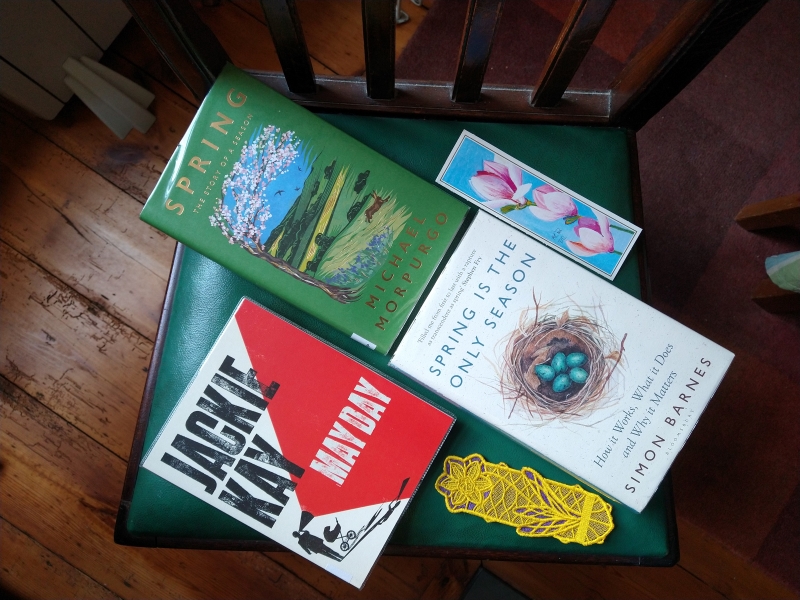
May Day by Jackie Kay (2024)
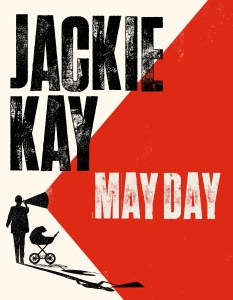 May Day is a traditional celebration for the first day of May, but it’s also a distress signal – as the megaphone and stark font on the cover reflect. Aptly, there are joyful verses as well as calls to arms here. Kay devotes poems to several of her role models, such as Harry Belafonte, Paul Robeson, Peggy Seeger and Nina Simone. But the real heroes of the book are her late parents, who were very politically active, standing up for workers’ rights and socialist values. Kay followed in their footsteps as a staunch attendee of protests. Her mother’s death during the Covid pandemic looms large. There is a touching triptych set on Mother’s Day in three consecutive years; even though her mum is gone for the last two, Kay still talks to her. Certain birds and songs will always remind her of her mum, and “Grief as Protest” links past and future. The bereavement theme resonated with me, but much of the rest made no mark (especially not the poems in dialect) and I don’t find much to admire poetically. I love Kay’s memoir, Red Dust Road, which has been among our most popular book club reads so far, but I’ve not particularly warmed to her poetry despite having read four collections now.
Spring: The Story of a Season by Michael Morpurgo (2025)
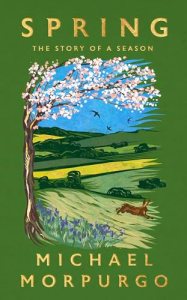 I’d not read Morpurgo before. He’s known primarily as a children’s author; if you’ve heard of one of his works, it will likely be War Horse, which became a play and then a film. This is a small hardback, scarcely 150 pages and with not many words to a page, plus woodcut illustrations interspersed. As revered English nature authors such as John Lewis-Stempel and Richard Mabey have also done, he depicts a typical season through a diary of several months of life on his land. For nearly 50 years, his Devon farm has hosted the Farms for City Children charity he founded. He believes urban living cuts people off from the rhythm of the seasons and from nature generally; “For so many reasons, for our wellbeing, for the planet, we need to revive that connection.” Now in his eighties, he lives with his wife in a small cottage and leaves much of the day-to-day work like lambing to others. But he still loves observing farm tasks and spotting wildlife (notably, an otter and a kingfisher) on his walks. This is a pleasant but inconsequential book. I most appreciated how it captures the feeling of seasonal anticipation – wondering when the weather will turn, when that first swallow will return.
And a skim:
Spring Is the Only Season: How It Works, What It Does, and Why It Matters by Simon Barnes (2025)
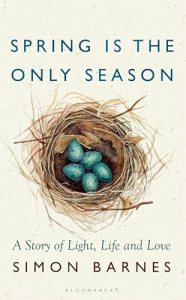 This 400+-page tome has an impressive scope. Like Mark Cocker does in One Midsummer’s Day, Barnes retreats all the way back to the Big Bang and then slowly zooms in, via the evolution of plants and the phenology of birds and insects. He also covers every possible topic you could think of relating to spring: religious festivals, mythology, literature, art, farming, and so on. Had I never read another book on spring, perhaps I would find this compendium satisfying, but it is rather meandering and too many of its points of reference are familiar. Moreover, the overall project is too similar to Tim Dee’s extraordinary Greenery. Alas, Barnes isn’t half the writer Dee is, so this ends up being a rather workmanlike survey. I most enjoyed the chapter-ending “Signs of Spring” lists from his Norfolk home. These more than illustrate how seasonality has gone awry due to climate change; a whole chapter wasn’t necessary to spell it out.
April Releases by Chung, Ellis, Gaige, Lutz, McAlpine and Rubin
April felt like a crowded publishing month, though May looks to be twice as busy again. Adding this batch to my existing responses to books by Jean Hannah Edelstein & Emily Jungmin Yoon plus Richard Scott, I reviewed nine April releases. Today I’m featuring a real mix of books by women, starting with two foodie family memoirs, moving through a suspenseful novel about a lost hiker, a sparse Scandinavian novella, and a lovely poetry collection with themes of nature and family, and finishing up with a collection of aphorisms. I challenged myself to write just a paragraph on each for simplicity and readability.

Chinese Parents Don’t Say I Love You: A memoir of saying the unsayable with food by Candice Chung
“to love is to gamble, sometimes gastrointestinally … The stomach is a simple animal. But how do we settle the heart—a flailing, skittish thing?”
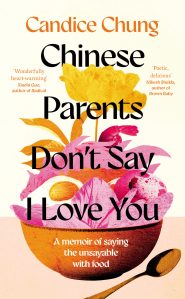 I got Caroline Eden (Cold Kitchen) and Nina Mingya Powles (Tiny Moons) vibes from this vibrant essay collection spotlighting food and family. The focus is on 2019–2021, a time of huge changes for Chung. She’s from Hong Kong via Australia, and reconnects with her semi-estranged parents by taking them along on restaurant review gigs for a Sydney newspaper. Fresh from a 13-year relationship with “the psychic reader,” she starts dating again and quickly falls in deep with “the geographer.” Sharing meals in restaurants and at home kindles closeness and keeps their spirits up after Covid restrictions descend. But when he gets a job offer in Scotland, they have to make decisions about their relationship sooner than intended. Although there is a chronological through line, the essays range in time and style, including second-person advice column (“Faux Pas”) and choose-your-own adventure (“Self-Help Meal”) segments alongside lists, message threads and quotes from the likes of Deborah Levy. My favourite piece was “The Soup at the End of the Universe.” Chung delicately contrasts past and present, singleness and being partnered, and different mental health states. The essays meld to capture a life in transition and the tastes and bonds that don’t alter.
With thanks to Elliott & Thompson for the free copy for review.
Chopping Onions on My Heart: On Losing and Preserving Culture by Samantha Ellis
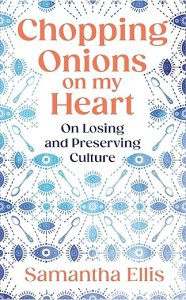 Ellis was distressed to learn that her refugee parents’ first language, Judeo-Iraqi Arabic, is in danger of extinction. Her own knowledge of it is piecemeal, mostly confined to its colourful food-inspired sayings – for example, living “eeyam al babenjan (in the days of the aubergines)” means that everything feels febrile and topsy-turvy. She recounts her family’s history with conflict and displacement, takes a Zoom language class, and ponders what words, dishes, and objects she would save on an imaginary “ark” that she hopes to bequeath to her son. Along the way, she reveals surprising facts about Ashkenazi domination of the Jewish narrative. “Did you know the poet [Siegfried Sassoon] was an Iraqi Jew?” His great-grandfather even invented a special variety of mango pickle. All of the foods described sound delicious, and some recipes are given. Ellis’s writing is enthusiastic and she braids the book’s various strands effectively. I wasn’t as interested in the niche history as I wanted to be, but I did appreciate learning about an endangered culture and language.
With thanks to Chatto & Windus (Vintage/Penguin) for the proof copy for review.
Heartwood by Amity Gaige
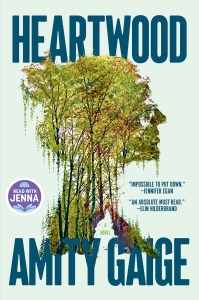 This was on my Most Anticipated list after how much I’d enjoyed Sea Wife when we read it for Literary Wives club. In July 2022, 42-year-old nurse Valerie Gillis, nicknamed “Sparrow,” goes missing in the Maine woods while hiking the Appalachian Trail. An increasingly desperate search ensues as the chances of finding her alive diminish with each day. The shifting formats – letters, transcripts, news reports, tip line messages – hold the interest. However, the chapters voiced by Lt. Bev, the warden who heads the mission, are much the most engaging, and it’s a shame that her delightful interactions with her sisters and nieces are so few and come so late. The third-person passages about Lena Kucharski in her Connecticut retirement home are intriguing but somehow feel like they belong in a different book. Gaige attempts to bring the threads together through three mother–daughter pairs, which struck me as heavy-handed. Mostly, this hits the sweet spot between mystery and literary fiction (apart from some red herrings), but because I wasn’t particularly invested in the characters, even Valerie, this fell a little short of my expectations. (Read via Edelweiss)
Wild Boar by Hannah Lutz (2016; 2025)
[Translated from Swedish by Andy Turner]
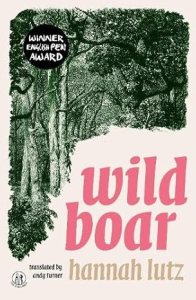 “I have seen them, the wild boar, they have found their way into my dreams!” Ritve travels from Finland to the forests of southern Sweden to track the creatures. Glenn, who appraises project applications for the council, has boar wander onto his property in the middle of the night. Mia, recipient of a council grant for her Recollections of a Sigga Child proposal, brings her ailing grandfather to record his memories for the local sound archive. As midsummer approaches, these three characters plus a couple of their partners will have encounters with the boar and with each other. Short sections alternate between their first-person perspectives. There is a strong sense of place and how migration poses challenges for both the human and more-than-human worlds. But it’s over before it begins. I found myself frustrated by how little happens, how stingily the characters reveal themselves, and how the boar, ultimately, are no more than a metaphor or plot device – a frequent complaint of mine when animals are central to a narrative. This might appeal to fans of Melissa Harrison’s fiction. In any case, I congratulate The Emma Press on their first novel, which won an English PEN Award.
With thanks to The Emma Press for the free copy for review.
Small Pointed Things by Erica McAlpine
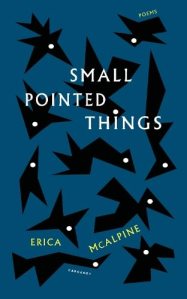 McAlpine is an associate professor of English at Oxford. Her second poetry collection is full of flora and fauna imagery. The title phrase comes from the opening poem, “Bats and Swallows” – in the “gloaming,” it’s hard to tell the difference between the flying creatures. The verse is bursting with alliteration and end rhymes, as just this first one shows (emphasis mine): “we couldn’t see / from where we stood in soft shadows / any signs that they were swallows // or bats”; “One seemed almost iridescent / as I tried to track / its crescent / flight across the hill.” Other poems consider moths, manatees, bees, swans and ladybirds; snowdrops and a cedar tree. Part II expands the view through conversations, theories and travel. What-ifs, consequences and regrets seep in. Parts III and IV incorporate mythical allusions, elegies and the concerns of motherhood. Sometimes the rhyme scheme adheres to a particular form. For instance, I loved “Triolet on My Mother’s 74th Birthday” – “You cannot imagine one season in another. … You cannot imagine life without your mother.” This is just my sort of poetry, sweet on the ear and rooted in nature and the everyday. A sample poem:
“Clementines”
New Year’s Day – another turning
of the sphere, with all we planned
in yesteryear as close to hand
as last night’s coals left unmanned
in the fire, still orange and burning.
It is the season for clementines
and citrus from Seville
and whatever brightness carries us until
leaves and petals once more fill
the treetops and the vines.
If ever you were to confess
some cold truth about love’s
dwindling, now would be the time – less
in order for things to improve
than for the half-bitter happiness
of peeling rinds
during mid-winter
recalling days that are behind
us and doors we cannot re-enter
and other doors we couldn’t find.
With thanks to Carcanet Press for the advanced e-copy for review.
Secrets of Adulthood: Simple Truths for Our Complex Lives by Gretchen Rubin
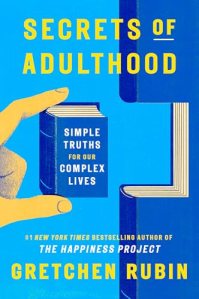 Rubin is one of the best self-help authors out there: Her books are practical, well-researched and genuinely helpful. She understands human nature and targets her strategies to suit different personality types. If you know her work, you’re likely aware of her fondness for aphorisms. “Sometimes, a single sentence can provide all the insight we need,” she believes. Here she collects her own pithy sayings relating to happiness, self-knowledge, relationships, work, creativity and decision-making. Some of the aphorisms were familiar to me through her previous books or her social media. They’re straightforward and sensible, distilling down to a few words truths we might be aware of but hadn’t truly absorbed. Like the great aphorists throughout history, Rubin relishes alliteration, repetition and contrasts. Some examples:
Accept yourself, and expect more from yourself.
I admire nature, and I am also nature. I resent traffic, and I am also traffic.
Work is the play of adulthood. If we’re not failing, we’re not trying hard enough.
Don’t wait until you have more free time. You may never have more free time.
This is not as meaty as her other work, and some parts feel redundant, but that’s the nature of the project. It would make a good bedside book for nibbles of inspiration. (Read via Edelweiss)
Which of these appeal to you?
Poetry Month Reviews & Interview: Amy Gerstler, Richard Scott, Etc.
April is National Poetry Month in the USA, and I was delighted to have several of my reviews plus an interview featured in a special poetry issue of Shelf Awareness on Friday. I’ve also recently read Richard Scott’s second collection.
Wrong Winds by Ahmad Almallah
Palestinian poet Ahmad Almallah’s razor-sharp third collection bears witness to the devastation of Gaza.
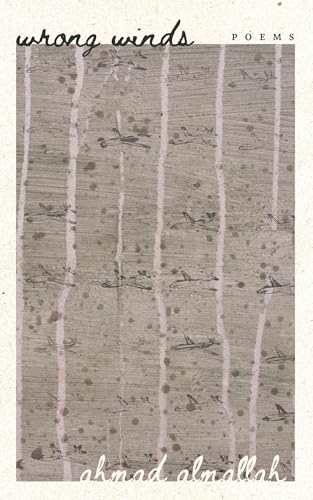 Through allusions, Almallah participates in an ancient lineage of poets, opening the collection with an homage to Al-Shanfarā and ending with “A Lament” for Zbigniew Herbert. Federico García Lorca is also a major influence. Occasional snippets of Arabic, French, and German, and accounts of travels in Berlin and Granada, reveal a cosmopolitan background. The speaker in “Loose Strings” considers exile, engaged in the potentially futile search for a homeland that is being destroyed: “What does it mean to be a poet, another ‘Homer’/ going home? Trying to find one?”
Tonally, anger and grief alternate, while alliteration and slant rhymes (sweat/sweet) create entrancing rhythms. In “Before Gaza, a Fall” and “My Tongue Is Tied Up Today,” staccato phrasing and spaced-out stanzas leave room for the unspeakable. The pièce de résistance is “A Holy Land, Wasted” (co-written with Huda Fakhreddine), which situates T.S. Eliot’s existential ruin in Palestine. Almallah contrasts Gaza then and now via childhood memories and adult experiences at checkpoints. His pastiche of “The Waste Land” starts off funny (“April is not that bad actually”) but quickly darkens, scorning those who turn away from tragedy: “It’s not good/ for your nerves to watch/ all that news, the sights/ of dead children.” The wordplay dazzles again here: “to motes the world crumbles, shattered/ like these useless mots.”
For Almallah, who now lives in Philadelphia, Gaza is elusive, enduringly potent—and mourned. Sometimes earnest, sometimes jaded, Wrong Winds is a remarkable memorial. 
Is This My Final Form? by Amy Gerstler
 Amy Gerstler’s exceptional book of poetry leaps from surrealism to elegy as it ponders life’s unpredictability.
The language of transformation is integrated throughout. Aging and the seasons are examples of everyday changes. “As Winter Sets In” delivers “every day/ a new face you can’t renounce or forsake.” “When I was a bird,” with its interspecies metamorphoses, introduces a more fantastical concept: “I once observed a scurry of squirrels,/ concealed in a hollow tree, wearing seventeenth/ century clothes. Alas, no one believes me.” Elsewhere, speakers fall in love with the bride of Frankenstein or turn to dinosaur urine for a wellness regimen.
The collection contains five thematic slices. Part I spotlights women behaving badly (such as “Marigold,” about a wild friend; and “Mae West Sonnet,” in an hourglass shape); Part II focuses on music and sound. The third section veers from the inherited grief of “Schmaltz Alert” to the miniplay “Siren Island,” a tragicomic Shakespearean pastiche. Part IV spins elegies for lives and works cut short. The final subset includes a tongue-in-cheek account of pandemic lockdown activities (“The Cure”) and wry advice for coping (“Wound Care Instructions”).
Monologues and sonnets recur—the title’s “form” refers to poetic structures as much as to personal identity. Alliteration plus internal and end rhymes create satisfying resonance. In the closing poem, “Night Herons,” nature puts life into perspective: “the whir of wings/ real or imagined/ blurs trivial things.”
This delightfully odd collection amazes with its range of voices and techniques.
I also had the chance to interview Amy Gerstler, whose work was new to me. (I’ll certainly be reading more!) We chatted about animals, poetic forms and tone, Covid, the Los Angeles fires, and women behaving ‘badly’. 
Little Mercy by Robin Walter
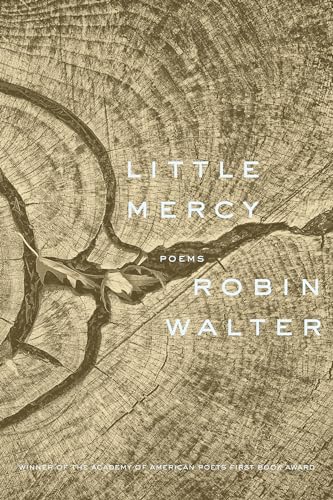 In Robin Walter’s refined debut collection, nature and language are saving graces.
Many of Walter’s poems are as economical as haiku. “Lilies” entrances with its brief lines, alliteration, and sibilance: “Come/ dark, white/ petals// pull/close// —small fists// of night—.” A poem’s title often leads directly into the text: “Here” continues “the body, yes,/ sometimes// a river—little/ mercy.” Vocabulary and imagery reverberate, as the blessings of morning sunshine and a snow-covered meadow salve an unquiet soul (“how often, really, I want/ to end my life”).
Frequent dashes suggest affinity with Emily Dickinson, whose trademark themes of loss, nature, and loneliness are ubiquitous here, too. Vistas of the American West are a backdrop for pronghorn antelope, timothy grass, and especially the wrens nesting in Walter’s porch. Animals are also seen in peril sometimes: the family dog her father kicked in anger or a roadkilled fox she encounters. Despite the occasional fragility of the natural world, the speaker is “held by” it and granted “kinship” with its creatures. (How appropriate, she writes, that her mother named her for a bird.)
The collection skillfully illustrates how language arises from nature (“while picking raspberries/ yesterday I wanted to hold in my head// the delicious names of the things I saw/ so as to fold them into a poem later”—a lovely internal rhyme) and becomes a memorial: “Here, on earth,/ we honor our dead// by holding their names/ gentle in our hollow mouths—.”
This poised, place-saturated collection illuminates life’s little mercies.
The three reviews above are posted with permission from Shelf Awareness.
That Broke into Shining Crystals by Richard Scott
 I’ve never forgotten how powerful it was to hear Richard Scott read aloud from his forthcoming collection, Soho, at the Faber Spring Party in February 2018. Back then I called his work “amazingly intimate,” and that is true of this second collection as well.
It also mirrors his debut in that the book is in several discrete sections – like movements of a musical composition – and there are extended allusions to particular poets (there, Paul Verlaine and Walt Whitman; here, Andrew Marvell and Arthur Rimbaud). But there is one overall theme, and it’s a tough one: Scott’s boyhood grooming and molestation by a male adult, and how the trauma continues to affect him.
Part I contains 21 “Still Life” poems based on particular paintings, mostly by Dutch or French artists (see the Notes at the end for details). I preferred to read the poems blind so that I didn’t have the visual inspiration in my head. The imagery is startlingly erotic: the collection opens with “Like a foreskin being pulled back, the damask / reveals – pelvic bowl of pink-fringed shadow” (“Still Life with Rose”) and “Still Life with Bananas” starts “curved like dicks they sit – cosy in wicker – an orgy / of total yellowness – all plenty and arching – beyond / erect – a basketful of morning sex and sugar and sunlight”.
“O I should have been the / snail,” the poet laments; “Living phallus that can hide when threatened. But / I’m the oyster. … Cold jelly mess of a / boy shucked wide open.” The still life format allows him to freeze himself at particular moments of abuse or personal growth; “still” can refer to his passivity then as well as to his ongoing struggle with PTSD.
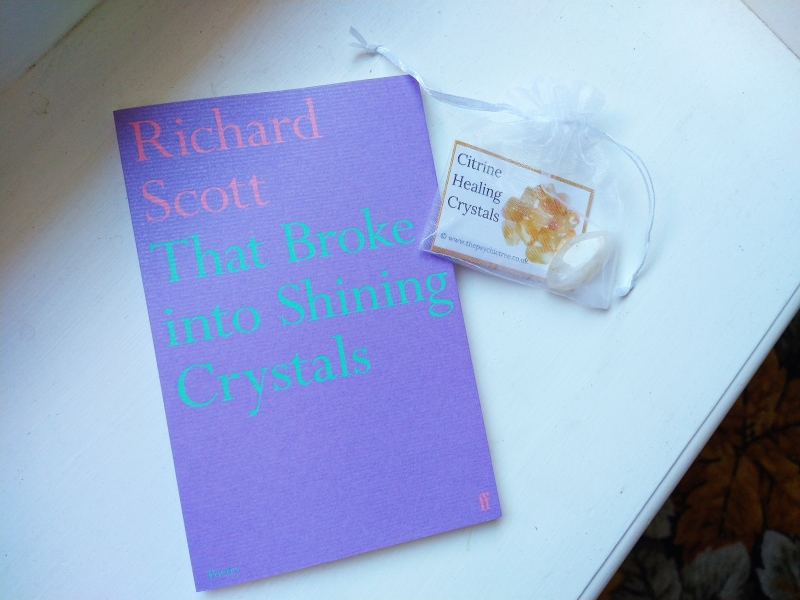
Part II, “Coy,” is what Scott calls a found poem or “vocabularyclept,” rearranging the words from Marvell’s 1681 “To His Coy Mistress” into 21 stanzas. The constraint means the phrases are not always grammatical, and the section as a whole is quite repetitive.
The title of the book (and of its final section) comes from Rimbaud and, according to the Notes, the 22 poems “all speak back to Arthur Rimbaud’s Illuminations but through the prism of various crystals and semi-precious stones – and their geological and healing properties.” My lack of familiarity with Rimbaud and his circle made me wonder if I was missing something, yet I thrilled to how visual the poems in this section were.
As with the Still Lifes, there’s an elevated vocabulary, forming a rich panoply of plants, creatures, stones, and colours. Alliteration features prominently throughout, as in “Citrine”: “O citrine – patron saint of the molested, sunny eliminator – crown us with your polychromatic glittering and awe-flecks. Offer abundance to those of us quarried. A boy is igneous.”
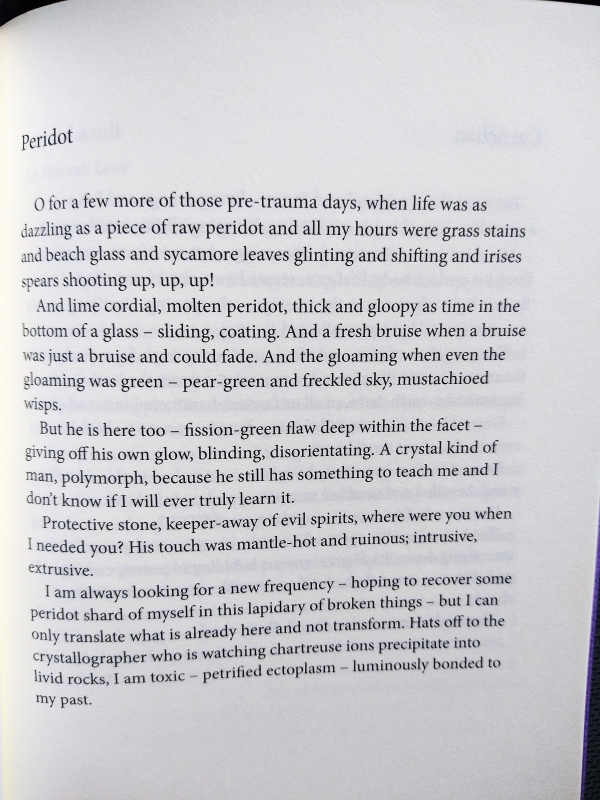
I’ve photographed “Peridot” (which was my mother’s birthstone) as an example of the before-and-after setup, the gorgeous language including alliteration, the rhetorical questioning, and the longing for lost innocence.
It was surprising to me that Scott refers to molestation and trauma so often by name, rather than being more elliptical – as poetry would allow. Though I admire this collection, my warmth towards it ebbed and flowed: I loved the first section; felt alienated by the second; and then found the third rather too much of a good thing. Perhaps encountering Part I or III as a chapbook would have been more effective. As it is, I didn’t feel the sections fully meshed, and the theme loses energy the more obsessively it’s repeated. Nonetheless, I’d recommend it to readers of Mark Doty, Andrew McMillan and Brandon Taylor.
Published today. With thanks to Faber for the free copy for review. An abridged version of this review first appeared in my Instagram post of 11 April.
Read any good poetry recently?
 Bookish Beck = Rebecca Foster. American transplant to England. Freelance proofreader and book reviewer.
 Bookish Beck