Literary Fiction Book Tag
Thanks to the Lauras (Reading in Bed and Dr Laura Tisdall) for making me aware of this tag that is also going around on BookTube. Laura F. specifically tagged me. If you haven’t already taken part and think this looks like fun, why not give it a try? For my examples I’ve chosen books I read this year or last year.
- How do you define literary fiction?
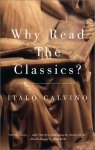 My inclination is to adapt one of Italo Calvino’s definitions of a classic (recapped here): a book that will never finish saying all it has to say. In other words, a perennially relevant work that speaks to the human condition. Obviously, not all literary fiction can live up to that standard; some will inevitably feel dated due to its setting, slang, technology, and so on. But at its best, literary fiction voices, and makes an attempt at answering, one or more of life’s biggest questions. As Laura F. says, this generally means that it lends itself to discussion and (re)interpretation. I know I can be an awful snob about genre fiction, but I avoid crime, science fiction, etc. because I find these genres less ‘serious’ and thus less worthwhile than literary fiction.
- Name a literary fiction novel with a superb character study.
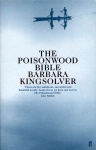
The first novel that comes to mind here is The Poisonwood Bible, which would be a suitable answer for several of these categories but on rereading struck me most for how well developed its five main characters are. Barbara Kingsolver does an impressive job of distinguishing these multiple narrators from each other based on how they speak/write.
- Name a literary fiction novel that has experimental or unique writing.
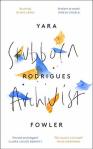 One of the fiction highlights of 2019 so far for me is Stubborn Archivist by Yara Rodrigues Fowler. It stands out from the autofiction field due to its placement of words. Some pages contain just a few lines, or a single short paragraph that reads like a prose poem. Even in the more conventional sections, a lack of punctuation creates a breathless, run-on pace.
- Name a literary fiction novel with an interesting structure.
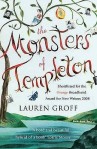 In The Monsters of Templeton, Lauren Groff’s debut novel, Willie Upton is back in her hometown in upstate New York, partway through a PhD and pregnant by her married professor. We hear from various leading lights in the town’s history and/or Willie’s family tree through a series of first-person narratives, letters and other documents.
- Name a literary fiction novel that explores social themes.
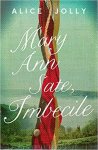 Mary Ann Sate, Imbecile by Alice Jolly, which I reviewed for Nudge, is written entirely in verse and narrated in dialect by an unlearned servant from a cloth mill town in Gloucestershire. With unemployment rising amid the clamor for universal male suffrage, the scene is set for a climactic clash between the common people and the landowning class.
- Name a literary fiction novel that explores the human condition.
 John Steinbeck’s East of Eden has an overarching theme of good and evil as it plays out in families and in individual souls. This weighty material – openly addressed in theological and philosophical terms in the course of the novel – is couched in something of a family saga that follows several generations of the Trasks and the Hamiltons.
- Name a brilliant literary-hybrid genre novel.
 The Sparrow by Mary Doria Russell is a rare sci-fi novel that I loved wholeheartedly. Set on a near-future Jesuit mission to the two alien species on a distant planet, it is about the possibility of believing in God, and doing good works in His name, when suffering seems to be the only result. (See also: The Book of Strange New Things by Michel Faber.)
- What genre do you wish was mixed with literary fiction more?
 I’ve always felt that Maggie O’Farrell expertly straddles the line between literary and women’s fiction; her books are addictively readable but also hold up to critical scrutiny. Her best is The Hand that First Held Mine, but everything I’ve read by her is wonderful. I’d happily read more books like hers. (Expectation by Anna Hope was slightly less successful.)
A Week in Italy and What I Read
We’re relieved to be back in the balmy UK after a sweltering week in northern Italy. Though our sixth-floor Airbnb apartment in Milan suited our needs perfectly, it was a challenge to keep it minimally comfortable. Eventually we worked out that it was essential to get up by 6:30 a.m. to close the balcony doors and shutter. The bedroom happened to be shaded, so I could set up my laptop in there and work until noon, when it was time to close out the heat of the day on that side. In the afternoons I read and napped on the divan, and then sometime between 6 and 10 p.m., depending on how sunny it had been during the day, we could fling the windows and doors wide open again. Fans helped, but we still passed some horribly muggy nights.


My husband was at his conference for four of the days, so we only braved the city centre itself on Monday morning, touring the Duomo and climbing the steps to the roof. This was well worth doing for views over the city. Afterwards we walked through the associated museum (mostly underground, and blissfully cool with air conditioning) and Galleria Vittorio Emanuele II, a luxurious nineteenth-century shopping arcade filled with designer fashions.


Two day trips by train got us out of the city and into slightly cooler temperatures: on Wednesday we explored Varenna and Bellagio on Lake Como, and on Saturday we took a bus and cable car from Lecco into the mountains at Piani d’Erna. We took full advantage of one-euro espressos and glasses of wine, and ate lots of pizza, pasta and gelato.

After much deliberation, this is the book stack I actually packed for our trip. I got through the first half of the Orwell, an excellent account of working as a dishwasher in Paris hotels and having to scrape together enough money to ward off starvation. I’ll be writing it up as my Classic of the Month in a couple of weeks. I also read Sunburn by Laura Lippman, which I’ll hold in reserve for a summer-themed post, and (on Kindle) So Many Rooms by Laura Scott, a debut poetry collection coming out in October that I’ll review here at a later date.
Two of my other Kindle reads ended up being perfect for the setting:
From Scratch: A Memoir of Love, Sicily, and Finding Home by Tembi Locke: This was the perfect book for me to read during the week in Italy. Not only is it set largely in Sicily, but it ticks a lot of boxes in terms of my reading interests: food, travel, bereavement, and the challenges of being an American overseas. During a semester abroad in Florence, Locke (an actress I was previously unfamiliar with) met and fell in love with Saro Gullo, an Italian chef. His parents could hardly accept him marrying someone from outside of Sicily, let alone a black woman from Texas, and refused to attend their wedding. But as the years passed they softened towards Locke, who gradually became accepted in Saro’s hometown of Aliminusa.
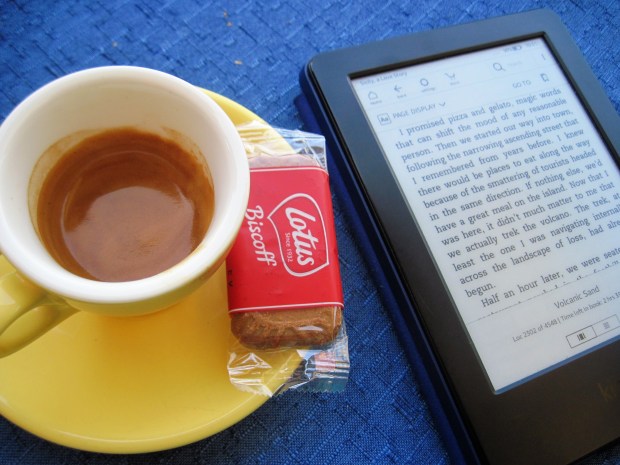
In fact, after Saro’s death from bone cancer in 2012, she became like a second daughter to Saro’s mother. The book focuses on the three summers in a row when she and her adopted daughter Zoela traveled to the family home in Sicily to stay with Nonna. I particularly appreciated the exploration of what it’s like to live between countries and cultures. This is one of three Reese Witherspoon book club books I’ve read so far (along with Where the Crawdads Sing and Daisy Jones and the Six), and all have been great – Reese’s recommendations are proving as reliable as Oprah’s. 
 A mudslide blocked the route we should have taken back from Milan to Paris, so we rebooked onto trains via Switzerland. This plus the sub-Alpine setting for our next-to-last day made the perfect context for racing through Where the Hornbeam Grows: A Journey in Search of a Garden by Beth Lynch in just two days. Lynch moved from England to Switzerland when her husband took a job in Zurich. Suddenly she had to navigate daily life, including frosty locals and convoluted bureaucracy, in a second language. The sense of displacement was exacerbated by her lack of access to a garden. Gardening had always been a whole-family passion, and after her parents’ death their Sussex garden was lost to her. Two years later she and her husband moved to a cottage in western Switzerland and cultivated a garden idyll, but it wasn’t enough to neutralize their loneliness.
Much of what Lynch has to say about trying to find genuine connections as an expatriate rang true for me. Paradise Lost provides an unexpected frame of reference as Lynch asks what it means for a person or a plant to be transplanted somewhere new, and what it takes to thrive. Her elegant writing reminded me of Diana Athill’s and Penelope Lively’s, and the exploration of the self through gardens is reminiscent of Allan Jenkins’s Plot 29.
Other successful reads:
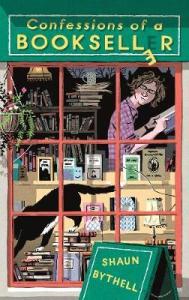 Confessions of a Bookseller by Shaun Bythell: This picks up right where The Diary of a Bookseller left off and carries through the whole of 2015. Again it’s built on the daily routines of buying and selling books, including customers’ and colleagues’ quirks, and of being out and about in a small town. I wished I was in Wigtown instead of Milan! Because of where I was reading the book, I got particular enjoyment out of the characterization of Emanuela (soon known as “Granny” for her poor eyesight and myriad aches and gripes), who comes over from Italy to volunteer in the bookshop for the summer. Bythell’s break-up with “Anna” is a recurring theme in this volume, I suspect because his editor/publisher insisted on an injection of emotional drama.
 City of Girls by Elizabeth Gilbert: There’s a fun, saucy feel to this novel set mostly in 1940s New York City. Twenty-year-old Vivian Morris comes to sew costumes for her Aunt Peg’s rundown theatre and falls in with a disreputable lot of actors and showgirls. When she does something bad enough to get her in the tabloids and jeopardize her future, she retreats in disgrace to her parents’ – but soon the war starts and she’s called back to help with Peg’s lunchtime propaganda shows at the Brooklyn Navy Yard. The quirky coming-of-age narrative reminded me a lot of classic John Irving, while the specifics of the setting made me think of Wise Children, All the Beautiful Girls and Manhattan Beach. The novel takes us to 2010, when Vivian is 90 and still brazenly independent. I was somewhat underwhelmed – while it’s a fairly touching story of how to absorb losses and make an unconventional family, I wondered if it had all meant much. I’ll be expanding this into a Shiny New Books review.
 Judgment Day by Sandra M. Gilbert: English majors will know Gilbert best for her landmark work of criticism, The Madwoman in the Attic (co-written with Susan Gubar). I had no idea that she writes poetry. This latest collection has a lot of interesting reflections on religion, food and art, as well as elegies to those she’s lost. Raised Catholic, Gilbert married a Jew, and the traditions of Judaism still hold meaning for her after husband’s death even though she’s effectively an atheist. “Pompeii and After,” a series of poems describing food scenes in paintings, from da Vinci to Hopper, is particularly memorable.
Not-so-successful reads:
 Vintage 1954 by Antoine Laurain: Dreadful! I would say: avoid this sappy time-travel novel at all costs. I thought the setup promised a gentle dose of fantasy, and liked the fact that the characters could meet their ancestors and Paris celebrities during their temporary stay in 1954. But the characters are one-dimensional stereotypes, and the plot is far-fetched and silly. I know many others have found this delightful, so consider me in the minority…
As well as a few DNFs…
What Dementia Teaches Us about Love by Nicci Gerard: I’ve read a lot of books about dementia, both clinical and anecdotal, and this doesn’t add anything new. (11%)
The Great Railway Bazaar by Paul Theroux: I read the first 32 pages, up to when Theroux arrives in northern Italy. He mostly describes his fellow passengers, as well as the details of meals and sleeping arrangements on trains. The writing struck me as old-fashioned, and I couldn’t imagine getting through another nearly 350 pages of it.
Out of the Woods by Luke Turner: Attempts to fuse nature and sexuality in a way that’s reminiscent of Hidden Nature by Alys Fowler. The writing didn’t draw me in at all. (5%)
A Keeper of Records: What’s Worth Saving?
It’s safe to say that book bloggers love lists: not only do we keep a thorough list of everything we read in a year, but we also leap to check out every new top 5/10/50/100 or thematic book list that’s posted so we can see how many of them we’ve read. And then, at the end of any year, most of us put together our own best-of lists, often for a number of categories.
When I was younger, though, I took the list-making to an extreme. As I was going back through boxes of mementos in America a few weeks ago, I found stacks of hand-written records I’d kept. Here’s a list of what I used to list:
- every book I read
- every movie I saw
- dreams, recounted in detail
- money I found on the ground
- items I bought or sold on eBay
- gifts given or received for birthdays and Christmas
- transactions made through my mail-order music club
- all my weekday outfits, with a special shorthand designating each item of clothing
Age 14 (1997-8) was the peak of my record-keeping, and the only year when I faithfully kept a diary. I cringe to look back at all this now. Most of the dreams are populated by my crushes of the time, names and faces that mean nothing to me now. And to think that I was so self-conscious and deluded to assume people at school might notice if I wore a shirt twice within a couple of weeks! My diary isn’t particularly illuminating from this distance, either; mostly it brings back how earnest and pious I was in my teens. It’s occasionally addressed in the second person, as if to an imaginary bosom friend who would know me as well as I knew myself.
What’s clear is that I was convinced that the minutiae of my life mattered. Between us, my mother and I had kept a huge cache of my schoolwork and craft projects from kindergarten right through graduate school. I was also a devoted collector – of stamps, coins, figurines, tea sets, shells, anything with puffins or llamas – so I obviously felt that physical objects had real importance, too. It’s a wonder I didn’t become an archivist or a museum curator.
Why did I save all this stuff in the first place? Even as a teen, was I imagining an illustrious career for myself and some future biographer who would gleefully mine my records and personal writings for clues to who I really was? I’m not sure whether to admire the confidence or deplore the presumption. We all want to believe we’re living lives of significance, but when I take a long view – if I never have a child … if I never publish a book (though I think I will) … if human society does indeed collapse by 2050 (as some are predicting) – it’s hard to see what, if anything, will be preserved of my time on earth.
This is deeper than I usually get in a blog post, but these are the sorts of thoughts that preoccupy me when I’m not just drifting along in life’s routines. My nieces’ and nephews’ generation may be the last to inhabit this planet if we don’t take drastic and immediate action to deal with the environmental crisis. Many are working for change (my husband, a new Town Councillor, recently voted for the successful motion to declare a climate emergency and commit Newbury to going carbon-neutral by 2030), but some remain ignorant that there is any kind of problem and so consume and dispose like there is (literally) no tomorrow.
My home is a comfortable bubble I hardly ever leave, but more and more I feel that I need to become part of larger movements: first to ensure the continuation of human and non-human existence; then to improve the quality of human life, especially for those who have contributed least to climate change but will suffer the most from it. I have no idea what form my participation should take, but I know that focusing on outside causes will mean less time obsessing about myself and my inconsequential problems.
That’s not to say I won’t listen to the angst that’s telling me I’m not living my life as fully as I should, but I know that working with others, in whatever way, to tackle global issues will combat the lack of purpose that’s been plaguing me for years.
Appreciation for my past can only help with bolstering a healthy self-image, so I’ve kept a small selection of all those records, and a larger batch of school essays and assignments. Even if this archive is only ever for me, I like being able to look back at the well-rounded student I was – I used to get perfect scores on calculus tests and chemistry lab reports! I could write entire papers in French! – and see the seeds of the sincere, meticulous book lover I still am. As Eve Schaub writes in Year of No Clutter, “I’m not about to stop collecting my own life. It has been a source of pleasure for me ever since I can remember; it helps define me.”
A selection of favorite mementos I discovered back in the States:

In high school I started making my way through the American Film Institute’s list of Top 100 movies. I’ve now seen 89 of them.
I kept a list of new vocabulary words encountered in novels, especially Victorian ones. Note trumpery: (noun) attractive articles of little value or use; (adjective) showy but worthless – how apt!
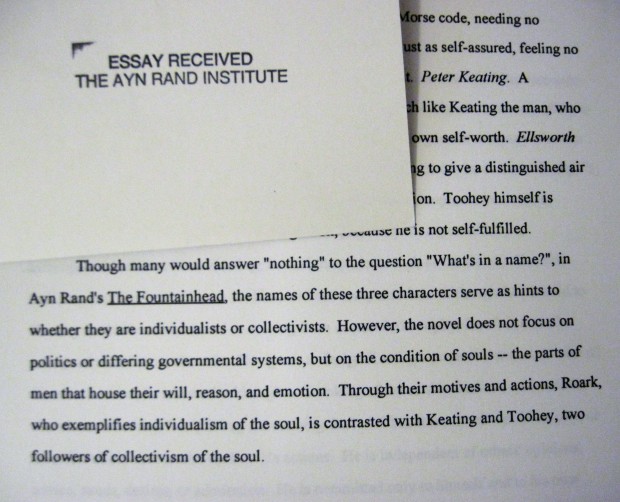
As a high school senior, I waded through Ayn Rand’s The Fountainhead to write an essay that won me an honorable mention, a point of interest on my college applications. Though I find it formulaic now, it’s a precursor to a career partially devoted to writing about books.
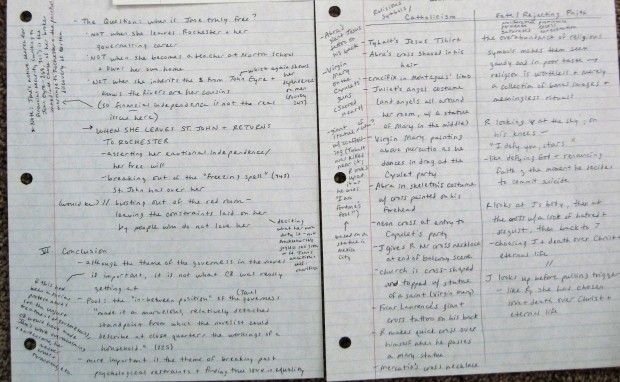
I planned my every college paper via incredibly detailed outlines. (I’m far too lazy to do this for book reviews now!) Can you work out what these essays were about?

As a college sophomore I wrote weekly essays in what looks like pretty flawless French. This one was an imagined interview with Charles Dickens and Thomas Hardy about the autobiographical and religious influences on their fiction.
Are you a list keeper? Do you have a personal ‘archive’?
How do you balance a healthy self-regard with working for the good of the world?
Two New Bookish Volunteering Ventures
Working from home, I don’t get out or see other people nearly often enough, so any time I think of a way that I can get more human interaction while contributing to a worthy cause – like spreading the love of reading – it’s worth seizing.
I don’t know what it’s like where you live, but here in our town there are tons of empty storefronts on the main street and in the mall, which makes everything feel half-derelict. The Global Educational Trust was donated a shop space in my local mall and set up a free bookshop that has since been taken over by Fair Close Centre, a non-residential center where the elderly can socialize and take advantage of hot meals and other services. The shop creates awareness of Fair Close and what it has to offer, and also promotes reading and lifelong learning.
I volunteered late last year when it was first being set up, and for the past few weeks I’ve been putting in two hours every Friday afternoon. Did I mention it’s full of free books!? This is kind of a problem for someone who already has a house full of books plus boxes of them in storage back in America. (But not really a problem.) The first time I was there I scored eight books; on four subsequent visits I’ve both donated and acquired books, sometimes in unhelpful ratios. Seven given versus two taken: excellent! Two donated and nine acquired: not so good. Six out; three in: A-OK. This past Friday I broke even with four of each.


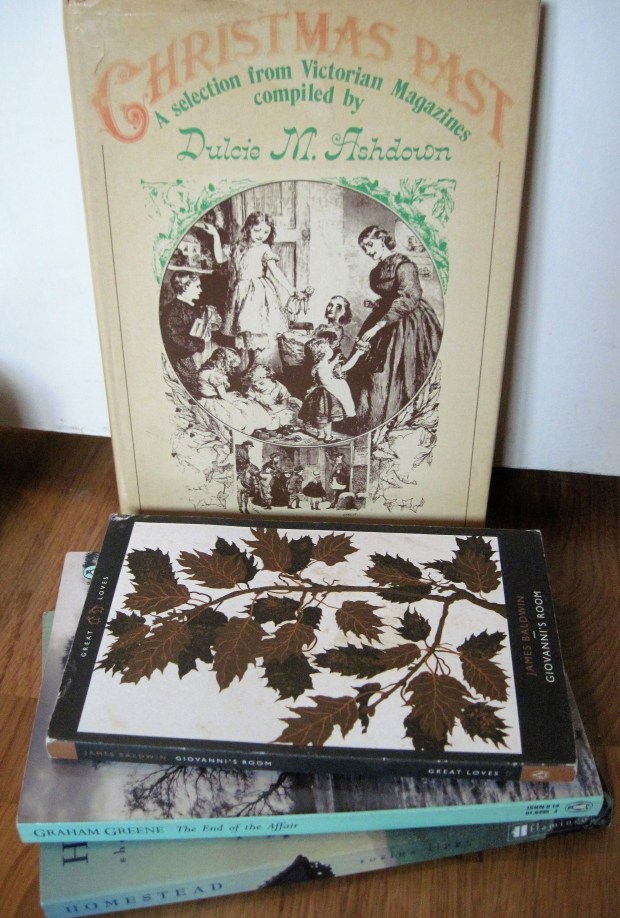
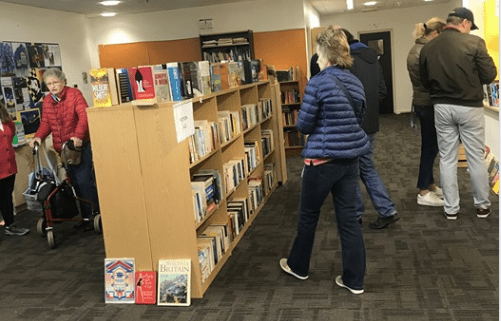
We’re making do with insufficient shelving, whatever we’ve been able to scrounge from going-out-of-business shops, etc., so the categories are not very precise yet. Most of my work so far has been rearranging the central area for fiction (someone thought it was a good idea to have the alphabetical sequence going across the four bays of shelves, rather than from top to bottom in one case and then on to the next one to the right, as is the custom in any library or bookstore!) and pulling out all the nonfiction that snuck in. You often see this in charity shops: people who don’t know much about books end up shelving memoirs, travel books and history in with the fiction. In this photo you can see evidence of my tidying in fiction, A–F.
The other project I’ve been working on lately, though it’s still very much in the planning stages, is a theological lending library at my church. This was prompted by me looking through our shelves of religion books and deciding that there were upwards of 20 books that we would likely never read again/ever but that others might find edifying. In the end I pulled out 36 books to donate, ranging in outlook from C.S. Lewis to Rob Bell. I’m also aware that my mother-in-law, who’s retiring from ministry this year, will likely shed many theology books when they downsize to leave the rectory, and there are various retired clergy members in our church who might have books to pass on. So I had a meeting with our vicar last week to talk through some ideas about where we might house a library and how the system might work.
For now we plan to trial a pop-up library in the cloisters in mid-July, advertised via the notice sheet in early June. In the weeks leading up to it, we’ll accept book donations to a box at the back of the church (and reserve the right to jettison books that seem dated or unhelpful!). The lending will be on an honesty system, with people writing their name and the book title(s) in a ledger. We’ll suggest that books borrowed at the pop-up in mid-July could be returned in early September, though keeping them out longer wouldn’t be a problem. Nor, for that matter, would it be a problem if some books never make it back to the shelves – we’d like to hope they’ll be helpful to people.
The only other equipment to get hold of now is a set of bookplates with the church logo. As to how to classify the books, I may well model our system on this one. I know I’ll have fun cataloguing the books and affixing spine labels and bookplates. It’ll be like my library assistant days all over again – except just the fun working-with-books bit and not the babysitting-students bit.
Are you involved in any volunteer projects?
Fun with Titles
I’m certainly not the first to notice these rather similar titles – both of which appear on this year’s Folio Prize and Women’s Prize longlists. I preferred Diana Evans’s Ordinary People (), which I just finished earlier this week, to Sally Rooney’s Normal People ( ). The two novels look at fairly average situations – two Black couples with children in South London and the Surrey suburbs; a pair of university students in Ireland – and probe the emotional intricacies.


Michelle Obama’s Becoming is now set to become the bestselling memoir of all time. I enjoyed it as much as any memoir-loving fan of the Obamas would (), but after I found out that it was ghostwritten I couldn’t get that little fact out of my mind. By contrast, Anuradha Bhagwati’s Unbecoming is the memoir of a bisexual U.S. Marine captain and tells of the racism and sexism she experienced. It came out last week and has only six ratings on Goodreads, so it’s as under-the-radar as Becoming is overexposed.


Just one letter separates the titles of these two books. I’ve been slowly making my way through All the Lives We Ever Lived, Katharine Smyth’s elegant bibliomemoir about her father’s death and the comfort she found in rereading To the Lighthouse. I don’t know much about All the Lives We Never Lived by Anuradha Roy, just that it’s set in 1930s India and Bali and has been longlisted for the Walter Scott Prize for historical fiction. Her previous novel, Sleeping on Jupiter (2015), was shortlisted for the Man Booker Prize.


Which of the books from these pairs would tempt you?
Fourth Blog Anniversary
I launched my blog four years ago today. Is that ages, or no time at all? Like I said last year, it feels like something I’ve been doing forever, and yet there are bloggers out there who are coming up on a decade or more of online writing about books.

By Incabell [CC BY-SA 4.0 (https://creativecommons.org/licenses/by-sa/4.0)%5D.
This is my 542nd post, so the statistics tell me that I’ve been keeping up an average of just over 2.5 posts a week. Although I sometimes worry about overwhelming readers with ‘too many’ posts, I keep in mind that a) no one is obliged to read everything I post, b) a frequently updated blog is a thriving blog, and c) it only matters that it’s a manageable pace for me.
In the last year or so, I’ve gotten more involved in buddy reads and monthly challenges (things like Reading Ireland Month, 20 Books of Summer, R.I.P., Margaret Atwood Reading Month, and Novellas and Nonfiction in November); I’ve continued to take part in literary prize shadow panels and attend literary events when I can. I’ve hosted the Library Checkout for nearly a year and a half now and there are a few bloggers who join in occasionally (more are always welcome!). The posts I most enjoy putting together are write-ups of my travels, and seasonal and thematic roundups, which are generally good excuses to read backlist books from my own shelves instead of getting my head turned by new releases.
Some statistics from the past year:
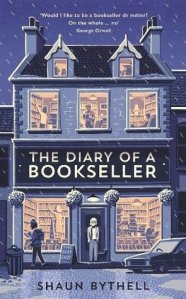 My four most viewed posts were:
The Diary of a Bookseller by Shaun Bythell
Clock Dance by Anne Tyler: Well…
Mixed Feelings about Elena Ferrante
I got the most likes in December 2018, and the most unique visitors and comments in August.
 My four favorite posts I wrote in the past year were:
A Trip to Wigtown, Scotland’s Book Town
Painful but Necessary: Culling Books, Etc.
Why We Sleep … And Why Can’t I Wake Up?
A President’s Day Reading Special (No Trump in Sight)
Thanks to everyone who has supported me this past year, and/or all four years, by visiting the site, commenting, re-tweeting, and so on. You’re the best!
How I Did on My 2018 Reading Goals & The Year’s Cover Trends
The year-end coverage continues!
So, how did I do with the 2018 reading goals I set for myself about this time last year? Rather poorly! is the short answer.
- I only read one book that might be considered a travel classic (by Patrick Leigh Fermor), though I did read some modern travel books.
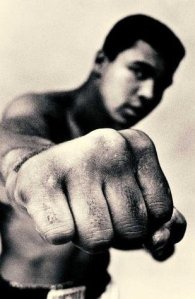 I only read Ali and the first half of a biography of May Sarton. What I’d envisioned being a monthly biography feature on the blog turned into a one-off.
- I need to work out my literature in translation percentage and compare it to last year’s to see if I’ve improved at all.
However, I do feel that I did well at reading my own books, as boosted by my 20 Books of Summer being chosen exclusively from my own shelves. Once I’m back from America I’ll have to do another full inventory and see how many unread books are still in the house, as compared to the 327 at this time last year.
Out of my 31 most anticipated reads of the second half of the year, I read 20 (of which 5 were at least somewhat disappointing), abandoned 2, still have 2 to read, lost interest in 1, have 1 in progress, and can’t find 5. For the whole year, the statistics are at 38/61 read (13 disappointments = more than 1/3 – that’s really bad and needs to be fixed!), 7 DNF, 4 still to read, 9 not found, 2 lost interest, and 1 in progress.
As for my non-reading-related goal … my accordion-playing fell by the wayside in July because I went away to America for three weeks unexpectedly, and after that never got back into the habit of daily practice and biweekly lessons the other side of Reading. I’d still like to pick it back up in the near future. I was at a point where I knew five notes and a few bass chords and could play both hands on a number of very simple tunes.

The poor cat was alarmed at yet another folk instrument entering his abode.
This Year’s Cover Trends
Mostly flora, which I noticed before 2018 had even begun.


The other one that kept jumping out at me was rubber gloves. Weird!


I’ll be back on the 26th to begin the countdown of my favorite books of the year, starting with nonfiction.
Merry Christmas!
Vocabulary Words I Learned from Books This Year
These are in chronological order by my reading.
- borborygmi = stomach rumblings caused by the movement of fluid and gas in the intestines
- crapula = sickness caused by excessive eating and drinking
- olm = a cave-dwelling aquatic salamander
~The Year of the Hare, Arto Paasilinna
- befurbelowed = ornamented with frills (the use seems to be peculiar to this book, as it is the example in every online dictionary!)
~The Awakening, Kate Chopin
 roding = the sound produced during the mating display of snipe and woodcock, also known as drumming
- peat hag = eroded ground from which peat has been cut
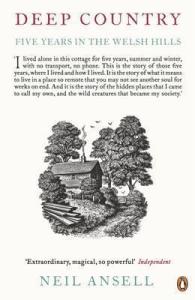
~Deep Country, Neil Ansell
- rallentando = a gradual decrease in speed
~Sight, Jessie Greengrass
- piceous = resembling pitch
~March, Geraldine Brooks
- soffit = the underside of eaves or an arch, balcony, etc.
~The Only Story, Julian Barnes
 lemniscate = the infinity symbol, here used as a metaphor for the pattern of pipe smoke
~The Invisible Bridge, Julie Orringer
- purfling = a decorative border
- lamingtons = sponge cake squares coated in chocolate and desiccated coconut (sounds yummy!)
~The Life and Loves of Lena Gaunt, Tracy Farr
- ocellated = having eye-shaped markings
~Red Clocks, Leni Zumas
- balloonatic (WWI slang) = a ballooning enthusiast
- skinkling = sparkling
- preludial = introductory
- claustral = confining
- baccalà = salted cod
~The Incendiaries, R. O. Kwon
(There were so many words I didn’t immediately recognize in this novel that I thought Kwon must have made them up; preludial and claustral, especially, are words I didn’t know existed but that one might have extrapolated from their noun forms.)
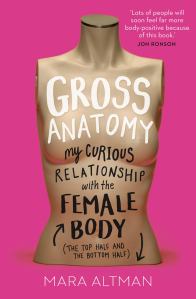 bronies = middle-aged male fans of My Little Pony (wow, who knew this was a thing?! I feel like I’ve gone down a rabbit hole just by Googling it.)
- callipygian = having well-shaped buttocks
~Gross Anatomy, Mara Altman
- syce = someone who looks after horses; a groom (especially in India; though here it was Kenya)
- riem = a strip of rawhide or leather
- pastern = a horse’s ankle equivalent
~West with the Night, Beryl Markham
- blintering = flickering, glimmering (Scottish)
- sillion = shiny soil turned over by a plow
~The Light in the Dark: A Winter Journal, Horatio Clare
- whiffet = a small, young or unimportant person
~Ladder of Years, Anne Tyler
- trilliant = a triangular gemstone cut
- cabochon = a gemstone that’s polished but not faceted
- blirt = a gust of wind and rain (but here used as a verb: “Coldness blirted over her”)
- contumacious = stubbornly disobedient
~Four Bare Legs in a Bed, Helen Simpson
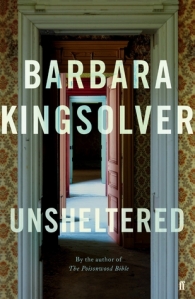 xeric = very dry (usually describes a habitat, but used here for a person’s manner)
~Unsheltered, Barbara Kingsolver
- twitten = a narrow passage between two walls or hedges (Sussex dialect – Marshall is based near Brighton)
~The Power of Dog, Andrew Marshall
- swither (Scottish) = to be uncertain as to which course of action to take
- strathspey = a dance tune, a slow reel
~Stargazing, Peter Hill
- citole = a medieval fiddle
- naker = a kettledrum
- amice = a liturgical vestment that resembles a cape
~The Western Wind, Samantha Harvey
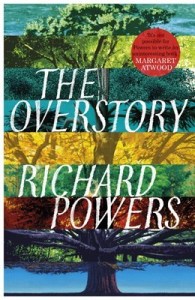 pareidolia = seeing faces in things, an evolutionary adaptation (check out @FacesPics on Twitter!)
~The Overstory, Richard Powers
Have you learned any new vocabulary words recently?
How likely am I to use any of these words in the next year?
An Untranslatable Term for International Translation Day
Today is International Translation Day, so I’m sharing my favorite spread from In Other Words: An Illustrated Miscellany of the World’s Most Intriguing Words and Phrases by Christopher J. Moore (foreword by Simon Winchester), which came out from Modern Press last year. It’s a collection of the linguist/translator’s 80 favorite untranslatable expressions.
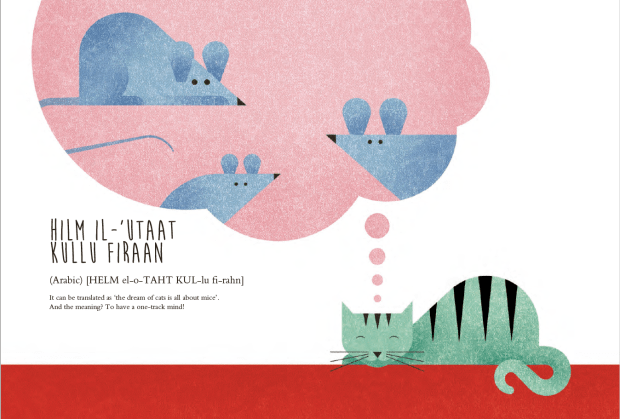
#Internationaltranslationday #InOtherWords @modernbooks
My thanks to Alison Menzies PR for sending a copy of the e-book.
These Days
It’s mid-September and crunch time: my husband intends to hand in a complete draft of his PhD thesis next week. He’s been studying part time while working full time and technically has another year to submit, but this month is his self-imposed deadline before the frantic busyness of a new academic year. For weeks now, he’s been going to campus just once or twice a week, working mostly at home out of a makeshift office in our summer house, to which he reels an extension lead each morning so he can plug in his laptop and desk lamp. There’s no Internet signal that far from the house, so it’s a distraction-free zone – or at least the distractions are mostly pleasant ones like birdsong and the cat padding in and out. He’s been known to stay out there until well past 10 at night working on his writing and mapping.
It’s been nice for me to have a bit of company at home during the day (though it’s definitely for the best that we work in different spaces). We reconvene for morning coffee and afternoon tea and also break for lunch. Twice a day I’ll traipse out to the summer house with a tray of hot drinks and snacks and a tote bag of books over my shoulder to spend an hour or so relaxing before getting back to my proofreading or other work upstairs. I’ve tried to be kind and supportive through all the catastrophic announcements about the results being wrong, the statistics going screwy, and the project being basically impossible to finish.
On a practical level, I help out by preparing very simple meals – bean burgers from the freezer section at Aldi plus homemade coleslaw and corn-on-the-cob; fresh oven chips with a fried egg and steamed broccoli – or at least doing the sous chef chopping for complicated ones. My husband cooked for himself during his last two years of uni and enjoys improvising meals, so he’s done pretty much all the cooking for the 11+ years of our marriage. When I was in America I picked up a “Vidalia Chop Wizard” from Bed Bath & Beyond. Some will be thinking “what a pointless, cheaty device!” – but I knew without it I’d never get more involved in cooking, especially because I hate to have lingering savory smells on my fingers.

It’s been a stressful couple of months for my husband, and that stress has of course spilled over to me somewhat. Still, I’m trying not to wish these days away, even as I look forward to the relief of his thesis being finished. It’s never good to wish your life away. I even tried to do some peaceful sitting in nature (i.e., our garden) last week, which led to this short Guardian Country Diary-style piece. (However, you’d better believe I have plans for the post-PhD evenings and weekends. After all these weeks of letting my hubby off the hook, the chores have piled up. I envision a deep clean of the kitchen, tidying up all the little half-finished projects that are sitting around, gardening, banking, and much more.)
This past Saturday we gave ourselves the day off to attend Newbury Real Ale Festival. It’s held just across the canal from our house, so we could hardly pass up the opportunity to sample 146 beers and 118 ciders (my tipple of choice). The music was terrible but the weather stayed decent for much of the five hours we were there. Along with plenty of reading and snacking on crisps, I had the chance to try six ciders, which ranged from the almost undrinkable (beetroot and orange flavor sounded interesting!) to the sublime.


Appropriately enough, the best of the bunch was from Thistly Cross, a cider company based in Scotland: next Wednesday, to celebrate (we hope) the thesis being handed in, we’re off to Edinburgh for a long weekend. It’s something of a work trip for my husband – he’s traveling on to the Cairngorms for a two-day PhD student workshop while I stay behind at our Airbnb – but we’ll have a couple of days to enjoy the city together as well as two very long train rides on which to sink into books.
You’ll be unsurprised to learn that I started planning what books I’d pack weeks ago: some on a train theme; some by or about Scottish writers; some set in Scotland. I’ll also take at least one October review book (probably Barbara Kingsolver’s Unsheltered or Sarah Perry’s Melmoth) and one of the multiple library reservations that have arrived for me all at once (most likely John Boyne’s A Ladder to the Sky or Melissa Harrison’s All Among the Barley).

I’ve been to Edinburgh twice before, but both trips were brief and the most recent one was in 2005. What should I see and do? Where should I eat? (I’ll have to find at least one meal out in the city on my own.) I plan to visit the Writers’ Museum for the first time, and may drop into the National Gallery again. Since I was too skint to do so in my early twenties, I’ll probably also treat myself to a tour of the Castle (though, 17 quid – really?!). Any other recommendations of secondhand bookshops, cafés, free/inexpensive attractions and casual dining establishments will be much appreciated!
 Bookish Beck = Rebecca Foster. American transplant to England. Freelance proofreader and book reviewer.
 Bookish Beck