Recent Bylines: Glamour, Shiny New Books, Etc.
Following up on my post from June, here are excerpts from and links to some of my recent online writing for places that aren’t my blog.
Review essay of Gross Anatomy by Mara Altman for Glamour UK
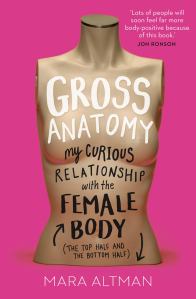 The female body has been a source of deep embarrassment for Altman, but here she swaps shame for self-deprecating silliness and cringing for chuckling. Through a snappy blend of personal anecdotes and intensive research, she exposes the cultural expectations that make us dislike our bodies, suggesting that a better knowledge of anatomy might help us feel normal. While 11 of her 15 topics aren’t exclusive to women’s anatomy—birthmarks, hemorrhoids, warts and more apply to men, too—she always presents an honest account of the female experience. This is one of my favorite books of the year and one I’d recommend to women of any age. It’s funny, it’s feminist, and it’s a cracking good read. (My full review is complete with embarrassing personal revelations!)
Essay on two books about “wasting time” for the Los Angeles Review of Books
In Praise of Wasting Time by Alan Lightman  &
&
 The Art of the Wasted Day by Patricia Hampl: A poet’s delight in lyricism and free association is in evidence here. The book blends memoir with travel and biographical information about some of Hampl’s exemplars of solitary, introspective living, and it begins, quite literally, with daydreaming.
 Hampl and Lightman start from the same point of frazzled frustration and arrive at many of the same conclusions about the necessity of “wasted” time but go about it in entirely different ways. Lightman makes a carefully constructed argument and amasses a sufficient weight of scientific and anecdotal evidence; Hampl drifts and dreams through seemingly irrelevant back alleys of memory and experience. The latter is a case of form following function: her book wanders along with her mind, in keeping with her definition of memoir as “lyrical quest literature,” where meaning always hovers above the basics of plot.
Book list for OZY on the refugee crisis & another coming up on compassion in medicine.
Pittsburgh Post-Gazette reviews
(Their website is not available outside the USA, so the links may not work for you).
Slave Old Man by Patrick Chamoiseau
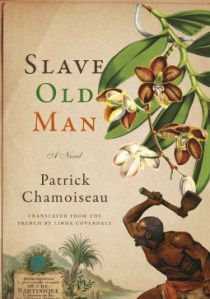 Chamoiseau is a social worker and author from the Caribbean island of Martinique. Translator Linda Coverdale has chosen to leave snippets of Martinican Creole in this text, creating a symphony of languages. The novel has an opening that might suit a gloomy fairytale: “In slavery times in the sugar isles, once there was an old black man.” The novel’s language is full of delightfully unexpected verbs and metaphors. At not much more than 100 pages, it is a nightmarish novella that alternates between feeling like a nebulous allegory and a realistic escaped slave narrative. It can be a disorienting experience: like the slave, readers are trapped in a menacing forest and prone to hallucinations. The lyricism of the writing and the brief glimpse back from the present day, in which an anthropologist discovers the slave’s remains and imagines the runaway back into life, give this book enduring power.
Lake Success by Gary Shteyngart
 Barry Cohen, a conceited hedge fund manager under SEC investigation for insider trading, sets out on a several-month picaresque road trip in the second half of 2016. The ostensible aim is to find his college girlfriend, but he forms fleeting connections with lots of ordinary folks along the way. Barry may be a figure of fun, but it’s unpleasant to spend so much time with his chauvinism (“he never remembered women’s names” but gets plenty of them to sleep with him), which isn’t fully tempered by alternating chapters from his wife’s perspective. Pitched somewhere between the low point of “Make America Great Again” and the loftiness of the Great American novel, Lake Success may not achieve the profundity it’s aiming for, but it’s still a biting portrait of an all-too-recognizable America where money is God and villains gets off easy.
Shiny New Books reviews
(Upcoming: Nine Pints by Rose George and Under the Rock by Benjamin Myers.) Latest:
The Immeasurable World: Journeys in Desert Places by William Atkins
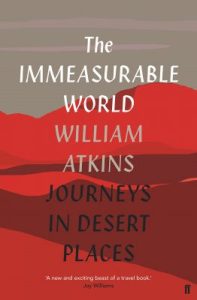 Atkins has produced an appealing blend of vivid travel anecdotes, historical background and philosophical musings. He is always conscious that he is treading in the footsteps of earlier adventurers. He has no illusions about being a pioneer here; rather, he eagerly picks up the thematic threads others have spun out of desert experience and runs with them – things like solitude, asceticism, punishment for wrongdoing and environmental degradation. The book is composed of seven long chapters, each set in a different desert. In my favorite segment, the author rents a cabin in the Sonoran Desert of Arizona for $100 a week. My interest waxed and waned from chapter to chapter, but readers of travelogues should find plenty to enjoy. Few of us would have the physical or emotional fortitude to repeat Atkins’s journeys, but we get the joy of being armchair travelers instead.
Mrs Gaskell & Me: Two Women, Two Love Stories, Two Centuries Apart by Nell Stevens
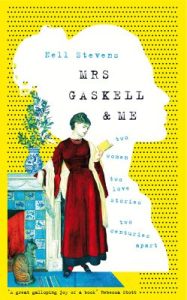 I was ambivalent about the author’s first book (Bleaker House), but for a student of the Victorian period this was unmissable, and the meta aspect was fun and not off-putting this time. Stevens has a light touch, and flits between Gaskell’s story and her own in alternating chapters. One strand covers the last decade of Gaskell’s life, but what makes it so lively and unusual is that Stevens almost always speaks of Gaskell as “you.” The intimacy of that address ensures her life story is anything but dry. The other chapters are set between 2013 and 2017 and narrated in the present tense, which makes Stevens’s dilemmas feel pressing. For much of the first two years her PhD takes a backseat to her love life. She’s obsessed with Max, a friend and unrequited crush from her Boston University days who is now living in Paris. This is a whimsical, sentimental, wry book that will ring true for anyone who’s ever been fixated on an idea or put too much stock in a relationship that failed to thrive.
Times Literary Supplement reviews
I’ve recently submitted my sixth and seventh for publication. All of them have been behind a paywall so far, alas. (Upcoming: Face to Face: True stories of life, death and transformation from my career as a facial surgeon by Jim McCaul; On Sheep: Diary of a Swedish Shepherd by Axel Lindén.) Latest:
How To Build A Boat: A Father, his Daughter, and the Unsailed Sea by Jonathan Gornall
 Gornall’s genial memoir is the story of a transformation and an adventure, as a fifty-something freelance journalist gets an unexpected second chance at fatherhood and decides to build his daughter, Phoebe, a boat. It was an uncharacteristic resolution for “a man who [had] never knowingly wielded a plane or a chisel,” yet in a more metaphorical way it made sense: the sea was in his family’s blood. Gornall nimbly conveys the precarious financial situation of the freelancer, as well as the challenges of adjusting to new parenthood late in life. This is a refreshingly down-to-earth account. The nitty-gritty details of the construction will appeal to some readers more than to others, but one can’t help admiring the combination of craftsmanship and ambition. (Full review in September 7th issue.)
October Reading Plans: R.I.P. and More
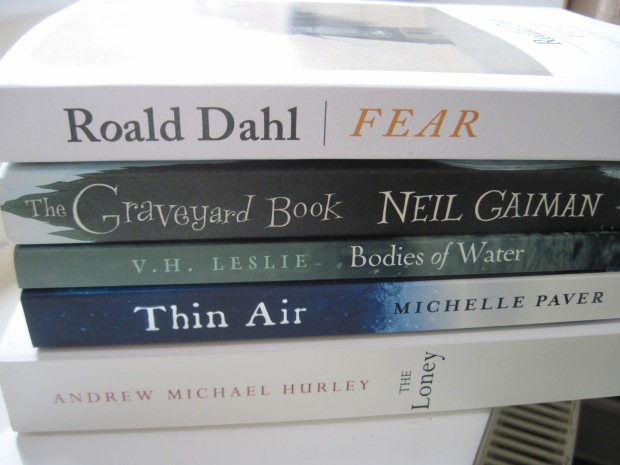
For the first time I’m joining in with the R.I.P. challenge (that’s “Readers Imbibing Peril,” if you’re unfamiliar) – a spur to read the dark fantasy, mystery, thriller, horror and suspense books I own during the month of October. None of these are go-to genres for me, but I do have some books that fit the bill. To start me off, I set aside this pile early in September. I’m not sure how many I’ll get through, so I’m not committing to a particular number.
Several of my review books for the month also happen to be appropriate, beginning with one of my current reads, Little by Edward Carey, a delightfully macabre historical novel about the real-life girl who became Madame Tussaud of waxworks fame. I hope to review it here soon. I also have Deborah Harkness’s latest and an upcoming fable by A.L. Kennedy. Continuing last month’s focus on short stories, I’m going to start on Aimee Bender’s 2013 volume soon; it might just be fantastical enough to count towards the challenge.
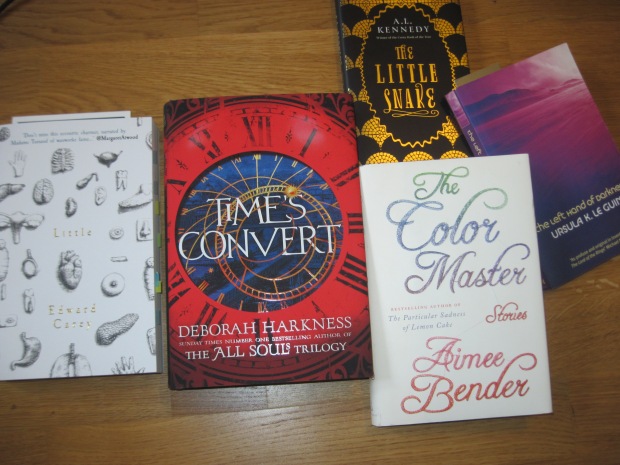
I’ve never read anything by the late Ursula K. Le Guin, so Annabel, Laura and I are embarking on a buddy read of The Left Hand of Darkness this month, too.
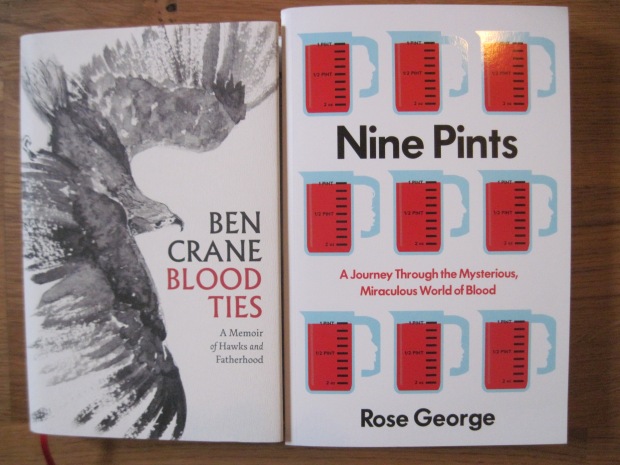
And then I may cheat and add in these two ‘blood-y’ nonfiction books since I’m going to be reading them soon anyway.
My other goal is to read more of the print books I’ve acquired over the past year, including some of 2017’s birthday and Christmas hauls and the books I bought at Bookbarn and in Wigtown. My birthday is coming up in the middle of the month, so it would be good to start chipping away at these stacks before the new acquisitions pile up much more!
I got a head start on a month of spooky reading with Sarah Perry’s new Gothic tale, Melmoth. It seems to have been equally inspired by Charles Robert Maturin’s 1820 novel Melmoth the Wanderer and by Perry’s time in Prague as a UNESCO World City of Literature Writer in Residence. The action opens in Prague in 2016 as Helen Franklin, a translator, runs into her distressed friend Dr. Karel Pražan one December night. An aged fellow scholar, Josef Hoffman, has been found dead in the National Library, where Helen and Karel first met. Karel is now in possession of the man’s leather document file, which contains accounts of his Holocaust-era family history and of his investigations into the Melmoth legend. She was one of the women at Jesus’s empty tomb but denied the resurrection and so was cursed to wander the Earth ever after. As Hoffman explains, “she is lonely, with an eternal loneliness” and “she comes to those at the lowest ebb of life.”
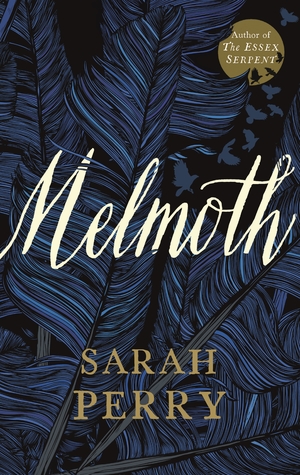 Is this just a tale used to scare children? In any case, it resonates with Helen, who exiled herself to Prague 20 years ago to escape guilt over a terrible decision. For most of the book we get only brief glimpses into Helen’s private life, like when she peeks into the under-the-bed shoebox where she keeps relics of the life she left behind. We do eventually learn what she ran away from, but by then I was so weary of dull found documents, irritating direct reader address (“Look! It is evening now … Reader, witness, here is what you see”), and toothless Gothic tropes that the reveal was barely worth hanging around for. Alas, I found the whole thing pretty melodramatic and silly, and not in the least bit frightening.
I truly loved The Essex Serpent (), but I think Perry is one of those authors where I will need to skip every other release and just read the even numbers; After Me Comes the Flood, her first, was one of my lowest-rated books ever ( ). I recall that when I saw her speak at Bloxham Festival of Faith and Literature in 2016 Perry revealed that Novel #4 will be a contemporary courtroom drama. I’ll try again with that one.
My rating: 
Melmoth is released in the UK today, October 2nd. My thanks to Serpent’s Tail for a proof copy for review. It comes out in the USA from Custom House on the 16th. Sarah Perry has written an interesting article about being on strong pain medication while writing Melmoth.
Will you be reading anything scary in the month ahead? Can you recommend any of the books I have coming up?
An Untranslatable Term for International Translation Day
Today is International Translation Day, so I’m sharing my favorite spread from In Other Words: An Illustrated Miscellany of the World’s Most Intriguing Words and Phrases by Christopher J. Moore (foreword by Simon Winchester), which came out from Modern Press last year. It’s a collection of the linguist/translator’s 80 favorite untranslatable expressions.
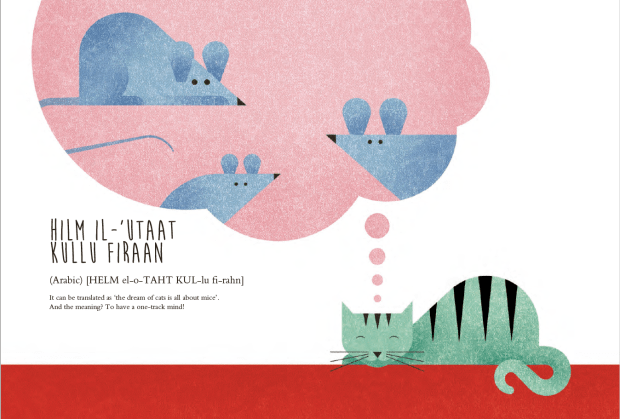
#Internationaltranslationday #InOtherWords @modernbooks
My thanks to Alison Menzies PR for sending a copy of the e-book.
Iris Murdoch Readalong: The Nice and the Good (1968)
Iris Murdoch’s eleventh novel starts with a bang: civil servant Joseph Radeechy has shot himself at the office, leaving Octavian Gray and Richard Biranne to deal with the fallout. The incident delays Octavian’s departure for idyllic Dorset, where he and his wife Kate live in community with various hangers-on: Mary Clothier and her son Pierce; Biranne’s ex, Paula, and their twins; and the Grays’ daughter, Barbara, whenever she’s home from her Swiss boarding school. I loved the initial introduction to a household so full of joyful bustle, the witty dialogue of children and servants, and a memorable dog and cat. It’s a hot summer and there are games and jaunts down to the rocky beach and an abandoned graveyard.
Gradually the focus shifts to would-be judge John Ducane, the legal advisor to Octavian’s department. Like the narrator of A Severed Head, he’s just breaking off an affair with a younger woman. He’s decided he’s in love with Kate, with whom he shares an occasional kiss. Octavian knows all about this and finds it amusing – I thought of him and Kate as the Oberon and Titania of their enchanted pastoral world, presiding in lordly yet playful ways over the other mortals’ romantic entanglements. (“Midsummer madness,” John remarks at one point.) Again as in A Severed Head, it seems everyone’s infatuated with everyone else, in different ways and at different times. A distinction is often drawn between loving and being in love – the two do not always coexist.
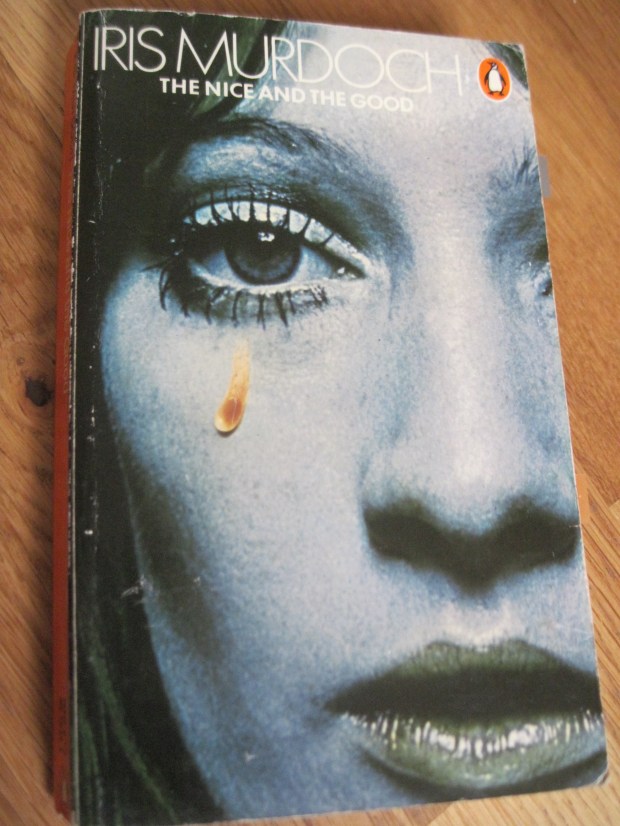
Gotta love/hate these vintage Penguin covers.
Ducane helps the department look into Radeechy’s death in hopes of avoiding a public enquiry. It seems the man was involved in some bizarre stuff – witchcraft with prostitutes? – and was being blackmailed for it. However, the city and country divide is stark, and so the investigation never overpowers the more low-key interpersonal intrigues down in Dorset. There are lots of important though secondary characters in this ensemble cast – so many that I struggled to pay attention to all of them (Uncle Theo?). Of these I’ll just give a special mention to Holocaust survivor Willy Kost. Thankfully, there’s a much more positive vision of Judaism here than in A Severed Head or The Italian Girl.
Liz has written a wonderful summary of the novel and its themes, set in the context of the Murdoch novels that have come before. I especially noted and liked the duplicated moments, such as two scenes of women jealously observing other mistresses; the instances of dramatic irony; and the sequences composed mostly of dialogue (e.g., Chapter 40). There’s a gripping scene where three characters are stuck in a sea cave due to a rising tide, and the book ends on what seems to be a sighting of a flying saucer. You also have to love the late lion-and-lamb moment of Montrose the cat and Mingo the dog curling up in a basket together.
I kept looking back to the title and asking myself who is really ‘good’ here and what the real value of being ‘nice’ is. Murdoch pardons Radeechy’s peculiar behavior as “minor evil” at most, while Willy’s experience in Dachau is surely the clearest example of human evil at work.
“Ducane’s so nice – ” / “He’s so good – ”
“The point is that nothing matters except loving what is good. Not to look at evil but to look at good.”
Meanwhile, there are brief mentions of goodness as a state of mind or a matter of personality:
“in order to become good it may be necessary to imagine oneself good, and yet such imagining may also be the very thing which renders improvement impossible”
“I think being good is just a matter of temperament in the end. Yes, we shall all be so happy and good too. Oh, how utterly marvellous it is to be me!”
That last quote is a glimpse into Kate’s thoughts: so unrealistically optimistic you have to wonder whether Murdoch is making fun of her. And yet Kate is one of the most stable and contented characters.
This falls about in the middle of the pack for me in terms of how much I’ve enjoyed Murdoch’s novels. There’s a lot going on, perhaps too much, and the reader’s sympathy is spread thin across so many characters. Still, it’s summery, light-hearted fare that manages to also hint at deeper ethical questions.
My rating:
Here’s my ranking of the eight I’ve read so far:
Favorite: The Bell
The Sea, The Sea
A Severed Head
The Nice and the Good
The Black Prince
The Italian Girl
Least favorite: An Accidental Rose
I’m Murdoch-ed out for the time being, but I’ll keep an eye on Liz’s ongoing Iris Murdoch readalong project to see if there are other novels I’ll try to find secondhand in the future (at least The Unicorn, I think). Join in for one or more!
Have you read this or anything else by Iris Murdoch?
Short Story Collections Read Recently
This is the third year in a row that I’ve made a concerted effort to read more short stories in the alliterative month of September; see also my 2016 and 2017 performances. (I actually finished Sarah Hall’s collection in late August, but I’m going to cheat and include it anyway.) That makes for four volumes in total read recently. Surprisingly, I had my best luck with two that were published back in the early 1990s.
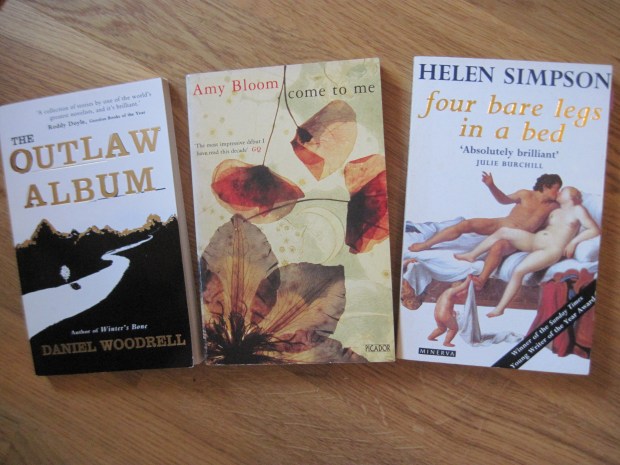
I read Sarah Hall’s book from the library; these three were bargains from my local charity warehouse, the Community Furniture Project.
Like many devoted novel readers, I struggle with short stories because they can feel fragmentary or open-ended, and it takes that much more effort to keep up with multiple settings and groups of characters. Yet I also get frustrated when the narrative voice and themes are too similar across a whole set of tales.
However, when done well short stories can be marvelous, of course. I enjoyed K.J. Orr’s article on short stories in the September 7th issue of the Times Literary Supplement. Among the virtues of the short story, she lists the following:
- “the capacity to stoke questions of definition and instability, resolution and irresolution … ; to deliver its conundrums to the reader in a state of compression”
- “The unpredictability involved means that picking up a new short story always feels to me a moment full of possibilities.”
- “The short story can combine complexity and uncertainty with ebullience and humour. It can take on subjects and situations that risk seeming clichéd and open them to wonder. It can put the familiar and the strange in conversation.”
And yet sometimes the quality of the writing, or at least the intensity of my engagement, can vary wildly within a story collection, which often makes the books difficult to rate and respond to as a whole. That’s what I found with these first two.
Madame Zero by Sarah Hall (2017)
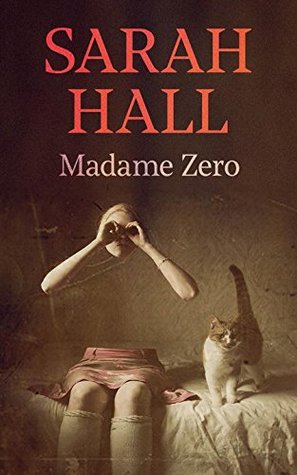 Three corkers; two pretty good; four been-there-read-that. My favorites were the first and last stories, “Mrs Fox” and “Evie” (winner of the BBC National Short Story Prize 2013 and shortlisted for the Sunday Times EFG Private Bank Short Story Award 2013, respectively). Both concern a fairly average marriage derailed when the wife undergoes a transformation. In the former Sophia literally turns into a fox and her husband scrambles for a way to make the relationship last. In “Evie,” Richard’s wife develops a voracious appetite for sweets and sex, and starts talking gibberish. This one is very explicit, but if you can get past that I found it both painful and powerful. I also especially liked “Case Study 2,” about a psychologist’s encounter with a boy who’s been brought up in a commune. It has faint echoes of T.C. Boyle’s “The Wild Child.”
“Wilderness” focuses on an intense episode of fear of heights during a trip to South Africa. In “Luxury Hour,” a new mother meets up with an old lover near the swimming pool they used to frequent and wonders where and why their lives diverged. This one reminded me of the first chapter of Rachel Cusk’s Transit.
As for the rest? “Goodnight Nobody” was completely forgettable, and the other three are in the vague speculative/post-apocalyptic vein that’s been done to death: “Theatre 6” = Red Clocks; “Later, His Ghost” = The Road et al.; “One in Four” = Station Eleven et al. I admire Hall’s writing in general, but The Wolf Border remains the best thing I’ve read by her.
My rating:
The Outlaw Album: Stories by Daniel Woodrell (2011)
 Based on the first six stories, I was planning a 5-star rating. (How can you resist this opening line? “Once Boshell finally killed his neighbor he couldn’t seem to quit killing him.”) But the second half of the book ended up being much less memorable; I wouldn’t say it wasn’t worth reading, but I got very little out of four of the stories, and the other two were okay but somewhat insubstantial. By contrast, the first two stories, “The Echo of Neighborly Bones” and “Uncle,” are gritty little masterpieces of violence and revenge.
I also particularly liked “Black Step” and “Night Stand,” about traumatized soldiers back from war (Woodrell himself was a Marine). Each has a creepy segment where the veteran gives sarcastic answers to the unspecified typical questions they always get; we have to infer that these are: How many people did you kill? What’s it like to kill someone? and What do you do with the bodies? There’s a nice balance between first- and third-person voices; lyrical and unlearned prose; and speech marks and none. I will definitely read more by Woodrell.
My rating:
I thoroughly loved these next two debut collections. In each case I’d read one or two previous books by the author and not been wild about the writing (White Houses; In-Flight Entertainment and Cockfosters), but these two have convinced me to try more of their work.
Come to Me by Amy Bloom (1993)
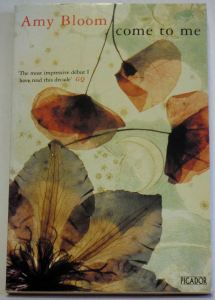 Bloom was a practicing psychotherapist, so it’s no surprise she has deep insight into her characters’ motivations. This is a wonderful set of stories about people who love who they shouldn’t love. In “Song of Solomon,” a new mother falls for the obstetrician who delivered her baby; in “Sleepwalking,” a woman gives in to the advances of her late husband’s son from a previous marriage; in “Light Breaks Where No Sun Shines,” adolescent Susan develops crushes on any man who takes an interest in her. My favorite was probably “Love Is Not a Pie,” in which a young woman rethinks her impending marriage during her mother’s funeral, all the while remembering the unusual sleeping arrangement her parents had with another couple during their joint summer vacations. The title suggests that love is not a thing to be apportioned out equally until it’s used up, but a more mysterious and fluid entity.
Linked short stories can be a useful halfway-house for readers who prefer novels and are still unsure about reading stories. Happily, then, the heart of this collection is five pieces that orbit around the same characters. In “Hyacinths” we meet David as a boy in Manitoba and get a glimpse of him as an adult. In the next story we encounter his second wife, Galen, and her lover, Henry. “Silver Water” is about a mental health crisis with David and Galen’s daughter, and the next two stories are about Henry, his wife Marie, and the other bonds they form.
Although I read the book quickly while on holiday and so haven’t marked out any particular quotes, convincing dialogue and insightful observations are on almost every page. I was reminded most of short stories I’ve read by Elizabeth McCracken and Carol Shields.
My rating:
Four Bare Legs in a Bed and Other Stories by Helen Simpson (1990)
 Simpson won the inaugural Sunday Times Young Writer of the Year Award for this in 1991. Her protagonists are women disillusioned with the norms of marriage and motherhood. They ditch their safe relationships, or carry on brazen affairs; they fear pregnancy, or seek it out on their own terms. The feminist messages are never strident because they are couched in such brisk, tongue-in-cheek narratives. For instance, in “Christmas Jezebels” three sisters in 4th-century Lycia cleverly resist their father’s attempts to press them into prostitution and are saved by the bishop’s financial intervention; in “Escape Clauses” a middle-aged woman faces the death penalty for her supposed crimes of gardening naked and picnicking on private property, while her rapist gets just three months in prison because she was “asking for it.” (Nearly three decades on, it’s still so timely it hurts.)
I loved “The Bed,” a kind of fairy tale about a luxurious bed solving all a woman’s problems; “What Are Neighbours For,” in which each woman cattily plans what she can get out of the others; “Labour,” a brief five-act play set in a hospital delivery room; and “Zoë and the Pedagogues,” about a woman learning to drive who has two very different teachers (perhaps inevitably, this recalled Mirror, Shoulder, Signal by Dorthe Nors). “An Interesting Condition,” which takes place in an antenatal class, is like Curtis Sittenfeld’s “Bad Latch,” while multiple stories reminded me of Shena Mackay, especially “Send One Up for Me,” about a woman tiptoeing around her boarding house and trying not to anger the landlady.
My rating:
Are you a short story fan? Read any good ones recently?
Heart and Mind: New Nonfiction by Sandeep Jauhar and Jan Morris
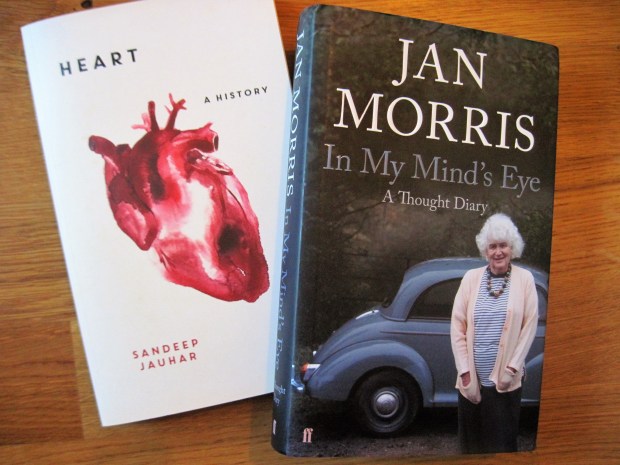
Heart: A History, by Sandeep Jauhar
There could hardly be an author better qualified to deliver this thorough history of the heart and the treatment of its problems. Sandeep Jauhar is the director of the Heart Failure Program at Long Island Medical Center. His family history – both grandfathers died of sudden cardiac events in India, one after being bitten by a snake – prompted an obsession with the heart, and he and his brother both became cardiologists. As the book opens, Jauhar was shocked to learn he had up to a 50% blockage of his own coronary vessels. Things had really gotten personal.
Cardiovascular disease has been the #1 killer in the West since 1910 and, thanks to steady smoking rates and a continuing rise in obesity and sedentary lifestyles, will still affect 60% of Americans. However, the key is that fewer people will now die of heart disease thanks to the developments of the last six decades in particular. These include the heart–lung machine, cardiac catheterization, heart transplantation, and artificial hearts.
 Along the timeline, Jauhar peppers in bits of his own professional and academic experience, like experimenting on frogs during high school in California and meeting his first cadaver at medical school. My favorite chapter was the twelfth, “Vulnerable Heart,” which is about how trauma can cause heart arrhythmias; it opens with an account of the author’s days cataloguing body parts in a makeshift morgue as a 9/11 first responder. I also particularly liked his account of being called out of bed to perform an echocardiogram, which required catching a taxi at 3 a.m. and avoiding New York City’s rats.
Maybe I’ve read too much surgical history this year (The Butchering Art by Lindsey Fitzharris and Face to Face by Jim McCaul), though, because I found myself growing fairly impatient with the medical details in the long Part II, which centers on the heart as a machine, and was drawn more to the autobiographical material in the first and final sections. Perhaps I would prefer Jauhar’s first book, Intern: A Doctor’s Initiation.
In terms of readalikes, I’d mention Siddhartha Mukherjee’s The Gene, in which the personal story also takes something of a backseat to the science, and Gavin Francis’s Shapeshifters, which exhibits a similar interest in the metaphors applied to the body. While I didn’t enjoy this quite as much as two other heart-themed memoirs I’ve read, The Sanctuary of Illness by Thomas Larson and Echoes of Heartsounds by Martha Weinman Lear, I still think it’s a strong contender for next year’s Wellcome Book Prize (the judging panel is announced tomorrow!).
Some favorite lines:
“it is increasingly clear that the biological heart is extraordinarily sensitive to our emotional system—to the metaphorical heart, if you will.”
“Who but the owner can say what lies inside a human heart?”“As a heart-failure specialist, I’d experienced enough death to fill up a lifetime. At one time, it was difficult to witness the grief of loved ones. But my heart had been hardened, and this was no longer that time.”
My rating:
Heart is published in the UK today, September 27th, by Oneworld. My thanks to the publisher for the proof copy for review.
In My Mind’s Eye: A Thought Diary, by Jan Morris
I’ve been an admirer of Jan Morris’s autobiographical and travel writing for 15 years or more. In this diary covering 2017 into early 2018, parts of which were originally published in the Financial Times and the Welsh-language literary newspaper O’r Pedwar Gwynt, we get a glimpse into her life in her early nineties. It was a momentous time in the world at large but a fairly quiet and reflective span for her personally. Though each day’s headlines seem to herald chaos and despair, she’s a blithe spirit – good-natured about the ravages of old age and taking delight in the routines of daily one-mile walks down the lane and errands in local Welsh towns with her beloved partner Elizabeth, who’s in the early stages of dementia.
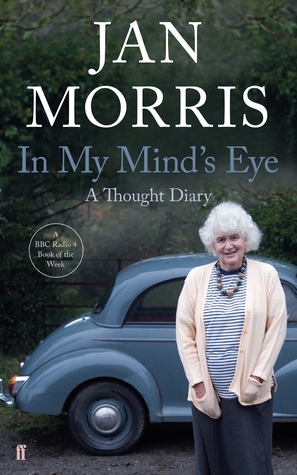 There are thrilling little moments, though, when a placid domestic life (a different kind of marmalade with breakfast each day of the week!) collides with exotic past experiences, and suddenly we’re plunged into memories of travels in Swaziland and India. Back when she was still James, Morris served in World War II, was the Times journalist reporting from the first ascent of Everest, and wrote a monolithic three-volume history of the British Empire. She took her first airplane flight 70 years ago, and is nostalgic for the small-town America she first encountered in the 1950s. Hold all that up against her current languid existence among the books and treasures of Trefan Morys and it seems she’s lived enough for many lifetimes.
There’s a good variety of topics here, ranging from current events to Morris’s love of cats; I particularly liked the fragments of doggerel. However, as is often the case with diaries, read too many entries in one go and you may start to find the sequence of (non-)events tedious. Each piece is only a page or two, so I tried never to read many more than 10 pages at a time. Even so, I noticed that the plight of zoo animals, clearly a hobby-horse, gets mentioned several times. It seemed to me a strange issue to get worked up about, especially as enthusiastic meat-eating and killing mice with traps suggest that she’s not applying a compassionate outlook consistently.
In the end, though, kindness is Morris’s cardinal virtue, and despite minor illness, telephone scams and a country that looks to be headed to the dogs, she’s encouraged by the small acts of kindness she meets with from friends and strangers alike. Like Diana Athill (whose Alive, Alive Oh! this resembles), I think of Morris as a national treasure, and I was pleased to spend some time seeing things from her perspective.
Some favorite lines:
“If I set out in the morning for my statutory thousand daily paces up the lane, … I enjoy the fun of me, the harmless conceit, the guileless complexity and the merriment. When I go walking in the evening, on the other hand, … I shall recognize what I don’t like about myself – selfishness, self-satisfaction, foolish self-deceit and irritability. Morning pride, then, and evening shame.” (from Day 99)
“Good or bad, virile or senile, there’s no life like the writer’s life.” (from Day 153)
My rating:
In My Mind’s Eye was published by Faber & Faber on September 6th. My thanks to the publisher for the free copy for review.
Out and About in Edinburgh
After going to Wigtown in April, I never expected I’d be back in Scotland this year. This was a fairly last-minute trip we booked so that my husband could attend a short rewilding workshop for PhD students. They all met up in Edinburgh and proceeded by bus into the Cairngorms to see sites of habitat restoration and potential future wildlife releases. I stayed behind at our Airbnb flat and kept up a reduced work load while enjoying the city break.
Day 1, Wednesday the 19th: A travel day. Our journey – two train rides plus a short walk at either end – should have taken just over 7 hours. Instead, it took 14. Recent storms had taken down wires at Durham and left debris on the line, so our original train was terminated at York. We managed to get a connection to Newcastle, queued outside for two hours for rail replacement buses that never came, and finally got a very delayed train through to Edinburgh. Our poor Airbnb hostess’s parents had to wait up for us until 12:40 a.m.
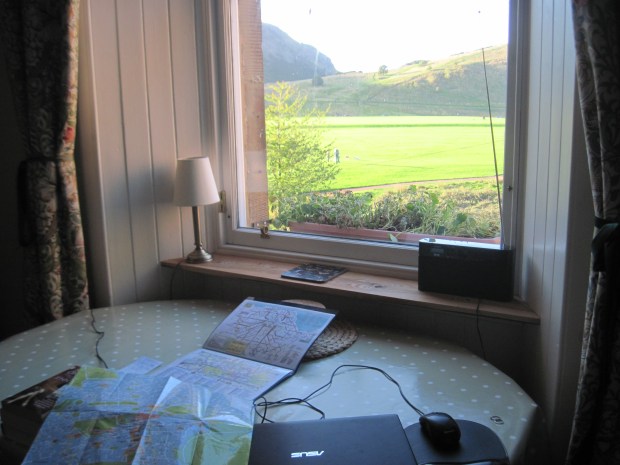
Day 2, Thursday the 20th: After just a few hours of sleep, we were up early so that Chris could leave by 7:15 for his meet-up on the Edinburgh campus. The props and sketches scattered about suggest that the flat owner is a theatre costume and set designer. The view overlooking Holyrood Park and Arthur’s Seat is spectacular – a great place to put in a few hours of proofreading before heading out to town after lunch.


On Clare’s recommendation I started with the Surgeons’ Hall Museums on the Royal College of Surgeons campus. They have several collections covering the history of surgery, dentistry, and pathology specimens. Many of the names and developments were familiar to me from Lindsey Fitzharris’s The Butchering Art. Joseph Lister’s frock coat is on display, and in one corner rare video footage plays of Sir Arthur Conan Doyle (who was initially a practicing physician) explaining how he based Sherlock Holmes on his university mentor, Joseph Bell.
 It’s not a place for the squeamish as there are mummified skeletons, details about Burke and Hare’s grave-robbing, surgical tools, and tumors and other anatomical deformities in jars everywhere. I found it all fascinating and spent a good two hours poking around. My favorite bits were the case full of foreign bodies removed from noses, stomachs and intestines and the temporary exhibition, “A Quest for Healing” by Zhang Yanzi, who had a residency at the museums in the summer of 2017. Her pieces included a 2D mountain made of pill packets, a cotton and gauze sculpture bristling with acupuncture needles, a matching hanging sculpture of capillaries, two surgical beds, and various silk screen panels.
The pathology museum, spread across two floors, was a little overwhelming and almost distressingly faceless – so many human beings reduced to the conditions that had defined and perhaps killed them. The most striking specimen for me, then, was one that actually included a face. I think it was a First World War soldier whose nose had been sewn back together, and what was so remarkable was that you could see his ginger whiskers and eyebrows, and his eyes were closed as if he was just taking a nap. (For ever. In a museum case.)

The sculpture outside is From Here Health by Denys Mitchell (1994).
There are only explanatory panels about a select few samples, so it can be hard to spot just what’s wrong with the organs unless you have specialist medical knowledge. I appreciated the few places where notes have been added along the lines of “see your doctor if…” There were four polycystic kidneys on display in various cases, so including mine there were at least six present in the building that day. “More lives would be saved if more people carried kidney donor cards,” one caption read. Amen.
Clare also recommended the university area for its charity shops. I had a good trawl around Nicolson Street and bought one book, but a lot of the shops are geared towards vintage and High Street fashion. I had better luck at the Salvation Army store on Forrest Road (near the National Museum), where I found three books and two classical CDs.


On to the Writers’ Museum, which commemorates Robert Burns, Sir Walter Scott and Robert Louis Stevenson. I was most interested in the Stevenson material, including memorabilia from his later life on Samoa, especially as I’m currently reading a novel about his relationship with the American divorcee Fanny Osbourne. By now I was museum-ed out and headed back to the flat for a leftovers dinner and some reading before an early bedtime.


Day 3, Friday the 21st: Another morning of work followed by an afternoon of wandering on foot between free attractions and charity shops and avoiding the drizzle. I visited the unusual Scottish Parliament building (which cost a cool £414 million) and saw inside the debating chamber. Four books from the Lothian Cat Rescue charity shop; quick jaunts around the Museum of Childhood, the Museum of Edinburgh, Canongate Kirk, the Music Museum, and the Central Library. When it came to it I couldn’t be bothered to pay £14 to go around Holyrood Palace, but I enjoyed a reasonably priced cappuccino and carrot cake at their café. Chris was back in the evening for a dinner of frozen pizza with local beer and cider.


Day 4, Saturday the 22nd: Our one full day in the City together. We weren’t feeling up to the Arthur’s Seat walk, so we did a gentle stroll up the Salisbury Crags and back instead. Then we caught a bus out to the Stockbridge area for more charity shopping (two more books) and a scrumptious brunch at The Pantry. This was a recommendation on chef David Lebovitz’s food blog and it more than lived up to expectations. It’s no wonder we had to wait half an hour for a table. I could have eaten anything on the menu, but in the end I had smoked salmon eggs Benedict followed by a cherry and Nutella brownie.


After a brief browse at Golden Hare Books, we went on along the Water of Leith to the lovely Royal Botanic Garden. It’s free to walk around, but we also paid to tour the Glasshouses, which recreate the flora of 10 different climates. The RBG is also home to the National Memorial for Organ and Tissue Donors, a peaceful circular space set back in the woods and marked out by a few benches and stone monuments. As I have organ donors to thank for the continued life and health of my mother and several other relatives, it was well worth a visit.


Back into town for gelato (I had a delicious poached plum and cinnamon sorbet) at Mary’s Milk Bar, which is on Grassmarket across from the Castle and was another Lebovitz recommendation. A quick circuit of the animal hall at the National Museum before it closed, a stroll along the Royal Mile, and a rest with tea and books back at the flat before going back out for a veggie curry.
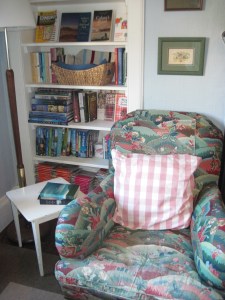
Airbnb bedroom reading nook
Day 5, Sunday the 23rd: Return travel day. No major issues, but still enough of a delay to apply for compensation – refunds from LNER and my husband’s work will have made the journey very cheap indeed.
I was sad to leave Edinburgh this time. I loved our Airbnb flat and felt very at home in it. If I had a bicycle to get into town a little faster, I could easily live there. The tourists would probably drive me mad, but Edinburgh is a wonderful place with so much to see and do and such incredible scenery within a short drive.
Thank you to everyone who offered suggestions of what to see and do. I managed to fit in most of what you recommended!
What I read:
The bulk of Unsheltered, Barbara Kingsolver’s bold new novel about distrust and displacement in America then (the 1870s) and now (during the rise of Trump), and Come to Me by Amy Bloom, a wonderful story collection about people who love who they shouldn’t love. More about this one in my upcoming round-up of short stories I’ve read this month.
 A Ladder to the Sky by John Boyne is a delicious piece of literary suspense with a Tom Ripley-like hero you’ll love to hate: Maurice Swift, who wants nothing more than to be a writer but doesn’t have any ideas of his own, so steals them from other people. I loved how we see this character from several outside points of view – first Erich Ackerman, whose Nazi-era history provides the basis for Maurice’s first novel; then Gore Vidal, to whose Italian home Maurice pays a visit with his new mentor; and finally Maurice’s wife Edith, a celebrated author in her own right – before getting Maurice’s own perspective. By this point we know enough about him to understand just how unreliable a narrator he is. My one criticism is that I would have binned the whole subplot about Edith’s sister and brother-in-law. (A nice touch: at one point Maurice buys a reprint copy of Maude Avery’s Like to the Lark, which should ring a bell from The Heart’s Invisible Furies.)
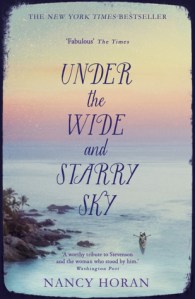 I also read over half of Jenny Diski’s Stranger on a Train, a memoir about two long train journeys she took across America in the late 1990s that also incorporates memories from a troubled adolescence – she started smoking at 14 and was in and out of mental hospitals at 15 – in which she loved nothing more than to read while riding the Circle line all day long. I’m a quarter of the way through both Nancy Horan’s Under the Wide and Starry Sky, about Stevenson and his wife, and Peter Hill’s Stargazing, a memoir about dropping out of art school to become a Scottish lighthouse keeper in 1973; he started on Pladda, a tiny island off of Arran. And on my Nook I read a good bit of All You Can Ever Know, Nicole Chung’s forthcoming memoir about being raised by adoptive white parents in Oregon and meeting members of her Korean family in her mid-twenties, just as she became a mother herself.
Library Checkout: September 2018

I figured out how to set up an alert for 2018 and 2019 releases in my library system’s catalogue so that I get e-mail digests listing all the new books on order. This means I can instantly place holds on loads of buzzy new books. I started with a bunch of the Booker longlistees, even the ones I wasn’t entirely sure about. The only downside is that all the brand-new books tend to start arriving at once. Gah! To make things more manageable for myself, I went ahead and canceled the holds on most of the books that didn’t advance to the Booker shortlist.
(As usual, I’ve added in star ratings and links to Goodreads reviews where I haven’t already featured the books on the blog in some way.)
LIBRARY BOOKS READ
- A Ladder to the Sky by John Boyne
- Madame Zero by Sarah Hall
- Taking Mesopotamia by Jenny Lewis [poetry]
- Bad News by Edward St. Aubyn

SKIMMED ONLY
- First, We Make the Beast Beautiful: A New Story about Anxiety by Sarah Wilson
- You Left Early: A True Story of Love and Alcohol by Louisa Young
CURRENTLY READING
- The Seabird’s Cry: The Lives and Loves of Puffins, Gannets and Other Ocean Voyagers by Adam Nicolson
- Rosie: Scenes from a Vanished Life by Rose Tremain
CURRENTLY READING-ish (set aside temporarily)
- The Catcher in the Rye by J.D. Salinger

CHECKED OUT, TO BE READ
- All Among the Barley by Melissa Harrison
- The Gracekeepers by Kirsty Logan [I’ve already read this one, some years ago, but it’s my book club’s October selection, so I will at least look back over it before the meeting.]
- Now We Shall Be Entirely Free by Andrew Miller
- Wilding by Isabella Tree
IN THE RESERVATION QUEUE
- The Bus on Thursday by Shirley Barrett
- Boy Erased: A Memoir of Identity, Faith, and Family by Garrard Conley
- French Exit by Patrick deWitt
- Washington Black by Esi Edugyan
- Sabrina by Nick Drnaso [graphic novel]
- Swan Song by Kelleigh Greenberg-Jephcott
- Tilly and the Bookwanderers (Pages & Co., #1) by Anna James
- Everything Under by Daisy Johnson
- A Man in Love: My Struggle, Volume 2 by Karl Ove Knausgaard
- The Mars Room by Rachel Kushner
- Johannesburg by Fiona Melrose
- The Tattooist of Auschwitz by Heather Morris
- Ghost Wall by Sarah Moss
- Killing Commendatore by Haruki Murakami
- The Overstory by Richard Powers
RETURNED UNREAD
- Happiness by Aminatta Forna – I loved the premise of this one (it was on my most anticipated list) but didn’t enjoy the style of the first 10 or 15 pages.
- The Sealwoman’s Gift by Sally Magnusson – It’s requested after me and I know I just don’t have time for it, especially if I want to prioritize the Booker-shortlisted books as they arrive.
What have you been reading from your local libraries? Does anything appeal from my stacks?
I don’t have an official link-up system, so please just post a link to your blog in the comments if you’ve taken part in Library Checkout this month. (Feel free to use the image at the top.)
Last-Minute Thoughts on the Booker Longlist
Tomorrow, the 20th, the Man Booker Prize shortlist will be announced. This must be my worst showing for many years: I’ve read just two of the longlisted books, and both were such disappointments I had to wonder why they’d been nominated at all. I have six of the others on request from the public library; of them I’m most keen to read The Overstory and Sabrina, the first graphic novel to have been recognized (the others are by Gunaratne, Johnson, Kushner and Ryan, but I’ll likely cancel my holds if they don’t make the shortlist). I’d read Robin Robertson’s novel-in-verse if I ever managed to get hold of a copy, but I’ve decided I’m not interested in the other four nominees (Bauer, Burns, Edugyan, Ondaatje*).
The Water Cure by Sophie Mackintosh
(Excerpted from my upcoming review for New Books magazine’s Booker Prize roundup.)
 The first word of The Water Cure may be “Once,” but what follows is no fairy tale. Here’s the rest of that sentence: “Once we have a father, but our father dies without us noticing.” The tense seems all wrong; surely it should be “had” and “died”? From the very first line, then, Sophie Mackintosh’s debut novel has the reader wrong-footed, and there are many more moments of confusion to come. The other thing to notice in the opening sentence is the use of the first person plural. That “we” refers to three sisters: Grace, Lia and Sky. After the death of their father, King, it’s just them and their mother in a grand house on a remote island.
There are frequent flashbacks to times when damaged women used to come here for therapy that sounds more like torture. The sisters still engage in similar sadomasochistic practices: sitting in a hot sauna until they faint, putting their hands and feet in buckets of ice, and playing the “drowning game” in the pool by putting on a dress laced with lead weights. Despite their isolation, the sisters are still affected by the world at large. At the end of Part I, three shipwrecked men wash up on shore and request sanctuary. The men represent new temptations and a threat to the sisters’ comfort zone.
This is a strange and disorienting book. The atmosphere – lonely and lowering – is the best thing about it. Its setup is somewhat reminiscent of two Shakespeare plays, King Lear and The Tempest. With the exception of a few lines like “we look towards the rounded glow of the horizon, the air peach-ripe with toxicity,” the prose draws attention to itself in a bad way: it’s consciously literary and overwritten. In terms of the plot, it is difficult to understand, at the most basic level, what is going on and why. Speculative novels with themes of women’s repression are a dime a dozen nowadays, and the interested reader will find a better example than this one.
My rating: 
Normal People by Sally Rooney
Conversations with Friends was one of last year’s sleeper hits and a surprise favorite of mine. You may remember that I was part of an official shadow panel for the 2017 Sunday Times Young Writer of the Year Award, which I was pleased to see Sally Rooney win. So I jumped at the chance to read her follow-up novel, which has been earning high praise from critics and ordinary readers alike as being even better than her debut. Alas, though, I was let down.
 Normal People is very similar to Tender – which for some will be high praise indeed, though I never managed to finish Belinda McKeon’s novel – in that both realistically address the intimacy between a young woman and a young man during their university days and draw class and town-and-country distinctions (the latter of which might not mean much to those who are unfamiliar with Ireland).
The central characters here are two loners: Marianne Sheridan, who lives in a white mansion with her distant mother and sadistic older brother Alan, and Connell Waldron, whose single mother cleans Marianne’s house. Connell doesn’t know who his father is; Marianne’s father died when she was 13, but good riddance – he hit her and her mother. Marianne and Connell start hooking up during high school in Carricklea, but Connell keeps their relationship a secret because Marianne is perceived as strange and unpopular. At Trinity College Dublin they struggle to fit in and keep falling into bed with each other even though they’re technically seeing other people.
The novel, which takes place between 2011 and 2015, keeps going back and forth in time by weeks or months, jumping forward and then filling in the intervening time with flashbacks. I kept waiting for more to happen, skimming ahead to see if there would be anything more to it than drunken college parties and frank sex scenes. The answer is: not really; that’s mostly what the book is composed of.
I can see what Rooney is trying to do here (she makes it plain in the next-to-last paragraph): to show how one temporary, almost accidental relationship can change the partners for the better, giving Connell the impetus to pursue writing and Marianne the confidence to believe she is loveable, just like ‘normal people’. It is appealing to see into these characters’ heads and compare what they think of themselves and each other with their awareness of what others think. But page to page it is pretty tedious, and fairly unsubtle.
I was interested to learn that Rooney was writing this at the same time as Conversations, and initially intended it to be short stories. It’s possible I would have appreciated it more in that form.
My rating: 
My thanks to Faber & Faber for the free copy for review.
 *I’ve only ever read the memoir Running in the Family plus a poetry collection by Ondaatje. I have a copy of The English Patient on the shelf and have felt guilty for years about not reading it, especially after it won the “Golden Booker” this past summer (see Annabel’s report on the ceremony). I had grand plans of reading all the Booker winners on my shelf – also including Carey and Keneally – in advance of the 50th anniversary celebrations, but didn’t even make it through the books I started by the two South African winners; my aborted mini-reviews are part of the Shiny New Books coverage here. (There are also excerpts from my reviews of Bring Up the Bodies, The Sellout and Lincoln in the Bardo here.)
Last year I’d read enough from the Booker longlist to make predictions and a wish list, but this year I have no clue. I’ll just have a look at the shortlist tomorrow and see if any of the remaining contenders appeal.
What have you managed to read from the Booker longlist? Do you have any predictions for the shortlist?
Second Person Narrative at New Era Theatre
It was a busy weekend for me: we saw Teesside folk duo Megson play at our local arts centre on Friday evening; on Saturday I baked a Dorset apple cake to take down to Hampshire for my father-in-law in advance of his 70th birthday, and in the evening, while my hubby got on with PhD stuff, I went to New Era Theatre, housed in a former chapel in our church carpark, for the first time. It’s a cozy space with only about 50 seats, and I sat on the front row.


The production was called Second Person Narrative, written by Jemma Kennedy and directed by Andy Kempe. Four actresses of different ages play the main character, known only as “You,” at various stages of her life. She’s an Everywoman, completely ordinary but also unique. Short scenes jump ahead three to six years at a time to highlight the big and small events that shape her life. At age 11, she tells the photographer on school picture day that she wants to be an explorer and save animals. At 23, she’s trying to spin her minimal experience into an enticing CV. At 36, she’s disillusioned by her first trip to the rainforest.
The set was a blue rectangular space with an Astroturf floor, hanging clouds covered in timepieces, and a gallery wall at the back where artifacts from You’s life accumulated scene by scene: her stuffed rabbit, a bouquet of flowers, a backpack, a cocktail shaker, and so on. The items are clever reminders of touchpoints from her story, but the wall is depressing: you look at it and wonder, Is that really all that a life adds up to? Occasional music emphasized the theme of time passing, with snippets of “As Time Goes By” and “Time after Time,” and the ending of each scene was signaled by the sound of a camera click.
 Supporting characters seemed to serve as commentators on the protagonist’s choices. Her friends, mostly female, were dressed in white, while older males were in gray and played officious roles: her first work supervisor, a persnickety boyfriend who barely noticed when she left him during a trip to Italy, and a trio of men trying to turn her into a TV role model in her twenties or sell her a retirement flat in her seventies. By contrast, You wore red and black. Actresses played multiple roles: You’s mother and Granny from the early years were You in the third and fourth stages of life. This wasn’t just for convenience’s sake; it provides continuity and shows the character coming to resemble the generations of women before her.
The two most poignant scenes for me were when You is shopping with her mother and the salesgirl assumes the older woman will be in the market for things like a full-length caftan, and when sixtysomething You, having published a poetry collection, has to field inane questions from readers who don’t differentiate between a writer’s biography and art. Other scenes, though, such as You awkwardly flirting in a bar, didn’t add much to the whole.
I did expect the play to make more of the second person perspective. It’s something I find fascinating in books – though it’s often difficult to sustain for any longer than a short story or one chapter. The main character is never addressed by name; others refer to “she” or “her.” On a few occasions other actors come to the edge of the stage and carry on a one-sided dialogue, turning the audience into “You” and letting us fill in for ourselves what she’s saying in reply. What was confusing to me about that was that, as the years passed, the audience wasn’t only taking on the role of You, but her daughter and granddaughter too.
Only once is actual second person narration employed. This is during a nice meta moment when You, now 56, is hosting a book club meeting for friends; the text they’re discussing is Second Person Narration. After an argument with her daughter, she says aloud, “You look at your friends. You feel embarrassed. You pick your black top off the floor and wonder if you can actually still get into it.” One of the friends on stage asks, “Why is she talking like that?”
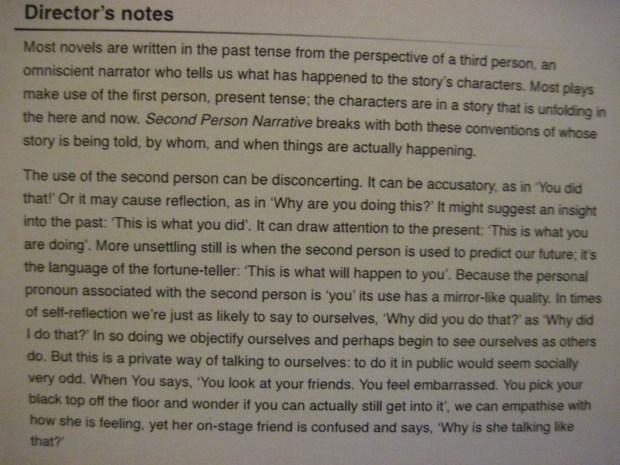
Overall, I found the production a bit odd and not entirely coherent, but it did succeed in making me think about the expectations placed on a woman’s life – by her family and friends, by society at large, and also by herself. The ending then, I think, specifically invites us to question how things would have gone differently had You been born male.
My rating:
 Bookish Beck = Rebecca Foster. American transplant to England. Freelance proofreader and book reviewer.
