Book Serendipity, August to September 2023
I call it “Book Serendipity” when two or more books that I read at the same time or in quick succession have something in common – the more bizarre, the better.
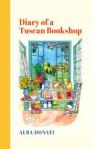
In Diary of a Tuscan Bookshop, Alba Donati remarks on this phenomenon: “Jung called these coincidences ‘synchronicities’, postulating that the universe possessed its own form of intelligence, which generated harmonies. A universe that detects and brings together the elements it feels are seeking each other in the endless swirl of life. Chance be damned.”
This is a regular feature of mine every couple of months. Because I usually have 20–30 books on the go at once, I suppose I’m more prone to such incidents. The following are in roughly chronological order.
- A memoir that opens with a little girl being injured in a bicycle accident: Some of Us Just Fall by Polly Atkin and Pharmakon by Almudena Sánchez.
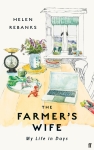
- Telling stories through embroidery in Cross-Stitch by Jazmina Barrera and The Farmer’s Wife by Helen Rebanks.

- A small boy nicknamed “Willmouse” (real name: William) in Mary and the Birth of Frankenstein by Anne Eekhout and The Greengage Summer by Rumer Godden.
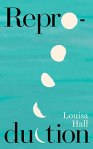
- An account of a routine sonogram that ends with the technician leaving the doctor to deliver bad news in Reproduction by Louisa Hall and The Unfamiliar by Kirsty Logan.
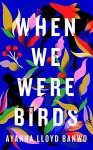
- Black dreadlocks/braid/ponytail being cut off in When We Were Birds by Ayanna Lloyd Banwo, The Wren, The Wren by Anne Enright, and Rebecca, Not Becky by Christine Platt and Catherine Wigginton Greene.

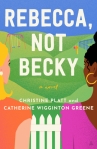
- Wondering how to arm a Black daughter against racist microaggressions in Rebecca, Not Becky by Christine Platt and Catherine Wigginton Greene and Ordinary Notes by Christina Sharpe.
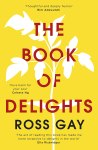
- Countering the commodification or romanticization of Black suffering in The Book of Delights by Ross Gay and Ordinary Notes by Christina Sharpe.

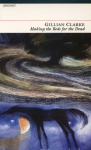
- An account of how the foot and mouth disease outbreak of 2001 affected the UK, especially northwest England, in Making the Beds for the Dead by Gillian Clarke and The Farmer’s Wife by Helen Rebanks.
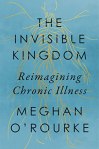
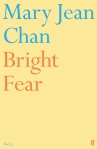
- I encountered the quote from Elaine Scarry’s The Body in Pain about pain being inexpressible in Reproduction by Louisa Hall and The Invisible Kingdom by Meghan O’Rourke on the same day. It’s also referenced in Mary Jean Chan’s Bright Fear.
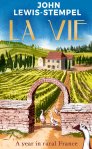
- A mention of eating frogs’ legs in The Book of Delights by Ross Gay and La Vie by John Lewis-Stempel.
- I read about the effects of heavy metal pollution on the body in The Invisible Kingdom by Meghan O’Rourke and Windswept by Annie Worsley in the same evening.
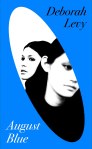
- Composer Erik Satie is mentioned in Making the Beds for the Dead by Gillian Clarke and August Blue by Deborah Levy.
- Stendhal syndrome and Florence are mentioned in The Wren, The Wren by Anne Enright and Pharmakon by Almudena Sánchez.
- Swallows nesting in an old Continental building in Diary of a Tuscan Bookshop by Alba Donati and La Vie by John Lewis-Stempel.
- France being all about the rules and a “Putain de merde” exclamation to bad news in Dirt by Bill Buford and La Vie by John Lewis-Stempel.

- A character named Nomi in Friends and Strangers by J. Courtney Sullivan and one called Noemi in Diary of a Tuscan Bookshop by Alba Donati.
- Epigenetics (trauma literally determining the genetic traits that are passed on) is discussed in The Invisible Kingdom by Meghan O’Rourke and Pharmakon by Almudena Sánchez.
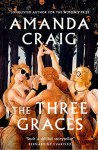
- Women of a certain age in Tuscany in The Three Graces by Amanda Craig and Diary of a Tuscan Bookshop by Alba Donati.
- Audre Lorde is quoted in Tremor by Teju Cole, Bibliomaniac by Robin Ince, The Invisible Kingdom by Meghan O’Rourke, Alone by Daniel Schreiber, and Ordinary Notes by Christina Sharpe.
- A Galway Kinnell poem is mentioned/quoted in The Dead Peasant’s Handbook by Brian Turner and Otherwise by Julie Marie Wade.
- The Bamiyan Buddhas are mentioned in Tremor by Teju Cole and The Dead Peasant’s Handbook by Brian Turner.


- Both The Three Graces by Amanda Craig and The Story of Lucy Gault by William Trevor open with a man shooting someone from his bedroom window.
- Linked short story collections about two children’s relationship with their Jamaican father, and mention of a devastating hurricane, in If I Survive You by Jonathan Escoffery and The Human Origins of Beatrice Porter and Other Essential Ghosts by Soraya Palmer. (Dual review coming up tomorrow!)
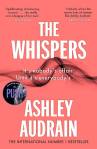
- Characters named Ben and Mara in The Whispers by Ashley Audrain and one story in Kate Doyle’s I Meant It Once.
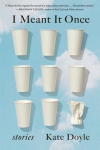
- Occasional uncut pages in my copies of I Meant It Once by Kate Doyle and The Unfamiliar by Kirsty Logan.
- A Florida setting and mention of the Publix supermarket chain in If I Survive You by Jonathan Escoffery and Arms and Legs by Chloe Lane.
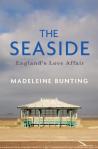
- A down-at-heel English seaside town near Scarborough features in The Seaside by Madeleine Bunting and Penance by Eliza Clark.

- A fictional northern town with “Crow” in the name: Crow-on-Sea in Penance by Eliza Clark and Crows Bank in Weyward by Emilia Hart.
- Claw-machine toys are mentioned in Penance by Eliza Clark and Directions to Myself by Heidi Julavits.
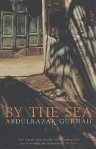
- Reading books by two Nobel Prize winners at the same time: Abdulrazak Gurnah (By the Sea) and Alice Munro (Hateship, Friendship, Courtship, Loveship, Marriage).
- Reading my second 2023 release featuring North Carolina ghost lights (after All of Us Together in the End by Matthew Vollmer, which I actually read last year): The Caretaker by Ron Rash.
- Reading my second 2023 release featuring a cat named Virginia Woolf (after Tell the Rest by Lucy Jane Bledsoe, which I actually read last year): one of the short stories in I Meant It Once by Kate Doyle.
- A character named Shay in Everyone but Myself by Julie Chavez, The Human Origins of Beatrice Porter and Other Essential Ghosts by Soraya Palmer and The Caretaker by Ron Rash.

What’s the weirdest reading coincidence you’ve had lately?
Love Your Library, September 2023
Thanks, as always, to Elle for her participation, and to Marcie for sharing some of her latest library borrowing on Twitter – I mean X. (Can’t get used to that change.)

Thanks also to Jana for posting about the books she has out, and what is new for the autumn at the library where she works.
I’ve been stocking up on books for upcoming challenges and buddy reads (R.I.P., 1962 Club, L.M. Montgomery readalong, Margaret Atwood Reading Month, etc.), with a big novella stack to be borrowed later in the week.
My reading and borrowing since last time:
READ
- The Three Graces by Amanda Craig

- Uncle Paul by Celia Fremlin

- Tom Lake by Ann Patchett
SKIMMED
- Wild Fell by Lee Schofield
CURRENTLY READING
- The Absolutely True Diary of a Part-Time Indian by Sherman Alexie
- The Whispers by Ashley Audrain
- The Seaside by Madeleine Bunting
- Penance by Eliza Clark
- The Year of the Cat by Rhiannon Lucy Coslett
- By the Sea by Abdulrazak Gurnah (for book club)
- Reproduction by Louisa Hall
- Weyward by Emilia Hart
- Findings by Kathleen Jamie (a re-read)
- Milk by Alice Kinsella
CHECKED OUT, TO BE READ
University library stack at left.


RETURNED UNREAD
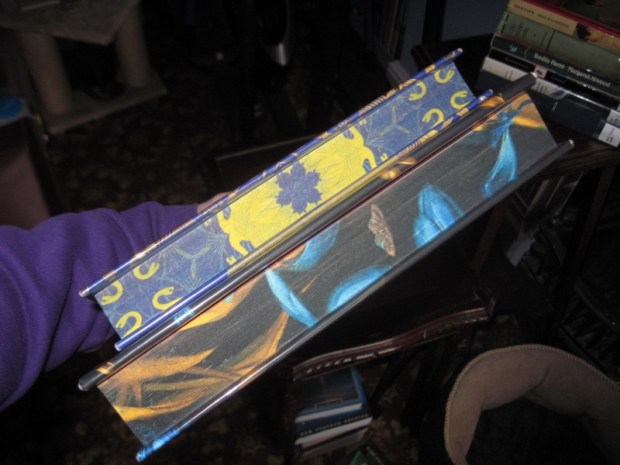
- The Fascination by Essie Fox – Turns out the gorgeous sprayed edges were not enough to get me to read this (the bottom book pictured below is Weyward).
What have you been reading or reviewing from the library recently?

Share a link to your own post in the comments. Feel free to use the above image. The hashtag is #LoveYourLibrary.
Short Stories in September, Part II: Brautigan, Doyle, Minot, Simpson
Every time I do this self-set challenge, I am amazed anew by how different short story collections can be in mood and theme – even if their overall concerns are the same as in most fiction: life and death, relationships, identity, choices. Today I have one debut work, two new-to-me authors, and a disappointing showing from an old favourite.
Revenge of the Lawn: Stories 1962–1970 by Richard Brautigan (1972)
 There are more than five dozen stories in this slim volume, most just one to three pages and in the first person (55 of 62); bizarre or matter-of-fact slices of life in the Pacific Northwest or California, often with a grandiose title that’s then contradicted by the banality of the contents (e.g., in the three-page “A Short History of Religion in California,” some deer hunters encounter a group of Christian campers). The simple declarative sentences and mentions of drinking and hunting made me think of Carver and Hemingway, but Brautigan is funnier, coming out with the occasional darkly comic zinger. Here’s “The Scarlatti Tilt” in its entirety: “‘It’s very hard to live in a studio apartment in San Jose with a man who’s learning to play the violin.’ That’s what she told the police when she handed them the empty revolver.”
In the absurdist “Homage to the San Francisco YMCA,” a man replaces his plumbing with poetry: “He took out his bathtub and put in William Shakespeare. The bathtub did not know what was happening. He took out his kitchen sink and put in Emily Dickinson. The kitchen sink could only stare back in wonder.” Brautigan has an incomer’s admiration for California: “I come from someplace else and was gathered to the purpose of California like a metal-eating flower gathers the sunshine.” Many of the flash stories feel autobiographical and bridge country and city life with themes of bear hunting versus movie-going and riding buses.
There are some macho attitudes towards women, who are generally objects of male desire rather than subjects in their own right. But I appreciated this flash fiction collection for its unexpected metaphors and tonal range, from the over-the-top humour of “Complicated Banking Problems” to a pathos-filled rundown of a life in “The World War I Los Angeles Aeroplane.” (Secondhand – Westwood Books, Sedbergh, 2023)
I Meant It Once by Kate Doyle (2023)
 A debut collection of 16 stories, three of them returning to the same sibling trio. Many of Doyle’s characters are young people who still define themselves by the experiences and romances of their college years. In “That Is Shocking,” Margaret can’t get over the irony of her ex breaking up with her on Valentine’s Day after giving her a plate of heart-shaped scones. Former roommates Christine and Daisy are an example of fading friendship in “Two Pisces Emote about the Passage of Time.”
The title phrase comes from “Cinnamon Baseball Coyote,” one of the Helen–Grace–Evan stories, when the sparring sisters are children and the one writes down “I hate my sister” and saves the paper in her desk because, as she tells their father, “I don’t mean it anymore. I only kept it because I meant it once.” Moments of great drama or emotion, and the regret that comes in their aftermath, are the stuff of these mainly New York City-set stories.
Across nine first-person and seven third-person stories, the content and point of view are pretty samey and minor; nothing here to make you feel you’re reading a rising star of American fiction. I only found a few standouts. “Hello It’s You” is about Meg’s history of same-sex partners: though she’s with Sara now, she can’t stop thinking about Jenny, her college girlfriend. “Aren’t We Lucky” has a soupçon of magic as it imagines a house and its ghosts resisting renovations. But my favourite was “Moments Earlier,” about Kelly’s medical crisis and the friends who never get past it. 
With thanks to Corsair for the free copy for review. See also Susan’s review.
Why I Don’t Write and Other Stories by Susan Minot (2020)
 Minot was new to me (as was Brautigan). These stories were first published between 1991 and 2019, so they span a good chunk of her career. “Polepole” depicts a short-lived affair between two white people in Kenya, one of whom seems to have a dated colonial attitude. In “The Torch,” a woman with dementia mistakes her husband for an old flame. “Occupied” sees Ivy cycling past the NYC Occupy camp on her way to pick up her daughter. The title story, published at LitHub in 2018, is a pithy list of authorial excuses. “Listen” is a nebulous set of lines of unattributed speech that didn’t add up to much for me. “The Language of Cats and Dogs” reminded me of Mary Gaitskill in tone, as a woman remembers her professor’s inappropriate behaviour 40 years later.
Eight of the stories are in the third person and two in the first person. They’re almost all accomplished in terms of scene setting and creating characters and motivations, but I can’t say Minot won me over such that I’ll seek out more of her work. Only a few stories will stay with me: “Green Glass,” in which a man encounters his ex-girlfriend at a wedding and cuts her down to size in a way that alarms his current partner; “Boston Common at Twilight,” an account of a strange but ultimately non-consensual sexual encounter; and my favourite, “Café Mort,” the only one with a speculative edge, about an establishment that only serves the dead. (New bargain purchase – Dollar Tree, Hagerstown, Maryland, 2023)
Hey Yeah Right Get a Life by Helen Simpson (2000)
This was my sixth collection from Simpson, who only appears to write short fiction. This was one of my least favourite of her books, unfortunately, because her common theme of frazzled mothers trying to balance parenting with career felt tired. The title story is about Dorrie, mum of three, and this set of characters recurs in the final piece, “Hurrah for the Hols.” Simpson does get the mindset just right:
She had to be thinking of other people all the time or the whole thing fell apart.
I can’t see how the family would work if I let myself start wanting things again, thought Dorrie; give me an inch and I’d run a mile, that’s what I’m afraid of.
The whole pattern of family life hung for a vivid moment above the chopping board as a seamless cycle of nourishment and devoural.
It was like being on holiday with Punch and Judy – lots of biffing and shrieking and fights over sausages.

But I’ve read too many of her exasperated-mum stories at this point. Two here were about female bankers. One, “Burns and the Bankers,” set at a seemingly endless Burns Night supper, rather outstayed its welcome and made overly obvious its message about this being a man’s field. Do read Simpson, but maybe not this (despite the amazing title); I’d recommend Four Bare Legs in a Bed or In the Driver’s Seat (UK title: Constitutional) instead. (Secondhand – Books for Amnesty, York, 2023)
I’ll have one more set of reviews and a roundup on the last day of the month.
Currently reading: If I Survive You by Jonathan Escoffery; The Best Short Stories 2023: The O. Henry Prize Winners, ed. Lauren Groff; How to Disappear by Tara Masih; Hateship, Friendship, Courtship, Loveship, Marriage by Alice Munro; The Human Origins of Beatrice Porter and Other Essential Ghosts by Soraya Palmer; Close Company: Stories of Mothers and Daughters, ed. Christine Park; Small, Burning Things by Cathy Ulrich
Nonfiction and Poetry Review Catch-Up: Carson, Dixon, McLaren, Sharpe
Today I’m finally writing up four review copies that came my way quite a while ago (last year in one case). A bereavement memoir about a friend lost to opiate addiction, a nature-rich poetry collection, a practical book about being part of positive movements whether led by religion or not, and an eye-opening work of cultural criticism about Black art and suffering.
The Dead Are Gods: A Memoir by Eirinie Carson (2023)
When I was back in the States in May for my sister’s nursing school graduation, I got a chance to talk to her best friend, who is a library assistant. During the never-ending reading-out of names (it was a whole-college ceremony, as opposed to the one earlier in the day just for the nursing cohort), I read Hello Beautiful on my Kindle, tucked inside the graduation program; this friend openly read a library copy of The Dead Are Gods on her lap. When I teased her that at least I kept my book hidden, like I do at church inside the hymn book, she said (re: church), “Or you could just … not go?” (On which, see the McLaren review below!)
 Anyway, it was nice to see this book out and about in the world, and it reminded me to belatedly pick up my review copy once I got back. As a bereavement memoir, the book is right in my wheelhouse, though I’ve tended to gravitate towards stories of the loss of a family memoir or spouse, whereas Carson is commemorating her best friend, Larissa, who died in 2018 of a heroin overdose, age 32, and was found in the bath in her Paris flat one week later.
Carson wrote this three years afterward, yet the feeling is still raw. Addressing Larissa as “you” for much of the book, she loops through their history in short chapters that hop around like memory does. They met as teenagers in London and bonded over being Black models and rock music fans. After their wild years, their paths started to drift apart. Carson moved to California and married and had children; Larissa relocated to Paris and, apparently, kept partying. Her dependency came as news to Carson – all the more ironic because her father, too, is a heroin addict and mostly not present in her life.
Anyone who has suffered a loss will find much that resonates here, no matter the circumstances or timing. Carson puzzles over the difficulty of making a narrative out of death and grief (“How should I remember you? Am I doing it right? Is this enough?”), of even comprehending the bare facts of permanent absence. She’s working towards understanding, and desperate to let people know about the marvel that was Larissa. Apart from in the title chapter, the language does not stand out so much as the relatable emotion. (And it’s hard to take their pet name- and typo-strewn e-mails seriously.) Still, I marked out lots of passages to save: “It is frustrating when the one person who could answer all of your many, many questions is the dead person. … Searching for meaning in the most meaningless event in our lives feels a little stupid but I still search.”
With thanks to Melville House for the proof copy for review.
A Whistling of Birds by Isobel Dixon (illus. Douglas Robertson) (2023)
 Dixon was a new name for me, but the South African poet, now based in Cambridge, has published five collections. I was drawn to this latest one by its acknowledged debt to D.H. Lawrence: the title phrase comes from one of his essays, and the book as a whole is said to resemble his Birds, Beasts and Flowers, which is in its centenary year. I’m more familiar with Lawrence’s novels than his verse, but I do own his Collected Poems and was fascinated to find here echoes of his mystical interest in nature as well as his love for the landscape of New Mexico. England and South Africa are settings as well as the American Southwest.
Snakes, bees, bats and foxes are some of the creatures that scamper through the text. There are poems for marine life, fruit and wildflowers. You get a sense of the seasons turning, and the natural wonders to prize from each. Dixon’s poetry is formal yet playful, the structures and line and stanza lengths varying. “Tirrick” is full of wordplay relating to Arctic terns; phrases flit across the page to mimic flight in “the bats”; “Hummingbird ~” mixes Latin names with vivid descriptions: “the oil spill of God’s glory / taking wing” and “sweet-wrapper glamour scrap / hovering shadow-gloss”.
There are portraits and elegies; moments where the speaker is present versus fable-like omniscient warnings or teasing. I particularly loved “River Mother” (an ode to a pregnant crab), “The Guests” (about a “festival of frogs” after rain), the praying mantis depicted in “A Missionary in Neon Green” (“Soul on stilts, / a gog-eyed alien”), and the everyday ecstasy of “On First Spotting a Snake’s Head Fritillary.” The book is in collaboration with Scottish artist Douglas Robertson, who provided 12 black-and-white illustrations, and is a real gem.
With thanks to Nine Arches Press for the free copy for review.
Do I Stay Christian? A Guide for the Doubters, the Disappointed and the Disillusioned by Brian McLaren (2022)
McLaren is one of the important gurus in my life. This follows on closely from his previous book, Faith after Doubt, which I reviewed last year. You might think that the title question is only rhetorical and the answer is a firmly implied Yes. But what’s refreshing is that the author genuinely does not have a secret agenda. He doesn’t mind whether you continue to consider yourself Christian or not; what he does care about is inviting people into a spiritual life that includes working towards a regenerative future, the only way the human race is going to survive. And he believes that people of all faiths and none can be a part of that.
 But first to address the central question: Part One is No and Part Two is Yes; each is allotted 10 chapters and roughly the same number of pages. McLaren has absolute sympathy with those who decide that they cannot in good conscience call themselves Christians. He’s not coming up with easily refuted objections, straw men, but honestly facing huge and ongoing problems like patriarchal and colonial attitudes, the condoning of violence, intellectual stagnation, ageing congregations, and corruption. From his vantage point as a former pastor, he acknowledges that today’s churches, especially of the American megachurch variety, feature significant conflicts of interest around money. He knows that Christians can be politically and morally repugnant and can oppose the very changes the world needs.
And yet. He believes Christianity can still be a force for good, and it would be a shame to give up on the wealth of its (comparatively short) history and the paragon that is Jesus (whom he provocatively describes as “an indigenous man who prepared for his public ministry with a forty-day vision quest”). The arguments in this section are more emotional, whereas in the previous section they were matter-of-fact. However, McLaren poses a middle option between leaving the religion dramatically and remaining meekly; he calls it “staying defiantly.” My husband and I read this as a buddy read, and that will be an important concept for us: how can we challenge the status quo of our church, our denomination, this too often staid faith?
Part Three, “How,” offers ideas for how to build a resilient faith that prioritizes harmony with the environment and with others while sidelining economic concerns. He may not believe in literal hell, but he’s as end-times-oriented as any fire-and-brimstone preacher when he insists, “we have to prepare ourselves to live good lives of defiant joy in the midst of chaos and suffering. This can be done. It has been done by billions of our ancestors and neighbours.” He ends with a supremely practical piece of advice: ask yourself “whether your current context will allow the highest and best use of your gifts and time.” Lucid and well argued, this is a book I’d recommend to anyone questioning the value of Christianity.
With thanks to Hodder & Stoughton for the free copy for review.
Ordinary Notes by Christina Sharpe (2023)
This work of cultural criticism takes the form of 248 numbered micro-essays, some as short as one line and others up to a few pages. The central topics are Black art and Black suffering – specifically, how the latter is depicted. The book kept slapping me awake, because her opinions were not what I was expecting. Her responses to her 2018 visits to two landmarks in Montgomery, Alabama, the Legacy Museum and the National Memorial for Peace and Justice, give a taste of her outlook. The museum draws a direct line between slavery and mass incarceration; the memorial documents all known cases of lynching, and she’s in its graveyard when a white woman comes up to her, crying and apologizing. When people ask Sharpe why she didn’t reply, she says, “she tries to hand me her sorrow … to super-add her burden to my own. It is not mine to bear.”
 Many of these early notes question the purpose of reliving racial violence. For instance, Sharpe is appalled to watch a Claudia Rankine video essay that stitches together footage of beatings and murders of Black people. “Spectacle is not repair.” She later takes issue with Barack Obama singing “Amazing Grace” at the funeral of slain African American churchgoers because the song was written by a slaver. The general message I take from these instances is that one’s intentions do not matter; commemorating violence against Black people to pull at the heartstrings is not just in poor taste, but perpetuates cycles of damage.
The book is a protest, strident yet calm, but also a celebration of the Black humanities and an elegy to her late mother, who prepared her to live as a confident, queer woman of colour in a white world. Sharpe decries the notion that art by BIPOC is only of sociological interest, to inform white people about “identity” – this is both a simplification and a means of othering.
Books—poetry, fiction, nonfiction, theory, memoir, biography, mysteries, plays—have always helped me locate myself, tethered me, helped me to make sense of the world and to act in it. I know that books have saved me. By which I mean that books always give me a place to land in difficult times. They show me Black worlds of making and possibility.
And she mainly credits her mother for introducing her to the literature that would sustain her: “My mother wanted me to build a life that was nourishing and Black. … My mother gifted me a love of beauty, a love of works. She gave me every Black book that she could find.” I loved the account of their Sunday afternoon teas, when they had cake and each read aloud a short piece they had memorized by the likes of Gwendolyn Brooks or Langston Hughes.
I found the straightforward autobiographical material, particularly the grief over the loss of her mother, more emotionally resonant than much of the book’s theorizing. The scholarly register can occasionally be off-putting, e.g., “I write these ordinary things to detail the everyday sonic and haptic vocabularies of living life under these brutal regimes.” The other media include letters, headlines, lists, and photographs, creating an overall collage effect. That the book occasionally made me uncomfortable is, no doubt, proof that I needed to read it.
With thanks to Daunt Books for the free copy for review.
Getting Ready for Novellas in November!
Novellas: “all killer, no filler”
~Joe Hill
For the fourth year in a row, Cathy of 746 Books and I are celebrating the art of the short* book by co-hosting Novellas in November as a month-long challenge. This time we have five prompts, adapted from ones commonly used for Nonfiction November. (*A reminder that we suggest 200 pages as the upper limit for a novella.)
Here’s the schedule:
Week 1 (starts Wednesday 1 November): My Year in Novellas
- During this partial week, tell us about any novellas you have read since last NovNov.
Week 2 (starts Monday 6 November): What Is a Novella?
- Ponder the definition, list favourites, or choose ones you think best capture the ‘spirit’ of a novella.
Week 3 (starts Monday 13 November): Broadening My Horizons
- Pick your top novellas in translation and think about new genres or authors you’ve been introduced to through novellas.

Week 4 (starts Monday 20 November): The Short and the Long of It
- Pair a novella with a nonfiction book or novel that deals with similar themes or topics.
Week 5 (starts Monday 27 November): New to My TBR
- In the last few days, talk about the novellas you’ve added to your TBR since the month began.
We also have two buddy read options, one contemporary and one classic. Please join us in reading one or both at any time in November!
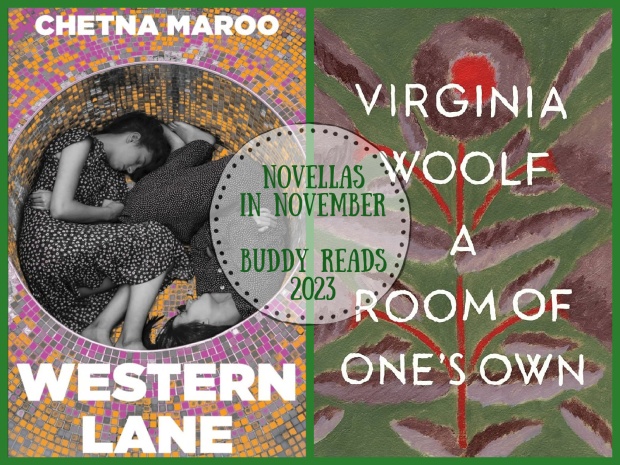
Western Lane by Chetna Maroo (2023) is on this year’s Booker Prize longlist; whether or not it advances to the shortlist on Thursday, it promises to be a one-of-a-kind debut novel about an eleven-year-old girl coming to terms with the loss of her mother and becoming deeply involved in the world of competitive squash.
A Room of One’s Own by Virginia Woolf (1929), an extended essay about the conditions necessary for women’s artistic achievement, is based on lectures she delivered at Cambridge’s women’s colleges. This feminist classic is in print or can be freely read online (Internet Archive or Project Gutenberg Canada).
It’s always a busy month in the blogging world, what with Nonfiction November, German Literature Month, and Margaret Atwood Reading Month. Why not search your shelves and/or local library for novellas that count towards multiple challenges? You might also consider participating in Annabel’s Beryl Bainbridge Reading Week (the 18th through 26th) as most of Bainbridge’s novels were under 200 pages.
We’re looking forward to having you join us! From 1 November there will be a pinned post on my site from which you can join the link-up. Keep in touch via Twitter (@cathy746books) and Instagram (@cathy_746books), and feel free to use the terrific feature images Cathy has made plus our new hashtag, #NovNov23.
September Focus on Short Stories, with Reviews of Bloom and de Kerangal
This is the eighth year in a row in which I’m making a special effort to read short stories in September; otherwise, story collections tend to languish on my shelves (and Kindle) unread. In September 2021 I read 12 collections and in September 2022 it was 11.5; let’s see how many I get to this year!
As someone who doesn’t claim to love short stories, I was surprised to see that I’ve already read 19 collections this year. Some of the highlights have been Old Babes in the Wood by Margaret Atwood, How Strange a Season by Megan Mayhew Bergman, What We Talk about When We Talk about Love by Raymond Carver, Games and Rituals by Katherine Heiny, and Sidle Creek by Jolene McIlwain.
I have a whole shelf of short story options set out for me and will make my selections from there. For now, I have brief reviews of two collections I read during a quick trip to the USA.
A Blind Man Can See How Much I Love You by Amy Bloom (2000)
 My second collection by Bloom this year, after Where the God of Love Hangs Out; somewhat confusingly, the latter reprints two of this volume’s Lionel and Julia stories, so there were actually only six stories here that were new to me (5 x first-person; 3 x third-person). However, they’re all typically great ones. The title story has a mother accompanying her daughter to the medical appointments that will transform Jessie into Jess, her son, and also taking a chance on romance. “Rowing to Eden” explores the dynamic between best friends, one lesbian and one married to a man; the one has already been through breast cancer treatment so can counsel her friend from experience.
In “Stars at Elbow and Foot,” a woman whose baby died goes back to the children’s hospital to volunteer with the disabled. “Hold Tight” also reflects on loss and accidents (but is probably the throw-away story if I had to name one). “The Story,” which closes the book, had me hunting for autobiographical correlations what with its mentions of “Amy.” By far my favourite was “The Gates Are Closing,” in which D.M. is having an affair with the synagogue president’s husband, who has Parkinson’s disease. As Yom Kippur approaches, he gives his mistress an ultimatum. The minor assisted dying theme in this one felt ironically prescient of Bloom’s own experience accompanying her husband to Dignitas (the subject of In Love). As always, Bloom’s work is sensual, wry and emotionally wise.
Canoes by Maylis de Kerangal (2021; 2023)
[Translated from the French by Jessica Moore]
These eight stories are all in the first person; although I tend to prefer more diversity of narration, the plots are so dissimilar that it makes up for that homogeneity. In an author’s note at the end, de Kerangal writes that her overall theme was voices, especially women’s voices; perhaps ironically, then, the collection uses no speech marks. In “Mountain Stream and Iron Filings,” the narrator’s friend Zoé is on a mission to lower her voice to make it more suitable for radio. “Nevermore” has a woman contributing a recording of herself reading Edgar Allan Poe’s epic poem “The Raven” to an audio library. “A Light Bird,” which I found particularly poignant, is about a widower and his daughter deciding what to do about their late wife’s/mother’s voice on the answering machine.
 “After” has a school leaver partying and figuring out what comes next, “Ontario” revolves around a trip to Canada, and “Arianespace” has an investigator visiting an elderly woman who has reported a UFO sighting. The longest story (billed as a novella), “Mustang,” focuses on a French family that has relocated to Colorado in the 1990s. The mother, recently bereaved, learns to drive their rather impractical American car.
Like Painting Time, the collection is in thrall to questions of deep time. This is clearest in “Bivouac,” in which a woman undergoes a procedure while the dentist tells her about an ancient human jawbone found deep under Paris. Prehistory is even present in the metaphorical language: “the first foothills of the Rockies sketched the backbone of a sleepy stegosaurus who’d escaped extinction” (from “Mustang”). Each story also mentions a canoe, if only in passing (e.g., the dentist’s necklace charm in the first story).
As was my main quibble with Mend the Living, though, de Kerangal is all too fond of arcane vocabulary. I mean, she uses “alveolar” twice in this very short book; there’s also “sagittal slices” and “sinuous mnemic circuits.” Some sentences stretch to fill two-plus pages. So overwriting is a recurrent issue I have with her work, but I would certainly recommend that her fans read her short fiction, which I found more accessible than her novels. 
With thanks to MacLehose Press for the free copy for review. Canoes will be published on 28 September.
Currently reading: Revenge of the Lawn by Richard Brautigan; I Meant It Once by Kate Doyle; The Best Short Stories 2023: The O. Henry Prize Winners, ed. Lauren Groff; Why I Don’t Write by Susan Minot; Hateship, Friendship, Courtship, Loveship, Marriage by Alice Munro; The Human Origins of Beatrice Porter and Other Essential Ghosts by Soraya Palmer (linked stories); Small, Burning Things by Cathy Ulrich.
Resuming soon: The Secrets of a Fire King by Kim Edwards; If I Survive You by Jonathan Escoffery (I read the first two stories ages ago, but its longlisting for the Booker Prize is the impetus I need to pick it back up); Hey Yeah Right Get a Life by Helen Simpson.
Are you a short story fan? Read any good ones recently?
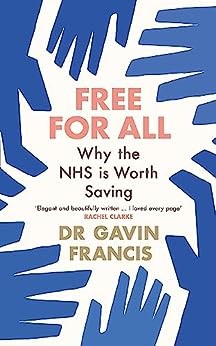
Long Live the NHS! Free for All by Gavin Francis
Dr Gavin Francis’s Intensive Care is the definitive Covid-19 read for me, and I admired his follow-up, Recovery, a personal and general history of convalescence. Free for All is most similar to the latter: a short book, impassioned and practical, that demands a social safety net.
The UK’s National Health Service was established 75 years ago this summer, with the aim of making healthcare free at the point of use for everyone, funded not by charity but by taxation. Today, the NHS is limping along from crisis to crisis (every winter, basically) because it has been chronically underfunded. Any UK-based reader could tell their own story of ridiculous wait times*, I suspect.
Francis makes it clear that the governing party of the last 13 years bears the responsibility for this. The UK’s healthcare spending is lower than that of key European benchmark nations that have better health outcomes. The Conservatives’ goal seems to be to privatize health and focus on market demand. Francis argues powerfully that allowing healthcare to be driven by profit, as it is in the USA, is immoral and uncivilized.
His valuable perspective is that of a GP who has to pick up the slack in his clinics and is begged not to send any but the most desperate cases to overcrowded hospitals. Services are strained to the breaking point; private medicine, far from lessening the burden, increases it when patients revert to the NHS for follow-up care or repair of botched procedures. Meanwhile, the introduction of performance standards can divert doctors’ attention to ticking boxes and ensuring value for money rather than providing the best possible care. Overtreatment (mostly of the elderly) is another potential pitfall.
Francis elaborates his case through his work with anonymized patients, conversations with fellow medical professionals, and a frank look at the statistics on spending and achievements. The book is slightly dry compared to some of his earlier work, simply because of the subject matter, and I noticed a bit of repetition. However, it is still a concise and cogent manifesto. The author believes that people can show they value the NHS by electing politicians who will properly fund it. The NHS is, after all, “an expression of what’s best in our society” and “worth saving,” he concludes. Hear hear!
With thanks to Profile Books/Wellcome Collection for the free copy for review.
Buy Free for All from Bookshop UK. [affiliate link]
*Mine? I waited 12 months for a PHONE consultation with an ear, nose and throat specialist regarding tinnitus. By that point, of course, my problem had largely subsided.
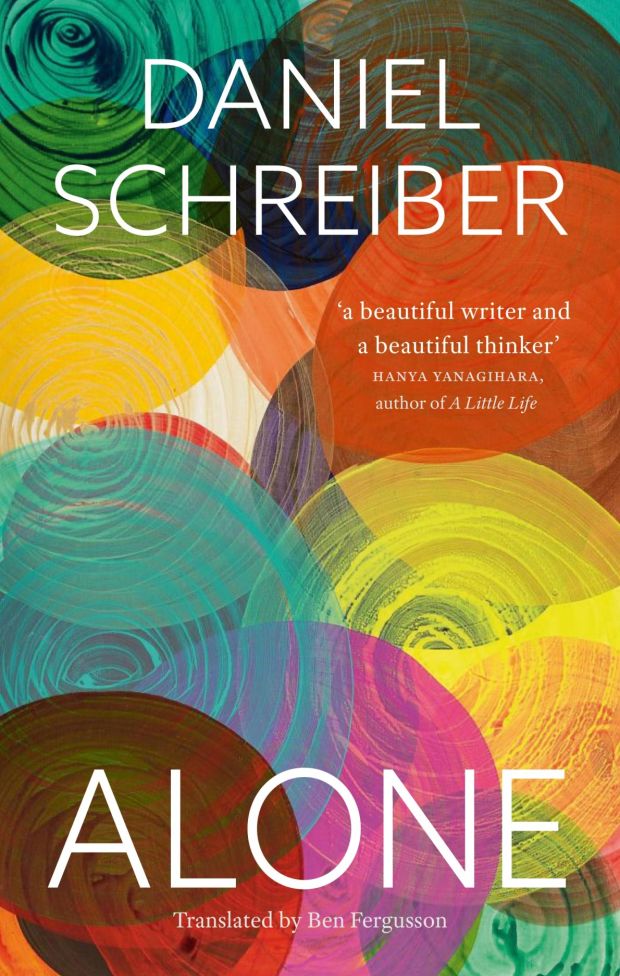
Alone by Daniel Schreiber (Blog Tour)
Daniel Schreiber is a Berlin-based essayist and biographer of Susan Sontag. These philosophical reflections on solitude and loneliness, coinciding with the first year of the pandemic, reveal his ambivalence about living alone and his frustration that the idea of the couple so defines society that anyone who does not fall in line is considered aberrant.
“I never made a conscious decision to live alone,” Schreiber says. Although he has had many partners, some of them long term, and even lived with two of them for a time, he is single at the time of writing, and can’t help but think that his state implies some kind of deficiency. Part of this he attributes to queer shame that he must have subconsciously internalized, and part to Pauline Boss’s concept of the “ambiguous loss” – missing what one has never had.
The author has many friends, men and women, but feels that society tells us platonic love is less than romantic love; “friendship is thus reduced to a time of transition … a threshold state that ends when one successfully integrates into traditional forms of cohabitation.” His friend novelist Hanya Yanagihara (who gives a quote on the cover) corroborates this suspicion, which A Little Life affirms: “In the end, she said, you are always alone when you are single.”
The “Never So Lonely” chapter is about the Covid-19 situation in particular. Schreiber acknowledges that being alone does not have to equate to loneliness, yet the less he saw of people during lockdowns, the more he struggled mentally and emotionally. “At some point, a self-reinforcing dynamic of fear set in: the lonelier I felt, the less I could talk about it. And the less I talked about it, the lonelier I felt.”
Hiking, gardening, yoga and, eventually, foreign travel were among his coping strategies. This is as much a mini-memoir as it is a work of cultural criticism. Its academic tone is evident from a glance at the bibliography: Hannah Arendt, Roland Barthes, Joan Didion, Deborah Levy, Audre Lorde, Maggie Nelson and so on. This resonated with other loneliness- or solitude-themed books I’ve read, such as The Lonely City by Olivia Laing and Journal of a Solitude by May Sarton. It offers not answers, but solemn, quiet thoughts.
(Original publication: 2021. Translated from the German by Ben Fergusson.)
With thanks to Reaktion Books for the proof copy for review.
Literary Wives Club: Sea Wife by Amity Gaige
My sixth read with the Literary Wives online book club (see also Kay’s and Naomi’s reviews), and favourite so far!
{SPOILERS}
Amity Gaige’s fourth novel, Sea Wife (2020), places the protagonists’ relationship in the ultimate pressure cooker: a small sailboat where they will live and travel with their two young children – Sybil, 7, and George, 2 – for one year. Michael and Juliet Partlow’s marriage was in trouble even before they set off for Panama in the yacht Juliet. The voyage seems equal parts second chance and doomed swan song.
Narration alternates between the spouses, as Juliet in the present day sits in a closet reading excerpts from Michael’s ship’s logbook. The latter are in bold font and right-aligned to distinguish them, though his voice would be enough to do so: Juliet is a cynical poet and failed PhD candidate, while Michael is a commonsense financier. Issues of money and politics have come between them. But Juliet’s trauma from childhood sexual abuse and subsequent estrangement from her mother, who disbelieved her, is the greater problem.
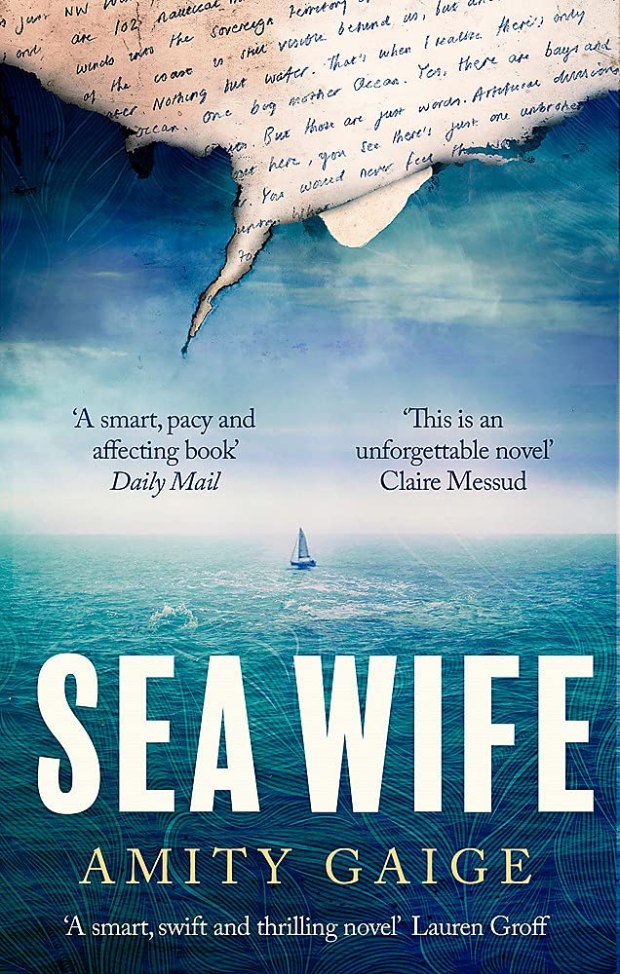
Gaige has rendered these two voices very effectively, and maintains tension about what will happen when the Partlows leave Colombia for Jamaica and storms brew. Early on, Michael is warned that changing a boat’s name is bad luck, and it doesn’t take long to confirm that maritime superstition. Michael may think he’s doing it as a sweet tribute to his wife, but you have to wonder if he’s actually replacing her, or admitting that he’s lost her in real life.
Enhancing the epistolary nature, Gaige includes transcripts from an interview and some of Sybil’s therapy sessions (in which she sounds too young; would a seven-year-old seriously say “loveded” as a past participle?), fragments of Juliet’s unfinished dissertation on Anne Sexton, and so on. I think I would have omitted the final section of documents, though. Still, this was a darn good read: literary but suspenseful, and fitting the Literary Wives brief perfectly for its claustrophobic focus on a marriage. (Birthday gift from my wish list)
The main question we ask about the books we read for Literary Wives is:
What does this book say about wives or about the experience of being a wife?
A marriage changes a lot over the years. A project embarked on with the best of intentions can falter for any number of reasons. A person you once thought you could rely on might let you down. I feel Juliet internalized impossibly high standards for an ideal wife and mother that set her up for failure – it must be difficult for someone who has been a victim to do anything but go through life wounded.
Both protagonists explicitly reflect on their marriage and acknowledge that they have not known how to love or be there for each other, and so have felt alone.
Juliet: “I realized that the loneliness was not new at all. That, in fact, I had been lonely for a long time. Because my husband and I did not know each other. We did not know how to help each other or work together. And yet our fates were bound. By a theory. I mean our marriage. The arrangement was illogical.”
Michael: “Have I lied to her? Sure. I lied to her the moment I represented myself as someone she could count on for a lifetime. … We can’t seem to love each other in the same way at the same time.”
Next book: Hamnet by Maggie O’Farrell in December (a reread for me)
20 Books of Summer, 18–20: Ayanna Lloyd Banwo, Sarah Hall, Meghan O’Rourke
Whew, it’s the final day of the challenge and I’ve managed to finish and write up a last batch of two novels and one nonfiction work: a magic realist tableau of love and death in Trinidad, a fateful romance set against the backdrop of the construction of an English dam in 1936, and a personal and cultural record of chronic illness and its treatment in contemporary America.
When We Were Birds by Ayanna Lloyd Banwo (2022)
 I was sent a copy as part of the McKitterick Prize shortlist. The setting of a cemetery, Fidelis in Port Angeles, Trinidad, had vaguely attracted me even before its nomination. Emmanuel Darwin has turned his back on his Rastafarian upbringing to cut off his dreadlocks and work as a gravedigger (any contact with the dead is anathema in the religion). Meanwhile, Yejide, who lives in the hills, is losing her mother, Petronella, and gaining a legacy she’s not sure she wants: the women of her family are caretakers of the souls of the dead, keeping them alive in exchange for protection. Like the corbeaux, dark counterparts of tropical parrots, they tread the border of life and death. As All Saints’ and All Souls’ Days draw closer, Darwin and Yejide together have to decide whether they will be swallowed by the graveyard or escape it. While this was atmospheric and had alluring elements, the speculative angle was not notably well realized and the particular form of patois – eschewing all possessives and most verb conjugations – drove me nuts. I skimmed this one. (Free from the Society of Authors)
Haweswater by Sarah Hall (2002)
I bought this in Cumbria one year and started reading it in Cumbria the next. Once I got home, however, there was little impetus to keep going. Were it not for the temporary local interest, I likely would not have finished this debut novel, which lurches between dry and melodramatic. As it is, I had to skim to the end. Had it been my first taste of Sarah Hall’s work, it might have put me off trying her again.
 The frame is historical: Haweswater was indeed dammed to provide water for the city of Manchester in 1936, flooding the village of Mardale. Hall focuses on the people of Mardale, specifically the Lightburn family, who have persisted with farming despite its particular challenges in this hilly landscape. When Jack Liggett comes out from the City on behalf of the waterworks, he meets with hostility, including from the Lightburns’ daughter, Janet, who negotiates for their tenancy to continue until the dam is actually built. Then, well, you know, Romeo and Juliet and pride and prejudice and all that, and they start an affair. Hall has always written forthrightly about sex, starting here.
There’s a climactic final 60 pages in which three major characters die, two in symbolic acts of suicide, but it was a little too much tragedy, too late, for me after the dull midsection. I was intrigued, however, that a plot point turns on golden eagles being in the valley, as Wild Fell, another of my Haweswater-set reads, opens with the presence of the ghost of England’s last golden eagle, who vanished in 2015. This related snippet shows how over-the-top Hall’s use of dialect is: “Golden eagles wud be mor’less gone, gone or illegal these days, like, notta funni bizniz t’be gittin’ mixed up in, eh? What kinda daft bugger d’yer take mi for?” It’s like Thomas Hardy rustics – hard to take seriously. (Anne-Marie Sanderson’s haunting song “Haweswater” is based on the novel.) (Secondhand – Clutterbooks, Sedbergh, 2022) 
The Invisible Kingdom: Reimagining Chronic Illness by Meghan O’Rourke (2022)
Well before I was a devoted follower of the Barbellion Prize for books on disability and chronic illness, I was interested in these topics. For much of her forties and fifties, my mother struggled with fibromyalgia, one of a suite of illnesses misunderstood or even dismissed by the medical profession (as O’Rourke puts it, with a tongue-in-cheek nod to Jane Austen: “it is a truth universally acknowledged among the chronically ill that a young woman in possession of vague symptoms like fatigue and pain will be in search of a doctor who believes she is actually sick”). I hope this National Book Award nominee goes some way toward convincing skeptics that these are real conditions to be addressed by listening to patients and treating them holistically.
 In 2012 the author became seriously ill and spent much of her thirties in a fog of pain, spending the equivalent of several days per month at doctors’ appointments and agreeing to ever more bizarre treatments in her desperation. Some of her issues were autoimmune and/or genetic: Hashimoto’s (thyroid), Ehlers-Danlos, POTS, endometriosis. She also dealt with infertility at the same time as she was trying to get well enough to contemplate having children. For her, the turning point was when she was diagnosed with Lyme disease and put on antibiotics. (Later she would travel to London to get fecal microbiota transplants to restore her microbiome.) Chronic Lyme is similar to long COVID, the true extent of which we’re only just beginning to understand; reading a list of the symptoms, I was tempted to remotely/retrospectively diagnose a few people I know with one or the other. It can be ever so slightly miserable reading about navigating all of these conditions, though nowhere near as miserable as it must have been for O’Rourke to live through them, of course.
I knew the author for her exquisite memoir of losing her mother to cancer, The Long Goodbye. Here the writing is more functional and journalistic, but I was still impressed by the attention she pays and the connections she draws; she’s also a poet, so she’s open to emotions and keen to capture them in words. In the face of the unexplained, she contends, chronically ill people are searching for meaning and narrative (restitution, chaos or quest, as Arthur Frank named the three options). She probes her own psyche: “had I become trapped in my identity as a sick person, someone afraid of living? If my mission in life had been reduced to being well at all costs, then the illness had won.” There’s a good balance of research, personal experience and general reflection in this one. (Passed along by Laura – thank you!)
Related reads: Ill Feelings by Alice Hattrick, It’s All in Your Head by Suzanne O’Sullivan, Waiting for Superman by Tracie White
And that’s a wrap! My summer reading was a little scattered and not as thematic as initially planned, but I stuck to my pledge to read only print books that I owned, and then cleared half of them from my shelves through reselling or donating to the Little Free Library. I’ll definitely call that a win.
My favourite from the 20 was a novel, Search by Michelle Huneven, then Making the Beds for the Dead by Gillian Clarke (poetry), followed by two chef’s memoirs, A Cook’s Tour by Anthony Bourdain and Dirt by Bill Buford, and Dorthe Nors’ nature/travel essays. The one DNF and couple of skims are unfortunate, but these things happen.
Next year I fancy a completely open challenge – just, again, getting through books from my shelves. (Maybe all hardbacks?)
 Bookish Beck = Rebecca Foster. American transplant to England. Freelance proofreader and book reviewer.
 Bookish Beck