Literary Wives Club: The Sentence by Louise Erdrich
This has been my first read with the Literary Wives online book club. The other members will also be posting their thoughts this week; we consider four books per year in total.
See also the reviews by:
Kay at What Me Read
Lynn at Smoke & Mirrors
Naomi at Consumed by Ink
I wrote a general review of The Sentence in April when it was on the Women’s Prize longlist (it has since advanced to the shortlist). This time I’m focusing on the relationship between Tookie and Pollux. The central question we ask about the books we read for Literary Wives is:
What does this book say about wives or about the experience of being a wife?
 ~SPOILERS IN THIS ONE~
There are some unusual aspects to the central marriage in this novel. For one thing, Pollux, a former tribal policeman, was the one to arrest Tookie. For another, although he is a “ceremony man” keeping up Native American rituals (e.g., burning sweetgrass and receiving an eagle corpse from the government to make a fan), he doesn’t believe in ghosts, so Tookie keeps Flora’s haunting of the bookshop from him, as well as from some of her colleagues. For a time, this secret makes Tookie feel like she’s facing the supernatural alone.
Pollux does not, cumulatively, get a lot of page time in the novel, yet I got the sense that he was always there in the background as support. Their relationship is casual and sweet, with lots of banter and a good dollop of sex considering they’re some way into middle age. Clearly, they rely on each other. Their marriage keeps Tookie grounded even when traumatic memories or awful current events rear up.
Now I live as a person with a regular life. A job with regular hours after which I come home to a regular husband. … I live the way a person does who has ceased to dread each day’s ration of time. I live what can be called a normal life only if you’ve always expected to live such a way. If you think you have the right. Work. Love. Food. A bedroom sheltered by a pine tree. Sex and wine.
The thing I knew was that if anything happened to Pollux I would die too. I would be happy to die. I would make sure that I did.
With the latter passage in mind, I did fear the worst when Pollux caught Covid and was hospitalized; I was as relieved as Tookie when he was discharged.
Along with Pollux comes his daughter, Hetta, and her baby son Jarvis. Tookie and Hetta had generally been cool towards each other, but the presence of the baby and the lockdown situation soften things between them. Having never been a maternal sort, Tookie falls completely in love with Jarvis and takes every excuse to babysit him. This gives us a welcome glimpse into another aspect of her character.
I noted a couple of other passages where rituals have practical or metaphorical significance for the central relationship:
At a New Year’s buffet: “a wild rice argument can wreck friendships, kill marriages, if allowed to rage.”
“You let the logs burn long enough so they made a space between them. You gotta keep the fire new. Every piece of wood needs a companion to keep it burning. Now push them together. Not too much. They also need that air. Get them close, but not on top of each other. Just a light connection all the way along. Now you’ll see a row of even flames.”
Pollux is literally instructing Tookie in how to light a fire there, but could just as well be prescribing what makes a marriage work. Connection but a bit of distance; support plus freedom. Their existence as a couple seems to achieve that. They have their individual lives with separate jobs and hobbies, but also a cosy bond that buoys them.
Next book: Red Island House by Andrea Lee in September.
Six Degrees of Separation: From Sorrow and Bliss to Weather
This month we begin with Sorrow and Bliss by Meg Mason. (See also Kate’s opening post.) This is my personal favourite from the Women’s Prize shortlist and couldn’t be a better pick for the Six Degrees starter this month because I’ll be skimming back through the novel this weekend in advance of my book club’s discussion of it on Monday. (We’re one of this year’s six book groups shadowing the Women’s Prize through a Reading Agency initiative, so we then have to give semi-official feedback on our experience of the book by Wednesday.)

 #1 Sorrow and Bliss is a terrific tragicomedy about sisterhood and mental health – as is All My Puny Sorrows by Miriam Toews, with which it shares a loaded title word as well.
 #2 Toews grew up in a Canadian Mennonite community, which leads me to my second choice, Mennonite in a Little Black Dress by Rhoda Janzen, a set of droll autobiographical essays that I read on a USA trip in 2017.
 #3 During the same trip, I read Dear American Airlines by Jonathan Miles, a witty novel about Bennie Ford’s rather miserable life, presented in the form of his longwinded complaint letter to the airline that has treated him to an unexpected overnight layover in Chicago.
 #4 Another laugh-out-loud book in the form of unlikely letters: Dear Committee Members by Julie Schumacher, in which Jason Fitger, an irascible middle-aged English professor in the Midwest, writes ambivalent letters of recommendation for students and colleagues.
 #5 One more “Dear” book of letters – I just can’t get enough of the epistolary form: Dear Fahrenheit 451 by Annie Spence. As the subtitle states, it’s a librarian’s love letters and breakup notes to books she’s adored and loathed. Casual and amusing, with good book recs.
 #6 I’ll finish with Weather by Jenny Offill, one of my favourites from 2020, which is also voiced by a librarian. Through Lizzie, Offill captures modern anxiety about Trump-era politics, the climate crisis and making meaningful use of time.
I have read all the books in this month’s chain (the links above are to my Goodreads reviews), and in a time of relentless bad news have chosen to prioritize humour and keep my descriptions short and light. These are all books that made me laugh, sometimes despite their weighty content, and half of them are built around letters. I’ve also looped from one Women’s Prize-shortlisted title to another.
Where will your chain take you? Join us for #6Degrees of Separation! (Hosted on the first Saturday of each month by Kate W. of Books Are My Favourite and Best.) Next month’s starting point will be Wintering by Katherine May – though it’s summer here, it’s winter where Kate is in Australia!
Have you read any of my selections? Tempted by any you didn’t know before?
Society of Authors Awards Ceremony & 2022 McKitterick Prize
The Society of Authors, the UK trade union for writers, awards multiple grants and prizes. As I’ve mentioned in a couple of previous posts, I was one of the manuscript judges for its 2022 McKitterick Prize, awarded to a debut novelist aged 40+.

Last night I watched part of the livestream for the SoA Awards ceremony, held at Southwark Cathedral. I had to take the above screenshot! SoA Chair Joanne Harris and keynote speaker Lemn Sissay handed out the prizes to the winners and runners-up. (The full list is available here; I’m particularly delighted that Will McPhail’s In, the first graphic novel nominated for an SoA award, won the £10,000 Betty Trask Prize.)
The McKitterick Prize winner was:
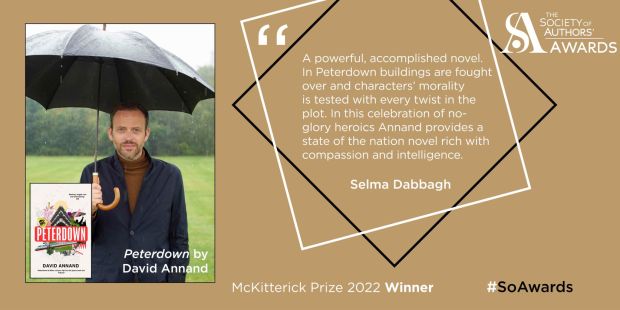
A book I clearly need to source at once!

And the runner-up was:
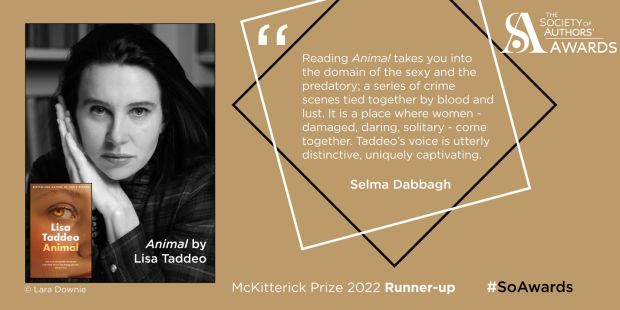
(A controversial novel I’m not so sure I see myself reading.)
Wishing an enjoyable long Jubilee weekend to those in the UK who plan to celebrate. Down with the monarchy, is the general vibe in my household, but we’ll have scones and meet some new neighbours at today’s street party (our first of two) anyway.
20 Books of Summer 2022: Flora Theme
It’s my fifth year participating in Cathy’s 20 Books of Summer challenge, which starts tomorrow. Each year I choose a theme. Thus far I’ve done books by women; animals; food and drink; and colours. This year will be all about flora; mostly trees, I reckon. As always, I’ll interpret the theme loosely and include titles, authors and covers that seem apt for whatever reason.
I have lots to choose from. Here’s the stacks from my shelves, divided into fiction and non-:


And a relevant recent haul from the library:
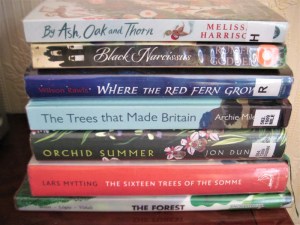
There will be other options on my Kindle too, such as Orwell’s Roses by Rebecca Solnit.
I’m eyeing these up as my first four:


(Nina Mingya Powles also kicked off my 2020 foodie reading!)

Are you joining in the summer reading challenge? What’s the first book on the docket?
Love Your Library, May 2022
I have a big ol’ stack of library books with me in Spain and I hope they have been good companions on the holiday, especially on the 20-hour ferry rides there and back (I’m scheduling this before we set off).
Margaret shared a lovely post about a grandchild’s early appreciation of the local library. And Naomi reviewed three novels she has recently read from the library, two I loved and one I’m partway through.
Since last month, here are my stats…
READ
- Elizabeth Finch by Julian Barnes

- Yinka, Where is Your Huzband? by Lizzie Damilola Blackburn

- Falling Angels by Tracy Chevalier (reread for May’s book club meeting)

- Bitch: The Female of the Species by Lucy Cooke (review pending for Shelf Awareness)
- The Sentence by Louise Erdrich

- The Exhibitionist by Charlotte Mendelson
- French Braid by Anne Tyler

With loads still on the go, and a preposterous number of reservations pending and hopefully not all arriving while I’m away.
What have you been reading or reviewing from the library recently?

Share a link to your own post in the comments. Feel free to use the above image. The hashtag is #LoveYourLibrary.
May Releases: Barrera, Cornwell, Jones, Ruhl
Greetings from the English Channel! I’m putting this quick post together on an outdoor deck as we leave Plymouth harbour on the ferry to Spain. I’ve taken a seasickness pill and am wearing acupressure bracelets, and so far I’m feeling pretty well here taking in a sea breeze; fingers crossed that it will continue to be a smooth voyage.

Have a look at all the lovely May releases above. How I wish that I’d had a chance to read some of them this month! Alas, things have been so busy with our move that I have only cracked one open so far (the Shipstead), but I’m looking forward to reading the rest soon after we get back. For now, I’ll give snippets of early reviews I’ve published elsewhere: two memoirs of pregnancy and early motherhood (the one focusing on postnatal depression), a varied short story collection, and an accessible volume of poetry written during Covid lockdowns.
Linea Nigra: An Essay on Pregnancy and Earthquakes by Jazmina Barrera
(Translated from the Spanish by Christina MacSweeney)
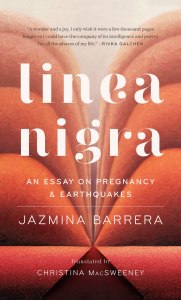 In a fragmentary work of autobiography and cultural commentary, the Mexican author investigates pregnancy as both physical reality and liminal state. The linea nigra is a stripe of dark hair down a pregnant woman’s belly. It’s a potent metaphor for the author’s matriarchal line: her grandmother was a doula; her mother is a painter. In short passages that dart between topics, Barrera muses on motherhood, monitors her health, and recounts her dreams. Her son, Silvestre, is born halfway through the book. She gives impressionistic memories of the delivery and chronicles her attempts to write while someone else watches the baby. This is both diary and philosophical appeal—for pregnancy and motherhood to become subjects for serious literature. (See my full review for Foreword.)
Birth Notes: A Memoir of Recovery by Jessica Cornwell
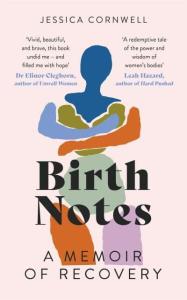 It so happens that May is Maternal Mental Health Awareness Month. Cornwell comes from a deeply literary family; the late John le Carré was her grandfather. Her memoir shimmers with visceral memories of delivering her twin sons in 2018 and the postnatal depression and infections that followed. The details, precise and haunting, twine around a historical collage of words from other writers on motherhood and mental illness, ranging from Margery Kempe to Natalia Ginzburg. Childbirth caused other traumatic experiences from her past to resurface. How to cope? For Cornwell, therapy and writing went hand in hand. This is vivid and resolute, and perfect for readers of Catherine Cho, Sinéad Gleeson and Maggie O’Farrell. (See my full review for Shiny New Books.)
With thanks to Virago for the proof copy for review.
Antipodes: Stories by Holly Goddard Jones
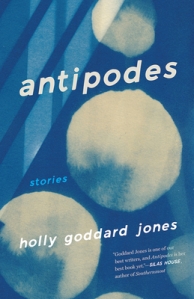 Jones’s fourth work of fiction contains 11 riveting stories of contemporary life in the American South and Midwest. Some have pandemic settings and others are gently magical; all are true to the anxieties of modern careers, marriage and parenthood. In the title story, the narrator, a harried mother and business school student in Kentucky, seeks to balance the opposing forces of her life and wonders what she might have to sacrifice. The ending elicits a gasp, as does the audacious inconclusiveness of “Exhaust,” a tense tale of a quarreling couple driving through a blizzard. Worry over environmental crises fuels “Ark,” about a pyramid scheme for doomsday preppers. Fans of Nickolas Butler and Lorrie Moore will find much to admire. (Read via Edelweiss. See my full review for Shelf Awareness.)
Love Poems in Quarantine by Sarah Ruhl
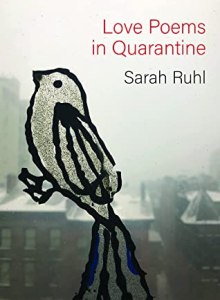 Having read Ruhl’s memoir Smile, I recognized the contours of her life and the members of her family. In early poems, cooking and laundry recur, everyday duties that mark time as she tries to write and supervises virtual learning for three children. “Let this all be poetry,” she incants. Part Two contains poems written after George Floyd’s murder, the structure mimicking how abrupt the change in focus was for a nation. Part Three moves into haiku and tanka, culminating in a series of poems reflecting on the seasons. Like Margaret Atwood’s Dearly, I would recommend this even to people who think they don’t like poetry. A welcome addition to the body of Covid-19 literature. (Read via Edelweiss. See my full review on Goodreads.)
Two favourite poems:
“Shelter”
To love a house
not because it’s perfect but because it shelters you
To love a body
not because it’s perfect but because it shelters you
“Quarantine in August, the overripe month”
I’m tired of summer. I crave fall. Luckily fall comes after summer.
And if I get tired of it all, winter will come, then spring.
Have you read anything from my tempting stack?
What other May releases can you recommend?
Spring Reading, Part II: May, Moving and Swifts
Eight days after our move, there are still piles of boxes, but the furniture is in place and there are clear walkways, so we’ll call that progress. We got a lot of help on moving day from neighbours, one of whom built a tower of book boxes in the corner of the dining room! I had fun dismantling it last week and assigning each box to a particular bookcase. Arranging the contents on shelves will be for once we’re back from Spain.
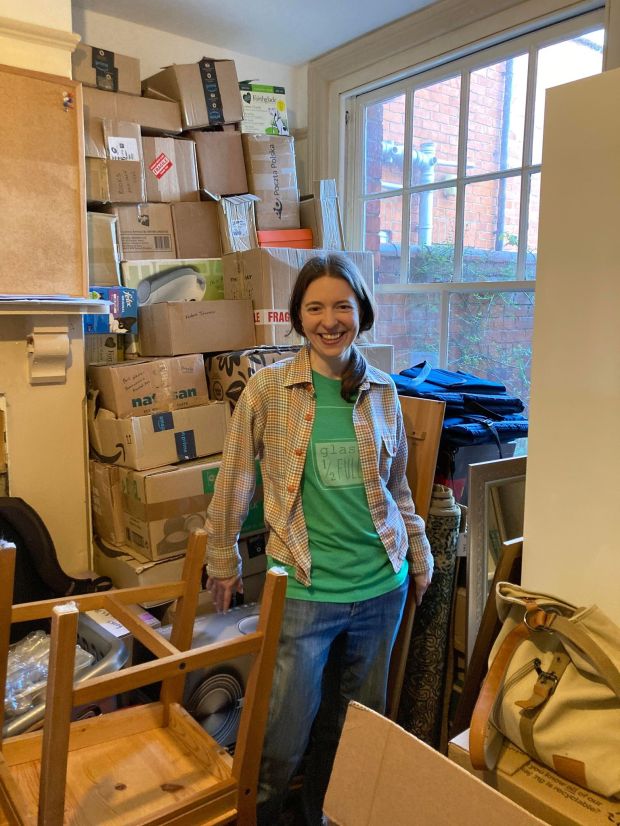
What with moving and DIY, I haven’t had a lot of time for reading lately, so didn’t finish any more of the spring books I’d intended to include – except for one children’s book from the library. I’ll give a little rundown of some of what has been on my coffee table stack.
Busy Spring: Nature Wakes Up by Sean Taylor and Alex Morss; illus. Cinyee Chiu (2021)
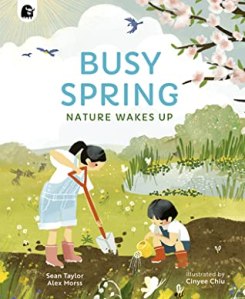 This was a cute read about two little girls helping their father in the garden and discovering the natural wonders of the season, like tadpoles in a pond, birds building nests, and insects and worms in the compost heap. A section at the end gives more information about the science of spring – unfortunately, it mislabels one bird and includes North American species without labelling them as such, whereas the rest of the book was clearly set in the UK. The strategy reminded me of that in Wild Child by Dara McAnulty. This year is the first time a children’s book Wainwright Prize will be awarded, so we’ll see this kind of book being recognized more.
May reads:
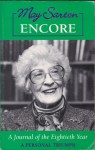 Encore is my last unread journal of May Sarton’s. It begins in May 1991, when she’s 79 and in recovery from major illness. She’s still plagued by pain and fatigue, but her garden and visits from friends are a solace. Although she has to lie down to garden, “to put my hands in the earth to dig is life giving … it is almost as if the earth were nourishing me at the moment.” As usual, there are lovely reflections on the freedoms as well as the losses of ageing. This book, like the previous, was dictated, so there is a bit of repetition. I’ve been amused to see how pretentious she found A.S. Byatt’s Possession! An entry or two at a sitting helped calm my mind during the stress of moving week.
“In a funny way what drives me is the spring, the fleeting spring. Because of the enormous wind and rain we have had, a lot of the daffodils have blown down, though not as many as I feared. But the truth is that their peak is past. We shall have them for another week and then they will be gone. It seems quite unbearable but that is what spring is—the letting go. The waiting and waiting and waiting, and then the letting go.”
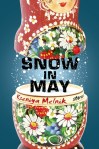
I started a reread of Snow in May by Kseniya Melnik and am partway through the second story. It’s a linked short story collection set in Magadan in northeast Russia – known for Stalin’s forced-labour camps. In “Love, Italian Style, or in Line for Bananas,” it’s 1975 and Tanya is on a shopping spree in Moscow. At a time of deprivation, she buys even things she doesn’t need or that aren’t quite right. Propositioned by an Italian football player on the plane ride over, she fantasizes about the exotic and romantic, juxtaposed against her everyday life.
“The pollen swirled around her like snow. There was a time when the distinctions between right and wrong seemed indisputable, and doing right felt good. When all the decisions had been premade and in her best interest. Back when she didn’t need so much to be happy.”
Belonging
 I saw it on shelf at the library and knew now was the perfect time to read My Life in Houses by Margaret Forster, a memoir via the places she’s lived, starting with the house where she was born in 1938, on a council estate in Carlisle. There’s something appealing to me about tracing a life story through homes – Paul Auster did the same in part of Winter Journal. I’d be tempted to undertake a similar exercise myself someday.
 The swifts come screeching down our new street and we saw one investigating a crevice in our back roof for a nest! In Fledgling by Hannah Bourne-Taylor, she is lonely in rural Ghana, where she and her husband had moved for his work, and takes in a young swift displaced from its nest. I’m only in the early pages, but can tell that her care for the bird will be a way of exploring her own feeling of displacement and the desire to belong. “Although I was unaware of it at the time, the English countryside and the birds had turned into my anchor of home.”
Vacation Reading Plans: Spain and Scotland
As treats to look forward to after our DIY and moving adventures, we booked ourselves two summer holidays. Next week we’re off to Northern Spain for eight days. Thanks to a Brittany Ferries voucher from a cancelled trip in 2020, it ended up being a really cheap option – but it means I have to go to sea for 20 hours, each way. And I hate boats. My last sea voyage back from France only lasted four hours or so, but I was so sick. This time, I will be packing all the seasickness remedies known to woman. Your ideas are welcome!
I’ve never been to Spain and have lost my kindergarten Spanish beyond the few bits I’ve picked back up from my husband’s Duolingo practice. We’ve had next to no time to plan what we’re going to do while we’re there, but it should be a great place for hiking and wildlife watching, with a more Atlantic than Mediterranean climate. (We’re no beachgoers.)
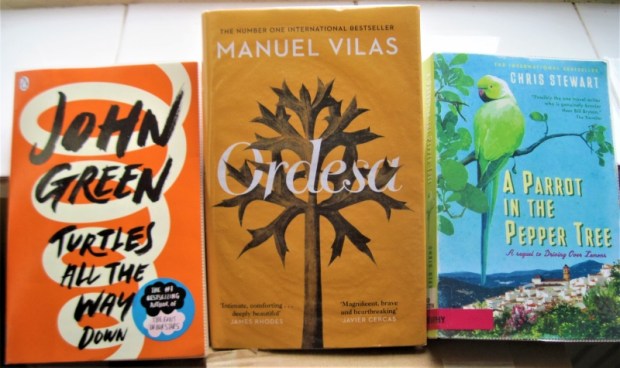
What I have been planning, of course, is what I’ll read. I asked Twitter for recommendations, and got a couple that I followed up on. My library’s holdings weren’t particularly helpful, but I found a few somewhat appropriate reads: As I Walked Out One Midsummer Morning by Laurie Lee, Homage to Catalonia by George Orwell, A Parrot in the Pepper Tree by Chris Stewart, Ordesa by Manuel Vilas, and The Shadow of the Wind by Carlos Ruiz Zafón. Alas that all of these are by men and only two are in translation! For place-specific reading, I’ve supplemented them with Book of Days by Phoebe Power, a book-length poem about the Camino pilgrimage route to Santiago de Compostela, which passes not far from where we’re staying.
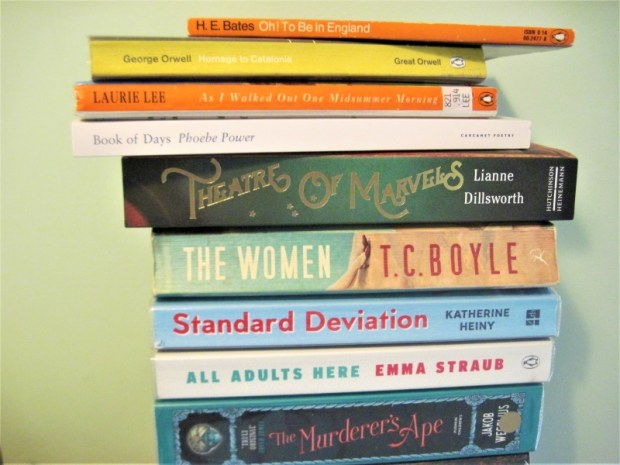
I also amassed a bunch of doorstoppers and slightly lighter literary fiction to help the hours at sea pass. See anything you’d particularly recommend? I’ll likely pack all of these and more (‘sensible’ is not a word that can generally be applied to my reading plans or habits!) because we’re taking a car onto the ferry so space/weight is not an issue.
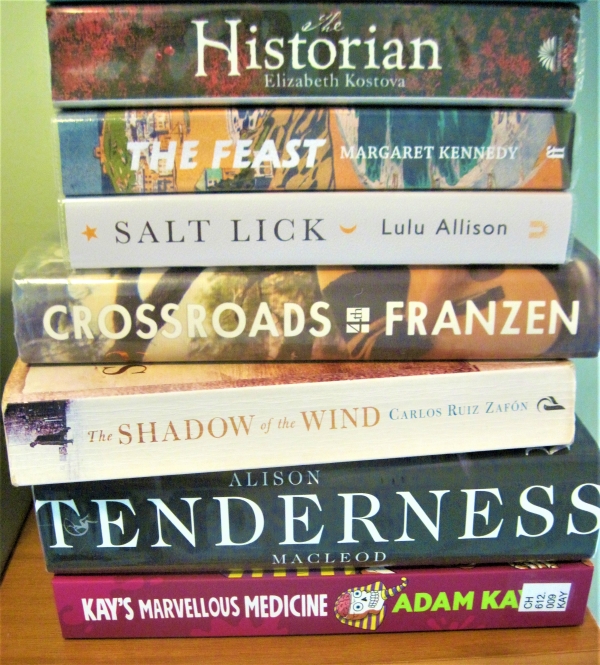
Ironically, I have many more relevant book ideas for our second summer holiday to the Outer Hebrides in late June, but we’re travelling up by train so my book capacity will be minimal! There are loads of novels set on Scottish islands. Here’s what I’m pondering from the library:


Love of Country would be a reread, but is really more for my husband to read. I also fancy a reread of Night Waking by Sarah Moss.
Do you have any trips to look forward to? Will you try for any reading on location?
The End of an Era
This is where I’ve written 90% of my blog posts and other reviews over the last five and three-quarter years*:

A hand-me-down 17-year-old PC. No Internet connection. Hot drink. Glass of water. Stack of books. Music on. Generally, a cat on the top of the sofa behind me.
Tomorrow is moving day. I’ll say farewell to this place through the titles of some books I’m reading at the moment. We haven’t been here that long in the grand scheme of things, yet it’s the longest either of us has lived anywhere since our childhood homes. And even though we’re only moving around the corner, so we get to keep all our activities and acquaintances, it still feels like a wrench, mostly because of leaving our canalside garden, given our Devotion to our very own Empire of Wild. It’s a time of Transitions. The new house has yet to feel like a true Haven, but we’ll get there. We’re still Fledgling homeowners, but we’re looking forward to this Newbury Encore!
*I completely forgot that it was my seventh blog anniversary on 8 March! It’s unlike me to overlook something like that. I can only put it down to house-buying stress.
Reviews: de Jongh, Eipe, Parker and Scull
Today’s roundup includes a graphic novel set during the U.S. Dust Bowl, a Dylan Thomas Prize-shortlisted poetry collection infused with Islamic imagery, a book about adaptive technologies for the disabled, and a set of testimonies from the elderly and terminally ill.
Days of Sand by Aimée de Jongh (2021; 2022)
[Translated from the Dutch by Christopher Bradley]
Dust can drive people mad.
 This terrific Great Depression-era story was inspired by the real-life work of photographers such as Dorothea Lange who were sent by the Farm Security Administration, a new U.S. federal agency, to document the privations of the Dust Bowl in the Midwest. John Clark, 22, is following in his father’s footsteps as a photographer, leaving New York City to travel to the Oklahoma panhandle. He quickly discovers that struggling farmers are believed to have brought the drought on themselves through unsustainable practices. Many are fleeing to California. The locals are suspicious of John as an outsider, especially when they learn that he is working to a checklist (“Orphaned children”, “Family packing car to leave”).
“The best photos have an instant impact. Right away, they grab our attention. They tell a story, or deliver a message. The question is: how do you make that happen?” one of his employers had asked. John grows increasingly uncomfortable with being part of what is essentially a propaganda campaign when he develops a personal fondness for Cliff, a little boy who offers to be his assistant, and Betty, a pregnant widow whose runaway horse he finds. The deprivation and death he sees at close hand bring back memories of his father’s funeral four years ago.
Whether a cityscape or the midst of a dust storm, de Jongh’s scenes are stark and evocative. Each chapter opens with a genuine photograph from the period (de Jongh travelled to the USA for archival and on-the-ground research thanks to a grant from the Dutch Foundation for Literature), and some panes mimic B&W photos the FSA team took. It’s rare for me to find the story and images equally powerful in a graphic novel, but that’s definitely the case here.


With thanks to SelfMadeHero for the free copy for review.
Auguries of a Minor God by Nidhi Zak/Aria Eipe (2021)
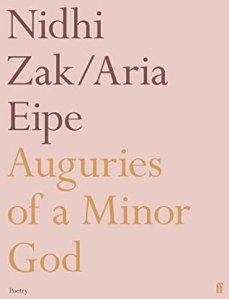 This debut poetry collection is on the Dylan Thomas Prize shortlist. I’ve noted that recent winners – such as Lot by Bryan Washington and Luster by Raven Leilani – have in common a distinctive voice and use of language, which chimes with what Thomas was known for (see my recent review of Under Milk Wood) and clarifies what the judges are looking for.
The placement of words on the page seems to be very important in this volume – spread out or bunched together, sometimes descending vertically, a few in grey. It’s unfortunate, then, that I read an e-copy, as most of the formatting was lost when I put it on my Nook. The themes of the first part include relationships, characterized by novelty or trauma; tokens of home experienced in a new land; myths; and nature. Section headings are in Malayalam.
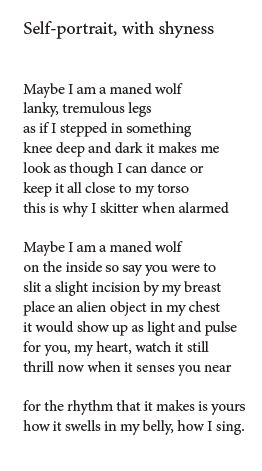
The book culminates in a lengthy, astonishingly nimble abecedarian in which a South Asian single father shepherds his children through English schooling as best he can while mired in grief over their late mother. This bubbles over in connection with her name, Noor, followed by a series of “O” apostrophe statements, some addressed to God and others exhorting fellow believers. Each letter section gets progressively longer. I was impressed at how authentically the final 30-page section echoes scriptural rhythms and content – until I saw in the endnotes that it was reproduced from a 1997 translation of the Quran, and felt a little cheated. Still, “A is for…” feels like enough to account for this India-born poet’s shortlisting. (The Prize winner will be announced on Thursday the 12th.)
With thanks to Midas PR for the free e-copy for review.
Hybrid Humans: Dispatches from the Frontiers of Man and Machine by Harry Parker (2022)
 I approached this as a companion to To Be a Machine by Mark O’Connell and that is precisely what I found, with Parker’s personal insight adding a different angle to the discussion of how technology corrects and transcends flawed bodies. Parker was a captain in the British Army in Afghanistan when an IED took his legs. Now he wears prostheses that make him roughly 12% machine. “Being a hybrid human means expensive kit – you have to pay for the privilege of leading a normal life.” He revisits the moments surrounding his accident and his adjustment to prostheses, and meets fellow amputees like Jack, who was part of a British medical trial on osseointegration (where titanium implants come out of the stump for a prosthesis to attach to) that enabled him to walk much better. Other vets they know had to save up and travel to Australia to have this done because the NHS didn’t cover it.
Travelling to the REHAB trade fair in Karlsruhe, Parker learns that disability, too, can be the mother of invention. Virtual reality and smartphone technology are invaluable, with an iPhone able to replace up to 11 single-purpose devices. Yet he also encounters disabled people who are happy with their lot and don’t look to tech to improve it, such as Jamie, who’s blind and relies only on a cane. And it’s not as if tools to compensate for disability are new; the book surveys medical technologies that have been with us for decades or even centuries: from glass eyes to contact lenses; iron lungs, cochlear implants and more.
Pain management, PTSD, phantom limbs, foreign body rejection, and deep brain stimulation for Parkinson’s disease are other topics in this wide-ranging study that is at the juncture of the personal and political. “A society that doesn’t look after the vulnerable isn’t looking after anyone – I’d learnt first-hand that we’re all just a moment from becoming vulnerable,” Parker concludes. I’ll hope to see this one on next year’s Barbellion Prize longlist.
With thanks to Profile Books/Wellcome Collection for the free copy for review.
Regrets of the Dying: Stories and Wisdom that Remind Us How to Live by Georgina Scull (2022)
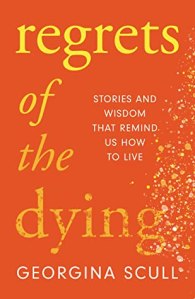 A medical crisis during pregnancy that had her minutes from death was a wake-up call for Scull, leading her to rethink whether the life she was living was the one she wanted. She spent the next decade interviewing people in her New Zealand and the UK about what they learned when facing death. Some of the pieces are like oral histories (with one reprinted from a blog), while others involve more of an imagining of the protagonist’s past and current state of mind. Each is given a headline that encapsulates a threat to contentment, such as “Not Having a Good Work–Life Balance” and “Not Following Your Gut Instinct.” Most of her subjects are elderly or terminally ill. She also speaks to two chaplains, one a secular humanist working in a hospital and the other an Anglican priest based at a hospice, who recount some of the regrets they hear about through patients’ stories.
Recurring features are not spending enough time with family and staying too long in loveless or unequal relationships. Two accounts that particularly struck me were Anthea’s, about the tanning bed addiction that gave her melanoma, and Millicent’s, guilty that she never went to the police about a murder she witnessed as a teenager in the 1930s (with a NZ family situation that sounds awfully like Janet Frame’s). Scull closes with 10 things she’s learned, such as not to let others’ expectations guide your life and to appreciate the everyday. These are readable narratives, capably captured, but there isn’t much here that rises above cliché.
With thanks to publicist Claire Morrison and Welbeck for the free copy for review.
Would you be interested in reading one or more of these?
 Bookish Beck = Rebecca Foster. American transplant to England. Freelance proofreader and book reviewer.
 Bookish Beck