Love Your Library, August 2025
Thanks to Eleanor for posting about her recent library reading, including for 20 Books of Summer (here and here). Thanks also to Skai for joining in again!
Further to last month: My library system’s reclassification seems all the stranger the more I look at it, especially in the children’s section. Yellow stickers will have: one black stripe (Beginner Reads), two black stripes (Short Chapter Books), three black stripes (Picture Books for Older Readers) or a T (Teen). Okay, that last one makes sense, but taking in the number of stripes at a quick glance when organising a trolley or shelving? Seems like a recipe for misfiling.
Also, as a member of senior staff astutely observed, surely the length of a book is the one thing you can tell just by looking at it! So why make that its own designation? Especially when those double-stripe books will be mixed in with the rest of the chapter books, which from now on will not be given a very helpful label on the spine with the first letter of the author’s surname.
It’s having the two systems on the go at the same time that is most confusing. Apparently, these changes were handed down from on high, to keep us in line with other libraries, but no one consulted with the people who actually handle the books on a day-to-day basis. As in, the staff and volunteers. Ahem. We shall see how it goes.
My library use over the last month:
(links are to books not already reviewed on the blog)
I’ve been borrowing some Booker and Wainwright Prize list reads, as well as looking ahead to our mid-September trip to Berlin and Novellas in November.
READ
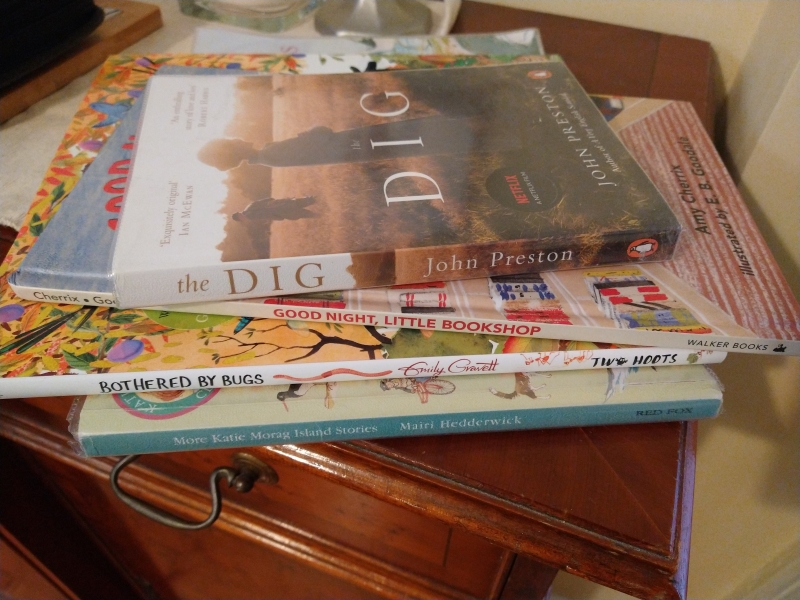
- Good Night, Little Bookshop by Amy Cherrix

- Bothered by Bugs by Emily Gravett
- More Katie Morag Island Stories by Mairi Hedderwick
- The Homemade God by Rachel Joyce

- The Dig by John Preston
Last month we joined my in-laws for a few days at the holiday cottage they’d rented in Suffolk. We crammed in loads: Orford Ness, a former military site with a very unusual shingle landscape where hares live and the wind howls; Minsmere RSPB reserve; and Sutton Hoo, the site of a famous Anglo-Saxon ship burial, discovered there during an archaeological dig of the mounds in 1939; and Woodbridge, the nearest town to the cottage, whose museum has a project underway to build a full-size replica of the ship. I didn’t put two and two together to realize that The Dig, adapted into a 2021 Netflix film starring Ralph Fiennes and Carey Mulligan (there was a big on-site exhibit about the filming), is about Sutton Hoo or I would have gotten it out of the library to take with us. Instead, I caught up afterward.


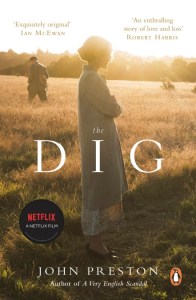 Preston focuses on the few spring and summer months of Basil Brown’s amateur excavation, which was then co-opted by museum professionals. Edith Pretty, the landowner, was a widow in her fifties, raising her plucky son Robert on her own and struggling with ill health (she had Robert at age 47, almost unheard of in those days, and would die after a stroke in 1942). The day to day of the excavation was engrossing and I enjoyed the interactions between Brown and Pretty. I didn’t need the third narrator, Peggy Piggott, wife of one of the archaeologists and excavation staff in her own right, nor the extra background about characters’ marriages and museum bureaucracy. Meanwhile, the epilogue from Robert returning to the site in the 1960s made me wish that there had been more of that retrospective viewpoint. This was enjoyable in a minor way but I wouldn’t have read it had I not been to Sutton Hoo. I wonder if the film would be, on the whole, more successful.
SKIMMED
- I Think I Like Girls by Rosie Day – I took a desultory look but the content seemed pretty lite and the writing style iffy. (Hadn’t heard of Day but I guess she’s a celebrity?)
SKIMMING
- Cuddy by Benjamin Myers (for book club; I also skimmed it when it first came out)
CURRENTLY READING
- The Most by Jessica Anthony
- The Honesty Box by Luzy Brazier
- Bellies by Nicola Dinan
- The Wedding People by Alison Espach
- The Summer I Turned Pretty by Jenny Han
- An Eye on the Hebrides by Mairi Hedderwick
- The Mermaid Chair by Sue Monk Kidd
- Of Thorn & Briar: A Year with the West Country Hedgelayer by Paul Lamb
- The Land in Winter by Andrew Miller
- The Secret Lives of Booksellers and Librarians: True Stories of the Magic of Reading by James Patterson & Matt Eversmann
CHECKED OUT, TO BE READ
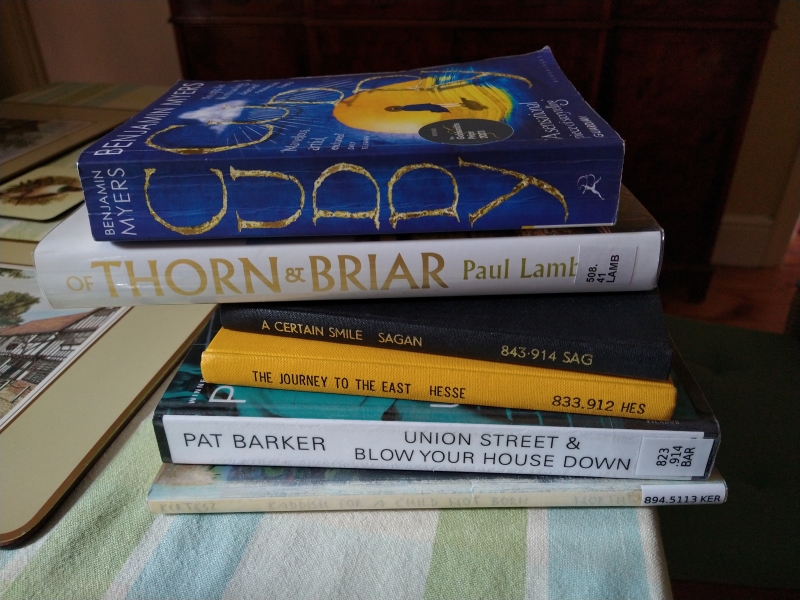
It’s nearly time for Novellas in November planning! Thus I borrowed a quartet of books from the university library (the bottom stack below), two of which were recommended by blog friends: the Barker (Blow Your House Down) by Margaret and the Hesse by Kaggsy. The Kertesz is on my radar thanks to C’s bandmate Jo. And I’ve enjoyed the two Sagan novellas I’ve read so far so thought I’d source another.
ON HOLD, TO BE COLLECTED
- Sojourn by Amit Chaudhuri
- The Names by Florence Knapp
- Love in Five Acts by Daniela Krien
- Red Pockets: An Offering by Alice Mah
- Birding by Rose Ruane
- Opt Out by Carolina Setterwall
- Slags by Emma Jane Unsworth
- Seascraper by Benjamin Wood
IN THE RESERVATION QUEUE
- The Two Roberts by Damian Barr
- All the Way to the River by Elizabeth Gilbert
- Helm by Sarah Hall
- The Haunted Wood: A History of Childhood Reading by Sam Leith
- What We Can Know by Ian McEwan
- The Eights by Joanna Miller
- Endling by Maria Reva
- Buckeye by Patrick Ryan
- Flesh by David Szalay
RETURNED UNREAD
- Fragile Minds by Bella Jackson
- Enchanted Ground: Growing Roots in a Broken World by Steven Lovatt
- Wife by Charlotte Mendelson
- The Forgotten Sense: The Nose and the Perception of Smell by Jonas Olofsson
I lost immediate interest in all of these but would be willing to try them again another time.
What have you been reading or reviewing from the library recently?

Share a link to your own post in the comments. Feel free to use the above image. The hashtag is #LoveYourLibrary.
R.I.P., Part I: Michel Faber, Rebecca Green and Lize Meddings
For my first installment of this year’s Readers Imbibing Peril challenge, I have a highly undemanding selection of a novella, a picture book, and a teen graphic novel. And nothing here is nearly as scary as proper horror-fiction readers might be expecting.
The Hundred and Ninety-Nine Steps by Michel Faber (2001)
 One of my reads in Hay was this suspenseful novella set in Whitby. Faber was invited by the then artist in residence at Whitby Abbey to write a story inspired by the English Heritage archaeological excavation taking place there in the summer of 2000. His protagonist, Siân, is living in a hotel and working on the dig. She meets Magnus, a handsome doctor, when he comes to exercise the dog he inherited from his late father on the stone steps leading up to the abbey. Siân had been in an accident and is still dealing with the physical and mental after-effects. Each morning she wakes from a nightmare of a man with large hands slitting her throat. When Magnus brings her a centuries-old message in a bottle from his father’s house for her to open and decipher, another layer of intrigue enters: the crumbling document appears to be a murderer’s confession.
At first I worried Faber would turn this into a simple, predictable ghost story and milk expected sources of trauma. But the plot twists kept surprising me. The focus on women’s bodies and sexuality is appropriate for the town that gave us Dracula. This had hidden depths and at 116 pages could easily be a one-sitting read. Hadrian the dog is a great character, too, and this is even in my favourite font, Mrs Eaves, one that Canongate uses often. [Unfortunate error: Faber twice refers to Whitby as being Northumbrian. Although it was in the historical kingdom of Northumbria, it is actually in North Yorkshire rather than Northumberland.] (Secondhand – Bookcase, Carlisle) 
How to Make Friends with a Ghost by Rebecca Green (2017)
 Here Green proposes a ghost as a lifelong, visible friend. The book has more words and more advanced ideas than much of what I pick up from the picture book boxes. It’s presented as almost a field guide to understanding the origins and behaviours of ghosts, or maybe a new parent’s or pet owner’s handbook telling how to approach things like baths, bedtime and feeding. What’s unusual about it is that Green takes what’s generally understood as spooky about ghosts and makes it cutesy through faux expert quotes, recipes, etc. She also employs Rowling-esque grossness, e.g. toe jam served on musty biscuits. Perhaps her aim was to tame and thus defang what might make young children afraid. I enjoyed the art more than the sometimes twee words. (Public library)
The Sad Ghost Club by Lize Meddings (2021)
 This is the simplest of comics. Sam or “SG” goes around wearing a sheet – a tangible depression they can’t take off. (Again, ghosts aren’t really scary here, just a metaphor for not fully living.) Anxiety about school assignments and lack of friends is nearly overwhelming, but at a party SG notices a kindred spirit also dressed in a sheet: Socks. They’re awkward with each other until they dare to be vulnerable, stop posing as cool, and instead share how much they’re struggling with their mental health. Just to find someone who says “I know exactly what you mean” and can help keep things in perspective is huge. The book ends with SG on a quest to find others in the same situation. The whole thing is in black-and-white and the setups are minimalist (houses, a grocery store, a party, empty streets, a bench in a wooded area where they overlook the town). Not a whole lot of art skill required to illustrate this one, but it’s sweet and well-meaning. I definitely don’t need to read the sequels, though. The tone is similar to the later Heartstopper books and the art is similar to in Sheets and Delicates by Brenna Thummler, all of which are much more accomplished as graphic novels go. (Public library)
Salt & Skin by Eliza Henry-Jones (Blog Tour)
I was drawn to Eliza Henry-Jones’s fifth novel, Salt & Skin (2022), by the setting: the remote (fictional) island of Seannay in the Orkneys. It tells the dark, intriguing story of an Australian family lured in by magic and motivated by environmentalism. History overshadows the present as they come to realize that witch hunts are not just a thing of the past. This was exactly the right evocative reading for me to take on my trip to some other Scottish islands late last month. The setup reminded me of The Last Animal by Ramona Ausubel, while the novel as a whole is reminiscent of The Night Ship by Jess Kidd and Night Waking by Sarah Moss.
Only a week after the Managans – photographer Luda, son Darcy, 16, and daughter Min, 14 – arrive on the island, they witness a hideous accident. A sudden rockfall crushes a little girl, and Luda happens to have captured it all. The photos fulfill her task of documenting how climate change is affecting the islands, but she earns the locals’ opprobrium for allowing them to be published. It’s not the family’s first brush with disaster. The kids’ father died recently; whether in an accident or by suicide is unclear. Nor is it the first time Luda’s camera has gotten her into trouble. Darcy is still angry at her for selling a photograph she took of him in a dry dam years before, even though it raised a lot of money and awareness about drought.
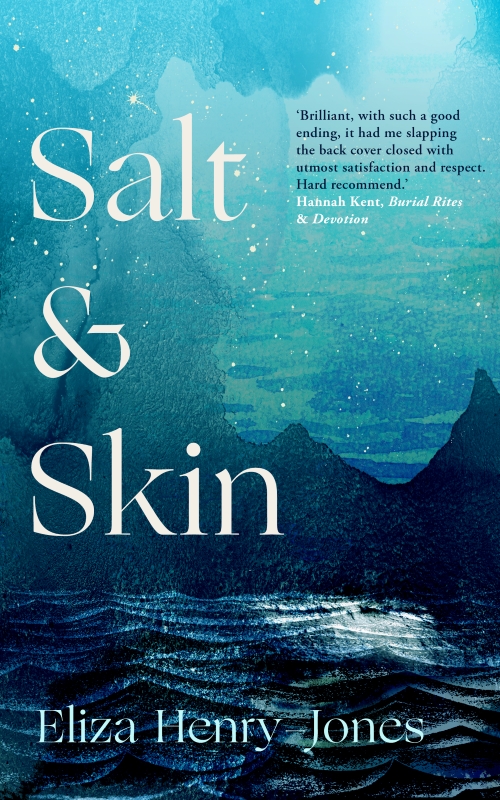
The family live in what has long been known as “the ghost house,” and hints of magic soon seep in. Luda’s archaeologist colleague wants to study the “witch marks” at the house, and Darcy is among the traumatized individuals who can see others’ invisible scars. Their fate becomes tied to that of Theo, a young man who washed up on the shore ten years ago as a web-fingered foundling rumoured to be a selkie. Luda becomes obsessed with studying the history of the island’s witches, who were said to lure in whales. Min collects marine rubbish on her deep dives, learning to hold her breath for improbable periods. And Darcy fixates on Theo, who also attracts the interest of a researcher seeking to write a book about his origins.
It’s striking how Henry-Jones juxtaposes the current and realistic with the timeless and mystical. While the climate crisis is important to the framework, it fades into the background as the novel continues, with the focus shifting to the insularity of communities and outlooks. All of the characters are memorable, including the Managans’ elderly relative, Cassandra (calling to mind a prophetic figure from Greek mythology), though I found Father Lee, the meddlesome priest, aligned too readily with clichés. While the plot starts to become overwrought in later chapters, I appreciated the bold exploration of grief and discrimination, the sensitive attention to issues such as addiction and domestic violence, and the frank depictions of a gay relationship and an ace character. I wouldn’t call this a cheerful read by any means, but its brooding atmosphere will stick with me. I’d be keen to read more from Henry-Jones.
With thanks to Random Things Tours and September Publishing for the free copy for review.
Buy Salt & Skin from the Bookshop UK site. [affiliate link]
or
Pre-order Salt & Skin (U.S. release: September 5) from Bookshop.org. [affiliate link]
I was delighted to help kick off the blog tour for Salt & Skin on its UK publication day. See below for details of where other reviews have appeared or will be appearing soon.

The Night Ship by Jess Kidd (Blog Tour Review)
Jess Kidd’s fourth novel is based on a true story: the ill-fated voyage of the Batavia, which set off from the Netherlands in 1628, bound for Indonesia, but wrecked on the Abrolhos Islands off the western coast of Australia in June 1629. If you look into it at all, you find a grim story of mutiny and murder. But we experience the voyage, and view its historical legacy, through the eyes of two motherless children: Mayken, travelling on the Batavia to be reunited with her merchant father abroad; and Gil, who, in 1989, moves in with his grandfather at his Australian beach hut and observes archaeologists diving into the wreck.
Chapters alternate between the two time periods. Mayken is in the care of her old nursemaid, Imke, who has second sight. As Imke’s health fails, Mayken goes semi-feral, dressing up as a cabin boy to explore the belowdecks world. Gil, a tender, traumatized boy in the company of rough grown-ups, becomes obsessed with the local dig and is given a pet tortoise – named Enkidu to match his own full name, Gilgamesh. Mayken and Gil both have to navigate a harsh adult world with its mixture of benevolent guardians and cruel strangers.
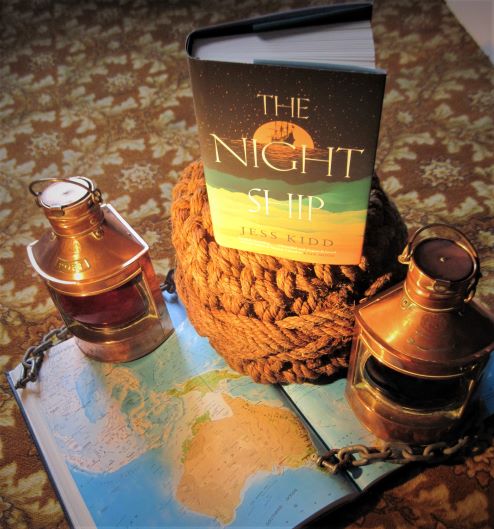
An explicit connection between the protagonists is set up early on, when a neighbour tells Gil there’s a “dead girl who haunts the island … Old-time ghost, from the shipwreck,” known as Little May. But there are little links throughout. For instance, both have a rote story to explain their mother’s death, and both absorb legends about a watery monster (the Dutch Bullebak and the Aboriginal Bunyip) that pulls people under. The symmetry of the story lines is most evident in the shorter chapters towards the end, such as the rapid-fire pair of 33–34.
These echoes, some subtle and some overt, are the saving grace of an increasingly bleak novel. Don’t be fooled by the focus on children’s experience: this is a dark, dark story, with only pinpricks of light at the end for one of the two. In terms of similar fiction I’ve read, the tone is more Wakenhyrst than The Essex Serpent; more Jamrach’s Menagerie than Devotion. (It didn’t help that I’d just read Julia and the Shark, an exceptional children’s book with a maritime setting and bullying/mental health themes.) I engaged more with the contemporary strand – as is pretty much always the case for me with a dual timeline – yet appreciated the atmosphere and the research behind the historical segments. This doesn’t match Things in Jars, but I was still pleased to have the chance to try something else by Jess Kidd.
With thanks to Canongate for my free copy for review.
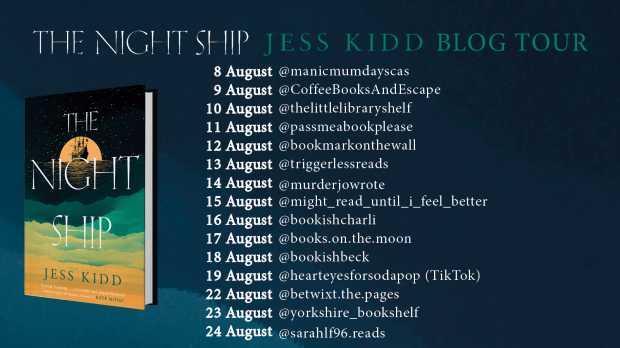
I was delighted to be part of the social media tour for The Night Ship. See below for details of where other reviews and features have appeared or will be appearing soon.
New Networks for Nature 2020 (Online)
 It’s not November without a New Networks for Nature conference. Originally 2020’s was scheduled to take place in Norwich in July; it was then postponed to the usual November in hopes of an in-person meeting, but ultimately had to be online this year, like so much else. This was my sixth time taking part in this interdisciplinary gathering of authors, academics, and activists (I’ve also written about the 2015, 2016, 2018, and 2019 conferences). The UEA organizers, Jean McNeil and Jos Smith, with New Networks stalwart John Fanshawe, did an excellent job of creating three virtual events for people to engage with from home.
Two pre-recorded panels brought together writers from different fields to reflect on nature literature and the environmental crisis. First up was “New Perspectives on Nature Writing,” picking up on a perennial conference theme.
 I was delighted to hear Jessica J. Lee speak – I’ve reviewed both of her nature-infused memoirs, Turning and Two Trees Make a Forest, and in last year’s feedback I suggested her as a future speaker (I’m sure I’m not solely responsible!). After a PhD in environmental history, she moved into more personal writing. Questions of home, place, language, and identity were natural for her as a third-generation migrant. She initially felt alone as a person of colour in nature writing, but when she founded the Willowherb Review she quickly learned that it wasn’t that POC weren’t out there; it was that they did not have opportunities to publish – she has had 300+ submissions per issue to the online literary magazine, which welcomes work from all genres by authors of colour.

(Clockwise from top left) Smith, Arshi, McNeil, Lee.
Also on the panel were Mona Arshi, a Punjabi poet based in London, and McNeil, a creative writing professor. Arshi has been a human rights lawyer and is the current poet-in-residence at Cley Marshes, Norfolk, in association with the Wildlife Trusts and UEA. She has had to try to absorb the landscape via video and sound recordings since COVID-19 has limited her in-person visits. She read a sonnet she wrote about her last trip there in September. All three panellists spoke about land being in some ways beyond language, though.
 Jean McNeil’s Ice Diaries is a memoir of a year in residence with the British Antarctic Survey, a very male, scientific world. Antarctica is “no one’s country,” she remarked, though it’s the fifth-largest continent; it’s as if the land has no memory of people. She observed that it’s impossible to write about Antarctica without giving a sense of the journey (so she includes travel writing) and mentioning death. Raised without technology by back-to-the-land parents in Canada, McNeil has been active in the environmental movement in Brazil, Central America, and Africa (as a safari guide). Ice Diaries was already on my TBR, but I’m impressed by her breadth of experience and want to explore her varied work.
 The second panel, “States of Emergency,” included an academic, a playwright, the CEO of an environmental charity, and a philosopher and activist. I was intrigued by UEA’s Rebecca Tillett’s brief opening address about contemporary North American indigenous responses to climate change in fiction (her research speciality). Her primary example was the Moon of the Crusted Snow by Waubgeshig Rice, a postapocalyptic thriller in which the Wendigo, a figure from First Nations folklore, embodies capitalism as it consumes people with greed.

(Clockwise from top left) Waters , McNeil, Reed, Tillett, Thornton.
UEA-based playwright Steve Waters is planning outdoor theatre projects at nature reserves. James Thornton, the CEO of ClientEarth, spoke about starting with the science, the “grammar of the Earth.” His team has prevented new coal-fired stations in Europe and encouraged NGOs in China to sue polluting companies. Philosophy professor Rupert Reed was, until recently, an Extinction Rebellion spokesman. He noted that the climate emergency feels too slow and too long – a marathon, not a sprint; people don’t realize how profoundly our way of life and future are threatened. Alas, COVID-19 is not having the desired effect of turning people’s attention to the greater, ongoing emergency. He counselled acceptance and adaptation, stating that hope and action must go hand in hand. Thornton recalled the Dalai Lama telling him early in his career that he needed to get beyond anger because angry people don’t come up with viable solutions. The anger has to be turned into a positive vision.
There were live Q&A sessions for these two panels, but we weren’t able to watch. However, we did attend Saturday’s live keynote event featuring Tim Dee and Kathleen Jamie, two of the finest nature writers working today. Speaking from Cape Town, where he has been stranded since the start of the pandemic, Dee said that his current writing is about birds that are new to him but familiar to his neighbours. He explained that he admires and understands the world through birds, “who carry no bags or passports and are at home wherever they are.” In his work he explores how we are “made by places,” often returning to a place to reprocess his experiences there (e.g. Hungary in his latest book, Greenery). His notebooks, which are often just lists of birds seen, help him to “reinflate” a place when writing about it later.


Jamie agreed that her work also has this quality of “afterwardness” – finding the meaning of an experience long after the moment. She came across as down-to-earth, shrugging off McNeil’s question about transcendence and remarking that a sign above her desk reads “Nay narrative!” What is left for a lyric poet who loses faith in lyricism? For Jamie, the answer is prose poetry, as in “Tree on the Hill,” recently published in the LRB. Her poetry has always been local but her longform nonfiction has only ever come from other places, so while she’s been stuck in Fife she’s been unable to progress. But she never has any idea of what she’s writing, she said; she and her editor work out a theme once a whole book exists (for instance, the linking metaphor for Surfacing – unearthing archaeological evidence and memories).
Dee called himself a materialist – “no ideas but in things” – with language being what we clothe things in. He always double-checks his (sometimes elaborate) metaphors by putting them back onto a bird to ensure they fit. Jamie said she used to believe language was humans’ “fall” and would try to maintain a “pre-language state” for as long as possible every morning, but ultimately she changed her mind, accepting that language is what makes us human; it’s what we do. She acknowledges that nature writing like hers is not going to achieve things in the way that environmental activism can, but she hopes that bringing non-human creatures into the culture (as if it were an ark) can be a way of advocating for them all the same.

 A brilliant programme, capped off with some visual and musical delights: “Where Song Began,” a one-hour cello and violin response/accompaniment to Australian birdsong created by Simone Slattery and Anthony Albrecht in January; and a brief virtual tour of the Nature Writing Collection in the British Archive for Contemporary Writing at UEA, which includes the papers of the late Roger Deakin and of (alive and kicking!) Mark Cocker, a UEA graduate. The archive contains Deakin’s drafts and pitches (Waterlog’s working title was “The Waters of the Wondrous Isle,” and he imagined it as an aquatic Rural Rides), photos, and even his Speedo bathing suit; along with Cocker’s field notebooks and fan mail.
The two panels, musical event, and archive tour are freely available on the NNN website, and you can watch the Dee/Jamie discussion back here.
Catching Up on Review Books: Antlers, Arnett, E. Williams, Yamboliev
Four July–August releases: Scottish nature writing, the quirky story of a family taxidermy business in Florida, a dual-timeline novel set at an unusual dictionary’s headquarters, and a critical and personal response to Jeffrey Eugenides’ Middlesex.
Antlers of Water: Writing on the Nature and Environment of Scotland, edited by Kathleen Jamie
 This nature writing anthology of essays, poems and visual art drew me because of contributor names like GP Gavin Francis (reviewed: Shapeshifters), Amy Liptrot (the Wainwright Prize-winning memoir The Outrun), singer/songwriter Karine Polwart, and Shetland chronicler Malachy Tallack (reviewed: The Un-Discovered Islands and The Valley at the Centre of the World), not to mention editor Kathleen Jamie. Archaeology and folk music evoke the past, while climate change scenarios inject a sense of a menacing future. Seabirds circle and coastal and island scenery recurs. Entries from Alec Finlay’s “A Place-Aware Dictionary” disguise political points under tongue-in-cheek language, as in a definition of foraging: “Later sometimes referred to as the Brexit Diet.” The (sub)urban could be more evident, and I didn’t need two bouts of red deer sex, but there’s still a nice mix of tones and approaches here.
Six best pieces (out of 24): Chris Powici on wind turbines and red kites at the Braes of Doune; Jacqueline Bain on how reduced mobility allows her to observe wasps closely; Jim Crumley on sea eagle reintroductions and the ancient sky burials that took place at the Tomb of the Eagles; Jen Hadfield on foraging for whelks at the ocean’s edge, in a run-on hybrid narrative; Sally Huband on how persecution of ravens and of women (still not allowed to take part in Up Helly Aa festivities) continues on Shetland; and Liptrot on how wild swimming prepared her for childbirth and helped her to recover a sense of herself separate from her baby. And if I had to pick just one, the Huband – so brave and righteously angry.
Favorite lines:
“Compromises need to be made. An overlap between the wild and the human has to be negotiated and managed. … So let’s play merry hell with the distinction between what counts as wild and what counts as human, between what’s condemned as a visual obscenity and what’s seen as a marvel of the age. Let’s mess up the boundaries and get a new measure of ourselves as a species.” (Powici)
inspiration to get out walking again: “Don’t wait / thinking you’ve seen it all already … don’t wait thinking you need better boots / or a waterproof that’ll keep out the rain. / It won’t. Don’t wait.” (“Water of Ae” by Em Strang)
My rating:
My thanks to Canongate for the free copy for review.
Mostly Dead Things by Kristen Arnett
“We couldn’t ever leave roadkill behind. Something inside us always made us stop to pick up dead things.”
 After her father’s suicide, Jessa-Lynn Morton takes over the family taxidermy business in central Florida. Despite her excessive drinking and grief over both her father and her best friend and long-time on-and-off girlfriend (also, inconveniently, her brother’s wife) Brynn, who recently took off, she’s just about holding it together. That is, until 1) her mother takes to composing interspecies orgies and S&M scenes in the shop window and 2) her niece and nephew, Lolee and Bastien, start bringing in specimens for taxidermy that they haven’t exactly obtained legally. Gallery owner Lucinda Rex takes an interest in her mother’s ‘art’ and is soon a new romantic interest for Jessa. But the entire family is going to have to face its issues before her professional and love life can be restored.
This debut novel’s title, cover and premise were utterly irresistible to me, and though I loved the humid Florida setting, it was all a bit too much. At 200 pages this could have been a razor-sharp new favorite, but instead there was a lot of sag in its 350+ pages. Alternating chapters based around mounting particular animals give glimpses into the family’s past but mostly have Jessa mooning over Brynn. Her emotional journey starts to feel belabored; it’s as if an editor tried to rein in Arnett’s campy glee at the dysfunctional family’s breakdown and made her add in some amateur psychoanalysis, and for me this diluted the quirky joy.
Skinning and sex scenes are equally explicit here. This never bothered me, but it should go without saying that it is not a book for the squeamish. It’s when sex and taxidermy mix that things get a little icky, as in her mother’s X-rated tableaux and a line like “Often I found myself comparing the limber body of a deer with the long line of [Lucinda’s] legs or the strong cord of her neck.” Believe it or not, this is not the first queer taxidermy novel I’ve read. The other one, English Animals by Laura Kaye, was better. I’d wanted another Swamplandia! but got something closer to Black Light instead.
My rating: 
My thanks to Corsair for the free copy for review.
The Liar’s Dictionary by Eley Williams
 Mallory is five years into an internship at Swansby House, the London headquarters of Swansby’s dictionary. The dictionary is known for being unfinished – too many of its lexicographers left for WWI and never returned – and for having made-up words. In 1899, Peter Winceworth, the butt of jokes among his colleagues, started composing mountweazels (fake entries) and inserting them into the dictionary. In the contemporary story line, Mallory’s job is to remove the mountweazels as the dictionary is prepared for digitization. But her attention is distracted by anonymous bomb threats and by lingering shame about her sexuality – Mallory thinks she’s “out enough,” but her girlfriend Pip begs to differ.
Chapters are headed with vocabulary words running from A to Z, and alternate between Mallory’s first-person narration and a third-person account of Winceworth’s misadventures at the turn of the twentieth century. In any book with this kind of structure I seem to prefer the contemporary strand and itch to get back to it, though there is a quite astounding scene in which Winceworth intervenes to help a choking pelican. Events at Swansby House resonate and mirror each other across the dozen decades, with both main characters emerging with a new sense of purpose after an epiphany that life is about more than work. Though silly in places, this has a winning love of words and characters you’ll care about.
A favorite made-up word: “Mammonsomniate: to dream that money might make anything possible.”
Readalikes: Enter the Aardvark by Jessica Anthony and Boxer, Beetle by Ned Beauman
My rating:
My thanks to William Heinemann for the proof copy for review.
Looking Was Not Enough: Jeffrey Eugenides’ Middlesex by Irena Yamboliev
 When I worked in a university library and read Middlesex during quiet evenings on the circulation desk in 2009, a colleague asked me, “Is that about the London borough?” My reply: “Er, no, it’s about a hermaphrodite.” That’s an off-putting, clinical sort of word, but it does appear in the first paragraph of this family saga with a difference, after the mythological intensity and medical necessity implied by the killer opening line: “I was born twice: first, as a baby girl, on a remarkably smogless Detroit day in January of 1960; and then again, as a teenage boy, in an emergency room near Petoskey, Michigan, in August of 1974.”
Cal, born Calliope but now living as a man and working in the Foreign Service, recounts three generations of family history, from Greece to Detroit to Berlin. “Because … their parents were dead and their village destroyed, because no one in Smyrna knew who they were,” brother and sister Lefty and Desdemona became lovers and got married on the boat over to America. They were his grandparents. Add to that his parents’ first-cousin marriage and you see how inbreeding played genetic havoc and made way for Callie/Cal.
 I intended to reread Middlesex, which I consider one of my all-time favorite books, but only made it through 60 pages on this occasion. Still, Yamboliev, a Bulgarian-American who teaches at Stanford, reminded me of everything I love about it: the medical theme, the exploration of selfhood, the playful recreation of the past. Drawing parallels with her own family’s move to America, she ponders the disconnection from the home country and the creation of a new life story. “To tell ourselves where we come from—to narrate—is to find a pattern retroactively.” She also looks at literary precursors like Ovid’s Metamorphoses, Herculine Barbin’s memoir, and Balzac’s and Barthes’s writings on a castrato. “Does transformation make the self discontinuous?” is one of her central questions, and she likens Cal’s situation to that of trans men who have to train themselves to speak, dress and act in a convincingly masculine way.
This is part of Fiction Advocate’s “Afterwords” series; all its monographs do a wonderful job of blending literary criticism, enthusiastic appreciation, and autobiographical reflection as life dovetails with (re)reading. I’ve previously reviewed the Fiction Advocate books on Blood Meridian, Fun Home, and The Year of Magical Thinking in this post, and the ones on Karl Ove Knausgaard’s My Struggle and Cheryl Strayed’s Wild in this one.
My rating: 
My thanks to Fiction Advocate for the free e-copy for review.
What recent releases can you recommend?
Best of 2019: Nonfiction
For me, 2019 has been a more memorable year for nonfiction than for fiction. Like I did last year, I’ve happened to choose 12 favorite nonfiction books – though after some thematic grouping this has ended up as a top 10 list. Bodies, archaeology, and the environmental crisis are recurring topics, reflecting my own interests but also, I think, something of the zeitgeist.
Let the countdown begin!
 Because Internet: Understanding how language is changing by Gretchen McCulloch: Surprisingly fascinating stuff, even for a late adopter of technology. The Internet popularized informal writing and quickly incorporates changes in slang and cultural references. The book addresses things you may never have considered, like how we convey tone of voice through what we type and how emoji function as the gestures of the written word. Bursting with geeky enthusiasm.
-
 Surfacing by Kathleen Jamie: A fusion of autobiography with nature and travel writing – two genres that are too often dominated by men. Jamie has a particular interest in birds, islands, archaeology and the oddities of the human body, all subjects that intrigue me. There is beautiful nature writing to be found in this volume, as you might expect, but also relatable words on the human condition.
-
 Mother Ship by Francesca Segal: A visceral diary of the first eight weeks in the lives of the author’s daughters, who were born by Caesarean section at 29 weeks in October 2015 and spent the next two months in the NICU. Segal describes with tender precision the feeling of being torn between writing and motherhood, and crafts twinkly pen portraits of others she encountered in the NICU, including the staff but especially her fellow preemie mums.
-
 Surrender: Mid-Life in the American West by Joanna Pocock: Prompted by two years spent in Missoula, Montana and the disorientation felt upon a return to London, this memoir-in-essays varies in scale from the big skies of the American West to the smallness of one human life and the experience of loss and change. This is an elegantly introspective work that should engage anyone interested in women’s life writing and the environmental crisis.
- (A tie) Constellations by Sinéad Gleeson / The Undying by Anne Boyer / Notes Made while Falling by Jenn Ashworth: Trenchant autobiographical essays about female pain. All three feel timely and inventive in how they bring together disparate topics to explore the possibilities and limitations of women’s bodies. A huge theme in life writing in the last couple of years and a great step toward trauma and chronic pain being taken seriously. (See also Notes to Self by Emilie Pine and the forthcoming Pain Studies by Lisa Olstein.)


-
 Time Song: Searching for Doggerland by Julia Blackburn: Deep time is another key topic this year. Blackburn follows her curiosity wherever it leads as she does research into millions of years of history, including the much shorter story of human occupation. The writing is splendid, and the dashes of autobiographical information are just right, making her timely/timeless story personal. This would have been my Wainwright Prize winner.
-
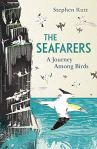 The Seafarers: A Journey among Birds by Stephen Rutt: The young naturalist travelled the length and breadth of the British Isles – from Skomer to Shetland – courting encounters with seabirds. Discussion of the environmental threats that hit these species hardest, such as plastic pollution, makes for a timely tie-in to wider issues. The prose is elegantly evocative, and especially enjoyable because I’ve been to a lot of the island locations.
-
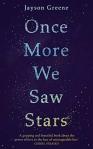 Once More We Saw Stars by Jayson Greene: In 2015 the author’s two-year-old daughter, Greta, was fatally struck in the head by a brick that crumbled off an eighth-story Manhattan windowsill. Music journalist Greene explores all the ramifications of grief. I’ve read many a bereavement memoir and can’t remember a more searing account of the emotions and thoughts experienced moment to moment. The whole book has an aw(e)ful clarity to it.
-
 The Body: A Guide for Occupants by Bill Bryson: Bryson is back on form indulging his layman’s curiosity. Without ever being superficial or patronizing, he gives a comprehensive introduction to every organ and body system. He delights in our physical oddities, and his sense of wonder is contagious. Shelve this next to Being Mortal by Atul Gawande in a collection of books everyone should read – even if you don’t normally choose nonfiction.
-
 Irreplaceable: The Fight to Save Our Wild Places by Julian Hoffman: Species and habitat loss are hard to comprehend even when we know the facts. This exquisitely written book is about taking stock, taking responsibility, and going beyond the numbers to tell the stories of front-line conservation work. Irreplaceable is an elegy of sorts, but, more importantly, it’s a call to arms. It places environmentalism in the hands of laypeople and offers hope that in working together in the spirit of defiance we can achieve great things. So, if you read one 2019 release, make it this one.
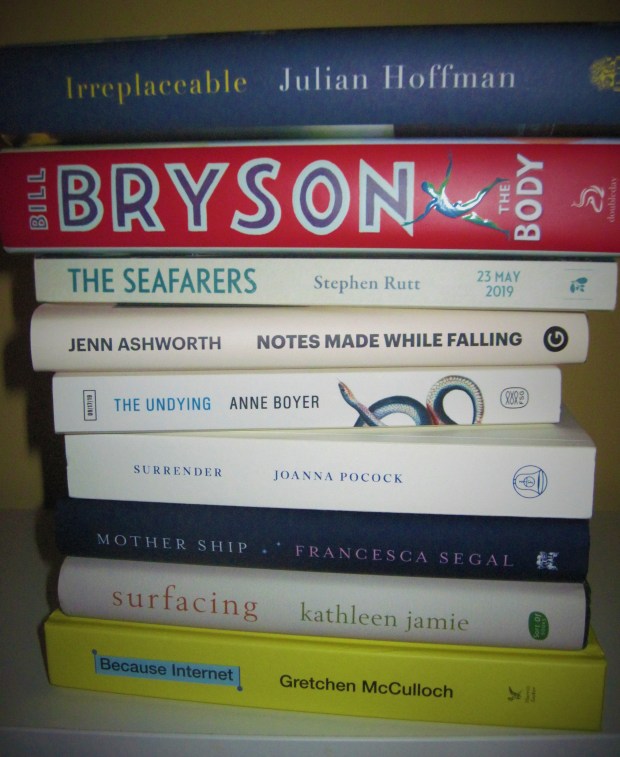
(Books not pictured were read from the library or on Kindle.)
What were some of your top nonfiction reads of the year?
Upcoming posts:
28th: Runners-up
29th: Other superlatives and some statistics
30th: Best backlist reads
31st: The final figures on my 2019 reading
New Networks for Nature 2019
This past weekend was my fifth time attending Nature Matters, the annual New Networks for Nature conference. I’ve written about it on the blog a few times before: last year’s 10th anniversary meeting in Stamford, plus once when there was a particular focus on nature poetry and another time when it was held in Cambridge. This year the theme was “Time for Nature” and the conference was held at the very posh St Peter’s School in York, which dates back to 627 and resembles an Oxford college. We have close friends in York, but our timing was off in that they were in Italy this week. However, they sent us a key to their house and let us stay there while they were away, which saved us having to book an Airbnb or guest house.

York street scene. Photo by Chris Foster.
What makes Nature Matters so special is its interdisciplinary nature: visual artists, poets, musicians, writers, activists, academics and conservationists alike attend and speak. So although the event might seem geared more towards my ecologist husband, there’s always plenty to interest me, too. In particular, I enjoyed the panel discussions on nature in children’s books and new directions for nature writing. This year the organizers were determined to make the speakers’ roster more diverse, so some panels were three-quarters or wholly female, and four people of color appeared on the stage. (That might not seem like a great record, but in a field so dominated by white males it’s at least a start.)
 The Friday was a particularly brilliant day, the best day of sessions I can remember in any year. After a presentation by wildlife photographer and painter Robert Fuller, the first session was “Nature in Deep Time,” featuring three archaeologists from northern universities who talked about cave art, woodcraft, and evidence of rapid climate change. “Taking a long view, we get a very different perspective,” Professor Terry O’Connor of the University of York observed. The topic felt timely and tied in with a number of books that have come out this year, including Time Song by Julia Blackburn, Surfacing by Kathleen Jamie and Underland by Robert Macfarlane.
Next up was “Now or Never – Fighting for Nature,” featuring three female activists: Ruth Peacey, a filmmaker for BBC Wildlife whose subjects have included bird persecution in the Mediterranean; Sally Goldsmith, a campaigner who deployed poems and songs against the mass street tree-cutting campaign in Sheffield and helped save some 10,000 trees; and Hatti Owens, an environmental lawyer with ClientEarth who has partnered with Extinction Rebellion. The panel chair and one of this year’s organizers, writer Amy-Jane Beer, noted that activism is no longer radical, but an obligation.
Either side of lunch, Dr. Sara Goodacre of the University of Nottingham SpiderLab demonstrated how money spiders walk on water and “sail” using two raised legs to cope with wind; and Dr. Geoff Oxford of the University of York told the successful conservation story of the tansy beetle, which has recently been celebrated with a crowdfunded wall mural on the corner of York’s Queen Street and the Tansy Beetle Bar at the Rattle Owl restaurant on Micklegate. After the day’s proceedings, we joined a general movement over to see the mural and toast the bar’s grand opening.

Tansy beetle mural. Photo by Chris Foster.
The children’s books session featured Anneliese Emmans Dean, who gave very entertaining performances of her poems on insects and birds; Gill Lewis, who writes middle grade novels that introduce children to environmental issues; and Yuval Zommer, who writes and illustrates nonfiction guides with titles like The Big Book of Bugs and The Big Book of Blooms. Panel chair Ben Hoare, another of this year’s organizers and a former editor of BBC Wildlife magazine, concluded that children’s books should be joyous and not preachy.
There was still more to come on this jam-packed Friday! “The Funny Thing about Nature…” was essentially three stand-up comedy routines by Simon Watt, creator of the Ugly Animal Appreciation Society; Helen Pilcher, who has written a speculative book about the science of de-extinction; and Hugh Warwick, an author and hedgehog enthusiast. The language got a little crass in this session, but all three speakers were genuinely funny. As Watt put it, “Sincerity should not be our only weapon” in the fight for nature; he’s trying to reach the people who aren’t “already on our side.”
 After free gin and tonics provided by local producers SloeMotion, we had the absolute treat of a performance by Kitty Macfarlane, whose folk songs are inspired by the natural world. The title track of her 2018 album Namer of Clouds is about Luke Howard, who created the naming system for clouds (cumulus, stratus, and so on) in 1802. Other songs are about eels, a starling murmuration and the Sardinian tradition of weaving sea silk. She often incorporates field recordings of birdsong, and writes about her native Somerset Levels. Her voice is gorgeously clear, reminding me of Emily Smith’s. We bought her album and EP at once.
Saturday was a slightly less memorable day, with sessions on insects and the uplands, an interview with clean rivers campaigner (and former pop star) Feargal Sharkey, and the short film Raising the Hare by Bevis Bowden. Most engaging for me was a four-person discussion on new directions for nature writing, chaired by author and academic Richard Kerridge. Katharine Norbury is editing the Women on Nature anthology, which I have supported via Unbound; it’s due out next year. She went all the way back to Julian of Norwich and has included novelists, poets, gardeners and farmers – lots of women who wouldn’t have called themselves ‘nature writers’.

L to R: Kerridge, Norbury, Sethi, McKenzie and Smyth. Photo by Chris Foster.
Anita Sethi, a journalist from Manchester, speaks out about inequality of access to nature due to race, gender and class. She read part of her essay “On Class and the Countryside” from the Common People anthology edited by Kit de Waal. Zakiya McKenzie, a London-born Jamaican, was a Forest England writer in residence and founded the Green & Black project to give underprivileged children trips to the countryside. Richard Smyth, the author of A Sweet, Wild Note, spoke of the need for robust nature writing – and criticism. He stressed that it’s not good enough for nature writing to be “charming” or “lyrical”; it’s too important to be merely pleasant. I would have liked to hear him explore this more and for it to turn into more of a debate, but the discussion drifted into praise for experimental and speculative forms.

Peregrine on York Minster. Photo by Chris Foster.

Finishing off a Bettys lunch with cake and a mocha. Photo by Chris Foster.
There’s something for everyone at this conference; some of the elements that I didn’t get on with or found pretentious were others’ highlights, so it’s all a matter of taste. Spending time in York, one of my favorite cities, was an added bonus. We managed to fit in a trip to the National Railway Museum and lunch at Bettys on the Sunday before our train back.
Next year’s conference will be at the University of East Anglia in Norwich, 10–12 July. I’ve never been to Norwich so look forward to visiting it and attending the full conference once again. It’s always a fascinating, inspiring weekend with a wide range of speakers and ideas.
Would any of the conference’s themes or events have interested you?
September Recommendations: Boyer, Doughty, Jamie, Patchett
For this second half of the year I chose just 15 of the new releases I was most excited about. Limiting myself in that way has been helpful for focusing the mind: I’ve already read six of my most anticipated books, I’m currently reading another, and I have several more awaiting me. Had I chosen 30 or more titles, I would likely be feeling overwhelmed by now, but as it is I have a good chance of actually getting to all these books before the end of the year. These September releases, while very different – their topics range from cancer and dead bodies to archaeological digs and family inheritance – all lived up to my expectations:
The Undying: Pain, Vulnerability, Mortality, Medicine, Art, Time, Dreams, Data, Exhaustion, Cancer, and Care by Anne Boyer
(Coming from Farrar, Straus and Giroux [USA] on the 17th and Allen Lane [UK] on October 3rd)
In 2014, Boyer, then a 41-year-old poet and professor at the Kansas City Art Institute (and a single mother) was diagnosed with triple-negative breast cancer. The book’s subtitle gives you clues to the sort of practical and emotional territory that’s covered here. Although she survived this highly aggressive cancer, she was not unscathed: the chemotherapy she had is so toxic it leads to lasting nerve damage and a brain fog that hasn’t completely lifted.
 All the more impressive, then, that Boyer has been able to put together this ferociously intellectual response to American cancer culture. Her frame of reference ranges from ancient Greece – Aelius Aristides, who lived in a temple, hoping the gods would reveal the cure to his wasting illness via dreams, becomes an offbeat hero for her – to recent breast cancer vloggers. She is scathing on vapid pink-ribbon cheerleading that doesn’t substantially improve breast cancer patients’ lives, and on profit-making healthcare schemes that inevitably discriminate against poor women of color and send people home from the hospital within a day or two of a double mastectomy. Through her own experience, she reflects on the pressure women are under to be brave, to be optimistic, to go to work as normal, and to look as beautiful as ever when they are in excruciating pain and beyond exhaustion.
Impossible to avoid comparisons to Susan Sontag’s Illness as Metaphor, but this book has a personal power I don’t remember finding in Sontag’s more detached, academic-level work. Boyer sees herself as one in a long lineage of women writing about their cancer – from Fanny Burney to Audre Lorde – and probes the limits of language when describing pain. I was reminded of another terrific, adjacent book from this year, Constellations by Sinéad Gleeson, especially where Boyer describes her imagined 10-part pain scale (Gleeson has a set of 20 poems based on the McGill Pain Index).
I could quote excellent passages all day, but here are a few that stood out to me:
“People with breast cancer are supposed to be ourselves as we were before, but also better and stronger and at the same time heart-wrenchingly worse. We are supposed to keep our unhappiness to ourselves but donate our courage to everyone.”
“The moral failure of breast cancer is not in the people who die: it is in the world that makes them sick, bankrupts them for a cure that also makes them sick, then blames them for their own deaths.”
“If suffering is like a poem, I want mine to be lurid, righteous, and goth.”
My thanks to FSG for the proof copy for review.
Will My Cat Eat My Eyeballs?: Big Questions from Tiny Mortals about Death by Caitlin Doughty
(Coming from W.W. Norton [USA] on the 10th and W&N [UK] on the 19th)
 This is the third book by the millennial mortician, and I’ve taken perverse glee in reading them all. Smoke Gets in Your Eyes explains cremation and combats misconceptions about death; From Here to Eternity surveys death rituals from around the world. This new book seems to be aimed at (morbid) children, but for me it was more like one of those New Scientist books (Why Don’t Penguins’ Feet Freeze?) or Why Do Men Have Nipples?
Some of the questions are more serious than others, but with her usual punning wit and pop culture references Doughty gives biologically sound answers to them all. For instance, she explains what might happen to a corpse in space, why the hair and fingernails of a cadaver appear to keep growing, and why the quantity of ashes from a cremation is about the same no matter the dead person’s girth (all the fat burns away; what would make your ashes weigh more is being taller and thus having longer bones). I was most interested in the chapter on why conjoined twins generally die at roughly the same time.
 Doughty also discusses laws relating to the dead, such as “abuse of corpse” regulations and whether or not deaths at a property have to be reported to potential buyers (it depends on what state or country you live in); and what happens in countries that are literally running out of space for burials. In highly population-dense places like Singapore, but also in countries such as Germany, one is considered to ‘rent’ grave space, which is then recycled after 15 years and the previous set of remains cremated. Or graves might get stacked vertically.
This is good fun, and features lots of cartoonishly gruesome black-and-white illustrations by Dianné Ruz. If you’ve got a particularly curious niece or nephew who might appreciate a dark sense of humor, this would make a good Christmas gift for one who is an older child or young teen.
My thanks to W&N for the free copy for review.
Surfacing by Kathleen Jamie
(Coming from Sort Of Books [UK] on the 19th and Penguin Books [USA] on the 24th)
I’m a big fan of Kathleen Jamie’s work, prose and poetry. Like her two previous essay collections, Sightlines and Findings, both of which I read in 2012, this fuses autobiography with nature and travel writing – two genres that are too often dominated by males. Jamie has a particular interest in birds, islands, archaeology and the oddities of the human body, all subjects that intrigue me, too.
 The bulk of Surfacing is given over to three long pieces set in Alaska, Orkney and Tibet. She was drawn to Quinhagak, Alaska, a village that’s about the farthest you can go before crossing the Bering Sea into Russia, by her fascination with the whaling artifacts found along the UK’s east coast. Here she helped out on a summer archaeological dig and learned about the language and culture of the Yup’ik people. Alarmingly, the ground here should have been frozen most of the way to the surface, forcing the crew to wear thermals; instead, the ice was a half-meter down, and Jamie found that she never needed her cold-weather gear.
On Westray, Orkney (hey, I’ve been there!), there was also evidence of environmental degradation in the form of rapid erosion. This Neolithic site, comparable to the better-known Skara Brae, leads Jamie to think about deep time and whether we’re actually much better off than people in the Bronze Age were. Prehistory fits the zeitgeist, as seen in two entries from the recent Wainwright Prize shortlist: Time Song by Julia Blackburn and Underland by Robert Macfarlane. It’s a necessary corrective to the kind of short-term thinking that has gotten us into environmental crisis.
A cancer biopsy coincides with a dream memory of being bitten by a Tibetan dog, prompting Jamie to get out her notebook from a trip to China/Tibet some 30 years ago. Xiahe was technically in China but ethnically and culturally Tibetan, and so the best they could manage at that time since Tibet was closed to foreigners. There’s an amazing amount of detail in this essay given how much time has passed, but her photos as well as her notebook must have helped with the reconstruction.
The depth and engagement of the long essays are admirable, yet I often connected more with the few-page pieces on experiencing a cave, spotting an eagle or getting lost in a forest. Jamie has made the interesting choice of delivering a lot of the memoir fragments in the second person. My favorite piece of all is “Elders,” which in just five pages charts her father’s decline and death and marks her own passage into unknown territory: grown children and no parents; what might her life look like now?
There is beautiful nature writing to be found in this volume, as you might expect, but also relatable words on the human condition:
What are you doing here anyway, in the woods? … You wanted to think about all the horror. The everyday news … No, not to think about it exactly but consider what to do with the weight of it all, the knowing … You are not lost, just melodramatic. The path is at your feet, see? Now carry on.
My thanks to Sort Of Books for the free copy for review.
The Dutch House by Ann Patchett
(Coming from Bloomsbury [UK] and Harper [USA] on the 24th)
Maeve and Danny Conroy are an inseparable brother-and-sister pair. Their mother left when Danny was little, so his older sister played a maternal role, too. And when their father dies, they become like Hansel and Gretel (or Cinderella and her little brother): cast out into the wilds by an evil stepmother who takes possession of the only home they’ve ever known, a suburban Philadelphia mansion built on the proceeds of the VanHoebeeks’ cigarette empire.
 It’s interesting to see Patchett take on a male perspective in this novel; she does it utterly convincingly. I also loved the medical threads running through: Maeve is diagnosed with diabetes as a teenager, and Danny spends many years in medical training even though his only ambition is to follow in his father’s footsteps as a property developer. There was a stretch in the middle of the book – something like 46% to 58% – when I was really bored with Danny’s dithering (‘but I don’t want to be a doctor … but I don’t want to marry Celeste’), and the chronology is unnecessarily complicated by flashbacks, though this is, I think, meant to convey Danny’s desultory composition of his memoirs.
In the end I didn’t like this quite as much as Commonwealth, but it’s a memorable exploration of family secrets and memories. As the decades pass you see how what happened to Maeve and Danny has been turned into myth: a story they repeat to themselves about how they were usurped, until this narrative has more power than the reality. Readers, meanwhile, are invited to question the people and places we base our security on, and to imagine what it would mean to forgive and forget and start living in a different way.
Patchett is always so good on the psychology of complicated families, and her sharp prose never fails to hit the nail on the head. The Goldfinch comes to mind as a readalike – not least because of the significance of a piece of art: the cover depicts a painting made of Maeve when she was 10 – as well as Nick Hornby’s How to Be Good.
I read an electronic proof copy via Edelweiss.
Have you read any September releases that you would recommend? Which of these tempt you?
Novellas in November, Part 1: 3 Fiction, 3 Nonfiction
This is my third year of prioritizing novellas for my November reading. I have plenty more on the go that I’ll try to write up as the month progresses. For this first installment I review three each of my recent fiction and nonfiction reads, all of them 150 pages or fewer.

Fiction:
Lady into Fox by David Garnett (1922)
[53 pages]
 I accidentally did things the wrong way round: a few months back I read Sarah Hall’s Madame Zero, which includes the BBC National Short Story Prize 2013 winner “Mrs Fox,” clearly modeled on Garnett’s half-charming, half-horrible fable. In both, an upper-middle-class marriage is derailed when the wife turns into a fox. Here Mr. Tebrick sends away the servants and retreats from the world to look after Silvia, who grows increasingly feral. To start with the vixen will wear clothing, sleep in a bed, play cards and eat table scraps, but soon she’s hunting birds outdoors. Before long she’s effectively a wild creature, though she still shows affection to Tebrick when he comes to visit her den.
Anyone in a partnership will experience a bittersweet sense of recognition at how Tebrick and Silvia try to accommodate each other’s differences and make compromises to maintain a relationship in defiance of the world’s disapproval and danger. Beware unsentimental animal peril throughout. I downloaded it from Project Gutenberg.
The Old Man and the Sea by Ernest Hemingway (1952)
[99 pages]
 It’s a wonder I never read this Pulitzer winner in high school. Like that other syllabus favorite, Steinbeck’s The Pearl, it’s a Great American novella praised for spare prose and weighty symbolism. My two decades’ worth of preconceptions were proven accurate insomuch as this is a gloomy story about the nobility but ultimate futility of human striving. After 84 days without a catch, Santiago returns to the waters off of Havana and finally gets a bite. Even after the harrowing process of reeling in the 18-foot marlin, his struggle isn’t over.
This is my third experience with Hemingway’s fiction; I remain unconvinced. I appreciated some of the old man’s solitary ruminations on purpose and determination – “My big fish must be somewhere,” “Now is no time to think of what you do not have. Think of what you can do with what there is” – though they sound rather like sound bites. And I kept almost falling asleep while reading this (until the sharks showed up), which almost never happens. Take that as you will.
Ghost Wall by Sarah Moss (2018)
[149 pages]
 It’s the late 1980s and teenager Silvie Hampton and her parents have joined a university-run residential archaeology course in the North of England, near bogs where human sacrifice once took place. Her father is a Rochdale-area bus driver, but British prehistory is his all-consuming hobby. They’ll skin rabbits with stone tools and forage for roots and berries. What could be better?! As it turns out, it’s a stifling summer, and the students can’t sneak off to civilization often enough. Mocked for her family’s accent, Silvie is uncomfortably aware of her class. And, always, she must tread carefully to avoid angering her father, who punishes perceived offenses with his belt or his fists.
Women’s bodies and what can be done to them is central; as the climax approaches, the tricksy matter of consent arises. Though I enjoyed Silvie’s sarcastic voice, I was underwhelmed for much of the book, yet ended up impressed by how much is conveyed in so few pages. If you haven’t read anything by Sarah Moss, do so immediately. 
Nonfiction:
Losing Susan: Brain Disease, the Priest’s Wife, and the God Who Gives and Takes Away by Victor Lee Austin (2016)
[146 pages]
 Austin, an Episcopal priest and academic, met his wife Susan at St. John’s College in Santa Fe, New Mexico. She was his companion for nearly 40 years. Unusually for a cancer story, it wasn’t the beginning of the end when Susan was diagnosed with an astrocytoma brain tumor in 1993; surgery was successful and she lived for another 19 years, but white-matter disease, a side effect of radiation, meant that her brain function was continually diminishing.
The book gives a clear sense of Susan’s personality despite the progression of her illness, and of the challenges of being a caregiver while holding down a career. I enjoyed the details of the human story of coping with suffering, but in overlaying a spiritual significance on it Austin lost me somewhat. “God, who had given us so much, now gave us this evil,” he writes. While once this kind of language would have meant something to me, now it alienates me. I valued this more as a straightforward bereavement memoir than as a theological treatise.
The Secret Life of the Owl by John Lewis-Stempel (2017)
[84 pages]
 “There is something about owls. More than any other family of birds they produce a reaction in us, and have done so across time and continents.” Some species-specific natural/cultural histories can be long-winded, giving significantly more information than your averagely interested lay reader needs (Foxes Unearthed, for instance), but Lewis-Stempel’s short book about Britain’s owls gets it just right.
He gives some general information about the family, surveys the native species and occasional visitors, gives tips for telling them apart – I’m going to photograph a page on the difference between the five major species’ pellets for future reference – and shares legends and poems that feature owls (including a jaunty little Tennyson piece that reads like a folk song; I’ll suggest that my husband turn it into one). The black-and-white illustrations by Beci Kelly are charming, too. It’s a shame I missed this when it first came out, but it would still make a great gift for a bird lover this Christmas.
Pages from a Nature-Lover’s Diary by Kathleen A. Renninger (2013)
[72 pages]
 These are lovely excerpts from nature sketchbooks Renninger kept between 1987 and 2013. My mother bought the self-published book from the author at a craft fair, and I enjoyed spotting lots of familiar place names from southern central Pennsylvania, where my mother and sister used to live. In the past I’ve unfairly considered the area devoid of natural beauty, but it’s clear from Renninger’s encounters that the wildlife is out there if you’re patient and lucky enough to find it – mostly birds and insects, but even larger mammals like foxes and bears.
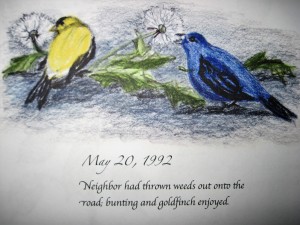 Many of her sightings are by chance: near her feeders or clothesline, or while driving past fields or down a residential street. Each month ends with a poem; these are slightly florid, but so earnest that they won me over. There are plentiful punctuation issues and the cursive font is a challenge to read, but the captured moments and the sense of the seasons’ passing make for a sweet book I’d recommend to anyone with a local interest.
 Bookish Beck = Rebecca Foster. American transplant to England. Freelance proofreader and book reviewer.
 Bookish Beck