December Releases by Anita Felicelli, Lise Goett, Brooke Randel & Weike Wang
December isn’t a big month for new releases, but here are excerpts from a few I happened to review early for U.S. publications BookBrowse, Foreword Reviews, and Shelf Awareness: Speculative short stories, loss-tinged poetry, a family memoir based on Holocaust history, and a satirical short novel about racial microaggressions and class divides in contemporary America.
How We Know Our Time Travelers by Anita Felicelli
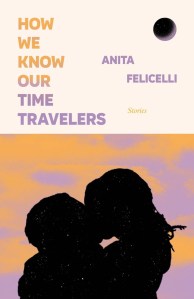 These linked speculative stories, set in near-future California, are marked by environmental anxiety. Many of their characters have South Asian backgrounds. A nascent queer romance between co-op grocery colleagues defies an impending tsunami. A painter welcomes a studio visitor who could be her estranged husband traveling from the past. Mysterious “fog catchers” recur in multiple stories. Memory bridges the human and the artificial, as in “The Glitch,” wherein a coder, bereaved by wildfires, lives alongside holograms of her wife and children. But technology, though a potential means of connecting with the dead, is not an unmitigated good. Creative reinterpretations of traditional stories and figures include urban legends, a locked room mystery, a poltergeist, and a golem. In these grief- and regret-tinged stories, heartbroken people can’t alter their pasts, so they’ll mold the future instead. (See my full Foreword review.)
The Radiant by Lise Goett
 In the 25 poems of Goett’s luminous third poetry collection, nature’s beauty and ancient wisdom sustain the fragile and bereaved. The speaker in “Difficult Body” references a cancer experience and imagines escaping the flesh to diffuse into the cosmos. Goett explores liminal moments and ponders what survives a loss. The use of “terminal” in “Free Fall” denotes mortality while also bringing up fond memories of her late father picking her up from an airport. Mythical allusions, religious imagery, and Buddhist philosophy weave through to shine ancient perspective on current struggles. The book luxuriates in abstruse vocabulary and sensual descriptions of snow, trees, and color. (Tupelo Press, 24 December. Review forthcoming at Shelf Awareness)
Also Here: Love, Literacy, and the Legacy of the Holocaust by Brooke Randel
 Randel’s debut is a poised, tender family memoir capturing her Holocaust survivor grandmother’s recollections of the Holocaust. Golda (“Bubbie”) spoke multiple languages but was functionally illiterate. In her mid-80s, she asked her granddaughter to tell her story. Randel flew to south Florida to conduct interviews. The oral history that emerges is fragmentary and frenetic. The structure of the book makes up for it, though. Interview snippets are interspersed with narrative chapters based on follow-up research. Golda, born in 1930, grew up in Romania. When the Nazis came, her older brothers were conscripted into forced labor; her mother and younger siblings were killed in a concentration camp. At every turn, Golda’s survival (through Auschwitz, Christianstadt, and Bergen-Belsen) was nothing short of miraculous. This concise, touching memoir bears witness to a whole remarkable life as well as the bond between grandmother and granddaughter. (See my full Shelf Awareness review.)
Rental House by Weike Wang
 Their interactions with family and strangers alike on two vacations – Cape Cod and the Catskills, five years apart – put interracial couple Keru and Nate’s choices into perspective as they near age 40. Although some might find their situation (childfree, with a “fur baby”) stereotypical, it does reflect that of a growing number of aging millennials. Wang portrays them sympathetically, but there is also a note of gentle satire here. The way that identity politics comes into the novel is not exactly subtle, but it does feel true to life. And it is very clever how the novel examines the matters of race, class, ambition, and parenthood through the lens of vacations. Like a two-act play, the framework is simple and concise, yet revealing about contemporary American society. (See my full BookBrowse review.)
#SciFiMonth: A Simple Intervention (#NovNov24 and #GermanLitMonth) & Station Eleven Reread
It’s rare for me to pick up a work of science fiction but occasionally I’ll find a book that hits the sweet spot between literary fiction and sci-fi. Parable of the Sower by Octavia Butler, The Book of Strange New Things by Michel Faber and The Sparrow by Mary Doria Russell are a few prime examples. It was the comparisons to Margaret Atwood and Kazuo Ishiguro, masters of the speculative, that drew me to my first selection, a Peirene Press novella. My second was a reread, 10 years on, for book club, whose postapocalyptic content felt strangely appropriate for a week that delivered cataclysmic election results.

A Simple Intervention by Yael Inokai (2022; 2024)
[Translated from the German by Marielle Sutherland]
Meret is a nurse on a surgical ward, content in the knowledge that she’s making a difference. Her hospital offers a pioneering procedure that cures people of mental illnesses. It’s painless and takes just an hour.
The doctor had to find the affected area and put it to sleep, like a sick animal. That was his job. Mine was to keep the patients occupied. I was to distract them from what was happening and keep them interacting with me. As long as they stayed awake, we knew the doctor and his instruments had found the right place.
 The story revolves around Meret’s emotional involvement in the case of Marianne, a feisty young woman who has uneasy relationships with her father and brothers. The two play cards and share family anecdotes. Until the last few chapters, the slow-moving plot builds mostly through flashbacks, including to Meret’s affair with her fellow nurse, Sarah. This roommates-to-lovers thread reminded me of Learned by Heart by Emma Donoghue. When Marianne’s intervention goes wrong, Meret and Sarah doubt their vocation and plan an act of heroism.
Inokai invites us to ponder whether what we perceive as defects are actually valuable personality traits. More examples of interventions and their aftermath would be a useful point of comparison, though, and the pace is uneven, with a lot of unnecessary-seeming backstory about Meret’s family life. In the letter that accompanied my review copy, Inokai explained her three aims: to portray a nurse (her mother’s career) because they’re underrepresented in fiction, “to explore our yearning to cut out our ‘demons’,” and to offer “a queer love story that was hopeful.” She certainly succeeds with those first and third goals, but with the central subject I felt she faltered through vagueness.
Born in Switzerland, Inokai now lives in Berlin. This also counts as my first contribution to German Literature Month; another is on the way!
[187 pages]
With thanks to Peirene Press for the free copy for review.


Station Eleven by Emily St. John Mandel (2014)
For synopsis and analysis I can’t do better than when I reviewed this for BookBrowse a few months after its release, so I’d direct you to the full text here. (It’s slightly depressing for me to go back to old reviews and see that I haven’t improved; if anything, I’ve gotten lazier.) A couple book club members weren’t as keen, I think because they’d read a lot of dystopian fiction or seen many postapocalyptic films and found this vision mild and with a somewhat implausible setup and tidy conclusion. But for me this and Cormac McCarthy’s The Road have persisted as THE literary depictions of post-apocalypse life because they perfectly blend the literary and the speculative in an accessible and believable way (this was a National Book Award finalist and won the Arthur C. Clarke Award), contrasting a harrowing future with nostalgia for an everyday life that we can already see retreating into the past.
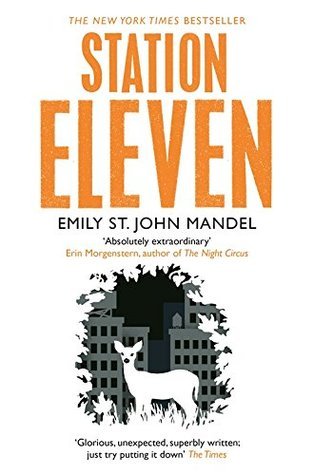 Station Eleven has become a real benchmark for me, against which I measure any other dystopian novel. On this reread, I was captivated by the different layers of the nonlinear story, from celebrity gossip to a rare graphic novel series, and enjoyed rediscovering the links between characters and storylines. I remembered a few vivid scenes and settings. Mandel also seeds subtle connections to later work, particularly The Glass Hotel (island off Vancouver, international shipping and finance) but also Sea of Tranquility (music, an airport terminal). I haven’t read her first three novels, but wouldn’t be surprised if they have additional links.
The two themes that most struck me this time were the enduring power of art and how societal breakdown would instantly eliminate the international – but compensate for it with the return of the extremely local. At a time when it feels difficult to trust central governments to have people’s best interests at heart, this is a rather comforting prospect. Just in my neighbourhood, I see how we implement this care on a small scale. In settlements of up to a few hundred, the remnants of Station Eleven create something like normal life by Year 20.
Book club members sniped that the characters could have better pooled skills, but we agreed that Mandel was wise to limit what could have been tedious details about survival. “Survival is insufficient,” as the Traveling Symphony’s motto goes (borrowed from Star Trek). Instead, she focuses on love, memory, and hunger for the arts. In some ways, this feels prescient of Covid-19, but even more so of the climate-related collapse I expect in my lifetime. I’ve rated this a little bit higher the second time for its lasting relevance. (Free from a neighbour) 
Some favourite passages:
the whole of Chapter 6, a bittersweet litany that opens “An incomplete list: No more diving into pools of chlorinated water lit green from below” and includes “No more pharmaceuticals,” “No more flight,” and “No more countries”
“what made it bearable were the friendships, of course, the camaraderie and the music and the Shakespeare, the moments of transcendent beauty and joy”
“The beauty of this world where almost everyone was gone. If hell is other people, what is a world with almost no people in it?”

October Books: Ballard, Czarnecki, Moss, Oliver, Ostriker, Steed & More
Apparently October is THE biggest month of the year for new releases. A sterling set came my way this year, including two beautiful novella-length memoirs, a luxuriantly illustrated work dedicated to an everyday bird species, two very different but equally elegant poetry collections, and a book of offbeat comics. Time and concentration only allow for a paragraph or so on each, but I hope that gives a flavour of the contents and will pique interest in the ones that suit you best. Plus I excerpt and link to my BookBrowse review of a poignant story of sisters and mental illness, and my Shelf Awareness review of a fantastic graphic novel adaptation.
Bound: A Memoir of Making and Remaking by Maddie Ballard
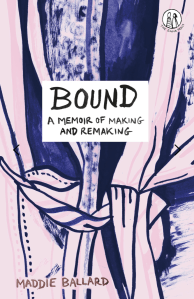 This collection of micro-essays considers sewing and much more. Each piece is headed by a pattern name and list of materials that Ballard made into an article of clothing for herself or for someone else. Among the minutiae of the craft, she slips in so many threads: about her mixed Chinese heritage and her relationship with her grandmother, about the environmental and financial benefits of making one’s own clothing, and especially about the upheaval of her twenties: the pandemic, a break-up, leaving a job to go back to school, finding roommates. I can barely mend a sock and I’m clueless when it comes to fashion, yet I can appreciate how sewing blends comfort and creativity. Ballard presents it as a meditative act of self-care:
I lower the needle and the world recedes. The process of sewing a garment – printing the pattern, tracing and cutting, sewing the first and the second and the fiftieth seam – is a lesson in taking your time.
Like gardening, sewing is an investment in the future – in what sort of person your future self will be, and how she will feel about her body, and what she will want to wear.
Similar to two other very short works of nonfiction I’ve read from The Emma Press, How Kyoto Breaks Your Heart by Florentyna Leow and Tiny Moons by Nina Mingya Powles (Ballard, too, is from New Zealand), this is a graceful, enriching book about a young woman making her way in the world and figuring out what is essential to her sense of home and identity. I commend it whether or not you have any particular interest in handicraft.
With thanks to The Emma Press for the free copy for review.
Encounters with Inscriptions: A Memoir Exploring Books Gifted by Parents by Kristin Czarnecki
When Kristin Czarnecki got in touch to offer a copy of her bibliomemoir about revisiting the books her late parents gifted her, I was instantly intrigued but couldn’t have known in advance how perfect it would be for me. Niche it might seem, but it combines several of my reading interests: bereavement, books about books, relationships with parents (especially a mother) and literary travels.
 The book starts, aptly, with childhood. A volume of Shel Silverstein poetry and A Child’s Christmas in Wales serve as perfect vehicles for the memories of how her parents passed on their love of literature and created family holiday rituals. Thereafter, the chapters are not strictly chronological but thematic. A work of women’s history opens up her mother’s involvement in the feminist movement; reading a Thomas Merton book reveals why his thinking was so important to her Catholic father. The interplay of literary criticism, cultural commentary and personal significance is especially effective in pieces on Alice Munro and Flannery O’Connor. A Virginia Woolf biography points to Czarnecki’s academic specialism and a cookbook to how food embodies memories.
It seems fitting to be reviewing this on the second anniversary of my mother’s death. The afterword, which follows on from the philosophical encouragement of a chapter on the Rubaiyat of Omar Khayyam, exhorts readers to cherish loved ones while we can – and be grateful for the tokens they leave behind. I had told Kristin about books my parents inscribed to me, as well as the journals I inherited from my mother. But I didn’t know there would be other specific connections between us, too, such as being childfree and hopeless in the kitchen. (Also, I have family in South Bend, Indiana, where she’s from, and our mothers were born in the first week of August.) All that to say, I felt that I found a kindred spirit in this lovely book, which is one of the nicest things that happens through reading.
With thanks to the author for the advanced e-copy for review.
The Starling: A Biography by Stephen Moss
 Moss has written a whole series of accessible bird species monographs suitable for nature buffs; this is the sixth. (I’ve not read the others, just Moss’s Wild Hares and Hummingbirds and Skylarks with Rosie, but we do have a copy of The Robin on the shelf that I’ve earmarked for Christmas.) The choice of the term ‘biography’ indicates the meeting of a comprehensive aim and intimate detail. The book conveys much anatomical and historical information about the starling’s relatives, habits, and worldwide spread, yet is only 187 pages – and plenty of those feature relevant paintings and photographs, too. It’s well known that starlings were introduced to Anglophone countries as part of misguided “acclimatisation” projects that we would now dub cultural imperialism. In the USA and elsewhere, the bird is still considered common. But with the industrialisation of agriculture, starlings are actually having less breeding success and thus are in decline.
Overall, the style of the book is dry and slightly workmanlike. However, when he’s recounting murmurations he’s seen in Somerset or read about, Moss’s enthusiasm lifts it into something special. Autumn dusk is a great time to start watching out for starling gatherings. I love observing and listening to the starlings just in the treetops and aerials of my neighbourhood, but we do also have a small local murmuration that I try to catch at least a few times in the season. Here’s how he describes their magic: “At a time when, both as a society and as individuals, we are less and less in touch with the natural world, attending this fleeting but memorable event is a way we can reconnect, regain our primal sense of wonder – and still be home in time for tea.”
With thanks to Square Peg, an imprint of Vintage (Penguin Random House) for the free copy for review.
The Alcestis Machine by Carolyn Oliver
 Carolyn is a blogger friend whose first collection, Inside the Storm I Want to Touch the Tremble, was on my Best Books of 2022 list. Her second is again characterized by precise vocabulary and crystalline imagery, often related to etymology, book history, or pigments (“You and I are marginalia shadowed / by a careless hand, we are gall-soaked vellum / invisible appetites consume.”). Astronomy and technology are a counterpoint, juxtaposing the ancient and the cutting-edge. I loved the language of sea creatures in “Strange Attractor” and the oblique approach to the passage of time (“Three popes ago, you and I”). The repeated three-word opening “In another life” gives a sense of many worlds, e.g., “In another life I’m a florist sometimes accused of inappropriate gravity.” Prose poems relay childhood memories. Love poems are tantalizing and utterly original: “If I promise not to describe the moon, will you / come with me a ways further into the night? / We’ll wash the forest floor / of ash and find a fairy ring / half-eaten, muted crescent bereft of power.” And alliteration never fails to win me over: “Tonight, snow tumbles over sophomores and starlings” and “the pillars in the water make a pillory not a pier”. Some of the collection remained cryptic for me; there was a bit less that grabbed me emotionally. But it’s still stirring work. And how flabbergasted was I to spot my name in the Acknowledgments? (Read via Edelweiss)
The Holy & Broken Bliss: Poems in Plague Time by Alicia Ostriker
“The words of an old woman shuffling the cards of her own decline the decline
of her husband the decline of her nation her plague-smitten world”
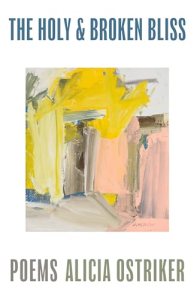 Out of pandemic isolation come new rituals: watching days and seasons pass, fighting for her own health but mostly her husband’s, and lamenting public displays of hate. Lines feel stark with honesty; some poems are just haiku length. Elsewhere, repetition and alliteration create a wistful tone. Jewish scripture and mysticism are the source of much of the language and outlook. Music and nature, too, promise the transcendent. Simple and remarkable. Here’s a stanza about late autumn:
It is almost winter and still
as I walk to the clinic the gingkos
sing their seraphic air
as if there is no tomorrow
With thanks to Alice James Books for the advanced e-copy for review.
Forces of Nature by Edward Steed
 Steed is a longtime New Yorker cartoonist who produces single panels. This means there is no story progression (as in a graphic novel), just what you see on one page. Some of the comics are wordless; many scenes are visual gags which, to be entirely honest, I didn’t always grasp. Steed’s recurring characters are unhappy couples, exiles on desert islands, and dumb cops or criminals. His style is deliberately simplistic: the people not much more advanced than stick figures and the animals especially sketchy. There are multiple attempted prison breaks and satirical depictions of God and the Garden of Eden. Many of the setups are contrived, and the tone can be absurd or prickly, even shading into gruesome. These comics weren’t altogether my cup of tea, though I did get a laugh out of a few of them (a seasonal example is below). Endorsed if you fancy a cross between Edward Gorey and The Book of Bunny Suicides.
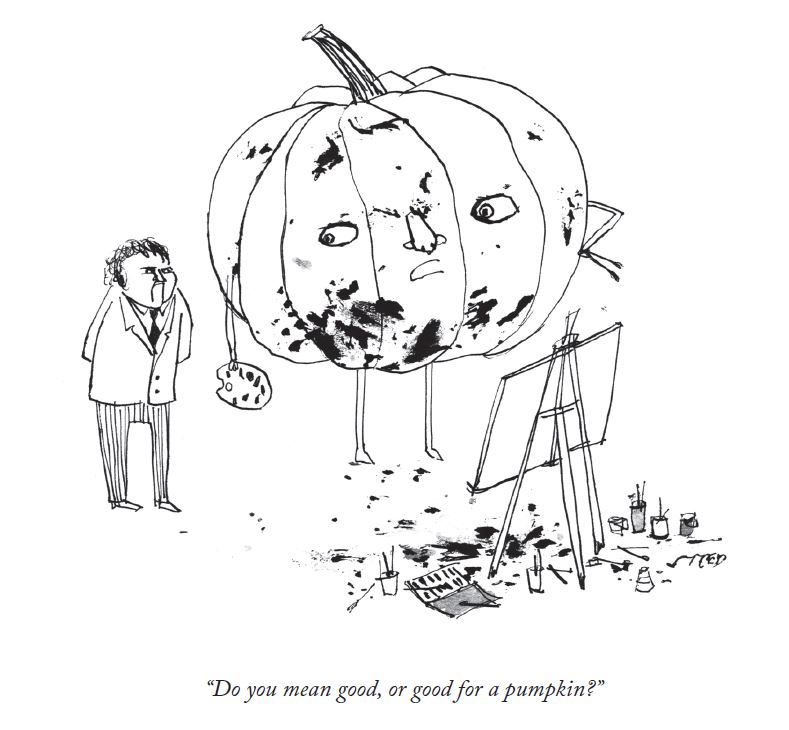
With thanks to Drawn & Quarterly for the e-copy for review.
Reviewed for BookBrowse:
 Shred Sisters by Betsy Lerner – “No one will love you more or hurt you more than a sister” is a wry aphorism that appears late in Lerner’s debut novel. Over the course of two decades, there is much heartache for the Shred family, but also moments of joy. Ultimately, a sisterly bond endures despite secrets, betrayals, and intermittent estrangement. Through her psychologically astute portrait of Olivia (“Ollie”) and Amy Shred, Lerner captures the lasting effects that mental illness can have on not just an individual, but an entire family.
Reviewed for Shelf Awareness:
 The Worst Journey in the World, Volume 1: Making Our Easting Down: The Graphic Novel by Sarah Airriess – The thrilling opening to a cinematically vivid adaptation of Apsley Cherry-Garrard’s 1922 memoir. He was an assistant zoologist on Robert Falcon Scott’s 1910-13 Terra Nova expedition to the South Pole. Even before the ship entered the pack ice, the journey was perilous. The book resembles a full-color storyboard for a Disney-style maritime adventure film. There is jolly camaraderie as the men sing sea shanties to boost morale. The second volume can’t arrive soon enough.
Recent Writing for BookBrowse, Foreword, Shelf Awareness, Shiny New Books, and the TLS
I’ve compiled excerpts from some reviews I’ve contributed to other websites and publications this year. I link to the full text where available. (When writing a paid review, I seek to be balanced but positive. Ratings reflect my personal response.)
BookBrowse
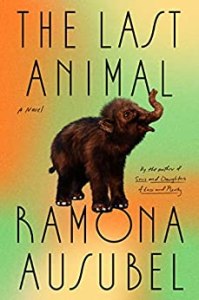 The Last Animal by Ramona Ausubel: In Ausubel’s offbeat third novel, a widowed scientist and her two daughters embark on a rogue plan to make history by resurrecting the woolly mammoth. There is a quirky combination of cosmic and domestic concerns here. A winsome sister duo is at the heart of the unusual and timely story, with priority given to the points of view of teenagers Eve and Vera, whose banter is a highlight. Ausubel has wisely chosen not to dwell on the scientific details of de-extinction, yet that means that this becomes more like speculative fiction or a fairy tale. Ironically, the fabulist-leaning novel is best when most realist, documenting struggles with bereavement, sexism and parenting teens.
 The Lost Wife by Susanna Moore: Moore’s hard-hitting novella is based in part on the memoir Six Weeks in the Sioux Tepees: A Narrative of Indian Captivity. In Moore’s version, Sarah, 25, leaves her baby behind when she flees an abusive husband, and once in Minnesota Territory marries John Brinton, who becomes a doctor on a Sioux reservation. By 1862, Sarah is friendly with the Native women. Although the Civil War is unfolding, the greater threat here is of revolt by the starving Indigenous residents. There is much of anthropological and historical interest, but Sarah’s flat storytelling, which may represent a pastiche of period style, means threatening or climactic scenes lose some of their potential gravity.
Foreword
 My Mother Says by Stine Pilgaard (trans. from the Danish by Hunter Simpson): After breaking up with her zookeeper girlfriend over their age gap and their conflicting takes on motherhood, the heroine moves back in with her father, a pastor who’s obsessed with Pink Floyd, and her stepmother. Her mother visits often, nagging her to finish her thesis. The line between her conversations and internal thoughts is thin. From her mansplaining doctor, she learns that the brain’s hippocampus is named for its seahorse shape. This inspires “Monologues of a Seahorse,” interludes of stream-of-consciousness association. Experimental and whimsical, this delivers deadpan narration of everyday woes.
 In Vitro: On Longing and Transformation by Isabel Zapata (trans. from the Spanish by Robin Myers): A Mexican poet probes the enduring mysteries of pregnancy and birth in a memoir in fragments that travels from fertility treatment through to the early weeks of pandemic-time motherhood. The clinical language of a gynecological history—late menstruation, polycystic ovary syndrome, eighteen years on the pill, and infertility—and the embryo transfer process contrasts with Zapata’s mystical thinking. The microessays integrate family stories, history, and artistic explorations. This resolute account of a personal metamorphosis alchemizes tender experiences into enchanting vignettes.
Shelf Awareness
Fiction
 Daughters of Nantucket by Julie Gerstenblatt: This engrossing debut novel explores the options for women in the mid-19th century while bringing a historical tragedy to life. Metaphorical conflagrations blaze in the background in the days leading up to the great Nantucket fire of 1846: each of three female protagonists (a whaling captain’s wife, a museum curator, and a pregnant Black entrepreneur) holds a burning secret and longs for a more expansive, authentic life. The action spans two tense weeks, one week before the fire through eight days after. The women’s lives collide in two climactic scenes. Gerstenblatt’s eye for detail results in sultry historical fiction for Sue Monk Kidd’s readers.
 Camp Zero by Michelle Min Sterling: Sterling’s brilliantly unsettling debut novel is set in mid-21st-century, post-oil North America. Prioritizing perspectives from two all-female communities, it contrasts the heights of opulence and technology with the basic instinct for survival. How the strands connect is a mystery sustained through much of the book. Characters go by multiple names and harbor ulterior motives; scenes echo each other as disparate subplots meet in unexpected ways. The background is all too plausible. Sterling also takes to its logical extreme the state of being constantly online. Compelling dystopian cli-fi with three-dimensional characters—perfect for fans of Station Eleven and To Paradise.
 Dear Chrysanthemums by Fiona Sze-Lorrain: In this elegant collection of 11 linked short stories by a poet and translator, China’s mid-20th-century political upheaval casts a long shadow. Music and food, not to mention love, bring meaning to those displaced in the aftermath of dissent. The stories—set in China, Singapore, Paris, and New York—span seven decades but always take place in a year ending in a six, a sacred number in Chinese divination. A highlight is “News from Saigon,” in which a prostitute meets Marguerite Duras in a Paris café. The connections are subtle, with the final story pulling together many strands. Ideal for readers of Madeleine Thien’s Do Not Say We Have Nothing.
Nonfiction
 Stranded by Maddalena Bearzi: Bearzi developed a deep love for marine fauna during childhood summers in Sardinia and cofounded the Ocean Conservation Society in the 1990s. Temporarily confined to land by Covid-19 lockdowns, she adopts a different tactic for exploring animal behavior: “an urban safari in my backyard and neighborhood.” These nature essays exemplify evenhandedness, curiosity, and close observation. From wasps to night-blooming flowers, her interest is wide-ranging. Gardening is a relaxing pastime and a connection to her mother while they are separated. As a behavioral ecologist, she views even her dog as a subject of study. A passionate primer to appreciating everyday nature.
Poetry
 Lo by Melissa Crowe: This incandescent autobiographical collection travels from girlhood to marriage and motherhood in post-pandemic USA. Crowe delves into sexual abuse and growing up in rural poverty. Yet the collection is so carefully balanced in tone that it never feels bleak. The emotional range is enhanced by alliteration and botanical imagery.
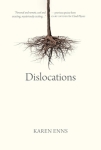 Dislocations by Karen Enns: The fourth collection by Canadian poet Enns skillfully evokes a rural upbringing and revels in the beauty of nature and music. One of its aphorisms could encapsulate the entire collection: “The ratio of love to grief / we understood as music.” Updating the pastoral tradition, the bittersweet verse also takes solace in the past.
Shiny New Books
A Fortunate Woman by Polly Morland & A Fortunate Man by John Berger: The similarities go much further than the title and subject matter: these two biographical works, both illustrated with black-and-white photographs, are set in the same English valley and the female subject of Morland’s is the next-but-one successor of the doctor who stars in Berger’s.
 Berger (1926–2017), an art critic and Booker Prize-winning novelist, spent six weeks shadowing the doctor, to whom he gives the pseudonym John Sassall, with Swiss documentary photographer Jean Mohr, his frequent collaborator. Sassall’s dedication was legendary: he attended every birth in this community, and nearly every death. Sassall’s middle-class origins set him apart from his patients. There’s something condescending about how Berger depicts the locals as simple peasants. Mohr’s photos include soft-focus close-ups on faces exhibiting a sequence of emotions, a technique that feels outdated in the age of video. Along with recording the day-to-day details of medical complaints and interventions, Berger waxes philosophical on topics such as infirmity and vocation. A Fortunate Man is a curious book, part intellectual enquiry and part hagiography.
 With its layers of local history and its braided biographical strands, A Fortunate Woman takes up many of the same heavy questions but feels more subtle and timely. It also soon delivers a jolting surprise: the doctor Berger called John Sassall was likely bipolar and, soon after the death of his beloved wife Betty, committed suicide in 1982. His story still haunts this community, where many of the older patients remember going to him for treatment. Like Berger, Morland keenly follows a range of cases. As the book progresses, we see this beautiful valley cycle through the seasons, with certain of Richard Baker’s landscape shots deliberately recreating Mohr’s scene setting. The timing of Morland’s book means that it morphs from a portrait of the quotidian for a doctor and a community to, two-thirds through, an incidental record of the challenges of medical practice during COVID-19.
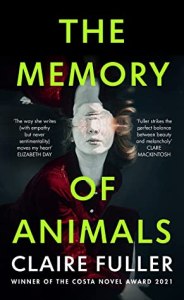 The Memory of Animals by Claire Fuller: Neffy has nothing to lose when she enrolls in a controversial vaccine trial in a familiar mid-pandemic landscape. The novel is presented as her journal. The bulk takes place in two weeks she spends on a locked unit with four fellow test subjects. In the meantime, she is introduced to an experimental technology for reliving memories. The characterisation of the four other cast members is somewhat thin, and the elements feel randomly assembled. The world-building and tech are unlikely to stand up to science fiction fans’ scrutiny, but this has just the right dose of the speculative for literary fiction readers. It also happens to fit into a recent vogue for octopus novels.
Times Literary Supplement
A late-twenties journalist sets out to survey the situation on the ground for ten British species being squeezed out by anthropogenic climate change: The mission is very similar, and both authors embody passionate dedication to conservation, but the difference in tone of these travel narratives makes them likely to appeal to separate audiences…
In Search of One Last Song by Patrick Galbraith & Forget Me Not by Sophie Pavelle:
 Galbraith’s is an elegiac tour through imperilled countryside and urban edgelands. Each chapter resembles an in-depth magazine article: a carefully crafted profile of a beloved bird species, with a focus on the specific threats it faces. Galbraith recognises the nuances of land use. However, shooting plays an outsized role. (Curious for his bio not to disclose that he is editor of the Shooting Times.) The title’s reference is to literal birdsong, but the book also celebrates birds’ cultural importance through their place in Britain’s folk music and poetry. He is clearly enamoured of countryside ways, but too often slips into laddishness, with no opportunity missed to mention him or another man having a “piss” outside. Readers could also be forgiven for concluding that “Ilka” (no surname, affiliation or job title), who briefs him on her research into kittiwake populations in Orkney, is the only female working in nature conservation in the entire country; with few exceptions, women only have bit parts: the farm wife making the tea, the receptionist on the phone line, and so on.
 Pavelle’s book is a tonic in more ways than one. Employed by Beaver Trust, she is enthusiastic and self-deprecating. Her nature quest has a broader scope, including insects like the marsh fritillary and marine species such as seagrass and the Atlantic salmon. Travelling between lockdowns in 2020–1, Pavelle took low-carbon transport wherever possible and bolsters her trip accounts with context, much of it gleaned from Zoom calls and e-mail correspondence with experts from museums and universities. Refreshingly, around half of these interviewees are women, and the animal subjects are never the obvious choices. Instead, she seeks out “underdog” species. The explanations are at a suitable level for laymen, true to her job as a science communicator. The snappy, casual prose (“the future of the bilberry bumblebee and its Aperol arse can be bright, but only if we get off our own”) could even endear her to teenage readers. As image goes, Pavelle’s cheerful naïveté holds more charm than Galbraith’s hardboiled masculinity.
 Taking Flight by Lev Parikian: Parikian’s accessible account of the animal kingdom’s development of flight exhibits a layman’s enthusiasm for an everyday wonder. He explicates the range of flying strategies and the structural adaptations that made them possible. The archaeopteryx section, chronicling the transition between dinosaurs and birds, is a highlight. Though the most science-heavy of the author’s six works, this, perhaps ironically, has fewer footnotes. His usual wit is on display: he describes the feral pigeon as “the Volkswagen Golf of birds” and penguins as “piebald blubber tubes”. This makes it a pleasure to tag along on a journey through evolutionary time, one sure to engage even history- and science-phobes.
Do any of these catch your eye?
A Contemporary Classic: Foster by Claire Keegan (#NovNov22)
This year for Novellas in November, Cathy and I chose to host one overall buddy read, Foster by Claire Keegan. I ended up reviewing it for BookBrowse. My full review is here and I also wrote a short related article on Keegan’s career and the unusual publishing history of this particular novella. Here are short excerpts from both:
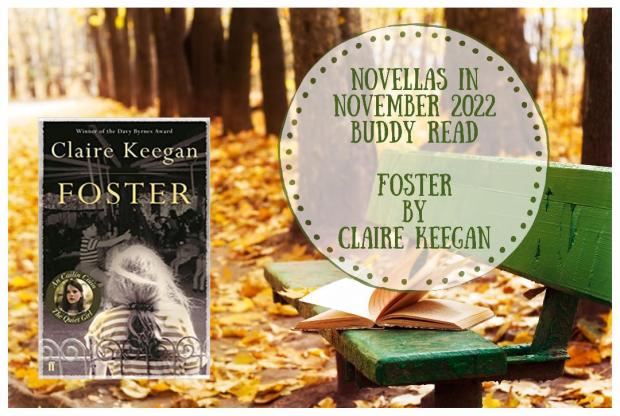
Claire Keegan’s delicate, heart-rending novella tells the story of a deprived young Irish girl sent to live with rural relatives for one pivotal summer. Although Foster feels like a timeless fable, a brief mention of IRA hunger strikers dates it to 1981. It bears all the hallmarks of a book several times its length: a convincing and original voice, rich character development, an evocative setting, just enough backstory, psychological depth, conflict and sensitive treatment of difficult themes like poverty and neglect. I finished the one-sitting read in a flood of tears, hoping the Kinsellas’ care might be enough to protect the girl from the harshness she may face in the rest of her growing-up years. Keegan unfolds a cautionary tale of endangered childhood, also hinting at the enduring difference a little compassion can make. [128 pages] 
 Foster is now in print for the first time in the USA (from Grove Atlantic), having had an unusual path to publication. It first appeared in the New Yorker in 2010, but in abridged form. Keegan told the Guardian she felt the condensed version “was very well done but wasn’t the whole story. It had some of the layers taken out, but I think the heart was the same.” She herself has described Foster as a long short story; “It is definitely not a novella. It doesn’t have the pace of a novella.” Faber & Faber first published it as a standalone volume in the UK in 2010. A 2022 Irish-language film version of Foster, called The Quiet Girl (which names the main character Cait) became a favorite on the international film festival circuit.
[Edited on December 1st]
A number of you joined us in reading Foster this month:
Lynne at Fictionophile
Karen at The Simply Blog
Davida at The Chocolate Lady’s Book Reviews
Tony at Tony’s Book World
Brona at This Reading Life
Janet at Love Books Read Books
Jane at Just Reading a Book
Kate at Books Are My Favourite and Best
Carol at Reading Ladies
(Cathy also reviewed it last year.)
Our bloggers have been impressed with the spare, precise writing style and the emotional heft of this little tale. Their only complaint? The slight ambiguity of the ending. Read it yourself to find out what you think! If you’d still like to take part in the buddy read and have an hour or two free, remember you can access the original version of the story here.
September’s Focus: Short Stories
This is the seventh year in a row in which I’m making a special effort to read short stories in September; otherwise, story collections tend to languish on my shelves (and Kindle) unread. In September 2020 I read 8 collections, and in September 2021 it was 12. How many can I get through this time?! Here are my options, including, at far right, some I’m partway through, a thematic trio (“Birds” titles) I fancy reviewing together, and a few from the library.


To my surprise, if I count linked short stories, I’ve already read 13 collections this year. Highlights: Dance Move by Wendy Erskine, The Summer Book by Tove Jansson, Antipodes by Holly Goddard Jones, and How High We Go in the Dark by Sequoia Nagamatsu.
 The best of the lot, though, has been Stories from the Tenants Downstairs by Sidik Fofana, which I’ll be reviewing for BookBrowse over the weekend. It’s a character- and voice-driven set of eight stories about the residents of a Harlem apartment complex, many of them lovable rogues who have to hustle to try to make rent in this gentrifying area.
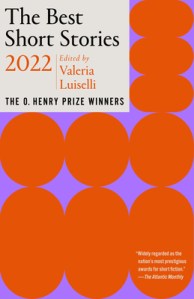 A September release I’ll quickly plug: The Best Short Stories 2022: The O. Henry Prize Winners, selected by Valeria Luiselli. I read this for Shelf Awareness and my review will be appearing in a couple of weeks. Half of the 20 stories are in translation – Luiselli insists this was coincidental – so it’s a nice taster of international short fiction. Contributing authors you will have heard of: Chimamanda Ngozi Adichie, Lorrie Moore, Samanta Schweblin and Olga Tokarczuk. The style runs the gamut from metafiction to sci-fi/horror. Covid-19, loss and parenting are frequent elements. My two favourites: Joseph O’Neill’s “Rainbows,” about sexual misconduct allegations, then and now; and the absolutely bonkers novella-length “Horse Soup” by Vladimir Sorokin, about a woman and a released prisoner who meet on a train and bond over food. (13 September, Anchor Books)
 Here’s a short story collection I received for review but, alas, couldn’t finish: Milk Blood Heat by Dantiel W. Moniz. This was longlisted for the Dylan Thomas Prize and won the NB Magazine Blogger’s Book Prize. The link, I have gathered, is adolescent girls in Florida. I enjoyed the title story, which opens the collection and takes peer pressure and imitation to an extreme, but couldn’t get through more than another 1.5 after that; they left zero impression.
Currently reading: The Boat by Nam Le (it won the Dylan Thomas Prize; I’ve read the first story so far and it was knockout!), Birds of a Lesser Paradise by Megan Mayhew Bergman.
 Resuming soon: The Predatory Animal Ball by Jennifer Fliss (e-book), Hearts & Bones by Niamh Mulvey, The Secret Lives of Church Ladies by Deesha Philyaw – all were review copies.
Are you a short story fan? Read any good ones recently?
Join me in this low-key challenge if you wish!
March Releases by Rebecca Brown, Luis Carrasco, A.J. Lees et al.
As busy as I am with house stuff, I’m endeavouring to keep up with the new releases publishers have been kind enough to send. Today I have a collection of essays on the seasons and mental health, a novella inhabiting a homeless girl’s situation, and a memoir about how skills of observation have been invaluable to a neurologist’s career. (I also mention a few other March releases that I have written about elsewhere or will be reviewing soon.)
You Tell the Stories You Need to Believe: On the four seasons, time and love, death and growing up by Rebecca Brown
 Brown has shown up twice now in my November novella reading (Excerpts from a Family Medical Dictionary in 2016 and the excellent The Gifts of the Body in 2018). I was delighted to learn from a recent Shelf Awareness newsletter that she had a new book, and its Didion-esque title intrigued me. These four essays, which were originally commissioned for The Stranger, Seattle’s alternative weekly, and appeared in print between 2014 and 2016, move methodically through the four seasons and through the weather of the heart, which doesn’t always follow nature’s cues. Depression can linger and mock by contrast the external signs of growth and happiness; it’s no wonder that spring is dubbed the “suicide season.”
The relaxed collages of experience and research blend stories from childhood and later life with references to etymology, literature, music, mythology and poetry. Spring brings to mind the Persephone legend and Vivaldi’s compositions. Summer makes her think of riding bikes on dusty roads and a pregnant dog that turned up just before a storm. Autumn has always been for falling in or out of love. Winter is hard to trudge through, but offers compensatory blessings: “You stand inside the house of your friends and feel and see and everyone is in love and alive and you get to be here, grateful, too, however long, this time, the winter lasts.”
A danger with seasonal books is that, with nostalgia tingeing everything, you end up with twee, obvious reflections. Here, the presence of grief and mental health struggles creates a balanced tone, and while the book as a whole feels a little evanescent, it’s a lovely read.
Another favorite passage:
Maybe like how in the winter it’s hard to imagine spring, I forgot there was anything else besides despair. I needed—I need—to remember the seasons change. I need to remember the dark abates, that light and life return. This is a story I need to believe.
With thanks to Chatwin Books for the e-copy for review.
Ghosts of Spring by Luis Carrasco
Carrasco’s second novella (after 2018’s El Hacho) takes an intimate journey with a young woman who sleeps rough on the streets of a city in the west of England (Cheltenham? Gloucester?). Elemental concerns guide her existence: where can she shelter for the night? Where can she store her meagre belongings during the day? Does she have enough coins to buy a cup of tea from a café, and how long can she stretch out one drink so she can stay in the warm? The creeping advance of the winter (and the holiday season) sets up an updated Christmas Carol type of scenario where the have-nots are mostly invisible to the haves but rely on their charity:
 Hidden in plain sight amongst them, in nooks and doorways and sitting with heads hanging against cold stone walls are huddled shapes, blanketed and inert, with faces of indifferent boredom. Too cold to fish for cash and pity[,] they sit with their faces wrapped in dirty scarves and stolen hats, working the empty corners of tobacco pouches and sucking cold coffee from yesterday’s cups. Ghosts of flesh, they are here and everywhere and nobody sees a thing.
With no speech marks, the narrative flows easily between dialogue and a third-person limited point of view. The protagonist, generally just called “the girl,” is friends with a group of prostitutes and tries out a night in a homeless hostel and sleeping in an allotment shed when she takes a bus to the suburbs. Carrasco is attentive to the everyday challenges she faces, such as while menstruating. We get hints of the family issues that drove her away, but also follow her into a new opportunity.
The book has an eye to her promising future but also bears in mind the worst that can happen to those who don’t escape poverty and abuse. At times underpowered, at others overwritten (as I found for my only other époque press read, What Willow Says), this succeeds as a compassionate portrait of extreme circumstances, something I always appreciate in fiction, and would make a good pairing with another story of homelessness, Kerstin Hensel’s Dance by the Canal from Peirene Press.
With thanks to époque press for the proof copy for review.
Brainspotting: Adventures in Neurology by A.J. Lees
 Dr Andrew Lees is a professor of neurology at the National Hospital in London and a world-renowned Parkinson’s disease researcher. The essays in this short autobiographical volume emphasize the importance of listening and noticing. The opening piece, in fact, is about birdwatching, a boyhood hobby that first helped him develop this observational ability. In further chapters he looks back to his medical education and early practice in London’s East End and in Paris in the 1960s and 1970s. He profiles the hospitals he has known over the last five decades, and the neurologists who paved the way for the modern science, such as Jean-Martin Charcot and François Lhermitte.
The professors whose lessons have most stuck with him are those who insisted on weaving patient histories and symptoms into a story. Lees likens the neurologist’s work to Sherlock Holmes’s deductions – even the smallest signs can mean so much. Indeed, Arthur Conan Doyle, himself a doctor, is known to have modelled Holmes on Joseph Bell, a Scottish surgeon. I particularly liked the essay “The Lost Soul of Neurology,” about science versus spirituality. As a whole, this didn’t particularly stand out for me compared to many of my other medical reads, but I’d still liken it to the works of Gavin Francis and Henry Marsh.
With thanks to Notting Hill Editions for the free copy for review.
Plus a few more March releases I’ve read recently:
Reviewed for BookBrowse:
Booth by Karen Joy Fowler
 In an epic fictional sweep from 1822 to nearly the close of the century, Fowler surveys the Booth family’s triumphs and tragedies. Short asides chronicle Lincoln’s rise in parallel. The foreshadowing is sometimes heavy-handed, and the extended timeline means there is also some skating over of long periods. Booth is low on scenes and dialogue, with Fowler conveying a lot of information through exposition. Luckily, the present-tense narration goes a long way toward making this less of a dull group biography and more of an unfolding story. I also appreciated that the Booth sisters are given major roles as point-of-view characters. The issues considered, like racial equality, political divisions and mistrust of the government, are just as important in our own day. Recommended to fans of March and Hamnet. (I also wrote a related article on the Booth family actors and Shakespeare in performance in the 19th-century USA.)
With thanks to Serpent’s Tail for the proof copy for review.
To review for BookBrowse soon: Groundskeeping by Lee Cole, one of my favourite 2022 releases so far; just the sort of incisive contemporary American novel I love. Big questions of class, family, fate and politics are bound up in a campus-set love story between a drifting manual labourer with literary ambitions and a visiting writer. (Faber)
And coming up tomorrow in my Reading Ireland Month roundup: Vinegar Hill, Colm Tóibín’s terrific debut collection of poems about current events, religion and travels. (Carcanet Press)
Do any of these books appeal to you?
January Releases, Part III: Taylor Harris, Cathy Rentzenbrink & Tanya Shadrick
Rounding off my three-part look at some of the month’s new releases with two memoirs plus a memoir-writer’s self-help guide today. (Can you tell I’m a memoir junkie?) Topics range from medical mysteries and covert racism to a reclaiming of life after a near-death experience, but these three nonfiction works by women are linked by the determination to overcome self-doubt.
This Boy We Made: A Memoir of Motherhood, Genetics, and Facing the Unknown by Taylor Harris
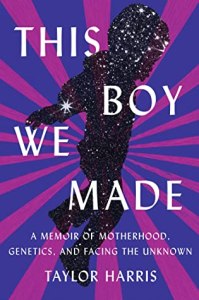 One morning, Taylor Harris and her husband (an African American family based in Charlottesville, Virginia) found their 22-month-old son Christopher, nicknamed “Tophs,” awake but unresponsive in his crib. In the years that followed, she and his doctors looked for answers as to why his body couldn’t regulate his blood sugar levels, sometimes leading to seizures, and to why his speech and mental processing remained delayed. All their tests and theories have never amounted to a conclusive diagnosis. This was a book that repeatedly surprised me. I’d assumed it would be exclusively about the medical mystery of Tophs’s physical and intellectual disability. But Harris elegantly weaves in a lot of other themes, too: mental illness, her own physical concerns (a BRCA2 mutation), racism, faith, and advocating for her children’s health and education. (Full review at BookBrowse.)
Write It All Down: How to put your life on the page by Cathy Rentzenbrink
Cathy Rentzenbrink is a lovely human being, and I’ve always appreciated her enthusiastic support of books. I’ve read all of her work even though I’ve been disappointed with her last few releases. There are so many writing guides out there – including several on memoir-writing specifically – that the first question to ask about one is, does it offer anything new? For me, this one doesn’t. In fact, it’s more of a therapy session than a practical writing guide.
 The undemanding prose slides right down, but 60 pages in (at the end of Part One, “Preparation”) I realized all we’d had thus far was enumerating and countering the hang-ups of unconfident, procrastinating would-be writers. The rest of the book does then get into the nitty-gritty of producing a first draft (“Excavation”) of a life story and editing it into a more polished form. Rentzenbrink peppers in little tricks to keep oneself at the desk, like setting a timer or micro-goals, writing a section in the form of a letter, and dredging up sensory details. Most of the mini chapters are just a couple of pages. Several end with a series of prompts. I’m notorious for skipping the application questions in self-help books, but I’d be interested to hear if other readers have actually gone through these exercises and found them helpful.
I’m so familiar with the author’s own story from her three autobiographical works that I was less than patient about encountering certain incidents again here – though I was intrigued to learn that she gave up alcohol in the recent past after realizing that she was a problem drinker. I’ve also read most of the material in her Further Reading list; all told, I didn’t feel this book offered me much, as a lay reader or a maybe-some-day memoirist. But it seems to have been enormously popular among critics and readers (its average Goodreads rating is 4.38), so clearly a lot of people have been finding Rentzenbrink’s down-to-earth approach reassuring.
With thanks to Emma Finnigan PR and Bluebird for the proof copy for review.
The Cure for Sleep: Memoir of a Late-Waking Life by Tanya Shadrick
From my Most Anticipated list. Shadrick hangs around the fringes of nature writing cliques on Twitter, so I expected this to have more of a nature/travel element. Instead, it bears a fairy tale ambience, of a little girl lost in the woods and craving freedom; of a sleepwalking woman deciding to live more deliberately. It opens with a near-death experience: Shadrick, new mother to a son conceived after infertility treatment, suffered a severe haemorrhage after the placenta tore an artery and was rushed to hospital for emergency surgery.
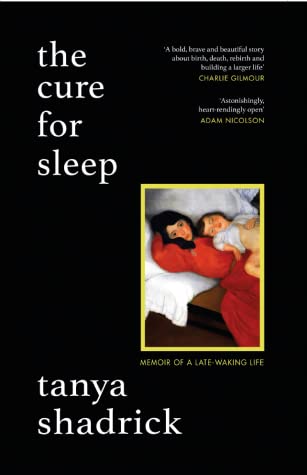 From this point she returns to the beginning of her life and proceeds chronologically, pausing at joyful or traumatic moments. Her childhood feels like the key to understanding everything else: her father left when she was a baby; her mother, all too aware of being of lower class, was driven to improve herself. Shadrick wanted her mother all to herself, at the same time as she felt trapped by her. She injured herself jumping off an outhouse roof in protest at her mother’s new boyfriend, who became her stepfather. At university she reacted against her upbringing in predictable ways, failing her first year and having an abortion. Even once happily married, she kept unconsciously searching for surrogate father (older male) figures.
After the postnatal operation, she felt a need to escape – by suicide if necessary – yet forced herself to stay, make connections in her town and be present for her children. But she remained a free spirit, swimming and writing a mile-long scroll as public performance art. Her work with hospice patients, recording their memories, qualified her to edit Lynne Roper’s wild swimming diaries into a Wainwright Prize-longlisted book.
Awakening versus sleep is the figurative framework for the memoir, with a feminist insistence on freedom and self-fulfilment at the same time as being a mother. This is an unusual book – at times overwritten and too deliberately moulded into tropes as a rebuttal to randomness, even though, looking back, I can’t decipher a coherent plot to the events – that reminded me most of Free Woman by Lara Feigel and I Am, I Am, I Am by Maggie O’Farrell.
With thanks to W&N for the free copy for review.
Does one of these books appeal to you?
2022 Proof Copies & Early Recommendations (Julia Armfield’s Debut Novel, Lily King’s Short Stories)
I didn’t feel like I’d done a lot of pre-release reading yet, but put it all together and somehow it looks like a lot…
My top recommendations for 2022 (so far):
Our Wives Under the Sea by Julia Armfield
Coming on March 3rd from Picador (UK) and on July 12th from Flatiron Books (USA)
I loved Armfield’s 2019 short story collection Salt Slow, which I reviewed when it was shortlisted for the Sunday Times Young Writer of the Year Award. Her strategy in her debut novel is similar: letting the magical elements seep in gradually so that, lulled into a false sense of familiarity, you find the creepy stuff all the more unsettling.
 Miri is relieved to have her wife back when Leah returns from an extended Centre for Marine Inquiry expedition. But something went wrong with the craft while in the ocean depths and it was too late to evacuate. What happened to Leah and the rest of the small crew? Miri starts to worry that Leah – who now spends 70% of her time in the bathtub – will never truly recover. Chapters alternate between Miri describing their new abnormal and Leah recalling the voyage. As Miri tries to tackle life admin for both of them, she feels increasingly alone and doesn’t know how to deal with persistent calls from the sister of one of the crew members.
This is a really sensitive consideration of dependency and grief – Miri recently lost her mother and Leah’s father also died. I especially liked the passages about Miri’s prickly mother: it was impossible not to offend her, and she truly believed that if she resisted ageing she might never die. Leah seems shell-shocked; her matter-of-fact narration is a contrast to Miri’s snark. Armfield gives an increasingly eerie story line a solid emotional foundation, and her words about family and romantic relationships ring true. I read this in about 24 hours in early December, on my way back from a rare trip into London; it got the 2022 releases off to a fab start to me. Plus, the title and cover combo is killer. I’d especially recommend this to readers of Carmen Maria Machado and Banana Yoshimoto. (Read via NetGalley) 
Five Tuesdays in Winter by Lily King
Coming on January 20th from Picador (UK); released in the USA in November 2021
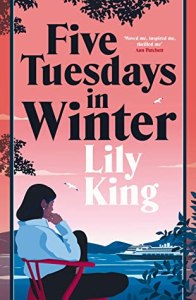 The same intimate understanding of emotions and interactions found in Euphoria and Writers & Lovers underlies King’s first short story collection. Some stories are romantic; others are retrospective coming-of-age narratives. Most are set in New England, but the time and place varies from the 1960s to the present day and from Maine to northern Europe. Several stories look back to a 1980s adolescence. “South” and “The Man at the Door” are refreshingly different, incorporating touches of magic and suspense. However, there are also a few less engaging stories, and there aren’t particularly strong linking themes. Still, the questions of love’s transience and whether any relationship can ever match up to expectations linger. I’d certainly recommend this to fans of King’s novels. (See my full review at BookBrowse. See also my related article on contemporary New England fiction.)
With thanks to Picador for the proof copy for review.
Other 2022 releases I’ve read:
(In publication date order)
 Write It All Down: How to put your life on the page by Cathy Rentzenbrink [Jan. 6, Bluebird] I’ve read all of Rentzenbrink’s books, but the last few have been disappointing. Alas, this is more of a therapy session than a practical memoir-writing guide. (Full review coming later this month.)
 Recovery: The Lost Art of Convalescence by Gavin Francis [Jan. 13, Wellcome Collection]: A short, timely book about the history and subjectivity of recovering from illness. (Full review and giveaway coming next week.)
 The Store-House of Wonder and Astonishment by Sherry Rind [Jan. 15, Pleasure Boat Studio]: In her learned and mischievous fourth collection, the Seattle poet ponders Classical and medieval attitudes towards animals. (Full review coming to Shelf Awareness soon.)
 Stepmotherland by Darrel Alejandro Holnes [Feb. 1, University of Notre Dame Press]: Holnes’s debut collection, winner of the Andrés Montoya Poetry Prize, ponders a mixed-race background and queerness through art, current events and religion. Poems take a multitude of forms; the erotic and devotional mix in provocative ways. (See my full review at Foreword.)
 Rise and Float: Poems by Brian Tierney [Feb. 8, Milkweed Editions]: A hard-hitting debut collection with themes of bereavement and mental illness – but the gorgeous imagery lifts it above pure melancholy. (Full review coming to Shelf Awareness soon.)
 Cost of Living: Essays by Emily Maloney [Feb. 8, Henry Holt]: Probing mental illness and pain from the medical professional’s perspective as well as the patient’s, 16 autobiographical essays ponder the value of life. (Full review coming to Shelf Awareness soon.)
 Circle Way: A Daughter’s Memoir, a Writer’s Journey Home by Mary Ann Hogan [Feb. 15, Wonderwell]: A posthumous memoir of family and fate that focuses on a father-daughter pair of writers. A fourth-generation Californian, Hogan followed in her father Bill’s footsteps as a local journalist. Collage-like, the book features song lyrics and wordplay as well as family anecdotes. (See my full review at Foreword.)
 Cold Enough for Snow by Jessica Au [Feb. 23, Fitzcarraldo Editions]: A delicate work of autofiction – it reads like a Chloe Aridjis or Rachel Cusk novel – about a woman and her Hong Kong-raised mother on a trip to Tokyo. (Full review coming up in a seasonal post.)
 The Carriers: What the Fragile X Gene Reveals about Family, Heredity, and Scientific Discovery by Anne Skomorowsky [May 3, Columbia UP]: Blending stories and interviews with science and statistics, this balances the worldwide scope of a disease with its intimate details. (Full review coming to Foreword soon.)
Currently reading:
(In release date order)
 This Boy We Made: A Memoir of Motherhood, Genetics, and Facing the Unknown by Taylor Harris [Jan. 11, Catapult] (Reading via Edelweiss; to review for BookBrowse)
To Paradise by Hanya Yanagihara [Jan. 11, Picador] (Blog review coming … eventually)
I Came All This Way to Meet You: Writing Myself Home by Jami Attenberg [Jan. 13, Serpent’s Tail] (Blog review coming later this month)
 Everything Is True: A Junior Doctor’s Story of Life, Death and Grief in a Time of Pandemic by Roopa Farooki [Jan. 20, Bloomsbury] (To review for Shiny New Books)
Some Integrity by Padraig Regan [Jan. 27, Carcanet] (Blog review coming later this month)
Additional proof copies on my shelf:
(In release date order; publisher blurbs from Goodreads/Amazon)

 What I Wish People Knew About Dementia by Wendy Mitchell [Jan. 20, Bloomsbury]: “When Mitchell was diagnosed with young-onset dementia at the age of fifty-eight, her brain was overwhelmed with images of the last stages of the disease – those familiar tropes, shortcuts and clichés that we are fed by the media, or even our own health professionals. … Wise, practical and life affirming, [this] combines anecdotes, research and Mitchell’s own brilliant wit and wisdom to tell readers exactly what she wishes they knew about dementia.”
 I Love You But I’ve Chosen Darkness by Claire Vaye Watkins [Came out in USA last year; UK release = Jan. 20, Quercus]: “Leaving behind her husband and their baby daughter, a writer gets on a flight for a speaking engagement in Reno, not carrying much besides a breast pump and a spiraling case of postpartum depression. … Deep in the Mojave Desert where she grew up, she meets her ghosts at every turn: the first love whose self-destruction still haunts her; her father, a member of the most famous cult in American history.”
 Beasts of a Little Land by Juhea Kim [Feb. 3, Oneworld]: “From the perfumed chambers of a courtesan school in Pyongyang to the chic cafes of a modernising Seoul and the thick forests of Manchuria, Juhea Kim’s unforgettable characters forge their own destinies as they shape the future of their nation. Immersive and elegant, firmly rooted in Korean folklore and legend, [this] unveils a world where friends become enemies, enemies become saviours, and beasts take many shapes.”

 Theatre of Marvels by Lianne Dillsworth [April 28, Hutchinson Heinemann]: “Unruly crowds descend on Crillick’s Variety Theatre. Young actress Zillah [a mixed-race orphan] is headlining tonight. … Rising up the echelons of society is everything Zillah has ever dreamed of. But when a new stage act disappears, Zillah is haunted by a feeling that something is amiss. Is the woman in danger? Her pursuit of the truth takes her into the underbelly of the city.” (Unsolicited) [Dillsworth is Black British.]
The Secret Lives of Church Ladies by Deesha Philyaw [Came out in USA in 2020; UK release = May 5, Pushkin]: “explores the raw and tender places where Black women and girls dare to follow their desires and pursue a momentary reprieve from being good. … With their secret longings, new love, and forbidden affairs, these church ladies are as seductive as they want to be, as vulnerable as they need to be, as unfaithful and unrepentant as they care to be, and as free as they deserve to be.”
And on my NetGalley shelf:
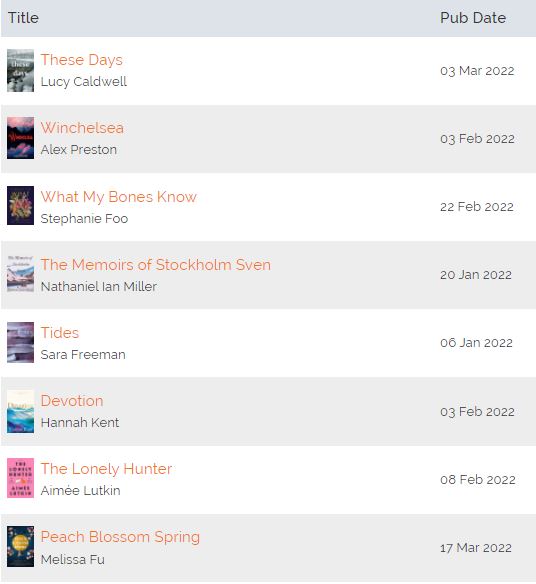
Will you look out for one or more of these titles?
Any other 2022 reads you can recommend?
Booker Prize 2021: Longlist Reading and Shortlist Predictions
The 2021 Booker Prize shortlist will be announced tomorrow, September 14th, at 4 p.m. via a livestream. I’ve managed to read or skim eight of 13 from the longlist, only one of which I sought out specifically after it was nominated (An Island – the one no one had heard of; it turns out it was released by a publisher based just 1.5 miles from my home!). I review my four most recent reads below, followed by excerpts of reviews of ones I read a while ago and my brief thoughts on the rest, including what I expect to see on tomorrow’s shortlist.
Klara and the Sun by Kazuo Ishiguro
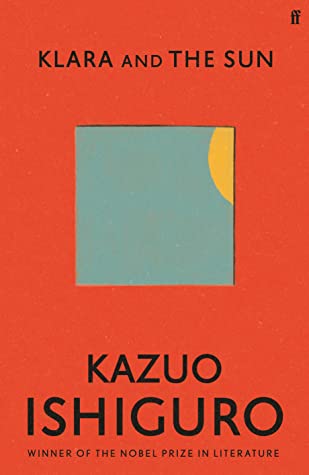 Why ever did I put this on my Most Anticipated list of the year and pre-order a signed copy?! I’m a half-hearted Ishiguro fan at best (I love Nocturnes but am lukewarm on the other four I’ve read, including his Booker winner) and should have known that his take on AI would be no more inspiring than Ian McEwan’s (Machines Like Me) a couple of years back.
Klara is an Artificial Friend purchased as part of an effort to combat the epidemic of teenage loneliness – specifically, to cheer up her owner, Josie, who suffers from an unspecified illness and is in love with her neighbour, Rick, a bright boy who remains excluded. Klara thinks of the sun as a god, praying to it and eventually making a costly bargain to try to secure Josie’s future health.
Part One’s 45 pages are slow and tedious; the backstory could have been dispensed with in five fairy tale-like pages. There’s a YA air to the story: for much of the length I might have been rereading Everything, Everything. In fact, when I saw Ishiguro introduce the novel at a Guardian/Faber launch event, he revealed that it arose from a story he wrote for children. The further I got, the more I was sure I’d read it all before. That’s because the plot is pretty much identical to the final story in Mary South’s You Will Never Be Forgotten.
Klara’s highly precise diction, referring to everyone in the third person, also gives this the feeling of translated fiction. While that is part of Ishiguro’s aim, of course – to explore the necessarily limited perspective and speech of a nonhuman entity (“Her ability to absorb and blend everything she sees around her is quite amazing”) – it makes the prose dull and belaboured. The secondary characters include various campy villains, the ‘big reveals’ aren’t worth waiting for, and the ending is laughably reminiscent of Toy Story. This took me months and months to force myself through. What a slog! (New purchase) 
An Island by Karen Jennings (2019)
 Seventy-year-old Samuel has been an island lighthouse keeper for 14 years when a brown-skinned stranger washes up on his beach. Sole survivor from a sunken refugee boat, the man has no English, so they communicate through gestures. Jennings convincingly details the rigors of the isolated life here: Samuel dug his own toilet pipes, burns his trash once a week, and gets regular deliveries from a supply boat. Nothing is wasted and everything is appreciated here, even the thirdhand magazines and videotapes he inherits from the mainland.
Although the core action takes place in just four days, Samuel is so mentally shaky that his memories start getting mixed up with real life. We learn that he has been a father, a prisoner and a beggar. Jennings is South African, and in this parallel Africa, racial hierarchy still holds sway and a general became a dictator through a military coup. Samuel’s father was involved in the independence movement, while Samuel himself was arrested for resisting the dictator.
The novella’s themes – jealousy, mistrust, possessiveness, suspicion, and a return to primitive violence – are of perennial relevance. Somehow, it didn’t particularly resonate for me. It’s not dissimilar in style to J. M. Coetzee’s vague but brutal detachment, and it’s a highly male vision à la Doggerland. Though highly readable, it’s ultimately a somewhat thin fable with a predictable message about xenophobia. Still, I’m glad I discovered it through the Booker longlist.
My thanks to Holland House for the free copy for review.
Bewilderment by Richard Powers
 This has just as much of an environmentalist conscience as The Overstory, but a more intimate scope, focusing on a father and son who journey together in memory and imagination as well as in real life. The novel leaps between spheres: between the public eye, where neurodivergent Robin is a scientific marvel and an environmental activist, and the privacy of family life; between an ailing Earth and the other planets Theo studies; and between the humdrum of daily existence and the magic of another state where Robin can reconnect with his late mother. When I came to the end, I felt despondent and overwhelmed. But as time has passed, the book’s feral beauty has stuck with me. The pure sense of wonder Robin embodies is worth imitating. (Review forthcoming for BookBrowse.)
China Room by Sunjeev Sahota
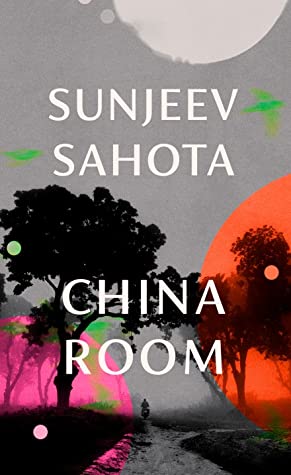 Sahota appeared on Granta’s list of Best Young British Novelists in 2013 and was previously shortlisted for The Year of the Runaways, a beautiful novel tracking the difficult paths of four Indian immigrants seeking a new life in Sheffield.
Three brides for three brothers: as Laura notes, it sounds like the setup of a folk tale, and there’s a timeless feel to this short novel set in the Punjab in the late 1920s and 1990s – it also reminded me of biblical stories like those of Jacob and Leah and David and Bathsheba. Mehar is one of three teenage girls married off to a set of brothers. The twist is that, because they wear heavy veils and only meet with their husbands at night for procreation, they don’t know which is which. Mehar is sure she’s worked out which brother is her husband, but her well-meaning curiosity has lasting consequences.
In the later storyline, a teenage addict returns from England to his ancestral estate to try to get clean before going to university and becomes captivated by the story of his great-grandmother and her sister wives, who were confined to the china room. The characters are real enough to touch, and the period and place details make the setting vivid. The two threads both explore limitations and desire, and the way the historical narrative keeps surging back in makes things surprisingly taut. See also Susan’s review. (Read via NetGalley)
Other reads, in brief:
(Links to my full reviews)
 Second Place by Rachel Cusk: Significantly more readable than the Outline trilogy and with psychological depths worth pondering, though Freudian symbolism makes it old-fashioned. M’s voice is appealing, as is the marshy setting and its isolated dwellings. This feels like a place outside of time. The characters act and speak in ways that no real person ever would – the novel is most like a play: melodramatic and full of lofty pronouncements. Interesting, but nothing to take to heart; Cusk’s work is always intimidating in its cleverness.
 A Town Called Solace by Mary Lawson: In 1972, Clara, a plucky seven-year-old, sits vigil for the return of her sixteen-year-old sister, who ran away from home; and their neighbour, who’s in the hospital. One day Clara sees a strange man moving boxes in next door. This is Liam Kane, who inherited the house from a family friend. Like Lawson’s other works, this is a slow burner featuring troubled families. It’s a tender and inviting story I’d recommend to readers of Tessa Hadley, Elizabeth Strout and Anne Tyler.
 No One Is Talking About This by Patricia Lockwood: This starts as a flippant skewering of modern life. A woman who became a social media star by tweeting quips like “Can a dog be twins?” reflects on life on “the portal” and under “the dictator.” Midway through the book, she gets a wake-up call when her mother summons her back to the Midwest for a family emergency. It’s the about-face that makes this novel, forcing readers to question the value of a digital existence based on glib pretence. Funny, but with an ache behind it.
 Light Perpetual by Francis Spufford: While I loved the premise, the execution didn’t live up to it. Spufford calls this an act of “literary resurrection” of five figures who survive a South London bombing. But these particular characters don’t seem worth spending time with; their narratives don’t connect up tightly, as expected, and feel derivative, serving only as ways to introduce issues (e.g. mental illness, sexual assault, racial violence, eating disorders) and try out different time periods. I would have taken a whole novel about Ben.
 This leaves five more: Great Circle (by Maggie Shipstead) I found bloated and slow when I tried it in early July, but I’m going to give it another go when my library hold comes in. The Sweetness of Water (Nathan Harris) I might try if my library acquired it, but I’m not too bothered – from Eric’s review on Lonesome Reader, it sounds like it’s a slavery narrative by the numbers. I’m not at all interested in the novels by Anuk Arudpragasam, Damon Galgut, or Nadifa Mohamed but can’t say precisely why; their descriptions just don’t excite me.
Here’s what I expect to still be in the running after tomorrow. Clear-eyed, profound, international; bridging historical and contemporary; much that’s unabashedly highbrow.
- Second Place by Rachel Cusk
 The Promise by Damon Galgut (will win)
- No One Is Talking About This by Patricia Lockwood
- Bewilderment by Richard Powers
- China Room by Sunjeev Sahota
- Light Perpetual by Francis Spufford
 Bookish Beck = Rebecca Foster. American transplant to England. Freelance proofreader and book reviewer.
 Bookish Beck