Some 2023 Reading Superlatives
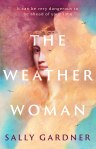 Longest book read this year: The Weather Woman by Sally Gardner (457 pages) – not very impressive compared to last year’s 720-page To Paradise. That means I didn’t get through a single doorstopper this year. D’oh!
Shortest book read this year: Pitch Black by Youme Landowne and Anthony Horton (40 pages)
Authors I read the most by this year: Margaret Atwood, Deborah Levy and Brian Turner (3 books each); Amy Bloom, Simone de Beauvoir, Tove Jansson, John Lewis-Stempel, W. Somerset Maugham, L.M. Montgomery and Maggie O’Farrell (2 books each)


Publishers I read the most from: (Setting aside the ubiquitous Penguin and its many imprints) Carcanet (11 books) and Picador/Pan Macmillan (also 11), followed by Canongate (7).
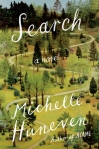
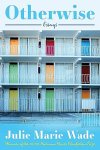
My top author discoveries of the year: Michelle Huneven and Julie Marie Wade
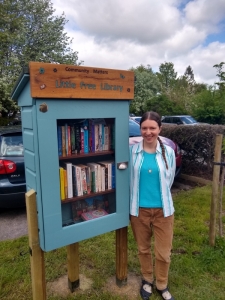
My proudest bookish accomplishment: Helping to launch the Little Free Library in my neighbourhood in May, and curating it through the rest of the year (nearly daily tidying; occasional culling; requesting book donations)
Most pinching-myself bookish moments: Attending the Booker Prize ceremony; interviewing Lydia Davis and Anne Enright over e-mail; singing carols after-hours at Shakespeare and Company in Paris

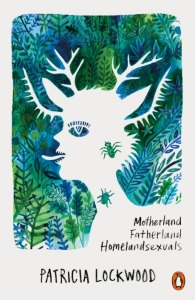
Books that made me laugh: Notes from a Small Island by Bill Bryson, The Librarianist by Patrick deWitt, two by Katherine Heiny, Motherland Fatherland Homelandsexuals by Patricia Lockwood
Books that made me cry: A Heart that Works by Rob Delaney, Lucy by the Sea by Elizabeth Strout, Family Meal by Bryan Washington
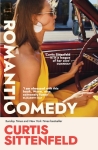 The book that was the most fun to read: Romantic Comedy by Curtis Sittenfeld
Best book club selections: By the Sea by Abdulrazak Gurnah and The Woman in Black by Susan Hill
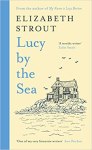 Best last lines encountered this year: “And I stood there holding on to this man as though he were the very last person left on this sweet sad place that we call Earth.” (Lucy by the Sea, Elizabeth Strout)
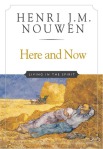 A book that put a song in my head every time I picked it up: Here and Now by Henri Nouwen (Aqualung song here)
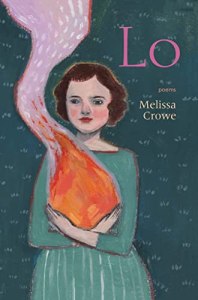
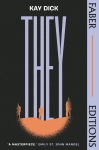
Shortest book title encountered: Lo (the poetry collection by Melissa Crowe), followed by Bear, Dirt, Milk and They



Best 2023 book titles: These Envoys of Beauty and You Bury the Birds in My Pelvis
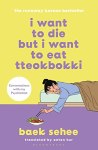 Best book titles from other years: I Want to Die but I Want to Eat Tteokbokki, Before You Suffocate Your Own Fool Self, A Down Home Meal for These Difficult Times, The Cats We Meet Along the Way, We All Want Impossible Things
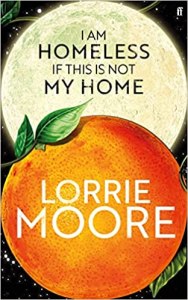
Favourite title and cover combo of the year: I Am Homeless If This Is Not My Home by Lorrie Moore (shame the contents didn’t live up to it!)
Biggest disappointment: Speak to Me by Paula Cocozza
A 2023 book that everyone was reading but I decided not to: Prophet Song by Paul Lynch

The worst books I read this year: Monica by Daniel Clowes, They by Kay Dick, Swallowing Geography by Deborah Levy and Self-Portrait in Green by Marie Ndiaye (1-star ratings are extremely rare for me; these were this year’s four)
The downright strangest book I read this year: Motherland Fatherland Homelandsexuals by Patricia Lockwood
Review Catch-Up: Monica, Bibliomaniac, Family Meal, Fudge & More
I’m catching up with reviews of the many October releases I read, including these four sent by publishers…
- a genre-bending, Technicolor graphic novel in the form of short comics
- a book-addict’s memoir of an ambitious Covid-times tour of Britain’s bookshops
- an understated novel about queer men of colour coping with death and mental illness
- and a quirky contemporary poetry collection I read in one sitting.
Followed by a bonus list of October books I reviewed for Shelf Awareness, similarly varied in genre: autofiction, flash fiction, horror-tinged historical fiction, graphic memoirs and more.
Monica by Daniel Clowes
 Daniel Clowes is a respected American graphic novelist best known for Ghost World, which was adapted into a 2001 film starring Scarlett Johansson. I’m not sure what I was expecting of Monica. Perhaps something closer to a quiet life story like Alison by Lizzy Stewart? In any case, not this jumble of 1970s nostalgia and supernatural horror. The book is in nine loosely connected stories that make the head spin with their genre and tonal shifts; one thing that stays constant is Clowes’s drawing style, which combines vibrant, campy colour with exaggerated faces and blunt haircuts.
At first it seems there will be a straightforward linear narrative: the prologue, “Foxhole,” has two soldiers dreaming of what life will be like Vietnam, with the one looking forward to a simple life with his fiancée Penny. “Pretty Penny” shatters those illusions as we see that Penny has fully embraced sexual liberation while he’s been away. She rejects her mother and, in a countercultural decision, keeps the baby when she gets pregnant. Young Monica has a sequence of stepfather figures before Penny dumps her with her parents and goes AWOL.
To an extent, the rest of the book is about Monica’s search for her parents. We see her as a young college student communicating with her dead grandfather via a radio, as a successful entrepreneur selling candles, and as an older woman caretaking for a California Airbnb. But in between there are bizarre sci-fi/folk horror interludes – “The Glow Infernal” and “The Incident” – about unconnected characters, and Monica’s involvement with a cult inevitably turns strange. I couldn’t get past the distasteful story lines or grotesque style. Mostly, I wasn’t convinced that Clowes liked or cared about any of his own characters, so why should I? (This might be Tom Cox’s dream book, but not mine.) I suppose I might try a classic work by Clowes one day, but only if I can be assured that it has more plot and heart.
With thanks to Jonathan Cape (Penguin) for the free copy for review.
Bibliomaniac: An Obsessive’s Tour of the Bookshops of Britain by Robin Ince
Do you know anyone who can buy just one book? Do you know anyone who leaves a bookshop only with what they walked in to buy?
I understand that Robin Ince is a radio personality and comedian who, though holding no formal qualifications, often delivers presentations about science. He was meant to undertake a stadium tour with Professor Brian Cox in the autumn of 2021, but a Covid resurgence put paid to that. Not one for sitting around at home – he comes across as driven, antsy; positively allergic to boredom – he formulated Plan B: 100+ events, most of them in independent bookshops (the oddest venue was a Chinese restaurant; he was speaking to the Plymouth Humanists), over the course of two months, criss-crossing Britain and hitting many favourite places such as Hay-on-Wye, Hungerford (my local indie) and Wigtown. The topic of his previous book was curiosity, which gave him free rein to feature anything that interested him, so no two talks were the same and he incorporated lots of ad hoc book recommendations.
 Ince is not just a speaker at the bookshops but, invariably, a customer – as well as at just about every charity shop in a town. Even when he knows he’ll be carrying his purchases home in his luggage on the train, he can’t resist a browse. And while his shopping basket would look wildly different to mine (his go-to sections are science and philosophy, the occult, 1960s pop and alternative culture; alongside a wide but utterly unpredictable range of classic and contemporary fiction and antiquarian finds), I sensed a kindred spirit in so many lines:
“A bookshop with a proximity to an interesting graveyard is a fine combination.”
“I like charity bookshops, because I can delude myself into believing that I am committing an altruistic act by purchasing too many books. I am not satisfying my consumer lust – I am digging a well in Uganda.”
“This is one of the wonders of books: the delight of being a species that can chronicle and preserve. I pick up a book from a shelf, and someone who is no more than ash or bone can still change me.”
He’s also refreshingly open-minded, determined not to become a white male dinosaur: he once spent a wonderful year reading only women authors, and gratefully accepts the gift of a Black queer feminist work – at which he knows a younger version of himself would have scoffed. I took lots of notes on shops I hadn’t heard of, but also appreciated the witty asides on British ways and on the rigours and coincidences of the tour. If you liked White Spines, this will be right up your street, though to me this was universal where the Royle was too niche. And it didn’t matter a jot that I was previously unfamiliar with Ince as a public figure.
Bibliomaniac came out in paperback on 5 October. My thanks to Atlantic Books for the free copy for review.
Family Meal by Bryan Washington
After the verve of his linked short stories (Lot, which won the Dylan Thomas Prize) and the offbeat tenderness of his debut novel, Memorial, I couldn’t wait for Bryan Washington’s next book. While it’s set in the multicultural Houston of his first book and similarly peopled by young queer men of colour, Family Meal shares the more melancholy edge of Memorial with its focus on bereavement and the habits and relationships that help the characters to cope.
Cam has moved back to Houston from Los Angeles after the untimely death of his boyfriend Kai, who had a budding career as a translator and spent part of each year in Japan. Cam works in a failing gay bar, crashes with his boss and has mostly stopped eating. Although he still loves cooking Asian food for others, he rarely tastes it himself; his overpowering appetite now is for pills and sex, leading him to arrange as many as four hook-ups per day. Kai still appears and communicates to him. “Easier to spend time dwelling on death than it is to live, says Kai.” Is it to escape this spectre, or the memory of what happened to Kai, that Cam descends into his addictions? Meanwhile, his estranged friend TJ, with whom Cam grew up at TJ’s Korean American family’s bakery after the death of Cam’s parents, has his own history of loss and unhealthy relationships. But a connection with the bakery’s new nonbinary employee, Noel, seems like it might be different.
If you’ve read Washington before, you’ll know what to expect: no speech marks, obscenity-strewn dialogue, sexually explicit scenes that seem to be there for the sake of it (because sex is part of life, rather than because they particularly advance the plot). An issue I had here, like with Memorial, is that having multiple first-person narrators doesn’t add anything; Kai and TJ sound so much like Cam, who narrates roughly the first half, that it’s hard to tell their affectless accounts apart. Such interchangeable voices two books running suggests to me that Washington hasn’t yet managed to fully imagine himself outside of his own personality.

The novel has much to convey about found family, food as nurture, and how we try to fill the emptiness in our lives with things that aren’t good for us. However, it often delivers these messages through what wise secondary characters say, which struck me as unsubtle.
“You don’t have to do this alone, says TJ.”
(Kai:) “My mother would say, Cooking is care. The act is the care.”
“Love can be a lot of things though, says Noel. Right? It’s pleasure but it’s also washing the dishes and sorting medication and folding the laundry. It’s picking out what to eat for dinner three nights in a row, even if you don’t want to. And it’s knowing when to speak up, and when to stay quiet, and when, I think, to move on. But also when to fight for it.”
“Sometimes the best we can do is live for each other, she [Kai’s sister] says. It’s enough. Even if it seems like it isn’t.”
There’s no doubting how heartfelt this story is. It brought tears to my eyes at the beginning and end, but in between did not captivate me as much as I hoped. While intermittently poignant on the subject of bereavement, it is so mired in the characters’ unhealthy coping mechanisms that it becomes painful to read.
In my mind Washington and Brandon Taylor are in the same basket, though that may be reductive or unimaginative of me (young, gay Black authors from the American South who have published three books and tend to return to the same themes and settings). Before this year I would have said Taylor had the edge, but The Late Americans was so disappointingly similar to his previous work that Washington has taken the lead. I just hope that with his next work he challenges himself instead of coasting along in the groove he’s created thus far.
I wish I could get a copy of this into the hands of Sufjan Stevens…
With thanks to Atlantic Books for the free copy for review.
Fudge by Andrew Weatherhead
 I read this over a chilled-out coffee at the Globe bar in Hay-on-Wye (how perfect, then, to come across the lines “I know the secret of life / Is to read good books”). Weatherhead mostly charts the rhythms of everyday existence in pandemic-era New York City, especially through a haiku sequence (“The blind cat asleep / On my lap—and coffee / Just out of reach” – a situation familiar to any cat owner). His style is matter-of-fact and casually funny, juxtaposing random observations about hipster-ish experiences. From “Things the Photoshop Instructor Said and Did”: “Someone gasped when he increased the contrast / I feel like everyone here is named Taylor.”
The central piece, “Poem While on Hold with NBA League Pass Customer Support Nov. 17, 2018,” descends into the absurd, but his four hours lost on the phone are reclaimed through his musings on a sport he once played (“I had begun to find meaning in art and music / I was always too cerebral a player anyways … That feeling—of perfect grace and equanimity— / must be what we’re all searching for in this life”) and on life in general. This is poetry that doesn’t feel like poetry, if that makes sense. I have a hunch that it might appeal to readers of David Foster Wallace.
Published by Publishing Genius. With thanks to publicist Lori Hettler for the e-copy for review.
Reviewed for Shelf Awareness:
(Links to full text)
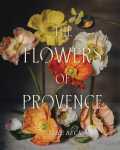
The Flowers of Provence by Jamie Beck (Gift books feature): A gorgeous book of photographs, perfect for gardeners, romantics, and armchair travelers. Her still lifes are as detailed and colorful as medieval paintings.
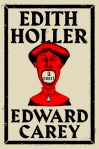
Edith Holler by Edward Carey (forthcoming): A dark fairy tale about a precocious girl confined to her family’s theatre in Norwich, England yet driven to reveal the truth behind her city’s child disappearances. Reminiscent of Dahl, Dickens, and Shakespeare at their goriest.
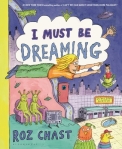
I Must Be Dreaming by Roz Chast: A laugh-out-loud-funny tour through her dream journal as well as a brief introduction to dream theory. Delightfully captures the randomness of dream topics and dialogues.

Tremor by Teju Cole: A kaleidoscopic work of autofiction that journeys between the US and Nigeria as it questions the ownership and meaning of Black art. The sophisticated structure is a highlight of this elegant study of art criticism, suffering, and subjectivity.
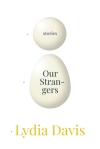
Our Strangers by Lydia Davis (Review and Q&A): In her ninth collection of mostly flash-length stories (a whopping 143 of them), an overarching theme is the mystery of human communication and connection. A real cornucopia of genres, structures, and voices. [Only available via Bookshop.org and independent bookstores.]
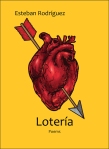
Lotería by Esteban Rodríguez: Lotería is a traditional Mexican game of chance. Each Spanish-language card is allotted a one-page poem in a creative, poignant recounting of his Mexican American family history.
Glass Half Empty by Rachael Smith: The British comics artist third graphic memoir is a refreshingly candid account of her recovery from alcoholism after her father’s death. In some panes, her adult self appears alongside her younger self, offering advice.

The Dead Peasant’s Handbook by Brian Turner: The final installment – after The Wild Delight of Wild Things and The Goodbye World Poem – in an intimate, autobiographical trilogy. Love is presented as the key to surviving bereavement and wartime trauma.
September Releases by Chloe Lane, Ben Lerner, Navied Mahdavian & More
September and October are bounteous months in the publishing world. I’ll have a bunch of books to plug in both, mostly because I’ve upped my reviewing quota for Shelf Awareness. There’s real variety here, from contemporary novellas and heavily autobiographical poetry to nature essays and a graphic memoir.
Arms & Legs by Chloe Lane
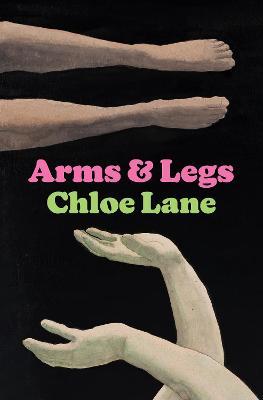 I reviewed Lane’s debut novel, The Swimmers, a black comedy about a family preparing for an assisted suicide, this time last year. It seems there’s an autobiographical setup to the author’s follow-up, which focuses on a couple from New Zealand now living in Florida with their young son. Narrator Georgie teaches writing at a local college and is having an affair with Jason, an Alabama-accented librarian she met through taking Finn to the Music & Movement class. She joins in a volunteer-led controlled burn in the forest, and curiosity quickly turns to horror when she discovers the decaying body of a missing student.
There’s a strong physicality to this short novel: fire, bodies and Florida’s dangerous fauna (“To choose to live in a place surrounded by these creatures, these threats, it made me feel like I was living a bold life”). Georgie has to decide whether setting fire to her marriage with Dan is what she really wants. A Barry Hannah short story she reads describes adultery as just a matter of arms and legs, a phrase that’s repeated several times.
Georgie is cynical and detached from her self-destructive choices, coming out with incisive one-liners (“My life isn’t a Muriel Spark novel, there’s no way to flash forward and find out if I make it out of the housefire alive” and “He rested the spade on his shoulder as if he were a Viking taking a drinks break in the middle of a battle”). Lane burrows into instinct and motivation, also giving a glimpse of the challenges of new motherhood. Apart from a wicked dinner party scene, though, the book as a whole was underwhelming: the body holds no mystery, and adultery is an old, old story.
With thanks to Gallic Books for the proof copy for review.
The Lights by Ben Lerner
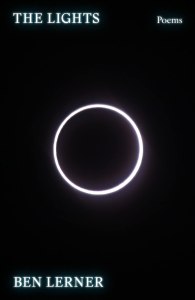 I’d read fiction and nonfiction from Lerner but had no idea of what to expect from his poetry. Almost every other poem is a prose piece, many of these being absurdist monologues that move via word association between topics seemingly chosen at random: psychoanalysis, birdsong, his brother’s colorblindness; proverbs, the Holocaust; art conservation, his partner’s upcoming C-section, an IRS Schedule C tax form, and so on.
The vocabulary and pronouncements can be a little pretentious. The conversational nature and randomness of the subjects contribute to the same autofiction feel you get from his novels. For instance, he probes parenting styles: his parents’ dilemma between understanding his fears and encouraging him in drama and sport; then his daughters’ playful adoption of his childhood nickname of Benner for him.
A few highlights: the enjambment in “Index of Themes”; the commentary on pandemic strictures and contrast between ancient poetry and modern technology in “The Stone.” I wouldn’t seek out more poetry by Lerner, but this was interesting to try. (Read via Edelweiss)
Sample lines:
“When you die in the patent office / there’s a pun on expiration”
“the goal is to be on both sides of the poem, / shuttling between the you and I. … Form / is always the answer to the riddle it poses”
“It’s raining now / it isn’t, or it’s raining in the near / future perfect when the poem is finished / or continuous, will have been completed”
This Country: Searching for Home in (Very) Rural America by Navied Mahdavian
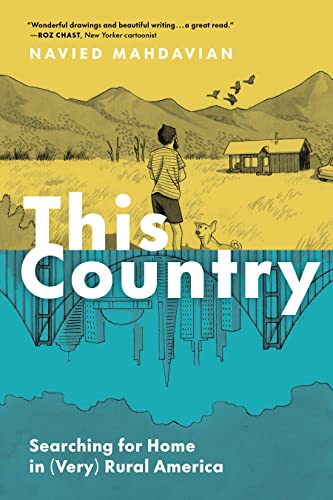 Mahdavian has also published comics in the New Yorker. His debut graphic novel is a memoir of the three years (2016–19) he and his wife lived in remote Idaho. Of Iranian heritage, the author had lived in Miami and then the Bay Area, so was pretty unprepared for living off-grid. His wife, Emelie (who is white), is a documentary filmmaker. They had a box house brought in on a trailer. After Trump’s surprise win, it was a challenging time to be a Brown man in the rural USA. “You’re not a Muslim, are you?” was the kind of question he got on their trips into town. Neighbors were outwardly friendly – bringing them firewood and elk kebabs, helping when their car wouldn’t start or they ran off the road in icy conditions, teaching them the local bald eagles’ habits – yet thought nothing of making racist and homophobic slurs.
I appreciated the self-deprecating depictions of learning DIY from YouTube videos and feeling like a wimp in comparison to his new friends who hunt and have gun collections – one funny spread has him imagining himself as a baby in a onesie sitting across from a manly neighbor. “I am shedding my city madness,” Mahdavian boasts as they plant an abundant garden and start learning about trees and birds. The references to Persian myth and melodrama are intriguing, though sometimes seem à propos of nothing, as do the asides on science and nature. I preferred when the focus was on the couple’s struggles with infertility and reopening the town movie theater – a flop because people only want John Wayne flicks.
This was enjoyable reading, but the simple black-and-white style is unlikely to draw in readers new to graphic storytelling, and I wondered if the overall premise – ‘we expected to find closed-minded racists and we did’ – was enough to hang a memoir on. (Read via Edelweiss)
Reviewed for Shelf Awareness:
(Links to full text)
The Wren, The Wren by Anne Enright
 Enright’s astute eighth novel traces the family legacies of talent and trauma through the generations descended from a famous Irish poet. Cycles of abandonment and abuse characterize the McDaraghs. Enright convincingly pinpoints the narcissism and codependency behind their love-hate relationships. (It was an honor to also interview Anne Enright. You can see our Q&A here.)
When My Ghost Sings by Tara Sidhoo Fraser
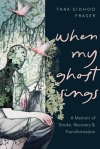 This lyrical debut memoir is an experimental, literary recounting of the experience of undergoing a stroke and relearning daily skills while supporting a gender-transitioning partner. Fraser splits herself into two: the “I” moving through life, and “Ghost,” her memory repository. But “I can’t rely only on Ghost’s mental postcards,” Fraser thinks, and sets out to retrieve evidence of who she was and is.
The Vaster Wilds by Lauren Groff
 (Already featured in my Best of 2023 so far post.) Groff’s fifth novel combines visceral detail and magisterial sweep as it chronicles a runaway Jamestown servant’s struggle to endure the winter of 1610. Flashbacks to traumatic events seep into her mind as she copes with the harsh reality of life in the wilderness. The style is archaic and postmodern all at once. Evocative and affecting – and as brutal as anything Cormac McCarthy wrote. A potent, timely fable as much as a historical novel.
Zoo World: Essays by Mary Quade
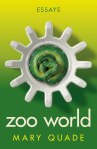 A collection of 15 thoughtful nature/travel essays that explore the interconnectedness of life and conservation strategies, and exemplify compassion for people and, particularly, animals. The book makes a round-trip journey, beginning at Quade’s Ohio farm and venturing further afield in the Americas and to Southeast Asia before returning home.
The Goodbye World Poem by Brian Turner
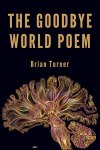 The lovely laments in Brian Turner’s fourth collection (a sequel to The Wild Delight of Wild Things) dwell in the aftermath of the loss of his wife and others, and cultivate compensatory appreciation for the natural world. Turner’s poetry is gilded with alliteration and maritime metaphors The long title piece, which closes the collection, repeats many phrases from earlier poems—a pleasing way of drawing the book’s themes together. (My review of the third volume in this loose trilogy is forthcoming.)
And a bonus review book, relevant for its title:
September and the Night by Maica Rafecas
[Translated from the Catalan by Megan Berkobien and María Cristina Hall]
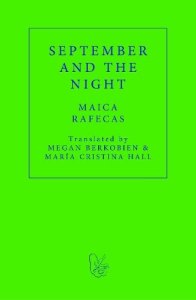 A new Logistics Centre is to cut through Anaïs’s family vineyards as part of a compulsory land purchase. While her father, Magí, and brother, Jan, are resigned to the loss, this single mother decides to resist, tying herself to a stone shed on the premises that will be right in the path of the bulldozers. This causes others to question her mental health, with social worker Elisa tasked with investigating the case. Key evidence of her irrational behaviour turns out to have perfectly good explanations.
Certain chapters alternate Jan’s and Anaïs’s perspectives, recreate her confusion in a psychiatric hospital, or have every sentence beginning with “There” or “And” – effective anaphora. Although I didn’t think Jan’s several romantic options added to the plot, this debut novella from a Spanish author was a pleasant surprise. It’s based on a true story, though takes place in fictional locations, and bears a gentle message of cultural preservation.
With thanks to Fum d’Estampa Press for the free copy for review.
Book Serendipity, August to September 2023
I call it “Book Serendipity” when two or more books that I read at the same time or in quick succession have something in common – the more bizarre, the better.
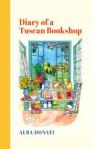
In Diary of a Tuscan Bookshop, Alba Donati remarks on this phenomenon: “Jung called these coincidences ‘synchronicities’, postulating that the universe possessed its own form of intelligence, which generated harmonies. A universe that detects and brings together the elements it feels are seeking each other in the endless swirl of life. Chance be damned.”
This is a regular feature of mine every couple of months. Because I usually have 20–30 books on the go at once, I suppose I’m more prone to such incidents. The following are in roughly chronological order.
- A memoir that opens with a little girl being injured in a bicycle accident: Some of Us Just Fall by Polly Atkin and Pharmakon by Almudena Sánchez.
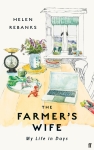
- Telling stories through embroidery in Cross-Stitch by Jazmina Barrera and The Farmer’s Wife by Helen Rebanks.

- A small boy nicknamed “Willmouse” (real name: William) in Mary and the Birth of Frankenstein by Anne Eekhout and The Greengage Summer by Rumer Godden.
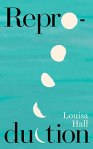
- An account of a routine sonogram that ends with the technician leaving the doctor to deliver bad news in Reproduction by Louisa Hall and The Unfamiliar by Kirsty Logan.
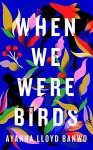
- Black dreadlocks/braid/ponytail being cut off in When We Were Birds by Ayanna Lloyd Banwo, The Wren, The Wren by Anne Enright, and Rebecca, Not Becky by Christine Platt and Catherine Wigginton Greene.

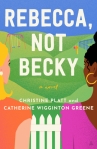
- Wondering how to arm a Black daughter against racist microaggressions in Rebecca, Not Becky by Christine Platt and Catherine Wigginton Greene and Ordinary Notes by Christina Sharpe.
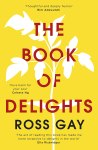
- Countering the commodification or romanticization of Black suffering in The Book of Delights by Ross Gay and Ordinary Notes by Christina Sharpe.

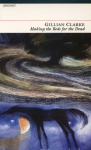
- An account of how the foot and mouth disease outbreak of 2001 affected the UK, especially northwest England, in Making the Beds for the Dead by Gillian Clarke and The Farmer’s Wife by Helen Rebanks.
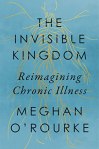
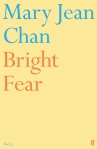
- I encountered the quote from Elaine Scarry’s The Body in Pain about pain being inexpressible in Reproduction by Louisa Hall and The Invisible Kingdom by Meghan O’Rourke on the same day. It’s also referenced in Mary Jean Chan’s Bright Fear.
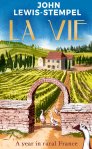
- A mention of eating frogs’ legs in The Book of Delights by Ross Gay and La Vie by John Lewis-Stempel.
- I read about the effects of heavy metal pollution on the body in The Invisible Kingdom by Meghan O’Rourke and Windswept by Annie Worsley in the same evening.
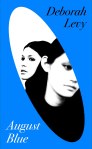
- Composer Erik Satie is mentioned in Making the Beds for the Dead by Gillian Clarke and August Blue by Deborah Levy.
- Stendhal syndrome and Florence are mentioned in The Wren, The Wren by Anne Enright and Pharmakon by Almudena Sánchez.
- Swallows nesting in an old Continental building in Diary of a Tuscan Bookshop by Alba Donati and La Vie by John Lewis-Stempel.
- France being all about the rules and a “Putain de merde” exclamation to bad news in Dirt by Bill Buford and La Vie by John Lewis-Stempel.
- A character named Nomi in Friends and Strangers by J. Courtney Sullivan and one called Noemi in Diary of a Tuscan Bookshop by Alba Donati.
- Epigenetics (trauma literally determining the genetic traits that are passed on) is discussed in The Invisible Kingdom by Meghan O’Rourke and Pharmakon by Almudena Sánchez.
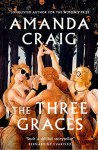
- Women of a certain age in Tuscany in The Three Graces by Amanda Craig and Diary of a Tuscan Bookshop by Alba Donati.
- Audre Lorde is quoted in Tremor by Teju Cole, Bibliomaniac by Robin Ince, The Invisible Kingdom by Meghan O’Rourke, Alone by Daniel Schreiber, and Ordinary Notes by Christina Sharpe.
- A Galway Kinnell poem is mentioned/quoted in The Dead Peasant’s Handbook by Brian Turner and Otherwise by Julie Marie Wade.
- The Bamiyan Buddhas are mentioned in Tremor by Teju Cole and The Dead Peasant’s Handbook by Brian Turner.
- Both The Three Graces by Amanda Craig and The Story of Lucy Gault by William Trevor open with a man shooting someone from his bedroom window.
- Linked short story collections about two children’s relationship with their Jamaican father, and mention of a devastating hurricane, in If I Survive You by Jonathan Escoffery and The Human Origins of Beatrice Porter and Other Essential Ghosts by Soraya Palmer. (Dual review coming up tomorrow!)
- Characters named Ben and Mara in The Whispers by Ashley Audrain and one story in Kate Doyle’s I Meant It Once.
- Occasional uncut pages in my copies of I Meant It Once by Kate Doyle and The Unfamiliar by Kirsty Logan.
- A Florida setting and mention of the Publix supermarket chain in If I Survive You by Jonathan Escoffery and Arms and Legs by Chloe Lane.
- A down-at-heel English seaside town near Scarborough features in The Seaside by Madeleine Bunting and Penance by Eliza Clark.

- A fictional northern town with “Crow” in the name: Crow-on-Sea in Penance by Eliza Clark and Crows Bank in Weyward by Emilia Hart.
- Claw-machine toys are mentioned in Penance by Eliza Clark and Directions to Myself by Heidi Julavits.
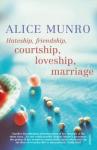
- Reading books by two Nobel Prize winners at the same time: Abdulrazak Gurnah (By the Sea) and Alice Munro (Hateship, Friendship, Courtship, Loveship, Marriage).
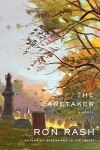
- Reading my second 2023 release featuring North Carolina ghost lights (after All of Us Together in the End by Matthew Vollmer, which I actually read last year): The Caretaker by Ron Rash.
- Reading my second 2023 release featuring a cat named Virginia Woolf (after Tell the Rest by Lucy Jane Bledsoe, which I actually read last year): one of the short stories in I Meant It Once by Kate Doyle.
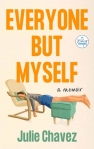
- A character named Shay in Everyone but Myself by Julie Chavez, The Human Origins of Beatrice Porter and Other Essential Ghosts by Soraya Palmer and The Caretaker by Ron Rash.

What’s the weirdest reading coincidence you’ve had lately?
Book Serendipity, June to July 2023
I call it “Book Serendipity” when two or more books that I read at the same time or in quick succession have something in common – the more bizarre, the better.
Are all of these pure coincidence? Or, as a character says in The Year of Pleasures by Elizabeth Berg, maybe it’s true that “Sometimes serendipity is just intention, unmasked.”
This is a regular feature of mine every couple of months. Because I usually have 20–30 books on the go at once, I suppose I’m more prone to such incidents. The following are in roughly chronological order.
- A deadbeat boyfriend named Andrew in Yellowface by Rebecca F. Kuang and The Legacy of Elizabeth Pringle by Kirsty Wark.
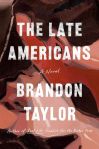
- A partner’s piano playing is by turns annoying (practice) and revelatory (performance) in The Happy Couple by Naoise Dolan and The Late Americans by Brandon Taylor.

- Frequent meals of potatoes due to poverty, and a character sneaking salt in, in Music in the Dark by Sally Magnusson and How Much of These Hills Is Gold by C Pam Zhang.
- Getting close to a seal even though the character knows it might bite in Salt & Skin by Eliza Henry-Jones and one story in High-Wire Act by JoeAnn Hart.
- Rev. Robert Kirk’s writings on fairies are mentioned in The Archaeology of Loss by Sarah Tarlow and The Legacy of Elizabeth Pringle by Kirsty Wark (and were also a major element in Sally Magnusson’s previous novel, The Ninth Child; I happened to be reading her most recent novel at the same time as the above two!).
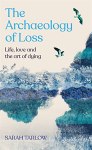
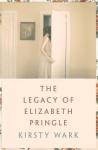
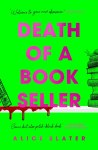
- Menthols are smoked in Death of a Bookseller by Alice Slater and The Late Americans by Brandon Taylor.
- Joan Didion’s The Year of Magical Thinking is mentioned in Death of a Bookseller by Alice Slater and The Archaeology of Loss by Sarah Tarlow.
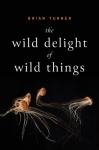
 An ant farm as a metaphor in The Happy Couple by Naoise Dolan and The Wild Delight of Wild Things by Brian Turner.
- The main character, in buying a house, inherits the care of a large, elaborate garden from an older woman who kept it immaculate, in The Year of Pleasures by Elizabeth Berg and one story in High-Wire Act by JoeAnn Hart.
- A widow, despite her feminist ideals, wishes she had a man to take care of DIY and other house stuff for her in The Year of Pleasures by Elizabeth Berg and The Archaeology of Loss by Sarah Tarlow.
- A spouse’s death in 2016 and a description of cremation in The Archaeology of Loss by Sarah Tarlow and The Wild Delight of Wild Things by Brian Turner.
- A character deliberately burns a sexual partner’s cheek with a cigarette in Death of a Bookseller by Alice Slater and The Late Americans by Brandon Taylor.
- Counting down the days, then hours, until a wedding, in The Year of Pleasures by Elizabeth Berg, The Happy Couple by Naoise Dolan, and Crudo by Olivia Laing.
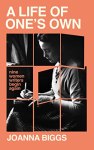
- Similar sentiments – about reading to find our own experiences expressed in a way we never would have thought to put them – in passages I encountered on the same day from A Life of One’s Own by Joanna Biggs (“I want to have that moment of recognition, finding something on the page I’ve felt but haven’t put into words”) and The Librarianist by Patrick deWitt (“the reader says to him or herself, Yes, that’s how it is, only I didn’t know it to describe it”).
- I encountered mentions of “Believe” by Cher in The Country of the Blind by Andrew Leland and House Gone Quiet by Kelsey Norris on the same evening.
- Calculating how old a newborn child will be on a certain date in the future – and fearing what the world will be like for them then – in Matrescence by Lucy Jones and Milk by Alice Kinsella.
- Moving with twin sons is a key part of the setup in Dirt by Bill Buford and Speak to Me by Paula Cocozza.

- I read scenes of a mother’s death from brain cancer in The Librarianist by Patrick deWitt and One Last Thing by Wendy Mitchell in the same evening.
- There’s a mint-green house, and a house with a rope banister (the same house in one case, but not in the other) in both Speak to Me by Paula Cocozza and The Librarianist by Patrick deWitt, two 6 July 2023 releases.
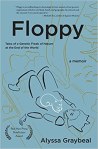
- Connective tissue in the body is compared to the threads of textiles in Cross-Stitch by Jazmina Barrera and Floppy by Alyssa Graybeal.
- The metaphorical framework of one day is used as the structure in One Midsummer’s Day by Mark Cocker and The Farmer’s Wife by Helen Rebanks.
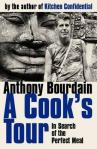
- I’ve read two chef’s memoirs this summer with a scene of pig slaughter: A Cook’s Tour by Anthony Bourdain and Dirt by Bill Buford.
- A character who lost an arm in the First World War in The Librarianist by Patrick deWitt and Haweswater by Sarah Hall.
- I read descriptions of fried egg residue on a plate, one right after the other in the same evening, in The Dead Are Gods by Eirinie Carson and The Wren The Wren by Anne Enright.
What’s the weirdest reading coincidence you’ve had lately?
 Bookish Beck = Rebecca Foster. American transplant to England. Freelance proofreader and book reviewer.
 Bookish Beck