Book Serendipity, Mid-April to Mid-June
I call it “Book Serendipity” when two or more books that I read at the same time or in quick succession have something in common – the more bizarre, the better. This is a regular feature of mine every couple of months. Because I usually have 20–30 books on the go at once, I suppose I’m more prone to such incidents. People frequently ask how I remember all of these coincidences. The answer is: I jot them down on scraps of paper or input them immediately into a file on my PC desktop; otherwise, they would flit away!
The following are in roughly chronological order.
- Raising a wild animal but (mostly) calling it by its species rather than by a pet name (so “Pigeon” and “the leveret/hare”) in We Should All Be Birds by Brian Buckbee and Raising Hare by Chloe Dalton.
- Eating hash cookies in New York City in Women by Chloe Caldwell and How to Be Somebody Else by Miranda Pountney.
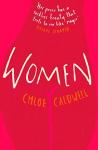
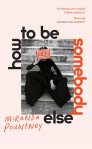
- A woman worries she’s left underclothes strewn about a room she’s about to show someone in one story of Single, Carefree, Mellow by Katherine Heiny and Days of Light by Megan Hunter.
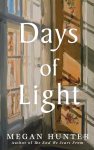 The dialogue is italicized in Women by Chloe Caldwell and Days of Light by Megan Hunter.
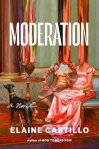
- The ‘you know it when you see it’ definition (originally for pornography) is cited in Moderation by Elaine Castillo and Bookish by Lucy Mangan.
- Women (including the protagonist) weightlifting in a gym in Moderation by Elaine Castillo and All Fours by Miranda July.
- Miranda July, whose All Fours I was also reading at the time, was mentioned in Chinese Parents Don’t Say I Love You by Candice Chung.
- A sibling story and a mystical light: late last year into early 2025 I read The Snow Queen by Michael Cunningham, and then I recognized this type of moment in Days of Light by Megan Hunter.
- A lesbian couple with a furniture store in Carol [The Price of Salt] by Patricia Highsmith and one story of Are You Happy? by Lori Ostlund.

- Not being able to see the stars in Las Vegas because of light pollution was mentioned in The Wild Dark by Craig Childs, then in Moderation by Elaine Castillo.
- A gynaecology appointment scene in All Fours by Miranda July and How to Be Somebody Else by Miranda Pountney.
- An awkwardly tall woman in Heartwood by Amity Gaige, How to Be Somebody Else by Miranda Pountney, and Stoner by John Williams.
- The 9/11 memorial lights’ disastrous effect on birds is mentioned in The Wild Dark by Craig Childs and How to Be Somebody Else by Miranda Pountney.
- A car accident precipitated by an encounter with wildlife is key to the denouement in the novellas Women by Chloe Caldwell and Wild Boar by Hannah Lutz.
- The plot is set in motion by the death of an older brother by drowning, and pork chops are served to an unexpected dinner guest, in Bug Hollow by Michelle Huneven and Days of Light by Megan Hunter, both of which I was reading for Shelf Awareness review.
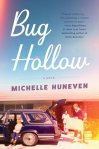
- Kids running around basically feral in a 1970s summer, and driving a box of human ashes around in Case Histories by Kate Atkinson and Bug Hollow by Michelle Huneven.
- A character becomes a nun in Case Histories by Kate Atkinson and Days of Light by Megan Hunter.
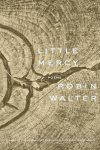
- Wrens nesting just outside one’s front door in Lifelines by Julian Hoffman and Little Mercy by Robin Walter.

- ‘The female Woody Allen’ is the name given to a character in Women by Chloe Caldwell and then a description (in a blurb) of French author Nolwenn Le Blevennec.
- A children’s birthday party scene in Single, Carefree, Mellow by Katherine Heiny and Friends and Lovers by Nolwenn Le Blevennec. A children’s party is also mentioned in Case Histories by Kate Atkinson and A Family Matter by Claire Lynch.
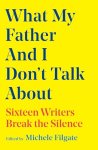
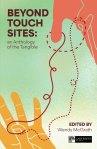
- A man who changes his child’s nappies, unlike his father – evidence of different notions of masculinity in different generations, in Case Histories by Kate Atkinson, What My Father and I Don’t Talk About, edited by Michele Filgate, and one piece in Beyond Touch Sites, edited by Wendy McGrath.
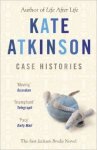
- What’s in a name? Repeated names I came across included Pansy (Case Histories by Kate Atkinson and Days of Light by Megan Hunter), Olivia (Case Histories by Kate Atkinson and A Family Matter by Claire Lynch), Jackson (Case Histories by Kate Atkinson and So Far Gone by Jess Walter), and Elias (Good Girl by Aria Aber and Dream State by Eric Puchner).
- The old wives’ tale that you should run in zigzags to avoid an alligator appeared in Alligator Tears by Edgar Gomez and then in The Girls Who Grow Big by Leila Mottley, both initially set in Florida.
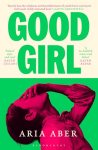
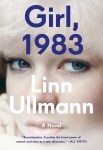
- A teenage girl is groped in a nightclub in Good Girl by Aria Aber and Girl, 1983 by Linn Ullmann.
- Discussion of the extinction of human and animal cultures and languages in both Nature’s Genius by David Farrier and Lifelines by Julian Hoffman, two May 2025 releases I was reading at the same time.
- In Body: My Life in Parts by Nina B. Lichtenstein, she mentions Linn Ullmann – who lived on her street in Oslo and went to the same school (not favourably – the latter ‘stole’ her best friend!); at the same time, I was reading Linn Ullmann’s Girl, 1983! And then, in both books, the narrator recalls getting a severe sunburn.
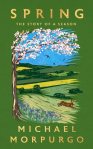 On the same day, I read about otter sightings in Lifelines by Julian Hoffman and Spring by Michael Morpurgo. The next day, I read about nesting swallows in both books.
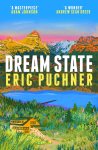
- The Salish people (Indigenous to North America) are mentioned in Lifelines by Julian Hoffman, Dream State by Eric Puchner (where Salish, the town in Montana, is also a setting), and So Far Gone by Jess Walter.
- Driving into a compound of extremists, and then the car being driven away by someone who’s not the owner, in Dream State by Eric Puchner and So Far Gone by Jess Walter.
- A woman worries about her (neurodivergent) husband saying weird things at a party in The Honesty Box by Lucy Brazier and Normally Weird and Weirdly Normal by Robin Ince.
- Shooting raccoons in Ginseng Roots by Craig Thompson and So Far Gone by Jess Walter. (Raccoons also feature in Dream State by Eric Puchner.)
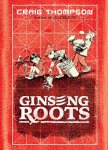
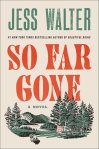
- A graphic novelist has Hollywood types adding (or at least threatening to add) wholly unsuitable supernatural elements to their plots in Spent by Alison Bechdel and Ginseng Roots by Craig Thompson.
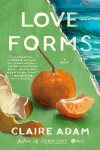
- A novel in which a character named Dawn has to give up her daughter in the early 1980s, one right after the other: A Family Matter by Claire Lynch, followed by Love Forms by Claire Adam.
- A girl barricades her bedroom door for fear of her older brother in Love Forms by Claire Adam and Sleep by Honor Jones.
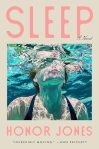
- A scene of an only child learning that her mother had a hysterectomy and so couldn’t have any more children in Dream Count by Chimamanda Ngozi Adichie and Other People’s Mothers by Julie Marie Wade.
- An African hotel cleaner features in Dream Count by Chimamanda Ngozi Adichie and The Hotel by Daisy Johnson.

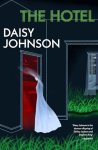
- Annie Dillard’s essay “Living Like Weasels” is mentioned in Nature’s Genius by David Farrier and The Dry Season by Melissa Febos.
- A woman assembles an inventory of her former lovers in Dream Count by Chimamanda Ngozi Adichie and The Dry Season by Melissa Febos.
What’s the weirdest reading coincidence you’ve had lately?
20 Books of Summer, 1–3: Chimamanda Ngozi Adichie, Daisy Johnson & Ruth Padel
It’s been a slow start to #20BooksofSummer2025 for me, but I’ll hope to do some catching up during our Scotland holiday and then once we’re home in July. So far, I’m sticking to the list I chose last month. These first few were slightly disappointing, to be honest, but I have no doubt I’ll find some gems among my original selections.
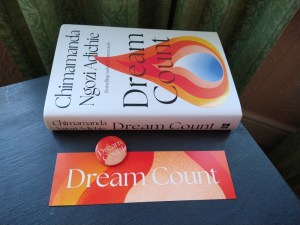
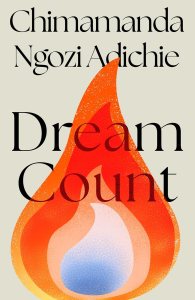
Dream Count by Chimamanda Ngozi Adichie (2025)
This was one of my Most Anticipated books of the year and had a lot to live up to as Adichie’s first novel since the amazing Americanah. When I first attempted to read it, I was dismayed by how much it felt like a rehashing of Americanah, with Chia (a travel writer in Maryland) and her cousin Omelogor (a feminist blogger) together reminiscent of Ifemelu. It did get more readable and somewhat more interesting as it went on. But instead of finding the narration and structure natural, I ended up full of questions about what Adichie intended.
 Why four main characters? Why is it the one non-Nigerian who’s poor, victimized, and less proficient in English? (That Kadiatou is based on a real person doesn’t explain enough. Her plight does at least provide what plot there is.) Why are the other three, to varying extents, rich and pretentious? Why are two narratives in the first person and two in the third person? Why in such long chunks instead of switching the POV more often? Why so many men, all of them more or less useless? (All these heterosexual relationships – so boring!) Why bring Covid into it apart from for verisimilitude? But why is the point in time important? What point is she trying to convey about pornography, the subject of Omelogor’s research?
It’s Adichie, so of course she writes solid prose with engaging characters, convincing dialogue, and provocative ideas. There’s a focus here on women’s experiences of attempted or actual motherhood (e.g., PMDD, fibroids, single parenthood or pressure to adopt), and, as per usual, a bit about race (specifically colorism, ethnic prejudice, and code-switching). But the characters’ connections seem weak, their coverage of the range of women’s experiences narrow. The title is, I suppose, the best clue to what Adichie wanted to do with the novel. Everyone dreams of finding, or preserving, love and family. Chia yearns for someone who will truly know her, and because she’s convinced this will be a romantic bond she devotes lockdown to a mental inventory of past relationships. Kadiatou dreams of peace more than of justice, and only in that she gets what she wants is there a happy ending of sorts. I wish I could be more positive, but this was a slog for me. (New purchase – Hungerford Bookshop) 
The Hotel by Daisy Johnson (2024)
I’d really enjoyed Johnson’s two novels, Everything Under and Sisters, and have a copy of her previous short story collection, Fen, on the shelf. This completely passed my notice last year. I liked the idea of eerie linked short stories, but I wish I’d known this was originally written for radio as I think it accounts for how simplistic and insubstantial the 15 tales are.
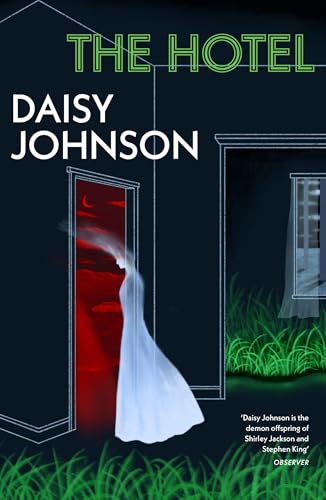 The Hotel is a fenland folly, built on the site of a pond where a suspected witch was drowned. Ever after, it is a cursed place. Those who build the hotel and stay in it are subject to violence, fear, and eruptions of the unexplained – especially if they go in Room 63. Anyone who visits once seems doomed to return. Most of the stories are in the first person, which makes sense for dramatic monologues. The speakers are guests, employees, and monsters. Some are BIPOC or queer, as if to tick off demographic boxes. Just before the Hotel burns down in 2019, it becomes the subject of an amateur student film like The Blair Witch Project.
Scary books don’t tend to work for me because I am often too aware of how they are constructed and so fail to give myself over to the reading experience and take them seriously. I can’t summon much enthusiasm for these stories, though I suppose the setting is rather atmospheric. My favourite was “Infestation,” about two girls – the one (not randomly) named Shirley – who think they discover something down in the laundry room in 1968. Only one of them makes it out alive. Okay, this one was creepy, but the rest left me unmoved. (Gift – purchased with Hungerford Bookshop with Christmas token) 
Girl by Ruth Padel (2024)
Padel is one of my favourite poets and a repeat appearance on my summer reading list; I reviewed her Emerald in 2021. I’ve read 12 of her books now. This collection is about girlhood, by way of personal history and myth.
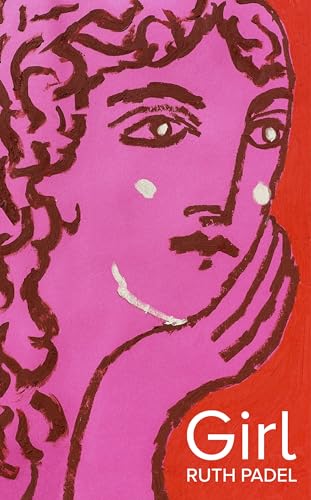 The first section, “When the Angel Comes for You,” is about the Virgin Mary, its 15 poems corresponding to the 15 Mysteries of the Rosary (as Padel explains in a note at the end; had she not, that would have gone over my head). The opening poem about the Annunciation is the most memorable its contemporary imagery emphasizing Mary’s youth and naivete: “a flood of real fear / and your heart / in the cowl-neck T-shirt from Primark / suddenly convulsed. But your old life // now seems dry as a stubbed / cigarette.” The third section, “Lady of the Labyrinth,” is about Ariadne, inspired by the snake goddess figurines in a museum on Crete. The message here is the same: “there is always the question of power / and girl is a trajectory / of learning how to deal with it”.
But the only poems that truly stood out to me are in the central autobiographical section arising from Padel’s own girlhood as well as her observations of her daughter and grandchild (setting up a Maiden–Mother–Crone triad). “Girl in a Forest” and “Tomboy and Panther” draw on the lure of the jungle to depict a wild child who chooses trousers over skirts. I loved “Fair Verona” for its traveler’s nostalgia but also for the hint of menace: so many tourists fondled the breast on a statue of Juliet that it had to be replaced. “How much touching // does it take for a bronze breast to crack?” the poet asks.
There’s some good alliteration throughout, and I warmed to the vision of girlhood as a time of promise and possibility: “the wonder / the where shall I go what new thing / will this day bring of being a girl.” Overall, though, I didn’t think the book had a lot of substance to convey about its theme. (Gift – purchased with Hungerford Bookshop with Christmas token) 
Off to Scotland today. I’ve packed Ice Cream by Helen Dunmore and Pet Sematary by Stephen King from my 20 Books list, plus other books I may substitute in. I’m scheduling a few posts for while we’re away; forgive me if I don’t reply to comments until July.
A Belated R.I.P., Part III: Hand, Hurley, Kingfisher and Meddings
I meant to post on Halloween but the day got away from me, so here’s my belated third contribution to the Readers Imbibing Peril challenge (the first two are here and here). It’s rare for me to borrow from the horror section of the library and even rarer for me to read sequels, yet here I am with two purple-spotted spines and three books that count as continuations. I’m a little surprised at myself for managing eight R.I.P. reviews this year, but five of those were of very short books or graphic novels so were quick reads. With the possible exception of the dystopian final chapter of the Hurley, none of my selections scared me.
A Haunting on the Hill by Elizabeth Hand (2023)
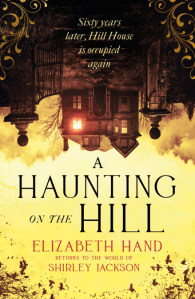 Hand was commissioned by Shirley Jackson’s estate to write a sequel to The Haunting of Hill House, which I read for R.I.P. in 2019 (my review). As in the original, four people gather at Hill House; artists rather than ghost-hunters, but they soon grasp the place’s supernatural malevolence. Holly has written a play about a historical witch – to be portrayed by Amanda, an actress of a certain age. Holly’s girlfriend, Nisa, provides music in the form of traditional murder ballads; actor Stevie makes up the quartet. Despite locals’ persistent admonitions, they take out a short-term rental on Hill House, thinking it will be atmospheric to finish the play and conduct read-throughs there. I was solidly engaged with the characters, whom Hand reinforces with traumatic backstories (Amanda’s proximity to an accidental death, Stevie’s molestation as a child actor), but couldn’t take the scary reveals seriously. A tablecloth suddenly soaked in blood? A black hare falling out of a chimney? Such moments just felt silly, plus Hand overplays the warnings versus the quartet’s blithe heedlessness. The ending is actually pretty chilling, but too much that came before strained belief. Do read the Jackson if you haven’t, though; it’s genuinely frightening. (Public library)
Barrowbeck by Andrew Michael Hurley (2024)
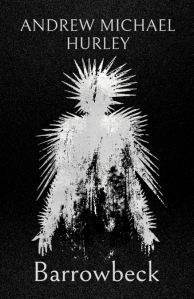 I’ve read all of Hurley’s novels (The Loney, Devil’s Day and Starve Acre), the first two for previous R.I.P. events. Here again, he explores the arcane beliefs and practices of an isolated community: Barrowbeck, a fictional valley on the Yorkshire–Lancashire borders. The 13 chapters, rather like linked short stories, alight at moments along its timeline, from the medieval conflict of “First Footing” all the way through the near-future desolation of “A Valediction.” What connects the vignettes is more tonal than geographical, though, with suspicion, exclusion and the uncanny recurring. There are hints of deadly customs and communion with the departed. As is true of most collections, some stories are more memorable than others, and I felt that a few went too far towards pastiche (e.g., “Autumn Pastoral” of The Woman in Black by Susan Hill). I had a few favourites: “To Think of Sicily,” set after the 15th-century visit of an Italian man bearing mysterious olive oil, introduces the people’s seemingly congenital xenophobia. In “Hymns for Easter,” residents killed in the First World War still join their voices with the choir’s. “Sisters,” about B&B operators trying to get rid of their solitary guest before closing for the winter, was the best of all and reminiscent of the twins in Daniel Mason’s North Woods. You should like this if you’re a Daisy Johnson fan or enjoyed Private Rites by Julia Armfield, though ultimately I found more difference than continuity across the chapters.
With thanks to John Murray Press for the proof copy for review.
What Feasts at Night by T. Kingfisher (2024)
 The second book of the “Sworn Soldier” duology, after What Moves the Dead. Easton has returned from Paris to their native Gallacia to give Miss Potter a fungi-hunting holiday as thanks for helping with the previous adventure. But the caretaker is dead and the home abandoned, so Easton hires a local widow and her grandson, Bors, to look after the property. Bors is soon troubled by the moroi, a ghost-woman who comes in dreams to sit on people’s chests, crushing the breath out of them. She also seems to take the form of moths. And next she comes for Easton. You’d think with all the world-building she’d done in the first book, Kingfisher could pack lots of plot into this novella. But there’s really not much to it. It was over before it began. The winking humour of the first book was worn-out. And the more I thought about it, the more uneasy I was with the negative nature imagery I kept encountering in horror: fungi, moths, rabbits/hares. I understand this is often harkening back to ancient legends, but in a biodiversity crisis we need love rather than fear. (Public library)
The Sad Ghost Club 2 by Lize Meddings (2022)
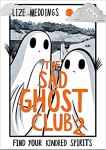 This teen comic series is not about literal ghosts but about mental health. Young people struggling with anxiety and intrusive thoughts recognize each other – they’ll be the ones wearing sheets with eye holes. In the first book, which I reviewed for R.I.P. last year, SG meets Socks and determines to start a society for people like them. In this sequel, Socks worries that he’s not cool enough for the club and that SG, especially after they meet Rue, will leave him behind. The message is about being there for people even when they think they just want to be alone. By the end, it looks like the club is going to grow further. This barely built on the first book and contained so little incident that it felt unnecessary. Never mind! (Little Free Library)
Rather a lackluster finish to the challenge there, but the Hurley at least is recommended.
Recent Online Literary Events with George Saunders and Kazuo Ishiguro
I’ve been taking advantage of various free and inexpensive literary events – a bonus of our temporarily virtual-only world. I have five of them stored up to write about, but to keep this post from getting absurdly long I’ll focus on two for now and feature the rest another time.
George Saunders in Conversation with Max Porter
(5×15 event)
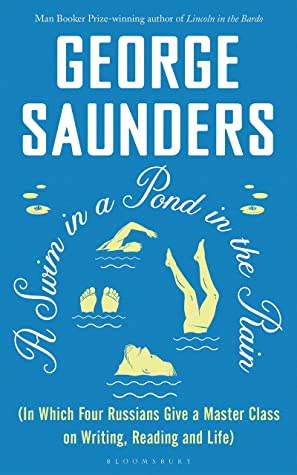 Saunders’s latest book, A Swim in a Pond in the Rain, is a written version of the graduate-level masterclass in the Russian short story that he offers at Syracuse University, where he has taught in the Creative Writing Program since 1997. His aim here was to “elevate the short story form,” he said. While the book reprints and discusses just seven stories (three by Anton Chekhov, two by Leo Tolstoy, and one each by Nikolai Gogol and Ivan Turgenev), in the class he and his students tackle more like 40. He wants people to read a story, react to the story, and trust that reaction – even if it’s annoyance. “Work with it,” he suggested. “I am bringing you an object to consider” on the route to becoming the author you are meant to be – such is how he described his offer to his students, who have already overcome 1 in 100 odds to be on the elite Syracuse program but might still need to have their academic egos tweaked.
The book is, thus, not just a set of essays on the Russian masters but also a guide to how to write well. It was clear there was mutual admiration between Saunders and Max Porter, who interviewed him. They discussed the revision process as an accumulation of micro-decisions that make the work better. For instance, Saunders compared two Tolstoy stories, “The Snowstorm” and “Master and Man” (written 20 years later), and noted that, though they are thematically similar, the later one is more organized.
Saunders spoke about writing as a dual process of intuition and iteration; a bunch of different “yous” have acted on a text by the time it’s done. Early on in his career, he thought that he had to choose which writer he wanted to be (e.g., Hemingway or Kerouac), but as he aged he realized that the mind is never fixed. He went surprisingly deep into Buddhism at this point, likening writing to meditation – both are practices pursued with intensity. To his younger self, he would say to keep going: improving is simply a matter of time (i.e., that 10,000 hours figure that’s bandied about as necessary for developing expertise).

The only drawback to this event was that Saunders was speaking from his snow-encased upstate New York basement and had a horrible Internet connection; often his voice was faint and delayed, while his image stayed static. We and Porter could only stare gormlessly and wait for his face to move to match his words! I think the book would be too niche for me – I’ve hardly read anything by the Russians, and since I don’t write fiction I’m not in need of a guide to those kinds of writing decisions – but it was nice to ‘meet’ Saunders ‘in person’.
An Evening with Kazuo Ishiguro
(Faber Members / Guardian Live event)
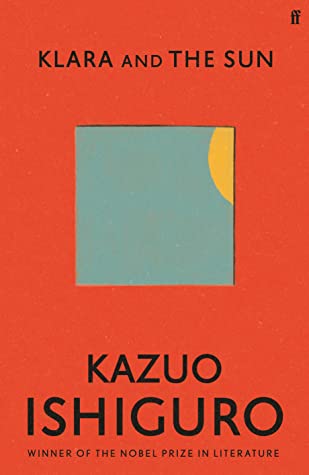 Ishiguro’s new novel, Klara and the Sun, was published by Faber yesterday. This conversation with Alex Clark also functioned as its launch event. It’s one of my most anticipated books of the year, so I pre-ordered a signed copy along with my ticket and look forward to it arriving soon. Klara is an Artificial Intelligence “friend” purchased to combat teenage loneliness. A childlike figure, she is cheerful and treats the sun like a god. Ishiguro said that the book developed from a story he wrote for children aged five to six, about a little girl who takes a doll home – except his daughter, author Naomi Ishiguro, told him no way was it suitable for young children, being far too dark. He likes “displaced or alien narrators, fish out of water,” he said, because the limited perspective allows him to focus on oddness.
In addition to Clark’s questions, a few pre-recorded questions from literary celebs (Daisy Johnson, Bernardine Evaristo, and David Mitchell) encouraged Ishiguro to create a tripartite schema for his novels, reflect on his writing about Japan, and look back at the devices he has used. Asked by Johnson about the connections between his novels, he admitted that his first three novels all retread the same ground: a man who has made a mess of his life or career picks over the past. Then his mid period is set in dreamscapes, while his most recent three novels are dystopian fantasies (though he does not see Klara as set in a dystopian world).
In response to Evaristo’s question about whether he felt an obligation to write about Japan, he said that with his early work he was conscious of needing to represent a group of people who even then (due to World War II) were viewed with suspicion or antipathy. He left Japan at age five so the country didn’t seem entirely real to him. What he knew was based on very early memories, what his mother told him, comic books sent by his grandparents, etc. As he stated in his Nobel Prize acceptance speech, writing about Japan in his twenties therefore felt like “an act of preservation.” Still, he wants his characters and situations to be universal.

Replying to Mitchell’s three questions (cheeky!), he explained that his first ambition was to be a singer/songwriter, and he wrote 100+ songs. Songwriting taught him minimalism. “You can say a huge amount by what you don’t say,” he noted. He hopes to create spaces, or rather vacuums that suck in the reader’s attention. Unlike Mitchell, he always knows the ending of a book before he begins, and his decisions are all about wanting to lodge in the reader’s brain. Thus, memorable endings are a priority for him, whereas they might not be for other writers. I was struck by his characterization of his own life: when he looks back, he doesn’t see a clear path that arose from his choices; instead, he sees a “weird, incoherent mess.” For this reason, he’s turned against the reflective device of his first three books. If he can come up with a theme, he’s hankering to write a book about hitchhikers in the north of England.
Towards the end of the (overlong) discussion, he mentioned that he has been questioning the novelist’s role due to the events of the past year: wondering about the meaning of fiction when so many have died and so many believe fake news. It was a melancholy but realistic point to end on. While I’m not an Ishiguro completist (The Unconsoled doesn’t appeal to me at all and I’m not sure I can be bothered with When We Were Orphans, but I will try The Buried Giant; I’ve read the rest), the event whetted my appetite to read his new book. (See also this Goodreads interview. I loved the anecdotes about learning he’d won the Nobel!)
Bookish online events coming up soon: The Rathbones Folio Prize announcement on the 24th and Claire Fuller’s book launch for Unsettled Ground on the 25th.
Have you attended any online literary events recently?
Women’s Prize 2021: Predictions & Eligible Titles
In previous years I’ve been a half-hearted follower of the Women’s Prize – often half or more of the longlist doesn’t interest me – but given that nearly two-thirds of my annual reading is by women, and that I so enjoyed catching up on the previous winners last year, I somehow feel more invested this year. Following literary prizes is among my greatest bookish joys, so this time round I’ve made more of an effort to look back through a year of UK fiction releases by women, whether I’ve read the books or not, and make some informed predictions.
Here is the scope of the prize: “Any woman writing in English – whatever her nationality, country of residence, age or subject matter – is eligible. Novels must be published in the United Kingdom between 1 April in the year the Prize calls for entries, and 31 March the following year, when the Prize is announced.” (Note: no novellas or short stories; the judges are looking for the best work by a woman – or a trans person legally defined as a woman.)
Based on the books by women that I have admired, loved, or found most relevant in 2020‒21, here are my predictions for the longlist, which will be revealed on March 10th (two weeks from today) and will contain 16 titles. I’ve aimed for a balance between new and established voices, and a mix of genres. I link to my reviews where available.


- The Vanishing Half by Brit Bennett
- Piranesi by Susanna Clarke
- Exciting Times by Naoise Dolan
- Burnt Sugar by Avni Doshi
- Mrs Death Misses Death by Salena Godden
- Transcendent Kingdom by Yaa Gyasi
- Sisters by Daisy Johnson
- Pew by Catherine Lacey
- No One Is Talking about This by Patricia Lockwood – currently reading
- A Burning by Megha Majumdar*
- The Glass Hotel by Emily St. John Mandel
- Hot Stew by Fiona Mozley**
- Outlawed by Anna North
- Love After Love by Ingrid Persaud
- The Mermaid of Black Conch by Monique Roffey***
- The Liar’s Dictionary by Eley Williams
* Not read yet. It seems like this year’s Home Fire.
** Not read yet, but I loved Elmet so much that I’m confident this will be a hit with me, too.
*** Not read yet. I plan to read it, but after its Costa win there’s a long library holds queue.
Note: “The Prize only accepts novels entered by publishers, who may each submit a maximum of two titles per imprint and one title for imprints with a list of five fiction titles or fewer published in a year. Previously shortlisted and winning authors are awarded a ‘free pass’ in addition to a publisher’s general submissions.”
- Because of all the funds the publishers are expected to contribute to the Prize’s publicity at each level of judging, the process unfairly discriminates against small, independent publishers.
Bernardine Evaristo is the chair of judges this year, so I expect a strong showing from BIPOC and LGBTQ authors AND a leaning towards experimental prose, probably even more so than my above list reflects.
Other novels I considered:
Runners-up – books that I enjoyed and would be perfectly happy to see nominated:


- Milk Fed by Melissa Broder – not reviewed yet
- Here Is the Beehive by Sarah Crossan
- The Group by Lara Feigel
- Unsettled Ground by Claire Fuller – not reviewed yet
- Artifact by Arlene Heyman
- The Book of Longings by Sue Monk Kidd
- A Town Called Solace by Sue Lawson – not reviewed yet
- Monogamy by Sue Miller
- What Are You Going Through by Sigrid Nunez
- Islands of Mercy by Rose Tremain
Reads that didn’t match up for me, but would be eligible:


- When the Lights Go Out by Carys Bray
- The New Wilderness by Diane Cook
- Tennis Lessons by Susannah Dickey
- The Pull of the Stars by Emma Donoghue
- As You Were by Elaine Feeney (DNF)
- The Charmed Wife by Olga Grushin
- Miss Benson’s Beetle by Rachel Joyce
- The Animals in That Country by Laura Jean McKay
- Scenes of a Graphic Nature by Caroline O’Donoghue
- True Story by Kate Reed Petty (DNF)
- Rodham by Curtis Sittenfeld
- The Lamplighters by Emma Stonex – currently reading
- Redhead by the Side of the Road by Anne Tyler
- little scratch by Rebecca Watson
- Three Women and a Boat by Anne Youngson
Haven’t had a chance to read yet / don’t have access to, so can only list without comment (most likely alternative nominees in bold):


- Against the Loveless World by Susan Abulhawa
- You Exist Too Much by Zaina Arafat
- The Push by Ashley Audrain
- If I Had Your Face by Frances Cha
- [The Death of Vivek Oji by Akwaeke Emezi] – Update: would not be eligible according to the new requirement that trans people be legally defined as female; before that regulation was in place, Emezi was longlisted for Freshwater.
- Sea Wife by Amity Gaige
- The Wild Laughter by Caoilinn Hughes
- How We Are Translated by Jessica Gaitán Johannesson
- Consent by Annabel Lyon
- A Crooked Tree by Una Mannion
- The Last Migration by Charlotte McConaghy
- The Art of Falling by Danielle McLaughlin
- His Only Wife by Peace Adzo Medie
- A Ghost in the Throat by Doireann Ní Ghríofa
- Acts of Desperation by Megan Nolan
- Fake Accounts by Lauren Oyler
- An Ordinary Wonder by Buki Papillon
- Detransition, Baby by Torrey Peters
- Jack by Marilynne Robinson – gets a “free pass” entry as MR is a previous winner
- Belladonna by Anbara Salam
- Kololo Hill by Neema Shah
- All Adults Here by Emma Straub
- Friends and Strangers by J. Courtney Sullivan
- Saving Lucia by Anna Vaught
- We Are All Birds of Uganda by Hafsa Zayyan
- How Much of These Hills Is Gold by C. Pam Zhang
I overlapped with this Goodreads list (which I didn’t look at until after compiling mine) on 28 titles. It erroneously includes The Anthill by Julianne Pachico – not released in the UK until May 2021 – but otherwise has another nearly 50, mostly solid, ideas, such as Luster by Raven Leilani, Blue Ticket by Sophie Mackintosh, and Death in her Hands by Ottessa Moshfegh.
See also Laura’s and Rachel’s predictions.
Any predictions or wishes for the Women’s Prize longlist?
The Best Books of 2020: Some Runners-Up
I’ve chosen 25 more cracking reads that were first released in 2020. (Asterisks = my hidden gems of the year.) Between this post and my Fiction/Poetry and Nonfiction best-of lists, I’ve now highlighted about the top 12% of my year’s reading.
Novels:
 The Vanishing Half by Brit Bennett: Like some lost mid-career gem from Toni Morrison, this novel is meaty with questions of racial and sexual identity. Light-skinned African-American twins’ paths divide in 1950s Louisiana. Perceptive and beautifully written, this has characters whose struggles feel genuine and pertinent.
 Piranesi by Susanna Clarke: To start with, Piranesi traverses his watery labyrinth like he’s an eighteenth-century adventurer, his resulting notebooks reading rather like Alexander von Humboldt’s writing. I admired how the novel moved from the fantastical and abstract into the real and gritty. Read it even if you say you don’t like fantasy.
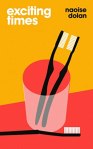 Exciting Times by Naoise Dolan: At 22, Ava leaves Dublin to teach English as a foreign language to wealthy preteens and almost accidentally embarks on affairs with an English guy and a Chinese girl. Dolan has created a funny, deadpan voice that carries the entire novel. I loved the psychological insight, the playfulness with language, and the zingy one-liners.
 *A Good Neighborhood by Therese Anne Fowler: Issues of race and privilege undermine a teen romance in a perfect-seeming North Carolina community. This is narrated in a first-person plural voice, like the Greek chorus of a classical tragedy. If you loved An American Marriage, it should be next on your list. I’m puzzled by how overlooked it’s been this year.
 Transcendent Kingdom by Yaa Gyasi: A more subdued and subtle book than Homegoing, but its treatment of themes of addiction, grief, racism, and religion is so spot on that it packs a punch. Gifty is a PhD student at Stanford, researching reward circuits in the mouse brain. There’s also a complex mother–daughter relationship and musings on love and risk. [To be published in the UK in March]
 The Mercies by Kiran Millwood Hargrave: A rich, natural exploration of a place and time period – full of detail but wearing its research lightly. Inspired by a real-life storm that struck on Christmas Eve 1617 and wiped out the male population of the Norwegian island of Vardø, it intimately portrays the lives of the women left behind. Tender, surprising, and harrowing.
 Sisters by Daisy Johnson: Teenagers September and July were born just 10 months apart, with July always in thrall to her older sister. For much of this short novel, Johnson keeps readers guessing as to why the girls’ mother, Sheela, took them away to Settle House, her late husband’s family home in the North York Moors. As mesmerizing as it is unsettling.
 The Book of Longings by Sue Monk Kidd: Kidd’s bold fourth novel started as a what-if question: What if Jesus had a wife? Although this retells biblical events, it is chiefly an attempt to illuminate women’s lives in the 1st century and to chart the female contribution to sacred literature and spirituality. An engrossing story of women’s intuition and yearning.
 *The Ninth Child by Sally Magnusson: Intense and convincing, this balances historical realism and magical elements. In mid-1850s Scotland, there is a move to ensure clean water. The Glasgow waterworks’ physician’s wife meets a strange minister who died in 1692. A rollicking read with medical elements and a novel look into Victorian women’s lives.
 *The Bell in the Lake by Lars Mytting: In this first book of a magic-fueled historical trilogy, progress, religion, and superstition are forces fighting for the soul of a late-nineteenth-century Norwegian village. Mytting constructs the novel around compelling dichotomies. Astrid, a feminist ahead of her time, vows to protect the ancestral church bells.
 What Are You Going Through by Sigrid Nunez: The narrator is called upon to help a terminally ill friend commit suicide. The voice is not solely or even primarily the narrator’s but Other: art consumed and people encountered become part of her own story; curiosity about other lives fuels empathy. A quiet novel that sneaks up to seize you by the heartstrings.
 Weather by Jenny Offill: A blunt, unromanticized, wickedly funny novel about how eco-anxiety permeates everyday life, written in an aphoristic style. Set either side of Trump’s election in 2016, the novel amplifies many voices prophesying doom. Offill’s observations are dead right. This felt like a perfect book for 2020 and its worries.
 Love and Other Thought Experiments by Sophie Ward: An intriguing set of linked short stories that combine philosophy and science fiction. Rachel and Eliza are preparing to have a baby together when an ant crawls into Rachel’s eye and she falls ill. I was particularly taken by the chapter narrated by the ant. It’s well worth making a rare dip into sci-fi for this one.
 *The Inland Sea by Madeleine Watts: The young female narrator of this debut novel lives in Sydney and works for Australia’s emergency call service. Against a backdrop of flooding and bush fires, a series of personal catastrophes play out. A timely, quietly forceful story of how women cope with concrete and existential threats.
Short Stories:
 To Be a Man by Nicole Krauss: These 10 stories from the last 18 years are melancholy and complex, often featuring several layers of Jewish family history. Europe, Israel, and film are frequent points of reference. “Future Emergencies,” though set just after 9/11, ended up feeling the most contemporary because it involves gas masks and other disaster preparations.
 *Help Yourself by Curtis Sittenfeld: A bonus second UK release from Sittenfeld in 2020 after Rodham. Just three stories, but not leftovers; a strong follow-up to You Think It, I’ll Say It. They share the theme of figuring out who you really are versus what others think of you. “White Women LOL,” especially, compares favorably to Kiley Reid’s Such a Fun Age.
 You Will Never Be Forgotten by Mary South: In this debut collection, characters turn to technology to stake a claim on originality, compensate for losses, and leave a legacy. These 10 quirky, humorous stories never strayed so far into science fiction as to alienate me. I loved the medical themes and subtle, incisive observations about a technology-obsessed culture.
Poetry:
 *Survival Is a Style by Christian Wiman: Wiman examines Christian faith in the shadow of cancer. This is the third of his books that I’ve read, and I’m consistently impressed by how he makes room for doubt, bitterness, and irony – yet a flame of faith remains. There is really interesting phrasing and vocabulary in this volume.
Nonfiction:
 Inferno: A Memoir by Catherine Cho: Cho experienced stress-induced postpartum psychosis after the birth of her son. She alternates between her time in the mental hospital and her life before the breakdown, weaving in family history and Korean sayings and legends. It’s a painstakingly vivid account.
 *The Lost Family: How DNA Testing Is Upending Who We Are by Libby Copeland: DNA tests can find missing relatives within days. But there are troubling aspects to this new industry, including privacy concerns, notions of racial identity, and criminal databases. A thought-provoking book with all the verve and suspense of fiction.
 *Signs of Life: To the Ends of the Earth with a Doctor by Stephen Fabes: Fabes is an emergency room doctor in London and spent six years of the past decade cycling six continents. This warm-hearted and laugh-out-loud funny account of his travels achieves a perfect balance between world events, everyday discomforts, and humanitarian volunteering.
 Losing Eden: Why Our Minds Need the Wild by Lucy Jones: Nature’s positive effect on human mental health is something we know intuitively and can explain anecdotally, but Jones wanted to investigate the scientific mechanism behind it. Losing Eden is full of common sense and passion, cramming in lots of information yet never losing sight of the big picture.
 *Nobody Will Tell You This But Me: A True (As Told to Me) Story by Bess Kalb: Jewish grandmothers are renowned for their fiercely protective love, but also for nagging. Both sides of the stereotypical matriarch are on display in this funny, heartfelt family memoir, narrated in the second person – as if from beyond the grave – by her late grandmother. A real delight.
 Diary of a Young Naturalist by Dara McAnulty: McAnulty is a leader in the UK’s youth environmental movement and an impassioned speaker on the love of nature. This is a wonderfully observant and introspective account of his fifteenth year and the joys of everyday encounters with wildlife. Impressive perspective and lyricism.
 Memorial Drive: A Daughter’s Memoir by Natasha Trethewey: Trethewey grew up biracial in 1960s Mississippi, then moved with her mother to Atlanta. Her stepfather was abusive; her mother’s murder opens and closes the book. Trethewey only returned to their Memorial Drive apartment after 30 years had passed. A striking memoir, delicate and painful.

(Books not pictured were read digitally, or have already gone back to the library.)
Coming tomorrow: My best backlist reads of the year.
R.I.P. Reads, Part I: Magrs Buddy Read; Hynes, Johnson, Oates
This is my third year participating in R.I.P. (Readers Imbibing Peril), now in its 15th year. I read my first novel by Paul Magrs as a buddy read with Liz of Adventures in reading, running and working from home, and coincidentally had Daisy Johnson’s creepy second novel out from the library. Rounding out this first post are a novella by James Hynes and a short story by Joyce Carol Oates, by whom I still haven’t managed to read a whole book. For my planned Part II, I’m working on historical suspense novels by Michelle Paver (a constant on my R.I.P. lists, it seems) and Laura Purcell, and trying my first Henning Mankell.

666 Charing Cross Road by Paul Magrs (2011)
 Apart from Dracula, my only previous experience of vampire novels was Deborah Harkness’s books. My first book from Paul Magrs ended up being a great choice because it’s pretty lighthearted and as much about the love of books as it is about supernatural fantasy – think of a cross between Jasper Fforde and Neil Gaiman. The title is a tongue-in-cheek nod to Helene Hanff’s memoir, 84 Charing Cross Road. Like Hanff, Aunt Liza sends letters and money to a London bookstore in exchange for books that suit her tastes. A publisher’s reader in New York City, Liza has to read new stuff for work but not-so-secretly prefers old books, especially about the paranormal – a love she shares with her gay bookseller friend, Jack.
One day the bookstore (actual address: 66b) sends a gruesome treasure, a grimoire soaked in vampire blood. In the wrong hands, it returns the vampiric spirit to life and sets off a chain reaction as each victim bites and infects others. I couldn’t help but think of the pandemic; indeed, Magrs uses the word “disease” at one point. Vampirism always has erotic overtones, though, making it seem more like an STD. As it happens, the vampires’ New York leader is Liza’s niece Shelley’s boyfriend, Daniel. Meanwhile, the star exhibit at the Museum of Outsider Art where Shelley works, a Scottish Bride effigy nicknamed Bessie, has come to life. Bessie leads Liza and Jack to London in the fight against Daniel and his kind.
Set between Halloween and Christmas, this is a pacy and quick-witted story that is easy to follow even as it gets more complicated and adds in ever more secondary characters. Hints about Liza’s past experience of the supernatural and an open ending leave room for a prequel or sequel. There were a few melodramatic moments and I wasn’t always convinced by Liza’s New Yawk accent. (I also wanted to stick up for Liza and another character about her age, Consuela – Magrs often refers to one or both as “the old woman,” when in the context they can’t be far past 60!) But these are minor niggles about a book that was so much fun to read. I’ll try something else by Magrs, probably Exchange and/or one of the Brenda and Effie series – who could resist that premise of the Bride of Frankenstein running a B&B in Whitby? (See also Liz’s review.)
My rating: 
The rest…
Queen of the Jungle (from Publish and Perish: Three Tales of Tenure and Terror) by James Hynes (1997)
 I read the first of this volume’s three suspense novellas and will save the others for future years of R.I.P. or Novellas in November. At 95 pages, it feels like a complete, stand-alone plot with solid character development and a believable arc. Paul and Elizabeth are academics marooned at different colleges: Paul is finishing up his postdoc and teaches menial classes at an English department in Iowa, where they live; Elizabeth commutes long-distance to spend four days a week in Chicago, where she’s on track for early tenure at the university.
The couple’s cat, Charlotte, starts acting up, peeing in random places around the apartment. The animal psychic they hire says it’s because a woman keeps coming and going, disturbing the cat’s routines. Elizabeth assumes it’s her fault, feels terrible, and redoubles her efforts to get her boss to offer Paul a job on the basis of his bizarre literary/pop culture mash-up thesis chapters. But readers soon learn the real reason for the cat’s unease: Paul is carrying on an affair with Kymberly, a graduate student from the communications department. Charlotte is preternaturally determined to terrorize Kym and broadcast Paul’s secret. It’s an amusing battle of wills that comes to have greater stakes. Mentions of computer and telephone technology made this seem slightly dated, but I liked Hynes’s writing.
My rating:
Sisters by Daisy Johnson (2020)
 Teenagers September and July were born just 10 months apart, with July always in thrall to her older sister. September can pressure her into anything, no matter how risky or painful, in games of “September Says.” But one time things went too far. That was the day they went out to the tennis courts to confront the girls at their Oxford school who had bullied July.
For much of this short novel, Johnson keeps readers guessing about what happened that day and why the girls’ mother, Sheela, took them away to Settle House, her late husband’s family home in the North York Moors. Despite the new setting, July finds it impossible to shrug off her sister’s influence. Their psychic connection is such that she feels she’s losing her own virginity as she watches September have sex with a local boy on the beach. September’s is so much the dominant personality that July admits she feels like no more than “an appendage.”
Emotionally used and physically harmed, July starts to doubt her sanity. This was most evident for me in the scene where she goes up to a soggy-looking wall of Settle House and puts a hand through it, hearing “the rustle and gurgle of motion, the shuttering of thousands of wings.” (Presuming that’s a deliberate word choice and not a typo for shuddering.) Ants start pouring out of the wall, followed by a bird. But when she goes back to look at the wall later that day, it’s intact. I was reminded of The Haunting of Hill House, with its picture of a malevolent house preying on its inhabitants’ fears.

Sisters is a book that depends entirely on its late twist, so I shall say no more. About halfway through, I had a vague idea of what the surprise might be, but convinced myself I was wrong. “What if? … Nah, couldn’t be.” I wonder how early you’ll catch on. I adore the U.S. cover, but the UK cover contains more of a hint. I think I liked Everything Under, Johnson’s Booker-shortlisted debut novel, that little bit more, but my bottom line for that one goes for this, too: “As mesmerizing as it is unsettling.” Johnson is such a talented young author, and she also has the best author photo out there at the moment, a black-and-white image of her reflected in a train window.
My rating: 
“The Woman in the Window” (from Night-Gaunts and Other Tales of Suspense) by Joyce Carol Oates (2018)
 Oates was inspired by Edward Hopper’s 1926 painting, Eleven A.M. (The striking cover image is from a photographic recreation by Richard Tuschman. Very faithful except for the fact that Hopper’s armchair was blue.) A secretary pushing 40 waits in the New York City morning light for her married lover to arrive. She’s tired of him using her and keeps a sharp pair of sewing shears under her seat cushion. We bounce between the two characters’ perspectives as their encounter nears. He’s tempted to strangle her. Will today be that day, or will she have the courage to plunge those shears into his neck before he gets a chance? In this room, it’s always 11 a.m. The tension is well maintained, but the punctuation kind of drove me crazy. I might try the rest of the book next year.
Have you been reading anything fantastical or spooky this October?
Most Anticipated Releases of the Second Half of 2020
Although over 100 books from the second half of the year are already on my radar, I’ve limited myself here to the 15 July to November releases that I’m most excited about.
The modest number is a cheat in that I’ve already read seven books from this period in advance (plus I’m currently reading another three), and I haven’t listed any that I already have access to via proofs, promised finished copies, NetGalley, Edelweiss, or library preorders. Some of these that I intend to read are A Traveler at the Gates of Wisdom by John Boyne, D (A Tale of Two Worlds): A Modern-Day Dickensian Fable by Michel Faber, Bringing Back the Beaver by Derek Gow, Just Like You by Nick Hornby, How to Fly (poems) by Barbara Kingsolver, Vesper Flights by Helen Macdonald, Utopia Avenue by David Mitchell, Summerwater by Sarah Moss, Lake Life by David James Poissant, Dear Reader by Cathy Rentzenbrink, Jack by Marilynne Robinson and The Wild Silence by Raynor Winn.

(Meanwhile, two of my overall most anticipated 2020 releases have been pushed back to 2021, at least in the UK: Transcendent Kingdom by Yaa Gyasi and The Anthill by Julianne Pachico.)

The following are in release date order, within sections by genre; the quoted descriptions are from the publisher blurbs on Goodreads. For most I’ve added a note on why I want to read it. Nonfiction dominates: this seems to be the way of 2020 for me. Lots of flora and fauna on the covers and in the themes. Look out for antlers x 2.
Fiction

I love the U.S. cover.
Artifact by Arlene Heyman [July 9, Bloomsbury] “A sweeping debut novel about love, sex, motherhood, and ambition that follows a gifted and subversive scientist’s struggle to reach beyond cultural constraints for the life she wants. … Artifact is an intimate and propulsive portrait of a whole woman.” Susan of A life in books put me onto this one; here’s her review.
I love the U.S. cover.
Sisters by Daisy Johnson [Aug. 13, Jonathan Cape / Aug. 25, Riverhead] “After a serious case of school bullying becomes too much to bear, sisters July and September move across the country with their mother to a long-abandoned family home. … With its roots in psychological horror, Sisters is a taut, powerful and deeply moving account of sibling love.” I loved Johnson’s Booker-shortlisted debut, Everything Under.
Piranesi by Susanna Clarke [Sept. 15, Bloomsbury] “Piranesi’s house is no ordinary building: its rooms are infinite, its corridors endless. … For readers of Neil Gaiman’s The Ocean at the End of the Lane … Piranesi introduces an astonishing new world.” It feels like forever since we had a book from Clarke. I remember devouring Jonathan Strange & Mr Norrell during a boating holiday on the Norfolk Broads in 2006. But whew: this one is only 272 pages.
 The Swallowed Man by Edward Carey [Nov. 5, Gallic / Oct. 27, Riverhead] “A beautiful and haunting imagining of the years Geppetto spends within the belly of a sea beast. Drawing upon the Pinocchio story while creating something entirely his own, Carey tells an unforgettable tale of fatherly love and loss, pride and regret, and of the sustaining power of art and imagination.” His Little was one of my favorite novels of 2018.
Poetry
 Dearly: New Poems by Margaret Atwood [Nov. 10, Chatto & Windus / Ecco / McClelland & Stewart] “By turns moving, playful and wise, the poems … are about absences and endings, ageing and retrospection, but also about gifts and renewals. They explore bodies and minds in transition … Werewolves, sirens and dreams make their appearance, as do various forms of animal life and fragments of our damaged environment.”
Nonfiction
 Bright Precious Thing: A Memoir by Gail Caldwell [July 7, Random House] “In a voice as candid as it is evocative, Gail Caldwell traces a path from her west Texas girlhood through her emergence as a young daredevil, then as a feminist.” I’ve enjoyed two of Caldwell’s previous books, especially Let’s Take the Long Way Home. Also, I’ve been reading a lot of childhood memoirs and I like comparing them to see how authors capture that time of life.
 The Fragments of My Father by Sam Mills [July 9, Fourth Estate] A memoir of being the primary caregiver for her father, who had schizophrenia; with references to F. Scott Fitzgerald and Leonard Woolf, who also found themselves caring for people struggling with mental illness. “A powerful and poignant memoir about parents and children, freedom and responsibility, madness and creativity and what it means to be a carer.”
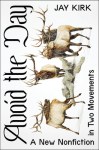 Avoid the Day: A New Nonfiction in Two Movements by Jay Kirk [July 28, Harper Perennial] Transylvania, Béla Bartók’s folk songs, an eco-tourist cruise in the Arctic … “Avoid the Day is part detective story, part memoir, and part meditation on the meaning of life—all told with a dark pulse of existential horror.” It was Helen Macdonald’s testimonial that drew me to this: it “truly seems to me to push nonfiction memoir as far as it can go.”
 World of Wonders: In Praise of Fireflies, Whale Sharks, and Other Astonishments by Aimee Nezhukumatathil [Aug. 3, Milkweed Editions] “From beloved, award-winning poet Aimee Nezhukumatathil comes a debut work of nonfiction—a collection of essays about the natural world, and the way its inhabitants can teach, support, and inspire us. … Even in the strange and the unlovely, Nezhukumatathil finds beauty and kinship.” Who could resist that title or cover?
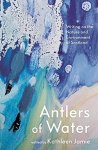 Antlers of Water: Writing on the Nature and Environment of Scotland, edited by Kathleen Jamie [Aug. 6, Canongate] Contributors include Amy Liptrot, musician Karine Polwart and Malachy Tallack. “Featuring prose, poetry and photography, this inspiring collection takes us from walking to wild swimming, from red deer to pigeons and wasps, from remote islands to back gardens … writing which is by turns celebratory, radical and political.”
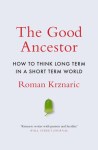 The Good Ancestor: How to Think Long Term in a Short-Term World by Roman Krznaric [Aug. 27, W.H. Allen] “Drawing on radical solutions from around the world, Krznaric celebrates the innovators who are reinventing democracy, culture and economics so that we all have the chance to become good ancestors and create a better tomorrow.” I’ve been reading a fair bit around this topic. I got a sneak preview of this one from Krznaric’s Hay Festival talk.
 Eat the Buddha: The Story of Modern Tibet through the People of One Town by Barbara Demick [Sept. 3, Granta / July 28, Random House] “Illuminating a culture that has long been romanticized by Westerners as deeply spiritual and peaceful, Demick reveals what it is really like to be a Tibetan in the twenty-first century, trying to preserve one’s culture, faith, and language.” I read her book on North Korea and found it eye-opening. I’ve read a few books about Tibet over the years; it is fascinating.
 Entangled Life: How Fungi Make Our Worlds, Change Our Minds and Shape Our Futures by Merlin Sheldrake [Sept. 3, Bodley Head / May 12, Random House] “Entangled Life is a mind-altering journey into this hidden kingdom of life, and shows that fungi are key to understanding the planet on which we live, and the ways we think, feel and behave.” I like spotting fungi. Yes, yes, the title and cover are amazing, but also the author’s name!! – how could you not want to read this?
 Between Light and Storm: How We Live with Other Species by Esther Woolfson [Sept. 3, Granta] “Woolfson considers prehistoric human‒animal interaction and traces the millennia-long evolution of conceptions of the soul and conscience in relation to the animal kingdom, and the consequences of our belief in human superiority.” I’ve read two previous nature books by Woolfson and have done some recent reading around deep time concepts. This is sure to be a thoughtful and nuanced take.
 The Stubborn Light of Things: A Nature Diary by Melissa Harrison [Nov. 5, Faber & Faber] “Moving from scrappy city verges to ancient, rural Suffolk, where Harrison eventually relocates, this diary—compiled from her beloved “Nature Notebook” column in The Times—maps her joyful engagement with the natural world and demonstrates how we must first learn to see, and then act to preserve, the beauty we have on our doorsteps.” I love seeing her nature finds on Twitter. I think her writing will suit this format.
Which of these do you want to read, too?
What other upcoming 2020 titles are you looking forward to?
2020 Reading Goals and Anticipated Releases
Review copies have started to feel like an obligation I don’t want. Almost as soon as one comes through the door, I regret having asked for or accepted it. (Now I have to read the danged thing, and follow through with a review!) So I’m going to cut back severely this year. The idea is to wait until late in 2020 to figure out which are the really worthwhile releases, and then only read those instead of wading through a lot of mediocre stuff.
“Until one has some kind of professional relationship with books one does not discover how bad the majority of them are. In much more than nine cases out of ten the only objectively truthful criticism would be ‘This book is worthless,’ while the truth about the reviewer’s own reaction would probably be ‘This book does not interest me in any way, and I would not write about it unless I were paid to’. … The best practice, it has always seemed to me, would be simply to ignore the great majority of books and to give very long reviews … to the few that seem to matter.” (from “Confessions of a Book Reviewer” in Books v. Cigarettes by George Orwell)
These are the January to May 2020 releases I own so far, with perhaps a few more on the way. I acquired a lot of these in September through November, before I made the decision to cut down on review copies.

I’m also looking forward to new books by Sebastian Barry, Susanna Clarke, Stephanie Danler, Anne Enright, Yaa Gyasi, John Irving, Daisy Johnson, Daniel Kehlmann, Sue Monk Kidd, Rebecca Dinerstein Knight, Maya Shanbhag Lang, Helen Macdonald, Hilary Mantel, David Mitchell, Sarah Moss, Mark O’Connell, Maggie O’Farrell, Anne Tyler, Abraham Verghese, Raynor Winn and Molly Wizenberg.
I can still access new/pre-release books via my public library and NetGalley/Edelweiss, especially fiction to review for BookBrowse and nonfiction for Kirkus and the TLS.
This resolution is not about denying or punishing myself, as bloggers’ book-buying bans sometimes seem to be, so if an unmissable book (e.g. HAMNET) is offered on Twitter or via my blog, I won’t consider it cheating to say yes. FOMO will likely be a chronic condition for me this year, but ultimately I hope to do myself a favor.
With the reading time I’m saving, I plan to make major inroads into those 440 print books I own and haven’t read yet, and to do a lot of re-reading (I only managed one and a bit rereads in 2019). I might well blog less often and only feature those books that have been exceptional for me. I’ve set aside this shelf of mostly fiction that I think deserves re-reading soon:

“I do not think we go back to the exciting books,—they do not usually leave a good taste in the mouth; neither to the dull books, which leave no taste at all in the mouth; but to the quiet, mildly tonic and stimulating books,—books that have the virtues of sanity and good nature, and that keep faith with us.” (from “On the Re-Reading of Books” in Literary Values by John Burroughs)
I hope (as always) to read more classics, literature in translation and doorstoppers. Travel and biography are consistently neglected categories for me. Though I won’t set specific goals for these genres, I will aim to see measurable progress. I will also take advantage of the Wellcome Book Prize being on hiatus this year to catch up on some of the previous winners and shortlisted books that I’ve never managed to read.
Mostly, I want to avoid any situations that make me feel guilty or mean (so no more books received direct from the author, and any review books that disappoint will be quietly dropped), follow my whims, and enjoy my reading.
What are some of your goals (reading-related or otherwise) for 2020?
November Plans: Novellas, Margaret Atwood Reading Month & More
This is my fourth year joining Laura Frey and others in reading mostly novellas in November. Last year Laura put together a history of the challenge (here); it has had various incarnations but has no particular host or rules. Join us if you like! (#NovNov and #NovellasinNovember) The definition of a novella is loose – it’s based more on the word count than the number of pages – so it’s up to you what you’d like to classify as one. I generally limit myself to books of 150 pages or fewer, though I might go as high as 180-some if there aren’t that many words on a page. Some, including Laura and Susan, would be as generous as 200.


I’ve trawled my shelves for fiction and nonfiction stacks to select from, as well as a few volumes that include several novellas (I’d plan on reading at least the first one) and some slightly longer novels (150–190 pages) for backups. [From the N. West volume, I just have the 52-page novella The Dream Life of Balso Snell, his debut, to read. The Tangye book with the faded cover is Lama.] Also available on my Kindle are The Therapist by Nial Giacomelli*, Record of a Night too Brief by Hiromi Kawakami, Childhood: Two Novellas by Gerard Reve, and Milton in Purgatory by Edward Vass* (both *Fairlight Moderns Novellas, as is Atlantic Winds by William Prendiville).
Other November reading plans…
Margaret Atwood Reading Month
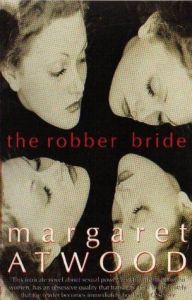 This is the second year of #MARM, hosted by Canadian bloggers extraordinaires Marcie of Buried in Print and Naomi of Consumed by Ink. This year they’re having a special The Handmaid’s Tale/The Testaments theme, but even if you’re avoiding the sequel, join us in reading one or more Atwood works of your choice. She has so much to choose from! Last year I read The Edible Woman and Surfacing. This year I’ve earmarked copies of the novel The Robber Bride (1993) and Moral Disorder (2006), a linked short story collection, both of which I got for free – the former from the free bookshop where I volunteer, and the latter from a neighbor who was giving it away.
Nonfiction November
I don’t usually participate in this challenge because nonfiction makes up at least 40% of my reading anyway, but last year I enjoyed putting together some fiction and nonfiction pairings and ‘being the expert’ on women’s religious memoirs, a subgenre I have a couple of books to add to this year. So I will probably end up doing at least one post. The full schedule is here.
Young Writer of the Year Award
Being on the shadow panel for the Sunday Times/PFD Young Writer of the Year Award was a highlight of 2017 for me. I was sad to not be able to attend any of the events last year. I’m excited for this year’s shadow panelists, a couple of whom are blogging friends (one I’ve met IRL), and I look forward to following along with the nominated books and attending the prize ceremony at the London Library on December 5th.
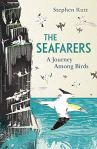
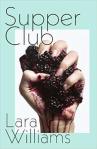 With any luck I will already have read at least one or two books from the shortlist, which is to be announced on November 3rd. I have my fingers crossed for Yara Rodrigues Fowler, Daisy Johnson, Elizabeth Macneal, Stephen Rutt and Lara Williams; I expect we may also see repeat appearances from one of the poets recognized by the Forward Prizes and Guy Gunaratne, the winner of the 2019 Dylan Thomas Prize.
Any reading plans for November? Will you be joining in with novellas, Margaret Atwood’s books or Nonfiction November?
 Bookish Beck = Rebecca Foster. American transplant to England. Freelance proofreader and book reviewer.
 Bookish Beck