Novellas in November Wrap-Up, with Mini-Reviews
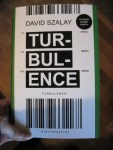 Novellas in November was a great success, helping me to finish more books in one month than I possibly ever have before. David Szalay’s Turbulence – a linked short story collection of tantalizing novella length – just arrived yesterday; I’ve started it but will be finishing it in December. The slim volume Fox 8 by George Saunders is also waiting for me at the library and I should be able to read it soon.
For this final installment I have 10 small books to feed back on: a mixture of fiction, graphic novels, nature books and memoirs.
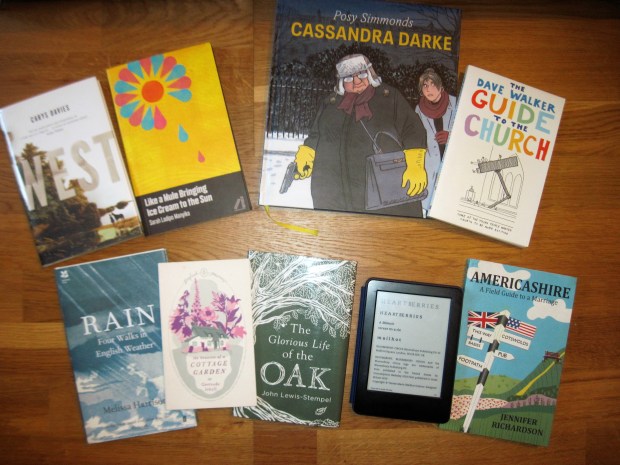
Fiction:
West by Carys Davies (2018)
[149 pages]
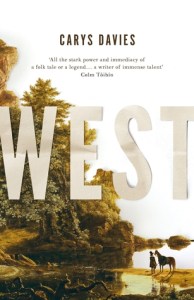 A gritty piece of historical fiction about a widowed mule breeder, Cyrus Bellman, who sets out from Pennsylvania to find traces of the giant creatures whose bones he hears have been discovered in Kentucky. He leaves his 10-year-old daughter, Bess, in the care of his sister, knowing he’ll be gone at least two years and may never return. Chapters cut between Cy’s harrowing journey in the company of a Native American guide, Old Woman From A Distance, and Bess’s home life, threatened by the unwanted attentions of their ranch hand neighbor and the town librarian. I don’t usually mind dark stories, but this was so bleak that I found it pretty unpleasant. The deus ex machina ending saved it somewhat.
Like a Mule Bringing Ice Cream to the Sun by Sarah Ladipo Manyika (2016)
[118 pages]
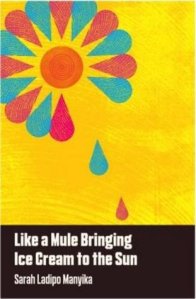 Morayo Da Silva is an unlikely heroine: soon to turn 75, she’s a former English professor from Nigeria who hopped between countries with her ambassador husband but now lives alone in San Francisco. The first-person narration switches around to give the perspectives of peripheral figures like a shopkeeper, a homeless woman, and Sunshine, the young friend who helps Morayo get her affairs in order after she has a fall and goes into a care home temporarily. These shifts in point of view can be abrupt, even mid-chapter, and are a little confusing. However, Morayo is a wonderful character, inspiring in her determination to live flamboyantly. I also sympathized with her love of books. I would happily have read twice as many pages about her adventures.
Graphic Novels:
Cassandra Darke by Posy Simmonds (2018)
[94 pages]
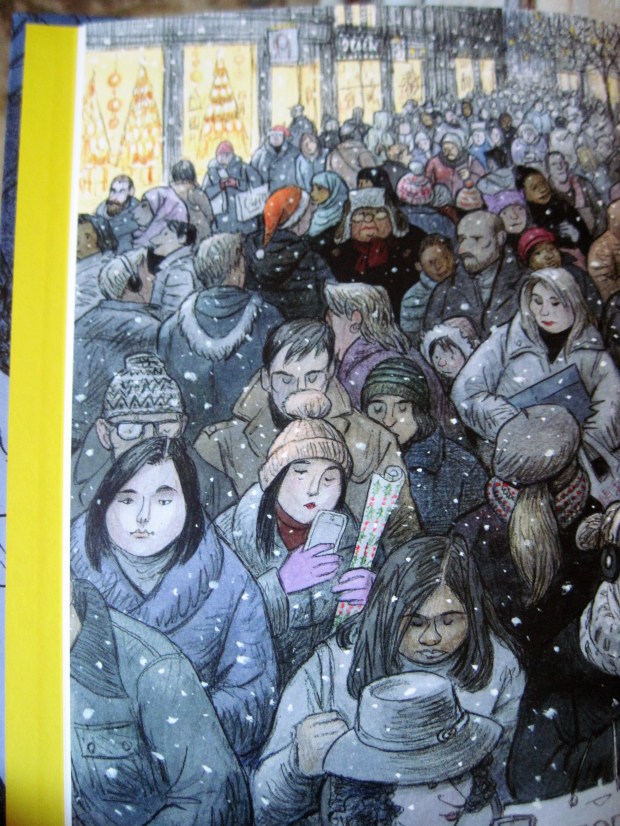
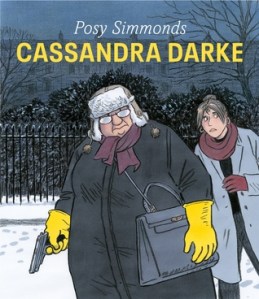 Simmonds would be great for graphic novel newbies: she writes proper, full-length stories, often loosely based on a classic plot, with lots of narration and dialogue alongside the pictures. Cassandra Darke is a 71-year-old art dealer who’s laid low by fraud allegations and then blindsided by a case of mistaken identity that brings her into contact with a couple of criminal rings. To start with she’s a Scrooge-like curmudgeon who doesn’t understand the big fuss about Christmas, but she gradually grows compassionate, especially after her own brief brush with poverty. Luckily, Simmonds doesn’t overdo the Christmas Carol comparisons. Much of the book is in appropriately somber colors, with occasional brightness, including the yellow endpapers and built-in bookmark.
The Dave Walker Guide to the Church by Dave Walker (2006)
[88 pages]
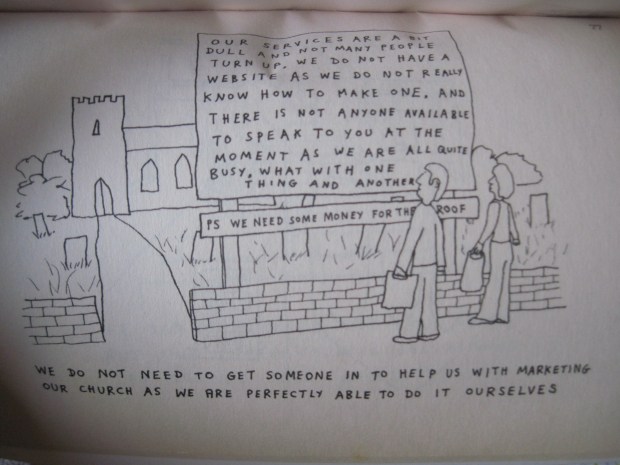
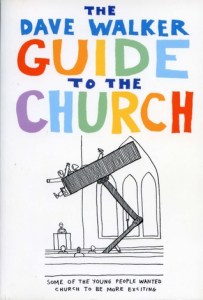 Most of these comics originally appeared in the Church Times, the official newspaper of the Church of England. No doubt you’ll get the most out of it if you’re familiar with Anglican churches or the like (Episcopalian or even Roman Catholic). My mother-in-law is a C of E vicar and we’ve attended a High Anglican church for the last two years, so I got many a good snort out of the book. Walker pokes fun at bureaucracy, silly traditions, closed-mindedness, and the oddities of church buildings and parishioners’ habits. My favorite spreads compare choirs and music groups on criteria like “ability to process in” and liken different church members to chess pieces to explain church politics.
Nature Books:
Rain: Four Walks in English Weather by Melissa Harrison (2016)
[100 pages]
 In the course of a year Harrison took four rainy walks, in different seasons and different parts of England. She intersperses her observations with facts and legends about the rain, quotes from historical weather guides and poems. It has the occasional nice line, but is overall an understated nature/travel book. A noteworthy moment is when she remembers scattering her mother’s ashes on a Dartmoor tor. I most liked the argument that it’s important to not just go out in good weather, but to adapt to nature in all its moods: “I can choose now to overcome the impulse for comfort and convenience that insulates us not only from the bad in life but from much of the good. I think we need the weather, in all its forms, to feel fully human.”
The Beauties of a Cottage Garden by Gertrude Jekyll (2009)
[88 pages]
 This mini-volume from Penguin’s English Journeys series feels like a bit of a cheat because it’s extracted from Wood and Garden (1899). Oh well. In short chapters Jekyll praises the variety of colors, smells and designs you’ll find in the average country garden, no matter how modest its size. She speaks of gardening as a lifelong learning process, humbly acknowledging that she’s no expert. “I hold that the best purpose of a garden is to give delight and to give refreshment of mind, to soothe, to refine, and to lift up the heart in a spirit of praise and thankfulness. … a garden is a grand teacher. It teaches patience and careful watchfulness; it teaches industry and thrift; above all, it teaches entire trust.”
The Glorious Life of the Oak by John Lewis-Stempel (2018)
[87 pages]
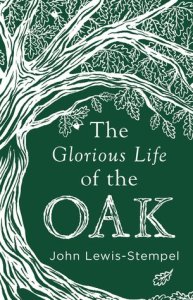
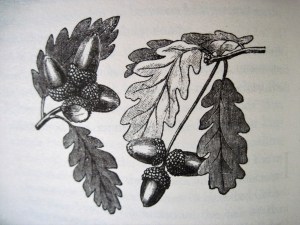 I didn’t enjoy this as much as the other Lewis-Stempel book I read this month, The Secret Life of the Owl. There’s a lot here about the role the oak has played in British history, such as in warships and cathedral roofs. Other topics are the oak’s appearance and function in different seasons, the use of acorns and oak leaves in cooking, and the myths and legends associated with the trees. I felt there was too much minimally relevant material added in to make up the page count, such as a list of Britain’s famous named oaks and long poems from the likes of John Clare and William Cowper. While Lewis-Stempel always has a piercing eye, I wonder if he shouldn’t be saving up his energies to write more substantial books.
General Nonfiction / Memoirs:
My Year by Roald Dahl (1993)
[64 pages]
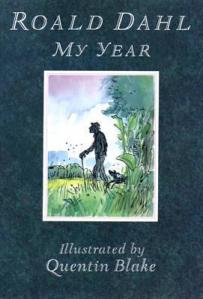 I spotted a copy in our Stamford Airbnb bedroom and read it over our two nights there. These short month-by-month essays were composed in the last year of Dahl’s life. Writing with children in mind, he remarks on what schoolkids will experience, whether a vacation or a holiday like Guy Fawkes night. But mostly he’s led by the seasons: the birds, trees and other natural phenomena he observed year after year from his home in Buckinghamshire. Dahl points out that he never lived in a city, so he chose to mark the passing of time chiefly by changes in the countryside. This is only really for diehard fans, but it’s a nice little book to have at the bedside. (Illustrated, as always, with whimsical Quentin Blake sketches.)
Heart Berries by Terese Marie Mailhot (2018)
[178 pages]
 Mailhot was raised on a First Nation reservation on an island off of British Columbia. She is wary of equating her family with Native stereotypes, but there’s no denying that her father was a drunk and ended up murdered. After a childhood of abuse and foster homes, Mailhot committed herself to a mental hospital for PTSD, bipolar II and an eating disorder. It was there that she started writing her story. Much of the book is addressed in the second person to her partner, who helped her move past a broken marriage and the loss of her older son to his father’s custody. Though I highlighted lots of aphoristic pronouncements, I had trouble connecting with the book as a whole: the way imprecise scenes blend into each other makes it hard to find a story line in the murk of miserable circumstances. A more accurate title would have been “Indian Condition” or “Indian Sick” (both used as chapter titles).
Americashire: A Field Guide to a Marriage by Jennifer Richardson (2013)
[151 pages]
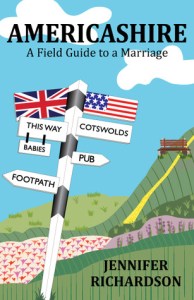 A memoir by an American woman married to a Brit and adjusting to English village life was always going to appeal to me. If you approach this as a set of comic essays on the annual rituals of rich toffs (summer fairs, auctions, horse racing, a hunt ball, a cattle market, etc.), it’s enjoyable enough. It’s when Richardson tries to be more serious, discussing her husband’s depression, their uncertainty over having children, and her possible MS, that the book falters. You can tell her editors kept badgering her to give the book a hook, and decided the maybe-baby theme was strongest. But I never sensed any real wrestling with the question. Not a bad book, but it lacks a clear enough idea of what it wants to be.
Total number of novellas read this month: 26
[not reviewed: In the Space between Moments: Finding Joy and Meaning in Medicine by Pranay Sinha –  ]
]
A few that didn’t take: The Optician of Lampedusa by Emma Jane Kirby, The Mussel Feast by Birgit Vanderbeke, Sea of Ink by Richard Weihe
 My overall favorite: The Gifts of the Body by Rebecca Brown
Runners-up: Surfacing by Margaret Atwood, How to See Nature by Paul Evans, Bodies of Water by V. H. Leslie, and Ghost Wall by Sarah Moss
The ones that got away from me:
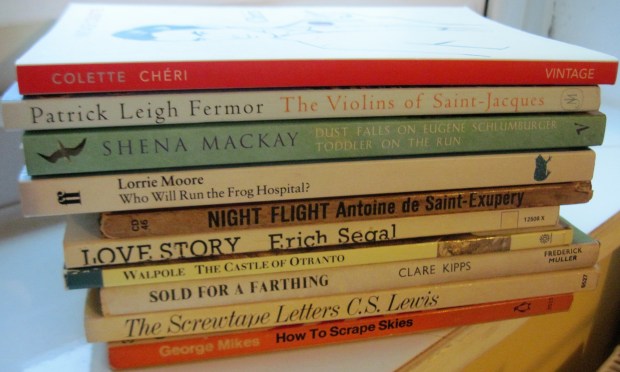
There’s always next year!
What’s the best novella you’ve read recently? Do you like the sound of any of the ones I read?
Blog Tour: Literary Landscapes, edited by John Sutherland
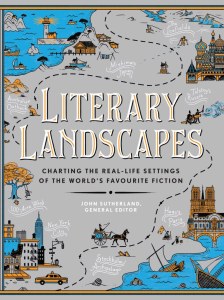 The sense of place can be a major factor in a book’s success – did you know there is a whole literary prize devoted to just this? (The Royal Society of Literature’s Ondaatje Prize, “for a distinguished work of fiction, non-fiction or poetry, evoking the spirit of a place.”) No matter when or where a story is set, an author can bring it to life through authentic details that appeal to all the senses, making you feel like you’re on Prince Edward Island or in the Gaudarrama Mountains even if you’ve never visited Atlantic Canada or central Spain. The 75 essays of Literary Landscapes, a follow-up volume to 2016’s celebrated Literary Wonderlands, illuminate the real-life settings of fiction from Jane Austen’s time to today. Maps, author and cover images, period and modern photographs, and other full-color illustrations abound.
Each essay serves as a compact introduction to a literary work, incorporating biographical information about the author, useful background and context on the book’s publication, and observations on the geographical location as it is presented in the story – often through a set of direct quotations. (Because each work is considered as a whole, you may come across spoilers, so keep that in mind before you set out to read an essay about a classic you haven’t read but still intend to.) The authors profiled range from Mark Twain to Yukio Mishima and from Willa Cather to Elena Ferrante. A few of the world’s great cities appear in multiple essays, though New York City as variously depicted by Edith Wharton, Jay McInerney and Francis Spufford is so different as to be almost unrecognizable as the same place.
One of my favorite pieces is on Charles Dickens’s Bleak House. “Dickens was not interested in writing a literary tourist’s guide,” it explains; “He was using the city as a metaphor for how the human condition could, unattended, go wrong.” I also particularly enjoyed those on Thomas Hardy’s The Return of the Native and Robert Louis Stevenson’s Kidnapped. The fact that I used to live in Woking gave me a special appreciation for the essay on H. G. Wells’s The War of the Worlds, “a novel that takes the known landscape and, brilliantly, estranges it.” The two novels I’ve been most inspired to read are Thomas Wharton’s Icefields (1995; set in Jasper, Alberta) and Kate Grenville’s The Secret River (2005; set in New South Wales).

The essays vary subtly in terms of length and depth, with some focusing on plot and themes and others thinking more about the author’s experiences and geographical referents. They were contributed by academics, writers and critics, some of whom were familiar names for me – including Nicholas Lezard, Robert Macfarlane, Laura Miller, Tim Parks and Adam Roberts. My main gripe about the book would be that the individual essays have no bylines, so to find out who wrote a certain one you have to flick to the back and skim through all the contributor biographies until you spot the book in question. There are also a few more typos than I tend to expect from a finished book from a traditional press (e.g. “Lady Deadlock” in the Bleak House essay!). Still, it is a beautifully produced, richly informative tome that should make it onto many a Christmas wish list this year; it would make an especially suitable gift for a young person heading off to study English at university. It’s one to have for reference and dip into when you want to be inspired to discover a new place via an armchair visit.
Literary Landscapes will be published by Modern Books on Thursday, October 25th. My thanks to Alison Menzies for arranging my free copy for review.
Recent Nonfiction Reads, in 200 Words Each: Black, Fee, Gaw
I’ve let months pass between receiving these books from the kindly publishers and following through with a review, so in an attempt to clear the decks I’m putting up just a short response to each, along with some favorite quotes.
All that Remains: A Life in Death by Sue Black
 Black, a world-leading forensic anthropologist, was part of the war crimes investigation in Kosovo and the recovery effort in Thailand after the 2004 tsunami. She is frequently called into trials to give evidence, has advised the U.K. government on disaster preparedness, and is a co-author of the textbook Developmental Juvenile Osteology (2000). Whether working in a butcher’s shop as a teenager or exploring a cadaver for an anatomy class at the University of Aberdeen, she’s always been comfortable with death. “I never had any desire to work with the living,” she confesses; “The dead are much more predictable and co-operative.”
The book considers death in its clinical and personal aspects: the seven stages of postmortem alteration and the challenges of identifying the sex and age of remains; versus her own experiences with losing her grandmother, uncle and parents. Black wants her skeleton to go to Dundee University’s teaching collection. It doesn’t creep her out to think of that, no more than it did to meet her future cadaver, a matter-of-fact, curious elderly gentleman named Arthur. My favorite chapter was on Kosovo; elsewhere I found the mixture of science and memoir slightly off, and the voice never fully drew me in.
Favorite line: “Perhaps forensic anthropologists are the sin-eaters of our day, addressing the unpleasant and unimaginable so that others don’t have to.”
My rating: 
All that Remains was published by Doubleday on April 19th. My thanks to the publisher for the free copy for review.
Places I Stopped on the Way Home: A Memoir of Chaos and Grace by Meg Fee
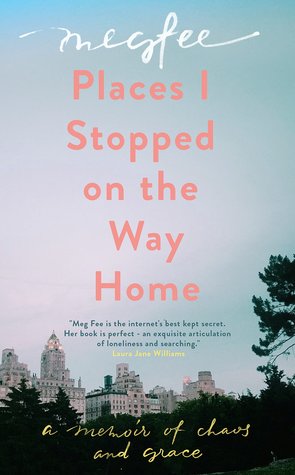 Fee came to New York City to study drama at Julliard. Her short essays, most of them titled after New York locations (plus a few set further afield), are about the uncertainty of her twenties: falling in and out of love, having an eating disorder, and searching for her purpose. She calls herself “a mess of disparate wants, a small universe in bloom.” New York is where she has an awful job she hates, can’t get the man she’s in love with to really notice her, and hops between terrible apartments – including one with bedbugs, the subject of my favorite essay – and yet the City continues to lure her with its endless opportunities.
I think this book could mean a lot to women who are younger than me or have had experiences similar to the author’s. I found the essays slightly repetitive, and rather unkindly wondered what this privileged young woman had to whine about. It’s got the same American, generically spiritual self-help vibe that you get from authors like Brené Brown and Elizabeth Gilbert. Despite her loneliness, Fee retains a romantic view of things, and the way she writes about her crushes and boyfriends never truly connected with me.
Some favorite lines:
“Writing felt like wrangling storm clouds, which is to say, impossible. But so did life. Writing became a way to make peace with that which was flawed.”
“I have let go of the idea of permanency and roots and What Comes Next.”
My rating:
Places I Stopped on the Way Home was published by Icon Books on May 3rd. My thanks to the publisher for the free copy for review.
The Pull of the River: A journey into the wild and watery heart of Britain by Matt Gaw
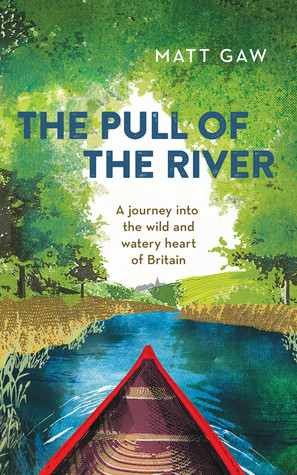 A watery travelogue in the same vein as works by Roger Deakin and Alys Fowler, this jolly yet reflective book traces Gaw’s canoe trips down Britain’s rivers. His vessel was “the Pipe,” a red canoe built by his friend James Treadaway, who also served as his companion for many of the jaunts. Starting with his local river, the Waveney in East Anglia, and finishing with Scotland’s Great Glen Way, the quest was a way of (re)discovering his country by sensing the currents of history and escaping to the edge of danger.
Access issues, outdoor toileting, getting stuck on mudflats, and going under in the winter – it wasn’t always a comfortable method of travel. But Gaw’s expressive writing renders even rubbish- and sewage-strewn landscapes beautiful in their own way: “grim bunting made from discarded bags of dog poo,” “a savannah of quivering, moussey mud” and “cormorants hunched together like sinister penguins, some holding ragged wings to the wind in taxidermic poses.”
My favorite chapters were about pollution and invasive species, as seen at the Lark, and about the beaver reintroduction project in Devon (we have friends who live near it). I’m rooting for this to make next year’s Wainwright Prize longlist.
A favorite passage:
“I feel like I’ve shed the rust gathered from being landlocked and lazy. The habits and responsibilities of modern life can be hard to shake off, the white noise difficult to muffle. But the water has returned me to my senses. I’ve been reborn in a baptism of the Waveney [et al.]”
My rating: 
The Pull of the River was published by Elliott & Thompson on April 5th. My thanks to the publisher for the free copy for review.
Have you read any stand-out nonfiction recently?
Calypso by David Sedaris
“Why Aren’t You Laughing?” is one of the essay titles in Calypso, David Sedaris’s tenth book; it’s an ironically appropriate question you might ask of the whole book. It’s not that this isn’t funny – it is, very much so, in places – but that there’s a melancholy aura I hadn’t sensed in his work before. “Now We Are Five,” the second piece, sets the tone, explaining that Tiffany, Sedaris’s youngest sister, committed suicide in 2013, aged 49. He hadn’t spoken to her for the eight years prior to that. The siblings learn that she did it with pills plus a plastic bag over her head. These facts are just thrown out there for us: there’s no getting around how horrific it all was, but Sedaris doesn’t do much obvious hand-wringing or soul-searching.

Tiffany’s suicide is an occasional point of reference in these 21 short essays, as is their mother’s alcoholism and death from cancer. The remaining middle-aged family members – and their 90-something dad – make an effort to stay close, chiefly through meet-ups at the beach cottage Sedaris and his partner, Hugh Hamrick, buy in Emerald Isle, North Carolina. They name the place Sea Section, and it’s the setting for about a third of the book. Two-thirds of these essays were published previously, which entails some repetition, especially in the setup of each piece. I wondered if an adjustment to the sequencing and some editing out of repeated details could have made the Emerald Isle material flow together a bit better.
Sedaris’s trouble communicating with his father, a thrift-conscious hoarder, is one major theme of the book. “We’re like a pair of bad trapeze artists, reaching for each other’s hands and missing every time,” he writes. Their relationship mostly consists of trying to avoid talk of politics lest his father spout pro-Trump propaganda, and his father nagging him about his health. Despite advancing age, Sedaris’s medical crises are trivial and turned to humorous effect: broken ribs from falling off a ladder, an awful stomach virus that provides scatological background to a reading tour, and a fatty tumor he decides to freeze and feed to the snapping turtles the next time he’s on Emerald Isle.* O-kaaaay.
There are echoes of Me Talk Pretty One Day and When You Are Engulfed in Flames in the delight in languages and travel. “Your English Is So Good” skewers the annoyances of small talk and jargon, especially as used by waitstaff and shop assistants. Another essay is about what people in various countries shout when they get cut off in traffic – unsurprisingly, this one is rather foul-mouthed. Sedaris gets addicted to clothes shopping in Tokyo and obsesses over achieving his daily Fitbit steps goal while litter picking near his home in West Sussex. Some of my favorite essays were “A Modest Proposal,” reflecting on the Supreme Court’s legalization of gay marriage; “Untamed,” about feeding a local fox; and “Boo-Hooey,” in which he scoffs at ghost stories yet wonders if his dead mother visits him in dreams.
This collection doesn’t quite live up to the two I’ve already mentioned, and there were moments when I was put off by the author’s unthinking adherence to a luxurious lifestyle, but this is a solid book you wouldn’t have to be an existing fan to enjoy.
Favorite lines:
“The battle for gay marriage was, in essence, the fight to be as square as straight people, to say things like ‘My husband tells me that the new Spicy Chipotle Burger they’ve got at Bennigan’s is awesome!’”
“We’re not pessimists, exactly, but in late middle age, when you envision your life ten years down the line, you’re more likely to see a bedpan than a Tony Award.”
My rating:
*The topic of the title essay. He’s affronted when he learns that the local kids know about ‘his’ snapping turtle and even have a name for it – he likens this to finding out that your cat is being secretly fed by the neighbors, who call it “Calypso.” It’s an obscure reference, definitely; then again, this is the same man who titled books Dress Your Family in Corduroy and Denim and Let’s Explore Diabetes with Owls. The cover design even has some slight relevance within the book: “Calypso” mentions an old friend he meets up with on an American book tour, Janet, and her woodgrain art.
Calypso comes out today, July 5th, in the UK from Little, Brown. It was released in the USA on May 29th. My thanks to the publisher for sending a free copy for review.
My Most Anticipated Releases of the Second Half of 2018
Here are 30 books that are on my radar for the months of July through November (I haven’t heard about any December titles yet), plus one bonus book that I’ve already read. This is by no means a full inventory of what’s coming out, or even of what I have available through NetGalley and Edelweiss; instead, think of it as a preview of the books I actually intend to read, in release date order. The quoted descriptions are from the publisher blurbs on Goodreads. If I already have access to the book in some way, I’ve noted that.
The first half of the year seemed to be all about plants. This time around I have plenty of memoirs, some medical and some bookish; birds and watery imagery; and some religious and philosophical themes.
[By the way, here’s how I did with my most anticipated releases of the first half of the year:
- 17 out of 30 read; of those 8 were at least somewhat disappointing (d’oh!)
- 5 unfinished
- 1 currently reading
- 1 lost interest in
- 1 I still intend to read
- 5 I didn’t manage to find]
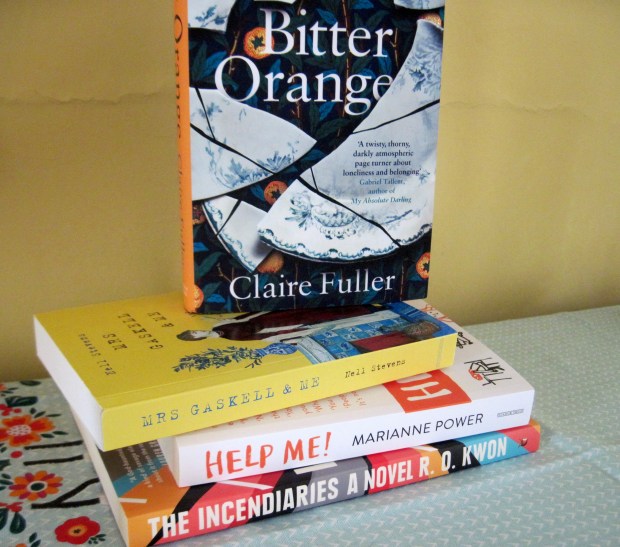
The upcoming titles I happen to own in print.
July
 No One Tells You This: A Memoir by Glynnis MacNicol [July 10, Simon & Schuster]: “If the story doesn’t end with marriage or a child, what then? This question plagued Glynnis MacNicol on the eve of her 40th birthday. … Over the course of her fortieth year, which this memoir chronicles, Glynnis embarks on a revealing journey of self-discovery that continually contradicts everything she’d been led to expect.” (NetGalley download)
 The Lost Chapters: Finding Recovery and Renewal One Book at a Time by Leslie Schwartz [July 10, Blue Rider Press]: “Leslie Schwartz’s powerful, skillfully woven memoir of redemption and reading, as told through the list of books she read as she served a 90-day jail sentence. … Incarceration might have ruined her, if not for the stories that comforted her while she was locked up.”
 The Bumblebee Flies Anyway: Gardening and Surviving Against the Odds by Kate Bradbury [July 17, Bloomsbury Wildlife]: “Finding herself in a new home in Brighton, Kate Bradbury sets about transforming her decked, barren backyard into a beautiful wildlife garden. She documents the unbuttoning of the earth and the rebirth of the garden, the rewilding of a tiny urban space.”
 Crux: A Cross-Border Memoir by Jean Guerrero [July 17, One World]: “A daughter’s quest to find, understand, and save her charismatic, troubled, and elusive father, a self-mythologizing Mexican immigrant who travels across continents—and across the borders between imagination and reality; and spirituality and insanity—fleeing real and invented persecutors.”
 The Incendiaries by R.O. Kwon [July 31, Riverhead]: “A shocking novel of violence, love, faith, and loss, as a young woman at an elite American university is drawn into acts of domestic terrorism by a cult tied to North Korea. … The Incendiaries is a fractured love story and a brilliant examination of the minds of extremist terrorists, and of what can happen to people who lose what they love most.” (Print ARC for blog review at UK release on Sept. 6 [Virago])
August
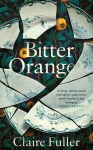 Bitter Orange by Claire Fuller [Aug. 2, Penguin Fig Tree]: I’ve loved Fuller’s two previous novels. This one is described as “a suspenseful story about deception, sexual obsession and atonement” set in 1969 in a run-down English country house. I don’t need to know any more than that; I have no doubt it’ll be brilliant in an Iris Murdoch/Gothic way. (Print ARC for blog review on release date)
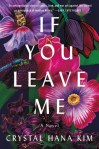 If You Leave Me by Crystal Hana Kim [Aug. 7, William Morrow]: “An emotionally riveting debut novel about war, family, and forbidden love—the unforgettable saga of two ill-fated lovers in Korea and the heartbreaking choices they’re forced to make in the years surrounding the civil war that continues to haunt us today.” This year’s answer to Pachinko? And another botanical cover to boot! (Edelweiss download)
 A River of Stars by Vanessa Hua [Aug. 14, Ballantine Books]: “In a powerful debut novel about motherhood, immigration, and identity, a pregnant Chinese woman makes her way to California and stakes a claim to the American dream. … an entertaining, wildly unpredictable adventure, told with empathy and wit” Sounds like The Leavers, which is a Very Good Thing.
 The Shakespeare Requirement by Julie Schumacher [Aug. 14, Doubleday]: A sequel to the very funny epistolary novel Dear Committee Members! “Now is the fall of his discontent, as Jason Fitger, newly appointed chair of the English Department of Payne University, takes aim against a sea of troubles, personal and institutional.” (Edelweiss download)
 Gross Anatomy: Dispatches from the Front (and Back) by Mara Altman [Aug. 21, G.P. Putnam’s Sons]: “By using a combination of personal anecdotes and fascinating research, Gross Anatomy holds up a magnifying glass to our beliefs, practices, biases, and body parts and shows us the naked truth—that there is greatness in our grossness.” (PDF from publisher; to review for GLAMOUR online)
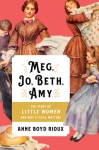 Meg, Jo, Beth, Amy: The Story of Little Women and Why It Still Matters by Anne Boyd Rioux [Aug. 21, W. W. Norton Company]: This is the bonus one I’ve already read, as part of my research for my Literary Hub article on rereading Little Women at its 150th anniversary. (That’s also the occasion for this charming book.) Rioux unearths Little Women’s origins in Alcott family history, but also traces its influence through to the present day. She also makes a strong feminist case for it. My short Goodreads review is here. (Edelweiss download)
September
 Lake Success by Gary Shteyngart [Sept. 4, Random House]: I read his memoir but am yet to try his fiction. “When his dream of the perfect marriage, the perfect son, and the perfect life implodes, a Wall Street millionaire takes a cross-country bus trip in search of his college sweetheart and ideals of youth. … [a] biting, brilliant, emotionally resonant novel very much of our times.” (Edelweiss download; for Pittsburgh Post-Gazette review)
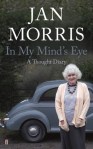 In My Mind’s Eye: A Thought Diary by Jan Morris [Sept. 6, Faber & Faber]: One of my most admired writers. “A collection of diary pieces that Jan Morris wrote for the Financial Times over the course of 2017.” I have never before in my life kept a diary of my thoughts, and here at the start of my ninth decade, having for the moment nothing much else to write, I am having a go at it. Good luck to me.
 Help Me!: One Woman’s Quest to Find Out if Self-Help Really Can Change Her Life by Marianne Power [Sept. 6, Picador]: “[F]or a year she vowed to test a book a month, following its advice to the letter, taking the surest road she knew to a perfect Marianne. As her year-long plan turned into a demented roller coaster where everything she knew was turned upside down, she found herself confronted with a different question: Self-help can change your life, but is it for the better?” (Print ARC)
 Normal People by Sally Rooney [Sept. 6, Faber & Faber]: Much anticipated follow-up to Conversations with Friends. “Connell and Marianne both grow up in the same town in rural Ireland. The similarities end there; they are from very different worlds. But they both get places to study at university in Dublin, and a connection that has grown between them despite the social tangle of school lasts long into the following years.”
 Mrs. Gaskell & Me by Nell Stevens [Sept. 6, Picador]: “In 2013, Nell Stevens is embarking on her PhD … and falling drastically in love with a man who lives in another city. As Nell chases her heart around the world, and as Mrs. Gaskell forms the greatest connection of her life, these two women, though centuries apart, are drawn together.” I was lukewarm on her previous book, Bleaker House, but I couldn’t resist the Victorian theme of this one! (Print ARC to review for Shiny New Books)
 Heart: A History by Sandeep Jauhar [Sept. 18, Farrar, Straus and Giroux]: “Deftly alternating between key historical episodes and his own work, Jauhar tells the colorful and little-known story of the doctors who risked their careers and the patients who risked their lives to know and heal our most vital organ. … Affecting, engaging, and beautifully written.” (Edelweiss download)
 To the Moon and Back: A Childhood under the Influence by Lisa Kohn [Sept. 18, Heliotrope Books]: “Lisa was raised as a ‘Moonie’—a member of the Unification Church, founded by self-appointed Messiah, Reverend Sun Myung Moon. … Told with spirited candor, [this] reveals how one can leave behind such absurdity and horror and create a life of intention and joy.”
 Ghost Wall by Sarah Moss [Sept. 20, Granta]: I’ve read Moss’s complete (non-academic) oeuvre; I’d read her on any topic. This novella sounds rather similar to her first book, Cold Earth, which I read recently. “Teenage Silvie is living in a remote Northumberland camp as an exercise in experimental archaeology. … Behind and ahead of Silvie’s narrative is the story of a bog girl, a sacrifice, a woman killed by those closest to her, and as the hot summer builds to a terrifying climax, Silvie and the Bog girl are in ever more terrifying proximity.” (NetGalley download)
 Time’s Convert (All Souls Universe #1) by Deborah Harkness [Sept. 25, Viking]: I was a sucker for Harkness’s A Discovery of Witches and its sequels, much to my surprise. (The thinking girl’s Twilight, you see. I don’t otherwise read fantasy.) Set between the American Revolution and contemporary London, this fills in the backstory for some of the vampire characters.
October
 All You Can Ever Know: A Memoir by Nicole Chung [Oct. 2, Catapult]: “Nicole Chung was born severely premature, placed for adoption by her Korean parents, and raised by a white family in a sheltered Oregon town. … With warmth, candor, and startling insight, Chung tells of her search for the people who gave her up, which coincided with the birth of her own child.” (Edelweiss download)
 Melmoth by Sarah Perry [Oct. 2, Serpent’s Tail]: Gothic fantasy / historical thriller? Not entirely sure. I just know that it’s the follow-up by the author of The Essex Serpent. (I choose to forget that her first novel exists.) Comes recommended by Eleanor Franzen and Simon Savidge, among others. (Edelweiss download)
 The Ravenmaster: Life with the Ravens at the Tower of London by Christopher Skaife [Oct. 2, 4th Estate]: More suitably Gothic pre-Halloween fare! “Legend has it that if the Tower of London’s ravens should perish or be lost, the Crown and kingdom will fall. … [A]fter decades of serving the Queen, Yeoman Warder Christopher Skaife took on the added responsibility of caring for these infamous birds.” I briefly met the author when he accompanied Lindsey Fitzharris to the Wellcome Book Prize ceremony.
 I Am Dynamite!: A Life of Friedrich Nietzsche by Sue Prideaux [Oct. 4, Faber & Faber]: “Friedrich Nietzsche’s work forms the bedrock of our contemporary thought, and yet a shroud of misunderstanding surrounds the philosopher behind these proclamations. The time is right for a new take on Nietzsche’s extraordinary life, whose importance as a thinker rivals that of Freud or Marx.” (For a possible TLS review?)
 Almost Everything: Notes on Hope by Anne Lamott [Oct. 16, Riverhead]: I haven’t been too impressed with Lamott’s recent stuff, but I’ll still read anything she publishes. “In this profound and funny book, Lamott calls for each of us to rediscover the nuggets of hope and wisdom that are buried within us that can make life sweeter than we ever imagined. … Almost Everything pinpoints these moments of insight as it shines an encouraging light forward.”
 The Library Book by Susan Orlean [Oct. 16, Simon & Schuster]: The story of a devastating fire at Los Angeles Public Library in April 1986. “Investigators descended on the scene, but over 30 years later, the mystery remains: Did someone purposefully set fire to the library—and if so, who? Weaving her life-long love of books and reading with the fascinating history of libraries and the sometimes-eccentric characters who run them, … Orlean presents a mesmerizing and uniquely compelling story as only she can.” (Edelweiss download)
 Unsheltered by Barbara Kingsolver [Oct. 18, Faber & Faber]: Kingsolver is another author I’d read anything by. “[T]he story of two families, in two centuries, who live at the corner of Sixth and Plum, as they navigate the challenges of surviving a world in the throes of major cultural shifts.” 1880s vs. today, with themes of science and utopianism – I’m excited! (Edelweiss download)
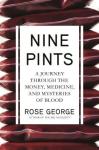 Nine Pints: A Journey through the Money, Medicine, and Mysteries of Blood by Rose George [Oct. 23, Metropolitan Books]: “Rose George, author of The Big Necessity [on human waste], is renowned for her intrepid work on topics that are invisible but vitally important. In Nine Pints, she takes us from ancient practices of bloodletting to modern ‘hemovigilance’ teams that track blood-borne diseases.”
November
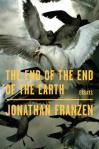 The End of the End of the Earth: Essays by Jonathan Franzen [Nov. 13, Farrar, Straus and Giroux]: “[G]athers essays and speeches written mostly in the past five years … Whether exploring his complex relationship with his uncle, recounting his young adulthood in New York, or offering an illuminating look at the global seabird crisis, these pieces contain all the wit and disabused realism that we’ve come to expect from Franzen.”
 A River Could Be a Tree by Angela Himsel [Nov. 13, Fig Tree Books]: “How does a woman who grew up in rural Indiana as a fundamentalist Christian end up a practicing Jew in New York? … Ultimately, the connection to God she so relentlessly pursued was found in the most unexpected place: a mikvah on Manhattan’s Upper West Side. This devout Christian Midwesterner found her own form of salvation—as a practicing Jewish woman.”
 Becoming by Michelle Obama [Nov. 13, Crown]: “In her memoir, a work of deep reflection and mesmerizing storytelling, Michelle Obama invites readers into her world, chronicling the experiences that have shaped her—from her childhood on the South Side of Chicago to her years as an executive balancing the demands of motherhood and work, to her time spent at the world’s most famous address.”
Which of these do you want to read, too? What other upcoming 2018 titles are you looking forward to?
Five Perfect Winter Reads
When possible I enjoy reading with the seasons. As the holidays approached last year I picked out a pile of wintry reads that would see me through the dark, cold days of January. I’ve had a chance to read five of them so far, and give review extracts below. I may report back later on in the winter about a few books I plan to read with “snow” in the title.

In the Grip of Winter by Colin Dann
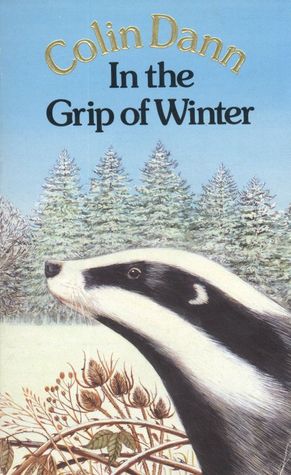 In this second book of the Farthing Wood series, the animals endure a harsh winter in their new home, the White Deer Park. When Badger falls down a slope and injures his leg, he’s nursed back to health at the Warden’s cottage, where Ginger Cat tempts him to join in a life of comfort and plenty. Meanwhile, Fox, Tawny Owl and the others are near starvation, and resort to leaving the park and stealing food from farms and rubbish bins. They have to band together and use their cunning to survive. This was a sweet book that reminded me of my childhood love of anthropomorphized animal stories (like Watership Down and the Redwall series). I doubt I’ll read another from the series, but this was a quaint read for the season.
My husband received this book for free from his school for some reason. Even early on his tastes turned towards wildlife. [One annoyance: the author always referred to Badger’s “set” instead of his “sett”; although it appears this may actually be a permissible variant, it wasn’t cool with me!]


Favorite wintry passage:
“‘Every winter is hard for some,’ Badger answered. ‘The weakest among us always suffer the most. The small creatures: the mice, the shrews, the voles and, particularly, the small birds – every winter takes its toll [on] them. But yes – I sense that this winter will be one to reckon with. There’s something in that wind…’”
My rating:
This Cold Heaven: Seven Seasons in Greenland by Gretel Ehrlich
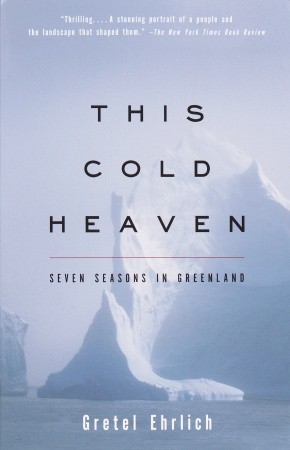 Once a year or so I encounter a book that’s so flawlessly written you could pick out just about any sentence and marvel at its construction. That’s certainly the case here. I never want to go to Greenland; English winters are quite dark and cold enough for me, and I don’t know if I could stomach seal meat at all, let alone for most meals and often raw. But that’s okay: I don’t need to book a flight to Qaanaaq, because through reading this I’ve already been in Greenland in every season, and I thoroughly enjoyed my armchair trek. Impressively, Ehrlich is always describing the same sorts of scenery, and yet every time finds a fresh way to write about ice and sun glare and frigid temperatures. I’ll be looking into her other books for sure.
Favorite wintry passage:
“The ice cap itself was a siren singing me back to Greenland, its walls of blue sapphire and sheer immensity always beguiling. Part jewel, part eye, part lighthouse, part recumbent monolith, the ice is a bright spot on the upper tier of the globe where the world’s purse strings have been pulled tight, nudging the tops of three continents together. Summers, it burns in the sun, and in the dark it hoards moonlight.”
My rating:
Further reading on Greenland: A Wilder Time: Notes from a Geologist at the Edge of the Greenland Ice by William E. Glassley (see my Foreword review) and The Prophets of Eternal Fjord by Kim Leine, an epic novel about an unconventional priest, set in late-eighteenth-century Denmark and Greenland (see my Nudge review). Also Sinéad Morrissey’s multi-part poem “Whitelessness.” You can read the first stanza of it here.
The Short Day Dying by Peter Hobbs
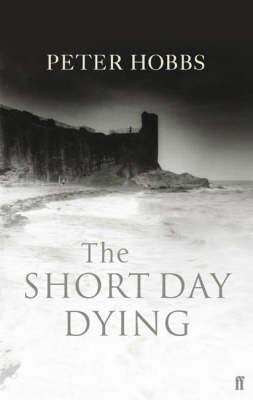 This short novel from 2005 deserves to be better known. It reminded me of Days Without End and On the Black Hill, but most of all of Francis Kilvert’s diary, perhaps as voiced by a rustic from Poldark. We journey through 1870 with Charles Wenmoth, a twenty-seven-year-old blacksmith’s apprentice and Methodist lay preacher in Cornwall mining country. Very little happens; the focus is on atmosphere and voice. The major struggle is with his melancholy spirit, which causes him to doubt his salvation. As winter circles round, the days grow shorter just as he senses life growing shorter. The short chapters are like undated diary entries (apparently based on the author’s great-great-grandfather’s); the sentences are almost completely unpunctuated, which at first had me twitching for my pencil to add commas to the run-on sentences, but eventually I gave myself over to the flow.
Favorite wintry passage:
“It is a shame we cannot stay children for ever and remain blind to the slow death of the land. How different it will all be in a few months the bare trees revealed as dark gnarled bodies. Something inside them though lives through the yearly famine and they always find new colour. I trust it is the same for us all.”
My rating:
Winter by Karl Ove Knausgaard
 This is my favorite of the three Knausgaard books I’ve read so far, and miles better than his Autumn. These short essays successfully evoke the sensations of winter and the conflicting emotions elicited by family life and childhood memories. The series is, loosely speaking, a set of instruction manuals for his unborn daughter, who is born a month premature in the course of this volume. So in the first book he starts with the basics of bodily existence – orifices, bodily fluids and clothing – and now he’s moving on to slightly more advanced but still everyday things she’ll encounter, like coins, stuffed animals, a messy house, toothbrushes, and the moon. I’ll see out this series, and see afterwards if I have the nerve to return to My Struggle.
Favorite wintry passage:
“winter not only muffles some sounds and intensifies others, it also has sounds that are entirely its own, unique to the season, and some of them are among the most beautiful of all. The low boom of ice-covered waters as they freeze, for instance, which can be heard on perfectly clear days or nights when the cold deepens, and which has something menacing or mighty about it, since it isn’t connected to an visible movement”
My rating:
Available Light by Marge Piercy
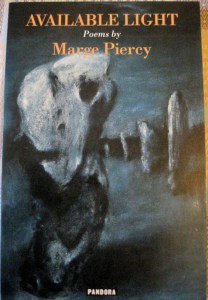 Many poetry volumes get a middling rating from me because some of the poems are memorable but others do nothing for me. This is on the longer side for a collection at 120+ pages, but only a handful of its poems fell flat. The subjects are diverse: travels in Europe (my cover depicts the Avebury stone circle in the gloom), menstruation, identifying as a Jew as well as a feminist, scattering her father’s ashes, the stresses of daily life, and being in love. The title poem, which appears first, has a slightly melancholy tone with its focus on the short days of winter, but the poet defiantly asserts meaning despite the mood: “Even the dead of winter: it seethes with more / than I can ever live to name and speak.” Piercy was a great discovery, and I’ll be trying lots more of her books from various genres.
Favorite wintry passage:
(from “Available light”)
In winter the light is red and short.
The sun hangs its wizened rosehip in the oaks.
By midafternoon night is folding in.
The ground is locked against us like a door.
Yet faces shine so the eyes stretch for them
and tracks in the snow are etched, calligraphy
My rating:
(And one book that didn’t quite work for me; I ended up abandoning it at 14%.
 The Bear and the Nightingale by Katherine Arden: Some striking turns of phrase, an enchanting wintry atmosphere … but a little Disney-fied for me. I got this free for Kindle so may come back to it at some point.
Favorite wintry passage:
“The years slipped by like leaves. …The clouds lay like wet wool above the trees.”)
Have you read any wintry books this year?
Books in Brief: Five I Loved Recently
Here are mini-reviews of five books I loved recently: two I originally reviewed for other websites and three stellar library reads; three works of historical fiction and two nonfiction books.
Known and Strange Things: Essays
By Teju Cole
 This collects 55 short pieces under three headings: literature, visual arts, and travel. Alongside straightforward book reviews are essays in which Cole engages with his literary heroes. A 400-page book of disparate essays is a hard ask, and even photography aficionados may struggle through the long middle section. All the same, patience is rewarded by Part III, “Being There,” in which he deftly blends memoir and travelogue. Again and again he reflects on displacement and ambiguity. Born in Michigan but raised in Nigeria, Cole returned to the States for college. Though erudite and wide-ranging, these essays are not quite as successful as, say, Julian Barnes’s or Geoff Dyer’s in making any and every topic interesting to laymen. Still, Cole proves himself a modern Renaissance man, interweaving experience and opinion in rigorous yet conversational pieces that illuminate the arts. (See my full review on the Pittsburgh Post-Gazette website.)
Winter
By Christopher Nicholson
 A perfect novel about a few months of Thomas Hardy’s later life. On the surface it’s the story of a rather odd love triangle: the octogenarian Hardy was infatuated with Gertrude Bugler, a local Dorset actress who had agreed to play his Tess on the London stage; his neurotic second wife, Florence, got wind of his feelings and jealously decided to sabotage Gertie. Underneath, I found this to be a deeply moving book about fear – of death, but also of not having lived the way you wanted and meant to. The perspective moves between Florence and Gertie in the first person and an omniscient third-person narrator. Chapters 1, 6 and 8, in particular, are a pitch-perfect pastiche of Hardy’s style. A bleak country winter is the perfect setting for a story of personal decay and a marriage grown cold. This brought back vivid memories of my visit to Hardy’s house in 2004 and coincided with my own vision of who Hardy was.
The Complete Maus
By Art Spiegelman
 The only graphic novel to win the Pulitzer Prize, this brings the Holocaust home in a fresh way. Like Animal Farm, it uses the conceit of various animal associations: Jews are mice, Poles are pigs, Nazis are cats, and Americans are dogs. Spiegelman draws what, from a distance of decades, his father Vladek remembers about his almost unbelievable series of escapes, including time in Auschwitz. Spiegelman gives the book an extra dimension by including his 1970s/80s recording sessions with his father as a framing story for most chapters. The narration is thus in Vladek’s own broken English, and we see how exasperating Spiegelman finds him – for pinching pennies and being racist against blacks, for instance – even as he’s in awe of his story. You can see how this paved the way for comic artists like Roz Chast and Alison Bechdel. I recommend it to absolutely anyone, graphic novel fan or no.
Golden Hill
By Francis Spufford
 Bawdy, witty, vivid historical fiction; simply brilliant. You’ll never doubt for a second that you are in 1746 New York – an English colony with a heavy Dutch influence, and slavery still the standard. The novel opens suddenly as twenty-four-year-old Richard Smith arrives from London with a promissory note for £1000. He won’t explain how he came by the money or what he intends to do with it, but the order seems legitimate. This puts the merchant Mr. Lovell in rather a bind, because that kind of cash simply can’t be come by. Before he can finally get his money, Smith will fall in and out of love, fight a duel, and be arrested twice – all within the space of two months. In a book full of fantastic scenes, Smith and Septimus’ narrow escape via the rooftops on Pope Day stands out. The finest thing about the novel, though, is the authentic eighteenth-century diction. Spufford writes very good creative nonfiction, with five books to date, but with his debut novel he’s hit a home run.
Resolution
By A.N. Wilson
 From a prolific author of both fiction and nonfiction, a meticulously researched novel about George Forster, one of the naturalists on Captain Cook’s second voyage. Rather than giving a simple chronological account of the journey and its aftermath, Wilson employs a sophisticated structure that alternates vignettes from the voyage with scenes from about 10 years later, when George is unhappily married to Therese and struggling to find suitable work. This is the second novel I’ve read by Wilson, after The Potter’s Hand. I find his fiction to be thoroughly convincing as well as engaging. This reminded me most of Measuring the World by Daniel Kehlmann, another rip-roaring tale of exploration with prose emulating the more detached narrative style of the eighteenth century. Recommended to any readers of historical fiction and adventure stories. (See my full review at The Bookbag.)
Have you read any of these? Which one takes your fancy?
Books in Brief: Five I Enjoyed Recently
Lab Girl
By Hope Jahren
This memoir puts so many things together that it shouldn’t work, yet somehow – delightfully – does. With witty anecdotes and recreated dialogue, Jahren tells about her Minnesota upbringing, crossing the country to take up geobiology/botany academic posts in Atlanta, Baltimore and Hawaii, her long-time platonic relationship with eccentric lab partner Bill, and zany road trips for conferences and field work. On the serious side, she writes about how bipolar disorder complicated work life, marriage and motherhood. Add to that the interspersed chapters illuminating aspects of plant biology and you get a truly varied and intricate narrative. What Jahren does best is simply convey what it is like to have true passion for your work, a rare thing. You don’t have to be a science type to enjoy this book. All that’s required is curiosity about how others live. Jahren might even inspire you to go plant a tree.
My rating: 
 It’s Okay to Laugh (Crying Is Cool, Too)
By Nora McInerny Purmort
Purmort was hit by a triple whammy of loss: within weeks of miscarrying her second child, both her father and her husband were dead of cancer. After a seizure revealed his brain tumor, she and Aaron got engaged on his hospital bed and went through fertility treatment to have their son. All in all they got three years together, after which the Minneapolis-based author founded what she calls the “Hot Widows Club.” She’s only about my age but, as she puts it, has “been through some shit.” The book is in the form of short essays, a lot like blog entries, that tread the fine line between heartbreak and humor. I might have preferred a bit more of a narrative; I wearied of open letters and lists. The book is best where she eases up on self-deprecating jokes and pop culture references and just tells her story, so much of which resonates with my sister’s experience. As soon as I finished the book, I ordered her a copy.
My rating: 
My Heart Can’t Even Believe It: A Story of Science, Love, and Down Syndrome
 By Amy Silverman
When her younger daughter Sophie was born with Down’s syndrome in 2003, Silverman had no idea what to expect. The long-time Arizona journalist put her investigative skills to work, finding out everything she could about the discovery of Down’s and the history of how patients have been treated down the decades. In addition, she delves into the foundation of the Special Olympics (which had a connection with the Kennedy family) and its alternatives, and – not being a “support group kinda girl,” the other sources of encouragement she finds, especially through fellow bloggers. A significant portion of the book is about finding the best schools for Sophie – information that may well be not just U.S.-specific but particular to Arizona, where charter schools are popular. Still, what comes through is Silverman’s fierce love for her daughter and her insistence that every person with Down’s is an individual.
My rating:
 How to Ruin Everything: Essays
By George Watsky
Watsky is a slam poet and rap/hip hop artist from San Francisco. These essays about his misadventures reminded me most of Lauren Weedman (Miss Fortune) and John Jeremiah Sullivan (Pulphead). My favorite pieces were “Tusk,” on smuggling a narwhal tusk from Canada to the States to be his roommate’s great-aunt June’s hundredth birthday present, and “The White Whale,” about his unreliable tour bus. Others see him moving from a crumbling Boston college house to the heart of Hollywood deadbeat territory, traveling through India, fishing in Alaska, trying to attract older women, and reflecting on a childhood love of baseball. In the other stand-out essay, a more serious one, he reveals his experience of epilepsy and weaves in the history of its diagnosis and treatment. Also remarkable was a mention of Pauly Shore, a personage I haven’t thought about in, oh, I don’t know, a decade?
My rating:
Only in Naples: Lessons in Food and Famiglia from My Italian Mother-in-Law
 By Katherine Wilson
This is just the kind of book I would want to write about my experience studying abroad in England and eventually settling here. Of course, Wilson had it harder: she had to conduct her romance with Salvatore Avallone, relate to her future in-laws, and start a career all in a different language. But there were consolation prizes, chief among them the food. A lot of the best anecdotes revolve around Italian cuisine, like Salva’s mother Raffaella sending food down to her daughter in the apartment below via the elevator, or his uncle catching octopi with his one arm. I loved the colorful Italian and Neapolitan dialect expressions Wilson dots around, and as a fellow expat it was interesting to see what her non-negotiable American imports are (we all have our own list, I’m sure): wall-to-wall carpeting, air conditioning, a garbage disposal, and peanut butter – I’m with her on that last one, anyway.
My rating:
(For each one, read my full Goodreads review by clicking on the title link.)
Have you read any of these? Which one takes your fancy?
Note: I’m traveling until the 24th so won’t be responding to comments right away, but will be sure to catch up soon after I’m back. I always welcome your thoughts!
Reviews Roundup, February–March
One of my goals with this blog was to have one convenient place where I could gather together all my writing that appears in disparate online locations. To that end, once a month I provide links to all book reviews I’ve published elsewhere, with a rating (below each description) and a taster so you can decide whether to read more. A few exceptions: I don’t point out my Kirkus Indie, BlueInk or Publishers Weekly reviews since I don’t get a byline. Meanwhile, I’ve done my first article for the Los Angeles Review of Books – exciting!
The Bookbag
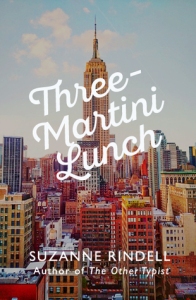
Three-Martini Lunch by Suzanne Rindell: Brings the late 1950s, specifically the bustling, cutthroat New York City publishing world, to life through the connections between three young people who collide over a debated manuscript. The three first-person voices fit together like a dream. It’s an expert evocation of Beat culture and post-war paranoia over Communism and homosexuality. Walking into Eden’s office, especially, you’ll think you’ve landed on the set of Mad Men. This classy, well-plotted follow-up will win Rindell even more fans and tide us all over until the film version of The Other Typist – produced by and starring Keira Knightley – appears. Releases May 19th in the UK.

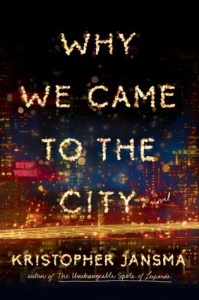 Why We Came to the City by Kristopher Jansma: Five university friends strive to make their lives count against the indifferent backdrop of recession-era New York City. When one of them falls ill, they pull together like a family. The tone of the novel lies somewhere between A Little Life and the sitcom Friends (a Mexican version of which the characters watch obsessively). Even as his characters realize that they are not special and not in control of their lives, Jansma never lets his book descend too far into gloom. Narrowly misses out on 5 stars from me because the storyline loses momentum in Part Two. Rich with emotion and literary allusions (from Walden to The Iliad), this is my favorite novel of the year so far.
Waltzing in Vienna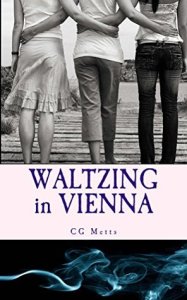 by C.G. Metts (& interview): Three girlfriends – a singer staging a comeback, a psychology professor reawakening to sexuality after being widowed, and a socialite Southern Belle – are reunited in Charleston, South Carolina in their early forties. Remembering their wild college days, they wonder how to make midlife count. There’s a fun Sex and the City or Ya-Ya Sisterhood vibe to this recommended debut novel. I liked the mixture of nostalgia and gentle feminism, and I think this may also inspire readers to see South Carolina’s coastal landscape for themselves. The title phrase is the friends’ shorthand for smoking marijuana together.
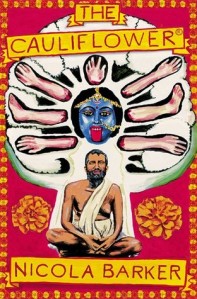 The Cauliflower® by Nicola Barker: Put simply, this is a fictionalized biography of the largely illiterate Hindu guru Sri Ramakrishna (1836–1886). That may sound dry as dust, but Barker makes it a playful delight by skipping around in time and interspersing aphorisms, imagined film scenes, questions and answers, and even a recipe with the narrative chapters. The kernel of the story – set in 1857 at the Dakshineswar Kali Temple, six miles north of Calcutta – is narrated in the first person by the guru’s nephew, Hriday. Scripture of all types (the Bible is also cited) is a relevant, joyful echo here rather than a dull set of rules. Bizarre but very readable. Releases April 21st.
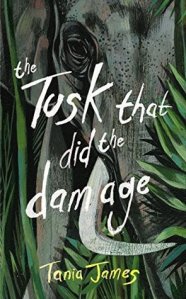 The Tusk That Did the Damage by Tania James: This composite picture of the state of wildlife conservation in India is told from three perspectives: an elephant named the Gravedigger, a poacher, and a documentary filmmaker. James ably intersperses three voices as she explores how people fail to live up to their ideals and make harmful assumptions. Despite these attributes, it was one of those books I had to force myself through. Perhaps it was the environmental agenda: if a book is going to wear its message so openly, it has to live up to it in terms of the writing. I might have preferred it if the whole novel had been from Emma’s point of view, with one climactic encounter with the Gravedigger to make the poaching question immediate and not simply academic.
BookBrowse
Dog Run Moon: Stories by Callan Wink [subscription service]: Wink’s debut story collection, set mostly under Montana’s open skies, stars a motley cast of aimless young men, ranchers, Native Americans, and animals live and dead. He plays around with Western stereotypes in intriguing ways. A few of the tales are a bit less compelling, and I would have preferred more variety in narration (8 of 9 are third person), but the stand-outs more than make up for it. My two favorites were “Runoff” (there’s a double meaning to the title) and “Exotics,” in which all the characters are lured by the life they don’t currently have.
 For Books’ Sake
Interview with Rachel B. Glaser, author of Paulina & Fran [my review of which was in last month’s roundup]
Foreword Reviews
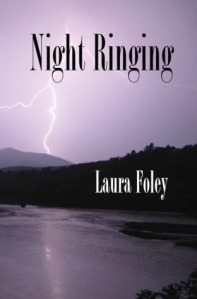 Night Ringing by Laura Foley: Foley’s strong fifth collection ruminates on romance and family via autobiographical free verse. One of the collection highlights is “In the Honda Service Area,” which unexpectedly unites modern technology with ancient literature. While a woman describes her impending hip replacement surgery to a friend, Foley tries to concentrate on Homer’s Iliad. The collection is dedicated to Foley’s partner, Clara Giménez, and lesbian romance is a subtle undercurrent. Especially recommended for fans of Jane Hilberry and Adrienne Rich.
The Temple of Paris by Laura DeBruce: This second volume in Laura DeBruce’s Quicksilver Legacy trilogy is a fast-paced fantasy adventure novel. In the previous book, the author introduced the “Immortals,” centuries-old creatures who are impervious to disease and aging due to a magic elixir. If Hana, the teenage protagonist, can learn how to use the elixir in her possession correctly, she can save her mother from a potentially fatal blood disorder. Although the complicated plot might be challenging for those new to the series, older teens will appreciate the rollicking story and the chance for vicarious European sightseeing.

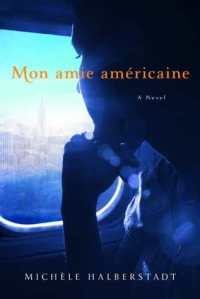 Mon amie américaine by Michèle Halberstadt: After years of heavy smoking and migraines, a brain aneurysm plunges forty-year-old Molly into a coma. The novel is presented as Michèle’s confessional letter to her American friend Molly, addressed in the second person. During Molly’s coma and after she wakes up, Michèle ponders their unlikely friendship and also frets over her threatened marriage. The novella is like a cross between Jenny Offill’s Dept. of Speculation and Jean-Dominique Bauby’s The Diving-Bell and the Butterfly, and bears tantalizing traces of deliberate homage to Pedro Almodóvar’s coma-themed Talk to Her: an understated dual account of betrayal and disability.
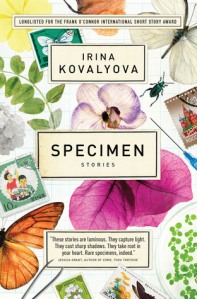 Specimen: Stories by Irina Kovalyova: “People like to pretend that our genes define the truth for us. But I assure you that’s not the case,” a character insists in the title story. Diverse in setting and form, these nine stories, long-listed for the Frank O’Connor International Short Story Award, contrast the scientific understanding of genetics with deeper wisdom about the bonds of love and family. Nestling science into rich psychological narratives, Kovalyova’s work is reminiscent of that of Andrea Barrett and A. S. Byatt; in fact, the latter is directly referenced in one story. She also channels Anthony Marra and Adam Johnson by affirming love’s survival in spite of repressive situations.
Of Crime and Passion by Jonathan Harnisch: In this novella, a proud young man seeks to transcend his underprivileged upbringing by worming his way into the homes of the rich and seducing powerful women. At its heart, the book is about the ongoing conflict between economic and social classes. With the melodramatic action and old-fashioned dialogue, though, it is easy to imagine this coming-of-age tale working better in the form of a play.
Hakai Magazine
(a Canadian publication highlighting coastal ecosystems)
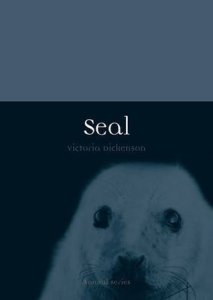 Seal by Victoria Dickenson: “It is hard to imagine a creature more distant from the human species in bodily form, habits, and habitat than the seal,” Dickenson writes in her introduction, “yet our mutual regard tells of a long, shared history of interaction.” Seal is the latest in the 80-strong Animal series from Reaktion Books. Like other volumes, this gives a brief discussion of the featured animal’s evolutionary biology, followed by an interdisciplinary survey of how it has entered human culture throughout history. In the final two chapters—the highlight of an occasionally dry book—Dickenson gives a balanced account of the history of hunting seals.
Los Angeles Review of Books
“Rediscovering an Overlooked Woman Novelist”: A dual review of Constance Fenimore Woolson: Portrait of a Lady Novelist by Anne Boyd Rioux () and Miss Grief and Other Stories (), a new selection of Woolson’s short fiction.
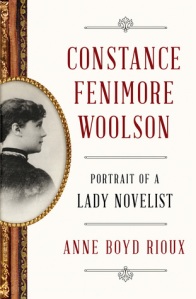
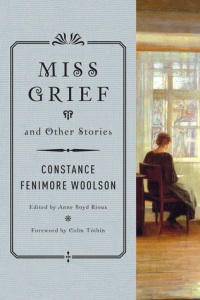 Constance Fenimore Woolson (1840–1894) is most often remembered for her connection to male writers; her great-uncle was pioneering American novelist James Fenimore Cooper, and in her later years as an expatriate in Europe she associated with Henry James, fueling rumors of a romance between them. Deserving to be known in her own right, Woolson represents key junctures between realism and regionalism, and between American and European styles. Gives a remarkable picture of a bold, bright woman who paved the way for writers such as Edith Wharton, E. M. Forster, and Willa Cather, and who arguably might be hailed in the same breath as Henry James and George Eliot.
Nudge
My quick response to Instructions for a Heatwave, for a Maggie O’Farrell retrospective: Another spot-on tale of family and romantic relationships – O’Farrell always gets the emotional tenor just right. You may spot hints of Rachel Joyce’s The Unlikely Pilgrimage of Harold Fry or Bernhard Schlink’s The Reader, but the psychological and linguistic precision is all O’Farrell’s own. Her descriptive language is unfailingly elegant. I love how she opens with the heat as the most notable character: “It inhabits the house like a guest who has outstayed his welcome: it lies along corridors, it circles around curtains, it lolls heavily on sofas and chairs.”
Pretentiousness: Why It Matters by Dan Fox: This wide-ranging essay discusses pretentiousness as it relates to class, taste, and modern art. Fox grew up outside of Oxford but now lives in New York City, where he is the co-editor of frieze. From its Latin etymology we learn that pretentious means “to stretch before,” so to hold something in front of you like a mask. He thus starts off by talking about acting techniques and rhetoric, then broadens this out to themes of authenticity and self-discovery. The most interesting part of the book concerns class connotations. This is a somewhat meandering work, and though it has good individual lines it is not always riveting.
 Third Way magazine
I’ve reviewed books, mostly fiction, for them for the last 2.5 years; sadly, the April 2016 issue will be the final one. It’s a shame; the progressive Christian perspective on popular culture is a niche it will be hard to fill.
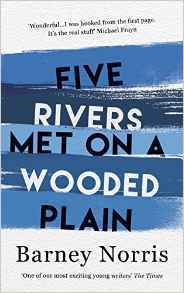
Five Rivers Met on a Wooded Plain by Barney Norris: Barney Norris is a playwright in his twenties, so it’s no surprise that there’s something a little staged to his debut novel. The lives of the book’s five narrators collide one night when a car hits a moped in Salisbury town center. We hear from each protagonist in turn as they reflect on their losses and wonder whether religion – represented by Salisbury Cathedral and the scripture and rituals of Christianity – might help. Rita is the liveliest and most engaging character, difficult as her expletive-strewn narrative might be to traverse. Like David Nicholls, Norris prizes emotional connection and delivers a theatrical plot. If he can avoid the more clichéd aspects of a novel like One Day, he could have a long career in fiction ahead of him. Releases April 21st.
I also post reviews of most of my casual reading and skimming on Goodreads:
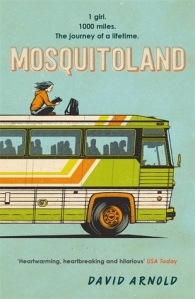 Mosquitoland by David Arnold: I don’t read a whole lot of YA, but the voice of this one captured me right away. Like Hazel in The Fault in Our Stars, Mim (Mary Iris Malone) is a lovably sarcastic oddball – she describes herself as “a young Ellen Page” à la Juno – with some hidden issues that come out over the course of the book. Here Mim’s journey takes the form of a road trip from Mississippi, where she lives with her father and new stepmother, back to Ohio to be with her sick mother. She meets a kooky cast of secondary characters along the way, narrowly escapes danger, and even gets a chance at romance.
A Change of World: Poems by Adrienne Rich: This is a forthcoming Norton reissue of Rich’s first collection from 1951. I’d always thought of her as a later, feminist poet, so it was jolting to see an introduction from W.H. Auden – that made it feel like a real generational crossover. It’s a very impressive debut, full of mannered, rhyme-rich verse. Two favorites were “Walden 1950” (“Thoreau, lank ghost, comes back to visit Concord, / Finds the town like all towns, much the same— / A little less remote, less independent”) and “The Innocents.” I’ll be interested to read some of her later work and see if she loosened up with form. Releases June 21st.
 The Shadow Hour by Kate Riordan: A clever dual-timeline novel with a pleasing Gothic flavor. In 1922 Grace Fairford takes up a governess position at Fenix House near Cheltenham, the very place where her grandmother, Harriet Jenner, worked in 1878. Every few chapters the perspective shifts from Grace (first person) to Harriet (third person). The novel is full of coincidences and the sense of history repeating itself. Riordan’s writing is capable, sometimes clichéd, but the echoes of Jane Eyre and The Turn of the Screw make this a delicious guilty-pleasure read.
Life’s Too Short to Pretend You’re Not Religious by David Dark: Etymologically, the word “religion” means to bind together again. Simply put, Dark’s thesis is that we’re all connected: we are in relationship with the people around us and can’t pretend otherwise. What we need is a shared vision for our shared life, and that involves engaging with other people. No pie-in-the-sky theology here; Dark affirms Daniel Berrigan’s assertion that “the actual world is our only world,” so things like climate change, gun control, immigration, and foreign policy are religious issues because they affect us all in this life. Together we have to imagine another story that isn’t capitalism and American imperialism as usual.
Adios, Cowboy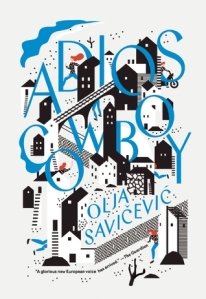 by Olja Savičević Ivančević: In summer 2009, Dada (aka Rusty) returns to her Croatian hometown to care for her mother. Going home facing up to the fact of her brother’s death – when he was 18 he threw himself under a train. “One has to sit down beside one’s demon and mollify it until it’s calm – that’s all, perhaps, that can be done,” she muses. Now for the title: Dada’s late father, brother, and friends (“the Iroquois Brothers”) were all big on cowboys and Indians. When news comes that a spaghetti western actor/director named Ned Montgomery will be passing through town, it causes Dada to think about her father and her brother and, what’s more, about the workings of her own memory.
Now Go Out There: (and Get Curious) by Mary Karr: There’s not much to this Syracuse University commencement speech. Leftovers of sob-story autobiography and clichéd advice cobbled together. Disappointing given how much I loved Karr’s recent The Art of Memoir. For a truly inspirational graduation address, I recommend David Foster Wallace’s This Is Water.

 How to Be Here: A Guide to Creating a Life Worth Living by Rob Bell: Bell left his pastoral role to become a motivational speaker so, unsurprisingly, this book is closer to self-help than theology. He’s good pals with Elizabeth Gilbert, and this book would make a great companion piece to her Big Magic. It’s about how to find what gets you out of bed in the morning and live mindfully. As always, his formatting – bite-size paragraphs, stretching out phrases with line breaks – is slightly annoying. I didn’t learn a whole lot; it was more a case of being reminded of things I knew deep down. He prefaces most chapters with an anecdote about his creative ventures, some of which were utter failures.
And my highest recommendation goes to…
The Summer Guest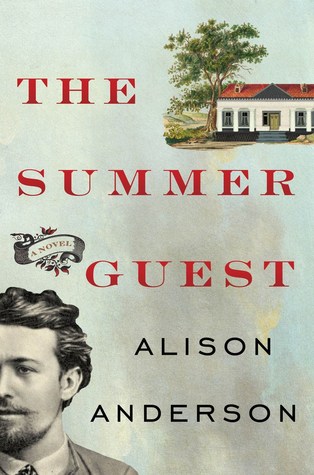 by Alison Anderson: The kernel of the novel is a true story: for two summers in the late 1880s, Chekhov stayed at the Lintvaryovs’ guest house in Luka, Ukraine. One strand of the narration is a journal kept during those years by Zinaida, the family’s eldest daughter, a doctor dying of a brain tumor. Zina’s story is offset by those of two contemporary women. Katya, a Russian émigré in London who’s trying to keep her failing publishing house afloat, sends the never-before-published diary to Ana, a translator based near the French border with Switzerland. There’s a touch of mystery here: where was the diary found? And what became of the novel Chekhov mentions he had in progress? Ana’s search for answers takes her to the Lintvaryov estate, even though Ukraine in 2014 is a hotbed of unrest. Having recently watched the BBC War & Peace miniseries with rapt interest and seen a Tchaikovsky symphony performance, it was the perfect time to get lost in an intricate, playful novel about how Russian literature still resonates. I’ll certainly be looking up Anderson’s other novels.
Books in Brief: Five I Loved Recently
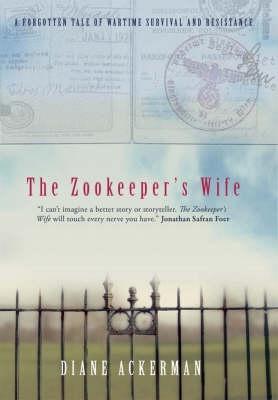 The Zookeeper’s Wife
By Diane Ackerman
A different sort of Holocaust story, set at Warsaw Zoo in the years surrounding World War II. Even after Nazis dismantled their zoo and killed many of the larger animals, Jan and Antonina Żabiński stayed at their home and used the zoo’s premises for storing explosives and ammunition for Jan’s work in the Polish resistance as well as sheltering “Guests,” Jews passing through. This is a gripping narrative of survival against the odds, with the added pleasure of the kind of animal antics you’d find in a Gerald Durrell book. Their son Ryszard kept as pets a badger who bathed sitting back in the tub like a person and an arctic hare who stole cured meats like “a fat, furry thug.” Much of the book is based on Antonina’s journals, but I wish there had been more direct quotes from it and less in the way of reconstruction.
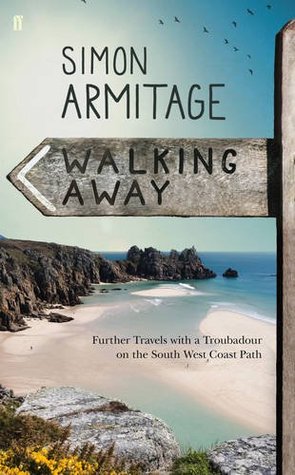 Walking Away: Further Travels with a Troubadour on the South West Coast Path
By Simon Armitage
As a sequel to Walking Home, the account of his 2010 trek along the Pennine Way, Armitage walked much of England’s South West Coast Path in August–September 2013. As before, he relied on the hospitality of acquaintances and strangers to put him up along the way and transport his enormous suitcase for him so he could walk about 10 miles a day to his next poetry reading. Emulating a modern-day troubadour, Armitage passed around a sock at the end of readings for donations (though the list of other stuff people left in the sock, with which he closes the book, is quite amusing). Along the way he meets all kinds of odd folk and muses on the landscape and the distressing amounts of seaside rubbish. His self-deprecating style reminded me of Bill Bryson. A pleasant ramble of a travel book.
 Winter World: The Ingenuity of Animal Survival
By Bernd Heinrich
This great seasonal read carefully pitches science to the level of the layman. Heinrich, an emeritus professor of biology at the University of Vermont, surveys various strategies animals use for surviving the winter: caching food, huddling together, hibernating or entering torpor, and lowering their body temperature – even to the point where 50% of their body water is ice, as with hibernating frogs. He carries out ever so slightly gruesome experiments that make him sound like a lovably nutty professor:
To find out how quickly a fully feathered kinglet loses body heat, I experimentally heated a dead kinglet and then measured its cooling rate. … I do not know how many seeds a chipmunk usually packs into each of its two pouches—I easily inserted sixty black sunflower seeds through the mouth into just one pouch of a roadkill.
His passion for knowledge carries through in his writing. I came away with a fresh sense of wonder for how species are adapted to their environments: “Much that animals have evolved to do would have seemed impossible to us, if experience has not taught us otherwise.”
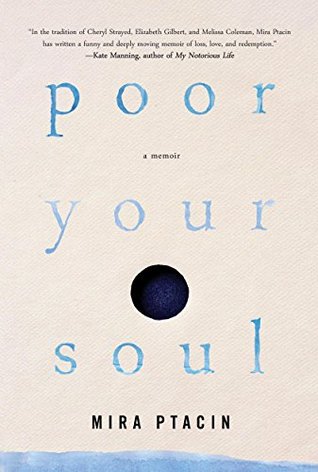 Poor Your Soul
By Mira Ptacin
Ptacin’s memoir is based around two losses: that of her brother, in a collision with a drunk driver; and that of a pregnancy in 2008. She skips back and forth in time to examine the numb aftermath of trauma as well as the fresh pain of actually going through it. In places I felt Ptacin sacrificed the literary quality hindsight might have allowed, prioritizing instead the somewhat clichéd thoughts and responses she had in the moment. Still, I loved so much about this book, especially her memories of growing up in the cereal capital of America and the account of her mother coming to America from Poland. Her mother is a terrific character, and it’s her half-warning, half-commiserative phrase that gives the novel its title (not a typo, as you might be forgiven for thinking): a kind of Slavic “I pity the fool.”
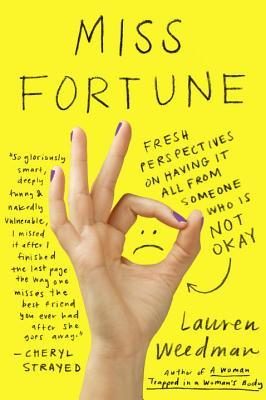 Miss Fortune: Fresh Perspectives on Having It All from Someone Who Is Not Okay
By Lauren Weedman
Weedman is a playwright and minor celebrity who’s worked on The Daily Show, Hung and Looking. This is a truly funny set of essays about marriage (from beginning to end), motherhood, working life and everything in between. Self-deprecatingly, she focuses on ridiculous situations she’s gotten herself into, like the world’s unsexiest threesome and an accidental gang symbol tattoo. Amid the laughs are some serious reflections on being adopted and figuring out how to be a responsible stepmother. With a warning that parts can be pretty raunchy, I’d recommend this to fans of David Sedaris and Bossypants.
 Bookish Beck = Rebecca Foster. American transplant to England. Freelance proofreader and book reviewer.
 Bookish Beck