Finishing 20 Books of Summer: The Anthropocene Reviewed by John Green
The final choice for my colour-themed 20 Books of Summer, a terrific essay collection about the best and worst of the modern human experience, also happened to be the only one where the colour was part of the author’s name rather than the book’s title. I also have a bonus rainbow-covered read and a look back at the highlights of my summer reading.
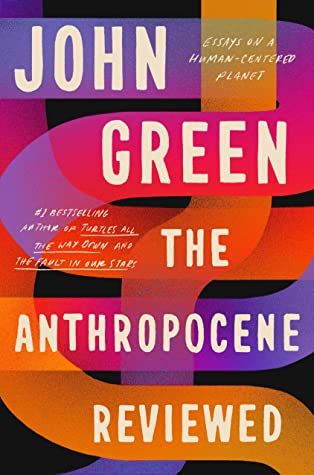
The Anthropocene Reviewed: Essays on a Human-Centered Planet by John Green (2021)
(20 Books of Summer, #20) How Have You Enjoyed the Anthropocene So Far? That’s the literal translation of the book’s German title, but also a tidy summary of its approach. John Green is not only a YA author but also a new media star – he and his brother Hank are popular vlogging co-hosts, and this book arose from a podcast of the same name. Some of the essays first appeared on his various video projects, too. In about 5–10 pages, he takes a phenomenon experienced in the modern age, whether miraculous (sunsets, the Lascaux cave paintings, favourite films or songs), regrettable (Staph infections, CNN, our obsession with grass lawns), or just plain weird, and riffs on it, exploring its backstory, cultural manifestations and personal resonance.
Indeed, the essays reveal a lot about Green himself. I didn’t know of his struggles with anxiety and depression. “Harvey,” one of the standout essays, is about a breakdown he had in his early twenties when living in Chicago and working for Booklist magazine. His boss told him to take as much time as he needed, and urged him to watch Harvey, the Jimmy Stewart film about a man with an imaginary friend that happens to be a six-foot rabbit. It was the perfect prescription. In “Auld Lang Syne,” Green toggles between the history of the song and a friendship from his own old times, with an author and mentor who has since died. “Googling Strangers” prides itself on a very 21st-century skill by which he discovers that a critically injured boy from his time as a student chaplain at a children’s hospital lived to adulthood.
Green is well aware of the state of things: “Humans are already an ecological catastrophe … for many forms of life, humanity is the apocalypse.” He plays up the contradictions in everyday objects: air-conditioning is an environmental disaster, yet makes everyday life tolerable in vast swathes of the USA; Canada geese are still, to many, a symbol of wildness, but are almost frighteningly ubiquitous – one of the winners in the species roulette we’ve initiated. And although he’s clued in, he knows that in many respects he’s still living as if the world isn’t falling apart. “In the daily grind of a human life, there’s a lawn to mow, soccer practices to drive to, a mortgage to pay. And so I go on living the way I feel like people always have.” A sentiment that rings true for many of us: despite the background dread about where everything is headed, we just have to get on with our day-to-day obligations, right?
Although he’s from Indianapolis, a not particularly well regarded city of the Midwest, Green is far from the conservative, insular stereotype of that region. There are pockets of liberal, hipster culture all across the Midwest, in fact, and while he does joke about Indy in the vein of “well, you’ve gotta live somewhere,” it’s clear that he’s come to love the place – enough to set climactic scenes from two of his novels there. However, he’s also cosmopolitan enough – he’s a Liverpool FC fan, and one essay is set on a trip to Iceland – to be able to see America’s faults (which, to an extent, are shared by many Western countries) of greed and militarism and gluttony and more.
In any book like this, one might quibble with the particular items selected. I mostly skipped over the handful of pieces on sports and video games, for instance. But even when the phenomena were completely unknown to me, I was still tickled by Green’s take. For example, here he is rhapsodizing on Diet Dr Pepper: “Look at what humans can do! They can make ice-cold, sugary-sweet, zero-calorie soda that tastes like everything and also like nothing.” He veers between the funny and the heartfelt: “I want to be earnest, even if it’s embarrassing.”
Each essay closes with a star rating. What value does a numerical assessment have when he’s making such apples-and-oranges comparisons (a sporting performance vs. sycamore trees vs. hot dog eating contests)? Not all that much. (Of course, some might make that very argument about rating books, but I persist!) At first I thought the setup was a silly gimmick, but since reviewing anything and everything on Amazon/TripAdvisor/wherever is as much a characteristic of our era as everything he’s writing about, why not? Calamities get 1–1.5 stars, things that seemed good but have turned out to be mixed blessings might get 2–3 stars, and whatever he unabashedly loves gets 4.5–5 stars.
As Green astutely remarks, “when people write reviews, they are really writing a kind of memoir—here’s what my experience was.” So, because I found a lot that resonated with me and a lot that made me laugh, and admired his openness on mental health à la Matt Haig, but also found the choices random such that a few essays didn’t interest me and the whole doesn’t necessarily build a cohesive argument, I give The Anthropocene Reviewed four stars. I’d only ever read The Fault in Our Stars, one of the first YA books I loved, so this was a good reminder to try more of Green’s fiction soon.
(Public library) 
Initially, I thought I might struggle to find 20 appealing colour-associated books, so I gave myself latitude to include books with different coloured covers. As it happens, I didn’t have to resort to choosing by cover, but I’ve thrown in this rainbow cover as an extra.
Songs in Ursa Major by Emma Brodie (2021)
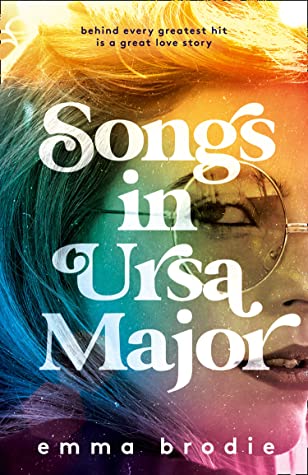 A Daisy Jones and the Six wannabe for sure, and a fun enough summer read even though the writing doesn’t nearly live up to Reid’s. Set largely between 1969 and 1971, the novel stars Jane Quinn, who lives on New England’s Bayleen Island with her aunt, grandmother and cousin – her aspiring singer mother having disappeared when Jane was nine. Nursing and bartending keep Jane going while she tries to make her name with her band, the Breakers. Aunt Grace, also a nurse, cares for local folk rocker Jesse Reid during his convalescence from a motorcycle accident. He then invites the Breakers to open for him on his tour and he and Jane embark on a turbulent affair. After Jane splits from both Jesse and the Breakers, she shrugs off her sexist producer and pours her soul into landmark album Songs in Ursa Major. (I got the Sufjan Stevens song “Ursa Major” in my head nearly every time I picked this up.)
There are some soap opera twists and turns to the plot, and I would say the novel is at least 100 pages too long, with an unnecessary interlude on a Greek island. Everyone loves a good sex, drugs and rock ’n roll tale, but here the sex scenes were kind of cringey, and the lyrics and descriptions of musical styles seemed laboured. Also, I thought from the beginning that the novel could use the intimacy of a first-person narrator, but late on realized it had to be in the third person to conceal a secret of Jane’s – which ended up feeling like a trick. There are also a few potential anachronisms (e.g. I found myself googling “how much did a pitcher of beer cost in 1969?”) that took me out of the period. Brodie is a debut novelist who has worked in book publishing in the USA for a decade. Her Instagram has a photo of her reading Daisy Jones and the Six in March 2019! That and the shout-out to Mandy Moore, of all the musical inspirations, in her acknowledgments, had me seriously doubting her bona fides to write this story. Maybe take it as a beach read if you aren’t too picky.
(Twitter giveaway win) 

Looking back, my favourite read from this project was Nothing but Blue Sky by Kathleen MacMahon, closely followed by the novels Under the Blue by Oana Aristide and Ruby by Ann Hood, the essay collection The Anthropocene Reviewed by John Green (above), the travel book The Glitter in the Green by Jon Dunn, and the memoirs Darkness Visible by William Styron and Direct Red by Gabriel Weston. A varied and mostly great selection, all told! I read six books from the library and the rest from my shelves. Maybe next year I’ll not pick a theme but allow myself completely free choice – so long as they’re all books I own.
What was the highlight of your summer reading?
Reading with the Seasons: Summer 2021, Part I
I’m more likely to choose lighter reads and dip into genre fiction in the summer than at other times of year. The past few weeks have felt more like autumn here in southern England, but summer doesn’t officially end until September 22nd. So, if I get a chance (there’s always a vague danger to labelling something “Part I”!), before then I’ll follow up with another batch of summery reads I have on the go: Goshawk Summer, Klara and the Sun, Among the Summer Snows, A Shower of Summer Days, and a few summer-into-autumn children’s books.
For this installment I have a quaint picture book, a mystery, a travel book featured for its title, and a very English classic. I’ve chosen a representative quote from each.
Summer Story by Jill Barklem (1980)
 One of a quartet of seasonal “Brambly Hedge” stories in small hardbacks. It wouldn’t be summer without weddings, and here one takes place between two mice, Poppy Eyebright and Dusty Dogwood (who work in the dairy and the flour mill, respectively), on Midsummer’s Day. I loved the little details about the mice preparing their outfits and the wedding feast: “Cool summer foods were being made. There was cold watercress soup, fresh dandelion salad, honey creams, syllabubs and meringues.” We’re given cutaway views of various tree stumps, like dollhouses, and the industrious activity going on within them. Like any wedding, this one has its mishaps, but all is ultimately well, like in a classical comedy. This reminded me of the Church Mice books or Beatrix Potter’s works: very sweet, quaint and English.
Source: Public library
My rating: 
These next two give a real sense of how heat affects people, physically and emotionally.
Heatstroke by Hazel Barkworth (2020)
“In the heat, just having a human body was a chore. Just keeping it suitable for public approval was a job”
 From the first word (“Languid”) on, this novel drips with hot summer atmosphere, with its opposing connotations of discomfort and sweaty sexuality. Rachel is a teacher of adolescents as well as the mother of a 15-year-old, Mia. When Lily, a pupil who also happens to be one of Mia’s best friends, goes missing, Rachel is put in a tough spot. I mostly noted how Barkworth chose to construct the plot, especially when to reveal what. By the one-quarter point, Rachel works out what’s happened to Lily; by halfway, we know why Rachel isn’t telling the police everything.
The dynamic between Rachel and Mia as they decide whether to divulge what they know is interesting. This is not the missing person mystery it at first appears to be, and I didn’t sense enough literary quality to keep me wanting to know what would happen next. I ended up skimming the last third. It would be suitable for readers of Rosamund Lupton, but novels about teenage consent are a dime a dozen these days and this paled in comparison to My Dark Vanessa. For a better sun-drenched novel, I recommend A Crime in the Neighborhood.
Source: Public library
My rating: 
The Shadow of the Sun: My African Life by Ryszard Kapuściński (1998; 2001)
[Translated from the Polish by Klara Glowczewska]
“Dawn and dusk—these are the most pleasant hours in Africa. The sun is either not yet scorching, or it is no longer so—it lets you be, lets you live.”
 The Polish Kapuściński was a foreign correspondent in Africa for 40 years and lent his name to an international prize for literary reportage. This collection of essays spans decades and lots of countries, yet feels like a cohesive narrative. The author sees many places right on the cusp of independence or in the midst of coup d’états. Living among Africans rather than removed in a white enclave, he develops a voice that is surprisingly undated and non-colonialist. While his presence as the observer is undeniable – especially when he falls ill with malaria and then tuberculosis – he lets the situation on the ground take precedence over the memoir aspect. I read the first half last year and then picked the book back up again to finish this year. The last piece, “In the Shade of a Tree, in Africa” especially stood out. In murderously hot conditions, shade and water are two essentials. A large mango tree serves as an epicenter of activities: schooling, conversation, resting the herds, and so on. I appreciated how Kapuściński never resorts to stereotypes or flattens differences: “Africa is a thousand situations, varied, distinct, even contradictory … everything depends on where and when.”
Along with Patrick Leigh Fermor’s A Time of Gifts and the Jan Morris anthology A Writer’s World, this is one of the best few travel books I’ve ever read.
Source: Free bookshop
My rating: 
August Folly by Angela Thirkell (1936)
“The sun was benignantly hot, the newly mown grass smelt sweet, bees were humming in a stupefying way, Gunnar was purring beside him, and Richard could hardly keep awake.”
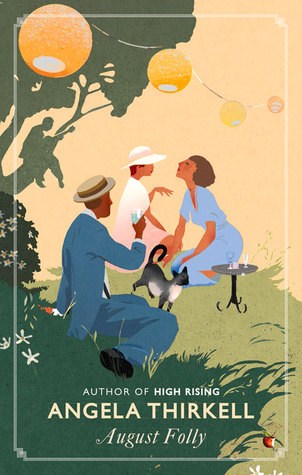 I’d been curious to try Thirkell, and this fourth Barsetshire novel seemed as good a place to start as any. Richard Tebben, not the best and brightest that Oxford has to offer, is back in his parents’ village of Worsted for the summer and dreading the boredom to come. That is, until he meets beautiful Rachel Dean and is smitten – even though she’s mother to a brood of nine, most of them here with her for the holidays. He sets out to impress her by offering their donkey, Modestine, for rides for the children, and rather accidentally saving her daughter from a raging bull. Meanwhile, Richard’s sister Margaret can’t decide if she likes being wooed, and the villagers are trying to avoid being roped into Mrs Palmer’s performance of a Greek play. The dialogue can be laughably absurd. There are also a few bizarre passages that seem to come out nowhere: when no humans are around, the cat and the donkey converse.
This was enjoyable enough, in the same vein as books I’ve read by Barbara Pym, Miss Read, and P.G. Wodehouse, though I don’t expect I’ll pick up more by Thirkell. (No judgment intended on anyone who enjoys these authors. I got so much flak and fansplaining when I gave Pym and Wodehouse 3 stars and dared to call them fluffy or forgettable, respectively! There are times when a lighter read is just what you want, and these would also serve as quintessential English books revealing a particular era and class.)
Source: Public library
My rating:
As a bonus, I have a book about how climate change is altering familiar signs of the seasons.
Forecast: A Diary of the Lost Seasons by Joe Shute (2021)
“So many records are these days being broken that perhaps it is time to rewrite the record books, and accept the aberration has become the norm.”
 Shute writes a weather column for the Telegraph, and in recent years has reported on alarming fires and flooding. He probes how the seasons are bound up with memories, conceding the danger of giving in to nostalgia for a gloried past that may never have existed. However, he provides hard evidence in the form of long-term observations (phenology) such as temperature data and photo archives that reveal that natural events like leaf fall and bud break are now occurring weeks later/earlier than they used to. He also meets farmers, hunts for cuckoos and wildflowers, and recalls journalistic assignments.
The book deftly recreates its many scenes and conversations, and inserts statistics naturally. It also delicately weaves in a storyline about infertility: he and his wife long for a child and have tried for years to conceive, but just as the seasons are out of kilter, there seems to be something off with their bodies such that something that comes so easily for others will not for them. A male perspective on infertility is rare – I can only remember encountering it before in Native by Patrick Laurie – and these passages are really touching. The tone is of a piece with the rest of the book: thoughtful and gently melancholy, but never hopeless (alas, I found The Eternal Season by Stephen Rutt, on a rather similar topic, depressing).
Forecast is wide-ranging and so relevant – the topics it covers kept coming up and I would say to my husband, “oh yes, that’s in Joe Shute’s book.” (For example, he writes about the Ladybird What to Look For series and then we happened on an exhibit of the artwork at Mottisfont Abbey.) I can see how some might say it crams in too much or veers too much between threads, but I thought Shute handled his material admirably.
Source: Public library
My rating: 
Have you been reading anything particularly fitting for summer this year?
Reading from the Wainwright Prize Longlists
The Wainwright Prize is one that I’ve ended up following closely almost by accident, simply because I tend to read most of the nature books released in the UK in any given year. A few months back I cheekily wrote to the prize director, proffering myself as a judge and appending a list of eligible titles I hoped were in consideration. Although they already had a full judging roster for 2021, I got a very kind reply thanking me for my recommendations and promising to bear me in mind for the future. Fifteen of my 25 suggestions made it onto the lists below.
This is the second year that there have been two awards, one for writing on UK nature and the other on global conservation themes. Tomorrow (August 4th) at 4 p.m., the longlists will be narrowed down to shortlists. I happened to have read and reviewed 12 of the nominees already, and I have a few others in progress.
UK nature writing longlist:

 The Circling Sky by Neil Ansell: Hoping to reclaim an ancestral connection, Ansell visited the New Forest some 30 times between January 2019 and January 2020, observing the unfolding seasons and the many uncommon and endemic species its miles house. He weaves together his personal story, the shocking history of forced Gypsy relocation into forest compounds starting in the 1920s, and the unfairness of land ownership in Britain. The New Forest is a model of both wildlife-friendly land management and freedom of human access. (On my Best of 2021 so far list.)
T he Screaming Sky by Charles Foster: A Renaissance man as well versed in law and theology as he is in natural history, Foster is obsessed with swifts and ashamed of his own species: for looking down at their feet when they could be watching the skies; for the “pathological tidiness” that leaves birds and other creatures no place to live. He delivers heaps of information on the birds but refuses to stick to a just-the-facts approach. The book quotes frequently from poetry and the prose is full of sharp turns of phrase and whimsy. (Also on my Best of 2021 so far list.)
 Featherhood by Charlie Gilmour: As an aimless twentysomething, Gilmour tried to rekindle a relationship with his unreliable poet father at the same time that he and his wife were pondering starting a family of their own. Meanwhile, he was raising Benzene, a magpie that fell out of the nest and ended up in his care. The experience taught him responsibility and compassionate care for another creature. Gilmour makes elegant use of connections and metaphors. He’s so good at scenes, dialogue and emotion – a natural writer.
 Seed to Dust by Marc Hamer: Hamer paints a loving picture of his final year at the 12-acre British garden he tended for decades. In few-page essays, the book journeys through a gardener’s year. This is creative nonfiction rather than straightforward memoir. The prose is adorned with lovely metaphors. In places, the language edges towards purple and the content becomes repetitive – a danger of the diary format. However, the focus on emotions and self-perception – rare for a male nature writer – is refreshing. (Reviewed for Foreword.)
 The Stubborn Light of Things by Melissa Harrison: A collection of five and a half years’ worth of Harrison’s monthly Nature Notebook columns for The Times. Initially based in South London, Harrison moved to the Suffolk countryside in late 2017. In the grand tradition of Gilbert White, she records when she sees her firsts of a year. I appreciate how hands-on and practical Harrison is. She never misses an opportunity to tell readers about ways they can create habitat for wildlife and get involved in citizen science projects. (Reviewed for Shiny New Books.)
 Birdsong in a Time of Silence by Steven Lovatt: During the UK’s first lockdown, with planes grounded and cars stationary, many remarked on the quiet. All the better to hear birds going about their usual spring activities. For Lovatt, it was the excuse he needed to return to his childhood birdwatching hobby. In between accounts of his spring walks, he tells lively stories of common birds’ anatomy, diet, lifecycle, migration routes, and vocalizations. Lovatt’s writing is introspective and poetic, delighting in metaphors for sounds.
 Vesper Flights by Helen Macdonald: Though written for various periodicals and ranging in topic from mushroom-hunting to deer–vehicle collisions and in scope from deeply researched travel pieces to one-page reminiscences, these essays form a coherent whole. Equally reliant on argument and epiphany, the book has more to say about human–animal interactions in one of its essays than some whole volumes manage. Her final lines are always breath-taking. I’d rather read her writing on any subject than almost any other author’s. (My top nonfiction release of 2020.)
 Skylarks with Rosie by Stephen Moss: Devoting a chapter each to the first 13 weeks of the initial UK lockdown, Moss traces the season’s development in Somerset alongside his family’s experiences and what was emerging on the national news. He welcomed migrating birds and marked his first sightings of butterflies and other insects. Nature came to him, too. For once, he felt that he had truly appreciated the spring, noting its every milestone and “rediscovering the joys of wildlife-watching close to home.”
 Thin Places by Kerri ní Dochartaigh: I received a proof copy from Canongate and twice tried the first few pages, but couldn’t wade through the excessive lyricism (and downright incorrect information – weaving a mystical description of a Winter Moth’s flight, she keeps referring to the creature as “she,” whereas when I showed the passage to my entomologist husband he told me that the females of that species are flightless). I’m told it develops into an eloquent memoir of growing up during the Troubles. Perhaps reminiscent of The Outrun?
 Into the Tangled Bank by Lev Parikian: A delightfully Bryson-esque tour that moves ever outwards, starting with the author’s own home and garden and proceeding to take in his South London patch and his journeys around the British Isles before closing with the wonders of the night sky. By slowing down to appreciate what is all around us, he proposes, we might enthuse others to engage with nature. With the zeal of a recent convert, he guides readers through momentous sightings and everyday moments of connection. (When I reviewed this in July 2020, I correctly predicted it would make the longlist!)
 English Pastoral by James Rebanks: This struck me for its bravery, good sense and humility. The topics of the degradation of land and the dangers of intensive farming are of the utmost importance. Daring to undermine his earlier work and his online persona, the author questions the mythos of modern farming, contrasting its practices with the more sustainable and wildlife-friendly ones his grandfather espoused. Old-fashioned can still be best if it means preserving soil health, river quality and the curlew population.
 I Belong Here by Anita Sethi: I recently skimmed this from the library. Two things are certain: 1) BIPOC writers should appear more frequently on prize lists, so it’s wonderful that Sethi is here; 2) this book was poorly put together. It’s part memoir of an incident of racial abuse, part political manifesto, and part quite nice travelogue. The parts don’t make a whole. The contents are repetitive and generic (definitions, overstretched metaphors). Sethi had a couple of strong articles here, not a whole book. I blame her editors for not eliciting better.
 The Wild Silence by Raynor Winn: I only skimmed this, too. I got the feeling her publisher was desperate to capitalize on the popularity of her first book and said “give us whatever you have,” cramming drafts of several different projects (a memoir that went deeper into the past, a ‘what happened next’ sequel to The Salt Path, and an Iceland travelogue) into one book and rushing it through to publication. Winn’s writing is still strong, though; she captures dialogue and scenes naturally, and you believe in how much the connection to the land matters to her.
Global conservation longlist:

Like last year, I’ve read much less from this longlist since I gravitate more towards nature writing and memoirs than to hard or popular science. So I have read, am reading or plan to read about half of this list, as opposed to pretty much all of the other one.
 Islands of Abandonment by Cal Flyn: This was on my Most Anticipated list for 2021 and I treated myself to a copy while we were up in Northumberland. I’m nearly a third of the way through this fascinating, well-written tour of places where nature has spontaneously regenerated due to human neglect: depleted mining areas in Scotland, former conflict zones, Soviet collective farms turned feral, sites of nuclear disaster, and so on. I’m about to start the chapter on Chernobyl, which I expect to echo Mark O’Connell’s Notes from an Apocalypse.
 What If We Stopped Pretending? by Jonathan Franzen: The message of this controversial 2019 New Yorker essay is simple: climate breakdown is here, so stop denying it and talking of “saving the planet”; it’s too late. Global warming is locked in; the will is not there to curb growth, overhaul economies, and ask people to relinquish developed world lifestyles. Instead, start preparing for the fallout (refugees) and saving what can be saved (particular habitats and species). Franzen is realistic about human nature and practical about what to do next.
 Entangled Life by Merlin Sheldrake: Sheldrake’s enthusiasm is infectious as he researches fungal life in the tropical forests of Panama, accompanies truffle hunters in Italy, and takes part in a clinical study on the effects of LSD (derived from a fungus). More than a travel memoir, though, this is a work of proper science – over 100 pages are taken up by notes, bibliography and index. This is a perspective-altering text that reveals our unconscious species bias. I’ve recommended it widely, even to those who tend not to read nonfiction.
 Ice Rivers by Jemma Wadham: I have this out from the library and am two-thirds through. Wadham, a leading glaciologist, introduces readers to the science of glaciers: where they are, what lives on and under them, how they move and change, and the grave threats they face (and, therefore, so do we). The science, even dumbed down, is a little hard to follow, but I love experiencing extreme landscapes like Greenland and Antarctica with her. She neatly inserts tiny mentions of her personal life, such as her mother’s death, a miscarriage and a benign brain cyst.
The rest of the longlist is:
- A Life on Our Planet by David Attenborough – I’ve never read a book by Attenborough (and tend to worry this sort of book would be ghostwritten), but wouldn’t be averse to doing so.
 Fathoms by Rebecca Giggs – All about whales. Kate raved about it. I have this on hold at the library.
- Net Zero: How We Stop Causing Climate Change by Dieter Helm
- Under a White Sky by Elizabeth Kolbert – I have read her before and would again.
- Riders on the Storm by Alistair McIntosh – My husband has read several of his books and rates them highly.
- The New Climate War by Michael E. Mann
- The Reindeer Chronicles by Judith D. Schwartz – I’ve been keen to read this one.
- A World on the Wing by Scott Weidensaul – My husband is reading this from the library.
My predictions/wishes for the shortlists:
It’s high time that a woman won again. And why not for both, eh? (Amy Liptrot is still the only female winner in the Prize’s seven-year history, for The Outrun in 2016.)
UK nature writing:
- The Circling Sky by Neil Ansell
- The Screaming Sky by Charles Foster
- Featherhood by Charlie Gilmour
- Vesper Flights by Helen Macdonald*
- English Pastoral by James Rebanks
- I Belong Here by Anita Sethi
- The Wild Silence by Raynor Winn
Writing on global conservation:
- Islands of Abandonment by Cal Flyn*
- Fathoms by Rebecca Giggs
- Under a White Sky by Elizabeth Kolbert
- Entangled Life by Merlin Sheldrake
- Ice Rivers by Jemma Wadham
- A World on the Wing by Scott Weidensaul
*Overall winners, if I had my way.


Have you read anything from the Wainwright Prize longlists?
Do any of these books interest you?
Review Book Catch-Up: Motherhood, Nature Essays, Pandemic, Poetry
July slipped away without me managing to review any current-month releases, as I am wont to do, so to those three I’m adding in a couple of other belated review books to make up today’s roundup. I have: a memoir-cum-sociological study of motherhood, poems of Afghan women’s experiences, a graphic novel about a fictional worst-case pandemic, seasonal nature essays from voices not often heard, and poetry about homosexual encounters.
(M)otherhood: On the choices of being a woman by Pragya Agarwal
“Mothering would be my biggest gesture of defiance.”
 Growing up in India, Agarwal, now a behavioural and data scientist, wished she could be a boy for her father’s sake. Being the third daughter was no place of honour in society’s eyes, but her parents ensured that she got a good education and expected her to achieve great things. Still, when she got her first period, it felt like being forced onto a fertility track she didn’t want. There was a dearth of helpful sex education, and Hinduism has prohibitions that appear to diminish women, e.g. menstruating females aren’t permitted to enter a temple.
Married and unexpectedly pregnant in 1996, Agarwal determined to raise her daughter differently. Her mother-in-law was deeply disappointed that the baby was a girl, which only increased her stubborn pride: “Giving birth to my daughter felt like first love, my only love. Not planned but wanted all along. … Me and her against the world.” No element of becoming a mother or of her later life lived up to her expectations, but each apparent failure gave a chance to explore the spectrum of women’s experiences: C-section birth, abortion, divorce, emigration, infertility treatment, and finally having further children via a surrogate.
While I enjoyed the surprising sweep of Agarwal’s life story, this is no straightforward memoir. It aims to be an exhaustive survey of women’s life choices and the cultural forces that guide or constrain them. The book is dense with history and statistics, veers between topics, and needed a better edit for vernacular English and smoothing out academic jargon. I also found that I wasn’t interested enough in the specifics of women’s lives in India.
With thanks to Canongate for the free copy for review.
Forty Names by Parwana Fayyaz
“History has ungraciously failed the women of my family”
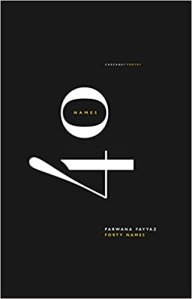 Have a look at this debut poet’s journey: Fayyaz was born in Kabul in 1990, grew up in Afghanistan and Pakistan, studied in Bangladesh and at Stanford, and is now, having completed her PhD, a research fellow at Cambridge. Many of her poems tell family stories that have taken on the air of legend due to the translated nicknames: “Patience Flower,” her grandmother, was seduced by the Khan and bore him two children; “Quietude,” her aunt, was a refugee in Iran. Her cousin, “Perfect Woman,” was due to be sent away from the family for infertility but gained revenge and independence in her own way.
Fayyaz is bold to speak out about the injustices women can suffer in Afghan culture. Domestic violence is rife; miscarriage is considered a disgrace. In “Roqeeya,” she remembers that her mother, even when busy managing a household, always took time for herself and encouraged Parwana, her eldest, to pursue an education and earn her own income. However, the poet also honours the wisdom and skills that her illiterate mother exhibited, as in the first three poems about the care she took over making dresses and dolls for her three daughters.
As in Agarwal’s book, there is a lot here about ideals of femininity and the different routes that women take – whether more or less conventional. “Reading Nadia with Eavan” was a favourite for how it brought together different aspects of Fayyaz’s experience. Nadia Anjuman, an Afghan poet, was killed by her husband in 2005; many years later, Fayyaz found herself studying Anjuman’s work at Cambridge with the late Eavan Boland. Important as its themes are, I thought the book slightly repetitive and unsubtle, and noted few lines or turns of phrase – always a must for me when assessing a poetry collection.
With thanks to Carcanet Press for the free copy for review.
Resistance by Val McDermid; illus. Kathryn Briggs
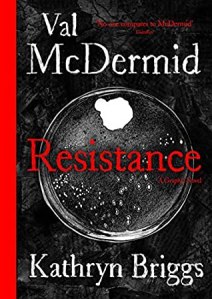 The second 2021 release I read in quick succession in which all but a small percentage of the human race (here, 2 million people) perishes in a pandemic – the other was Under the Blue. Like Aristide’s novel, this story had its origins in 2017 (in this case, on BBC Radio 4’s “Dangerous Visions”) but has, of course, taken on newfound significance in the time of Covid-19. McDermid imagines the sickness taking hold during a fictional version of Glastonbury: Solstice Festival in Northumberland. All the first patients, including a handful of rockstars, ate from Sam’s sausage sandwich van, so initially it looks like food poisoning. But vomiting and diarrhoea give way to a nasty rash, listlessness and, in many cases, death.
Zoe Beck, a Black freelance journalist who conducted interviews at Solstice, is friends with Sam and starts investigating the mutated swine disease, caused by an Erysipelas bacterium and thus nicknamed “the Sips.” She talks to the festival doctor and to a female Muslim researcher from the Life Sciences Centre in Newcastle, but her search for answers takes a backseat to survival when her husband and sons fall ill.
The drawing style and image quality – some panes are blurry, as if badly photocopied – let an otherwise reasonably gripping story down; the best spreads are collages or borrow a frame/backdrop (e.g. a medieval manuscript, NHS forms, or a 1910s title page).


SPOILER
{The ending, which has an immune remnant founding a new community, is VERY Parable of the Sower.}
With thanks to Profile Books/Wellcome Collection for the free copy for review.
Gifts of Gravity and Light: A Nature Almanac for the 21st Century, ed. Anita Roy and Pippa Marland
I hadn’t heard about this upcoming nature anthology when a surprise copy dropped through my letterbox. I’m delighted the publisher thought of me, as this ended up being just my sort of book: 12 autobiographical essays infused with musings on landscapes in Britain and elsewhere; structured by the seasons to create a gentle progression through the year, starting with the spring. Best of all, the contributors are mostly female, BIPOC (and Romany), working class and/or queer – all told, the sort of voices that are heard far too infrequently in UK nature writing. In momentous rites of passage, as in routine days, nature plays a big role.
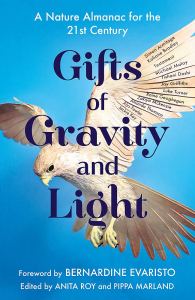 A few of my favourite pieces were by Kaliane Bradley, about her Cambodian heritage (the Wishing Dance associated with cherry blossom, her ancestors lost to genocide, the Buddhist belief that people can be reincarnated in other species); Testament, a rapper based in Leeds, about capturing moments through photography and poetry and about the seasons feeling awry both now and in March 2008, when snow was swirling outside the bus window as he received word of his uni friend’s untimely death; and Tishani Doshi, comparing childhood summers of freedom in Wales with growing up in India and 2020’s Covid restrictions.
Most of the authors hold two places in mind at the same time: for Michael Malay, it’s Indonesia, where he grew up, and the Severn estuary, where he now lives and ponders eels’ journeys; for Zakiya McKenzie, it’s Jamaica and England; for editor Anita Roy, it’s Delhi versus the Somerset field her friend let her wander during lockdown. Trees lend an awareness of time and animals a sense of movement and individuality. Alys Fowler thinks of how the wood she secretly coppices and lays on park paths to combat the mud will long outlive her, disintegrating until it forms the very soil under future generations’ feet.
A favourite passage (from Bradley): “When nature is the cuddly bunny and the friendly old hill, it becomes too easy to dismiss it as a faithful retainer who will never retire. But nature is the panic at the end of a talon, and it’s the tree with a heart of fire where lightning has struck. It is not our friend, and we do not want to make it our enemy.”
Also featured: Bernardine Evaristo (foreword), Raine Geoghegan, Jay Griffiths, Amanda Thomson, and Luke Turner.
With thanks to Hodder & Stoughton for the free copy for review.
Records of an Incitement to Silence by Gregory Woods
 Woods is an emeritus professor at Nottingham Trent University, where he was appointed the UK’s first professor of Gay & Lesbian Studies in 1998. Much of his sixth poetry collection is composed of unrhymed sonnets in two stanzas (eight lines, then six). The narrator is often a randy flâneur, wandering a city for homosexual encounters. One assumes this is Woods, except where the voice is identified otherwise, as in “[Walt] Whitman at Timber Creek” (“He gives me leave to roam / my idle way across / his prairies, peaks and canyons, my own America”) and “No Title Yet,” a long, ribald verse about a visitor to a stately home.
Other times the perspective is omniscient, painting a character study, like “Company” (“When he goes home to bed / he dare not go alone. … This need / of company defeats him.”), or of Frank O’Hara in “Up” (“‘What’s up?’ Frank answers with / his most unseemly grin, / ‘The sun, the Dow, my dick,’ / and saunters back to bed.”). Formalists are sure to enjoy Woods’ use of form, rhyme and meter. I enjoyed some of the book’s cheeky moments but had trouble connecting with its overall tone and content. That meant that it felt endless. I also found the end rhymes, when they did appear, over-the-top and silly (Demeter/teeter, etc.).
Two favourite poems: “An Immigrant” (“He turned away / to strip. His anecdotes / were innocent and his / erection smelled of soap.”) and “A Knot,” written for friends’ wedding in 2014 (“make this wedding supper all the sweeter / With choirs of LGBT cherubim”).
With thanks to Carcanet Press for the free copy for review.
Would you be interested in reading one or more of these?
The Best Books from the First Half of 2021
Hard to believe we’ve already crossed the midpoint of the year. My top 20 releases of 2021 thus far, in alphabetical order within genre (fiction is dominating this year!), are below. I link to those I’ve already reviewed in full here or on Goodreads:
Fiction
 Under the Blue by Oana Aristide: Fans of Station Eleven, this one’s for you: the best dystopian novel I’ve read since Mandel’s. Aristide started writing in 2017, and unknowingly predicted a much worse pandemic than Covid-19. In July 2020, Harry and sisters Ash and Jessie are among mere thousands of survivors worldwide. Their plan is to flee England for Uganda, out of range of Europe’s at-risk nuclear reactors. An epic road trip ensues. A propulsive cautionary tale that also reminded me of work by Louisa Hall and Maja Lunde.
 The Push by Ashley Audrain: Blythe Connor, living alone with her memories, ponders what went wrong with her seemingly perfect family: a handsome architect husband, Fox, and their daughter Violet and baby son Sam. How much of what happened was because of Violet’s nature, and how much was Blythe’s fault for failing to be the mother the girl needed? The fact that her experience with Sam was completely different makes her feel ambivalent about motherhood. A cracking psychological thriller with an unreliable narrator.
 A Lie Someone Told You About Yourself by Peter Ho Davies: Davies’ minimalist approach – short sections skating over the months and years, wryly pulling out representative moment – crystallizes fatherhood, illuminating its daily heartaches and joys. The tone is just right in this novella, showing both sides of parenthood and voicing things you aren’t allowed to think, or at least not to admit to, starting with abortion, which would-be fathers aren’t expected to have strong feelings about. I loved the rumination on the role that chance plays in a life.
 The Living Sea of Waking Dreams by Richard Flanagan: Extinction, personal and global, is at the heart of this timely and enchanting story. It starts off as a family drama. Francie, the 86-year-old matriarch, is in a Tasmanian hospital after a brain bleed. Her three middle-aged children can’t bear to let her go. In an Australia blighted by bushfires, species loss mirrors Francie’s physical and mental crumbling. Smartphone addiction threatens meaningful connection. And then characters start to literally disappear, part by part…
 Mrs Death Misses Death by Salena Godden: Grief Is the Thing with Feathers meets Girl, Woman, Other would be my marketing shorthand for this one. Poet Salena Godden’s debut novel is a fresh and fizzing work, passionate about exposing injustice but also about celebrating simple joys, and in the end it’s wholly life-affirming despite a narrative stuffed full of deaths real and imagined. The novel balances the cosmic and the personal through Wolf’s family story. Unusual, musical, and a real pleasure to read.
 Early Morning Riser by Katherine Heiny: This tickled my funny bone. A cross between Kitchens of the Great Midwest and Olive Kitteridge, it’s built of five extended episodes, crossing nearly two decades in the lives of Jane and Duncan and lovingly portraying the hangers-on who compose their unusual family constellation in Boyne City, Michigan. All the characters are incorrigible but wonderful. Bad things happen, but there’s a core of love as Heiny explores marriage and parenting. A good-natured book that feels wise and bittersweet.
 No One Is Talking About This by Patricia Lockwood: This starts as a flippant skewering of modern life. A woman who became a social media star by tweeting quips like “Can a dog be twins?” reflects on life on “the portal” and under “the dictator.” Midway through the book, she gets a wake-up call when her mother summons her back to the Midwest for a family emergency. It’s the about-face that makes this novel, forcing readers to question the value of a digital existence based on glib pretence. Funny, but with an ache behind it.
 In by Will McPhail: Alternately laugh-out-loud funny and gentle. This debut graphic novel is a spot-on picture of modern life in a generic city. Nick never knows the right thing to say. The bachelor artist’s well-intentioned thoughts remain unvoiced; all he can manage is small talk. That starts to change when he meets Wren, a Black doctor who sees past his pretence. If only he can find the magic words that elicit honesty, he might make real connections with other human beings. A good old-fashioned story, with a wide emotional range.
 Detransition, Baby by Torrey Peters: A sparkling, sexy comedy with a tender heart beneath the zingers. Peters has set herself up as the Jane Austen of the trans community, tracing the ins and outs of relationships with verve and nuance. For me this was a valuable book simply for normalizing trans sexuality. The themes are universal, after all: figuring out who you are and what the shape of your life will be. I admire when authors don’t pander to readers by making things easy for those who are unfamiliar with a culture. Great lines abound.
 Brood by Jackie Polzin: Polzin’s debut is a quietly touching story of a woman in the Midwest raising chickens and coming to terms with the shape of her life. The unnamed narrator is Everywoman and no one at the same time. At one point she reveals, with no fanfare, that she miscarried four months into pregnancy in the bathroom of one of the houses she cleans. There is a bittersweet tone to this short work. It’s a low-key, genuine portrait of life in the in-between stages and how it can be affected by fate or by other people’s decisions.
Nonfiction
The Circling Sky by Neil Ansell: Hoping to reclaim an ancestral connection, Ansell visited the New Forest some 30 times between January 2019 and January 2020, observing the unfolding seasons and the many uncommon and endemic species its miles house. He weaves together his personal story, the shocking history of forced Gypsy relocation into forest compounds starting in the 1920s, and the unfairness of land ownership in Britain. The New Forest is a model of both wildlife-friendly land management and freedom of human access.
 The Inevitable by Katie Engelhart: Engelhart spends time with doctors and patients who are caught up in the assisted dying argument, chiefly in Western Europe and the United States. Each case is given its own long chapter, like an extended magazine profile. The stories are wrenching, but compassionately told. The author explores the nuances of each situation, crafting expert portraits of suffering people and the medical professionals who seek to help them, and adding much in the way of valuable context. A voice of reason and empathy.
The Screaming Sky by Charles Foster: A Renaissance man as well versed in law and theology as he is in natural history, Foster is obsessed with swifts and ashamed of his own species: for looking down at their feet when they could be watching the skies; for the “pathological tidiness” that leaves birds and other creatures no place to live. He delivers heaps of information on the birds but refuses to stick to a just-the-facts approach. The book quotes frequently from poetry and the prose is full of sharp turns of phrase and whimsy.
 Intensive Care by Gavin Francis: Francis, an Edinburgh physician, reflects on “the most intense months I have known in my twenty-year career.” He journeys back through 2020, from the January day when he received a bulletin about a “novel Wuhan coronavirus” to November, when he learned of promising vaccine trials but also a rumored third wave and winter lockdown. An absorbing first-hand account of a medical crisis, it compassionately bridges the gap between experts and laymen. The best Covid chronicle so far.
 A Still Life by Josie George: Over a year of lockdowns, many of us became accustomed to spending most of the time at home. But for Josie George, social isolation is nothing new. Chronic illness long ago reduced her territory to her home and garden. The magic of A Still Life is in how she finds joy and purpose despite extreme limitations. Opening on New Year’s Day and travelling from one winter to the next, the book is a window onto George’s quiet existence as well as the turning of the seasons. (Reviewed for TLS.)
 Dusk, Night, Dawn by Anne Lamott: Lamott’s best new essays in nearly a decade. The central theme is how to have hope in God and in other people even when the news – Trump, Covid, and climate breakdown – only heralds the worst. One key thing that has changed for her is getting married for the first time, in her mid-sixties, to a Buddhist. In thinking of marriage, she writes about friendship, constancy, and forgiveness, none of which comes easy. Opportunities for maintaining quiet faith in spite of the circumstances arise all the time.
 A Braided Heart by Brenda Miller: Miller, a professor of creative writing, delivers a master class on the composition and appreciation of autobiographical essays. In 18 concise pieces, she tracks her development as a writer and discusses the “lyric essay”—a form as old as Seneca that prioritizes imagery over narrative. These innovative and introspective essays, ideal for fans of Anne Fadiman, showcase the interplay of structure and content. (Coming out on July 13th from the University of Michigan Press. My first review for Shelf Awareness.)
 Sanctuary by Emily Rapp Black: A continuation of The Still Point of the Turning World, about the author’s son Ronan, who died of Tay-Sachs disease at age three. In the months surrounding his death, she split from her husband and raced into another relationship that led to her daughter, Charlie. Rapp Black questions the sorts of words she got branded with: “brave,” “resilient.” Sanctuary is full of allusions and flashbacks, threading life’s disparate parts into a chaotic tapestry. It’s measured and wrought, taming fire into light and warmth.
Poetry
 Pilgrim Bell by Kaveh Akbar: An Iranian American poet imparts the experience of being torn between cultures and languages, as well as between religion and doubt, in this gorgeous collection of confessional verse. Food, plants, animals, and the body supply the book’s imagery. Wordplay and startling juxtapositions lend lightness to a wistful, intimate collection that seeks belonging and belief. (Coming out on August 3rd from Graywolf Press. Reviewed for Shelf Awareness.)
 Eat or We Both Starve by Victoria Kennefick: In this audacious debut collection, the body is presented as a battleground: for the brain cancer that takes the poet’s father; for disordered eating that entwines with mummy issues; for the restructuring of pregnancy. Families break apart and fuse into new formations. Cannibalism and famine metaphors dredge up emotional states and religious doctrines. There’s a pleasingly morbid cast to the book, but it also has its lighter moments. Rich with imagery and alliteration, this is just my kind of poetry.
What are some of the best books you’ve read so far this year?
What 2021 releases do I need to catch up on right away?
Recommended March Releases: Broder, Fuller, Lamott, Polzin
Three novels that range in tone from carnal allegorical excess to quiet, bittersweet reflection via low-key menace; and essays about keeping the faith in the most turbulent of times.
Milk Fed by Melissa Broder
Rachel’s body and mommy issues are major and intertwined: she takes calorie counting and exercise to an extreme, and her therapist has suggested that she take a 90-day break from contact with her overbearing mother. Her workdays at a Hollywood talent management agency are punctuated by carefully regimented meals, one of them a 16-ounce serving of fat-free frozen yogurt from a shop run by Orthodox Jews. One day it’s not the usual teenage boy behind the counter, but his overweight older sister, Miriam. Miriam makes Rachel elaborate sundaes instead of her usual abstemious cups and Rachel lets herself eat them even though it throws her whole diet off. She realizes she’s attracted to Miriam, who comes to fill the bisexual Rachel’s fantasies, and they strike up a tentative relationship over Chinese food and classic film dates as well as Shabbat dinners at Miriam’s family home.

If you’re familiar with The Pisces, Broder’s Women’s Prize-longlisted debut, you should recognize the pattern here: a deep exploration of wish fulfilment and psychological roles, wrapped up in a sarcastic and sexually explicit narrative. Fat becomes not something to fear but a source of comfort; desire for food and for the female body go hand in hand. Rachel says, “It felt like a miracle to be able to eat what I desired, not more or less than that. It was shocking, as though my body somehow knew what to do and what not to do—if only I let it.”
With the help of her therapist, a rabbi that appears in her dreams, and the recurring metaphor of the golem, Rachel starts to grasp the necessity of mothering herself and becoming the shaper of her own life. I was uneasy that Miriam, like Theo in The Pisces, might come to feel more instrumental than real, but overall this was an enjoyable novel that brings together its disparate subjects convincingly. (But is it hot or smutty? You tell me.)
With thanks to Bloomsbury for the proof copy for review.
Unsettled Ground by Claire Fuller
At a glance, the cover for Fuller’s fourth novel seems to host a riot of luscious flowers and fruit, but look closer and you’ll see the daisies are withering and the grapes rotting; there’s a worm exiting the apple and flies are overseeing the decomposition. Just as the image slowly reveals signs of decay, Fuller’s novel gradually unveils the drawbacks of its secluded village setting. Jeanie and Julius Seeder, 51-year-old twins, lived with their mother, Dot, until she was felled by a stroke. They’d always been content with a circumscribed, self-sufficient existence, but now their whole way of life is called into question. Their mother’s rent-free arrangement with the landowners, the Rawsons, falls through, and the cash they keep in a biscuit tin in the cottage comes nowhere close to covering her debts, let alone a funeral.

During the Zoom book launch event, Fuller confessed that she’s “incapable of writing a happy novel,” so consider that your warning of how bleak things will get for her protagonists – though by the end there are pinpricks of returning hope. Before then, though, readers navigate an unrelenting spiral of rural poverty and bad luck, exacerbated by illiteracy and the greed and unkindness of others. One of Fuller’s strengths is creating atmosphere, and there are many images and details here that build the picture of isolation and pathos, such as a piano marooned halfway to a derelict caravan along a forest track and Jeanie having to count pennies so carefully that she must choose between toilet paper and dish soap at the shop.
Unsettled Ground is set in a fictional North Wessex Downs village not far from where I live. I loved spotting references to local places and to folk music – Jeanie and Julius might not have book smarts or successful careers, but they inherited Dot’s love of music and when they pick up a fiddle and guitar they tune in to the ancient magic of storytelling. Much of the novel is from Jeanie’s perspective and she makes for an out-of-the-ordinary yet relatable POV character. I found the novel heavy on exposition, which somewhat slowed my progress through it, but it’s comparable to Fuller’s other work in that it focuses on family secrets, unusual states of mind, and threatening situations. She’s rapidly become one of my favourite contemporary novelists, and I’d recommend this to you if you’ve liked her other work or Fiona Mozley’s Elmet.
With thanks to Penguin Fig Tree for the proof copy for review.
Dusk, Night, Dawn: On Revival and Courage by Anne Lamott
These are Lamott’s best new essays (if you don’t count Small Victories, which reprinted some of her greatest hits) in nearly a decade. The book is a fitting follow-up to 2018’s Almost Everything in that it tackles the same central theme: how to have hope in God and in other people even when the news – Trump, Covid, and climate breakdown – only heralds the worst.
One key thing that has changed in Lamott’s life since her last book is getting married for the first time, in her mid-sixties, to a Buddhist. “How’s married life?” people can’t seem to resist asking her. In thinking of marriage she writes about love and friendship, constancy and forgiveness, none of which comes easy. Her neurotic nature flares up every now and again, but Neal helps to talk her down. Fragments of her early family life come back as she considers all her parents were up against and concludes that they did their best (“How paltry and blocked our family love was, how narrow the bandwidth of my parents’ spiritual lives”).

Opportunities for maintaining quiet faith in spite of the circumstances arise all the time for her, whether it’s a variety show that feels like it will never end, a four-day power cut in California, the kitten inexplicably going missing, or young people taking to the streets to protest about the climate crisis they’re inheriting. A short postscript entitled “Covid College” gives thanks for “the blessings of COVID: we became more reflective, more contemplative.”
The prose and anecdotes feel fresher here than in several of the author’s other recent books. I highlighted quote after quote on my Kindle. Some of these essays will be well worth rereading and deserve to become classics in the Lamott canon, especially “Soul Lather,” “Snail Hymn,” “Light Breezes,” and “One Winged Love.”
I read an advanced digital review copy via NetGalley. Available from Riverhead in the USA and SPCK in the UK.
Brood by Jackie Polzin

Polzin’s debut novel is a quietly touching story of a woman in the Midwest raising chickens and coming to terms with the shape of her life. The unnamed narrator is Everywoman and no one at the same time. As in recent autofiction by Rachel Cusk and Sigrid Nunez, readers find observations of other people (and animals), a record of their behaviour and words; facts about the narrator herself are few and far between, though it is possible to gradually piece together a backstory for her. At one point she reveals, with no fanfare, that she miscarried four months into pregnancy in the bathroom of one of the houses she cleans. There is a bittersweet tone to this short work. It’s a low-key, genuine portrait of life in the in-between stages and how it can be affected by fate or by other people’s decisions.
See my full review at BookBrowse. I was also lucky enough to do an interview with the author.
I read an advanced digital review copy via Edelweiss. Available from Doubleday in the USA. To be released in the UK by Picador tomorrow, April 1st.
What recent releases can you recommend?
Ex Libris x 2: Who Wears It Better, Anne Fadiman or Michiko Kakutani?
When I heard about the new book by Michiko Kakutani, former chief book critic of the New York Times, I rushed to put it on my wish list – though I ended up accessing it via the library instead. I also felt a hankering to reread Anne Fadiman’s essay collection by the same title, so I ordered myself a secondhand copy earlier this year. Both books are by (more or less) famous New York City bibliophiles and take old-fashioned bookplate designs as an inspiration. Here’s how the two fared in a head-to-head battle.
Ex Libris: Confessions of a Common Reader by Anne Fadiman (1998)
Like many a bibliophile, I have a soft spot for books about books. However, I’m also a real stickler about them, because all too often they make common mistakes: they’re too generic or too obscure in their points of reference, they slip into plot summary and include spoilers, or they alienate the reader by presenting the author as being on another echelon.
Fadiman, though, is a very relatable narrator in these expanded versions of 18 essays originally written for publication in Civilization, the Library of Congress magazine published from 1994 to 2000. (Can you imagine, your own bookish column in which you could write whatever you like?!) Her father was the well-known intellectual Clifton Fadiman. Theirs was a family of book-obsessed, vocabulary-loving, trivia-spouting readers, and she was also crafting her own with her husband and two young children.
 I saw my family – especially my mother and me – in a number of these pieces: in “The Joy of Sesquipedalians,” about the love of obscure words and word games played on a board or along with the TV (I was a spelling bee champion, and we’re all Scrabble fiends to a greater or lesser extent), in “Insert a Caret [Inset a Carrot],” about compulsive proofreading, in “The Catalogical Imperative,” about a build-up of print catalogues and the different selves one can imagine using the products therein, and in “Secondhand Prose,” about collecting used books.
There’s one respect in which I differ from the Fadiman family, though. Tom Mole’s The Secret Life of Books had reminded me of Fadiman’s division of readers into “courtly” and “carnal” lovers of books: the courtly ones keep a book pristine, while the carnal ones use and abuse them however they wish. She introduces this piece with an episode from a family trip to Copenhagen when she was a teenager. Her brother left a book open, facedown, on the bedside table at their hotel and the next day they found that the chambermaid had carefully put a marker at the right page, closed the book, and set a note on top reading, “Sir, you must never do that to a book.” I wholeheartedly agree. While I always say “your books, your rules” to other readers, I would have to suppress a cringe if I witnessed dog-earing, reading in the bath, cracking the spine, tearing out pages, doodling in the margins, and so on.
What I can get on board with, though, is the love of books as both narratives and physical objects. In the former camp, you get essays on books about polar exploration, sonnets, outdated guides to femininity, food literature, and reading aloud. On the latter, you’ll hear about her New York City apartment groaning with books absorbed from her husband’s and father’s collections, the good and bad of inscriptions, and Prime Minister William Gladstone’s tips for storing books.
Two essays have not aged well: one on a beloved pen (though she acknowledges that this was already multiply outdated by that time, by the typewriter and then by the computer she now uses for composition) and especially one on the quandary of gender-neutral pronouns (as opposed to “every man for himself” types of constructions) – nowadays we have no qualms about employing “them” for the unknown and the nonbinary.
My favorite essay overall was “You Are There,” about the special joy of reading on location. Additional irony points for Joe Biden being mentioned in the piece on plagiarism! I’d read this from a library some years before. I enjoyed it just as much the second time around, and certain essays will reward additional future rereadings, too.
My original rating (c. 2008): 
My rating now:
Ex Libris: 100+ Books to Read and Reread by Michiko Kakutani (2020)
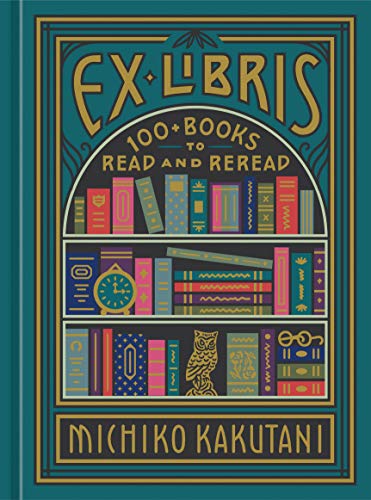
In my more morbid moments, when I imagine how I would approach the remainder of my life if I knew that I was going to die young of a terminal illness, I think about self-publishing a selection of my best blog posts and book reviews. A personal greatest hits, if you would, and anyone could forgive the self-indulgence because, hey, she’s probably going to die soon. But then I open a book like this and realize that a collection of book reviews can actually be pretty tedious, even when written by one of the greats.
“Like all lists and anthologies, the selections here are subjective and decidedly arbitrary,” Kakutani warns in her introduction. What this means in practice is that: a) if I’d read a particular book, I didn’t need to read a ~1000-word review of it; b) if I hadn’t read the book but wanted to, I avoided the essay in fear of spoilers (e.g. she does reveal some specific incidents from Mary Karr’s The Liars’ Club, which I have on the shelf and was looking forward to; I’ll just wait until I’ve forgotten); and c) if I hadn’t read the book and didn’t want to (there is LOTS of history and politics here, with plenty of Trump jabs shoehorned in; you do know her only previous book was a diatribe against Trump, right?), I wasn’t interested. So, while there were a few pieces I appreciated, such as one on the enduring appeal of The Great Gatsby, which I recently read a third time for book club, not many caught my eye as I skimmed the book.
In any case, it’s not a book for reading all the way through but one for having on the coffee table to read the occasional essay. It is gorgeously put together, what with Dana Tanamachi’s illustrations in the style of vintage bookplates, so would still be a lovely reference book to have around. Think of it as a collection of amuse-bouches to whet your appetite to read the books you’ve always meant to pick up but haven’t managed yet (for me, that would be As I Lay Dying and Mason & Dixon). See Susan’s more judicious review here.
My rating: 
 I found plenty of other books on Goodreads with the title Ex Libris, such as this one, a compendium of library-themed fantasy and science fiction stories. (Yes, really.)
Have you read one of these? Which did you prefer?
My Best Backlist Reads of 2020
Like many book bloggers, I’m irresistibly drawn to the shiny new books released each year. However, I consistently find that many of my most memorable reads were published years or even decades ago. These 29 selections, in alphabetical order by author name, account for the rest of my 4.5- and 5-star ratings of the year. Five rereads made it onto my list.
Fiction
 Americanah by Chimamanda Ngozi Adichie: Through Ifemelu’s years of studying, working, and blogging her way around the Eastern seaboard of the United States, Adichie explores the ways in which the experience of an African abroad differs from that of African Americans. On a sentence level as well as at a macro plot level, this was utterly rewarding.
 Year of Wonders by Geraldine Brooks: In 1665, with the Derbyshire village of Eyam in the grip of the Plague, the drastic decision is made to quarantine it. Frustration with the pastor’s ineffectuality attracts people to religious extremism. Anna’s intimate first-person narration and the historical recreation are faultless, and there are so many passages that feel apt.
 Shotgun Lovesongs by Nickolas Butler: Four childhood friends from Little Wing, Wisconsin. Which bonds will last, and which will be strained to the breaking point? This is a book full of nostalgia and small-town atmosphere. All the characters wonder whether they’ve made the right decisions or gotten stuck. A lot of bittersweet moments, but also comic ones.
 Kindred by Octavia E. Butler: A perfect time-travel novel for readers who quail at science fiction. Dana, an African American writer in Los Angeles, is dropped into early-nineteenth-century Maryland. This was such an absorbing read, with first-person narration that makes you feel you’re right there alongside Dana on her perilous travels.
 Dominicana by Angie Cruz: Ana Canción is just 15 when she arrives in New York from the Dominican Republic on the first day of 1965 to start her new life as the wife of Juan Ruiz. An arranged marriage and arriving in a country not knowing a word of the language: this is a valuable immigration story that stands out for its plucky and confiding narrator.
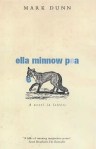 Ella Minnow Pea by Mark Dunn: A book of letters in multiple sense. Laugh-out-loud silliness plus a sly message about science and reason over superstition = a rare combination that made this an enduring favorite. On my reread I was more struck by the political satire: freedom of speech is endangered in a repressive society slavishly devoted to a sacred text.
 Love Medicine by Louise Erdrich: Interlocking stories that span half a century in the lives of a couple of Chippewa families that sprawl out from a North Dakota reservation. Looking for love, looking for work. Getting lucky, getting even. Their problems are the stuff of human nature and contemporary life. I adored the descriptions of characters and of nature.
 Notes from an Exhibition by Patrick Gale: Nonlinear chapters give snapshots of the life of a bipolar artist and her interactions with her husband and children. Their Quakerism sets up a calm and compassionate atmosphere, but also allows family secrets to proliferate. The novel questions patterns of inheritance and the possibility of happiness.
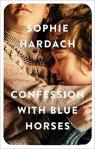 Confession with Blue Horses by Sophie Hardach: When Ella’s parents, East German art historians who came under Stasi surveillance, were caught trying to defect, their children were taken away from them. Decades later, Ella is determined to find her missing brother and learn what really happened to her mother. Eye-opening and emotionally involving.
 The Go-Between by L.P. Hartley: Twelve-year-old Leo Colston is invited to spend July at his school friend’s home, Brandham Hall. You know from the famous first line on that this juxtaposes past and present. It’s masterfully done: the class divide, the picture of childhood tipping over into the teenage years, the oppressive atmosphere, the comical touches.
 Our Souls at Night by Kent Haruf: Addie is a widow; Louis is a widower. They’re both lonely and prone to fretting about what they could have done better. Would he like to come over to her house at night to talk and sleep? Matter-of-fact prose, delivered without speech marks, belies a deep undercurrent of emotion. Understated, bittersweet, realistic. Perfect.
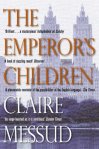 The Emperor’s Children by Claire Messud: A 9/11 novel. The trio of protagonists, all would-be journalists aged 30, have never really had to grow up; now it’s time to get out from under the shadow of a previous generation and reassess what is admirable and who is expendable. This was thoroughly engrossing. Great American Novel territory, for sure.
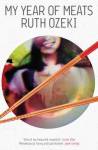 My Year of Meats by Ruth Ozeki: A Japanese-American filmmaker is tasked with finding all-American families and capturing their daily lives – and best meat recipes. There is a clear message here about cheapness and commodification, but Ozeki filters it through the wrenching stories of two women with fertility problems. Bold if at times discomforting.
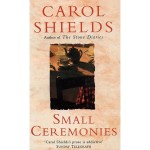 Small Ceremonies by Carol Shields: An impeccable novella, it brings its many elements to a satisfying conclusion and previews the author’s enduring themes. Something of a sly academic comedy à la David Lodge, it’s laced with Shields’s quiet wisdom on marriage, parenting, the writer’s vocation, and the difficulty of ever fully understanding another life.
 Larry’s Party by Carol Shields: The sweep of Larry’s life, from youth to middle age, is presented chronologically through chapters that are more like linked short stories: they focus on themes (family, friends, career, sex, clothing, health) and loop back to events to add more detail and new insight. I found so much to relate to in Larry’s story; Larry is really all of us.
 Abide with Me by Elizabeth Strout: Tyler Caskey is a widowed pastor whose five-year-old daughter has gone mute and started acting up. As usual, Strout’s characters are painfully real, flawed people, often struggling with damaging obsessions. She tenderly probes the dark places of the community and its minister’s doubts, but finds the light shining through.
 The Wife by Meg Wolitzer: On the way to Finland, where her genius writer husband will accept the prestigious Helsinki Prize, Joan finally decides to leave him. Alternating between the trip and earlier in their marriage, this is deceptively thoughtful with a juicy twist. Joan’s narration is witty and the point about the greater value attributed to men’s work is still valid.
Nonfiction
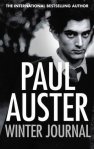 Winter Journal by Paul Auster: Approaching age 64, the winter of his life, Auster decided to assemble his most visceral memories: scars, accidents and near-misses, what his hands felt and his eyes observed. The use of the second person draws readers in. I particularly enjoyed the tour through the 21 places he’s lived. One of the most remarkable memoirs I’ve ever read.
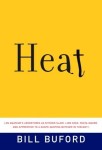 Heat by Bill Buford: Buford was an unpaid intern at Mario Batali’s famous New York City restaurant, Babbo. In between behind-the-scenes looks at frantic sessions of food prep, Buford traces Batali’s culinary pedigree through Italy and London. Exactly what I want from food writing: interesting trivia, quick pace, humor, and mouthwatering descriptions.
 Sixpence House: Lost in a Town of Books by Paul Collins: Collins moved to Hay-on-Wye with his wife and toddler son, hoping to make a life there. As he edited the manuscript of his first book, he started working for Richard Booth, the eccentric bookseller who crowned himself King of Hay. Warm, funny, and nostalgic. An enduring favorite of mine.
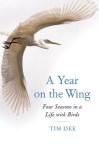 A Year on the Wing by Tim Dee: From a life spent watching birds, Dee weaves a mesh of memories and recent experiences, meditations and allusions. He moves from one June to the next and from Shetland to Zambia. The most powerful chapter is about watching peregrines at Bristol’s famous bridge – where he also, as a teen, saw a man commit suicide.
 The Frayed Atlantic Edge by David Gange: While kayaking down the western coast of the British Isles and Ireland, Gange delves into the folklore, geology, history, local language and wildlife of each region and island group – from the extreme north of Scotland at Muckle Flugga to the southwest tip of Cornwall. An intricate interdisciplinary approach.
 Traveling Mercies: Some Thoughts on Faith by Anne Lamott: There is a lot of bereavement and other dark stuff here, yet an overall lightness of spirit prevails. A college dropout and addict, Lamott didn’t walk into a church and get clean until her early thirties. Each essay is perfectly constructed, countering everyday angst with a fumbling faith.
 In the Dream House by Carmen Maria Machado: This has my deepest admiration for how it prioritizes voice, theme and scene, gleefully does away with chronology and (not directly relevant) backstory, and engages with history, critical theory and the tropes of folk tales to interrogate her experience of same-sex domestic violence. (Second-person narration again!)
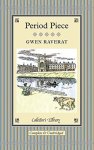 Period Piece by Gwen Raverat: Raverat was a granddaughter of Charles Darwin. This is a portrait of what it was like to grow up in a particular time and place (Cambridge from the 1880s to about 1909). Not just an invaluable record of domestic history, it is a funny and impressively thorough memoir that serves as a model for how to capture childhood.
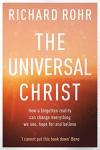 The Universal Christ by Richard Rohr: I’d read two of the Franciscan priest’s previous books but was really blown away by the wisdom in this one. The argument in a nutshell is that Western individualism has perverted the good news of Jesus, which is renewal for everything and everyone. A real gamechanger. My copy is littered with Post-it flags.
 First Time Ever: A Memoir by Peggy Seeger: The octogenarian folk singer and activist has packed in enough adventure and experience for multiple lifetimes, and in some respects has literally lived two: one in America and one in England; one with Ewan MacColl and one with a female partner. Her writing is punchy and impressionistic. She’s my new hero.
 A Three Dog Life by Abigail Thomas: A memoir in essays about her husband’s TBI and what kept her going. Unassuming and heart on sleeve, Thomas wrote one of the most beautiful books out there about loss and memory. It is one of the first memoirs I remember reading; it made a big impression the first time, but I loved it even more on a reread.
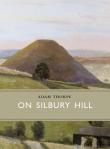 On Silbury Hill by Adam Thorpe: Explores the fragmentary history of the manmade Neolithic mound and various attempts to excavate it, but ultimately concludes we will never understand how and why it was made. A flawless integration of personal and wider history, as well as a profound engagement with questions of human striving and hubris.

(Books not pictured were read digitally, or have already gone back to the library.)
And if I really had to limit myself to just two favorites – my very best fiction and nonfiction reads of the year – they would be Our Souls at Night by Kent Haruf and Winter Journal by Paul Auster.
What were your best backlist reads this year?
Best of 2020: Nonfiction
Complementing yesterday’s list of my top fiction and poetry reads of 2020, I have chosen my six favorite nonfiction works of the year. Last year’s major themes were bodies, archaeology, and the environmental crisis; this year’s are adjacent: anatomy, nature, deep time, death, and questions of inheritance, both within families and more broadly. What will we leave behind? As usual, these topics reflect my own interests but also, I think, something of the zeitgeist.
Let the countdown begin!
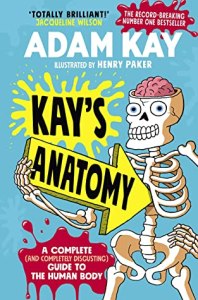 Kay’s Anatomy: A Complete (and Completely Disgusting) Guide to the Human Body by Adam Kay: Think of this as a juvenile, graphic novel version of Bill Bryson’s The Body; that’s exactly how thorough, accessible, and entertaining it is. Kay ditches his usual raunchiness and plumps for innocuous forms of humor: puns, dad jokes, toilet humor, running gags and so on. But where it counts – delivering vital information about not smoking, mental health, puberty, and facing the death of someone you love – Kay is completely serious, and always lets young readers know when it’s essential to tell an adult or ask a doctor. Henry Paker’s silly, grotesque illustrations are the perfect accompaniment.
-
 Sign Here If You Exist and Other Essays by Jill Sisson Quinn: The naturalist’s second essay collection considers themes of connection and change. Quinn regrets the afterlife prospect she lost along with her childhood Christian faith, while adopting a baby leads her to question notions of belonging and inheritance. Whether she’s studying wasps and reptiles or musing on family and faith, she knits her subjects together with meticulous attention. Putting self and nature under the microscope, she illuminates both. (Reviewed for Foreword.)
 Footprints: In Search of Future Fossils by David Farrier: Blending human and planetary history, environmental realism and literary echoes, Farrier, a lecturer in English literature, tells the story of the human impact on the Earth. Each chapter is an intricate blend of fact, experience, and story. We’ll leave behind massive road networks, remnants of coastal megacities, plastics, carbon and methane in the permafrost, the fossilized Great Barrier Reef, nuclear waste, and jellyfish-dominated oceans. An invaluable window onto the deep future.
-
 Greenery: Journeys in Springtime by Tim Dee: From the Cape of Good Hope to the Arctic Circle, Dee tracks the spring as it travels north. From first glimpse to last gasp, moving between his homes in two hemispheres, he makes the season last nearly half the year. His main harbingers are migrating birds, starting with swallows. The book is steeped in allusions and profound thinking about deep time and what it means to be alive in an era when nature’s rhythms are becoming distorted. A fresh, masterful model of how to write about nature.
-
 Dear Life: A Doctor’s Story of Love and Loss by Rachel Clarke: I’ve read so many doctors’ memoirs and books about death that it takes a truly special one to stand out. Clarke specializes in palliative medicine and alternates her patients’ stories with her own in a natural way. A major theme is her relationship with her doctor father and his lessons of empathy and dedication. She wrote in the wake of his death from cancer – an experience that forced her to practice what she preaches as a hospice doctor: focus on quality of life rather than number of days. This passionate and practical book encourages readers to be sure they and their relatives have formalized their wishes for end-of-life care and what will happen after their death.
 Vesper Flights by Helen Macdonald: Any doubt that Macdonald could write a worthy follow-up to H Is for Hawk evaporates instantly. Though these essays were written for various periodicals and anthologies and range in topic from mushroom-hunting to deer–vehicle collisions and in scope from deeply researched travel pieces to one-page reminiscences, they form a coherent whole. Equally reliant on argument and epiphany, the book has more to say about human–animal interactions in one of its essays than some whole volumes manage. As you might expect, birds are a recurring theme. Her final lines are always breath-taking. I’d rather read her writing on any subject than almost any other author’s.
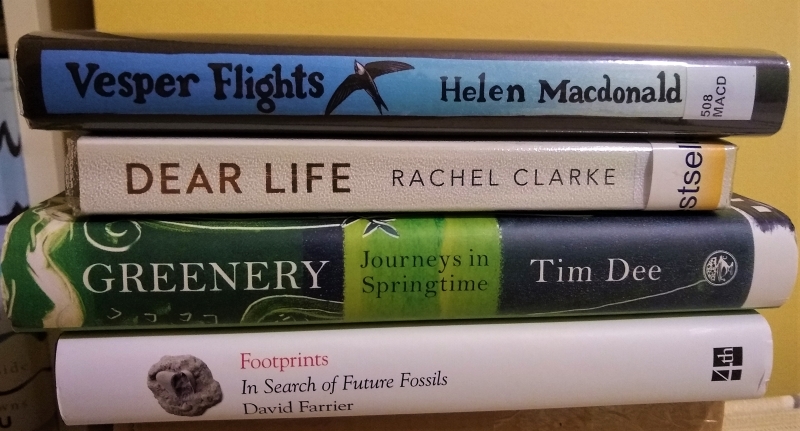
(Books not pictured were read digitally, or have already gone back to the library.)
What were some of your top nonfiction reads of the year?
Upcoming posts:
28th: Library Checkout
29th: Runners-up from 2020 (all genres)
30th: Best backlist reads
31st: Random superlatives and some statistics
Catching Up on Review Books: Antlers, Arnett, E. Williams, Yamboliev
Four July–August releases: Scottish nature writing, the quirky story of a family taxidermy business in Florida, a dual-timeline novel set at an unusual dictionary’s headquarters, and a critical and personal response to Jeffrey Eugenides’ Middlesex.
Antlers of Water: Writing on the Nature and Environment of Scotland, edited by Kathleen Jamie
 This nature writing anthology of essays, poems and visual art drew me because of contributor names like GP Gavin Francis (reviewed: Shapeshifters), Amy Liptrot (the Wainwright Prize-winning memoir The Outrun), singer/songwriter Karine Polwart, and Shetland chronicler Malachy Tallack (reviewed: The Un-Discovered Islands and The Valley at the Centre of the World), not to mention editor Kathleen Jamie. Archaeology and folk music evoke the past, while climate change scenarios inject a sense of a menacing future. Seabirds circle and coastal and island scenery recurs. Entries from Alec Finlay’s “A Place-Aware Dictionary” disguise political points under tongue-in-cheek language, as in a definition of foraging: “Later sometimes referred to as the Brexit Diet.” The (sub)urban could be more evident, and I didn’t need two bouts of red deer sex, but there’s still a nice mix of tones and approaches here.
Six best pieces (out of 24): Chris Powici on wind turbines and red kites at the Braes of Doune; Jacqueline Bain on how reduced mobility allows her to observe wasps closely; Jim Crumley on sea eagle reintroductions and the ancient sky burials that took place at the Tomb of the Eagles; Jen Hadfield on foraging for whelks at the ocean’s edge, in a run-on hybrid narrative; Sally Huband on how persecution of ravens and of women (still not allowed to take part in Up Helly Aa festivities) continues on Shetland; and Liptrot on how wild swimming prepared her for childbirth and helped her to recover a sense of herself separate from her baby. And if I had to pick just one, the Huband – so brave and righteously angry.
Favorite lines:
“Compromises need to be made. An overlap between the wild and the human has to be negotiated and managed. … So let’s play merry hell with the distinction between what counts as wild and what counts as human, between what’s condemned as a visual obscenity and what’s seen as a marvel of the age. Let’s mess up the boundaries and get a new measure of ourselves as a species.” (Powici)
inspiration to get out walking again: “Don’t wait / thinking you’ve seen it all already … don’t wait thinking you need better boots / or a waterproof that’ll keep out the rain. / It won’t. Don’t wait.” (“Water of Ae” by Em Strang)
My rating: 
My thanks to Canongate for the free copy for review.
Mostly Dead Things by Kristen Arnett
“We couldn’t ever leave roadkill behind. Something inside us always made us stop to pick up dead things.”
 After her father’s suicide, Jessa-Lynn Morton takes over the family taxidermy business in central Florida. Despite her excessive drinking and grief over both her father and her best friend and long-time on-and-off girlfriend (also, inconveniently, her brother’s wife) Brynn, who recently took off, she’s just about holding it together. That is, until 1) her mother takes to composing interspecies orgies and S&M scenes in the shop window and 2) her niece and nephew, Lolee and Bastien, start bringing in specimens for taxidermy that they haven’t exactly obtained legally. Gallery owner Lucinda Rex takes an interest in her mother’s ‘art’ and is soon a new romantic interest for Jessa. But the entire family is going to have to face its issues before her professional and love life can be restored.
This debut novel’s title, cover and premise were utterly irresistible to me, and though I loved the humid Florida setting, it was all a bit too much. At 200 pages this could have been a razor-sharp new favorite, but instead there was a lot of sag in its 350+ pages. Alternating chapters based around mounting particular animals give glimpses into the family’s past but mostly have Jessa mooning over Brynn. Her emotional journey starts to feel belabored; it’s as if an editor tried to rein in Arnett’s campy glee at the dysfunctional family’s breakdown and made her add in some amateur psychoanalysis, and for me this diluted the quirky joy.
Skinning and sex scenes are equally explicit here. This never bothered me, but it should go without saying that it is not a book for the squeamish. It’s when sex and taxidermy mix that things get a little icky, as in her mother’s X-rated tableaux and a line like “Often I found myself comparing the limber body of a deer with the long line of [Lucinda’s] legs or the strong cord of her neck.” Believe it or not, this is not the first queer taxidermy novel I’ve read. The other one, English Animals by Laura Kaye, was better. I’d wanted another Swamplandia! but got something closer to Black Light instead.
My rating: 
My thanks to Corsair for the free copy for review.
The Liar’s Dictionary by Eley Williams
 Mallory is five years into an internship at Swansby House, the London headquarters of Swansby’s dictionary. The dictionary is known for being unfinished – too many of its lexicographers left for WWI and never returned – and for having made-up words. In 1899, Peter Winceworth, the butt of jokes among his colleagues, started composing mountweazels (fake entries) and inserting them into the dictionary. In the contemporary story line, Mallory’s job is to remove the mountweazels as the dictionary is prepared for digitization. But her attention is distracted by anonymous bomb threats and by lingering shame about her sexuality – Mallory thinks she’s “out enough,” but her girlfriend Pip begs to differ.
Chapters are headed with vocabulary words running from A to Z, and alternate between Mallory’s first-person narration and a third-person account of Winceworth’s misadventures at the turn of the twentieth century. In any book with this kind of structure I seem to prefer the contemporary strand and itch to get back to it, though there is a quite astounding scene in which Winceworth intervenes to help a choking pelican. Events at Swansby House resonate and mirror each other across the dozen decades, with both main characters emerging with a new sense of purpose after an epiphany that life is about more than work. Though silly in places, this has a winning love of words and characters you’ll care about.
A favorite made-up word: “Mammonsomniate: to dream that money might make anything possible.”
Readalikes: Enter the Aardvark by Jessica Anthony and Boxer, Beetle by Ned Beauman
My rating:
My thanks to William Heinemann for the proof copy for review.
Looking Was Not Enough: Jeffrey Eugenides’ Middlesex by Irena Yamboliev
 When I worked in a university library and read Middlesex during quiet evenings on the circulation desk in 2009, a colleague asked me, “Is that about the London borough?” My reply: “Er, no, it’s about a hermaphrodite.” That’s an off-putting, clinical sort of word, but it does appear in the first paragraph of this family saga with a difference, after the mythological intensity and medical necessity implied by the killer opening line: “I was born twice: first, as a baby girl, on a remarkably smogless Detroit day in January of 1960; and then again, as a teenage boy, in an emergency room near Petoskey, Michigan, in August of 1974.”
Cal, born Calliope but now living as a man and working in the Foreign Service, recounts three generations of family history, from Greece to Detroit to Berlin. “Because … their parents were dead and their village destroyed, because no one in Smyrna knew who they were,” brother and sister Lefty and Desdemona became lovers and got married on the boat over to America. They were his grandparents. Add to that his parents’ first-cousin marriage and you see how inbreeding played genetic havoc and made way for Callie/Cal.
 I intended to reread Middlesex, which I consider one of my all-time favorite books, but only made it through 60 pages on this occasion. Still, Yamboliev, a Bulgarian-American who teaches at Stanford, reminded me of everything I love about it: the medical theme, the exploration of selfhood, the playful recreation of the past. Drawing parallels with her own family’s move to America, she ponders the disconnection from the home country and the creation of a new life story. “To tell ourselves where we come from—to narrate—is to find a pattern retroactively.” She also looks at literary precursors like Ovid’s Metamorphoses, Herculine Barbin’s memoir, and Balzac’s and Barthes’s writings on a castrato. “Does transformation make the self discontinuous?” is one of her central questions, and she likens Cal’s situation to that of trans men who have to train themselves to speak, dress and act in a convincingly masculine way.
This is part of Fiction Advocate’s “Afterwords” series; all its monographs do a wonderful job of blending literary criticism, enthusiastic appreciation, and autobiographical reflection as life dovetails with (re)reading. I’ve previously reviewed the Fiction Advocate books on Blood Meridian, Fun Home, and The Year of Magical Thinking in this post, and the ones on Karl Ove Knausgaard’s My Struggle and Cheryl Strayed’s Wild in this one.
My rating:
My thanks to Fiction Advocate for the free e-copy for review.
 Bookish Beck = Rebecca Foster. American transplant to England. Freelance proofreader and book reviewer.
