Four June Releases (Fiction & Poetry): Bennett, Gabrielsen, Kwek and Watts
(A rare second post in a day from me, to make way for tomorrow’s list of the best books of the first half of the year.) My four new releases for June are a novel about the complications of race and sexuality in 1950s–80s America, a novella in translation about a seabird researcher struggling through a time of isolation, and two new poetry books from Carcanet Press. As a bonus just in time for Pride Month, I finish with a mini write-up of The Book of Queer Prophets, an anthology of autobiographical essays that was published late last month.
The Vanishing Half by Brit Bennett
 Like some lost mid-career gem from Toni Morrison, this novel is meaty with questions of racial and sexual identity and seems sure to follow in the footsteps of Ruby and An American Marriage with a spot in Oprah’s book club and on Barack Obama’s summer reading list.
It’s the story of light-skinned African American twins Stella and Desiree Vignes, and how their paths divide in 1954. Both are desperate to escape from Mallard, Louisiana, where their father was lynched and their mother cleans white people’s houses. Desiree works in fingerprinting for the FBI in Washington, D.C., but in 1968 leaves an abusive marriage to return to Mallard with her dark-skinned daughter, Jude Winston. Stella, on the other hand, has been passing as white for over a decade. She was a secretary for the man who became her husband, Blake Sanders, and now lives a life of comfort in a Los Angeles subdivision.
The twins’ decisions affect the next generation, too. Both have one daughter. Jude goes to college in L.A., where she meets and falls in love with photographer Reese (born Therese), who is, in a different sense, “passing” until he can afford the surgery that will align his body with his gender. In a coincidence that slightly strains belief, Jude runs into Stella’s daughter, Kennedy, and over the next seven years the cousins – one a medical student; the other an actress – continue to meet occasionally, marvelling at how two family lines that started in Mallard, a tiny town that doesn’t even exist anymore, could have diverged so dramatically.
This is Bennett’s second novel, after The Mothers, which I’m keen to read. It’s perceptive and beautifully written, with characters whose struggles feel genuine and pertinent. Though its story line ends in the late 1980s, it doesn’t feel passé at all. The themes of self-reinvention and running from one’s past resonate. I expected certain characters to be forced into moments of reckoning, but the plot is a little messier than that – and that’s more like real life. A shoo-in for next year’s Women’s Prize list.
My rating: 
My thanks to Dialogue Books for the free copy for review.
Ankomst by Gøhril Gabrielsen (2017)
[Translated from the Norwegian by Deborah Dawkin]
 The unnamed narrator of Gabrielsen’s fifth novel is a 36-year-old researcher working towards a PhD on the climate’s effects on populations of seabirds, especially guillemots. During this seven-week winter spell in the far north of Norway, she’s left her three-year-old daughter behind with her ex, S, and hopes to receive a visit from her lover, Jo, even if it involves him leaving his daughter temporarily. In the meantime, they connect via Skype when signal allows. Apart from that and a sea captain bringing her supplies, she has no human contact.
Daily weather measurements and bird observations still leave too much time alone in a cramped cabin, and this starts to tell in the protagonist’s mental state: she’s tormented by sexual fantasies, by memories of her life with S, and by the thought of a local family, the Berthelsens, who experienced a disastrous house fire in 1870. More and more frequently, she finds herself imagining what happened to Olaf and Borghild Berthelsen. Solitude and this growing obsession with ghosts of the past make her start to lose her grip on reality.
I’d encountered an unreliable narrator and claustrophobic setting before from Gabrielsen with her second novel, The Looking-Glass Sisters. Extreme weather and isolation account for this being paired with Snow, Dog, Foot by Claudio Morandini as the first two books in Peirene’s 2020 “Closed Universe” trilogy. I was also reminded of Sarah Moss’s Night Waking. However, I found this novella’s metaphorical links – how seabirds and humans care for their young; physical and emotional threats; lowering weather and existential doom – too obvious.
My rating: 
My thanks to Peirene Press for the free copy for review.
Moving House by Theophilus Kwek
 This is the first collection of the Chinese Singaporean poet’s work to be published in the UK. Infused with Asian history, his elegant verse ranges from elegiac to romantic in tone. Many of the poems are inspired by historical figures and real headlines. There are tributes to soldiers killed in peacetime training and accounts of high-profile car accidents; “The Passenger” is about the ghosts left behind after a tsunami. But there are also poems about the language and experience of love. I also enjoyed the touches of art and legend: “Monologues for Noh Masks” is about the Pitt-Rivers Museum collection, while “Notes on a Landscape” is about Iceland’s geology and folk tales. In most places alliteration and enjambment produce the sonic effects, but there are also a handful of rhymes and half-rhymes, some internal.
My individual favorite poems included “Prognosis,” “Sophia” (made up of two letters Sir Thomas Stamford Raffles writes home to his wife while surveying in Singapore), and “Operation Thunderstorm.” As an expat and something of a nomad, I especially loved the title poem, which comes last and explains the cover image: “every house has a skeleton – / while the body learns it must carry less / from place to place, a kind of tidiness / that builds, hardens. Some call it fear, // of change, or losing what we cannot keep. / Others, experience.” Recommended to fans of Mary Jean Chan, Nausheen Eusuf, Kei Miller and Ocean Vuong.
My rating:
My thanks to Carcanet Press for the PDF copy for review.
Red Gloves by Rebecca Watts
 I noted the recurring comparison of natural and manmade spaces; outdoors (flowers, blackbirds, birds of prey, the sea) versus indoors (corridors, office life, even Emily Dickinson’s house in Massachusetts). The style shifts from page to page, ranging from prose paragraphs to fragments strewn across the layout. Most of the poems are in recognizable stanzas, though these vary in terms of length and punctuation. Alliteration and repetition (see, as an example of the latter, her poem “The Studio” on the TLS website) take priority over rhymes. I was reminded of Elizabeth Bishop in places, while “Whereas” had me thinking of Stephen Dunn’s collection of that name (Layli Long Soldier also has a poetry book of the same title). A few of my individual favorite poems were “Surveillance,” “Building” and “Admission” (on a medical theme: “What am I afraid of? / The breaching of skin. / Violation of laws that / separate outside from in. / Liquidation of the thing / I call me.”).
My rating: 
My thanks to Carcanet Press for the PDF copy for review.
And a bonus for Pride Month:
The Book of Queer Prophets: 24 Writers on Sexuality and Religion, edited by Ruth Hunt
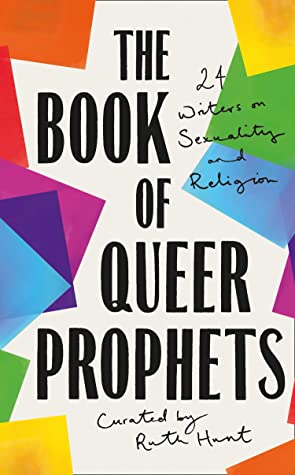 There isn’t, or needn’t be, a contradiction between faith and queerness, as the authors included in this anthology would agree. Many of them are stalwarts at Greenbelt, a progressive Christian summer festival – Church of Scotland minister John L. Bell even came out there, in his late sixties, in 2017. I’m a lapsed regular attendee, so a lot of the names were familiar to me, including those of poets Rachel Mann and Padraig O’Tuama.
Most of the contributors are Christian, then, including ordained priests like Desmond Tutu’s daughter, Mpho, and LGBT ally Kate Bottley, but we also hear from Michael Segalov, a gay Jewish man in London, and from Amrou Al-Kahdi (author of Unicorn: The Memoir of a Muslim Drag Queen), who describes the affirmation they found in the Sufi tradition. Dustin Lance Black tells of the exclusion LGBT Mormons still encounter.
Jarel Robinson-Brown addresses his lament on mistreatment to his nephew, as James Baldwin did in “My Dungeon Shook” (in The Fire Next Time). Tamsin Omond recounts getting married to Melissa on a London bridge in the middle of an Extinction Rebellion protest. Erin Clark, though bisexual, knows she can pass as straight because she’s marrying a man – so is she ‘gay enough?’ Two trans poets write of the way cathedrals drew them into faith. The only weaker pieces are by Jeanette Winterson (there’s nothing new if you’ve read her memoir) and Juno Dawson (entirely throwaway; ‘I’m an atheist, but it’s okay to be religious, too’).
Again and again, these writers voice the certainty that they are who God means them to be. A few of them engage with particular passages from the Bible, offering contextual critiques or new interpretations, but most turn to scripture for its overall message of love and justice. Self-knowledge is a key component of their search for truth. And the truth sets people free.
My rating:
I read an e-copy via NetGalley.
What recent releases can you recommend?
20 Books of Summer, #3–4: Ella Minnow Pea & Eating for England
June hasn’t seen much progress on this project – though I’m currently on my fifth read, Kitchen Confidential by Anthony Bourdain, and enjoying it a lot – so July and August will need to include eight food- and drink-themed books each.
Today I have a reread of a funny (yet more serious than I remembered) favorite and a light collection of mini-essays on the English love affair with particular foodstuffs.
Ella Minnow Pea by Mark Dunn (2001)
From my original Bookkaholic review from 2013:
Dunn’s debut is a book of letters – in more senses than one. It is a fairly traditional epistolary novel, but also toys with the letters of the alphabet: the wordy citizens of the island nation of Nollop are zealously engaged in creating pangrams (pithy sentences that contain each letter of the alphabet) in tribute to their founder, Nevin Nollop, who authored “The quick brown fox jumps over the lazy dog,” the original pangram displayed in ceramic tiles on his statue in the public square. But things go awry when particular letters start falling off the monument.
A superstitious lot, the Nollop Council decide that the fallen letters can no longer be used, and the characters’ missives become increasingly constrained as they have to avoid certain vowels and consonants. Their writing grows exponentially avant-garde and hilarious as they resort to circumlocutions and phonetic spellings. Before long only L, M, N, O, and P can be used – which, handily, still allows for an approximation of the title character’s name. A madcap journey through the English language and its use in literature: enjoy the ride.
On this rereading…
 I engaged more with the individual characters: Ella and her parents, aunt and cousin; other members of the community; and a few off-island visitors who lead the research into what’s happening with the letters. I was also struck much more by the political satire: freedom of speech is endangered in a repressive society slavishly devoted to a sacred text. Those who continue to use forbidden letters are turned in by their neighbors or enemies and get 1) a warning, 2) a flogging or time in the headstocks, and 3) banishment. The council members see themselves as interpreting the will of Nollop, and believe the pangram to be a miraculous sentence that can never be bettered – but the citizens prove them wrong by creating a superior example (using only 32 letters, versus the fox’s 35) purely by accident.
A remembered favorite line that my husband and I often quote to each other – “No mo Nollop poop!” – doesn’t exist (it’s actually “No mo Nollop pomp! No mo Nollop poo poo!”). My favorite alternative phrase is “terminal-cot” for deathbed once D is disallowed. I also love the new days of the week: Sunshine, Monty, Toes, Wetty, Thurby, Fribs and Satto-Gatto.
Laugh-out-loud silliness plus a sly message about science and reason over superstition: a rare combination that makes this an enduring favorite. I also recommend Dunn’s Ibid: A Life (2004), which is told entirely through the footnotes of a biography, taking “reading between the lines” to a whole new level. I haven’t enjoyed his other novels as much as these two.
Source: Salvation Army store, Cambridge (September 2016)
My original rating (Borrowed from a friend – in 2007?):
My rating now: 
Eating for England by Nigel Slater (2007)
 Nigel Slater is a foodie known in the UK for his television programs and newspaper columns. Not as edgy as Gordon Ramsay, as matey as Jamie Oliver, or as ethically clued-in as Hugh Fearnley-Whittingstall, he doesn’t have a particular shtick. A middle-of-the road, middle-class type, he’s all about simple comfort food. We have a few of his cookbooks.
As in his memoir, Toast (2004), food links in to nostalgia for childhood. In 200 or so essays that range from a paragraph to a few pages in length, Slater extols everything from marmalade to Brussels sprouts. He devotes by far the most time to the sweet stuff, though, considering the respective merits of every type of biscuit, candy, chocolate bar and pudding. There’s a clear love here for teatime treats (“Afternoon tea may be the only meal we take that is purely and utterly for pleasure”) and for stodge (“Is there something in our demeanour, our national psyche, which makes heavy, rather bland food sit so comfortably with us?”).
This was all pleasant, if inconsequential. I enjoy ‘observing the English’-type books because I’m familiar enough to recognize everything but still foreign enough to enjoy the quaintness and contradictions. What rubbed me the wrong way, though, were the arch portraits of kinds of cooks. I don’t often write in my books, but I found myself leaving corrective comments in the margins in a few places, especially on “The Slightly Grubby Wholemeal Cook,” an unhelpful stereotype of the “dirty hippie.” His ideas about hygiene and political correctness are a little off in this one. I also objected to his annoyance at people who won’t simply split the bill after a meal out (I’ll pay for what I ordered, thank you), and his defense of the gollywog used in Robertson’s advertising seems particularly ill judged at the current moment.
Source: Charity shop in Newton Stewart (Wigtown trip, April 2018)
My rating:
Three Out-of-the-Ordinary Memoirs: Kalb, Machado, McGuinness
Recently I have found myself drawn to memoirs that experiment with form. I’ve read so many autobiographical narratives at this point that, if it’s to stand out for me, a book has to offer something different, such as a second-person point-of-view or a structure of linked essays. Here are a few such that I’ve read this year but not written about yet. All have strong themes of memory and the creation of the self or the family.
Nobody Will Tell You This But Me: A True (As Told to Me) Story by Bess Kalb (2020)
 You know from the jokes: Jewish (grand)mothers are renowned for their fiercely protective, unconditional love, but also for their tendency to nag. Both sides of a stereotypical matriarch are on display in this funny and heartfelt family memoir, narrated in the second person – as if straight to Kalb from beyond the grave – by her late grandmother, Barbara “Bobby” Bell.
Bobby gives her beloved Bessie a tour through four generations of strong women, starting with her own mother, Rose, and her lucky escape from a Belarus shtetl. The formidable émigré ended up in a tiny Brooklyn apartment, where she gave birth to five children on the dining room table. Bobby and her husband, a real estate entrepreneur and professor, had one daughter, Robin, who in turn had one daughter, Bess. Bobby and Robin had a fraught relationship, but Bess’s birth seemed to reset the clock. Grandmother and granddaughter had a special bond: Bobby was the one to take her to preschool and wait outside the door until she was sure she’d be okay, and always the one to pick her up from sleepovers gone wrong.
Kalb is a Los Angeles-based writer for Jimmy Kimmel Live! With her vivid scene-setting and comic timing, you can see why she’s earned a Writers Guild Award and an Emmy nomination. But she also had great material to work with: Bobby’s e-mails and verbatim voicemail messages are hilarious. Kalb dots in family photographs and recreates in-person and phone conversations, with her grandmother forthrightly questioning her fashion choices and non-Jewish boyfriend. As the title phrase shows, Bobby felt she was the only one who would come forward with all this (unwanted but) necessary advice. Kalb keeps things snappy, alternating between narrative chapters and the conversations and covering a huge amount of family history in just 200 pages. It gets a little sentimental towards the end, but with her grandmother’s death still fresh you can forgive her that. This was a real delight.
My rating:
My thanks to Zoe Hood and Kimberley Nyamhondera of Little, Brown (Virago) for the free PDF copy for review.
In the Dream House: A Memoir by Carmen Maria Machado (2019)
I’m stingy with 5-star ratings because, for me, giving a book top marks means a) it’s a masterpiece, b) it’s a game/mind/life changer, and/or c) it expands the possibilities of its particular genre. In the Dream House fits all three criteria. (Somewhat to my surprise, given that I couldn’t get through more than half of Machado’s acclaimed story collection, Her Body and Other Parties, and only enjoyed it in parts.)
Much has been written about this memoir of an abusive same-sex relationship since its U.S. release in November. I feel I have little to add to the conversation beyond my deepest admiration for how it prioritizes voice, theme and scenes; gleefully does away with the chronology and (not directly relevant) backstory – in other words, the boring bits – that most writers would so slavishly detail; and engages with history, critical theory and the tropes of folk tales to constantly interrogate her experiences and perceptions.
 Most of the book is, like the Kalb, in the second person, but in this case the narration is not addressing a specific other person; instead, it’s looking back at the self that was caught in this situation (“If, one day, a milky portal had opened up in your bedroom and an older version of yourself had stepped out and told you what you know now, would you have listened?”), as well as – what the second person does best – putting the reader right into the narrative.
The “Dream House” is the Victorian house where Machado lived with her ex-girlfriend in Bloomington, Indiana for two years while she started an MFA course. It was a paradise until it wasn’t; it was a perfect relationship until it wasn’t. No one, least of all her, would have believed the perky little blonde writer she fell for would turn sadistic. A lot of it was emotional manipulation and verbal and psychological abuse, but there was definitely a physical element as well. Fear and self-doubt kept her trapped in a fairy tale that had long since turned into a nightmare. Writing it all out seven years later, the trauma was still there. Yet there was no tangible evidence (a police report, a restraining order, photos of bruises) to site her abuse anywhere outside of her memory. How fleeting, yet indelible, it had all been.
The book is in relatively short sections headed “Dream House as _________” (fill in the blank with everything from “Time Travel” to “Confession”), and the way that she pecks at her memories from different angles is perfect for recreating the spiral of confusion and despair. She also examines the history of our understanding of queer domestic violence: lesbian domestic violence, specifically, wasn’t known about until 30-some years ago.
The story has a happy ending in that Machado is now happily married. The bizarre twist, though, is that her wife, YA author Val Howlett, was the girlfriend of the woman in the Dream House when they first met. To start with, it was an “open relationship” (or at least the blonde told her so) that Machado reluctantly got in the middle of, before Val drifted away. That the two of them managed to reconnect, and got past their mutual ex, is truly astonishing. (See some super-cute photos from their wedding here.)
Some favorite lines:
“Clarity is an intoxicating drug, and you spent almost two years without it, believing you were losing your mind”
“That there’s a real ending to anything is, I’m pretty sure, the lie of all autobiographical writing. You have to choose to stop somewhere. You have to let the reader go.”
My rating: 
I read an e-copy via NetGalley.
Other People’s Countries: A Journey into Memory by Patrick McGuinness (2014)
This is a wonderfully atmospheric tribute to Bouillon, Belgium, a Wallonian border town with its own patois. However, it’s chiefly a memoir about the maternal side of the author’s family, which had lived there for generations. McGuinness grew up spending summers in Bouillon with his grandparents and aunt. Returning to the place as an adult, he finds it half-derelict but still storing memories around every corner.
 It is as much a tour through memory as through a town, reflecting on how our memories are bound up with particular sites and objects – to the extent that I don’t think I would find McGuinness’s Bouillon even if I went back to Belgium. “When I’m asked about events in my childhood, about my childhood at all, I think mostly of rooms. I think of times as places, with walls and windows and doors,” he writes. The book is also about the nature of time: Bouillon seems like a place where time stands still or moves more slowly, allowing its residents (including his grandfather, and Paprika, “Bouillon’s laziest man, who held a party to celebrate sixty years on the dole”) a position of smug idleness.
The book is in short vignettes, some as short as a paragraph; each is a separate piece with a title that remembers a particular place, event or local character. Some are poems, and there are also recipes and an inventory. The whole is illustrated with frequent period or contemporary black-and-white photographs. It’s an altogether lovely book that overcomes its narrow local interest to say something about how the past remains alive for us.
Some favorite lines:
“that hybrid long-finished but real-time-unfolding present tense … reflects the inside of our lives far better than those three stooges, the past, present and future”
a fantastic last line: “What I want to say is: I misremember all this so vividly it’s as if it only happened yesterday.”
My rating:
I read a public library copy.
Other unusual memoirs I’ve loved and reviewed here:
 Notes Made while Falling by Jenn Ashworth (essays, experimental structures)
Winter Journal by Paul Auster (second person)
This Really Isn’t about You by Jean Hannah Edelstein (nonchronological)
Traveling with Ghosts by Shannon Leone Fowler (short sections and time shifts)
The Lost Properties of Love by Sophie Ratcliffe (nonchronological essays)
Any offbeat memoirs you can recommend?
And the Winner of the Not the Wellcome Prize Is…
Constellations: Reflections from Life by Sinéad Gleeson
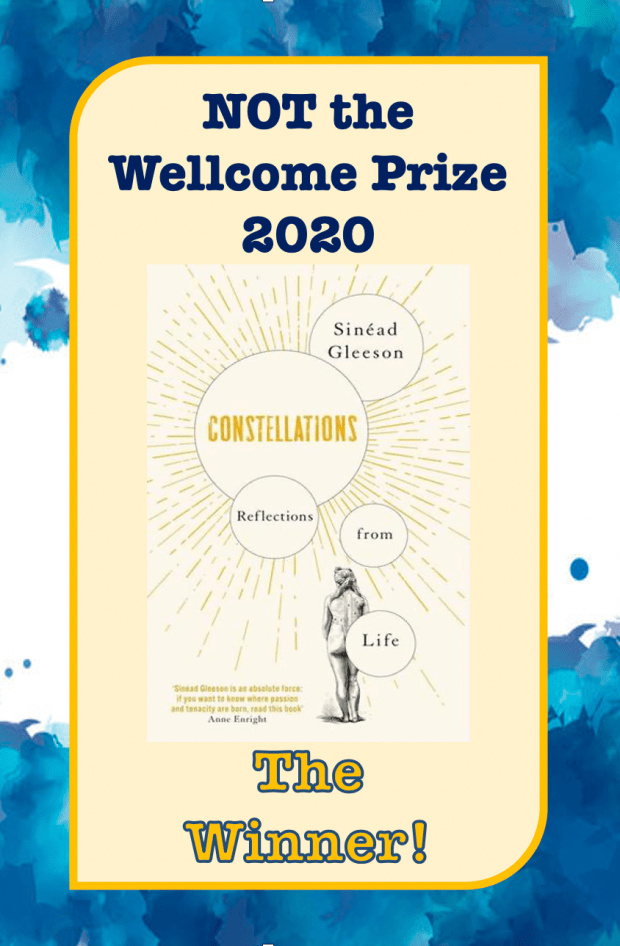
This book best met the criteria of the Wellcome Book Prize: “At some point, medicine touches all our lives. Books that find stories in those brushes with medicine are ones that add new meaning to what it means to be human. The subjects these books grapple with might include birth and beginnings, illness and loss, pain, memory, and identity. In keeping with its vision and goals, the Wellcome Book Prize aims to excite public interest and encourage debate around these topics.”
Jackie says (in her blog tour review): “Constellations is a collection of fourteen essays written by an eloquent storyteller. Each celebrates the imperfect body – its workings and failings. … The stories told are incisive and highly personal. They cover a variety of the author’s lived experiences including: bone disease, cancer treatment, pregnancy, motherhood, and death. … The writing throughout is percipient and exquisitely rendered, arguments expressed with clarity and compassion.”
Annabel says: “Gleeson’s beautifully written essays on her life, her health, pain and illness, motherhood, and being a woman in Ireland are deeply personal, yet speak volumes. Richly varied in style and closing with a poem written to her daughter, the collection explores her themes in elegant prose with not a word wasted. She questions, explains, understands, writing through pain, but also shows her joie de vivre. Superb!” (See more in her 5-star review.)
From my review (December 2018): “Gleeson turns pain into art. … She marvels at all that the body can withstand, but realizes that medical interventions leave permanent marks, physical or emotional. She also remarks on the essential loneliness of illness, and the likelihood of women’s pain not being believed in or acknowledged. This book feels timely and is inventive in how it brings together disparate topics to explore the possibilities and limitations of women’s bodies.”
Some favourite quotes from Constellations:
“Our bodies are sacred, certainly, but they are often not ours alone. Our hospital body, all rivers of scars; the day-to-day form that we present to the world … we create our own matryoshka bodies, and try to keep one that is just for us.”
“Joints can be replaced, organs transplanted, blood transfused, but the story of our lives is still the story of one body. From ill health to heartbreak, we live inside the same skin, aware of its fragility, grappling with our mortality.”
“Illness is an outpost: lunar, Arctic, difficult to reach.”
 (Honorable mention goes to The Remarkable Life of the Skin by Monty Lyman for winning the popular vote on Twitter. I was so pleased that we got 354 votes! We arrived at a winner, as we have in the past few years, through each member of the shadow panel doling out 21 points, assigning each book a point value from 1 to 6. The Twitter scores were assigned in the same way and added in, and the winner was the book with the most points in total.)
Thank you to the rest of the shadow panel (Annabel of Annabookbel, Clare of A Little Blog of Books, Laura of Dr. Laura Tisdall and Paul of Halfman, Halfbook) and to all the bloggers who took part in the blog tour for helping to showcase some of the best health-themed literature published in 2019.
Here’s hoping that this time next year some of us can be meeting up in person to celebrate the awarding of the 2021 Wellcome Book Prize.
Soul Food: Rereading Anne Lamott
I first read Anne Lamott’s autobiographical essays on faith in about 2005, when I was in my early twenties and a recovering fundamentalist and Republican. She’s a Northern Californian ex-alcoholic, a single mother, a white lady with dreadlocks. Her liberal, hippie approach to Christianity was a bit much for me back then. I especially remember her raging against George W. Bush and the war in Iraq. But even if I couldn’t fully get behind all of her views, her picture of a fumbling faith that doesn’t claim to know much for certain appealed to me. Jesus is for her the herald of a radical path of love and grace. Lamott describes herself stumbling towards kindness and forgiveness while uttering the three simplest and truest prayers she knows, “Help, thanks, wow.” I only own three of her eight spiritual books (though I’ve read them all), so I recently reread them one right after the other – the best kind of soul food binge in a stressful time.
Traveling Mercies: Some Thoughts on Faith (1999)
 Her first and best collection. Many of these pieces first appeared in Salon web magazine. There is a lot of bereavement and other dark stuff here, yet an overall lightness of spirit prevails. Lamott’s father died of melanoma that metastasized to his brain (her work has meant a lot to my sister because her husband, too, died of brain cancer) and her best friend Pammy died of breast cancer – both far too young. A college dropout, alcoholic and drug addict, Lamott didn’t walk into a church and get clean until she was in her early thirties. Newly sober and with the support of the community, she was able to face unexpected motherhood and raise Sam in the church, clinging to fragments of family and nurturing seeds of faith.
The essays sometimes zero in on moments of crisis or decision, but more often on everyday angst, such as coming to terms with a middle-aged body. “Thirst” and “Hunger” are a gorgeous pair about getting sober and addressing disordered eating. “Ashes,” set on one Ash Wednesday, sees her trying to get her young son interested in the liturgical significance and remembering scattering Pammy’s ashes. “Knocking on Heaven’s Door” and “Barn Raising” are two classics about surviving a turbulent flight and supporting a local family whose child has cystic fibrosis. Each essay is perfectly constructed: bringing together multiple incidents and themes in a lucid way, full of meaning but never over-egging the emotion.
Like A Three Dog Life by Abigail Thomas, this was even better the second time around – I can see that the memoir-in-essays is now among my most admired forms.
Some favorite lines:
“The main reason [that she makes Sam go to church] is that I want to give him what I found in the world[: …] a path and a little light to see by. Most of the people I know who have what I want—which is to say, purpose, heart, balance, gratitude, joy—are people with a deep sense of spirituality.”
“You really do have to eat, anything at all you can bear. So we had smoothies, with bananas, which I believe to be the only known cure for existential dread.”
“most of the time, all you have is the moment, and the imperfect love of people.”
“even though I am a feminist and even though I am religious, I secretly believe, in some mean little rat part of my brain, that I am my skin, my hair, and worst of all, those triangles of fat that pooch at the top of my thighs. In other words, that I am my packaging.”
My original rating (c. 2005): 
My rating now:
Plan B: Further Thoughts on Faith (2005)
 Here’s the more political material I remembered from Lamott. Desperately angry about the impending Iraq War, she struggles to think civilly about Bush. “I wake up some mornings pinned to the bed by centrifugal sadness and frustration.” In the meantime, her difficult mother has died and it takes years to get to a point where she can take the woman’s ashes (with a misspelling on the name label) out of the closet and think of scattering them. Sam is a teenager and there are predictable battles of wills but also touching moments as they rekindle a relationship with his father. Lamott also starts a Sunday School and says goodbye to a dear old dog. A few of the essays (especially “One Hand Clapping”) feel like filler, and there are fewer memorable lines. “Ham of God,” though, is an absolute classic about the everyday miracle of a free ham she could pass on to a family who needed it.
I’ve been surprised that Lamott hasn’t vented her spleen against Donald Trump in her most recent books – he makes Bush look like a saint, after all. But I think it must be some combination of spiritual maturity and not wanting to alienate a potential fan base (though to most evangelicals she’ll be beyond the pale anyway). Although her response to current events makes this book less timeless than Traveling Mercies, I found some of her words applicable to any troubled period: “These are such rich, ripe times for paranoia and despair that each celebration, each occasion of tribal love and music and overeating glows more brightly … People are helping one another keep their spirits up.”
My secondhand copy has had quite the journey: it has a “The Munich Readery” stamp in the front and has sat text block facing out on a shelf for ages judging by the pattern of yellowing; I picked it up from the Community Furniture Project, a local charity warehouse, last year for a matter of pence.
Some favorite lines:
(on caring for an ageing body) “You celebrate what works and you take tender care of what doesn’t, with lotion, polish and kindness.”
“Rest and laughter are the most spiritual and subversive acts of all. Laugh, rest, slow down.”
My original rating (c. 2005):
My rating now:
Small Victories: Spotting Improbable Moments of Grace (2014)
 This is a sort of “Greatest Hits” collection of new and selected essays. I skipped over the ones I’d just encountered in Traveling Mercies and Plan B to focus on the newer material. I don’t have a copy of Grace (Eventually), her third set of essays on faith, so I wasn’t sure which were from that and which were previously unpublished in book form. More so than before, Lamott’s thoughts turn to ageing and her changing family dynamic – she’s now a grandmother. As usual, the emphasis is on being kind to oneself and learning the art of forgiveness. Sometimes it seems like her every friend or relative has cancer. Her writing has tailed off noticeably in quality, but I suspect there’s still no one many of us would rather hear from about life and faith. It’s a beautiful book, too, with deckle edge, blue type and gold accents. My favorite of the new stuff was “Matches,” about Internet dating.
My original rating (2015):
My rating now (for the newer material only):
Currently rereading: Everything Is Illuminated by Jonathan Safran Foer
Considering rereading next: Heaven’s Coast by Mark Doty
Done any rereading lately?
What books have been balm for the soul for you?
Six Degrees of Separation: From The Road to On Being Different
This month’s Six Degrees of Separation (see Kate’s introductory post) starts with Cormac McCarthy’s bleak dystopian novel The Road (2006).
I’ve read several of McCarthy’s novels, including this one. Believe it or not, this is not the darkest – that would be Blood Meridian.

#1 Sticking with the road trip theme, I’ll start by highlighting one of my favorite novels from 2018, Southernmost by Silas House. Tennessee preacher Asher Sharp’s family life falls apart when he welcomes a homosexual couple into his church. After being voted out of his post, he kidnaps his son and drives to Key West, Florida, where his estranged gay brother lives.


#2 A minister is also the main character in Abide with Me by Elizabeth Strout (2006). I finished this one, my fourth novel from Strout, a couple of weeks ago. She tenderly probes the dark places of a mid-twentieth century Maine community and its pastor’s doubts, but finds the light shining through. From first line to last word, this was gorgeous.
#3 “Abide with Me,” Reverend Tyler Caskey’s favorite hymn, gives the novel its title. Also named after a song is Norwegian Wood by Haruki Murakami (1987/2000). I have a copy on the shelf and tried the first 20 pages a couple of months ago, but it was so normal – compared to The Wind-Up Bird Chronicle, anyway – that I felt disoriented and set it aside.


#4 Returning to bleakness … the Norwegian reference takes me one of the first books from Norway I remember reading: Hunger by Knut Hamsun (1890). It’s a spare story of a starving writer who wanders the streets of Oslo looking for opportunities for food and publication, tramping about simply to keep warm at the onset of a bitter Scandinavian winter.
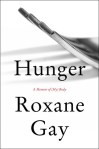
#5 Same title; rather different contents: Hunger by Roxane Gay (2017) is a collection of short autobiographical essays that riff on weight, diet, exercise and body image. The writing style is matter-of-fact and never self-pitying. This is still the only thing I’ve read by her, but I mean to read more, starting with her novel An Untamed State.
[#5.5 Her surname takes me to the title of my cheaty half-step, A Gay and Melancholy Sound by Merle Miller (1962), a semi-autobiographical novel about a man from Iowa who helps free the concentration camps and then has a career as a theatrical producer. It was Nancy Pearl’s first Book Lust Rediscoveries reprint book and is on my TBR.]
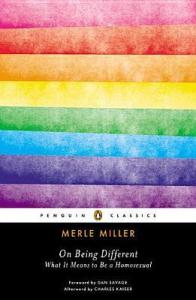 #6 While it’s not implied by that title, Miller was, er, gay, which leads to another of his books, On Being Different. I have Pearl to thank for leading me to this 1971 essay, which was republished in book form in 2013. It’s an insider’s view of what it is like to be a homosexual. A period piece now, it feels like a precursor to the revolution in gay rights. It’s one of the books (along with Straight by Hanne Blank and Conundrum by Jan Morris) that have most boosted my tolerance and compassionate understanding.
(This loops nicely back to #1 and the story of a preacher accepting homosexuality in his family as well as in his church congregation.)
Join us for #6Degrees of Separation if you haven’t already!
Have you read any of my selections? Are you tempted by any you didn’t know before?
Recommended March Releases: Magnusson, May, Moor and More
March has been a huge month for new releases. With so many authors feeling let down about book tours and events being cancelled, it’s a great time for bloggers to step in and help. I attended two virtual book launches on Twitter on the 19th and have another one coming up on the 31st. I also have three more March releases on order from my local indie bookstore: Greenery by Tim Dee, tracking the arrival of spring; Footprints by David Farrier, about the fossil traces modern humans will leave behind; and The Bass Rock by Evie Wyld, a novel about violence against women set on the Scottish coast in three different time periods.
Today I have short reviews of five March releases I recommend (plus a bonus one now out in paperback): a Victorian pastiche infused with Scottish folklore, an essay collection about disparate experiences of motherhood, a thriller about victims of domestic violence, poems in graphic novel form, a novel about natural and personal disasters in Australia, and a lovely story of friendship and literature changing a young man’s life forever. All:
The Ninth Child by Sally Magnusson
(Published by Two Roads on the 19th)
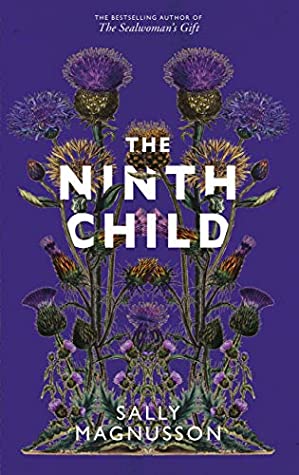 Like Hannah Kent’s The Good People and Sarah Perry’s The Essex Serpent, this is an intense, convincing work of fiction that balances historical realism with magical elements. In mid-1850s Britain, in the wake of a cholera epidemic, there is a drive to ensure clean water. Alexander Aird, hired as the on-site physician for the Glasgow waterworks, moves to the Loch Katrine environs with his wife, Isabel, who has had eight miscarriages or stillbirths. With no living babies requiring her care, Isabel spends her days wandering the hills and meets a strange scarecrow of a man, Reverend Robert Kirke … who died in 1692.
A real-life Episcopalian minister, Kirke wrote a book about fairies and other Celtic supernatural beings and, legend has it (as recounted by Sir Walter Scott and others), was taken into the faery realm after his death and continued to walk the earth looking for rest. It takes a while for Isabel to learn the truth about Kirke – though her servant, Kirsty McEchern, immediately intuits that something isn’t right about the man – and longer still to understand that he wants something from her. “Whatever else, Robert Kirke could be relied on to ruffle this mind of hers that was slowly opening to experience again, and to thinking, and to life.”
This was a rollicking read that drew me in for its medical elements (premature birth, a visit to Joseph Lister, interest in Florence Nightingale’s nursing methods) as well as the plot. It often breaks from the omniscient third-person voice to give testimonies from Kirsty and from Kirke himself. There are also amusing glimpses into the Royal household when Victoria and Albert stay at Balmoral and return to open the waterworks during the “heaviest, windiest, most umbrella-savaging, face-slashing deluge that Scotland had experienced in twenty years.” Best of all, it gives a very different picture of women’s lives in the Victorian period.
My thanks to the publisher for the proof copy for review.
The Best Most Awful Job: Twenty Writers Talk Honestly about Motherhood, edited by Katherine May
(Published by Elliott & Thompson on the 19th)
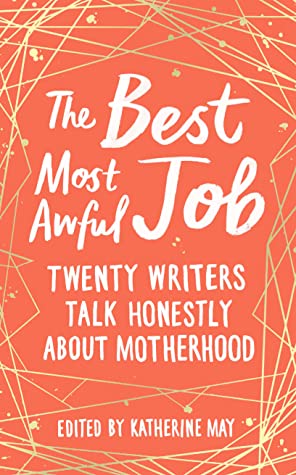 These are essays for everyone who has had a mother – not just everyone who has been a mother. I enjoyed every piece separately, but together they form a vibrant collage of women’s experiences. Care has been taken to represent a wide range of situations and attitudes. The reflections are honest about physical as well as emotional changes, with midwife Leah Hazard (author of Hard Pushed) kicking off with an eye-opening rundown of the intimate scarring some mothers will have for the rest of their lives. We hear from a mother of six who’s “addicted” to pregnancy (Jodi Bartle), but also from a woman who, after an ectopic pregnancy, realized “there are lots of ways to mother, even if your body won’t let you” (Peggy Riley, in one of my two favorite pieces in the book).
Women from BAME communities recount some special challenges related to cultural and family expectations, but others that are universal. An autistic mother (Joanne Limburg) has to work out how to parent a neurotypical child; queer parents (including author Michelle Tea) wonder how to raise a son at a time of toxic masculinity. There are also several single mothers, one of them disabled (Josie George – hers was my other favorite essay; do follow her on Twitter via @porridgebrain if you don’t already).
What I most appreciated is that these authors aren’t saying what they think they should say about motherhood; they’re willing to admit to boredom, disappointment and rage: “motherhood is an infinite, relentless slog from which there is no rest or recuperation … a ceaseless labour, often devoid of acknowledgment, recognition and appreciation” (Javaria Akbar); “I step barefoot on a rogue piece of Lego and it’s game over. I scream” (Saima Mir). These are punchy, distinctive slices of life writing perfectly timed for Mother’s Day. I plan to pass the book around my book club; mothers or not, I know everyone will appreciate it.
My thanks to the publisher for the proof copy for review.
Keeper by Jessica Moor
(Published by Viking/Penguin on the 19th)
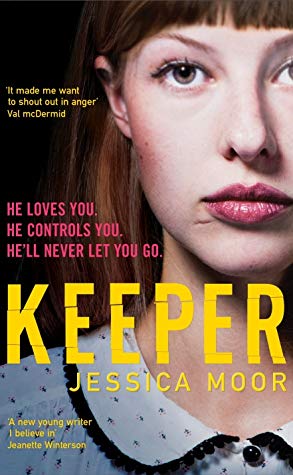 Val McDermid and Jeanette Winterson are among the fans of this, Penguin’s lead debut title of 2020. When a young woman is found drowned at a popular suicide site in the Manchester area, the police plan to dismiss the case as an open-and-shut suicide. But the others at the women’s shelter where Katie Straw worked aren’t convinced, and for nearly the whole span of this taut psychological thriller readers are left to wonder if it was suicide or murder.
The novel alternates between chapters marked “Then” and “Now”: in the latter story line, we follow the police investigation and meet the women of the refuge; in the former, we dive into Katie’s own experience of an abusive relationship back in London. While her mother was dying of cancer she found it comforting to have a boyfriend who was so attentive to her needs, but eventually Jamie’s obsessive love became confining.
I almost never pick up a mystery, but this one was well worth making an exception for. I started suspecting the twist at maybe the two-thirds point, but that didn’t detract from my enjoyment. Based on Moor’s year working in the violence against women sector, it’s a gripping and grimly fascinating story of why women stay with their abusers and what finally drives them to leave.
I picked up a proof copy at a Penguin Influencers event.
 Poems to See by: A Comic Artist Interprets Great Poetry by Julian Peters
(To be published by Plough Publishing House on the 31st)
Peters is a comics artist based in Montreal. Here he has chosen 24 reasonably well-known poems by the likes of e.e. cummings, Emily Dickinson, Robert Frost, Seamus Heaney, Langston Hughes, Edgar Allan Poe, Christina Rossetti and W.B. Yeats and illustrated each one in a markedly different fashion. From black-and-white manga to a riot of color and music, from minimalist calligraphy-like Japanese watercolor to imitations of Brueghel, there is such a diversity of style here that at first I presumed there were multiple artists involved (as in one of my favorite graphic novels of last year, ABC of Typography, where the text was written by one author but each chapter had a different illustrator). But no, this is all Peters’ work; I was impressed by his versatility.
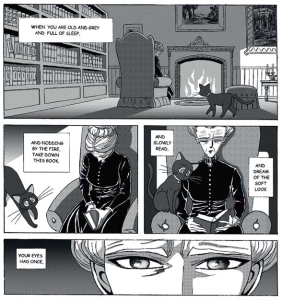
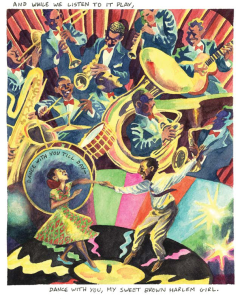
The illustrations range from realistic to abstract, with some more obviously cartoon-like. A couple of sequences reminded me of the style of Raymond Briggs. For “Caged Bird” by Maya Angelou, lines are inlaid on the squares of a painted patchwork quilt. Other sets look to have been done via wood engraving, or with old-fashioned crayons. You could quibble with the more obvious poetry selections, but I encountered a few that were new to me, including “Buffalo Dusk” by Carl Sandburg and “Conscientious Objector” by Edna St. Vincent Millay. Peters has grouped them into six thematic categories: self, others, art, nature, time and death. Teenagers, especially, will enjoy the introduction to a variety of poets and comics styles.
I read an e-copy via NetGalley.
The Inland Sea by Madeleine Watts
(Published by ONE/Pushkin on the 5th)
 “Emergency police fire, or ambulance?” The young female narrator of this debut novel lives in Sydney and works for Australia’s emergency call service. Over her phone headset she gets appalling glimpses into people’s worst moments: a woman cowers from her abusive partner; a teen watches his body-boarding friend being attacked by a shark. Although she strives for detachment, her job can’t fail to add to her anxiety – already soaring due to the country’s flooding and bush fires.
Against that backdrop of natural disasters, a series of minor personal catastrophes play out. The narrator is obsessed with a rape/murder case that’s dominating the television news, and narrowly escapes sexual assault herself. She drinks to excess, keeps hooking up with her ex-boyfriend, Lachlan, even after he gets a new girlfriend, and seems to think abortion and the morning after pill are suitable methods of birth control. Irresponsible to the point of self-sabotage, she’s planning a move to London but in the meantime is drifting through life, resigned to the fact that there is no unassailable shelter and no surefire way to avoid risk.
The title comes from the quest of John Oxley (presented here as the narrator’s ancestor), who in 1817 searched for a water body in the Australian interior. Quotations from his journals and discussions of the work of Patrick White, the subject of Lachlan’s PhD thesis, speak to the search for an Australian identity. But the inland sea is also the individual psyche, contradictory and ultimately unknowable. Like a more melancholy version of Jenny Offill’s Weather or a more cosmic autofiction than Yara Rodrigues Fowler’s Stubborn Archivist, this is a timely, quietly forceful story of how women cope with concrete and existential threats.
My thanks to the publisher for the PDF copy for review.
And a bonus…
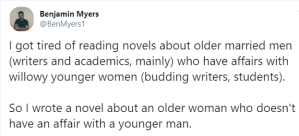
The Offing by Benjamin Myers (2019)
(Paperback published by Bloomsbury on the 5th)
 With the Second World War only recently ended and nothing awaiting him apart from the coal mine where his father works, sixteen-year-old Robert Appleyard sets out on a journey. From his home in County Durham, he walks southeast, doing odd jobs along the way in exchange for food and lodgings. One day he wanders down a lane near Robin Hood’s Bay and gets a surprisingly warm welcome from a cottage owner, middle-aged Dulcie Piper, who invites him in for tea and elicits his story. Almost accidentally, he ends up staying for the rest of the summer, clearing scrub and renovating her garden studio.
Dulcie is tall, outspoken and unconventional – I pictured her as (Meryl Streep as) Julia Child in the movie Julie & Julia. She introduces Robert to whole new ways of thinking: that not everyone believes in God, that Germans might not be all bad, that life can be about adventure and pleasure instead of duty. “The offing” is a term for the horizon, as well as the title of a set of poems Robert finds in the dilapidated studio, and both literature and ambition change his life forever. Bright, languid and unpredictable, the novel delights in everyday sensual pleasures like long walks with a dog, dips in the ocean and an abundance of good food. I can’t think of another book I’ve read that’s quite like it – how refreshing is that?
I pre-ordered the paperback using a Waterstones voucher I got for Christmas.
What recent releases can you recommend?
Six Degrees of Separation: From Wolfe Island to Riverine
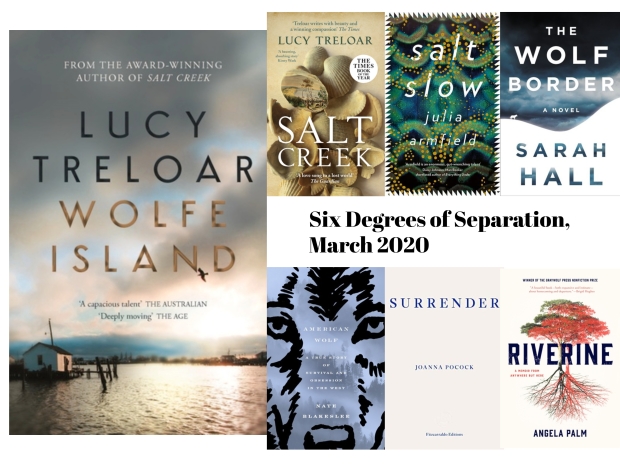
It’s my second month participating in Kate’s Six Degrees of Separation meme (see her introductory post). This time the challenge starts with Wolfe Island by Lucy Treloar. Alas, as far as I can tell this hasn’t yet been published outside of Australia. Which is such a shame, because I absolutely adored…
#1 Salt Creek, Treloar’s debut novel. I read it in 2018 and deemed it “one of the very best works of historical fiction I’ve read.” A widowed teacher settled in England looks back on the eight ill-fated years her family spent at an outpost in South Australia in the 1850s–60s. It’s a piercing story of the clash of cultures and the secret prejudices that underpin our beliefs.
#2 I recently saw someone on Twitter remarking on the apparent trend for book titles to have the word “Salt” in them. Of the few examples he mentioned, I’ve read and enjoyed Salt Slow by Julia Armfield, which was on the Young Writer of the Year Award shortlist last year. The book’s nine short stories are steeped in myth and magic, but often have a realistic shell.
#3 One story in Salt Slow, “Formerly Feral,” is about a teenager who has a wolf for a stepsister. So, to get back to the literal wording of our starting point (a homonym, anyway; I didn’t know whether to take this in the Salt direction or the Wolf direction; now I’ve done both!), another work of fiction I read that incorporated wolves was The Wolf Border by Sarah Hall, a fantastic novel to which Scottish independence and rewilding form a backdrop.
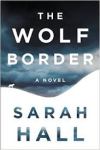
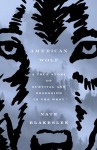
#4 The controversy over the reintroduction of wolves to Yellowstone National Park – and the decision to remove their endangered status, thus declaring open season for hunters – is at the heart of the nonfiction study American Wolf by Nate Blakeslee. “The West was caught up in a culture war, and for some people it was more than just a metaphor,” he writes.
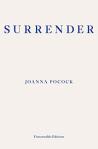
#5 Wolves and rewilding in the American West also come into the memoir-in-essays Surrender by Joanna Pocock, about the two years of loss and change she spent in Missoula, Montana and her sense of being a foreigner both there and on her return to London.
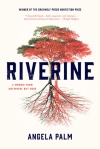
#6 A wonderful memoir-in-essays that was criminally overlooked in 2016 was Riverine by Angela Palm (my BookBrowse review). It has such a strong sense of place, revealing how traces of the past are still visible in the landscape and how our environment shapes who we are. Palm reflects on the winding course of her life in the Midwest and the people who meant most to her along the way, including a friend who was later sentenced to life in prison for murdering their elderly neighbors. In keeping with the watery imagery, there is a stream-of-consciousness element to the writing.
Join us for #6Degrees of Separation if you haven’t already!
Have you read any of my selections? Are you tempted by any you didn’t know before?
Some Early Recommendations for 2020
I haven’t done much dipping into 2020 releases yet, but I do have two that I would highly recommend to pretty much anyone, plus some more that are also worth highlighting.
My top recommendations (so far) for 2020:
American Dirt by Jeanine Cummins
[Coming on January 21st from Tinder Press (UK) / Flatiron Books (USA)]
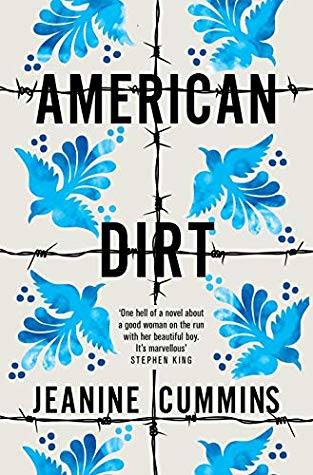 You’ve most likely already heard of this novel about the plight of migrants crossing the U.S. border in search of a better life. What’s interesting is that the main characters are not your typical border crossers: Lydia was a middle-class Acapulco bookshop owner whose journalist husband was murdered for his pieces exposing the local drug cartel. She and her eight-year-old son, Luca, know that the cartel is after them, too, and its informers are everywhere. They join Central American migrants in hopping onto La Bestia, a dangerous freight train network running the length of Mexico. Their fellow travelers’ histories reveal the traumatic situations migrants leave and the hazards they face along the way. Cummins alternates between the compelling perspectives of Lydia and Luca, and the suspense is unrelenting. It feels current and crucial. (My full review will be in Issue 491 of Stylist magazine, so if you are in London or another city that hands it out and can pick up a copy, keep an eye out!)
The Lost Family: How DNA Testing Is Upending Who We Are by Libby Copeland
[Coming on March 3rd from Abrams Press (USA)]
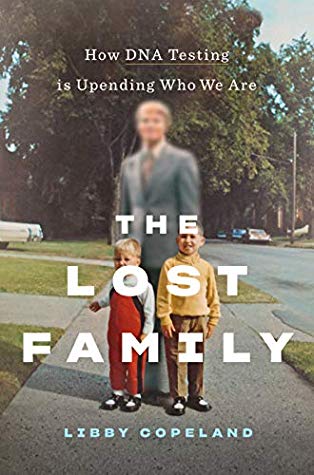 A terrific follow-up to one of my runners-up from last year, Inheritance by Dani Shapiro. I learned that “non-paternity events” such as Shapiro experienced are not as uncommon as you might think. Copeland spoke to scientists, DNA testing companies, and some 400 ordinary people who sent off saliva samples to get their DNA profile and, in many cases, received results they were never expecting. There are stories of secret second families, of people who didn’t find out they were adopted until midlife, and of babies switched at birth. We’ve come a long way since the days when people interested in family history had to trawl through reams of microfilm and wait months or years to learn anything new; nowadays a DNA test can turn up missing relatives within a matter of days. But there are a lot of troubling aspects to this new industry, including privacy concerns, notions of racial identity, and criminal databases. It’s a timely and thought-provoking book, written with all the verve and suspense of fiction.
Also of note (in release date order):
 Half Broke: A Memoir by Ginger Gaffney: Horse trainer Gaffney has volunteered at the Delancey Street Foundation’s New Mexico ranch, an alternative prison for drug offenders, for six years. She chronicles how feral horses and humans can help each other heal. Great for fans of Cheryl Strayed. (February 4, W.W. Norton)
 Survival Is a Style: Poems by Christian Wiman: Wiman examines Christian faith in the shadow of cancer. This is the third of his books that I’ve read; I’m consistently impressed by how he makes room for doubt, bitterness and irony, yet a flame of faith remains. Really interesting phrasing and vocabulary here. (February 4, Farrar, Straus and Giroux)
 Pain Studies by Lisa Olstein: Another in a growing number of hard-hitting books about female pain. Specifically, Olstein has chronic migraines. In these essays she ranges from ancient philosophy to recent television in her references, and from lists of symptoms to poetic descriptions in her format. A little rambly, but stylish nonetheless. (March 4, Bellevue Literary Press)
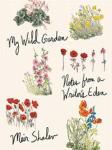 My Wild Garden: Notes from a Writer’s Eden by Meir Shalev: The Israeli novelist tells of how he took a derelict garden in the Jezreel Valley and made it thrive. He blends botanical knowledge with Jewish folklore. I particularly enjoyed his good-natured feud against his local mole rats. Gentle and charming. (March 31, Shocken)
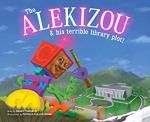 The Alekizou and His Terrible Library Plot! by Nancy Turgeon: The Alekizou can’t read! Jealous of the fun he sees children having at the library, he breaks in and steals all the vowels. Without them, books and speech don’t make sense. Luckily, the children know sign language and use it to create replacement letters. A fun picture book with rhymes reminiscent of Dr. Seuss, this also teaches children vowels and basic signing. (April 6, CrissCross AppleSauce)
With thanks to the publisher for the free PDF copy for review.
 Why We Swim by Bonnie Tsui: A personal history with swimming, but also a wide-ranging study of humans’ relationship with the water – as a source of food, exercise, healing, competition and enjoyment. Tsui meets scientists, coaches, Olympians and record holders, and recounts some hard-to-believe survival tales. (April 14, Algonquin Books)
Will you look out for one or more of these?
Any other 2020 reads you can recommend?
The Best Books of 2019: Some Runners-Up
I sometimes like to call this post “The Best Books You’ve Probably Never Heard Of (Unless You Heard about Them from Me)”. However, these picks vary quite a bit in terms of how hyped or obscure they are; the ones marked with an asterisk are the ones I consider my hidden gems of the year. Between this post and my Fiction/Poetry and Nonfiction best-of lists, I’ve now highlighted about the top 13% of my year’s reading.
Fiction:
 Salt Slow by Julia Armfield: Nine short stories steeped in myth and magic. The body is a site of transformation, or a source of grotesque relics. Armfield’s prose is punchy, with invented verbs and condensed descriptions that just plain work. She was the Young Writer of the Year Award shadow panel winner. I’ll be following her career with interest.
 *Agatha by Anne Cathrine Bomann: In late-1940s Paris, a psychiatrist counts down the days and appointments until his retirement. A few experiences awaken him from his apathy, including meeting Agatha, a new German patient with a history of self-harm. This debut novel is a touching, subtle and gently funny story of rediscovering one’s purpose late in life.
 A Single Thread by Tracy Chevalier: Chevalier is an American expat like me, but she’s lived in England long enough to make this very English novel convincing and full of charm. Violet Speedwell, 38, is an appealing heroine who has to fight for a life of her own in the 1930s. Who knew the hobbies of embroidering kneelers and ringing church bells could be so fascinating?
 Akin by Emma Donoghue: An 80-year-old ends up taking his sullen pre-teen great-nephew with him on a long-awaited trip back to his birthplace of Nice, France. The odd-couple dynamic works perfectly and makes for many amusing culture/generation clashes. Donoghue nails it: sharp, true-to-life and never sappy, with spot-on dialogue and vivid scenes.
 Things in Jars by Jess Kidd: In 1863 Bridie Devine, female detective extraordinaire, is tasked with finding the six-year-old daughter of a baronet. Kidd paints a convincingly stark picture of Dickensian London, focusing on an underworld of criminals and circus freaks. The prose is spry and amusing, particularly in her compact descriptions of people.
 *The Unpassing by Chia-Chia Lin: Bleak yet beautiful in the vein of David Vann’s work: the story of a Taiwanese immigrant family in Alaska and the bad luck and poor choices that nearly destroy them. This debut novel is full of atmosphere and the lowering forces of weather and fate.
 The Doll Factory by Elizabeth Macneal: Set in the early 1850s and focusing on the Great Exhibition and Pre-Raphaelite Brotherhood, this reveals the everyday world of poor Londoners. It’s a sumptuous and believable fictional world, with touches of gritty realism. A terrific debut full of panache and promise.
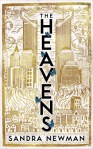 *The Heavens by Sandra Newman: Not a genre I would normally be drawn to (time travel), yet I found it entrancing. In her dreams Kate becomes Shakespeare’s “Dark Lady” and sees visions of a future burned city. The more she exclaims over changes in her modern-day life, the more people question her mental health. Impressive for how much it packs into 250 pages; something like a cross between Jonathan Franzen and Samantha Harvey.
 *In Love with George Eliot by Kathy O’Shaughnessy: Many characters, fictional and historical, are in love with George Eliot over the course of this debut novel. We get intriguing vignettes from Eliot’s life with her two great loves, and insight into her scandalous position in Victorian society. O’Shaughnessy mimics Victorian prose ably.
 Daisy Jones and The Six by Taylor Jenkins Reid: This story of the rise and fall of a Fleetwood Mac-esque band is full of verve and heart. It’s so clever how Reid delivers it all as an oral history of pieced-together interview fragments. Pure California sex, drugs, and rock ’n roll, yet there’s nothing clichéd about it.
Graphic Novels:
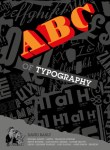 *ABC of Typography by David Rault: From cuneiform to Comic Sans, this history of typography is delightful. Graphic designer David Rault wrote the whole thing, but each chapter has a different illustrator, so the book is like a taster course in comics styles. It is fascinating to explore the technical characteristics and aesthetic associations of various fonts.
 *The Lady Doctor by Ian Williams: Dr. Lois Pritchard works at a medical practice in small-town Wales and treats embarrassing ailments at a local genitourinary medicine clinic. The tone is wonderfully balanced: there are plenty of hilarious, somewhat raunchy scenes, but also a lot of heartfelt moments. The drawing style recalls Alison Bechdel’s.
Poetry:
 *Thousandfold by Nina Bogin: This is a lovely collection whose poems devote equal time to interactions with nature and encounters with friends and family. Birds are a frequent presence. Elsewhere Bogin greets a new granddaughter and gives thanks for the comforting presence of her cat. Gentle rhymes and half-rhymes lend a playful or incantatory nature.
Nonfiction:
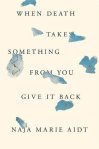 *When Death Takes Something from You Give It Back by Naja Marie Aidt: Aidt’s son Carl Emil died in 2015, having jumped out of his fifth-floor Copenhagen window during a mushroom-induced psychosis. The text is a collage of fragments. A playful disregard for chronology and a variety of fonts, typefaces and sizes are ways of circumventing the feeling that grief has made words lose their meaning forever.
 *Homesick: Why I Live in a Shed by Catrina Davies: Penniless during an ongoing housing crisis, Davies moved into the shed near Land’s End that had served as her father’s architecture office until he went bankrupt. Like Raynor Winn’s The Salt Path, this intimate, engaging memoir serves as a sobering reminder that homelessness is not so remote.
 *Hard Pushed: A Midwife’s Story by Leah Hazard: An empathetic picture of patients’ plights and medical professionals’ burnout. Visceral details of sights, smells and feelings put you right there in the delivery room. This is a heartfelt read as well as a vivid and pacey one, and it’s alternately funny and sobering.
 *Deep Creek: Finding Hope in the High Country by Pam Houston: Autobiographical essays full of the love of place, chiefly her Colorado ranch – a haven in a nomadic career, and a stand-in for the loving family home she never had. It’s about making your own way, and loving the world even – or especially – when it’s threatened with destruction. Highly recommended to readers of The Chronology of Water by Lidia Yuknavitch.
 *Dancing with Bees: A Journey back to Nature by Brigit Strawbridge Howard: Bees were the author’s gateway into a general appreciation of nature, something she lost for a time in midlife because of the rat race and family complications. She clearly delights in discovery and is devoted to lifelong learning. It’s a book characterized by curiosity and warmth. I ordered signed copies of this and the Simmons (below) directly from the authors via Twitter.
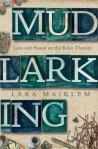 *Mudlarking: Lost and Found on the River Thames by Lara Maiklem: Maiklem is a London mudlark, scavenging for what washes up on the shores of the Thames, including clay pipes, coins, armaments, pottery, and much more. A fascinating way of bringing history to life and imagining what everyday existence was like for Londoners across the centuries.
 Unfollow: A Journey from Hatred to Hope, Leaving the Westboro Baptist Church by Megan Phelps-Roper: Phelps-Roper grew up in a church founded by her grandfather and made up mostly of her extended family. Its anti-homosexuality message and picketing of military funerals became trademarks. This is an absorbing account of doubt and making a new life outside the only framework you’ve ever known.
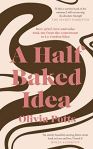 *A Half Baked Idea: How Grief, Love and Cake Took Me from the Courtroom to Le Cordon Bleu by Olivia Potts: Bereavement memoir + foodie memoir = a perfect book for me. Potts left one very interesting career for another. Losing her mother when she was 25 and meeting her future husband, Sam, who put time and care into cooking, were the immediate spurs to trade in her wig and gown for a chef’s apron.
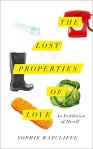 *The Lost Properties of Love by Sophie Ratcliffe: Not your average memoir. It’s based around train journeys – real and fictional, remembered and imagined; appropriate symbols for many of the book’s dichotomies: scheduling versus unpredictability, having or lacking a direction in life, monotony versus momentous events, and fleeting versus lasting connections.
 Inheritance: A Memoir of Genealogy, Paternity, and Love by Dani Shapiro: On a whim, in her fifties, Shapiro sent off a DNA test kit and learned she was only half Jewish. Within 36 hours she found her biological father, who’d donated sperm as a medical student. It’s a moving account of her emotional state as she pondered her identity and what her sense of family would be in the future.
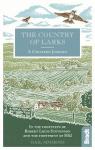 *The Country of Larks: A Chiltern Journey by Gail Simmons: Reprising a trek Robert Louis Stevenson took nearly 150 years before, revisiting sites from a childhood in the Chilterns, and seeing the countryside that will be blighted by a planned high-speed railway line. Although the book has an elegiac air, Simmons avoids dwelling in melancholy, and her writing is a beautiful tribute to farmland that was once saturated with the song of larks.

(Books not pictured were read from the library or on Kindle.)
Coming tomorrow: Other superlatives and some statistics.
 Bookish Beck = Rebecca Foster. American transplant to England. Freelance proofreader and book reviewer.
