Book Serendipity, Mid-December 2024 to Mid-February 2025
I call it “Book Serendipity” when two or more books that I read at the same time or in quick succession have something in common – the more bizarre, the better. This is a regular feature of mine every couple of months. Because I usually have 20–30 books on the go at once, I suppose I’m more prone to such incidents. People frequently ask how I remember all of these coincidences. The answer is: I jot them down on scraps of paper or input them immediately into a file on my PC desktop; otherwise, they would flit away!
The following are in roughly chronological order.
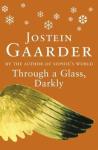
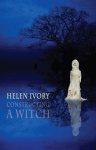
- The angel Ariel appears in Through a Glass Darkly by Jostein Gaarder and Constructing a Witch by Helen Ivory.
- The protagonist’s surname is English in Wild Houses by Colin Barrett and The Cannibal Owl by Aaron Gwyn.
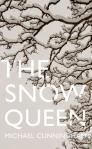
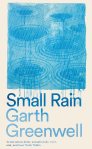
- I read scenes of grief over a tree being cut down / falling next to one’s house in Dispersals by Jessica J. Lee and Small Rain by Garth Greenwell, one right after the other.
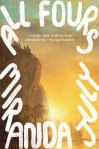
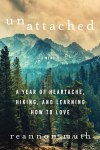
- A mother who does kundalini yoga in All Fours by Miranda July and Unattached by Reannon Muth.
- The idea that happiness (unlike anxiety and sorrow) leaves no trace in writing or in life appeared for me on the same day in Memorial Days by Geraldine Brooks and Small Rain by Garth Greenwell.
- Someone considers suicide by falling but realizes that at the current height they would injure themself but not die in Wild Houses by Colin Barrett, The Snow Queen by Michael Cunningham, and The Courage Consort by Michel Faber.
- The homosexual “bear” stereotype appears in The Snow Queen by Michael Cunningham and Small Rain by Garth Greenwell.
- A William Blake epigraph in Open, Heaven by Seán Hewitt and one of the poems included in Poetry Unbound by Pádraig Ó Tuama.
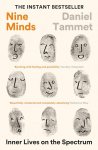
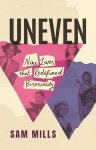
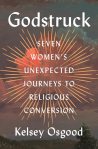
- A group biography including nine pen portraits (plus the author): Nine Minds by Daniel Tammet, followed in quick succession by Uneven by Sam Mills. (Similar, but with just seven subjects, is a book I’m currently reading about women’s religious conversions, Godstruck by Kelsey Osgood.)
- A book–life serendipity moment: in All Fours by Miranda July there is mention of an elderly cat named Alfie who needs to be given medication several times a day. Snap!
- By chance, I started reading Myself and Other Animals, a posthumous collection of short autobiographical pieces by Gerald Durrell, on his centenary (7 January 2025).
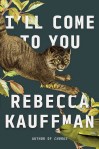
- Guilt over destroying a bird’s nest in The Book of George by Kate Greathead and I’ll Come to You by Rebecca Kauffman.
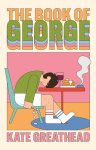
- The main female character has a birthmark in The Book of George by Kate Greathead and The Blindfold by Siri Hustvedt.
- Reading two novels at the same time that open with a new family having to be found for a little boy because his mentally ill mother is presumed to have died by suicide: Unexpected Lessons in Love by Bernardine Bishop and Going Home by Tom Lamont.
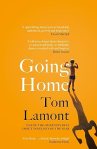 The protagonist is mistaken for a two-year-old boy’s father in The Book of George by Kate Greathead and Going Home by Tom Lamont.
- The mother is named Ellen in The Book of George by Kate Greathead and I’ll Come to You by Rebecca Kauffman.
- An ailing elderly father named Vic in Going Home by Tom Lamont and The God of the Woods by Liz Moore.
- A mother is sent to a mental hospital after the loss of her young son in Invisible by Paul Auster and The God of the Woods by Liz Moore.
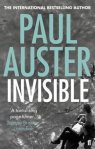
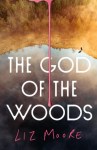
- A brother and sister share a New York City apartment in Invisible by Paul Auster and The Book of George by Kate Greathead.
- A mention of the Japanese artist Hokusai in While the Earth Holds Its Breath by Helen Moat and The Secret Life of Snow by Giles Whittell.
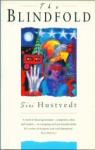 Adults dressing up for Halloween in The Blindfold by Siri Hustvedt and I’ll Come to You by Rebecca Kauffman.
- A second husband named Tim in Unexpected Lessons in Love by Bernardine Bishop and Because We Must by Tracy Youngblom.
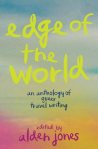
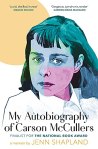
- The idea that ‘queers find each other’ in Edge of the World: An Anthology of Queer Travel Writing edited by Alden Jones and My Autobiography of Carson McCullers by Jenn Shapland.
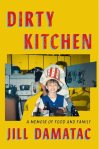
- Experiencing 9/11 as a freshman in college (just like me!) in Dirty Kitchen by Jill Damatac and The Book of George by Kate Greathead. (There is also a 9/11 section in Confessions by Catherine Airey.)
- An intense poker game in I’ll Come to You by Rebecca Kauffman and Going Home by Tom Lamont.
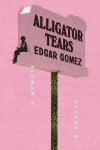 The main character is expelled on false drug possession charges in Invisible by Paul Auster and Alligator Tears by Edgar Gomez.
- Missing the chance to say goodbye before a father’s death, and a parent wondering aloud to their son whether they’ve been a good parent in The Book of George by Kate Greathead and The Remains of the Day by Kazuo Ishiguro.
- Someone departs suddenly, leaving her clothes and books behind, in Invisible by Paul Auster and My Autobiography of Carson McCullers by Jenn Shapland.
- Mentions of DACA (Deferred Action for Childhood Arrivals, an Obama-era U.S. immigration policy) and “Two-Buck Chuck” (a nickname for the Charles Shaw bargain wine sold at Trader Joe’s) in Dirty Kitchen by Jill Damatac and Alligator Tears by Edgar Gomez.
- A City Hall wedding in New York City in Baumgartner by Paul Auster and Dirty Kitchen by Jill Damatac.
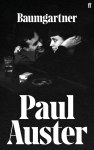
- Polish Jewish heritage and a parent who died of pancreatic cancer in Baumgartner by Paul Auster and The History of Love by Nicole Krauss.
- In Because We Must by Tracy Youngblom, she reads The Tale of Despereaux by Kate DiCamillo aloud to her son while he is recovering in hospital. I was reading Despereaux at the same time! (Also, in real-life serendipity, Youngblom and I both have a sister named Trish.)
- A code of 1–3 knocks is used in Confessions by Catherine Airey and The History of Love by Nicole Krauss.
 A scene of a teacup breaking in Junction of Earth and Sky by Susan Buttenwieser and The Möbius Book by Catherine Lacey.
What’s the weirdest reading coincidence you’ve had lately?
Reading Snapshot for Mid-January
As I said in my last post, I’m in the middle of a bunch of books but hardly finishing anything, so consider this another placeholder until my Love Your Library and January releases posts next week. People often ask how I read so much. One of the answers is that I generally read 20–30 books at once, bouncing between them as the mood takes me and making steady progress in most. A frequent follow-up question is how I keep so many books straight in my head. I maintain a variety of genres and topics in the stack and alternate between fiction, nonfiction and poetry in any reading session. If I’m going to be reviewing something, particularly for pay, I tend to make notes. Here’s a peek at my current stacks, with a line or two on each book and why I’m reading it.

- Myself & Other Animals by Gerald Durrell [public library] – This is a posthumous collection of excerpts from his published work, including newspaper articles, plus mini essays that he wrote towards an autobiography. We own/have read most of his animal-collecting and zoo-keeping memoirs and this is just as delightful, even in unconnected pieces. His conservationist zeal was ahead of his time.
- The God of the Woods by Liz Moore [public library] – It’s rare for me to borrow something from the Crime section, but this came highly lauded by Laila. Set in upstate New York in 1975, it’s a page-turning missing-girl mystery with a literary focus on character backstory, and it’s reminding me of Bright Young Women by Jessica Knoll and When the Stars Go Dark by Paula McLain.
- Gold by Elaine Feinstein [secondhand purchase] – I’ve enjoyed Feinstein’s poetry before so snapped this up on our second trip to Bridport. The first long poem was a monologue from the perspective of a collaborator of Mozart; I think I’ll engage more with the discrete poems to follow.
- Understorey by Anna Chapman Parker [review copy] – Catching up on one I was sent last year. It’s a one-year diary through ‘weeds’ (wild plants!) she observes and sketches near her home of Berwick upon Tweed, where we vacationed in September. I am enjoying reading a few peaceful entries per sitting.
- A God at the Door by Tishani Doshi [secondhand purchase] – Her Girls Are Coming out of the Woods was a favourite of mine a few years ago when I reviewed it for Wasafiri literary magazine. I found this on my last trip to Hay-on-Wye, and it is just as rich in long, forthright, feminist and political poems.
- The Secret Life of Snow by Giles Whittell [secondhand purchase] – I picked up a few snowy titles when we got a dusting the other week, in case it was the only snow of the year. This is so much like The Snow Tourist by Charlie English it’s uncanny; to my memory it’s more meteorological, though still accessible. The science is interspersed with travels and fun trivia about Norway’s Olympic skiers and so on.
- Moon of the Crusted Snow by Waubgeshig Rice [gift] – Probably my first book by an Indigenous Canadian, which was reason enough to read it. I’m about 50 pages in and so far it’s a plodding story of mysterious power outages which could just be part of the onset of winter but I suspect will turn out to be sinister and dystopian instead.
- Knead to Know by Neil Buttery [review copy] – Another 2024 book to catch up on. It’s a history of baking via mini-essays on loads of different breads, cakes, pies and pastries, many of them traditional English ones that you will never have heard of but will now want to cram. Lots of intriguing titbits.
- Invisible by Paul Auster [secondhand purchase] – Getting ready for Annabel’s second Paul Auster Reading Week in early February. A young (and Auster-like) would-be poet gets entangled with a thirtysomething professor who wants to fund a start-up literary magazine – and his French girlfriend. Highly readable and sure to get weirder.
- While the Earth Holds Its Breath by Helen Moat [review copy] – Yet another 2024 book to catch up on. Authors are still jumping on the Wintering bandwagon. This is composed of short autobiographical pieces about winter walks near home or further afield, many of them samey; the trip to Lapland has been a highlight so far.
- The Blindfold by Siri Hustvedt [review copy] – Also part of my preparation for Paul Auster Reading Week, and boy can you see his influence on her first novel! Iris Vegan is employed by Mr. Morning to record audio descriptions of relics left behind by a possibly murdered woman. Odd and enticing.
- Uneven by Sam Mills [review copy] – A group biography of nine bisexuals – make that 10, as there’s plenty of memoir fragments from Mills, too. I’ve read the chapters on Oscar Wilde, Colette & Bessie Smith, and Marlene Dietrich so far. It is particularly enlightening to think of Wilde as bi rather than a closeted homosexual.
- Unexpected Lessons in Love by Bernardine Bishop [secondhand purchase] – Every year I pick up at least a few “love” or “heart” titles in advance of Valentine’s Day. Bishop was one of my top discoveries last year (via The Street) and this Costa Award-nominated posthumous novel is equally engaging, even after just 50 pages.
- My Judy Garland Life by Susie Boyt [secondhand purchase] – After Loved and Missed, I was keen to try more from Boyt and this Ackerley Prize-shortlisted memoir sounded fascinating. I love The Wizard of Oz as much as the next person. Boyt, however, is a Garland mega-fan and blends biography and memoir as she writes about addiction, mental health, celebrity and the search for love.
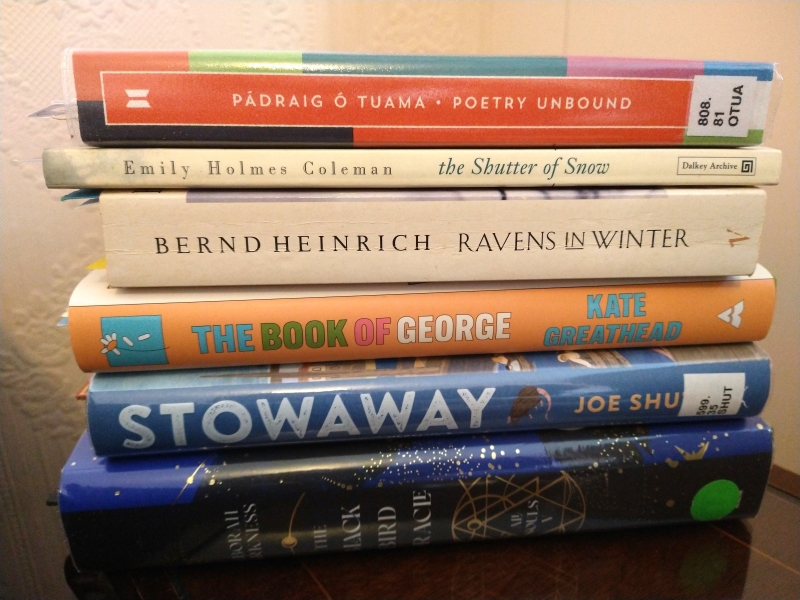
- Poetry Unbound by Pádraig Ó Tuama [public library] – I’m gradually making my way through this set of 50 poems and his critical/personal responses to them. Most of the poets have been unfamiliar to me. Marie Howe has been my top discovery.
- The Shutter of Snow by Emily Holmes Coleman [secondhand purchase] – Another incidental ‘snow’ title; this is autofiction about postpartum psychosis, written in a stream-of-consciousness style with no speech marks or apostrophes. It’s hard to believe it was written in the 1930s because it feels like it could have been yesterday.
- Ravens in Winter by Bernd Heinrich [secondhand purchase] – I’ve long meant to read more by Heinrich, who’s better known in the USA, after Winter World. This was a lucky find at Regent Books in Wantage. It’s a granular scientific study of bird behaviour, so I will likely read it very slowly, maybe even over two winters.
- The Book of George by Kate Greathead [review copy] – Linked short stories about an Everyman schmuck (and my exact contemporary) from adolescence up to today. He’s indecisive, lazy, an underachiever. Life keeps happening around him; will he make something happen? (George, c’est moi?) The deadpan tone is great.
- Stowaway by Joe Shute [public library] – I’ve been reading this off and on since, er, June, which is not to say that it’s not interesting but that it’s never been a priority. Like his book on ravens, it’s intended to rehabilitate the reputation of a species often considered to be a pest. He gets pet rats, too!
- The Black Bird Oracle by Deborah Harkness [public library] – It’s even rarer for me to borrow from the Science Fiction & Fantasy section of the library, but I’ve been following the series since A Discovery of Witches came out in 2011. I’m halfway through and enjoying Diana’s embrace of her witch heritage in the Salem area.
That’s not all, folks! There’s also the e-books.

- Dirty Kitchen by Jill Damatac [Edelweiss] – I’ll be reviewing this May release early for Shelf Awareness. The author’s Filipino family were undocumented immigrants in the USA and as a child she was occasionally abandoned and frequently physically abused. Recipes and legends offer a break from the tough subject matter (reminiscent of Educated or What My Bones Know).
- My Marriage Sabbatical by Leah Fisher [from publicist] – She Writes Press is a reliable source of women’s life writing. I’ve only just started this but will try to review it this month. Fisher, a psychotherapist, was sick of her psychiatrist husband’s workaholism and wanted to try living differently, starting with a house share.
- I’ll Come to You by Rebecca Kauffman [from publicist] – Another American linked short story collection, moving month by month through 1995 (does that count as historical fiction?!), cycling through the members of an extended family as they navigate illnesses and fraught parenting journeys. I’m getting J. Ryan Stradal vibes.
- Constructing a Witch by Helen Ivory [Edelweiss] – This feminist take on the historical persecution and stereotypes of witches is a good match for the Harkness! I just keep forgetting to open it up on my Kindle.
According to Goodreads, I’m reading 28 books at the moment, so I haven’t even covered all of them. (The rest include library books that would more honestly be classified as “set aside.”)
Whew. It somehow seems like even more when I write them all up like this…
Back to the reading!
Short Stories in September, II: Willie Davis, Gerald Durrell, Sue Mell and Lore Segal
Four more collections down. Two of them blend fictional and autobiographical modes. Two are set primarily in New York City, with another hanging out in Kentucky and the fourth touring Europe. Three of the authors were new to me and one is an old favourite. I’m borrowing Marcie’s five-sentence review format to keep things simple.
I Can Outdance Jesus by Willie Davis (2024)
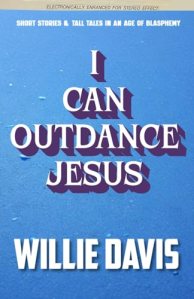 I don’t often take a look at unsolicited review copies, but I couldn’t resist the title of this and I’m glad I gave it a try. Davis’s 10 stories, several of flash length, take place in small-town Kentucky and feature a lovable cast of pranksters, drunks, and spinners of tall tales. The title phrase comes from one of the controversial songs the devil-may-care narrator of “Battle Hymn” writes. My two favourites were “Kid in a Well,” about one-upmanship and storytelling in a local bar, and “The Peddlers,” which has two rogues masquerading as Mormon missionaries. I got vague Denis Johnson vibes from this sassy, gritty but funny collection; Davis is a talent!
Published by Cowboy Jamboree Press. With thanks to publicist Lori Hettler for the free e-copy for review.
The Picnic and Suchlike Pandemonium by Gerald Durrell (1979)
 If you’ve read his autobiographical trilogy or seen The Durrells, you’ll be familiar with the quirky, chaotic family atmosphere that reigns in the first two pieces: “The Picnic,” about a luckless excursion in Dorset, and “The Maiden Voyage,” set on a similarly disastrous sailing in Greece (“Basically, the rule in Greece is to expect everything to go wrong and to try to enjoy it whether it does or not”). No doubt there’s some comic exaggeration at work here, especially in “The Public School Education,” about running into a malapropism-prone ex-girlfriend in Venice, and “The Havoc of Havelock,” in which Durrell, like an agony uncle, lends volumes of the sexologist’s work to curious hotel staff in Bournemouth. The final two France-set stories, however, feel like pure fiction even though they involve the factual framing device of hearing a story from a restaurateur or reading a historical manuscript that friends inherited from a French doctor. “The Michelin Man” is a cheeky foodie one with a surprisingly gruesome ending; “The Entrance” is a full-on dose of horror worthy of R.I.P. I wouldn’t say this is essential reading for Durrell fans, but it was a pleasant way of passing the time. (Secondhand – Lions Bookshop, Alnwick, 2021)
A New Day by Sue Mell (2024)
 Three suites of linked stories focus on young women whose choices in the 1980s have ramifications decades later. Chance meetings, addictions, ill-considered affairs, and random events all take their toll. Emma house-sits and waitresses while hoping in vain for her acting career to take off; “all she felt was a low-grade mourning for what she’d lost and hadn’t attained.” My favourite pair was about Nina, who is a photographer’s assistant in “Single Lens Reflex” and 13 years later, in “Photo Finish,” bumps into the photographer again in Central Park. With wistful character studies and nostalgic snapshots of changing cities, this is a stylish and accomplished collection.
Published by She Writes Press on September 3. With thanks to publicist Caitlin Hamilton Summie for the free e-copy for review.
Ladies’ Lunch and Other Stories by Lore Segal (2023)
 The first section contains nine linked stories about a group of five elderly female friends. Bessie jokes that “wakes and funerals are the cocktail parties of the old,” and Ruth indeed mistakes a shivah for a party and meets a potential beau who never quite successfully invites her on a date. One of their members leaves the City for a nursing home; “Sans Teeth, Sans Taste” is a good example of the morbid sense of humour. A few unrelated stories draw on Segal’s experience being evacuated from Vienna to London by Kindertransport; “Pneumonia Chronicles” is one of several autobiographical essays that bring events right up to the Covid era – closing with the bonus story “Ladies’ Zoom.” The ladies’ stories are quite amusing, but the book as a whole feels like an assortment of minor scraps; it was published when Segal, a New Yorker contributor, was 95. (Secondhand – National Trust bookshop, 2023)
Postscript: Segal died on 7 October 2024, aged 96.
I’ll have a couple more reviews roundups between now and early October.
Currently reading: The Lone-Ranger and Tonto Fistfight in Heaven by Sherman Alexie, The Skeleton in the Cupboard by Lilija Berzinska; The Woman Who Gave Birth to Rabbits by Emma Donoghue; The Best Short Stories 2023: The O. Henry Prize Winners, ed. Lauren Groff; Waltzing the Cat by Pam Houston; Dreams of Dead Women’s Handbags by Shena Mackay; How to Disappear by Tara Masih; The Souvenir Museum by Elizabeth McCracken; Like Life by Lorrie Moore; The Long Swim by Teresa Svoboda; In Love and Trouble by Alice Walker
10 Days in the USA and What I Read (Plus a Book Haul)
On October 29th, I went to an evening drinks party at a neighbour’s house around the corner. A friend asked me about whether the UK or the USA is “home” and I replied that the States feels less and less like home every time I go, that the culture and politics are ever more foreign to me and the UK’s more progressive society is where I belong. I even made an offhand comment to the effect of: once my mother passed, I didn’t think I’d fly back there often, if at all. I was thinking about 5–10 years into the future; instead, a few hours after I got home from the party, we were awoken by the middle-of-the-night phone call saying my mother had suffered a nonrecoverable brain bleed. The next day she was gone.
I haven’t reflected a lot on the irony of that timing, probably because it feels like too much, but it turns out I was completely wrong: in fact, I’m now returning to the States more often. With our mom gone and our dad not really in our lives, my sister and I have gotten closer. Since October I’ve flown back twice and she’s visited here once. There are 7.5 years between us and we’ve always been at different stages of life, with separate preoccupations and priorities; I was also lazy and let my mom be the go-between, passing family news back and forth. Now there’s a sense that we are all we have, and we have to stick together.


So it was doubly important for me to be there for my sister’s graduation from nursing school last week. If we follow each other on Facebook or Instagram, you will have already seen that she finished at the top of her cohort and was one of just two students recognized for academic excellence out of the college’s over 200 graduates – and all of this while raising four children and coping with the disruption of Mom’s death seven months ago. There were many times when she thought she would have to pause or give up her studies, but she persisted and will start work as a hospice nurse soon. We’re all as proud as could be, on our mom’s behalf, too.
The trip was a mixture of celebratory moments and sad duties. We started the process of going through our mom’s belongings and culling what we can, but the files, photos and mementoes are the real challenge and had to wait for another time. There were dozens of books I’d given her for birthdays and holidays, mostly by her favourite gentle writers – Gerald Durrell, Jan Karon, Gervase Phinn – invariably annotated with her name, the date and occasion. I looked back through them and then let them go.


Between my two suitcases I managed to bring back the rest of her first box of journals (there are 150 of them in total, spanning 1989 to 2022), and I’m halfway through #4 at the moment. We moved out of my first home when I was nine, and I don’t have a lot of vivid memories of those early years. But as I read her record of everyday life it’s like I’m right back in those rooms. I get new glimpses of myself, my dad, my sister, but especially of her – not as my mother, but as a whole person. As a child I never realized she was depressed: distressed about her job situation, worried over conflicts with her siblings and my sister, coping with ill health (she was later diagnosed with fibromyalgia) and resisting ageing. For as strong as her Christian faith was, she was really struggling in ways I couldn’t appreciate then.

I hope that later journals will introduce hindsight, now that she’s not around to give a more circumspect view. In any case, they’re an incredible legacy, a chance for me to relive much of my life that I otherwise would only remember in fragments through photographs, and perhaps have a preview of what I can expect from the course of our shared kidney disease.
What I Read
 The Housekeepers by Alex Hay – A historical heist novel with shades of Downton Abbey, this comes out in July. Reviewed for Shelf Awareness.

Cowboys Are My Weakness by Pam Houston – Terrific: stark, sexy stories about women who live out West and love cowboys and hunters (as well as dogs and horses). Ten of the stories are in the first person, voiced by women in their twenties and thirties who are looking for romance and adventure and anxiously pondering motherhood (“by the time you get to be thirty, freedom has circled back on itself to mean something totally different from what it did at twenty-one”). The remaining two are in the second person, which I always enjoy. The occasional Montana setting reminded me of stories I’ve read by Maile Meloy and Maggie Shipstead, while the relationship studies made me think of Amy Bloom’s work. 

The Harpy by Megan Hunter – Read for Literary Wives club. Review coming up on Monday. 

The Lake Shore Limited by Sue Miller – A solid set of narratives alternating between the POVs of four characters whose lives converge around a play inspired by the playwright’s loss of her boyfriend on one of the hijacked planes on 9/11. Her mixed feelings about him towards the end of his life and about being shackled to his legacy as his ‘widow’ reverberate in other sections: one about the lead actor, whose wife has ALS; and one about a widower the playwright is being set up with on a date. Fitting for a book about a play, the scenes feel very visual. A little underpowered, but subtlety is to be expected from a Miller novel. She, Anne Tyler and Elizabeth Berg write easy reads with substance, just the kind of book I want to take on an airplane, as indeed I did with this one. I read the first 2/3 on my travel day (although with the 9/11 theme this maybe wasn’t the best choice!).
 For apposite plane reading, I also started Fly Girl by Ann Hood, her memoir of being a TWA flight attendant in the 1970s, the waning glory days of air travel. I’ve read 10 or so of Hood’s books before from various genres, but lost interest in the minutiae of her job applications and interviews. Another writer would probably have made a bigger deal of the inherent sexism of the profession, too. I read 30%.
 Hello Beautiful by Ann Napolitano – I knew I wanted to read this even before it was Oprah’s 100th book club pick. It’s a family story spanning three decades and focusing on the Padavanos, a working-class Italian American Chicago clan with four daughters: Julia, Sylvie, and twins Cecilia and Emeline. Julia meets melancholy basketball player William Waters while at Northwestern in the late 1970s and they marry and have a daughter; Sylvie, a budding librarian, makes out with boys in the stacks until her great romance comes along; Cecilia is an artist and Emeline loves babies and manages a nursery. More than once a character think of their collective story as a “soap opera,” and there’s plenty of melodrama here – an out-of-wedlock pregnancy, estrangements, a suicide attempt, a coming out, stealing another’s man – as well as far-fetched coincidences, including the two major deaths falling on the same day as a birth and a reconciliation.
There is such warmth and intensity to the telling, and brave reckoning with mental illness, prejudice and trauma, that I excused flaws such as dwelling overly much in characters’ heads through close third person narration, to the detriment of scenes and dialogue. I love sister stories in general, and the subtle echoes of Leaves of Grass and Little Women (the connections aren’t one to one and you’re kept guessing for most of the book who will be the Beth) add heft. I especially appreciated how a late parent is still remembered in daily life after 30 years have passed. This is, believe it or not, the second basketball novel I’ve loved this year, after Tell the Rest by Lucy Jane Bledsoe.
I always try to choose thematically appropriate reads, so I also started:
 Circling My Mother by Mary Gordon – A memoir she began after her nonagenarian mother’s death with dementia. Intriguingly, the structure is not chronological but topic by topic, built around key relationships: so far I’ve read “My Mother and Her Bosses” and “My Mother: Words and Music.”
Grave by Allison C. Meier – My sister and I made a day trip up to my mother’s grave for the first time since her burial. She has a beautiful spot in a rural cemetery dating back to the 1780s, but it’s in full sun and very dry, so we tried to cheer up the dusty plot with some extra topsoil and grass seed, marigolds, and a butterfly flag.


 Meier is a cemetery tour guide in Brooklyn, where she lives. In the third of the e-book I’ve read so far, she looks at American burial customs, the lack of respect for Black and Native American burial sites, and the rise of garden cemeteries such as Mount Auburn in Cambridge, Massachusetts. I’ve been reading death-themed books for over a decade and have delighted in exploring cemeteries (including Mount Auburn, as part of my New England honeymoon) for even longer, so this is right up my street and one of the better Object Lessons monographs.
What I Bought
I traded in most of my mother’s books at 2nd & Charles and Wonder Book and Video but, no surprise, promptly spent the store credit on more secondhand books. Thanks to clearance shelves at both stores, I only had to chip in another $12.25 for the below haul, which also covered two Dollar Tree purchases (I felt bad for Susan Minot having signed editions end up remaindered!). Some tried and true authors here, as well as novelties to test out, with a bunch of short stories and novellas to read later in the year.


Six Degrees of Separation: Second Place to Woman on the Edge of Time
The last Six Degrees of Separation post I did was back in April; I’ve fallen out of the habit since then. But this month an idea seized me and I’m back! This time we begin with Second Place by Rachel Cusk, which is on the Booker Prize longlist. (See Kate’s opening post.)

When I saw Cusk speak at the online Hay Festival, I learned that Second Place (my review) was loosely inspired by Mabel Dodge Luhan’s 1932 memoir Lorenzo in Taos, about the time when D.H. Lawrence came to visit her in New Mexico. Thoughts of Lawrence in Taos inevitably take me back to my first (and only) academic conference in 2005, hosted by the D.H. Lawrence Society of North America in Santa Fe, with a fieldtrip out to his Taos ranch.
 #1 One of the books I read ‘in preparation’ for attending that conference was Small World by David Lodge, a comedic novel about professors on the international conference circuit. I’ve included it as one of the Landmark Books of My Life.
 #2 Flights and “small world” connections also fill the linked short story collection Turbulence by David Szalay.
 #3 If you can bear to remember the turbulence of recent history, UnPresidented by Jon Sopel is a breezy diary of the 2020 U.S. election. We were lucky enough to have the author, a BBC presenter and brother of one of our members, join our book club discussion on Zoom.
 #4 That punning title reminded me of A Sting in the Tale by Dave Goulson, his first and probably best work of popular science – all of his books since have been very similar, but that’s no problem because his enthusiasm for insect life is infectious and he writes with the wit and charm of Gerald Durrell.
#5 Goulson’s latest book, which I’ve recently reviewed for Shelf Awareness, is called Silent Earth, about the grave threats that insects face (pesticides, invasive species, climate change and much more). It’s the second book I’ve read in recent years (the first was Losing Eden by Lucy Jones) that is explicitly based on or inspired by Silent Spring by Rachel Carson. Like Carson’s book, these seek to effect real societal change.


#6 Carson, Goulson and Jones all conjure up dystopian scenarios of unimaginable natural loss to spur readers into action. A feminist classic my book club read earlier in the year, Woman on the Edge of Time by Marge Piercy, contrasts utopian and dystopian scenes experienced by a Latina woman who’s been confined to a mental hospital. Will society evolve into a utopian vision of subsistence living and absolute gender equality, or move towards further isolation and urban barrenness? It’s an unusual and fascinating novel with hints of science fiction, but grounded in the real world. I still haven’t managed to review it, but next month’s 1976 Club may be just the excuse I need. Do give it a try!

Cycling round from one feminist novel to another, I’ve also featured a couple of personal favourites, some recent works, and a classic of nature writing.
Where will your chain take you? Join us for #6Degrees of Separation! (Hosted on the first Saturday of each month by Kate W. of Books Are My Favourite and Best.) Next month’s R.I.P.-appropriate starting point is the short story “The Lottery” by Shirley Jackson.
Have you read any of my selections? Are you tempted by any you didn’t know before?
20 Books of Summer, #1–4: Adichie, de Bernières, Egan, and Styron
The first four books for this summer’s colour theme took me from Australia to New York City to Nigeria, and into a mind plagued by depression.
Purple Hibiscus by Chimamanda Ngozi Adichie (2003)
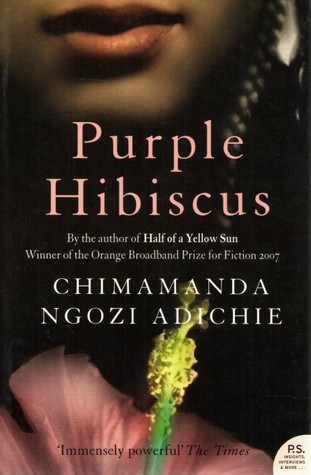 This was my last remaining unread book by Adichie, and that probably goes a long way toward explaining why I found it underwhelming. In comparison to her two later novels, and even her short stories (of which this reminded me the most), the canvas is small and the emotional scope limited. Kambili is a Nigerian teenager caught between belief systems: her grandfather’s traditional (“pagan”) ancestor worship versus the strict Catholicism that is the preserve of her abusive father, but also of the young priest on whom she has a crush. She and her brother try to stay out of their father’s way, but they are held to such an impossibly high standard of behaviour that it seems inevitable that they will disappoint him.
Adichie’s debt to her literary hero, Chinua Achebe, is evident from the first line onward: “Things started to fall apart at home when my brother, Jaja, did not go to communion and Papa flung his heavy missal across the room and broke the figurines on the étagère.” It also sets up, with a certain lack of subtlety, the way in which religion is wielded as a weapon in the novel. Meanwhile, the title suggests rarity, beauty, and fragile hope. Had this been my first taste of Adichie’s fiction, I probably would have stopped there, so in a way I’m glad that I read her first book last. Now I just have to wait with tapping fingers for the next one… (Free from a neighbour)
Blue Dog by Louis de Bernières (2016)
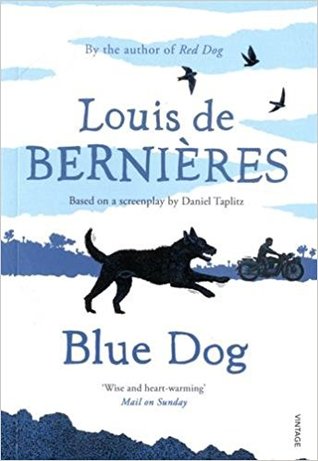 A sweet coming-of-age novella about a boy moving to the Australian Outback to live with his grandfather in the 1960s and adopting a stray dog – a red cloud kelpie, but named Blue. I didn’t realize that this is a prequel (to Red Dog), and based on a screenplay. It was my third book by de Bernières, and it was interesting to read in the afterword that he sees this one as being suited to 12-year-olds, yet most likely to be read by adults.
Mick’s father is dead and his mother has had a breakdown, so Granpa is the only one around to look after him, though out at the cattle station the boy mostly fends for himself, having adventures with stinging lizards and cyclones and bushfires and cursed caves. All along, Blue and his motorcycle are constant companions. Taylor Pete, a wry Aboriginal man, and Betty Marble, a pretty blonde hired as his teacher, are two amusing secondary characters.
This reminded me of Gerald Durrell’s writing about his childhood, and was pleasant airport and plane reading for me: light and fun, but not fluffy, and offering an armchair traveling opportunity. I especially liked the Australian lingo and the blue and black illustrations at the head and foot of each chapter, with a flipbook-style cartoon of a running dog in the upper right corner of each odd-numbered page. (Public library) 
Emerald City by Jennifer Egan (1993)
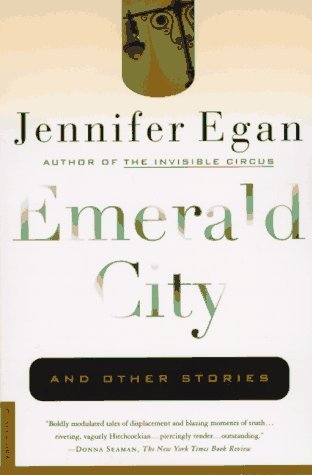 Each of these 11 stories has a fantastic first line – my favorite, from “Sacred Heart,” being “In ninth grade I was a great admirer of Jesus Christ” – but often I felt that these stories of relationships on the brink did not live up to their openers. Most take place in a major city (Chicago, New York, San Francisco) or a holiday destination (Bora Bora, China, Mexico, Spain), but no matter the setting, the terrain is generally a teen girl flirting with danger or a marriage about to implode because the secret of a recent or long-ago affair has come out into the open.
Recurring elements include models/stylists/fashion photographers and people getting conned out of money. The title story is set in New York, described as “a place that glittered from a distance even when you reached it.”
To me the best story, for offering something a bit different, was “One Piece,” about a brother who seems to hurt everything he touches but comes through for his sister when it counts. Egan’s characters are caught between emotional states: remembering a golden age, regretting a moment that changed everything, or hoping that the best is yet to come. “The Stylist” was the one story that reminded me most of A Visit from the Goon Squad. As soon as I closed the book, I found that I had trouble remembering details of any of the stories. (Little Free Library in suburban Philadelphia, May 2019)
Darkness Visible: A Memoir of Madness by William Styron (1990)
 (Visible darkness must have a colour, right?) I had long wanted to read this and finally came across a secondhand copy the other day. What I never realized was that, at 84 pages, it is essentially an extended essay: It started life as a lecture given at Johns Hopkins in 1989, was expanded into a Vanity Fair essay, and then further expanded into this short book.
Approaching age 60 and on his way to Paris to accept a prestigious award, Styron could feel his depression worsening. Rather than being proud or grateful, he could only doubt his own talent. The pills his doctor prescribed him for insomnia exacerbated his feelings of despair. When he threw away the journal he had been keeping, he knew it was a potential prelude to suicide. Hearing a piece by Brahms on a movie soundtrack was the one thing that reminded him of the beauty of the world and the richness of his life, enough for him to reach out and get seven weeks of treatment at a mental hospital, which was what saved him. These experiences, recounted in sections VI and VII, are the highlight of the book.
Styron also muses on the creative temperament and the ubiquity of suicide among writers, especially those who, like him, had an early trauma (his mother died when he was 13). The prose is forthright and intimate, ably evoking a psychic pain that is “quite unimaginable to those who have not suffered it.” This made me want to try his fiction, too. (Secondhand purchase, June 2021) 
Favourite lines:
“each day’s pattern of distress exhibits fairly predictable alternating periods of intensity and relief. The evening’s relief for me—an incomplete but noticeable letup, like the change from a torrential downpour to a steady shower—came in the hours after dinnertime and before midnight, when the pain lifted a little and my mind would become lucid enough to focus on matters beyond the immediate upheaval convulsing my system.”
“Alcohol was an invaluable senior partner of my intellect, besides being a friend whose ministrations I sought daily—sought also, I now see, as a means to calm the anxiety and incipient dread that I had hidden away for so long somewhere in the dungeons of my spirit.”
Next two in progress: A Pair of Blue Eyes by Thomas Hardy and Ruby by Ann Hood.
Read any of these? Interested?
October Releases by Rachel Mann, Sigrid Nunez and Ruth Janette Ruck
A calmer month for new releases after September’s bumper crop. I read a sophisticated mystery set at a theological college, a subtle novel about empathy and being a good friend, and a memoir of raising one of Britain’s first llamas.
The Gospel of Eve by Rachel Mann
Last year I dipped into Mann’s poetry (A Kingdom of Love) and literary criticism/devotional writing (In the Bleak Midwinter); this year I was delighted to be offered an early copy of her debut novel. The press materials are full of comparisons to Donna Tartt’s The Secret History; it’s certainly an apt point of reference for this mystery focusing on clever, Medieval-obsessed students training for the priesthood at a theological college outside Oxford.
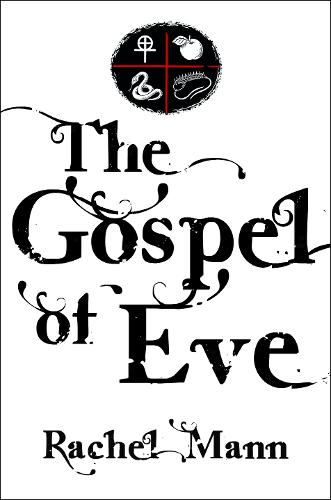 It’s 1997 and Catherine Bolton is part of the first female intake at Littlemore College. She has striven to rid herself of a working-class accent and recently completed her PhD on Chaucer, but feels daunted by her new friends’ intelligence and old-money backgrounds: Ivo went to Eton, Charlie is an heiress, and so on. But Kitty’s most fascinated with Evie, who is bright, privileged and quick with a comeback – everything Kitty wishes she could be.
If you think of ordinands as pious and prudish, you’ll be scandalized by these six. They drink, smoke, curse and make crude jokes. In seminars with Professor Albertus Loewe, they make provocative mention of feminist theory and are tempted by his collection of rare books. Soon sex, death and literature get all mixed up as Kitty realizes that her friends’ devotion to the Medieval period goes as far as replicating dangerous rituals. We know from the first line that one of them ends up dead. But what might it have to do with the apocryphal text of the title?
I didn’t always feel the psychological groundwork was there to understand characters’ motivations, but I still found this to be a beguiling story, well plotted and drenched in elitism and lust. Mann explores a theology that is more about practice, about the body, than belief. Kitty’s retrospective blends regret and nostalgia: “We were the special ones, the shining ones,” and despite how wrong everything went, part of her wouldn’t change it for the world.
My thanks to publicist Hannah Hargrave for the proof copy for review. Published today by Darton, Longman & Todd Ltd.
What Are You Going Through by Sigrid Nunez
A perfect follow-up to The Friend and very similar in some ways: again we have the disparate first-person musings of an unnamed narrator compelled to help a friend. In Nunez’s previous novel, the protagonist has to care for the dog of a man who recently killed himself; here she is called upon to help a terminally ill friend commit suicide. The novel opens in September 2017 in the unfamiliar town she’s come to for her friend’s cancer treatments. While there she goes to a talk by an older male author who believes human civilization is finished and people shouldn’t have children anymore. This prophet of doom is her ex.
 His pessimism is echoed by the dying friend when she relapses. The narrator agrees to accompany her to a rental house where she will take a drug to die at a time of her choosing. “Lucy and Ethel Do Euthanasia,” the ex jokes. And there is a sort of slapstick joy early in this morbid adventure, with mishaps like forgetting the pills and flooding the bathroom.
As in Rachel Cusk’s Outline trilogy, the voice is not solely or even primarily the narrator’s but Other: her friend speaking about her happy childhood and her estrangement from her daughter; a woman met at the gym; a paranoid neighbor; a recent short story; a documentary film. I felt there was too much recounting of a thriller plot, but in general this approach, paired with the absence of speech marks, reflects how the art we consume and the people we encounter become part of our own story. Curiosity about other lives fuels empathy.
With the wry energy of Jenny Offill’s Weather, this is a quiet novel that sneaks up to seize you by the heartstrings. “Women’s stories are often sad stories,” Nunez writes, but “no matter how sad, a beautifully told story lifts you up.” Like The Friend, which also ends just before The End, this presents love and literature as ways to bear “witness to the human condition.”
With thanks to Virago for the proof copy for review.
Along Came a Llama: Tales from a Welsh Hill Farm by Ruth Janette Ruck
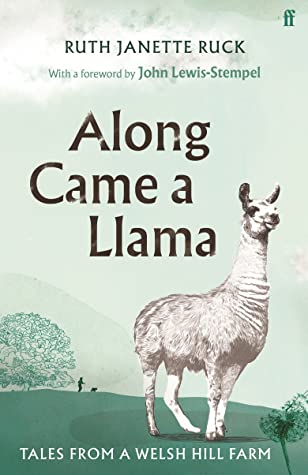 Originally published in 1978 (now reissued with a foreword by John Lewis-Stempel), this is an enjoyably animal-stuffed memoir reminiscent of Gerald Durrell and especially Doreen Tovey. Ruck (d. 2006) and her family – which at times included her ill sister, her elderly mother and/or her sister-in-law – lived on a remote farm in the hills of North Wales. On a visit to Knaresborough Zoo, Ruck was taken with the llamas and fancied buying one to add to their menagerie of farm animals. It was as simple as asking the zoo director and then taking the young female back to Wales in a pony box. At that time, hardly anyone in the UK knew anything about llamas or the other camelids. No insurance company would cover their llama in transit; no one had specialist knowledge on feeding or breeding. Ruck had to do things the old-fashioned way, finding books and specialist scientific papers.
But they mostly learned about Ñusta (the Quechua word for princess) by spending time with her. At holidays they discovered her love of chocolate Easter eggs and cherry brandy. The cud-chewing creature sometimes gave clues to what else she’d been eating, as when she regurgitated plum stones. She didn’t particularly like being touched or trailed by an orphaned lamb, but followed Ruck around dutifully and would sit sociably in the living room. Life with animals often involves mild disasters: Ñusta jumps in a pool and locks Ruck’s husband in the loo, and the truck breaks down on the way to mate her with the male at Chester Zoo.

A vintage cover I found on Goodreads.
From spitting to shearing, there was a lot to get used to, but this account of the first three years of llama ownership emphasizes the delights of animal companionship. There were hardships in Ruck’s life, including multiple sclerosis and her sister’s death, but into the “austere but soul-rewarding life of a hill firm … like a catalyst or a touch of magic, the llama came along.” I was into llamas and alpacas well before the rest of the world – in high school I often visited a local llama farm, and I led a llama in a parade and an alpaca in a nativity play – so that was my primary reason for requesting this, but it’s just right for any animal lover.
With thanks to Faber & Faber for the free copy for review.
What recent releases can you recommend?
Six Degrees of Separation: From How to Do Nothing to Genie and Paul

It’s my seventh month in a row doing Six Degrees. This time (see Kate’s introductory post) we all start with How to Do Nothing by Jenny Odell, about time and mindfulness. I’ve not read this 2019 release, but its premise reminds me of two books I reviewed a couple of years ago for this Los Angeles Review of Books article on the benefits of “wasting time.”
#1 One of those books was The Art of the Wasted Day by Patricia Hampl. The book blends memoir with travel and biographical information about some of Hampl’s exemplars of solitary, introspective living. Her book wanders along with her mind, in keeping with her definition of memoir as “lyrical quest literature,” where meaning always hovers above the basics of plot.
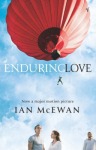
#2 The hot air balloon on the cover takes me to Enduring Love by Ian McEwan. It opens, famously, with a fatal ballooning accident that leaves the witnesses guiltily wondering whether they could have done more. Freelance science journalist Joe Rose – on a picnic with his partner, Keats scholar Clarissa – rushed to help, as did Jed Parry, a young Christian zealot who fixates on Joe. I recently borrowed a DVD of the film from a neighbor and it somehow felt even darker and creepier. (Strangely, the two main characters’ jobs were changed to philosophy professor and sculptor – were those considered easier to show on film?)
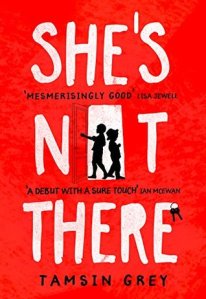 #3 A quote from McEwan on the cover convinced my book club to read the mediocre She’s Not There by Tamsin Grey. (I think the author was also a friend of a friend of someone in the group.) One morning, nine-year-old Jonah wakes up to find the front door of the house open and his mum gone. It takes just a week for the household to descend into chaos as Jonah becomes sole carer for his foul-mouthed little brother, six-year-old Raff. In this vivid London community, children are the stars and grown-ups, only sketchily drawn, continually fail them.
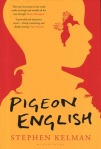
#4 The readalike that came to mind when reading Grey’s novel was Pigeon English by Stephen Kelman, set on a similarly rough London estate. It was on the notorious 2011 Man Booker Prize shortlist (a judge spoke of looking for books that “zip along”; the right author won – Julian Barnes – but for a book I did not particularly enjoy, The Sense of an Ending). The novel is narrated by eleven-year-old Harrison Opoku, who is newly arrived in England from Ghana and turns sleuth when one of his young acquaintances is found murdered.
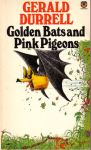
#5 According to my Goodreads library, the only other book I’ve read with “pigeon” in the title is Golden Bats and Pink Pigeons by Gerald Durrell. I love his animal-collecting adventure books, although this one set on Mauritius did not particularly stand out.
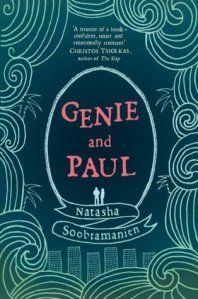 #6 The Mauritius location, plus a return to the “pigeon/pidgin” pun of the Kelman title, leads me to my final book, Genie and Paul by Natasha Soobramanien, about a brother and sister pair who left Mauritius for London as children and still speak Creole when joking. I reviewed this postcolonial response to Paul et Virginie (1788), the classic novel by Jacques-Henri Bernardin de Saint-Pierre, for Wasafiri literary magazine in 2013. It was among my first professional book reviews, and I’ve enjoyed reviewing occasionally for Wasafiri since then – it gives me access to small-press books and BAME authors, which I otherwise don’t read often enough.
Join us for #6Degrees of Separation if you haven’t already! Next month’s starting book will be Rodham by Curtis Sittenfeld (see my review).
Have you read any of my selections?
Are you tempted by any you didn’t know before?
Classic of the Month: Cider with Rosie by Laurie Lee (1959)
 (20 Books of Summer #2) Lee’s quaint family memoir is set in the years immediately after World War I. He was born in 1914 and his childhood unfolded in Stroud, Gloucestershire and nearby village Slad. I started reading Cider with Rosie in April 2019 when we stopped in Stroud for a night on the way back from a holiday in Devon. I got through the first 100 pages quickly, with the voice reminding me slightly of Gerald Durrell’s in his autobiographical trilogy, but then set the book aside for over a year before picking it back up for this summer’s food- and drink-themed reading. Taking such a long break wasn’t a major problem because the book’s vignettes are thematically arranged, so there was no plot as such to lose track of.
Lee was part of his father’s second brood, born out of the widower’s remarriage to his housekeeper. His father left his new family after just a few years, and for the next three decades Lee’s mother dutifully waited for a return that never came. Lee was a sickly child, doted on by his older half-sisters. He was surrounded by a large wider family of brothers, eccentric war-veteran uncles and duelling elderly neighbors who lived one upstairs and one downstairs in a sort of granny annex attached to their untidy, rambling 17th-century stone house. The book depicts a village on the cusp of modernization: everything was still done with wagons and horses, but that was soon to change.
It’s a nostalgic, evocative look at a country childhood. Lee captures a bygone era, portraying himself as similarly on the precipice of losing innocence. The title comes from a late moment when Rosie Burdock tempts the adolescent Lee with alcoholic cider and kisses underneath a hay wagon. This penultimate chapter on the lust of the flesh takes an alarming turn as he describes the village boys’ planned gang rape of a religious 16-year-old, Lizzy. Lee was among the boys who followed her into the woods one Sunday after church. Luckily, they lost their nerve and nothing happened, but Lee’s blasé recounting felt out of keeping and somehow more dated than the rest of his material. It left a sourness I couldn’t get over.
Quintessentially English but not as purely delightful as I expected, this was still a book I valued for its characterization and its description of golden moments in memory.
Some favorite passages:
“Summer, June summer, with the green back on earth and the whole world unlocked and seething – like winter, it came suddenly and one knew it in bed, almost before waking up; with cuckoos and pigeons hollowing the woods since daylight and the chipping of tits in the pear-blossom.”
“Myself, my family, my generation, were born in a world of silence; a world of hard work and necessary patience, of backs bent to the ground, hands massaging the crops, of waiting on weather and growth; of villages like ships in the empty landscapes and the long walking distances between them; … [The horse’s] eight miles an hour was the limit of our movements, as it had been since the days of the Romans. That eight miles an hour was life and death, the size of our world, our prison.”
Source: Free bookshop
My rating:
Ten more childhood memoirs:
A few I’ve written about here and prefer:
- Boy by Roald Dahl
- To the Is-land by Janet Frame
- Don’t Let’s Go to the Dogs Tonight by Alexandra Fuller
- Bookworm by Lucy Mangan
- Period Piece by Gwen Raverat
A couple of favorites I’ve never written up:
- Oleander, Jacaranda by Penelope Lively
- Hellfire and Herring by Christopher Rush
Plus a few that I haven’t liked quite as much:
- Maggie & Me by Damian Barr
- Childhood by Tove Ditlevsen
- Rosie by Rose Tremain
Pandemic Reading Strategies & Recommendations, Serious or Tongue-in-Cheek
If you’ve been spending time blog-hopping or on Twitter over the last few weeks, you will have seen countless riffs on this topic. Everyone’s pondering what’s best to read in these times. All we can get our hands on about plagues (Boccaccio, Camus, Defoe)? Allegories of similarly challenging worldwide disasters (WWII, 9/11)? Childhood favorites? Comfort reads? Funny books? Light, undemanding stuff? Rereads?
My general answer would be: as always, read whatever you want or can – anything that captures your attention is worthwhile. We’re under so much stress that our reading should be entirely unpressured. But to be a little more specific, I’ve gathered reading recommendations on a variety of topics, drawing on lists that others have made and linking to my own blog reviews where applicable.
(Some of these ideas are less serious than others.)
If you are brave enough to learn about zoonotic diseases:
 Spillover: Animal Infections and the Next Human Pandemic by David Quammen: This is top-notch scientific journalism: pacey, well-structured, and gripping. The best chapters are on Ebola and SARS; the SARS chapter, in particular, reads like a film screenplay, if this were a far superior version of Contagion. It’s a sobering subject, with some quite alarming anecdotes and statistics, but this is not scare-mongering for the sake of it; Quammen is frank about the fact that we’re still all more likely to get heart disease or be in a fatal car crash.
If you can’t look away from pandemic stories, historical or imagined:


I already had Philip Roth’s Nemesis (set in 1940s New Jersey amid a polio epidemic) out from the library because it was on the Wellcome Book Prize shortlist in 2011. I was also inspired to take Year of Wonders by Geraldine Brooks (set in the 1660s and featuring an English village that quarantined itself during the Plague) off the shelf. I’m nearing the end of these two and should have my reviews up next week.
You will see no one book referenced more than Station Eleven by Emily St. John Mandel. It’s a wholly believable dystopian novel in which 99% of the population has been wiped out by a pandemic. The remnant bands together not just to survive but to create and preserve art. “What was lost in the collapse: almost everything, almost everyone, but there is still such beauty.” (My full BookBrowse review from December 2014.)
See also this Publishers Weekly list of “13 Essential Pandemic Novels.”
If you’re feeling cooped up…
 Infinite Home by Kathleen Alcott: “Edith is a widowed landlady who rents apartments in her Brooklyn brownstone to an unlikely collection of humans, all deeply in need of shelter.” (I haven’t read it, but I do have a copy; now would seem like the time to read it!)
…yet want to appreciate the home you’re stuck in:


Years ago I read and loved At Home: A Short History of Private Life by Bill Bryson and Happier at Home by Gretchen Rubin. I can’t tell you anything more than that because it was before the days when I reviewed everything I read, but these are both reliable authors.
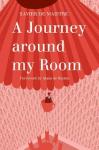 I love the sound of A Journey Around My Room by Xavier de Maistre: “Finding himself locked in his room for six weeks, a young officer journeys around his room in his imagination, using the various objects it contains as inspiration for a delightful parody of contemporary travel writing and an exercise in Sternean picaresque.”
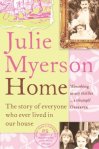
I’m also drawn to Home: The Story of Everyone Who Ever Lived in Our House by Julie Myerson, who combed archives for traces of all the former residents of her 1870s terraced house in Clapham.
If you’re struggling with being on your own:


The Lonely City by Olivia Laing: This remarkable book on outsider artists interweaves biography, art criticism and memoir. Laing is a tour guide into the peculiar, lonely crowdedness you find in a world city.
How to Be Alone by Sara Maitland: Maitland argues that although being alone is easy to achieve, there is an art to doing it properly, and solitude and loneliness are by no means the same thing. Profiling everyone from the Desert Fathers of early Christianity to the Romantic poets, she enumerates all the benefits that solitude confers.
Journal of a Solitude by May Sarton: A one-year account of her writing life in New Hampshire, this is Sarton’s best. The book dwells on the seasonal patterns of the natural world (shovelling snow, gardening, caring for animals) but also the rhythms of the soul – rising in hope but also falling into occasional, inevitable despair.
See also this Penguin UK list of books to read in self-isolation.
If you’ve been passing the time by baking…
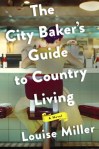 The City Baker’s Guide to Country Living by Louise Miller: As chief baker at the Sugar Maple Inn in Guthrie, Vermon, Olivia Rawlings settles into a daily routine of baking muffins, bread and cakes. This is a warm, cozy debut novel full of well-drawn secondary characters and romantic possibilities. There’s nothing clichéd about it, though. Livvy is a sassy narrator, and I loved how Miller documents the rhythms of the small-town country year, including tapping the maple trees in the early spring and a pie baking contest at the summer county fair.
 Sourdough by Robin Sloan: Lois Clary, a Bay Area robot programmer, becomes obsessed with baking. “I needed a more interesting life. I could start by learning something. I could start with the starter.” She attempts to link her job and her hobby by teaching a robot arm to knead the bread she makes for a farmer’s market. Madcap adventures ensue. It’s a funny and original novel and it makes you think, too – particularly about the extent to which we should allow technology to take over our food production.
…but can’t find yeast or eggs in the shop:
Yeast: A Problem by Charles Kingsley (1851). Nope, I haven’t read it, but our friend has a copy in his Everyman’s Library collection and the title makes us laugh every time we see it.
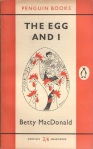 The Egg & I by Betty Macdonald: MacDonald and her husband started a rural Washington State chicken farm in the 1940s. Her account of her failure to become the perfect farm wife is hilarious. The voice reminded me of Doreen Tovey’s: mild exasperation at the drama caused by household animals, neighbors, and inanimate objects. “I really tried to like chickens. But I couldn’t get close to the hen either physically or spiritually, and by the end of the second spring I hated everything about the chicken but the egg.” Perfect pre-Easter reading.
And here are a few lists I put together for Hungerford Bookshop:
If you need a laugh:
Fiction:
Lucky Jim by Kingsley Amis
The Darling Buds of May (and sequels) by H.E. Bates
Ella Minnow Pea by Mark Dunn
Heartburn by Nora Ephron
 Cold Comfort Farm by Stella Gibbons
Anything by Nick Hornby
Three Men in a Boat by Jerome K. Jerome
Anything by David Lodge
Dear Committee Members by Julie Schumacher
The Rosie Project (and sequels) by Graeme Simsion
To Say Nothing of the Dog by Connie Willis
Nonfiction:
 Anything by Bill Bryson
21st-Century Yokel by Tom Cox
Anything by Gerald Durrell
Anything by Nora Ephron (essays)
This Is Going to Hurt by Adam Kay
Priestdaddy by Patricia Lockwood
Dear Lupin by Roger Mortimer
Anything by David Sedaris
Little Failure by Gary Shteyngart
If you want to disappear into a long book:


The Heart’s Invisible Furies by John Boyne
Jonathan Strange & Mr Norrell by Susanna Clarke
David Copperfield by Charles Dickens
Middlesex by Jeffrey Eugenides
The Crimson Petal and the White by Michel Faber
The Signature of All Things by Elizabeth Gilbert
The Nix by Nathan Hill
We, the Drowned by Carsten Jensen
Mary Ann Sate, Imbecile by Alice Jolly
The Poisonwood Bible by Barbara Kingsolver
The Wind-Up Bird Chronicle by Haruki Murakami
The Sparrow by Mary Doria Russell
American Wife by Curtis Sittenfeld
East of Eden by John Steinbeck
The Goldfinch by Donna Tartt
Cutting for Stone by Abraham Verghese
The Paying Guests by Sarah Waters
If you’re looking for some hope:
 Almost Everything: Notes on Hope by Anne Lamott
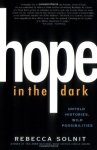
Hope in the Dark by Rebecca Solnit
Hope Dies Last: Making a Difference in an Indifferent World by Studs Terkel
I’ve been doing a combination of the above strategies, reading about historical plagues in fiction and nonfiction but also doing some rereading and consuming lighter genre stuff like mysteries. I continue to dip into new releases, and I enjoy the ongoing challenge of my reading projects. Right now, I’m working through a few current Women’s Prize longlistees, as well as some past Wellcome Book Prize nominees and Women’s Prize winners, and I’m about to start a third #1920Club title. Plus I’m already thinking about my 20 Books of Summer (I’m considering an all-foodie theme).
Further reading:
- Book Riot pinpoints seven categories of books to read during a pandemic.
- Clare surveys the post-pandemic literary landscape.
- Elle logs her pandemic reading and viewing.
- Laura discusses pandemic reading strategies and distraction reading.
- Literary Hub looks at parallel situations, including post-9/11 reads, to make predictions, and asks what your “go-to quarantine read” says about you. (I’ve read Kindred most recently, but I wouldn’t say that describes me.)
- Simon thinks about what we can and should read.
- Susan highlights some comfort reads.
 Bookish Beck = Rebecca Foster. American transplant to England. Freelance proofreader and book reviewer.
 Bookish Beck