Wainwright & Women’s Prize Predictions
A quick second post from me today since tonight is the announcement of the winners of the Wainwright Prize and tomorrow, September 9th, will be the announcement of the winner of the Women’s Prize for Fiction.
Wainwright Prize
I’d read 10 of the nominees before the shortlists were announced (see my mini-reviews and predictions). Since then I’ve managed to read one-third each of the two other books on the UK nature writing shortlist (I correctly predicted four of the seven on it), The Frayed Atlantic Edge by David Gange and On the Red Hill by Mike Parker. This is the first year that I’ve read nearly an entire Wainwright shortlist before the announcement. Even though I’m only partway through it … for its interdisciplinary approach – folklore, geology, history, nature writing and more, all wrapped up in a rollicking, well-written travelogue as he kayaks down the western coasts of the British Isles – I feel Gange should win, but the judges pretty much never pick what I think is the best book.


I’ve only read one of the books from the new global conservation shortlist, so I can’t make any kind of informed prediction. However, as it was my top nonfiction book of last year, I’d be delighted to see Irreplaceable by Julian Hoffman win.
Women’s Prize
It feels like an age since this shortlist was announced. I think the reason for delaying the winner announcement from early June to September was for there to be a chance of the ceremony going ahead as normal (though of course it will be online after all); it also gave people a chance to read the Mantel. If I’m being cynical, it was to drum up more interest and publicity in this 25th anniversary year, but I think that may have backfired – I was quite excited early on (see my thoughts on the longlist; my wish list correctly predicted four of the six on the shortlist), but long ago wearied of hearing about the Prize. It seems forever ago that I read some of the nominees.
I don’t think Cruz or Haynes has a chance of winning, but I could see a case for any of the other four taking the Prize. I’d love for it to go to Jenny Offill’s sharp, timely Weather; I’d be perfectly happy for it to go to Bernardine Evaristo’s stylish, multivocal Girl, Woman, Other; I’d not be surprised at all if it went to Hilary Mantel’s accomplished epic, The Mirror & The Light, though I think her work more suited to the Booker Prize; and I personally did not rate Hamnet (which has something of a pandemic theme) but would still be glad to see some recognition for Maggie O’Farrell. Evaristo or O’Farrell thus seems like the safest bet to me.


The Best Books from the First Half of 2020
My top 10 releases of 2020 thus far, in alphabetical order within genre (nonfiction is dominating the year for me!), are:
Fiction
 The Vanishing Half by Brit Bennett: Like some lost mid-career gem from Toni Morrison, this novel is meaty with questions of racial and sexual identity. Light-skinned African American twins Stella and Desiree Vignes’ paths divide in 1954, with Stella passing as white. Both are desperate to escape from Mallard, Louisiana. The twins’ decisions affect the next generation, too. It’s perceptive and beautifully written, with characters whose struggles feel genuine and pertinent. The themes of self-reinvention and running from one’s past resonate.
 Writers & Lovers by Lily King: Following a breakup and her mother’s sudden death, Casey Peabody is drowning in grief and debt. Between waitressing shifts, she chips away at the novel she’s been writing for six years. Life gets complicated, especially when two love interests appear. We see this character at rock bottom but also when things start to go well at long last. I felt I knew Casey through and through, and I cheered for her. An older, sadder Sweetbitter, perhaps as written by Elizabeth Strout. It gives you all the feels, as they say.
 Weather by Jenny Offill: A blunt, unromanticized, wickedly funny novel about how eco-anxiety permeates everyday life, Weather is in the same aphoristic style as Offill’s Dept. of Speculation. Lizzie is married with a young son and works in a NYC university library. She takes on a second job as PA to her former professor, who runs a podcast on environmental issues. Set either side of Trump’s election, the novel amplifies many voices prophesying doom. Offill’s observations are spot on. Could there be a more perfect book for 2020?
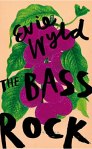 The Bass Rock by Evie Wyld: There’s no avoiding violence for the women and children of this novel. It’s a sobering theme, certainly, but Wyld convinced me that hers is an accurate vision and a necessary mission. The novel cycles through its three strands in an ebb and flow pattern that seems appropriate to the coastal setting and creates a sense of time’s fluidity. Themes and elements keep coming back, stinging a little more each time. An elegant, time-blending structure and an unrelenting course – that indifferent monolith is the perfect symbol.
Nonfiction
 Dear Life: A Doctor’s Story of Love and Loss by Rachel Clarke: I’ve read so many doctors’ memoirs and books about death and dying; it takes a truly special one like this to stand out. Clarke specializes in palliative medicine and alternates her patients’ stories with her own in a very natural way. A major theme is her relationship with her father, who was also a doctor, and how she absorbed his lessons of empathy and dedication. A passionate and practical book, encouraging readers to be sure they and older relatives have formalized their wishes.
 The Lost Family: How DNA Testing Is Upending Who We Are by Libby Copeland: Gone are the days when people interested in family history had to trawl through microfilm and wait months to learn anything new; nowadays a DNA test can find missing relatives within days. But there are troubling aspects to this new industry, including privacy concerns, notions of racial identity, and criminal databases. Copeland spoke to scientists and 400 laypeople who sent off saliva samples. A thought-provoking book with all the verve and suspense of fiction.
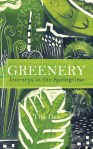 Greenery: Journeys in Springtime by Tim Dee: From the Cape of Good Hope to the Arctic Circle, Dee tracks the spring as it travels north. From first glimpse to last gasp, moving between his homes in two hemispheres, he makes the season last nearly half the year. His main harbingers are migrating birds, starting with swallows. The book is steeped in allusions and profound thinking about deep time and what it means to be alive in an era when nature’s rhythms are becoming distorted. A fresh, masterful model of how to write about nature.
 Footprints: In Search of Future Fossils by David Farrier: Blending human and planetary history, environmental realism and literary echoes, Farrier, a lecturer in English literature, tells the story of the human impact on the Earth. Each chapter is an intricate blend of fact, experience and story. We’ll leave behind massive road networks, remnants of coastal megacities, plastics, carbon and methane in the permafrost, the fossilized Great Barrier Reef, nuclear waste, and jellyfish-dominated oceans. An invaluable window onto the deep future.
 Losing Eden: Why Our Minds Need the Wild by Lucy Jones: While nature’s positive effect on human mental health is something we know intuitively and can explain anecdotally, Jones wanted to investigate the scientific mechanism behind it. She makes an empirical enquiry but also attests to the personal benefits nature has. Losing Eden is full of common sense and passion, cramming masses of information into 200 pages yet never losing sight of the big picture. Like Silent Spring, on which it is patterned, I can see this leading to real change.
 Diary of a Young Naturalist by Dara McAnulty: McAnulty is the UK’s answer to Greta Thunberg: a leader in the youth environmental movement and an impassioned speaker on the love of nature. This is a wonderfully observant and introspective account of his fifteenth year: of disruptions – moving house and school, of outrage at the state of the world and at individual and political indifference, of the complications of being autistic, but also of the joys of everyday encounters with wildlife. Impressive perspective and lyricism.

The ones I own in print (not pictured: 2 read on Kindle; 1 read via the library).
 The 4.5- or 5-star backlist books that I’ve read this year but haven’t yet written about on here in some way are:
- Kindred by Octavia E. Butler
- Love Medicine by Louise Erdrich
- Small Ceremonies by Carol Shields
What are some of the best books you’ve read so far this year?
What 2020 releases do I need to catch up on right away?
Three May Releases: Climate Change, a Son’s Elegy, and Sexual Fluidity
I’m still averaging four new releases per month: a nicely manageable number. In addition to Lily King’s Writers & Lovers, in May I’ve read a novel about eco-anxiety and marital conflict, a memoir of losing a mother to grief and dementia, and an account of a shift in sexuality. I had a somewhat mixed reaction to all three books, but see if one or more catches your eye anyway.
When the Lights Go Out by Carys Bray
Perhaps if this had come out two or three years ago, it could have felt fresh. As it is, it felt like a retread of familiar stories about eco-grief and -anxiety among the middle classes (such as Weather and Unsheltered). Emma Abram is an average suburban mother of two in the north of England, upcycling fabrics and doing her best with other little green initiatives around the house since she got laid off from her job when the local library closed. She feels guilty a lot of the time, but what else can she do?
Nero fiddled while Rome burned; she will sew while the polar ice melts and the seas surge.
She couldn’t un-birth the children, un-earth the disposable nappies or un-plumb the white goods.
 Such sentiments also reminded me of the relatable, but by no means ground-breaking, contents of Letters to the Earth.
Emma’s husband Chris, though, has taken things to an extreme: as zealous as he once was about his childhood faith, he now is about impending climate change. One day, a week or so before Christmas, she is embarrassed to spot him by the roadside in town, holding up a signboard prophesying environmental doom. “In those days, Chris had been spreading the Good News. Now he is spreading the Bad News.” He thinks cold-weather and survivalist gear makes appropriate gifts; he raises rabbits for meat; he makes Emma watch crackpot documentaries about pandemic preparation. (Oh, the irony! I was sent this book in December.)
Part of the problem was to do with my expectations: from the cover and publicity materials I thought this was going to be a near-future speculative novel about a family coping with flooding and other literal signs of environmental apocalypse. Instead, it is a story about a marriage in crisis. (I cringed at how unsubtly this line put it: “The climate of her marriage [has] been changing, and she has been in denial about it for a long time.”) It is also, like Unless, about how to relate to a family member who has, in your opinion, gone off the rails.
Nothing wrong with those themes, of course, but my false assumptions meant that I spent well over 200 pages waiting for something to happen, thinking that everything I had read thus far was backstory and character development that, in a more eventful novel, would have been dispatched within, say, the first 40 pages. I did enjoy the seasonal activity leading up to Christmas Eve, and the portrayal of Chris’s widowed, pious mother. But compared to A Song for Issy Bradley, one of my favorite books of 2014, this was a disappointment.
My thanks to Hutchinson for the proof copy for review. This came out in e-book and audio on May 7th but the print edition has been delayed until November 12th.
Mother: A Memoir by Nicholas Royle
“A memoir is about what survives. But it is also about what is enigmatic and irretrievable. Cryptic and unknown.”
 A few years ago I read Royle’s An English Guide to Birdwatching, one of the stranger novels I’ve ever come across (it brings together a young literary critic’s pet peeves, a retired couple’s seaside torture by squawking gulls, the confusion between the two real-life English novelists named Nicholas Royle, and bird-themed vignettes). It was joyfully over-the-top, full of jokes and puns as well as trenchant observations about modern life.
I found that same delight in the vagaries of language and life in Mother: A Memoir. Royle’s mother, Kathleen, had Alzheimer’s and died in 2003. At least to start with, she was aware of what was happening to her: “I’m losing my marbles,” she pronounced one day in the kitchen of the family home in Devon. Yet Royle pinpoints the beginning of the end nearly two decades earlier, when his younger brother, Simon, died of a rare cancer. “From that death none of us recovered. But my mother it did for. She it by degrees sent mad.”
In short, titled sections that function almost like essays, Royle traces his mother’s family history and nursing career, and brings to life her pastimes and mannerisms. She passed on to Royle, a professor of English and creative writing at the University of Sussex, a love of literature and of unusual words and sayings. She was often to be found with a crossword puzzle in front of her, she devoured books (devoting a whole summer to the complete works to date of Doris Lessing, for instance), and she gave advice on her son’s early stories.
The narrative moves back and forth in time and intersperses letters, lists and black-and-white photographs. Royle often eschews punctuation and indulges in wordplay. “These details matter. The matter of my mater. Matador killing metaphor.” I found that I remained at arm’s length from the book – admiring it rather than becoming as emotionally engaged with it as I wanted to be – but it’s certainly not your average memoir, and it’s always refreshing to find (auto)biographical work that does something different.
My thanks to Myriad Editions for the free copy for review.
The Fixed Stars by Molly Wizenberg
Wizenberg is the author of two terrific food-themed memoirs. I particularly loved A Homemade Life, which chronicles the death of her father Burg from cancer, her time living in Paris, building a new life in Seattle, starting her famous food blog (Orangette), and meeting her husband, Brandon. Her follow-up, Delancey, was about the ups and downs of them opening a pizza restaurant and bar in Seattle while she was pregnant with June.
By contrast, The Fixed Stars was an uncomfortable read in more ways than one. For one thing, it unpicks the fairy tale of what had looked like a pretty ideal marriage and entrepreneurial partnership. It turns out Wizenberg wasn’t wholly on board with their little restaurant empire and found the work overwhelming. It was all Brandon’s dream, not hers. (She admits to these facts in Delancey, but it was the success, not the doubt, that I remembered.)
And then, in the summer of 2015, Wizenberg was summoned for jury duty and found herself fascinated by one of the defense attorneys, a woman named Nora who wore a man’s suit and a butch haircut. The author had always considered herself straight, had never been attracted to a woman before, but this crush wouldn’t go away. She and Brandon tried an open marriage so that she could date Nora and he could see other people, too, but it didn’t work out. Brandon didn’t want her to fall in love with anyone else, but that was just what was happening.
 Wizenberg announced her coming-out and her separation from Brandon on her blog, so I was aware of all this for the last few years and via Instagram followed what came next. I knew her new spouse is a non-binary person named Ash who was born female but had top surgery to remove their breasts. (At first I was assumed Nora was an alias for Ash, but they are actually different characters. After things broke down with Nora, a mutual friend set her up with Ash.) The other source of discomfort for me here was the explicit descriptions of her lovemaking with Nora – her initiation into lesbian sex – though she draws a veil over this with Ash.
I’m not sure if the intimate details were strictly necessary, but I reminded myself that a memoir is a person’s impressions of what they’ve done and what has happened to them, molded into a meaningful shape. Wizenberg clearly felt a need to dig for the why of her transformation, and her answers range from her early knowledge of homosexuality (an uncle who died of AIDS) to her frustrations about her life with Brandon (theirs really was a happy enough marriage, and a markedly amicable divorce, but had its niggles, like any partnership).
I appreciated that, ultimately, Wizenberg leaves her experience unlabeled. She acknowledges that hers is a messy story, but an honest one. While she entertains several possibilities – Was she a closeted lesbian all along? Or was she bisexual? Can sexual orientation change? – she finds out that sexual fluidity is common in women, and that all queer families are unique. An obvious comparison is with Maggie Nelson’s The Argonauts, which is a bit more profound and original. But the mourning for her marriage and the anguish over what she was doing to her daughter are strong elements alongside the examination of sexuality. The overarching metaphor of star maps is effective and reminded me of Constellations by Sinéad Gleeson.
There were points in the narrative where I was afraid the author would resort to pat answers about what was ‘meant to be’ or to depicting villains versus heroic actions, but instead she treats this all just as something that happened and that all involved coped with as best they could, hopefully making something better in the end. It’s sensitively told and, while inevitably different from her other work, well worth reading for anyone who’s been surprised where life has led.
I read an advanced e-copy from Abrams Press via Edelweiss. A Kindle edition came out on May 12th, but the hardback release has been pushed back to August 4th.
What recent releases can you recommend?
Women’s Prize Longlist 2020 Thoughts & Other Prize Reading Projects
Next Wednesday the 22nd, the Women’s Prize shortlist will be revealed. However, the winner announcement has been delayed until September 9th, so we all get extra time to read the finalists (which is handy since the 900-page Hilary Mantel is a shoo-in). I happen to have gotten through half of the longlist so far. There were some books I cared for more than others. Of the remainder, I plan to pick up a few more once my library reopens.
Here’s how I’ve fared this year, in categories from best to worst, with excerpts and links to any I’ve reviewed in full:
Loved! (5)
 Dominicana by Angie Cruz: In 1965, 15-year-old Ana Canción, married off to an older man, leaves the Dominican Republic for New York City. With not a word of English, she feels trapped in her apartment and in this abusive relationship. Yet Ana is such a plucky and confiding narrator that you’re drawn into her world and cheer for her as she figures out what she wants from her life. This compassionate novel is proof that not all the immigration stories have been told yet.
 Girl, Woman, Other by Bernardine Evaristo: A terrific linked short story collection about 12 black women in twentieth-century and contemporary Britain balancing external and internal expectations and different interpretations of feminism to build lives of their own. The prose is more like poetry: a wry, radical stream of consciousness. A warm, spirited book, it never turns strident. It’s timely and elegantly constructed – and, it goes without saying, a worthy Booker Prize winner. To win the Women’s Prize too would be unprecedented, I think? But no surprise.
- Weather by Jenny Offill: Could there be a more perfect book for 2020? It’s a blunt, unromanticized but wickedly funny novel about how eco-anxiety permeates everyday life. Set either side of Trump’s election, it amplifies many voices prophesying doom, from environmentalists to Bible-thumpers. Lizzie’s sardonic narration is an ideal way of capturing relatable feelings of anger and helplessness. Don’t expect to come away with your worries soothed, though there is some comfort to be found in the feeling that we’re all in this together.
 The Dutch House by Ann Patchett: A memorable exploration of family secrets and memories. Maeve and Danny Conroy are an inseparable brother-and-sister pair. When their father dies, they become like Hansel and Gretel: cast out into the wilds by an evil stepmother who takes possession of the only home they’ve ever known, a suburban Philadelphia mansion built on the proceeds of the VanHoebeek cigarette empire. Patchett always captures the psychology of complicated families, and her sharp prose never fails to hit the nail on the head.
 Red at the Bone by Jacqueline Woodson: Like a family saga in miniature, this short novel stretches backward from Melody’s 16th birthday party, held in Brooklyn in 2001, to explore previous generations of the African American experience. Chapters alternate between first- and third-person narration, highlighting the perspectives of all the major family members. I raced through to see who would follow in family footsteps, or not. The title is apt: the book is sometimes raw and sometimes tender. It’s an emotionally engaging story of loss and memory.
Currently skimming (1)
 The Mirror and the Light by Hilary Mantel: I’ve stalled around page 200. I’ll be totally engrossed for a few pages of exposition and Cromwell one-liners, but then everything gets talky or plotty and I skim for 20‒30 pages and put it down. My constant moving between 10‒20 books and the sudden loss of a deadline have not served me well: I feel overwhelmed by the level of detail and the cast of characters, and haven’t built up momentum. Still, I can objectively recognize the prose as top-notch.
Did not particularly enjoy (3)
 Fleishman Is in Trouble by Taffy Brodesser-Akner: To me this didn’t stand out at all from the sea of fiction about crumbling marriages and upper-middle-class angst.
- Actress by Anne Enright: A slow-burning backstory of trauma and mental illness. I found I wasn’t warming to the voice or main characters and mostly skimmed this.

- Hamnet by Maggie O’Farrell: In comparison with other historical fiction, this fell short. Overall, I found the prose flat and repetitive, which diluted the portrait of grief.

Attempted but couldn’t get through (1)
 Djinn Patrol on the Purple Line by Deepa Anappara – I’m wary of child narrators anyway, and the voice didn’t grab me within the first few pages.
Still plan to read (3)
 Queenie by Candice Carty-Williams
- How We Disappeared by Jing-Jing Lee
- The Most Fun We Ever Had by Claire Lombardo
Not interested (3)
 Nightingale Point by Luan Goldie: Sounds subpar.
- A Thousand Ships by Natalie Haynes: Say no to updated Greek classics.
- Girl by Edna O’Brien: I don’t care for O’Brien’s writing. Though this was well received by the critics, it’s not finding much love among my trusted bloggers. (Plus there’s the cultural appropriation issue.)
My ideal shortlist
(A wishlist based on my reading and what I want to read)
 Dominicana by Angie Cruz
Girl, Woman, Other by Bernardine Evaristo
How We Disappeared by Jing-Jing Lee
The Mirror and the Light by Hilary Mantel
Weather by Jenny Offill
The Dutch House by Ann Patchett
vs.
My predicted shortlist
 Queenie by Candice Carty-Williams
Actress by Anne Enright
Girl, Woman, Other by Bernardine Evaristo
The Mirror and the Light by Hilary Mantel
Girl by Edna O’Brien OR Hamnet by Maggie O’Farrell
The Dutch House by Ann Patchett
Callum, Eric, Laura and Rachel have been posting lots of reviews and thoughts related to the Women’s Prize. Have a look at their blogs!
In this 25th anniversary year of the Women’s Prize, readers are also being encouraged to catch up on previous winners.
- I’ve read 13 so far (and am currently rereading On Beauty by Zadie Smith).
 I already had Half of a Yellow Sun by Chimamanda Ngozi Adichie and The Idea of Perfection by Kate Grenville on my shelves, plus The Song of Achilles by Madeline Miller on my Nook.
- I recently found a copy of A Crime in the Neighborhood by Suzanne Berne at the free bookshop where I volunteer.
- On my current library stack are When I Lived in Modern Times by Linda Grant, Property by Valerie Martin and Fugitive Pieces by Anne Michaels.
I can’t promise to be a completist about this project because the prospect of reading A Girl Is a Half-formed Thing and The Glorious Heresies fills me with dread, but we’ll see…
Other Prize Reading Projects
 I’d been trying to make my way through some previous Wellcome Book Prize winners and nominees, but have been scuppered by my library’s closure. At the moment I have Adam Rutherford’s A Brief History of Everyone Who Ever Lived (2017 longlist; passed on from my father-in-law) and Steve Silberman’s Neurotribes (2016 shortlist; from the library) on my pile to read or, more likely, skim.
 I also had the idea to read all the Bellwether Prize winners because I loved The Leavers so much. (Known in full as the PEN/Bellwether Prize for Socially Engaged Fiction, it is a biennial award given by PEN America and Barbara Kingsolver, who created and funds the prize, “to a U.S. citizen for a previously unpublished work of fiction that address issues of social justice.”) This project did not start particularly well as I DNFed Running the Rift by Naomi Benaron. However, I own copies of Mudbound by Hillary Jordan and The Girl Who Fell from the Sky by Heidi W. Durrow and hope I’ll have better luck with them.
What prize lists or other reading projects are keeping you busy?
Recommended March Releases: Magnusson, May, Moor and More
March has been a huge month for new releases. With so many authors feeling let down about book tours and events being cancelled, it’s a great time for bloggers to step in and help. I attended two virtual book launches on Twitter on the 19th and have another one coming up on the 31st. I also have three more March releases on order from my local indie bookstore: Greenery by Tim Dee, tracking the arrival of spring; Footprints by David Farrier, about the fossil traces modern humans will leave behind; and The Bass Rock by Evie Wyld, a novel about violence against women set on the Scottish coast in three different time periods.
Today I have short reviews of five March releases I recommend (plus a bonus one now out in paperback): a Victorian pastiche infused with Scottish folklore, an essay collection about disparate experiences of motherhood, a thriller about victims of domestic violence, poems in graphic novel form, a novel about natural and personal disasters in Australia, and a lovely story of friendship and literature changing a young man’s life forever. All:
The Ninth Child by Sally Magnusson
(Published by Two Roads on the 19th)
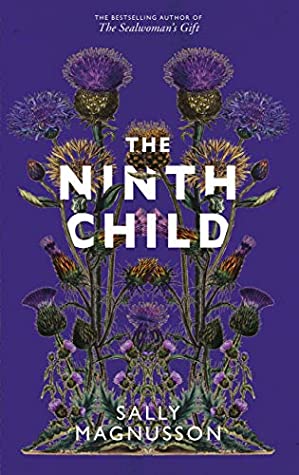 Like Hannah Kent’s The Good People and Sarah Perry’s The Essex Serpent, this is an intense, convincing work of fiction that balances historical realism with magical elements. In mid-1850s Britain, in the wake of a cholera epidemic, there is a drive to ensure clean water. Alexander Aird, hired as the on-site physician for the Glasgow waterworks, moves to the Loch Katrine environs with his wife, Isabel, who has had eight miscarriages or stillbirths. With no living babies requiring her care, Isabel spends her days wandering the hills and meets a strange scarecrow of a man, Reverend Robert Kirke … who died in 1692.
A real-life Episcopalian minister, Kirke wrote a book about fairies and other Celtic supernatural beings and, legend has it (as recounted by Sir Walter Scott and others), was taken into the faery realm after his death and continued to walk the earth looking for rest. It takes a while for Isabel to learn the truth about Kirke – though her servant, Kirsty McEchern, immediately intuits that something isn’t right about the man – and longer still to understand that he wants something from her. “Whatever else, Robert Kirke could be relied on to ruffle this mind of hers that was slowly opening to experience again, and to thinking, and to life.”
This was a rollicking read that drew me in for its medical elements (premature birth, a visit to Joseph Lister, interest in Florence Nightingale’s nursing methods) as well as the plot. It often breaks from the omniscient third-person voice to give testimonies from Kirsty and from Kirke himself. There are also amusing glimpses into the Royal household when Victoria and Albert stay at Balmoral and return to open the waterworks during the “heaviest, windiest, most umbrella-savaging, face-slashing deluge that Scotland had experienced in twenty years.” Best of all, it gives a very different picture of women’s lives in the Victorian period.
My thanks to the publisher for the proof copy for review.
The Best Most Awful Job: Twenty Writers Talk Honestly about Motherhood, edited by Katherine May
(Published by Elliott & Thompson on the 19th)
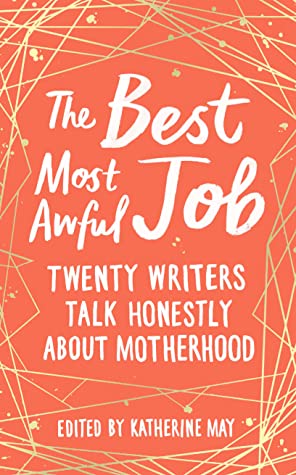 These are essays for everyone who has had a mother – not just everyone who has been a mother. I enjoyed every piece separately, but together they form a vibrant collage of women’s experiences. Care has been taken to represent a wide range of situations and attitudes. The reflections are honest about physical as well as emotional changes, with midwife Leah Hazard (author of Hard Pushed) kicking off with an eye-opening rundown of the intimate scarring some mothers will have for the rest of their lives. We hear from a mother of six who’s “addicted” to pregnancy (Jodi Bartle), but also from a woman who, after an ectopic pregnancy, realized “there are lots of ways to mother, even if your body won’t let you” (Peggy Riley, in one of my two favorite pieces in the book).
Women from BAME communities recount some special challenges related to cultural and family expectations, but others that are universal. An autistic mother (Joanne Limburg) has to work out how to parent a neurotypical child; queer parents (including author Michelle Tea) wonder how to raise a son at a time of toxic masculinity. There are also several single mothers, one of them disabled (Josie George – hers was my other favorite essay; do follow her on Twitter via @porridgebrain if you don’t already).
What I most appreciated is that these authors aren’t saying what they think they should say about motherhood; they’re willing to admit to boredom, disappointment and rage: “motherhood is an infinite, relentless slog from which there is no rest or recuperation … a ceaseless labour, often devoid of acknowledgment, recognition and appreciation” (Javaria Akbar); “I step barefoot on a rogue piece of Lego and it’s game over. I scream” (Saima Mir). These are punchy, distinctive slices of life writing perfectly timed for Mother’s Day. I plan to pass the book around my book club; mothers or not, I know everyone will appreciate it.
My thanks to the publisher for the proof copy for review.
Keeper by Jessica Moor
(Published by Viking/Penguin on the 19th)
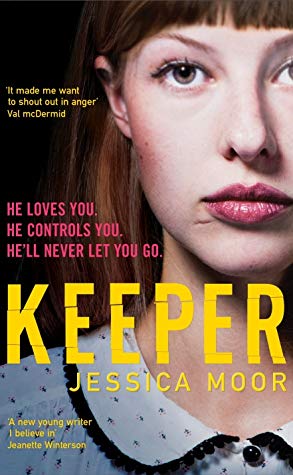 Val McDermid and Jeanette Winterson are among the fans of this, Penguin’s lead debut title of 2020. When a young woman is found drowned at a popular suicide site in the Manchester area, the police plan to dismiss the case as an open-and-shut suicide. But the others at the women’s shelter where Katie Straw worked aren’t convinced, and for nearly the whole span of this taut psychological thriller readers are left to wonder if it was suicide or murder.
The novel alternates between chapters marked “Then” and “Now”: in the latter story line, we follow the police investigation and meet the women of the refuge; in the former, we dive into Katie’s own experience of an abusive relationship back in London. While her mother was dying of cancer she found it comforting to have a boyfriend who was so attentive to her needs, but eventually Jamie’s obsessive love became confining.
I almost never pick up a mystery, but this one was well worth making an exception for. I started suspecting the twist at maybe the two-thirds point, but that didn’t detract from my enjoyment. Based on Moor’s year working in the violence against women sector, it’s a gripping and grimly fascinating story of why women stay with their abusers and what finally drives them to leave.
I picked up a proof copy at a Penguin Influencers event.
 Poems to See by: A Comic Artist Interprets Great Poetry by Julian Peters
(To be published by Plough Publishing House on the 31st)
Peters is a comics artist based in Montreal. Here he has chosen 24 reasonably well-known poems by the likes of e.e. cummings, Emily Dickinson, Robert Frost, Seamus Heaney, Langston Hughes, Edgar Allan Poe, Christina Rossetti and W.B. Yeats and illustrated each one in a markedly different fashion. From black-and-white manga to a riot of color and music, from minimalist calligraphy-like Japanese watercolor to imitations of Brueghel, there is such a diversity of style here that at first I presumed there were multiple artists involved (as in one of my favorite graphic novels of last year, ABC of Typography, where the text was written by one author but each chapter had a different illustrator). But no, this is all Peters’ work; I was impressed by his versatility.
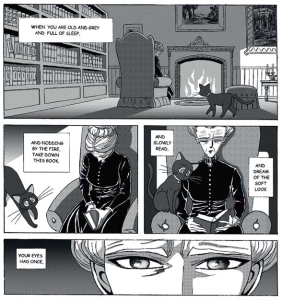
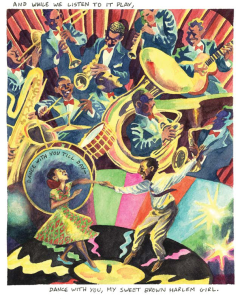
The illustrations range from realistic to abstract, with some more obviously cartoon-like. A couple of sequences reminded me of the style of Raymond Briggs. For “Caged Bird” by Maya Angelou, lines are inlaid on the squares of a painted patchwork quilt. Other sets look to have been done via wood engraving, or with old-fashioned crayons. You could quibble with the more obvious poetry selections, but I encountered a few that were new to me, including “Buffalo Dusk” by Carl Sandburg and “Conscientious Objector” by Edna St. Vincent Millay. Peters has grouped them into six thematic categories: self, others, art, nature, time and death. Teenagers, especially, will enjoy the introduction to a variety of poets and comics styles.
I read an e-copy via NetGalley.
The Inland Sea by Madeleine Watts
(Published by ONE/Pushkin on the 5th)
 “Emergency police fire, or ambulance?” The young female narrator of this debut novel lives in Sydney and works for Australia’s emergency call service. Over her phone headset she gets appalling glimpses into people’s worst moments: a woman cowers from her abusive partner; a teen watches his body-boarding friend being attacked by a shark. Although she strives for detachment, her job can’t fail to add to her anxiety – already soaring due to the country’s flooding and bush fires.
Against that backdrop of natural disasters, a series of minor personal catastrophes play out. The narrator is obsessed with a rape/murder case that’s dominating the television news, and narrowly escapes sexual assault herself. She drinks to excess, keeps hooking up with her ex-boyfriend, Lachlan, even after he gets a new girlfriend, and seems to think abortion and the morning after pill are suitable methods of birth control. Irresponsible to the point of self-sabotage, she’s planning a move to London but in the meantime is drifting through life, resigned to the fact that there is no unassailable shelter and no surefire way to avoid risk.
The title comes from the quest of John Oxley (presented here as the narrator’s ancestor), who in 1817 searched for a water body in the Australian interior. Quotations from his journals and discussions of the work of Patrick White, the subject of Lachlan’s PhD thesis, speak to the search for an Australian identity. But the inland sea is also the individual psyche, contradictory and ultimately unknowable. Like a more melancholy version of Jenny Offill’s Weather or a more cosmic autofiction than Yara Rodrigues Fowler’s Stubborn Archivist, this is a timely, quietly forceful story of how women cope with concrete and existential threats.
My thanks to the publisher for the PDF copy for review.
And a bonus…
The Offing by Benjamin Myers (2019)
(Paperback published by Bloomsbury on the 5th)
 With the Second World War only recently ended and nothing awaiting him apart from the coal mine where his father works, sixteen-year-old Robert Appleyard sets out on a journey. From his home in County Durham, he walks southeast, doing odd jobs along the way in exchange for food and lodgings. One day he wanders down a lane near Robin Hood’s Bay and gets a surprisingly warm welcome from a cottage owner, middle-aged Dulcie Piper, who invites him in for tea and elicits his story. Almost accidentally, he ends up staying for the rest of the summer, clearing scrub and renovating her garden studio.
Dulcie is tall, outspoken and unconventional – I pictured her as (Meryl Streep as) Julia Child in the movie Julie & Julia. She introduces Robert to whole new ways of thinking: that not everyone believes in God, that Germans might not be all bad, that life can be about adventure and pleasure instead of duty. “The offing” is a term for the horizon, as well as the title of a set of poems Robert finds in the dilapidated studio, and both literature and ambition change his life forever. Bright, languid and unpredictable, the novel delights in everyday sensual pleasures like long walks with a dog, dips in the ocean and an abundance of good food. I can’t think of another book I’ve read that’s quite like it – how refreshing is that?
I pre-ordered the paperback using a Waterstones voucher I got for Christmas.
What recent releases can you recommend?
Five Early March Releases: Jami Attenberg, Tayari Jones and More
Last week was one of the biggest weeks in the UK’s publishing year. Even though I’ve cut down drastically on the number of review books I’m receiving in 2020, I still had six on my shelf with release dates last week. Of course, THE biggest title out on the 5th was The Mirror and the Light, the final volume in Hilary Mantel’s Thomas Cromwell trilogy, which I’m eagerly awaiting from the library – I’m #3 in a holds queue of 34 people, but there are three copies, all showing as “Received at HQ,” so mine should come in any day now.
But for those who are immune to Mantel fever, or just seeking other material, there’s plenty to keep you busy. I give short reviews of five books today: a couple of dysfunctional family stories, two very different graphic novels and some feminist nonfiction.
All This Could Be Yours by Jami Attenberg
(Published by Serpent’s Tail on the 5th; came out in the USA from Houghton Mifflin in October)
Most of the action in Attenberg’s seventh book takes place on one day, as 73-year-old Victor Tuchman, struck down by a heart attack, lies on his deathbed in a New Orleans hospital. There’s more than a whiff of Trump about Victor, who has a shadowy mobster past and was recently hit with 11 sexual harassment charges. Forced to face the music for the first time, he fled Connecticut with his wife Barbra, citing the excuse of wanting to live closer to their son Gary in Louisiana. Victor had been abusive to Barbra throughout their marriage, and was just as violent in his speech: he could crush their daughter Alex with one remark on her weight.
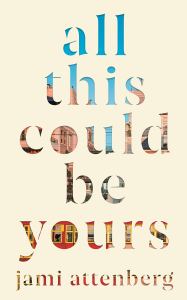 So no one is particularly sad to see Victor dying. Alex goes through the motions of saying goodbye and telling her father she forgives him, knowing she doesn’t mean a word. Meanwhile, Gary is AWOL on a work trip to California, leaving his wife Twyla to take his place at Victor’s bedside. Twyla’s newfound piety is her penance for a dark secret that puts her at the heart of the family’s breakdown.
Attenberg spends time with each family member on this long day supplemented by flashbacks, following Alex from bar to bar in downtown New Orleans as she tries to drown her sorrows and exploring other forms of addiction through Barbra (redecorating; not eating or ageing) and Twyla – in a particularly memorable scene, she heaps a shopping cart full of makeup at CVS and makes it all the way to the checkout before she snaps out of it. There’s also an interesting pattern of giving brief glimpses into the lives of the incidental characters whose paths cross with the family’s, including the EMT who took Victor to the hospital.
This is a timely tragicomedy, realistic and compassionate but also marked by a sardonic tone. Although readers only ever see Victor through other characters’ eyes, any smug sense of triumph they may feel about seeing the misbehaving, entitled male brought low is tempered by the extreme sadness of what happens to him after his death. I didn’t love this quite as much as The Middlesteins, but for me it’s a close second out of the four Attenberg novels I’ve read. She’s a real master of the dysfunctional family novel.
My thanks to the publisher for the free copy for review.
Silver Sparrow by Tayari Jones (2011)
(Published for the first time in the UK by Oneworld on the 5th)
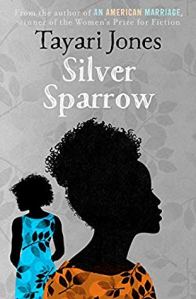 Speaking of messed-up families … Growing up in 1980s Atlanta, Dana and Chaurisse both call James Witherspoon their father – but Chaurisse’s mother doesn’t even know that Dana exists. Dana’s mother, however, has always been aware of her husband’s other family. That didn’t stop her from agreeing to a quick marriage over the state line. Jones establishes James’s bigamy in the first line; the rest of the novel is mostly in two long sections, the first narrated by Dana and the second by Chaurisse. Both girls recount how their parents met, as well as giving a tour through their everyday life of high school and boyfriends.
I was eager to read this after enjoying Jones’s Women’s Prize winner, An American Marriage, so much. Initially I liked Dana’s narration as she elaborates on her hurt at being in a secret family. The scene where she unexpectedly runs into Chaurisse at a science fair and discovers their father bought them matching fur coats is a highlight. But by the midpoint the book starts to drag, and Chaurisse’s voice isn’t distinct enough for her narration to add much to the picture. A subtle, character-driven novel about jealousy and class differences, this failed to hold my interest. Alternating chapters from the two girls might have worked better?
My thanks to the publisher for the proof copy for review.
New graphic novels from SelfMadeHero:
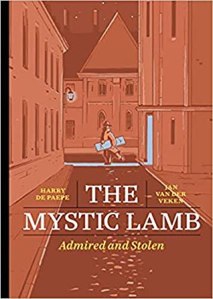 The Mystic Lamb: Admired and Stolen by Harry De Paepe and Jan Van Der Veken
[Translated by Albert Gomperts]
I’ve been to Ghent, Belgium twice. Any visitor will know that one of the city’s not-to-be-missed sights is the 15th-century altarpiece in St Bavo’s Cathedral, Jan van Eyck’s Adoration of the Mystic Lamb. On our first trip we bought timed tickets to see this imposing and vibrantly colored multi-paneled artwork, which depicts various figures and events from the Bible as transplanted into a typically Dutch landscape. De Paepe gives a comprehensive account of the work’s nearly six-century history.

Ghent altarpiece (Jan van Eyck / Public domain)
It’s been hidden during times of conflict or taken away as military spoils; it’s been split into parts and sold or stolen; it narrowly escaped a devastating fire. Overall, there was much more detail here than I needed, and far fewer illustrations than I expected. If you have a special interest in art history, you may well enjoy this. Just bear in mind that, although marketed as a graphic novel, it is mostly text.
Thoreau and Me by Cédric Taling
[Translated by Edward Gauvin]
 I can’t seem to get away from Henry David Thoreau in my recent reading. Last year I reviewed for the TLS two memoirs that consciously appropriated the 19th-century environmentalist’s philosophy and language; the other night I found mentions of Thoreau in a Wallace Stegner novel, a new nature book by Lucy Jones, and travel books by Nancy Campbell and Charlie English. So I knew I had to read this debut graphic novel (but is it a memoir or autofiction?) about a Paris painter who is plagued by eco-anxiety and plans to build his own off-grid home in the woods.
Cédric and his middle-class friends are assailed by “white hipster guilt.” A brilliant sequence has a dinner party discussion descend into a cacophony of voices as they list the ethical minefields they face. Though Cédric wishes he were a prepared alpha male with advanced survival skills that could save his family, his main strategy seems to be panic buying cold-weather gear. Thoreau, depicted sometimes as a wolf or faun and always with a thin, tubular mosquito’s nose (like a Socratic gadfly?), comes to him as an invisible friend and guru, with quotes from Walden and his journal appearing in jagged speech bubbles. This was a good follow-up to Jenny Offill’s Weather with its themes of climate-related angst and perceived helplessness. I enjoyed the story even though I found the drawing style slightly grotesque.

My thanks to the publisher for the free copies for review.
And one extra:
 The Home Stretch: Why It’s Time to Come Clean about Who Does the Dishes by Sally Howard
(Published by Atlantic Books on the 5th)
I only gave this feminist book about the domestic labor gap a quick skim as, unfortunately, it repeats a lot of the examples and statistics that were familiar to me from works like Invisible Women by Caroline Criado-Pérez (e.g. the Iceland women’s strike in the 1970s) and Fair Play by Eve Rodsky. The only chapter that stood out for me somewhat was about the “yummy mummy” stereotype perpetuated by the likes of Jools Oliver and Gwyneth Paltrow.
My thanks to the publisher for the proof copy for review.
What recent releases can you recommend?
Four February Releases: Napolitano, Offill, Smyth, Sprackland
Much as I’d like to review books in advance of their release dates, that doesn’t seem to be how things are going this year. I hope readers will find it useful to learn about recent releases they might have missed. This month I’m featuring a post-plane crash scenario, a reflection on modern anxieties, an essay about the human–birds relationship, and a meditation on graveyards.
Dear Edward by Ann Napolitano
(Published by Penguin/Viking on the 20th; came out in USA from Dial Press last month)
 June 2013: a plane leaves Newark Airport for Los Angeles, carrying 192 passengers. Five hours after takeoff, it crashes in the flatlands of northern Colorado, a victim to stormy weather and pilot error. Only 12-year-old Edward Adler is found alive in the wreckage. In alternating storylines, Napolitano follows a select set of passengers (the relocating Adler family, an ailing tycoon, a Wall Street playboy, an Afghanistan veteran, a Filipina clairvoyant, a pregnant woman visiting her boyfriend) in their final hours, probing their backstories to give their soon-to-end lives context (and meaning?), and traces the first six years of the crash’s aftermath for Edward.
While this is an expansive and compassionate novel that takes seriously the effects of trauma and the difficulty of accepting random suffering, I found that I dreaded returning to the plane every other chapter – I have to take regular long-haul flights to see my family, and while I don’t fear flying, I also don’t need anything that elicits catastrophist thinking. I would read something else by Napolitano (she’s written a novel about Flannery O’Connor, for instance), but I can’t imagine ever wanting to open this up again.
I picked up a proof copy at a Penguin Influencers event.
Weather by Jenny Offill
(Published by Knopf [USA] on the 11th and Granta [UK] on the 13th)
 Could there be a more perfect book for 2020? A blunt, unromanticized but wickedly funny novel about how eco-anxiety permeates everyday life, Weather is written in the same aphoristic style as Offill’s Dept. of Speculation but has a more substantial story to tell. Lizzie Benson is married with a young son and works in a New York City university library. She takes on an informal second job as PA to Sylvia, her former professor, who runs a podcast on environmental issues and travels to speaking engagements.
Set either side of Trump’s election, the novel amplifies many voices prophesying doom, from environmentalists to Bible-thumpers (like Lizzie’s mother) to those who aren’t sure they’ll even make it past tomorrow (like her brother, a highly unstable ex-addict who’s having a baby with his girlfriend). It’s a wonder it doesn’t end up feeling depressing. Lizzie’s sardonic narration is an ideal way of capturing relatable feelings of anger and helplessness, cringing fear and desperate hope. Don’t expect to come away with your worries soothed, though there is some comfort to be found in the feeling that we’re all in this together.
Favorite lines:
“Young person worry: What if nothing I do matters? Old person worry: What if everything I do does?”
“Once sadness was considered one of the deadly sins, but this was later changed to sloth. (Two strikes then.)”
“My husband is reading the Stoics before breakfast. That can’t be good, can it?”
I read an e-ARC via Edelweiss.
An Indifference of Birds by Richard Smyth
(Published by Uniformbooks on the 14th)
 Birds have witnessed the whole of human history, sometimes profiting from our behavior – our waste products provide them with food, our buildings can be handy nesting and hunting platforms, and our unintentional wastelands and demilitarized zones turn into nature reserves – but more often suffering incidental damage. That’s not even considering our misguided species introductions and the extinctions we’ve precipitated. Eighty percent of bird species are now endangered. For as minimal as the human fossil record will be, we have a lot to answer for.
From past to future, archaeology to reintroduction and de-extinction projects, this is a wide-ranging essay that still comes in at under 100 pages. It’s a valuable shift in perspective from human-centric to bird’s-eye view. The prose is not at all what I’ve come to expect from nature writing (earnest, deliberately lyrical); it’s more rhetorical and inventive, a bit arch but still passionate – David Foster Wallace meets Virginia Woolf? The last six paragraphs, especially, soar into sublimity. A niche book, but definitely recommended for bird-lovers.
Favorite lines:
“They must see us, watch us, from the same calculating perspective as they did two million years ago. We’re still galumphing heavy-footed through the edgelands, causing havoc, small life scattering wherever we tread.”
“Wild things lease these places from a capricious landlord. They’re yours, we say, until we need them back.”
I pre-ordered my copy directly from the publisher.
These Silent Mansions: A life in graveyards by Jean Sprackland
(Published by Jonathan Cape on the 6th)
 I’m a big fan of Sprackland’s beachcombing memoir, Strands, and have also read some of her poetry. Familiarity with her previous work plus a love for graveyards induced me to request a copy of her new book. In it she returns to the towns and cities she has known, wanders through their graveyards, and researches and imagines her way into the stories of the dead. For instance, she finds the secret burial place of persecuted Catholics in Lancashire, learns about a wrecked slave ship in a Devon cove, and laments two dead children whose bodies were sold for dissections in 1890s Oxford. She also remarks on the shifts in her own life, including the fact that she now attends more funerals than weddings, and the displacement involved in cremation – there is no site she can visit to commune with her late mother.
I most enjoyed the book’s general observations: granite is the most prized headstone material, most graves go unvisited after 15 years, and a third of Britons believe in angels despite the country’s overall decline in religious belief. I also liked Sprackland’s list of graveyard charms she has seen. While I applaud any book that aims to get people thinking and talking about death, I got rather lost in the historical particulars of this one.
Favorite lines:
“This is the paradox at the heart of our human efforts to remember and memorialise: the wish to last forever, and the knowledge that we are doomed to fail.”
“Life, under such a conscious effort of remembering, sometimes resembles a series of clumsy jump-cuts rather than one continuous narrative.”
My thanks to the publisher for the free copy for review.
What recent releases can you recommend?
Four Recent Review Books: Ernaux, Nunez, Rubin & Scharer
Two nonfiction books: a frank account of an abortion; clutter-busting techniques.
Two novels: amusing intellectual fare featuring a big dog or the Parisian Surrealists.
Happening by Annie Ernaux (2000; English translation, 2019)
[Translated from the French by Tanya Leslie]
 “I believe that any experience, whatever its nature, has the inalienable right to be chronicled,” Ernaux writes. In 1963, when she was 23 and living in a student residence in Rouen, she realized she was pregnant. An appointment with a gynecologist set out the facts starkly: “Pregnancy certificate of: Mademoiselle Annie Duchesne. Date of delivery: 8 July, 1964. I saw summer, sunshine. I tore up the certificate.” Abortion was illegal in France at that time. Ernaux tried to take things into her own hands – “plunging a knitting needle into a womb weighed little next to ruining one’s career” – but couldn’t go through with it. Instead she went to the home of a middle-aged nurse she’d heard about…
This very short book (just 60-some pages) is told in a matter-of-fact style – apart from the climactic moment when her pregnancy ends: “It burst forth like a grenade, in a spray of water that splashed the door. I saw a baby doll dangling from my loins at the end of a reddish cord.” It’s such a garish image, almost cartoonish, that I didn’t know whether to laugh or be horrified. Mostly, Ernaux reflects on memory and the reconstruction of events. I haven’t read many nonfiction accounts of abortion/miscarriage and for that reason found this interesting, but it was perhaps too brief and detached for me to be fully engaged.
My rating:
With thanks to Fitzcarraldo Editions for the free copy for review.
The Friend by Sigrid Nunez (2018)
 “Does something bad happen to the dog?” We animal lovers are wary when approaching a book about a pet. Nunez playfully anticipates that question as she has her unnamed female narrator reflect on her duty of care to her dead friend’s dog. The narrator is a writer and academic – like her late friend, a Bellovian womanizer who recently committed suicide, leaving behind two ex-wives, a widow, and Apollo the aging Great Dane. She addresses the friend directly as “you” for almost the whole book, which unfolds – in a similar style to Jenny Offill’s Department of Speculation – via quotations, aphorisms, and stories from literary history as well as mini-incidents from a life.
This won the 2018 National Book Award in the USA and is an unashamedly high-brow work whose intertextuality comes through in direct allusions to many classic works of autofiction (Coetzee, Knausgaard and Lessing) and/or doggy lit (Ackerley; Coetzee again – Disgrace). As Apollo starts to take up more physical, mental and emotional space in the narrator’s life, she waits for a miracle that will allow her to keep him despite an eviction notice and muses on lots of questions: Is all writing autobiographical? Why does animal suffering pain us so much (especially compared to human suffering)? I was impressed: it feels like Nunez has encapsulated everything she’s ever known or thought about, all in just over 200 pages, and alongside a heart-warming little plot. (Animal lovers need not fear.)
My rating:
With thanks to Virago for the free copy for review.
Outer Order, Inner Calm: Declutter and Organize to Make More Room for Happiness by Gretchen Rubin (2019)
 What with all the debate over Marie Kondo’s clutter-reducing tactics, the timing is perfect for this practical guide to culling and organizing all the stuff that piles up around us at home and at work. Unlike the rest of Rubin’s self-help books, this is not a narrative but a set of tips – 150 of them! It’s not so much a book to read straight through as one to keep at your bedside and read a few pages to summon up motivation for the next tidying challenge.
 Famously, Kondo advises one to ask whether an item sparks joy. Rubin’s central questions are more down-to-earth: Do I need it? Do I love it? Do I use it? With no index, the book is a bit difficult to navigate; you just have to flip through until you find what you want. The advice seems in something of a random order and can be slightly repetitive. But since this is really meant as a book of inspiration, I think it will be a useful jumping-off point for anyone trying to get on top of clutter. I plan to work through the closet checklist before I pass the book to my sister – who’s dealing with a basement full of stuff after she and her second husband merged their households. If I could add one page, it would be a flowchart of what to do with unwanted stuff that corresponds to the latest green recommendations.
My rating:
With thanks to Two Roads for the free copy for review.
The Age of Light by Whitney Scharer (2019)
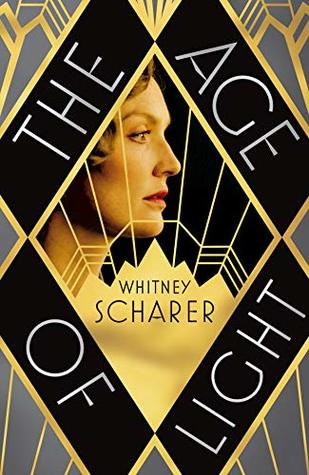 This novel about Lee Miller’s relationship with Man Ray is in the same vein as The Paris Wife, Z, Loving Frank and Frieda: all of these have sought to rescue a historical woman from the shadow of a celebrated, charismatic male and tell her own fascinating life story. Scharer captures the bohemian atmosphere of 1929–30 Paris in elegant but accessible prose. Along with the central pair we meet others from the Dada group plus Jean Cocteau, and get a glimpse of Josephine Baker. The novel is nearly 100 pages too long, I think, such that my interest in the politics of the central relationship – Man becomes too possessive and Lee starts to act out, longing for freedom again – started to wane.
Miller was a photographer as well as a model and journalist, and this is an appropriately visual novel that’s interested in appearances, lighting and what gets preserved for posterity. It’s also fairly sexually explicit for literary fiction, sometimes unnecessarily so, so keep that in mind if it’s likely to bother you. I especially enjoyed the brief flashes of Lee at other points in her life: in London during the Blitz, photographing the aftermath of the war in Germany (there’s a famous image of her in Hitler’s bathtub), and hoping she’s more than just a washed-up alcoholic in the 1960s. It would be a boon to have a prior interest in or some knowledge of the Surrealists.
My rating:
With thanks to Picador for the free copy for review.
Would you be interested in reading one or more of these?
November’s Novellas: A Wrap-Up
Yesterday was my husband’s birthday. Baking him the world’s most complicated cake on Wednesday evening and taking Thursday off for a birthday outing to Salisbury for the Terry Pratchett exhibit at the town’s museum and the Christmas-decorated rooms at Mompesson House are my collective excuse for not writing up the last of November’s novellas until now.


For the most part I had a great time reading novellas last month. However, there were three I abandoned: Mornings in Mexico by D.H Lawrence (p. 11), whose random, repetitive observations lead to no bigger picture; So Long, See You Tomorrow by William Maxwell (p. 28), which is understated to the point of nothing really happening; and Jaguars and Electric Eels by Alexander von Humboldt (p. 6), which has that dry old style that’s hard to engage with. (I’ll plan to encounter snatches of his writing via Andrea Wulf’s biography instead.)
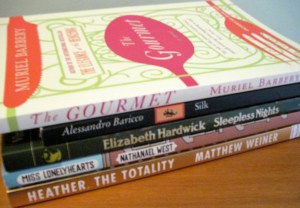 To my disappointment, I find I can’t make generalizations about the correlation between a book’s page count and its quality: a great book stands out no matter its length. But as Joe Hill (Stephen King’s son) said of his latest work, a set of four short novels, a novella should be “all killer, no filler.” Three of the five I review today definitely meet those criteria, impressing me with the literal and/or emotional ground covered.
Below are the novellas I didn’t manage to get to this past November. Perhaps they’ll hang around until next year, unless I get a burning urge to read one or more of them before then:
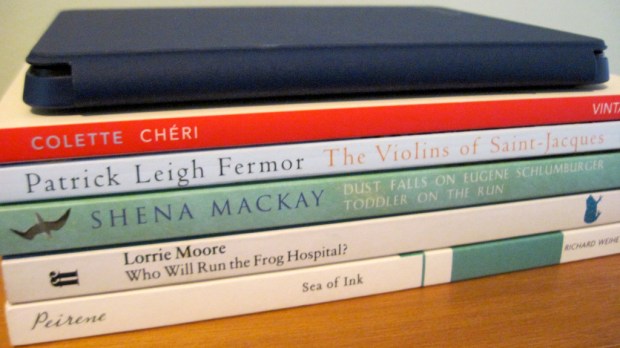
(On the Kindle: Record of a Night Too Brief by Hiromi Kawakami and Spring Garden by Tomoka Shibasaki.)
The Gourmet by Muriel Barbery
(translated from the French by Alison Anderson)
[112 pages]
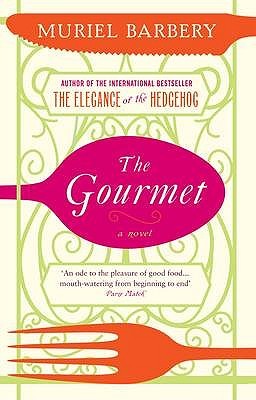 Pierre Arthens, France’s most formidable food critic, is on his deathbed reliving his most memorable meals and searching for one elusive flavor to experience again before he dies. He’s proud of his accomplishments – “I have covered the entire range of culinary art, for I am an encyclopedic esthete who is always one dish ahead of the game” – and expresses no remorse for his affairs and his coldness as a father. This takes place in the same apartment building as The Elegance of the Hedgehog and is in short first-person chapters narrated by various figures from Arthens’ life. His wife, his children and his doctor are expected, but we also hear from the building’s concierge, a homeless man he passed every day for ten years, and even a sculpture in his study. I liked Arthens’ grandiose style and the descriptions of over-the-top meals but, unlike the somewhat similar The Debt to Pleasure by John Lanchester, this doesn’t have much of a payoff.
A favorite passage:
“After decades of grub, deluges of wine and alcohol of every sort, after a life spent in butter, cream, sauce, and oil in constant, knowingly orchestrated and meticulously cajoled excess, my trustiest right-hand men, Sir Liver and his associate Stomach, are doing marvelously well and it is my heart that is giving out.”
Silk by Alessandro Baricco
(translated from the Italian by Guido Waldman)
[104 pages]
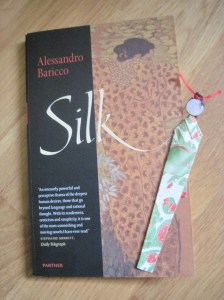 The main action is set between 1861 and 1874, as married French merchant Hervé Joncour makes four journeys to and from Japan to acquire silkworms. “This place, Japan, where precisely is it?” he asks before his first trip. “Just keep going. Right to the end of the world,” Baldabiou, the silk mill owner, replies. On his first journey, Joncour is instantly captivated by his Japanese advisor’s concubine, though they haven’t exchanged a single word, and from that moment on nothing in his life can make up for the lack of her. At first I found the book slightly repetitive and fable-like, but as it went on I grew more impressed with the seeds Baricco has planted that lead to a couple of major surprises. At the end I went back and reread a number of chapters to pick up on the clues. I’d had this book recommended from a variety of quarters, first by Karen Shepard when I interviewed her for Bookkaholic in 2013, so I’m glad I finally found a copy in a charity shop.
Sleepless Nights by Elizabeth Hardwick
[151 pages]
 Hardwick’s 1979 work is composed of (autobiographical?) fragments about the people and places that make up a woman’s remembered past. Elizabeth shares a New York City apartment with a gay man; lovers come and go; she mourns for Billie Holiday; there are brief interludes in Amsterdam and other foreign destinations. She sends letters to “Dearest M.” and back home to Kentucky, where her mother raised nine children. (“My mother’s femaleness was absolute, ancient, and there was a peculiar, helpless assertiveness about it. … This fateful fertility kept her for most of her life under the dominion of nature.”) There’s some astonishingly good writing here, but as was the case for me with Jenny Offill’s Dept. of Speculation, I couldn’t quite see how it was all meant to fit together.
Some favorite passages:
“The stain of place hangs on not as a birthright but as a sort of artifice, a bit of cosmetic.”
“The bright morning sky that day had a rare and blue fluffiness, as if a vacuum cleaner had raced across the heavens as a weekly, clarifying duty.”
“On the battered calendar of the past, the back-glancing flow of numbers, I had imagined there would be felicitous notations of entrapments and escapes, days in the South with their insinuating feline accent, and nights in the East, showing a restlessness as beguiling as the winds of Aeolus. And myself there, marking the day with an I.”
Miss Lonelyhearts by Nathanael West
[110 pages]
 West was a contemporary of F. Scott Fitzgerald; in fact, the story goes that when he died in a car accident at age 37, he had been rushing to Fitzgerald’s wake, and the friends were given adjoining rooms in a Los Angeles funeral home. Like The Great Gatsby, this is a very American tragedy and state-of-the-nation novel. “Miss Lonelyhearts” (never given any other name) is a male advice columnist for the New York Post-Dispatch. His letters come from a pitiable cross section of humanity: the abused, the downtrodden, the unloved. Not surprisingly, the secondhand woes start to get him down (“his heart remained a congealed lump of icy fat”), and he turns to drink and womanizing for escape. Indeed, I was startled by how explicit the language and sexual situations are; this doesn’t feel like a book from 1933. West’s picture of how beleaguered compassion can turn to indifference really struck me, and the last few chapters, in which a drastic change of life is proffered but then cruelly denied, are masterfully plotted. The 2014 Daunt Books reissue has been given a cartoon cover and a puff from Jonathan Lethem to emphasize how contemporary it feels.
Heather, the Totality by Matthew Weiner
[134 pages]
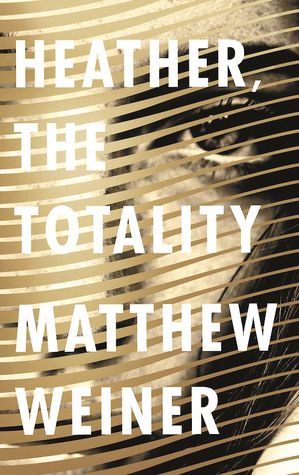 This was very nearly a one-sitting read for me: Clare gave me a copy at our Sunday Times Young Writer Award shadow panel decision meeting and I read all but a few pages on the train home from London. Famously, Matthew Weiner is the creator of Mad Men, but instead of 1960s stylishness this debut novella is full of all-too-believable creepiness and a crescendo of dubious decisions. Mark and Karen Breakstone have one beloved daughter, Heather. We follow them for years, getting little snapshots of a normal middle-class family. One summer, as their New York City apartment building is being renovated, the teenaged Heather catches the eye of a construction worker who has a criminal past – as we’ve learned through a parallel narrative about his life. I had no idea what I would conclude about this book until the last few pages; it was all going to be a matter of how Weiner brought things together. And he does so really satisfyingly, I think. It’s a subtle, Hitchcockian story, and that title is so sly: We never get the totality of anyone; we only see shards here and there – something the cover portrays very well – and make judgments we later have to rethink.
Have you read any of these novellas? Which one takes your fancy?
Library Checkout: August 2017
A thin month for library books overall, although I did read two very good ones. The Aldo Leopold book is a nature classic I’m pleased we could find via the library of the university where my husband works. In the second week of September I’m going along with him to Ghent, Belgium, where he’ll be presenting a research paper at a landscape ecology conference. Though we’ve been before, it’s a lovely town I’ll enjoy wandering – in between keeping up a normal virtual workload. After that we head on to Amsterdam for a long weekend; it’ll be my first time there and I’m excited to take in all the sights.
LIBRARY BOOKS READ
- The Argonauts by Maggie Nelson

From my parents’ local branch in America:
- Sparky! by Jenny Offill [a picture book illustrated by Chris Appelhans]
CURRENTLY READING
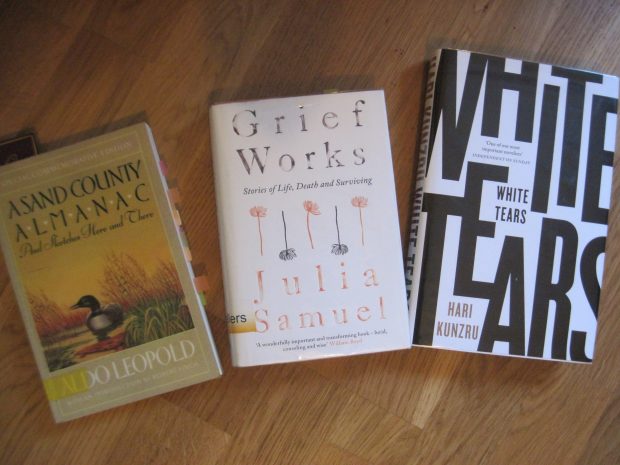
- A Sand County Almanac by Aldo Leopold
CURRENTLY SKIMMING
- Grief Works: Stories of Life, Death and Surviving by Julia Samuel
CHECKED OUT, TO BE SKIMMED
- 2 guide books to Belgium
- 2 guide books to Amsterdam
RETURNED UNFINISHED
- White Tears by Hari Kunzru – I read the first 145 pages, skimmed another 70 or so, then gave up. The vibe is Jonathan Franzen meets Zadie Smith circa The Autograph Man; the theme is cultural appropriation, especially of a blues song by a forgotten master. (I had the song from The Wire in my head the whole time.) My interest started to wane after what happens to Carter happens, and by the time the parallel road trips kicked in I was lost. So to what extent this was realist or magic realist or absurdist or whatever I couldn’t tell you. I liked the writing enough that I would try something else by Kunzru if I thought I’d connect to the subject matter more.

(Hosted by Charleen of It’s a Portable Magic.)
 Bookish Beck = Rebecca Foster. American transplant to England. Freelance proofreader and book reviewer.
 Bookish Beck