Most Anticipated Books of 2026
Later than intended, but here we are. I’ve narrowed it down to the 25 books I’m most looking forward to in January–September, though no doubt I’ll have heard of many more unmissable titles before that time is up. My list is dominated by fiction, which I tend to find out about earlier. Also on my radar are novels by Sharon Bala, Freya Bromley, Mary Costello, Louise Kennedy, Ben Lerner, Paula McLain, Liz Nugent and Tom Perrotta; short stories by Jess Gibson (Margaret Atwood’s daughter); and nonfiction from Margaret Drabble, Cal Flyn, Siri Hustvedt and Anne Lamott.
In release date order, with UK publication info given first if available. The blurbs are adapted from Goodreads. I’ve taken the liberty of using whichever cover I prefer.
Fiction
 Departure(s) by Julian Barnes [20 Jan., Vintage (Penguin) / Knopf]: (Currently reading) I get more out of rereading Barnes’s classics than reading his latest stuff, but I’ll still attempt anything he publishes. He’s 80 and calls this his last book. So far, it’s heavily about memory. “Julian played matchmaker to Stephen and Jean, friends he met at university in the 1960s; as the third wheel, he was deeply invested in the success of their love”. Sounds way too similar to 1991’s Talking It Over, and the early pages have been tedious. (Review copy from publisher)
 Half His Age by Jennette McCurdy [20 Jan., Fourth Estate / Ballantine]: McCurdy’s memoir, I’m Glad My Mom Died, was stranger than fiction. I was so impressed by her recreation of her childhood perspective on her dysfunctional Mormon/hoarding/child-actor/cancer survivor family that I have no doubt she’ll do justice to this reverse-Lolita scenario about a 17-year-old who’s in love with her schlubby creative writing teacher. (Library copy on order)
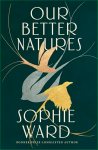 Our Better Natures by Sophie Ward [5 Feb., Corsair]: I loved Ward’s Booker-longlisted Love and Other Thought Experiments (though the follow-up, The Schoolhouse, was a letdown). “Amid the chaos and political upheaval of 1970s America, three very different women must accept the world as it is, or act to change it. Phyllis Patterson is a housewife in White Plains, Illinois. … Andrea Dworkin is an activist in Amsterdam. … Muriel Rukeyser is a poet in New York.” (Library copy on order)
 Brawler: Stories by Lauren Groff [Riverhead, Feb. 24]: (Currently reading) Controversial opinion: Short stories are where Groff really shines. Three-quarters in, this collection is just as impressive as Delicate Edible Birds or Florida. “Ranging from the 1950s to the present day and moving across age, class, and region (New England to Florida to California) these nine stories reflect and expand upon a shared the ceaseless battle between humans’ dark and light angels.” (For Shelf Awareness review) (Edelweiss download)
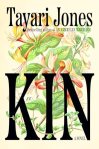 Kin by Tayari Jones [24 Feb., Oneworld / Knopf]: I’m a big fan of Leaving Atlanta and An American Marriage. This sounds like Brit Bennett meets Toni Morrison. “Vernice and Annie, two motherless daughters raised in Honeysuckle, Louisiana, have been best friends and neighbors since earliest childhood, but are fated to live starkly different lives. … A novel about mothers and daughters, about friendship and sisterhood, and the complexities of being a woman in the American South”. (Edelweiss download)
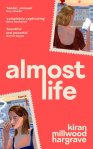 Almost Life by Kiran Millwood Hargrave [12 March, Picador / March 24, S&S/Summit Books]: There have often been queer undertones in Hargrave’s work, but this David Nicholls-esque plot sounds like her most overt. “Erica and Laure meet on the steps of the Sacré-Cœur in Paris, 1978. … The moment the two women meet the spark is undeniable. But their encounter turns into far more than a summer of love. It is the beginning of a relationship that will define their lives and every decision they have yet to make.” (Edelweiss download)
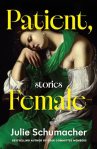 Patient, Female: Stories by Julie Schumacher [May 5, Milkweed Editions]: I found out about this via a webinar with Milkweed and a couple of other U.S. indie publishers. I loved Schumacher’s Dear Committee Members. “[T]his irreverent collection … balances sorrow against laughter. … Each protagonist—ranging from girlhood to senescence—receives her own indelible voice as she navigates social blunders, generational misunderstandings, and the absurdity of the human experience.” The publicist likened the tone to Meg Wolitzer.
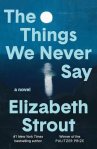 The Things We Never Say by Elizabeth Strout [7 May, Viking (Penguin) / May 5, Random House]: Hurrah for moving on from Lucy Barton at last! “Artie Dam is living a double life. He spends his days teaching history to eleventh graders … and, on weekends, takes his sailboat out on the beautiful Massachusetts Bay. … [O]ne day, Artie learns that life has been keeping a secret from him, one that threatens to upend his entire world. … [This] takes one man’s fears and loneliness and makes them universal.”
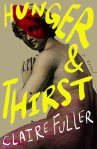 Hunger and Thirst by Claire Fuller [7 May, Penguin / June 2, Tin House]: I’ve read everything of Fuller’s and hope this will reverse the worsening trend of her novels, though true crime is overdone. “1987: After a childhood trauma and years in and out of the care system, sixteen-year-old Ursula … is invited to join a squat at The Underwood. … Thirty-six years later, Ursula is a renowned, reclusive sculptor living under a pseudonym in London when her identity is exposed by true-crime documentary-maker.” (Edelweiss download)
 Little Vanities by Sarah Gilmartin [21 May, ONE (Pushkin)]: Gilmartin’s Service was great. “Dylan, Stevie and Ben have been inseparable since their days at Trinity, when everything seemed possible. … Two decades on, … Dylan, once a rugby star, is stranded on the sofa, cared for by his wife Rachel. Across town, Stevie and Ben’s relationship has settled into weary routine. Then, after countless auditions, Ben lands a role in Pinter’s Betrayal. As rehearsals unfold, the play’s shifting allegiances seep into reality, reviving old jealousies and awakening sudden longings.”
 Said the Dead by Doireann Ní Ghríofa [21 May, Faber / Sept. 22, Farrar, Straus and Giroux]: A Ghost in the Throat was brilliant and this sounds right up my street. “In the city of Cork, a derelict Victorian mental hospital is being converted into modern apartments. One passerby has always flinched as she passes the place. Had her birth occurred in another decade, she too might have lived within those walls. Now, … she finds herself drawn into an irresistible river of forgotten voices”.
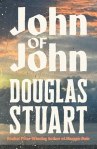 John of John by Douglas Stuart [21 May, Picador / May 5, Grove Press]: I DNFed Shuggie Bain and haven’t tried Stuart since, but the Outer Hebrides setting piqued my attention. “[W]ith little to show for his art school education, John-Calum Macleod takes the ferry back home to the island of Harris [and] begrudgingly resumes his old life, stuck between the two poles of his childhood: his father John, a sheep farmer, tweed weaver, and pillar of their local Presbyterian church, and his maternal grandmother Ella, a profanity-loving Glaswegian”. (For early Shelf Awareness review) (Edelweiss download)
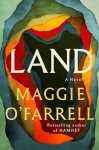 Land by Maggie O’Farrell [2 June, Tinder Press / Knopf]: I haven’t fully loved O’Farrell’s shift into historical fiction, but I’m still willing to give this a go. “On a windswept peninsula stretching out into the Atlantic, Tomás and his reluctant son, Liam [age 10], are working for the great Ordnance Survey project to map the whole of Ireland. The year is 1865, and in a country not long since ravaged and emptied by the Great Hunger, the task is not an easy one.” (Edelweiss download)
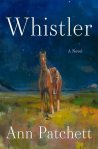 Whistler by Ann Patchett [2 June, Bloomsbury / Harper]: Patchett is hella reliable. “When Daphne Fuller and her husband Jonathan visit the Metropolitan Museum of Art, they notice an older, white-haired gentleman following them. The man turns out to be Eddie Triplett, her former stepfather, who had been married to her mother for a little more than year when Daphne was nine. … Meeting again, time falls away; … [in a story of] adults looking back over the choices they made, and the choices that were made for them.” (Edelweiss download)
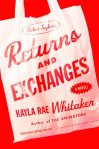 Returns and Exchanges by Kayla Rae Whitaker [2 June, Scribe / May 19, Random House]: Whitaker’s The Animators is one of my favourite novels that hardly anyone else has ever heard of. “A sweeping novel of one [discount department store-owning] Kentucky family’s rise and fall throughout the 1980s—a tragicomic tour de force about love and marriage, parents and [their four] children, and the perils of mixing family with business”. (Edelweiss download)
 The Great Wherever by Shannon Sanders [9 July, Viking (Penguin) / July 7, Henry Holt]: Sanders’s linked story collection Company left me keen to follow her career. Aubrey Lamb, 32, is “grieving the recent loss of her father and the end of a relationship.” She leaves Washington, DC for her Black family’s ancestral Tennessee farm. “But the land proves to be a burdensome inheritance … [and] the ghosts of her ancestors interject with their own exasperated, gossipy commentary on the flaws and foibles of relatives living and dead”. (Edelweiss download)
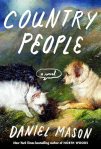 Country People by Daniel Mason [14 July, John Murray / July 7, Random House]: It doesn’t seem long enough since North Woods for there to be another Mason novel, but never mind. “Miles Krzelewski is … twelve years late with his PhD on Russian folktales … [W]hen his wife Kate accepts a visiting professorship at a prestigious college in the far away forests of Vermont, he decides that this will be his year to finally move forward with his life. … [A] luminous exploration of marriage and parenthood, the nature of belief and the power of stories, and the ways in which we find connection in an increasingly fragmented world.”
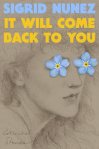 It Will Come Back to You: Collected Stories by Sigrid Nunez [14 July, Virago / Riverhead]: Nunez is one of my favourite authors but I never knew she’d written short stories. The blurb reveals very little about them! “Carefully selected from three decades of work … Moving from the momentous to the mundane, Nunez maintains her irrepressible humor, bite, and insight, her expert balance between intimacy and universality, gravity and levity, all while entertainingly probing the philosophical questions we have come to expect, such as: How can we withstand the passage of time? Is memory the greatest fiction?” (Edelweiss download)
 Exit Party by Emily St. John Mandel [17 Sept., Picador / Sept. 15, Knopf]: The synopsis sounds a bit meh, but in my eyes Mandel can do no wrong. “2031. America is at war with itself, but for the first time in weeks there is some good news: the Republic of California has been declared, the curfew in Los Angeles is lifted, and everyone in the city is going to a party. Ari, newly released from prison, arrives with her friend Gloria … Years later, living a different life in Paris, Ari remains haunted by that night.”
The Housekeeper by Rose Tremain [17 Sept., Vintage (Penguin); no cover image yet]: “Set in 1930s England and fictionalises the inspiration behind Daphne du Maurier’s famous novel, Rebecca.” Strangely, this started life as a short story (in The American Lover), then become a screenplay authored by Tremain (the film is in production and stars Uma Thurman and Anthony Hopkins), and is now being expanded into a novel. Tremain is 82 and a survivor of major cancer; I do wonder if this is the last book we can expect from her.
Nonfiction
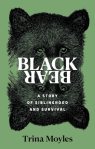 Black Bear: A Story of Siblinghood and Survival by Trina Moyles [Jan. 6, Pegasus Books]: Out now! “When Trina Moyles was five years old, her father … brought home an orphaned black bear cub for a night before sending it to the Calgary Zoo. … After years of working for human rights organizations, Trina returned to northern Alberta for a job as a fire tower lookout, while [her brother] Brendan worked in the oil sands … Over four summers, Trina begins to move beyond fear and observe the extraordinary essence of the maligned black bear”. (For BookBrowse review) (Review e-copy)
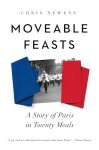 Moveable Feasts: A Story of Paris in Twenty Meals by Chris Newens [Feb. 3, Pegasus Books; came out in the UK in July 2025 but somehow I missed it!]: I’m a sucker for foodie books and Paris books. A “long-time resident of the historic slaughterhouse quartier Villette takes us on a delightful gastronomic journey around Paris … From Congolese catfish in the 18th to Middle Eastern falafels in the 4th, to the charcuterie served at the libertine nightclubs of Pigalle in the 9th, Newens lifts the lid on the city’s ever-changing, defining, and irresistible food culture.” (Edelweiss download)
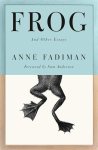 Frog: And Other Essays by Anne Fadiman [Feb. 10, Farrar, Straus and Giroux]: Fadiman publishes rarely, and it can be difficult to get hold of her books, but they are always worth it. “Ranging in subject matter from her deceased frog, to archaic printer technology, to the fraught relationship between Samuel Taylor Coleridge and his son Hartley, these essays unlock a whole world—one overflowing with mundanity and oddity—through sly observation and brilliant wit.”
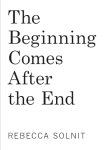 The Beginning Comes after the End: Notes on a World of Change by Rebecca Solnit [March 3, Haymarket Books]: A sequel to Hope in the Dark. Hope is a critically endangered species these days, but Solnit has her eyes open. “While the white nationalist and authoritarian backlash drives individualism and isolation, this new world embraces antiracism, feminism, a more expansive understanding of gender, environmental thinking, scientific breakthroughs, and Indigenous and non-Western ideas, pointing toward a more interconnected, relational world.” (Edelweiss download)
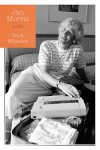 Jan Morris: A Life by Sara Wheeler [7 April, Faber / April 14, Harper]: I didn’t get on with the mammoth biography Paul Clements published in 2022 – it was dry and conventional; entirely unfitting for Morris – but hope for better things from a fellow female travel writer. “Wheeler uncovers the complexity of this twentieth-century icon … Drawing on unprecedented access to Morris’s papers as well as interviews with family, friends and colleagues, Wheeler assembles a captivating … story of longing, traveling and never reaching home.” (Edelweiss download)
Others’ lists whence a few of my ideas came!
What catches your eye here? What other 2026 titles do I need to know about?
Best Backlist Reads of the Year
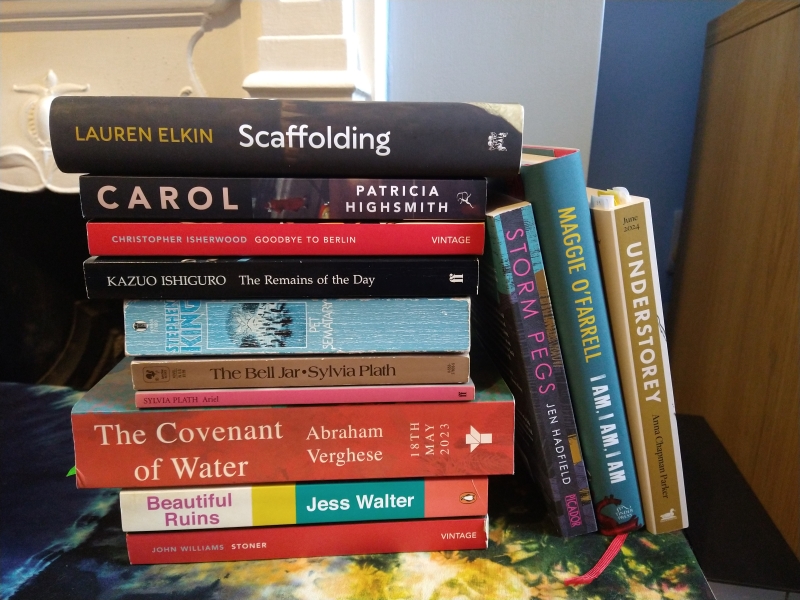
I consistently find that many of my most memorable reads are older rather than current-year releases. Four of these are from 2023–4; the other nine are from 2012 or earlier, with the oldest from 1939. My selections are alphabetical within genre but in no particular rank order. Repeated themes included health, ageing, death, fascism, regret and a search for home and purpose. Reading more from these authors would probably help to ensure a great reading year in 2026!
Some trivia:
- 4 were read for 20 Books of Summer (Hadfield, King, Verghese and Walter)
- 3 were rereads for book club (Ishiguro, O’Farrell and Williams) – just like last year!
- 1 was part of my McKitterick Prize judge reading (Elkin)
- 1 was read for 1952 Club (Highsmith)
- 1 was a review catch-up book (Parker)
- 1 was a book I’d been ‘reading’ since 2021 (The Bell Jar)
- The title of one (O’Farrell) was taken from another (The Bell Jar)
Fiction & Poetry
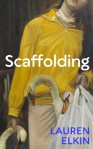 Scaffolding by Lauren Elkin: Psychoanalysis, motherhood, and violence against women are resounding themes in this intellectual tour de force. As history repeats itself during one sweltering Paris summer, the personal and political structures undergirding the protagonists’ parallel lives come into question. This fearless, sophisticated work ponders what to salvage from the past—and what to tear down. This was our collective runner-up for the 2025 McKitterick Prize, but would have been my overall winner.
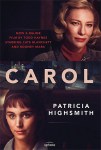 Carol by Patricia Highsmith: Widely considered the first lesbian novel with a happy ending. Therese, a 19-year-old aspiring stage designer, meets a wealthy housewife – “Mrs. H. F. Aird” (Carol) – in a New York City department store one Christmas. When the women set off on a road trip, they’re trailed by a private detective looking for evidence against Carol in a custody battle. It’s a beautiful and subtle romance that unfolds despite the odds and shares the psychological intensity of Highsmith’s mysteries.
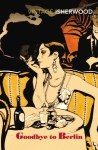 Goodbye to Berlin by Christopher Isherwood: Isherwood intended for these autofiction stories to contribute to a “huge episodic novel of pre-Hitler Berlin.” Two “Berlin Diary” segments from 1930 and 1933 reveal a change in tenor accompanying the rise of Nazism. Even in lighter pieces, menace creeps in through characters’ offhand remarks about “dirty Jews” ruining the country. Famously, the longest story introduces club singer Sally Bowles. I later read Mr Norris Changes Trains as well. Witty and humane, restrained but vigilant.
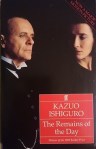 The Remains of the Day by Kazuo Ishiguro: I first read this pre-blog, back when I dutifully read Booker winners whether or not I expected to like them. I was too young then for its theme of regret over things done and left undone; I didn’t yet know that sometimes in life, it really is too late. When I reread it for February book club, it hit me hard. I wrote no review at the time (more fool me), but focused less on the political message than on the refined depiction of upper-crust English society and the brilliance of Stevens the unreliable, repressed narrator.
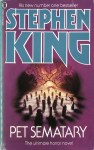 Pet Sematary by Stephen King: A dread-laced novel about how we deal with the reality of death. Is bringing the dead back a cure for grief or a horrible mistake? A sleepy Maine town harbours many cautionary tales, and the Creeds have more than their fair share of sorrow. Louis is a likable protagonist whose vortex of obsession and mental health is gripping. In the last quarter, which I read on a long train ride, I couldn’t turn the pages any faster. Sterling entertainment, but also surprisingly poignant. (And not gruesome until right towards the end.)
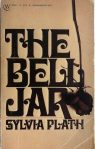
 The Bell Jar & Ariel by Sylvia Plath: Given my love of mental hospital accounts, it’s a wonder I’d not read this classic work of women’s autofiction before. Esther Greenwood is the stand-in for Plath: a talented college student who, after working in New York City during the remarkable summer of 1953, plunges into mental ill health. An enduringly relevant and absorbing read. / Ariel takes no prisoners. The images and vocabulary are razor-sharp and the first and last lines or stanzas are particularly memorable.
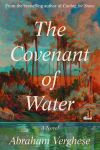 The Covenant of Water by Abraham Verghese: Wider events play out in the background (wars, partition, the fall of the caste system), but this saga sticks with one Kerala family in every generation of which someone drowns. I enjoyed the window onto St. Thomas Christianity, felt fond of all the characters, and appreciated how Verghese makes the Condition a cross between mystical curse and a diagnosable ailment. An intelligent soap opera that makes you think about storytelling, purpose and inheritance, this is extraordinary.
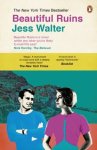 Beautiful Ruins by Jess Walter: I was captivated by the shabby glamour of Pasquale’s hotel in Porto Vergogna on the coast of northern Italy. A myriad of threads and formats – a movie pitch, a would-be Hemingway’s first chapter of a never-finished wartime opus, an excerpt from a producer’s autobiography and a play transcript – coalesce to flesh out what happened in the summer of 1962 and how the last half-century has treated all the supporting players. Warm, timeless and with great scenes, one of which had me in stitches. Fantastic.
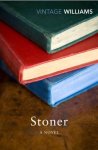 Stoner by John Williams: What a quiet masterpiece. A whole life, birth to death, with all its sadness and failure and tragedy; but also joy and resistance and dignity. One doesn’t have to do amazing things that earn the world’s accolades to find vocation and meaning. Just as powerful a second time (I first read it in 2013). I was especially struck by the power plays in Stoner’s marriage and university department, and how well Williams dissects them. It’s more about atmosphere than plot – and that melancholy tone will stay with you.
Nonfiction
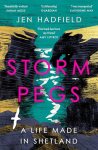 Storm Pegs by Jen Hadfield: Not a straightforward memoir but a set of atmospheric vignettes. Hadfield, a British Canadian poet, moved to Shetland in 2006 and soon found her niche. It’s a life of wild swimming, beachcombing, fresh fish, folk music, seabirds, kind neighbours, and good cheer that warms the long winter nights. After the isolation of the pandemic comes the unexpected joy of a partner and pregnancy in her mid-forties. I savoured this for its language and sense of place; it made me hanker to return to Shetland.
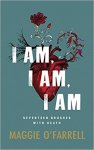 I Am, I Am, I Am: Seventeen Brushes with Death by Maggie O’Farrell: (The final book club reread.) The memoir-in-essays is a highly effective form because it focuses on themes or moments of intensity and doesn’t worry about accounting for boring intermediate material. These pieces form a vibrant picture of a life and also inspire awe at what the human body can withstand. The present tense and a smattering of second person make the work immediate and invite readers to feel their way into her situations. The last two essays are the pinnacle.
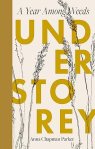 Understorey: A Year among Weeds by Anna Chapman Parker: I owe this a full review in the new year. Parker set out to study and sketch weeds as a way of cultivating attention and stillness as well as celebrating the everyday and overlooked. Daily drawings and entries bear witness to seasons changing but also to the minute alterations she observes in herself and her children. For me, this was all the more special because I’ve holidayed in Berwick-on-Tweed and could picture a lot of the ‘overgrown’ spaces she honours by making them her subjects.
What were some of your best backlist reads this year?
Some 2025 Reading Superlatives
Longest book read this year: The Covenant of Water by Abraham Verghese (724 pages)
Shortest book read this year: Sky Tongued Back with Light by Sébastien Luc Butler (a 38-page poetry chapbook coming out in 2026)
Authors I read the most by this year: Paul Auster and Emma Donoghue (3) [followed by Margaret Atwood, Chloe Caldwell, Michael Cunningham, Mairi Hedderwick, Christopher Isherwood, Rebecca Kauffman, Stephen King, Elaine Kraf, Maggie O’Farrell, Sylvia Plath and Jess Walter (2 each)]
Publishers I read the most from: (Besides the ubiquitous Penguin Random House and its myriad imprints) Faber (14), Canongate (12), Bloomsbury (11), Fourth Estate (7); Carcanet, Picador/Pan Macmillan and Virago (6)
My top author ‘discoveries’ of the year (I’m very late to the party on some of these!): poet Amy Gerstler, Christopher Isherwood, Stephen King, Elaine Kraf, Sylvia Plath, Chloe Savage’s children’s picture books (women + NB characters, science, adventure, dogs), Robin Stevens’s middle-grade mysteries, Jess Walter
Proudest book-related achievement: Clearing 90–100 books from my shelves as part of our hallway redecoration. Some I resold, some I gave to friends, some I put in the Little Free Library, and some I donated to charity shops.
Most pinching-myself bookish moment: Miriam Toews’ U.S. publicist e-mailing me about my Shelf Awareness review of A Truce That Is Not Peace to say, “saw your amazing review! Thank you so much for it – Miriam loved it!”
Books that made me laugh: LOTS, including Spent by Alison Bechdel (which I read twice), The Wedding People by Alison Espach, Victorian Psycho by Virginia Feito, Is This My Final Form? by Amy Gerstler, The Diary of a Nobody by George Grossmith, The Sacred Diary of Adrian Plass Aged 37 ¾, and Slags by Emma Jane Unsworth
A book that made me cry: Death of an Ordinary Man by Sarah Perry
Best book club selections: Leave the World Behind by Rumaan Alam; The Remains of the Day by Kazuo Ishiguro, I Am, I Am, I Am by Maggie O’Farrell and Stoner by John Williams (these three were all rereads)
Best first line encountered this year:
- From Leaving Atlanta by Tayari Jones: “Hard, ugly, summer-vacation-spoiling rain fell for three straight months in 1979.”
Best last lines encountered this year:
- Is a River Alive? by Robert Macfarlane: “Death and love and life, all mingled in the flow.”
(Two quite similar rhetorical questions:)
 Leave the World Behind by Rumaan Alam: “If they didn’t know how it would end—with night, with more terrible noise from the top of Olympus, with bombs, with disease, with blood, with happiness, with deer or something else watching them from the darkened woods—well, wasn’t that true of every day?”
&
- Beautiful Ruins by Jess Walter: “And even if they don’t find what they’re looking for, isn’t it enough to be out walking together in the sunlight?”
- Wreck by Catherine Newman: “You are still breathing.”
 The Irish Goodbye by Beth Ann Fennelly: “Dear viewer of my naked body, Enjoy the bunions.”
- A Certain Smile by Françoise Sagan: “It was a simple story; there was nothing to make a fuss about.”
- Book of Lives by Margaret Atwood: “We scribes and scribblers are time travellers: via the magic page we throw our voices, not only from here to elsewhere, but also from now to a possible future. I’ll see you there.”
Book that put a song in my head every time I picked it up: The Harvest Gypsies by John Steinbeck (see Kris Drever’s song of the same name). Also, one story of Book of Exemplary Women by Diana Xin mentioned lyrics from “Wild World” by Cat Stevens (“Oh, baby, baby, it’s a wild world. And I’ll always remember you like a child, girl”).
Shortest book titles encountered: Pan (Michael Clune), followed by Gold (Elaine Feinstein) & Girl (Ruth Padel); followed by an 8-way tie! Spent (Alison Bechdel), Billy (Albert French), Carol (Patricia Highsmith), Pluck (Adam Hughes), Sleep (Honor Jones), Wreck (Catherine Newman), Ariel (Sylvia Plath) & Flesh (David Szalay)
Best 2025 book titles: Chopping Onions on My Heart by Samantha Ellis [retitled, probably sensibly, Always Carry Salt for its U.S. release], A Truce That Is Not Peace by Miriam Toews [named after a line from a Christian Wiman poem – top taste there] & Calls May Be Recorded for Training and Monitoring Purposes by Katharina Volckmer.
Best book titles from other years: Dreams of Dead Women’s Handbags by Shena Mackay
Biggest disappointments: Dream Count by Chimamanda Ngozi Adichie – so not worth waiting 12 years for – and Heart the Lover by Lily King, which kind of retrospectively ruined her brilliant Writers & Lovers for me.

The 2025 books that it seemed like everyone was reading but I decided not to: Helm by Sarah Hall, The Persians by Sanam Mahloudji, What We Can Know by Ian McEwan (I’m 0 for 2 on his 2020s releases)
The downright strangest books I read this year: Both by Elaine Kraf: I Am Clarence and Find Him! (links to my Shelf Awareness reviews) are confusing, disturbing, experimental in language and form, but also ahead of their time in terms of their feminist content and insight into compromised mental states. The former is more accessible and less claustrophobic.
Book Serendipity, Mid-February to Mid-April
I call it “Book Serendipity” when two or more books that I read at the same time or in quick succession have something in common – the more bizarre, the better. This is a regular feature of mine every couple of months. Because I usually have 20–30 books on the go at once, I suppose I’m more prone to such incidents. People frequently ask how I remember all of these coincidences. The answer is: I jot them down on scraps of paper or input them immediately into a file on my PC desktop; otherwise, they would flit away!
The following are in roughly chronological order.
- The protagonist isn’t aware that they’re crying until someone tells them / they look in a mirror in The Remains of the Day by Kazuo Ishiguro and Three Days in June by Anne Tyler.
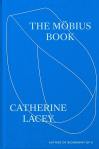
- A residential complex with primal scream therapy in Confessions by Catherine Airey and The Möbius Book by Catherine Lacey.
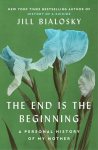
- Memories of wiping down groceries during the early days of the pandemic in The End Is the Beginning by Jill Bialosky and Human/Animal by Amie Souza Reilly.
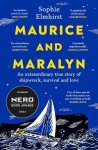
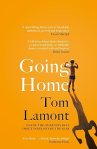
- A few weeks before I read Maurice and Maralyn by Sophie Elmhirst, I’d finished reading the author’s husband’s debut novel (Going Home by Tom Lamont); I had no idea of the connection between them until I got to her Acknowledgements.
- A mention of the same emergency money passing between friends in Alligator Tears by Edgar Gomez ($20) and The Möbius Book by Catherine Lacey ($100).
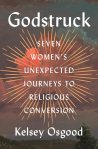
- Autobiographical discussions of religiosity and anorexia in The Möbius Book by Catherine Lacey and Godstruck by Kelsey Osgood.
- The theme of the dark night sky in The Wild Dark by Craig Childs, followed almost immediately by Night Magic by Leigh Ann Henion.
- Last year I learned about Marina Abramović’s performance art where she and her ex trekked to China’s Great Wall from different directions, met in the middle, and continued walking away to dramatize their breakup in The Ritual Effect by Michael Norton. Recently I saw it mentioned again in The Möbius Book by Catherine Lacey. Abramović’s work is also mentioned in Human/Animal by Amie Souza Reilly and is the basis for the opening track on Anne-Marie Sanderson’s album Old Light, “Amethyst Shoes.”
- The idea of running towards danger appears in Alex Marzano-Lesnevich’s essay in Edge of the World, a queer travel anthology edited by Alden Jones; and the bibliography of The Möbius Book by Catherine Lacey.
- I then read another Alex Marzano-Lesnevich essay in quick succession (both were excellent, by the way) in What My Father and I Don’t Talk About, edited by Michele Filgate.
- A scene in which a woman goes to a police station and her concerns are dismissed because she has no evidence and the man/men’s behaviour isn’t ‘bad enough’ in I Am, I Am, I Am by Maggie O’Farrell and Human/Animal by Amie Souza Reilly.
- Too many details as the sign of a lie in Dream Count by Chimamanda Ngozi Adichie and Three Days in June by Anne Tyler.
- Scenes of throwing all of a spouse’s belongings out on the yard/street in Old Soul by Susan Barker, How to Survive Your Mother by Jonathan Maitland, and Human/Animal by Amie Souza Reilly.
- Reading two lost American classics about motherhood and time spent in a mental institution at the same time: The Shutter of Snow by Emily Holmes Coleman and I Am Clarence by Elaine Kraf.
- Disorientation underwater: a literal experience in I Am, I Am, I Am by Maggie O’Farrell, then used as a metaphor for what it was like to be stuck in a blizzard on Annapurna in 2014 in The Secret Life of Snow by Giles Whittell.
- A teenager who has a job cleaning hotels in Old Soul by Susan Barker and I Am, I Am, I Am by Maggie O’Farrell. (In Stir-Fry by Emma Donoghue, Maria is also a teenaged cleaner, but of office buildings.)
- A vacuum cleaner bag splits in Stir-Fry by Emma Donoghue and one story of Are You Happy? by Lori Ostlund – in the latter it’s deliberate, searching for evidence of the character’s late son after cleaning his room.

- An ailing tree or trees that have to be cut down in one story of The Accidentals by Guadalupe Nettel and The Lost Trees of Willow Avenue by Mike Tidwell.
- Buchenwald was mentioned in one poem each in A God at the Door by Tishani Doshi and The Ghost Orchid by Michael Longley.
- A reference to Robin Wall Kimmerer’s Braiding Sweetgrass in To Have or to Hold by Sophie Pavelle and Human/Animal by Amie Souza Reilly.

- A mentally unwell woman deliberately burns her hands in I Am Clarence by Elaine Kraf and Every Day Is Mother’s Day by Hilary Mantel.
- A mention of the pollution caused by gas stoves in We Do Not Part by Han Kang and The Lost Trees of Willow Avenue by Mike Tidwell.
- An art installation involving part-buried trees was mentioned in Immemorial by Lauren Markham and then I encountered a similar project a few months later in We Do Not Part by Han Kang. Burying trees as a method of carbon storage is then discussed in The Lost Trees of Willow Avenue by Mike Tidwell.

- Imagining the lives of the people living in an apartment you didn’t end up renting in Scaffolding by Lauren Elkin and one story of The Accidentals by Guadalupe Nettel.
- The Anthropocene is mentioned in Scaffolding by Lauren Elkin and The Alternatives by Caoilinn Hughes.
- I was reading three debut novels from the McKitterick Prize longlist at the same time, all of them with very similar page counts of 383, 387, and 389 (i.e., too long!).
- Being appalled at an institutionalized mother’s appearance in The End Is the Beginning by Jill Bialosky and Every Day Is Mother’s Day by Hilary Mantel.
 A remote artist’s studio and severed fingers in Old Soul by Susan Barker and We Do Not Part by Han Kang.
- A lesbian couple in New Mexico, the experience of being watched through a window, and the mention of a caftan/kaftan, in Old Soul by Susan Barker and one story of Are You Happy? by Lori Ostlund.
- Refusal to go to a hospital despite being in critical condition in I Am, I Am, I Am by Maggie O’Farrell and one story of Are You Happy? by Lori Ostlund.
- It’s not a niche stylistic decision anymore; I was reading four novels with no speech marks at the same time: Old Soul by Susan Barker, Scaffolding by Lauren Elkin, The Alternatives by Caoilinn Hughes, and We Do Not Part by Han Kang. [And then, a bit later, three more: Wild Boar by Hannah Lutz, Mouthing by Orla Mackey, and How to Be Somebody Else by Miranda Pountney.]
 A lesbian couple is alarmed by the one partner’s family keeping guns in Spent by Alison Bechdel and one story of Are You Happy? by Lori Ostlund.
- Responding to the 2021 murder of eight Asian spa workers in Atlanta in Foreign Fruit by Katie Goh and Find Me as the Creature I Am by Emily Jungmin Yoon.
- Disposing of a late father’s soiled mattress in Mouthing by Orla Mackey and one story of Are You Happy? by Lori Ostlund.
 New York City tourist slogans in Apple of My Eye by Helene Hanff and How to Be Somebody Else by Miranda Pountney.
- A Jewish care home for the elderly in The End Is the Beginning by Jill Bialosky and Joanna Rakoff’s essay in What My Father and I Don’t Talk About (ed. Michele Filgate).
- A woman has no memory between leaving a bar and first hooking up with the man she’s having an affair with in If You Love It, Let It Kill You by Hannah Pittard and How to Be Somebody Else by Miranda Pountney.
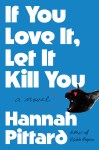 A stalker-ish writing student who submits an essay to his professor that seems inappropriately personal about her in one story of Are You Happy? by Lori Ostlund and If You Love It, Let It Kill You by Hannah Pittard.
- A pygmy goat as a pet (and a one-syllable, five-letter S title!) in Spent by Alison Bechdel and Sleep by Honor Jones.
- A Brooklyn setting and thirtysomething female protagonist in Sleep by Honor Jones, So Happy for You by Celia Laskey, and How to Be Somebody Else by Miranda Pountney.
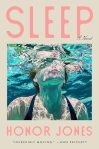
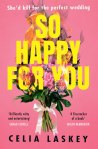
- A mention of the American Girl historical dolls franchise in Sleep by Honor Jones and If You Love It, Let It Kill You by Hannah Pittard, both of which I’m reviewing early for Shelf Awareness.
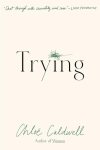 A writing professor knows she’s a hypocrite for telling her students what (not) to do and then (not) doing it herself in Trying by Chloé Caldwell and If You Love It, Let It Kill You by Hannah Pittard. These two books also involve a partner named B (or Bruce), metafiction, porch drinks with parents, and the observation that a random statement sounds like a book title.
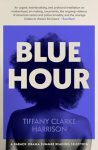
- The protagonist’s therapist asks her to find more precise words for her feelings in Blue Hour by Tiffany Clarke Harrison and So Happy for You by Celia Laskey.
- The protagonist “talks” with a dying dog or cat in The Möbius Book by Catherine Lacey and If You Love It, Let It Kill You by Hannah Pittard.
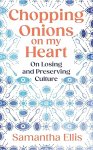 Shalimar perfume is mentioned in Scaffolding by Lauren Elkin and Chopping Onions on My Heart by Samantha Ellis.
- The Rapunzel fairytale is a point of reference in In the Evening, We’ll Dance by Anne-Marie Erickson and Secret Agent Man by Margot Singer, both of which I was reading early for Foreword Reviews.
What’s the weirdest reading coincidence you’ve had lately?
Reading Ireland Month, Part II: Barrett, More Donoghue, O’Farrell x 2
My second set of contributions to Cathy’s Reading Ireland Month. Emma Donoghue also appeared in my first instalment of reviews. Today I’m featuring her latest novel, published just a couple of weeks ago, and taking a quick look at a few other Irish books I’ve read recently: a light-hearted debut featuring small-town criminals, and two by Maggie O’Farrell: a reread of her only nonfiction work to date (for book club), and her newest children’s book.
Wild Houses by Colin Barrett (2024)
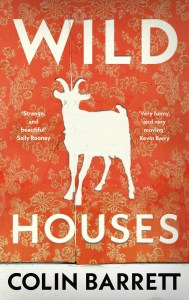 When Doll English is kidnapped by the Ferdia brothers in revenge for a huge loss on a drug deal, his girlfriend, mother and brother must go to unexpected lengths to set him free. There’s plenty of cursing and violence in this small-town crime caper, yet Barrett has a light touch; the dialogue, especially, is funny. The dialect is easy enough to decipher. Nicky, Doll’s girlfriend, lost both parents young and works in a hotel bar. She’s a strong character reminiscent of the protagonist in Trespasses. Overall, I felt that this was nicely written but that Barrett’s talent was somewhat wasted on a thin story. I’ve encountered similar plots in better books by Paul Murray and Donal Ryan. (Free from the publisher)
The Paris Express by Emma Donoghue
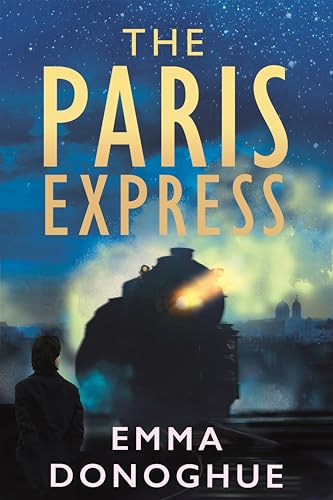 Inspired by a real-life disaster involving a train on the approach to Paris’s Montparnasse station in 1895. The Author’s Note at the end reveals the blend of characters included: people known to have been on that particular train, whether as crew or passengers; those who might have journeyed on it because they spent time in Paris at around that period (such as Irish playwright John Millington Synge); and those made up from scratch. It’s a who’s-who of historical figures, many of whom represent different movements or social issues, such as a woman medical student and an African American painter who can pass as white in certain circumstances. Donoghue clearly intends to encompass the entire social hierarchy, from a maid to a politician with a private carriage. She also crafts a couple of queer encounters.
The premise is appealing: a train hurtling toward catastrophe is in a sense a locked room, seeding much drama and intrigue. A young female radical is on board with a bomb, so all along you speculate about whether she’ll set it off and when. While I found the general thrust engaging, it was harder to develop interest in the large cast of characters. I also found the passages personifying the train (she “carries death in her belly”) hokey and thought that, as has sometimes been the case with Donoghue’s historical work, there’s too much research that’s there just for the sake of it, because she came across a fact she found fascinating and couldn’t bear to leave out (“These days every public building has three rubbish bins—one for the reclaiming of paper and cloth, the next for glass, ceramics, and oyster shells, and the last for perishables, which is where she drops the handkerchief.”). So this was enjoyable enough but not among her best.
With thanks to Picador for the proof copy for review.
I Am, I Am, I Am: Seventeen Brushes with Death by Maggie O’Farrell (2017)
 This was a reread for book club, and oh how brilliant it is. I’m more convinced than ever that the memoir-in-essays is a highly effective form because it focuses on themes or moments of great intensity and doesn’t worry about accounting for all the boring intermediate material. A few of these pieces feel throwaway, but together they form a vibrant picture of a life and also inspire awe at what the human body can withstand. No doubt on Wednesday we will each pick out different essays that resonated the most with us, perhaps because they run very close to our own experience. I imagine our discussion will start there – and with sharing our own NDEs. Stylistically, the book has a lot in common with O’Farrell’s fiction, which often employs the present tense and a complicated chronology. The present tense and a smattering of second person make the work immediate and invite readers to feel their way into her situations. Otherwise, my thoughts are as before – the last two essays are the pinnacle.
My original review from 2018:
We are, all of us, wandering about in a state of oblivion, borrowing our time, seizing our days, escaping our fates, slipping through loopholes, unaware of when the axe may fall.
O’Farrell captures fragments of her life through 17 essays on life-threatening illnesses and other narrow escapes she’s experienced. The pieces aren’t in chronological order and aren’t intended to be comprehensive. Instead, they crystallize the fear and pain of particular moments in time, and are rendered with the detail you’d expect from a scene in one of her novels. (Indeed, you can spot a lot of the real-life influences on her fiction, particularly This Must Be the Place – travels in China and Chile; eczema and stammering.)
She’s been mugged at machete point, has nearly drowned several times, had a risky first labour, and was almost the victim of a serial killer. (My life feels awfully uneventful by comparison!) But the best section of the book is its final quarter: an essay about her childhood encephalitis and its lasting effects, followed by another about her daughter’s extreme allergies. Only now, as a mother, can she understand how terrifying it must have been for her parents to wait at her side during days when she might not have survived. O’Farrell depicts parenthood better than any other author I can think of – letting those of us who haven’t experienced it do so vicariously. (Gift from my wish list)
My original rating (2018): 
My rating now: 
When the Stammer Came to Stay by Maggie O’Farrell (2024)
 This is actually her third children’s book, after Where Snow Angels Go (2020) and The Boy Who Lost His Spark (2022). All are illustrated by Daniela Jaglenka Terrazzini, who has a richly colourful and slightly old-fashioned style; she makes kids look as dignified as adults. The books are intended for slightly older children in that they’re on the longer side, have more words than pictures, and are more serious than average. They all weave in gentle magic as a way of understanding and coping with illness, a mental health challenge, or a disability.
When the Stammer Came to Stay is a perfect follow-on to I Am, I Am, I Am because it, too, draws on O’Farrell’s personal struggles. It’s the fable-like story of two sisters, Bea and Min, who share an attic room. The one is perfectly tidy; the other is a messy tomboy. When the stammer, pictured as a blob of silver ectoplasm above the shoulder, starts stealing Min’s words, they gather advice from their parents and the lodgers about how she can accept her new reality instead of fighting it or closing herself off by not speaking at all. The mycologist’s symbiosis metaphor is perhaps a bit too neat, but it contrasts with the impish connotations of the dibbuk, another useful parallel the girls discover. With this I’ve now read O’Farrell’s complete published works!
Some 2024 Reading Superlatives
Longest book read this year: The Bee Sting by Paul Murray

Shortest books read this year: The Wood at Midwinter by Susanna Clarke – a standalone short story (unfortunately, it was kinda crap); After the Rites and Sandwiches by Kathy Pimlott – a poetry pamphlet
 Authors I read the most by this year: Alice Oseman (5 rereads), Carol Shields (3 rereads); Margaret Atwood, Rachel Cusk, Pam Houston, T. Kingfisher, Sarah Manguso, Maggie O’Farrell, and Susan Allen Toth (2 each)
Publishers I read the most from: (Besides the ubiquitous Penguin Random House and its myriad imprints,) Carcanet (15), Bloomsbury & Faber (12 each), Alice James Books & Picador/Pan Macmillan (9 each)
My top author ‘discoveries’ of the year: Sherman Alexie and Bernardine Bishop

Proudest bookish achievements: Reading almost the entire Carol Shields Prize longlist; seeing The Bookshop Band on their huge Emerge, Return tour and not just getting my photo with them but having it published on both the Foreword Reviews and Shelf Awareness websites

Most pinching-myself bookish moment: Getting a chance to judge published debut novels for the McKitterick Prize
Books that made me laugh: Lots, but particularly Fortunately, the Milk… by Neil Gaiman, The Year of Living Biblically by A.J. Jacobs, and You Don’t Have to Be Mad to Work Here by Benji Waterhouse
Books that made me cry: On Chesil Beach by Ian McEwan, My Good Bright Wolf by Sarah Moss
 Two books that hit the laughing-and-crying-at-the-same-time sweet spot: The Absolutely True Diary of a Part-Time Indian by Sherman Alexie and I’m Glad My Mom Died by Jennette McCurdy
Best book club selections: Clear by Carys Davies, Howards End by E.M. Forster, Strange Sally Diamond by Liz Nugent
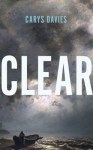
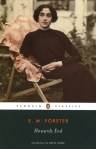
Best first lines encountered this year:
- From Cocktail by Lisa Alward: “The problem with parties, my mother says, is people don’t drink enough.”
- From A Reason to See You Again by Jami Attenberg: “Oh, the games families play with each other.”
- From The Snow Queen by Michael Cunningham: “A celestial light appeared to Barrett Meeks in the sky over Central Park, four days after Barrett had been mauled, once again, by love.”

Best last lines encountered this year:
 From The Ministry of Time by Kaliane Bradley: “Forgiveness and hope are miracles. They let you change your life. They are time-travel.”
- From Mammoth by Eva Baltasar: “May I know to be alert when, at the stroke of midnight, life sends me its cavalry.”
- From Private Rites by Julia Armfield: “For now, they stay where they are and listen to the unwonted quiet, the hush in place of rainfall unfamiliar, the silence like a final snuffing out.”
- From Come to the Window by Howard Norman: “Wherever you sit, so sit all the insistences of fate. Still, the moment held promise of a full life.”
- From Intermezzo by Sally Rooney: “It doesn’t always work, but I do my best. See what happens. Go on in any case living.”
- From Barrowbeck by Andrew Michael Hurley: “And she thought of those Victorian paintings of deathbed scenes: the soul rising vaporously out of a spent and supine body and into a starry beam of light; all tears wiped away, all the frailty and grossness of a human life transfigured and forgiven at last.”
- From Small Rain by Garth Greenwell: “Pure life.”

Books that put a song in my head every time I picked them up: I’m the King of the Castle by Susan Hill (“Crash” by Dave Matthews Band); Y2K by Colette Shade (“All Star” by Smashmouth)
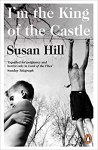
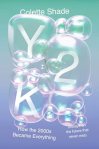
Shortest book titles encountered: Feh (Shalom Auslander) and Y2K (Colette Shade), followed by Keep (Jenny Haysom)
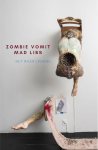
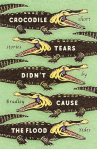 Best 2024 book titles: And I Will Make of You a Vowel Sound, I Can Outdance Jesus, Zombie Vomit Mad Libs, Crocodile Tears Didn’t Cause the Flood, This Is Why We Can’t Have Nice Things
Best book titles from other years: Recipe for a Perfect Wife, Tripping over Clouds, Waltzing the Cat, Dressing Up for the Carnival, The Met Office Advises Caution
Favourite title and cover combo of the year: I’m Mostly Here to Enjoy Myself by Glynnis MacNicol

Best punning title (and nominative determinism): Knead to Know: A History of Baking by Dr Neil Buttery
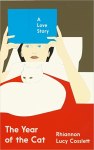 Biggest disappointments: The Glassmaker by Tracy Chevalier (I didn’t get past the first chapter because of all the info dumping from her research); The Year of the Cat by Rhiannon Lucy Cosslett; milk and honey by Rupi Kaur (that … ain’t poetry); 2 from the Observer’s 10 best new novelists feature (here and here)
A couple of 2024 books that everyone was reading but I decided not to: Creation Lake by Rachel Kushner, You Are Here by David Nicholls
 The worst books I read this year: Mammoth by Eva Baltasar, A Spy in the House of Love by Anaïs Nin
The downright strangest books I read this year: Zombie Vomit Mad Libs, followed by The Peculiar Life of a Lonely Postman. All Fours by Miranda July (I am at 44% now) is pretty weird, too.

Book Serendipity, August to October 2024
I call it “Book Serendipity” when two or more books that I read at the same time or in quick succession have something in common – the more bizarre, the better. This is a regular feature of mine every couple of months. Because I usually have 20–30 books on the go at once, I suppose I’m more prone to such incidents. People frequently ask how I remember all of these coincidences. The answer is: I jot them down on scraps of paper or input them immediately into a file on my PC desktop; otherwise, they flit away!
The following are in roughly chronological order.
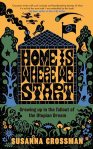
- The William Carlos Williams line “no ideas but in things” is quoted in Home Is Where We Start by Susanna Crossman and echoed with a slight adaptation in Want, the Lake by Jenny Factor.
- A woman impulsively stops into a tattoo parlour in We Are Animals by Jennifer Case and Birdeye by Judith Heneghan.
- Cleaning up a partner’s bristles from the sink in 300 Arguments by Sarah Manguso and The Echoes by Evie Wyld.

- Sarah Manguso, by whom I was reading two books for a Bookmarks article, was quoted in Some of Us Just Fall by Polly Atkin.
- Someone is annoyed at their spouse making a mess cooking lemon preserves in How We Know Our Time Travelers by Anita Felicelli and Liars by Sarah Manguso, both of which are set in California.
- Rumpelstiltskin is referenced in one short story of a speculative collection: How We Know Our Time Travelers by Anita Felicelli and The Man in the Banana Trees by Marguerite Sheffer.
- A father who is hard of hearing, and an Australian woman looking for traces of her grandmother’s life in England in The House with All the Lights On by Jessica Kirkness and The Echoes by Evie Wyld.
- A character named Janie or Janey in Their Eyes Were Watching God by Zora Neale Hurston and The Echoes by Evie Wyld. The Pre-Raphaelite model Janey is also mentioned in The Garden Against Time by Olivia Laing.
 Contrasting one’s childhood love of the Little House on the Prairie books with reading them as an adult and being aware of the racial and colonial implications in Home Is Where We Start by Susanna Crossman and My Good Bright Wolf by Sarah Moss.
- A mention of Little Women in A Perfect Arrangement by Suzanne Berne and My Good Bright Wolf by Sarah Moss.
- A character grew up in a home hair-dressing business in A Perfect Arrangement by Suzanne Berne and Home Is Where We Start by Susanna Crossman.
- The discovery of an old pram in an outbuilding in Instructions for a Heatwave by Maggie O’Farrell and Mina’s Matchbox by Yōko Ogawa.
- An Irish woman named Aoife in My Good Bright Wolf by Sarah Moss and Instructions for a Heatwave by Maggie O’Farrell.
- Cooking then throwing out entire meals in My Good Bright Wolf by Sarah Moss and The Echoes by Evie Wyld. (Also throwing out a fresh meal in Birdeye by Judith Heneghan. Such scenes distress me!)
 A new lover named Simon in one story of The Beggar Maid by Alice Munro and The Echoes by Evie Wyld.
- A character writes a recommendation letter for someone who then treats them vindictively, because they assumed the letter was negative when it wasn’t, in A Perfect Arrangement by Suzanne Berne and one story of The Beggar Maid by Alice Munro.
- After her parents’ divorce, the author never had a designated bedroom in her father’s house in Home Is Where We Start by Susanna Crossman and The Garden Against Time by Olivia Laing.
 Reading The Bell Jar as a teenager in Shred Sisters by Betsy Lerner and My Good Bright Wolf by Sarah Moss.
- A contentious Town Hall meeting features in A Perfect Arrangement by Suzanne Berne and Birdeye by Judith Heneghan.
- The wife is pregnant with twins in A Perfect Arrangement by Suzanne Berne and The Year of Living Biblically by A.J. Jacobs. (There are also twins in Birdeye by Judith Heneghan. In general, I find that they occur far more often in fiction than in real life!)
- 1930s Florida as a setting in Florence Adler Swims Forever by Rachel Beanland and Their Eyes Were Watching God by Zora Neale Hurston.
- Dorothy Wordsworth and her journals are discussed in Some of Us Just Fall by Polly Atkin and My Good Bright Wolf by Sarah Moss.
- Wordsworth’s daffodils are mentioned in Signs, Music by Raymond Antrobus and My Good Bright Wolf by Sarah Moss.
- “F*ck off” is delivered in an exaggerated English accent in Birdeye by Judith Heneghan and The Souvenir Museum by Elizabeth McCracken.
- The main character runs a country store in Their Eyes Were Watching God by Zora Neale Hurston and The Beggar Maid by Alice Munro.
 Reading a second novel this year in which the younger sister of a pair wants to go into STEM and joins the Mathletes in high school: first was A Reason to See You Again by Jami Attenberg; later was Shred Sisters by Betsy Lerner.
- An older sister who has great trouble attending normal school and so is placed elsewhere (including a mental institution) for a total of two years in Learning to Think by Tracy King and Shred Sisters by Betsy Lerner.
- The idea of trees taking revenge on people for environmental destruction in one story of The Secret Life of Insects by Bernardo Esquinca and one poem of The Holy & Broken Bliss by Alicia Ostriker.
- An illiterate character in Instructions for a Heatwave by Maggie O’Farrell and Also Here by Brooke Randel.
-
 Controversy over throwing a dead body into the trash in Birdeye by Judith Heneghan and Strange Sally Diamond by Liz Nugent.
- A publishing assistant who wears a miniskirt and Doc Martens in Shred Sisters by Betsy Lerner and Summer Fridays by Suzanne Rindell.
- Ancestors’ experience in Auschwitz in Also Here by Brooke Randel and Transgenesis by Ava Winter.
- The protagonist finds it comforting when her boyfriend lies down with his full weight on her in Shred Sisters by Betsy Lerner and The Echoes by Evie Wyld.
- A woman badgers her ex-husband about when his affair with his high school/college sweetheart started (before or after the divorce) in Shred Sisters by Betsy Lerner and Liars by Sarah Manguso.
 I encountered an Irish matriarch who married the ‘wrong’ brother, not Frank, in The Bee Sting by Paul Murray earlier in the year, and then in Instructions for a Heatwave by Maggie O’Farrell.
- A boy is playing in the family car on the driveway when it rolls backwards and kills someone in A Perfect Arrangement by Suzanne Berne and Tell Me Everything by Elizabeth Strout.
- Quantoxhead, Somerset is mentioned in On Trying to Keep Still by Jenny Diski and A House Unlocked by Penelope Lively.
- Tapeworms are mentioned in On Trying to Keep Still by Jenny Diski and one story of The Best Short Stories 2023: The O. Henry Prize Winners, ed. Lauren Groff.
- A description of horrific teeth in one story of The Best Short Stories 2023: The O. Henry Prize Winners, ed. Lauren Groff, and one story of The Long Swim by Terese Svoboda.
- A character researches potato blight, and another keeps his smoking a secret from his wife, in one story of The Best Short Stories 2023: The O. Henry Prize Winners, ed. Lauren Groff, and Tell Me Everything by Elizabeth Strout.
 A piano gets mauled out of anger in one story of Save Me, Stranger by Erika Krouse and Strange Sally Diamond by Liz Nugent.
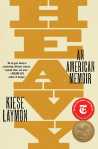
- Men experiencing eating disorders in Heavy by Kiese Laymon and Heartstopper Volumes 3 and 4 by Alice Oseman.
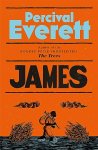
- Black people deliberately changing their vocabulary and speech register when talking to white people in James by Percival Everett and Heavy by Kiese Laymon.
- My second book of the year in which a woman from centuries ago who magically appears in the present requests to go night clubbing: first The Ministry of Time by Kaliane Bradley, then Isabella & Blodwen by Rachael Smith.
- Characters named Sadie in James by Percival Everett, The Souvenir Museum by Elizabeth McCracken, and Still Life at Eighty by Abigail Thomas.
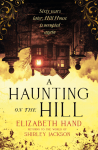
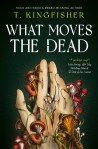
- Creepy hares in horror: A Haunting on the Hill by Elizabeth Hand and What Moves the Dead by T. Kingfisher. There were weird rabbits in I’m the King of the Castle by Susan Hill, too.
- I read two scenes of a calf being born, one right after the other: in Dangerous Enough by Becky Varley-Winter, then I’m the King of the Castle by Susan Hill.
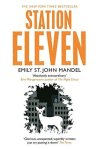
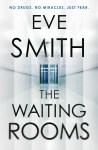
- I read about an animal scratch leading to infection leading to death in a future with no pharmaceuticals in Station Eleven by Emily St. John Mandel in the morning and then in the afternoon heard Eve Smith mention the same thing happening due to antibiotic resistance in her novel The Waiting Rooms. Forget about R.I.P.; this is the stuff that scares me…
What’s the weirdest reading coincidence you’ve had lately?
Summer Reading, Part II: Beanland, Watters; O’Farrell, Oseman Rereads
Apparently the UK summer officially extends to the 22nd – though you’d never believe it from the autumnal cold snap we’re having just now – so that’s my excuse for not posting about the rest of my summery reading until today. I have a tender ancestry-inspired story of a Jewish family’s response to grief, a bizarre YA fantasy comic, and two rereads, one a family story from one of my favourite contemporary authors and the other the middle instalment in a super-cute graphic novel series.
Florence Adler Swims Forever by Rachel Beanland (2020)
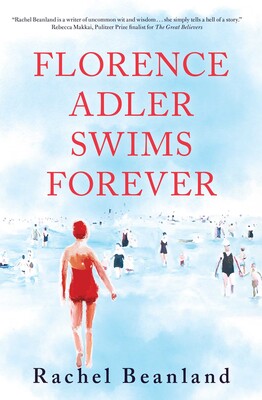 After reviewing Beanland’s second novel, The House Is on Fire, I wanted to catch up on her debut. Both are historical and give a broad but detailed view of a particular milieu and tragic event through the use of multiple POVs. It’s the summer of 1934 in Atlantic City, New Jersey. Florence, a plucky college student who intends to swim the English Channel, drowns on one of her practice swims. This happens in the first chapter (and is announced in the blurb), so the rest is aftermath. The Adlers make the unusual decision to keep Florence’s death from her sister, Fannie, who is on hospital bedrest during her third pregnancy because she lost a premature baby last year. Fannie’s seven-year-old daughter, Gussie, is sworn to silence about her aunt – with Stuart, the lifeguard who loved Florence, and Anna, a German refugee the Adlers have sponsored, turning it into a game for her by creating the top-secret “Florence Adler Swims Forever Society” with its own language.
The particulars can be chalked up to family history: this really happened; the Gussie character was Beanland’s grandmother, and the author believes her great-great-aunt Florence died of hypertrophic cardiomyopathy. It’s intriguing to get glimpses of Jewish ritual, U.S. anti-Semitism and early concern over Nazism, but I was less engaged with other subplots such as Fannie’s husband Isaac’s land speculation in Florida. There’s a satisfying queer soupcon, and Beanland capably inhabits all of the perspectives and the bereaved mindset. (Secondhand – Awesomebooks.com) 
Lumberjanes: Campfire Songs by Shannon Watters et al. (2020)
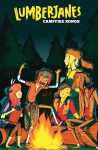 This comics series created by a Boom! Studios editor ran from 2014 to 2020 and stretched to 75 issues that have been collected in 20+ volumes. Watters wanted to create a girl-centric comic and roped in various writers who together decided on the summer scout camp setting. I didn’t really know what I was getting into with this set of six stand-alone stories, each illustrated by a different artist. The characters are recognizably the same across the stories, but the variation in style meant I didn’t know what they’re “supposed” to look like. All are female or nonbinary, including queer and trans characters. I guess I expected queer coming-of-age stuff, but this is more about friendship and fantastical adventures. Other worlds are just a few steps away. They watch the Northern Lights with a pair of yeti, attend a dinner party cooked by a ghost chef, and play with green kittens and giant animate pumpkins. My favourite individual story was “A Midsummer Night’s Scheme,” in which Puck the fairy interferes with preparations for a masquerade ball. I won’t bother reading other installments. (Public library)
And the rereads:
Instructions for a Heatwave by Maggie O’Farrell (2013)
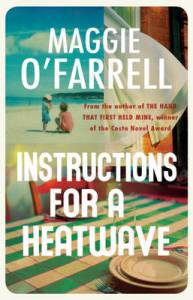 I read this when it first came out (original review here) and saw O’Farrell speak on it, in conversation with Julie Cohen, at a West Berkshire Libraries event – several years before I lived in the county. I expected it to be a little more atmospheric about the infamous UK drought of summer 1976. All I’d remembered otherwise was that one character is hiding illiteracy and another has an affair while leading a residential field trip. The novel opens, Harold Fry-like, with Robert Riordan disappearing from his suburban home. Gretta phones each of her adult children to express concern, but she’s so focussed on details like how she’ll get into the shed without Robert’s key that she fails to convey the gravity of the situation. Eventually the three descend on her from London, Gloucestershire and New York and travel to Ireland together to find him, but much of the novel is a patient filling-in of backstory: why Monica and Aoife are estranged, what went wrong in Michael Francis’s marriage, and so on.
I had forgotten the two major reveals, but this time they didn’t seem as important as the overall sense of decisions with unforeseen consequences. O’Farrell was using extreme weather as a metaphor for risk and cause-and-effect (“a heatwave will act upon people. It lays them bare, it wears down their guard. They start behaving not unusually but unguardedly”), and it mostly works. But this wasn’t a top-tier O’Farrell on a reread. (Little Free Library)
My original rating (2013): 
My rating now:
Average:
Heartstopper: Volume 3 by Alice Oseman (2020)
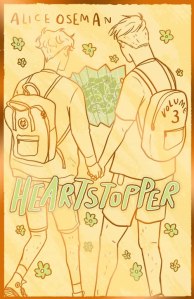 Heartstopper was my summer crush back in 2021, and I couldn’t resist rereading the series in the hardback reissue. That I started with the middle volume (original review here) is an accident of when my library holds arrived for me, but it turned out to be an apt read for the Olympics summer because it mostly takes place during a one-week school trip to Paris, full of tourism, ice cream, hijinks and romance. Nick and Charlie are dating but still not out to everyone in their circle. This is particularly true for Nick, who is a jock and passes as straight but is actually bisexual. Charlie experienced a lot of bullying at his boys’ school before his coming-out, so he’s nervous for Nick, and the psychological effects persist in his disordered eating. Oseman deals sensitively with mental health issues here, and has fun adding more queer stories into the background: Darcy and Tara, Tao and Elle (trans), and even the two male trip chaperones. It’s adorable how everything flirtation-related is so dramatic and the characters are always blushing and second-guessing. Lucky teens who get to read this at the right time. (Public library)
Any final “heat” or “summer” books for you this year?
Reading Ireland Month: Seán Hewitt, Maggie O’Farrell
Reading Ireland Month is hosted each year by Cathy of 746 Books. I’m wishing you all well on St. Patrick’s Day with this first of two planned tie-in posts. Today I have a poetry collection that sets grief and queer longing amid nature, and my last unread novel – a somewhat middling one, unfortunately – by one of my favourite authors.

Rapture’s Road by Seán Hewitt (2024)
 The points of reference are so similar to his 2020 debut collection, Tongues of Fire, that parts of what I wrote about that one are fully applicable here: “Sex and grief, two major themes, are silhouetted against the backdrop of nature. Fields and forests are loci of meditation and epiphany, but also of clandestine encounters between men.” Perhaps inevitably, then, this felt less fresh, but there was still much to enjoy. I particularly loved two poems about moths (the merveille du jour as an “art-deco mint-green herringbone. Soft furred little absinthe warrior”), “To Autumn,” and “Alcyone,” which likens a kingfisher to “a rip / in the year’s old fabric”.
In “Two Apparitions,” the poet’s late father seems visible again. Many of the scenes take place at dusk or dark. There’s a layer of menace to “Night-Scented Stock,” about an abusive relationship, and the account of a slaughter in “Pig.” But the stand-out is “We Didn’t Mean to Kill Mr Flynn,” based on the 1982 murder of a gay man in a Dublin park. Hewitt drew lines from court proceedings and periodicals in the Irish Queer Archive at the National Library of Ireland, where he was poet in residence. He voices first the gang of killers, then Flynn himself. The trial kickstarted Ireland’s Pride movement.
More favourite lines:
Come out, make a verb of me, let
my body do your speaking tonight —
(from “A Strain of the Earth’s Sweet Being”)
awestruck, bright,
a child in the bell-tower of beauty —
(from “Skylarks”)
Love, the world is failing:
come and fail with me.
(from “Nightfall”)
With thanks to Jonathan Cape (Penguin) for the free copy for review.
My Lover’s Lover by Maggie O’Farrell (2002)
I was so excited, a few years ago, to find battered copies of this and After You’d Gone in a local charity shop for 50 pence each, even though it appears a mouse had a nibble on one corner here. They were her first two books, but the last that I managed to source. Whereas After You’d Gone is a surprisingly confident and elegant debut novel about a woman in a coma and the family and romantic relationships that brought her to this point, My Lover’s Lover ultimately felt like a pretty run-of-the-mill story about two women finding out that (some) men are dogs and they need to break free.
 Lily meets Marcus, an architect, at a party and almost before she knows it has moved into the spare room of his apartment, a Victorian factory space he renovated himself, and become his lover. But there’s an uncomfortable atmosphere in the flat: She can still smell perfume from Marcus’s ex, Sinead; one of her dresses hangs in the closet. We, along with Lily, get the impression Sinead has died. She haunts not just the flat but also the streets of London. It becomes Lily’s obsession to find out what happened to Sinead and why Marcus is so morose. Part Two gives Sinead’s side of things, in a mix of third person/present tense and first person/past tense, before we return to Lily to see what she’ll do with her new knowledge.
As in some later novels, there are multiple locales (here, NYC, the Australian desert, and China – a country O’Farrell often revisits in fiction) and complicated point-of-view shifts, but I felt the sophisticated craft was rather wasted on a book that boils down to a self-explanatory maxim: past relationships always have an effect on current ones. I also found the writing overmuch in places (“the grass swooshing, sussurating, cleaving open to her steps”; “letting fall a box of cereal into its [a shopping trolley’s] chrome meshing”; “her fingertips meeting the ceraceous, heated skin of his cheek”). However, this was an engrossing read – I read most of it in two days. It’s bottom-tier O’Farrell, though, along with The Distance Between Us and Hamnet – sorry, I know many adore it. (If you’re interested: middle tier = The Vanishing Act of Esme Lennox, Instructions for a Heatwave, her two children’s books, and The Marriage Portrait; top tier = After You’d Gone, The Hand that First Held Mine, This Must Be the Place, and I Am, I Am, I Am.)
I’ve gotten in the habit of reading one of Maggie O’Farrell’s works per year, so I will just have to reread my favourites until we get a new one. I’m already tapping a foot in impatience. (Secondhand from Bas, Newbury) 
Have you read any Irish literature this month?
Some 2023 Reading Superlatives
 Longest book read this year: The Weather Woman by Sally Gardner (457 pages) – not very impressive compared to last year’s 720-page To Paradise. That means I didn’t get through a single doorstopper this year. D’oh!
Shortest book read this year: Pitch Black by Youme Landowne and Anthony Horton (40 pages)
Authors I read the most by this year: Margaret Atwood, Deborah Levy and Brian Turner (3 books each); Amy Bloom, Simone de Beauvoir, Tove Jansson, John Lewis-Stempel, W. Somerset Maugham, L.M. Montgomery and Maggie O’Farrell (2 books each)


Publishers I read the most from: (Setting aside the ubiquitous Penguin and its many imprints) Carcanet (11 books) and Picador/Pan Macmillan (also 11), followed by Canongate (7).
My top author discoveries of the year: Michelle Huneven and Julie Marie Wade
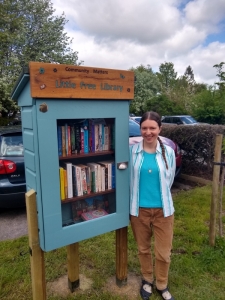
My proudest bookish accomplishment: Helping to launch the Little Free Library in my neighbourhood in May, and curating it through the rest of the year (nearly daily tidying; occasional culling; requesting book donations)
Most pinching-myself bookish moments: Attending the Booker Prize ceremony; interviewing Lydia Davis and Anne Enright over e-mail; singing carols after-hours at Shakespeare and Company in Paris

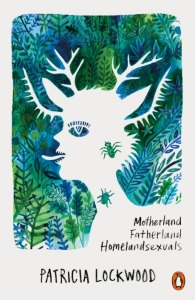
Books that made me laugh: Notes from a Small Island by Bill Bryson, The Librarianist by Patrick deWitt, two by Katherine Heiny, Motherland Fatherland Homelandsexuals by Patricia Lockwood
Books that made me cry: A Heart that Works by Rob Delaney, Lucy by the Sea by Elizabeth Strout, Family Meal by Bryan Washington
 The book that was the most fun to read: Romantic Comedy by Curtis Sittenfeld
Best book club selections: By the Sea by Abdulrazak Gurnah and The Woman in Black by Susan Hill
 Best last lines encountered this year: “And I stood there holding on to this man as though he were the very last person left on this sweet sad place that we call Earth.” (Lucy by the Sea, Elizabeth Strout)
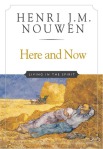 A book that put a song in my head every time I picked it up: Here and Now by Henri Nouwen (Aqualung song here)
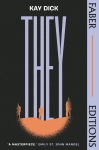
Shortest book title encountered: Lo (the poetry collection by Melissa Crowe), followed by Bear, Dirt, Milk and They
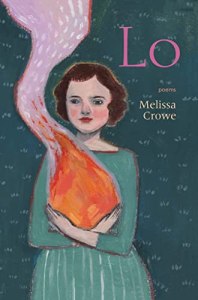



Best 2023 book titles: These Envoys of Beauty and You Bury the Birds in My Pelvis
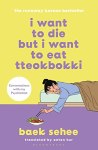 Best book titles from other years: I Want to Die but I Want to Eat Tteokbokki, Before You Suffocate Your Own Fool Self, A Down Home Meal for These Difficult Times, The Cats We Meet Along the Way, We All Want Impossible Things
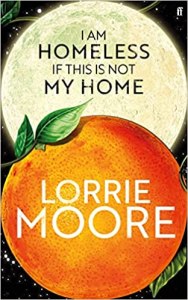
Favourite title and cover combo of the year: I Am Homeless If This Is Not My Home by Lorrie Moore (shame the contents didn’t live up to it!)
Biggest disappointment: Speak to Me by Paula Cocozza
A 2023 book that everyone was reading but I decided not to: Prophet Song by Paul Lynch

The worst books I read this year: Monica by Daniel Clowes, They by Kay Dick, Swallowing Geography by Deborah Levy and Self-Portrait in Green by Marie Ndiaye (1-star ratings are extremely rare for me; these were this year’s four)
The downright strangest book I read this year: Motherland Fatherland Homelandsexuals by Patricia Lockwood
 Bookish Beck = Rebecca Foster. American transplant to England. Freelance proofreader and book reviewer.
 Bookish Beck