Seven Final Novellas: Crumley, Morris, Rapp Black; Hunter, Johnson, Josipovici, Otsuka (#NovNov)
We’ll be wrapping up Novellas in November and giving final statistics on Tuesday. Today, I have mini reviews of another seven novellas I’ve been working on, some of them for the whole month. I’ll start with some short nonfiction and then move on to the fiction.
Nonfiction:
Barn Owl by Jim Crumley (2014)
[63 pages]
 I reviewed Kingfisher and Otter, two other titles from Crumley’s “Encounters in the Wild” series for the publisher Saraband, earlier in the month. Barn Owl follows the same pattern, traveling the Scottish islands in search of close encounters (with badgers and ospreys, too) but also stretching back to a childhood memory from 1950s Dundee, when there was an owl-occupied derelict farmstead a quarter-mile from his home. This is a lovely little full-circle narrative in that the book closes with “the barn owl, unlike all other night-flying owls, is the one that we can see in the dark … its inarguable beauty is layered with mystery, and …all of us have a place in our hearts and minds for mysterious beauty. I have known that to be an essential truth since I was about eight years old.” (Public library)
Conundrum by Jan Morris (1974)
[148 pages]
 A reread of a book that transformed my understanding of gender back in 2006. Morris (d. 2020) was a trans pioneer. Her concise memoir opens “I was three or perhaps four years old when I realized that I had been born into the wrong body, and should really be a girl.” Sitting under the family piano, little James knew it, but it took many years – a journalist’s career, including the scoop of the first summiting of Mount Everest in 1953; marriage and five children; and nearly two decades of hormone therapy – before a sex reassignment surgery in Morocco in 1972 physically confirmed it. I was struck this time by Morris’s feeling of having been a spy in all-male circles and taking advantage of that privilege while she could. She speculates that her travel books arose from “incessant wandering as an outer expression of my inner journey.” The focus is more on her unchanging soul than on her body, so this is not a sexual tell-all. She paints hers as a spiritual quest toward true identity and there is only joy at new life rather than regret at time wasted in the ‘wrong’ one. (Public library)
Frida Kahlo and My Left Leg by Emily Rapp Black (2021)
[145 pages]
 This was my third memoir by the author; I reviewed The Still Point of the Turning World and Sanctuary earlier in the year. Like Sinéad Gleeson does in Constellations, Rapp Black turns to Frida Kahlo as a role model for “translating … pain into art.” Polio, a streetcar accident, 32 operations, failed pregnancies and an amputated leg – Kahlo endured much suffering. It was this last particular that especially drew Rapp Black (who has had a prosthetic leg since early childhood) to her. On a visit to Kahlo’s Mexico City home, she can hardly bear the intimacy of seeing Kahlo’s prostheses and corsets. They plunge her back into her own memories: of passing as normal despite a disability, having an eating disorder, losing her son Ronan to Tay-Sachs disease, and starting over with a new marriage and baby. Rapp Black weaves this all together artfully as well as effectively, but for someone like me who is already conversant with her story, there wasn’t quite enough in the way of new material.
With thanks to Notting Hill Editions for the free e-copy for review.
Fiction:
These first two ended up having a major arc in common: desperate preservation of key family relationships against the backdrop of a believably falling-apart near-future world.
The End We Start From by Megan Hunter (2017)
[127 pages]
 A woman, her partner (R), and their baby son flee a flooded London in search of a place of safety, traveling by car and boat and camping with friends and fellow refugees. “How easily we have got used to it all, as though we knew what was coming all along,” she says. Her baby, Z, tethers her to the corporeal world. What actually happens? Well, on the one hand it’s very familiar if you’ve read any dystopian fiction; on the other hand it is vague because characters only designated by initials are hard to keep straight and the text is in one- or two-sentence or -paragraph chunks punctuated by asterisks (and dull observations): “Often, I am unsure whether something is a bird or a leaf. *** Z likes to eat butter in chunks. *** We are overrun by mice.” etc. It’s touching how Z’s early milestones structure the book, but for the most part the style meant this wasn’t my cup of tea. (Secondhand purchase)
My Monticello by Jocelyn Nicole Johnson (2021)
[For novella only: 182 pages?]
 Pick this up right away if you loved Danielle Evans’s The Office of Historical Corrections. After “the unraveling,” Da’Naisha and fellow escapees from racial violence in Charlottesville – including her former and current boyfriends, the one Black and the other white; and her ailing grandmother, MaViolet – shelter at Thomas Jefferson’s famous Virginia estate. At first they stay by the visitor’s center, but as weeks pass and they fear a siege, they retreat to the mansion itself. Da’Naisha, our narrator, becomes the de facto leader of the motley crew, spearheading a trip out for supplies. She harbors two major secrets, one about her heritage and one about her future. Although this is a bit too similar to Parable of the Sower, against which I judge just about any dystopian fiction, the setting and timeliness can’t be beat. I read the U.S. ebook edition, which includes five short stories that also explore race issues and employ the first person plural and second person to good effect; “Buying a House Ahead of the Apocalypse” encapsulated my whole autumn mood. (Read via Edelweiss)
The Cemetery in Barnes by Gabriel Josipovici (2018)
[101 pages]
 After reviewing Josipovici’s 100 Days earlier in the month, I wanted to get a taste of his fiction. The protagonist is a translator who has lived in London, Paris and now rural Wales. He’s been married twice but, whatever his living situation, he’s always prized the solitude and routine he needs for his work. Passages from Monteverdi’s opera L’Orfeo and Joachim du Bellay’s poetry – in the original language, sometimes but not always translated for us – drift through the novella, which also prioritizes the sort of repeated phrases that constitute a long-cohabitating couple’s domestic vocabulary. References to cemeteries and to du Bellay’s Regrets are hints of something hasn’t isn’t being revealed to us up front. I think I worked out what it was. Clever and interesting, but I’d like a bit more grounding detail. A favorite line: “for one’s life not living up to expectation there is no excuse, except for the paltry one that this is true of everybody’s life.” (University library)
When the Emperor Was Divine by Julie Otsuka (2002)
[145 pages]
 Otsuka’s The Buddha in the Attic, about Japanese mail order brides in early 1900s San Francisco, was one of my first encounters with the first person plural, which I’ve come to love. It also serves as a prequel to this, her debut novel. In Berkeley, California in 1942, a Japanese man is arrested as a potential enemy combatant. His wife, son and daughter are given just a matter of days to pack their things and evacuate to an internment camp in the desert. Otsuka takes us along on the train journey and to the camp, where small moments rather than climactic ones reveal the children’s sadness and the injustice of what they’re missing out on. I most enjoyed the last section, when they all return to their home after over three years away and start to piece life back together. I’d already read a few novels featuring Japanese internment (e.g. The Japanese Lover and Snow Falling on Cedars) but, more than that, Otsuka’s writing is a tad too subtle for me. (Secondhand purchase)
In total, I read 29 novellas this November – a new record for me! I didn’t set out to read the equivalent of nearly one per day, but it happened to pan out like that. Some of my selections were very short indeed, at under 100 pages; multiple volumes of Garfield comics also helped. Three were 5-star reads: The Cost of Living by Deborah Levy plus two rereads, Conundrum by Jan Morris (above) and our classics buddy read, Ethan Frome by Edith Wharton.
I also had a couple of DNFs:
Gone by Michael Blencowe: (45 pages) I made a second attempt on this essay collection about extinct species this month. Maybe I’ve just read too much around the topic recently. (Review copy)
Inside the Bone Box by Anthony Ferner: (50 pages) I loved the idea of a novella about a neurosurgeon, but mostly this concerns Nick’s fatness and his family members’ various dysfunctions. (New purchase)
#NonFicNov: Being the Expert on Covid Diaries
This year the Be/Ask/Become the Expert week of the month-long Nonfiction November challenge is hosted by Veronica of The Thousand Book Project. (In previous years I’ve contributed lists of women’s religious memoirs (twice), accounts of postpartum depression, and books on “care”.)
I’ve been devouring nonfiction responses to COVID-19 for over a year now. Even memoirs that are not specifically structured as diaries take pains to give a sense of what life was like from day to day during the early months of the pandemic, including the fear of infection and the experience of lockdown. Covid is mentioned in lots of new releases these days, fiction or nonfiction, even if just via an introduction or epilogue, but I’ve focused on books where it’s a major element. At the end of the post I list others I’ve read on the theme, but first I feature four recent releases that I was sent for review.
Year of Plagues: A Memoir of 2020 by Fred D’Aguiar
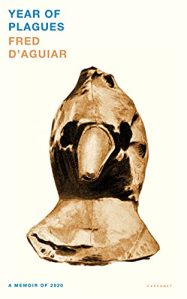 The plague for D’Aguiar was dual: not just Covid, but cancer. Specifically, stage 4 prostate cancer. A hospital was the last place he wanted to spend time during a pandemic, yet his treatment required frequent visits. Current events, including a curfew in his adopted home of Los Angeles and the protests following George Floyd’s murder, form a distant background to an allegorized medical struggle. D’Aguiar personifies his illness as a force intent on harming him; his hope is that he can be like Anansi and outwit the Brer Rabbit of cancer. He imagines dialogues between himself and his illness as they spar through a turbulent year.
Cancer needs a song: tambourine and cymbals and a choir, not to raise it from the dead but [to] lay it to rest finally.
Tracing the effects of his cancer on his wife and children as well as on his own body, he wonders if the treatment will disrupt his sense of his own masculinity. I thought the narrative would hit home given that I have a family member going through the same thing, but it struck me as a jumble, full of repetition and TMI moments. Expecting concision from a poet, I wanted the highlights reel instead of 323 rambling pages. 
(Carcanet Press, August 26.) With thanks to the publisher for the free copy for review.
100 Days by Gabriel Josipovici
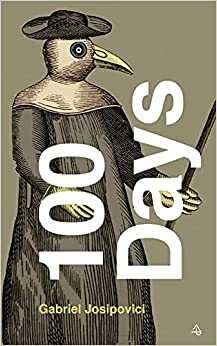 Beginning in March 2020, Josipovici challenged himself to write a diary entry and mini-essay each day for 100 days – which happened to correspond almost exactly to the length of the UK’s first lockdown. Approaching age 80, he felt the virus had offered “the unexpected gift of a bracket round life” that he “mustn’t fritter away.” He chose an alphabetical framework, stretching from Aachen to Zoos and covering everything from his upbringing in Egypt to his love of walking in the Sussex Downs. I had the feeling that I should have read some of his fiction first so that I could spot how his ideas and experiences had infiltrated it; I’m now rectifying this by reading his novella The Cemetery in Barnes, in which I recognize a late-life remarriage and London versus countryside settings.
Still, I appreciated Josipovici’s thoughts on literature and his own aims for his work (more so than the rehashing of Covid statistics and official briefings from Boris Johnson et al., almost unbearable to encounter again):
In my writing I have always eschewed visual descriptions, perhaps because I don’t have a strong visual memory myself, but actually it is because reading such descriptions in other people’s novels I am instantly bored and feel it is so much dead wood.
nearly all my books and stories try to force the reader (and, I suppose, as I wrote, to force me) to face the strange phenomenon that everything does indeed pass, and that one day, perhaps sooner than most people think, humanity will pass and, eventually, the universe, but that most of the time we live as though all was permanent, including ourselves. What rich soil for the artist!
Why have I always had such an aversion to first person narratives? I think precisely because of their dishonesty – they start from a falsehood and can never recover. The falsehood that ‘I’ can talk in such detail and so smoothly about what has ‘happened’ to ‘me’, or even, sometimes, what is actually happening as ‘I’ write.
You never know till you’ve plunged in just what it is you really want to write. When I started writing The Inventory I had no idea repetition would play such an important role in it. And so it has been all through, right up to The Cemetery in Barnes. If I was a poet I would no doubt use refrains – I love the way the same thing becomes different the second time round
To write a novel in which nothing happens and yet everything happens: a secret dream of mine ever since I began to write
I did sense some misogyny, though, as it’s generally female writers he singles out for criticism: Iris Murdoch is his prime example of the overuse of adjectives and adverbs, he mentions a “dreadful novel” he’s reading by Elizabeth Bowen, and he describes Jean Rhys and Dorothy Whipple as women “who, raised on a diet of the classic English novel, howled with anguish when life did not, for them, turn out as they felt it should.”
While this was enjoyable to flip through, it’s probably more for existing fans than for readers new to the author’s work, and the Covid connection isn’t integral to the writing experiment.
(Carcanet Press, October 28.) With thanks to the publisher for the free copy for review.
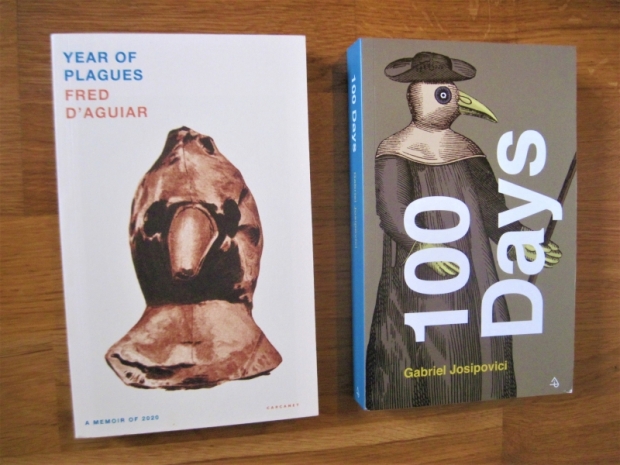
A stanza from the below collection to link the first two books to this next one:
Have they found him yet, I wonder,
whoever it is strolling
about as a plague doctor, outlandish
beak and all?
The Crash Wake and Other Poems by Owen Lowery
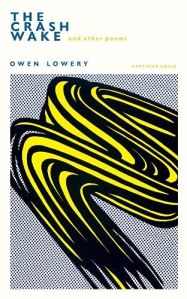 Lowery was a tetraplegic poet – wheelchair-bound and on a ventilator – who also survived a serious car crash in February 2020 before his death in May 2021. It’s astonishing how much his body withstood, leaving his mind not just intact but capable of generating dozens of seemingly effortless poems. Most of the first half of this posthumous collection, his third overall, is taken up by a long, multipart poem entitled “The Crash Wake” (it’s composed of 104 12-line poems, to be precise), in which his complicated recovery gets bound up with wider anxiety about the pandemic: “It will take time and / more to find our way / back to who we were before the shimmer / and promise of our snapped day.”
As the seventh anniversary of his wedding to Jayne nears, Lowery reflects on how love has kept him going despite flashbacks to the accident and feeling written off by his doctors. In the second section of the book, the subjects vary from the arts (Paula Rego’s photographs, Stanley Spencer’s paintings, R.S. Thomas’s theology) to sport. There is also a lovely “Remembrance Day Sequence” imagining what various soldiers, including Edward Thomas and his own grandfather, lived through. The final piece is a prose horror story about a magpie. Like a magpie, I found many sparkly gems in this wide-ranging collection.
(Carcanet Press, October 28.) With thanks to the publisher for the free e-copy for review.
Behind the Mask: Living Alone in the Epicenter by Kate Walter
[135 pages, so I’m counting this one towards #NovNov, too]
For Walter, a freelance journalist and longtime Manhattan resident, coronavirus turned life upside down. Retired from college teaching and living in Westbeth Artists Housing, she’d relied on activities outside the home for socializing. To a single extrovert, lockdown offered no benefits; she spent holidays alone instead of with her large Irish Catholic family. Even one of the world’s great cities could be a site of boredom and isolation. Still, she gamely moved her hobbies onto Zoom as much as possible, and welcomed an escape to Jersey Shore.
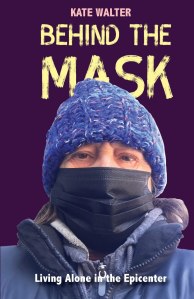 In short essays, she proceeds month by month through the pandemic: what changed, what kept her sane, and what she was missing. Walter considers herself a “gay elder” and was particularly sad the Pride March didn’t go ahead in 2020. She also found herself ‘coming out again’, at age 71, when she was asked by her alma mater to encapsulate the 50 years since graduation in 100 words.
There’s a lot here to relate to – being glued to the news, anxiety over Trump’s possible re-election, looking forward to vaccination appointments – and the book is also revealing on the special challenges for older people and those who don’t live with family. However, I found the whole fairly repetitive (perhaps as a result of some pieces originally appearing in The Village Sun and then being tweaked and inserted here).
Before an appendix of four short pre-Covid essays, there’s a section of pandemic writing prompts: 12 sets of questions to use to think through the last year and a half and what it’s meant. E.g. “Did living through this extraordinary experience change your outlook on life?” If you’ve been meaning to leave a written record of this time for posterity, this list would be a great place to start.
(Heliotrope Books, November 16.) With thanks to the publicist for the free e-copy for review.
Other Covid-themed nonfiction I have read:
Medical accounts
 Breathtaking by Rachel Clarke
 - Intensive Care by Gavin Francis
- Every Minute Is a Day by Robert Meyer and Dan Koeppel (reviewed for Shelf Awareness)
- Duty of Care by Dominic Pimenta
- Many Different Kinds of Love by Michael Rosen
+ I have a proof copy of Everything Is True: A Junior Doctor’s Story of Life, Death and Grief in a Time of Pandemic by Roopa Farooki, coming out in January.
Nature writing
 Goshawk Summer by James Aldred
 - The Heeding by Rob Cowen (in poetry form)
- Birdsong in a Time of Silence by Steven Lovatt
- The Consolation of Nature by Michael McCarthy, Jeremy Mynott and Peter Marren
- Skylarks with Rosie by Stephen Moss
General responses
 Hold Still (a National Portrait Gallery commission of 100 photographs taken in the UK in 2020)
 - The Rome Plague Diaries by Matthew Kneale
- Quarantine Comix by Rachael Smith (in graphic novel form; reviewed for Foreword Reviews)
- UnPresidented by Jon Sopel
+ on my Kindle: Alone Together, an anthology of personal essays
+ on my TBR: What Just Happened: Notes on a Long Year by Charles Finch
If you read just one… Make it Intensive Care by Gavin Francis. (And, if you love nature books, follow that up with The Consolation of Nature.)
Can you see yourself reading any of these?
Nonfiction Week of #NovNov: Short Memoirs by Lucille Clifton, Alice Thomas Ellis and Deborah Levy
It’s nonfiction week of Novellas in November, which for me usually means short memoirs (today) and nature books (coming up on Wednesday). However, as my list of 10 nonfiction favorites from last year indicates, there’s no shortage of subjects covered in nonfiction works of under 200 pages; whether you’re interested in bereavement, food, hospitality, illness, mountaineering, nature, politics, poverty or social justice, you’ll find something that suits. This week is a great excuse to combine challenges with Nonfiction November, too.

We hope some of you will join in with our buddy read for the week, The Story of My Life by Helen Keller (free to download here from Project Gutenberg if you don’t already have access). At a mere 85 pages, it’s a quick read. I’ve been enjoying learning about her family history and how meeting her teacher was the solution to her desperate need to communicate.
My first three short nonfiction reads of the month are all in my wheelhouse of women’s life writing, with each one taking on a slightly different fragmentary form.
Generations: A Memoir by Lucille Clifton (1976)
[87 pages]
 After her father’s death, Clifton, an award-winning poet, felt compelled to delve into her African American family’s history. Echoing biblical genealogies, she recites her lineage in a rhythmic way and delivers family anecdotes that had passed into legend. First came Caroline, “Mammy Ca’line”: born in Africa in 1822 and brought to America as a child slave, she walked north from New Orleans to Virginia at age eight, became a midwife, and died free. Mammy Ca’line’s sayings lived on through Clifton’s father, her grandson: she “would tell us that we was Sayle people and we didn’t have to obey nobody. You a Sayle, she would say. You from Dahomey women.” Then came Caroline’s daughter, Lucy Sale, famously the first Black woman hanged in Virginia – for shooting her white lover. And so on until we get to Clifton herself, who grew up near Buffalo, New York and attended Howard University.
The chapter epigraphs from Walt Whitman’s “Song of Myself” call into question how much of an individual’s identity is determined by their family circumstances. While I enjoyed the sideways look at slavery and appreciated the poetic take on oral history, I thought more detail and less repetition would have produced greater intimacy.
Reissued by NYRB Classics tomorrow, November 9th, with a new introduction by Tracy K. Smith. My thanks to the publisher for the proof copy for review.
Home Life, Book Four by Alice Thomas Ellis (1989)
[169 pages]
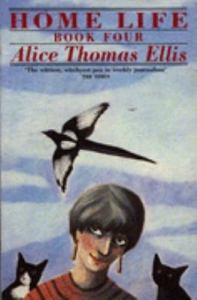 For four years, Ellis wrote a weekly “Home Life” column for the Spectator. Her informal pieces remind me of Caitlin Moran’s 2000s writing for the Times – what today might form the kernel of a mums’ blog. In short, we have a harried mother of five trying to get writing done while maintaining a household – but given she has homes in London and Wales AND a housekeeper, and that her biggest problems include buying new carpet and being stuck in traffic, it’s hard to work up much sympathy. These days we’d say, Check your privilege.
The sardonic complaining rubbed me the wrong way, especially when the subject was not finding anything she wanted to read even though she’d just shipped four boxes of extraneous books off to her country house, or using noxious sprays to get rid of one harmless fly, or a buildup of rubbish bags because they’d been “tidying.” These essays feel of their time for the glib attitude and complacent consumerism. It’s rather a shame they served as my introduction to Ellis, but I think I’d still give her fiction a try. (Secondhand purchase, Barter Books)
The Cost of Living by Deborah Levy (2018)
[187 pages]
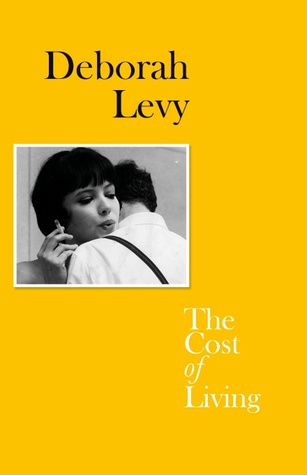 In the space of a year, Levy separated from her husband and her mother fell ill with the cancer that would kill her. Living with her daughters in a less-than-desirable London flat, she longed for a room of her own. Her octogenarian neighbor, Celia, proffered her garden shed as a writing studio, and that plus an electric bike conferred the intellectual and physical freedom she needed to reinvent her life. That is the bare bones of this sparse volume, the middle one in an autobiographical trilogy, onto which Levy grafts the tissue of experience: conversations and memories; travels and quotations that have stuck with her.
It’s hard to convey just what makes this brilliant. The scenes are everyday – set at her apartment complex, during her teaching work or on a train; the dialogue might be overheard. Yet each moment feels perfectly chosen to reveal her self, or the emotional truth of a situation, or the latent sexism of modern life. “All writing is about looking and listening and paying attention to the world,” she writes, and it’s that quality of attention that sets this apart. I’ve had mixed success with Levy’s fiction (though I loved Hot Milk), but this was flawless from first line to last. I can only hope the rest of the memoir lives up to it. (New purchase)
Keep in touch via Twitter (@bookishbeck / @cathy746books) and Instagram (@bookishbeck / @cathy_746books). We’ll add any of your review links in to our master posts. Feel free to use the terrific feature image Cathy made and don’t forget the hashtag #NovNov.
Any short nonfiction on your reading pile?
Local Resistance: On Gallows Down by Nicola Chester
It’s mostly by accident that we came to live in Newbury: five years ago, when a previous landlord served us notice, we viewed a couple of rental houses in the area to compare with what was available in Reading and discovered that our money got us more that little bit further out from London. We’ve come to love this part of West Berkshire and the community we’ve found. It may not be flashy or particularly famous, but it has natural wonders worth celebrating and a rich history of rebellion that Nicola Chester plumbs in On Gallows Down. A hymn-like memoir of place as much as of one person’s life, her book posits that the quiet moments of connection with nature and the rights of ordinary people are worth fighting for.
So many layers of history mingle here: from the English Civil War onward, Newbury has been a locus of resistance for centuries. Nicola* has personal memories of the long-running women’s peace camps at Greenham Common, once a U.S. military base and cruise missile storage site – to go with the Atomic Weapons Establishment down the road at Aldermaston. As a teenager and young woman, she took part in symbolic protests against the Twyford Down and Newbury Bypass road-building projects, which went ahead and destroyed much sensitive habitat and many thousands of trees. Today, through local and national newspaper and magazine columns on wildlife, and through her winsome nagging of the managers of the Estate she lives on, she bears witness to damaging countryside management and points to a better way.

While there is a loose chronological through line, the book is principally arranged by theme, with experiences linked back to historical or literary precedents. An account of John Clare and the history of enclosure undergirds her feeling of the precarity of rural working-class life: as an Estate tenant, she knows she doesn’t own anything, has no real say in how things are done, and couldn’t afford to move elsewhere. Nicola is a school librarian and has always turned to books and writing to understand the world. I particularly loved Chapter 6, about how she grounds herself via the literature of this area: Kenneth Grahame’s The Wind in the Willows, Adam Thorpe’s Ulverton, and especially Richard Adams’s Watership Down.
Whatever life throws at her – her husband being called up to fight in Iraq, struggling to make ends meet with small children, a miscarriage, her father’s unexpected death – nature is her solace. She describes places and creatures with a rare intimacy borne out of deep knowledge. To research a book on otters for the RSPB, she seeks out every bridge over every stream. She goes out “lamping” with the local gamekeeper after dark and garners priceless nighttime sightings. Passing on her passion to her children, she gets them excited about badger watching, fossil collecting, and curating shelves of natural history treasures like skulls and feathers. She also serves as a voluntary wildlife advocate on her Estate. For every victory, like the re-establishment of the red kite population in Berkshire and regained public access to Greenham Common, there are multiple setbacks, but she continues to be a hopeful activist, her lyrical writing a means of defiance.
We are writing for our very lives and for those wild lives we share this one, lonely planet with. Writing was also a way to channel the wildness; to investigate and interpret it, to give it a voice and defend it. But it was also a connection between home and action; a plank bridge between a domestic and wild sense. A way both to home and resist.
You know that moment when you’re reading a book and spot a place you’ve been or a landmark you know well, and give a little cheer? Well, every site in this book was familiar to me from our daily lives and countryside wanderings – what a treat! As I was reading, I kept thinking how lucky we are to have such an accomplished nature writer to commemorate the uniqueness of this area. Even though I was born thousands of miles away and have moved more than a dozen times since I settled in England in 2007, I feel the same sense of belonging that Nicola attests to. She explicitly addresses this question of where we ‘come from’ versus where we fit in, and concludes that nature is always the key. There is no exclusion here. “Anyone could make a place their home by engaging with its nature.”
*I normally refer to the author by surname in a book review, but I’m friendly with Nicola from Twitter and have met her several times (and she’s one of the loveliest people you’ll ever meet), so somehow can’t bring myself to be that detached!
On Gallows Down was released by Chelsea Green Publishing on October 7th. My thanks to the author and publisher for arranging a proof copy for review.
My husband and I attended the book launch event for On Gallows Down in Hungerford on Saturday evening. Nicola was introduced by Hungerford Bookshop owner Emma Milne-White and interviewed by Claire Fuller, whose Women’s Prize-shortlisted novel Unsettled Ground is set in a fictional version of the village where Nicola lives.
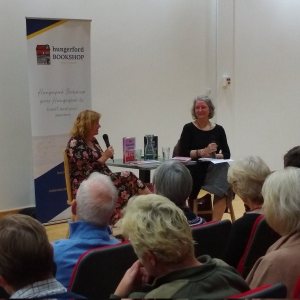
Nicola Chester and Claire Fuller. Photo by Chris Foster.
Nicola dated the book’s genesis to the moment when, 25 years ago, she queued up to talk to a TV news reporter about Newbury Bypass and froze. She went home and cried, and realized she’d have to write her feelings down instead. Words generally come to her at the time of a sighting, as she thinks about how she would tell someone how amazing it was.
Her memories are tied up with seasons and language, especially poetry, she said, and she has recently tried her hand at poetry herself. Asked about her favourite season, she chose two, the in-between seasons – spring for its abundance and autumn for its nostalgia and distinctive smells like tar spot fungus on sycamore leaves and ivy flowers.


A bonus related read:
Anarchipelago by Jay Griffiths (2007)
This limited edition 57-page pamphlet from Glastonbury-based Wooden Books caught my eye from the library’s backroom rolling stacks. Griffiths wrote her impish story of Newbury Bypass resistance in response to her time among the protesters’ encampments and treehouses. Young Roddy finds a purpose for his rebellious attitude wider than his “McTypical McSuburb” by joining other oddballs in solidarity against aggressive policemen and detectives.
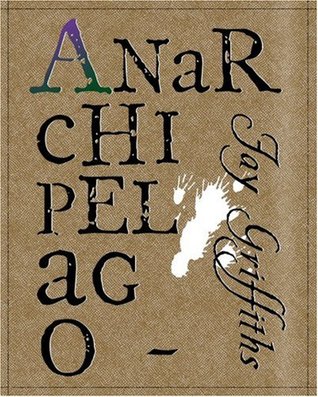
There are echoes of Ali Smith in the wordplay and rendering of accents.
“When I think of the road, I think of more and more monoculture of more and more suburbia. What I do, I do in defiance of the Louis Queasy Chintzy, the sickly stale air of suburban car culture. I want the fresh air of nature, the lifefull wind of the French revolution.”
In a nice spot of Book Serendipity, both this and On Gallows Down recount the moment when nature ‘fought back’ as a tree fell on a police cherry-picker. Plus Roddy is kin to the tree-sitting protesters in The Overstory by Richard Powers as well as another big novel I’m reading now, Damnation Spring by Ash Davidson.
20 Books of Summer, #12–13, BLUE: Johnson & MacMahon
Blue has been the most common colour in my themed summer reading, showing up in six out of the 20 titles. In the two books I’m reviewing today, it’s used somewhat ironically, with a YA memoir subverting its association with conventional masculinity and a Women’s Prize-longlisted novel contrasting idyllic holiday weather with the persistence of grief.
All Boys Aren’t Blue: A Memoir-Manifesto by George M. Johnson (2020)
“you sometimes can’t see yourself if you can’t see other people like you existing, thriving”
Growing up in New Jersey in the late 1980s and early 1990s, Johnson knew he was different. He preferred Double-Dutch to football, called his classmates “Honeychild,” and begged for a pair of cowboy boots instead of the sneakers everyone else coveted. His effeminate ways earned the expected epithets. Even though he had plenty of LGBT precedents in his own family – a gay older half-brother, a lesbian aunt, a trans cousin – and his beloved Nanny assured him he was loved for who he was, he didn’t publicly confess his identity until he got to college and felt accepted as part of a fraternity. In fact, there are three instances in the book when, as a teenager, he’s asked directly if he’s gay and he denies it. (Do you hear a rooster?)
 Johnson is a warm, earnest storyteller and deftly chooses moments when he became aware of the social disadvantages inherent to his race and sexuality. His memoir is marketed to teens, who should find a lot to relate to here, such as dealing with bullies and realizing that what you’ve been taught is comforting myth. In the “‘Honest Abe’ Lied to Me” chapter, he discovers in middle school that Lincoln didn’t actually support racial equality and questions whether landmark achievements by Black people are just conciliatory tokens – “symbolism is a threat to actual change—it’s a chance for those in power to say, ‘Look how far you have come’ rather than admitting, ‘Look how long we’ve stopped you from getting here.’”
The manifesto element of the book lies in its investigation of the intersection of Blackness and queerness. Johnson is an activist and wants queer Black kids to have positive role models. He knows he was lucky to have family support and middle-class status; many have it harder, getting thrown out and ending up homeless. Multiple chapters are devoted to his family members, some in the form of letters. The structure didn’t always feel intuitive to me, with direct address to his cousin or grandmother coming seemingly out of nowhere. The language is informal, but that doesn’t excuse “me and so-and-so” constructions or referring to “people that” instead of “who”; young adult readers need to have good grammar reinforced.
I also questioned whether the author needed to be so sexually explicit in describing his molestation at the hands of an older male cousin (he has about a zillion cousins) and losing his virginity at age 20. Then again, today’s teens are probably a lot more sexually knowledgeable than I was 20+ years ago. All in all, I wondered if Johnson is more successful as a motivational speaker than a writer. I think his occasional bravado (he closes his introduction with “This is the story of George Matthew Johnson. This is a story for us all.”) would come across better in person than in print. Still, considering I couldn’t be much further from the target audience, I found this a sweet and engaging read. (Public library)
Nothing but Blue Sky by Kathleen MacMahon (2020)
“Incongruous, the situations we found ourselves in. To be talking about such sorrow against the backdrop of a Mediterranean summer.”
SPOILERS in the following; otherwise it would be difficult to say anything other than that this novel is a deeply touching look at loss and what comes next. When I read a synopsis, I thought it would be Sue Miller’s Monogamy with the roles reversed, but that’s because the blurb makes it sound like there were secrets in David and Mary Rose’s marriage that only emerge after her death in a plane crash. I was on the alert for something sordid and earth-shattering, but in fact this is a quiet novel about what goes unsaid in any marriage.
 David, a foreign correspondent on Dublin’s television news, always put his career first, his sophistication and wicked humour masking the wounds of an emotionally chilly upbringing. Mary Rose, a hospital midwife, was the perfect foil, deflating his pomposity and calling him out on any unfeeling quips. Her loving nature was the soul of their relationship. Now that’s she gone, David regrets that he didn’t take more seriously her desperation to have children, a desire he didn’t share. His voice, even flattened and numbed by grief, is a delight. For instance, here’s how he describes Irish seaside holidays: “Summer to us was freezing your arse off on a windswept beach, with a trip to the ice-cream shop if you were lucky. Of course, they never had the ice-cream you wanted.”
The novel is set in Aiguaclara, a hidden gem on Spain’s Costa Brava where David and Mary Rose holidayed every summer for 20 years. Against his friends’ advice, he’s decided to come back alone this year. Although most of the book remembers their life together and their previous vacations here, there is also a present storyline running underneath. Initially subtle, it offers big surprises later on. These I won’t spoil; I’ll only say that David’s cynical belief that he’ll never experience happiness again is proven wrong. Grief, memory, fate: some of my favourite themes, elegantly treated. This reminded me of Three Junes and also, to a lesser extent, The Heart’s Invisible Furies. (Public library) 
Coming up next: Pairs of green and red titles.
Would you be interested in reading one of these?
Reading from the Wainwright Prize Longlists
The Wainwright Prize is one that I’ve ended up following closely almost by accident, simply because I tend to read most of the nature books released in the UK in any given year. A few months back I cheekily wrote to the prize director, proffering myself as a judge and appending a list of eligible titles I hoped were in consideration. Although they already had a full judging roster for 2021, I got a very kind reply thanking me for my recommendations and promising to bear me in mind for the future. Fifteen of my 25 suggestions made it onto the lists below.
This is the second year that there have been two awards, one for writing on UK nature and the other on global conservation themes. Tomorrow (August 4th) at 4 p.m., the longlists will be narrowed down to shortlists. I happened to have read and reviewed 12 of the nominees already, and I have a few others in progress.
UK nature writing longlist:

 The Circling Sky by Neil Ansell: Hoping to reclaim an ancestral connection, Ansell visited the New Forest some 30 times between January 2019 and January 2020, observing the unfolding seasons and the many uncommon and endemic species its miles house. He weaves together his personal story, the shocking history of forced Gypsy relocation into forest compounds starting in the 1920s, and the unfairness of land ownership in Britain. The New Forest is a model of both wildlife-friendly land management and freedom of human access. (On my Best of 2021 so far list.)
T he Screaming Sky by Charles Foster: A Renaissance man as well versed in law and theology as he is in natural history, Foster is obsessed with swifts and ashamed of his own species: for looking down at their feet when they could be watching the skies; for the “pathological tidiness” that leaves birds and other creatures no place to live. He delivers heaps of information on the birds but refuses to stick to a just-the-facts approach. The book quotes frequently from poetry and the prose is full of sharp turns of phrase and whimsy. (Also on my Best of 2021 so far list.)
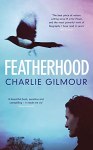 Featherhood by Charlie Gilmour: As an aimless twentysomething, Gilmour tried to rekindle a relationship with his unreliable poet father at the same time that he and his wife were pondering starting a family of their own. Meanwhile, he was raising Benzene, a magpie that fell out of the nest and ended up in his care. The experience taught him responsibility and compassionate care for another creature. Gilmour makes elegant use of connections and metaphors. He’s so good at scenes, dialogue and emotion – a natural writer.
 Seed to Dust by Marc Hamer: Hamer paints a loving picture of his final year at the 12-acre British garden he tended for decades. In few-page essays, the book journeys through a gardener’s year. This is creative nonfiction rather than straightforward memoir. The prose is adorned with lovely metaphors. In places, the language edges towards purple and the content becomes repetitive – a danger of the diary format. However, the focus on emotions and self-perception – rare for a male nature writer – is refreshing. (Reviewed for Foreword.)
 The Stubborn Light of Things by Melissa Harrison: A collection of five and a half years’ worth of Harrison’s monthly Nature Notebook columns for The Times. Initially based in South London, Harrison moved to the Suffolk countryside in late 2017. In the grand tradition of Gilbert White, she records when she sees her firsts of a year. I appreciate how hands-on and practical Harrison is. She never misses an opportunity to tell readers about ways they can create habitat for wildlife and get involved in citizen science projects. (Reviewed for Shiny New Books.)
 Birdsong in a Time of Silence by Steven Lovatt: During the UK’s first lockdown, with planes grounded and cars stationary, many remarked on the quiet. All the better to hear birds going about their usual spring activities. For Lovatt, it was the excuse he needed to return to his childhood birdwatching hobby. In between accounts of his spring walks, he tells lively stories of common birds’ anatomy, diet, lifecycle, migration routes, and vocalizations. Lovatt’s writing is introspective and poetic, delighting in metaphors for sounds.
 Vesper Flights by Helen Macdonald: Though written for various periodicals and ranging in topic from mushroom-hunting to deer–vehicle collisions and in scope from deeply researched travel pieces to one-page reminiscences, these essays form a coherent whole. Equally reliant on argument and epiphany, the book has more to say about human–animal interactions in one of its essays than some whole volumes manage. Her final lines are always breath-taking. I’d rather read her writing on any subject than almost any other author’s. (My top nonfiction release of 2020.)
 Skylarks with Rosie by Stephen Moss: Devoting a chapter each to the first 13 weeks of the initial UK lockdown, Moss traces the season’s development in Somerset alongside his family’s experiences and what was emerging on the national news. He welcomed migrating birds and marked his first sightings of butterflies and other insects. Nature came to him, too. For once, he felt that he had truly appreciated the spring, noting its every milestone and “rediscovering the joys of wildlife-watching close to home.”
 Thin Places by Kerri ní Dochartaigh: I received a proof copy from Canongate and twice tried the first few pages, but couldn’t wade through the excessive lyricism (and downright incorrect information – weaving a mystical description of a Winter Moth’s flight, she keeps referring to the creature as “she,” whereas when I showed the passage to my entomologist husband he told me that the females of that species are flightless). I’m told it develops into an eloquent memoir of growing up during the Troubles. Perhaps reminiscent of The Outrun?
 Into the Tangled Bank by Lev Parikian: A delightfully Bryson-esque tour that moves ever outwards, starting with the author’s own home and garden and proceeding to take in his South London patch and his journeys around the British Isles before closing with the wonders of the night sky. By slowing down to appreciate what is all around us, he proposes, we might enthuse others to engage with nature. With the zeal of a recent convert, he guides readers through momentous sightings and everyday moments of connection. (When I reviewed this in July 2020, I correctly predicted it would make the longlist!)
 English Pastoral by James Rebanks: This struck me for its bravery, good sense and humility. The topics of the degradation of land and the dangers of intensive farming are of the utmost importance. Daring to undermine his earlier work and his online persona, the author questions the mythos of modern farming, contrasting its practices with the more sustainable and wildlife-friendly ones his grandfather espoused. Old-fashioned can still be best if it means preserving soil health, river quality and the curlew population.
 I Belong Here by Anita Sethi: I recently skimmed this from the library. Two things are certain: 1) BIPOC writers should appear more frequently on prize lists, so it’s wonderful that Sethi is here; 2) this book was poorly put together. It’s part memoir of an incident of racial abuse, part political manifesto, and part quite nice travelogue. The parts don’t make a whole. The contents are repetitive and generic (definitions, overstretched metaphors). Sethi had a couple of strong articles here, not a whole book. I blame her editors for not eliciting better.
 The Wild Silence by Raynor Winn: I only skimmed this, too. I got the feeling her publisher was desperate to capitalize on the popularity of her first book and said “give us whatever you have,” cramming drafts of several different projects (a memoir that went deeper into the past, a ‘what happened next’ sequel to The Salt Path, and an Iceland travelogue) into one book and rushing it through to publication. Winn’s writing is still strong, though; she captures dialogue and scenes naturally, and you believe in how much the connection to the land matters to her.
Global conservation longlist:

Like last year, I’ve read much less from this longlist since I gravitate more towards nature writing and memoirs than to hard or popular science. So I have read, am reading or plan to read about half of this list, as opposed to pretty much all of the other one.
 Islands of Abandonment by Cal Flyn: This was on my Most Anticipated list for 2021 and I treated myself to a copy while we were up in Northumberland. I’m nearly a third of the way through this fascinating, well-written tour of places where nature has spontaneously regenerated due to human neglect: depleted mining areas in Scotland, former conflict zones, Soviet collective farms turned feral, sites of nuclear disaster, and so on. I’m about to start the chapter on Chernobyl, which I expect to echo Mark O’Connell’s Notes from an Apocalypse.
 What If We Stopped Pretending? by Jonathan Franzen: The message of this controversial 2019 New Yorker essay is simple: climate breakdown is here, so stop denying it and talking of “saving the planet”; it’s too late. Global warming is locked in; the will is not there to curb growth, overhaul economies, and ask people to relinquish developed world lifestyles. Instead, start preparing for the fallout (refugees) and saving what can be saved (particular habitats and species). Franzen is realistic about human nature and practical about what to do next.
 Entangled Life by Merlin Sheldrake: Sheldrake’s enthusiasm is infectious as he researches fungal life in the tropical forests of Panama, accompanies truffle hunters in Italy, and takes part in a clinical study on the effects of LSD (derived from a fungus). More than a travel memoir, though, this is a work of proper science – over 100 pages are taken up by notes, bibliography and index. This is a perspective-altering text that reveals our unconscious species bias. I’ve recommended it widely, even to those who tend not to read nonfiction.
 Ice Rivers by Jemma Wadham: I have this out from the library and am two-thirds through. Wadham, a leading glaciologist, introduces readers to the science of glaciers: where they are, what lives on and under them, how they move and change, and the grave threats they face (and, therefore, so do we). The science, even dumbed down, is a little hard to follow, but I love experiencing extreme landscapes like Greenland and Antarctica with her. She neatly inserts tiny mentions of her personal life, such as her mother’s death, a miscarriage and a benign brain cyst.
The rest of the longlist is:
- A Life on Our Planet by David Attenborough – I’ve never read a book by Attenborough (and tend to worry this sort of book would be ghostwritten), but wouldn’t be averse to doing so.
 Fathoms by Rebecca Giggs – All about whales. Kate raved about it. I have this on hold at the library.
- Net Zero: How We Stop Causing Climate Change by Dieter Helm
- Under a White Sky by Elizabeth Kolbert – I have read her before and would again.
- Riders on the Storm by Alistair McIntosh – My husband has read several of his books and rates them highly.
- The New Climate War by Michael E. Mann
- The Reindeer Chronicles by Judith D. Schwartz – I’ve been keen to read this one.
- A World on the Wing by Scott Weidensaul – My husband is reading this from the library.
My predictions/wishes for the shortlists:
It’s high time that a woman won again. And why not for both, eh? (Amy Liptrot is still the only female winner in the Prize’s seven-year history, for The Outrun in 2016.)
UK nature writing:
- The Circling Sky by Neil Ansell
- The Screaming Sky by Charles Foster
- Featherhood by Charlie Gilmour
- Vesper Flights by Helen Macdonald*
- English Pastoral by James Rebanks
- I Belong Here by Anita Sethi
- The Wild Silence by Raynor Winn
Writing on global conservation:
- Islands of Abandonment by Cal Flyn*
- Fathoms by Rebecca Giggs
- Under a White Sky by Elizabeth Kolbert
- Entangled Life by Merlin Sheldrake
- Ice Rivers by Jemma Wadham
- A World on the Wing by Scott Weidensaul
*Overall winners, if I had my way.


Have you read anything from the Wainwright Prize longlists?
Do any of these books interest you?
The Best Books from the First Half of 2021
Hard to believe we’ve already crossed the midpoint of the year. My top 20 releases of 2021 thus far, in alphabetical order within genre (fiction is dominating this year!), are below. I link to those I’ve already reviewed in full here or on Goodreads:
Fiction
 Under the Blue by Oana Aristide: Fans of Station Eleven, this one’s for you: the best dystopian novel I’ve read since Mandel’s. Aristide started writing in 2017, and unknowingly predicted a much worse pandemic than Covid-19. In July 2020, Harry and sisters Ash and Jessie are among mere thousands of survivors worldwide. Their plan is to flee England for Uganda, out of range of Europe’s at-risk nuclear reactors. An epic road trip ensues. A propulsive cautionary tale that also reminded me of work by Louisa Hall and Maja Lunde.
 The Push by Ashley Audrain: Blythe Connor, living alone with her memories, ponders what went wrong with her seemingly perfect family: a handsome architect husband, Fox, and their daughter Violet and baby son Sam. How much of what happened was because of Violet’s nature, and how much was Blythe’s fault for failing to be the mother the girl needed? The fact that her experience with Sam was completely different makes her feel ambivalent about motherhood. A cracking psychological thriller with an unreliable narrator.
 A Lie Someone Told You About Yourself by Peter Ho Davies: Davies’ minimalist approach – short sections skating over the months and years, wryly pulling out representative moment – crystallizes fatherhood, illuminating its daily heartaches and joys. The tone is just right in this novella, showing both sides of parenthood and voicing things you aren’t allowed to think, or at least not to admit to, starting with abortion, which would-be fathers aren’t expected to have strong feelings about. I loved the rumination on the role that chance plays in a life.
 The Living Sea of Waking Dreams by Richard Flanagan: Extinction, personal and global, is at the heart of this timely and enchanting story. It starts off as a family drama. Francie, the 86-year-old matriarch, is in a Tasmanian hospital after a brain bleed. Her three middle-aged children can’t bear to let her go. In an Australia blighted by bushfires, species loss mirrors Francie’s physical and mental crumbling. Smartphone addiction threatens meaningful connection. And then characters start to literally disappear, part by part…
 Mrs Death Misses Death by Salena Godden: Grief Is the Thing with Feathers meets Girl, Woman, Other would be my marketing shorthand for this one. Poet Salena Godden’s debut novel is a fresh and fizzing work, passionate about exposing injustice but also about celebrating simple joys, and in the end it’s wholly life-affirming despite a narrative stuffed full of deaths real and imagined. The novel balances the cosmic and the personal through Wolf’s family story. Unusual, musical, and a real pleasure to read.
 Early Morning Riser by Katherine Heiny: This tickled my funny bone. A cross between Kitchens of the Great Midwest and Olive Kitteridge, it’s built of five extended episodes, crossing nearly two decades in the lives of Jane and Duncan and lovingly portraying the hangers-on who compose their unusual family constellation in Boyne City, Michigan. All the characters are incorrigible but wonderful. Bad things happen, but there’s a core of love as Heiny explores marriage and parenting. A good-natured book that feels wise and bittersweet.
 No One Is Talking About This by Patricia Lockwood: This starts as a flippant skewering of modern life. A woman who became a social media star by tweeting quips like “Can a dog be twins?” reflects on life on “the portal” and under “the dictator.” Midway through the book, she gets a wake-up call when her mother summons her back to the Midwest for a family emergency. It’s the about-face that makes this novel, forcing readers to question the value of a digital existence based on glib pretence. Funny, but with an ache behind it.
 In by Will McPhail: Alternately laugh-out-loud funny and gentle. This debut graphic novel is a spot-on picture of modern life in a generic city. Nick never knows the right thing to say. The bachelor artist’s well-intentioned thoughts remain unvoiced; all he can manage is small talk. That starts to change when he meets Wren, a Black doctor who sees past his pretence. If only he can find the magic words that elicit honesty, he might make real connections with other human beings. A good old-fashioned story, with a wide emotional range.
 Detransition, Baby by Torrey Peters: A sparkling, sexy comedy with a tender heart beneath the zingers. Peters has set herself up as the Jane Austen of the trans community, tracing the ins and outs of relationships with verve and nuance. For me this was a valuable book simply for normalizing trans sexuality. The themes are universal, after all: figuring out who you are and what the shape of your life will be. I admire when authors don’t pander to readers by making things easy for those who are unfamiliar with a culture. Great lines abound.
 Brood by Jackie Polzin: Polzin’s debut is a quietly touching story of a woman in the Midwest raising chickens and coming to terms with the shape of her life. The unnamed narrator is Everywoman and no one at the same time. At one point she reveals, with no fanfare, that she miscarried four months into pregnancy in the bathroom of one of the houses she cleans. There is a bittersweet tone to this short work. It’s a low-key, genuine portrait of life in the in-between stages and how it can be affected by fate or by other people’s decisions.
Nonfiction
The Circling Sky by Neil Ansell: Hoping to reclaim an ancestral connection, Ansell visited the New Forest some 30 times between January 2019 and January 2020, observing the unfolding seasons and the many uncommon and endemic species its miles house. He weaves together his personal story, the shocking history of forced Gypsy relocation into forest compounds starting in the 1920s, and the unfairness of land ownership in Britain. The New Forest is a model of both wildlife-friendly land management and freedom of human access.
 The Inevitable by Katie Engelhart: Engelhart spends time with doctors and patients who are caught up in the assisted dying argument, chiefly in Western Europe and the United States. Each case is given its own long chapter, like an extended magazine profile. The stories are wrenching, but compassionately told. The author explores the nuances of each situation, crafting expert portraits of suffering people and the medical professionals who seek to help them, and adding much in the way of valuable context. A voice of reason and empathy.
The Screaming Sky by Charles Foster: A Renaissance man as well versed in law and theology as he is in natural history, Foster is obsessed with swifts and ashamed of his own species: for looking down at their feet when they could be watching the skies; for the “pathological tidiness” that leaves birds and other creatures no place to live. He delivers heaps of information on the birds but refuses to stick to a just-the-facts approach. The book quotes frequently from poetry and the prose is full of sharp turns of phrase and whimsy.
Intensive Care by Gavin Francis: Francis, an Edinburgh physician, reflects on “the most intense months I have known in my twenty-year career.” He journeys back through 2020, from the January day when he received a bulletin about a “novel Wuhan coronavirus” to November, when he learned of promising vaccine trials but also a rumored third wave and winter lockdown. An absorbing first-hand account of a medical crisis, it compassionately bridges the gap between experts and laymen. The best Covid chronicle so far.
 A Still Life by Josie George: Over a year of lockdowns, many of us became accustomed to spending most of the time at home. But for Josie George, social isolation is nothing new. Chronic illness long ago reduced her territory to her home and garden. The magic of A Still Life is in how she finds joy and purpose despite extreme limitations. Opening on New Year’s Day and travelling from one winter to the next, the book is a window onto George’s quiet existence as well as the turning of the seasons. (Reviewed for TLS.)
 Dusk, Night, Dawn by Anne Lamott: Lamott’s best new essays in nearly a decade. The central theme is how to have hope in God and in other people even when the news – Trump, Covid, and climate breakdown – only heralds the worst. One key thing that has changed for her is getting married for the first time, in her mid-sixties, to a Buddhist. In thinking of marriage, she writes about friendship, constancy, and forgiveness, none of which comes easy. Opportunities for maintaining quiet faith in spite of the circumstances arise all the time.
 A Braided Heart by Brenda Miller: Miller, a professor of creative writing, delivers a master class on the composition and appreciation of autobiographical essays. In 18 concise pieces, she tracks her development as a writer and discusses the “lyric essay”—a form as old as Seneca that prioritizes imagery over narrative. These innovative and introspective essays, ideal for fans of Anne Fadiman, showcase the interplay of structure and content. (Coming out on July 13th from the University of Michigan Press. My first review for Shelf Awareness.)
 Sanctuary by Emily Rapp Black: A continuation of The Still Point of the Turning World, about the author’s son Ronan, who died of Tay-Sachs disease at age three. In the months surrounding his death, she split from her husband and raced into another relationship that led to her daughter, Charlie. Rapp Black questions the sorts of words she got branded with: “brave,” “resilient.” Sanctuary is full of allusions and flashbacks, threading life’s disparate parts into a chaotic tapestry. It’s measured and wrought, taming fire into light and warmth.
Poetry
 Pilgrim Bell by Kaveh Akbar: An Iranian American poet imparts the experience of being torn between cultures and languages, as well as between religion and doubt, in this gorgeous collection of confessional verse. Food, plants, animals, and the body supply the book’s imagery. Wordplay and startling juxtapositions lend lightness to a wistful, intimate collection that seeks belonging and belief. (Coming out on August 3rd from Graywolf Press. Reviewed for Shelf Awareness.)
 Eat or We Both Starve by Victoria Kennefick: In this audacious debut collection, the body is presented as a battleground: for the brain cancer that takes the poet’s father; for disordered eating that entwines with mummy issues; for the restructuring of pregnancy. Families break apart and fuse into new formations. Cannibalism and famine metaphors dredge up emotional states and religious doctrines. There’s a pleasingly morbid cast to the book, but it also has its lighter moments. Rich with imagery and alliteration, this is just my kind of poetry.
What are some of the best books you’ve read so far this year?
What 2021 releases do I need to catch up on right away?
Three on a Theme for Father’s Day: Auster, Knausgaard, Lewis
In advance of Father’s Day, I picked out a few short memoirs from my shelves that explore the bonds between fathers and their children.
The Invention of Solitude by Paul Auster (1982)
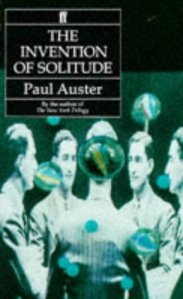 This was the nonfiction work of Auster’s I was most keen to read, and I thoroughly enjoyed its first part, “Portrait of an Invisible Man,” which includes a depiction of his late father, a discussion of his relationship with his son, and a brief investigation into his grandmother’s murder of his grandfather, which I’d first learned about from Winter Journal. Auster finds himself unable to cry and has to deal with all his father’s possessions. “There is nothing more terrible, I learned, than having to face the objects of a dead man … everything from a set of barbels to a broken toaster.” A personalized family photo album he finds is blank inside. That and the cover image, a trick photograph taken of his father at Atlantic City in the 1940s, feel like perfect symbols of an elusive heritage. I didn’t connect with the second, slightly longer half, though: “The Book of Memory” is more like Auster’s novels, describing the exploits of a lightly fictionalized character named “A.” and full of copious allusions to the likes of Flaubert, Freud and Tolstoy.
My rating:
Fatherhood by Karl Ove Knausgaard (2009; 2013)
[Translated from the Norwegian by Don Bartlett]
 I assumed this was a stand-alone from Knausgaard; when it popped up during an author search on Awesomebooks.com and I saw how short it was, I thought why not? As it happens, this Vintage Minis paperback is actually a set of excerpts from A Man in Love, the second volume of his huge autofiction project, My Struggle (I’ve only read the first book, A Death in the Family). Knausgaard takes readers along on a few kiddie-oriented outings: a dinky circus, a children’s party, and baby rhyme time at the public library. His trademark granular detail gives a clear sense of all the characters involved. With him are his wife Linda and the three children they had by then, Vanja, Heidi and John; his friend Geir is his chief confidant.
It’s evident that he loves his children and delights in their individual personalities, but at the same time he feels his intellect assailed by the tedium of the repetitive tasks involved in parenting. He demands an hour to himself each afternoon to read and smoke in a café – even though he knows his wife doesn’t get such an allowance. Specifically, he writes that he feels feminized by carrying a baby or pushing a buggy. Recounting the children’s party, he recalls an earlier party when a heavily pregnant Linda got locked in a bathroom and not even a locksmith could get her out. He felt unmanned when a fellow guest (who happened to be a boxer) had to break down the door to free her. I didn’t know quite what to make of the fragile masculinity on display here, but was grateful to get some highlights from the second book.
My rating:
Home Game: An Accidental Guide to Fatherhood by Michael Lewis (2009)
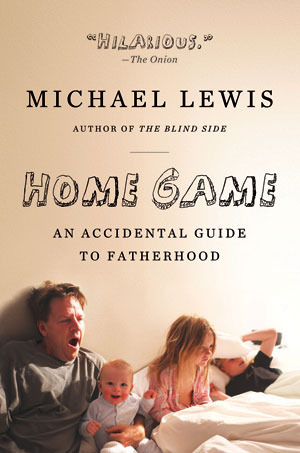 This was expanded from an occasional series of essays Lewis published in Slate in the 2000s, responding to the births of his three children, Quinn, Dixie and Walker, and exploring the modern father’s role, especially “the persistent and disturbing gap between what I was meant to feel and what I actually felt.” It took time for him to feel more than simply mild affection for each child; often the attachment didn’t arrive until after a period of intense care (as when his son Walker was hospitalized with RSV and he stayed with him around the clock). I can’t seem to find the exact line now, but Jennifer Senior (author of All Joy and No Fun) has said something to the effect of: you don’t take care of your children because you love them; you love them because you take care of them. And that indeed seems to encapsulate Lewis’s experience.
The family lived in Paris when Quinn was tiny, and the pieces on adjusting to the French parenting style reminded me of Pamela Druckerman’s French Children Don’t Throw Food / Bringing Up Bébé. His parenting adventures take him everywhere from the delivery room to a New Orleans racetrack at Mardi Gras to a Disneyland campground. He also, intriguingly, writes about a visit paid to Roald Dahl in the writer’s later years. Even when he’s exasperated, his writing is warm and funny. I especially laughed at the account of his post-Walker vasectomy. This maybe doesn’t break any new ground in terms of gender roles and equal responsibility for children’s needs, but I expect it’s still true to the experience of a lot of hapless males, and it was an entirely entertaining read.
[Postscript: My timing on this one was pretty ironic: I read it on the plane to the USA to visit my family and then handed it off to my brother-in-law as I think he’ll enjoy it too. My sister looked at the cover and said, “wait, didn’t his daughter just die in a car crash?!” She’d seen it on her phone’s news feed just hours earlier. I couldn’t believe that the sweet little girl with the squinchy face on the middle of the cover was gone! (Dixie, aged 19.)]
My rating:
If you read just one … Make it Home Game.
Fathers seem to be a big theme in my recent and upcoming reading. There was Featherhood by Charlie Gilmour, a rare 5-star read for me, last month, and I have review copies of the thematically similar Will This House Last Forever? by Xanthi Barker as well as the essay collection DAD. I even pulled out another trio of father-themed memoirs from my shelves, but ended up running out of time to do a second set of three. There’s always next year!
20 Books of Summer, #1–4: Adichie, de Bernières, Egan, and Styron
The first four books for this summer’s colour theme took me from Australia to New York City to Nigeria, and into a mind plagued by depression.
Purple Hibiscus by Chimamanda Ngozi Adichie (2003)
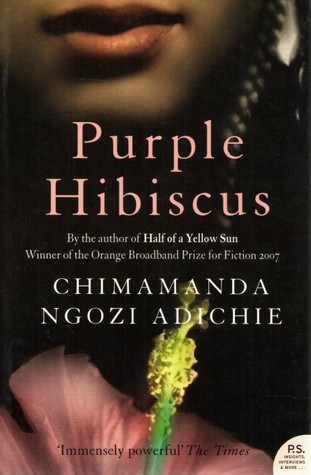 This was my last remaining unread book by Adichie, and that probably goes a long way toward explaining why I found it underwhelming. In comparison to her two later novels, and even her short stories (of which this reminded me the most), the canvas is small and the emotional scope limited. Kambili is a Nigerian teenager caught between belief systems: her grandfather’s traditional (“pagan”) ancestor worship versus the strict Catholicism that is the preserve of her abusive father, but also of the young priest on whom she has a crush. She and her brother try to stay out of their father’s way, but they are held to such an impossibly high standard of behaviour that it seems inevitable that they will disappoint him.
Adichie’s debt to her literary hero, Chinua Achebe, is evident from the first line onward: “Things started to fall apart at home when my brother, Jaja, did not go to communion and Papa flung his heavy missal across the room and broke the figurines on the étagère.” It also sets up, with a certain lack of subtlety, the way in which religion is wielded as a weapon in the novel. Meanwhile, the title suggests rarity, beauty, and fragile hope. Had this been my first taste of Adichie’s fiction, I probably would have stopped there, so in a way I’m glad that I read her first book last. Now I just have to wait with tapping fingers for the next one… (Free from a neighbour)
Blue Dog by Louis de Bernières (2016)
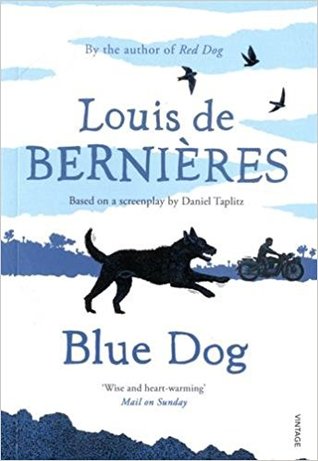 A sweet coming-of-age novella about a boy moving to the Australian Outback to live with his grandfather in the 1960s and adopting a stray dog – a red cloud kelpie, but named Blue. I didn’t realize that this is a prequel (to Red Dog), and based on a screenplay. It was my third book by de Bernières, and it was interesting to read in the afterword that he sees this one as being suited to 12-year-olds, yet most likely to be read by adults.
Mick’s father is dead and his mother has had a breakdown, so Granpa is the only one around to look after him, though out at the cattle station the boy mostly fends for himself, having adventures with stinging lizards and cyclones and bushfires and cursed caves. All along, Blue and his motorcycle are constant companions. Taylor Pete, a wry Aboriginal man, and Betty Marble, a pretty blonde hired as his teacher, are two amusing secondary characters.
This reminded me of Gerald Durrell’s writing about his childhood, and was pleasant airport and plane reading for me: light and fun, but not fluffy, and offering an armchair traveling opportunity. I especially liked the Australian lingo and the blue and black illustrations at the head and foot of each chapter, with a flipbook-style cartoon of a running dog in the upper right corner of each odd-numbered page. (Public library)
Emerald City by Jennifer Egan (1993)
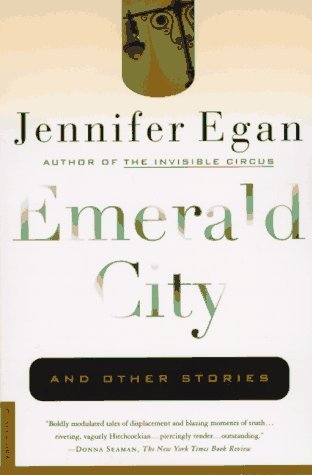 Each of these 11 stories has a fantastic first line – my favorite, from “Sacred Heart,” being “In ninth grade I was a great admirer of Jesus Christ” – but often I felt that these stories of relationships on the brink did not live up to their openers. Most take place in a major city (Chicago, New York, San Francisco) or a holiday destination (Bora Bora, China, Mexico, Spain), but no matter the setting, the terrain is generally a teen girl flirting with danger or a marriage about to implode because the secret of a recent or long-ago affair has come out into the open.
Recurring elements include models/stylists/fashion photographers and people getting conned out of money. The title story is set in New York, described as “a place that glittered from a distance even when you reached it.”
To me the best story, for offering something a bit different, was “One Piece,” about a brother who seems to hurt everything he touches but comes through for his sister when it counts. Egan’s characters are caught between emotional states: remembering a golden age, regretting a moment that changed everything, or hoping that the best is yet to come. “The Stylist” was the one story that reminded me most of A Visit from the Goon Squad. As soon as I closed the book, I found that I had trouble remembering details of any of the stories. (Little Free Library in suburban Philadelphia, May 2019)
Darkness Visible: A Memoir of Madness by William Styron (1990)
 (Visible darkness must have a colour, right?) I had long wanted to read this and finally came across a secondhand copy the other day. What I never realized was that, at 84 pages, it is essentially an extended essay: It started life as a lecture given at Johns Hopkins in 1989, was expanded into a Vanity Fair essay, and then further expanded into this short book.
Approaching age 60 and on his way to Paris to accept a prestigious award, Styron could feel his depression worsening. Rather than being proud or grateful, he could only doubt his own talent. The pills his doctor prescribed him for insomnia exacerbated his feelings of despair. When he threw away the journal he had been keeping, he knew it was a potential prelude to suicide. Hearing a piece by Brahms on a movie soundtrack was the one thing that reminded him of the beauty of the world and the richness of his life, enough for him to reach out and get seven weeks of treatment at a mental hospital, which was what saved him. These experiences, recounted in sections VI and VII, are the highlight of the book.
Styron also muses on the creative temperament and the ubiquity of suicide among writers, especially those who, like him, had an early trauma (his mother died when he was 13). The prose is forthright and intimate, ably evoking a psychic pain that is “quite unimaginable to those who have not suffered it.” This made me want to try his fiction, too. (Secondhand purchase, June 2021)
Favourite lines:
“each day’s pattern of distress exhibits fairly predictable alternating periods of intensity and relief. The evening’s relief for me—an incomplete but noticeable letup, like the change from a torrential downpour to a steady shower—came in the hours after dinnertime and before midnight, when the pain lifted a little and my mind would become lucid enough to focus on matters beyond the immediate upheaval convulsing my system.”
“Alcohol was an invaluable senior partner of my intellect, besides being a friend whose ministrations I sought daily—sought also, I now see, as a means to calm the anxiety and incipient dread that I had hidden away for so long somewhere in the dungeons of my spirit.”
Next two in progress: A Pair of Blue Eyes by Thomas Hardy and Ruby by Ann Hood.
Read any of these? Interested?
Review Book Catch-Up: Dennis, Galloway, Leland-St. John and Sampson
Capsule reviews today, of four books I am inexcusably late in reviewing. I have a record of personal experience with species reintroductions, a memoir about living among reindeer herders in the far north of Norway, a set of elegiac poems, and a biography of a Victorian woman poet who struggled with poor health for most of her life.
Restoring the Wild: Sixty Years of Rewilding Our Skies, Woods and Waterways by Roy Dennis
 Rewilding is a big buzz word in current nature and environmental writing. Few could be said to have played as major a role in the UK’s successful species reintroduction projects as Roy Dennis, who has been involved with the RSPB and other key organizations since the late 1950s. He trained as a warden at two of the country’s most famous bird observatories, Lundy Island and Fair Isle. Most of his later work was to focus on birds: white-tailed eagles, red kites, and ospreys. Some of these projects extended into continental Europe. He also writes about the special challenges posed by mammal reintroductions; beavers get a chapter of their own. Every initiative is described in exhaustive detail, full of names and dates, whereas I would have been okay with an overview. This feels like more of an insider’s history rather than a layman’s introduction. I have popped it on my husband’s bedside table in hopes that, with his degree in wildlife conservation, he’ll be more interested in the nitty-gritty.
Favourite lines:
“Tenacity and a long view to the future are important in wildlife conservation.”
“for every successful project that gets the go-ahead, there are others into which people put great effort but which then run up against problems.”
With thanks to William Collins for the free copy for review.
Dálvi: Six Years in the Arctic Tundra by Laura Galloway
 The title is the word for winter in the Northern Sámi language. Galloway, a journalist, traded in New York City for Arctic Norway after a) a DNA test told her that she had Sámi blood and b) she met and fell for Áilu, a reindeer herder, at a wedding. She enrolled in an intensive language learning course at university level and got used to some major cultural changes: animals were co-workers here rather than pets (like the two cats she brought with her); communal meals and drawn-out goodbyes were not the done thing; and shamans were still active (one helped them find a key she lost). Footwear neatly sums up the difference. The Prada heels she brought “just in case” ended up serving as hammers; instead, she helped Áilu’s mother make reindeer skins into boots. Two factors undermined my enjoyment: Alternating chapters about her unhappy upbringing in Indiana don’t add much of interest, and, after her relationship with Áilu ends, the book feels aimless. However, I appreciated her words about DNA not defining you, and family being what you make it.
With thanks to Atlantic Books for the free copy for review.
A Raga for George Harrison by Sharmagne Leland St.-John (2020)
 Native American poet Sharmagne Leland St.-John’s fifth collection is a nostalgic and bittersweet look at people and places from one’s past. There are multiple elegies for public figures – everyone from Janis Joplin to Virginia Woolf – as well as for some who aren’t household names but have important stories that should be commemorated, like Hector Pieterson, a 12-year-old boy killed during the Soweto Uprising for protesting enforced teaching of Afrikaans in South Africa in 1976. Many of the elegies are presented as songs. Personal sources of sadness, such as a stillbirth, disagreements with a daughter, and ageing, weigh as heavily as tragic world events.
Rhyming and alliteration create inviting rhythms throughout the book, and details of colour and fashion animate poems like “La Kalima.” Leland St.-John remembers meeting street children in Mexico, while bamboo calls to mind time spent in Japan. “Promised Land” is an ironic account of land being seized from natives and people of colour. I especially liked “Things I Would Have Given to My Mother Had She Asked” (some literal and some more abstract), which opens “A piece of my liberal mind. 5 more minutes of my time”, and the sombre “Cat’s Cradle” (“Drenched starlings perch on a cat’s cradle of telephone wires”).
You can read “I Said Coffee” and a few more of her poems online.
With thanks to the author for sending a free e-copy for review.
Two-Way Mirror: The Life of Elizabeth Barrett Browning by Fiona Sampson
 Coming in at under 260 pages, this isn’t your standard comprehensive biography. Sampson instead describes it as a “portrait,” one that takes up the structure of EBB’s nine-book epic poem, Aurora Leigh, and is concerned with themes of identity and the framing of stories. Elizabeth, as she is cosily called throughout the book, wrote poems that lend themselves to autobiographical interpretation – “her body of work creates a kind of looking glass in which, dimly, we make out the person who wrote it,” Sampson asserts.
Nicknamed “Ba,” Elizabeth was born in 1806 and brought up with 11 younger siblings at a Herefordshire estate, Hope End. Her father, Edward, had been born in Jamaica and the family fortune was based on sugar – and slavery. Sampson makes much of this inherited guilt, and also places an emphasis on EBB’s lifelong ill health, which involved headaches, back and side pain, and depression. She also suffered from respiratory complaints. The modern medically minded reader tries to come up with a concrete diagnosis. Tardive dystonia? Post-viral syndrome? The author offers many potential explanations, and notes that her subject was the very type of the Victorian female invalid. She would also suffer from miscarriages, but had one son, Pen. The Brownings were in the unusual position of the wife being the more famous partner.
Sampson draws heavily on correspondence and earnestly interrogates scenes and remembrances, but her use of the present tense is a bit odd for a historical narrative, and I found my casual curiosity about the Brownings wasn’t enough to sustain my interest. However, this did make me eager to try more of EBB’s poetry. I wonder if I still have that copy of Sonnets from the Portuguese in a box in the States?
Favourite lines:
“Within the continual process of reputation-making and remaking that is literary history, Elizabeth Barrett Browning remains a bellwether for the rising and sinking stock of women writers. … Elizabeth dramatizes the two-way creation of every writing self, from without and from within. That the life of the body both enables and limits the life of the mind is the paradox of the thinking self.”
With thanks to Profile Books for the free copy for review.
 Bookish Beck = Rebecca Foster. American transplant to England. Freelance proofreader and book reviewer.
 Bookish Beck