Easter Reading from Richard Holloway and Richard Yates
I found a lesser-known Yates novel on my last trip to our local charity warehouse and saved it up for the titular holiday. I also remembered about a half-read theology book I’d packed away with the decorative wooden Easter egg and tin with a rabbit on in the holiday stash behind the spare room bed. And speaking of rabbits…
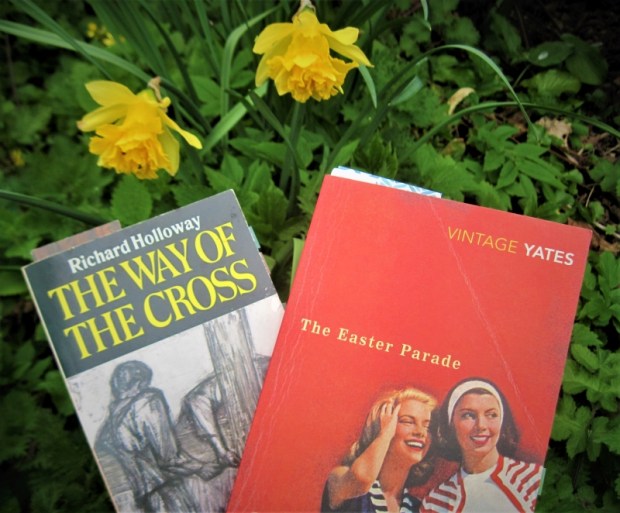 (I also gave suggestions of potential Easter reading, theological or not, in 2015, 2017, and 2018.)
The Easter Parade by Richard Yates (1976)
Yates sets out his stall with the first line: “Neither of the Grimes sisters would have a happy life, and looking back, it always seemed that the trouble began with their parents’ divorce.” I’d seen the film of Revolutionary Road, and my impression of Yates’s work was confirmed by this first taste of his fiction: an atmosphere of mid-century (sub)urban ennui, with the twin ills of alcoholism and adultery causing the characters to drift inexorably towards tragedy.
The novel follows Sarah and Emily Grimes from the 1930s to the 1970s. Emily, four years younger, has always known that her sister is the pretty one. Twenty-year-old Sarah is tapped to model traditional Chinese dress during an Easter parade and be photographed by the public relations office of United China Relief, for whom she works in fundraising. Sarah had plans with her fiancé, Tony Wilson, and is unenthusiastic about taking part in the photo shoot, while Emily thinks what she wouldn’t give to appear in the New York Times.
 The mild rivalry resurfaces in the years to come, though the sisters take different paths: Sarah marries Tony, has three sons, and moves to the Wilson family home out on Long Island; in New York City, Emily keeps up an unending stream of lovers and English-major jobs: bookstore clerk, librarian, journal editor, and ad agency copywriter. Sarah envies Emily’s ability to live as a free spirit, while Emily wishes she could have Sarah’s loving family home – until she learns that it’s not as idyllic as it appears.
What I found most tragic wasn’t the whiskey-soused poor decisions so much as the fact that both sisters have unrealized ambitions as writers. They long to follow in their headline-writing father’s footsteps: Emily starts composing a personal exposé on abortion, and later a witty travel guide to the Midwest when she accompanies a poet boyfriend to Iowa so he can teach in the Writers’ Workshop; Sarah makes a capable start on a book about the Wilson family history. But both allow their projects to wither, and their promise is unfulfilled.
Yates’s authentic characterization, forthright prose, and incisive observations on the futility of modern life and the ways we choose to numb ourselves kept this from getting too depressing – though I don’t mind bleak books. Much of the novel sticks close to Emily, who can, infuriatingly, be her own worst enemy. Yet the ending offers her the hand of grace in the form of her nephew Peter, a minister. I read the beautiful final paragraphs again and again.
A readalike I’ve reviewed (sisters, one named Sarah!): A Summer Bird-Cage by Margaret Drabble
My rating: 
The Way of the Cross by Richard Holloway (1986)
 Each year the Archbishop of Canterbury commissions a short book for the Anglican Communion to use as Lenten reading. This study of the crucifixion focuses on seven of the Stations of the Cross, which are depicted in paintings or sculptures in most Anglo-Catholic churches, and emphasizes Jesus’s humble submission and the irony that the expected Son of God came as an executed criminal rather than an exalted king. Holloway weaves scripture passages and literary quotations through each chapter, and via discussion questions encourages readers to apply the themes of power, envy, sin, and the treatment of women to everyday life – not always entirely naturally, and the book does feel dated. Not a stand-out from a prolific author I’ve enjoyed in the past (e.g., Waiting for the Last Bus).
Favorite lines:
“the yearly remembrance of the life of Christ is a way of actualizing and making that life present now, in the universal mode of sacramental reality.”
“Powerlessness is the message of the cross”
My rating: 
Recently read for book club; I’ll throw it in here for its dubious thematic significance (the protagonist starts off as an innocently blasphemous child and, disappointed with God as she’s encountered him thus far, gives that name to her pet rabbit):
When God Was a Rabbit by Sarah Winman (2011)
 I’d enjoyed Winman’s 2017 Tin Man so was very disappointed with this one. You can tell it was a debut novel because she really threw the kitchen sink in when it comes to quirkiness and magic realism. Secondary characters manage to be more engaging than the primary ones though they are little more than a thumbnail description: the lesbian actress aunt, the camp old lodger, etc. I also hate the use of 9/11 as a plot device, something I have encountered several times in the last couple of years, and stupid names like Jenny Penny. Really, the second part of this novel just feels like a rehearsal for Tin Man in that it sets up a close relationship between two gay men and a woman.
Two major themes, generally speaking, are intuition and trauma: characters predict things that they couldn’t know by ordinary means, and have had some awful things happen to them. Some bottle it all up, only for it to explode later in life; others decide not to let childhood trauma define them. This is a worthy topic, certainly, but feels at odds with the carefully cultivated lighthearted tone. Winman repeatedly introduces something sweet or hopeful only to undercut it with a tragic turn of events.
The title phrase comes from a moment of pure nostalgia for childhood, and I think the novel may have been better if it had limited itself to that rather than trying to follow all the characters into later life and sprawling over nearly 40 years. Ultimately, I didn’t feel that I knew much about Elly, the narrator, or what makes her tick, and Joe and Jenny Penny almost detract from each other. Pick one or the other, brother or best friend, to be the protagonist’s mainstay; both was unnecessary.
My rating: 
Review Book Catch-Up: Fox, Le Riche, Nunez, and Thammavongsa
Today I have a book of poems about Covid lockdown and being autistic, a reprint of a vintage cookbook with a difference, the pinnacle of autofiction that I’ve found thus far, and a prize-winning collection of short stories about immigrants’ everyday challenges.
The Oscillations by Kate Fox (2021)
 The first section, “After,” responds to the events of 2020; six of its poems were part of a “Twelve Days of Lockdown” commission. Fox remembers how sinister a cougher at a public event felt on 13th March and remarks on how quickly social distancing came to feel like the norm, though hikes and wild swimming helped her to retain a sense of possibility. I especially liked “Pharmacopoeia,” which opens the collection and looks back to the Black Death that hit Amsterdam in 1635 – “suddenly the plagues / are the most interesting parts / of a city’s history.” “Returns” plots her next trip to a bookshop (“The plague books won’t be in yet, / but the dystopia section will be well stocked / … I spend fifty pounds I no longer had last time, will spend another fifty next. / Feeling I’m preserving an ecology, a sort of home”), while “The Funerals” wryly sings the glories of a spring the deceased didn’t get to see.
The second section, “Before,” is more wide-ranging, responding to artworks, historical events, family situations, and more. Fox has been vocal about her ASD, which is the subject of “What Could Be Called Communication,” about some habits of the neurodivergent that you might recognize. I also liked “The Fruits,” which narrates the end of a pregnancy, and the closing poem, “Emergency” (“between us, / sometimes despite us / love spreads like a satellite signal, / like sea foam, / like spilt coffee on a counter top, / like home.”). That was one of the few places in the whole book where the language (alliteration and an end-rhyme) struck me; elsewhere, the themes felt more notable than the poetic techniques.
With thanks to Nine Arches Press for the proof copy for review.
Eating Alone by Kathleen Le Riche (1954)
Recently reprinted as a facsimile edition by Faber, this was Le Riche’s third cookbook. It’s like no other cookbook I’ve read, though: It doesn’t list ingredients or, generally, quantities, and its steps are imprecise, more like suggestions. What it reads like is a set of short stories with incidental recipes. Le Riche had noted that people who live alone some or all of the time, for whatever reason, often can’t be bothered to cook for themselves properly. Through these old ladies, bachelors, career girls, and mothers with children off at school, she voices her ideas on shopping, food storage, simple cooking, and making good use of leftovers, but all through the medium of anecdote.
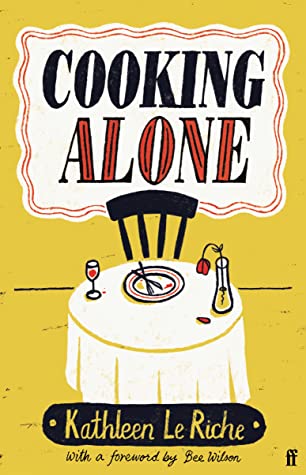 For instance, “The Grass Widower,” while his wife is away visiting her mother, indulges his love of seafood and learns how to wash up effectively. A convalescent plans the uncomplicated meals she’ll fix, including lots of egg dishes and some pleasingly dated fare like “junket” and cherries in brandy. A brother and sister, students left on their own for a day, try out all the different pancakes and quick breads in their repertoire. The bulk of the actual meal ideas come in a chapter called “The Happy Potterer,” whom Le Riche styles as a friend of hers named Flora who wrote out all her recipes on cards collected in an envelope. I enjoyed some of the little notes to self in this section: appended to a recipe for kidney and mushrooms, “Keep a few back for mushrooms-on-toast next day for a mid-morning snack”; “Forgive yourself if you have to use margarine instead of butter for frying.”
I don’t think there are any recipes here that I would actually try to reproduce, though I may one day attempt the Grass Widower’s silver-polishing method (put a strip of aluminium foil and some “washing soda” (soda crystals?) in the sink and pour over some boiling water from the kettle; dip in the silver items, touching them to the foil, and watch the tarnish disappear like magic!). This was interesting as a cultural artefact, to see the meals and ingredients that were mainstays of the 1950s (evaporated milk, anyone?) and how people coped without guaranteed refrigeration. It’s also a good reminder to eat well no matter your circumstances.
With thanks to Faber for the free copy for review.
A Feather on the Breath of God by Sigrid Nunez (1995)
My third from Nunez, after The Friend and What Are You Going Through, and my most loved of her books thus far, cementing her as one of my favourite authors. Like the other two, it’s narrated by an unnamed woman who defines herself by the people she encounters and the experiences she has in an unforgiving but still somehow beautiful and funny old world. From the little I know of Nunez, this seems the closest to autofiction, especially in terms of her parental origins. The father, Chang, born in Panama and raised in China, immigrated to the USA at age 12. In Germany for war service, he met her mother, Christa, just after VE Day.
 Chang and Christa, the subjects of the book’s first two sections – accounting for about half the length – were opposites and had a volatile relationship. Their home in the New York City projects was an argumentative place the narrator was eager to escape. She felt she never knew her father, a humourless man who lost touch with Chinese culture. He worked on the kitchen staff of a hospital and never learned English properly. Christa, by contrast, was fastidious about English grammar but never lost her thick accent. An obstinate and contradictory woman, she resented her lot in life and never truly loved Chang, but was good with her hands and loved baking and sewing for her daughters.
Growing up, the narrator never knew quite what to make of her mixed, “exotic” background. For a time, she escaped into ballet, a tantalizingly female discipline that threw up a lot of issues: class pretensions, the eroticization of young girls and of pain, and eating disorders. When she went without solid food for days at a time, she felt she was approaching the weightlessness Saint Hildegard likened to being “a feather on the breath of God.” The final chapter, “Immigrant Love,” jumps ahead to when the narrator taught English as a foreign language and had an affair with Vadim, a married Russian taxi driver full of charisma but also of flaws. This finale is a brilliant twist on her parents’ situation, and a decision to teach English in China brings things full circle, promising a connection to her late father’s heritage.
The strategy of identifying the self by the key relationships and obsessions of a life struck me as spot on. This short novel punches above its weight, with profound observations on every page. Its specific situations are engaging, yet it speaks to the universals of how we cope with a troublesome past. “One wants a way of looking back without anger or bitterness or shame. One wants to be able to tell everything without blaming or apologizing,” Nunez writes, crystallizing her frank, wry approach. I’m eager to read all the rest of her oeuvre.
First published in the UK in 2021. With thanks to Virago Press for the free copy for review.
How to Pronounce Knife by Souvankham Thammavongsa (2020)
 Thammavongsa pivoted from poetry to short stories and won Canada’s Giller Prize for this debut collection that mostly explores the lives of Laotian immigrants and refugees in a North American city. The 14 stories are split equally between first- and third-person perspectives, many of them narrated by young women remembering how they and their parents adjusted to an utterly foreign culture. The title story and “Chick-A-Chee!” are both built around a misunderstanding of the English language – the latter is a father’s approximation of what his children should say on doorsteps on Halloween. Television soaps and country music on the radio are ways to pick up more of the language. Farm and factory work are de rigueur, but characters nurture dreams of experiences beyond menial labour – at least for their children.
The stories are punchy: perfect snapshots of lives lived on the tightrope between expectation and despair. In “Mani Pedi,” Raymond is a former boxer who starts working at his sister’s nail salon and falls in love with a client. His sister warns him, “Don’t you be dreaming big now, little brother. Keep your dreams small. The size of a grain of rice.” In “Slingshot,” an older woman loses touch with her much younger lover, while in “The Gas Station,” Mary, a prim tax accountant, opens herself to love but ends up disappointed. The great-grandmother in “Ewwrrrkk” warns an eight-year-old that “I love you” pries open one’s legs like nothing else. “Randy Travis” and “Picking Worms” were probably my two overall favourites. Looking back, I have trouble remembering some of the individual stories. It’s not so much that they all blend into one, but that they form a cohesive whole. I’d recommend this even to readers who don’t normally pick up short stories, and will look out for more from this author.
Out in paperback on Thursday the 18th. With thanks to Bloomsbury for the free copy for review.
Would you be interested in reading one or more of these?
Ex Libris x 2: Who Wears It Better, Anne Fadiman or Michiko Kakutani?
When I heard about the new book by Michiko Kakutani, former chief book critic of the New York Times, I rushed to put it on my wish list – though I ended up accessing it via the library instead. I also felt a hankering to reread Anne Fadiman’s essay collection by the same title, so I ordered myself a secondhand copy earlier this year. Both books are by (more or less) famous New York City bibliophiles and take old-fashioned bookplate designs as an inspiration. Here’s how the two fared in a head-to-head battle.
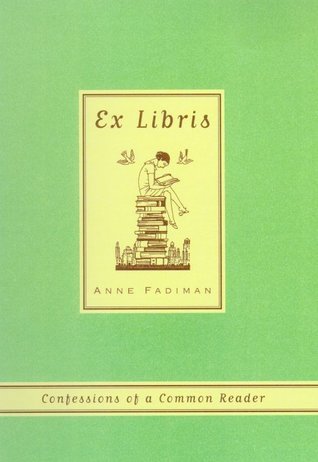
Ex Libris: Confessions of a Common Reader by Anne Fadiman (1998)
Like many a bibliophile, I have a soft spot for books about books. However, I’m also a real stickler about them, because all too often they make common mistakes: they’re too generic or too obscure in their points of reference, they slip into plot summary and include spoilers, or they alienate the reader by presenting the author as being on another echelon.
Fadiman, though, is a very relatable narrator in these expanded versions of 18 essays originally written for publication in Civilization, the Library of Congress magazine published from 1994 to 2000. (Can you imagine, your own bookish column in which you could write whatever you like?!) Her father was the well-known intellectual Clifton Fadiman. Theirs was a family of book-obsessed, vocabulary-loving, trivia-spouting readers, and she was also crafting her own with her husband and two young children.
 I saw my family – especially my mother and me – in a number of these pieces: in “The Joy of Sesquipedalians,” about the love of obscure words and word games played on a board or along with the TV (I was a spelling bee champion, and we’re all Scrabble fiends to a greater or lesser extent), in “Insert a Caret [Inset a Carrot],” about compulsive proofreading, in “The Catalogical Imperative,” about a build-up of print catalogues and the different selves one can imagine using the products therein, and in “Secondhand Prose,” about collecting used books.
There’s one respect in which I differ from the Fadiman family, though. Tom Mole’s The Secret Life of Books had reminded me of Fadiman’s division of readers into “courtly” and “carnal” lovers of books: the courtly ones keep a book pristine, while the carnal ones use and abuse them however they wish. She introduces this piece with an episode from a family trip to Copenhagen when she was a teenager. Her brother left a book open, facedown, on the bedside table at their hotel and the next day they found that the chambermaid had carefully put a marker at the right page, closed the book, and set a note on top reading, “Sir, you must never do that to a book.” I wholeheartedly agree. While I always say “your books, your rules” to other readers, I would have to suppress a cringe if I witnessed dog-earing, reading in the bath, cracking the spine, tearing out pages, doodling in the margins, and so on.
What I can get on board with, though, is the love of books as both narratives and physical objects. In the former camp, you get essays on books about polar exploration, sonnets, outdated guides to femininity, food literature, and reading aloud. On the latter, you’ll hear about her New York City apartment groaning with books absorbed from her husband’s and father’s collections, the good and bad of inscriptions, and Prime Minister William Gladstone’s tips for storing books.
Two essays have not aged well: one on a beloved pen (though she acknowledges that this was already multiply outdated by that time, by the typewriter and then by the computer she now uses for composition) and especially one on the quandary of gender-neutral pronouns (as opposed to “every man for himself” types of constructions) – nowadays we have no qualms about employing “them” for the unknown and the nonbinary.
My favorite essay overall was “You Are There,” about the special joy of reading on location. Additional irony points for Joe Biden being mentioned in the piece on plagiarism! I’d read this from a library some years before. I enjoyed it just as much the second time around, and certain essays will reward additional future rereadings, too.
My original rating (c. 2008):
My rating now:
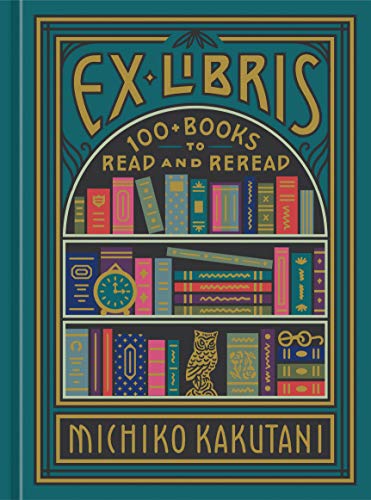
Ex Libris: 100+ Books to Read and Reread by Michiko Kakutani (2020)
In my more morbid moments, when I imagine how I would approach the remainder of my life if I knew that I was going to die young of a terminal illness, I think about self-publishing a selection of my best blog posts and book reviews. A personal greatest hits, if you would, and anyone could forgive the self-indulgence because, hey, she’s probably going to die soon. But then I open a book like this and realize that a collection of book reviews can actually be pretty tedious, even when written by one of the greats.
“Like all lists and anthologies, the selections here are subjective and decidedly arbitrary,” Kakutani warns in her introduction. What this means in practice is that: a) if I’d read a particular book, I didn’t need to read a ~1000-word review of it; b) if I hadn’t read the book but wanted to, I avoided the essay in fear of spoilers (e.g. she does reveal some specific incidents from Mary Karr’s The Liars’ Club, which I have on the shelf and was looking forward to; I’ll just wait until I’ve forgotten); and c) if I hadn’t read the book and didn’t want to (there is LOTS of history and politics here, with plenty of Trump jabs shoehorned in; you do know her only previous book was a diatribe against Trump, right?), I wasn’t interested. So, while there were a few pieces I appreciated, such as one on the enduring appeal of The Great Gatsby, which I recently read a third time for book club, not many caught my eye as I skimmed the book.
In any case, it’s not a book for reading all the way through but one for having on the coffee table to read the occasional essay. It is gorgeously put together, what with Dana Tanamachi’s illustrations in the style of vintage bookplates, so would still be a lovely reference book to have around. Think of it as a collection of amuse-bouches to whet your appetite to read the books you’ve always meant to pick up but haven’t managed yet (for me, that would be As I Lay Dying and Mason & Dixon). See Susan’s more judicious review here.
My rating:
 I found plenty of other books on Goodreads with the title Ex Libris, such as this one, a compendium of library-themed fantasy and science fiction stories. (Yes, really.)
Have you read one of these? Which did you prefer?
Three on a Theme: “Love”
I’m really not a Valentine’s Day person, yet this is the fifth year in a row that I’ve put together a themed post featuring books that have “Love” or a similar word in the title in the run-up to mid-February. (Here are the 2017, 2018, 2019 and 2020 posts. I’m also at work on a set of three “Heart” titles to post about on the 14th.) All three of the below books reflect, in their own ways, on how love perplexes and sustains us at different points in our lives.
The Emma Press Anthology of Love, ed. Rachel Piercey and Emma Wright (2018)
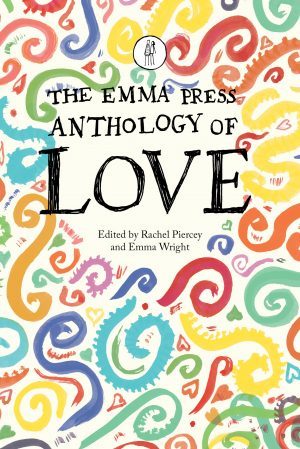 I read my first book from the publisher (Tiny Moons by Nina Mingya Powles) last summer and loved it, so when this one popped up in the Waterstones sale in January I snapped it up. Your average love poetry volume would trot out all the standards from Shakespeare’s sonnets to Carol Ann Duffy, whereas this features recent work from lesser-known contemporary poets. Of the 56 poets, I’d heard of just two before: Stephen Sexton, because I reviewed his collection, If All the World and Love Were Young, last year; and Rachel Long, because I was simultaneously reading her Costa Award-shortlisted debut, My Darling from the Lions.
What I most appreciated about the book is that it’s free of cliché. You can be assured there will be no ‘Roses are red, violets are blue’ simplicity of theme or style. It must be nigh on impossible to write about romantic and erotic love without resorting to the same old symbols, but here there is a fresh, head-turning metaphor every few pages. Rachel Plummer describes her first crush, on a video game character, in “Luigi.” Love is conveyed through endless cups of tea or practical skills that favor postapocalyptic survival; desire is sparked by the downy hair on a woman’s back or the deliberate way a lover pulls on a pair of tights. Anything might be a prelude to seduction: baking, preparing lab specimens, or taking a taster at the off-license.
There are no real duds here, but a couple of my overall favorites were “Note from Edinburgh” by Stav Poleg and “Not the Wallpaper Game” by Jody Porter (“her throat was a landmine grown over with roses / and her arms were the antidote to the sufferings of war”). I’m running low on poetry, so I’ve gone ahead and ordered three more original anthologies direct from The Emma Press (poems on the sea, illness, and aunts!). After all, it’s #ReadIndies month and I’m delighted to support this small publisher based in Birmingham.
Favorite lines:
I have a friend who always believed
love was like being touched
by a livewire or swimming
on her back in a lightning storm.
I want to tell her it’s homesickness,
how longing pulls us in funny ways.
(from “Falooda” by Cynthia Miller)
It’s today already
and we have only the rest of our lives.
Long may we dabble our feet in the clear Italian lakes.
Long may we mosey through the graveyards of the world.
(from “Romantic” by Stephen Sexton)
Love After Love by Ingrid Persaud (2020)
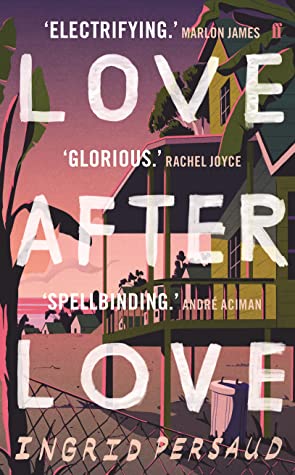 I saw the author read from this in November as part of a virtual Faber Live Fiction Showcase. My interest was then redoubled by the book winning the Costa First Novel Award. All three narrators – Betty, her son Solo, and their lodger Mr Chetan – are absolutely delightful, and I loved the Trini slang and the mix of cultures (for example, there is a Hindu temple where locals of Indian extraction go to practice devotion to the Goddess). Early on, I was reminded most, in voice and content, of Mr Loverman by Bernardine Evaristo.
But the lightness of Part One, which ends with a comically ill-fated tryst, soon fades. When Solo moves to New York City to make his own way in the world, he discovers that life is cruel and not everyone is good at heart. Indeed, my only hesitation in recommending this book is that it gets so very, very dark; the blurb and everything I had heard did not prepare me. If easily triggered, you need to know that there are many upsetting elements here, including alcoholism, domestic violence, self-harm, attempted suicide, sadomasochism, and gruesome murder. Usually, I would not list such plot elements for fear of spoilers, but it seems important to note that what seems for its first 100 pages to be such a fun, rollicking story becomes more of a somber commentary on injustices experienced by both those who leave Trinidad and those who stay behind.
A beautiful moment of reconciliation closes the story, but man, getting to that point is tough. The title speaks of love, yet this novel is a real heartbreaker. What that means, though, is that it makes you feel something. Not every author can manage that. So Persaud is a powerful talent and I would certainly recommend her debut, just with the above caveats.
Readalikes:
- Golden Child by Claire Adam
- A Little Life by Hanya Yanagihara
Love’s Work: A Reckoning with Life by Gillian Rose (1995)
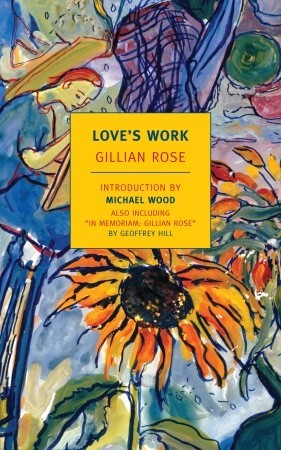 The English philosopher’s memoir-in-essays got on my radar when it was mentioned in two other nonfiction works I read in quick succession (one of my Book Serendipity incidents of late 2019): Notes Made while Falling by Jenn Ashworth and My Year Off by Robert McCrum. I had in mind that it was a cancer memoir, and while receiving a terminal diagnosis of ovarian cancer in her early forties is indeed an element, it is a wide-ranging short book that includes pen portraits of remarkable friends – an elderly woman, a man with AIDS – she met in New York City, musings on her Jewish family history and the place that religious heritage holds in her life, and memories of the contrast between the excitement of starting at Oxford and the dismay at her mother’s marriage to her stepfather (from whom she got her surname, having changed it by deed poll at age 16 from her father’s “Stone”) falling apart.
The mishmash of topics and occasional academic jargon (e.g., “These monitory anecdotes indicate, however, the anxiety of modernity” and “Relativism of authority does not establish the authority of relativism: it opens reason to new claimants”) meant I didn’t enjoy this as much as I’d expected to.
Words about love:
“However satisfying writing is—that mix of discipline and miracle, which leaves you in control, even when what appears on the page has emerged from regions beyond your control—it is a very poor substitute indeed for the joy and the agony of loving.”
“There is no democracy in any love relation: only mercy. … each party … is absolute power as well as absolute vulnerability. … I am highly qualified in unhappy love affairs. My earliest unhappy love affair was with Roy Rogers.”
“To grow in love-ability is to accept the boundaries of oneself and others, while remaining vulnerable, woundable, around the bounds. Acknowledgement of conditionality is the only unconditionality of human love.”
If you read just one … Make it The Emma Press Anthology of Love. (But, if you’re feeling strong, add on Love After Love, too.)
Have you read any books about love lately?
Novellas in November: 10 Favorite Classic Novellas
For this final week of Novellas in November, we’re focusing on classic literature. The more obscure the better, as far as I’m concerned. Maybe a few of the favorites I feature below will be new to you? (The two not pictured were read from the library.)

 Giovanni’s Room by James Baldwin [150 pages]: David, a penniless American, came to Paris to find himself. His second year there he meets Giovanni, an Italian barman. They fall in love and move in together. There’s a problem, though: David has a fiancée. We know from the first pages that David has fled to the south of France and that Giovanni faces the guillotine in the morning, but throughout Baldwin maintains the tension as we wait to hear why he has been sentenced to death. Deeply sad, but also powerful and brave.
 The Darling Buds of May by H.E. Bates [137 pages]: “Perfick” reading for an afternoon sitting or two; The Novel Cure even prescribes it as a tonic for cynicism. Just like tax inspector Cedric Charlton, you’ll find yourself drawn into the orbit of junk dealer Pop Larkin, Ma, and their six children at their country home in Kent – indomitably cheery hedonists, the lot of them. Ma and Pop are more calculating than they let on, but you can’t help but love them. Plus Bates writes so evocatively about the British countryside in late spring.
 Breakfast at Tiffany’s by Truman Capote [91 pages]: Whether you’ve seen the Audrey Hepburn film or not, this is delightful. Holly Golightly has remade herself as a New York City good-time girl, but her upstairs neighbor discovers her humble origins. This was from my pre-reviewing days, so I have no more detail to add. But whenever I think of its manic cocktail party scenes, I think of a holiday do from my final year of college: packed like sardines, everyone talking over each other, and my professor couldn’t stop shaking my hand.
 A Month in the Country by J.L. Carr [108 pages]: Summer 1920: Tom Birkin, a WWI veteran, arrives in North Yorkshire to uncover a local church’s medieval wall painting of the Judgment Day. With nothing awaiting him back in London, he gives himself over to the rhythms of working, eating and sleeping. Also embarked on a quest into the past is Charles Moon, searching for the grave of their patroness’ 14th-century ancestor in the churchyard. Moon, too, has a war history he’d rather forget. A Hardyesque, tragicomic romance.
 The Pumpkin Eater by Penelope Mortimer [144 pages]: Aged 31 and already on her fourth husband, the narrator, known only as Mrs. Armitage, has an indeterminate number of children. A breakdown at Harrods is the sign that Mrs. A. isn’t coping, and she starts therapy. Meanwhile, her filmmaker husband is having a glass tower built as a countryside getaway, allowing her to contemplate an escape from motherhood. A razor-sharp period piece composed largely of dialogue, it gives a sense of a woman overwhelmed by responsibility.
 Pnin by Vladimir Nabokov [177 pages]: A comic novel about a Russian professor on an American college campus. In this episodic narrative spanning 1950–4, Timofey Pnin is a figure of fun but also of pathos: from having all his teeth pulled out and entertaining the son his ex-wife had by another man to failing to find and keep a home of his own, he deserves the phrase Nabokov originally thought to use as a title, “My Poor Pnin”. There are shades of Lucky Jim here – I laughed out loud at some of Pnin’s verbal gaffes and slapstick falls.
 No Signposts in the Sea by Vita Sackville-West [156 pages]: Sackville-West’s last novel, published a year before her death, was inspired by world cruises she and her husband, Harold Nicolson, took in later life. Fifty-year-old Edmund Carr, a journalist with a few months to live, has embarked on a cruise ship voyage to be close to the woman he loves, 40-year-old war widow Laura Drysdale. He dares to hope she might return his feelings … but doesn’t tell her of his imminent demise. The novel is presented as Edmund’s diary, found after his death.
 The Catcher in the Rye by J.D. Salinger [192 pages]: Believe it or not, I didn’t read this until December 2018! From the start I found Holden Caulfield’s voice funny and surprising, so drenched in period American slang you can never forget when and where it’s set. He’s a typical lazy teenager, flunking four subjects when he’s kicked out of Pencey Prep. The first part is a languorous farewell tour to classmates and teachers before he takes the train back to NYC. Once there, he lives it up in a hotel for a few days. A shocker of an ending is to come.
 Miss Lonelyhearts by Nathanael West [110 pages]: Like The Great Gatsby, this is a very American tragedy and state-of-the-nation novel. “Miss Lonelyhearts” is a male advice columnist for the New York Post-Dispatch. His letters come from a pitiable cross section of humanity: the abused, the downtrodden and the unloved. Not surprisingly, these second-hand woes start to get him down, and he turns to drink and womanizing for escape. West’s picture of how beleaguered compassion can turn to indifference feels utterly contemporary.
 Ethan Frome by Edith Wharton [181 pages]: Unlike Wharton’s NYC society novels, this has a rural setting, but the plot is not dissimilar to that of The Age of Innocence, with extra tragic sauce. The title character makes the mistake of falling in love with his wife’s cousin, and the would-be lovers are punished one New England winter. A quarter of a century later, the narrator learns what happened to this sad old man. It’s probably been 15 years since I’ve read this, and I like the catharsis of a good old-fashioned tragedy. Maybe I’ll reread it soon.
Not enough women on my list! I should redress that by reading some more Jean Rhys…

Keep in touch via Twitter (@bookishbeck / @cathy746books) and Instagram (@bookishbeck / @cathy_746books). We’ll keep adding your review links in to our master posts. Feel free to use the terrific feature image Cathy made and don’t forget the hashtag #NovNov.
Any suitably short classics on your shelves?
R.I.P. Reads, Part I: Magrs Buddy Read; Hynes, Johnson, Oates
This is my third year participating in R.I.P. (Readers Imbibing Peril), now in its 15th year. I read my first novel by Paul Magrs as a buddy read with Liz of Adventures in reading, running and working from home, and coincidentally had Daisy Johnson’s creepy second novel out from the library. Rounding out this first post are a novella by James Hynes and a short story by Joyce Carol Oates, by whom I still haven’t managed to read a whole book. For my planned Part II, I’m working on historical suspense novels by Michelle Paver (a constant on my R.I.P. lists, it seems) and Laura Purcell, and trying my first Henning Mankell.

666 Charing Cross Road by Paul Magrs (2011)
 Apart from Dracula, my only previous experience of vampire novels was Deborah Harkness’s books. My first book from Paul Magrs ended up being a great choice because it’s pretty lighthearted and as much about the love of books as it is about supernatural fantasy – think of a cross between Jasper Fforde and Neil Gaiman. The title is a tongue-in-cheek nod to Helene Hanff’s memoir, 84 Charing Cross Road. Like Hanff, Aunt Liza sends letters and money to a London bookstore in exchange for books that suit her tastes. A publisher’s reader in New York City, Liza has to read new stuff for work but not-so-secretly prefers old books, especially about the paranormal – a love she shares with her gay bookseller friend, Jack.
One day the bookstore (actual address: 66b) sends a gruesome treasure, a grimoire soaked in vampire blood. In the wrong hands, it returns the vampiric spirit to life and sets off a chain reaction as each victim bites and infects others. I couldn’t help but think of the pandemic; indeed, Magrs uses the word “disease” at one point. Vampirism always has erotic overtones, though, making it seem more like an STD. As it happens, the vampires’ New York leader is Liza’s niece Shelley’s boyfriend, Daniel. Meanwhile, the star exhibit at the Museum of Outsider Art where Shelley works, a Scottish Bride effigy nicknamed Bessie, has come to life. Bessie leads Liza and Jack to London in the fight against Daniel and his kind.
Set between Halloween and Christmas, this is a pacy and quick-witted story that is easy to follow even as it gets more complicated and adds in ever more secondary characters. Hints about Liza’s past experience of the supernatural and an open ending leave room for a prequel or sequel. There were a few melodramatic moments and I wasn’t always convinced by Liza’s New Yawk accent. (I also wanted to stick up for Liza and another character about her age, Consuela – Magrs often refers to one or both as “the old woman,” when in the context they can’t be far past 60!) But these are minor niggles about a book that was so much fun to read. I’ll try something else by Magrs, probably Exchange and/or one of the Brenda and Effie series – who could resist that premise of the Bride of Frankenstein running a B&B in Whitby? (See also Liz’s review.)
My rating: 
The rest…
Queen of the Jungle (from Publish and Perish: Three Tales of Tenure and Terror) by James Hynes (1997)
 I read the first of this volume’s three suspense novellas and will save the others for future years of R.I.P. or Novellas in November. At 95 pages, it feels like a complete, stand-alone plot with solid character development and a believable arc. Paul and Elizabeth are academics marooned at different colleges: Paul is finishing up his postdoc and teaches menial classes at an English department in Iowa, where they live; Elizabeth commutes long-distance to spend four days a week in Chicago, where she’s on track for early tenure at the university.
The couple’s cat, Charlotte, starts acting up, peeing in random places around the apartment. The animal psychic they hire says it’s because a woman keeps coming and going, disturbing the cat’s routines. Elizabeth assumes it’s her fault, feels terrible, and redoubles her efforts to get her boss to offer Paul a job on the basis of his bizarre literary/pop culture mash-up thesis chapters. But readers soon learn the real reason for the cat’s unease: Paul is carrying on an affair with Kymberly, a graduate student from the communications department. Charlotte is preternaturally determined to terrorize Kym and broadcast Paul’s secret. It’s an amusing battle of wills that comes to have greater stakes. Mentions of computer and telephone technology made this seem slightly dated, but I liked Hynes’s writing.
My rating:
Sisters by Daisy Johnson (2020)
 Teenagers September and July were born just 10 months apart, with July always in thrall to her older sister. September can pressure her into anything, no matter how risky or painful, in games of “September Says.” But one time things went too far. That was the day they went out to the tennis courts to confront the girls at their Oxford school who had bullied July.
For much of this short novel, Johnson keeps readers guessing about what happened that day and why the girls’ mother, Sheela, took them away to Settle House, her late husband’s family home in the North York Moors. Despite the new setting, July finds it impossible to shrug off her sister’s influence. Their psychic connection is such that she feels she’s losing her own virginity as she watches September have sex with a local boy on the beach. September’s is so much the dominant personality that July admits she feels like no more than “an appendage.”
Emotionally used and physically harmed, July starts to doubt her sanity. This was most evident for me in the scene where she goes up to a soggy-looking wall of Settle House and puts a hand through it, hearing “the rustle and gurgle of motion, the shuttering of thousands of wings.” (Presuming that’s a deliberate word choice and not a typo for shuddering.) Ants start pouring out of the wall, followed by a bird. But when she goes back to look at the wall later that day, it’s intact. I was reminded of The Haunting of Hill House, with its picture of a malevolent house preying on its inhabitants’ fears.

Sisters is a book that depends entirely on its late twist, so I shall say no more. About halfway through, I had a vague idea of what the surprise might be, but convinced myself I was wrong. “What if? … Nah, couldn’t be.” I wonder how early you’ll catch on. I adore the U.S. cover, but the UK cover contains more of a hint. I think I liked Everything Under, Johnson’s Booker-shortlisted debut novel, that little bit more, but my bottom line for that one goes for this, too: “As mesmerizing as it is unsettling.” Johnson is such a talented young author, and she also has the best author photo out there at the moment, a black-and-white image of her reflected in a train window.
My rating:
“The Woman in the Window” (from Night-Gaunts and Other Tales of Suspense) by Joyce Carol Oates (2018)
 Oates was inspired by Edward Hopper’s 1926 painting, Eleven A.M. (The striking cover image is from a photographic recreation by Richard Tuschman. Very faithful except for the fact that Hopper’s armchair was blue.) A secretary pushing 40 waits in the New York City morning light for her married lover to arrive. She’s tired of him using her and keeps a sharp pair of sewing shears under her seat cushion. We bounce between the two characters’ perspectives as their encounter nears. He’s tempted to strangle her. Will today be that day, or will she have the courage to plunge those shears into his neck before he gets a chance? In this room, it’s always 11 a.m. The tension is well maintained, but the punctuation kind of drove me crazy. I might try the rest of the book next year.
Have you been reading anything fantastical or spooky this October?
Summery Reads, Part II: Sun and Summer Settings
Typically for the late August bank holiday, it’s turned chilly and windy here, with a fair bit of rain around. The past two weeks have felt more like autumn, but I’ve still been seeing out the season with a few summery reads.
What makes for good summer reading? I love reading with the seasons, picking up a book set during a heat wave just as the temperature is at a peak, but of course there can also be something delicious about escaping by reading about Arctic cold. Marcie of Buried in Print wrote here that she likes her summer books to offer just the right combination of the predictable and the unexpected, and that probably explains why I’m more likely to dip into genre fiction in the summer than at any other time of year. To her criteria I would also add addictiveness and a strong sense of place so as to be transporting – especially important this year when so many of us haven’t been able to have the vacations we might have planned on.
My best two summer binge reads this year were Rodham and Americanah; my two summery classics, though more subtle, were also perfect. Mostly Dead Things by Kristen Arnett, which I’m reading for a Shiny New Books review, has also felt apt for its swampy Florida setting. More recently, I picked up a couple of books with “sun” in the title, plus two novels set entirely in the course of one summer. Two of my selections are also towards my project of reading all of the Women’s Prize winners by November so I can vote on my all-time favorite.
Here comes the sun…
Half of a Yellow Sun by Chimamanda Ngozi Adichie (2006)
 Adichie filters an epic account of Nigeria’s civil war through the experience of twin sisters, Olanna and Kainene, and those closest to them. The wealthy chief’s daughters from Lagos drift apart: Olanna goes to live with Odenigbo, a math professor; Kainene is a canny businesswoman with a white lover, Richard Churchill, who is fascinated by Igbo art and plans to write a book about his experiences in Africa. Gradually, though, he realizes that the story of Biafra is not his to tell.
The novel alternates between the close third-person perspectives of Olanna, Richard and Ugwu, Odenigbo’s houseboy, and moves between the early 1960s and the late 1960s. These shifts underscore stark contrasts between village life and sophisticated cocktail parties, blithe prewar days and witnessed atrocities and starvation. Kainene runs a refugee camp, while Ugwu is conscripted into the Biafran army. Violent scenes come as if out of nowhere, as suddenly as they would have upturned real lives. A jump back in time reveals an act of betrayal by Odenigbo, and apparently simple characters like Ugwu are shown to have hidden depths.
In the endmatter of my paperback reissue, Adichie writes, “If fiction is indeed the soul of history, then I was equally committed to the fiction and the history, equally keen to be true to the spirit of the time as well as to my artistic vision of it.” Copious research must have gone into a book about events that occurred before her birth (both of her grandfathers died in the conflict), but its traces are light; this is primarily about storytelling and conveying emotional realities rather than ensuring readers grasp every detail of the Biafran War. This was my second attempt to read the novel, and while again I did not find it immediately engaging, by one-quarter through it had me gripped. I’m a firm Adichie fan now, and look forward to reading her other three new-to-me books sooner rather than later.
Orange Prize (now Women’s Prize) for Fiction winner, 2007
Source: Birthday gift from my wish list some years back
My rating:
The Shadow of the Sun: My African Life by Ryszard Kapuściński (1998)
[Translated from the Polish by Klara Glowczewska in 2001]
 Kapuściński was a foreign correspondent in Africa for 40 years and lent his name to an international prize for literary reportage. This book of essays spans several decades and lots of countries, yet feels like a cohesive narrative. The author sees many places right on the cusp of independence or in the midst of coup d’états – including Nigeria, a nice tie-in to the Adichie. Living among the people rather than removed in some white enclave, he develops a voice that is surprisingly undated and non-colonialist. While his presence as the observer is undeniable – especially when he falls ill with malaria and then tuberculosis – he lets the situation on the ground take precedence over the memoir aspect. I’m only halfway through, but I fully expect this to stand out as one of the best travel books I’ve ever read.
Evocative opening lines:
“More than anything, one is struck by the light. Light everywhere. Brightness everywhere. Everywhere, the sun.”
Source: Free bookshop
It happened one summer…
A Crime in the Neighborhood by Suzanne Berne (1997)
 Berne, something of a one-hit wonder, is not among the more respected Women’s Prize alumni – look at the writers she was up against in the shortlist and you have to marvel that she was considered worthier than Barbara Kingsolver (The Poisonwood Bible) and Toni Morrison (Paradise). However, I enjoyed this punchy tale. Marsha remembers the summer of 1972, when her father left her mother for Aunt Ada and news came of a young boy’s sexual assault and murder in the woods behind a mall. “If you hadn’t known what had happened in our neighborhood, the street would have looked like any other suburban street in America.”
Laid up with a broken ankle from falling out of a tree, 10-year-old Marsha stays out of the way of her snide older twin siblings and keeps a close eye on the street’s comings and goings. Like Harriet the Spy or Jimmy Stewart’s convalescent character in Rear Window, she vows to note anything relevant in her Book of Evidence to pass on to the police. Early on, her suspicion lands on Mr. Green, the bachelor who lives next door. Feeling abandoned by her father and underappreciated by the rest of her family, Marsha embellishes the facts to craft a more exciting story, not knowing or caring that she could ruin another person’s life.
The novel is set in Montgomery County, Maryland, where I grew up, and the descriptions of brutally humid days fit with my memory of the endless summer days of a childhood in the Washington, D.C. area. Although I usually avoid child narrators, I’ve always admired novels that can point to the dramatic irony between what a child experiences at the time and what a person can only understand about their situation when looking back. Stylish and rewarding.
Orange Prize (now Women’s Prize) for Fiction winner, 1999
Source: Free bookshop
My rating:
Modern Lovers by Emma Straub (2016)
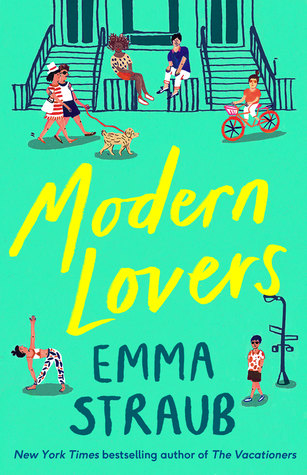 Just as the Berne is a coming-of-age story masquerading as a mystery, from the title and cover this looked like it would be chick lit, but – though it has an overall breezy tone – it’s actually pretty chewy New York City literary fiction that should please fans of The Nest and/or readers of Jennifer Egan and Ann Patchett.
Elizabeth Marx and Zoe Kahn-Bennett have been best friends ever since starting the student band Kitty’s Mustache at Oberlin. Now in their forties with a teenager each, they live half a block apart in Brooklyn. Zoe and her wife Jane run a neighborhood restaurant, Hyacinth; their daughter Ruby is dragging her feet about college and studying to retake the SAT over the summer. Elizabeth, a successful real estate agent, still keeps the musical flame alive; her husband Andrew, her college sweetheart from the band, is between jobs, not that his parents’ money isn’t enough to keep him afloat forever; their son, Harry, is in puppy love with Ruby.
Several things turn this one ordinary-seeming summer on its head. First, a biopic is being made about the Kitty’s Mustache singer turned solo star turned 27 Club member, Lydia, and the filmmaker needs the rest of the band on board – and especially for Elizabeth to okay their use of the hit song she wrote that launched Lydia’s brief career. Second, Andrew gets caught up in a new cult-like yoga studio run by a charismatic former actor. Third, the Kahn-Bennetts have marital and professional difficulties. Fourth, Harry and Ruby start sleeping together.
Short chapters flip between all the major characters’ perspectives, with Straub showing that she completely gets each one of them. The novel is about reassessing as one approaches adulthood or midlife, about reviving old dreams and shoring up flagging relationships. It’s nippy and funny and smart and sexy. I found so many lines that rang true:
Elizabeth was happy in her marriage, she really was. It was just that sometimes she thought about all the experiences she’d never gotten to have, and all the nights she’d listened to the sound of her husband’s snores, and wanted to jump out a window and go home with the first person who talked to her. Choices were easy to make until you realized how long life could be.
Andrew was always surprised by people’s ages now. When he was a teenager, anyone over the age of twenty looked like a grown-up, with boring clothes and a blurry face, only slightly more invisible than Charlie Brown’s teacher, but life had changed. Now everyone looked equally young, as if they could be twenty or thirty or even flirting with forty, and he couldn’t tell the difference. Maybe it was just that he was now staring in the opposite direction.
“I mean, it’s never too late to decide to do something else. Becoming an adult doesn’t mean that you suddenly have all the answers.”
I’ll definitely read more by Straub. I’d especially recommend picking this up if you enjoyed Writers & Lovers.
Source: Free bookshop
My rating:
What was your best summery read this year?
20 Books of Summer, #15–16: Andrew Beahrs and Elizabeth Graver
Today I have a biography-cum-cultural history of America’s wild foods and a novel about beekeeping and mental illness.
Twain’s Feast: Searching for America’s Lost Foods in the Footsteps of Samuel Clemens by Andrew Beahrs (2010)
 (20 Books of Summer, #15) In 1879, Mark Twain, partway through the Grand Tour immortalized in A Tramp Abroad, was sick of bland, poor-quality European food and hankering for down-home American cooking. He drew up a list of 80 foodstuffs he couldn’t wait to get back to: everything from soft-shell crabs to proper ice water. “The menu shouts of a joyous abundance,” Beahrs writes. “It testifies to a deep bond in Twain’s mind between eating and tasting and celebrating … rooted food that would live forever in his memory.”
Beahrs goes in search of some of those trademark dishes and explores their changes in production over the last 150 years. In some cases, the creatures and their habitats are so endangered that we don’t eat them anymore, like Illinois’ prairie chickens and Maryland’s terrapins, but he has experts show him where remnant populations live. In San Francisco Bay, he helps construct an artificial oyster reef. He meets cranberry farmers in Massachusetts and maple tree tappers in Vermont. At the Louisiana Foodservice EXPO he gorges on “fried oysters and fried shrimp and fries. I haven’t had much green, but I’ve had pecan waffles with bacon, and I’ve inserted beignets and café au lait between meals with the regularity of an Old Testament prophet chanting ‘begat.’”
But my favorite chapter was about attending a Coon Supper in Arkansas, a local tradition that has been in existence since the 1930s. Raccoons are hunted, butchered, steamed in enormous kettles, and smoked before the annual fundraising meal attended by 1000 people. Raccoon meat is greasy and its flavor sounds like an acquired taste: “a smell like nothing I’ve smelled before but which I’ll now recognize until I die (not, I hope, as a result of eating raccoon).” Beahrs has an entertaining style and inserts interesting snippets from Twain’s life story, as well as recipes from 19th-century cookbooks. There are lots of books out there about the country’s increasingly rare wild foods, but the Twain connection is novel, if niche.
Source: A remainder book from Wonder Book (Frederick, Maryland)
My rating: 
The Honey Thief by Elizabeth Graver (1999)
 (20 Books of Summer, #16) Ever since I read The End of the Point (which featured in one of my Six Degrees posts), I’ve meant to try more by Graver. This was her second novel, a mother-and-daughter story that unearths the effects of mental illness on a family. Eleven-year-old Eva has developed a bad habit of shoplifting, so her mother Miriam moves them out from New York City to an upstate farmhouse for the summer. But in no time Eva, slipping away from her elderly babysitter’s supervision and riding her bike into the countryside, is stealing jars of honey from a roadside stand. She keeps going back and strikes up a friendship with the middle-aged beekeeper, Burl, whom she seems to see as a replacement for her father, Francis, who died of a heart attack when she was six.
Alternating chapters look back at how Miriam met Francis and how she gradually became aware of his bipolar disorder. This strand seems to be used to prop up Miriam’s worries about Eva (since bipolar has a genetic element); while it feels true to the experience of mental illness, it’s fairly depressing. Meanwhile, Burl doesn’t become much of a presence in his own right, so he and the beekeeping feel incidental, maybe only included because Graver kept/keeps bees herself. Although Eva is an appealingly plucky character, I’d recommend any number of bee-themed novels, such as The Secret Life of Bees by Sue Monk Kidd, The History of Bees by Maja Lunde, and even Generation A by Douglas Coupland, over this one.
Source: Secondhand copy from Beltie Books, Wigtown
My rating: 
20 Books of Summer, #13–14: Ruth Reichl and Alice Steinbach
Just three weeks remain in this challenge. I’m reading another four books towards it, and have two more to pick up during our mini-break to Devon and Dorset this coming weekend. A few of my choices are long and/or slow-moving reads, though, so I have a feeling I’ll be reading right down to the wire…
Today I have another two memoirs linked by France and its cuisine.
Tender at the Bone: Growing Up at the Table by Ruth Reichl (1998)
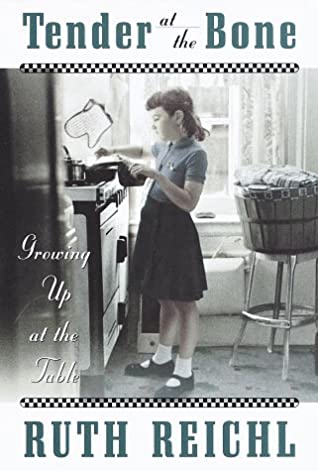 (20 Books of Summer, #13) I’ve read Reichl’s memoirs out of order, starting with Garlic and Sapphires (2005), about her time as a New York Times food critic, and moving on to Comfort Me with Apples (2001), about her involvement in California foodie culture in the 1970s–80s. Whether because I’d been primed by the disclaimer in the author’s note (“I have occasionally embroidered. I learned early that the most important thing in life is a good story”) or not, I sensed that certain characters and scenes were exaggerated here. Although I didn’t enjoy her memoir of her first 30 years as much as either of the other two I’d read, it was still worth reading.
The cover image is a genuine photograph taken by Reichl’s German immigrant father, book designer Ernst Reichl, in 1955. Early on, Reichl had to fend for herself in the kitchen: her bipolar mother hoarded discount food even it was moldy, so the family quickly learned to avoid her dishes made with ingredients that were well past their best. Like Eric Asimov and Anthony Bourdain, whose memoirs I’ve also reviewed this summer, Reichl got turned on to food by a top-notch meal in France. Food was a form of self-expression as well as an emotional crutch in many situations to come: during boarding school in Montreal, her rebellious high school years, and while living off of trendy grains and Dumpster finds at a co-op in Berkeley.
Reichl worked with food in many ways during her twenties. She was a waitress during college in Michigan, and a restaurant collective co-owner in California; she gave cooking lessons; she catered parties; and she finally embarked on a career as a restaurant critic. Her travels took her to France (summer camp counselor; later, wine aficionado), Morocco (with her college roommate), and Crete (a honeymoon visit to her favorite professor). Raised in New York City, she makes her way back there frequently, too. Overall, the book felt a bit scattered to me, with few if any recipes that I would choose to make, and the relationship with a mentally ill mother was so fraught that I will probably avoid Reichl’s two later books focusing on her mother.
Source: Awesomebooks.com
My rating:
Educating Alice: Adventures of a Curious Woman by Alice Steinbach (2004)
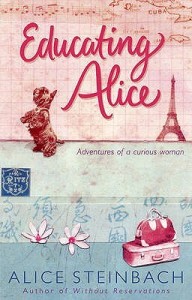 (20 Books of Summer, #14) Steinbach makes a repeat appearance in my summer reading docket: her 2000 travel book Without Reservations was one of my 2018 selections. In that book, she took a sabbatical during her 50s to explore Paris, England, and Italy. Here she continues her efforts at lifelong learning by taking up some sort of lessons everywhere she goes. The long first section sees her back in Paris, enrolling at the Hotel Ritz’s Escoffier École de Gastronomie Française. She’s self-conscious about having joined late, being older than the other students and having to rely on the translator rather than the chef’s instructions, but she’s determined to keep up as the class makes omelettes, roast quail and desserts.
Full disclosure: I’ve only read the first chapter for now as it’s the only one directly relevant to food – in others she takes dance lessons in Japan, studies art in Cuba, trains Border collies in Scotland, etc. – but I was enjoying it and will go back to it before the end of the year.
Source: Free bookshop
Summery Reads of 2020, Part I
Reading with the seasons, I’ve picked up a few books with “summer” or sunshine in their titles. I’ll have more to write up later in August, including novels set during the summer months.
A Summer Bird-Cage by Margaret Drabble (1963)
 Sarah Bennett, who went straight from university in Oxford to Paris for want of a better idea of what to do with her life, is called home to Warwickshire to be a bridesmaid in the wedding of her older sister, Louise, to Stephen Halifax, a wealthy novelist. Afterwards, Sarah decides to move to London and share a flat with a friend whose marriage has recently ended. As the months pass, she figures out life as a single girl in a big city and attends parties hosted by Louise – back from an extended European honeymoon – and others. Sarah eventually works out, from gossip and from confronting Louise herself, that her sister’s marriage isn’t as idyllic as it appeared. Both sisters find themselves at a loss as for what to do next.
Although Drabble’s debut novel is low on action, its characters are sharply drawn and she delights in placing them in situations and conversations where their true values will emerge. I could relate to Sarah for her bookishness, her observant nature, and her feeling that her best days of being a student are behind her. Drabble was only 24 when this was published; though she was already married and a mother, her distinguished university career (a double first from Cambridge) wasn’t long behind her. Given that Drabble’s sister is novelist A.S. Byatt, it’s impossible not to speculate about the autobiographical inspiration for this picture of sisters who are subconscious rivals and don’t even seem to enjoy spending casual time together.
What with the sisters sharing the maiden name Bennett, you also can’t help but think of one of the classic sister novels, Pride and Prejudice. Drabble makes her debt obvious when Sarah goes over to Louise’s for dinner and comments on the “charming convention of the scene – sisters idling away an odd evening in happy companionship. It was like something out of Middlemarch or even Jane Austen.” I was also reminded of the sister pair in Deerbrook: one got all the beauty, but the other seems much more interesting.
The title comes from a John Webster quotation: “’Tis just like a summer bird-cage in a garden: / the birds that are without are desperate to get / in, and the birds that are within despair and / are in a consumption for fear that they will never / get out.” In other words, it’s easy to miss, and idealize, what you don’t have. Sarah still thinks she can have it all; Louise has realized the choices life forces on you. In modern parlance, this is about adulting and FOMO. It still feels relevant, in a way that seems to anticipate the work of Sally Rooney.
My rating: 
Rise and Shine by Anna Quindlen (2006)
 Another sisters novel, and the first book in my Journey through the Day with Books challenge. Meghan Fitzmaurice is a household name as the host of America’s most popular morning talk show, Rise and Shine, but her star fades rapidly when, her microphone still on after she thinks they’ve gone to a commercial break, she murmurs “f***ing a**hole” about a guest who is, admittedly, a creep. It turns out her outburst didn’t come out of nowhere: the night before, her husband, Evan, had announced he was leaving her. Meghan goes to Jamaica to regroup, leaving her younger sister, Bridget, a social worker in the Bronx, to figure out what happened and create a semblance of normalcy for her beloved nephew, Meghan’s college-age son Leo, who’s just back from an exchange program at a farm outside Barcelona.
I liked the New York City setting and the central sister relationship – “Sisters tend to get stuck in their roles and they don’t always know how to get out of them. The pretty one. The practical one,” their aunt Maureen, who raised them after their parents’ deaths, says – but the plot hereafter veers between thin and melodramatic. I didn’t warm to Bridget’s boyfriend Irving, a hardboiled older cop, and I get a little nervous about white ladies creating stereotypical African American characters and giving them names like Tequila (Bridget’s receptionist at the women’s shelter) and Princess Margaret (Tequila’s daughter).

In a nice bit of symmetry, though, the book’s end finds a subdued Meghan hosting a late-night show called Day’s End. I didn’t like this nearly as much as her nonfiction (I loved Lots of Candles, Plenty of Cake), but I would read more by Quindlen: I also have a copy of One True Thing, and I have heard that her recent fiction is good.
My rating:
And a skim from the library that ties in nicely with the cover image above:
The Butterfly Isles: A Summer in Search of Our Emperors and Admirals by Patrick Barkham (2010)
 In 2009, Barkham set out to revive the childhood butterfly-watching hobby he’d shared with his father. The UK is home to 59 species, a manageable number to attempt to see in a season, although it does require a fair bit of travel and insider knowledge. I’ve read too much general history about the human relationship with butterflies (via Rainbow Dust by Peter Marren, which came out a few years later, and An Obsession with Butterflies by Sharman Apt Russell, which Barkham mentions in a Recommended Reading section at the end of the book) to engage with all the context he includes; I focused on the nitty-gritty of the quest running from mid-March to August. I’ll leave it to readers to discover whether he succeeds or not. Nice additions here are the color plates of all the species in question, and the line drawings by Helen Macdonald, yet to come to prominence in her own right – with H Is for Hawk in 2014.
A favorite passage: “Butterflies are symbols of freedom and happiness, sunshine and summer days. They are tokens of romance”
My rating:
 Bookish Beck = Rebecca Foster. American transplant to England. Freelance proofreader and book reviewer.
 Bookish Beck