R.I.P. Reads, Part I: Apostolides, Dahl, Harkness, Kingfisher & Kohda
Ghosts, witches, vampires, creepy underground things: It can only be Readers Imbibing Peril time of year! Here’s my first five reviews.
The Homecoming by Zoë Apostolides (2025)
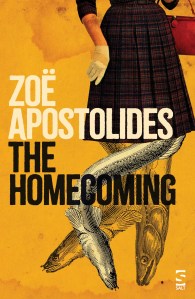 This debut novel dropped through my door as a total surprise: not only was it unsolicited, but I’d not heard about it. In this modern take on the traditional haunted house story, Ellen is a ghostwriter sent from London to Elver House, Northumberland, to work on the memoirs of its octogenarian owner, Catherine Carey. Ellen will stay in the remote manor house for a week and record 20 hours of audio interviews – enough to flesh out an autobiography. Miss Carey isn’t a forthcoming subject, but Ellen manages to learn that her father drowned in the nearby brook and that all Miss Carey did afterwards was meant to please her grieving mother and the strictures of the time. But as strange happenings in the house interfere with her task, Ellen begins to doubt she’ll come away with usable material. I was reminded of The Woman in Black, The Thirteenth Tale, and especially Wakenhyrst what with the local eel legends. The subplot about Ellen drifting apart from her best friend, a new mother, felt unnecessary, though I suppose was intended to bolster the main theme of women’s roles. There’s a twist that more seasoned readers of Gothic fiction and ghost stories might see coming. While I found this very readable and perfectly capably written, I didn’t get a sense of where the author hopes to fit in the literary market; she’s previously published a true crime narrative. Full disclosure: I once collaborated with Zoë on a Stylist assignment.
With thanks to Salt Publishing for the proof copy for review.
The Witches by Roald Dahl (1983)
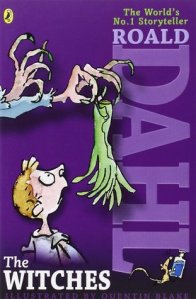 I’m sure I read all of Dahl’s major works when I was a child, though I had no specific memory of this one. After his parents’ death in a car accident, a boy lives in his family home in England with his Norwegian grandmother. She tells him stories from Norway and schools him in how to recognize and avoid witches. They wear wigs and special shoes to hide their baldness and square feet, and with their wide nostrils they sniff out children to turn them into hated creatures like slugs. When Grandmamma falls ill with pneumonia, she and the boy travel to a Bournemouth hotel for her recovery only to stumble upon a convention of witches under the guise of the Royal Society for the Prevention of Cruelty to Children. The Grand High Witch (Anjelica Huston, if you know the movie) has a new concoction that will transform children into mice at enough of a delay to occur the following morning at school. It’s up to the boy and his grandmother to save the day. I really enjoyed this caper, which I interpreted as being – like Tove Jansson’s The Summer Book – about imagination and making the most of one’s time with grandparents. But in the back of my mind was Jen Campbell’s objection to the stereotypical equating of disfigurement with villainy. The Grand High Witch also speaks with a heavy German accent. It would be understandable to dismiss this as dated and clichéd, but I still found it worthwhile. It also fit into my project to read books from my birth year. (Free from a neighbour)
The Black Bird Oracle by Deborah Harkness (2024)
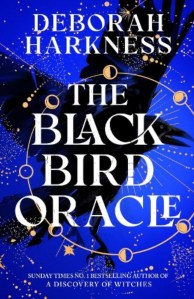 Somehow I’ve read this entire series even though none of the subsequent books lived up to A Discovery of Witches. What I loved about that first novel was how the author drew on her knowledge of the history of science to create a believable backdrop for a story of witches, vampires and other supernatural beings that took place largely in Oxford and its medieval libraries. Each sequel has elaborated further adventures for Diana Bishop, a witch; her vampire husband, Matthew de Clermont; and their family members and other hangers-on. Their twins, especially Becca, have inherited some of Diana’s power. I read the first half of this last year and finally skimmed to the end last week, so I haven’t retained much. Diana is summoned to the ancestral seat of the Bishops in Massachusetts and finds herself part of a community of gossipy, catty witches. (Dahl was right, they’re everywhere!) She has some fun, folksy interactions but things soon get more serious as she girds herself for a showdown with the darker implications of her gift. Overall, this didn’t add much to the ongoing narrative and the love scenes veered too close to romantasy for my liking. (Public library)
What Stalks the Deep by T. Kingfisher [Ursula Vernon] (2025)
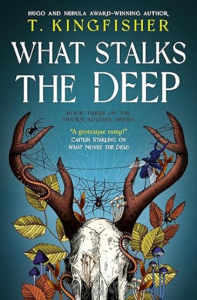 The third in the “Sworn Soldier” series, after What Moves the Dead and What Feasts at Night. Alex Easton is a witty, gender-nonconforming narrator, which is why I persist with these novellas even though I’m underwhelmed by the plots. Denton, the American doctor friend from the first book, begs Easton to come to West Virginia: his cousin Oscar has gone missing in a mine after sending a series of alarming letters about a red light he saw in the depths. Easton and their right-hand man, Angus, soon encounter claustrophobia-inducing cave systems, various kinds of bad air and siphonophore-like marine creatures that can assemble to imitate other beings. (Why aren’t these on the cover, huh?!) In other intriguing matters, Denton seems to have something going on with his friend John Ingold, an Indigenous scientist. Though, as Easton frequently reminds themself, that’s none of our business. There are some great set-pieces and funny, if anachronistic, asides (on learning how to flick a lighter just right: “I used to practice it for hours as a teenager, in hopes of impressing girls. Look, girls were more easily impressed in those days. Shut up.”) But my feeling with all three books is that they’re over before they’ve barely begun, and they never deliver the expected horror. Smart-ass, queer fantasy/horror: these will be some people’s perfect books, just not mine. If you’re intrigued, do at least try the first one, which riffs on Poe. (Read via Edelweiss)
Woman, Eating by Claire Kohda (2022)
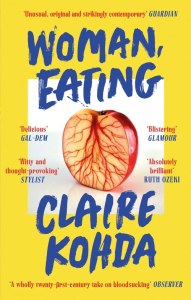 A very different sort of vampire novel. Twenty-three-year-old Lydia is half Japanese and half Malaysian; half human and half vampire. She’s trying to follow in her late father’s footsteps as an artist through an internship at a Battersea gallery, which comes with studio space where she’ll sleep to save money. But she can only drink blood like her mother, who turned her when she was a baby. Mostly she subsists on pig blood – which she can order dried if she can’t buy it fresh from a butcher – though, in one disturbing sequence, she brings home a duck carcass. When she falls for Ben, one of her studio-mates, she imagines what it would be like to be fully human: to make art together, to explore Asian cuisine, to bond over losing their mothers (his is dying of cancer; hers is in a care home with violence-tinged dementia). But Ben is already seeing someone, the internship is predictably dull, and a first attempt at consuming regular food goes badly wrong. There are a lot of promising threads in this debut. It’s fascinating how Lydia can intuit a creature’s whole life story by drinking their blood. She becomes obsessed with the Baba Yaga folk tale (and also mentions Malay vampire legends) and there’s a neat little bit of #MeToo revenge. But overall, it’s half-baked. Really, it’s just a disaster-woman book in disguise. The way Lydia’s identity determines her attitudes towards food and sex feels like a symbol of body dysmorphia. I’ll look out to see if Kohda does something more distinctive in future. (Secondhand – Awesomebooks.com)
More coming up on Halloween (thankfully, including books I liked better on average)!
On Trying to Keep Still (Post-Northumberland Holiday)
What’s the point of going on vacation? Expanding your cultural horizons, seeing new things and places, treating yourself to fun experiences you don’t have in the everyday, and relaxing could all be good answers. Relaxation isn’t our strong suit when we go away; we often return from a holiday wishing that we had a few recovery days before resuming work. Some combination of developing a bad cold in the last few days of the trip, coming back to non-stop rain, worrying about our cat’s ongoing health issues, and my husband already having a manically busy start to the term has left me feeling like staying put for the foreseeable.
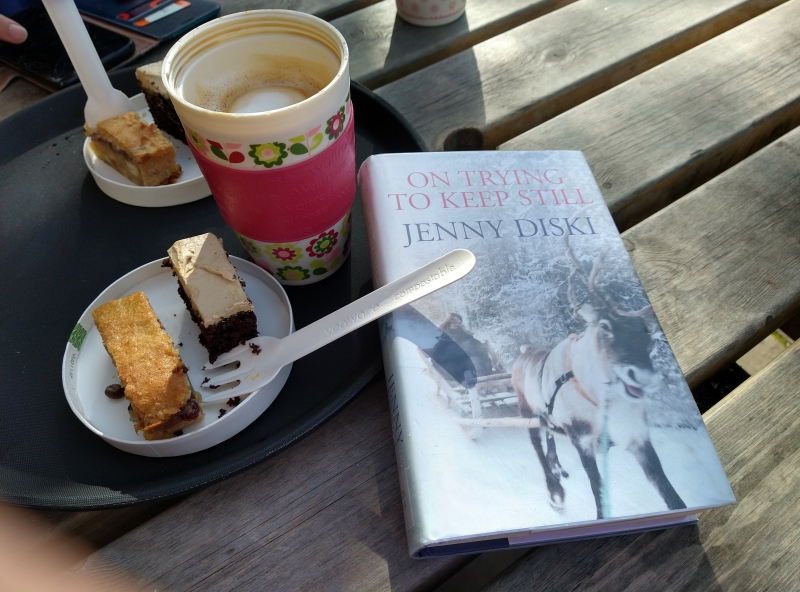
Apt reading for a coffee stop on Lindisfarne.
Jenny Diski understood that. Her collection of travel pieces, On Trying to Keep Still, was the one book I read in its entirety on our trip (along with parts of novels, poetry collections and many, many short story volumes). Essays and short stories were perfect reading for a public transport trip: ideal for taking out on a train or bus and reading one or a few. I’d earmarked the Diski for 20 Books of Summer but found a better setting for it after all. A couple of pieces touch on her traumatic childhood and time spent in a mental hospital as a teenager, which I vaguely remembered from her other autobiographical work. The essay “On Anatomy,” which doesn’t really fit with the others but may have been my favourite, matter-of-factly recounts her rape at 14, and her midlife diagnosis of Freiberg’s disease. Her doctor’s dismissive response to her debilitating foot pain was her first experience of age-related discrimination.
Diski expresses how troubled she is to have become known as a travel writer – through the two books of hers I’d previously read, Skating to Antarctica and Stranger on a Train – because, for the most part, she much prefers to stay at home and do nothing. Ironically, she ends up writing a travel feature on Lapland for the Observer, even though what she actually proposed was spending a few days in the polar dark. But the paper talked her into undertaking all sorts of uncomfortable adventures like a reindeer-drawn sleigh ride and sleeping in a tent – and this for someone who specifically hated being cold.
This is the stuff of Part Three. In Part One, she speaks at a book festival in New Zealand and resists the compulsion to skydive; in the long Part Two, she courts solitude by renting a cottage on a Somerset farm for two months. She holes up with a mini-library of silence- and seclusion-themed reads and shows her face only often enough so the owner won’t fret about her. (It took me a little while to work out that the farmer was Janet White, author of The Sheep Stell – quite a neat connection. Diski also lived with Doris Lessing as a teenager.) Here, too, Diski is delighted to eschew outings and exercise and just stay in comfort. The fact that she brought pristine Prada hiking boots tells you she’s no outdoorswoman. By the book’s end, she’s concluded it’s best to save the money and effort and just research or imagine your way to places instead. Tongue-in-cheek advice, perhaps, but the tone of cheerful indolence appealed to me. (Secondhand – Awesomebooks.com) 
Sprinting to make buses, hours-long bone-shaking rides, heavy luggage: we were out of practice at using public transport, sure, but the rigours of this trip were a bit much for me. It can’t just be age, though at nearly 41 I do long for my own bed on any stay away from home. It’s partly a matter of accepting that chronic illness means I will have limitations. Much as we wanted to do the right thing by not driving, travelling by car is so much more practical and comfortable. Trips to the Continent may still be doable by train as European services seem reliable. But within the UK? Unless it’s a short city break, I’m not sure.
All that said, we did have a nice time. Our cottage in Berwick-upon-Tweed was spacious and we had unexpectedly glorious weather for daytrips to Bamburgh Castle, the Farne islands and Lindisfarne, Alnwick and Alnmouth, and especially the fishing town of Dunbar in Scotland. If you ever find yourself in Berwick, do walk the medieval walls (plus try a charcuterie platter at Atelier wine bar, sample the sweet or savoury offerings at Northern Soul Kitchen, and find time for a drink or two at The Curfew micro-pub). Speaking of drinks, we also enjoyed our time with friends in York, not least an afternoon at the annual beer festival.


Bookishness included a return trip to Barter Books, where my store credit got me a free book and badge; Berwick’s Berrydin Books and Slightly Foxed, as well as several charity shops; the “Books by the Sea” Little Free Library network; and the John Muir birthplace museum and trail in Dunbar. Muir was a forefather of modern environmentalism involved in the inception of the U.S. national parks system. I’ll have to seek out his memoir of childhood.


My modest book haul (compared to our previous trip to Northumberland, anyway) of 12 books is testament to great restraint; had we been traveling by car, I probably would have acquired more books at each stop. I majored on short story collections and novella-length works. And I’ve started reading several already!


Other reading experiences, on a rail replacement bus and on the nearly empty Bamburgh and Dunbar beaches:


If you had to choose, would it be far-flung adventuring or the comforts of home?
Making Plans for a Return to Northumberland & A Book “Overhaul”
It’s just over three years since our terrific trip to Northumberland. We enjoyed ourselves so much that, when casting around for somewhere within the country to spend a week in September before the university term starts for my husband, we decided to go back later this week. This time we’re renting a holiday cottage in Berwick and travelling by train and bus instead of car – a decision that has already been complicated by rail replacement buses, but we’re making it work. The plan is to explore Berwick and Bamburgh; revisit Alnwick, the Farne Islands, and Lindisfarne (Holy Island); and venture into Scotland for a day trip. We’ll also stay with friends in York on the way up and back and attend York’s annual beer festival with them.
An Overhaul of Last Trip’s Book Purchases
Simon of Stuck in a Book runs a regular blog feature he calls “The Overhaul,” where he revisits a book haul from some time ago and takes stock of what he’s read, what he still owns, etc. (here’s the most recent one). With his permission, I occasionally borrow the title and format to look back at what I’ve bought. Previous overhaul posts have covered Hay-on-Wye, birthdays, and the much-missed Bookbarn International. It’s a good way of holding myself accountable for what I’ve purchased and reminding myself to read more from my shelves.
So, earlier this summer, I took a look back at the whopping 33 new and secondhand books I acquired in Northumberland (and en route) in July 2021; they are all pictured in my trip write-up post.
Had already read: 2
- How Far Can You Go by David Lodge
- Leaving Church by Barbara Brown Taylor – It’s on my shelf for rereading.

Have read since then: 22 – I cannot tell you how proud I am of this number! A full 2/3!
- Until the Real Thing Comes Along by Elizabeth Berg (see below)
- The Girl Aquarium by Jen Campbell
- The Waterfall by Margaret Drabble
- Home Life by Alice Thomas Ellis
- Talking to the Dead by Elaine Feinstein
- Islands of Abandonment by Cal Flyn
- The End We Start From by Megan Hunter
- The Story of My Life by Helen Keller
- Spring by Karl Ove Knausgaard
- No Time to Spare by Ursula K. Le Guin
- The Facebook of the Dead by Valerie Laws
- An Advent Calendar by Shena Mackay
- Christmas Holiday by W. Somerset Maugham
- Birds of America by Lorrie Moore
- Thinking Again by Jan Morris
- Emerald by Ruth Padel
- Dear George by Helen Simpson
- Intimations by Zadie Smith
- Filthy Animals by Brandon Taylor
- North with the Spring by Edwin Way Teale
- Female Friends by Fay Weldon
- Kitchen by Banana Yoshimoto
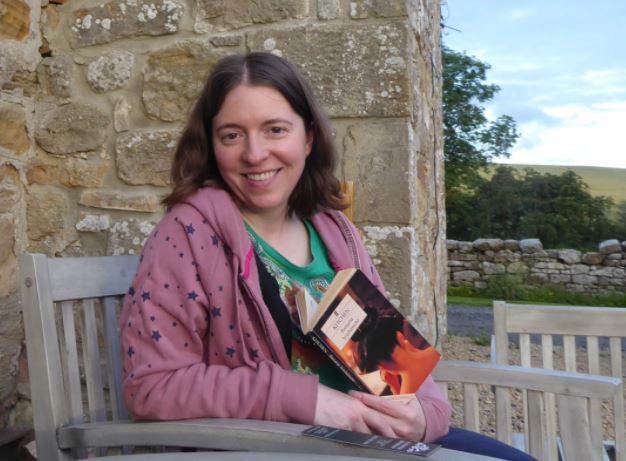
Plus…
Partially read: 4
- A Keeper of Sheep by William Carpenter
- Nature Cure by Richard Mabey
- Vida by Marge Piercy
- The Truants by Kate Weinberg
Skimmed: 1 (A Childhood in Scotland by Christian Miller)
Gave away unread: 1 (Wolf Winter by Cecilia Ekback)
Total still unread: 7
Total no longer owned: 11 (resold, gifted or donated to the Little Free Library) – Getting rid of at least 1/3 of what I read seems like a pretty solid ratio.
I surveyed the pile of books still unread or only partly read and picked up a few to read beforehand or on the way back to Northumberland. I managed to finish one:
Until the Real Thing Comes Along by Elizabeth Berg (1999)
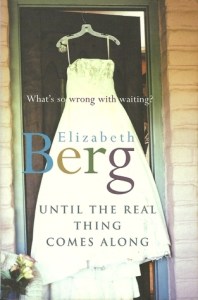 I think of Berg as Anne Tyler lite, likely to appeal to readers of Sue Miller, Catherine Newman, and Maggie O’Farrell. I’d read five of her novels and they are all at least moderately enjoyable, with Talk Before Sleep the best and Open House and The Pull of the Moon in a second tier. But this was pretty annoying and cliched. The plot is straight out of that Rupert Everett–Madonna movie The Next Best Thing. Patty is madly in love with her friend Ethan but, darn it, he’s gay. She’s also 36 and desperate for a baby. She can’t see another way to get one, so Ethan agrees to impregnate her. Works first time! Everything goes perfectly with the pregnancy, and he says he’ll try to act straight so they can move to Minneapolis to raise the baby. Reality does set in, but only very late on. My main problem was Patty: always complaining, putting no effort into her real estate career, and oblivious to when her parents are struggling. Ethan’s experience losing friends to AIDS is shoehorned in through one histrionic paragraph. This got better as it went on, but certainly wasn’t what I’d call fresh and convincing.
and am partway through another:
Sorry to Disrupt the Peace by Patrick [Patty Yumi at the time of publication] Cottrell – An unusual voice-driven novel about a Korean adoptee mourning her brother’s death by suicide. I’m not sure I’ll stay the course.
I’m packing for the train:
The Picnic and Suchlike Pandemonium by Gerald Durrell
A House Unlocked by Penelope Lively
Vida by Marge Piercy
…along with plenty of other books in progress!
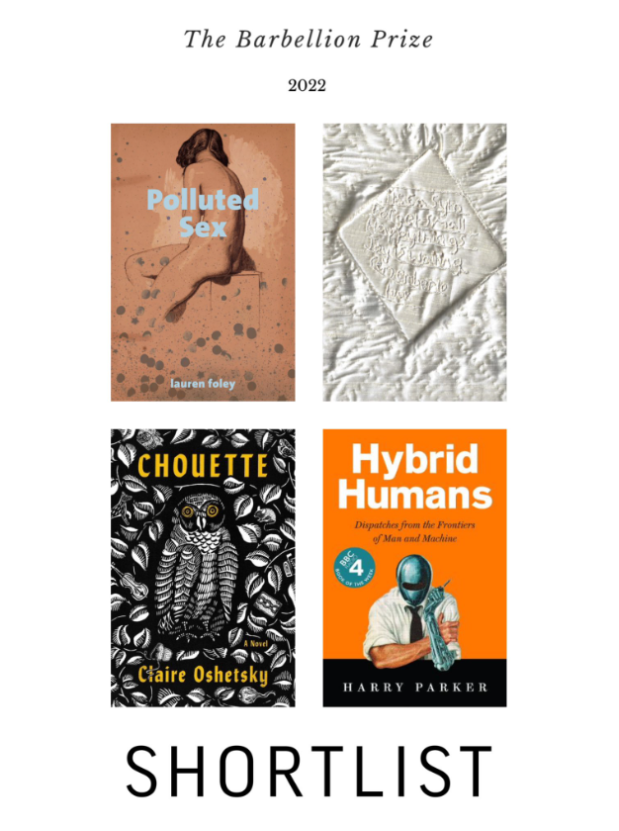
Barbellion Prize Shortlist: Book of Hours by Letty McHugh
The Barbellion Prize shortlist, announced yesterday, consists of the short story collection Polluted Sex and the novel Chouette, both of which I’m still keen to read; and two nonfiction works, Hybrid Humans, which I reviewed last year, and Letty McHugh’s hybrid memoir, Book of Hours: An Almanac for the Seasons of the Soul.
I’m saving up tiny joys the way a bear fattens up for the coming winter
A patchwork quilt of ordinary leftover happiness
to keep me warm through the darkest part of the night.
In medieval times, a book of hours was a devotional book that set out the day’s prayers. Usually an illuminated manuscript, it was a precious object for laypeople, and a way of marking time. For Letty McHugh, a Yorkshire-based visual artist who lives with chronic pain and illness, this book of hours is many things: a journal, a scrapbook, an enquiry into the monastic impulse, and an interrogation of the potential meanings of physical suffering.
 In April 2020, McHugh experienced a relapse of MS so bad she had to move back in with her parents and was sleeping 20 hours a day. Her sphere had contracted to a single room. If only, she wished, there was “something to concentrate on that wasn’t my unravelling body or the unravelling world.” A Catholic upbringing and childhood holidays in Northumberland made her think about the early Christian hermits and saints like Aidan, Cuthbert and Julian of Norwich who salvaged something from solitude, who out of the privations of monasticism made monuments of faith and, sometimes, written documents, too.
This was the inspiration behind her own book of hours, which intersperses poems and photographs of found objects (wildflowers, animal skulls, sea glass and shells) with biographical sketches of saints, short autobiographical essays about her childhood and career, and musings on faith and pain. Metaphors of magic and outer space contrast with the claustrophobia of “the illness place,” somewhere she knows she’ll return to again and again. Although she knows she will never be perfectly holy or perfectly productive, she is encouraged to know that even those with confined lives (such as Emily Dickinson) can have a rich inner existence. While she resists the desire for a cure, or for a simple meaning to suffering, she bears witness to the fact that creativity can emerge in spite of everything.
I enjoyed spending time with this meticulously crafted and meditative work that engages with the present moment but also the eternal. It’s perfect onward reading for fans of the inaugural Barbellion Prize winner, Golem Girl by Riva Lehrer, and A Still Life by Josie George, a shortlistee from last year.
Book of Hours was self-published with assistance from Disability Arts Online. You can buy a signed copy of the handmade book from her Etsy shop, or read the text for free here.
With thanks to Letty McHugh for sending a free e-copy for review.
This year’s Barbellion Prize judges are Dr Emmeline Burdett, Lynn Buckle (last year’s winner) and scholar Ray Davis. The winner will be announced in February.
R.I.P. Reads, Part I: Ahlberg, Gaskell, Hinchcliffe and Watson
I don’t generally read horror or suspense, but the R.I.P. challenge is my annual excuse to pick up some slightly scarier material. For this first installment of super-short responses, I have a children’s book about a seriously problematic cat, a Victorian ghost story, and two recent Scotland-set novels about exiles haunted by the unexplained. (All: Public library)

The Improbable Cat by Allan Ahlberg (2003)
 I picked this up expecting a cute cat tale for children, only realizing afterwards that it’s considered horror. When a grey kitten wanders into their garden, Davy is less enamoured than the rest of the Burrell family. His suspicion mounts as the creature starts holding court in the lounge, expecting lavish meals and attention at all times. His parents and sister seem to be under the cat’s spell in some way, and it’s growing much faster than any young animal should. Davy and his pal George decide to do something about it. Since I’m a cat owner, I’m not big into evil cat stories (e.g., Cat out of Hell by Lynne Truss), and this one was so short as to feel underdeveloped.
 “The Old Nurse’s Story” by Elizabeth Gaskell (1852)
(collected in Gothic Tales (2000), ed. Laura Kranzler)
I had no idea that Gaskell had published short fiction, let alone ghost stories. Based on the Goodreads and blogger reviews, I chose one story to read. The title character tells her young charges about when their mother was a child and the ghost of a little girl tried to lure her out onto the Northumberland Fells one freezing winter. It’s predictable for anyone who reads ghost stories, but had a bit of an untamed Wuthering Heights feel to it. 
Hare House by Sally Hinchcliffe (2022)
 The unnamed narrator is a disgraced teacher who leaves London for a rental cottage on the Hare House estate in Galloway. Her landlord, Grant Henderson, and his rebellious teenage sister, Cass, are still reeling from the untimely death of their brother. The narrator gets caught up in their lives even though her shrewish neighbour warns her not to. There was a lot that I loved about the atmosphere of this one: the southwest Scotland setting; the slow turn of the seasons as the narrator cycles around the narrow lanes and finds it getting dark earlier, and cold; the inclusion of shape-shifting and enchantment myths; the creepy taxidermy up at the manor house; and the peculiar fainting girls/mass hysteria episode that precipitated the narrator’s banishment and complicates her relationship with Cass. The further you get, the more unreliable you realize this narrator is, yet you keep rooting for her. There are a few too many set pieces involving dead animals, and, overall, perhaps more supernatural influences than are fully explored, but I liked Hinchcliffe’s writing enough to look out for what else she will write. (Readalikes: The Haunting of Hill House and Wakenhyrst)
Metronome by Tom Watson (2022)
 Ever since I read Blurb Your Enthusiasm, I’ve been paying more attention to jacket copy. This is an example of a great synopsis that really gives a sense of the plot: mysterious events, suspicion within a marriage, and curiosity about what else might be out there. Aina and Whitney believe they are the only people on their island. They live simply on a croft and hope that, 12 years after their exile, they’ll soon be up for parole. Whitney stubbornly insists they wait for the warden to rescue them, while Aina has given up thinking anyone will ever come. There’s a slight Beckettian air, then, to the first two-thirds of this dystopian novel. When someone does turn up, it’s not who they expect. The eventual focus on parenthood meant this reminded me a lot of The Road; there are also shades of The Water Cure and Doggerland (though, thankfully, the dual protagonists ensure a less overly male atmosphere than in the latter). This was an easy and reasonably intriguing read, but ultimately a bit vague and bleak for me, and not distinguished enough at the level of the prose (e.g., way too many uses of “onside”).
Three on a Theme (and #ReadIndies): Nonfiction I Sponsored Last Year
Here in the UK we’re hunkering down against the high winds of Storm Eunice. We’ve already watched two trees come down in a neighbour’s garden (and they’re currently out there trying to shore up the fence!), and had news on the community Facebook page of a huge conifer down by the canal. Very sad. I hope you’re all safe and well and tucked up at home.
Today I’m looking back at several 2021 nonfiction releases I helped come into existence. The first and third I sponsored via Unbound, and the second through Dodo Ink. Supporting small publishers also ties this post into Karen and Lizzy’s February Read Indies initiative. All: 

This Party’s Dead: Grief, Joy and Spilled Rum at the World’s Death Festivals by Erica Buist
A death tourism book? I’m there! This is actually the third I’ve read in recent years, after From Here to Eternity by Caitlin Doughty and Near the Exit by Lori Erickson. Buist’s journey was sparked off by the sudden death of her fiancé Dion’s father, Chris – he was dead for a week before his cleaner raised the alarm – and her burden of guilt. It’s an act of atonement for what happened to Chris and the fact that she and Dion, who used to lodge with him, weren’t there when he really needed it. It’s also her way of discovering a sense of the sacred around death, instead of simply fearing and hiding from it.
 This takes place in roughly 2018. The author travelled to eight festivals in seven countries, starting with Mexico for the Day of the Dead and later for an exploration of Santa Muerte, a hero of the working class. Other destinations included Nepal, Sicily (“bones of the dead” biscotti), Madagascar (the “turning of the bones” ceremony – a days-long, extravagant party for a whole village), Thailand and Kyoto. The New Orleans chapter was a standout for me. It’s a city where the dead outnumber the living 10 to 1 (and did so even before Katrina), and graveyard and ghost tours are a common tourist activity.
Buist is an entertaining writer, snappy and upbeat without ever seeming flippant as she discusses heavy topics. The mix of experience and research, the everyday and the momentous, is spot on and she recreates dialogue very well. I appreciated the earnest seeking here, and would happily read a book of hers on pretty much any subject. (New purchase from Unbound)
Trauma: Essays on Art and Mental Health, ed. Thom Cuell & Sam Mills
I’ll never learn: I left it nearly 10 months between finishing this and writing it up. And took no notes. So it’s nearly impossible to recreate the reading experience. What I do recall, however, is how wide-ranging and surprising I found this book. At first I had my doubts, thinking it was overkill to describe sad events like a break-up or loss as “traumatic”. But an essay midway through (which intriguingly trades off autobiographical text by Kirsty Logan and Freudian interpretation by Paul McQuade) set me straight: trauma cannot be quantified or compared; it’s all about the “unpreparedness of the subject. A traumatic event overwhelms all the defences laid out in advance against the encroachment of negative experience.”
 The pieces can be straightforward memoir fragments or playful, experimental narratives more like autofiction. (Alex Pheby’s is in the second person, for instance.) Within those broad branches, though, the topics vary widely. James Miller writes about the collective horror at the Trump presidency. Emma Jane Unsworth recounts a traumatic delivery – I loved getting this taste of her autobiographical writing but, unfortunately, it outshone her full-length memoir, After the Storm, which I read later in the year. Susanna Crossman tells of dressing up as a clown for her clinical therapy work. Naomi Frisby (the much-admired blogger behind The Writes of Womxn) uses food metaphors to describe how she coped with the end of a bad relationship with a narcissist.
As is inevitable with a collection this long, there are some essays that quickly fade in the memory and could have been omitted without weakening the book as a whole. But it’s not gracious to name names, and, anyway, it’s likely that different pieces will stand out for other readers based on their own experiences. (New purchase from Dodo Ink)
Four favourites:
- “Inheritance” by Christiana Spens (about investigating her grandparents’ lives through screen prints and writing after her father’s death and her son’s birth)
- “Blank Spaces” by Yvonna Conza (about the lure of suicide)
- “The Fish Bowl” by Monique Roffey (about everyday sexual harassment and an assault she underwent as a teenager; I enjoyed this so much more than her latest novel)
- “Thanks, I’ll Take the Chair” by Jude Cook, about being in therapy.
Women on Nature: 100+ Voices on Place, Landscape & the Natural World, ed. Katharine Norbury
It was over three years between when I pledged support and held the finished book in my hands; I can only imagine what a mammoth job compiling it was for Katharine Norbury (author of The Fish Ladder). The subtitle on the title page explains the limits she set: “An anthology of women’s writing about the natural world in the east Atlantic archipelago.” So, broadly, British and Irish writers, but within that there’s a lot of scope for variety: fragments of fiction (e.g., a passage from Jane Eyre), plenty of poetry, but mostly nonfiction narratives – some work in autobiographical reflection; others are straightforward nature or travel writing. Excerpts from previously published works trade off with essays produced specifically for this volume. So I encountered snippets of works I’d read by the likes of Miriam Darlington, Melissa Harrison, Sara Maitland, Polly Samson and Nan Shepherd. The timeline stretches from medieval mystics to today’s Guardian Country Diarists and BIPOC nature writers.
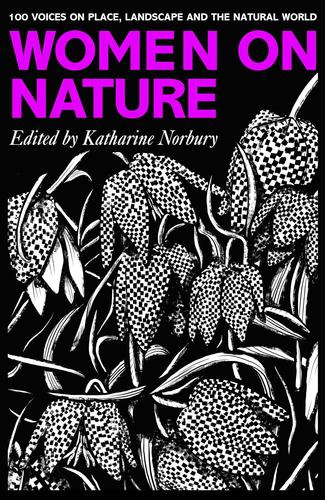 For most of the last seven months of 2021, I kept this as a bedside book, reading one or two pieces on most nights. It wasn’t until early this year that I brought it downstairs and started working it into my regular daily stacks so that I would see more progress. At first I quibbled (internally) with the decision to structure the book alphabetically by author. I wondered if more might have been done to group the pieces by region or theme. But besides being an unwieldy task, that might have made the contents seem overly determined. Instead, you get the serendipity of different works conversing with each other. So, for example, Katrina Porteous’s dialect poem about a Northumberland fisherman is followed immediately by Jini Reddy’s account of a trip to Lindisfarne; Margaret Cavendish’s 1653 dialogue in verse between an oak tree and the man cutting him down leads perfectly into an excerpt from Nicola Chester’s On Gallows Down describing a confrontation with tree fellers.
I’d highly recommend this for those who are fairly new to the UK nature writing scene and/or would like to read more by women. Keep it as a coffee table book or a bedside read and pick it up between other things. You’ll soon find your own favourites. (New purchase from Unbound)
Five favourites:
- “Caravan” by Sally Goldsmith (a Sheffield tree defender)
- “Enlli: The Living Island” by Pippa Marland (about the small Welsh island of Bardsey)
- “An Affinity with Bees” by Elizabeth Rose Murray (about beekeeping, and her difficult mother, who called herself “the queen bee”)
- “An Island Ecology” by Sarah Thomas (about witnessing a whale hunt on the Faroe Islands)
- My overall favourite: “Arboreal” by Jean McNeil (about living in Antarctica for a winter and the contrast between that treeless continent and Canada, where she grew up, and England, where she lives now)
“It occurred to me that trees were part of the grammar of one’s life, as much as any spoken language. … To see trees every day and to be seen by them is a privilege.”
Stay strong, trees!
Sponsored any books, or read any from indie publishers, recently?
Northumberland Trip, Book Haul, and Reading & 20 Books #9 Emerald
We spent the first 11 days of July on holiday in Northumberland (via stays with friends in York on the way up and back) – our longest spell of vacation since 2016, and our longest UK break since 2013. The trip also happened to coincide with our 14th anniversary. It was a fantastic time of exploring England’s northeast corner, a region new to me. I loved the many different types of landscape, from sandy beaches and rocky coasts and islands to moorland and lovely towns. It’s the county for you if you like castles. We joined the National Trust so we could make stops at lots of stately homes and other historic sites. Some highlights were:
- Cherryburn, the off-the-beaten-track home of engraver Thomas Bewick.
- A cheap and delicious meal of authentic Mexican street food in Hexham, of all places (at Little Mexico).
- Walking along a tiny fraction of Hadrian’s Wall from Housesteads Roman Fort.


- Cragside, the over-the-top home of a Victorian inventor (and the first international arms dealer – whoops), nestled in a plantation of pines and rhododendrons.
- A boat trip to the Farne Islands with a landing on Inner Farne, giving close-up views of puffins, other seabirds, and grey seals. We also sailed past the lighthouse made famous by Grace Darling’s rescue of shipwreck victims in 1838. (Relevant song by Duke Special, by way of a Michael Longley poem.)
- Whiling away a rainy morning in Barter Books, one of Britain’s largest secondhand bookshops (located in an old Victorian railway station), and the charity shops of Alnwick.
- An adventurous (and very wet) walk along the coast to the Dunstanburgh Castle ruin.


- Searching the dunes for rare orchids on Holy Island, followed by a delicious and largely vegan lunch at Pilgrims Coffee House.
- Another seabird-filled boat trip, this one round Coquet Island. Sightings included roseate terns and the Duke of Northumberland.
- Our second Airbnb, The Lonnen (near Rothbury), was a rural idyll shared mostly with sheep and gray wagtails. We were spoiled by Ruth’s excellent interior décor and cooked breakfasts. You can get a feel for the place via her Instagram.
- Coffee and snacks at Corbridge Larder’s Heron Café – so good we made a second trip.


It was also, half unexpectedly, a week filled with book shopping. First up was Forum Books in Corbridge, a lovely independent bookshop. I don’t often buy new books, so enjoyed the splurge here. The Flyn and Taylor were two of my most anticipated releases of 2021. It felt appropriate to pick up a Bloodaxe poetry title as the publisher is based in nearby Hexham.
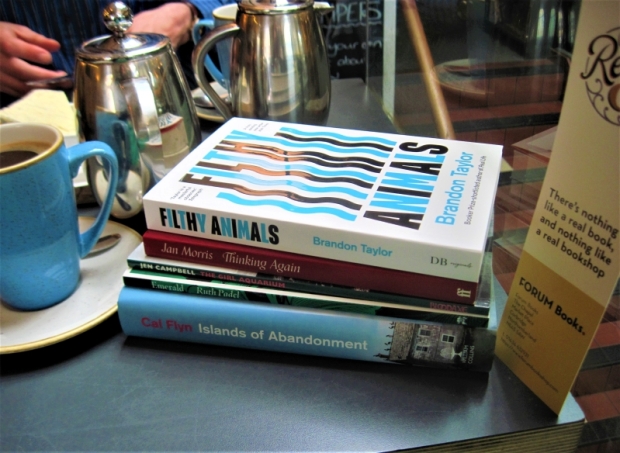
Next came a bounteous charity shop haul in Hexham.

On the Tuesday we holed up in Barter Books for hours while it rained – and the queue lengthened – outside. I was surprised and delighted that the nine antiquarian books I resold to Barter more than paid for my purchases, leaving me in credit to spend another time (online if, as seems likely, I don’t get back up in person anytime soon).


Alnwick also has a number of charity shops. I had the most luck at the Lions bookshop.

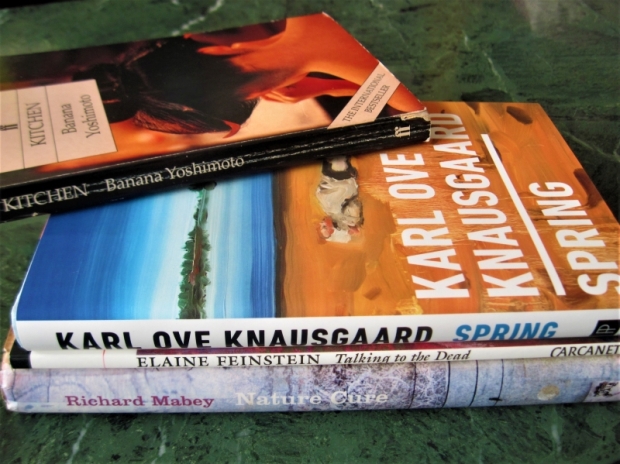
I seemed to keep finding books wherever I went. Kitchen came from a bookshelf in a shop/café on Holy Island. A secondhand/remainders shop near York Minster was the source of the other three.
What I Read:
The holiday involved significant car journeys as Northumberland is a big county with an hour or more between destinations. Alongside my navigating and DJ duties, I got a lot of reading done during the days, as well as in the evenings.
Finished second half or so of:
 Phosphorescence by Julia Baird – An intriguing if somewhat scattered hybrid: a self-help memoir with nature themes. Many female-authored nature books I’ve read recently (Wintering, A Still Life, Rooted) have emphasized paying attention and courting a sense of wonder. To cope with recurring abdominal cancer, Baird turned to swimming at the Australian coast and to faith. Indeed, I was surprised by how deeply she delves into Christianity here. She was involved in the campaign for the ordination of women and supports LGBTQ rights.
 Open House by Elizabeth Berg – When her husband leaves, Sam goes off the rails in minor and amusing ways: accepting a rotating cast of housemates, taking temp jobs at a laundromat and in telesales, and getting back onto the dating scene. I didn’t find Sam’s voice as fresh and funny as Berg probably thought it is, but this is as readable as any Oprah’s Book Club selection and kept me entertained on the plane ride back from America and the car trip up to York. It’s about finding joy in the everyday and not defining yourself by your relationships.
 Site Fidelity by Claire Boyles – I have yet to review this for BookBrowse, but can briefly tell you that it’s a terrific linked short story collection set on the sagebrush steppe of Colorado and featuring several generations of strong women. Boyles explores environmental threats to the area, like fracking, polluted rivers and an endangered bird species, but never with a heavy hand. It’s a different picture than what we usually get of the American West, and the characters shine. The book reminded me most of Love Medicine by Louise Erdrich.
 Every Minute Is a Day by Robert Meyer, MD and Dan Koeppel – The Bronx’s Montefiore Medical Center serves an ethnically diverse community of the working poor. Between March and September 2020, it had 6,000 Covid-19 patients cross the threshold. Nearly 1,000 of them would die. Unfolding in real time, this is an emergency room doctor’s diary as compiled from interviews and correspondence by his journalist cousin. (Coming out on August 3rd. Reviewed for Shelf Awareness.)
 Virga by Shin Yu Pai – Yoga and Zen Buddhism are major elements in this tenth collection by a Chinese American poet based in Washington. She reflects on her family history and a friend’s death as well as the process of making art, such as a project of crafting 108 clay reliquary boxes. “The uncarved block,” a standout, contrasts the artist’s vision with the impossibility of perfection. The title refers to a weather phenomenon in which rain never reaches the ground because the air is too hot. (Coming out on August 1st.)
Read most or all of:
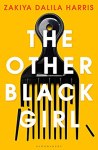 The Other Black Girl by Zakiya Dalila Harris – I feel like I’m the last person on Earth to read this buzzy book, so there’s no point recounting the plot, which initially is reminiscent of Luster by Raven Leilani but morphs into its own thing as Nella realizes her rivalry with Hazel, her new Black colleague at Wagner Books, is evidence of a wider social experiment. The prose is hip, bringing to mind Queenie and Such a Fun Age. It was a fun road trip read for me, but I could have done without the silliness of magical hair care products.
 Heartstopper, Volume 1 by Alice Oseman – It’s well known at Truham boys’ school that Charlie is gay. Luckily, the bullying has stopped and the others accept him. Nick, who sits next to Charlie in homeroom, even invites him to join the rugby team. Charlie is smitten right away, but it takes longer for Nick, who’s only ever liked girls before, to sort out his feelings. This black-and-white YA graphic novel is pure sweetness, taking me right back to the days of high school crushes. I raced through and placed holds on the other three volumes.
 The Vacationers by Emma Straub – Perfect summer reading; perfect holiday reading. Like Jami Attenberg, Straub writes great dysfunctional family novels featuring characters so flawed and real you can’t help but love and laugh at them. Here, Franny and Jim Post borrow a friend’s home in Mallorca for two weeks, hoping sun and relaxation will temper the memory of Jim’s affair. Franny’s gay best friend and his husband, soon to adopt a baby, come along. Amid tennis lessons, swims and gourmet meals, secrets and resentment simmer.
 Kitchen by Banana Yoshimoto – A pair of poignant stories of loss and what gets you through. In the title novella, after the death of the grandmother who raised her, Mikage takes refuge with her friend Yuichi and his mother (once father), Eriko, a trans woman who runs a nightclub. Mikage becomes obsessed with cooking: kitchens are her safe place and food her love language. Moonlight Shadow, half the length, repeats the bereavement theme but has a magic realist air as Satsuki meets someone who lets her see her dead boyfriend again.
I also made a good start on a few of my other purchases from the trip: Islands of Abandonment, No Time to Spare, Filthy Animals, and Female Friends.
Alas, most of the in-demand library books I brought along with me – Great Circle by Maggie Shipstead, Malibu Rising by Taylor Jenkins Reid, and Still Life by Sarah Winman – didn’t hit the spot, so I’ve returned them unread and will borrow them at another point later in the year (except Malibu Rising, which felt soapy and insubstantial).
It’s been a struggle getting back into the routines of work and writing since we got back, but I’ve managed to review one more of my 20 Books of Summer. This is #9, slipped in from my Forum Books pile, and I’m currently working on books #10–13.
Emerald by Ruth Padel (2018)
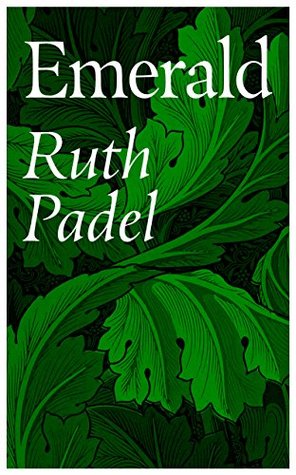 This was my 11th book from Padel; I’ve read a mixture of her poetry, fiction, narrative nonfiction and poetry criticism. Emerald consists mostly of poems in memory of her mother, Hilda, who died in 2017 at the age of 97. The book pivots on her mother’s death, remembering the before (family stories, her little ways, moving her into sheltered accommodation when she was 91, sitting vigil at her deathbed) and the letdown of after. It made a good follow-on to one I reviewed last month, Kate Mosse’s An Extra Pair of Hands.
Emerald, the hue and the gemstone, recurs frequently in ornate imagery of verdant outdoor scenes and expensive art objects. Two favourites were travel-based: “Jaipur,” about the emerald-cutters of India, where Padel guiltily flew while her mother was ill; and “Salon Noir,” about a trip down into prehistoric caves of France the summer after Hilda’s death. Overall, I expected the book to resonate with me more than it did. The bereavement narrative never broke through to touch me; it remained behind a silk screen of manners and form.
Two favourite stanzas:
“Your voice is your breath.
The first thing that’s yours
and the last.” (from “Fragile as Breath”)
“that’s all of us
sifting the dark
in our anonymities and hope.” (from “Above is the Same as Below”)
My rating:
Next books in progress: The Glitter in the Green by Jon Dunn and Nothing but Blue Sky by Kathleen MacMahon
One Book Leads to Another (Including Shepherds’ Memoirs)
Reading about a particular topic, time period or type of character often leads me to want to read more about the same thing. This isn’t the same as what I call “book serendipity,” when such connections happen purely coincidentally; instead, it’s a deliberate way of following a thread of interest further. I keep meaning to read more about lighthouses, butterflies and Virginia Woolf, for instance. Some attempts are more successful than others, though.
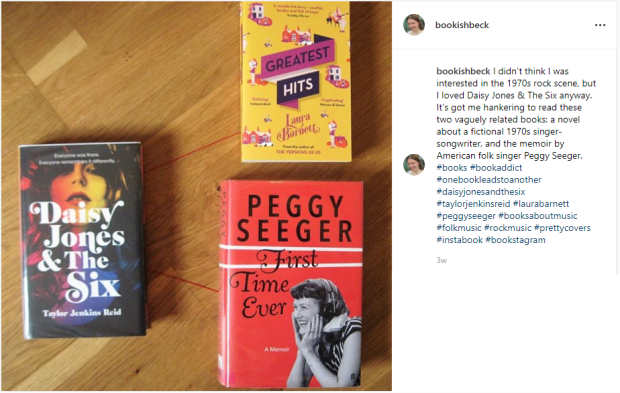
Alas, I had to return the Peggy Seeger memoir to the library unread because it was requested after me, and I haven’t found the immediate spur to pick up Greatest Hits yet.
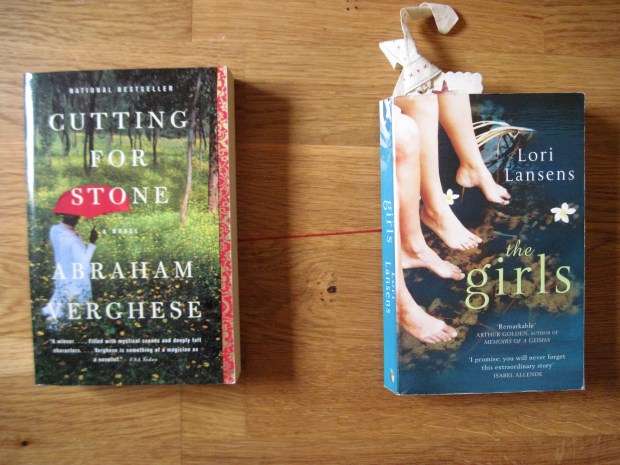
However, soon after I finished one novel about conjoined twins, Abraham Verghese’s Cutting for Stone, I launched straight into another one, Lori Lansens’ The Girls. I’m halfway through and it’s great so far. (Another I’d recommend is Chang and Eng by Darin Strauss, about the original “Siamese twins.”)
This spring I realized that I’d read four and a bit shepherds’ memoirs in 17 months, which is quite the concentration considering I’m not a countryside gal. Here’s how I’d rank the five:
#1: A Farmer’s Diary: A Year at High House Farm by Sally Urwin
 Urwin is a charming guide to a year in the life of her working farm in Northumberland. Just don’t make the mistake of dismissing her as “the farmer’s wife.” She may only be 4 foot 10 (her Twitter handle is @pintsizedfarmer and her biography describes her as “(probably) the shortest farmer in England”), but her struggles to find attractive waterproofs don’t stop her from putting in hard labor to tend to the daily needs of a 200-strong flock of sheep.
From mating the ewes to preparing the next year’s lambs for market, we see the whole cycle once through and about to start again. Lambing is a fraught couple of months that form the heart of the book, but there are plenty of other challenges, including stolen sheep, fallen trees, and constant financial concerns that lead to a petition to the Royal Agricultural Benevolent Institution for help paying the gas bill and keeping food on the table for their two kids.
Despite the year’s setbacks, Urwin has an indomitable spirit and writes in a chatty, chin-up style that reflects the book’s origin in blog posts from 2017 to 2018. She gets a lot of comic mileage out of her yo-yo dieting, the many escapades of Candy the fat pony, and quirky English traditions like the village fete. I enjoy reading about people’s daily habits through a diary, and all the better when it’s a lifestyle that’s totally foreign to me.
#2: The Sheep Stell by Janet White
 First published in 1991, The Sheep Stell taps into a widespread feeling that we have become cut off from the natural world and that existing in communion with animals is a healthier lifestyle. White’s pleasantly nostalgic memoir tells of finding contentment in the countryside, first on her own and later with a dearly loved family. It is both an evocative picture of a life adapted to seasonal rhythms and an arresting account of the casual sexism – and even violence – White experienced in a traditionally male vocation when she emigrated to New Zealand in 1953. From solitary youthful adventures that recall Gerald Durrell’s and Patrick Leigh Fermor’s to a more settled domestic life with animals reminiscent of the writings of James Herriot and Doreen Tovey, White’s story is unfailingly enjoyable. (I reviewed it for the Times Literary Supplement last year.)
#3: On Sheep: Diary of a Swedish Shepherd by Axel Lindén
(translated from the Swedish by Frank Perry)
 Axel Lindén left his hipster Stockholm existence behind to take on his parents’ rural collective. On Sheep documents two years in his life as a shepherd aspiring to self-sufficiency and a small-scale model of food production. The diary entries range from a couple of words (“Silage; wet”) to several pages, and tend to cluster around busy times on the farm. The author expresses genuine concern for the sheep’s wellbeing. However, he cannily avoids anthropomorphism, insisting that his loyalty must be to the whole flock rather than to individual animals. The brevity and selectiveness of the diary keep the everyday tasks from becoming tiresome. Instead, the rural routines are comforting, even humbling.
 #4: The Shepherd’s Life by James Rebanks
My husband valued this more as a memoir than as a cultural document; the opposite was true for me. As a memoir it’s fairly unexceptional, but it’s valuable as a picture of a rare and dwindling way of life in the British countryside.
#5: Heida: A Shepherd at the Edge of the World by Steinunn Sigurðardóttir
(translated from the Icelandic by Philip Roughton)
 DNF after 53 pages. I was offered a proof copy by the publisher on Twitter. I thought it would be interesting to hear about a female Icelandic shepherd who was a model before taking over her family farm and then reluctantly went into politics to try to block a hydroelectric power station on her land. Unfortunately, though, the book is scattered and barely competently written. It doesn’t help that the proof is error-strewn. [This mini-review has been corrected to reflect the fact that, unlike what is printed on the proof copy, the sole author is Steinunn Sigurðardóttir, who has written the book as if from Heiða Ásgeirsdóttir’s perspective.]
What’s the last major reading theme you’ve had?
Can I tempt you with a sheep-herding memoir?
We’re off to America tomorrow for two weeks for a holiday plus family time and a college friend’s wedding. While I won’t be particularly communicative on others’ blogs or social media, I’m scheduling a few blogs per week that we’re away. Back on June 3rd – just in time for the start of 20 Books of Summer!

Here’s the stack of books I’ve packed – with plenty more waiting for me over there and my Kindle providing some 400 backups.
 Bookish Beck = Rebecca Foster. American transplant to England. Freelance proofreader and book reviewer.
 Bookish Beck